Monthly Archives: May 2020

Welcome Home, Home on Fire

I want to go back to the UK now.

A week ago I was trying to enjoy my last day in Oxford without wasting by fretting about traveling during a global pandemic.

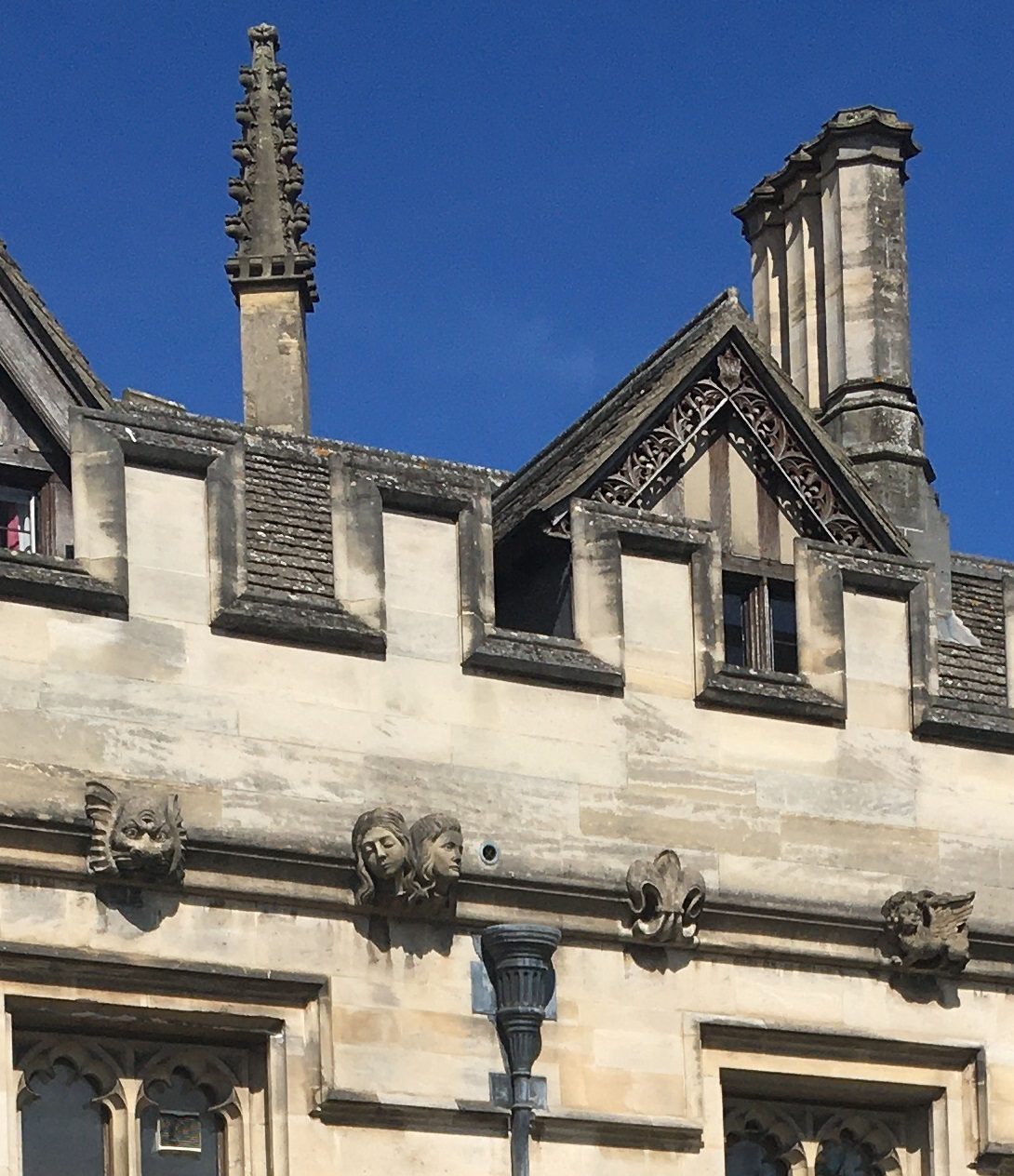
It’s hard to explain certain things to people back home, like how cramped and close together people live in a place like Oxford.  I had wanted to take this photo for some time—if you look through the picture window of the house across the street you can see through to my neighbor Wendy’s back garden. I wanted to get a shot early in the morning when—I hoped—she wouldn’t see me.

It seemed to matter at the time.

I took a walk.  How had I never noticed that enormous Monkey Puzzle Tree, now laden with what looked like seed pods?

Were these juniper berries?  If I filled my pockets with them could I make homemade gin? These were my pressing questions.

None of the things I had worried about happened.  The bus to Heathrow had five passengers, all widely spaced and wearing masks except for That One Asshole.  This was Heathrow.

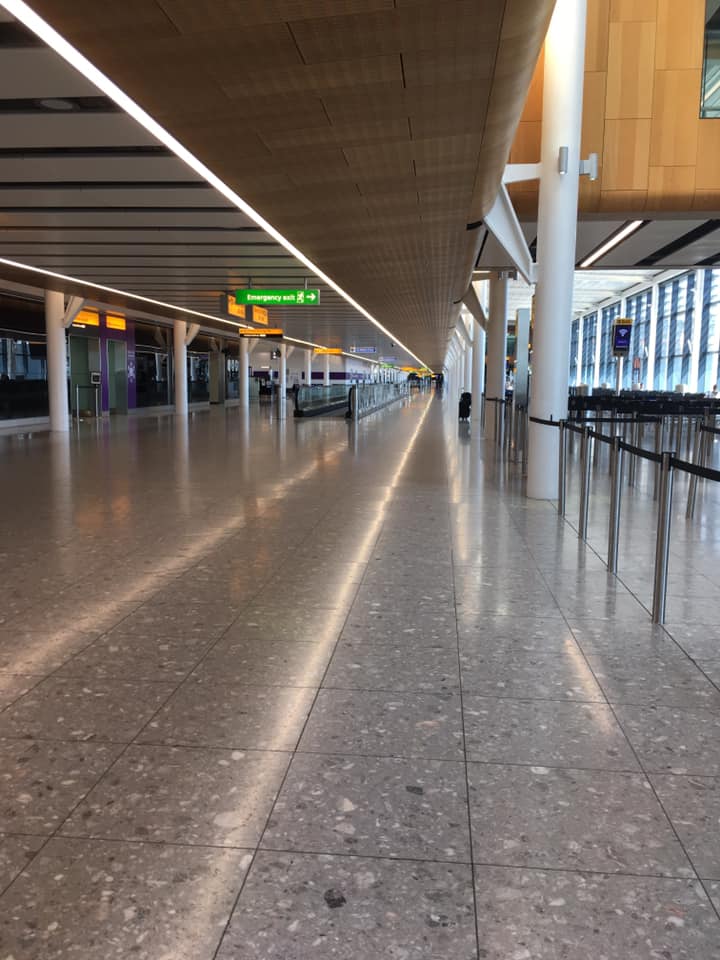
Here’s the main shopping and dining atrium in T2.  Usually my biggest concern is whether the Cath Kidston store will be open (it was not).

Almost everyone was wearing a mask and everyone practiced social distancing.  The plane was about 25% full.  This was going to be fine!
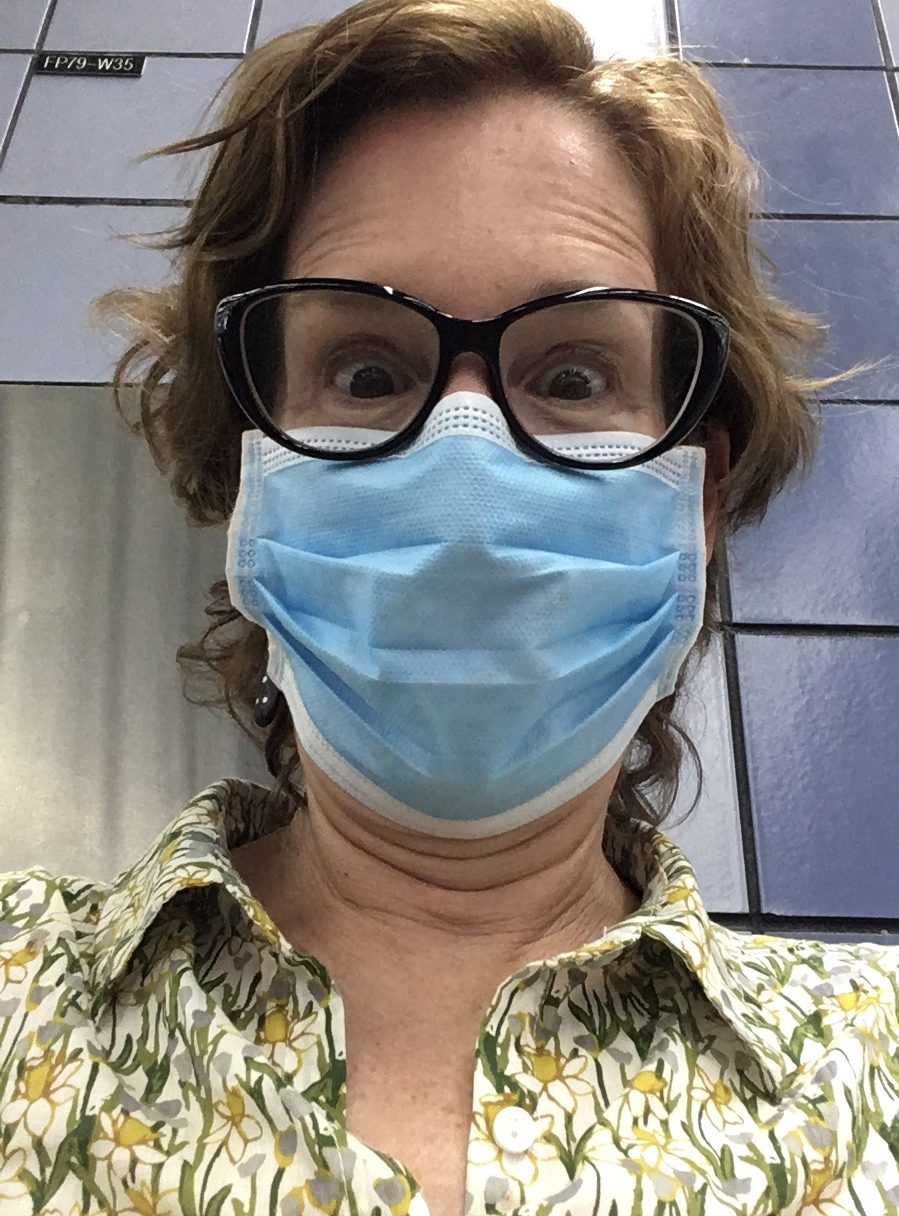
Obligatory farewell photo.

I played with the newfangled window dimmer button. There’s no window shade anymore.  Is it the magic of nanoparticles, I wondered, having worked in a nanoparticle lab years ago.

I watched movies: Rocket Man, Witness for the Prosecution, Book Smart, and Jojo Rabbit.

Every time I removed my mask to sip some water my mask and ear bud cords got tangled up.

We were served food as usual but there were no alcoholic beverages or coffee on board.

Beautiful Chicago.

Re-entry to the US was uneventful.  Public Health Service officials collected my contact details, took my temp, and handed me this.

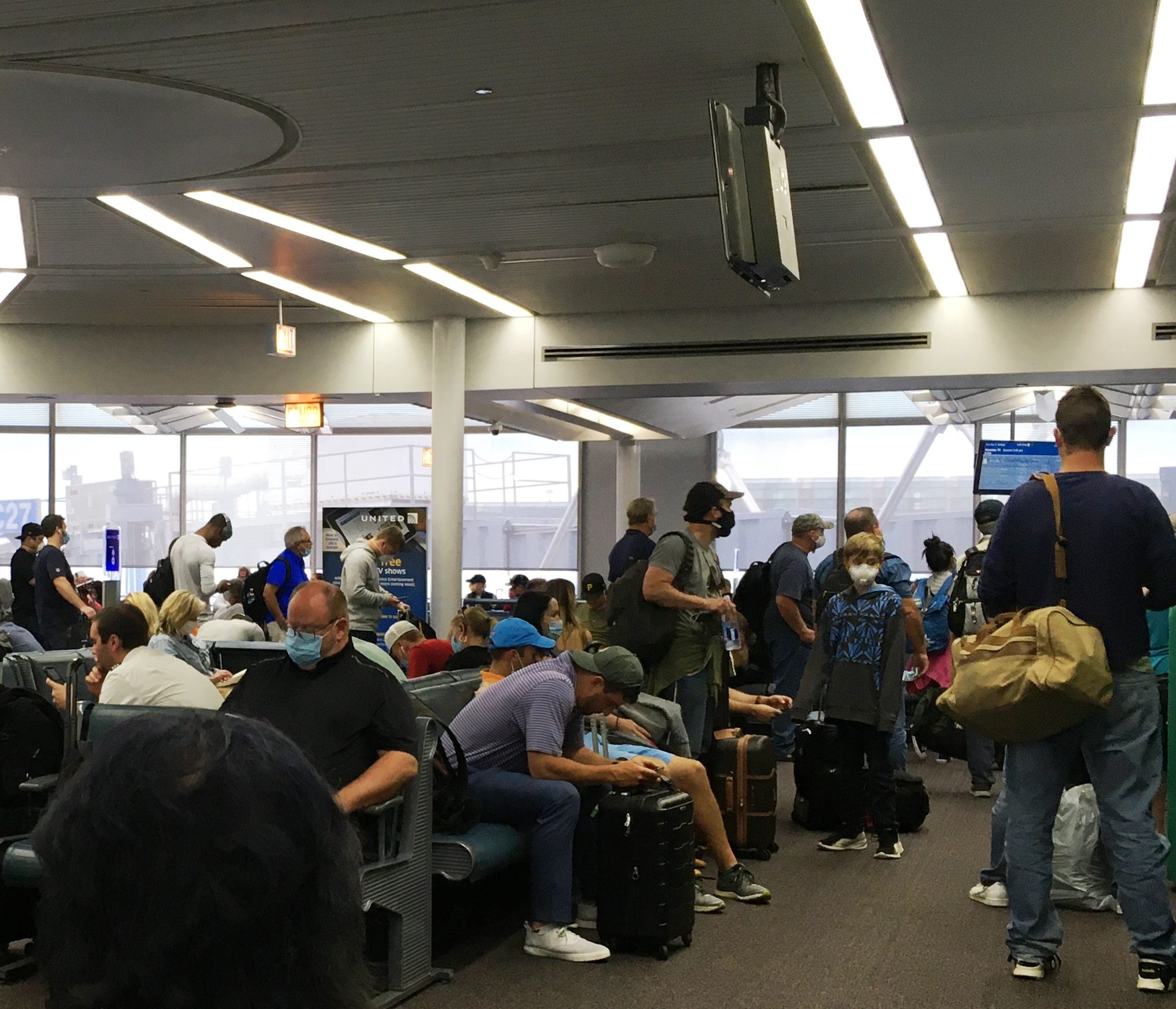
O’Hare seemed like Heathrow at first.

But here were the C gates, with flights headed for Mexico City, Indianapolis, Washington DC, and Minneapolis.  I spent four hours here.  It was impossible to social distance and only about half of the people wore masks.
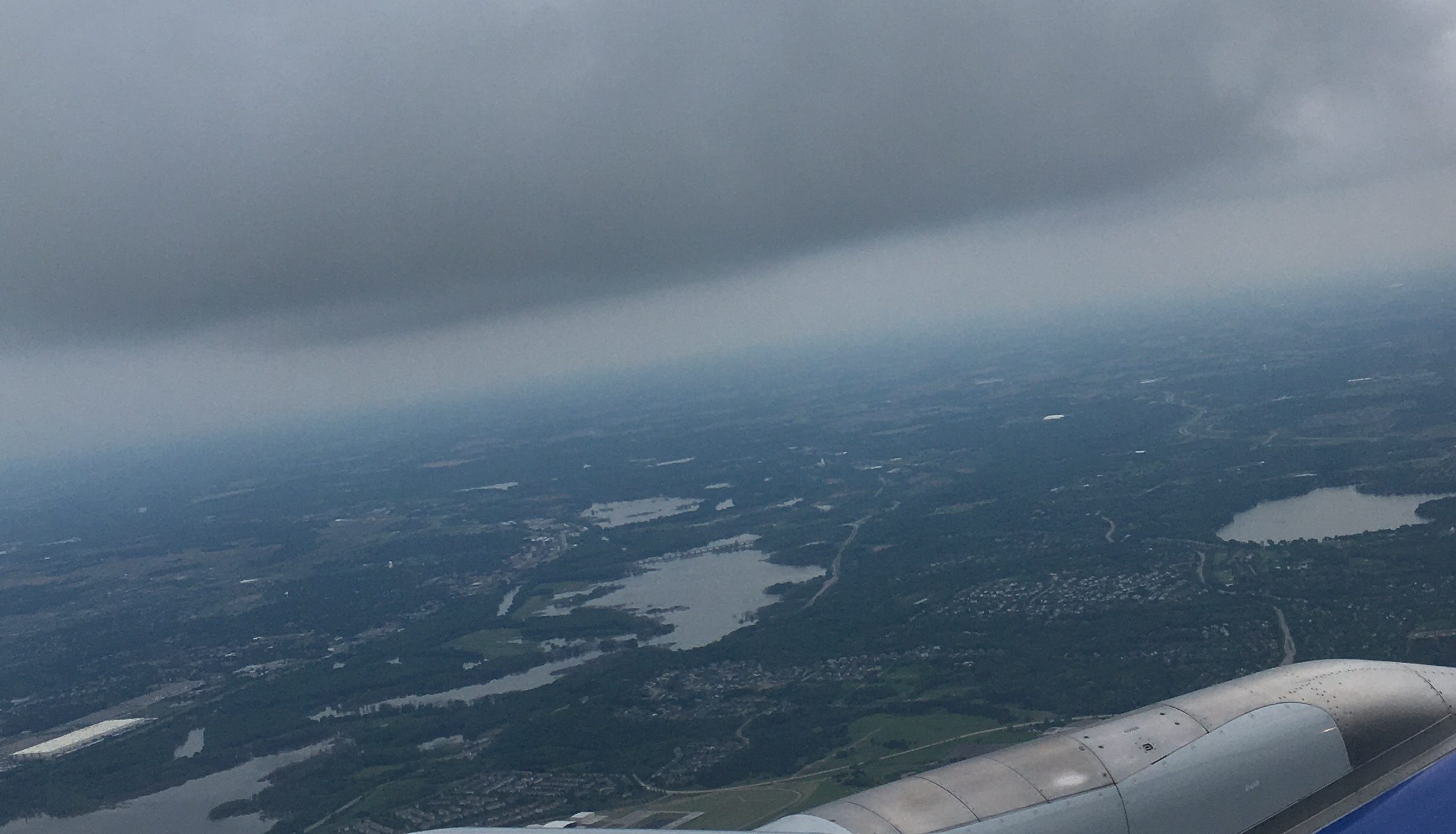
My first views of Minnesota on a hot muggy evening.
I retrieved my bag and found my car, which my son had parked in an airport ramp the previous day.  The next morning I would get a grocery delivery which I had set up while still in Oxford.

Phew!  After almost five months in the UK, I was home, with no dramas!

As I was driving home, a man named George Floyd was being murdered in the street by Minneapolis police just a few miles away for the alleged crime of trying to pass a counterfeit bill.

Protests erupted the next day.  The killer cops were fired but not arrested.  The protests turned violent Wednesday night and escalated each night.

Those who wear badges that say, “To Protect and Serve” (the police) abandoned the people of the Twin Cities and let looters run wild.  So far 255 businesses have been looted and/or burned.  Post offices.  Restaurants.  Pharmacies.  Gas stations.  Barber shops. Liquor stores.  Libraries, for god’s sake!

Nonprofit organizations like an Indian dance company, a Native American youth center, and an arts-funding foundation.  The grocery that delivered my food four days ago is now closed indefinitely. We are living under a curfew.  The national guard has now been called in, and Trump is even being consulted about sending federal troops.

The Minneapolis and St. Paul mayors did nothing but make polished, kumbaya speeches.

The cop who knelt on Floyd’s neck was charged with murder on Friday, but the ones who stood by and did nothing must be charged as well.

There have been rumors that the looters are all extremists—anarchists and/or white supremacists. There have been some people from other states among those arrested, but as of what we know now, most are Minnesotans.

I am in shock.  I have to find a way to get involved and keep moving.

Meanwhile, Minnesota passed the milestone of 1,000 Covid-19 deaths.

Doing the Next Indicated Thing

In 24 hours I will be on a bus headed from Oxford to Heathrow.  I hope.  Of all the legs of the trip home, this is the part I’ve been most anxious about.

What if … the bus zooms past me at the bus stop?  What if it doesn’t stop at my stop anymore?  What if the bus stops but the driver cuts off boarding at me, because they are only allowing 10 people on the bus v. the usual 50?  What if the service is cancelled completely?  They did that with the route to Gatwick airport.  I have a return ticket from my last flight—but should I buy a new one online so I can reserve a seat?  Service is down from every 20 minutes to every two hours.  If I miss the bus, the next one wouldn’t get me to Heathrow until 20 minutes before my flight takes off.  A taxi would cost about $100.

I suffered heart-thumping anxiety for years, now have been anxiety free for a decade except for the occasional work deadline.  Now it’s  back, in a milder form.  It’s a bit annoying, but given the state of global affairs, it would be kind of weird if I wasn’t anxious.

I have learned to Just Deal With Things that induce anxiety.  So I called the bus company.  The customer service guy, Josh, answered after two rings and assured me that ridership was so low I would have no problem getting a seat on the bus, at my stop, and I could use the ticket I already had.

He sounded bored.  I think he would have been happy to chat for a while.

I felt reassured for about an hour, then the What Ifs started up again.  What if he didn’t like my American accent so he purposely gave me the wrong information? What if he was new and didn’t really know the right answers? What if they changed everything right after I called?

I waited a few days, feeling dumb for continuing to worry, then emailed the bus company with the same questions.  Josh replied almost immediately with the same answers. Oh no, how embarrassing! Did he know it was me?  Did he wonder why I was asking the same questions again?  I usually thank customer service people, but I didn’t this time because I would have felt compelled to explain why I didn’t trust his answers the first time.

This second set of answers—maybe because they were in writing—erased the anxiety.

I may sound loopy but there it is.

My last day in Oxford.  I am doing laundry, cleaning the house and the chicken run, and fiddling around with packing.  I will go for a long walk later. Where should I go?  Into the city to gaze at the medieval colleges?  Along the Thames Path to see the waterfowl and other ramblers and the canal boats?  Up to Iffley lock and the church where I have watched the seasons change and enjoyed so many quiet moments?

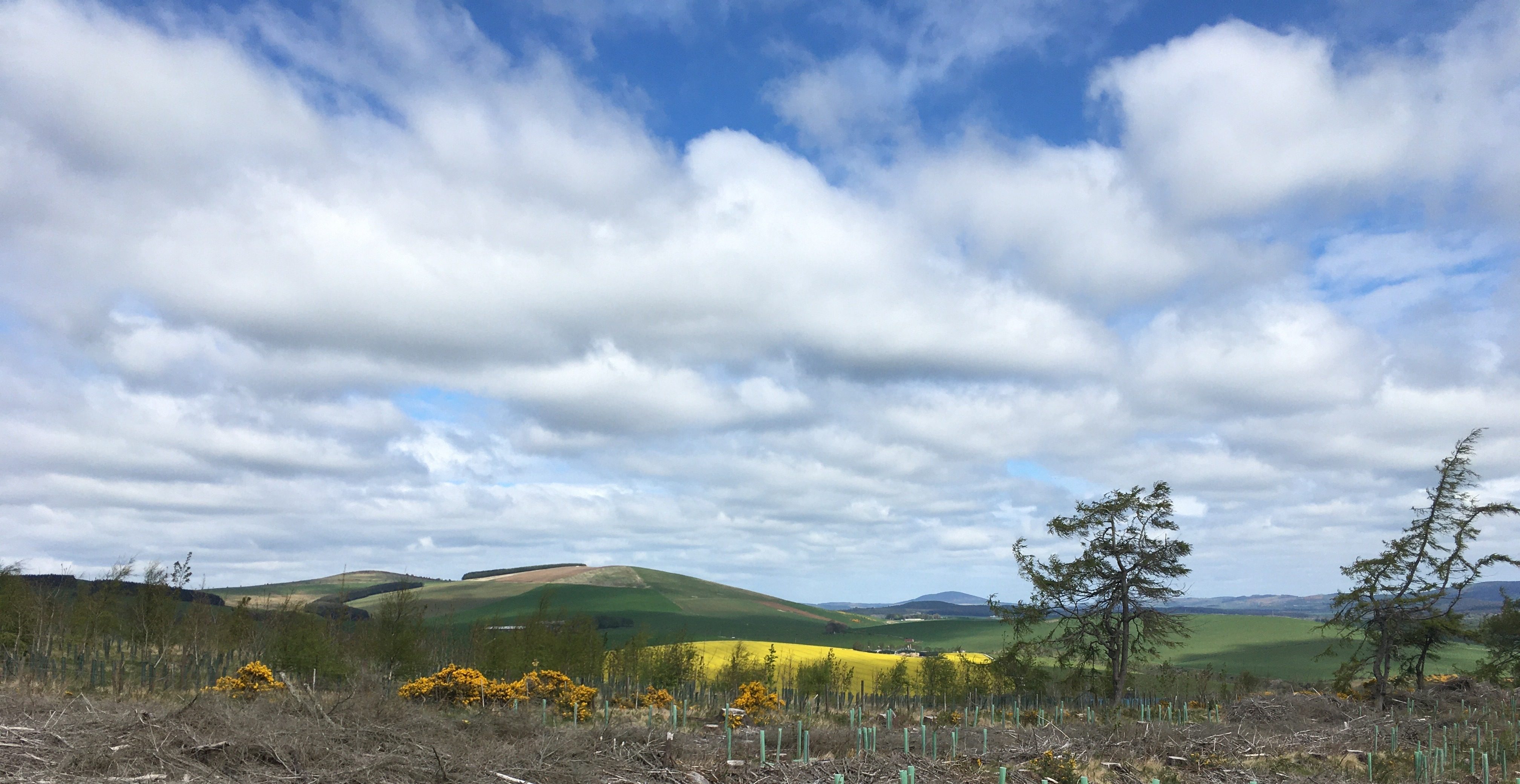
This was my last view of Scotland last week.  Friend and driver Bob stopped the vehicle so I could hop out and take a snap.

I visited Iffley Church the next day.  The churchyard was strewn with wildflowers and an English robin perched on a headstone.

The next day I walked for hours through town, taking photos or just appreciating things I’d never noticed because I was trying not to bump into the 5,000 other people on the sidewalk.

Will I ever return?  The longing to live here forever see-saws with the excitement of the return journey and arriving home after four and a half months in the UK.

I gave the garden a good pruning, then sat and read the Sunday Times Rich List.  I should have gone into online gambling or started a hedge fund.  But then, I probably wouldn’t spend much time relaxing in a garden.

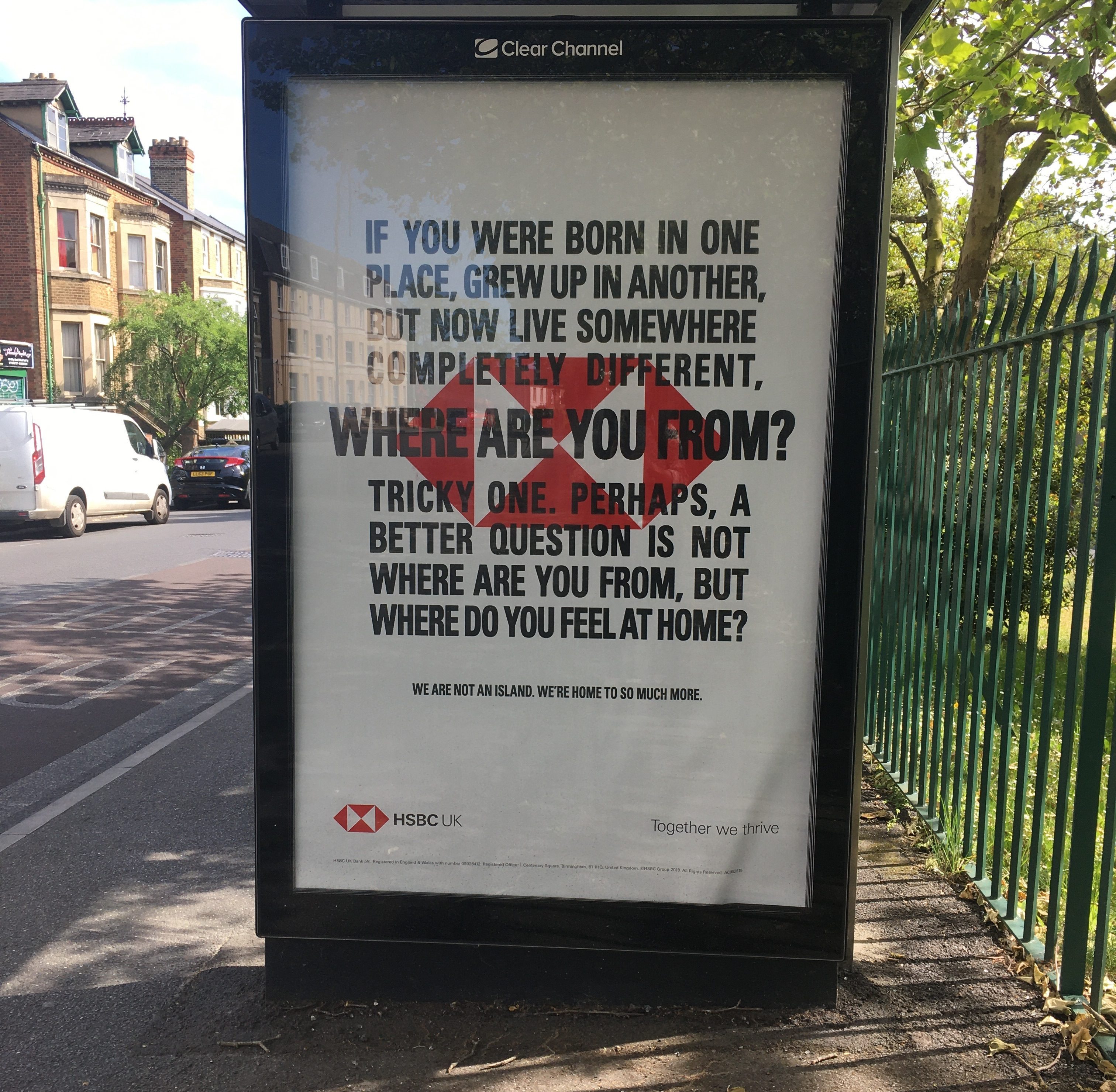
Here is a good question from HSBC.

I was born in New York, grew up in Minnesota, and feel at home in England—and most everywhere else I’ve sojourned.

Once I am on the bus, I will exhale and feel at home.

Returning

So much for this being a travel blog!

After house sitting in Oxford for three months, the plan was to travel all over Europe, with a finale of meeting friends in Crete.  I would try to get around without flying, since flying leaves such a huge carbon footprint.  I spent days mapping out train and bus routes, checking fares and timetables, poring over maps and guidebooks, and making lists of sites to see in each location.

It was all I thought about for a couple weeks.  I felt tension as time passed—I needed to book things now or prices might go up!

I tried to pay for a tour of Bulgaria but the website wouldn’t cooperate.  When I contacted the company they asked me to call their US office the next day.  I don’t recall what exactly was announced that evening on the news, but something clicked in my head and I realized the tour would never take place.

But I could still travel around the UK, right?  Wrong.  Inexorably, the plan closed in until I deleted my itineraries, crumpled up my paper lists and burned them in the fireplace, and shelved the guidebooks.

Well boo hoo, I’m still better off than 99% of the people on earth.

After a month in Scotland with Lynn and Richard and four dogs and two cats and what sounds like dozens of mice having a fiesta in the walls of my bedroom every night, tomorrow I will return to Oxford.

Yesterday I went for a last walk across the fields near the house.

In a span of 45 minutes, the sun was so hot I had to strip off my hat and scarf and gloves, then dark clouds raced across the fields, the temperature plummeted, and it rained.

I will miss the wide-open spaces, the pure air and water, the quiet.  And of course, the company.

I’ve lost track of how many times I have been to Scotland.  Each time I leave, I wonder if I will ever return.  I try to really focus on the here and now so I can dial up memories of the land and people if I never come back.  So far, I always have.

I haven’t worn makeup for a month.

Well okay, maybe a little pressed powder and eyebrow filler.  But that’s nothing to what I used to plaster onto my face.  I think I look okay.  Is this a case of finding my natural beauty, or of lowering my standards?

I booked a flight to return to the US on May 25.  My first two flights were cancelled and I am trying to mentally prepare myself for this one to disappear too.

I try to think through all the “what ifs” that could go wrong and what I can do to prevent them.  I’ll need to get from Oxford to Heathrow airport.  In normal times there was a bus that ran every 20 minutes, all day, every day, to Heathrow.  Now it’s down to once an hour.  The 25th is a bank holiday.  What if the buses stop running? What if a bus pulls up and it’s already full, since they are only allowing one quarter of the usual number of passengers?  What if I have to hire a taxi to take me to Heathrow?  Will there be one available?  How much would it cost?  Maybe I should try to get to Heathrow the day before, just to be on the safe side.  Are any of the airport hotels still operating?

And on and on.  I’ve got a week to figure it all out, but even so, much of it is just unknowable.

I feel like I have already written all of the above, and maybe I have.  It feels like I’ve devolved from telling interesting travel stories to essentially writing diary entries.

“Dear Diary: Today I combed my hair.  I feel so proud of myself!”

I hope you are well and keeping up your spirits.  I hope we are all traveling again and telling stories soon.

Scrambling, Scrabbling

Week six of UK lockdown is behind us.  Tonight Boris Johnson, the Prime Minister, will outline changes to our restrictions.  The Sunday papers have already broadcast what those are likely to be: once-a-day outdoor exercise will become unlimited exercise, it’ll be okay to go to the beach, garden centers will open (all of these assume two-meter distancing).  Boris is likely to advise the wearing of face coverings in shops and public transport.  A mandatory 14-day quarantine for people entering the UK and stiffer fines for violating the rules will likely be announced.

For me, nothing much will change.  It’s snowing in Scotland, but I would be unlikely to request a day on a North Sea beach even at the height of summer.

As I wrote in another post, my flight home was cancelled by Delta.  I scheduled a new one; it was cancelled the next day.  I will be issued a credit, but Delta has ceased flying to the UK so I can’t use the credit to get home.

There are no more direct flights to Minneapolis-St. Paul from the UK.  I prefer not to stop over in New York or Chicago, where there are coronavirus outbreaks.  I found an itinerary on Icelandair that would take me through healthy Reykjavik but my gut told me to wait a few days before booking it.  Two days later, Icelandair was no longer flying to the UK.  I thought about flying from Scotland, which has less coronavirus than the UK south, but Scotland’s airports are shut down completely or offer only two-three stop itineraries.

As I see it, every stop, every additional flight or airport, is a new opportunity to catch the virus if it’s present.

I continue to get updates from the US State Department.  The latest informed me that Heathrow has closed three of its five terminals.

Today was the day I was supposed to join Lynn and Richard and two other friends in Crete, after traveling through France, Switzerland, Bulgaria, and other points unknown and never to be known.  It’s hard to believe that just a few months ago my biggest concern was whether to take the Eurostar to Paris or get off in Calais and take a train down to Bergerac to meet a friend.

Wah, wah!  As usual I pinch myself that I should have such “problems.”  I keep thinking about the Ethiopian refugee camps I visited three years ago for work.  There was no running water.  People lived in tiny cinder-block houses with half a dozen others.  Activities were carried out in groups, sometimes very large groups.  I feel helpless to do anything but “hold them in my thoughts,” which doesn’t mean a thing and just makes me feel guilty.

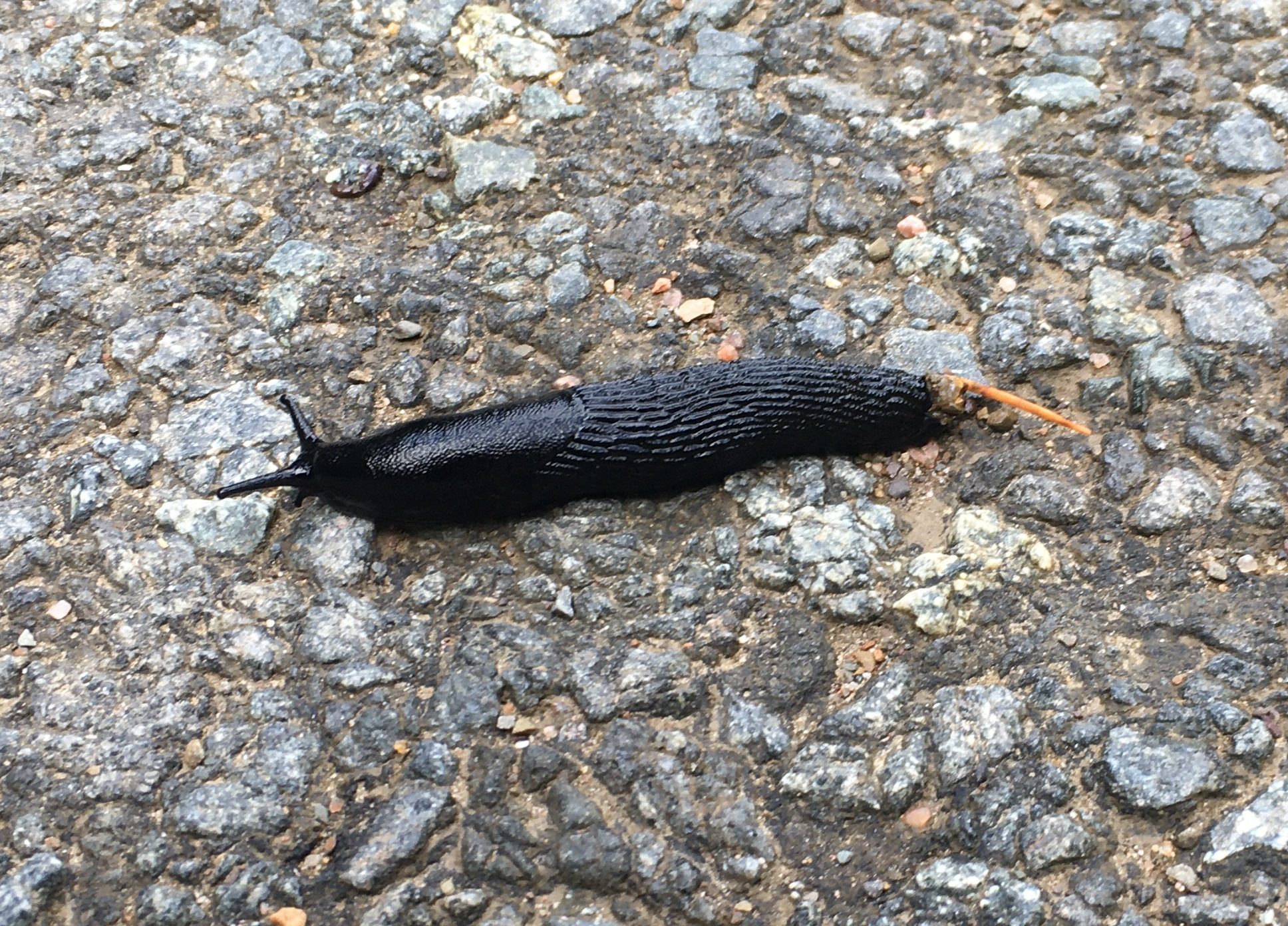
Meanwhile the days pass, fast but slow.  Until today the weather was fine, enabling outdoor projects and hikes.  On one hike I saw a giant slug crossing the road.

“Now, if this was a turtle, I would pick it up and deliver it safely to the other side,” I thought.  “Isn’t the real test of compassion whether I care for creatures I find repulsive?”  I kept walking.  Another thing to feel guilty about.

Richard and I hiked to Wormy Hillock.  It’s shaped like a donut was pressed into the earth, then removed.  It was probably built by Picts, and probably prehistoric (which just means before there was a written language).  Its purpose is unknown.  Worship?  Sacrifices?  Entertainment?

Back at the house, I moved my finger around on the local map and chuckled at the names: Knappert Knows, Little Riggin, Green Slack, Bogs of Noth, Muckle Smiddy Hillock, The Lumps, How of Slug, Darnie Heuch, Mairs of Collithie, Buried Men’s Leys, How of Badifoor, Grouse Butts, Shank of Badtimmer, Slack Methland, Hill of Glack-en-tore, and my favorite, the Glen of Cults.

Another day, Lynn and I visited a neighbor across the road who maintains the garden her late husband—the former head gardener at Cambridge University—created.

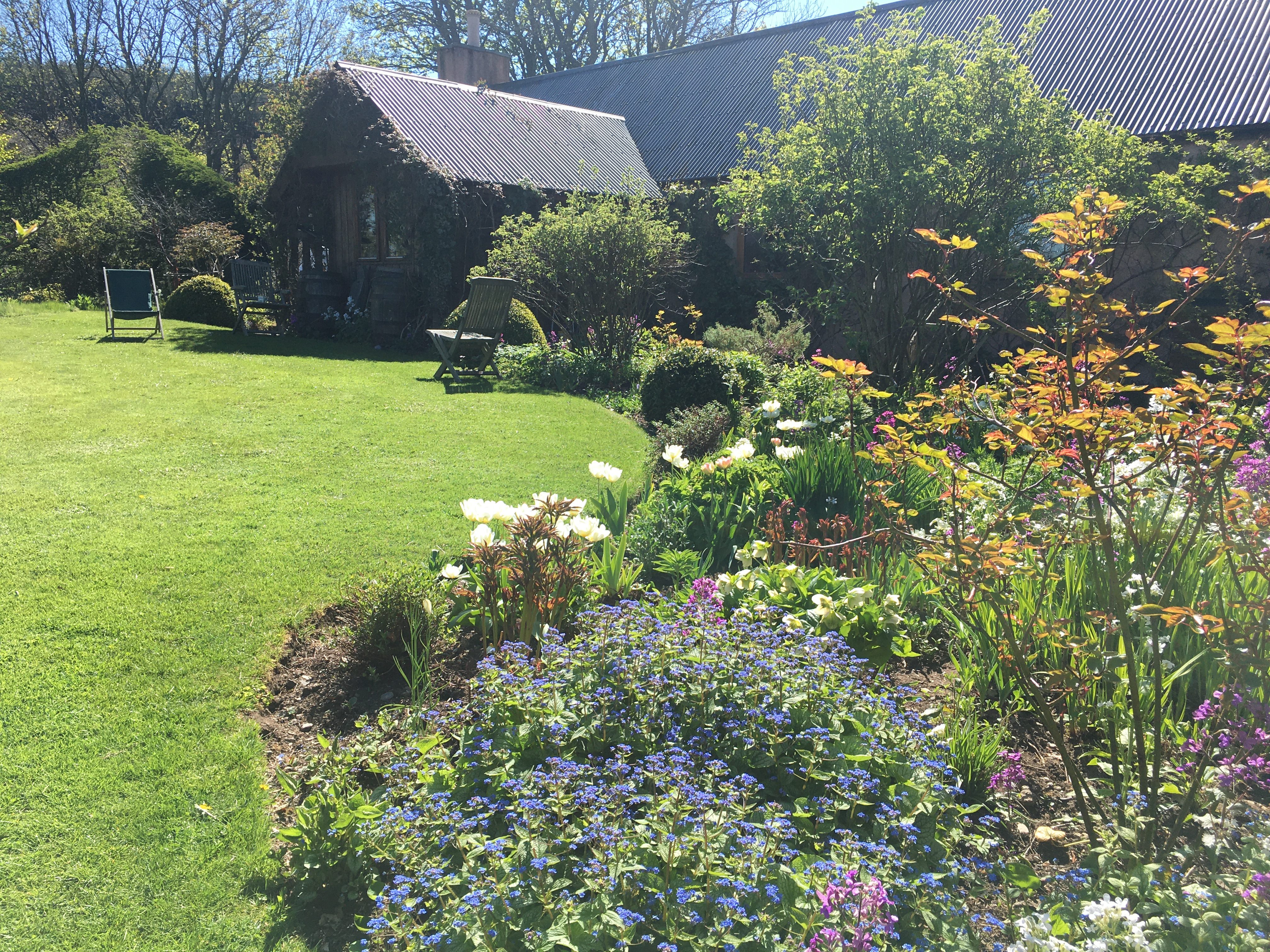
Lynn’s garden is coming on as spring progresses.

A visit from the fishmonger was a highlight.

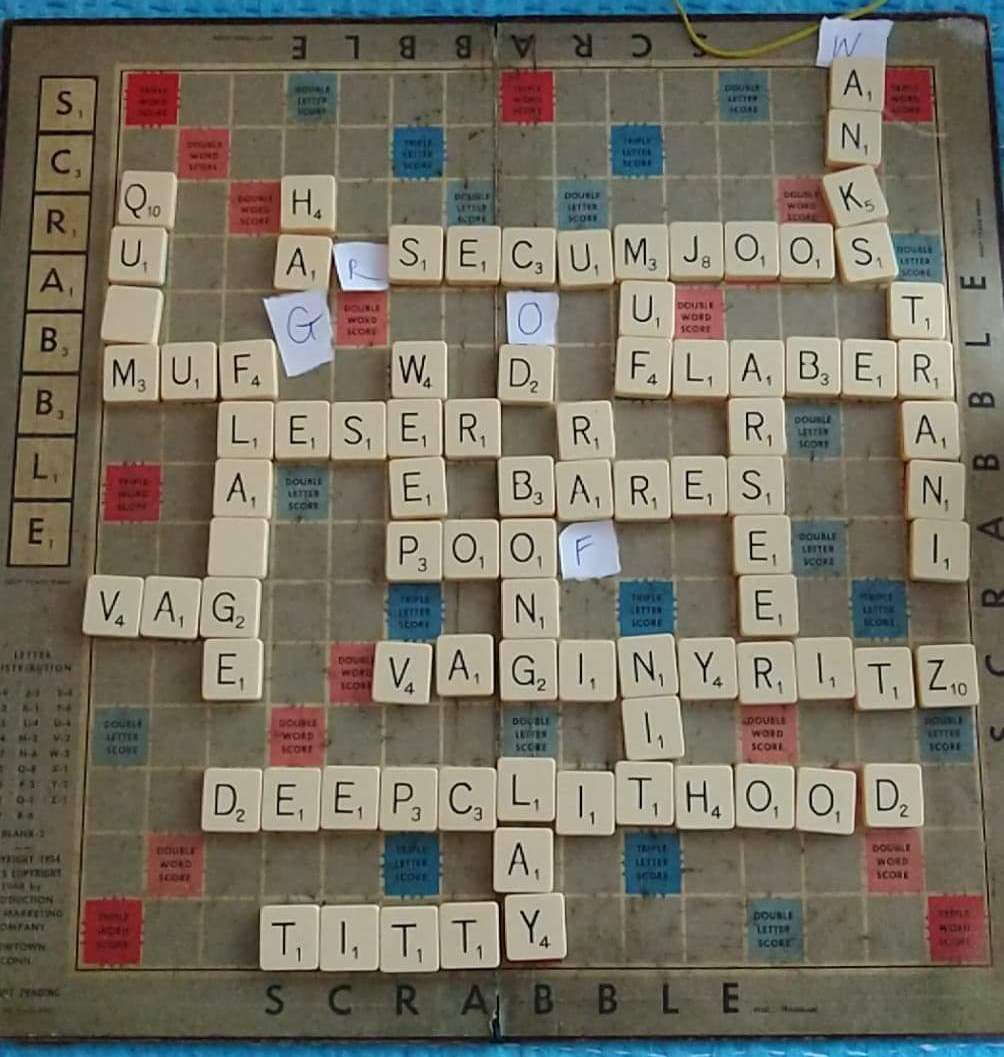
My award for most creative pastime goes to a friend who has been playing x-rated Scrabble over the phone with friends.

Stay well, and don’t forget to laugh!

Things that Change, Things that Last

A month ago I wondered if I was the proverbial frog in the slowly heating water.  Was I oblivious to the worsening coronavirus situation all around me in the UK?

Yup, I was.

The UK now has the dubious distinction of vying with Italy for second-rank for COVID-19 deaths; we are about 400 deaths shy of Italy’s total, 28,710.  Of course, different countries count deaths differently.  The UK just started counting COVID deaths outside of hospitals, so our number jumped.  I don’t know how Italy counts.  Regardless, it isn’t good.

However, it’s not as bad as the US.  Here’s a graph we see on the daily briefing.  It shows the US trajectory going up, up, up.

In two weeks, I’ll return to Oxford, an overcrowded city.  After 10 days I will—probably—fly home.  My flight was cancelled once, although I only found out accidentally.  I’ve rescheduled, but I don’t relish the thought of being on a bus, then at an airport, on a plane, in another airport, another plane, a taxi, then being quarantined for two weeks.

Who knows where that trajectory will have taken the US by then.

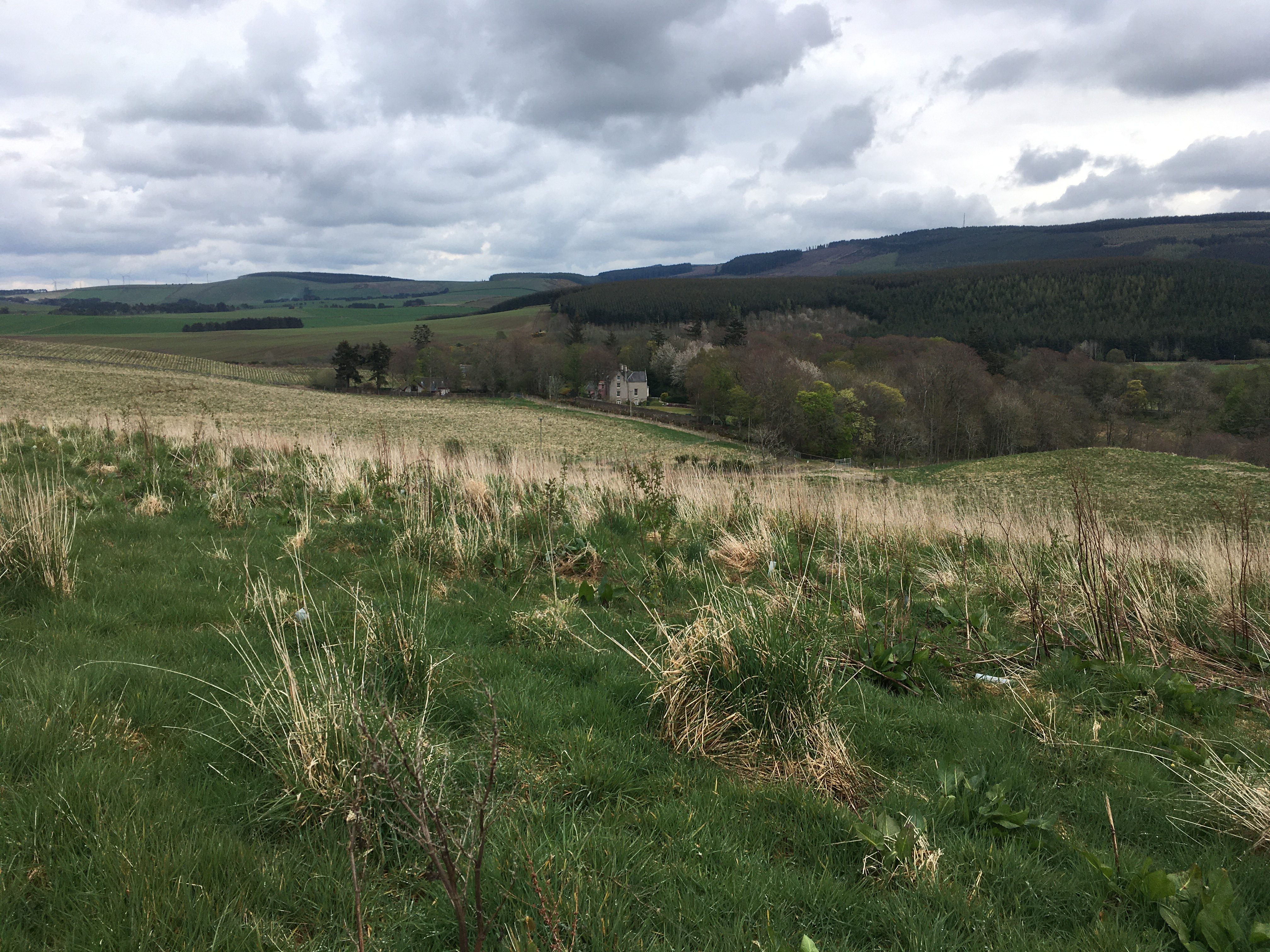
Meanwhile, I am safe in Scotland.  Here’s a view of Lynn and Richard’s house from halfway up the hill behind it.

We had great sunny weather for 10 days and now gloom and “Scottish mist” have set in.  Fortunately it’s a large enough house that one never feels claustrophobic.  I can’t imagine how it must feel to be stuck inside an apartment with kids and no garden or even a balcony.  Kudos to the people who are handling that well.

Here’s a little history and tour of the house.

The original structure was probably built in the 17th Century as a defensive outpost to guard the road and collect tolls from people traveling between Huntly and Gartly.  It was built into a geographic bowl, so there is a ditch all the way around.  Think of it as a moat without water.  Any attackers would have had to run down hill, where the occupants would be waiting for them, muskets pointing out of “murder holes.”  Below, the ditch viewed from Richard’s office and the kitchen.

Kirkney Water, a stream, runs around two sides, there is an acre-long wall on another, and in front is a very long lane lined with ancient trees; so no one could “sneak up.”

Whether or not the original structure was incorporated into the house built in 1847 is not known.  All the surrounding land was owned by a branch of the Gordon clan, headed by the 4th Earl of Huntly.  The family lived in the house, where I am sitting now.

There was a game-keeper’s cottage up the hill, a farm, and what are called “steadings” across the road—stables and laundry facilities and so on—all of these are now modern single family homes.

This is the Gordon-tartan-covered door in the front hall.

The Gordon family had to sell the home because the two sisters who lived in it had no heirs to whom they could leave it.  One brother had been killed in WWI.  The other was disinherited for marrying an Irish actress.  The ladies had not been able to find “suitable” husbands; that is, men of their class, since so many men had been killed in war and they lived in such a sparsely-populated area.

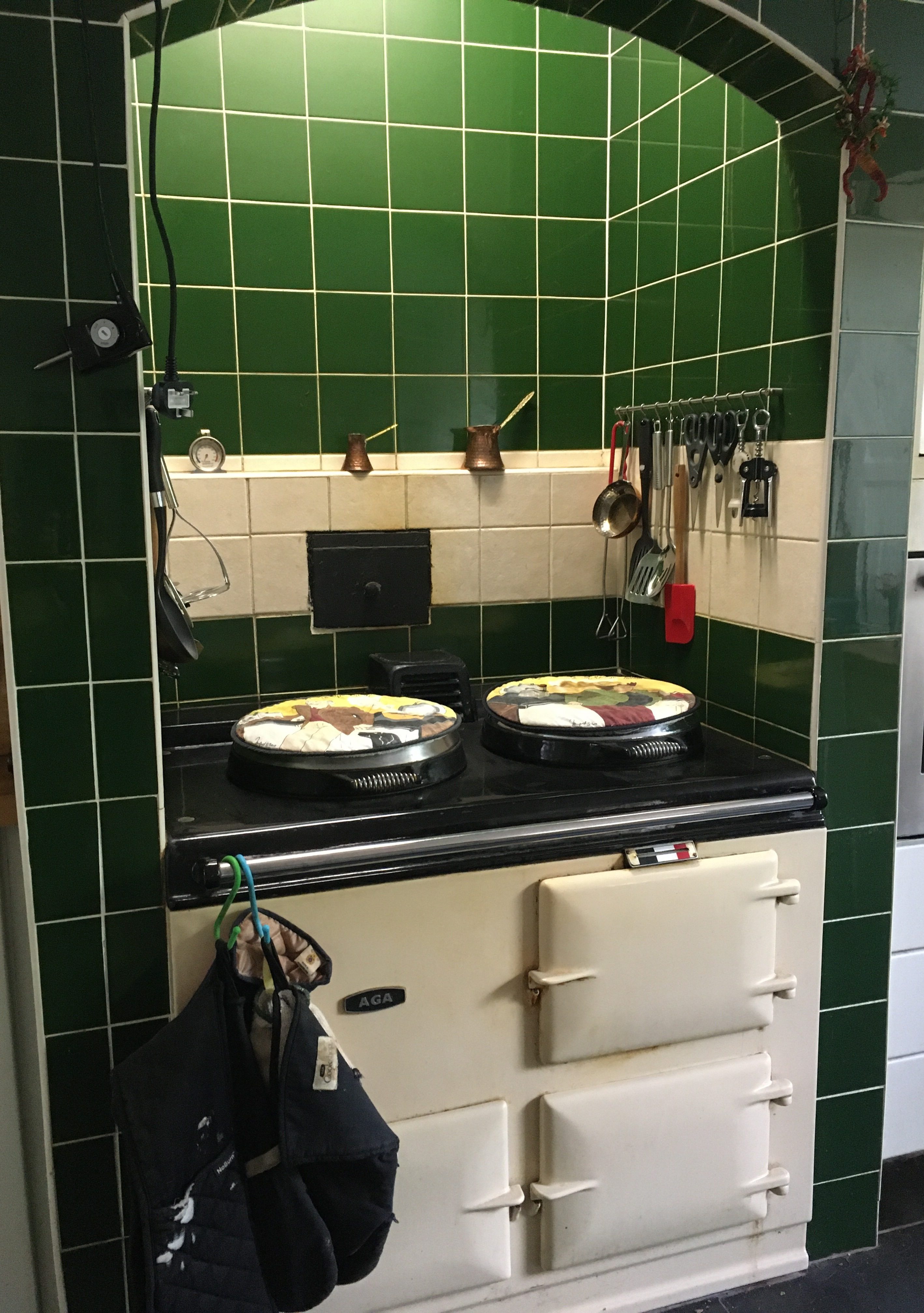
Here is the old stove in the kitchen—it’s way too heavy to bother removing.  Next to it is a small stove probably used by servants to prepare smaller meals when the family was away.

Here is the next generation stove, the Aga, used only in winter.  There’s a third generation, too.

These are the bells in the kitchen that would ring when the family wanted to summon a servant.  Disconnected by a family who had four teenage boys!

There’s a dumbwaiter in the corner, and to the right of it, a proving cupboard for breadstuffs.

Here are a few more vignettes from around the house.

Whiskey decanter set.

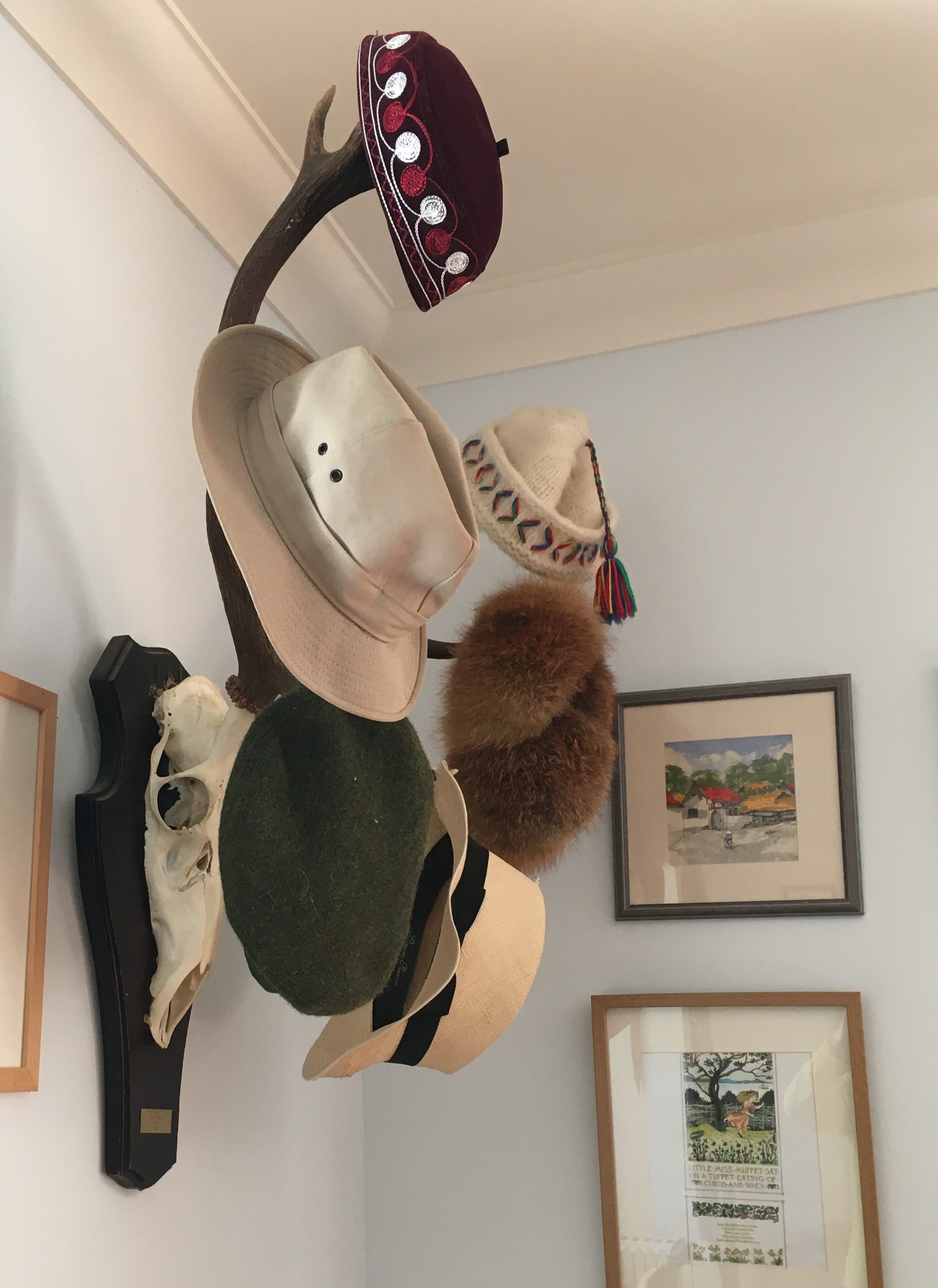
Reindeer skull hat rack.

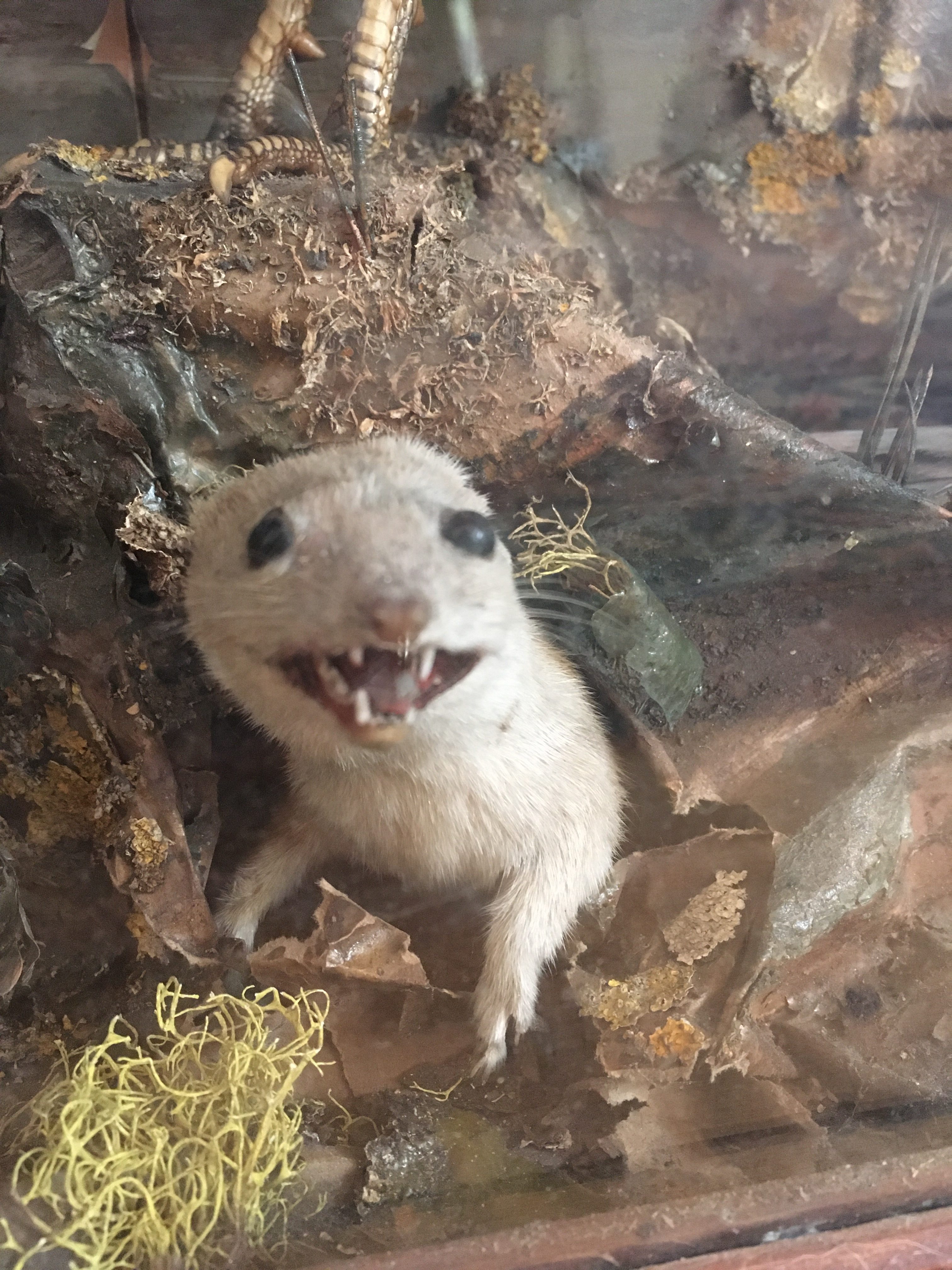
Victorian taxidermy.

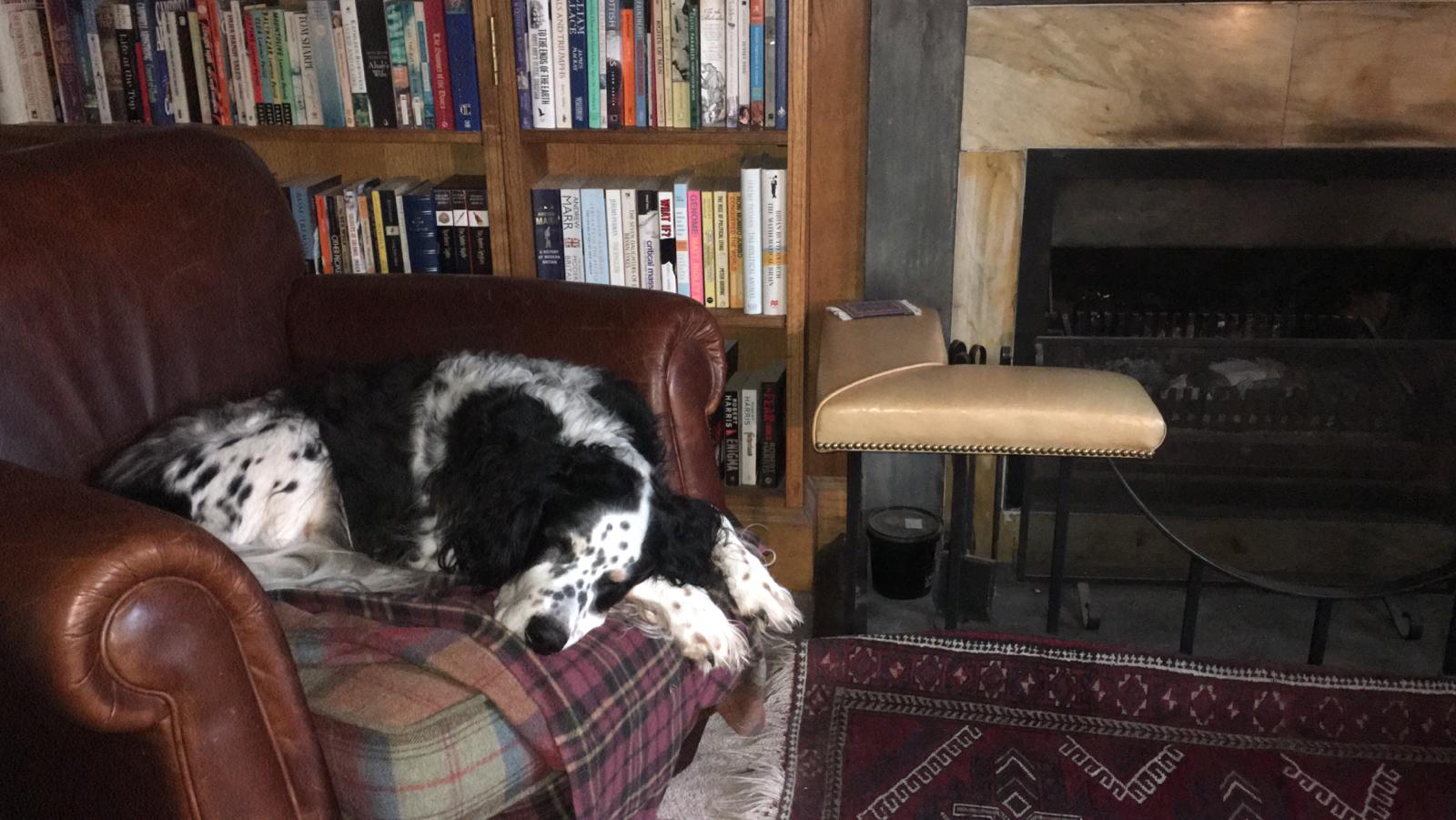
No Scottish country home is complete without an old dog snoring in the library.  This one’s name is Parker, fondly referred to as Lord Parker.