Category Archives: Living abroad

Whirlwind Tour

Five countries in 17 days.  I’ll never get around to writing about it all, but I’ll try to capture some highlights.  Today: Copenhagen.

People: The blondest people I’ve ever seen, and I’m from Minnesota.  People with pointy, turned-up noses whose language sounds like, “Hoon-dah, hoon dah, hoon dah.”  There were also huge groups of Chinese tourists everywhere.

Weather: Cold, grey, rainy.

Quiet: Two reasons: electric vehicles and bicycles.  Throngs of people in suits commuting to work, sitting ram-rod erect as they whiz along with no helmets.

Expensive: A salmon and cream cheese bagel in a nondescript coffee shop cost 55 krone, or about $11.  Two delicious herring appetizers and a small bottle of water at the Design Museum cost $30.

Design: Beautiful wood was used for everything from the airport floor to the bagel counter.  The Air B&B I stayed in was full of Danish Modern furniture and even the most prosaic item was designed, from canisters to ladles to the appliances and bathroom fixtures.

I arrived late at night and splurged to take a taxi from the airport.  That cost about $45, compared with the $4 train ride I would return on, but it also took only 15 minutes, compared with about an hour and 15 minutes on the train, which had multiple delays including all passengers being told to get off and switch to another train.

The accommodation was great for the price, if all you need is a single bed and a good location.  The three-story townhouse was owned by a woman named Mette who was a divorced lawyer with two kids who were at their father’s.  I only saw Mette’s face as I peered down the steps from the second floor late at night, which was when she got home from work. This was fine with me; I was wanting-to-be-alone mode.

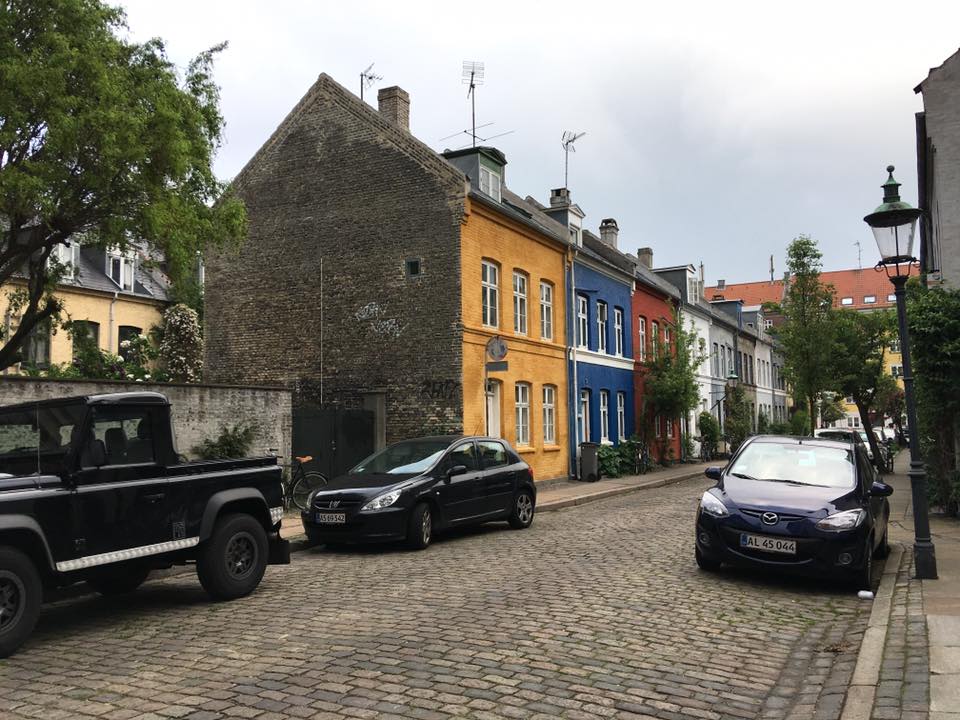
The house, as I’ve already written, was a collection of beautifully- and/or sensibly-designed things.  I felt like I was living in an Ikea store.  One surprise was that there was no recycling.  None!  I think it was just Mette’s neighborhood, which had very narrow streets and thus would be difficult to get a recycling truck through.  It felt really weird throwing paper and glass bottles in the trash.
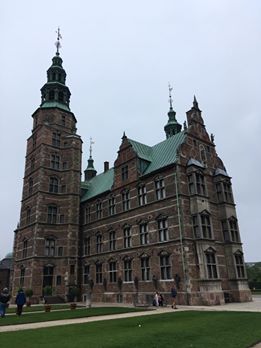
So what is there to do in Copenhagen?  Two things rise to the top—the gardens and the palace.  Maybe because the weather is so crappy, they work to make their gardens in Copenhagen impressive—and they are.  It really would have been spectacular with some sun, but never mind.  There are the botanical gardens, which have enormous greenhouse complexes, and across the street are more gardens surrounding the Rosenborg palace.


Since Copenhagen is so expensive and I was just at the beginning of my journey, when I am always more cautious about spending, I bought a sandwich and some grapes at Aldi and had picnics in the gardens two days.  Interestingly, Aldi is a horrible, dirty, dumpy store in Europe.  This was my impression in Copenhagen, and it was confirmed by my friend in the Netherlands, who said something like, “Eew … you shopped at an Aldi?!”  Still, it was cheap.

I toured the Rosenborg along with 3,000 Chinese tourists.  I’ve been to a lot of palaces.  Usually they are vast, spreading, and sprawling.  I thought the Rosenborg was modest as palaces go, and it was built more on a vertical plan.  That is, the rooms were small but there were four stories, as opposed to most palaces which have two.  Another thing that was different was the lack of religious imagery.

I knew nothing about the Danish monarchy.  Did you know one of the queens had an affair which resulted in an illegitimate daughter?  Any English king probably would have beheaded her, but in enlightened Denmark I guess it wasn’t an issue.
The Nyhavn area is overhyped.  It epitomizes the term “touristy.”  The fortress, called the Kastellet, was a “meh.”  I never got to Tivoli Gardens.  It would have required a bus ride, and I just wasn’t up to figuring out the public transport system.  If I go again, I would start with a Hop On Hop Off bus tour to get my bearings.

Next up: Utrecht.

Auf Wiedersehen

Greetings from Salzurg, Austria.  I am sitting in the breakfast lounge at Pension Elizabeth, where Abba is playing on a loop, the Internet is super slow, and the hotel staff are having some kind of meeting with a salesperson at the next table.

I’ll leave for the airport in a few hours to fly to Ethiopia, where I’m told I’ll have no Internet.  I would love to say I’m going to write enough posts to take you along with me, but that’s a fairy dream.  Complications are following me, and I can’t say I’ve really had one day off since I left 11 days ago.

I’ve got 200 emails in my work inbox.  The June 1 payment from my renters back home hasn’t shown up in my checking account.  I am getting texts and phone calls from someone who needs to know something about the sale of my condo and I have no idea who they’re from or what they’re about.

The most “exciting” complication happened when I flew from Copenhagen to Amsterdam.  I received a reminder from Expedia the night before to check in.  Norwegian Air’s website didn’t recognize the routing number but I got a message that said, “Don’t Worry! We’re still working on our website.”  Really?  Did Norway just get the Internet?

The train to the airport the next day left late and stopped twice to let other trains go by in the other direction.  In general, I think this is good, but not when it keeps you standing still for 20 minutes at a time. Finally, we were told to get off and take another train.  I had, as they always advise you, allowed plenty of time to get to the airport early but got there about an hour before my flight was to leave.

And Norwegian Air had no record of the flight.

It’s a long story, but I ran from one terminal to another, then back again, then back in the other direction, and was quoted up to $800 for a new ticket.  I did all this with my big bag full of books, since I hadn’t been able to check it.

In the end, I was lucky to get the last seat on a Scandinavian Airlines flight for $406.  Expedia says their records show I took the Norwegian flight.  They are telling me to call Norwegian Air id I still think there is a problem.  Call?—as in make an international call that will cost me $1 a minute to sit on hold?  I protested, but Expedia hasn’t responded.  If anyone has advice to doing battle with Expedia, please let me know.

Four hundred bucks is a lot of money to lose, but also in the mad rushing around in the airport, I must have dropped my bag on my foot.  Once I arrived in the Netherlands and took my socks off at my friend’s house, I saw an alarming gold-ball sized green swelling on the top of my left foot.  I immediately thought of the American journalist Miles O’Brien, who had a freak accident where something fell on his arm.  The incident seemed mild, but it caused something called Acute Compartment Syndrome.  He had to have his arm amputated.  Boy, is he good looking—you really should check out that article.

My foot swelling went down that night, but my whole foot has been black and blue for a week.  I showed it to my friend and we went down a check list: it’s not numb.  I can bend my toes.  It’s tender to the touch but not painful to walk.  The swelling is gone.

Good to go to Ethiopia, right!?

Other than the potentially fatal foot injury, $406 loss, and the nonstop rain that follows me everywhere, I’ve had a great time so far.

Okay, I’m off to bring the rain to Ethiopia.

I’ll write more when I get to Cornwall, England in a week or so.

Welcome, Now Go Away

This is a series of posts about spending the summer abroad that starts here.

Greetings from Copenhagen!  Obviously I got here, and the journey was pretty smooth.

My flight to London from Minneapolis was sold out.  There were only two open seats, in the last row.  I was in the second-to-last row with a guy who introduced himself to me as Chuck.  “Chatty Chuck,” I immediately dubbed him in my head.  I flagged down a flight attendant and asked if Chuck or I could move to the empty row but she explained they were reserved for the flight crew.  I felt rude as I donned my earplugs and sleep mask while Chuck chatted away, but within minutes I was sound asleep.  When I woke after the plane leveled off, Chuck was in the back row.  “They said they wouldn’t need these after all,” he reported excitedly. I flopped down across two seats of heavenly sleeping comfort.

Now, two seats on an airplane are still not much room.  I’m 5’ 3” and still had to assume a fetal position.  But I was horizontal.  And I had my full-sized feather pillow, which gave me something soft to rest my head on instead of the arm rest.

It was the best sleep over I’ve ever had.  I woke the next morning at 11:30 London time, a half hour before arrival, and slugged down two cups of coffee.

My vertigo was gone.  My mother, a neurobiologist in her mind, had predicted, “that thing—you know, that airplane pressure thing,” might make it go and I had snickered but maybe she was on to something.  Now doctors could just prescribe a trans-Atlantic flight for vertigo.

One of my fears was that, because my trip is so long, border control at Heathrow might think I was entering the UK to stay.  I had an envelope with financial documents to prove I had assets in the US—a property, savings, a job to return to.  But the agent asked to see proof of my onward flight to Copenhagen.  When I checked in, the SAS (Scandinavian Airlines) website had promised to send my boarding pass via text “right away,” but it never materialized.

I was explaining this to the agent.  She looked annoyed and bored.  Imagine all the lame stories they must hear.  Typical of an immigration hall, there were signs saying, “The use of Mobile Phones is Expressly Forbidden in this Area.”  I asked permission to use mine so I could show an email with the flight confirmation.  She sighed and said yes, as though that was the most obvious thing in the world and why hadn’t I done it already?  The email wouldn’t load.  She rolled her eyes and said as though speaking to a very naughty five year old, “Madam, I will make a special allowance this time.  But in future, I strongly suggest you do not rely so heavily on technology.”

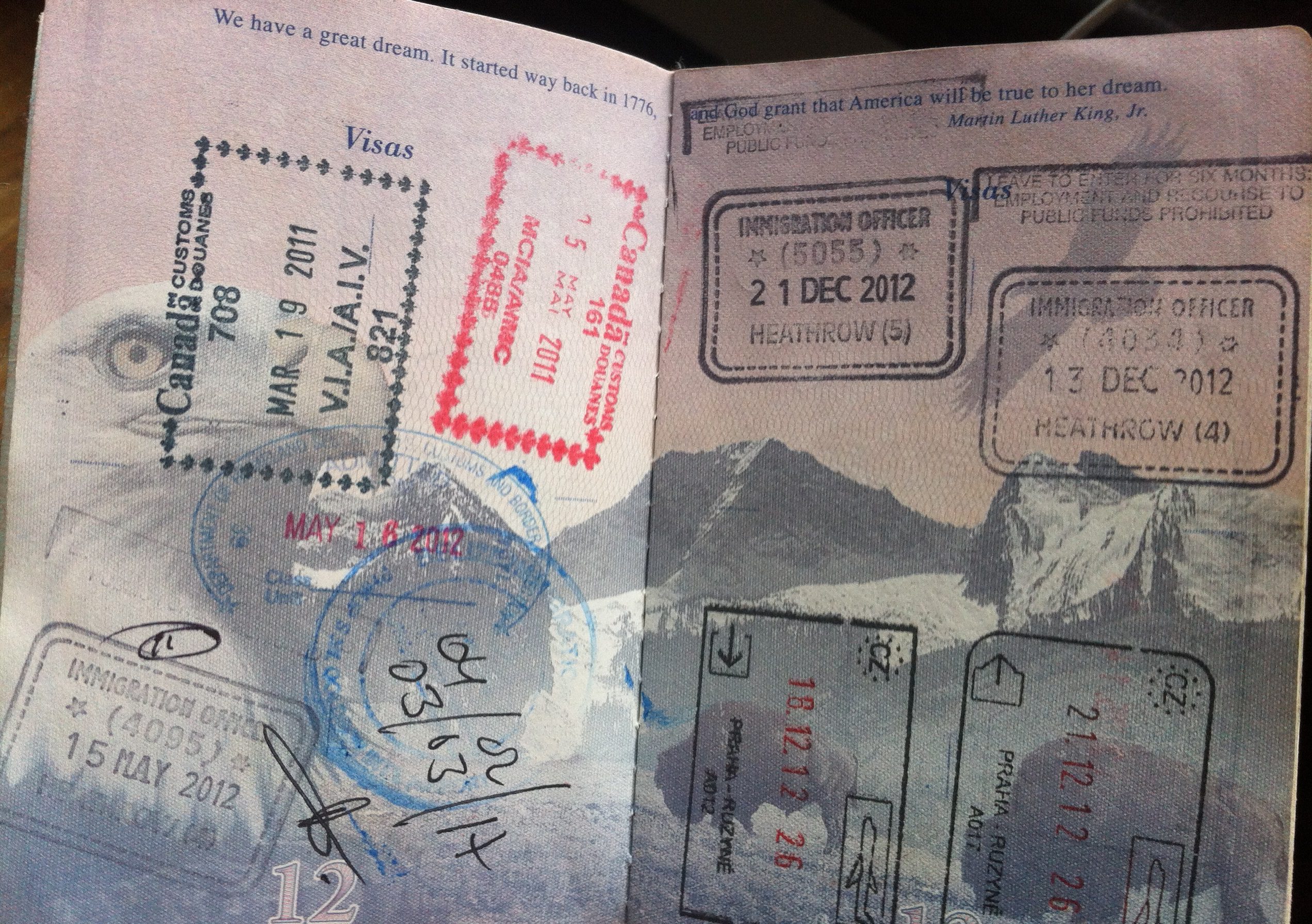
“But I don’t have a printer at home….”  She stamped my passport by way of saying, “Don’t Care!  Next!” and away I went.  In my passport was stamped this friendly message, “No work or recourse to public funds.”

I wonder what we stamp in visitors’ passports when they enter the US?  If anyone knows, please share.  Since I couldn’t go on the dole in England, I would just have to move on to Copenhagen.  But first I had to get my luggage, check back in, go through security, and hang out at Heathrow for five hours.

To my dismay, there was a five-inch-long gash in my suitcase.  I had been lucky enough to find an “It” bag, the lightest bag in the world, on sale at TJ Maxx. The Delta agent was very solicitous, giving me a claim number, telling me to register it online asap, and fruitlessly trying to tape up the gash with tape that immediately fell off.  As long as the gash doesn’t lengthen, I should be okay.  I’ve got some duct tape in my bag I packed to mend mosquito netting in Ethiopia.  I am keeping my expectations for the claim—for instance if Delta even responds to it within six months—very low.

How to Give Yourself a Migraine

This is a series of posts about spending the summer abroad that starts here.

After my last post, I feel I should write about the stressors of planning a summer abroad.

I would never claim it’s easy.  It takes a lot of planning and discipline—especially when you work part-time for a nonprofit—to spread out the expenses.

For instance, my renters wanted my place but with two caveats.  They wanted: 1) a queen sized bed; and 2) an air conditioner.

The AC was easy—buy the smallest possible unit because my bedroom is minuscule—pop it into the window.  Ha ha.  There were many tears, shrieks, and F bombs.  But it’s done, and I may use the AC myself.

The bed?  Another matter.  I love(d) my soft full-sized mattress but gave it up to my son.  Then I bought a bed in a box from Walmart.  These things are amazing.  They come in a box the size of a medium sized TV.  You open the box and phooosh!  In a couple minutes you’ve got a queen sized mattress.  Be sure not to open the box in a hallway!

I hate spending money at Walmart but there’s a reason people shop there—it’s the cheapest—and this mattress and frame are actually really good quality.  The mattress is hard as a rock which I hate, but apparently most people prefer.

I was all set with the renters.  Then, one month prior to departure, I made the decision to sell my condo. There are various reasons for this, but the timing was due to it being a red hot market for lower-priced properties like mine.

The day I called my realtor, I began to feel a dull vibrating roar in my head.  Did I mention that, in addition to getting ready to spend three months abroad it was also Proposal Hell Month at work?  I have never felt so overwhelmed, and so productive, in my life.

If you’ve ever sold a house, you know there are a ton of decisions and paperwork to deal with.  You have to get your house pristinely clean and keep it that way at all times.  You have to drop everything and leave to make way for showings.

I woke up the morning after my decision, rolled over in bed, and felt like I was on the deck of a heaving ship.  Damn—vertigo!  I’ve had it 2-3 times before and I know it’s the result of me being pushed beyond my limit of stress.

The house went on the market.  There were 20 showings in three days, and four offers by the end of the fourth day.  I will make a nice profit, although it will just make up for the last time I sold a condo, at the bottom of the Great Recession in 2009.  It’s my turn.

The renters are protected—I made sure of that.  My realtor will sign all the closing paperwork for me in June and I’ll rent my own condo from the buyer for a month when I get home.

Home.  Where is home? Where will I go next?  I have no idea.

I went to see my doctor, then to a dizzy clinic.  I’ve seen two physical therapists and don’t feel any better.  They think it may be a Vestibular Migraine.  This is a migraine without the headache.  It still sucks plenty, because one symptom is episodes where so much pressure builds up in my head that I feel like I’m having a stroke.

The worst part of this whole summer adventure has been trying to buy a new phone from ATT.  I’ve been using the same iPhone 4 for five years and it was time for a change.  I tried over and over to buy an iPhone SE from ATT, but apparently they don’t like people spending money with their company because they screwed up the order half a dozen ways.

I know, first world problems.

I think I’m ready.  I can’t wait to have some down time. I don’t know when I’ll post again, but I’ll write from across the ocean eventually.

See you on the other side!

How to Spend the Summer Abroad

This is a series of posts about spending the summer abroad.  The idea germinated from an offer to housesit for a friend in Windsor, England, for the month of July.

When I tell people I’ll be gone for the whole summer their first question is usually, “What are you going to do with your place?”

I’ve fought and struggled for everything in life, but the answer to this question unfolded easily, so I figure it was meant to be.

When I got the offer to housesit, I searched Craig’s List to see if there was anyone out there who might be interested in renting my place for July. The first posting that popped up was from a couple looking to rent a place for the summer.  They are originally from Minneapolis, are retired in Florida, and they want to be in Minnesota to spend time with their kids and grandkids during the glory days of summer.

They seemed like ideal renters.  He is a retired insurance agent.  It was highly unlikely they would be having any wild parties.  So I expanded my thinking to being gone for the whole summer. This couple also agreed to rent my car, which will cover my car payment.  I live in a condo, and the management company agreed to manage the rental for a 7% cut.  That seemed reasonable—what could I do anyway if the toilet in my condo overflowed while I’m was in Ethiopia?  The management company will deal with it.

I can’t afford to not work.  Being away for three months requires working remotely; something my employer is okay with because I’ve proven myself.

I currently work 90% time and love it. On my two unpaid days per month, I go to the bank, the farmer’s market, the grocery, post office, liquor store, library, pharmacy—during the week, and then I actually have a weekend.  I have paid a price for it, which is that people view you as not being a “high powered” career ladder climber.  In the U.S. in particular, we highly value people who come in at 7am, work til 7pm, check work email 24/7, and forfeit their vacation time.  I like my job, but I enjoy so many other things too, like blogging, being outdoors, spending time with people I love, and travel.

Back to the summer plan: there are so many moving pieces.  Rental income must be reported to the IRS.  Several people have said, “Just don’t report it; they’ll never find out.”  I’m one of those suckers who believes in paying my share.  Plus I don’t want to go to prison.  So I’ll report it, but to offset it, I will go down to working 80% time.  That means a four-day work week.  The paid time off I’ve stockpiled, plus the summer holidays, will mean I’m basically working an average of three days a week.

I realize many people cannot afford to work part time, so I feel really fortunate.  After slogging away at my career for 30 years, I make a certain level of income that, if I am frugal, allows me to do this.

I’ve been paying for flights and Air B&Bs and trains as I can afford them over the last four months, so my June travels are paid for except for food and miscellaneous.  In July I’ll be house sitting and in August I’ll be a house guest, so I won’t have accommodation expense.

This is where I need to point out, if it isn’t obvious, that I have very good and generous friends.  I met Lynn and Sam when I was working in England 10 years ago.  Facebook and email and What’s App make it easier to maintain friendships across the ocean.  But I’ve also physically visited Lynn and Rob and vice versa, over the years—which takes time and money and effort.  I met my Dutch friend, Ingrid, before the Internet existed.  We wrote letters a couple times a year; she came to the US twice and I visited her twice.

I didn’t make these efforts to maintain friendships because I wanted a free place to stay, but it’s a bonus!

A Summer Abroad

This is the last in a series of posts about Belize that starts here, and the first in a series of posts about spending the summer abroad.

When I returned from Belize, my legs were so itchy from bug bites and I had to run to the bathroom so often that I didn’t get a good night’s sleep for a week.  Going to a developing country with an experienced tour provider is no guarantee of protection; you still have to look out for yourself.  I should have clocked on to the water situation sooner—that Jungle Jeanie’s was filling our “drinking water” jug with tap water.  I’m not saying that Jungle Jeanie’s was trying to hoodwink us.  Maybe they were dropping chlorine tablets into the water and thinking that was sufficient, but it wasn’t.

I don’t think there was anything I could have done to prevent the bug bites.  We all had different kinds of repellant and none of them worked.

Post-trip, we went around and around about how to share photos. We tried Dropbox but quickly ran into the storage limit and no one volunteered to pay for a higher one.  I created albums on Facebook and shared the links to them.  Others sent photos the old fashioned way, via email.

I think some tour companies create websites on which customers can share photos, but Wilderness Inquiry doesn’t offer that.  There could be a great business opportunity for someone who contracted with tour companies to manage their groups’ photos—editing, curating, and making them available to technology-averse oldsters.

I have thought of friending Emily on Facebook but can’t find her.  I searched for her exact name in my email just now and found this photo she took in a gas station bathroom which demonstrates our shared interest in foreign signage.

Would I go on another Wilderness Inquiry trip?  Absolutely.  Would I recommend it to others?  Yes.  This is the 4th time I’ve traveled with a group.  I went to England with Volunteers for Peace, to Israel with 175 Jews from Minnesota, to Portugal with a British company called Newmarket Tours, and now to Belize and Guatemala with Wilderness Inquiry.

In general, tours are less stress because they do all the planning and take care of almost everything for you on the ground.  They vet your accommodations.  They get your bag from the airport to the hotel, pay the bill at the restaurant, and communicate with the local guides. I haven’t done the math, but I’m sure this trip cost a lot less than if I had arranged everything on my own—especially taking my time into consideration.

You have to be open to being with other people 24/7.  You have to be willing to skip a day of activities if you need alone time. If you are traveling solo, you have to fork over the single supplement—which is substantial—unless you go with an outfit like Wilderness Inquiry that will match you with a roommate.  Overseas Adventure Travel is the only other company I am aware of that doesn’t charge the single supplement (on most trips).  However, I recently tried to be taken off their mailing list and their website makes it almost impossible.  In fact, a week after submitting my request, I got this catalogue.

It’s like porn for travelers, but it makes me wonder about their customer service.

As I write this, it’s 12 hours til I get on a plane to London.  From there, I’ll fly to Copenhagen, Denmark and spend a few days there.  When you read this, I will be in Utrecht (the Netherlands) with my friend Ingrid who I met on that Volunteers for Peace trip.  After spending time doing fun summer Dutch things, we’ll take a train to Salzburg, Austria.  Salzburg is famous as the “Sound of Music” city and I’ve heard it’s cheesy but I don’t care.

From Salzburg, I’ll go to Ethiopia for work.  After that, I’ll spend the rest of the summer in England and Scotland.

Jungle Jeanie’s

This is a series of posts about Belize that starts here.

On the way to our next resort, we passed roadside wetlands with flocks of egrets, king fishers, sand pipers, and a half dozen other birds I didn’t know the names of.  Mark would pull over so Stan, our bird man, could check them out with his binoculars and add any new names to his running list.

No one minded the frequent stops.  We had been in Belize now for four days and were finally decompressing. This is about average, I have found. The first few days of a holiday you are excited to be there, meeting new people, weighing all the optional activities, adjusting to the heat, food, culture, and then—phoooooooph—like a balloon losing air, you collapse.  In a good way.

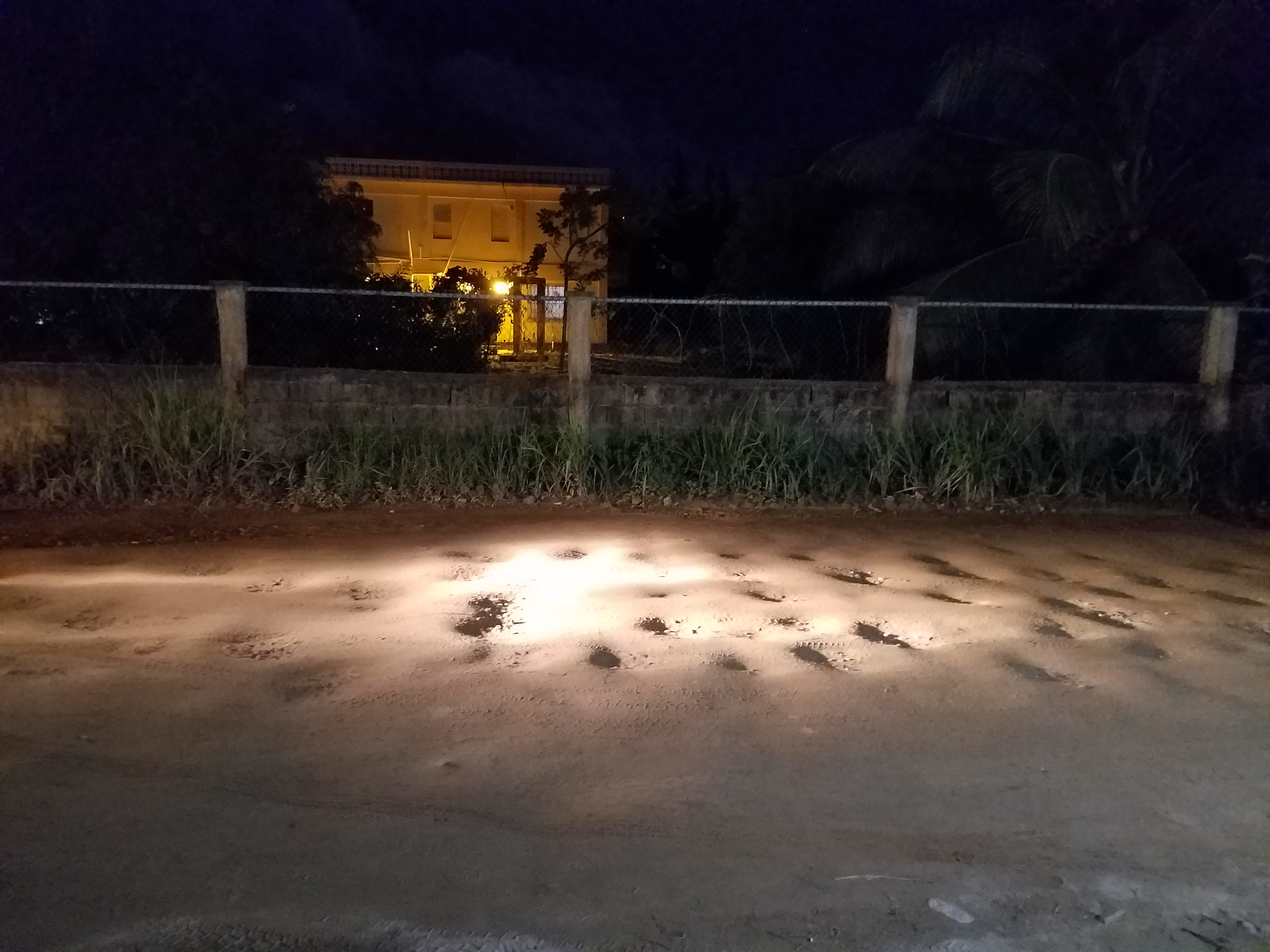
We arrived in the little town of Hopkins.  I’ve described how bad the roads are in Belize, the one road in Hopkins was worse than the worst of them. It took us 20 minutes to go one mile, and by the time arrived at our destination I had full-blown heartburn.  This is a shot of the road at night.

It was worth it.  We arrived at Jungle Jeanie’s which is—as the sign says, “By the Sea”—the Caribbean Sea.

We hung out in the lodge, which had indoor and outdoor dining areas and a bar.  In a few minutes Jeanie appeared.  She and her husband had moved from western Canada to Belize 20 years earlier.  He had died about five years ago.  She appeared to be about 85, frail and tottering but with a game smile that told you she loved what she did.  She spoke haltingly, welcoming us and assigning us to our huts, telling us the house rules (joke—there were none except relax and have fun) and offering us a welcome drink of fresh mango juice.

Jeanie had a staff of Belizean cooks and bookkeepers and handy men who had been with her for many years.  “We’re like a big family,” she said.

“And there’s yoga every morning at 9:00, although this week it’s only on Tuesday and Thursday at 9:30.”

At Jeanie’s I would not be sharing a room with Liz.  I would be sharing a room with Liz and Trudy, our deaf companion, and her interpreter Emily.  I made a beeline for our hut but Trudy and Emily had gotten there first and staked out their beds.

If you have any physical handicap, Jeanie’s would not be the place for you. First you walked across uneven paving stones set in shifting sand to get to the hut.  Then there was a set of stairs to get to the first floor.  If you got stuck up in loft as I did, that required climbing a very steeply pitched ladder and heaving yourself over a low wall.  I realize this is far from the worst “problem” in the world.  However, I immediately imagined myself falling backwards off the ladder in the dark.

Liz and I would be sharing the loft, a low, slant-ceilinged space with two mattresses on the floor that was hot as hell.  Liz had snagged the mattress near the ladder and I refused to play the game of “I don’t mind which one I sleep on.”  I would have to crawl over her to climb down to the bathroom.

Others among us were unhappy with the arrangements.  Inga and Jesse had been assigned to share a romantic one-bedroom cottage on the beach with Mark, our leader. He had a cot on the porch and would have to walk through their bedroom to get to the bathroom.  Stan and Stacy, who were married but not to each other, had been assigned to a one-room cottage with two twin beds.

Words were said in private. Perhaps some money exchanged hands.  The beach cottage dwellers were reassigned but Liz and I were stuck in the loft.

This is one reason why I tag my posts with “Budget Travel”

Liz and I shrugged and laughed and agreed it would be an incentive to spend as much time outdoors as possible.

Night had fallen.  There was a full moon.  Life was good.

Signs and Wonders

This is a series of posts about Belize and Guatemala that starts here.

We had a couple hours to kill before having dinner with our guide for Tikal the following day.  I wandered around the thatched-roofed lodge, which overlooked a broad lawn stretching down to the lake.  The lodge had the usual things you find in such places: piles of musty old board games, shelves with books in German and Swedish left by past travelers, wall-mounted maps with the “You are Here” worn away by hundreds of fingers pointing and saying to their companions, “Look, we’re here.”

There was a small gifty area with bags of coffee, cacao products, and beautiful carved hardwood objects.  I bought a couple pairs of earrings for $5 each.

There was wireless, but the signs providing the password were clear that it was extremely weak and that to be fair to others, no one should be streaming movies or playing online video games.

Bird-feeding platforms were mounted around the railing circling the dining hall, and although it was dark now and there were no birds I was curious to see what kind of food they used.  I reached the farthest one that was tucked in a corner, and noticed a man sitting at a nearby table watching me.

He was around 60, with a full, bushy beard not like a cool hipster one, with a baseball cap pulled down tight and smeary aviator glasses.  This look typically says—in my opinion—“I’m not good with people and if I could get away with wearing a mask, I would.”

He smiled at me in an encouraging way.  I am always curious about solo travelers in far-flung places, so I said hello. That was enough to initiate an hour-long lecture by him about Tikal, the universe, aliens, and how he was better qualified to lead tours of Tikal than the native guides.

His name was Brian, he was Canadian, and he had applied for one of the coveted official Tikal guide licenses.  “I would be the very first non-Guatemalan guide,” he said proudly.

He lived at a nearby B&B and came to the lodge for the wireless.  I noticed he hadn’t ordered anything.

He thought he would hear about the license the following week, but his visa was about to expire so he had to return to Canada and then come back.  He didn’t speak Spanish, so he wasn’t 100 percent clear on what was going on, and he suspected them of being partial to Guatemalans.

“I’ve followed the Guatemalan guides around and listened to the rubbish they spout,” he said, as our Guatemalan waitress came by and asked if we wanted anything.  I nodded enthusiastically and ordered beers for Brian and myself.

“The natives don’t know what they’re talking about.  They have no education or training; sometimes I think they just make things up.”

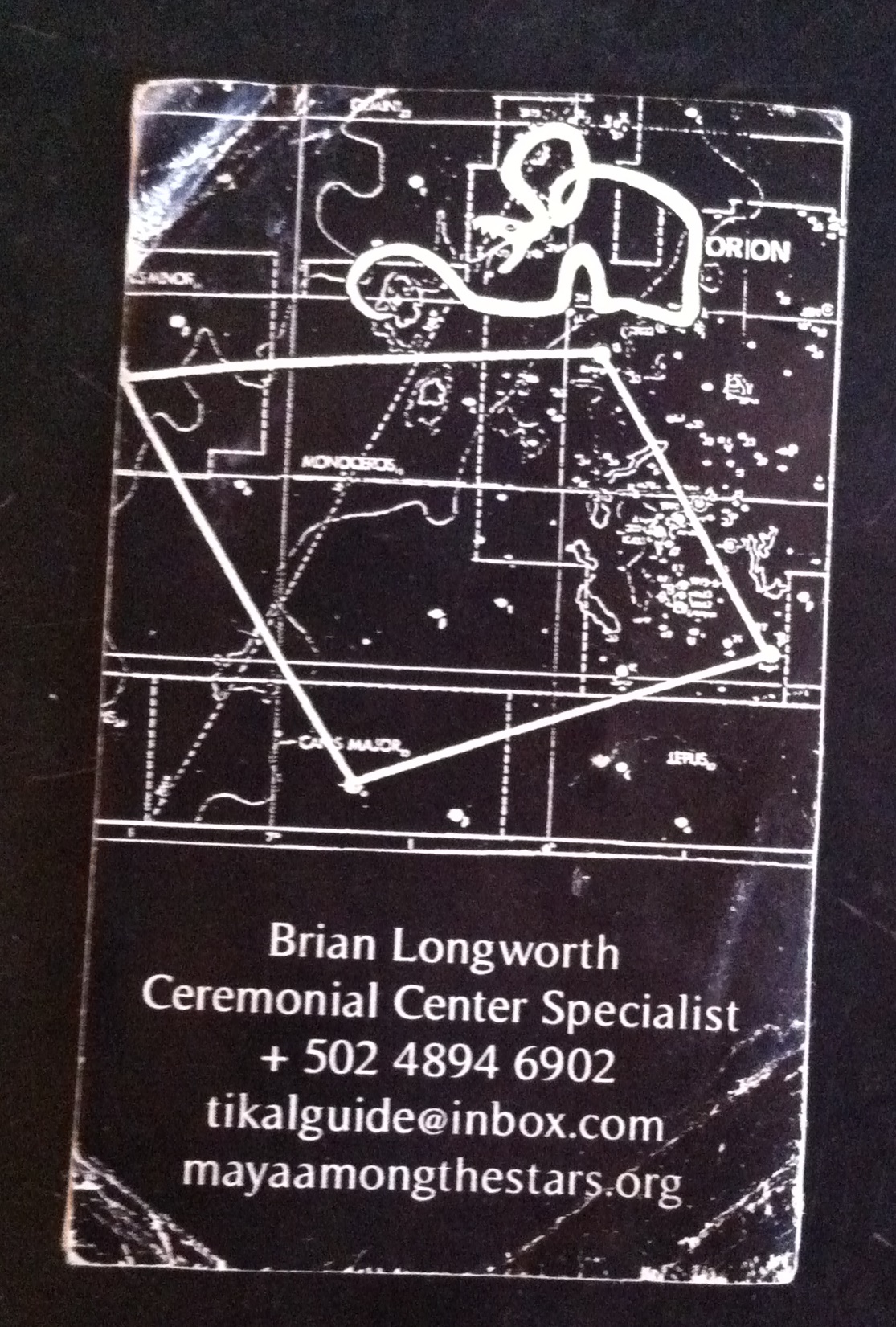
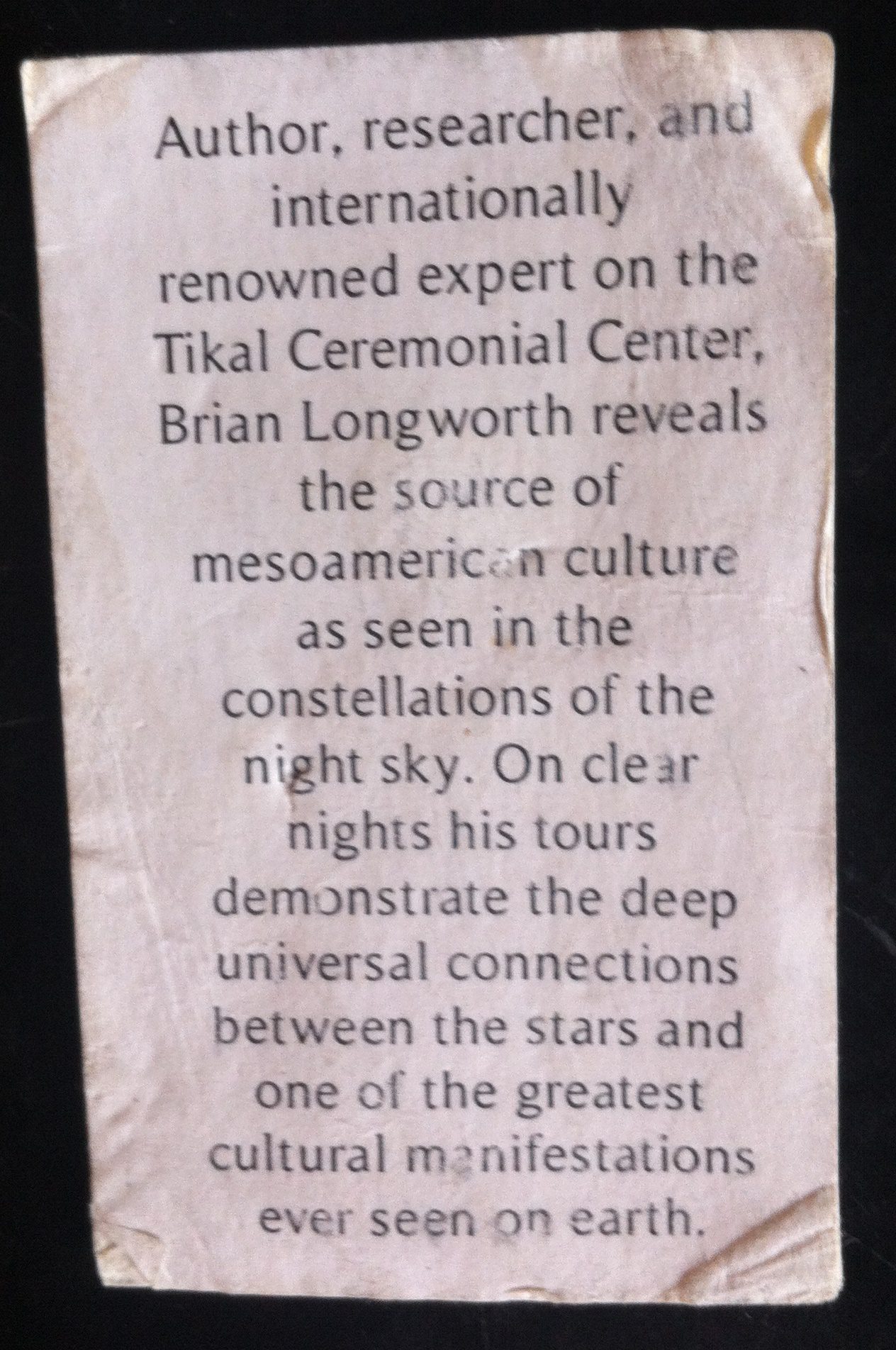
Brian had written books on Tikal.  Here is his card, which tells you everything you need to know:

If you go to the website on the card, you can buy the domain name for just $19.99 a year.

Brian was passionate about Tikal.  He whipped open his laptop and showed me elaborate schematics of the temples and their relations to constellations.  Of course I’m getting this all wrong because I’m not an expert.  Who knows, maybe Brian really does know more about Tikal than all the local experts and professors at McGill.  It must be painful to know all the answers and not be recognized for it.

I have a knack for finding one-way talkers.  Sometimes I avoid engagement; sometimes I give them 10 minutes to see how entertaining they are.  Tonight I had nothing better to do so I listened to Brian go on.  Eventually though, he got so deep into his theories that it was time to make my escape.

Just then, Mike helpfully wandered by.  Like an insect into a spiders’ web.

“Mike!” I said, “Meet Brian.  He’s an expert on Tikal.  Let me buy you a beer,” I said as I got up and went to the bar.

When I delivered Mike’s beer he was so engrossed in Brian’s story he didn’t notice I had abandoned him.

The People

This is a series of posts about Belize and Guatemala that starts here.

Here’s the demographic run down on who was on this trip in Belize. There was Mark, who I’ve introduced as the trip leader, who was probably 28 years old.  He had a man bun, wore braided leather bracelets, and had very, very dark brown eyes.  A few times I found him staring intensely at me, like he was trying to read my mind, but then I realized he was just spaced out.

This is where it gets tricky.  I’ve used Mark’s real name because he’s on the Wilderness Inquiry website so you could figure out who he was if you had nothing better to do.

I’ve changed everyone else’s names.  I told the group I write a travel blog and that I would be writing about the trip, including about them. After all, isn’t it often the people you meet that make the most interesting stories?

When I whipped out my notebook to jot down place names and such, people would ask, “Is that for your blog?” and I would answer yes.  None of them asked how to get to the blog, but if any of them ever find their way here I wouldn’t want them to feel trashed.  We were all being ourselves, even if some of our selves were more irritating than others.

Even though I write things down, this blog would never pass a fact-checker’s muster.  So you can take the following as generally correct information.

Our group ranged from 45 to 75 years old, so I wonder if Mark felt like a baby boomer baby sitter.  There were two married couples from Minnesota. Inga’s family was Latvian and she had lived there before moving to the Pacific Northwest where she met Jesse, who was Native American and worked for some tribal concern.  They had moved to Minnesota when he got a job at a big foundation.  That had ended now, so they were in a life stage of trying to decide what next.

Mike and Joan were suburbanites and newly empty nesters.  They had a daughter with autism, and it had been an exhausting journey helping her to become independent. They were “reconnecting,” as they put it, on this trip.  Mike did something in IT and Joan was a stay-at-home mom.

There were two married people whose spouses would have hated this kind of travel.  Bugs?  Heat?  Hiking?  No way!  So they came by themselves.

Stan was a soft-spoken retired postal worker from Pittsburgh.  “I’m taking my wife on one of those Viking River Cruises in Europe next fall,” he told us.  “That’s her kind of travel—white linen table clothes, shopping, and museums.”

Stacy was a retired band teacher from New Jersey.  She and I were both Jewish, and we joked how about how it’s unusual to have 20% Jewish representation on a tour.

The last member of the group was a never-married woman my age named Liz.  She was from Columbus, Ohio and had worked in the mortgage department at a giant bank for 30 years.

So that was us—pretty homogeneous—mostly white, middle class, and middle aged.  When you think about it, it’s people like us who have the time and funds to do things like this.

Trudy’s interpreter, Emily, was the youngest among us at 45.  She lived a few blocks from me, was married to a guy from Zanzibar, and had four kids.

If you’ve ever been on a group trip, maybe you’ve experienced this—you are immediately drawn to one person, feel repelled by another, feel neutral about a third, and so on.  Emily and I hit it off right away, probably because we had both lived abroad.  While others on the trip had traveled internationally, there’s a big difference between that and living or working abroad.

Which brings me to some current news: I’m going to Ethiopia for work!  I’ve always wanted to write a sentence like that, and now I can.  It will be sometime in the next six weeks, so on top of planning my three months in Europe and the UK, this will give me writing fodder for years.

Kaukokaipuu

I don’t normally promote travel services, hotels, etc., but I would like to make a plug for a travel agency I used to book my flight to the UK.

You are probably thinking, “A travel agent?  Didn’t they go out with video tapes and big hair bands?”  That’s what I thought, too.  Everything is online, right?  Expedia, Orbitz, Kayak; there’s no need to pay someone to find your cheap flight.

But a coworker told me how an agent had saved him about $500 on a flight to Japan.  The agent and I went back and forth.  This was London, not Japan, so the savings were only about $50, but still—that’s $50 more I’ll have to pay for fun stuff.  If you’ve got an upcoming trip, feel free to contact Caroline at caroline.b@airconcierge.com and tell her Anne sent you.

I’m renewing my passport.  I always find it difficult to put the old one in the mail.  What if it gets lost?

I once worked in the HR department of a certain international organization, so I know how precarious it can get.  I would have to get a transit visa, for instance, for a Canadian public health nurse who was coming to the UK for orientation before traveling on to work in Kenya, via Dubai. She would mail her passport and extra photos.  I would fill out the paperwork, stuff everything in an envelope, courier it to London, and hope for the best.  If all went well, the courier would return with a transit visa and I would mail everything back to the new employee in Canada well in advance of her travels.  There were a few close calls, but the Home Office always came through.

Sometimes when we had leftover passport photos, we would talk about who we thought would make good-looking couples.  Coworkers who had been there a long time accumulated drawers full of photos, so we strung them together and used them to festoon our cubes.  This is probably not something we should have done, so shhhh….don’t tell anyone.

I went to Walmart to get new passport photos.  I hate Walmart, but you can’t beat their price of $7.50.  I was relieved when I compared my pics from 10 years ago to today; I didn’t think my face hadn’t aged more than 10 years.  I accept that I’m aging, but I don’t want to look older than I am.

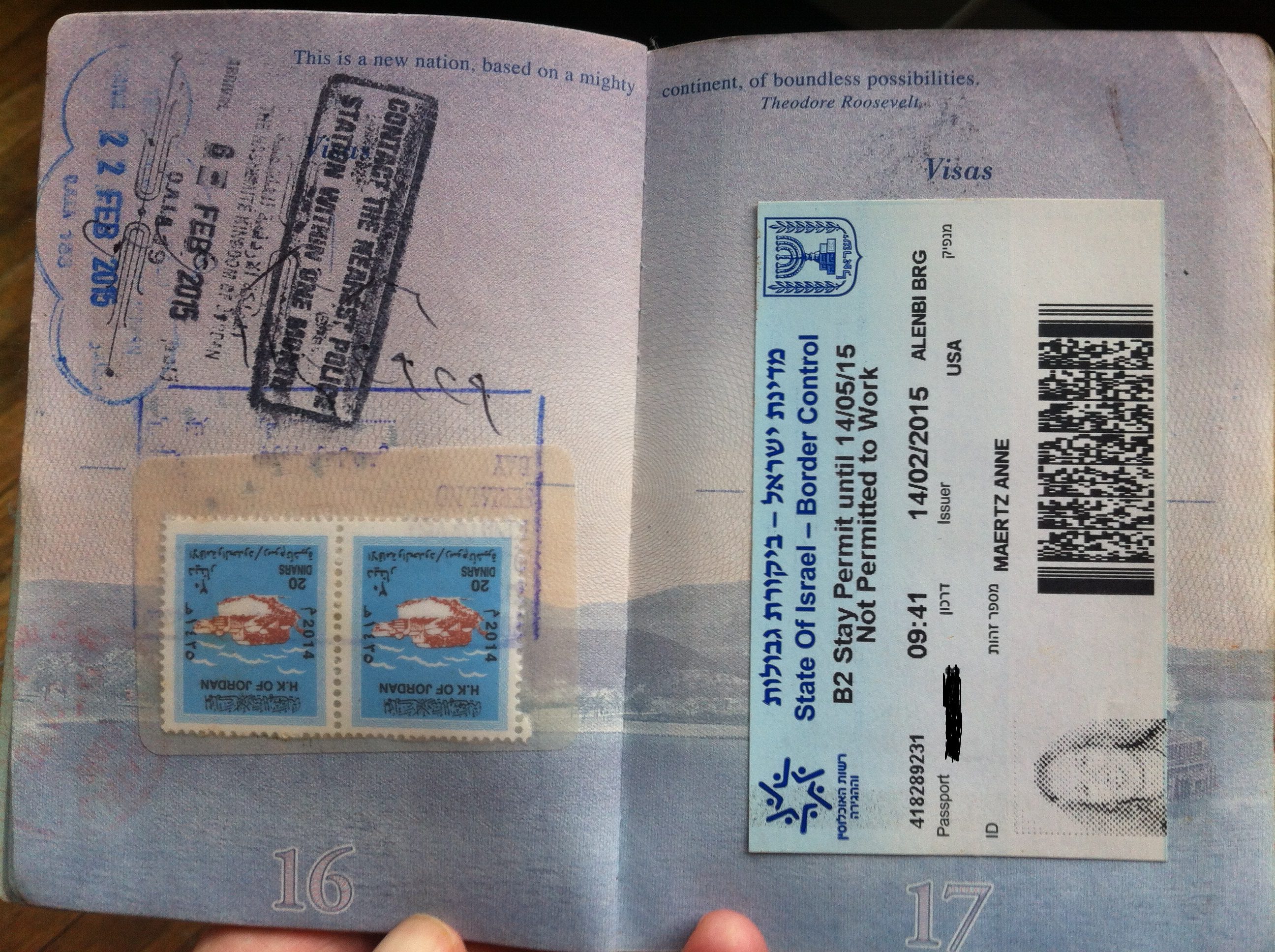
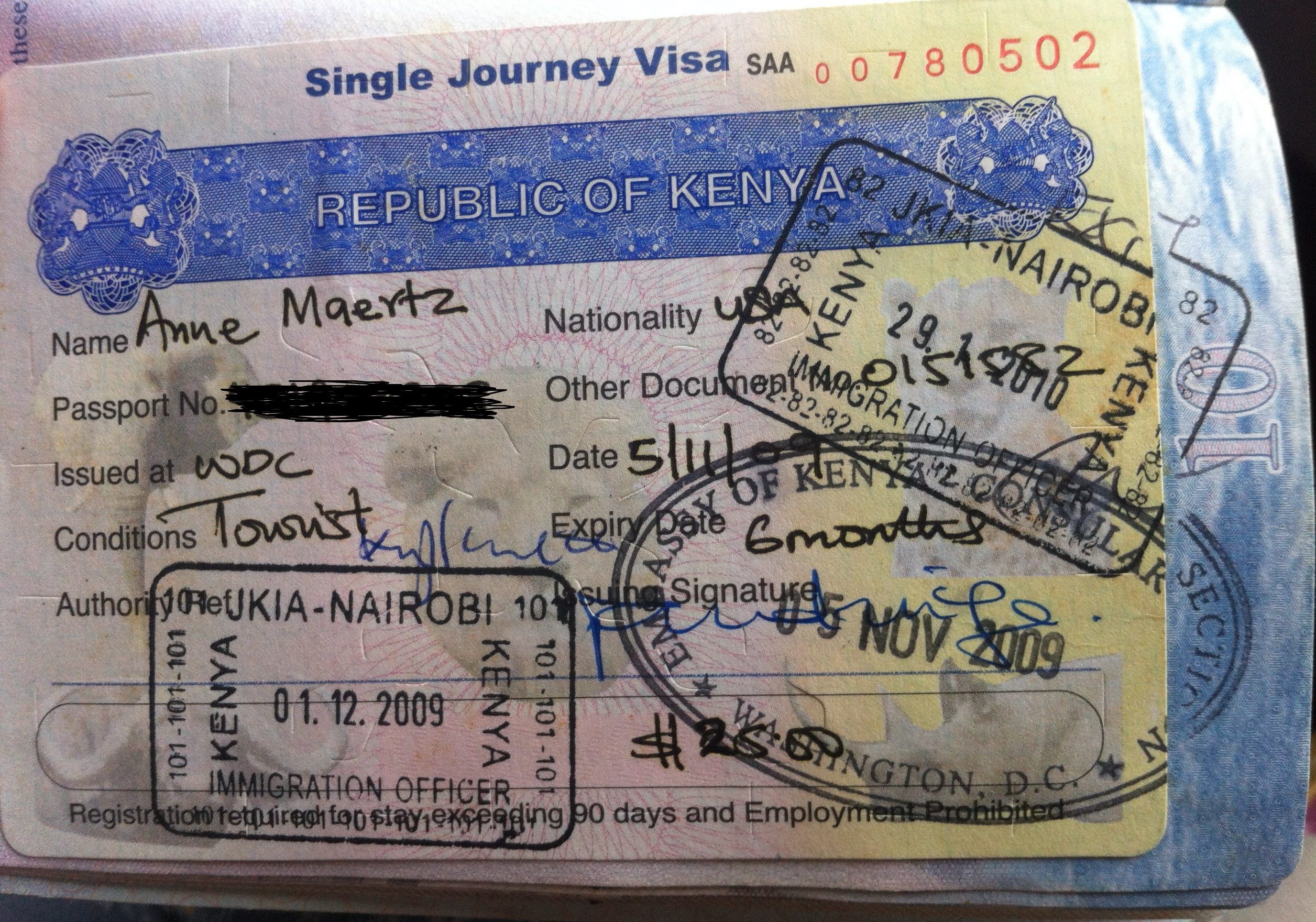
I reminisced over the places I’d been in 10 years: multiple times to the UK.  Jordan, Israel, and the Occupied Palestinian Territories.  Kenya, Dubai.  Guatemala, Belize. France, Germany, Italy, Malta, Spain.

I talked to my sister and told her I was thinking of summering in the UK.

Our mother and her husband were planning a move to a senior apartment building in April.

“I feel like it’s a good time to do something like this,” I told Connie. “Mom and Jim will be safely ensconced where they’ll have transportation and help if they need it.  Vince is out of prison.  You’re in the clear.”  Connie almost died of colon cancer two years ago.  She had just had her semi-annual battery of tests and been told she was cancer free.

“Yeah,” she replied, “By the way, I was over there today and they’re now saying they’ll wait to move until June.  They want to enjoy one more spring in their house.”

“What!?” I asked, “Do they realize they’ve signed a lease and they’ll have to pay rent for an empty apartment for month?”  Yes, she said, they knew that.

“I guess I can stick around through June, to make sure they’re all settled,” I said. “My remote work request isn’t official yet.”

No,” Connie replied, “Go—you should go.  If it’s one thing I learned from thinking I was going to die within days, it’s that you have to live now.  So go.”

A friend who is an artist gave me a handmade birthday card that said Kaukokaipuu on the cover.  It’s a Finnish word which means “craving for a distant land.”

I’ve always craved distant lands, but since Connie’s illness, Angus’ death, my mother’s frailty, and my son’s stint in prison, I’m feeling Kaukokaipuu on steroids.