Category Archives: suicide

See You on the Other Side

VINCE

Three days until freedom, 183 days until my release.

I will not be able to write as frequently from boot camp but I will when I can and I think it will be even more powerful than ever. The following story will be the last thing that I write from Moose Lake.

In the last 10 years, I have spent three + years on meth, six + years as a drunk, and eight months in prison.

By far, being a drunk took the worst toll on me. It didn’t land me in the clink, but I lost so much of myself that it’s really hard for me to look back on it and be honest about it.

My mother has written about it from her perspective and I’ve always just kind of brushed it off, not wanting to deal with the truth.

Truth is, I was a mess. Every day. Drunk. I held jobs through most of it. But in every other aspect of life I failed.

Every cent I had went to booze. No room for food, clothing. I guess I paid my rent most of the time.

I had three days off per week. So starting right when I woke up, I would drink my breakfast, say 7 a.m. Drink beers and smoke cigarettes until the bar opened at 11 a.m., then drink into oblivion until I blacked out. Waking up somehow back in my apartment, or somebody else’s.

I’ve woken up on pool tables. In the middle of the street surrounded by police. Under water, naked, having just tipped my best friend’s canoe, losing it forever. And once I woke up and I realized I was clutching a fully loaded shotgun, with my finger on the trigger guard, safety off. I’m not saying I was suicidal, but I did question my motivation. Then laughed it off.

Every day, for years, I woke up with no food in the fridge. I worked in restaurants, but I still only really ever ate one meal a day, four days a week. I was not healthy.

It’s Tuesday morning. 7:50 a.m. In 24 hours I will be leaving this terrible place, in search of the tools that will make it so I never have to re-visit the places I have just described.

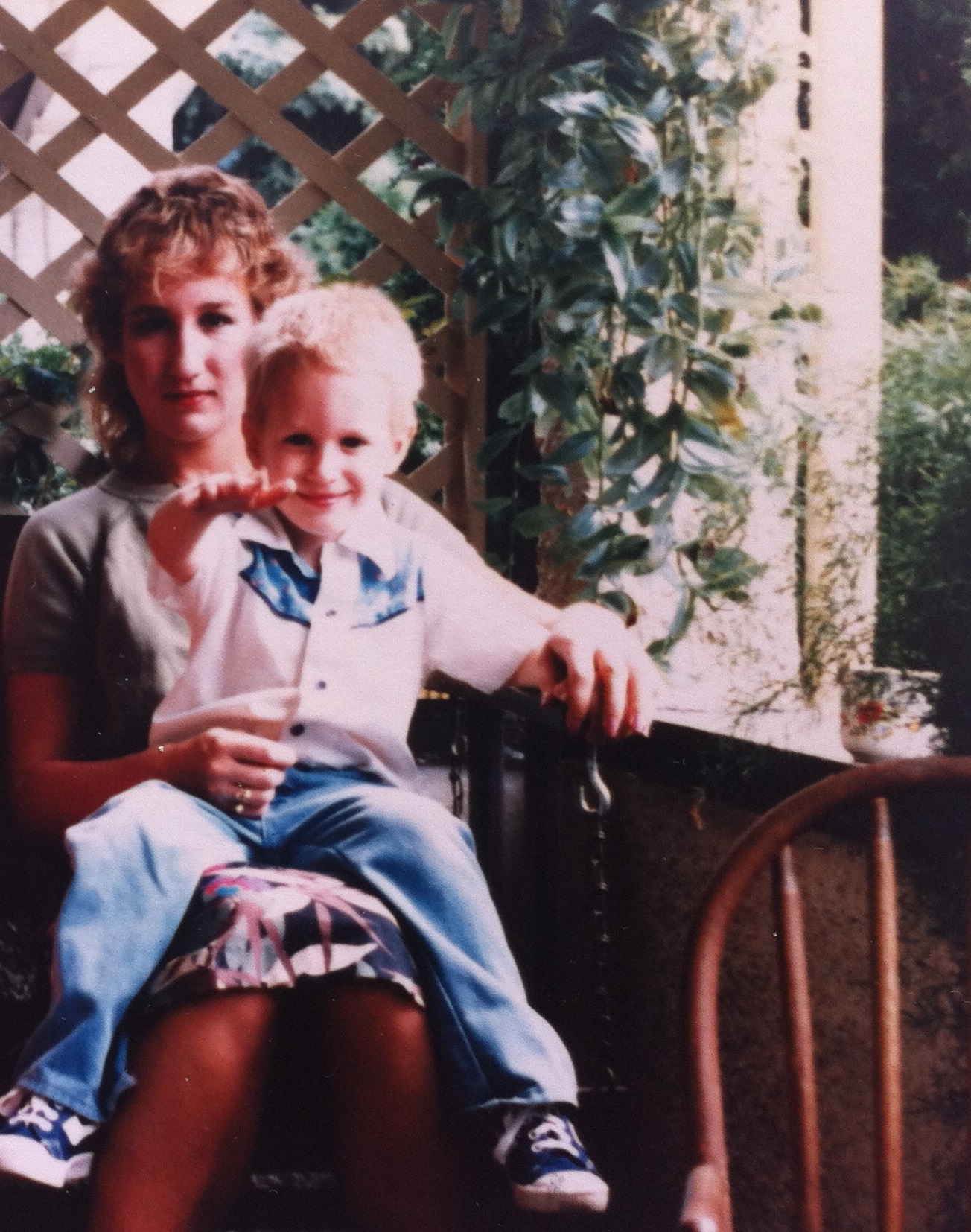
I had a picture of me taken one week before boot camp which my mother will somehow put near this last post, and we will put up a new picture in six months, just to show the physical improvement gained through the program. I weigh 200 pounds here. We’ll hopefully see a transformation. Again, I will keep writing, just not so much.

Pre Boot Camp

I really enjoy reading the feedback we’ve been getting keep it coming.

Alright, it’s time to go get my life back. Wish me luck.

Here I go.
The Creep

ANNE

Ouch. That Eminem song … so many ways I could go with that.

When I was in Istanbul in November, there was a guy from the Philippines in my meetings. His name was J.P. Morgan. No, J.P. Morgan is not a Filipino name. His father had changed the family name in hopes that it would bring prosperity. It didn’t.

I happened to be seated next to J.P.—John—on a dinner cruise the first night. I thought, “Oh no, trapped on a boat for three hours next to this guy—what could we possibly have in common?”

But then we started talking and by the end of the cruise I was calling him “son” and he was calling me “mom.”

John’s father was an alcoholic who had left the family when John was small. John was pimped out at the age of 10, sold to strangers for sex until he was too old and no longer desirable—19 or 20—and he began pimping out younger kids in order to make a living and survive.

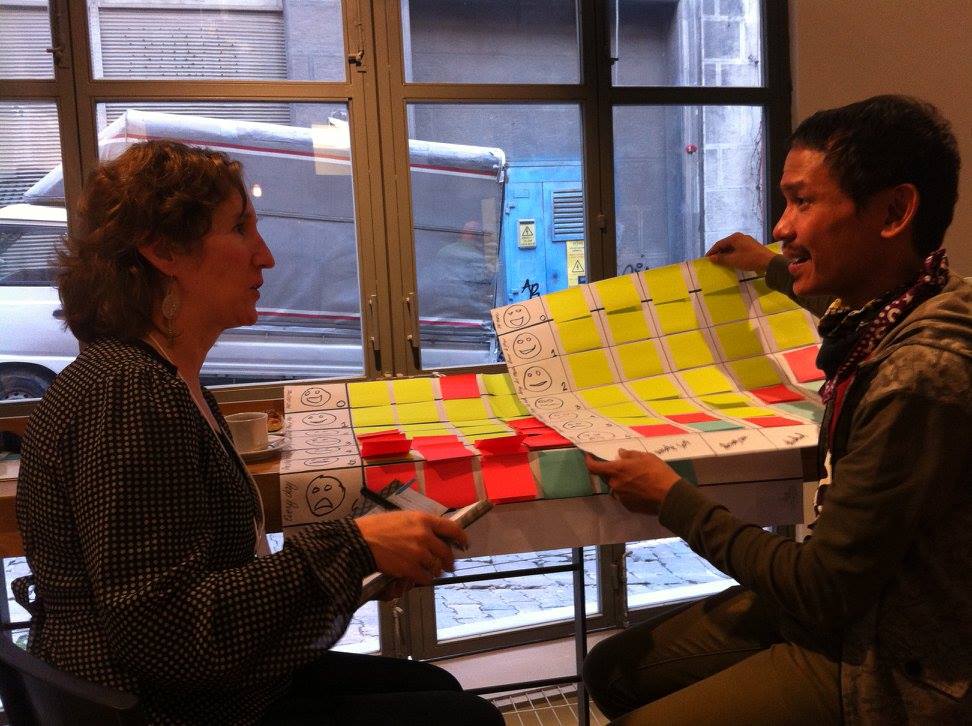
By the time I met him, John was Vince’s age, had recovered long ago, and ran a recovery program for street kids. Here we are, talking about his “River of Life” program.  To prostituted young men, John has become their idol, big brother, and mentor. Everybody, including notorious gang leaders, listens intently to John and follows every word he says.

JP Morgan

John and another sex worker had had a son together. He was a teenager now, and John was doing his best to keep tabs on him, though the mother was an addict and moved around a lot.

I asked John if he thought that kids being raised by single mothers was the biggest reason that kids got in to trouble. He looked squarely at me and wagged his finger. “No. It is not the mothers. It’s the fathers.” Alcoholic fathers. Abusive fathers. Fathers who gamble away their paychecks. Fathers who leave.

On Vince’s first birthday I called to invite his father to have cake with us, and he said he was too busy with “business.” A drug deal, in other words. I never saw him again, except briefly in a crowd.

From time to time I would ask Vince if it bothered him that he didn’t have a father. “Let’s just call him The Creep,” he said once, and we laughed and I never really got an answer, if he had one to give.

Vince never asked about The Creep. The Creep’s dad had been a barge worker and his mother was a telephone operator who had grown up on a reservation. They lived in a dilapidated farm house in Rush City filled with cigarette smoke and no heat and large bowls of bite-sized Snickers and a big-screen TV. The Creep and I visited his grandmother once, on the rez. She lived in a tar paper shack without indoor plumbing or electricity.

I never mentioned to Vince that the Creep had been a drug dealer from a small town who didn’t have a car or a phone, a high-school dropout who worked as a clerk in a gas station. A guy who aspired to nothing more than hanging out with his friends, drinking and smoking pot, laughing and telling stories about drinking and smoking pot. I never mentioned any of these things because I didn’t want Vince to be influenced by them, if he harbored some unconscious admiration for The Creep.

The Creep had had a son with another woman before I met him, and went on to father four more children. I got $103 in child support once, but that was it.

I’m not trying to shift blame; after all I must have had a far stronger influence on Vince since I was there 24/7 for 16 years, right?  I don’t spend all day analyzing and angsting over why Vince is who he is.  But for every Vince, there are 10,000 more like him in prison, in Minnesota alone.  I’m sure they all derailed for a different mix of complicated reasons, just as I succeeded despite a complicated mix of factors that should have kept me down.  If someone could figure it all out, they would deserve to win the Nobel Peace Prize.

Babies

Prison, Prison Everywhere, Part II

ANNE

I have to move. The apartment vacancy rate in the Twin Cities is so low that landlords have the upper hand, and mine is taking advantage of that to raise my rent $307 per month. “It’s a business decision,” they say. “We realize some people will be priced out of the building.”

Some people. I’m one of those people.

My apartment has been my sanctuary for almost five years. But I work for a nonprofit, so I have to be realistic. I gave my notice and then started sifting through the over 16,000 apartment ads on Craig’s List.

At work, I get emails about prison all the time. One of our funders, the Open Society Foundations, draws my attention to a new federal report that reveals “near-unremitting abuse of juveniles held at New York’s Rikers Island jail.” Thank god Vince is 36 years old, big and tall, and he can look scary when he needs to. There was a second one from OSF about how the suicide rate for people held behind bars awaiting trial is 10 times that of the world outside. Delete.

There’s another one from an organization called Empathy, about prisoners in Uganda. Okay, once again, grateful that Vince isn’t in prison in Uganda. Yet another one from the National Academies Press announcing their new report, The Growth of Incarceration in the United States. And then there was this one, from Human Rights Watch, called The Human Rights Case for Drug Reform: How Drug Criminalization Destroys Lives, Feeds Abuses, and Subverts the Rule of Law.

I am researching a big foundation and find this article about one of the family members who was arrested on suspicion of possessing Class A drugs. During a search of the house, police found the body of his wife in their bedroom–she had died two months earlier. A coroner said that her death was as a result of “dependent abuse” of drugs.

Then I find the Public Welfare Foundation which, among its criminal justice interests, aims to “Reduce jail populations through the use of diversion at the front end of the criminal justice system that connects individuals with substance abuse disorders and mental illness to the public health system.” Well duh!

Then I stumble upon JustLeadershipUSA, an outfit with an “ambitious decarceration goal” because “Mass incarceration is the most significant domestic threat to the fabric of our democracy.”

I wonder, if all the money spent on reports and task forces glitzy websites and conferences and foundation executives’ salaries was used to fund treatment for low-income prisoners…nah! What a crazy idea.

Lastly, there is Richard Branson, chairman of Virgin Atlantic Airlines and Virgin Records, of all people, writing a blog about ending the war on drugs. All I can think of is the time a friend who travels more than anyone I know let me use 125,000 of her air miles and I flew business class from London to Minneapolis-St. Paul. I waited for my flight in Virgin’s Heathrow “Upper Class” lounge, as they call it there. The décor was fantastically posh and I discreetly gorged myself on smoked salmon and champagne, trying to act like I really belonged there.  


Happy Birthday, After All

VINCE

Yesterday after I emptied all of the garbages, filled the water container for the pill line, and made my afternoon cup of coffee, I went back to my room to read. I’m in the middle of Relic by Preston Douglas and Lincoln Child. It’s not bad. It sort of has two story lines. One is kind of boring and scientific. The other is exciting and gory.

Anyhow, I got into my room and there it was. Dated my birthday and with my name highlighted in bright yellow, was my acceptance letter to boot camp. Finally!

Here’s how it breaks down. Phase one is a minimum of six months and contains a highly structured daily schedule and treatment-oriented program that includes: intensive instruction on military drill, ceremony, bearing and courtesy; physical training, on- and off-site work crews, cognitive skills training, chemical dependency programming, education programming, restorative justice programming, and reintegration planning.

Phase two is a highly supervised community phase under intense surveillance and lasts a minimum of six months. And the final phase, also six months, is community-supervised release, and depending on behavior in phases one and two, can be shorter than six months. After that is standard parole for the remainder of my sentence, until 7-15-2018.

If I screw up, depending on severity, they can choose to put a location monitoring device on my leg or send me back to prison and take away all my good time. So I would sit in prison until 2018. That’s pretty good incentive.

So…now I wait. One of these nights they will call my name and I will get my red box. When your name is called, you go get a 1.5 x 4’ red bin (or two if necessary). Do not ask the CO where you’re going. They don’t know. In fact, they don’t tell us until we get on the bus. It’s for our safety, or some nonsense. If I knew where I was going, I could tell my family (really, just my mom) and friends. I could adjust my canteen order so I could have money to spend if I do end up at a county jail, and so I don’t end up with a bunch of envelopes and post cards purchased from the DOC that I can’t use at a county facility even though it is a DOC holding facility. Oh my God that sounds so complicated. It is.

Happy New Life

ANNE

I am tempted to rebut each of Vince’s “clarifications” in his last post. But one of my favorite self-help slogans is: “How important is it?”

I’m glad to leave 2014 behind and hopeful that 2015 will better, or at least not worse.

I spent Christmas Eve in an emergency room with my poor sister, who has stage four colon cancer. She was feeling pressure in her chest. Apparently chemo can cause blood clots. They administered nitro by pill and patch, did an EKG to rule out a heart attack, and killed her pain with Dilaudid, which is seven times stronger than morphine.

Her worst fear is that she will die alone in the hospital. I stayed until they admitted her and she fell asleep, about seven hours later.

Three years ago, I hit bottom. I had lived with depression for as long as I could remember, but then….  I had to have a tooth pulled—boy, will that make you feel old! Then during a Christmas Day blizzard my car was towed and I spent four hours waiting in line outside at the impound lot to pay $300 to get it back. I then drove to Fountain to visit Vince. The trailer he shared with Seth was full of guns, beer cans, and smoke. I figured what the heck, if you can’t beat ‘em, join ‘em, so after he assured me that none of the guns was loaded, we posed for photos that became my holiday cards to my friends in the UK, where they had a good laugh over us gun-crazy Americans.

Vince (7)Vince (11)

Due to the blizzard I spent the night in Seth’s 5-year-old daughter’s bedroom; she was at her mom’s. Here’s a tip for parents who smoke: Keeping your kid’s door closed doesn’t keep smoke out. I couldn’t open the window and after tossing and turning until 5am I slipped out and drove home. On the way I started itching. Great—now I had bedbugs!

I contemplated suicide. I leaned my forehead against the screen of my 20th floor window. I had turned 50 the year before. Thinking about being depressed every day for another 30-40 years wasn’t real appealing.

Here are the things I had tried to manage depression and anxiety:

Meditation

Medication

Prayer (including begging, pleading, and bargaining)

Acting normal

Abstaining from drinking

Cutting down on coffee

Self-help books

Alanon

Exercise

Getting outside every day

Appreciating beauty, be it fine art, nature, music, babies, or kittens

Gratitude lists

Avoiding negative people / avoiding unnaturally happy people

Running away to other countries

Denial

Journaling

Telling myself, “At least I’m not a refugee / amputee / blind / fill-in-the-blank.”

Psychotherapy

Retail therapy

Sleeping, drinking, and movie binges

Reaching out to friends, even when that was the last thing I wanted to do

I thought that jumping out of my window would be exhilarating, until I hit the ground. I had some leftover pain killers from the dentist, and my prescription for Restless Legs. I googled an overdose of the two and learned that they wouldn’t kill me, but that I would likely need a liver transplant. I decided to keep living.

That spring, I visited Vince again and this time, made a reservation at a B&B.  On the free-book-shelf there, I picked up a tattered copy of, “Feeling Good: the New Mood Therapy”, by David Burns, MD. I read it and did what it told me to do, and I stopped being depressed. For good.

The book was about Cognitive Therapy. I had been instructed to use it at least twice in the past, but I’d been too stressed out to do it. Basically, you write down your negative thoughts and then argue with them rationally until you’ve de-fanged them. Writing it down is important; if you try to do it in your head you’ll end up down a rabbit hole.

So was a lifetime of depression cured overnight by one book? No. I think it was all the other things I had tried over the years—the good things, anyway—and then I added this on top of them and together they all added up to a breakthrough.

I still feel sad sometimes–there’s plenty to feel sad about–but I’m not depressed and I’m committed to living.

Sorry for the long post but, if you’re struggling, I want to encourage you to keep an open mind, keep plugging away, and keep trying new things.

PS: I didn’t have bedbugs after all.  I think I was just itchy from the smoke and dry air.  Living with addiction can turn you into a drama addict.