Tag Archives: Spain

Like, Totally, Sort Of

This is a series of posts about Italy, Malta, and Spain that starts here.

Juan drove us back to the Palace, our heads nodding in a stupor in the back seat.  As we passed through the exurbs of Granada, Juan pointed out the area where he lived with his wife and kids.  It was mile after mile of new high-rise buildings.  Not as scenic as the white villages or central Granada, but probably more spacious and affordable.

His kids were five and seven, which made me realize he was probably a lot younger than I’d guessed.  I felt sheepish about the lecherous comment I’d made to Lynn when I first saw him.  “We have a sort of ‘women’s privilege’,” I said to Lynn later, “where we can make smarmy remarks about men but if they did the same toward a woman we would be disgusted with them”

“That’s changing though,” she remarked.  “In HR circles you can’t get away with anything like that, no matter who you are.”

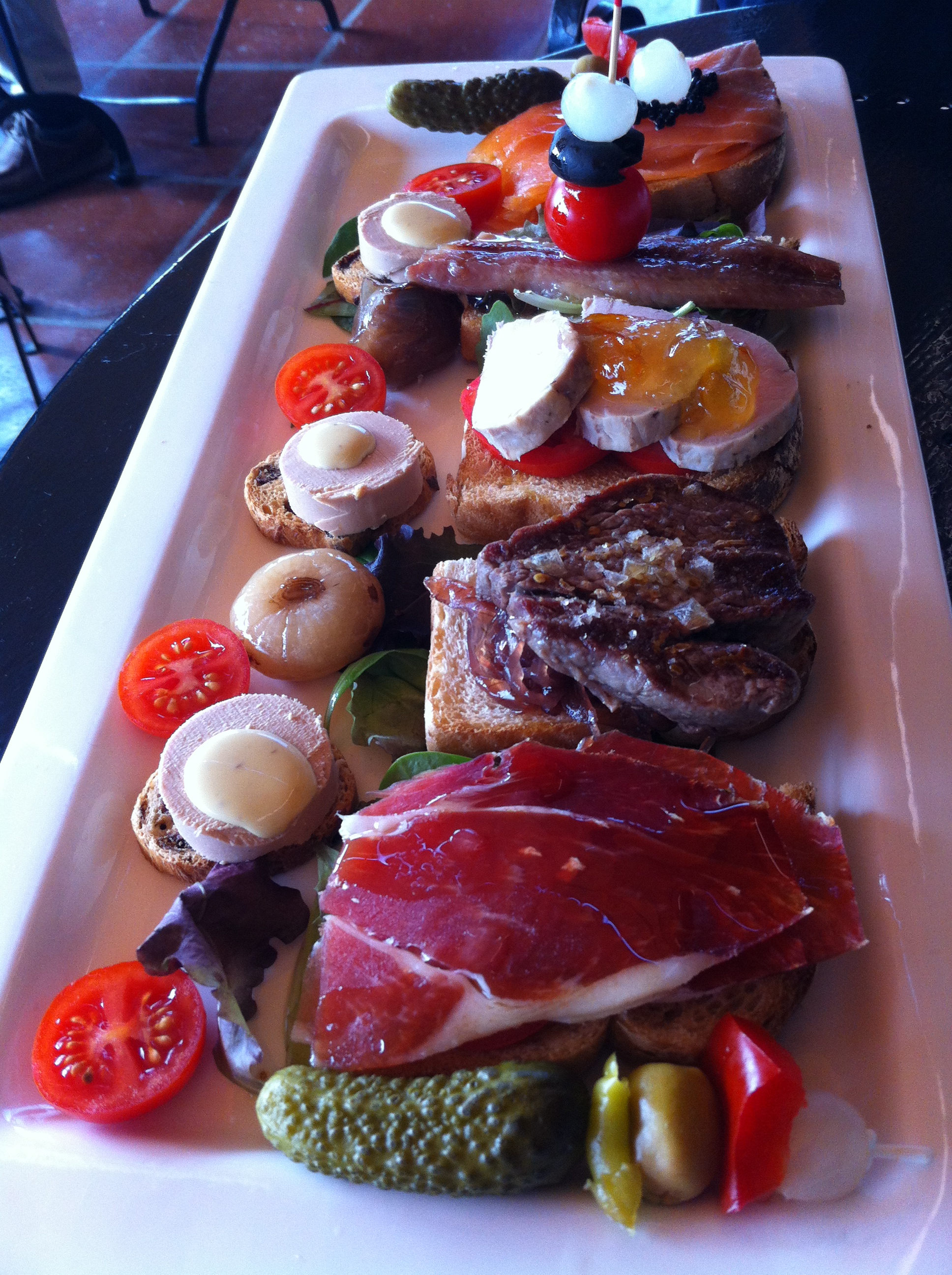
We would move on to Toledo tomorrow.  We’d been in Granada five nights and at last, we sat on the hotel terrace again and had the excellent tapas platter, as we should have done every night.

The next morning, after stuffing myself with enough smoked salmon to tide me over until the next trip, we caught a cab to the bus station.  It was full of “colorful” characters, which is probably an insensitive word.  There was a nun and a dwarf, but not a dwarf nun like there had been in Rome. There was a mute who was begging with a placard that said, “Soy mudo.”  There were your standard backpackers sleeping on their packs, playing guitar, and dividing a Snicker’s bar five ways with a Swiss Army knife.

There were the usual vending machines offering … Snicker’s bars and cigarettes, but also these fabulous stands selling dried fruit and gelato.
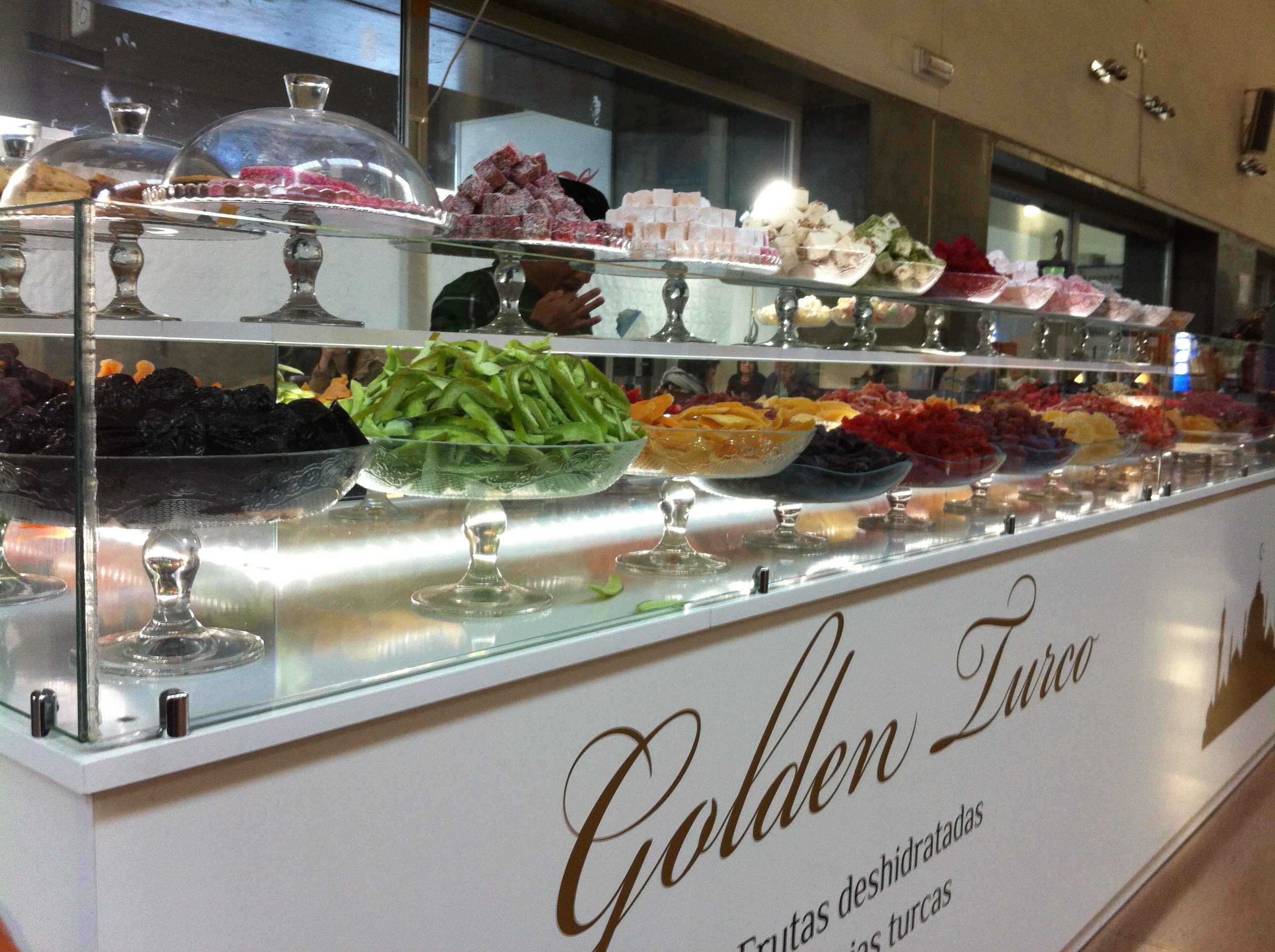
dried-fruit gelatos

No one seemed to be buying.  I didn’t buy anything, so they’ll probably be replaced by a MacDonald’s.  It’s all my fault!

We were seated on the bus across the aisle from two American college students whose conversation consisted mainly of these words: like, totally, actually, literally, I mean, you know, sort of, kind of, and gross.  They weren’t talking loudly, but their voices carried in the way of people who are cock sure of themselves.

“I’m like, totally going to Portugal.  I mean, it’s actually on my list, although, like, my friend Chelsea posted pics of the food on Instagram and it’s kind of like gross, you know, sort of like, totally gross.”

It was a four-hour bus ride.

There was no wireless but the students fiddled nonstop with their phones.  Were they paying for data roaming? They both wore sunglasses and ear buds, even while talking to one another, which seems like the height of rudeness.  At least they could have done that thing where you take out one ear bud in a feeble attempt to demonstrate you give a shit about the person who is trying to talk to you.  I often lift my sun glasses when I’m speaking to someone so I can make eye contact to acknowledge they are human.

Lynn sat in the aisle seat reading a book, apparently unperturbed.  Maybe because I’m American, I’m embarrassed by annoying Americans—although I’ve been one myself plenty of times.  But I know myself; once I clock on to something that bugs me, I have a very hard time pulling my focus away.

The scenery changed from olive groves to gently rolling reddish-hued hills.  I did a pretty good job of focusing on it until I noticed the students never looked out the window.

Then I caught this: “Like, Ben Carson is totally so smart!  I mean, he should actually be kind of like, the head of something, you know.”

My knee jerked–literally–and I clutched Lynn’s arm to stop myself from leaning across and totally giving them, like, a piece of my mind.

“Maybe they’re being sarcastic,” Lynn whispered.  Yes, I told myself shakily, that must be it.  I put in my ear buds and played some Pink Floyd.  I wasn’t going to let them ruin the landscape for me.
Why the Jews were Expelled from Spain

This is a series of posts about Italy, Malta, and Spain that starts here.

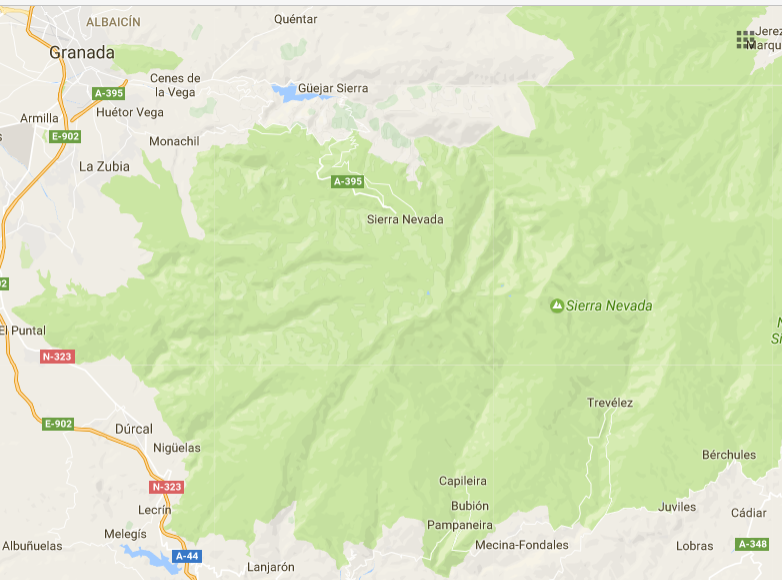
Lynn and I were ensconced in the back of the Mercedes, well supplied with bottled water and potato chips in case the car broke down in the Sierra Nevada Mountains.

Our destination: the “white vilalges” Pampaniera and Capilera on the other side of the Sierra Nevada from Granada.

white-villages

We took two-lane roads through the mountains, winding around hairpin curves.  If you were prone to motion sickness, you would definitely want to take a Dramamine for this ride.

Lynn and I chatted with each other and I asked Juan questions now and then.  This was the area where Spain’s bottled water came from, he said, which made sense since it was mountains.  He was from a town we would pass through, Bubion, population 300.  His family still lived there.  We stopped for a shepherd with a flock of goats crossing the road.  That answered my question about what people did for a living here.  They kept goats and sheep and bees, but they mostly depended on tourism.

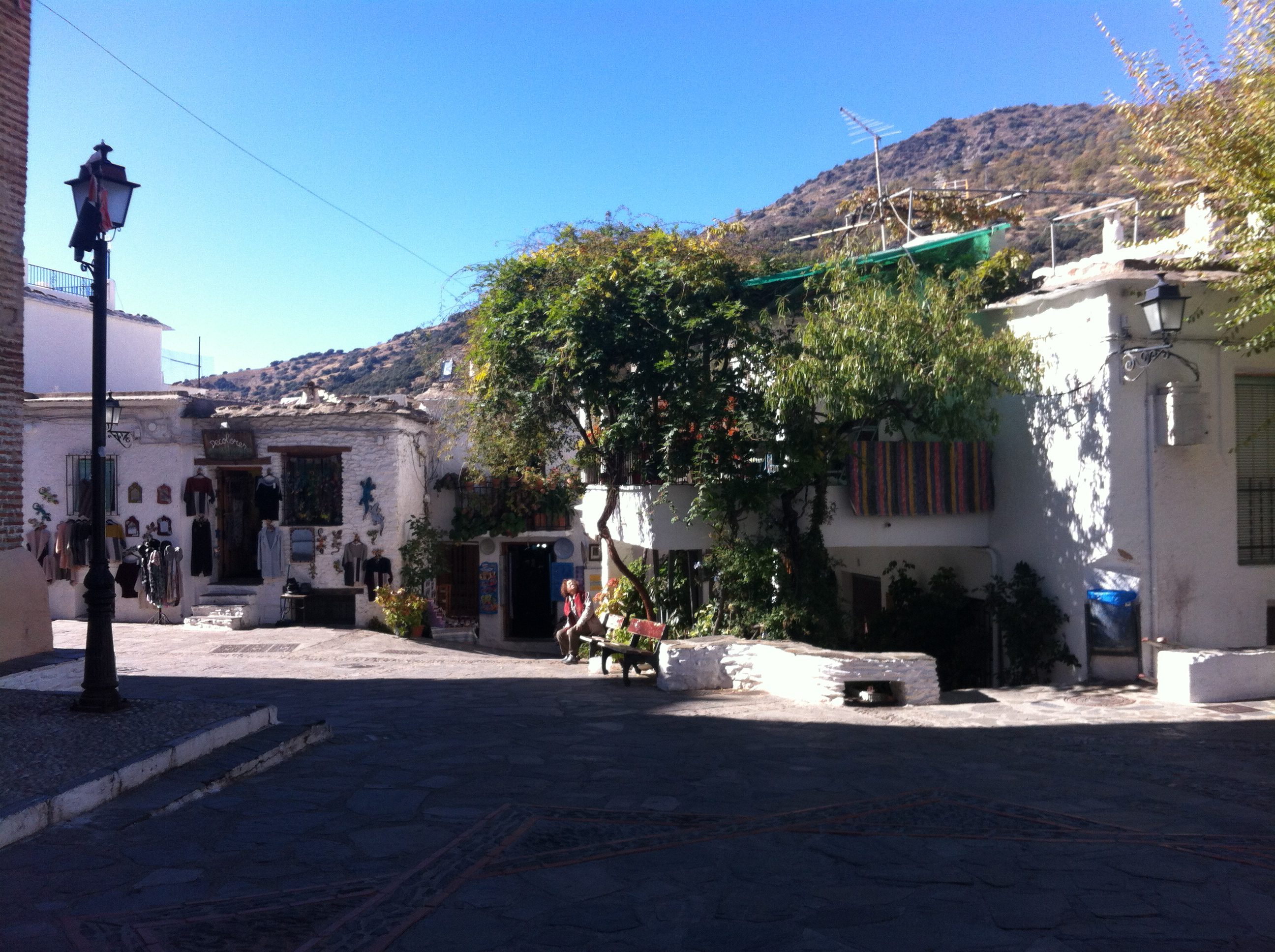
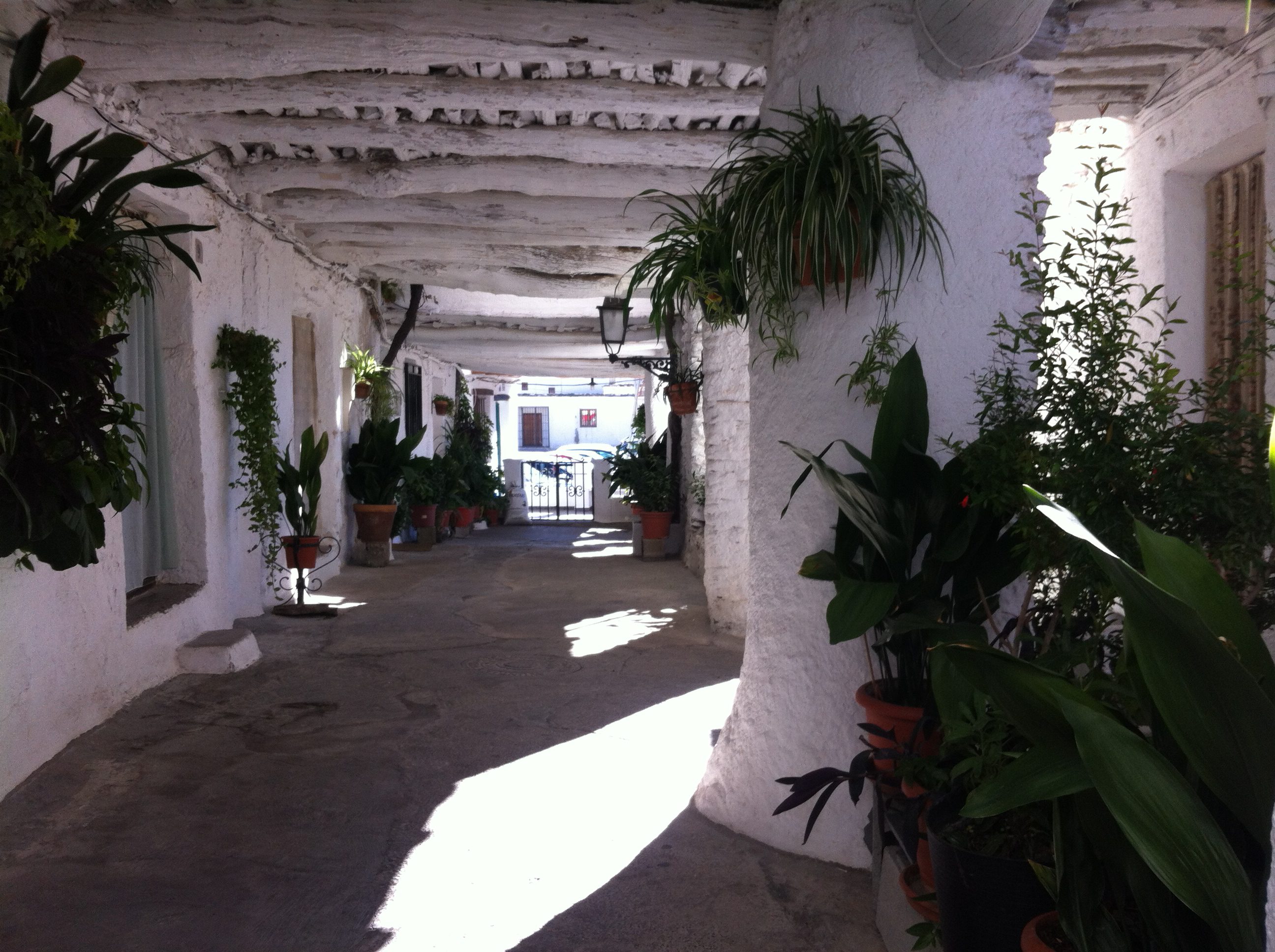
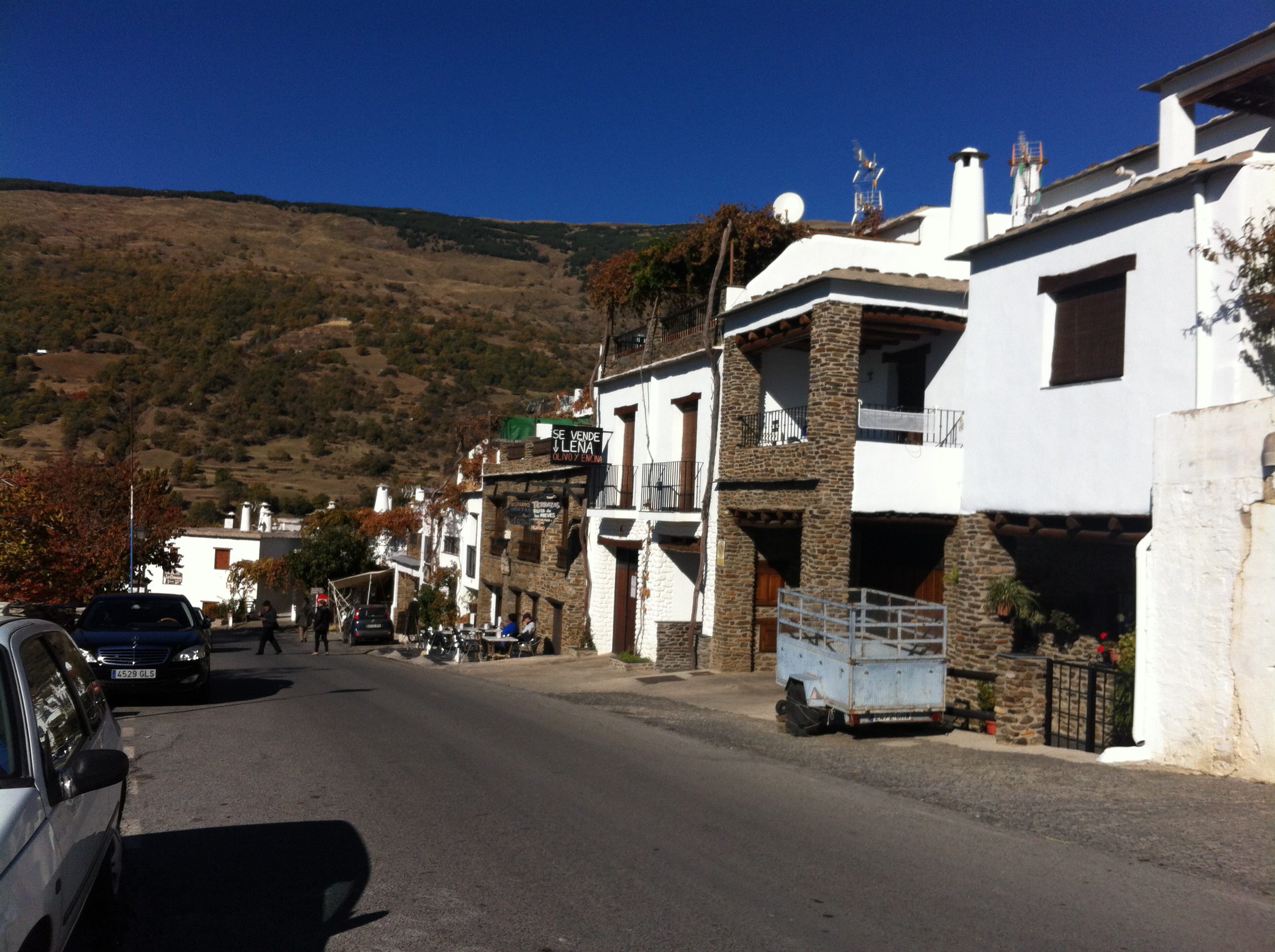
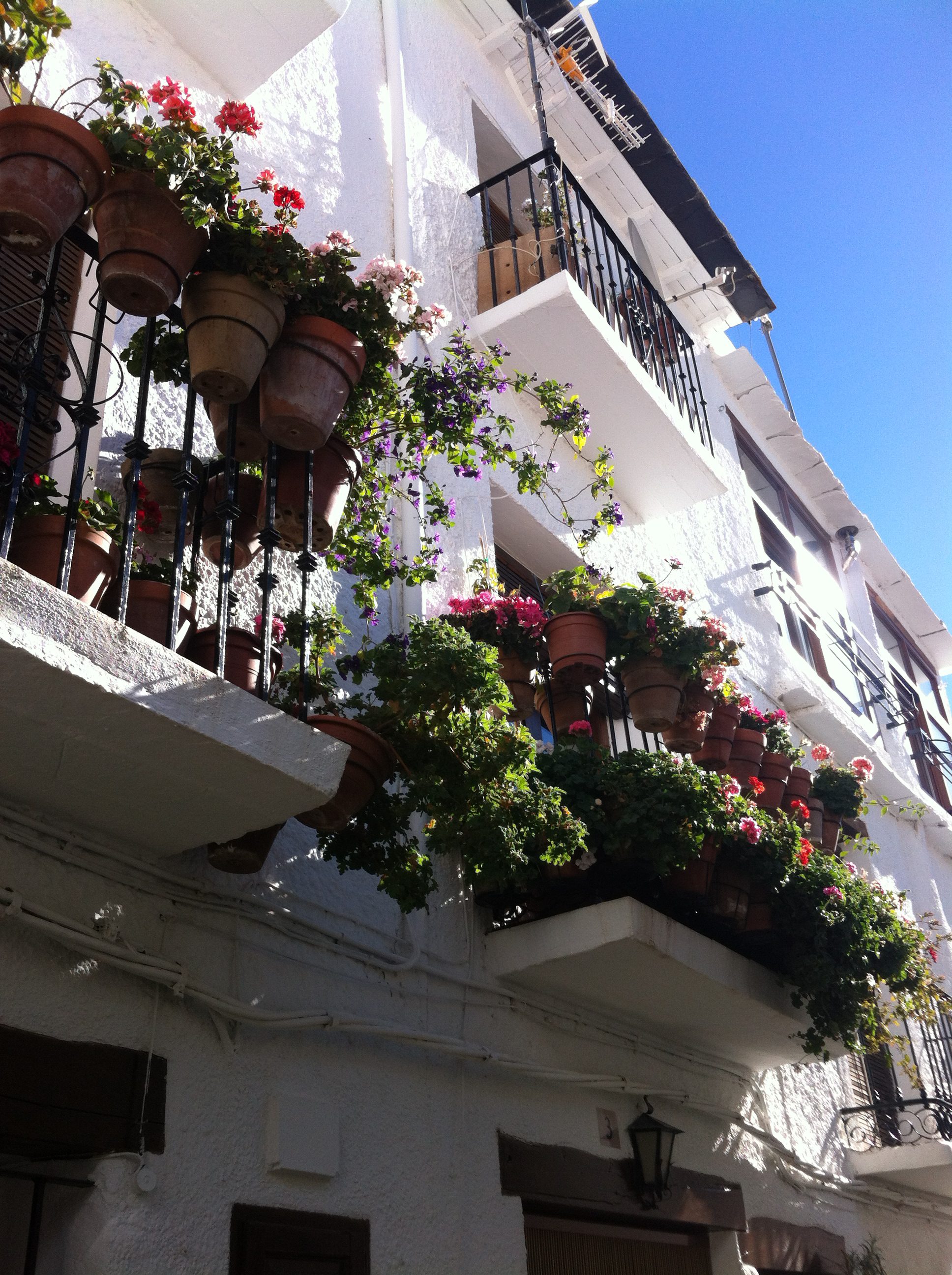
After a couple hours, Juan asked which village we wanted to stop in first. I don’t remember which one it was because they looked the same: tiny, white-washed towns of a couple dozen buildings clustered around a bend in the road.

“How much time do you want here?” he asked.  Ummm…we didn’t know, never having been “here” before, but we thought an hour would be enough.

Juan hung out with some friends while Lynn and I wandered around.  Now remember, it was the off season.  We appeared to be the only tourists, and a lot of businesses were shut, the owners probably off to Florida for the season.

Two shops were open.  They featured the local craft specialty—thick, heavy, woven rugs that you would pay 10€ to buy and 100€ to get home.  There was also much unremarkable pottery and fashionable women’s clothing made in China.  It was one of those places where you feel like you should buy something to support the local economy, but I couldn’t muster enough interest to pick anything out.  I think Lynn bought a pottery bowl.

We walked up the road to get a view of the mountains—which were spectacular—and found a B&B that served coffee.  We sat in the garden and drank coffee; not a bad way to kill a morning.

sierra-madre

After an hour we ambled down the hill, found Juan, and proceeded to the next village, which looked exactly like the first.  I probably sound like I’m complaining but I’m not, they were lovely and picturesque but they did look the same and I knew a limited number of Spanish superlatives so I didn’t know what I would tell Juan about this one when we reconnoitered.

white-village-2 white-village pampaniera balconies

We stepped into a tiny empty church and a man followed our every move.  “There’s a 2€ admission!” he informed us.  We paid it and beat it out of there.

It was nearly 2pm so there was a restaurant open for lunch.  We climbed to the roof top patio and the waitress was clearly not happy to have customers.  The menu was limited to combinations of ham, eggs, and bacon.  I ordered “potatoes with bacon” sans bacon, Lynn ordered ham and eggs, and we both got a beer.  When the food arrived a half hour later, my potatoes were heaped with bacon—sarcastic bacon?—and Lynn’s plate had a pile of ham topped with a raw egg.

I gave Lynn my bacon and she fed it to a cat that was slinking nearby.  The waitress, forced to emerge from the interior by the arrival of more tourists, glared at us.

“I have a theory,” Lynn said, “that the Jews were expelled from Spain because they didn’t consume enough pork products.”  There was much laughter, which the waitress appeared to take as a personal affront.

Within a minute we were surrounded by a dozen cats who consumed all the bacon, raw-egg saturated ham, and the dry white bread in our bread basket.

Beer and potatoes in the sun made for lovely naps as we were driven back to the Alhambra Palace for our last night there.

All Over the Place

This is a series of posts about Italy, Malta, and Spain that starts here.

I had read about something called the white villages.  I didn’t really get what they were, how we would get to them, or what we would do when we got there, but I pitched them to Lynn for our last day in Granada.

“We could rent a car,” I said.  “I love to drive!   We drove all the way to New Orleans and back.  I drove in the south of France and loved the mountain roads … I’ve driven in Chicago and LA …”

Hire a car?” said Lynn skeptically. “Nothing against your driving, but have you noticed how well we do on foot, with a map?  Nooooo, I don’t think so.”

She suggested we procure a driver.  We asked at the front desk and boom, it was done.  The “taxi” as the concierge called it, would pick us up at nine the next day and take us to two or three white villages outside of Granada.  It would take five or six hours and cost around 80€. This was actually a lot less than a car rental.

We waited on the steps of the Alhambra Palace.  Vehicles were parked higgledy piggledy in front of the hotel, where two tiny lanes ran into one another.

There was a Bimbo Pan truck.  “I love that name,” I said.  “I first saw it in Mexico and didn’t realize they would have it here.

Reader, Bimbo is a bread company.  The founder died recently, so in reading his obit I learned that the name Bimbo was a combination of Bambi and bingo.  I guess it was supposed to appeal to kids.  Back in 1945 Mexico it was innocent enough.

Now I just looked up the word bimbo.  It originated from the Italian “male child” (a female child would be bimba) and at first it just meant “a guy” in American slang but somehow back in the 40s morphed to mean an “attractive but unintelligent female.”  Maybe the founder of the bread company would have named his concern Bango if he’d known what bimbo meant north of the border.  Wait, scratch that.

In case you are snickering at the name, you should know that Grupo Bimbo owns owns Wonder Bread and Sara Lee and had revenues of $14 billion in 2014.  Not bad for a third world country.

In Mexico, the Bimbo trucks were ubiquitous.

bimbo

Bimbo sponsored the local futbol league where I first studied Spanish, in Cuernavaca, so I bought a tight-fitting jersey as a joke.  It was supposed to be ironic, but back in the US, no one got it; they just averted their eyes.

A handsome man stood next to a black Mercedes.

“Wouldn’t it be nice if that was our driver,” I nudged Lynn lewdly. She ignored me.

Then the man walked over and asked in Spanish if we were Ana and Leena.  Woot!

We sat in the back.  Many travel guides advise women to sit in the back of taxis because otherwise the driver will assume you’re a slut who wants to be raped.  It makes you wonder about the travel guide writers. Aside from a taxi driver in Dubai dropping me off at a brothel, I’ve never felt threatened by a driver.

Juan, our driver, had clearly set up the back seat for passengers, with water bottles and snacks.  He worked as a driver for excursions such as this one, and yes it was his car.  I was able to carry on a basic conversation with him because he spoke slowly and, as we wound through the steep winding foothills of the Sierra Madre, learned that he was from one of the white villages.

This was much better than me driving.  We passed hundreds of wind turbines, and Lynn and I talked about the turbines in the Scottish highlands, where she lives and where her husband crusades to get them placed appropriately—not wrecking the views or ruining neighbors’ lives with their noise.  He was currently on edge, awaiting news on a funding proposal to set up turbines that would benefit the community in perpetuity.

Strangers, All

This is a series of posts about Italy, Malta, and Spain that starts here.

The trolley ride was worth the agro of finding the tickets and figuring out how to get on the damn thing.  As I’ve written, many of the streets of Granada are no wider than one lane.  The trolley was narrow, but it came within inches of grinding against the stone walls on either side.  Granada is also very hilly.  At one point we were going downhill and it felt like the brakes weren’t engaging.  Everyone cried out in alarm.  I think there may have been an old woman with a basket of kittens crossing in front of us.  At the last minute the trolley lurched to a stop and we all laughed nervously in relief.

Lynn and I wanted to find a fast, cheap lunch place.  We came upon a hole-in-the-wall Syrian restaurant that didn’t serve alcohol but that was okay.  The place was maybe 12 by 12 feet, had four tables, and was decorated with rugs depicting scenes from Syria, presumably. It was run by a man and wife; she was the cook and he ran the front of the house, such as it was.  He spoke some English and was able to tell us he had come from Syria two years before.

The door opened and a little girl waltzed in, as little kids do, twirling and fidgeting and humming.  Her father gave her a very long hug; I wondered if that was his usual style or if he fiercely appreciated being safe in Spain with his family.  Was this all of his family?  He went in back and came out with a giant present for her—a puppet set.  She sat near us and I spoke Spanish with her.  She was five years old and no, it wasn’t her birthday; the present was from her aunt and uncle who lived far away.

Our host brought our food.  After my two-week trip to the Middle East the year before, I had sworn I would never eat hummus again.  But it was great to have something different—hummus, falafel, baba ganoush, a simple salad with vinegar, and olives and pita bread.

Other customers filtered in and I heard an American accent.  It turned out that one of the guys at the table next to ours was a Syrian-American from Chicago visiting cousins in Granada.

I asked where the toilet was, and the owner pointed behind me.  What?  I stood up and turned around, then parted two rugs hanging from the ceiling to reveal a dilapidated door that didn’t lock.  Now, “toilet” in Spain and most other places in the world means what most Americans call the “bathroom.”  The bath “room” was smaller than a broom closet and the actual toilet was not bolted to the floor so it made a loud thunking noise when I sat down.  It was awkward, and I just had to do what I had to do even though probably everyone in the restaurant could hear it.  Where was the loud music when you needed it?

Lynn and I went our separate ways for the afternoon.  I visited the Musuem of the Sephardi aka the torture museum, which I wrote about as soon as I returned.

As I write this, the headline on the front page of the Sunday Minneapolis Star Tribune newspaper is, “Twin Cities Jewish Community Shaken by Rising Anti-Semitism.”  So while the exhibit was historical, it really wasn’t.

Meanwhile, Lynn had found the tourist office and had asked about the Flamenco shows.  To my relief, she had decided she didn’t need to see one.

We tried another hole-in-the-wall restaurant for dinner.  We ordered a pizza and it was clearly a frozen one that had been microwaved.  So what?  We wolfed it down, and their cheap house red wine was fantastic.
We were the only ones in the place besides a young woman who we guessed was Chinese.  She was frantically trying to get her mobile to work.  I wondered if she was homesick.  We would have been happy to keep her company her if she had ever looked up from her phone.

Pats and Peggies on the Prowl

This is a series of posts about Italy, Malta, and Spain that starts here.

After a full day at the Alhambra, Lynn and I decided to check out a quaint little restaurant near the hotel.  Like most restaurants in Spain, it didn’t open until 8:00 pm.  We were at the door at 8:01, and we were the only customers, so we got the prime table at the corner of the dining room overlooking the city.  It would have been very romantic, if either of us had been with romantic partners.

I have learned to appreciate things without thinking, “If only I was here with a man.”

The server was a woman, one of very few I encountered in Italy, Malta, or Spain. She had a white linen napkin draped over her arm.  What’s that for?  There were white linen table clothes too; we had landed in another posh place.

We were tired and not particularly hungry, but our server was so friendly and attentive we felt we had to give it a try.  This was Spain; I don’t eat pork, so it was easy to narrow down my choices.  The menu was typical Spanish: Pork cutlets, pasta with pork sausage, ham and potatoes, pork chops, pork tenderloin, Spanish omelet with ham, a vegetarian pasta, and—ta da!—seafood paella.  We were assured one dish would be enough for us both.  Too late, I remembered from one of my Spanish classes, where we had studied Spanish foods, that paella takes at least 45 minutes to prepare.  So we drank a bottle of red wine and tried to keep our heads from lolling off to the side as we got drowsier.

The server kept bringing bread and olives, so we were full by the time the massive paella arrived.  Lynn and I looked at each other, that look that says, “Maybe we can dump some of it in our bags so we don’t insult the chef when we can’t eat more than a few mouthfuls?”  The server stood nearby, eager to see how we liked one of Spain’s national dishes. In case you’ve never heard of paella, it’s a rice dish prepared in a large skillet, the bottom is meant to get sort of crispy and hard.

Sadly, it was hard throughout and the seafood was tiny and dry.  Unlike most other servers I’d encountered on this trip who had to be begged and bribed to provide service, our friend kept returning every few minutes to see how we were doing. We smiled and dutifully stuffed ourselves but only managed to consume about a quarter of it.  I hope they liked their own cooking because they were going to have a lot of leftovers.

We still had tickets for the trolley, so the next day we found one showed our tickets to the driver, who gesticulated wildly and spoke in such rapid Spanish I couldn’t understand a word.  He did that thing we all do—kept repeating himself a little louder and with more exaggerated pantomime—but we couldn’t make any sense of it.  Finally, looking resigned to something; he stamped our tickets, gave us two different tickets, and waved us to the cars with additional incomprehensible instructions.

Each row in the cars had its own door, and the windows were one-way glass.  I assume the mirrored exterior was to deflect from the summer heat.  We couldn’t tell which rows were occupied, so we walked up and down, opening doors and saying, “Oops, excuse me,” until we finally found an empty row.  Once we were seated, our fellow passengers leaned in and laughed, “We all did the same thing!”

Our car was full of middle aged English women who reminded me of Pat Butcher and Peggy Mitchell from EastEnders (photo removed due to copyright).

“There’s 42 of us ladies on this trolley,” drawled a woman behind us, “We’re all retired to Nerja, south of ‘ere, and we’re out on a jaunt.”

“Gangsters’ wives,” Lynn whispered confidentially.  I made small talk and could have spent all day with them, but Lynn kept schtum, probably for fear that if they heard her London accent they would get into who-knows-who and find out they were related.

Hambre and The Alhambra

This is a series of posts about Italy, Malta, and Spain that starts here.

Lynn and I were going to take it easy this evening in anticipation of a long day at the Alhambra.

“Where should we eat dinner?” Lynn asked.  “I’d be happy having the tapas platter out on the patio again.”

I hesitated.  Why?  Some part of me felt it would be tacky to eat an appetizer for dinner two nights in a row.  Wouldn’t it be more “proper” to eat in the hotel restaurant?  Lynn read my look and we settled on eating in the restaurant.

I immediately regretted it.  Everyone was dressed up—the young, extremely blonde couple near us speaking some Slavic language were in formal wear—jewels, furs, the whole bit.  The menu was pricey; and as usual in fancy restaurants, the one reasonably-priced dish was a vegetarian pasta alfredo, which I could make at home for $2.00.

“It’s not too late to go out to the terrace and order the tapas,” Lynn suggested.  Again, some false sense of propriety kept me from going along with that sensible idea.  I ordered the vegetarian pasta and Lynn got a veal cutlet which came with potatoes and a heavy cream sauce.

We also ordered a bottle of cava using the time-honored strategy of picking the second cheapest wine on the menu. Within 10 minutes of tucking into our food we were groaning.

“I feel like a foie gras goose!  Why didn’t I take you up on your offer of going out to the terrace?”  Lynn smirked but didn’t comment.

Because I grew up and spent my young adulthood in poverty or near poverty, I have always been conflicted about spending money.  Sometimes I overcompensate and blow money unnecessarily just to show myself that I can, then I feel guilty or am disappointed in what I bought.  This trait has lessened since my ascension to the middle class at around age 40, but it still flares up from time to time, often while traveling.

“Oh my god!” Lynn shouted, uncharacteristically (She is English, remember.). We were in the room digesting our food.  “I’m reading reviews of the hotel on Trip Advisor, and here’s one where they only gave it two stars because “the blow dryers are old.  A bloody blow dryer!  What is wrong with people?!”

Finally, on to the Alhambra, which had been the genesis of this whole trip.  Lynn wanted to see it.  I had never heard of it.  I said yes, then added on Italy and Malta. Lynn did the Spain planning and added on Madrid and Toledo.

So here we were, at the gates.

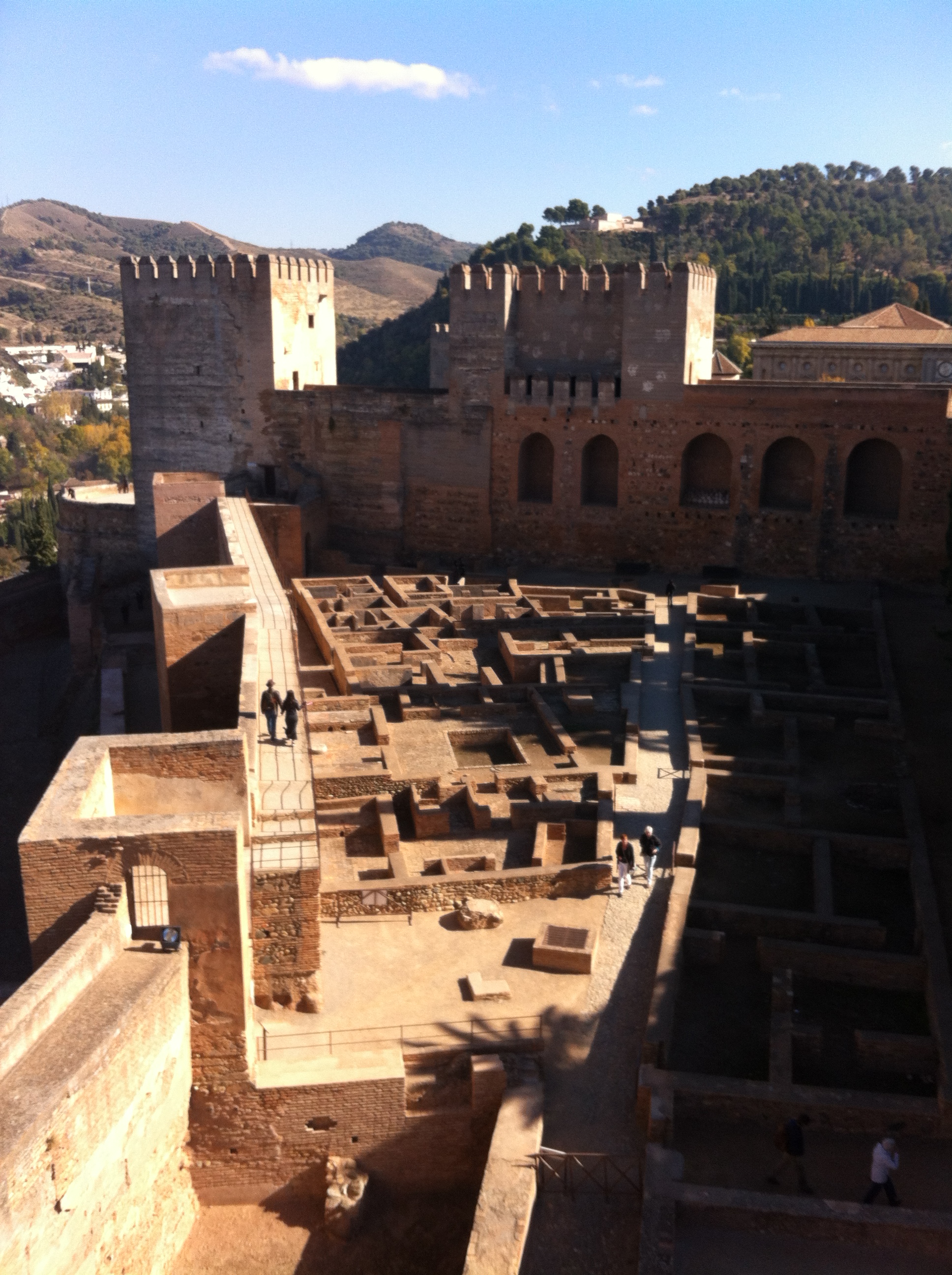
Straight off of Wikipedia: The Alhambra was originally constructed as a small fortress in AD 889 on the remains of Roman fortifications, and then largely ignored until its ruins were renovated and rebuilt in the mid-13th century by the Moorish emir Mohammed ben Al-Ahmar of the Emirate of Granada, who built its current palace and walls. It was converted into a royal palace in 1333 by Yusuf I, Sultan of Granada. After the Christian Reconquista in 1492, the si became the Royal Court of Ferdinand and Isabella (where Christopher Columbus received royal endorsement for his expedition), and the palaces were partially altered to Renaissance tastes. In 1526 Charles V commissioned a new Renaissance palace better befitting the Holy Roman Emperor.

fortifications

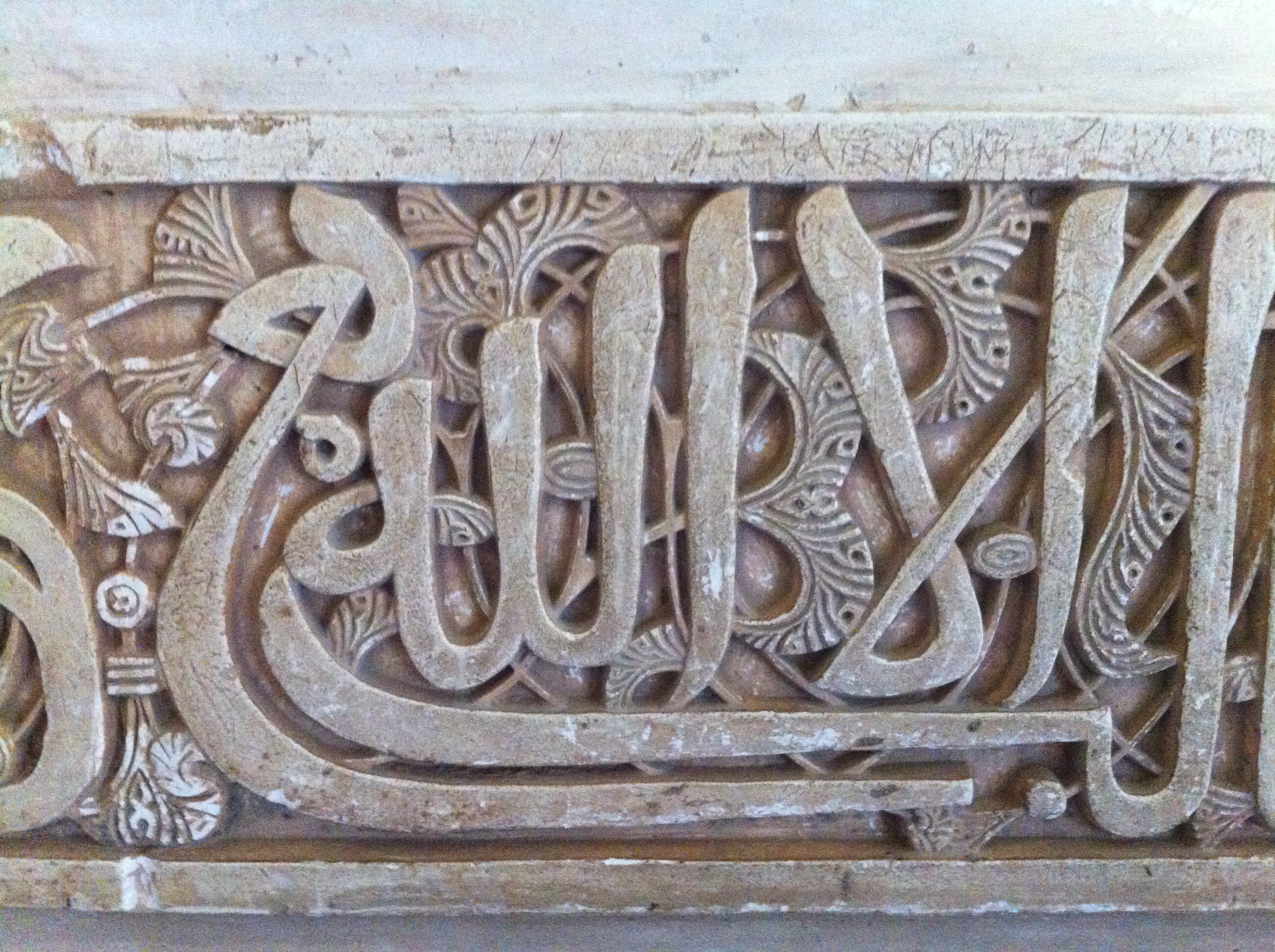
Much of the site has been rebuilt. It’s a massive complex of buildings and gardens. We spent about five hours there.

arabic-in-stone doorway

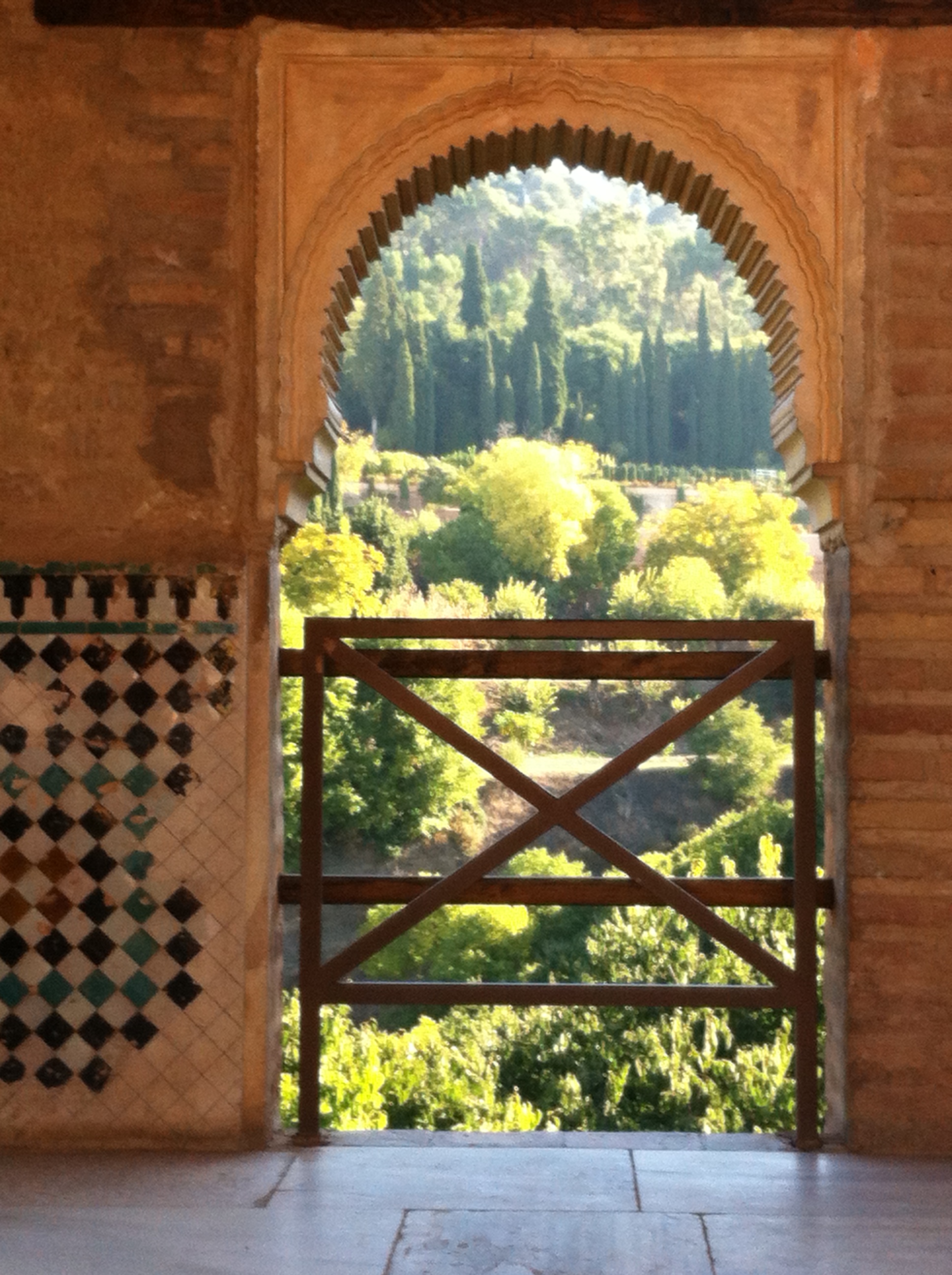
I thought it would be similar to the harem at the Topkapi Palace in Istanbul—all about tile—but there wasn’t as much tile. To me it seemed more focused on harmonizing the built world with nature, with lots of beautiful vistas, fountains, and gardens.

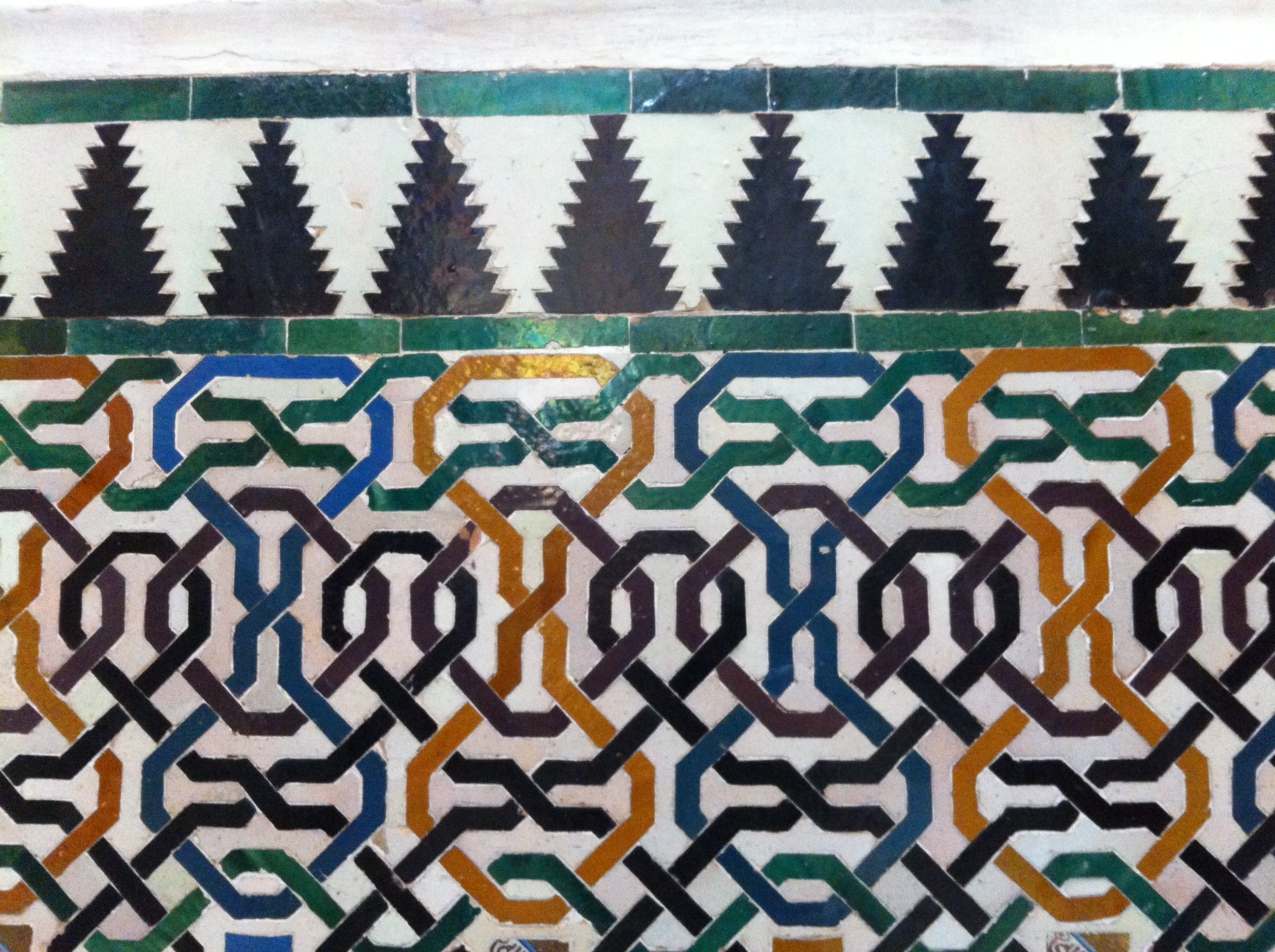
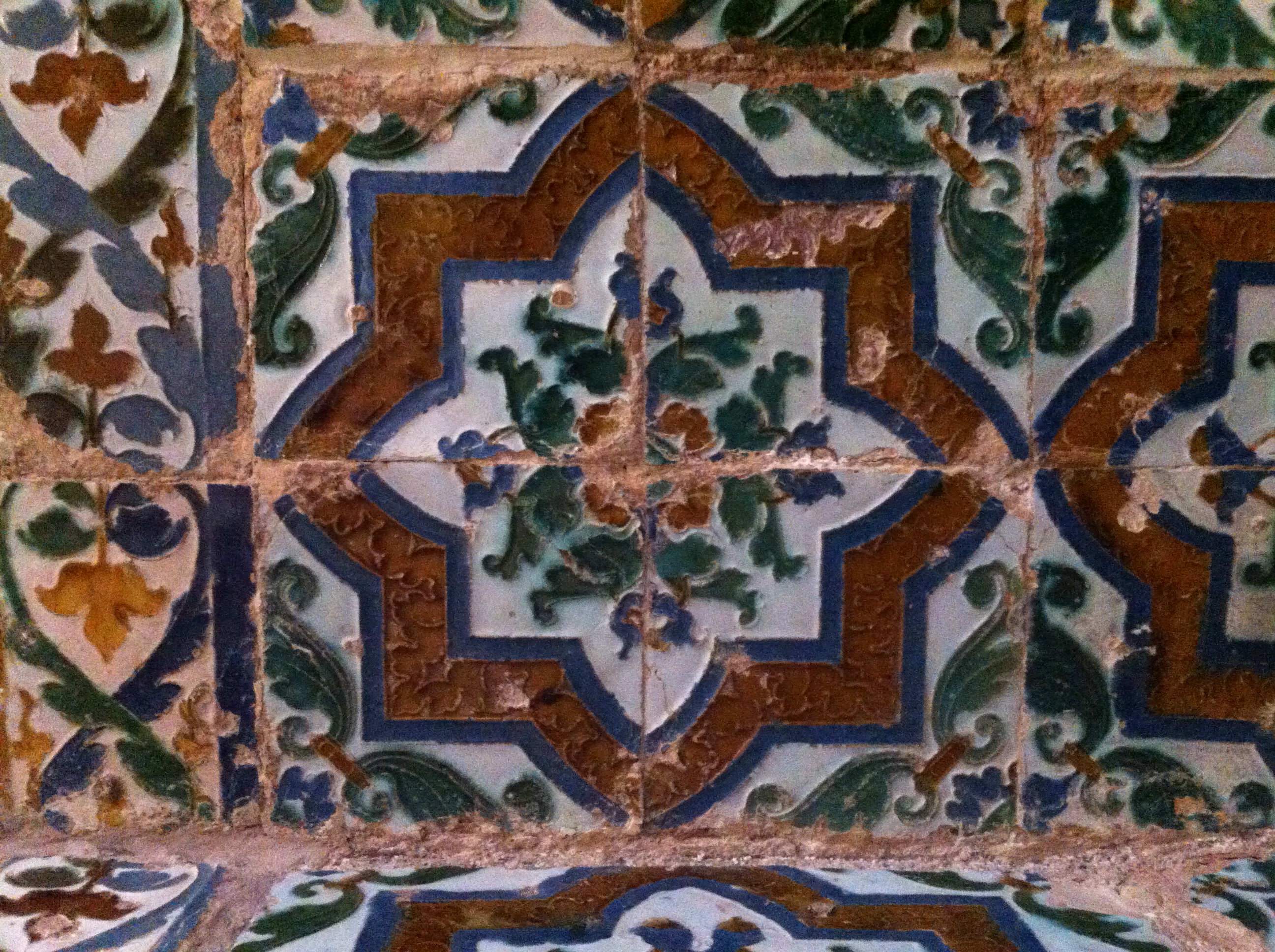
There was some tile:

tiles-2 tiles

Topiary was big.

topiary

This was aptly called The Romantic Observation Point.

vista-2 vista

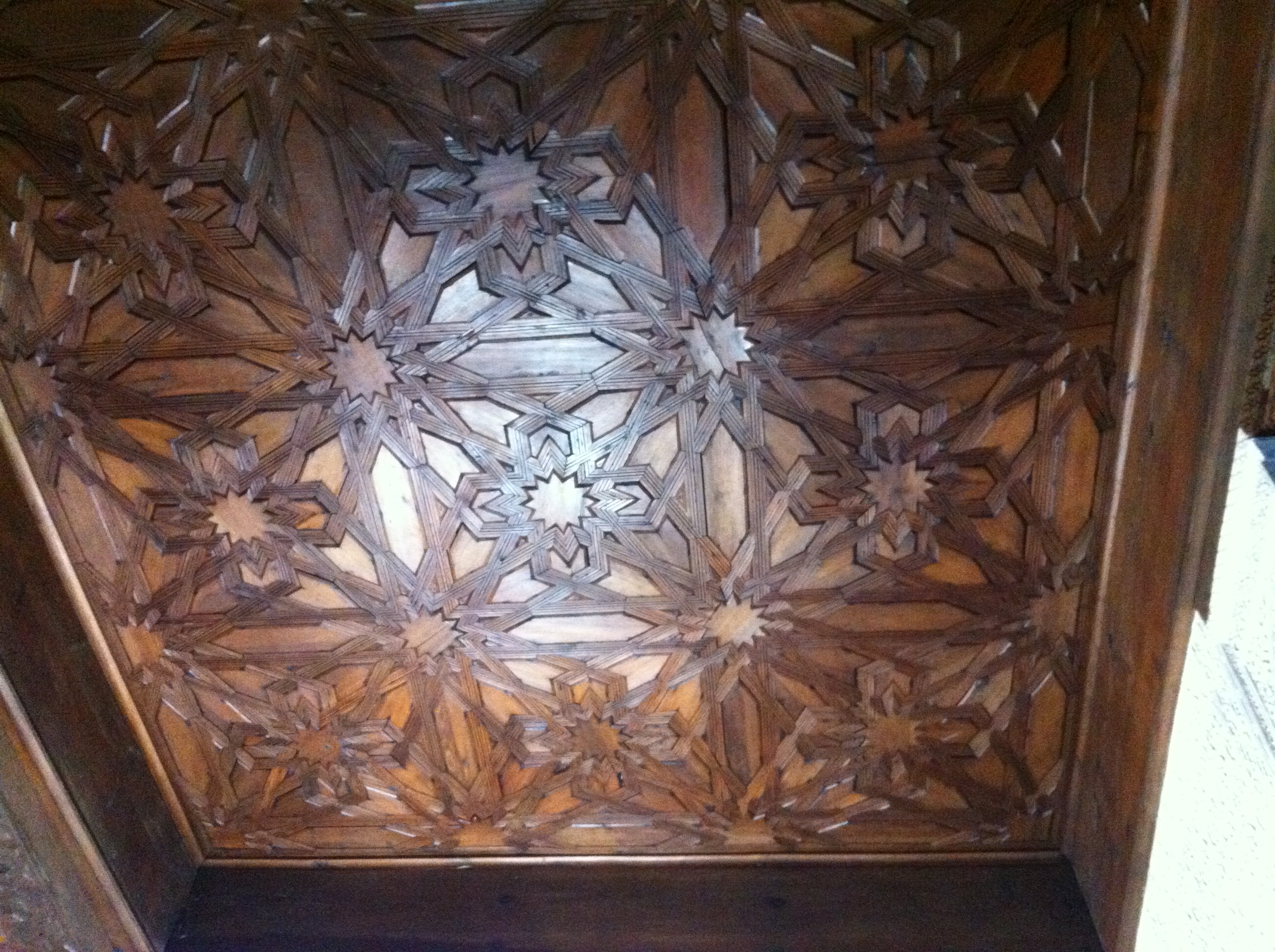
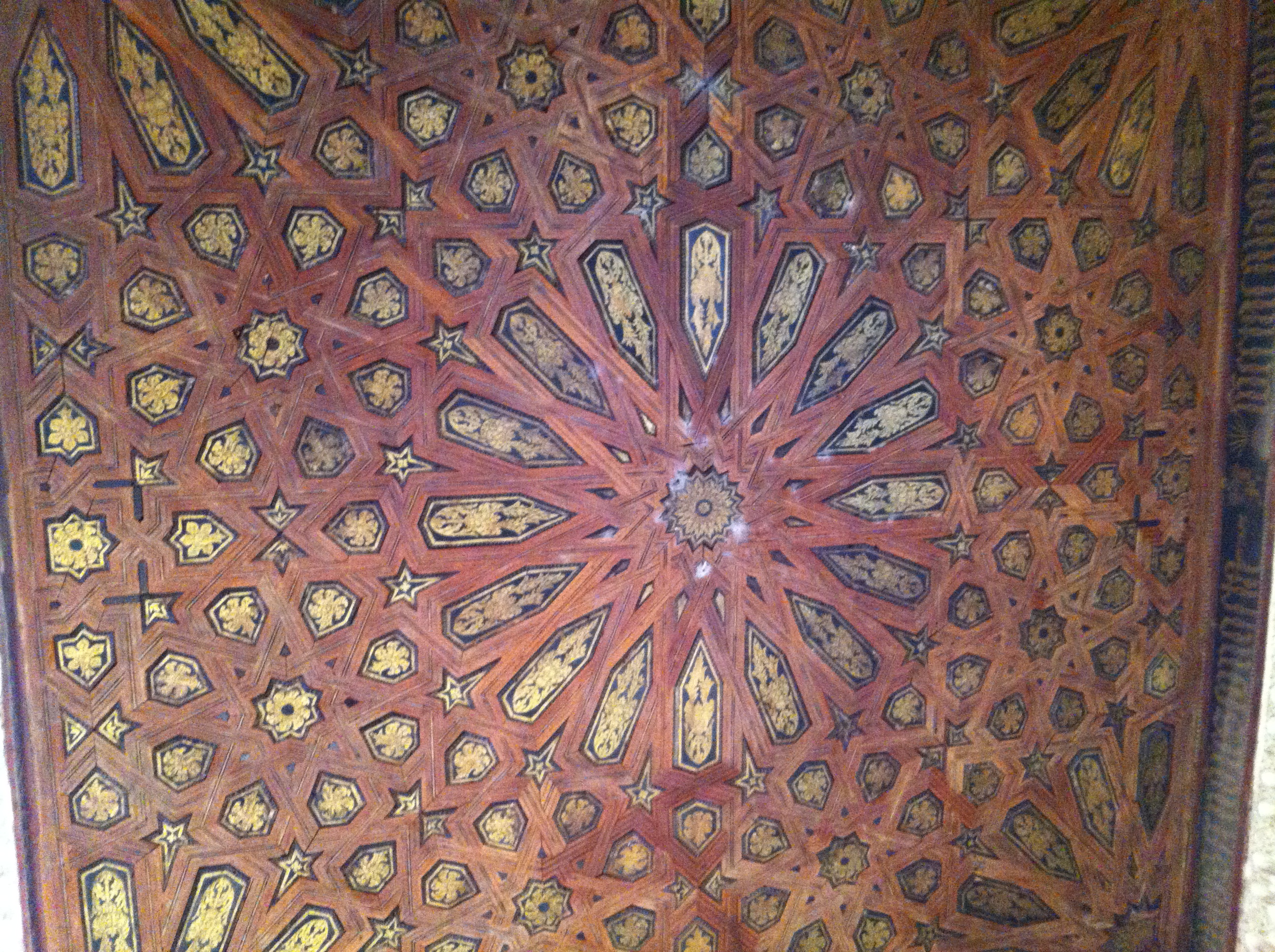
I admired and was intrigued by the wooden ceilings, inlaid with gilded wood.

wood-ceiling wood-ceiling-2 wood-and-gilt-ceiling starry-ceiling

We walked through the Charles V Museum, one of many buildings inside the complex.  I asked a guard to point me to the Jose Rodriguez Acosta collection.

“The collection, she is closed for renovation,” he answered.

Of course it was.

We Who Wander

This is a series of posts about Italy, Malta, and Spain that starts here.

Lynn and I were done with the Acosta Museum by 11:00 am.

“What shall we do now?  Fancy a walk down into the town again?” she suggested.

“Sure.  Maybe we can find that Hop On Hop Off bus thing,” I answered.

The streets of Granada, or at least the scenic sections of it, were way too narrow for the standard red double-decker sightseeing bus.  But some kind of tourist vehicle had passed us the night before. It looked like a toy train.

We also wanted to find the Cathedral, where Isabella and Ferdinand were entombed.  I was binge reading Phillipa Gregory’s books about the Tudors and wanted to learn more about the parents of Henry the Eighth’s first wife, Catherine of Aragon.  She was the only one of his wives who had been born of a king and queen, raised to be a queen, and who put up a good fight when he tried to shed her.

I’ve written about my ability to get lost.  I accept this trait and even welcome the (good) surprises it can produce.  Lynn, however, had silly expectations that we would consult a map, head in the “right” direction, and arrive at our chosen destination without detours.

It’s been said of St. Paul (mostly by people from our twin city, Minneapolis) that the streets were laid out by drunken Irishmen.  To which I counter, “What’s wrong with that?”  It’s so much more interesting than your boring, uptight Scandinavian-influenced grid plan over there across the river.

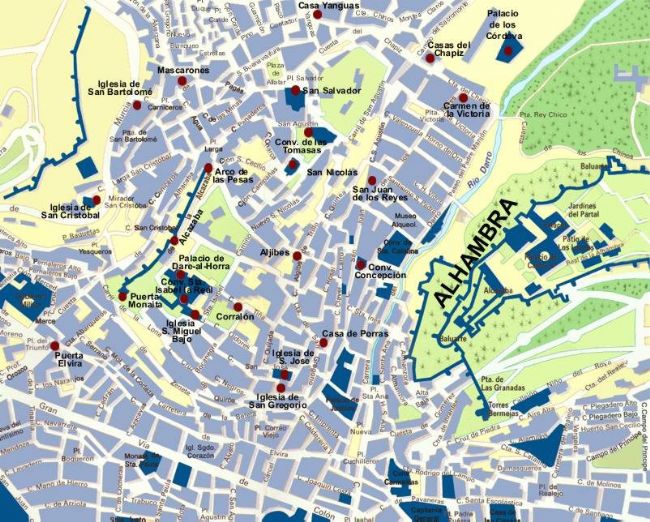
Granada reminded me of St. Paul, with streets twisting like rivers. There were tiny alleyways only pedestrians could maneuver, and only single file.  Here’s a map of the Albaicin district:

plano-albaicin

Street signage was hit and miss, sometimes at the top of a wall, sometimes in an actual street sign, and sometimes embedded in the sidewalk. There were sometimes pretty icons which were maybe meant to mark streets; this one was about 25 feet up on a wall.

icon

And so we got hopelessly lost, over and over.  I think Lynn felt really frustrated by our incompetence, and probably annoyed by the fact that I was laughing about it.  We saw signs for the “touristic train” but nowhere to buy tickets.  Then we saw the poster for it in the window of a tourism bureau and went in.

“Can we buy tickets here for the tourist train?” asked Lynn.

The travel agent or whatever she was gave us a look.  “It is a trolley, not a train,” she said patronizingly.

Lynn is better with these kinds of situations than I am.  I go straight to sarcasm, but she holds fire, smiles, and gets what she wants.  “Oh I see, thank you, and can we buy tickets here?”

“No!” said the woman, as if it was a ridiculous question. “You must buy them at the ticket stand near the Burger King” and she waved her arm dismissively to the right.

We walked in that direction and, for about the fourth time, passed a tall building with an eagle on top.  We spied the Burger King and finally found the ticket kiosk across the street and half a block away.  Clutching our tickets triumphantly, we turned around and there—through a narrow alleyway—caught a glimpse of the Cathedral.

“We were walking past it all along!” Lynn said, exasperated.  We paid €4 and entered; this was only the crypt with the remains of Isabella and Ferdinand, their daughter Joanna “the Mad” and her husband, Philip “the Handsome”.

We paid another €5 to get into the Cathedral itself, and it was yet another mind boggling gilded monument built with plunder from the colonies.

catedral

We got lost again, and found a pretty pavilion where we sat in the sun and had a late lunch.

We had been walking a lot on cobblestones and cement, and the thought of hiking back up the hill to our hotel was daunting.  Miraculously, Lynn saw a bus approaching, knew it was the right route, and in 10 minutes we were back in our room.  It had been a good day; now to rest up for the Alhambra tomorrow.

Mystery Artist #2

This is a series of posts about Italy, Malta, and Spain that starts here.

Day Two in Granada.  We had breakfast in the hotel, which provided quite a spread.  There were suspicious items like greyish “Chickens Sasage,” but also smoked salmon.  I knew what I would be having for breakfast for five days.

There was one of those machines that makes regular coffee, espresso, cappuccino, tea, hot chocolate, and six other things. It all comes out of one spout, and somehow it’s always good.  The girl in me who grew up with skim milk and Folgers Crystals and no second helpings comes out at times like this.  I could have stayed in the dining room all day drinking different coffee and coco drinks until they asked me to leave.  Lynn would have gone to the room and put the chain on the door long before.

Fortunately there was also a coffee maker in the room, so I could continue my caffeine-ating while we discussed what to do that day.

I don’t know if men do this too, but here’s how it often is with women trying to decide what to do.

“What do you want to do?”

“I don’t care—what do you want to do?”

“I don’t care.  How about the Superhumungous Museum?”

“Uhh … I guess so …”

“You don’t sound too keen.”

“Well I had hoped to go to the Smallish Museum.”

“Why didn’t you say so?”

“Well I don’t really mind what we do.”

When clearly, she does mind.  On and on it goes.  People trying to be nice are so irritating.

That’s not how it is with Lynn and me.  We’re flexible but know what we don’t want to do.  Which reminded me, I was going to have to come clean about the Flamenco dancing and say I would go, but only if we sat way in back where there would be no chance they would pull into an audience participation demonstration.  I talk a good game about being assertive, but I fully acknowledge how hard it can be.

We decided to check out the Jose Rodriguez Acosta Museum we had passed the previous afternoon.  The tickets were timed; ours were for 10:00 am so we had half an hour to kill.  We perused the art books on display and I got excited to see Acosta’s paintings, many of which featured Gitanos (gypsies, or Roma).

acosta-gypsies gitanos

We were the only visitors.  We chatted with the two young women at the desk.  They were both art history majors and lucky to have jobs here, they said.  We went out to the patio and enjoyed the view. If only there was a coffee machine.

jra-carmen

Finally, our tour began. One of the young women came out and led us down some stairs and outdoors.  It turned out that the place was a carmen, or formal gardens.  Acosta was from a wealthy family and built it for other artists.  No one was here in the winter, our guide said, but artists came to live and work in residencies at other times of the year.  Hmmm.  I would be glad to live there during “the winter,” as they called it—sunny and 65F.

topiary-and-fountains crown-hedge

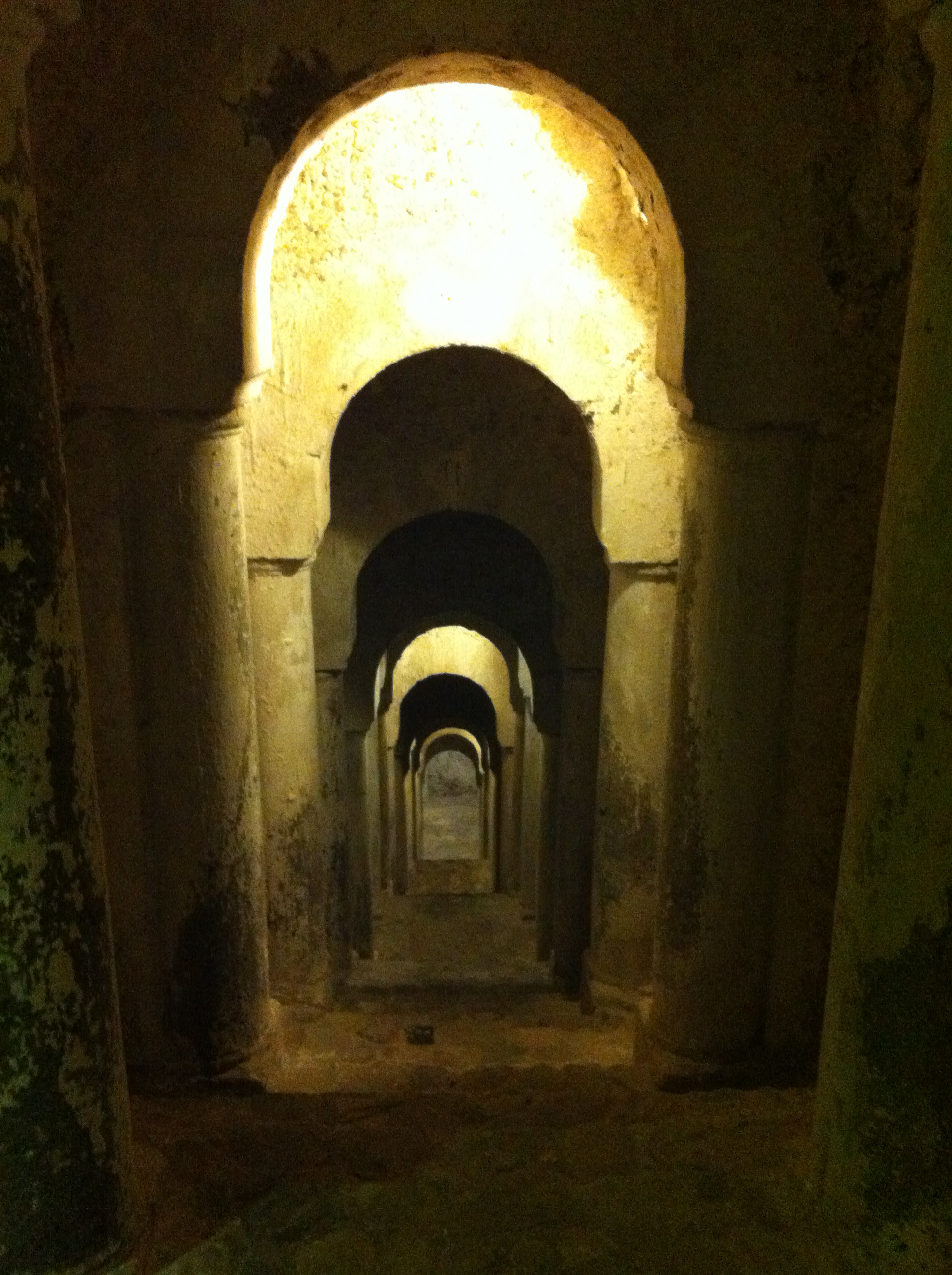
We walked through the gardens, then down into the catacombs than ran beneath the complex.

jra-catacombs

These went for miles and connected to the Alhambra and other carmens so people could have secret assignations and so on, I guess.  It wasn’t completely clear.

We climbed back up to the street level and entered a tiny museum.  “Acosta’s works are in the Carlos V Museum in the Alhambra,” our guide informed us.  “But here you will find many important works by other artists, many of whom are unknown.”

I’ve said I’m not an art critic, but after the Vatican Museum, the Borghese Gallery, and the Prado, I didn’t need a PhD in Art History to question why they would call these “important” works.  Our guide stood by while we politely looked at the motley collection of crucifixes and Madonnas and martyrs, many by “Anonymous.”

Well, never mind!  The gardens were worth the five euro admission, and we could see Acosta’s work at the Alhambra the next day.

Un Gran Salud

This is a series of posts about Italy, Malta, and Spain that starts here.

Lynn and I flew from Madrid to Granada, and I don’t remember anything about the flight except seeing these magazines and newspapers with photos of Melania Trump in the airport:

melania-2 melania

The first headline says, “I’ve never been the type of woman who gives her phone number to just anyone,” and the second is, “The Amazing Life of the Most Powerful Woman in the World.”

Um…she may be married to the President of the United States, but that doesn’t make her the most powerful woman in the world.  I would put Angela Merkel, Christine Legarde, or Janet Yellin in that category, but not Melania Trump.  Maybe they expect her to exert a powerful influence on fashion.

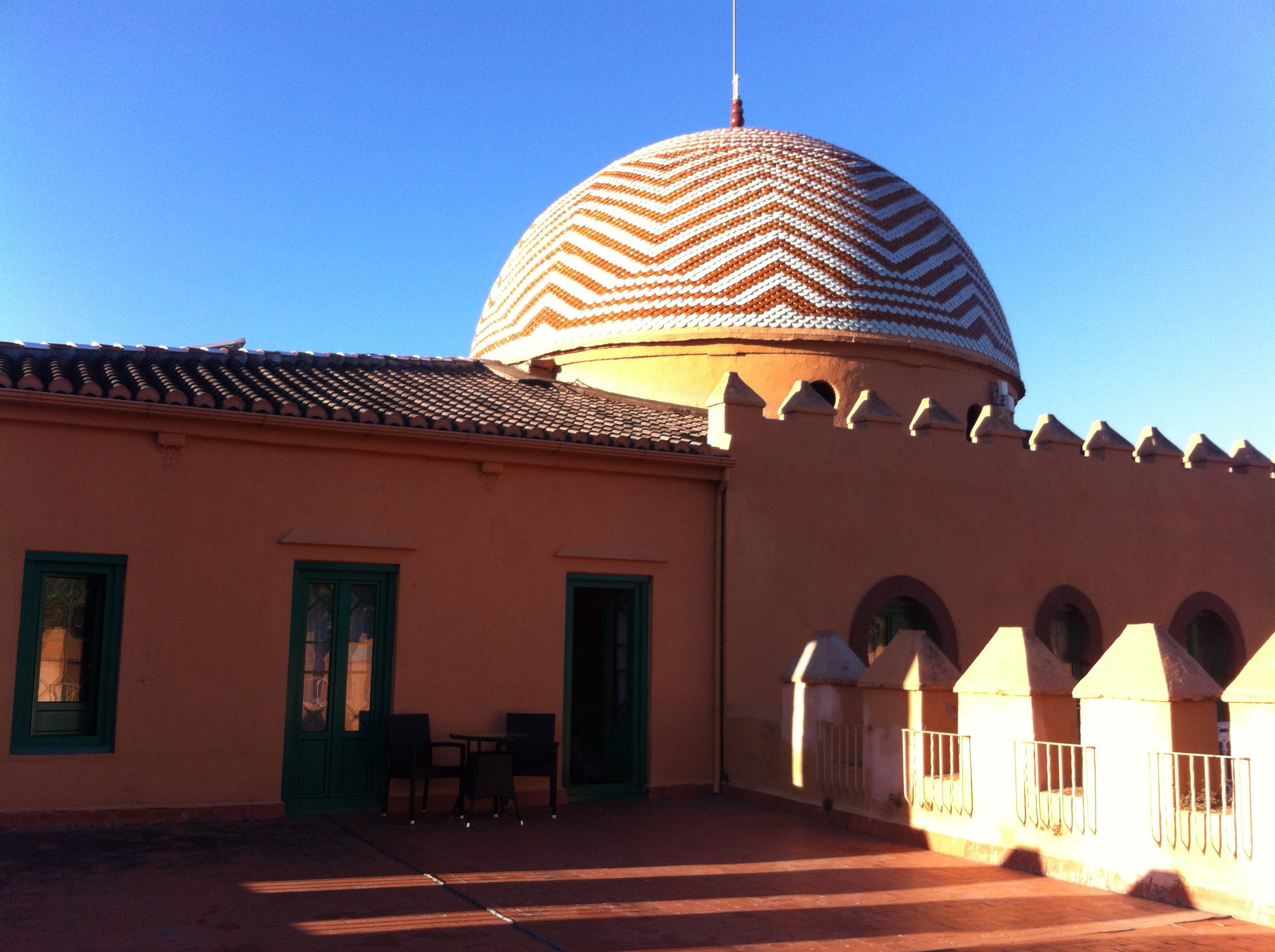
The Alhambra Palace Hotel.  What can I say?  It was like a palace.  The room wasn’t huge, but everything was of supremo quality and very clean.  For instance, the white linens on the beds were heavy thick cotton and the tile in the bath was beautiful.

bath

We had two French doors that led out onto a massive terrace:

room-terrace

But the best part was the terrace bar, overlooking Granada:

ah-terrace-2

No, the best part was, Lynn had got a great deal on our five nights.  Again, one of the big benefits of traveling during the off season.  It’s not like it was cold or rainy here, either, so I don’t why anyone wouldn’t visit Granada in November.

We had tickets for the main event of the trip—the actual Alhambra—in two days.  We headed out  to do a re-con walk and were at the entry to the site in about 10 minutes.  It was so easy, and we hadn’t gotten lost.  Feeling a little cocky, we decided to walk around some more.  We walked back to the hotel then onward in the opposite direction down an alley-like lane.  We passed something called the Jose Rodriguez Acosta Museum.

“Never heard of him,” I noted.

“Me either,” said Lynn.  “Something to check out later.”

We walked down, down, down a hill and stairs to a neighborhood called Albaicin.  We stuck to the main drag, which was about 12 feet wide. Every time a vehicle came by, we pedestrians had to flatten themselves against the walls of the buildings on either side.  A river ran along one side, a hill ran up from it, and at the top were old buildings … houses? Whatever they were, they were beautiful:

villa-from-town

Families were out for their evening strolls along with tourists.  We passed shops selling arts and crafts, and tourist kiosks selling Flamenco tickets.

“I would like to see Flamenco dancing,” Lynn commented, “If we can find an authentic place.”

I wasn’t thrilled about seeing Flamenco.  For one thing, all the posters seemed to indicate that the dinner-dance package didn’t start until 8:00pm. I flashed back to a trip to Peru with my Peruvian friend Roxana, whose nickname for me is La Marmota (the marmot) because I sleep so much. She took me to a popular dance club to see a spectacular costumed dance show, which was followed by a free-for-all dance party.  The show didn’t get started until 10:00, you could cut the cigarette smoke with a knife, and worst of all—I am a terrible dancer.  Really.  I was finally cajoled by Roxana and her friends to get out there and dance, and I think they regretted it.  When I made a move to sit down after 10 minutes, they didn’t protest.  It was fabulous—watching everyone else dance—would I be dragged out to dance Flamenco in front of hundreds of people too?

We huffed our way slowly back up the hill to the hotel and ordered drinks and the tapas platter on the terrace.  Now this is tapas:

tapas-on-terrace

“I could eat this every meal,” I enthused, probably with my mouth full of food.  The bartender came to pour Lynn’s dry martini and my rum and Diet Coke.  The glass was the size of a fish bowl and he poured, and poured, and poured.

on-vacation

I don’t remember what we talked about as we watched the sun set, but I know it was very profound.

ah-terrace

Beaches and Burgers

This is a series of posts about Italy, Malta, and Spain that starts here.

The Sorolla museum was set in the family home of this artist Lynn and I had never heard of.  The house was surrounded by tranquil gardens with fountains.  A few yards inside, and the traffic noise faded away.  The family’s furniture and family pictures and daily objects like pencil holders and water pitchers were still in place, so you could really imagine it as it was in the 1920s.  Madrid was probably quieter in the 20s, but this house would still have been an oasis.

Many of Sorolla’s paintings were sentimental, featuring small children on beaches.  All that was missing was a kitten.

valencia-two-children-on-a-beach

Some of my best memories involve being at the lake with my siblings or friends, so I found the paintings sweet.

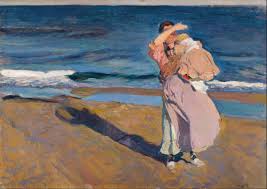
It’s unusual to see a portrait of a woman covering her face, as in the painting below. Usually a woman’s face and body are the gratuitous subjects of art.  But here you can almost feel the wind that is causing her skirt to billow, and the strong sun that is forcing her to raise her arm to see.  I’m not an art critic, but the composition, the colors and depiction of light and movement all feel satisfying to me in this piece.

sorolla-beach

I especially liked this one, maybe because it was so simple.

mother-by-joaquin-sorolla-1895

Several of the rooms were roped off, with my old friend the “Closed for Renovation” sign barring the way.  Again, this is one of the downsides of traveling during the low season.

The museum and gift shop were small, so soon we were done and ready for a very late lunch.  We spied a restaurant across the street called New York Burger.

“That sounds good!” I said, “We’ll know what we’re getting.”

“Right,” Lynn replied skeptically, and we scurried across, dodging speeding cars and buses.

In typical New York/Spanish style, this was a creative concept restaurant with endless menu options.  Has anyone else noticed the proliferation of menus with charts that lead you through a decision-making algorithm?  Here, Step One was, “Choose your Burger.”  But what were the choices?  Unclear.  Move on to Step Two, “Weight.”  How many grams of beef did I want?

“How much is a gram?” I asked Lynn. “I haven’t bought anything by the gram since I bought hash in high school.”

“I … I think there are 1,000 grams in a kilo ….” Lynn replied.

“But how big is a kilo?” I laughed.  “I’ll just order the second largest one.  I’m hungry.”

“So am I,” and Lynn.  “Oh, we’re not done yet.  Step Three is ‘How would you like your meat?”

And so on.  We finally managed to order.  Lynn got the special—a prawn burger, and I got as close to a plain old hamburger as I could.  I was exhausted from all the choices and not in the mood for blueberries, a fried egg, or caramelized pineapple. We snickered over some of the translations on the menu:

The meat of our burgers comes from top quality cattle’s of beef.

Well thank goodness!

Our burgers arrived.  Mine was the size of my head, and raw.  I wolfed it down.  The fries were okay; they came in one of those artsy cones that disguise the fact of how few you’re getting.  There was ketchup in one of those tiny paper cups; I asked the server to bring me five more.

“How’s your prawn burger?” I asked Lynn between mouthfuls.

“Good,” she replied, as hunks of it fell away, “except it won’t hold together.”  This seems to be the bane of the non-burger burger.

New York Burger had décor by Ikea, something I had seen in restaurants and shops in Italy and which we would see again in Spain.  There must not be enough real estate space for an Ikea on Malta.

We decided to walk back, stopping for a leisurely coffee in a sunny pavilion.  Our plan was to take in the botanical gardens on the way.  I managed to go in the Out gate, and was firmly informed that the gardens had just closed for the day.