Category Archives: Adventure

Napping and Knapping

I set my alarm to ensure I would wake up in time to catch my 9am bus.  I’m such an early bird; there was no way I was going to oversleep, but just in case.  I collapsed into bed at 10:30 and woke with the alarm at 8am.  I guess the previous day had been a long one—starting out in London with a couple tube rides, finding and catching the coach, sitting for three hours on the coach with nothing to do but look at the beautiful landscape, hiking four miles across open fields in the hot sun, “doing” Stonehenge, “doing” Amesbury, and capping off the day with a “meal” at Little Chef.

I flipped on the TV while I got ready.  There was a long news segment about how to survive a terrorist attack whilst on holiday.  When they got to the end and quizzed the viewers, I yelled my answers from the bathroom.

“What should you do if you see terrorists invading your hotel from your balcony?” droned the guy in the suit who was an ex-marine-cum-highly-paid terrorism expert.

“Hurl your Margaritas at them!” I yelled.

I got that one wrong. “What should you do if you if terrorists invade your hotel room?”

“Cover your head with both hands so they can see you are unarmed!” I yelled.

I got it right!  I wondered why the woman was wearing nurses’ scrubs if she was on holiday.

To my surprise, I got most of them right.  Watching that security webinar for work had really paid off.

I was soon out the door of the Travelodge and on my 10-minute walk to the bus stop.

Does this ever happen to you?  You’ve visited an amazing place like Stonehenge and as you leave you think, I’ve seen Stonehenge, now I’m one World Heritage Site closer to death. 

No, I didn’t think so.

Or even just leaving an unremarkable place like the Travelodge, do you ever feel like you have to break some sort of surface tension in order to leave?  I will probably never be here again.  Why do I care?  Why do I have to exert myself to leave?  It’s a cheap motel!

Of course I did leave, and after I crossed under the motorway I saw on my left a place called The Lord’s Walk.  I had passed this five times now.  It looked so inviting.  To walk through cool woods along a stream would be refreshing after the hike of the previous day.  It looked like my kind of paradise.
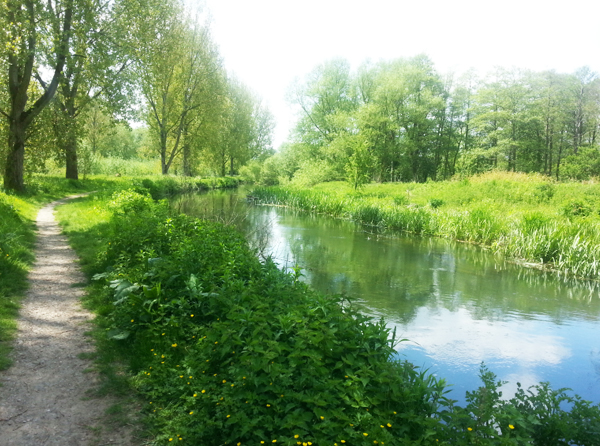
I read the placard.  It was the Lord as in “Lord of the Manor,” not as in “the Lord God.”  The local lord had gifted some of his land to the local populace and they had done a beautiful job of making it available to all for walking, fishing, picnicking, smoking pot, and so on.  I imagine few tourists go there because they are all focused on Stonehenge—or anxious about catching their bus.

I could have taken a short walk with the lord.  I had 45 minutes before the bus was due.  But I walked on.

Amesbury, and the southwest of England in general, are full of walls and buildings covered in what Lynn had informed me was flint knapping. Here are more images if you’re a rock hound.

We joke about artisanal products made by bearded millennials these days.  There is a guy in Minneapolis who is dead earnest about his artisanal flour, which costs $20 for a five-pound bag (that’s a lot).  I’m sure it’s very fine flour.  I don’t know much about flint knapping, but I met a guy once who was a dry-stone wall expert.  I would call both of these trades artisanal; it must take years to develop the eye and the skills to maintain these old structures.

At the bus stop, I felt anxious I was at the wrong stop, even though the taxi driver had shown me this stop and there were people with suitcases milling around, obviously London bound.

On the bus, I felt grungy, but content.  My phone connected to wifi immediately and there was a message from Heidi, “Let’s go to the continent!”

Church Goin’

It was a hot Sunday night in Amesbury, and I mean hot only in the sense of the temperature.  If this was 1986 I would have gone into The Bell, drank way too many pints of cider (“It was on sale—£2.20 a pint!”), picked up a guy, danced until closing, woken up in a strange place, slept with my contacts in, missed my bus, and had to hitch hike back to Eton.

But this was 2017, so I’m afraid this won’t be such a titillating tale.

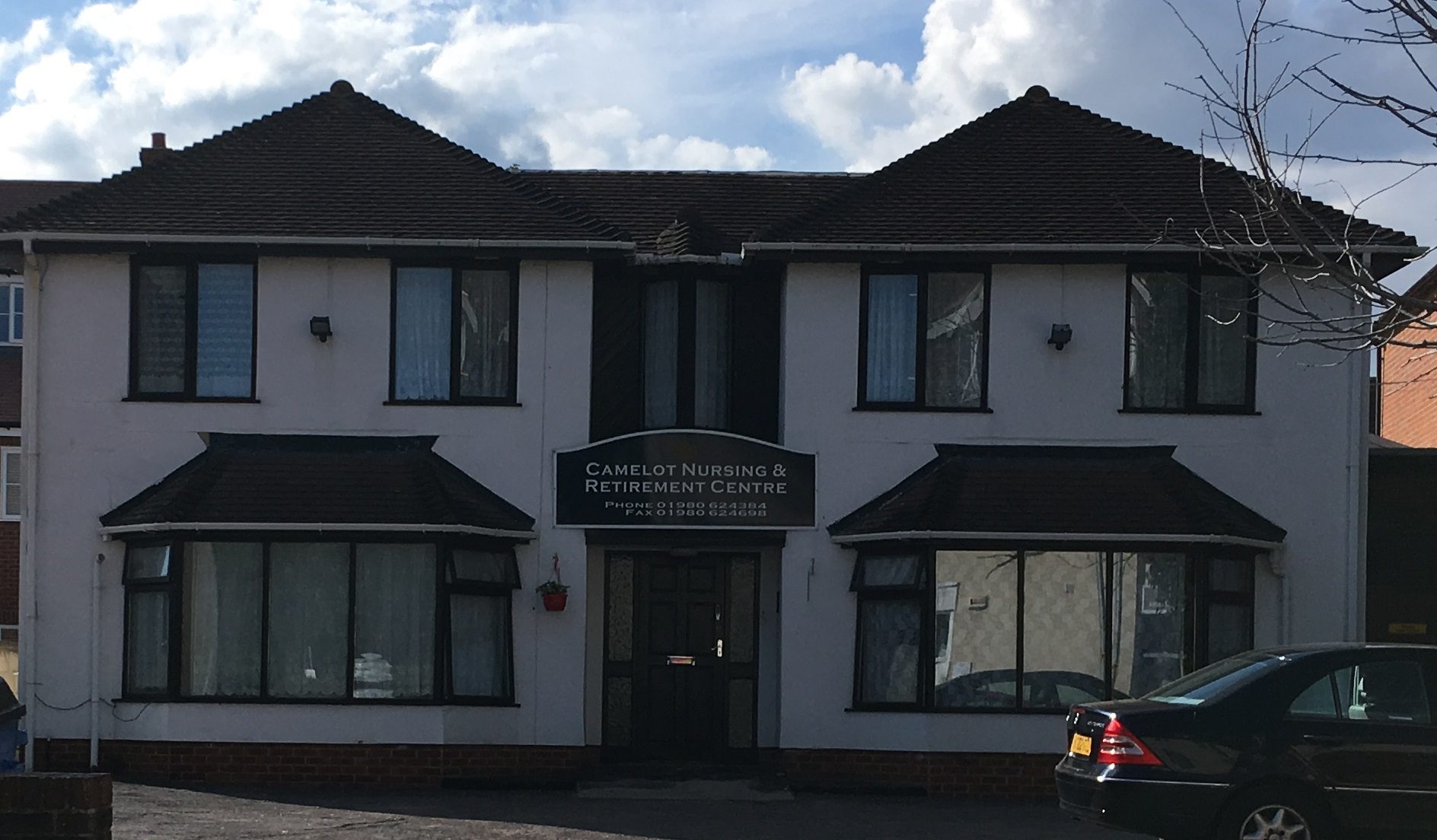
My interests these days run more to quiet places. That included all of Amesbury on a Sunday night, since almost everything was closed.  I passed the euphemistically-named Camelot Nursing & Retirement Centre.  Camelot?—Not.

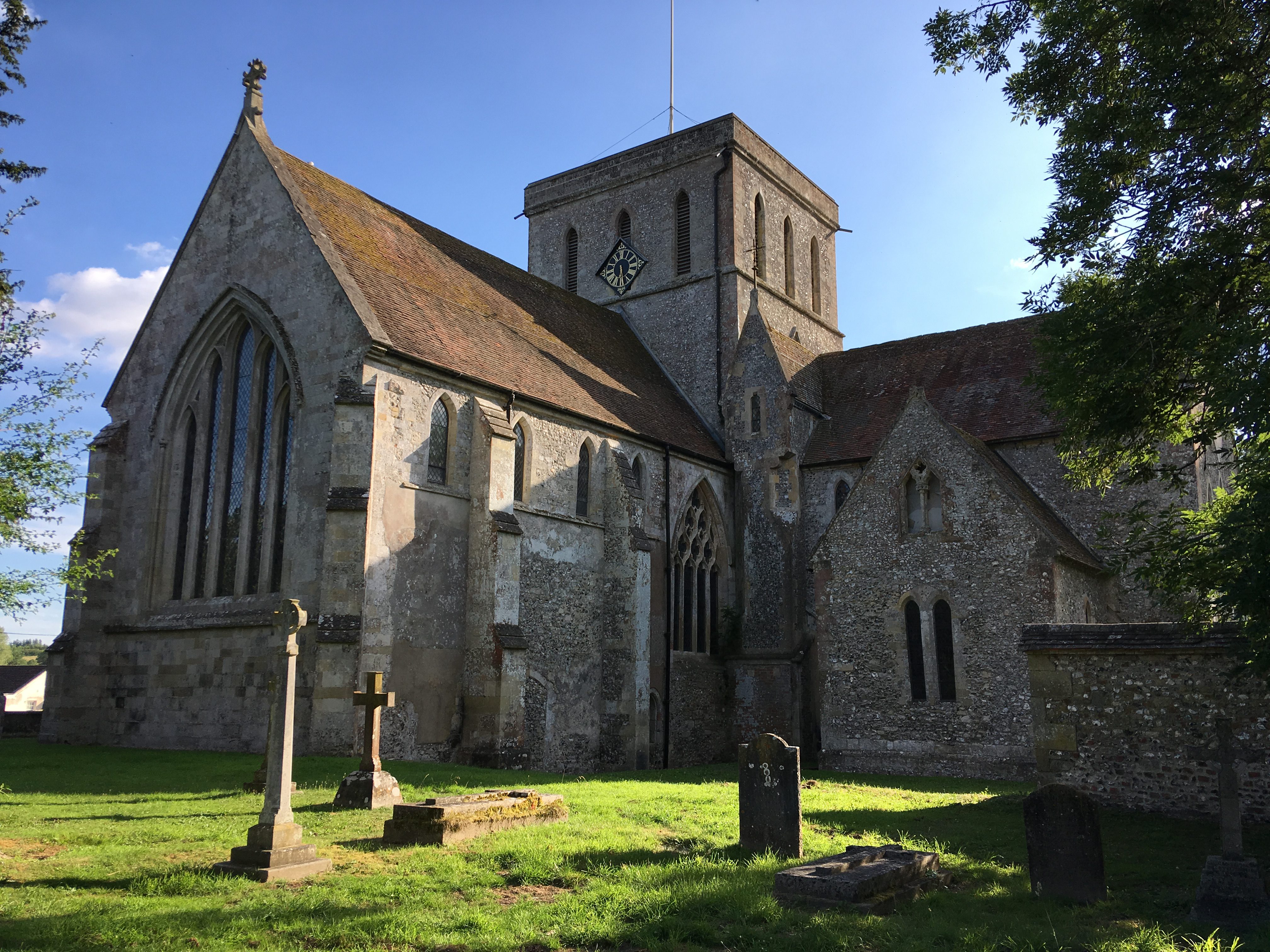
I found the parish church and spent a quiet hour there.

Singing drifted from inside, so I snuck into the musty-smelling interior.  I’m always afraid the minister is going to wave me over, “Come, join us, sister!  Come sing praise to the Lord with us!”  So I tip toed and hid behind one pillar after another until I could get a look at them. There were half a dozen women, all over the age of 40, being led by a man I assumed was the minister.  He kept stopping them and instructing them to do something different, better … I couldn’t make out what he was saying but the tone of his voice was stern.
I spied a table with stuff for sale on it.  Oh joy!  This is always the best.  I darted from behind my pillar to the one in front of the table.  Postcards, tea towels, greeting cards, aprons.  Aprons!  Aprons went out with the Betty Crocker Cook Book and Tater Tot Hotdish, but they were only £2 so I grabbed two, and five tea towels, and a pack of greeting cards, all with the image of Amesbury Parish Church on them. I was set for hostess and housewarming presents for the next six months, and all for only £8.

In my excitement I nudged the table and it made a scraping sound.  “Who’s there!” the minister called out.  I waved and smiled as I quickly exited.
As you know if you’ve been reading this blog for any length of time, my favorite subjects are death and travel.  So I enjoyed some time in the churchyard. Poor Leonard Frank George Williams had a long name but a short life.

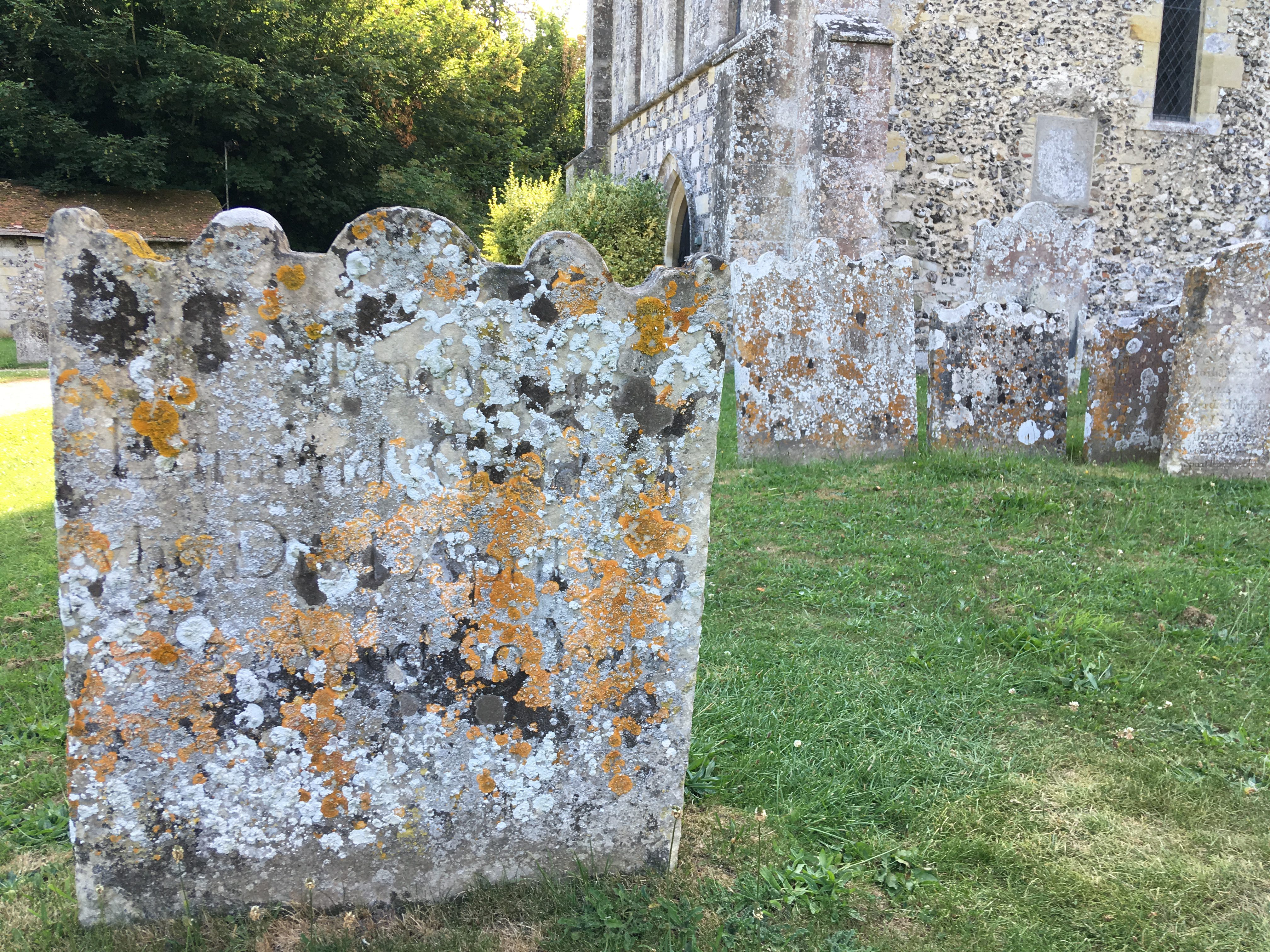
There were lovely mossy tombstones.

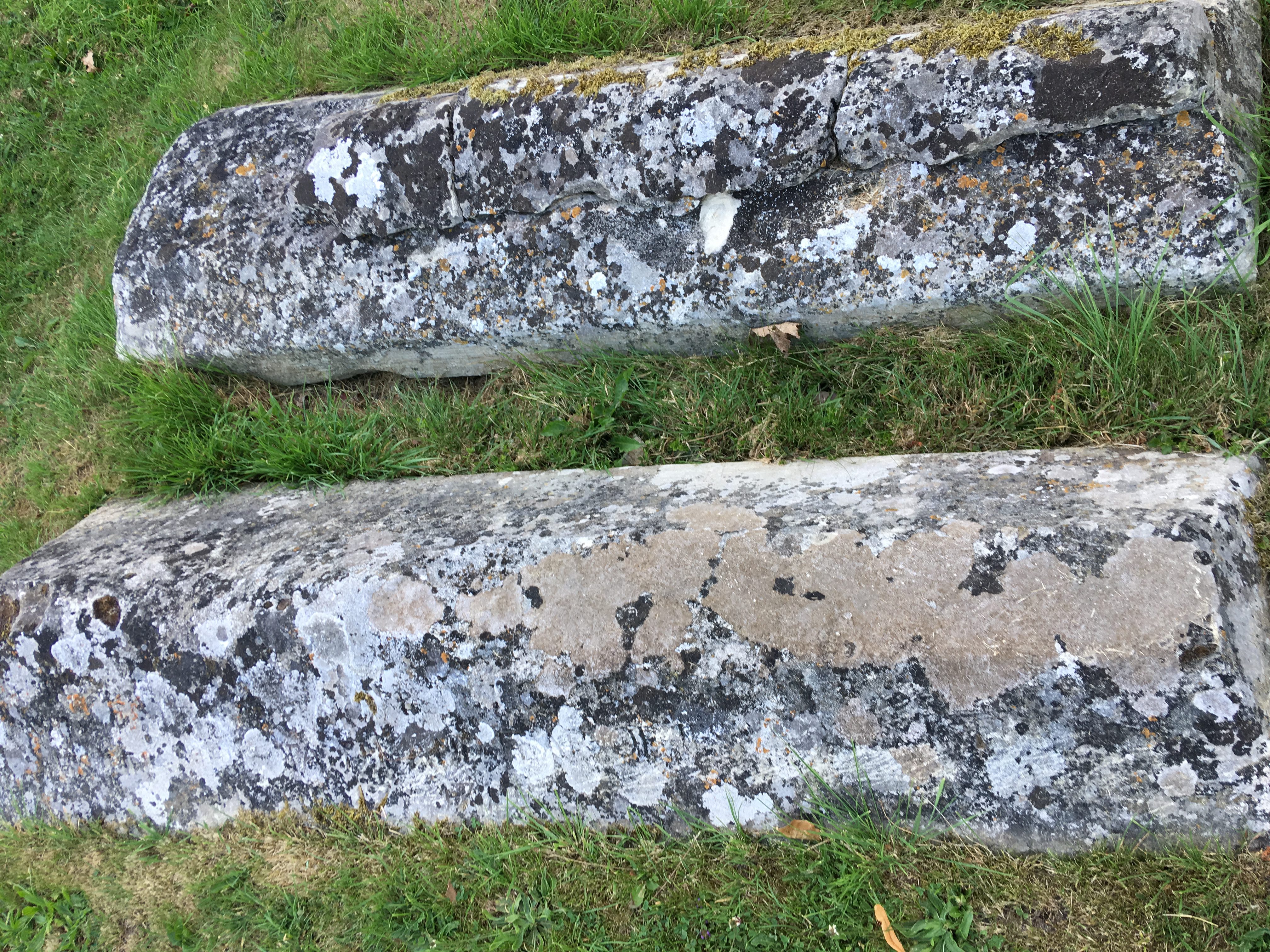
And these above-ground crypts.

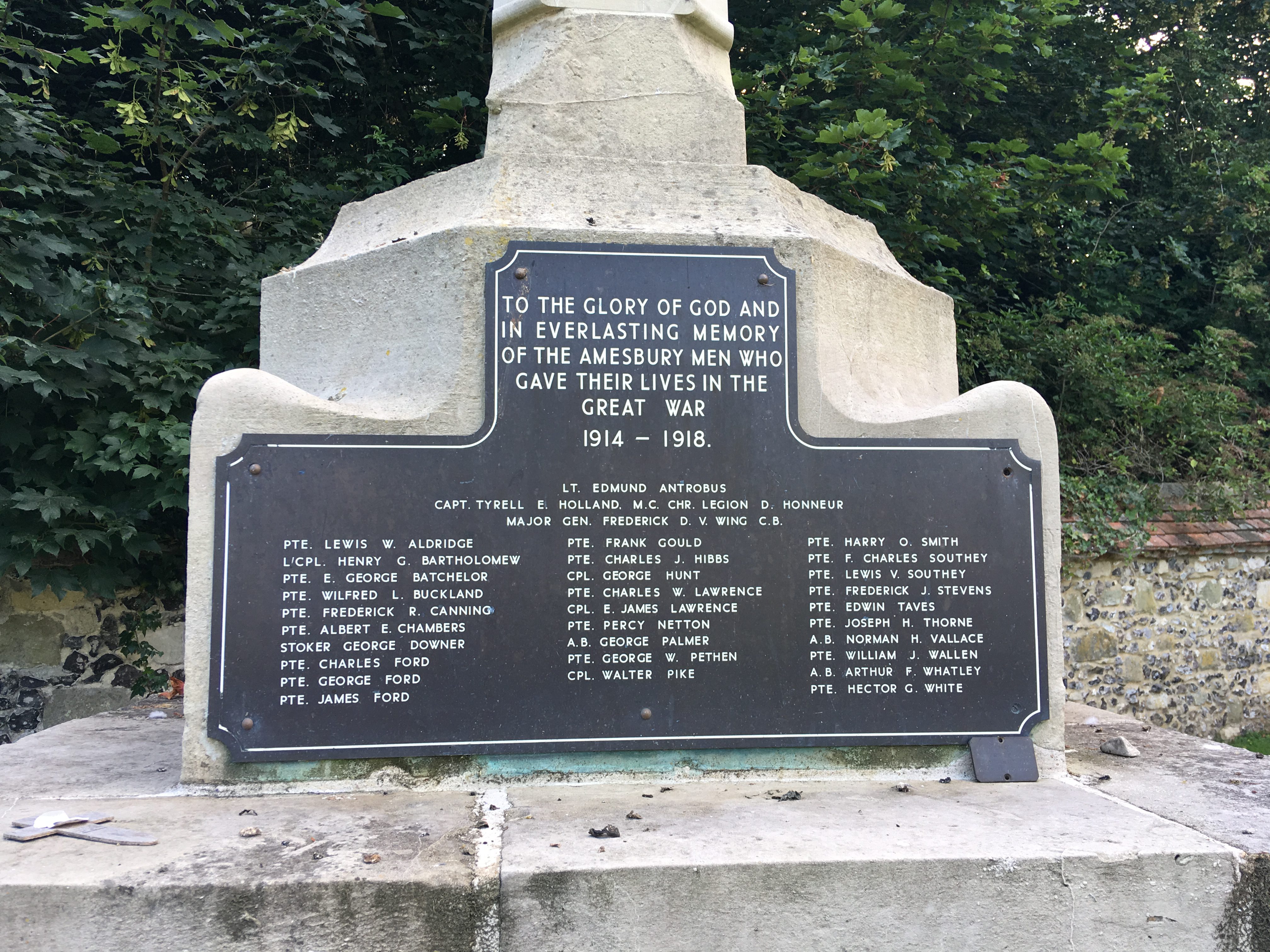
There was this monument to the Great War.  Note that there are three deceased named Ford, two Lawrences, and two Southeys.  This was before the geniuses in command figured out that you shouldn’t assign all the men from one town to the same unit.  Because when the unit was annihilated in a battle, every son in every family in town was killed.  So incredibly sad.

Here is the plaque for the Word War.  Hmmm…I thought they had learned a lesson by then, but there are repeat names on here, too, including a woman who appears to have died along with her brother.  I guess it was literally all hands on deck during these wars.

The Great War.  The World War.  What will we call the next one?

I saw this and thought I was in for some comic relief.  A pet cemetery!

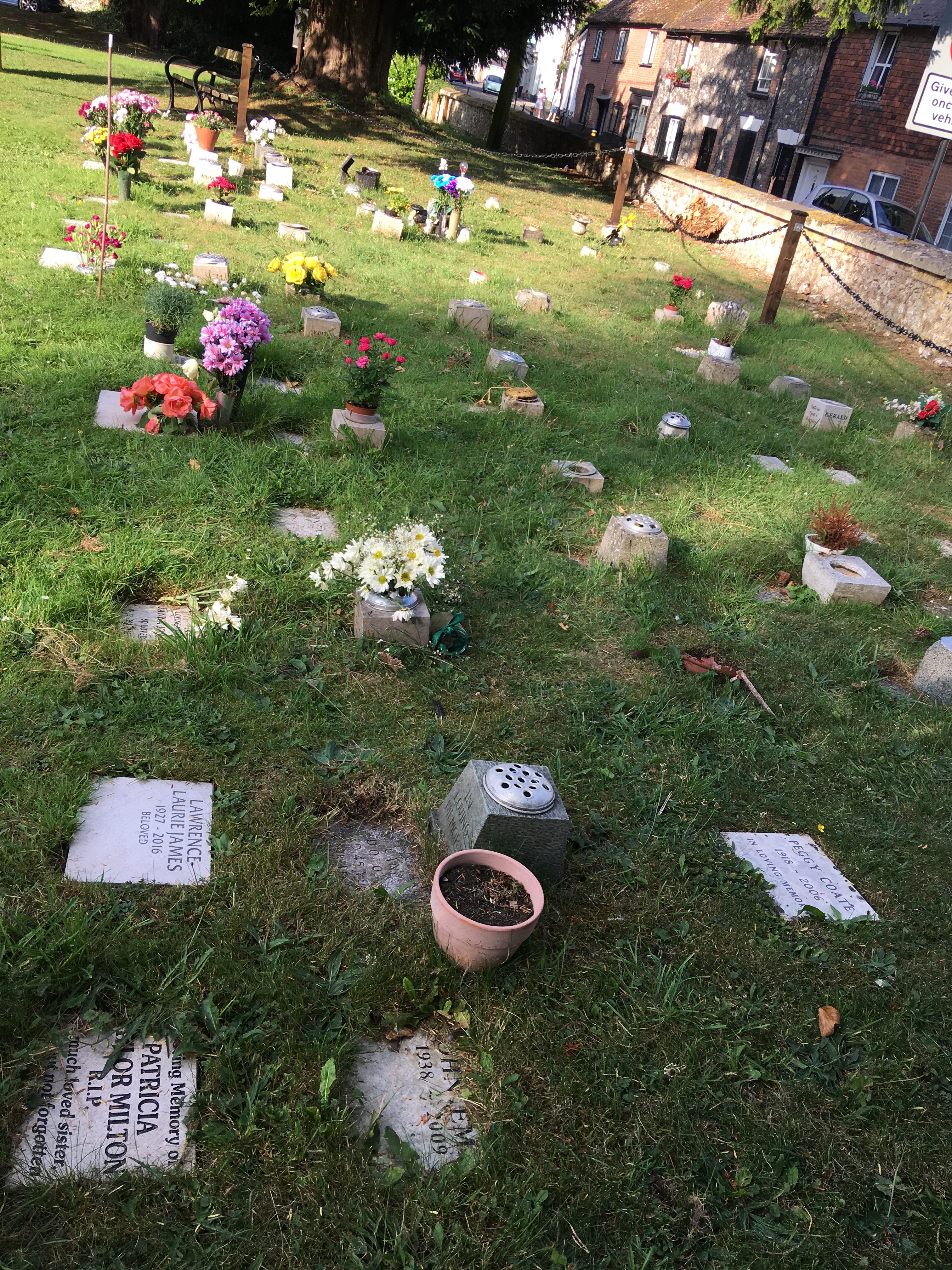
But no.  It was more dead people, just a section for the new tradition of cremation.

I was feeling “peckish” as they say (meaning hungry) so I wandered along, looking for food.  The bakery was closed but the pennants in the window provided a lovely photo opp.

I ended up back at the Econolodge, which had a Burger King and something called a Little Chef next to it. I waited in line at the Burger King for 45 minutes.  Everyone in town must have been there, since all the other restaurants were closed.  I gave up and went to the Little Chef, which I highly doubt employed any chef—little or otherwise.  It was supposed to look like a 1950s American-style diner.  If such diners were filthy and served horrible, dry, bland food back in the day, then it was completely authentic.

Woodhenge

It was 5:30 pm.  I could take the shuttle back to the stones of Stonehenge or take a taxi from right outside the visitors’ center back to town.  It wasn’t a hard decision; I was knackered and I’ve been in this situation enough to know that it doesn’t work to force myself to keep trying to find “that wow feeling.”  I had said, Wow! when I caught my first glimpse of Stonehenge from across the fields.  I had felt a mild wow when I saw my ancestor, homo-erectus-bradpitticus.

Sure, the wows! hadn’t come over and over like at Machu Picchu or Petra.  But those sites cover square miles.  Petra has over 800 structures.

I took the taxi.

The visitors’ center lady had told me the fare would be £8.  I always ask taxi drivers before I get in the vehicle.

“How much will the fare be, approximately?”

“£20,” he replied.

“Twenty!  I was told it would be eight.”  If he had said 10 I wouldn’t have pushed it but 20?

“It’s Sunday,” he explained, irritated.  “The local council sets the rates; I don’t have any control over it.  It’s all here on the rate card if you don’t believe me.”  This was all said in a thick southwest accent that I could barely understand.

“No, no, I believe you.”  No sense in upsetting a taxi driver who clearly has a chip on his shoulder—and will be driving you through remote farm fields.

Now, did I sit in the passenger seat or in the back—to make it clear I was not interested in any hanky panky?  Some tourist guides actually advise this, but I figured it didn’t apply to a 65-year-old guy who was a big gob I was sure I could outrun.

So I sat in front, where he proceeded to verbally assault me as he took a circuitous route.  “There’s an old military garrison there,” he growled, “Everyone should be in the military.  It’s compulsory here, you know.”

I was quite sure that wasn’t true.

“Our military is just a defense force now,” he complained.

And the problem with that is?  Do you really want your military to be an offensive force?  Do you really want to be paying 50% more in taxes for more bombs, guns, and to send young people to Iraq?

Of course I didn’t say any of this.

“My dad, brother, and sister were in the military,” I said.

I’m sure he had been assuming I was a new-age, trust-funded American liberal coming to Stonehenge to worship the sun and howl with the wolves … if there were still any wolves in England.  I am not from a military family.  None of them served during war time, and my brother and sister were in the reserves.  They all joined for the usual reasons that blue-collar kids join—it was something to do besides go to college.

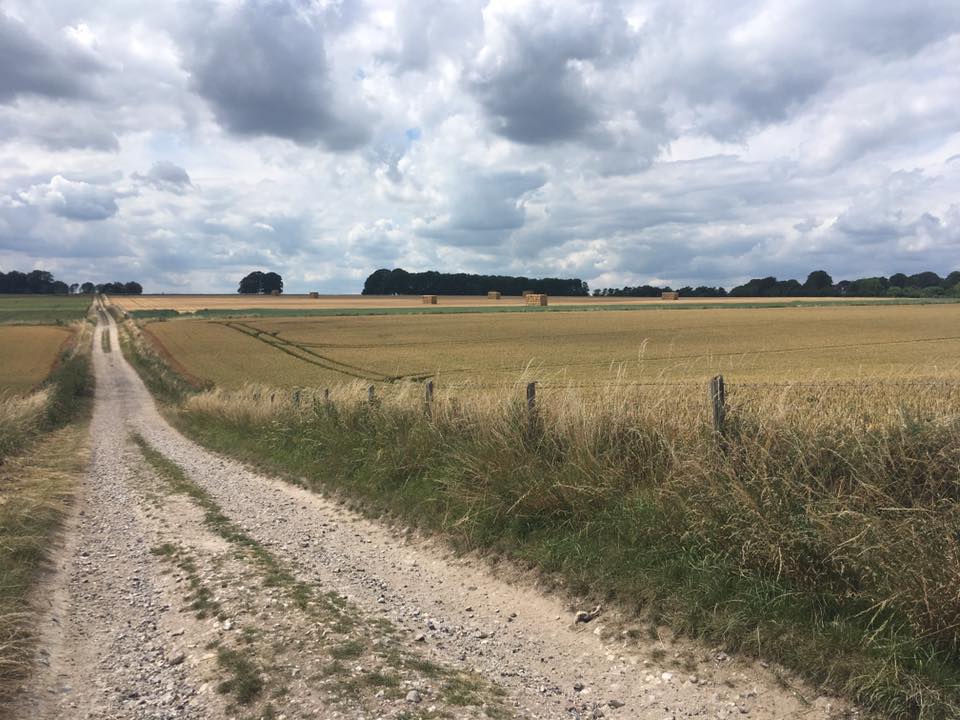
But the driver was now warm to me.  We were driving through farm fields, and he explained that the buff colored ones were barley while the green ones were alfalfa, or maybe it was the opposite.

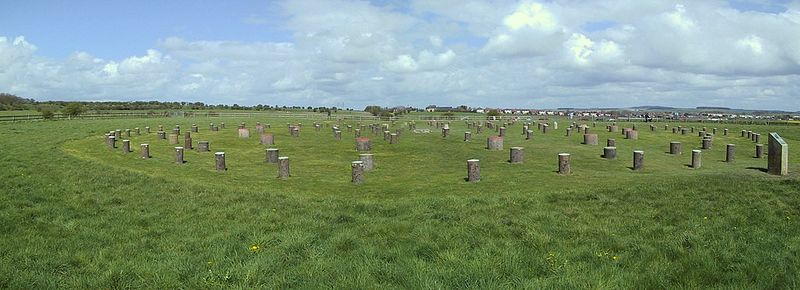
“And over there—you can’t see it—but over there is another henge, only it’s wooden.  It’s called Woodhenge.”

I just plucked this photo of it off Wikipedia.

“Woodhenge is a Neolithic Class II henge and timber circle monument.”

Oooh…a Neolithic Class II henge!  I assume these are not the original wood posts.

“It is 2 miles (3.2 km) north-east of Stonehenge.”   

I could have walked to it easily from the Econolodge.

I asked, and the driver agreed, to show me where I would catch my bus in the morning.  His phone rang.  “That’s the wife,” he said to me.  Then to her: ’ello, luv.  Yeh, yeh, yeh.  Ok, ok, yes, yes, yes, ok.  No, no, no worries, I’ll remember.  See you soon.  Love you, buy-eee.”

So he was a big softie after all.

He pulled up at the bus stop to let me off; I was going to walk around downtown Amesbury.

“That’ll be ten quid … for you.”

For me?  I felt guilty for implying I was from a military family.  I handed him a tenner and hopped out.

Stones, Tat, Pitt, Poppies

There is a tar path that winds around the stones of Stonehenge.  Ropes and small signs instruct you to stay away from the stones.  The crowds weren’t bad.  I could clearly see the stones and was able to take a photo without any humans in it.  Some people were standing by numbered stations listening to (I assume) a free app guide they had downloaded in their cars on the way here.

Since there would be a full moon, I had hoped to see it rising over the stones, but since summer solstice had just passed, the sun wouldn’t set until 9:30, and I wasn’t going to hang around for six hours.

As Lynn had said, Stonehenge was a bunch of rocks in the middle of a field.  Since I hadn’t read up on it ahead of time and the interpretive signs had other tourists huddled around them, all I could do was gaze at the rocks for a few minutes, tying to rouse suitable feelings of awe.  I have done this before—arrived somewhere so unprepared and exhausted that I cannot appreciate it.  But I’m too chicken to drive a car in the UK, so taking a coach had been unavoidable.

I ambled off toward the shuttle bus that ran back and forth to the visitors’ center.  Aaahhhh!  Air conditioning.  I enjoyed watching the other passengers boarding, one by one exhaling, “Aaahhhh!”

The visitors’ center may really have been a mile from the stones.  The views were beautiful, and if I had only had a hamburger and an ice-cold Diet Pepsi, I could have ridden it back and forth on it all day.  My plan was to “do” the visitors’ center, then go back to the stones with a greater appreciation of them.

First, I had a pasty stuffed with lamb and potatoes and washed down with a pint of local ale in the café.  Again, I could not get the Wifi signal on my phone.  Why do you care or need to get wifi? I asked myself. I’m a baby boomer who refuses to spend more than an hour or two a day on my phone, so the only social media app I have is Facebook.  It irks me when people go all the way to the Roman Coliseum or some other such world treasure, then post selfies on Facebook—their grinning foolish faces in the way so you can’t see whatever the site is.  They may as well be in Indiana.

I checked out the gift shop.  There were Stonehenge-themed tea towels, key chains, T-shirts, books, postcards, water bottles, chocolates, calendars, tissues, pens, flashlights, scarves, umbrellas, tote bags, decals, patches, matchbooks, snow globes, figurines, earrings and pendants, hats, sunglasses, socks, tea mugs, beer steins, board games, puzzles, posters, book marks, and of course refrigerator magnets. The usual stuff.  I picked up a few items, then felt overwhelmed and put them back.

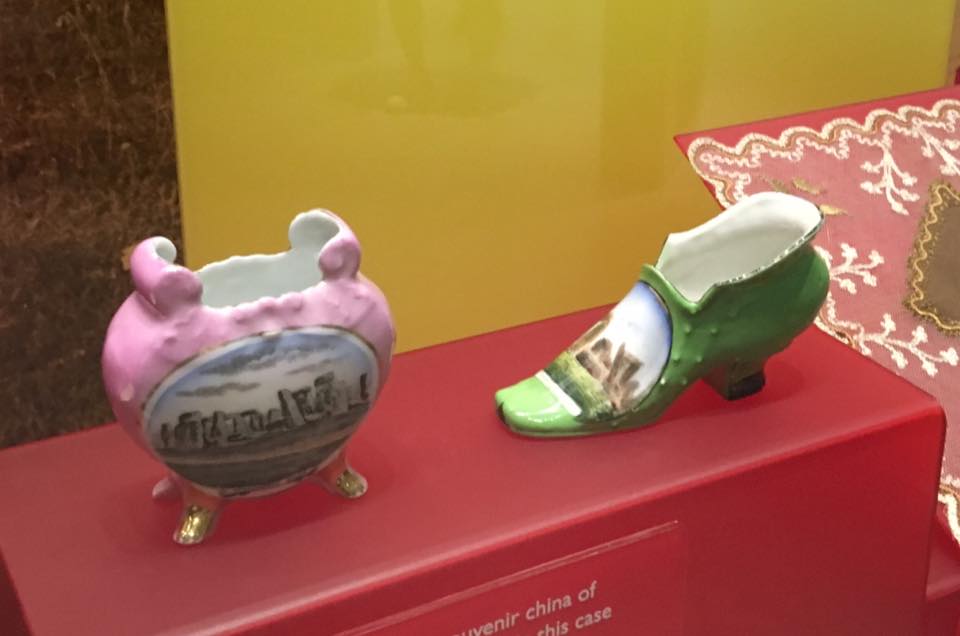
I exchanged my voucher for my souvenir “real” ticket, which looked just like one of the book marks in the gift shop.  I looked halfheartedly through the tiny interpretive center, which was partly inside and partly outside.  These were some souvenirs from the Victorian era:

Why didn’t they sell things like these anymore?

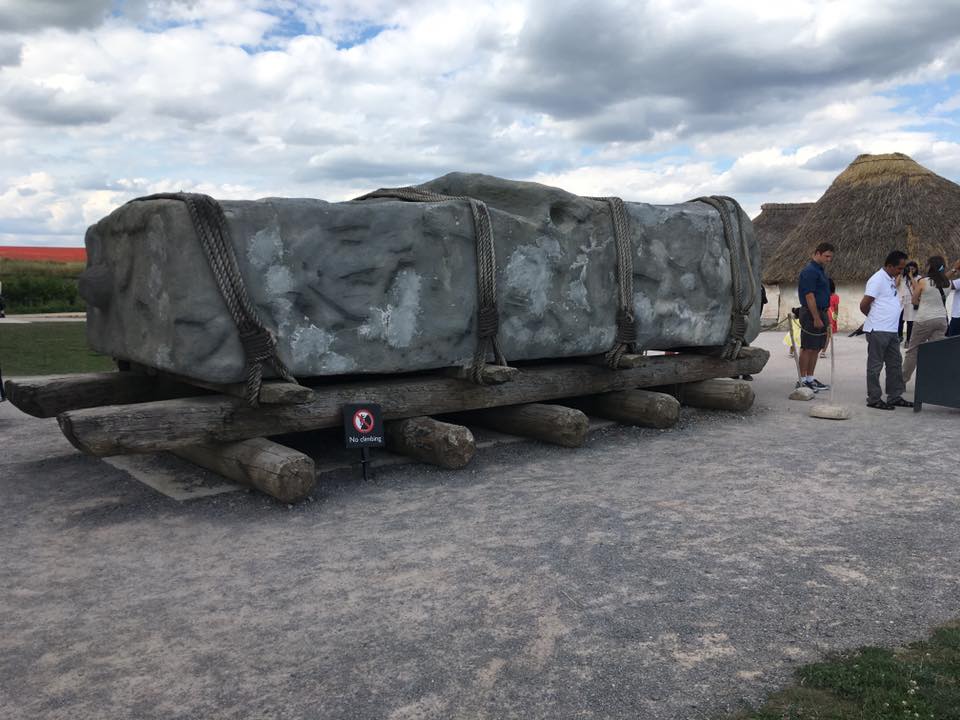
There was a re-creation of how the stones were moved, from 160 miles away on the coast:

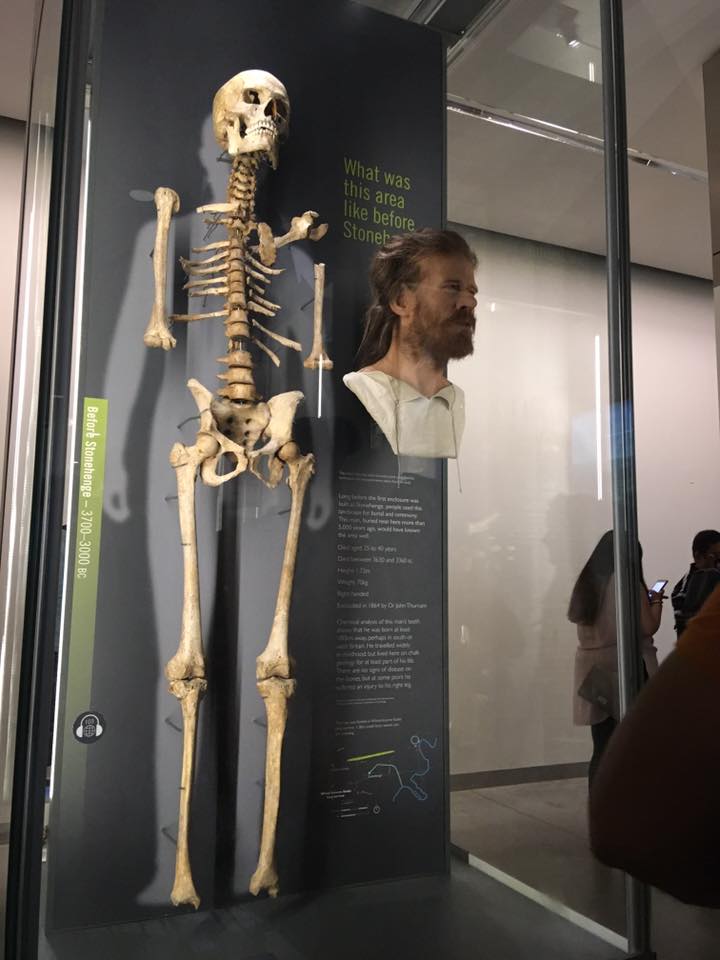
Then I came upon the thing that jolted me.  This is a re-creation of a man of the time, (3000 – 1500 B.C.)He and his folk placed the stones.

There was a timeline of ancient sites and Stonehenge pre-dated the great pyramid of Egypt. I had no idea!  I realized I had always assumed that the oldest sites in the world are in Africa or the Middle East and were built by dark-skinned people, including my ancient Hebrew ancestors.

But apparently the people who lived in these huts looked like Brad Pitt.

Why did people come to Britain?  It’s so miserably cold and cloudy much of the time. Maybe they came “because it was there” and stayed for the same reason I don’t move to Arizona—friends and family and inertia.

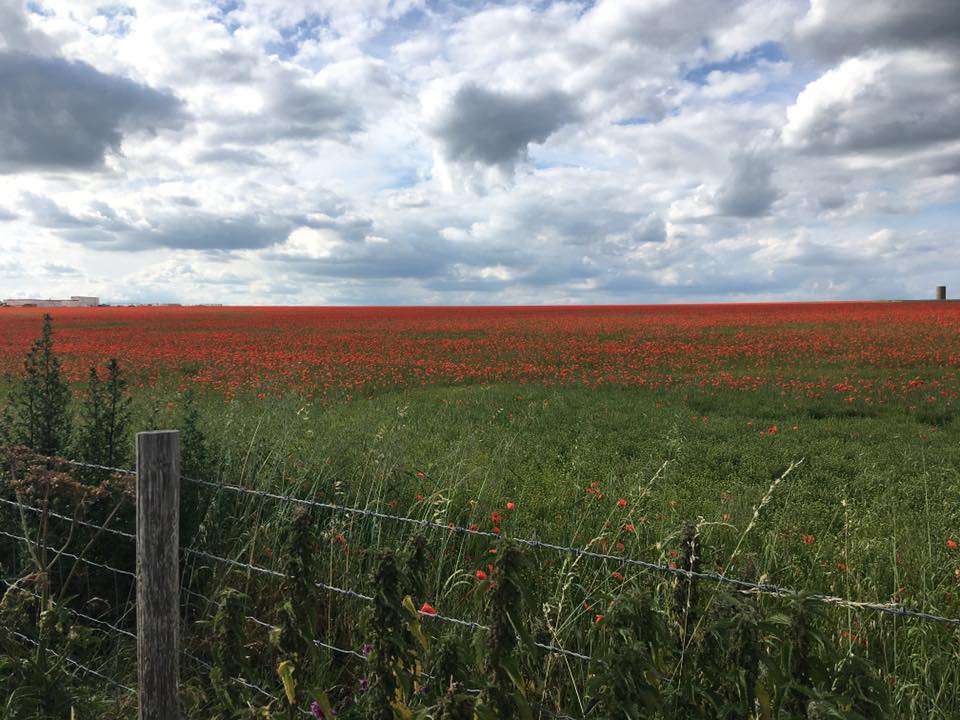
What was that orange stuff?

Poppies! Apparently they would be harvested soon for use in medicines.

Stonehenge

I hurried on, puffing and sweating, toward Stonehenge.  I passed wooden signs pointing to places called Ratfyn, Larkhill, and Netheravon.  There was a sign pointing to Middle Wallop, which I now see is nowhere near Stonehenge, but just in case I wanted to walk five miles in the opposite direction, I would know which way to turn. Note to self: One would pass Palestine to get to Middle Wallop, and one could also visit Nether Wallop or Over Wallop while in the vicinity.

It ended up being a four-mile hike, in 90F+ heat.  I didn’t encounter any bulls; I also hadn’t brought a water bottle or a hat or applied sun screen.  But what were a few age spots compared with the opportunity to see Stonehenge?

Now—would they let me in?  I walked along a dusty gravel road lined with caravans and tents.  Were they Travellers, or hippies, or what?  Many had placards declaring, “Free the Henge!” or “Make the Henge Free for ALL!” and “English Heritage are Selling YOUR Heritage!”  The protesters, who appeared to be permanently camped there, sat in lawn chairs drinking beer, smoking weed, and barbequing who-knows-what.  They wore uniforms of tie-dyed shirts, dread locks, and lots of tattoos.  Some were friendly, some were menacing.

Gee, I thought, this wasn’t a very appealing entry to such a historic site.  Some people might find this scruffy protest charming, and if I hadn’t been tired and hot and thirsty and in a hurry I might have stopped and chatted with the ones who appeared nonthreatening. I gathered that they were protesting that English Heritage charges people admission to Stonehenge—£18.20 for adults.  I can understand how, if you are unemployed as all these people appeared to be, that would be a prohibitive amount.  However, given that the road was strewn with cigarette butts and empty beer cans, Stonehenge could look like Glastonbury post-concert in no time if they let everyone in for free.

I kept trekking and finally presented my printout to a guy wearing an English Heritage vest.  He did that British thing—the low sucking in of the breath and clenching of teeth.

“Oohh…I’m very sorry miss,” he began.

Damn!  I was afraid of this; he wasn’t going to let me in because I was 25 minutes late.

“This isn’t a real ticket, you see,” he said as he shook his head and looked at it as if he wished he could wave a magic wand and make it a real ticket, whatever that was.

“You’ve entered at the wrong end.  You’ll need to go to the visitors’ centre and exchange this voucher for your souvenir ticket, which is what we collect here.”

“Wha … where is the visitor center?” I asked with trepidation.

“About a mile down that road,” he waved in the opposite direction to where I had come from, “You can’t see it from here.”

“But I just walked four miles!” I groaned.  “This place isn’t set up for ramblers, is it?  It’s all car centric.”  I intentionally used the word rambler instead of walker, hoping he would feel that, despite my Mee’-neh-soda accent, I was sort of British, and he should let me in because this was my heritage.

He hesitated and then, after looking shiftily from side to side, said confidingly, “I’ll let you in, but you have to promise to go back to the visitors’ centre afterwards to exchange your ticket.”

“Oh I promise!” I lied.

“There’s a lovely café and gift shop there, too,” he added.  “And you can take a shuttle bus.”

He had me at café.

Stonehenge.  When I had asked Lynn and Richard and Possum at breakfast what they thought of it, Lynn had replied “It’s a bunch of big rocks in a field.”

And so it was.

Stonehenge was the latest in my grand tour of ancient sites, including Machu Picchu, the Basilica Cistern in Istanbul; Petra, in Jordan; Tikal, in Guatemala; Lalibela, in Ethiopia, and multiple other places in Israel/Palestine, Peru, Mexico, Malta, and El Salvador.  At least I was in, which is more than I can say for the Hypogeum of Ħal-Saflieni in Malta, which was closed for renovation when I arrived.

Getting There

Sunday morning.  After breakfast at the hotel, I was off to Stonehenge.

“See you soon!” we all said as we hugged good-bye.  It was nice to be “over there” for an extended period of time.  Saying good-bye meant au revoir—until we meet again.  When I’m texting “good-bye!” to friends in Britain as I board a plane back to the States, I always wonder if I’ll ever come back to Britain again, if I’ll ever see them again.

Of course, it works the other way around, too. When I’m in Britain I miss my friends and family in the States, and when I’m here I miss my friends there.

My ticket for Stonehenge was for 15:00—3:00 pm.  The tickets actually said something like, “Please be on time or we cannot guarantee you admission.”

All I had to do to get there was take the tube from Barbican station to King’s Cross, then to Victoria, then find the Victoria Coach Station, then catch a coach at 11:00 for Amesbury, find the Econolodge and dump my bag, then figure out how to get to Stonehenge, which was some ways out of town.  How hard could it be?

As usual I had planned like I was on a military special operation.  I got to the coach station easily.  It’s on Buckingham Palace Road, which is a laugh because like all bus stations it’s seedy and run down and full of lurkers—but also nice middle aged couples probably going to visit their children at college.

My phone connected to the wifi in the station, albeit very slowly.  It wouldn’t connect at all during the three-hour coach ride, but it snapped up the wireless signal in the Econolodge.  All over Britain, I found that wireless would work on one bus but not the next, on the train one day but not the next, and so on.  Was it my phone?  Was it the wireless? I tried to be zen about it, whatever that means.  I was in the front row of the coach, where adverts prominently declared, “Free WIFI!”  “Now it’s so easy to stay connected!” “Download our free app!”  When I did finally connect at the Econolodge, there were a slew of emails from the coach company thanking me for my custom, urging me to sign up for special deals, asking me to complete a survey, and reminding me to download their f-cking app.

I pulled out my printed map and checked the route for the 10th time.

Gulp.  The bus stopped south of the motorway, but the Econolodge was on the north side.  How would I get across?  Was there a bridge, or would I have to climb over a fence and dart across six lanes of speeding traffic like a deer?

As we pulled into town, I was elated to see a pedestrian underpass.  I jumped off the bus and hurried toward it, forgetting to ask the driver where the return bus departed.  In minutes I was north of the motorway but there was no Econolodge.  I walked back under the motorway, accompanied by some scruffy henge groupies, then back north again.  Then it dawned on me that this was all set up for people in cars.

Think like a car, I said to myself, and after walking through the bushes along the motorway off ramp, I found the motel.

I asked for a walking map to Stonehenge at the front desk and the woman did that British thing where they pull back their lips, clench their teeth, and suck in their breath, while looking down and away from you.  This means, “Oooh, that’s a very bad idea but I’m not going to say so.”  She handed me a map and advised, “Watch out for the bulls.”

“It’s two miles,” she said.

Two miles? Easy peasy.  I walked briskly. The views were fantastic.  The fields appear dry, I think, partly because we were in a heat wave with 90F+ temperatures.

Two miles … three … I saw the henge in the distance.

“Wow!” I exclaimed aloud.  If I had known this was the best view I would get all day, I would have savored it, but it was already 3:15.

Cabbing It to the Cabaret

Lynn had booked three rooms at a hotel near the Barbican, and after carrying a backpack around all day I was happy to check in and dump it.  The room was spacious and the décor reflected the area.  This was the bathroom floor:

This was the art above the bed:

Some people might be disconcerted to sleep beneath meat-hook themed art, but I took comfort in knowing I was not the only weirdo who meditated on meat hooks.

In keeping with modern design principles, I couldn’t figure out how to turn on the bedside lights.  I called the front desk and—I could tell from her voice she had done this many times before—the front desk person walked me through how to grope my way around until I found the tiny, arty button that operated the bedside lights.  The room had a mini kitchen so you could cook for yourself and save money.  That wasn’t going to happen tonight.

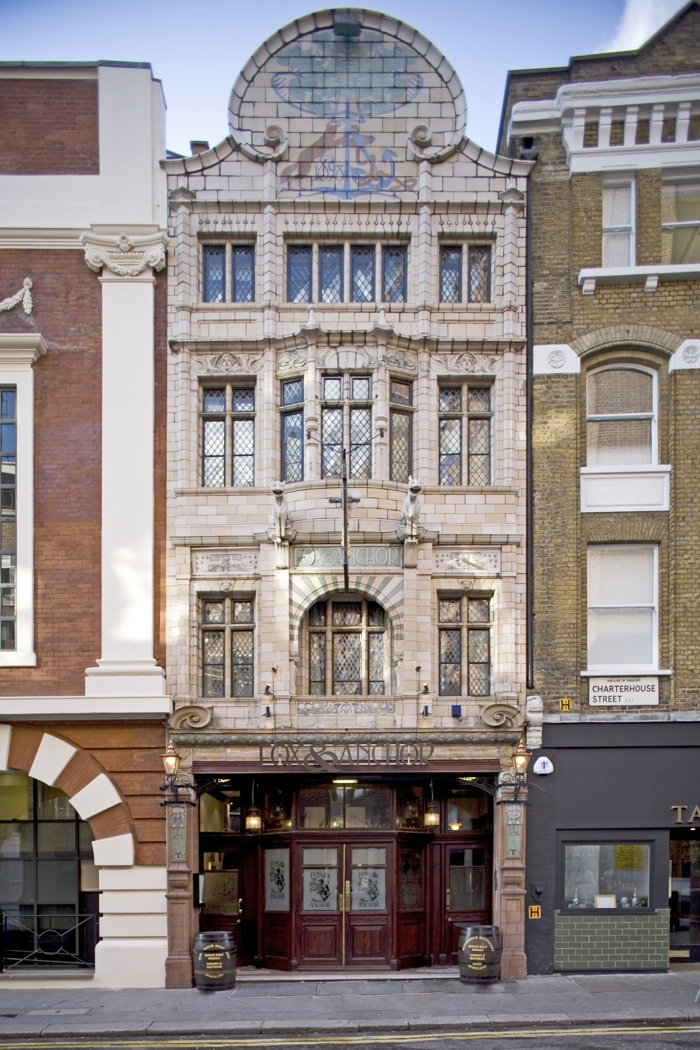
Lynn and Richard and Possum and I met in the lobby and walked over to Charterhouse Square to have a pre-dinner drink at the Fox and Anchor, a pub and boutique hotel.  It was built in 1898 which makes it Victorian, but it looks very Gilded Age or Art Deco to me.  These photos don’t do justice to the detail.

We sat outside, soaking up the sun and some drinks, then hailed a black cab to a Thai restaurant.  There are cheaper ways to get around London, like mini cabs and public transport.  Maybe I’m sentimental, but I prefer black cabs, especially when someone else is paying for them.

Here’s what the black cab driver wannabe website says about becoming a black cab driver:

“The London taxi drivers are almost as famous as the black cabs in which they drive, this is mainly due to their in-depth knowledge of London and ability in taking their occupants to their desired destination amid the congestion and the chaos that you often find when travelling through London’s streets.

“Easy you might think with the world of sat navs? Think again. Hail down a black cab in London and you can be assured that the driver will know the shortest and quickest route to your destination without the aid of a satnav. It doesn’t matter if you give them a street name, a famous landmark, a hotel name or famous point of interest, they will know exactly where it is and they will get you to it in the shortest route possible.

“London taxi drivers go through stringent training to obtain their licence, they need to pass ‘The Knowledge’, a test which is amongst the hardest to pass in the world, it has been described as like having an atlas of London implanted into your brain.”

London has 60,000 streets within a six-mile radius, many are one way.

A friend of Sam’s and acquaintance of mine was so smitten with black cabs that when he returned to Australia after living in London for 10 years, he bought an old black cab and had it shipped home with him.  I think his plan was to run a cab service, but now he’s teaching in an aboriginal school so I’m not sure what become of the cab.

You may have read recently about Uber being banned from London due to data leaks and disputes over its employment practices.  I totally understand why Londoners would want to use Uber.  It’s fun to take a black cab, especially when you’re traveling as a group (this is not us):

It’s cool to take a black cab if you’re a tourist or on a special occasion.  But for getting around on a daily basis, only the uber wealthy could afford to use black cabs.

On a side note, I downloaded Uber just the other day but was unable to use it because it insisted I enter a UK phone number.  I guess my phone is confused and thinks I’m still in the UK.

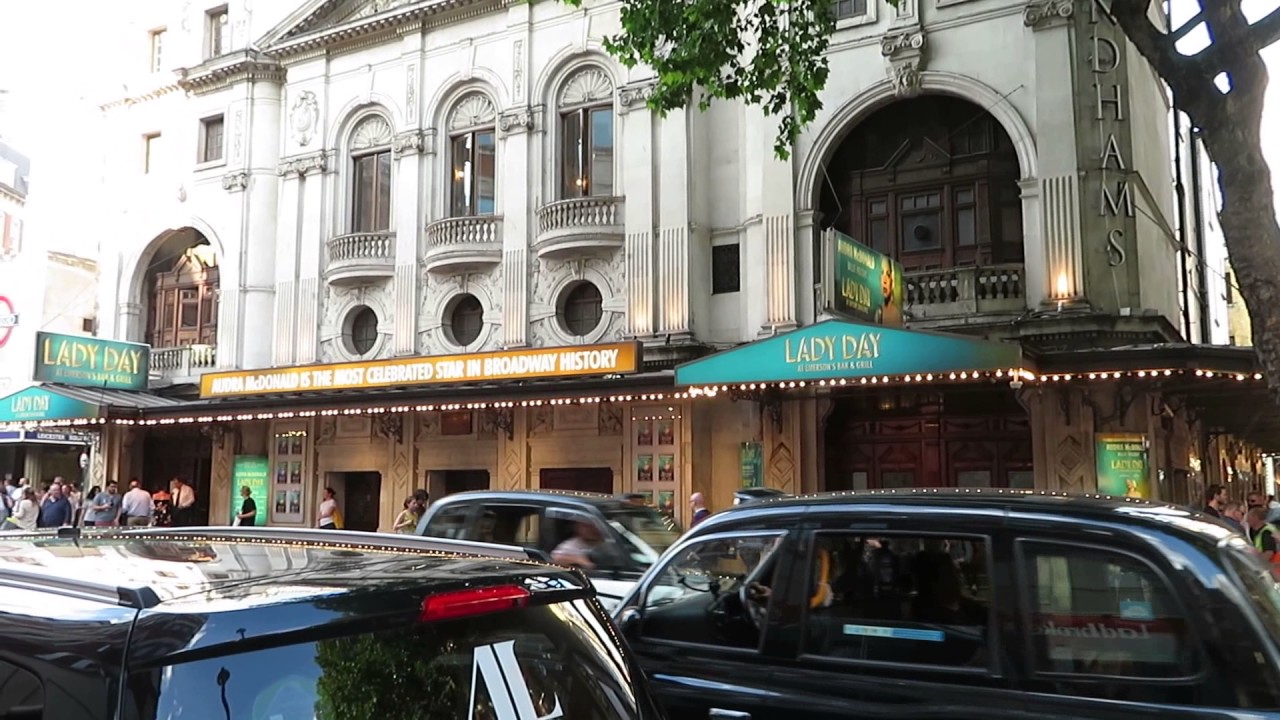
After a great dinner we caught another black cab and snaked through the heaving streets of Saturday-night London. After dodging jay-walking revelers for 20 minutes, we reached our destination, Wyndhams Theatre, two miles from our hotel.

Greater and Lesser and Lost

Now that I know more about the Charterhouse, I wish I had had the time to tour it.  I realize only a tiny, tiny percent of British pensioners can live there, but what a great model that could possibly be replicated.

The two places on my To-See list today were Smithfield Market and St. Bartholomew the Great church.

Smithfield is the original meat market.  It’s a wholesale market which takes up several city blocks so even I couldn’t miss it.  I had had it up to my eyeballs with other shopping areas and markets that sold artisanal caramels and hand-knit tea towels and reproduction antiques. I wanted to go somewhere where I couldn’t buy anything.

Smithfield exceeded my expectations by being closed.  Of course, it was Saturday.  Few people set out to buy half a cow on a Saturday in London. So I walked around and through the parts that were open.  There wasn’t much to see; the site has been a stock yard and meat market for over 800 years and the buildings appeared to be Victorian but who knows.  Later, I learned that they do indeed sell meat retail, so if you are looking for a deal on offal or a lamb shank, check it out.

Now I had to find St. Bart’s, as it’s commonly called, which was one block away but which required me to take the following route: Poultry Avenue to West Smithfield, which turns into Long Lane.  Right on Cloth Street, then right on Middle Street which turns into Clothe Fair, and it should be right there.  Right. 

I passed Barley Mow Passage, Rising Sun Court, Kinghorn Street, and Bartholomew Passage.

Don’t turn, I said to myself each time, because I always have the urge to turn at the first place I see.  Maybe they were shortcuts.  And Rising Sun Passage sounded intriguing.

I steadfastly stuck to the route on the paper map I had printed out, and immediately became lost.  The neighborhood was deserted except for a few shady-looking guys unloading trucks, and I wasn’t going to ask them for directions.  I doubled back, retraced my steps, still couldn’t find anything indicated on the map, started to whimper and imagine myself murdered; some poor vendor would find me hanging from a meat hook when he opened his stall on Monday….

I decided to walk down Rising Sun Passage after all, and there was St. Bart’s.

Rising Sun was named for a pub, so that was a relief.  When in doubt, go into a pub and have a pint and a packet of crisps, and everything will be ok.

I knew that St. Bart’s was old.  In fact it’s the oldest church in London, which is saying something. It was founded in 1123 as an Augustinian monastery.  In case you’re wondering, there is also a St. Bartholomew the Less, also founded in 1123, and “It was called the Less to distinguish it from its larger neighbour.”  So there weren’t two St. Barts, one who was great and one not so great.  There are two churches named after the same guy.

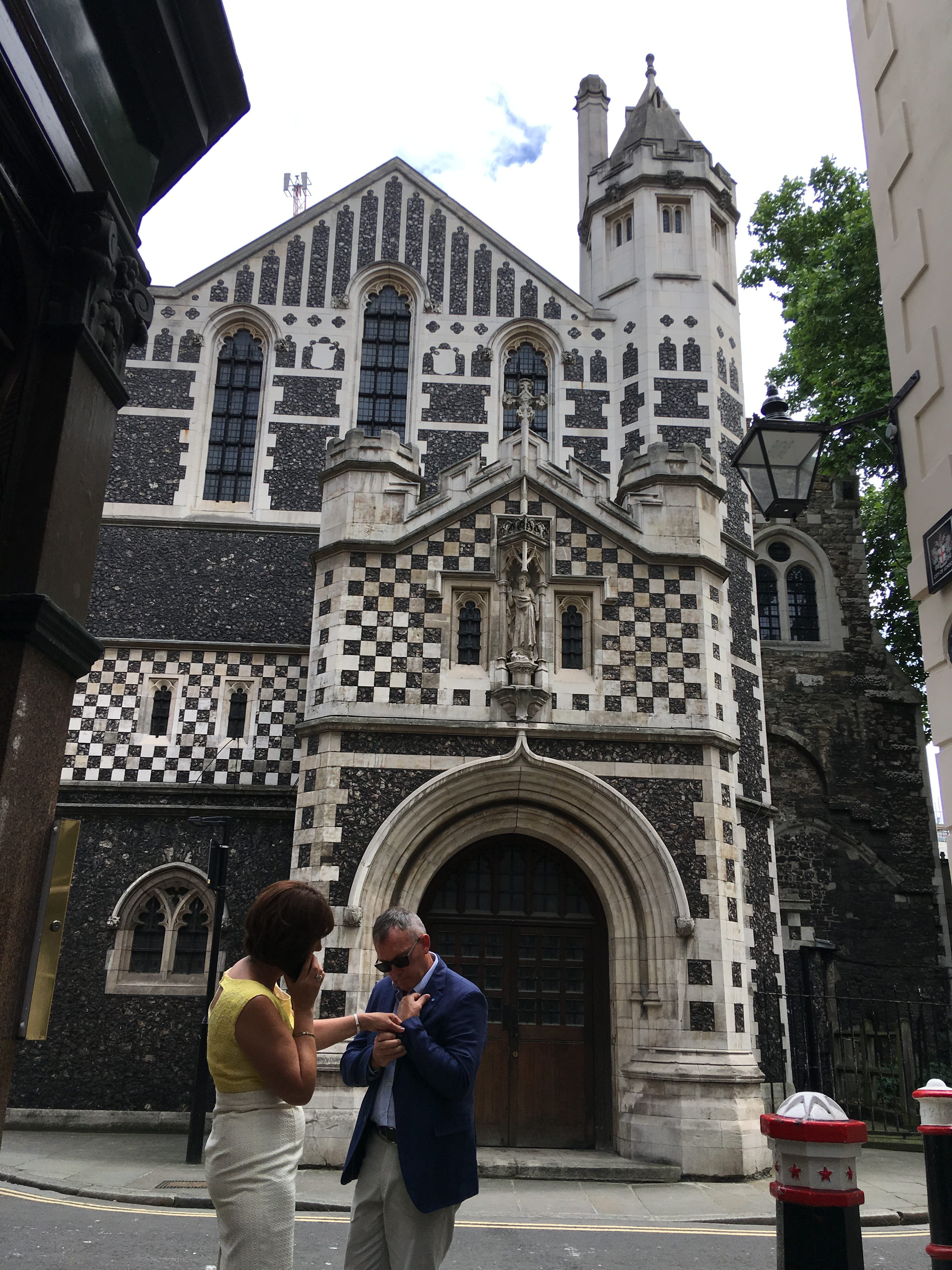
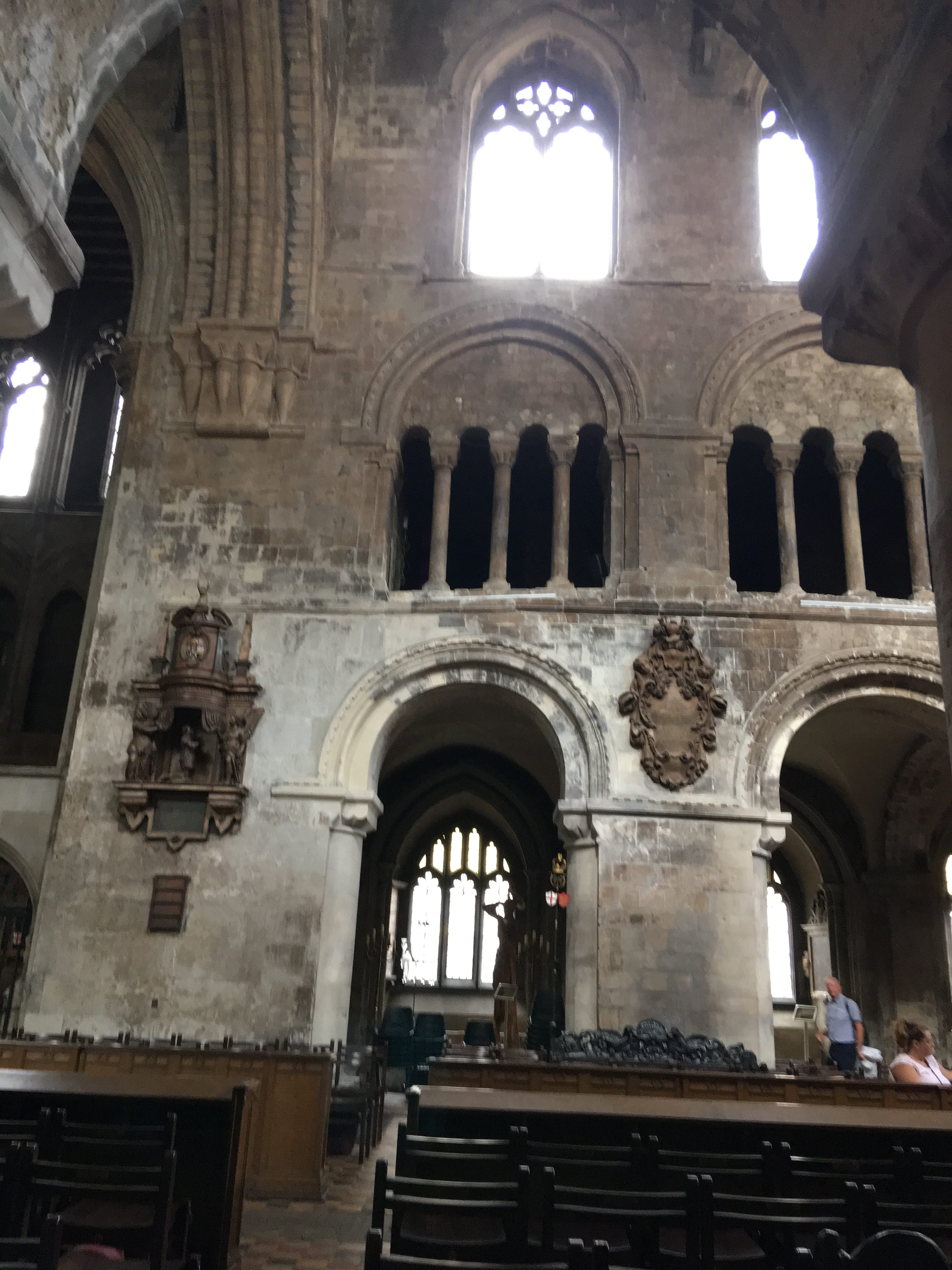
I have been in many, many old churches but St. Bart’s struck me immediately as really ancient.  Which of course it is.  But after visiting a dozen old churches in a month, they all blurred together. St. Bart’s was different.

As usual my photos won’t do it justice, but maybe they’ll give you a feeling for the place.

In old sites where they built one thing on top of another, it’s good to look up, down, and around so you don’t miss anything.  There were crypts that told sad stories.

I liked the contrast and detail in the flooring and wondered what was below the grating.

I spent a half hour inside, then wandered back out into the passageway.

I was glad I had come on a Saturday.  The quiet seemed fitting and I felt at peace.  I had a pint and a packet of crisps in the Rising Sun, then walked back toward the hotel, where I ran into Lynn and Richard having a bite to eat at a sidewalk café.

“They’ll let anyone eat in this neighborhood!” I exclaimed as I joined them.

Assisted Living, UK Style

There was a festive atmosphere on the bus, with all the Pride celebrators.  As we snaked northward, they alighted and quiet descended.  I got off at the Barbican and it was utterly deserted.

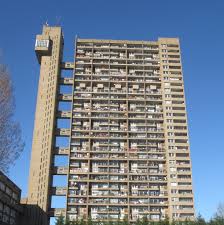
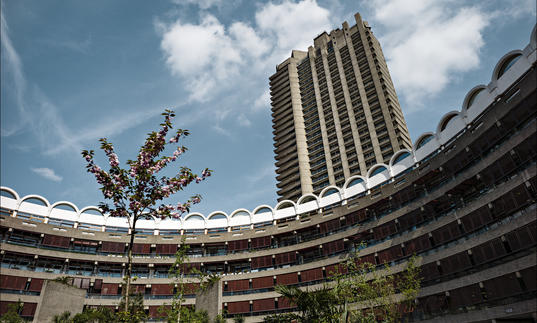
The Barbican Centre is the largest performing arts center in Europe. It’s designed in the Brutalist style.  One of my favorite London buildings, Trelick Tower, is Brutalist. I think it’s creepy but in a cool way.

To me, the Barbican is just not that interesting.  However, it is home to lots of wonderful companies, like the London Symphony Orchestra and the Royal Shakespeare Company.

My plan was to wander around the Smithfield neighborhood adjacent to the Barbican, then meet Lynn, Richard, and Possum at the hotel.  I had packed a backpack as light as possible for my two nights away but it still felt like I was lugging around a bowling ball after a couple hours.  Much as I love to daydream about hiking the Appalachian Trail or the Superior Hiking Trail, I am realistic that they are not for me.

Smithfields is not a “Top 10” London sights in any guidebook, so I was caught off guard by all the fascinating history it contained.  I don’t usually like to cut and paste from websites, but I’m making an exception today.

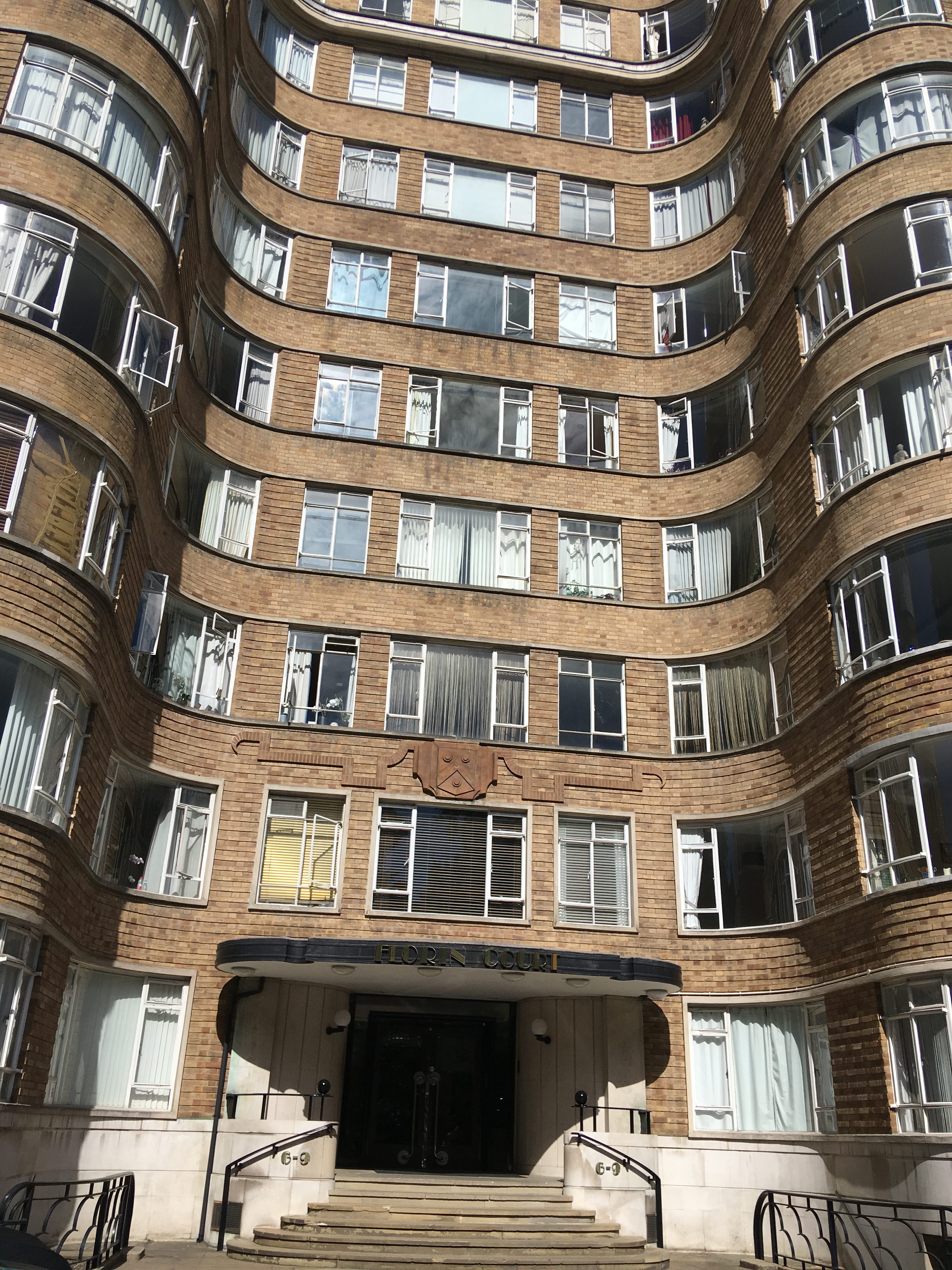
I passed through Charterhouse Square and this art deco apartment building which has served as the fictional residence of Agatha Christie’s character Hercule Poirot.

Here’s the Wikipedia 101 on Charterhouse Square:

“In 1371 a Carthusian monastery was founded by Walter de Manny on what is now the north side of the square. It was established near a 1348 plague pit, which formed the largest mass grave in London during the Black Death, and tens of thousands of bodies were buried there. The name of the monastery, Charterhouse, was derived as an Anglicisation of La Grande Chartreuse, whose order founded the monastery.

“The Charterhouse was dissolved as a monastery in 1537, and in 1545 was purchased by Sir Edward (later Lord) North (c. 1496-1564) and transformed into a mansion house. Following North’s death, the property was bought by Thomas Howard, 4th Duke of Norfolk, who was imprisoned there in 1570 after scheming to marry Mary, Queen of Scots. Later, Thomas Sutton bought the Charterhouse, and on his death in 1611, endowed a hospital (almshouse) and school on the site, which opened in 1614, supporting 80 pensioners ….”

That’s just the first 240 years.

An almshouse is a residence for “poor, old, or distressed” people, and the Charterhouse still serves this purpose.  Here’s what their website says:

“The residents of the almshouse, both male and female, are known as ‘Brothers’. This is a purely traditional term for those living in this community and acknowledges the past when there was a monastery on the site.

“The Brothers were originally those who could supply ‘good testimonye and certificat of theire good behaviour and soundnes in religion’ those who had been servants to the King ‘either decrepit or old captaynes either at sea or land, maimed or disabled soldiers, merchants fallen on hard times, those ruined by shipwreck or other calamity’.

“The Brothers are selected from a wide variety of professions, which includes teachers, clergymen, writers and editors, musicians and artists. At entry they have to be over 60 years of age, in need of financial and social support and in good health. They must be able to live independently but have a desire to be part of a supportive community following a very simple set of rules. Their accommodation is entirely private. All the meals are taken together in the Great Hall and many Brothers participate in the many social events that take place. Many Brothers contribute to the life of the Charterhouse by giving their time as tour guides, arranging entertainment and visits, editing the Charterhouse Magazine (a twice yearly in-house publication), cataloguing the extensive artwork and volunteering to help with events. The Brothers meet as a group at least four times a year with the Master and other senior staff to discuss current topics.”

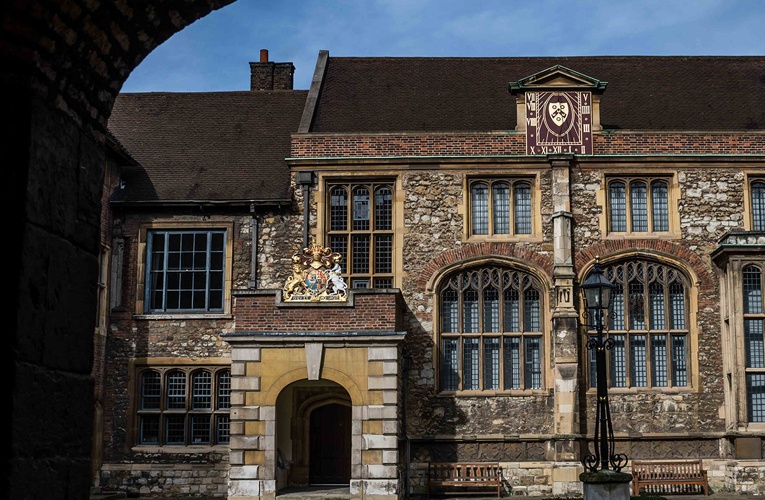
Now that’s my kind of assisted living!  And here’s the building:

Not too shabby, eh?  If only I were a UK resident, I would say I had found my retirement plan.

London Crawling

Lynn organized a London weekend to celebrate her birthday. She and Richard flew down from Scotland and Possum and I met them for a West End show, Lady Day.  Lynn arranged everything—hotel rooms, tickets for the show, and a pre-show meal.  Of course we bought her presents too, but it’s the fun times like these what we remember later, right?  Not the stuff.

From London I would go to Stonehenge the next day.  A friend who was coming from Minnesota was supposed to have gone with me, but back problems forced her to cancel her trip.

This highlighted a dilemma about travel planning.  Do you buy travel insurance?  I never do, but my friend had and she got a refund for her flights. She paid around $80 for the insurance, but that was nothing compared to losing $1,400.

I had already paid for the Stonehenge tickets.  I couldn’t find anyone to join me so I was out the price of one ticket, about $20.  Should I have waited to buy the tickets?  No, because Stonehenge books up fast in the summer, especially on the day we wanted, which happened to be on the full moon.

My friend had reserved for our tickets for Windsor Castle.  She couldn’t get a refund for them, so she was out $20 and we came out even.

Whenever I lose money like this I consider it a donation to the National Trust.  Lord knows they need it.  Losing triple digits to Expedia or Delta?  That can’t be shrugged off.  Next time I book a flight I’ll look into flight insurance and whether my credit card covers anything.

As usual I meticulously planned my jaunt into London and the boomerang bus ride I would have to undergo to get to Stonehenge.  More about the latter later.

This was the first time I would catch a bus from Waterloo, as opposed to the tube.  When you get off the train at Waterloo the signs quickly devolve from the helpful “All London Bus Stops” with an arrow, to “Buses,” with an arrow, to what could be interpreted as a bus icon with an arrow, to nothing. When I exited the station, there were clearly marked bus stops A through E, but no F, which was what I needed.

London is a mob scene any day of the year, but this was the day of the London Pride parade.  The city was teeming with revelers in rainbow wigs, hats, T-shirts—singing, drinking, laughing and having a great time.

Overstimulated, I started to feel the usual panic that I was lost.  I would never find the right bus stop, would never get to the hotel, I would probably end up unconscious in an alleyway, my ID gone and with amnesia; I would wake up in a locked mental unit, blah, blah, blah.

I’ve written in detail about this syndrome of mine. This summer was good practice for me to just notice it—not try to push it away but not indulge it—and carry on.

Think, Anne—think.  Or better yet, look at the area map five feet in front of you.  Stop F was just around the corner.  In fact once you knew the plan, it was obvious that the stops were arrayed in alphabetical order around a gigantic roundabout.  You just couldn’t tell it was a roundabout because it was impossible to get a view of the whole thing, with pubs and souvenir shops and hundreds of double decker buses blocking the sightlines.

The people watching was so good, I didn’t start to worry again until the third Number 4 bus drove past with an Out of Service sign.  Others who were waiting shrugged and started to walk.  There was no way I could walk—should I take a cab?

Just then, a Number 4 arrived and I happily dumped my exact fare in coins into the collection plate.

“No cash, love,” the driver said.  “Cards only.”

I dug out my credit card and tried to swipe it.  “No, love—Oyster cards.”

Damn.  I hadn’t gotten around to buying one.  But in line with the general celebratory mood of the day, the driver winked and waved me aboard.