Category Archives: class divide

Unfrozen

This post is the sixth in a series that starts here.

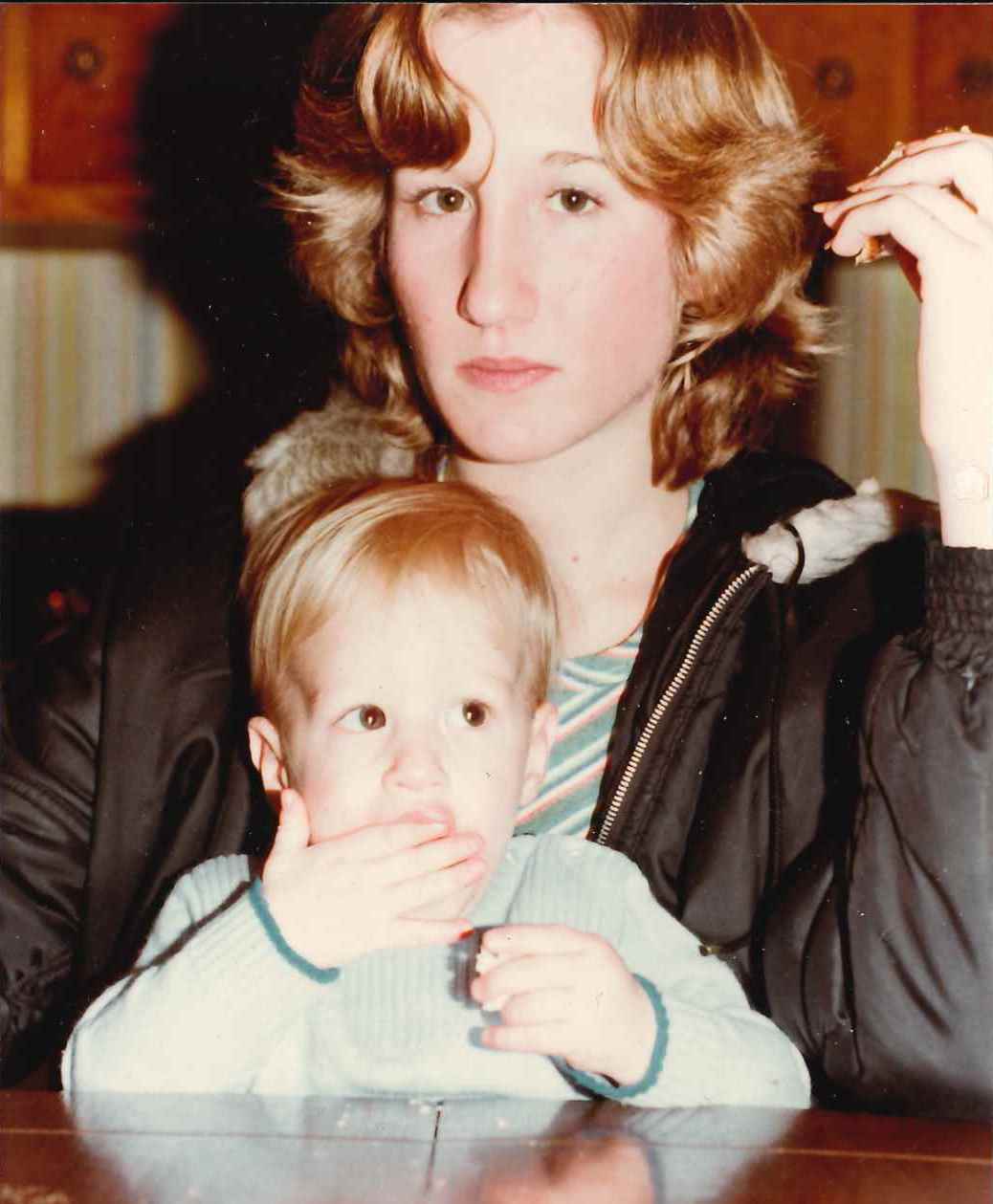
It was 1980, I was 20 years old and had just given birth to my second son, who was in foster care until his adoption was finalized.  I had kept the pregnancy and birth Top Secret except from my mother and sister.

Now I moved forward with my life as if nothing had ever happened, and I never gave it a second thought.

Haha!  Just kidding!  That was never going to happen.

Six weeks had to pass before the adoption would be finalized.  I suppose that was to ensure I wouldn’t change my mind.  I didn’t.  I gave birth on a Sunday and walked out of the hospital that afternoon.  Finals started the following week, so I was back in school studying for and taking exams the next day.

Once I finished exams I had to study for the big test that would make me a Certified Occupational Therapy Assistant.  There were lots of other distractions to keep me busy and keep my mind off of Isaac.  I would think of him as “Isaac” for the next 20 years.

I got the highest scores in my class, so I won an all-expenses paid trip to the National Occupational Therapy convention in San Antonio, Texas.  This was a big deal for someone who lived in public housing, took the bus everywhere, and washed laundry by hand in the bathtub.

Six weeks passed.  I went to the courthouse.  In the courtroom it was just me, The Creep, the judge, and about 50 strangers who were there for other cases.  The Creep and I didn’t speak.  This would be the last time we would ever see each other.  He was pleased, I was sure, that he’d be off the hook for child support—not that he paid any for Vince.

There’s a psychological phenomenon called dissociation in which you seem to separate from your own body because you are under so much stress.  This must be what happened to me, because it was like I was a spectator to myself.  It was like I was sitting in the jury box, watching the judge lean forward and ask, “Do you know what you’re doing, miss?”

“Yes,” I replied.

Again, like when I signed the papers in the hospital, it was as if I was watching a mannequin hand sign my name at the bottom of the forms.

It was over in 10 minutes.  I stumbled, dazed, out of the courtroom with the official-looking order that said Termination of Parental Rights at the top and my signature at the bottom.

I went to San Antonio, which was my introduction to the concept of “open bars” at conventions.  Free drinks!  I drank all night, then slept by the pool all day until the bar opened again.  What a great professional opportunity!

I came home and kept drinking.  School was over so I had all the time in the world to spend with Vince.  Except that my relationship with him had changed.  I had gone from doting, passionately-engaged mother to detached, emotionally-absent caretaker.  I escaped by cleaning the bathroom, applying for jobs, reading thick novels, scouring the kitchen sink, making lists of things, and drinking.

I kept busy, in part, to blot out the fact that I kept hearing the sounds and smelling the smells of a hospital delivery room.  I knew from psych classes that sometimes the mind reacted like this under severe stress—I wasn’t psychotic—but it worried me.  What next—would Dr. G and her residents show up in my bedside?

Vince had never been needy before but now he started whining and hanging on me and it really got on my nerves.  He was 18 months old; was this some kind of annoying phase?  I tried to gently put him off but that only seemed to make him want more attention.  Finally, I lost it.  I shoved him and yelled, “Get away from me!”  He tumbled to the floor, whimpering.

I was horrified and rushed to comfort him, pulled him onto my lap and rocking him.  Was this the future we had to look forward to?

It’s a Boy!

This is the fifth post in a series which starts here

I was 20 years old and eight months pregnant with my second child, which I planned to place for adoption.  This plan included avoiding my family and friends so that it could be kept a secret.

But in early April I ran into my aunt and cousin Mary, who was 14, at the grocery.  My aunt chatted about the weather, not dropping her gaze below my neck.  Mary gawped at my belly but didn’t ask any questions.

The pains came early in the morning.  I woke up and tears came, silently, so as not to wake Vince.  I had been able to freeze my emotions for six months but now, on the precipice of saying good-bye, they came.

I flung myself out of bed and called my mother, who dropped my sister off to stay with Vince and drove me to the hospital.  The pains continued, fast and strong.  As I laid writhing on a gurney a doctor I’d never seen loomed over me and said, “Good morning, I’m doctor G___, and I’ll be with you during your labor and delivery.”

The labor went fast.  My mother sat by the bed while I panted.  They wheeled me into the delivery room and Dr. G appeared again.  “You don’t mind if a couple of residents observe, do you?” she asked—more of a statement than a question.  I consented with a grunt, not really caring or understanding.

A line of residents in gowns and masks filed into the room and stood against the wall—there must have been eight or 10 of them.  “Do you want a girl or a boy?” asked Dr. G, obviously trying to show off her people skills to the residents.  “I don’t care!” I groaned, “I’m giving it up for adoption!”  She recoiled.  A nurse leaned in and whispered something to her, maybe my instructions that I didn’t want the baby handed to me.  I couldn’t hold it or I might change my mind.

“It’s a boy!” Dr. G exclaimed, holding him up for the residents to see.  She stepped forward and held him up to show me.  I saw that he had all his fingers and toes and was plump and healthy.  She handed him to the nurse, who took him out of the room.

I'm a Boy

They wheeled me down to the geriatric ward.  It was for my own good, the orderly said.  This way I wouldn’t be surrounded by happy mothers and fathers with their babies, or tempted to go find him in the nursery.

My roommate was an old woman who was moaning in agony.  “The pain!” she kept shouting.

It couldn’t have been more than an hour after the birth that Judy, the Catholic Charities social worker, showed up.  Had they called her?  She didn’t ask how I felt or if I had any second thoughts, but thrust a clipboard toward me and started flipping forms and pointing to where I should sign.

Just then my sister walked in, carrying the baby.  “He’s so beautiful!” she said.  “Just hold him once!”

Judy looked horrified.

“Take him away,” I pleaded.  She moved forward an inch, hesitated, then turned and walked out of the room.

Judy laughed when she saw the name I had put on the form.  “Isaac?”

I tried to explain that, in the bible, Isaac was sacrificed, and that was how I saw what I was doing.  I thought it was odd I had to explain this to someone from Catholic Charities.

“I should have told you not to give him a name.  His parents will change it.  You have to admit that Isaac is kind of a weird name”

I said I’d be happy to write and explain why I’d chosen the name, how meaningful it was.

“That wouldn’t be a good idea.  They want to know as little about you as possible.  A clean start, you know.  It’s for the best.”

I signed the forms.  I watched my hand moving across the paper like a mannequin hand.

After Judy left I got dressed, walked out, and caught the bus home.

Muggers

This is the fourth post in a series which starts here.

In March I was mugged.

My teenage sister babysat Vince while I went to get groceries. She adored Vince and couldn’t be kept away, so she was in on the Big Secret but we never discussed it.

It was the first of the month; everyone had cashed their AFDC checks and was flush. I was walking home, a bag in each arm, when a guy asked me the time. I said I didn’t have a watch. Seconds later he tackled me from behind. I did a belly flop onto the sidewalk. The groceries flew. I saw the eggs popping open. The milk bounced but didn’t break, then spun around on the ice and harpooned a snowbank 20 feet away. The guy ran off with my purse.

It all seemed to happen in slow motion. My wrists and palms and one cheek were bleeding. I scrambled onto my hands and knees and looked behind me. He was running down the hill, laughing. The joke was on him, since I had just spent all my money.

I leaped to my feet and screamed impotently, “Fucker!”

I gathered up what was salvageable of my groceries. Then it hit me that I hadn’t given a thought to the baby and how hitting the sidewalk might have hurt it; I had thought only of the groceries. I reasoned that any shock would have been cushioned by amniotic fluid, but I felt no connection to this baby like I had with Vince.

Could the baby feel the lack of love? Would it cause him to neglect his own children, or be an alcoholic, or become criminally insane? I jerked my mind away from these thoughts and any rising doubts or feelings that welled up.

Feeling wouldn’t be a good idea. It might make me change my mind. This was like a prison sentence, I thought. I have to wait out my term, separated from my friends and family. Once I was released, I would keep it a secret from everyone, forever, including Vince. That was the point. That was to avoid the shame.

My grandmother had dropped in on me on New Year’s Day. My mother had told her I was missing from the family Christmas gathering because I had taken it into my head to start my own family traditions.

I was five and a half months pregnant and wearing a baggy sweatshirt. I wanted to fling myself on her, tell her the truth, beg her forgiveness, and tell her it was all going to be fine after April. But instead I acted cold. I could tell she was bewildered and hurt but she didn’t ask any questions and she didn’t stay long.

Time flew. I was like a serious machine whose job it was to keep moving, always moving. Read papers, churn out papers. Interact with fellow students as if I was one of them. Transport Vince from home to daycare to home again. Feed him, clothe him, clean him. Clean the apartment so everything looked normal.

I was on a fiscal austerity plan, thanks to Ronald Reagan. I now washed all my laundry by hand in the bathtub, including the cloth diapers, and hung everything around the apartment to dry.

I had received a $2,500 tuition bill.

“Don’t you watch the news?” the financial aid lady asked. “About the big welfare reforms? Your programs got axed.”

One of the programs in question was social security survivor benefits for widows and orphans. Since my dad had died when I was eight, I received a few hundred dollars a month. This was supposed to last until I was 22. I broke the no-contact rule and called my brother, who was also in college. “Yeah, that bastard Reagan pushed a reform package through Congress that lowered the maximum age to 20. I’ll get cut off next year.”

“That fucker,” was all I could say.

The job training benefit that was covering my tuition had also been cut. I was forced to take out a student loan to pay my tuition, another reason I had to graduate and get a job—so I could make the loan payments.

Happy New Life, Again

Happy New Year!  I am re-posting this from January 1 of last year.  I hesitated to share such a personal story then, but it has been the most-read post of the 232 Vince and I have written.  Maybe it’s the story, or the encouraging advice.  Or maybe it’s the guns.

If you received this twice, that’s because I accidentally posted it for January 1, 2015.  Off to a good start, I say!

Three years ago, I hit bottom. I had lived with depression for as long as I could remember, but then….  I had to have a tooth pulled—boy, will that make you feel old! Then during a Christmas Day blizzard my car was towed and I spent four hours waiting in line outside at the impound lot to pay $300 to get it back. I then drove to Fountain to visit Vince. The trailer he shared with Seth was full of guns, beer cans, and smoke. I figured what the heck, if you can’t beat ‘em, join ‘em, so after he assured me that none of the guns was loaded, we posed for photos that became my holiday cards to my friends in the UK, where they had a good laugh over us gun-crazy Americans.

Vince (11)Vince (7)

Due to the blizzard I spent the night in Seth’s 5-year-old daughter’s bedroom; she was at her mom’s. Here’s a tip for parents who smoke: Keeping your kid’s door closed doesn’t keep smoke out. I couldn’t open the window and after tossing and turning until 5am I slipped out and drove home. On the way I started itching. Great—now I had bedbugs!

I contemplated suicide. I leaned my forehead against the screen of my 20th floor window. I had turned 50 the year before. Thinking about being depressed every day for another 30-40 years wasn’t real appealing.

Here are the things I had tried to manage depression and anxiety:

Meditation

Medication

Prayer (including begging, pleading, and bargaining)

Acting normal

Abstaining from drinking

Cutting down on coffee

Self-help books

Alanon

Exercise

Getting outside every day

Appreciating beauty, be it fine art, nature, music, babies, or kittens

Gratitude lists

Avoiding negative people / avoiding unnaturally happy people

Running away to other countries

Denial

Journaling

Telling myself, “At least I’m not a refugee / amputee / blind / fill-in-the-blank.”

Psychotherapy

Retail therapy

Sleeping, drinking, and movie binges

Reaching out to friends, even when that was the last thing I wanted to do

I thought that jumping out of my window would be exhilarating, until I hit the ground. I had some leftover pain killers from the dentist, and my prescription for Restless Legs. I googled an overdose of the two and learned that they wouldn’t kill me, but that I would likely need a liver transplant. I decided to keep living.

That spring, I visited Vince again and this time, made a reservation at a B&B.  On the free-book-shelf there, I picked up a tattered copy of, “Feeling Good: the New Mood Therapy”, by David Burns, MD. I read it and did what it told me to do, and I stopped being depressed. For good.

The book was about Cognitive Therapy. I had been instructed to use it at least twice in the past, but I’d been too stressed out to do it. Basically, you write down your negative thoughts and then argue with them rationally until you’ve de-fanged them. Writing it down is important; if you try to do it in your head you’ll end up down a rabbit hole.

So was a lifetime of depression cured overnight by one book? No. I think it was all the other things I had tried over the years—the good things, anyway—and then I added this on top of them and together they all added up to a breakthrough.

I still feel sad sometimes–there’s plenty to feel sad about–but I’m not depressed and I’m committed to living.

Sorry for the long post but, if you’re struggling, I want to encourage you to keep an open mind, keep plugging away, and keep trying new things.

PS: I didn’t have bedbugs after all.  I think I was just itchy from the smoke and dry air.  Living with addiction can turn you into a drama addict.

The Choice

This is the second in a series of posts, starting with this one.

I was unmarried and pregnant with a one-year-old baby, on welfare, living in public housing.  I was 19.

I had just started to feel better about myself and the future.  The first pregnancy had been due to carelessness.  This time it was due to birth control failure.  It was painful knowing people thought I was stupid.

I had just gotten rid of my pet rat, Smiley, because I couldn’t afford to feed him.  If I couldn’t afford to feed a rat, how could I afford to feed another kid?

I had gone to a doctor because I was exhausted.  His name was Charlie Brown, believe it or not.

I figured he would say I was anemic.

He laughed a yucky laugh when he saw the look on my face.

“That’s what happens to girls like you.”

“What?” I was confused.

“Girls who sleep around shouldn’t be surprised when this happens.”

“But it’s the same father.”

He glanced at Vince as though he was a cockroach.

“So the father is white?”  He lowered his voice.  “I know some people who would pay handsomely to adopt this baby.”

If a doctor named Charlie Brown said this to me today, I would punch him in the face, then sue him.  Instead, I thanked him mechanically and never returned.

In spring semester I would take Statistics, English Literature, and part two of Pathology, Anatomy and Physiology, and Abnormal Psychology.  My favorite class was Pathology.  The Hennepin County medical examiner taught it; his name was Vincent which I took as a good sign.  It was basically one long gruesome slide show—or should I say, sideshow.  There was the guy who had been decapitated when his snowmobile ran into a barbed wire fence, a baby born without a brain, and a glistening, five-foot-long tapeworm with eye-like markings.   I loved it.  I didn’t want to drop out.

I went to see a social worker at Catholic Charities.  Her name was Judy.

“You could give the gift of life to a childless couple!” she exclaimed.  I had an image of her as a Tyrannosaurus Rex, drooling and flapping her little claws over this baby.  This white baby.

I didn’t care about helping some rich couple who probably lived in the burbs and had a foosball table in their basement.

“I don’t want Vincent to be an only child,” I said.  My siblings and I didn’t always get along, but I imagined being an only child as very lonely.

“You can always have more children,” said Judy, “when you’re married.  You’re certainly fertile!”

My psych instructor gave a lecture on “high risk youth,” the new buzz phrase.  There were certain early experiences, like being beaten, locked in a basement, or put up for adoption, that caused youth to become drug addicts, criminals, and psychotic.

“Statistics show our prisons are full of men who were abused, neglected, or abandoned by their parents—usually single mothers on welfare.”

My best friend from high school was adopted.  I thought about the times I had seen her mother belittling her.  “You’re so fat!  Are you going to wear that?”  What if I gave this baby up for adoption, which I now understood was an act of abandonment, and his new parents abused him?

I told some of my classmates and they urged me to have an abortion.  “At this stage it’s just a clump of cells,” they reasoned.  This was true, but I couldn’t have an abortion so soon after giving birth.  I couldn’t explain it.  I just couldn’t do it.

“Don’t be a tool of the pro-lifers!” the one male student in my class said.  That was a valid concern too, but I had to set it aside.  Choice meant choice, right?

My mother didn’t tell me what to do.  “If you go through with adoption,” she said, I don’t want you anywhere near the family.  It’s got to be our secret”

Sad Mom

The Dilemma

Vince has mentioned in his blog that he would like to write about his brother, so I should probably get out ahead of that.

It was 1979.  Nine-month-old Vince and I lived on the 18th floor of Skyline Towers, a subsidized 24-story high rise overlooking Interstate 94.

I had just started my second year of college.  In the spring I would earn my two-year Occupational Therapy degree.  I would be able to get a job and get off welfare, maybe even move out of public housing into a quaint little brick four-plex with wood floors and a stained glass window.  That was my dream.

Here was my routine:

5:30 am: Get up, shower, feed baby Vince

6:00 am: Strap Vince into the collapsible stroller, put on the old beaver fur coat I had found at the Salvation Army and the moon boots I bought new after saving all summer.  Sling my backpack full of text books over my shoulders, and head down the hall to the elevators.

Moon Boots

6:15 am: Exit the front door into the winter morning darkness.  Cross the parking lot, then the pedestrian bridge over I94 where the wind was always biting.  Push the stroller across the athletic field on the other side of the freeway (extra hard if there was fresh snow on the ground), then walk two blocks to drop Vince off at daycare.

6:30 am: Pry Vince off me, ignoring his crying and screaming.  Ignore the guilt.  I had to do this to get ahead, to better our lives.  Walk two blocks to the bus stop.

6:45 am: Catch the 21A to Minneapolis.  This is a slow bus that stops at every corner.

7:30 am: Catch a second bus that drops me off a block from school.

8:00 am: First class.  Study and go to class all day.  Pathology, Anatomy and Physiology, Abnormal Psychology, Medical Terminology, and Fundamentals of Occupational Therapy.

4:00 pm: Repeat above, only backwards.  Sometimes necessary to stop at the grocery, which slowed things down considerably because I had to haul the stroller and one of those little-old-lady shopping carts.

Cart

6:00 pm: Arrive home, make dinner, feed Vince, clean, pay bills, make phone calls, etc.

7:30 pm: Put baby to bed.  Thank god he is such a good baby and loves to sleep.  But I still like our routine of reading books, singing songs, and rocking.

8:00 pm: Study for a couple hours, in bed by 10.

Then I found out I was pregnant again.  I had been using birth control and breast feeding.  Taken together, these were supposed to protect me against getting pregnant.  Lucky me, I was one of the one out of a hundred or whatever who did.

I’ve written about the guy Vince and I call The Creep.  Why had I let The Creep anywhere near me after Vince was born?  Because I felt obligated.  He was Vince’s father, after all, and my boyfriend.  Even though he was terrible at both, I was a doormat.  I can hardly believe this was me—it feels like it happened to another person.

I loved being a mother.  But how could I keep up my schooling with two babies?

I loved babies.  But how could I be a good mother to two of them?

I loved college—I was the star pupil in my class.  But how could I keep it up with two kids?

I told The Creep.  He looked like a badger caught in a snare.

“I spose we have ta get married then, huh?” was his response.

I don’t know what I had wanted from him, but it wasn’t that.

I told my mom.  She was furious.

“This will kill your grandma,” she said, and she wasn’t exaggerating.  My grandmother had run into the bathroom and thrown up when I’d told her I was pregnant the first time.

I told the head of my school program.  She looked so disappointed.

“What are you going to do?” she asked, not expecting that I’d have any answer.


A Break from Breaking Free

ANNE

Vince says he’s hit a wall with the blogging, and I need more than 10 minutes notice to come up with new material.  After over a year of blogging and nearly 200 posts, I’d say we’ve earned a break.

We’ll be back.  If you haven’t yet binge read the thing from the beginning, start here and click on the right-pointing arrow at the bottom of each post to proceed.  Feel free to share with others, and thanks for reading.


LeCordon Blue

ANNE

My last post looked at the reasons that kids born into poor or blue collar families are highly have a hard time negotiating the college admissions process.  Low expectations, parents who know nothing about the admissions system, day care instead of preschool, and a lack of exposure to enriching opportunities like music lessons or travel.

Everyone’s situation is different, but I have to write at least one more post about what happens when kids from poor families do aspire to attend college.  It should be easy.  If they start at a community college for their first two years, then finish at a public university.  Pell Grants should cover their cost of attendance.  Students can take up to six years to complete their degree, which allows them time to work, which covers their rent and other living expenses.  Even private colleges can be a good deal for lower income kids, if they have good grades, because private colleges offer much more financial aid than public institutions.  They should have to borrow minimal, if any, in student loans.

But what can happen is that low income kids get all excited about for-profit colleges that are national chains and advertise heavily on TV, the radio, and the web.  These are places like LeCordon Bleu School of Culinary Arts, where Vince wanted to go when he was 16 and had dropped out of high school.  He stopped in to get information and they pounced, completing all the paperwork for him to take out student loans to cover the $40,000 tuition.

That’s $40,000 per year, for a two-year program.  That’s how for-profit schools make their shareholders very, very happy.  LeCordon Bleu has a graduation rate that’s better than Bemidji State University, but at 48% that still means 52% of students drop out under the worst possible circumstances: no degree, which means no prospects for a decent job, and on the hook for tens of thousands of dollars of student loans.  That’s U.S. Government money–aka tax dollars–going to subsidize for-profit colleges.  It makes me sick.  Back then I knew very little about the whole college aid picture but I understood that $40,000 was a ridiculous amount to pay to get a degree as a pastry chef.  I refused to sign the forms for Vince and he was furious, but maybe some day he’ll thank me.

Recently Vince asked me to send him information about culinary schools.  He was interested in earning a degree in the work he’s been doing for 20 years.  I checked out our local community and technical college and their tuition for a full-time student was a little over $3,000 per year.

But unsophisticated students can get into trouble even at community colleges.

Fast forward.  Vince has completed four months of treatment at Hazelden and a year living in a Hazelden-sanctioned halfway house in West Palm Beach, Florida.  He has settled in Rochester, Minnesota and is working at Spencer Gifts.  He decides to pursue a degree at Rochester Community and Technical College.

I was working at the job I mentioned in my last post–the college enrollment consulting firm–and offered to help Vince figure out the financial aid picture.  He seemed to think this was intrusive and unnecessary.

To make a long story short, he took out over $30,000 in student loans and dropped out a few credits shy of earning his associate degree.  What was going on in that financial aid office?  Wasn’t anyone tracking that no student needed that much in federal loans to attend a college that cost $3,000 a year?  Wasn’t there an underwriter to flag that this was a high-risk borrower?

He subsequently defaulted on those loans.  The penalties and interest have piled up astronomically.  Unlike other debt that can be discharged in bankruptcy, student loans are inescapable.   As Vince would say, “Ugh.”

It probably feels overwhelming to him; not what he needs as he is about to be released to make a fresh start.

Boring but Important

ANNE

This blog touches on a lot of issues related to imprisonment, like addiction, drug laws, mental illness, and intergenerational poverty.  One thing I’ve been meaning to address is class, and historically, a four-year college degree has been the way for Americans to propel themselves from the “working class” to the middle class and beyond.

We talk a lot about race in this country, but we like to think we’re a classless society because we don’t have a monarchy.  We also like to believe that in America, anyone can overcome poverty to become a millionaire if they just work hard enough.  It’s exactly because of this myth, I think, that our class divide is so hard to overcome, because we don’t acknowledge that it exists or that the deck is stacked against many people.

I learned a lot about college financial aid and admissions by working at a consulting firm that specialized in enrollment management for private colleges.  What we did was this: our clients would send us the data on their freshman applicants, we would analyze it, then tell them which applicants to accept and how much money to offer them to come.  These financial “awards” were really mostly just discounts to entice desirable students to come to a particular college.

When we analyzed the data—no matter whether it was Occidental College in L.A. or Loyola University in Chicago or St. Olaf College in Northfield, Minnesota—there was one thing that students with the highest grades and test scores had in common.  Race?  No. High school attended?  No.  These things were factors but really it all boiled down to parental income.

Colleges often offered discounts to the richest families.  They call these awards things like “Presidential Scholarships” in hopes of flattering parents and beating their competitors.

Why do kids from high-income families do so well?  It’s not rocket science.  They have grown up in safe, lead-free homes with toys and books.  They went to preschool and well-resourced elementary schools.  Their parents attended every parent-teacher conference and made sure they did their homework.  They went to summer camps in the Adirondacks where they were on a lacrosse team, were immersed in French, or learned to play the marimba.  Colleges love these well-rounded students.

Wealthy families can also afford SAT/ACT prep classes.  They can afford to fly/drive to campus visits to the remote, pastoral towns where the most exclusive colleges are located.  They can hire tutors and college admission coaches.  These coaches do a brisk business in helping kids write the perfect application essay and advising parents on which colleges will give the biggest discounts.

But sometimes I think the biggest factor in driving kids toward academic success is that wealthy parents have expectations of them.

I don’t recall anyone having expectations of me, or talking to me about college when I was 17.  They may have, but I was so busy partying that I may not remember.  Our neighborhood was blue collar—every mom was a housewife and every husband was a car mechanic, a roofer, or worked in a can factory.  The only reason I even knew what a college was, was because there was a Catholic college nearby and my aunt had married a professor—the one “white collar” guy on the block.

Yet I knew I didn’t want to work in a can factory or be a housewife, and that college was my ticket out.  I applied to one college—Bemidji State University.  Bemidji State is in an extremely poor part of northern Minnesota near the White Earth Indian reservation.  It has a 90% acceptance rate and a 17% graduation rate (compared with around 7% and 99% for Harvard).  All I knew was that it sounded as far away from home as anything I could imagine.

By the time I got my acceptance letter, I was pregnant with Vince.  I wrote “deceased” on the envelope and threw it back in the mail.

I sometimes wonder what trajectory my life would have taken if I’d had some guidance about college, but on the whole I’ve made the best of it and have had a great life.