Category Archives: Living abroad

Swimming Holes and Badgers

Heidi and I got on and off the tour bus and walked up and down paths to gaze at ochre pits, gorges, and waterholes.  Lachlan, our guide, talked about the geology, anthropology, paleontology, and other ologies of the area with authority and passion.  We could lob any question at him and he knew the answer, but not in a pompous, lecturing way.

Any question, that is, except ones about the Dreamtime.  Again, we were told that those stories were off limits to non-Aboriginals.

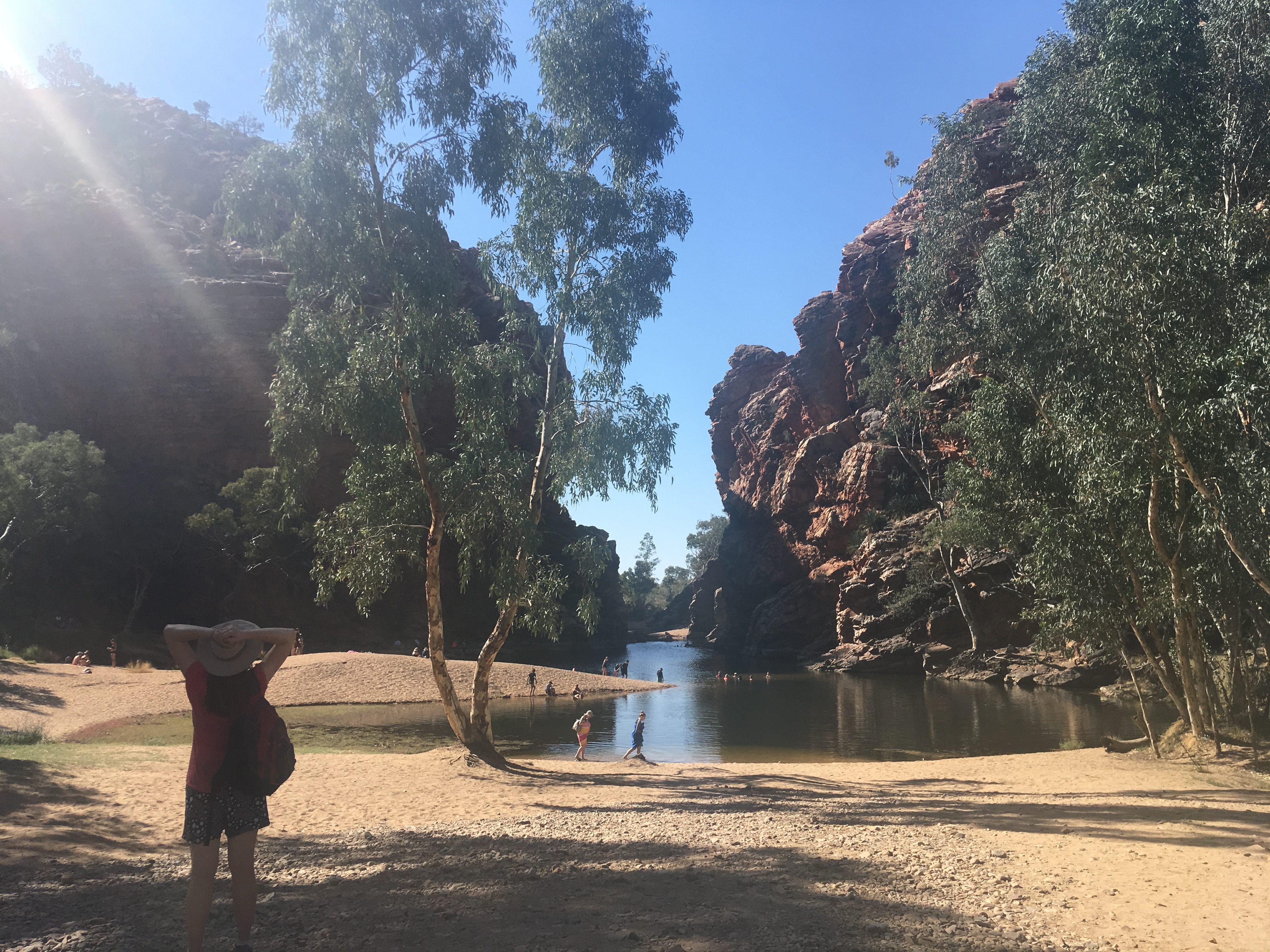
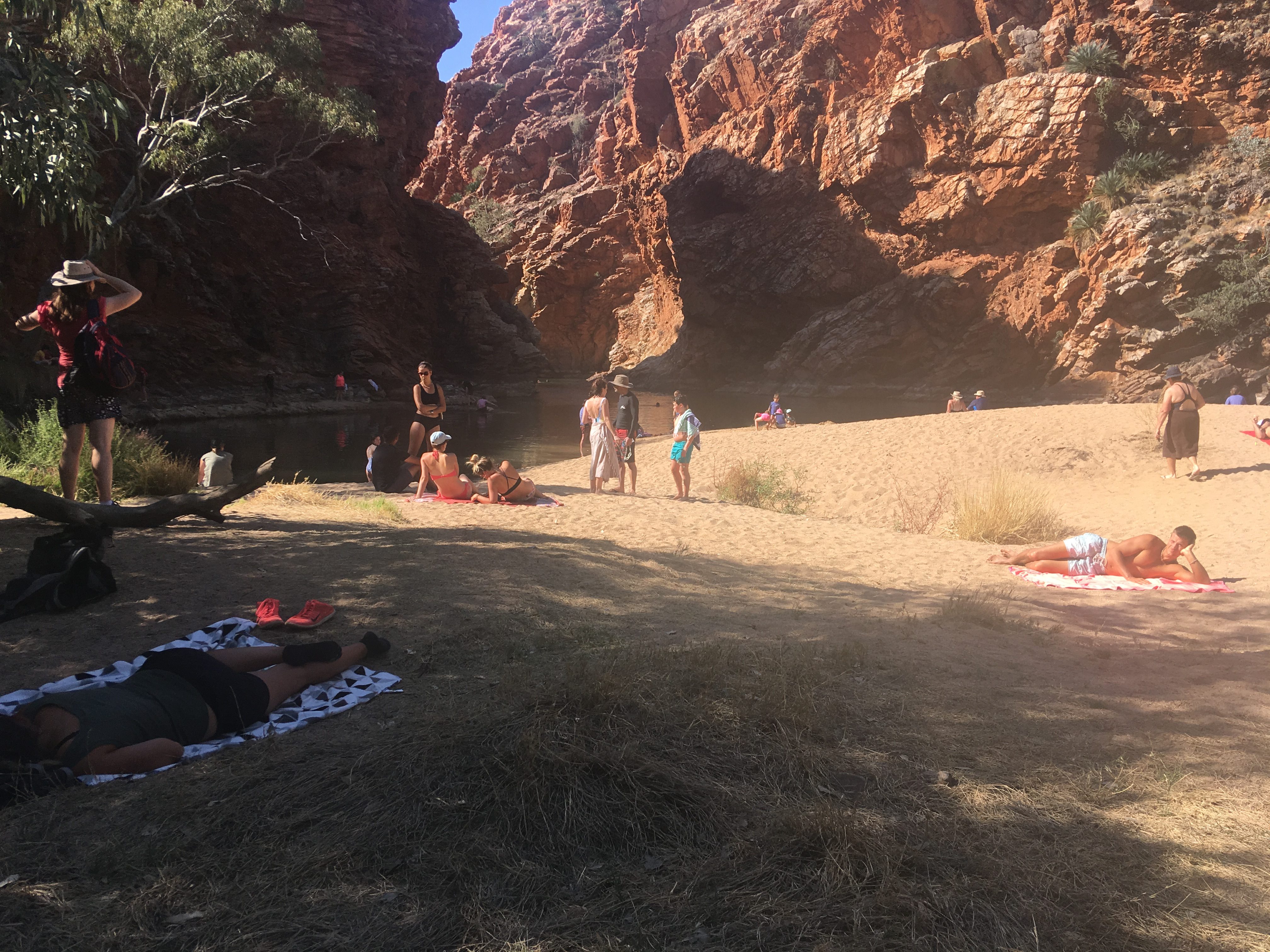
The water holes were what I had been waiting for—I whipped off my clothes, ran barefoot across the blazing hot sand in the searing sunshine and leapt in, then screeched and screamed because the water was, surprisingly, cold as a witch’s tit, as the saying goes.  I ran back to the water’s edge and re-entered slowly.  It was so cold my heart was palpitating, but I did a couple laps around and enjoyed hearing other unsuspecting initiates shrieking as they hit the water.  Heidi sat in the shade and chatted with Lachlan.

I walked to the toilet block to change out of my wet suit, and saw this sign.

They had me at effluent.

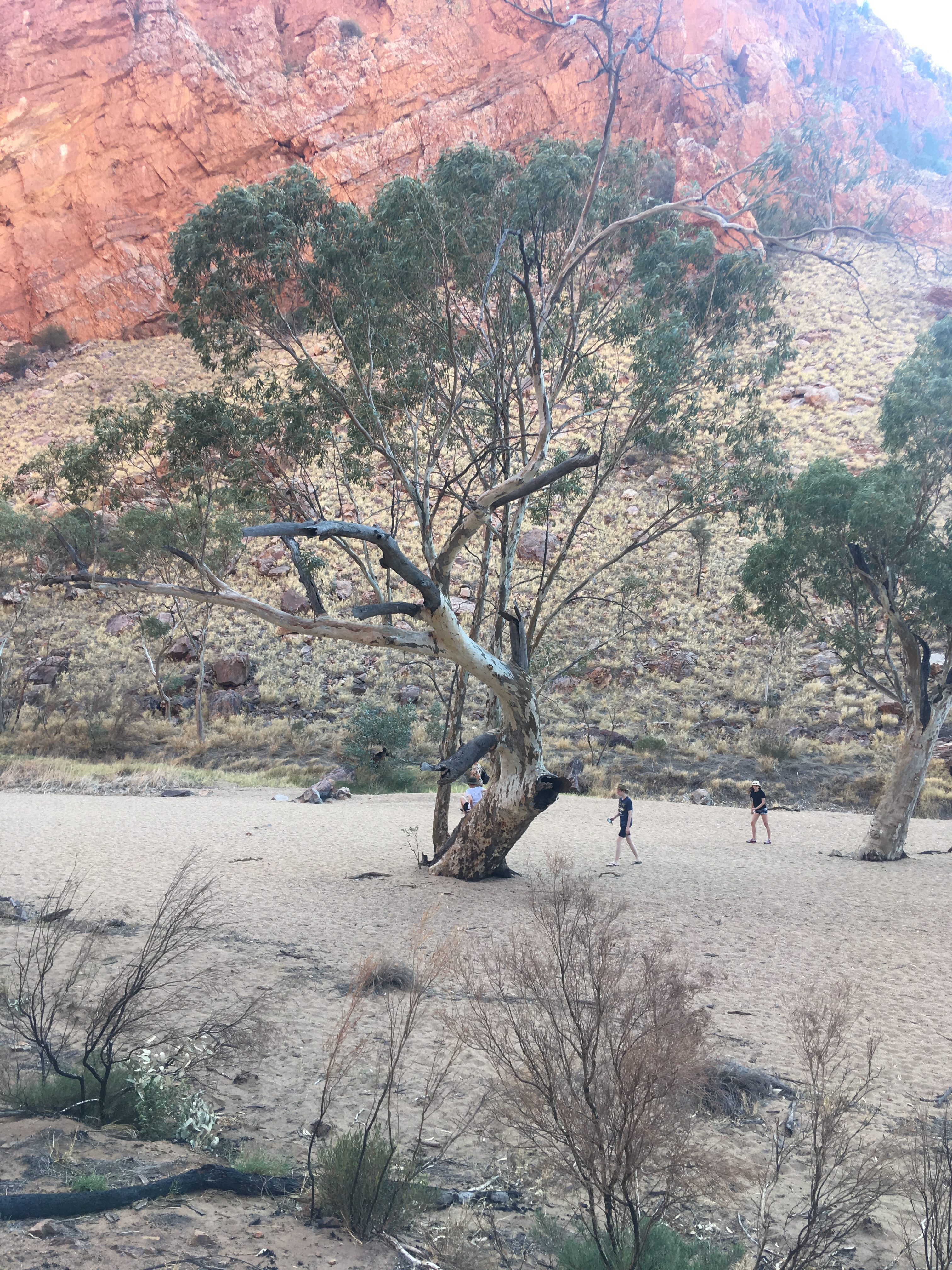
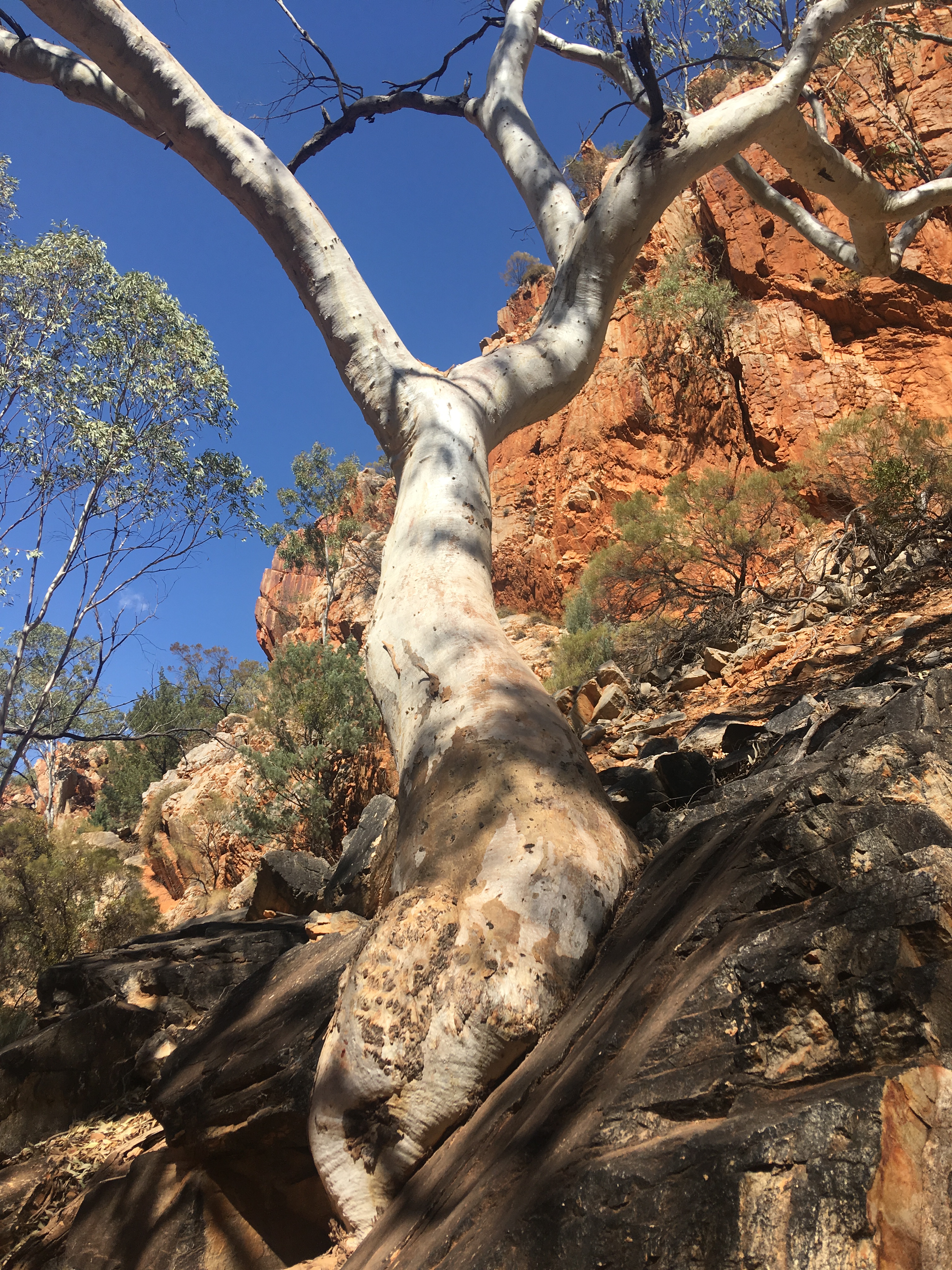
As I write this, I am smiling and laughing.  It’s six in the morning; I hope my upstairs neighbor can’t hear me.  It was a wonderful day.  Another wonderful day in Australia.  These are photos of a dry riverbed and a big gum tree that had grown up out of a crack in the rock.
Here is Heidi contemplating another water hole; in the second photo you can almost hear her sighing with contentment.
We pulled into a place called Glen Helen for lunch.  There was a sandwich buffet and it looked beautiful, but it was placed in such a way as to make it very slow going to get through the line.  I thought I’d come back later.  I went outside, kicked off my sandals, and ran down to the water’s edge.
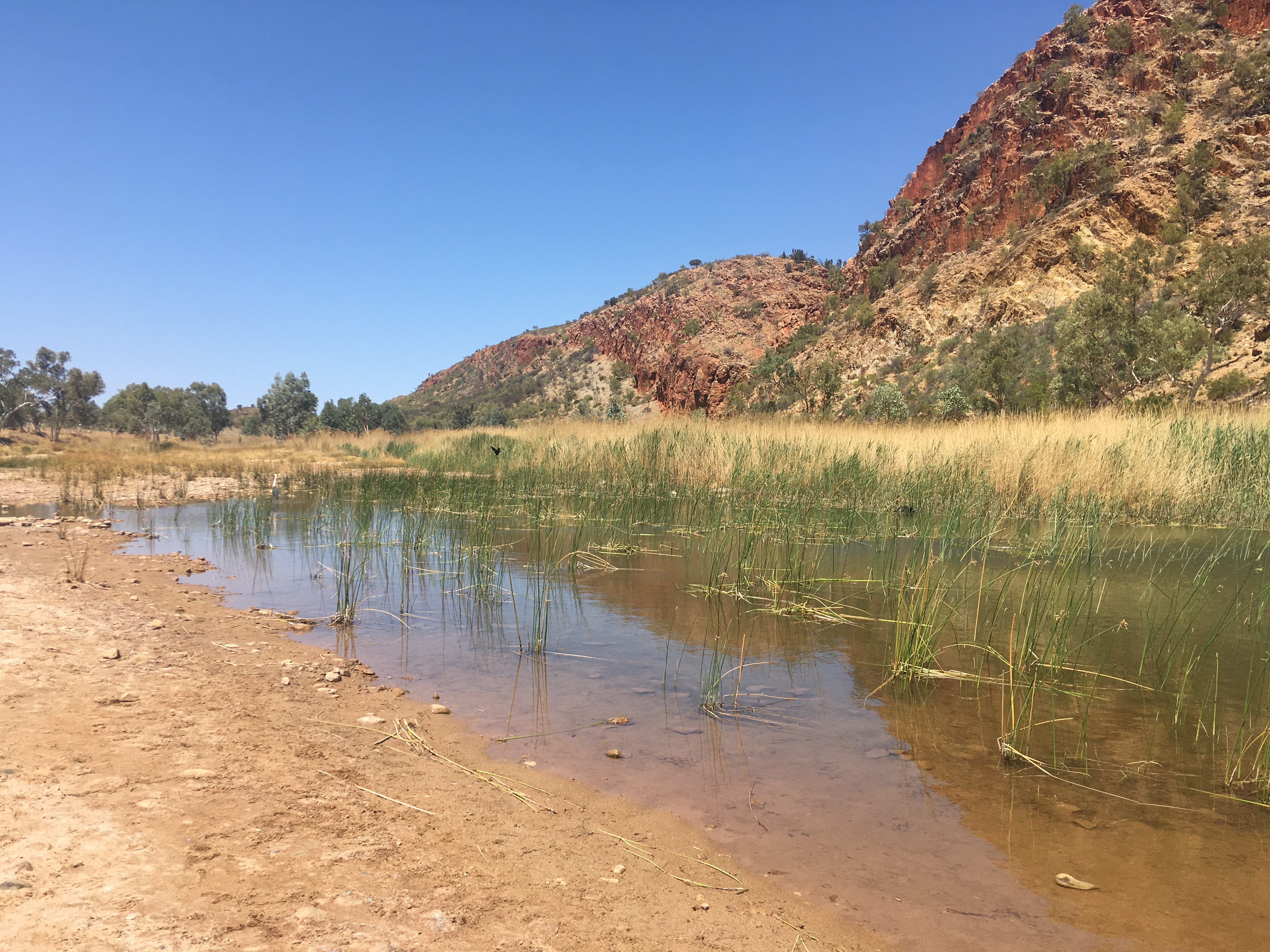
Shoe removal had been a very bad idea.  After cooling my feet in the water and checking out the birdlife, I picked my way back up to the canteen exclaiming, “Ooh aah agh!  Agh argh arrrrgh!” The sand was so hot my feet felt slightly scorched for an hour afterwards.

Back inside, Heidi was sitting at a table with a German guy from our tour who had severely wandering eyes.  He talked nonstop about how he had planned his whole two-week trip by himself.  Well whoop dee doo!  Heidi had planned a whole month. He never asked about our itinerary.  But Heidi isn’t one to one-up, so she simply smiled and nodded.  She is so nice.  Much nicer than me.

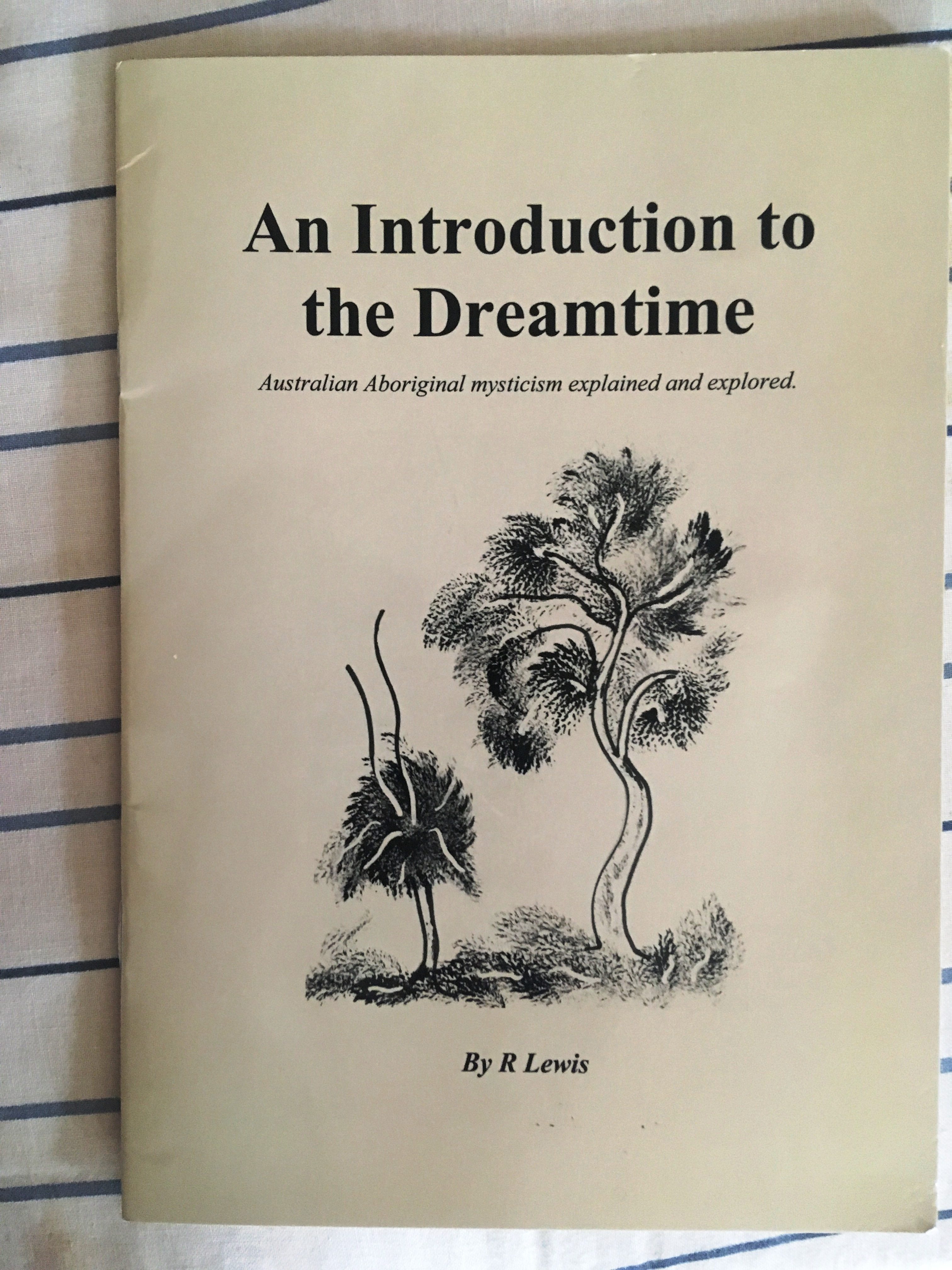
There was a tiny gift area and I picked up a book, hoping it would explain the mysteries of the Dreamtime.  However I think the author has been listening to too much digeridoo music, because none of it made sense.  Or maybe I’m just not deep enough to understand.
After lunch, another water hole.  I sat in the shade next to an weathered old man wearing a cowboy hat.  He pointed out a long line of ants and warned me not to get too close or they’d “set ya skin on fi-ah.”
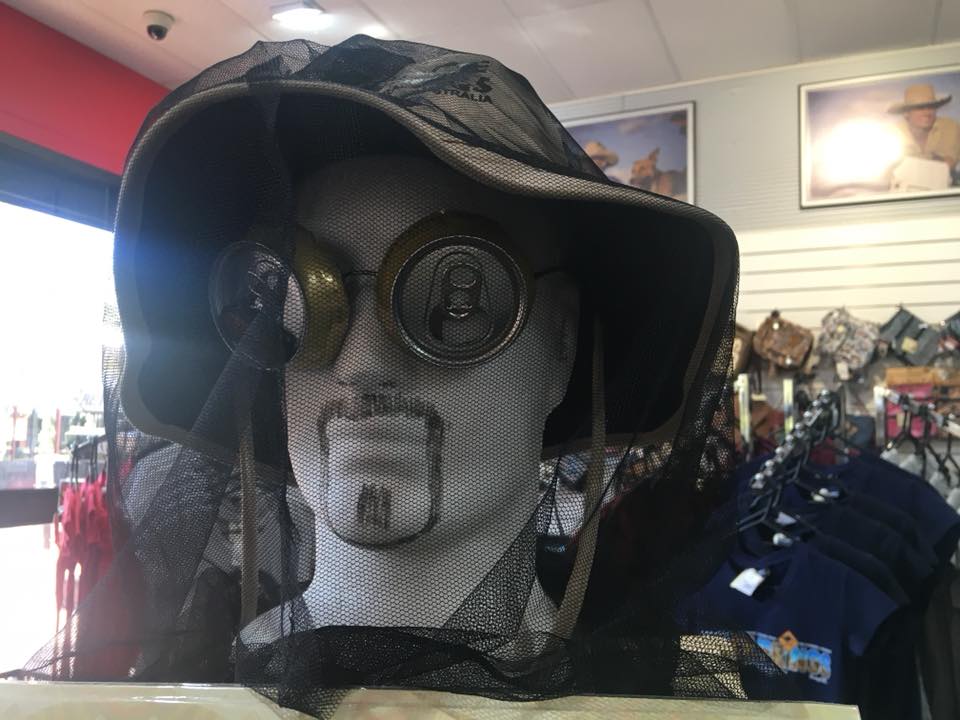
Back in Alice after the tour, we stopped into a supply store so Heidi could find a fly net hat.  We found one, artfully displayed with beer goggles.
We ate some leftover cheese and crackers for dinner and Heidi flipped on the TV while we got ready to go to the laser light show.

We never made it to the light show.  We became riveted to The Bachelor—Australian version, which is exactly like the American version but with Australian accents.

The bachelor in question was called the honey badger.  He was a former rugby player.

I was fascinated and repelled. “What’s with the eighties hair and mustache?  I hope he’s being ironic?”

“I’ve never seen the show,” Heidi whispered, mesmerized and horrified.

“Yep,” I replied.  “They’re not allowed to say god—only gosh.  But then the guy is screwing two women at once on national TV and telling each one, ‘I’ve never felt this way about any woman.’”

History, Great and Grim

I hope I don’t sound critical of Alice.  The place reminded me of another country town where I have spent a lot of time—Lanesboro, Minnesota—where my son Vince lived for years.  It had the same combo of hardy blue-collar local folk, a sizable airy-fairy artist contingency, and a population that lived among but apart at the same time; in Lanesboro it was the Amish and in Alice it was the Aboriginals.  I never spoke to an Aboriginal in my month in Australia.  I never had an opportunity.  I would have loved to hear their perspective on their place in Australian society.  But I’m sure they’re beyond tired of being interviewed and researched by curious white people.  I’ll make a New Year’s resolution here to read two books written by Aboriginal authors in 2019.

We walked along a deserted road under a fierce sun in intense heat.  We had seen a sign that said, “Alice Springs Telegraph Office” but it hadn’t indicated how far.  We’d been walking for 15 minutes and there were no further signs.
“It’s a car culture out here,” I observed.

“But why is there a sidewalk?” Heidi pondered.  “I looked into renting a car but it would have been stupidly expensive.”

Thankfully we had slathered and sprayed on sunscreen and donned our hats and sunnies, or we would have been baked red in minutes.  I was happy to strike this obligatory pose since it was in a bit of shade.

We weren’t so far away from civilization that Heidi couldn’t get a signal and Google the number for the telegraph station.  She called and they assured her we would reach them in a matter of minutes.  And we did

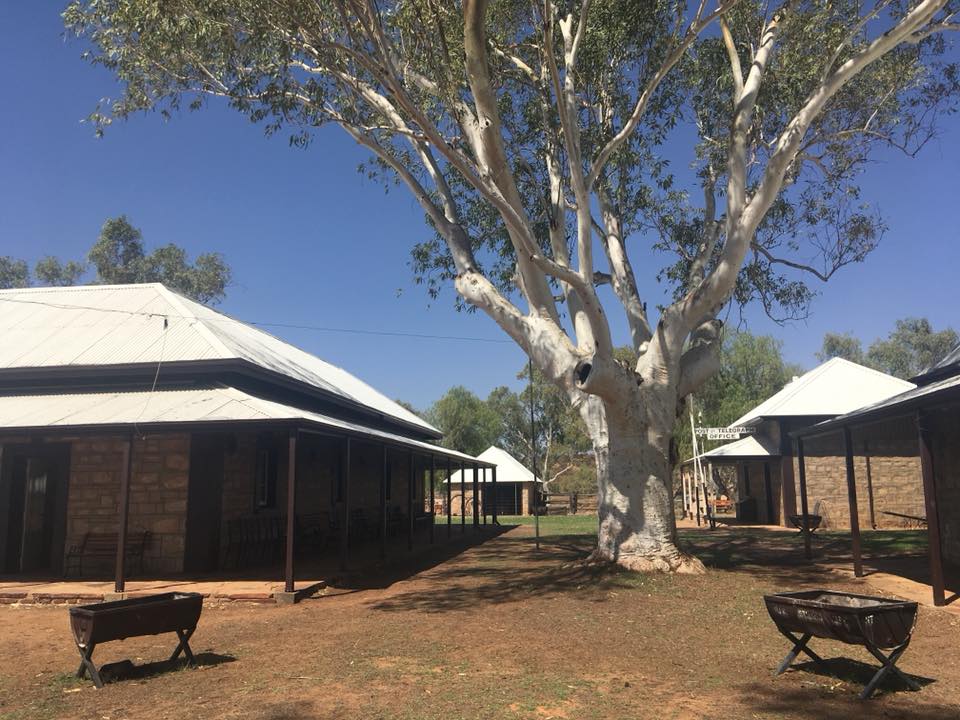
The Alice Springs Telegraph Station is a historic trust site.  We paid a small admission fee and joined the tail end of a walking tour.  This is the eponymous (underground) spring.

The guide explained the difference between Ghost and River Red gums.  I immediately forgot.  There are hundreds of different gum species.  All I know is that they’re all glorious.

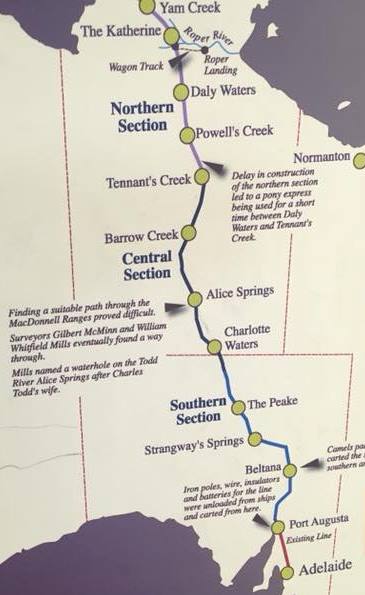
One of the greatest engineering achievements of the 20th Century, the overland telegraph line ran from Darwin to Adelaide. That’s a long way.  The Alice Springs station was the halfway point and was completed in 1872.

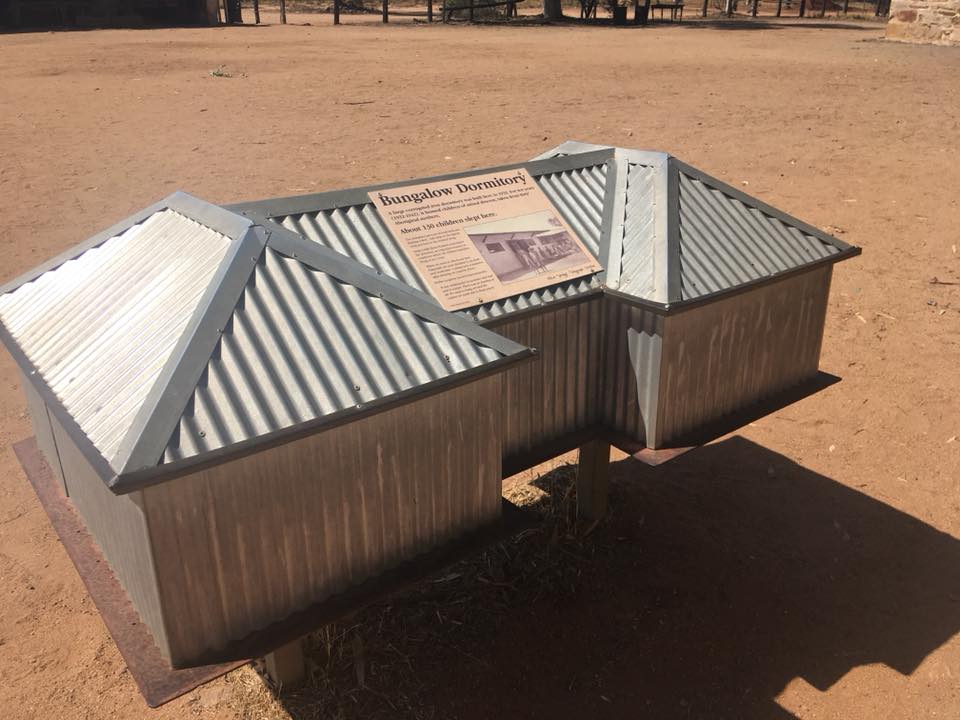
There was a heartbreaking exhibit about a 1930s campaign that forcibly removed children born of Aboriginal mothers and white fathers from their homes and institutionalized them in Alice Springs.  The idea was to expose them to European customs and give them a “proper” education.  Which meant they lost out on education about their maternal culture.

This was a replica of the home for “half caste” children. It would have been freezing at night and scorching during the day.

Some of the children were traumatized for life, while others said being given an English education was the greatest opportunity they could have been given.

We walked around and peered into a  ye olde timey blacksmith’s shop, post office, and stables, which had a plaque telling the story of the camel’s arrival on the continent.  Camels carried a year’s worth of supplies to Alice Springs.  Their arrival must have been an annual highlight in an otherwise solitary and harsh existence.

We had paninis and cappuccinos in the office/gift shop/café, where I bought some wombat hats and a CD with Australian folk music that I have thoroughly enjoyed since, in place of listening to the news in my car.

We asked about walking back, and to our surprise learned there was a straight path into town that would take us no more than 15 minutes.  Hurrah!

“The bus takes a very circular route, so walking is faster,” explained the guy at the desk, who was Canadian.

A few minutes out, some Italian guys yelled “kangaroos!” at us and pointed to nearby rocky hills.

“They’re actually Rock Wallabies,” Heidi said helpfully, but the Italians mansplained no, they were kangaroos.  The critters were so well camouflaged that my photos couldn’t capture them.

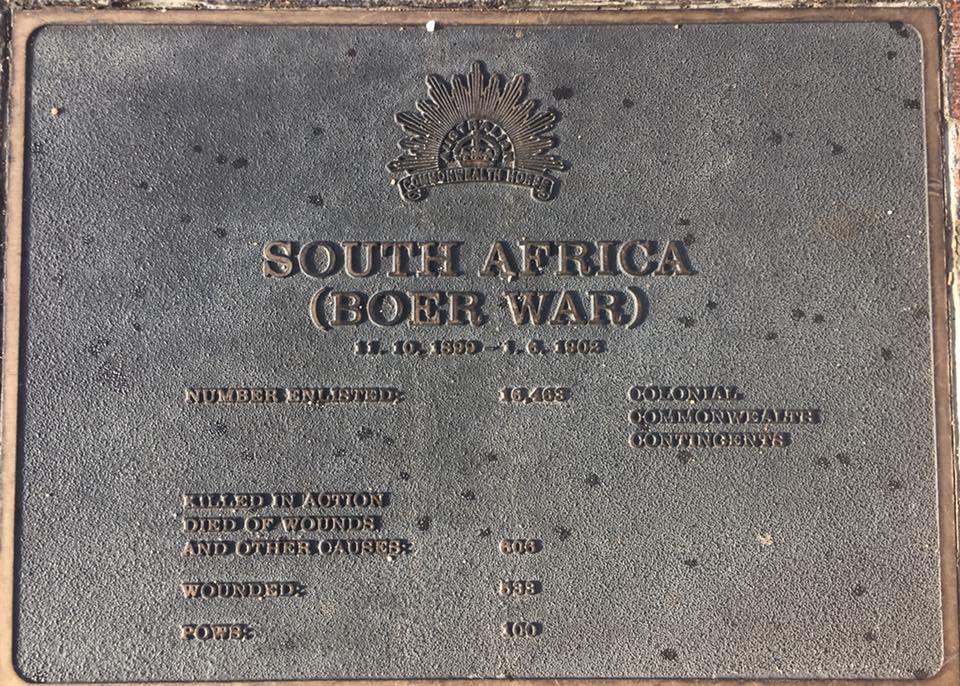
There were also plaques inlaid in the walkway that chronicled other sad episodes in Australian history.  This is only about half of them.  I thought “confrontation” and “emergency” were great euphemisms.

A Night on the Town

Heidi and I returned to our motel to rest up before hitting the town for the night.

After working on my swimming skills all summer, I had looked forward to staying here because it had a pool.  But the pool was indoors, next to the parking lot, with no natural light or even a potted plant to make you feel you were in nature, and it was too small to swim a lap.  It was surrounded by concrete topped with artificial grass and two lounge chairs.

When searching for accommodations with a pool, always look at photos of the pool.

Heidi had made all the arrangements for our time in the centre and I was grateful for that.  Not being able to swim was no big deal.  I would have plenty of opportunities on the reef.

Our only plan for the evening was to check out a restaurant, Sportys, that Heidi’s Aboriginal exchange student from Alice had recommended.  Alice is a small town so we found it right away.  There was nothing else, really.  I ordered a steak salad that came with wilted, brown lettuce and “steak” that was really processed beef lunch meat cut into “steak”-shaped strips.  Our server was a young guy from Orlando, Florida who was clearly thrilled to be anywhere but there.

“I’ve got a one-year work permit and I’m hoping I never have to go back!” he effused.

“Do you think he’s gay?” I asked Heidi when he’d skipped away.

“Hmm … yes?” she laughed.

“Do you think he’s The Only Gay in the Village?” I asked her.  This was a reference to a skit from the old politically incorrect comedy show Little Britain, in which comedian Matt Lucas plays the eponymous Only Gay in a tiny Welsh village.

Alice didn’t seem like a place our waiter was likely to meet an Australian to marry so he could stay in the country forever.

It was dark.  We sat on the patio and watched passersby: groups of young people with beer cans in their hands, men who looked like they’d been cleaning out sewers or dumpsters all day, Aboriginal teen moms with strollers and toddlers running free.  The streets weren’t well lighted except for the main pedestrian drag, which had a fantastic art installation involving swirling Aboriginal patterns projected onto the sidewalks and neon sculptures that resembled insects.  This was accompanied by new-age music emanating from nowhere and everywhere.  The streets leading away from the main street receded into darkness.

We wished our waiter good luck, then sauntered out into the night.  All the shops were closed except for Target, which is not the same Target as the US chain but which has the same logo.  “Target sell mainly clothes and small household items,” explained Heidi as we did a walk through.  It was a warehouse-style store, but with red Target logos everywhere.

That was our whoopdeedoo night on the town; there was nothing else to do.  This was okay with me since I can’t stay up past 9pm anyway.

Heidi had an ambitious plan for us the next day.

“We’ll take a bus out to the telegraph station, then we should be able to visit the School of the Air using the same bus route.”

We procured a schedule, enough change to pay the fare, and searched and asked strangers for directions for half an hour until we found a bus stop.  The bus came quickly, and we paid our fares.

“Five more dollars,” demanded the driver, who appeared to be Somali.

Heidi showed him the bus brochure, which stated the fare in black and white.

“No, five more dollars each,” the driver insisted.

We fumbled and coughed up five dollars, then he performed some sleight of hand, insisting we needed to pay two more, then he gave us some change back.

“I think we were just scammed,” I said, “but I’m so confused I don’t think I could argue for our money back.”

Heidi was steaming.  When we got to our stop 20 minutes later, she stood in the bus door to keep him from closing it and calmly argued with him.  He didn’t budge.

“I’m fairly certain that’s the only bus,” she remarked, “So we’ll be walking back to town.”

Alice, Sans Springs

Alice Springs. I knew little about it except that it was in the middle of a vast country.  It held a mythical status in my mind, maybe because it was named after a person—in this case, the wife of one of the men who built the overland telegraph line. There were no springs in Alice Springs except underground.  If you were dying of thirst and you could make out the outline of a river in the desert, you could secure water by diffing down six feet through sand and rock.  The rivers never flowed above ground unless there was a flood.  Perhaps that’s why it’s usually referred to as just Alice.

“They have something called the Henley-on-Todd Regatta every year,” Heidi chuckled, “where they race ‘boats’ on the dry riverbed.”

Alice is also the midpoint of the legendary Ghan, the train that runs almost 3,000 miles (4,828 kilometers) from Adelaide in the south to Darwin in the north.

Originally called the Afghan Express, it was built for the British by immigrants from what is now Pakistan, who imported camels from India and Afghanistan to help with the job.  The camels did very well.  In fact, Australia now has over a million of camels running wild in packs in the outback.

I had checked out the Ghan and it would have cost me about $700 to get to Alice from Adelaide.  This didn’t line up with my plans with Heidi but I would definitely go back and do it someday.

First, we had breakfast.

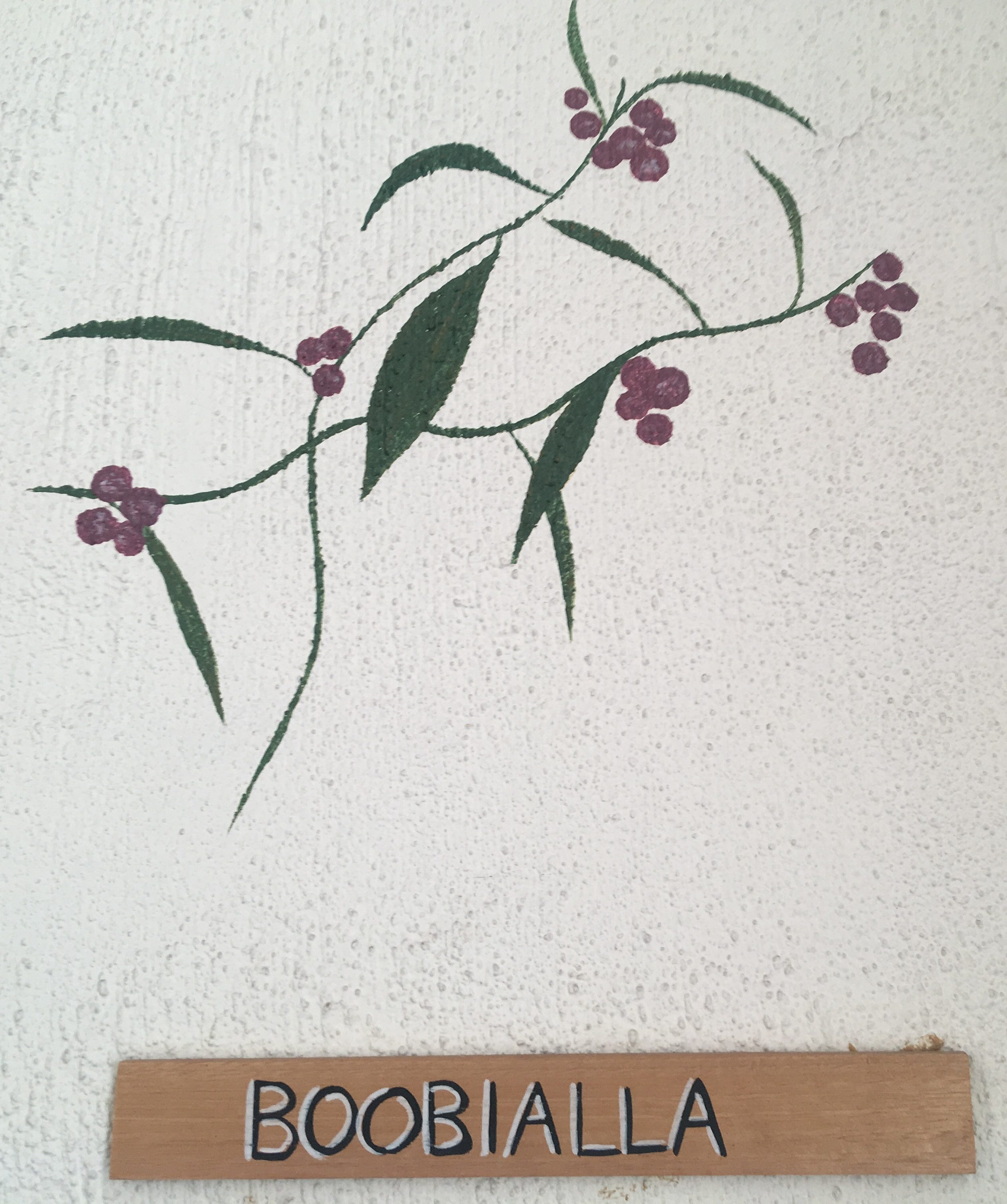
Someone had taken the trouble to decorate the stairwell of the motel with painted scenes from nature.

“You wonder if they were taking the piss,” Heidi said as she traced the names Boobialla and Cocky Apple with her finger. Taking the piss means “to joke mockingly.”

Each of the three mornings we ate breakfast in the motel restaurant, we sat for over an hour drinking coffee and talking.  This is my favorite part of traveling—spending lots of time with people I like.  Heidi and I talked about our families, our jobs, our pasts, our plans, travel, men, news, culture, and everything else.

Finally we stepped out into the heat of Alice to get our bearings and find the Royal Flying Doctor Service Museum.

Alice struck me as more of the Wild West.  Now, obviously I never lived in the Wild West and don’t even know exactly what I mean by that except it includes images of cowboys and Indians and dusty towns with saloons and lots of drinking and gambling and perhaps a gun fight.  There was none of that in Alice that I saw, except for the dust.  The people were definitely scruffy—I guess it would be nicer to say they were casually dressed.  It was a contrast with Sydney, where men wore expensive suits and shoes and women sported skirts and heels.

There were a lot of Aboriginals, and many of them were barefoot.  Their feet must have been tough to withstand the heat of the pavement.  There were also plenty of Aboriginals dressed like the rest of the non-tourist population; that is, as bus drivers and students and shop keepers.

I am not Aboriginal nor an expert on Aboriginal culture.  I have felt guilty writing about what I observed, when it could be construed as negative.  It is my understanding that Aboriginals are plagued by the same troubles as many Native Americans: Obesity and its attendant health problems, alcoholism, domestic violence, and poverty.  Beyond these statistics, I don’t feel like their story is mine to tell, beyond what I saw firsthand.

And about drinking in Australia.  My expectation had been that everyone would be guzzling Fosters and stumbling around in the streets.  This was also an impression several of my American and British friends shared before I left.

I think this impression came from our encounters with Aussies in London and elsewhere.  Once I thought about it, these had been mostly young people living away from home for the first time.  I should have known that they didn’t represent the entire Australian population, who didn’t appear to drink any more than Americans.

Feeling Like Home

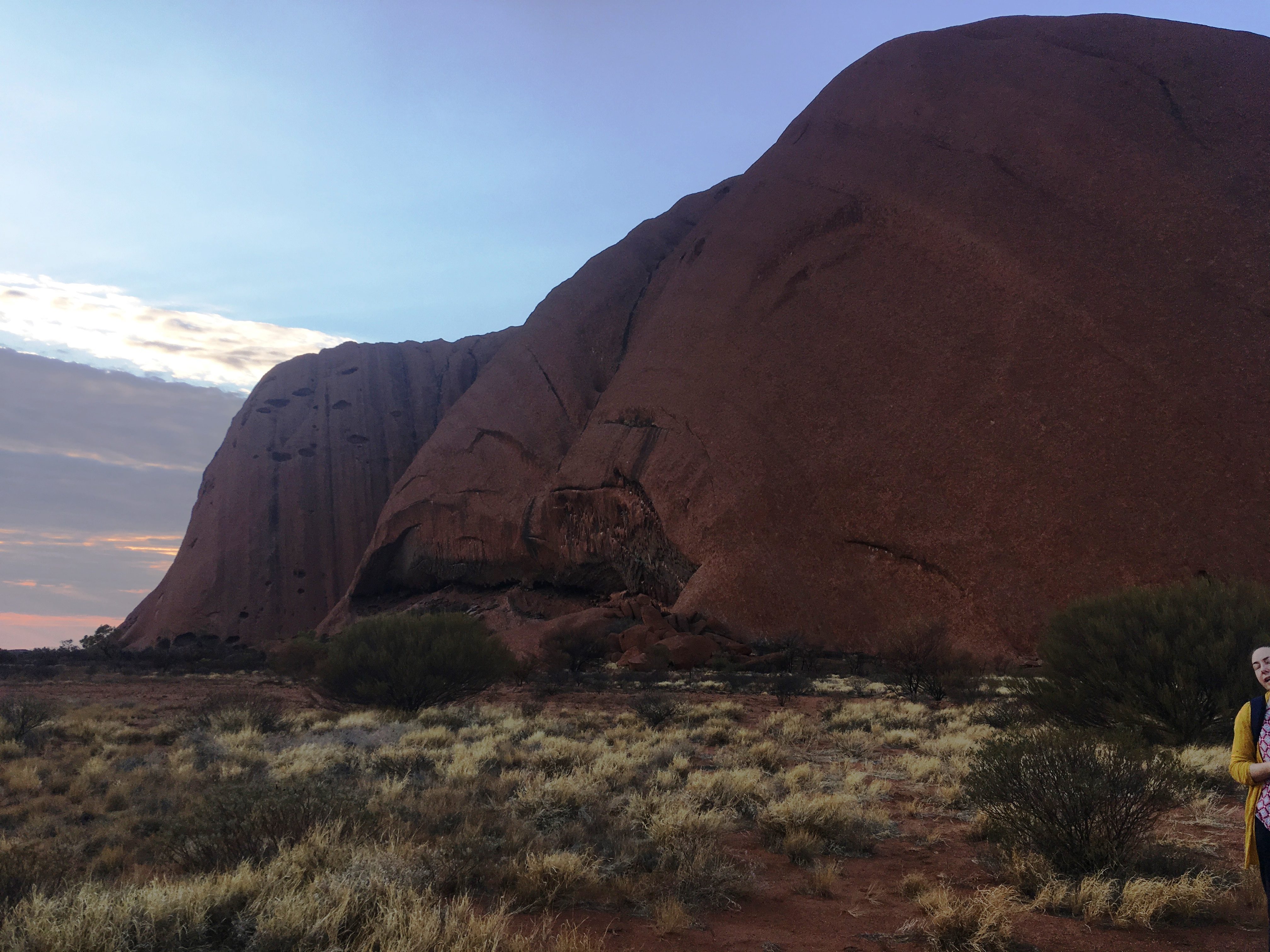
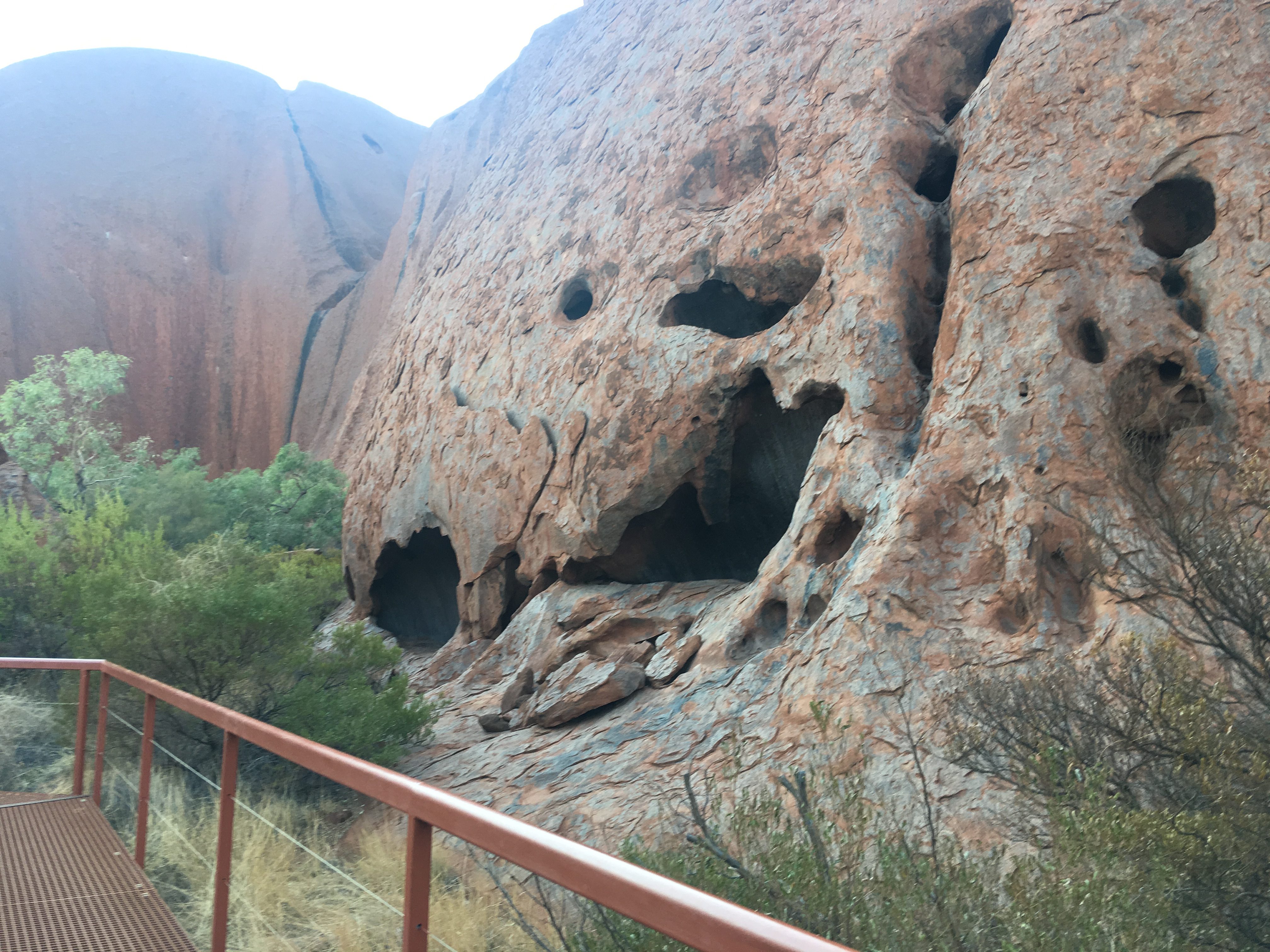
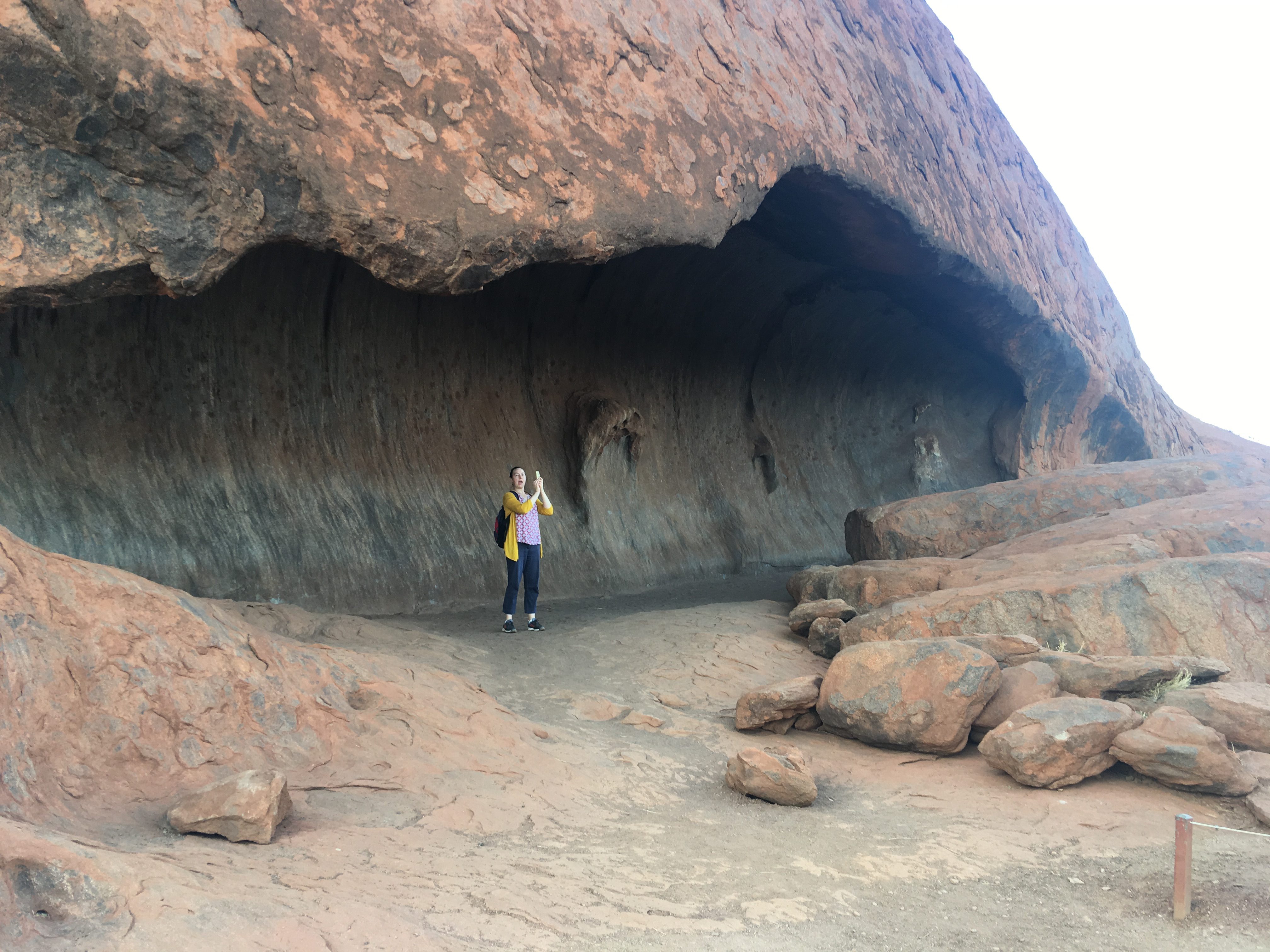
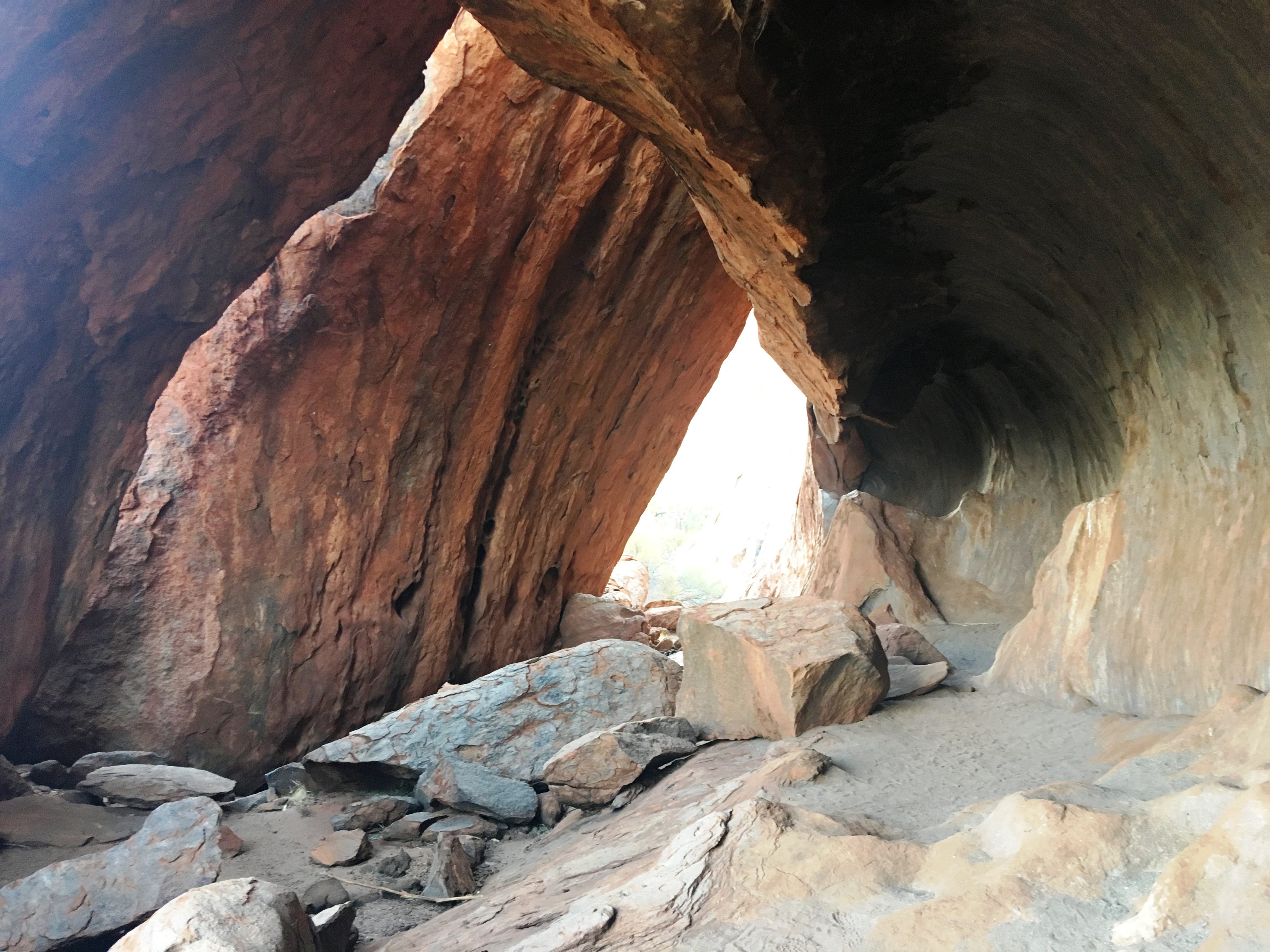
Walking around Ularu was a good example of a common dilemma: should I stop every five feet and take a photo, or should I stop every five feet and just look at it and be?  Should I try to capture it, or just see it—really see it?

I chose photos.  As the sun rose, the light changed minute by minute. The sky, the red earth and buff-colored grass and the red rock went from hue to hue.

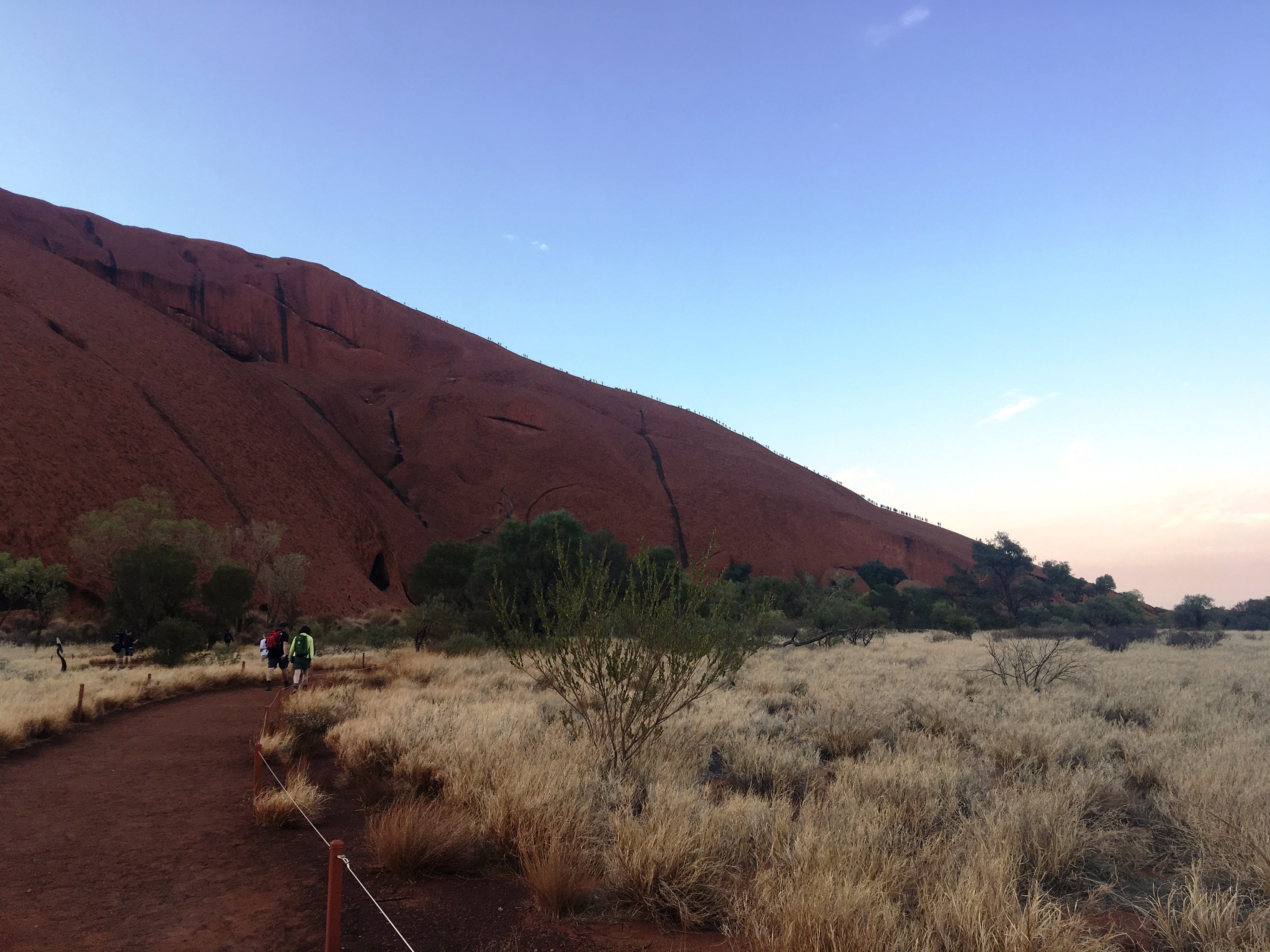
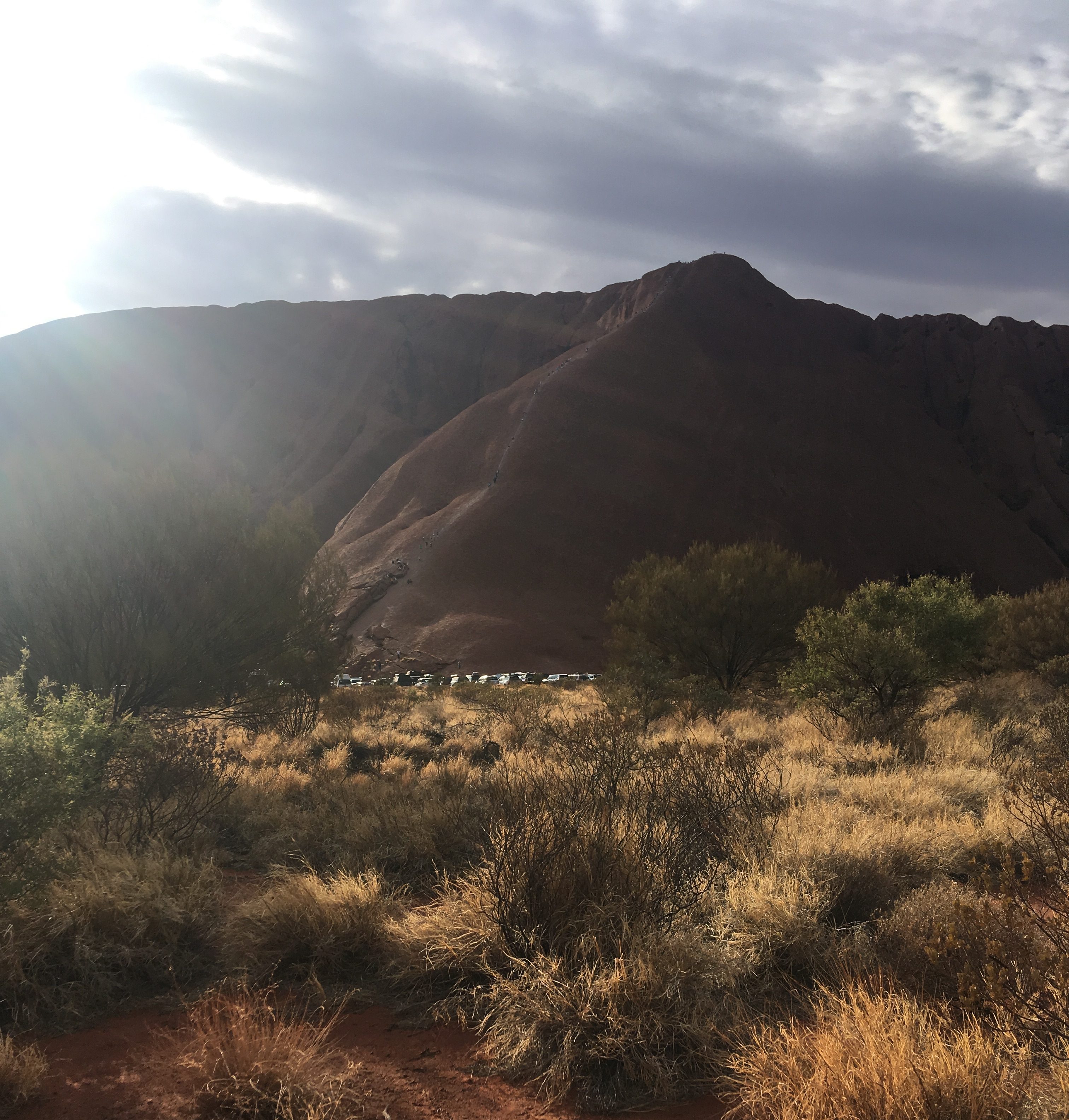
You can barely see it in the photo below, but it looked like a line of ants crawling up Ularu. Climbers.  Meg had further explained the Aboriginal perspective on climbing.  “They feel responsible for the rock, as a sacred place, and that means they feel responsible for the people who climb it. Every year stupid people get hurt, or dehydrated, and who wants to be responsible for that?  Just his winter, an old Japanese bloke died up there.”  Meg wasn’t one to mince words.

“What’s the view like from up there?” someone asked.

“It’s crap—its just red dust and spinifex as far as you can see,” replied Meg.

Spinifex, a tufted grass that comes in hundreds of varieties, including one that’s as sharp as shards of glass.

We were going on our third hour, and approached the base.

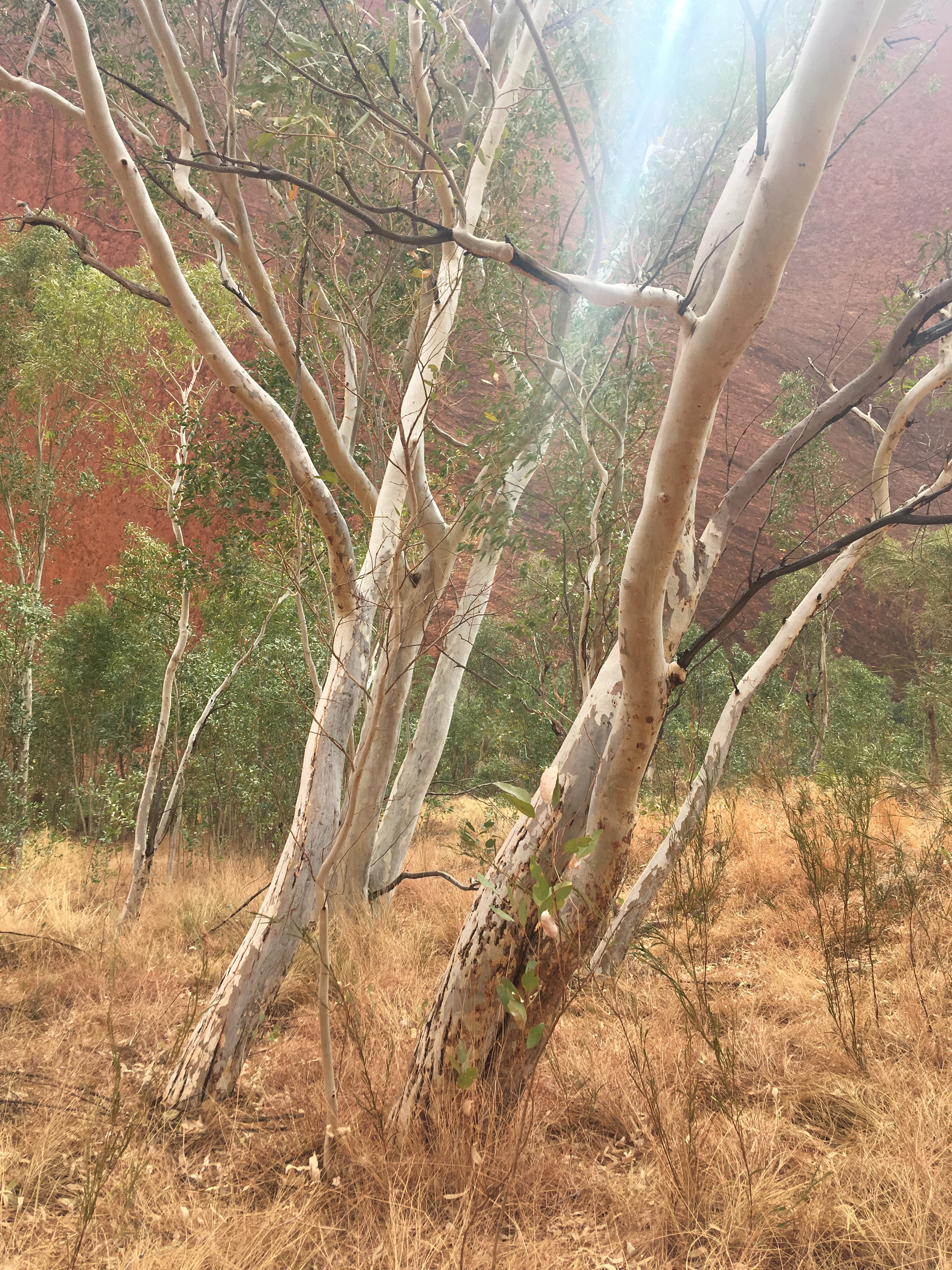
It was very pretty—the was a (currently) dry water hole surrounded by glorious gums.

A sign informed us that the Aboriginals waited by the water hole until the last animal in a herd had drank its fill, then they killed that one animal. This was so the rest of the herd wouldn’t panic and never return.

Another sign asked us not to take photos of a “sensitive” place called Mala Puta.

“That’s ‘bad whore’ in Spanish,” I told Heidi.

“It doesn’t look any different from the rest,” she replied.

“Do you feel any juju?” I asked.

“No.”

“Me neither.”

We walked on, in and around the rock formations.

As I’ve written before, I’ve been to a lot of places like this that are or were sacred to a culture, or from which civilizations mysteriously disappeared.  Machu Picchu, Tikal, the Western Wall, Petra, Dzibilchaltun, Lalibela, and the Native American burial mounds near my house. I had an out-of-body experience at the Western Wall, felt a strong “something” in Petra, a little something in Tikal, and nothing at all anywhere else.  I’m pretty sure it’s all based on my state of mind and how much time I have to overthink it and imagine I feel something.

But who knows. From thoughts of the sacred to the sensible, I headed for the toilet, having downed two liters of water as instructed by Meg. A helpful guide informed me that I was hydrated.

We gathered near the bus in the parking lot for 9am tea, which was date cakes but no tea.

Heidi and I chatted with the Aussies who had immigrated to Australia.

“We just love it here,” said the husband, whose arms and legs were totally tatted.  “We’ve only been back to the UK twice in 20 years.”

“Don’t you have family there?” queried Heidi.

“Aw yeah, but we just like it here better,” said the wife.  She was the second woman I’d seen on this trip who was wearing false eyelashes.  One of them was coming unglued.

“Awwwll right you lot!  Back onboard!” bawled Megan.

“Did you think it was strange,” Heidi asked in a low voice, “The British couple have only been back home twice?”

“Yes! I wonder if there’s some family feud.”

“I lived in London for almost as long as they’ve been here, and I came home every year.”

“Where do you feel most at home?” I asked her, thinking the answer would be London.

“Austria,” Heidi replied.  Her mother is Austrian.  “But I can’t get a work visa because they base it on your patriarchal heritage.”

“That’s so sexist!”

So the British couple love Australia, Heidi would rather be in Austria, and I feel at home in the UK.  An Indian friend of mine feels Minnesota is where he is meant to be.

Is the draw to a place something spiritual, or a story we manufacture in our minds?

Thank You

In real time, Happy Thanksgiving, if you are American.  Happy Thursday, if you are not.  I have some news items to share at the end of this post.

Day four in Australia.  Day four?!  It felt like I’d been here forever, in a good way.

We alighted from our bus for sunset viewing of Ularu.  I walked around snapping photos of other tourist vehicles. I have spent many hours in these heavy-duty Toyotas in Kenya and Ethiopia.

There was this crazy sardine-mobile, some kind of motel on wheels.  I’m all for budget accommodations, but this beat even the bunkhouse for the claustrophobia factor.

There was this dusty, Mad Max BMW motorcycle.

A group of barefoot Aboriginal women sat on the pavement selling paintings.  I felt a sharp, uncomfortable contrast as Meg poured sparkling wine.

But then I was distracted by food.  “This is kangaroo jerky,” she indicated, “this one’s emu pâté  and this here’s croc dip.”

“The kangaroo is delicious!” I commented.  “It’s like venison.”

Heidi didn’t touch it.  “I can’t eat it. The kangaroo and the emu—they’re our national animals.”

“They’re animals that can only go forward,” explained Heidi.  “Like our country, I reckon is the idea?”

“I guess I wouldn’t want to eat a bald eagle,” I replied.  Well, all the more emu and kangaroo for me!

The members of our group began introducing ourselves.  Trevor and Gwen had immigrated to Australia from Nottingham, England, 20 years ago.  They were here with their 14-year-old daughter, Tiffany.  Kris and Melanie, a young Swiss couple, never spoke unless spoken to, so I didn’t get to know them at all.  Brenden and Stefanie were another young couple, from Canada.  Johannes and Sandra were a middle-aged German couple who took elaborate tripod-assisted selfies of themselves jumping for joy in front of every landmark.  Mia and Nora were also German; both were around 22 and they were student teachers in a German school in Melbourne.  There was a Chinese couple—father and daughter?  Lovers?  They stood apart and avoided all eye contact.  Another couple, Darren and Kylie, were also a May-December pair.  They said their names and that they were from Melbourne, then also kept to themselves.

I spoke with James, a 30-something Korean guy who spoke confident but almost-impossible-to-understand English. He was an out-of-work cook from Adelaide, blowing all his savings on a last hurrah in Australia before going home to an uncertain future.  He reminded me of Vince.  Because he was a cook, but mostly because there was a soulfulness about him.

Thanksgiving is my favorite holiday because it doesn’t involve decorating the house inside and out, buying presents, or any Christmas/Hanuka dilemmas.  You just eat a lot with your family or friends, then fall asleep in front of the TV watching The Hobbit for the millionth time.

Thanksgiving is about—as the name implies—giving thanks, and I have a lot to be grateful for this year.  As I sit here at my writing desk and look out the window at the grey sky and freezing drizzle, I am grateful for a warm home.  I am healthy.  I have friends and family.  I got to spend a month in Australia!  I wish I was there now.

And, some big news: I quit my job last week.  More on that later, but I already feel 10 years younger.

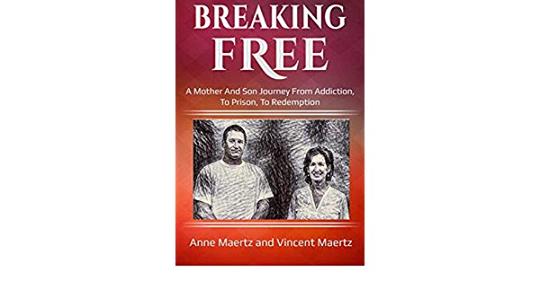
And another big development: Vince and I started this blog together four years ago.  We just published the first year of the blog as an e-book.  It chronicles his time in prison, his recovery, and my ride along with him.

Besides providing insight into why people turn out the way they are, we’ve been told by many readers that it’s just a good read, a page turner.  So if you’re looking for something to binge read over the weekend, or holidays, consider buying a copy.  Only $3.99!

Breaking Free: A Mother And Son Journey From Addiction, To Prison, To Redemption https://www.amazon.com/…/B…/ref=cm_sw_r_cp_apa_AbI9Bb9K1SXQM

Please feel free to share this on social media, and thanks for reading—we know it can be difficult stuff but addiction and all its consequences, including imprisonment, are a reality for hundreds of thousands of people every day.

In a Pink-Skinned Country

We had a few hours to kill before joining the tour that would take us to Ularu/Ayers Rock and other natural wonders with two names like Kata Tjuta, formerly The Olgas.

“Our tour is with Intrepid,” Heidi said as she read the deets, “And we need to meet the bus at the Lost Camel Hotel.”

So we left the bunkhouse behind, with no regrets, and walked past Ayers Rock Campground, the Outback Pioneer Hotel, Desert Gardens Hotel, Emu Walk Apartments, Sails in the Desert, and Longitude 131, each of which was successively more upscale. That last one cost $3,000 a night and there’s a minimum of two nights.  We looked at the brochures to see what you got by paying 40 times more than we had paid.

“It’s glamping on steroids,” I said.  The rooms were permanent tents with private views of Ularu.

“I stayed in a place like this in Kenya, on safari,” I told Heidi.  “It wasn’t as deluxe as this, but it was one of the nicest places I’ve ever been and it sure didn’t cost $3,000 a night.  I don’t think I paid more than $1,200 for the whole week.

“The thing is, if I was paying $3,000 a night I would feel like I had to stay in the room the whole time so I would get my money’s worth.”

Heidi laughed.  “Aw, anyone who can afford $3,000 a night—it’s nothing to them!  And I reckon they don’t drink ‘sparkling wine’ on their private deck.  It’s real champagne, baby!”

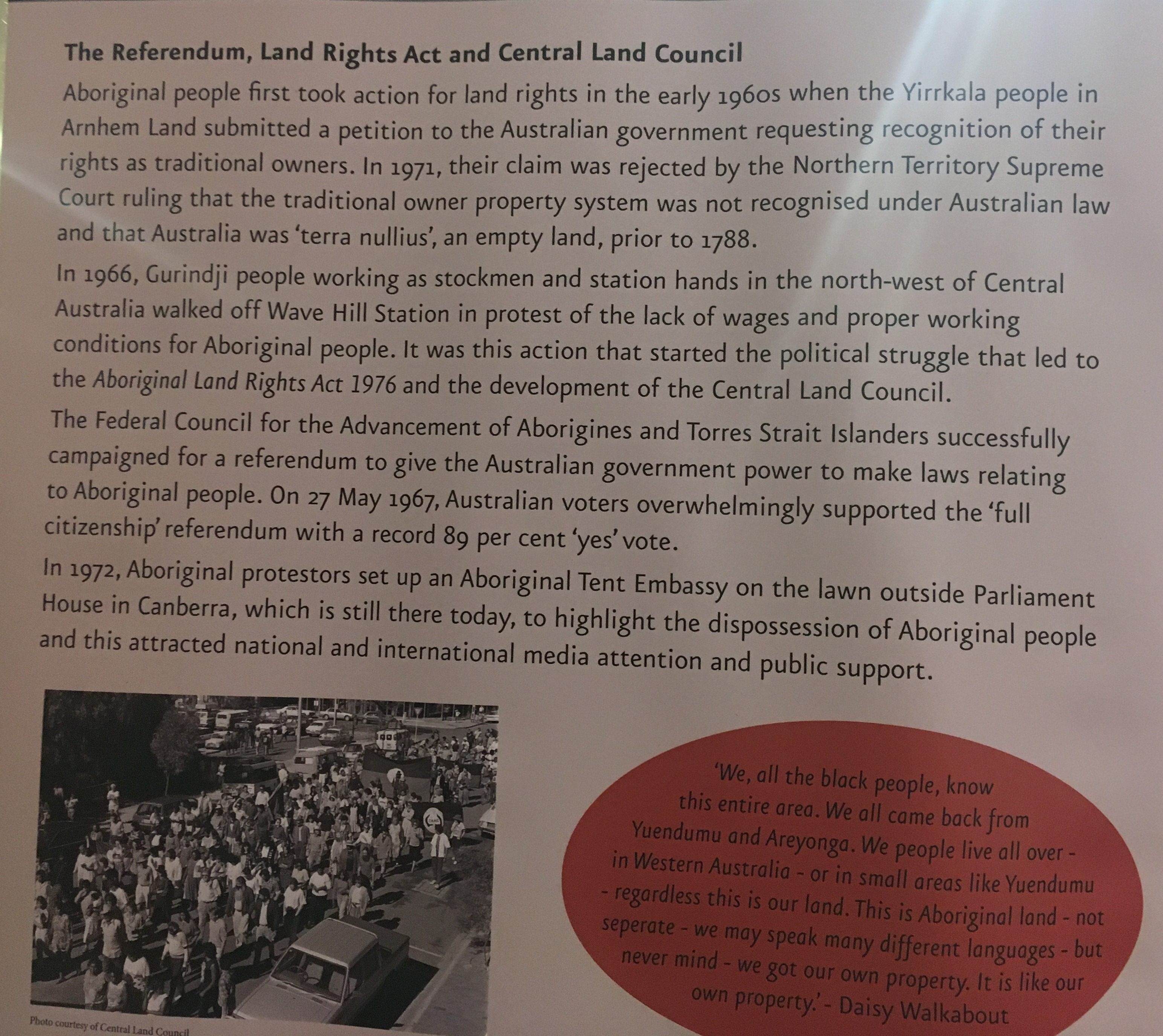
We happened upon a Cultural Centre with displays about Aboriginal history, desert wildlife, and the geology of the area.  It was a great little free museum, basically, so I take back all the snide remarks I’ve made about the Ayers Rock Campground being price gougers.  I snapped one photo before I saw the signs that said, “NO PHOTOS.”

Since you probably can’t read it, I’ll reproduce some of it below.

Aboriginal people first took action for land rights in the early 1960s when the Yirrkala people in Arnhem Land submitted a petition to the Australian government requesting recognition of their rights as traditional owners.  In 1971, their claim was rejected … ruling that the traditional owner property system was not recognized under Australian law and that Australia was “terra nullius,” an empty land, prior to 1788.

Let that sink in.  The Englishmen whose tall ships arrived in 1788 near what is now Sydney were, according to Australian law, the first Australians.  The English made all the laws, naturally stacked in their favor.

There was an Aboriginal civil rights movement in the 1960s, and in 1967 90% of Australians voted yes on a referendum that meant Aboriginals would be counted in the census for the first time.  It also allowed the federal government to make laws regarding Aboriginals, instead of the states.  As in the US, federal laws tend to take better regard of the rights and needs of all citizens. So, for instance—the federal government, in theory, makes more humane laws regarding segregation or voting rights than would, oh … Louisiana or Mississippi.

I was seeing Aboriginals around for the first time.

“Does Australia have anything like African Americans?” I asked Heidi.

“No.  We’ve got people of European ancestry, Asians, Aboriginal and Torres Straight Islanders, and that’s about it.  Obviously we had a Somali cab driver the other day so there are some African immigrants.”

“No Hispanics?”

“No, not really.”

I encountered one guy from Argentina in my month in Australia, the owner of a fabulous Argentine tapas restaurant.

“Wow.  We’ve got 11 million ‘unauthorized’ immigrants in the US.”

Most of them are Hispanic, although 1.5 million are Asian.  ‘Unauthorized’ is the new gentler, kinder term for ‘illegal.’

The Australian census doesn’t ask about race, but it’s estimated that 91% of Australians are white or multiracial people who are mostly white, 5% are East Asian, 2% are Indian (dot, not feather), and 2% are Aboriginal.

By comparison, whites make up 72% of the US population.  Hispanics are 16%, African Americans about 13%, Asians 5%, Native Americans 1%, and 9% are another race or mixed race.

Ninety-one percent white—no wonder it’s called the sunburnt country.

Field of Lights

It was time for the Field of Lights tour.  We boarded a bus, got off 10 minutes later, walked around, and were back at the bunkhouse 40 minutes later.

“We could have almost walked to it, with flashlights!” Heidi said.

“I know.  It’s one of those things you don’t know until you’re there, and then it’s too late.”

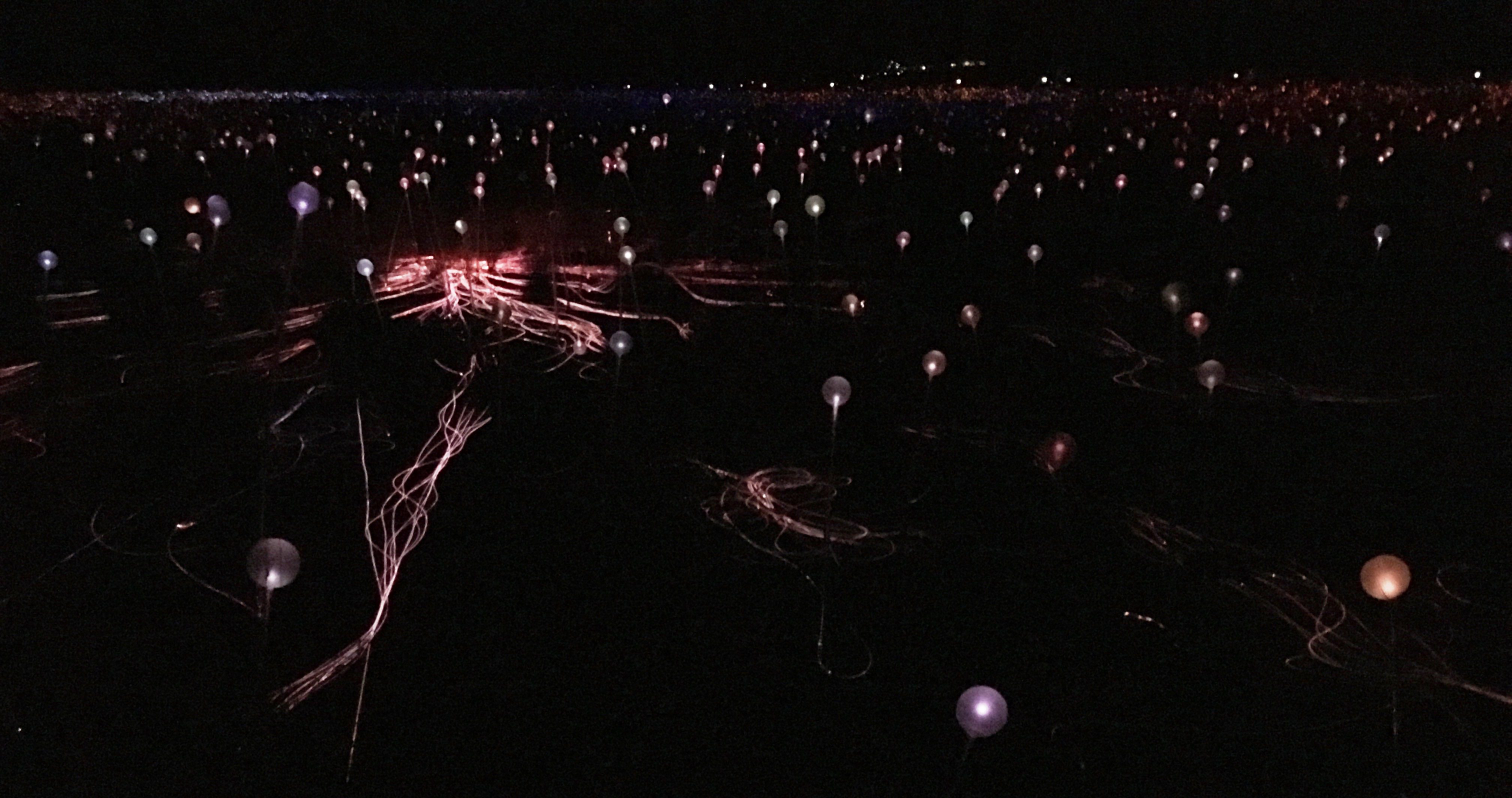
But it was really cool, and beautiful.  There was no “tour,” unless you counted the 30-second orientation to the night sky given by a young guy with an extremely heavy Chinese accent who stood on a milk crate and pointed out the Southern Cross.  What this had to do with the lights wasn’t entirely clear.

The lights were a work by British artist Bruce Munro—50,000 of them glowing organically in the desert.

Heidi and I wandered in separate directions, lured by whatever instinct called.  I wandered a bit too far and started walking back briskly when I realized our 20 minutes of off leash time was almost up.  It was so dark that I headed in the wrong direction.  I imagined being stranded out here all night.  Would they turn the lights out?  Would I, as a Minnesotan, be able to survive the desert cold dressed only in light clothing and flip flops?  Would I have to stay awake all night to fend off the dingos? What if I stepped on a scorpion in the dark?  Could I collect enough dew from the spinifex grass to wash it out?

My daydreaming was interrupted by the sight of someone kneeling on the ground and vomiting violently.  I could make out that it was a man and his friend was standing over him patting his back at arm’s length.  “Must ‘ave been something ‘e ate, I reckon,” said the friend.

At the bus I let the Chinese star guide know there was a man down, and he hurried off.  He’d probably be in trouble if they got off schedule and the next batch of $42 tourists was delayed.

“Did you see that guy throwing up?” I asked Heidi as I sank into my seat.

“Yeah, how awful.  I wonder if it was from the $210 Sparkling Wine Sunset Dinner?” she asked, deadpan.

I woke up early and walked up to the lookout to see Ularu at dawn.  On my way back the quiet was broken by raucous cries coming from the branches above my head and I looked up to see a dozen large rose- and grey-colored birds squawking.

“Heidi, Heidi!” I whispered loudly back in the bunkhouse.  “Look at these birds I saw—they’re amazing!”

She looked blearily at my cell phone as I shoved it in her face and laughed, “Aw, Annie, those are Galahs.  They’re like your squirrels.”  Galahs, also known as the rose-breasted cockatoos.

“Well, we don’t have them in Minnesota,” I pouted.  “How d’ja sleep?”

“Not so well, thanks to this heat pipe two inches from my face,” Heidi said as she whacked it with her fist.

We knew today would be another long day, so we had paid $25 apiece for the breakfast buffet.  There was a $5 discount if you paid the night before.  I thought maybe this was so they would have a head count, but when we rocked up to the buffet I began to suspect that they didn’t want people to know how it was until it was too late.

Everything was cold.  Not cold as in refrigerated; as in “formerly hot but now not.” Cold, limp bacon.  Cold spaghetti (spaghetti is a real fav in Australia). Cold baked beans.  The scrambled eggs were sitting in a half inch of pale yellow water.  We stuffed ourselves with things that weren’t supposed to be hot, like yogurt and fruit and rolls.  The hostess, a middle-aged white woman, was friendly and attentive as she poured the lukewarm coffee.

“What’s the deal with tipping here?” I had asked the first day.  Heidi was adamant that no one tipped unless you were at a fancy restaurant with a large party and the service was exceptional.  Then you might round up the bill.

“We just pay people decent wages,” she explained, “so there’s no need to tip.”

Caravans and Bunkhouses

Last week I wrote a Facebook post which went sort-of viral:

Long post but important, I think.

There seems to be a lot of misunderstanding about immigrants, migrants, refugees, and asylum seekers. It’s important to know that asylum seekers Are Not Eligible to receive government benefits (no subsidized housing, no food stamps, no welfare, etc.) and they also are Not Allowed to work in the US for five months after their arrival.  

Most of the people in the so-called caravan in Mexico are hoping to claim asylum. They have the right to do so under international law. That Does Not Mean they will be granted asylum; the process can take years, and only 10% will be approved.

Asylum seekers are people who have been tortured, imprisoned, raped, and otherwise abused by their own governments, militias, gangs, police, etc. This may have been because they were fighting government corruption, organizing small businesses or unions, they were related to someone who was doing these things, they were the wrong religion or ethnic group, or they were at the wrong place at the wrong time. 

How would you survive for five months if you weren’t allowed to work and you couldn’t get any public benefits? While they wait for their cases to be heard, asylum seekers literally depend on the kindness of strangers. Many clients of my organization, the Center for Victims of Torture, depend on two local religious orders, the Sisters of St. Joseph and the Franciscan Friars, for housing. When you are thinking about year-end donations, think about contributing to one of them.

I don’t know why this particular post spurred people to share it.  When I started working where I work, I remember being shocked that asylum seekers could not work or get government benefits.

“But how do they survive?” I asked one of our social workers.

“Barely, that’s how,” she replied. She explained that they go from couch to couch in the homes of friends of friends who belong to their same nationality, or they sleep in homeless shelters, because there’s no way the Sisters of St. Joseph and Franciscan Friars can house all of them. “You can imagine,” she continued, “how stressful it is for someone who’s been tortured and is having flashbacks and is afraid of being sent back—how stressful it is to be in a homeless shelter, with people yelling and fighting with each other.”

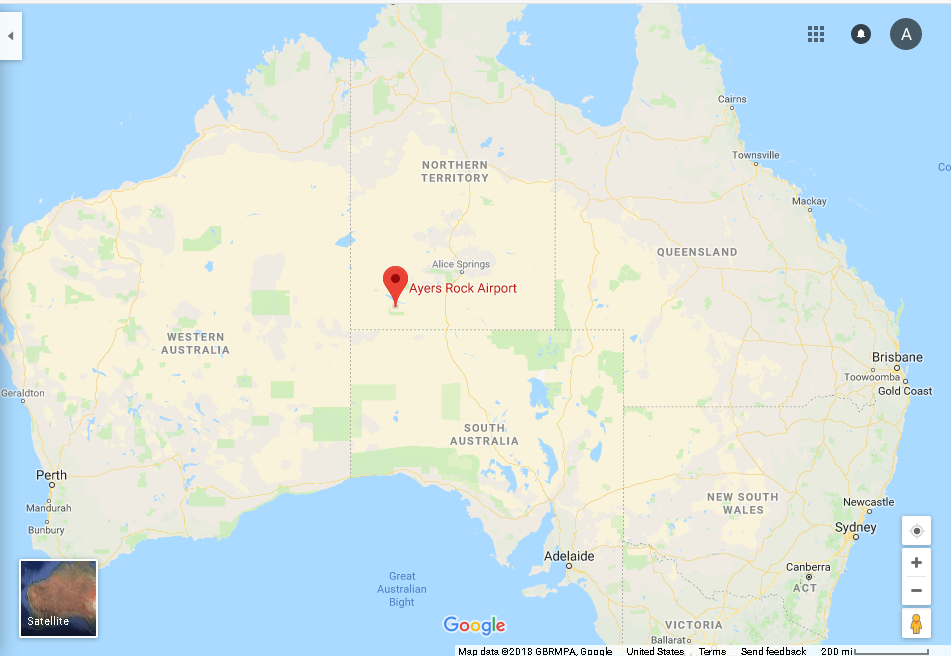
Heidi and I arrived at Ayers Rock Airport, located in Yulara, a five-hour drive from Alice Springs.

Here, I would have a comical flashback to my son’s time in prison.

Heidi, with the help of her sister—a travel agent—had planned this whole thing.  I had followed Heidi’s instructions to bring only a backpack. She had also urged me to bring a pair of shoes I wouldn’t mind tossing when we left, since rugged hiking and the red dust would destroy any footwear but hiking boots.  I don’t own boots and I didn’t have time to break in a new pair.

A bus took us to Ayers Rock Resort, which holds a monopoly on accommodations in the centre.  There is every level of price and comfort, from a luxury hotel to caravan park, all owned by the same people.

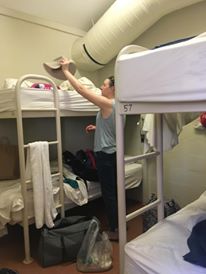
Heidi had booked us in to a bunkhouse.  “I reckoned we’re only here one night, so how bad could it be?”

It was actually named the “Pioneer Lodge.”  There’s a reason they don’t show photos of the interiors on the website.

These people are outside because, well, who would want to spend any time inside?


“I feel like we’re in an episode of Orange is the New Black,” I commented as we surveyed the place.

“We’ll certainly get our thirty-eight dollars’ worth,” quipped Heidi.  It was, indeed, only for one night—this was an adventure.

We “fought” over who would sleep up top with the giant pipe.  Heidi sleeps through the night, while I get up several times to use the bathroom.  “You can’t climb down that ladder in the dark,” she insisted.

“I could hold a flashlight in my teeth,” I suggested feebly.  Heidi didn’t get much sleep, since the pipe turned out to be a hot air pipe.

Bondi Beach

Day Two in Australia, and more experience of what it is like to get around Sydney.  We waited 20 minutes for a bus and were lucky to get the last two seats.  It was standing room only afterwards.  It took an hour to get to Bondi Beach.

Sydney is a very big, sprawling city.  Americans think of LA as the ultimate example of sprawl, at 503 square miles.  By comparison, London is 607 square miles.

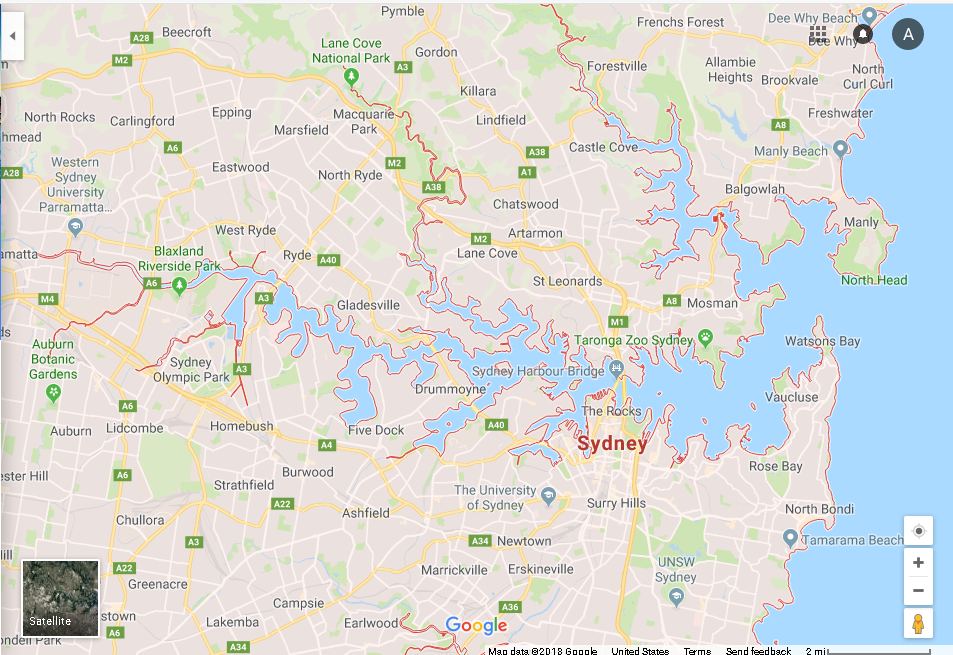
Sydney covers 4,775 square miles, including dozens of bays and coves formed by the Paramatta River. It’s a wonder anyone gets anywhere at all.

We waited 20 minutes for a bus, got the last two seats, then rode for an hour. I’m not complaining.  Buses are a great way to see a city if you can get a window seat.

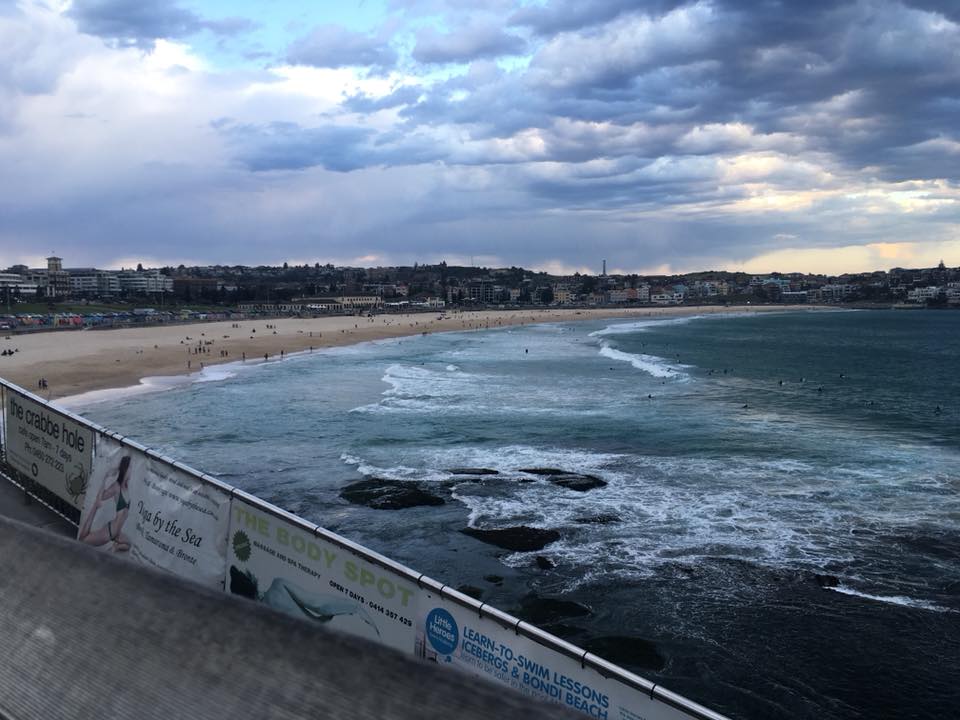
I had never heard of Bondi before planning my trip.  If you’re a surfer, it’s legendary.  When I’ve mentioned it, half a dozen people have said, “Oh Bondi—the famous beach!”

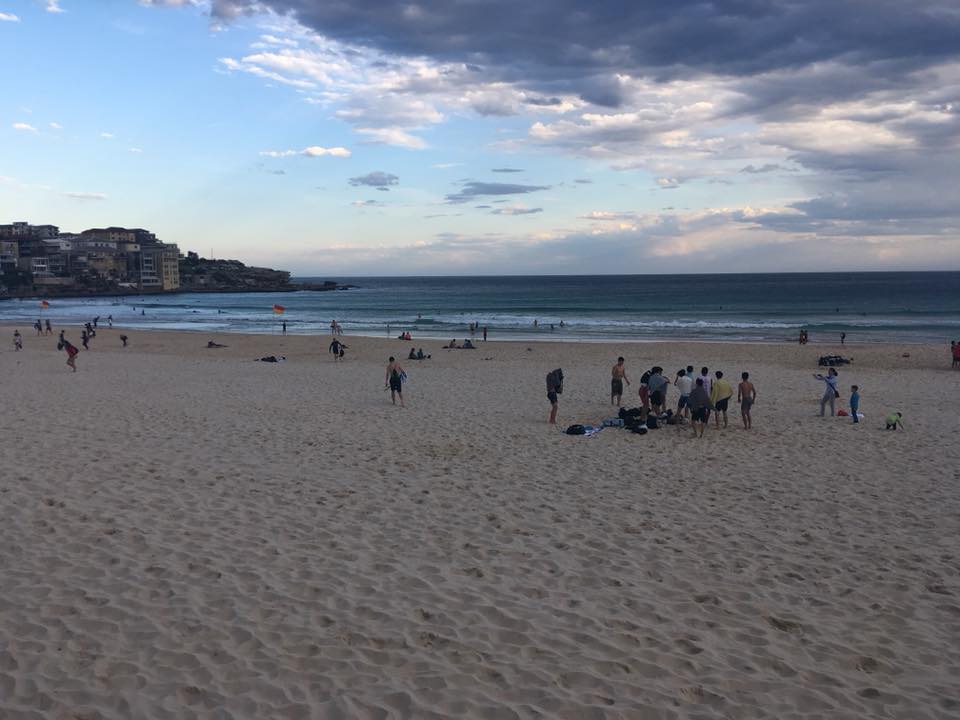
Bondi was populated by surfers, skateboarders, potheads, volleyball players, and graffiti artists. We took in the scene and then I said, “I’ve got the idea.  We can go now.”

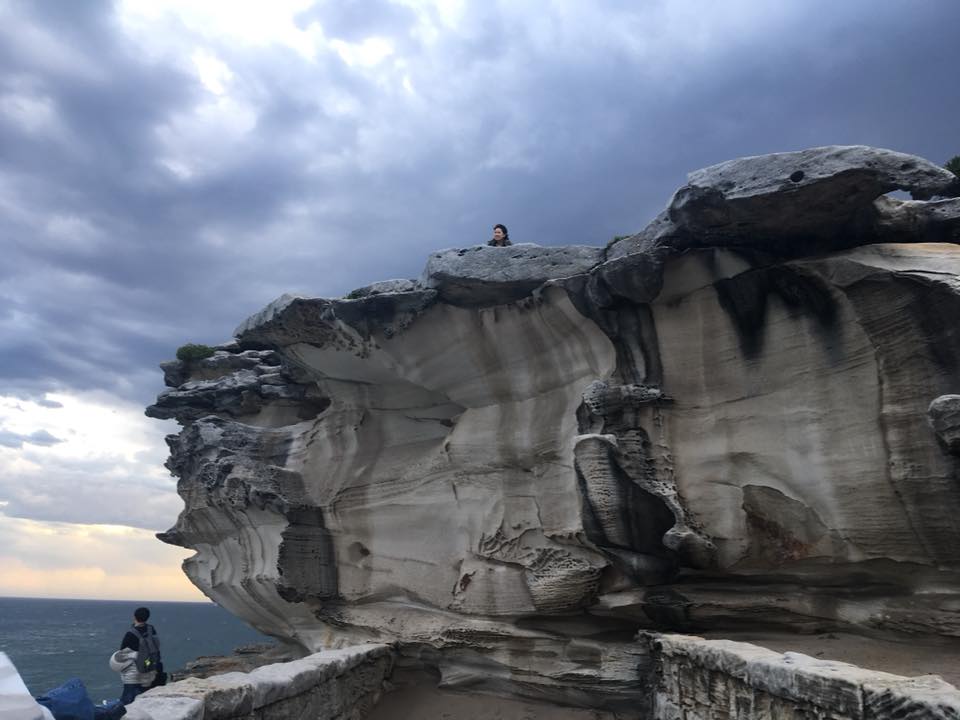
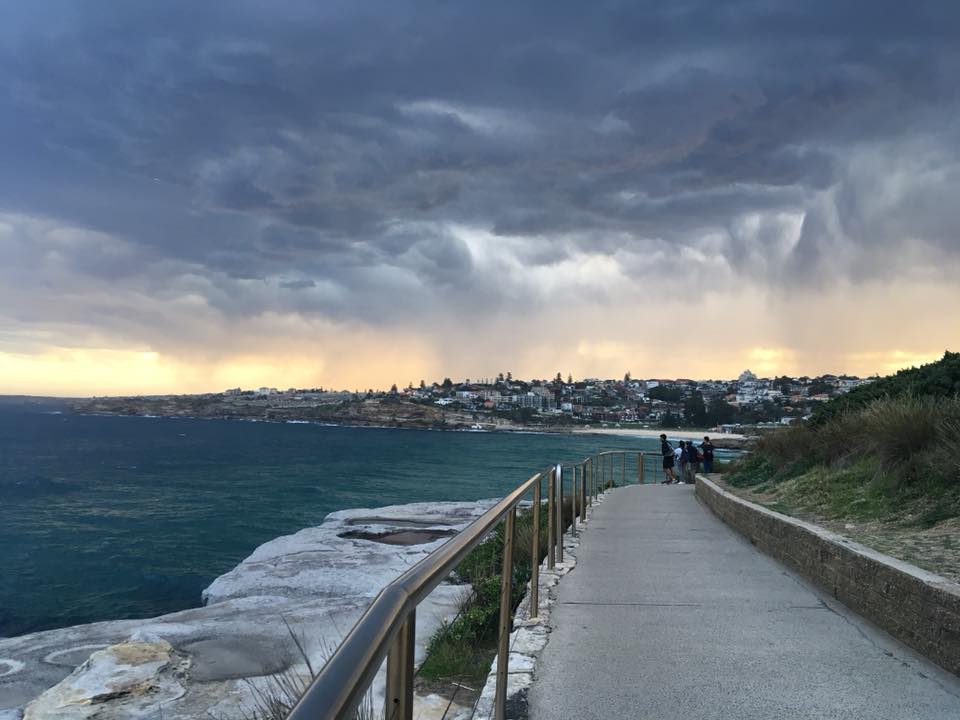
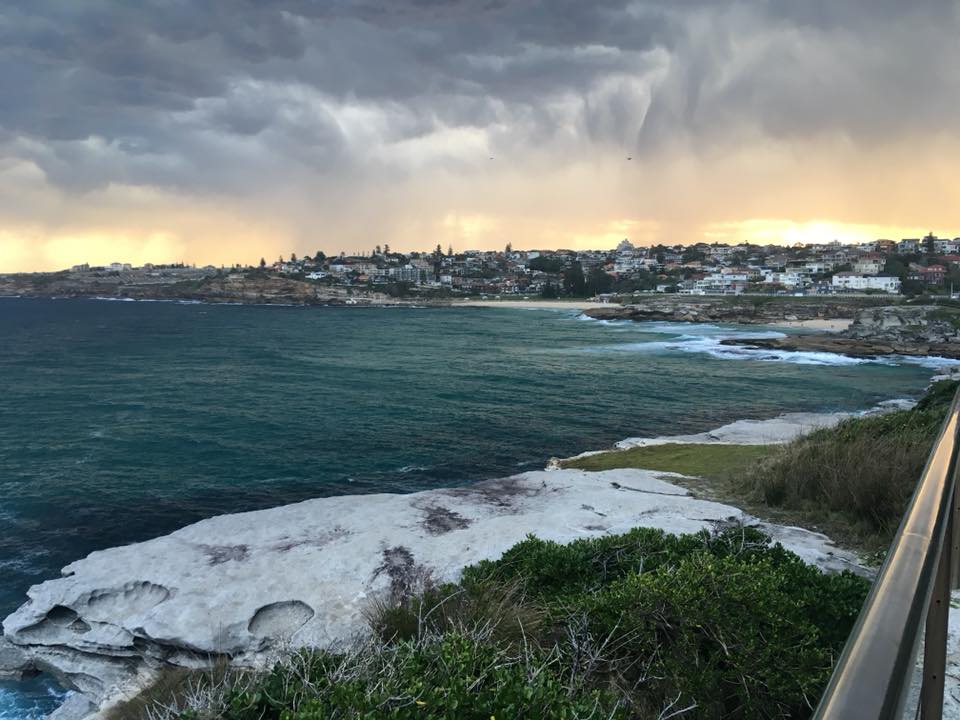
It was cool and stormy—not a beach day anyway—our plan was to hike from Bondi to Bronte beach.

This was the first incidence where my photos, no thanks to me, turned out spectacular.

The storm came closer, whipping our hair and scarves around our faces.  Rain began to gently patter down.  It was so beautiful we didn’t want to stop.  “Let’s just walk around one more bend?” I kept saying.

Then the sky broke open and we made a run for it back to Bondi. There was nowhere to shelter except under the cliffs, where other tourists were already massed. So we kept on, and got soaked.

We dashed into the nearest building, which happened to be the place Heidi had wanted to eat anyway.  It was the Icebergs Club, Sydney’s winter swimming club, which runs a bar and restaurant that overlook the beach.

“So what’s with the clubs?” I asked her, looking around.  We had gone to the Skiff Club the previous day.  This place reminded me of a cross between an old-timey American supper club and a VFW hall.

“I don’t know,” replied Heidi.  “Does it seem unusual?”  You often learn new things about your own country when foreigners visit.

“The only similar thing I can think of in St. Paul is the Curling Club.  I think anyone can go in and watch the playing, and I think they serve cheap drinks in plastic cups.

“Maybe sports clubs like this are everywhere, and I just don’t know about them because I’m not sporty.”

You learn things about your own country by visiting others.

It was my first official day on vacation, so I had my traditional “I’m on vacation!” drink—a rum and Diet Coke.  Okay, I had two.  We sat and talked for a couple hours, catching up, watching the storm come and go, then we started the long journey back to the flat to get an early night.  Tomorrow we would fly to Ulara, in the Red Centre.

I woke up at 3am to the sound of drunks yelling down by the point.  “Fuckin’ fuck, fuckity fuck fuck!” pretty much sums up their sparkling banter.  This went on for about 20 minutes.  A siren started up in the distance and slowly came closer.  When it got within a half mile, the loudmouths dispersed and I sunk down into a deep sleep again.

I remember this story because it was one of only three times I heard a siren in Australia.  Three times!  I hear sirens almost every day in St. Paul.

I withdrew some cash at Sydney airport.  Every ATM, even for the same bank, gave me a different amount.  Half charged no fees, half charged varying fees.  I had opened a second checking account before leaving home that doesn’t charge Foreign Transaction Fees.  I thought briefly about saving all my receipts and figuring out which banks or ATMs gave the best conversion rate, but I just didn’t care that much to know who ripped me off.