We Who Wander

This is a series of posts about Italy, Malta, and Spain that starts here.

Lynn and I were done with the Acosta Museum by 11:00 am.

“What shall we do now?  Fancy a walk down into the town again?” she suggested.

“Sure.  Maybe we can find that Hop On Hop Off bus thing,” I answered.

The streets of Granada, or at least the scenic sections of it, were way too narrow for the standard red double-decker sightseeing bus.  But some kind of tourist vehicle had passed us the night before. It looked like a toy train.

We also wanted to find the Cathedral, where Isabella and Ferdinand were entombed.  I was binge reading Phillipa Gregory’s books about the Tudors and wanted to learn more about the parents of Henry the Eighth’s first wife, Catherine of Aragon.  She was the only one of his wives who had been born of a king and queen, raised to be a queen, and who put up a good fight when he tried to shed her.

I’ve written about my ability to get lost.  I accept this trait and even welcome the (good) surprises it can produce.  Lynn, however, had silly expectations that we would consult a map, head in the “right” direction, and arrive at our chosen destination without detours.

It’s been said of St. Paul (mostly by people from our twin city, Minneapolis) that the streets were laid out by drunken Irishmen.  To which I counter, “What’s wrong with that?”  It’s so much more interesting than your boring, uptight Scandinavian-influenced grid plan over there across the river.

Granada reminded me of St. Paul, with streets twisting like rivers. There were tiny alleyways only pedestrians could maneuver, and only single file.  Here’s a map of the Albaicin district:
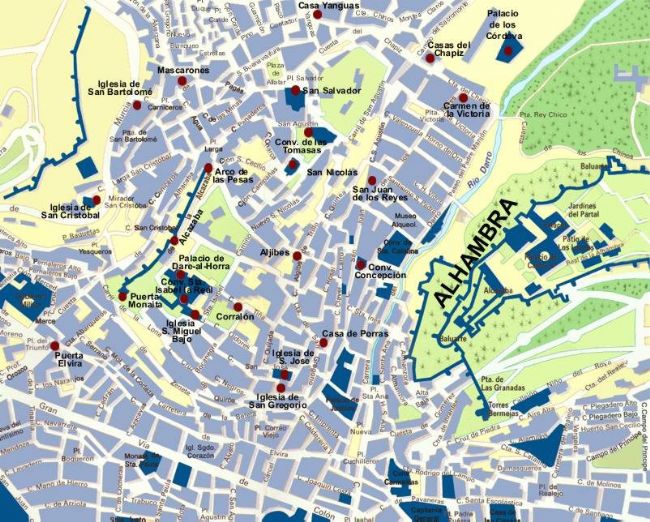
plano-albaicin

Street signage was hit and miss, sometimes at the top of a wall, sometimes in an actual street sign, and sometimes embedded in the sidewalk. There were sometimes pretty icons which were maybe meant to mark streets; this one was about 25 feet up on a wall.
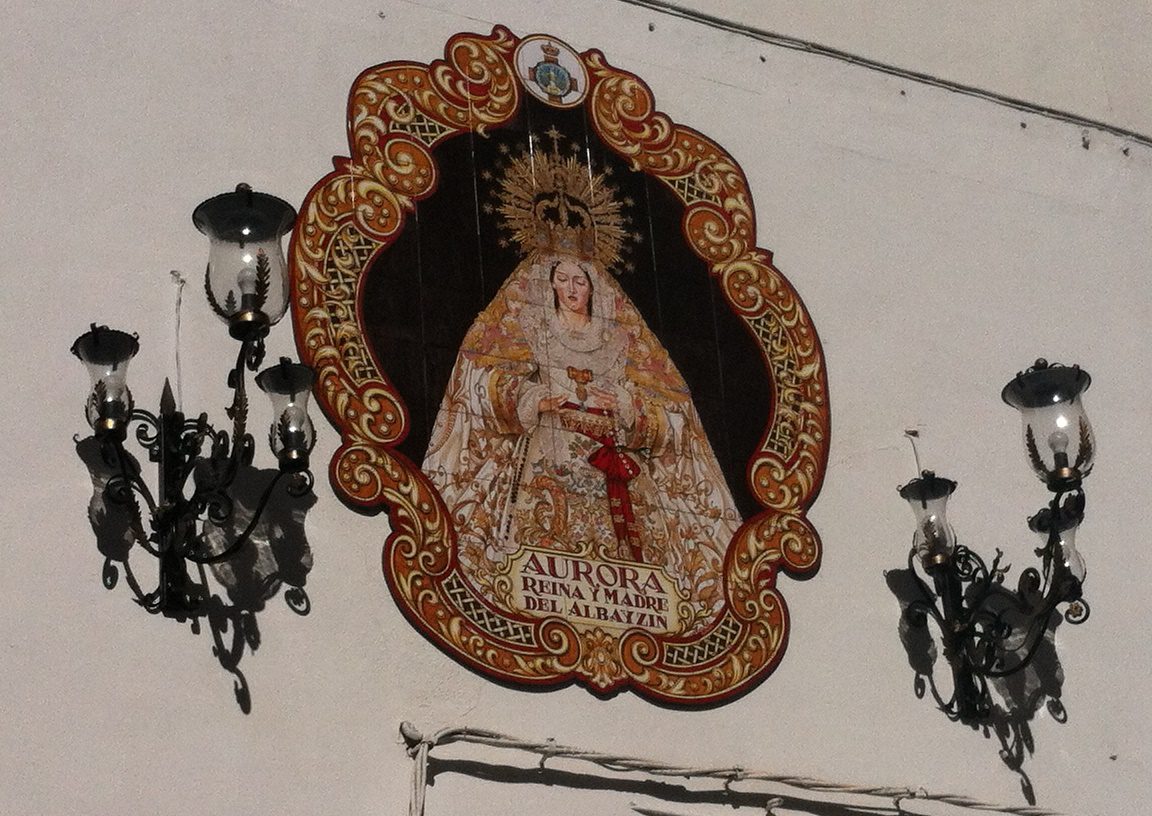
icon

And so we got hopelessly lost, over and over.  I think Lynn felt really frustrated by our incompetence, and probably annoyed by the fact that I was laughing about it.  We saw signs for the “touristic train” but nowhere to buy tickets.  Then we saw the poster for it in the window of a tourism bureau and went in.

“Can we buy tickets here for the tourist train?” asked Lynn.

The travel agent or whatever she was gave us a look.  “It is a trolley, not a train,” she said patronizingly.

Lynn is better with these kinds of situations than I am.  I go straight to sarcasm, but she holds fire, smiles, and gets what she wants.  “Oh I see, thank you, and can we buy tickets here?”

“No!” said the woman, as if it was a ridiculous question. “You must buy them at the ticket stand near the Burger King” and she waved her arm dismissively to the right.

We walked in that direction and, for about the fourth time, passed a tall building with an eagle on top.  We spied the Burger King and finally found the ticket kiosk across the street and half a block away.  Clutching our tickets triumphantly, we turned around and there—through a narrow alleyway—caught a glimpse of the Cathedral.

“We were walking past it all along!” Lynn said, exasperated.  We paid €4 and entered; this was only the crypt with the remains of Isabella and Ferdinand, their daughter Joanna “the Mad” and her husband, Philip “the Handsome”.

We paid another €5 to get into the Cathedral itself, and it was yet another mind boggling gilded monument built with plunder from the colonies.

catedral

We got lost again, and found a pretty pavilion where we sat in the sun and had a late lunch.

We had been walking a lot on cobblestones and cement, and the thought of hiking back up the hill to our hotel was daunting.  Miraculously, Lynn saw a bus approaching, knew it was the right route, and in 10 minutes we were back in our room.  It had been a good day; now to rest up for the Alhambra tomorrow.

Mystery Artist #2

This is a series of posts about Italy, Malta, and Spain that starts here.

Day Two in Granada.  We had breakfast in the hotel, which provided quite a spread.  There were suspicious items like greyish “Chickens Sasage,” but also smoked salmon.  I knew what I would be having for breakfast for five days.

There was one of those machines that makes regular coffee, espresso, cappuccino, tea, hot chocolate, and six other things. It all comes out of one spout, and somehow it’s always good.  The girl in me who grew up with skim milk and Folgers Crystals and no second helpings comes out at times like this.  I could have stayed in the dining room all day drinking different coffee and coco drinks until they asked me to leave.  Lynn would have gone to the room and put the chain on the door long before.

Fortunately there was also a coffee maker in the room, so I could continue my caffeine-ating while we discussed what to do that day.

I don’t know if men do this too, but here’s how it often is with women trying to decide what to do.

“What do you want to do?”

“I don’t care—what do you want to do?”

“I don’t care.  How about the Superhumungous Museum?”

“Uhh … I guess so …”

“You don’t sound too keen.”

“Well I had hoped to go to the Smallish Museum.”

“Why didn’t you say so?”

“Well I don’t really mind what we do.”

When clearly, she does mind.  On and on it goes.  People trying to be nice are so irritating.

That’s not how it is with Lynn and me.  We’re flexible but know what we don’t want to do.  Which reminded me, I was going to have to come clean about the Flamenco dancing and say I would go, but only if we sat way in back where there would be no chance they would pull into an audience participation demonstration.  I talk a good game about being assertive, but I fully acknowledge how hard it can be.

We decided to check out the Jose Rodriguez Acosta Museum we had passed the previous afternoon.  The tickets were timed; ours were for 10:00 am so we had half an hour to kill.  We perused the art books on display and I got excited to see Acosta’s paintings, many of which featured Gitanos (gypsies, or Roma).

acosta-gypsies gitanos

We were the only visitors.  We chatted with the two young women at the desk.  They were both art history majors and lucky to have jobs here, they said.  We went out to the patio and enjoyed the view. If only there was a coffee machine.

jra-carmen

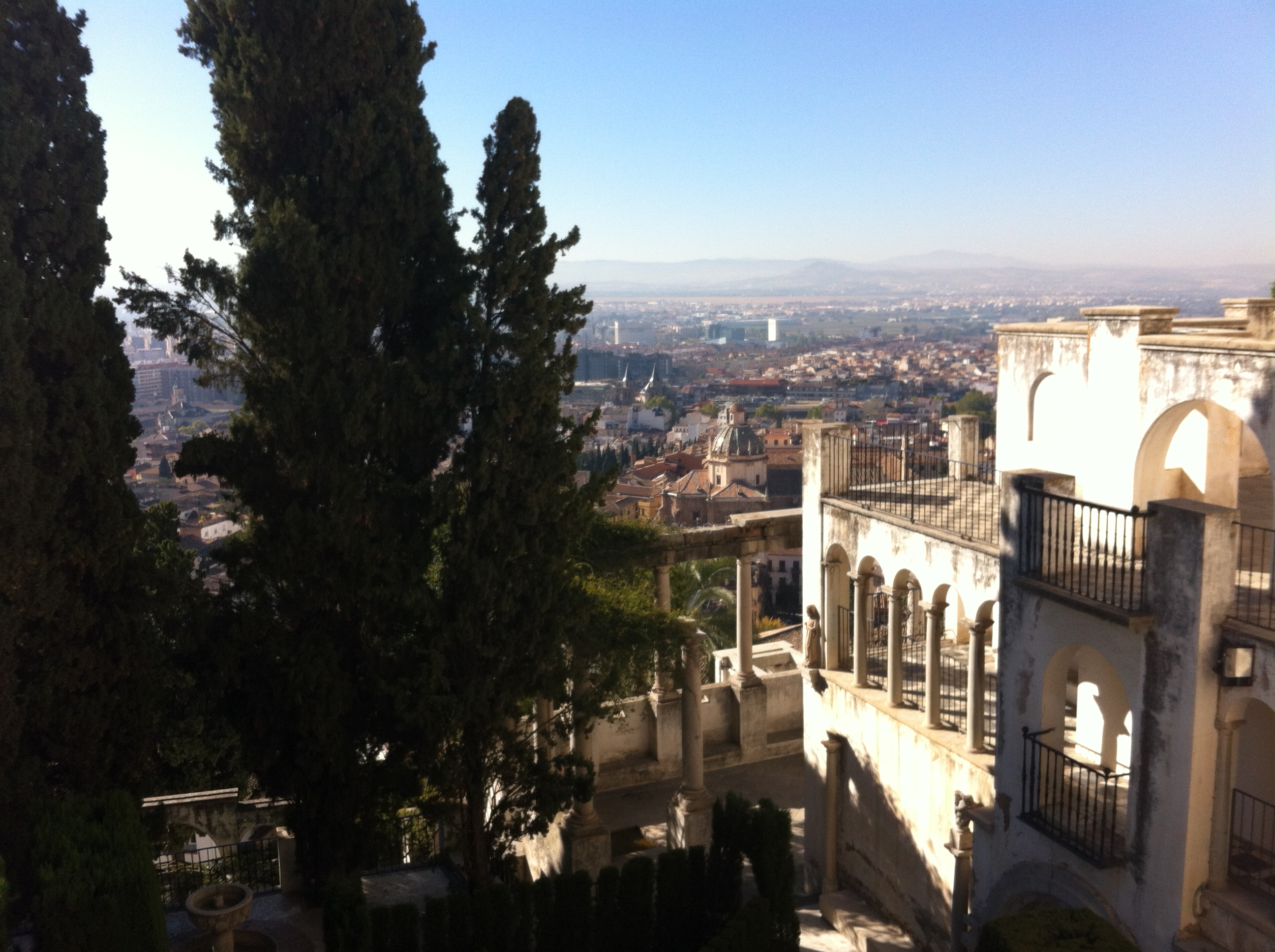
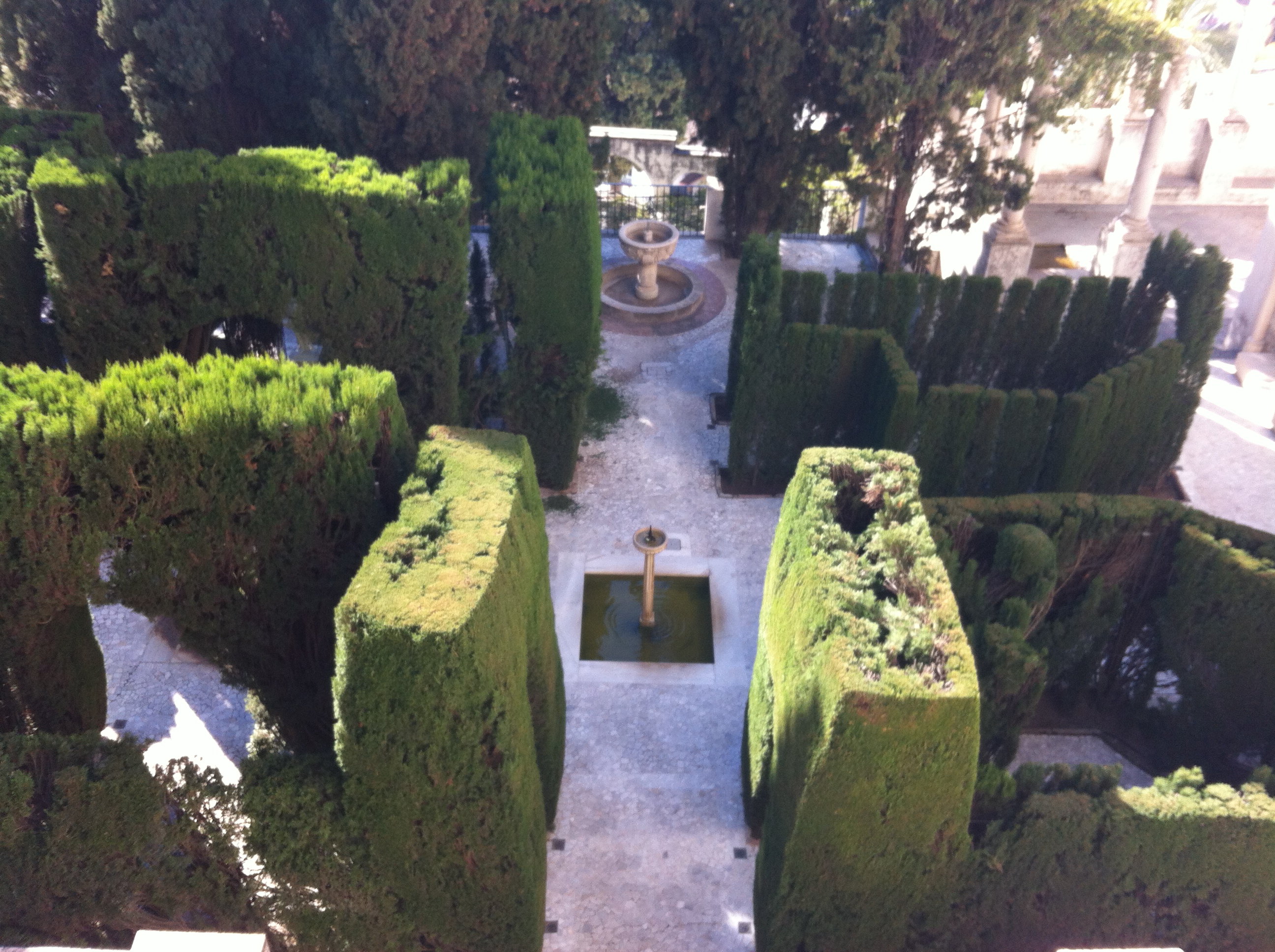
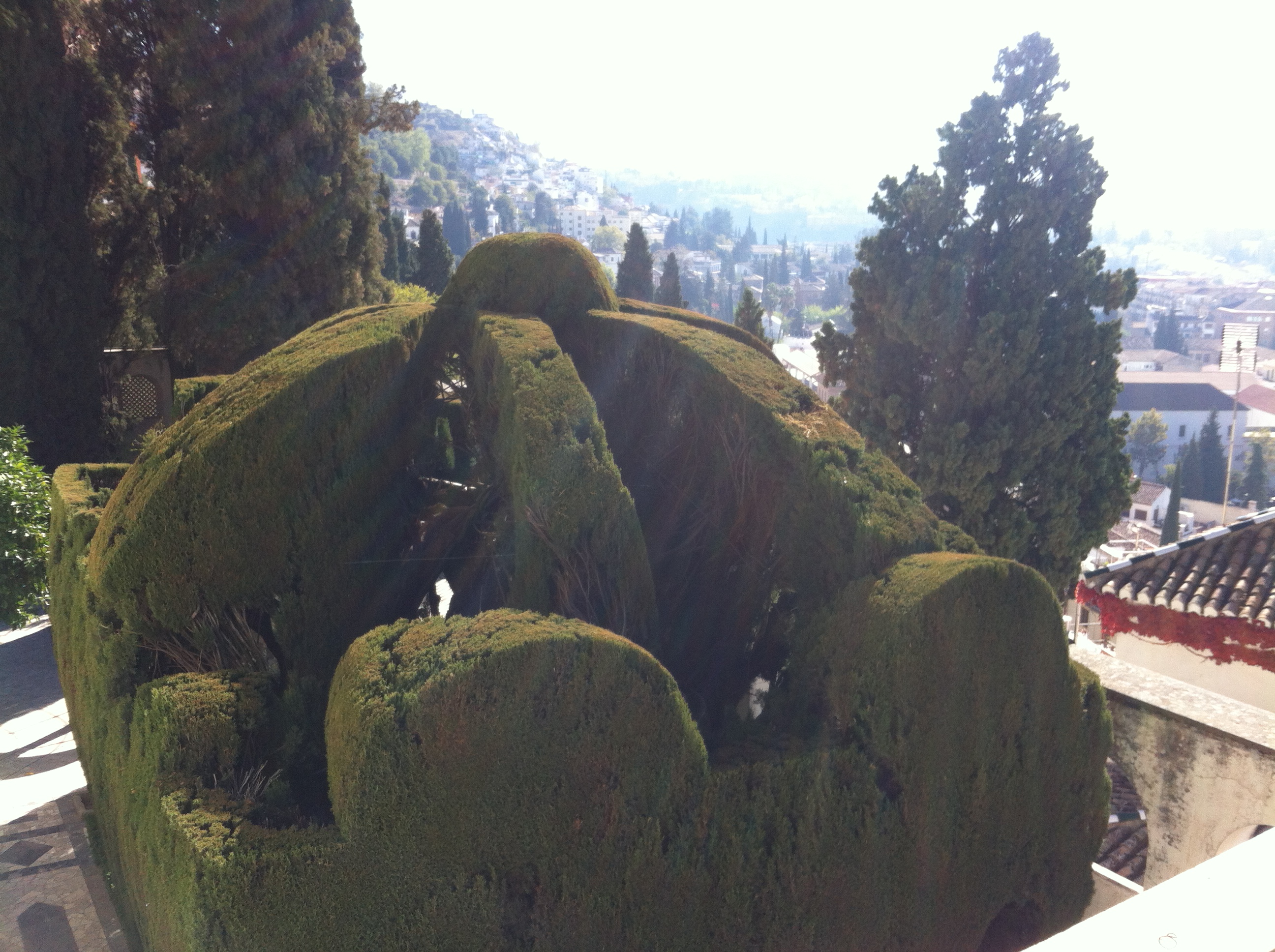
Finally, our tour began. One of the young women came out and led us down some stairs and outdoors.  It turned out that the place was a carmen, or formal gardens.  Acosta was from a wealthy family and built it for other artists.  No one was here in the winter, our guide said, but artists came to live and work in residencies at other times of the year.  Hmmm.  I would be glad to live there during “the winter,” as they called it—sunny and 65F.

topiary-and-fountains crown-hedge

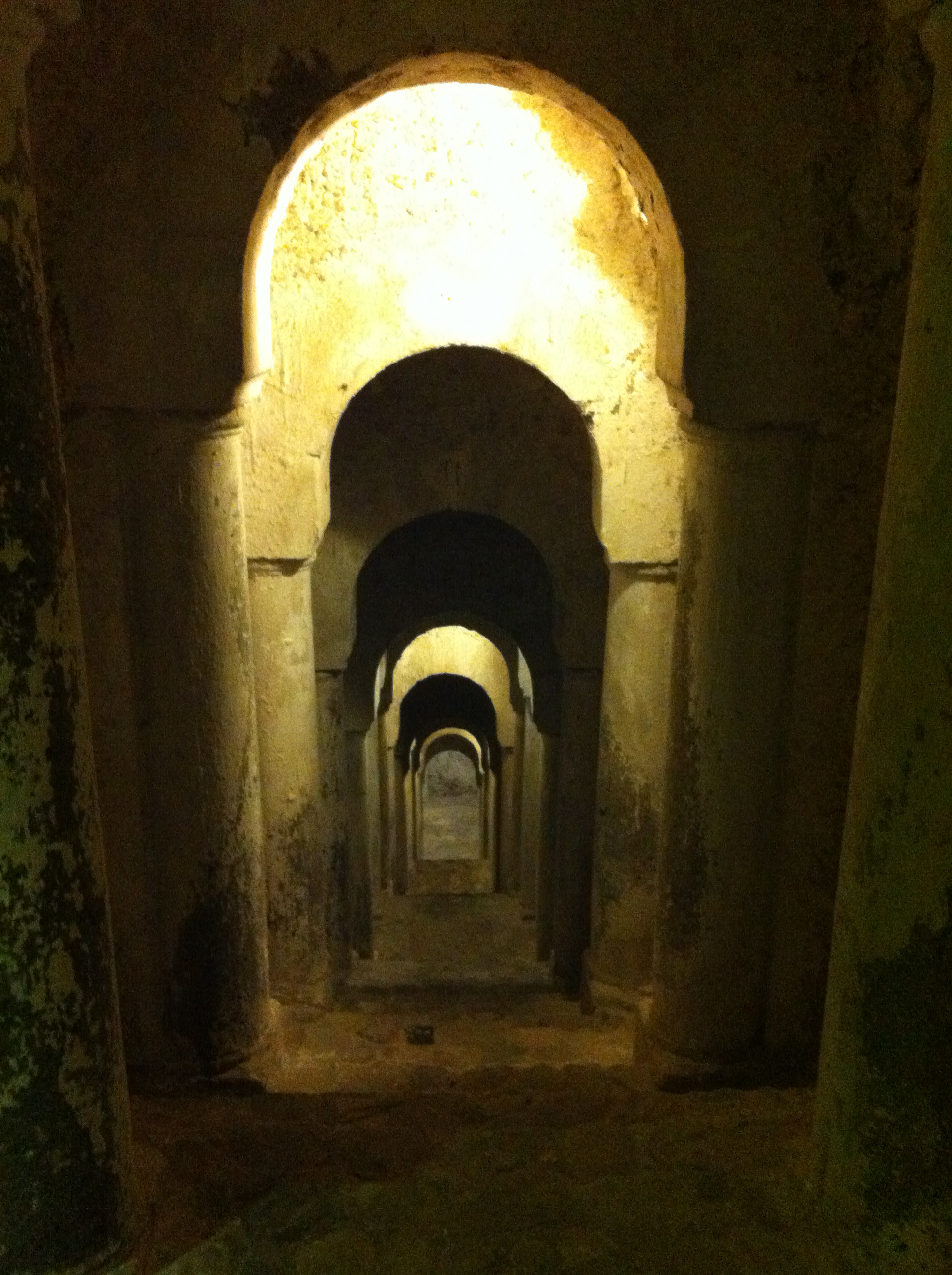
We walked through the gardens, then down into the catacombs than ran beneath the complex.

jra-catacombs

These went for miles and connected to the Alhambra and other carmens so people could have secret assignations and so on, I guess.  It wasn’t completely clear.

We climbed back up to the street level and entered a tiny museum.  “Acosta’s works are in the Carlos V Museum in the Alhambra,” our guide informed us.  “But here you will find many important works by other artists, many of whom are unknown.”

I’ve said I’m not an art critic, but after the Vatican Museum, the Borghese Gallery, and the Prado, I didn’t need a PhD in Art History to question why they would call these “important” works.  Our guide stood by while we politely looked at the motley collection of crucifixes and Madonnas and martyrs, many by “Anonymous.”

Well, never mind!  The gardens were worth the five euro admission, and we could see Acosta’s work at the Alhambra the next day.

Un Gran Salud

This is a series of posts about Italy, Malta, and Spain that starts here.

Lynn and I flew from Madrid to Granada, and I don’t remember anything about the flight except seeing these magazines and newspapers with photos of Melania Trump in the airport:

melania-2 melania

The first headline says, “I’ve never been the type of woman who gives her phone number to just anyone,” and the second is, “The Amazing Life of the Most Powerful Woman in the World.”

Um…she may be married to the President of the United States, but that doesn’t make her the most powerful woman in the world.  I would put Angela Merkel, Christine Legarde, or Janet Yellin in that category, but not Melania Trump.  Maybe they expect her to exert a powerful influence on fashion.

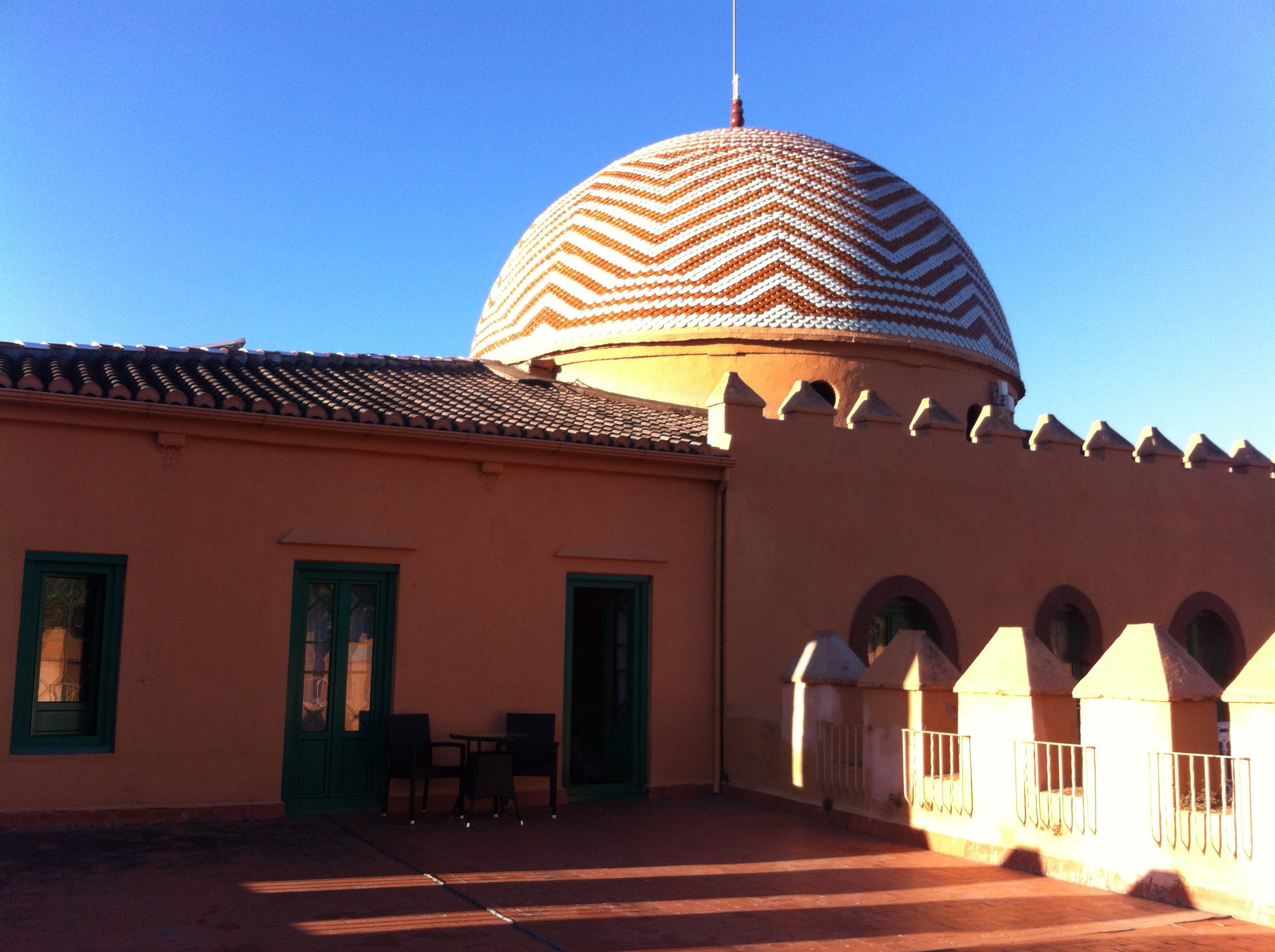
The Alhambra Palace Hotel.  What can I say?  It was like a palace.  The room wasn’t huge, but everything was of supremo quality and very clean.  For instance, the white linens on the beds were heavy thick cotton and the tile in the bath was beautiful.

bath

We had two French doors that led out onto a massive terrace:

room-terrace

But the best part was the terrace bar, overlooking Granada:

ah-terrace-2

No, the best part was, Lynn had got a great deal on our five nights.  Again, one of the big benefits of traveling during the off season.  It’s not like it was cold or rainy here, either, so I don’t why anyone wouldn’t visit Granada in November.

We had tickets for the main event of the trip—the actual Alhambra—in two days.  We headed out  to do a re-con walk and were at the entry to the site in about 10 minutes.  It was so easy, and we hadn’t gotten lost.  Feeling a little cocky, we decided to walk around some more.  We walked back to the hotel then onward in the opposite direction down an alley-like lane.  We passed something called the Jose Rodriguez Acosta Museum.

“Never heard of him,” I noted.

“Me either,” said Lynn.  “Something to check out later.”

We walked down, down, down a hill and stairs to a neighborhood called Albaicin.  We stuck to the main drag, which was about 12 feet wide. Every time a vehicle came by, we pedestrians had to flatten themselves against the walls of the buildings on either side.  A river ran along one side, a hill ran up from it, and at the top were old buildings … houses? Whatever they were, they were beautiful:

villa-from-town

Families were out for their evening strolls along with tourists.  We passed shops selling arts and crafts, and tourist kiosks selling Flamenco tickets.

“I would like to see Flamenco dancing,” Lynn commented, “If we can find an authentic place.”

I wasn’t thrilled about seeing Flamenco.  For one thing, all the posters seemed to indicate that the dinner-dance package didn’t start until 8:00pm. I flashed back to a trip to Peru with my Peruvian friend Roxana, whose nickname for me is La Marmota (the marmot) because I sleep so much. She took me to a popular dance club to see a spectacular costumed dance show, which was followed by a free-for-all dance party.  The show didn’t get started until 10:00, you could cut the cigarette smoke with a knife, and worst of all—I am a terrible dancer.  Really.  I was finally cajoled by Roxana and her friends to get out there and dance, and I think they regretted it.  When I made a move to sit down after 10 minutes, they didn’t protest.  It was fabulous—watching everyone else dance—would I be dragged out to dance Flamenco in front of hundreds of people too?

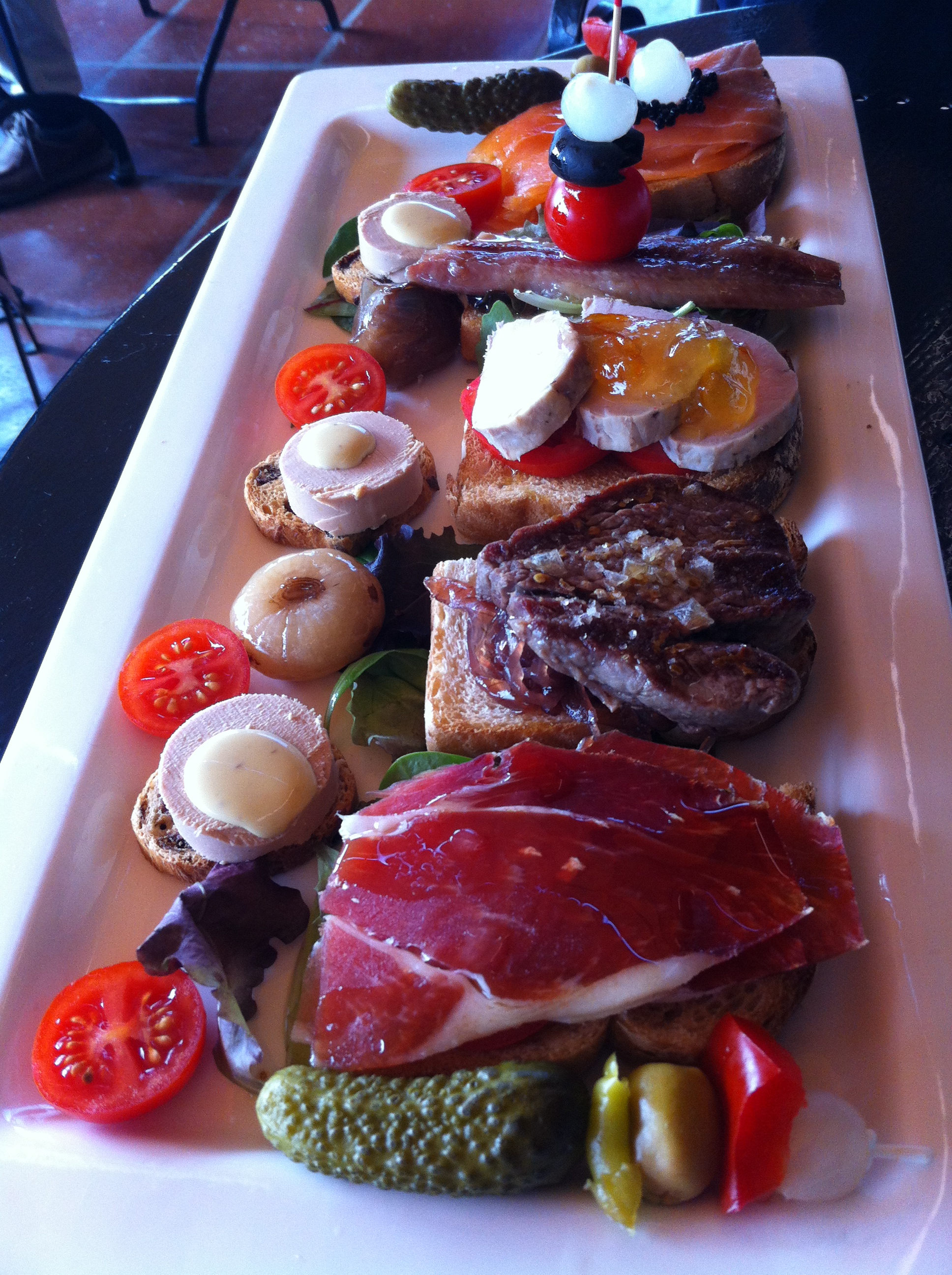
We huffed our way slowly back up the hill to the hotel and ordered drinks and the tapas platter on the terrace.  Now this is tapas:

tapas-on-terrace

“I could eat this every meal,” I enthused, probably with my mouth full of food.  The bartender came to pour Lynn’s dry martini and my rum and Diet Coke.  The glass was the size of a fish bowl and he poured, and poured, and poured.

on-vacation

I don’t remember what we talked about as we watched the sun set, but I know it was very profound.

ah-terrace

Beaches and Burgers

This is a series of posts about Italy, Malta, and Spain that starts here.

The Sorolla museum was set in the family home of this artist Lynn and I had never heard of.  The house was surrounded by tranquil gardens with fountains.  A few yards inside, and the traffic noise faded away.  The family’s furniture and family pictures and daily objects like pencil holders and water pitchers were still in place, so you could really imagine it as it was in the 1920s.  Madrid was probably quieter in the 20s, but this house would still have been an oasis.

Many of Sorolla’s paintings were sentimental, featuring small children on beaches.  All that was missing was a kitten.

valencia-two-children-on-a-beach

Some of my best memories involve being at the lake with my siblings or friends, so I found the paintings sweet.

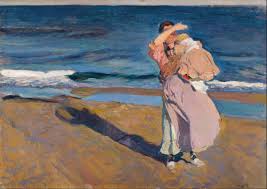
It’s unusual to see a portrait of a woman covering her face, as in the painting below. Usually a woman’s face and body are the gratuitous subjects of art.  But here you can almost feel the wind that is causing her skirt to billow, and the strong sun that is forcing her to raise her arm to see.  I’m not an art critic, but the composition, the colors and depiction of light and movement all feel satisfying to me in this piece.

sorolla-beach

I especially liked this one, maybe because it was so simple.

mother-by-joaquin-sorolla-1895

Several of the rooms were roped off, with my old friend the “Closed for Renovation” sign barring the way.  Again, this is one of the downsides of traveling during the low season.

The museum and gift shop were small, so soon we were done and ready for a very late lunch.  We spied a restaurant across the street called New York Burger.

“That sounds good!” I said, “We’ll know what we’re getting.”

“Right,” Lynn replied skeptically, and we scurried across, dodging speeding cars and buses.

In typical New York/Spanish style, this was a creative concept restaurant with endless menu options.  Has anyone else noticed the proliferation of menus with charts that lead you through a decision-making algorithm?  Here, Step One was, “Choose your Burger.”  But what were the choices?  Unclear.  Move on to Step Two, “Weight.”  How many grams of beef did I want?

“How much is a gram?” I asked Lynn. “I haven’t bought anything by the gram since I bought hash in high school.”

“I … I think there are 1,000 grams in a kilo ….” Lynn replied.

“But how big is a kilo?” I laughed.  “I’ll just order the second largest one.  I’m hungry.”

“So am I,” and Lynn.  “Oh, we’re not done yet.  Step Three is ‘How would you like your meat?”

And so on.  We finally managed to order.  Lynn got the special—a prawn burger, and I got as close to a plain old hamburger as I could.  I was exhausted from all the choices and not in the mood for blueberries, a fried egg, or caramelized pineapple. We snickered over some of the translations on the menu:

The meat of our burgers comes from top quality cattle’s of beef.

Well thank goodness!

Our burgers arrived.  Mine was the size of my head, and raw.  I wolfed it down.  The fries were okay; they came in one of those artsy cones that disguise the fact of how few you’re getting.  There was ketchup in one of those tiny paper cups; I asked the server to bring me five more.

“How’s your prawn burger?” I asked Lynn between mouthfuls.

“Good,” she replied, as hunks of it fell away, “except it won’t hold together.”  This seems to be the bane of the non-burger burger.

New York Burger had décor by Ikea, something I had seen in restaurants and shops in Italy and which we would see again in Spain.  There must not be enough real estate space for an Ikea on Malta.

We decided to walk back, stopping for a leisurely coffee in a sunny pavilion.  Our plan was to take in the botanical gardens on the way.  I managed to go in the Out gate, and was firmly informed that the gardens had just closed for the day.

True Friends, False Friends

This is a series of posts about Italy, Malta, and Spain that starts here.

Day Three in Madrid, I think.  Lynn and I arrived at the Royal Palace.  How did we get there?  I can’t remember.  This is one way in which traveling with a friend is different from solo travel.  When I travel alone, I am almost always “on” because it’s all up to me, and I remember every detail.  When I travel with a friend, I don’t recall things as clearly because they take on some of the “navigator” duties.   Actually, Lynn takes on more than her share.

I also don’t take as many photos when I’m with a fellow traveler. I don’t want to be one of those annoying people who says, “Ooh, stop, I want a shot of that!” every 10 feet.

There was no photography allowed in the palace anyway.  The only photo I came away with was this one, out in the plaza.  Lynn and I both fooled around and posed with spidey.

me-n-spidy

The palace was … well, palatial.  It was like a super-sized version of the Co-Cathedral on Malta, the one I wrote was like Donald and Melania’s penthouse.  Everything was gilded and gold plated, and there were actual gold plates set on the table in the dining hall.  I think the table was set for 30 people.  I wondered how many south American Indians had died for each of those gold plates.

There was very little signage.  We were basically herded on a one-way route through a series of rooms where all of exclaimed, “Wow!” in our respective languages. One room was where the king was dressed by his valets. Next was the chapel where he and the queen prayed.  “Chapel” sounds modest but it was as big as any church in my neighborhood. Another room was where he signed official documents.  Next was the throne room where he received official state visitors.  And so on.

The gift shop wasn’t very good, and we weren’t interested in entering the massive cathedral across the plaza.  It was only about 10:30 so we sat on a wall to figure out what to do next.  Lynn, keeper of the map, opened it up.

“I did do some research on each of the cities we’ll be in,” I said, “and the Sarolla Museum stood out to me as something to see.  I think it’s the home of the artist Sarolla.  I don’t know his first name.  I pointed out one of his paintings in the Prado.”

“Oh yes,” replied Lynn.  “The naked boys on the beach?”

“Yep,” I replied, scanning the map to find the house.  “Looks like we could take a bus there if we transfer …” I paused.  “But how about we just grab a taxi?”

“Yes, that’s fine with me!” Lynn replied enthusiastically.

It’s one of the perks of being older and having a bit more money. We had both used mass transit systems all over the world.  We wouldn’t take taxis everywhere in Spain, but figuring out a foreign bus system on the fly had no appeal today.

We got a female cab driver, a first for both of us.  She seemed to be driving in circles. Lynn and I exchanged looks.  A female cabbie could rip you off just as well as a male.  She spoke no English, so I asked in Spanish if this was the most direct route and she said there was a manifestación so she had to take a circuitous route to avoid the crowds.

“Manifestación” is what’s called a “false friend” in language learning, especially related languages. It doesn’t mean manifestation; it means a demonstration—like a street protest.  Some kind of labor dispute.  I knew what manifestación meant, and it made me feel a bit more confident about using my Spanish.

So I asked her if there were many women cabbies, to which she said yes, then let loose a blur of words so rapidly I could only catch about every fifth one.  So I don’t know if I really communicated clearly because I don’t think there are a lot of women cabbies, but who knows?  Maybe Spain is more egalitarian in that regard.

Be Mine, Be Thine

This is a series of posts about Italy, Malta, and Spain that starts here.

On the heels of Valentine’s Day and the last story about my worst trip re-entry ever, and having arrived home late last night from a group trip to Central America, I’d like to wish you all a Happy Valentine’s Day.

The composition of the group tour was typical of other such trips I’ve taken.  There were 10 of us plus the guide.  It was two married couples, three married people whose spouses hate the outdoors so they had come solo, and three single women.  I used to spend a lot more time wondering, “Why are so-and-so married and I’m not?” or wondering if I would meet a guy on one of these trips.  It could happen.  But all I could think of by the fourth or fifth day was “I want to be alone!”

I’ll write more about this trip once I’ve covered Spain, but for now I just wanted to repeat the theme I’ve written about annually on Valentine’s Day.

According to all the standardized tests I’ve taken, I am an extrovert.  I am sure that I’m not.  I get along well with people, I think.  I like meeting new people.  I like spending long blocks of time with certain people.  But when I am exhausted or stressed or just need to recharge, I want to be alone.  I think that’s the definition of an introvert.  Maybe because I’ve always worked in communications and development, I’ve learned to be comfortable being “on.”  But come Saturday, all I want is to hang out home alone.

Society has names for introverts: Loner, recluse, hermit, withdrawn, antisocial, wallflower, solitary, shy.

I am struggling to come up with a list of similar negative words for extroverts. The ones that come to mind are neutral or positive: Larger than life.  Life of the party.  Outgoing. Sociable.  Genial. Affable.

Think about it: The police catch a serial killer. The TV news interviews his next door neighbor. What does she always say? “He kept to himself.” As if that explains why he murdered people.

I happened to catch a TV show about eccentric people in Minnesota.  Apparently we are number one in that regard. They were interviewing the sister of Frank Johnson, maker of the world’s largest twine ball. When asked what she thought motivated her brother to undertake such an endeavor, her answer was, “Well you know, he never did marry.”

I never have married, but I’ve seen plenty of couples here and while traveling who look miserable together.  I just don’t buy society’s message that you have to be partnered to be fulfilled, happy, a valid person, whatever. It’s not that I’m opposed to it, I just don’t believe that being part of a couple fixes life’s problems. It’s like any other of life’s big choices—both being single and being partnered contain different trade offs.

I have often wondered if I could adjust to living with a partner.  I think I could; after all I’ve adjusted to living in other countries and had housemates and am in general an open-minded person who is comfortable with who I am.  I’m usually good at speaking up for what I want and don’t want, which seems like the basis of good communications.

Yadda yadda yadda.  Have a good Valentine’s Day with your sweetie, even if it’s your kid, or a friend, or your mom, or yourself.  Lord knows we can use all the love we can get in this angry world.

A Bumpy Landing

This is a series of posts about Italy, Malta, and Spain that starts here.

I decided to write one more post before I leave for Belize.

In my last post I noted that I have sometimes returned home in bad shape or to dicey situations.  This post is about that worst time ever.  There was that time I got bumped up to first class on a London to Minneapolis flight, was seated next to a handsome, single, and presumably rich man my age—but I had a terrible cold and I went through an entire box of Kleenex blowing my nose.  He expressed sympathy at the start of the flight, then faced away from me for eight hours.  I can’t say I blamed him.

This was worse.  I was dating a guy I’ll call Jed whose parents were Italian immigrants.  He had been to Italy many times.

Before I met him, Lynn and I had made plans to meet in Venice, and Jed was excited for me to see the country he loved so much.

By the time the trip happened, Jed and I had been dating for about two months.  By this point in a relationship, things have usually … erm, progressed … but not with Jed.  He made the trek from Minneapolis to St. Paul every Saturday night to pick me up, sometimes with flowers or a nice bottle of wine, Italian of course.  We would go out to dinner, have great conversations, maybe see a movie, then he would bring me home, kiss me good night, and leave.  There was no groping, no heavy breathing, no frustrated desires.

It kind of felt like a first date, every week.  It was all very nice, but there was no sizzle.  I thought that maybe if I was gone for a couple weeks, he would be dying to see me—and more.

So I went to Italy and Lynn and I had a great time as usual.  I bought a purple felt deco-style hat that Lynn said looked very “fetching” on me.

I had an early flight home from London, so I booked myself into a Yotel at Heathrow.  Yotels are cool little hotels in airports.  The rooms are tiny but mirrored all around to prevent claustrophobia.  For once, I was good and didn’t drink a bottle of wine the night before a long flight.  Instead, knowing Jed would be picking me up, I hydrated like crazy and went to bed early to get my beauty sleep.

I started feeling funny as soon as the plane landed.  I stopped in a bathroom to check my makeup before meeting Jed, and my face was ashen and gaunt.  The purple hat that had looked fetching the day before made me look like some sort of demented Dia del Muerte skeleton dancer.  Still, I had plane hair so I kept it on.

The look on Jed’s face told me I hadn’t just been hard on myself.  He asked if I wanted something to eat and I said yes, thinking if I got some chicken soup it might make me feel less queasy.  It didn’t.  It made me want to hurl, violently.

“I need to get home,” I said weakly.  But I couldn’t remember which ramp my car was parked in.  We drove around for a very long 15 minutes, me Trying Not to Throw Up in Jed’s SUV.

Finally, we found my car and I made a dash for it without even kissing Jed goodbye.  Thankfully he drove off so he didn’t have to witness me blowing chunks in the parking ramp.

Oh, did I mention it was the coldest night of the year, around -20F (-29C)?  Shaky, I managed to drive out of the airport before I pulled over, threw open the car door, and chundered on the side of the road.  This happened three or four times more before I reached home, where the heat was turned down to 55F (12C).  I cranked up the thermostat then started a bath of scalding hot water and lay in it shivering and shaking.  What a long night.

And Jed?  I broke with him a few weeks later after a couple more Groundhog Day-like dates.

Make Mine a Double

This is a series of posts about Italy, Malta, and Spain that starts here.

After hitting the gift shop at the Prado and loading up on Hieronymus Bosch refrigerator magnets, bookmarks, and postcards, we crossed the roundabout toward the Thyssen Bornemisa Museum.

But first, some lunch.  We walked into the first restaurant we saw and followed the hostess down some stairs, through a hallway, up more stairs, and into a back dining room.  It was probably early for lunch in Spain—only 1:00—so we had the room to ourselves.

I don’t remember anything about the food.  I know we laughed over some of the Spanish to English translations on the menu, and at the fat German couple seated near us who ordered strudel and beer.  I vaguely noticed the place fill with people, then empty again while we ate and drank a bottle of house wine and talked and talked.

This may be the number one thing I love about traveling with a friend.  Leisurely meals.  At home I gulp down my food while reading a magazine or watching TV.  I’m usually in a hurry to get on to the next thing.  I barely notice what I’m shoveling in my mouth.

Suddenly we realized it was almost 4:00 so we hurried across the street to try to see everything in the museum in one hour.  What a relief—it was open until 7:00.

The main art museum in Minneapolis, the MIA, has collections—like Decorative Art, Textiles, and Sculpture; or Japanese and Korean Art.  The Thyssen Bornemisa reminded me of the Reina Sofia Museum, with one or a few pieces from lots of different artists scattered seemingly at random throughout a somewhat shabbier building.  It had one masterpiece each by van Gogh, Chagall, Degas, Cezanne, El Greco, Caravaggio, Monet, Picasso, Gauguin.  It reminded me of the “Greatest Hits” compilations music companies used to publish when people still bought CDs.

There was a variation on this famous painting by Holbein of Henry VIII; the original had been destroyed:

henry-8

We bought the obligatory postcards, bookmarks, and refrigerator magnets.  These make nice small gifts, or I think they do.  Maybe people hate them.

We went back to the hotel to freshen up, then back to the square where there were supposed to be loads of tapas restaurants.  This time we were determined to find an “authentic” tapas place, as if we knew what that would look like.  We found one that looked a little run down, and were soon being served, if you can use that term, by the crabbiest waiter ever.

The tables were covered with old linoleum.  Ours had some squeeze bottles of unknown contents and a pile of three thin, miniscule, nonabsorbent paper napkins.

“D’ya want something?” our waiter demanded brusquely in Spanish.  His clothes were rumpled and stained.

Lynn, always cheerful to servers, asked for red wine in English.  The waiter scowled and I repeated in Spanish, “vino tinto, por favor.”  He walked away without a word and returned with two smeary glasses of red wine, which he slammed down before us.  This place was authentic, alight.

“Para comer?” he demanded next.  To eat?  Lynn pointed to menu items and again he walked off without speaking, returned, and threw down some plates.  The food was basic but good.

I watched over Lynn’s shoulder as our waiter poured a half pint of beer, dumped in two very large shots of tequila, and poured it all down his throat.  Within minutes he was relatively cheerful, even coming to our table to ask if we liked our food.  I felt moved, imagining he got by like this hour by hour, night after night.

As I write this, I’m about to leave for Belize and Guatemala.  I’ve front loaded the blog to post throughout this trip, but I never know what kind of condition I’ll be in when I return so no promises about when the next post will be.

I don’t mean to sound melodramatic, but I’ve been on enough trips where I come home sick, or to some crazy family or work situation, so I’m cautious about committing to anything too soon after I get back.

Cannibals, Hallucinations, and Tyrants

This is a series of posts about Italy, Malta, and Spain that starts here.

Day Two in Madrid, spent in two big museums: the Prado and the Thyssen Bornemisa.

But first, I have to mention that Lynn was stressed out about how we would get to Granada.  Lynn is usually quite unflappable, so I figured it must be kind of a big deal but trusted that she would figure it out.

I realize that may sound lazy.  I have to admit that after all the planning I had done for Italy and Malta, I had kind of zoned out and let Lynn do all the work on Spain.  I listened with half an ear while I lounging on my hotel bed, scrolling through Facebook.  So I may not have this all exactly right, but apparently getting to Granada would be complicated and a long journey with a higher than preferable chance of getting stuck overnight in a tiny village that might not have any lodgings.

“I booked a train, but we have to stop in a small town somewhere, get off and take a bus to an even smaller town, and then take another bus because there’s construction on the line or something,” Lynn said.

“I’m sure it’ll be fine,” I responded.  This is one of the cons of traveling with someone—you can put all your faith in them, then wake up, too late, in a fleabag motel in a remote dusty village in nowhereseville, Spain. That’s pronounced no-wheres-vee-ya, by the way.

“We leave at nine in the morning and don’t arrive until nine at night, if all goes according to plan—which it looks like it won’t.”

“It’ll be an adventure!” I said absently, which was probably annoying.

“I’m just going to check flights,” Lynn said.  Twenty minutes later we were booked onto a Ryanair or some other cheapo airline flight that would get us to Grenada in half an hour.

This had finally got me engaged, since it would cost money.  Lynn wouldn’t tell me how much the flights were, beyond “dead cheap.”  Then she cancelled the train/bus tickets so she could get her money back, which made me feel better.

“Right!” she exclaimed with relief as she flipped her laptop off.  “On to the Prado!”

I had scoped out the Prado online before the trip and had a couple artists in mind that I wanted to check out.  Like Francisco Goya—I had seen this painting in one of my Spanish textbooks and wondered what else he had done.

saturn-devouring

Not surprisingly, most of Goya’s other paintings were dark and creepy too.  After all the Madonnas and baby Jesus’s I’d seen so far, I found then refreshing.

There was a room of Caravaggios which I slunk through quickly, and three rooms of El Grecos.  I had heard of El Greco and, maybe because I was raised in a Catholic milieu, seen his painting of St. Peter a million times.  It’s not at the Prado, but here it is to give you an idea of his style.

peter

I had never realized—duh—that El Greco was his nickname, probably because his real name was Doménikos Theotokópoulos and no one in Italy or Spain, where he lived most of his life, could pronounce it.

I knew nothing about Hieronymus Bosch, who turned out to be the most thought-provoking artist on display.  I could have spent days studying his Garden of Earthly Delights.  Here is just one of its dozens of detailed scenes:

garden-detail

Doesn’t it remind you of Salvador Dali?  Except that Dali painted in the 20th Century, and Bosch painted this around 1505.  Was he taking hallucinogenic drugs?  Was he mentally ill?  Or was he a very “outside the box” thinker?  If so, how is it that some people can do that?

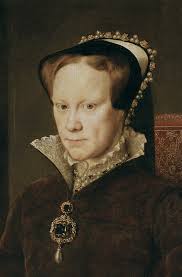
Finally, to satisfy my obsession with all things related to the Tudors, there was this portrait of Queen Mary, Henry the VIII’s daughter, otherwise known as Bloody Mary.

mary

Ugh, scary.

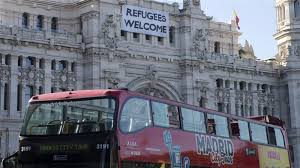
The Thyssen Bornemisa Museum was across a roundabout from the Prado, were this banner was displayed on a government building.  I’d love to see more of this in the USA right about now.

refugees-welcome

The Art of War and of Tapas

This is a series of posts about Italy, Malta, and Spain that starts here.

Lynn and I walked the two blocks to the Reina Sofia museum and were inside, for free, in a few minutes. Even with a floor plan, we couldn’t find Guernica, but we saw a lot of great stuff along the way.  Basquiat, Dali, Gris, Leger, Oldenberg, Ono, Rivera, Sutherland, Twombley, and Warhol.  The collection seemed to be a basket of one or two pieces each of mostly 20th Century artists from all over the world.  There also seemed to be a heavy emphasis on war.

Here is an image of Picasso’s Guernica on the museum’s website; I’m fairly certain I don’t have the rights to cut and paste it.  It’s an enormous mural—25 by 12 feet, and there was a crowd of people standing in front of it, mostly silent.  For once, they weren’t taking selfies or holding up their iPads to video record a great work of art.  Maybe that’s because the subject matter is so grim—the bombing of the Spanish village of Guernica by the Nazis and Spanish fascists in 1937—complete with women and babies and horses being blown to bits.

Sobered by Guernica and the other war-related pieces, it was time for more wine.

I’ve written about all the research I did for the Italy and Malta legs of my trip.  I give Lynn all the credit for Spain.  She found the hotels and figured out how we would get from Madrid to Grenada to Toledo and back to Madrid.  Thank You, Lynn!  She had also scoped out a square near our hotel that was supposed to have wall-to-wall tapas bars.

In case you don’t know what tapas are, they’re basically the Spanish version of hors d’oeuvres, appetizers, entrees, whatever you want to call them.  They are typically slices of baguette topped with ham and cheese, salmon, and other tasty things.  The idea is to go from one tapas bar to another, having a couple tapas and a glass of wine in each place until it adds up to a meal.  We walked toward the area Lynn had in mind, but when we reached what we thought was the right square, almost everything was closed.

“We must be too early,” Lynn said.

“Yeah, and it’s 8:30!” I replied.  Back home, I was usually in bed by 9:00, but I had made a vow to stay up late in Spain—the alternative would to go from lunch to breakfast without eating.

We found one place that was open and ordered the tapas selection from our waiter, whose name was Duong.  I think it’s safe to say he was of Vietnamese background.  I wondered if they hyphenated mixed nationalities in Spain, like we do in the US.  When the census came around, did Duong say he was “Asian-Spanish,” or just Spanish, or what?  The important thing was that, between his limited English, my rusty Spanish, and Lynn pointing at the menu, we managed to make known what we wanted. He brought the platter, which was mostly cheese and crackers and olives, not technically tapas.  It was a ton of good food and clearly we wouldn’t need to bar hop to fill up. I was starving by now so no complaints from me.

We ordered the house white wine, which was delicious.  Why can’t we have that in the US?  I think I’ve complained before about how, at least in Minnesota, the house wine or happy hour-featured wines are always like Manischewitz.  Or, as my mother calls it, Jewish cough syrup.

We sat and talked for an hour or more.  Unlike in Minnesota, the waiter didn’t come back to the table every five minutes to ask how our food was or ask if we wanted anything more, or otherwise interrupt our conversation.  He didn’t hover nearby waiting for us to put the last bite in our mouths, then close in to whisk away our plates and hand us the bill so he could turn the table and thus make more in tips.  This is one advantage of no or very limited tipping in Europe—there’s no incentive to hurry you out the door.