Tag Archives: depression

Happy New Life, Again

Happy New Year!  I am re-posting this from January 1 of last year.  I hesitated to share such a personal story then, but it has been the most-read post of the 232 Vince and I have written.  Maybe it’s the story, or the encouraging advice.  Or maybe it’s the guns.

If you received this twice, that’s because I accidentally posted it for January 1, 2015.  Off to a good start, I say!

Three years ago, I hit bottom. I had lived with depression for as long as I could remember, but then….  I had to have a tooth pulled—boy, will that make you feel old! Then during a Christmas Day blizzard my car was towed and I spent four hours waiting in line outside at the impound lot to pay $300 to get it back. I then drove to Fountain to visit Vince. The trailer he shared with Seth was full of guns, beer cans, and smoke. I figured what the heck, if you can’t beat ‘em, join ‘em, so after he assured me that none of the guns was loaded, we posed for photos that became my holiday cards to my friends in the UK, where they had a good laugh over us gun-crazy Americans.

Vince (11)Vince (7)

Due to the blizzard I spent the night in Seth’s 5-year-old daughter’s bedroom; she was at her mom’s. Here’s a tip for parents who smoke: Keeping your kid’s door closed doesn’t keep smoke out. I couldn’t open the window and after tossing and turning until 5am I slipped out and drove home. On the way I started itching. Great—now I had bedbugs!

I contemplated suicide. I leaned my forehead against the screen of my 20th floor window. I had turned 50 the year before. Thinking about being depressed every day for another 30-40 years wasn’t real appealing.

Here are the things I had tried to manage depression and anxiety:

Meditation

Medication

Prayer (including begging, pleading, and bargaining)

Acting normal

Abstaining from drinking

Cutting down on coffee

Self-help books

Alanon

Exercise

Getting outside every day

Appreciating beauty, be it fine art, nature, music, babies, or kittens

Gratitude lists

Avoiding negative people / avoiding unnaturally happy people

Running away to other countries

Denial

Journaling

Telling myself, “At least I’m not a refugee / amputee / blind / fill-in-the-blank.”

Psychotherapy

Retail therapy

Sleeping, drinking, and movie binges

Reaching out to friends, even when that was the last thing I wanted to do

I thought that jumping out of my window would be exhilarating, until I hit the ground. I had some leftover pain killers from the dentist, and my prescription for Restless Legs. I googled an overdose of the two and learned that they wouldn’t kill me, but that I would likely need a liver transplant. I decided to keep living.

That spring, I visited Vince again and this time, made a reservation at a B&B.  On the free-book-shelf there, I picked up a tattered copy of, “Feeling Good: the New Mood Therapy”, by David Burns, MD. I read it and did what it told me to do, and I stopped being depressed. For good.

The book was about Cognitive Therapy. I had been instructed to use it at least twice in the past, but I’d been too stressed out to do it. Basically, you write down your negative thoughts and then argue with them rationally until you’ve de-fanged them. Writing it down is important; if you try to do it in your head you’ll end up down a rabbit hole.

So was a lifetime of depression cured overnight by one book? No. I think it was all the other things I had tried over the years—the good things, anyway—and then I added this on top of them and together they all added up to a breakthrough.

I still feel sad sometimes–there’s plenty to feel sad about–but I’m not depressed and I’m committed to living.

Sorry for the long post but, if you’re struggling, I want to encourage you to keep an open mind, keep plugging away, and keep trying new things.

PS: I didn’t have bedbugs after all.  I think I was just itchy from the smoke and dry air.  Living with addiction can turn you into a drama addict.
The Choice

This is the second in a series of posts, starting with this one.

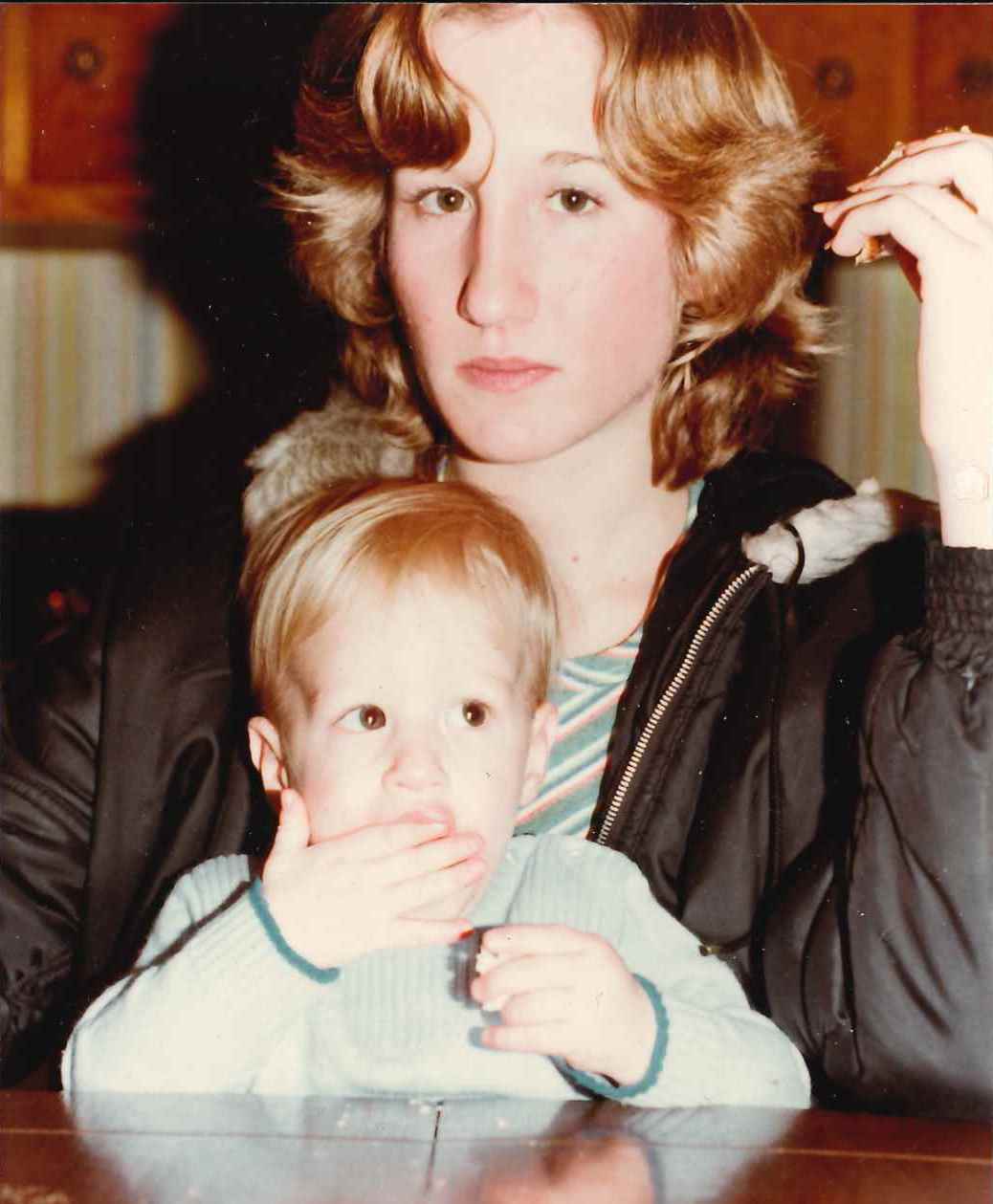
I was unmarried and pregnant with a one-year-old baby, on welfare, living in public housing.  I was 19.

I had just started to feel better about myself and the future.  The first pregnancy had been due to carelessness.  This time it was due to birth control failure.  It was painful knowing people thought I was stupid.

I had just gotten rid of my pet rat, Smiley, because I couldn’t afford to feed him.  If I couldn’t afford to feed a rat, how could I afford to feed another kid?

I had gone to a doctor because I was exhausted.  His name was Charlie Brown, believe it or not.

I figured he would say I was anemic.

He laughed a yucky laugh when he saw the look on my face.

“That’s what happens to girls like you.”

“What?” I was confused.

“Girls who sleep around shouldn’t be surprised when this happens.”

“But it’s the same father.”

He glanced at Vince as though he was a cockroach.

“So the father is white?”  He lowered his voice.  “I know some people who would pay handsomely to adopt this baby.”

If a doctor named Charlie Brown said this to me today, I would punch him in the face, then sue him.  Instead, I thanked him mechanically and never returned.

In spring semester I would take Statistics, English Literature, and part two of Pathology, Anatomy and Physiology, and Abnormal Psychology.  My favorite class was Pathology.  The Hennepin County medical examiner taught it; his name was Vincent which I took as a good sign.  It was basically one long gruesome slide show—or should I say, sideshow.  There was the guy who had been decapitated when his snowmobile ran into a barbed wire fence, a baby born without a brain, and a glistening, five-foot-long tapeworm with eye-like markings.   I loved it.  I didn’t want to drop out.

I went to see a social worker at Catholic Charities.  Her name was Judy.

“You could give the gift of life to a childless couple!” she exclaimed.  I had an image of her as a Tyrannosaurus Rex, drooling and flapping her little claws over this baby.  This white baby.

I didn’t care about helping some rich couple who probably lived in the burbs and had a foosball table in their basement.

“I don’t want Vincent to be an only child,” I said.  My siblings and I didn’t always get along, but I imagined being an only child as very lonely.

“You can always have more children,” said Judy, “when you’re married.  You’re certainly fertile!”

My psych instructor gave a lecture on “high risk youth,” the new buzz phrase.  There were certain early experiences, like being beaten, locked in a basement, or put up for adoption, that caused youth to become drug addicts, criminals, and psychotic.

“Statistics show our prisons are full of men who were abused, neglected, or abandoned by their parents—usually single mothers on welfare.”

My best friend from high school was adopted.  I thought about the times I had seen her mother belittling her.  “You’re so fat!  Are you going to wear that?”  What if I gave this baby up for adoption, which I now understood was an act of abandonment, and his new parents abused him?

I told some of my classmates and they urged me to have an abortion.  “At this stage it’s just a clump of cells,” they reasoned.  This was true, but I couldn’t have an abortion so soon after giving birth.  I couldn’t explain it.  I just couldn’t do it.

“Don’t be a tool of the pro-lifers!” the one male student in my class said.  That was a valid concern too, but I had to set it aside.  Choice meant choice, right?

My mother didn’t tell me what to do.  “If you go through with adoption,” she said, I don’t want you anywhere near the family.  It’s got to be our secret”

Sad Mom

Tumblin’ and Floppin’

What was I thinking when I gave Vince a rock tumbler for Christmas? It’s his long-time hobby, and this is probably the third one I’ve bought him, but it’s the first time I’ve lived with the sound of it, cruncha-rugga-chugga-rugga 24/7. I don’t know how he can sleep with it in his room. .

Here’s an update on Vince’s and my living-together situation.

If I come home and he’s in the living room, he immediately gets up, goes to his room and shuts the door, and doesn’t come out again until the next morning. If I’m the one in the living room when he comes home, he goes straight to his room and doesn’t come out until the next morning. He doesn’t slam the door, so there’s nothing to point to and say, “Stop doing that!”

When we run into each other in the morning, the exchange is:

“Good morning.”

“Good morning.”

“Have a nice day.”

“You too.”

When I ask, “What are you up to today?” he tells me, but there is a tone, as though he thinks I am prying. If I call to him inside his bedroom, there is a long pause during which I imagine he is rolling his eyes, and then a drawn-out, “Yeh-sss?”

I managed to catch him long enough one day to say that people who live in the same house usually talk to each other now and then. He seemed to think I was trying to trick him into talking.

Things came to a head on Christmas day. I found myself crying in my room (into a pillow, so Vince wouldn’t hear, because I didn’t want him to think I was trying to manipulate him). I had been out 16 of the last 18 nights, trying to give him space.

I was tired. I had lost perspective. Was it nosy to ask, “How are you?” Was everything I did annoying? Was the sound of my voice noxious? Should I confront him? Try to be nicer? Suggest we go to counseling together? Ask him to move out? Go live in a motel? Was I acting like a martyr? Maybe if I bought some non-floppy slippers—because surely the sound of my footsteps must drive him crazy.

I recognize Vince’s behavior because I’ve acted the same in the past.

I had a roommate; I’ll call her Irene. She was from Ontario and taught theology at a local private university.

I could not stand being in the same room with her. Everything about her irritated me—her denim dresses and sturdy shoes, the giant jar of Branston Pickle in the fridge, the fact that her favorite color was navy blue.

When I heard her key in the door I would scurry to my room, silently shut the door, and not emerge until I knew the coast was clear. If she tried to make conversation I would deflect it with a curt answer and a stiff demeanor. If I did have to communicate something to her, I left a note on the dining room table.

Poor Irene! She was such a nice person, a good person. She had a sharp wit and obviously was no dummy. We could have had great conversations if I had been open to that. She was also wise, I see in retrospect, because she never got ruffled by my behavior, never seemed to take it personally.

And it wasn’t about her—I can see that now. It was about me being laid off from my job, Vince being missing for the umpteenth time, and other stressful events I can’t even recall now.

So Irene, if you ever read this, I apologize unequivocally. I was horrible to you. Better yet, I will write you an email after I finish this post, and apologize directly.

Vince, here is my version of a note on the dining room table to you. You’re doing so well (a job, a car—health insurance! 19 months of sobriety!). But I know it’s hard to have a social life under the probation restrictions. The solstice has passed, the days are getting longer, soon your time “off leash” time will double.

Now about that rock tumbler….

Hedgehogs, Mice, and Echidnas, Oh My

I pride myself on writing realistically about life. You can count on me to tell the truth as I know it, to question everything, and to imagine the worst case scenario. I don’t know why the Pentagon hasn’t called me yet to offer me a disaster-planning job.

But that doesn’t mean I’m depressed, or even “unhappy”—the more generic term. Being a highly-analytical thinker has its rewards. I notice and think about things that other people do not. There’s often absurd fodder for laughs. Sometimes I’m the only one laughing, but that’s okay, right?

There was an article in the Sunday paper about a study that debunked the popular myth that “happy” people are healthier and live longer. Yes! My friend who works in an old folks home—or whatever they’ve been rebranded as now—has always said, “There are plenty of miserable, crabby 90 year olds. And they’ve always been that way, because their kids tell me they have.”

About five years ago, I kicked the depression that had dogged me all my life. Since then I have felt mostly contentment, punctuated with the normal situationally-appropriate emotions. I felt angry when my landlord raised my rent $300 a month, which forced me to move. I was stressed when I moved again three months later so Vince could live with me. I was anxious when Vince was in solitary confinement. I cried for everything my sister and her kids went through when she had cancer. I felt awe hiking in Petra, in the Jordanian desert, and nervous about crossing over into the Palestinian territories. I felt powerless rage when I was banned from visiting Vince. I had a blast with my friends in Berlin. I’ve been bored at work. I was proud when Vince led his squad at his graduation from boot camp. I am excited at the prospect of remodeling my kitchen.

Hey, I guess I just wrote my Christmas letter!  What a year it’s been.

None of it lasts. Some people figure this out somehow, much earlier in life than I did. Emotions come and go. The pleasant and the unpleasant, they’re all fleeting. So enjoy the nice ones while they last and know that the bad ones will dissipate. Don’t panic if you feel blue once in a while. Don’t latch on to the negative feelings or thoughts. If the blues don’t go away for weeks, of course, seek professional help.

In the last week I’ve had some really good times with people I love.

Yesterday I took my mother to tour the Purcell Cutts House, a prairie-style home build in 1913 and owned by the Minneapolis Institute of Arts. This is the living room:

Purcell Cutts

The guide explained that the simple, serene style was in part a reaction to the chaos of the age. The architect was from Chicago, which was the industrial center of the U.S. Meat packing and other industries attracted droves of immigrants and African Americans from the south. There wasn’t enough housing, and the water and sewer systems weren’t up to par. There were no child labor laws, workers’ compensation, welfare, or social security.

So architects brought nature and art inside. Obviously this was not a house that could be produced on a mass scale. The immigrants and African Americans still lived in poorly-heated hovels. But at least this one architect could escape all that and find sanctuary at home!

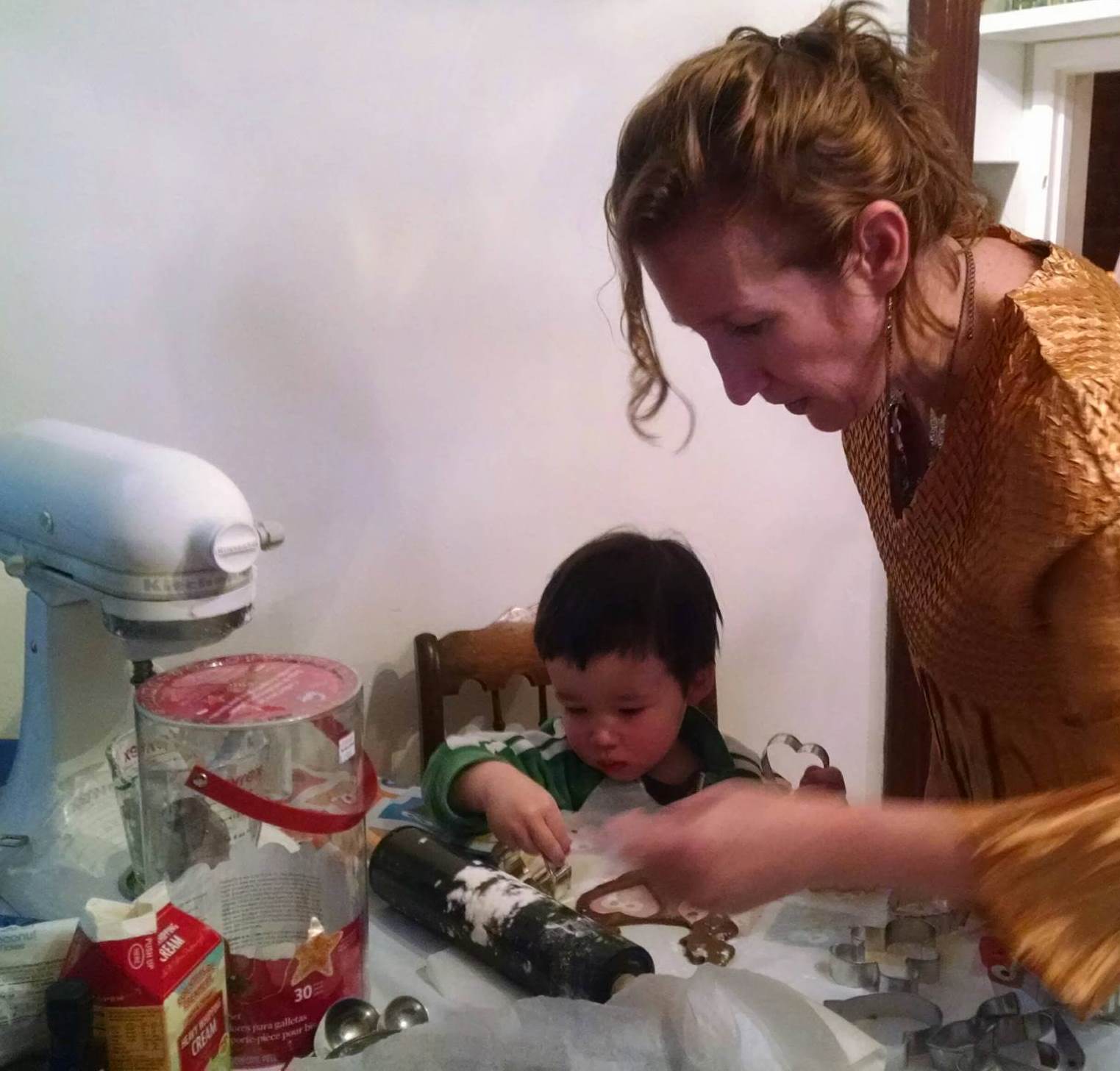
Last weekend, I hosted a cookie-baking party for Vince and his cousins.

Hannukah HedgehogsTaisei n me

They’re not pretty, but we had fun. Strangely, Vince and I had prepared enough dough to yield 16 dozen cookies but only nine dozen made it to the final stage. Hmmm…or should I say, Mmmmm….cookie dough?

So enjoy the moments that contain things you love. In my case: design, craftsmanship, nature, history. Kids, creativity, and cookie dough.

Lasagne, Interrupted

I came home from work, tired and famished.  I was lifting a big slice of lasagna out of a pan to a plate when the landline rang.

This is the phone I am required to have as a condition of Vince’s probation.  He was in the shower, and the phone is in his room.  I respect his space and don’t go in there except to the do the laundry.  (He shares his tiny space with the washer and dryer.)

Brrr-ing…brrr-ing…brrr-ing….  I stood with the lasagna poised between pan and plate.  It stopped.  Then Vince’s cell phone started up—vvvbbbb….vvvbbbbb…vibrating on silent.  It went on and on and still I stood drooling over my longed-for lasagna.

I heard the shower shut off and Vince’s voice, “Hello?  I’m in the shower.”  He repeated himself.  Did the person on the line not believe him?  Then: “MOM!  Will you let the agent in?”

I lowered the lasagna into the pan—it was lukewarm now anyway—and went to the front window.  Yep, there she was, sitting in her car at the bottom of the stairs.  I moved to the front door and opened it, waving down to her.  I stood waited while she got herself out of the car and moseyed up the stairs.

Do not sound sarcastic or mad, I told myself.

“Next time, why don’t you knock on the door?” I suggested.

“Oh, yeah!” she replied, as though she had never heard such an idea.

She stood in the dining room with the urinalysis cup while Vince threw on some clothes.   She smiled, I faked a smile back.  Vince entered the room, retrieved the cup from her, then returned to the bathroom.  As he was returning down the hall, the agent said loudly, “Be sure to tip the cup on its side so the urine gets on the test strip.”

Yum!

Maybe I should have exited at that point but I didn’t realize she was going to linger.  And did I mention I was hungry?

Vince sat at the dining room table.  The agent and I stood in opposite corners in the room.  I was half way into the kitchen, with one eye on the lasagna.

“How’re things goin’?” she asked.

“Fine,” was his reply.  He told the agent he was planning to buy a $300 car.  It would help him get around quicker and he could tinker with it on “the property” which includes the parking lot of the condos where we live.

“The big challenge,” I volunteered, “will be for him to find a landlord who accepts ex offenders.”

“That is a big problem,” she said, “Most landlords take advantage of them, because they can.”

My crabbiness quotient quadrupled.  Or maybe it was just plain anger.  Well, I’ve rarely had a good experience with a landlord, so why was I shocked that they would exploit ex offenders?

“We do know a guy who is open to ex offenders, and fair,” she continued.

One landlord in a metropolitan area of 3.5 million people.

She told Vince she would get him the landlord’s information, and left shortly thereafter.

Finally!  My lasagna.  I sat across from Vince and when I saw his face I thought, “Oh no, I’m in trouble now.”

Mom,” he began slowly, as though he was talking to an utter moron, “Don’t ever bring things up to the agents.  Now the next time one comes, they’ll grill me about why I want to move out.  ‘What’s wrong at home?’  ‘What’s going on with your mom?’”

“But…last week you told me you had that tip on a sober house.”  For a few days we had both been excited but it fell through.  “You want to move out, don’t you?”

“Yes, but we agreed I could stay a year.”

“Yes, but…you were talking about that house….  I thought she might have some resources.”

I ate my lasagna without gusto and offered him some, which he accepted.  “Do you really think I would try to get you in trouble, on purpose?” I asked.

“Sometimes I wonder,” he said.

Just like when he was inside, I didn’t know the rules until I broke one, and trying to be helpful only got me in trouble.

Alone in the City of Dreaming Spires

I spent Thanksgiving in Wisconsin with my cousins, which is what I do every year. Vince couldn’t come because he is not allowed to leave Minnesota.

After eating way too much food, I made the mistake of checking Facebook right before I turned out the light. There were a couple posts from Vince. He sounded so lonely.

I couldn’t fall asleep. I laid there thinking about the time I learned to be alone. I think this is one of the most important skills we have to master in life.

I had moved to Oxford, England four months before my birthday. I rented a house with a three-legged cat named McCartney and housemate who went home to Scotland every weekend. I had a great job. I had joined a posh gym. I had made some acquaintances through work and Alanon meetings.

Red Door

This was before Skype or Facebook or What’sApp. My family and friends used email to communicate with me, but there was no internet at the house.

I don’t normally even care about my birthday. I hadn’t told my housemate or acquaintances it was my birthday because I didn’t want to seem like I was fishing for a fuss.

I walked into town to see a movie. February in England is dreary and drizzly. Well, most months are. In comparison to November, the sun was setting later (almost 5pm!) but the sky really only went from murky black to dark grey and back to murk again.

I got some popcorn and found a seat. Someone behind me said, “Pssst!” Hurrah! It was a friendly woman from my Alanon meeting named Rebecca. I wouldn’t spend my birthday alone after all! But she just said, “Nice to see you,” and that was that. I thought, unreasonably, “Why couldn’t she have invited me to sit with her and her friend?” I felt really put out.

The movie was Walk the Line, the Johnny Cash biopic. There’s a scene where Johnny is drying out and his family confronts a drug dealer with shot guns. The theater exploded in laughter. “Typical Americans!” I could hear around me.

I had picked a bad time to move to England. George W. Bush was using their air bases to transport terrorists and political prisoners in black helicopters, and most Brits were not happy about it. Most people were nice enough—if reserved—but I had been confronted by several very angry people who took me to task for everything my country had ever done wrong.

It really hit me that I was not only lonely but alone. I was on an island with 64 million people and I didn’t know a single one of them beyond asking the time of day. It was piercing.

I went home and had a few beers while I stared out the front window like some tragic heroine in a period movie. People strode past with their hands deep in their pockets and their heads down. I wallowed in self-pity. But somehow I knew I would get through it, that I wasn’t going to die of loneliness, that everything would change eventually—if not the next day then next week or next month. Everything did change. I’ve had a lot of great adventures on my own and with other people.

Now we can feel like we’re never alone by floating along on endless social media streams of cutsie platitudes and cat videos and political rants and “breaking news.”

Did Vince know that nothing stays the same forever? I finally fell into a worried, fragmented sleep. I dreamed that Vince fell into a river and was swept away into a big pipe. I ran along the river bank until I came to an opening in the top of the pipe. I could see his face underwater, looking up at me. The iron bars over the opening were wide enough for my hand to slip through so I could touch him, but too narrow for me to pull him through. Ugh. I woke up crying. I don’t need a psychiatrist to analyze that dream.

Ultimate Price

VINCE

Very rarely in my life have I had to deal with death. Most recently, a friend paid the ultimate price in a fiery wreck during the time I was out on bail from my drug charge, back in March of ’14. Most likely she had fallen asleep while driving, as I had done so many times in the past. Unfortunately for her, she was pinned inside the truck and more than likely burned to death along with her dog when the gas tank exploded, as evidenced by the claw marks inside the plastic by the door. I have seen pictures of the vehicle and the body after the accident, and I wish I had not. I have seen a lot in my day, and I have seen a lot of death on the internet. But nothing could have prepared me for seeing somebody I actually knew. I could make out the features, especially the teeth and facial bone structure. It was unsettling, if not disturbing.

I met Christie and Mackenzie (names changed) at a mutual friend’s house in Chatfield in the Winter of 2012. They were both alcoholics and low-level drug dealers (allegedly), and had formed up as a lesbian couple a number of years before I met them and were living together in **. *******.  I took a liking to them right away because they seemed like they were still fun people, a rarity among meth users.  I started selling to them (allegedly) pretty quickly after that, so I would often go to their house.  It is there that I started to see the devastation more common to our kind.

The house was in complete disarray.  Shit everywhere, broken glass on the floor, rotting food on the counters, and paraphernalia abundant.  What I wasn’t expecting was the blatant domestic arguments that would occur directly in front of me.  These women would really get heated.  On more than one occasion I saw bruises and lesions on both of them but they would never come to blows in front of me or anybody that I knew.  It got really uncomfortable for me on more than one occasion, and one of them would leave, or, more commonly, I would.  Over and over, of course, they would come back to each other, make up, and start over.  My guess is that the accident occurred on a morning after the evening of a fight, although this would never be confirmed.

An early Thursday morning on U.S. Hwy. 14 in Lewiston, MN in March of 2014 would be a day any friends of the couple would never forget.  A westbound pickup truck crossed the center line and smashed into a construction vehicle head-on and caught fire, killing my friend and her dog.  I’m not going to provide any more details, but the internet has all sorts of resources, and it would be pretty easy to find.  Just keep the names private please.

What transpired afterward was even worse for me, because her partner went crazy, very slowly, before I went to prison, and she was eventually arrested for robbery, possession of meth with a handgun, and a number of lesser charges.

Christie frequently suffered delusions after the accident, and often accused her friends, myself included, of being responsible for Mackenzie’s death.  Contributing to the  insanity was the lack of sleep that is the result of methamphetamine use, and depression, a result I’m sure of losing one’s life-mate or partner.  She would ramble incoherently and shout at the walls.  She would speak of conspiracies involving women breaking in through cracks in the walls.  She was arrested for robbing somebody of $400 in her own living room at gunpoint.  The person she robbed had reported seeing an earlier robbery in which she twisted somebody’s arm behind her back, accusing her of being responsible for Mackenzie’s death, then took $500 from her purse.  She was arrested three days later and her house was searched yielding scales, bags, drugs, and a loaded rifle on the couch.  She’s not currently in jail or prison that I can find.  I wish her the best.

Mackenzie– I am sorry I wasn’t a better friend. I will never forget your laugh, or your cry. Go be with the angels now.

Addiction: Disease or Habit?

ANNE

I chanced upon this article, Addiction is Not a Disease, by Laura Miller in Salon.  It describes how addiction used to be considered a moral failing, then was reconsidered as a disease with the rise of 12 step programs, and now neuroscientists are thinking it’s more of an extreme habit.

Miller bases her article on the book Biology of Desire by Marc Lewis, a neuroscientist who is a former addict himself.  He posits that addicts have a “particular ‘emotional wound’ the substance helped them handle, but once they started using it, the habit itself eventually became self-perpetuating and in most cases ultimately served to deepen the wound.”

The disease model has been supported by the fact that addicts’ brains are different.

“The changes wrought by addiction are not, however, permanent, and while they are dangerous, they’re not abnormal. Through a combination of a difficult emotional history, bad luck and the ordinary operations of the brain itself, an addict is someone whose brain has been transformed ….

“More and more experiences and activities get looped into the addiction experience and trigger cravings and expectations like the bells that made Pavlov’s dogs salivate, from the walk home past a favorite bar to the rituals of shooting up. The world becomes a host of signs all pointing you in the same direction and activating powerful unconscious urges to follow them. At a certain point, the addictive behavior becomes compulsive, seemingly as irresistibly automatic as a reflex. You may not even want the drug anymore, but you’ve forgotten how to do anything else besides seek it out and take it.”

The good news is that habits can be unlearned.  AA and NA and other 12 step groups do work for a lot of people.  Others may need cognitive behavioral therapy, or meditation, or something else, or all of these things.  It’s kind of like how I fought long-term depression by trying everything, until something broke through.

I’m all for understanding the causes of things, in case that knowledge points to new solutions.  I’m also big on measuring success to discover what works.  This article in Scientific American basically concludes “we don’t know” whether AA works because (in my lay language) it’s too loosey goosey to study with the gold standard of the randomized clinical trial.  It works for some people and not for others, and there are probably as many reasons for both outcomes as there are members.

On a long drive a few evenings after reading the article about how addiction is not a disease, I caught this one-hour podcast about the history of Alcoholics Anonymous.  I knew most of the story already, how two chronic inebriates, Dr. Bob and Bill W., found each other and developed the AA program based on something called the Oxford Group, which had gotten started in England and which was overtly religious.

The story is poignant.  Both Bill and Bob were headed for early graves.  Instead, they met each other.  Talking about their problem with someone who also had it worked some magic that no amount of nagging by their wives or warnings from doctors could.  Bill’s wife Lois and another recovering alcoholic’s wife, Anne, founded Alanon, to help them recover from their own insanity caused by living with alcoholics.

There are lots of “gurus” out there who will tell you that you have to go to AA or Alanon every week for the rest of your life, or that you have to give up every mood-altering substance—from heroin to caffeine to sugar—or that “real” meditation is only done in the early morning, for a minimum of 45 minutes, sitting in the lotus position.

I say, be open to trying a variety of solutions, and equally willing to stop using things that aren’t working.  Why would you want to limit your options when you’re up against something that could make your life miserable, kill you, or land you in prison?

Dying for a Smoke

ANNE

I’ve written about how I’m so lucky / grateful to not be an addict. However, quitting smoking was the hardest thing I’ve ever done in my life, so I guess that makes me … an addict? Is having a Swisher Sweet cigar once a month a slippery slope? This is something I started in the last year or so.  I don’t inhale. But I must get enough nicotine to give me that instant stress reduction effect. I go down to the river with a beer or a flask of tea and smoke one little cigar and watch the water go by. Is that really so bad? Can’t I just enjoy one vice, once in a while?

I tried everything to quit. Setting a quit date. Cutting down. Smoking myself sick so I’d never want one again–until the next day. The patch, the pills (which caused frightening hallucinations), chewing on cinnamon sticks. Willpower. Phone counseling through my insurance plan. Not smoking til after I’d worked out for two hours. Never smoking in public. Never smoking until after work. Meditation.

I quit over and over. I’d quite for six months then cave in. Once I quit for FOUR YEARS! And then I started again after Dr. Wonderful broke our engagement. I was so sick the next day, after smoking one cigarette, that all I could do way lie on the couch and moan. But I started and kept on smoking for another 10 years.

In the end it was a silly thing that got me to quit. I read somewhere that the average age of women who get lung cancer is 42. So I’d had that in my mind for years—that I had to quit by the time I was 42. And I did. But as with the depression that I battled for decades, I think it was all the things combined, plus this final silly thought, that made it stick. That was 14 years ago.

Meditation helped, too. After all, it involves inhaling and exhaling, just like smoking. I still found myself tearing off the nicotine patch so I could have “just one” cigarette, then slapping the patch back on and yelling to myself out loud, “No—NO!!”

I know I can never pick up a cigarette again, not even to have one drag. I know this I went to Jamaica with a friend 15 years ago. She had quit smoking years earlier. But I was smoking, and she picked up one of mine, just to have a few drags—we were on vacation, after all! She smoked all week and has been smoking ever since. My sister smokes. Yes, the one with cancer. Yes, she knows that smoking can be a contributing factor to colon cancer. She tries and tries to quit. Now there are e-cigs, and she says they’re ok up to a point and then she Just Has to Have a Real Cigarette. I don’t blame her. Like I wrote above, they’re an instant stress reliever. Until you think about lung cancer and heart attacks; that’ll raise your stress level.

There has been no smoking allowed in Minnesota prisons for over 20 years. This is good; Vince’s lungs will get a chance to regenerate. But will he light up again the minute he’s out? He didn’t fight to quit, like I did; he was forced. And he wonders why he was so moody the first few weeks he was inside!

Happy New Life

ANNE

I am tempted to rebut each of Vince’s “clarifications” in his last post. But one of my favorite self-help slogans is: “How important is it?”

I’m glad to leave 2014 behind and hopeful that 2015 will better, or at least not worse.

I spent Christmas Eve in an emergency room with my poor sister, who has stage four colon cancer. She was feeling pressure in her chest. Apparently chemo can cause blood clots. They administered nitro by pill and patch, did an EKG to rule out a heart attack, and killed her pain with Dilaudid, which is seven times stronger than morphine.

Her worst fear is that she will die alone in the hospital. I stayed until they admitted her and she fell asleep, about seven hours later.

Three years ago, I hit bottom. I had lived with depression for as long as I could remember, but then….  I had to have a tooth pulled—boy, will that make you feel old! Then during a Christmas Day blizzard my car was towed and I spent four hours waiting in line outside at the impound lot to pay $300 to get it back. I then drove to Fountain to visit Vince. The trailer he shared with Seth was full of guns, beer cans, and smoke. I figured what the heck, if you can’t beat ‘em, join ‘em, so after he assured me that none of the guns was loaded, we posed for photos that became my holiday cards to my friends in the UK, where they had a good laugh over us gun-crazy Americans.

Vince (7)Vince (11)

Due to the blizzard I spent the night in Seth’s 5-year-old daughter’s bedroom; she was at her mom’s. Here’s a tip for parents who smoke: Keeping your kid’s door closed doesn’t keep smoke out. I couldn’t open the window and after tossing and turning until 5am I slipped out and drove home. On the way I started itching. Great—now I had bedbugs!

I contemplated suicide. I leaned my forehead against the screen of my 20th floor window. I had turned 50 the year before. Thinking about being depressed every day for another 30-40 years wasn’t real appealing.

Here are the things I had tried to manage depression and anxiety:

Meditation

Medication

Prayer (including begging, pleading, and bargaining)

Acting normal

Abstaining from drinking

Cutting down on coffee

Self-help books

Alanon

Exercise

Getting outside every day

Appreciating beauty, be it fine art, nature, music, babies, or kittens

Gratitude lists

Avoiding negative people / avoiding unnaturally happy people

Running away to other countries

Denial

Journaling

Telling myself, “At least I’m not a refugee / amputee / blind / fill-in-the-blank.”

Psychotherapy

Retail therapy

Sleeping, drinking, and movie binges

Reaching out to friends, even when that was the last thing I wanted to do

I thought that jumping out of my window would be exhilarating, until I hit the ground. I had some leftover pain killers from the dentist, and my prescription for Restless Legs. I googled an overdose of the two and learned that they wouldn’t kill me, but that I would likely need a liver transplant. I decided to keep living.

That spring, I visited Vince again and this time, made a reservation at a B&B.  On the free-book-shelf there, I picked up a tattered copy of, “Feeling Good: the New Mood Therapy”, by David Burns, MD. I read it and did what it told me to do, and I stopped being depressed. For good.

The book was about Cognitive Therapy. I had been instructed to use it at least twice in the past, but I’d been too stressed out to do it. Basically, you write down your negative thoughts and then argue with them rationally until you’ve de-fanged them. Writing it down is important; if you try to do it in your head you’ll end up down a rabbit hole.

So was a lifetime of depression cured overnight by one book? No. I think it was all the other things I had tried over the years—the good things, anyway—and then I added this on top of them and together they all added up to a breakthrough.

I still feel sad sometimes–there’s plenty to feel sad about–but I’m not depressed and I’m committed to living.

Sorry for the long post but, if you’re struggling, I want to encourage you to keep an open mind, keep plugging away, and keep trying new things.

PS: I didn’t have bedbugs after all.  I think I was just itchy from the smoke and dry air.  Living with addiction can turn you into a drama addict.