Tag Archives: London

A Great Life and a Rainy Ghost

It was my turn to go into London and spend the day with Heidi.  I wanted to visit the Churchill War Rooms, which are an underground complex near Parliament that are operated by the Imperial War Museum.  Heidi had already been there, or wasn’t interested, I can’t remember—so we planned to meet at the Houses of Parliament for a tour at 2pm.

I bought tickets online for both places which enabled me to breeze past the block-long line of suckers hoping to get in to the Churchill rooms.  There’s a reason they control the number of people who enter.  These were the underground bunkers where Churchill and his team lead the war effort, and so they are dark and cramped.  I was only inside for a couple hours and I felt claustrophobic.  I can’t imagine spending days and nights down there—breathing in thick cigar smoke and hearing bombs falling overhead.

Winston Churchill was complicated.  He was born into wealth—at Blenheim Palace, near Oxford, where I had enjoyed many long walks on the pleasure grounds.  He joined the army, was captured in South Africa during the Second Boer War, and made a movie-script-like escape.  He was elected Prime Minister and indisputably led the nation through World War II with world-famous speeches with lines like:

“I have nothing to offer but blood, toil, tears, and sweat.”

“Never in the field of human conflict was so much owed by so many to so few.”

“… we shall fight in France, we shall fight on the seas and oceans, we shall fight with growing confidence and growing strength in the air, we shall defend our island, whatever the cost may be, we shall fight on the beaches, we shall fight on the landing grounds, we shall fight in the fields and in the streets, we shall fight in the hills; we shall never surrender.”

“Let us therefore brace ourselves to our duties, and so bear ourselves, that if the British Empire and its Commonwealth last for a thousand years, men will still say, ‘This was their finest hour.”

World War II—and the US making England repay every penny we contributed to support them during the war—and lots of other factors, broke the Empire. The official end wouldn’t be until 1997, when they turned Hong Kong over to China, but many would argue that it really ended with decolonization/independence of India, Malaysia, Singapore, Jamaica, Sudan, Ghana, Kenya, Jordan/Israel/Palestine, and many, many others after the war and into the 60s.

Churchill opposed Indian independence on paternalistic grounds—the Indians needed the British to get them organized.  If Ghandi went on another hunger strike, he said, they should let him die.  When Churchill was elected PM a second time, he had a front-row seat for the Empire’s dismantling. He lived to be 90 despite being—famously—a chain cigar smoker and heavy drinker.

I feel so inadequate when I write these posts about which hundreds of books have been written and dozens of movies and TV shows made … go see the film that’s just out now, called Churchill.  All I can do is repeat my caveat that I am not a history professor, although sadly I think I could play one on TV.  I am just a curious person traveling around, learning a bit here and there, and forgetting most of it by dinner time.

One thing I can say with certainty: the War Rooms have a really good cafeteria and gift shop.  After spending time and money in both I emerged into the rainy street.

I had hours to kill before meeting Heidi.  I opened my souvenir Wimbledon umbrella and fought my way through the crowds to the Houses of Parliament bookstore, where I bought more stuff which forced me to carry more bags.

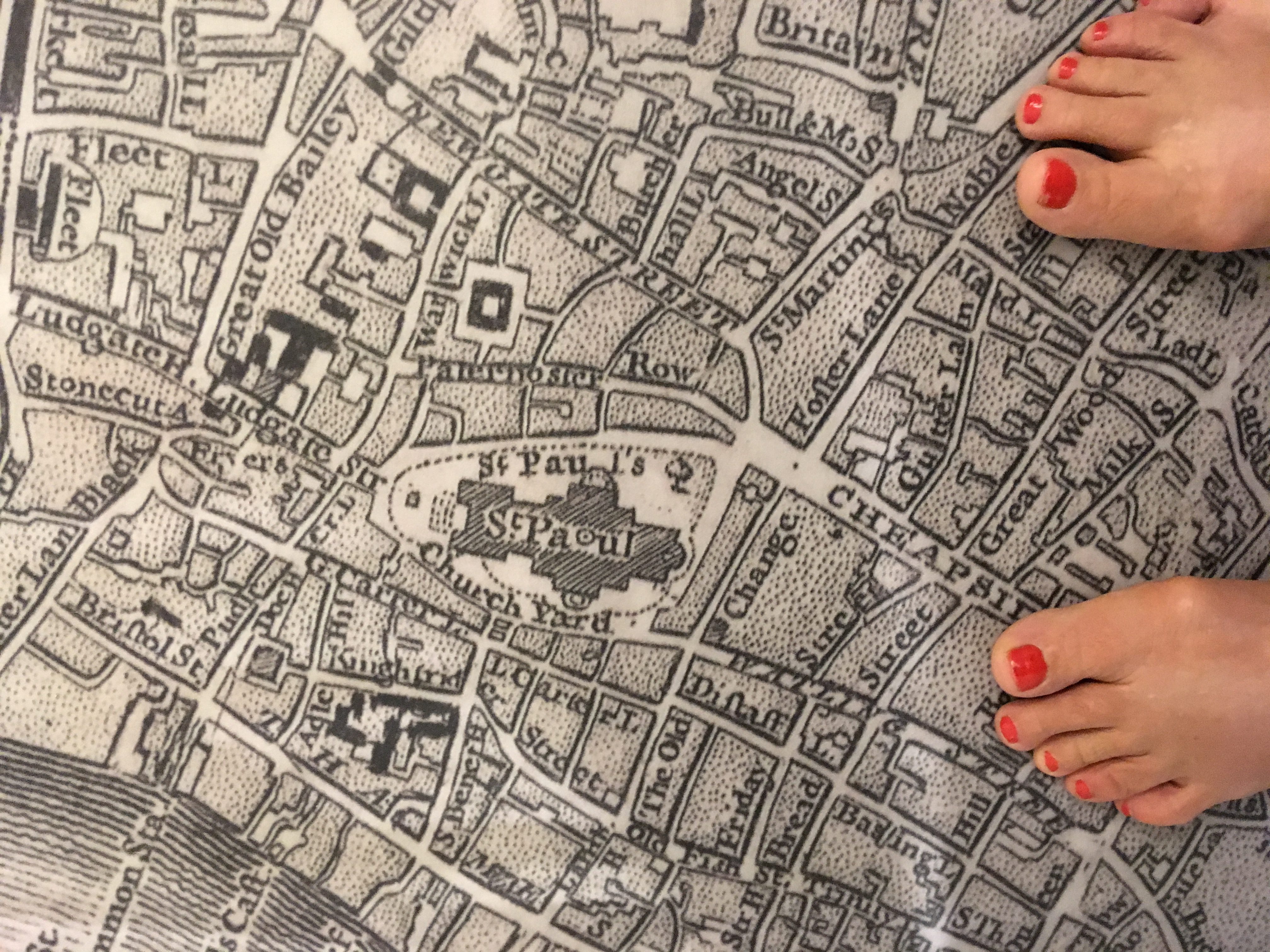
I made my way to Victoria Tower Gardens, a quiet park on the west side of Parliament, and gazed out over the Thames through the rain.

Suddenly I felt something like an electric zing.  I have few photos of my father.  Being here triggered a memory of a black and white photo of him standing in this exact place with his umbrella open, 50 years ago.
Cabbing It to the Cabaret

Lynn had booked three rooms at a hotel near the Barbican, and after carrying a backpack around all day I was happy to check in and dump it.  The room was spacious and the décor reflected the area.  This was the bathroom floor:

This was the art above the bed:

Some people might be disconcerted to sleep beneath meat-hook themed art, but I took comfort in knowing I was not the only weirdo who meditated on meat hooks.

In keeping with modern design principles, I couldn’t figure out how to turn on the bedside lights.  I called the front desk and—I could tell from her voice she had done this many times before—the front desk person walked me through how to grope my way around until I found the tiny, arty button that operated the bedside lights.  The room had a mini kitchen so you could cook for yourself and save money.  That wasn’t going to happen tonight.

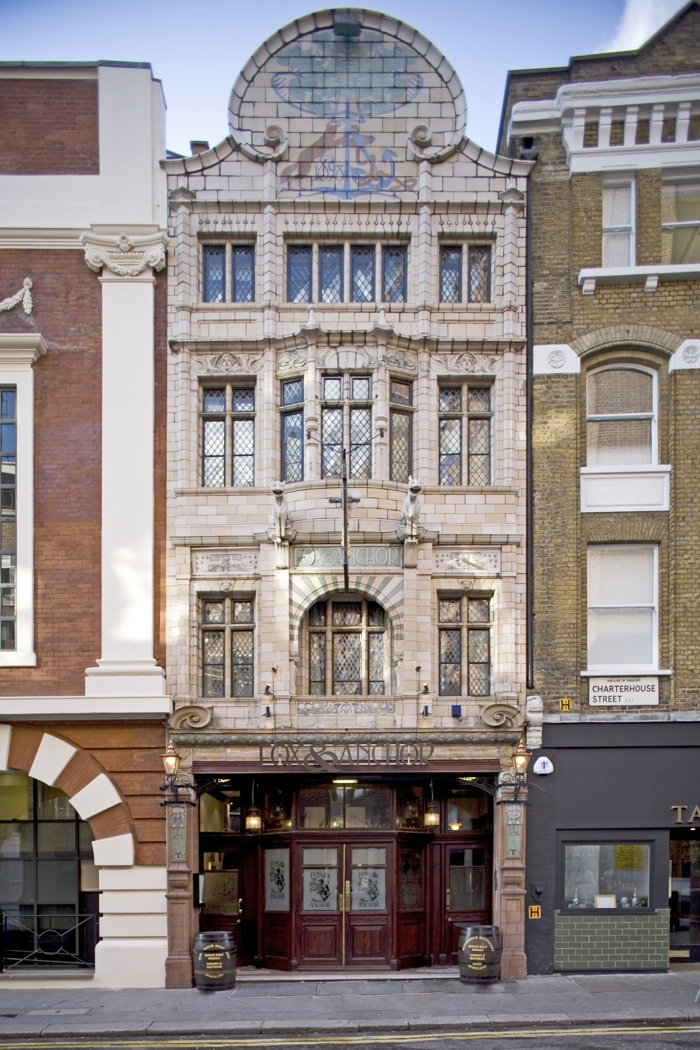
Lynn and Richard and Possum and I met in the lobby and walked over to Charterhouse Square to have a pre-dinner drink at the Fox and Anchor, a pub and boutique hotel.  It was built in 1898 which makes it Victorian, but it looks very Gilded Age or Art Deco to me.  These photos don’t do justice to the detail.

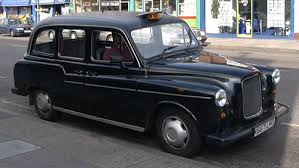
We sat outside, soaking up the sun and some drinks, then hailed a black cab to a Thai restaurant.  There are cheaper ways to get around London, like mini cabs and public transport.  Maybe I’m sentimental, but I prefer black cabs, especially when someone else is paying for them.

Here’s what the black cab driver wannabe website says about becoming a black cab driver:

“The London taxi drivers are almost as famous as the black cabs in which they drive, this is mainly due to their in-depth knowledge of London and ability in taking their occupants to their desired destination amid the congestion and the chaos that you often find when travelling through London’s streets.

“Easy you might think with the world of sat navs? Think again. Hail down a black cab in London and you can be assured that the driver will know the shortest and quickest route to your destination without the aid of a satnav. It doesn’t matter if you give them a street name, a famous landmark, a hotel name or famous point of interest, they will know exactly where it is and they will get you to it in the shortest route possible.

“London taxi drivers go through stringent training to obtain their licence, they need to pass ‘The Knowledge’, a test which is amongst the hardest to pass in the world, it has been described as like having an atlas of London implanted into your brain.”

London has 60,000 streets within a six-mile radius, many are one way.

A friend of Sam’s and acquaintance of mine was so smitten with black cabs that when he returned to Australia after living in London for 10 years, he bought an old black cab and had it shipped home with him.  I think his plan was to run a cab service, but now he’s teaching in an aboriginal school so I’m not sure what become of the cab.

You may have read recently about Uber being banned from London due to data leaks and disputes over its employment practices.  I totally understand why Londoners would want to use Uber.  It’s fun to take a black cab, especially when you’re traveling as a group (this is not us):

It’s cool to take a black cab if you’re a tourist or on a special occasion.  But for getting around on a daily basis, only the uber wealthy could afford to use black cabs.

On a side note, I downloaded Uber just the other day but was unable to use it because it insisted I enter a UK phone number.  I guess my phone is confused and thinks I’m still in the UK.

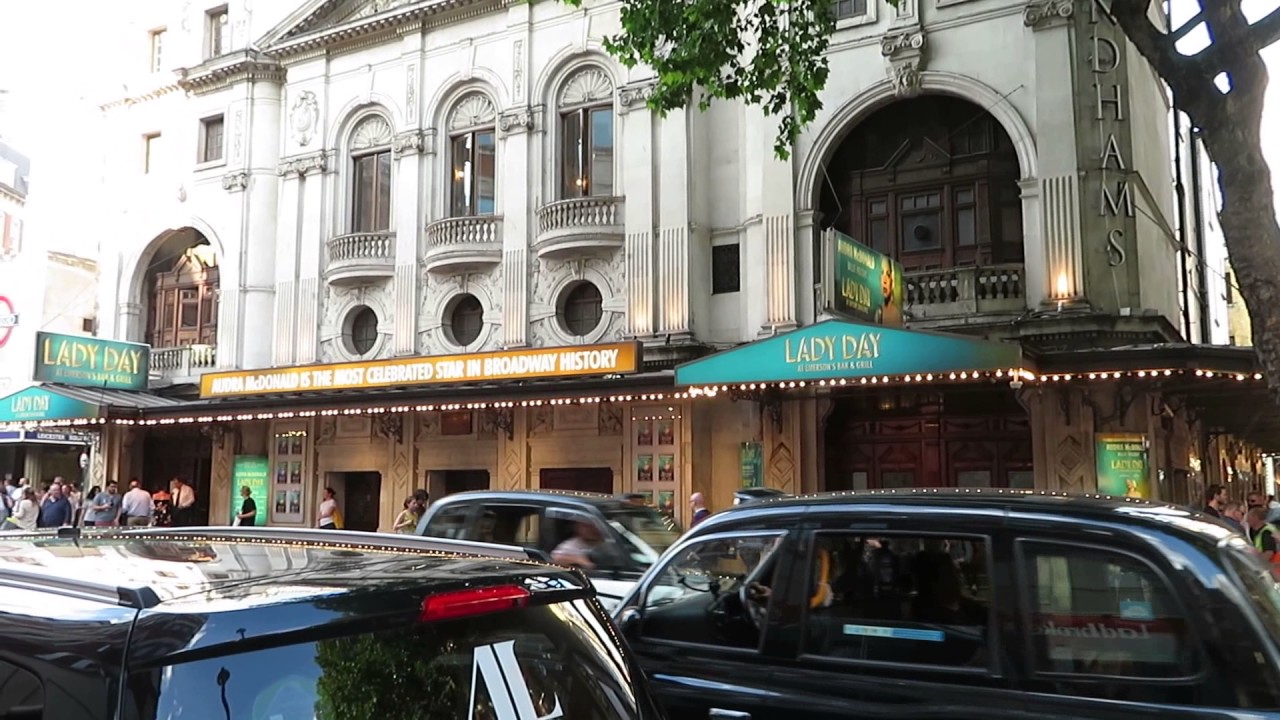
After a great dinner we caught another black cab and snaked through the heaving streets of Saturday-night London. After dodging jay-walking revelers for 20 minutes, we reached our destination, Wyndhams Theatre, two miles from our hotel.

Greater and Lesser and Lost

Now that I know more about the Charterhouse, I wish I had had the time to tour it.  I realize only a tiny, tiny percent of British pensioners can live there, but what a great model that could possibly be replicated.

The two places on my To-See list today were Smithfield Market and St. Bartholomew the Great church.

Smithfield is the original meat market.  It’s a wholesale market which takes up several city blocks so even I couldn’t miss it.  I had had it up to my eyeballs with other shopping areas and markets that sold artisanal caramels and hand-knit tea towels and reproduction antiques. I wanted to go somewhere where I couldn’t buy anything.

Smithfield exceeded my expectations by being closed.  Of course, it was Saturday.  Few people set out to buy half a cow on a Saturday in London. So I walked around and through the parts that were open.  There wasn’t much to see; the site has been a stock yard and meat market for over 800 years and the buildings appeared to be Victorian but who knows.  Later, I learned that they do indeed sell meat retail, so if you are looking for a deal on offal or a lamb shank, check it out.

Now I had to find St. Bart’s, as it’s commonly called, which was one block away but which required me to take the following route: Poultry Avenue to West Smithfield, which turns into Long Lane.  Right on Cloth Street, then right on Middle Street which turns into Clothe Fair, and it should be right there.  Right. 

I passed Barley Mow Passage, Rising Sun Court, Kinghorn Street, and Bartholomew Passage.

Don’t turn, I said to myself each time, because I always have the urge to turn at the first place I see.  Maybe they were shortcuts.  And Rising Sun Passage sounded intriguing.

I steadfastly stuck to the route on the paper map I had printed out, and immediately became lost.  The neighborhood was deserted except for a few shady-looking guys unloading trucks, and I wasn’t going to ask them for directions.  I doubled back, retraced my steps, still couldn’t find anything indicated on the map, started to whimper and imagine myself murdered; some poor vendor would find me hanging from a meat hook when he opened his stall on Monday….

I decided to walk down Rising Sun Passage after all, and there was St. Bart’s.

Rising Sun was named for a pub, so that was a relief.  When in doubt, go into a pub and have a pint and a packet of crisps, and everything will be ok.

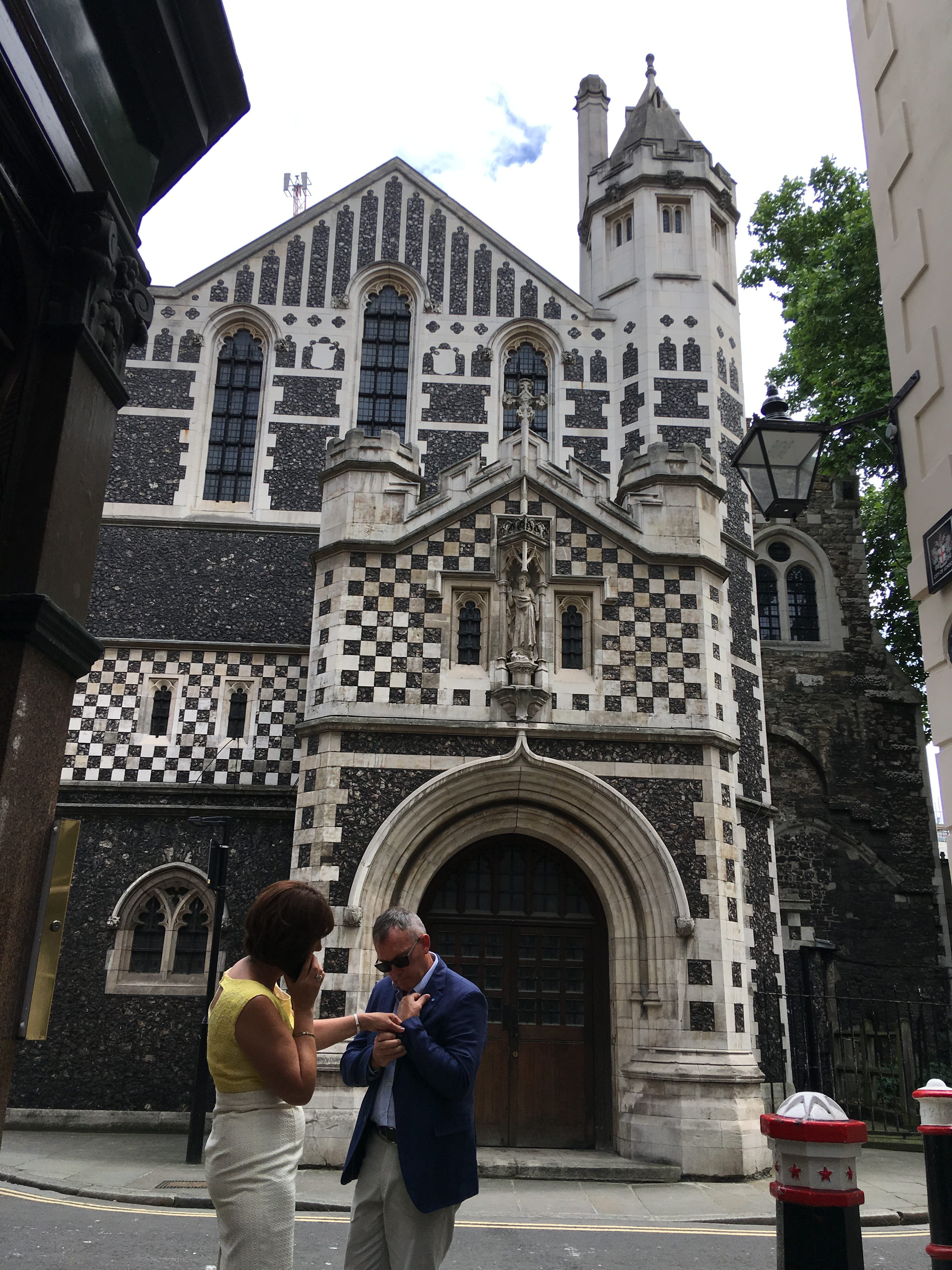
I knew that St. Bart’s was old.  In fact it’s the oldest church in London, which is saying something. It was founded in 1123 as an Augustinian monastery.  In case you’re wondering, there is also a St. Bartholomew the Less, also founded in 1123, and “It was called the Less to distinguish it from its larger neighbour.”  So there weren’t two St. Barts, one who was great and one not so great.  There are two churches named after the same guy.

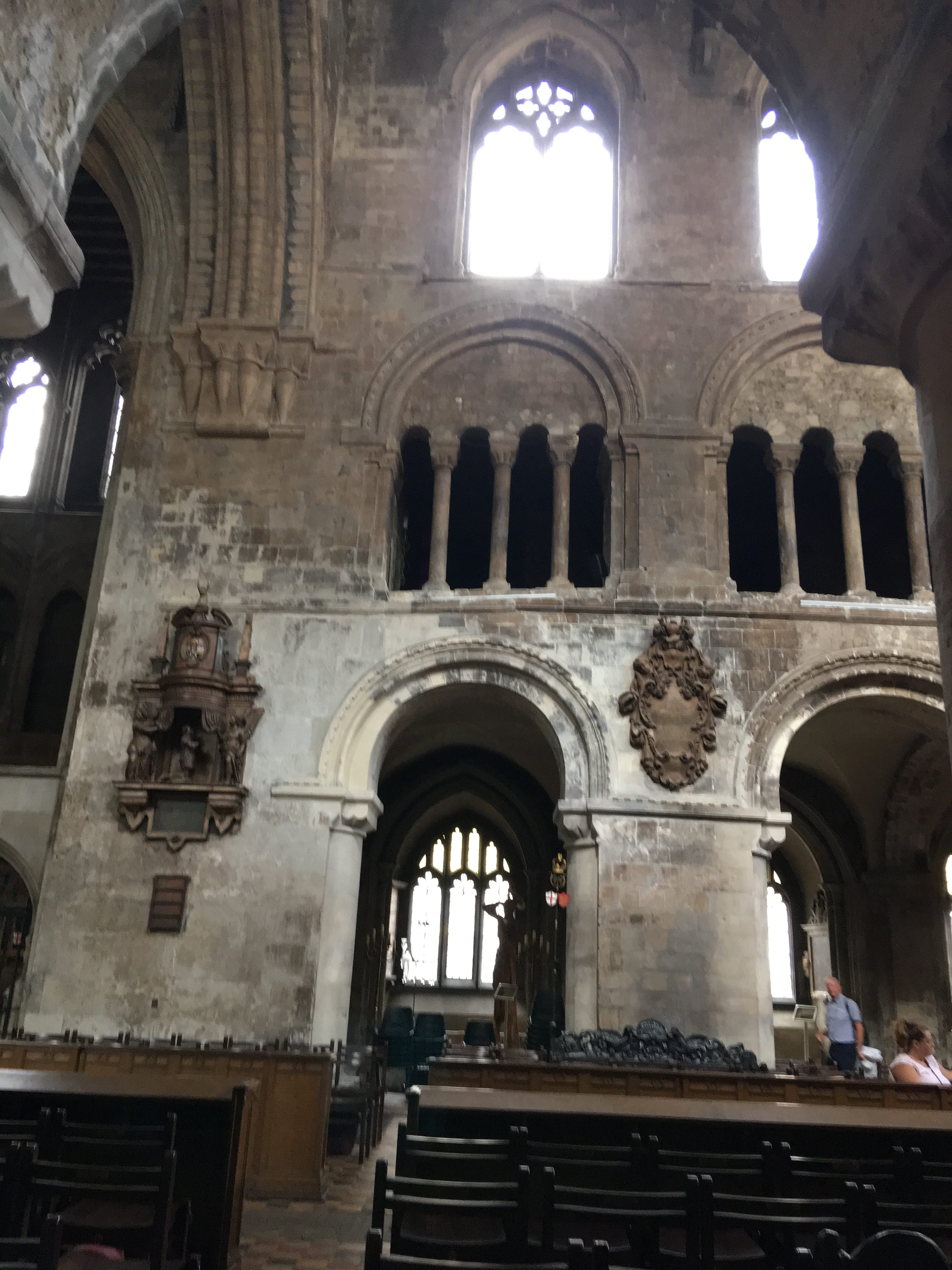
I have been in many, many old churches but St. Bart’s struck me immediately as really ancient.  Which of course it is.  But after visiting a dozen old churches in a month, they all blurred together. St. Bart’s was different.

As usual my photos won’t do it justice, but maybe they’ll give you a feeling for the place.

In old sites where they built one thing on top of another, it’s good to look up, down, and around so you don’t miss anything.  There were crypts that told sad stories.

I liked the contrast and detail in the flooring and wondered what was below the grating.

I spent a half hour inside, then wandered back out into the passageway.

I was glad I had come on a Saturday.  The quiet seemed fitting and I felt at peace.  I had a pint and a packet of crisps in the Rising Sun, then walked back toward the hotel, where I ran into Lynn and Richard having a bite to eat at a sidewalk café.

“They’ll let anyone eat in this neighborhood!” I exclaimed as I joined them.

Assisted Living, UK Style

There was a festive atmosphere on the bus, with all the Pride celebrators.  As we snaked northward, they alighted and quiet descended.  I got off at the Barbican and it was utterly deserted.

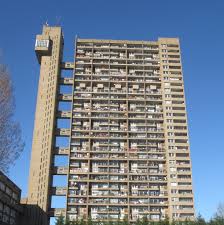
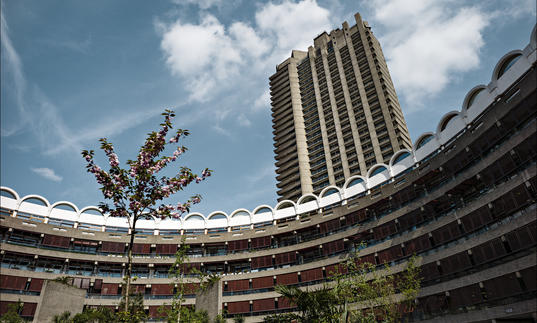
The Barbican Centre is the largest performing arts center in Europe. It’s designed in the Brutalist style.  One of my favorite London buildings, Trelick Tower, is Brutalist. I think it’s creepy but in a cool way.

To me, the Barbican is just not that interesting.  However, it is home to lots of wonderful companies, like the London Symphony Orchestra and the Royal Shakespeare Company.

My plan was to wander around the Smithfield neighborhood adjacent to the Barbican, then meet Lynn, Richard, and Possum at the hotel.  I had packed a backpack as light as possible for my two nights away but it still felt like I was lugging around a bowling ball after a couple hours.  Much as I love to daydream about hiking the Appalachian Trail or the Superior Hiking Trail, I am realistic that they are not for me.

Smithfields is not a “Top 10” London sights in any guidebook, so I was caught off guard by all the fascinating history it contained.  I don’t usually like to cut and paste from websites, but I’m making an exception today.

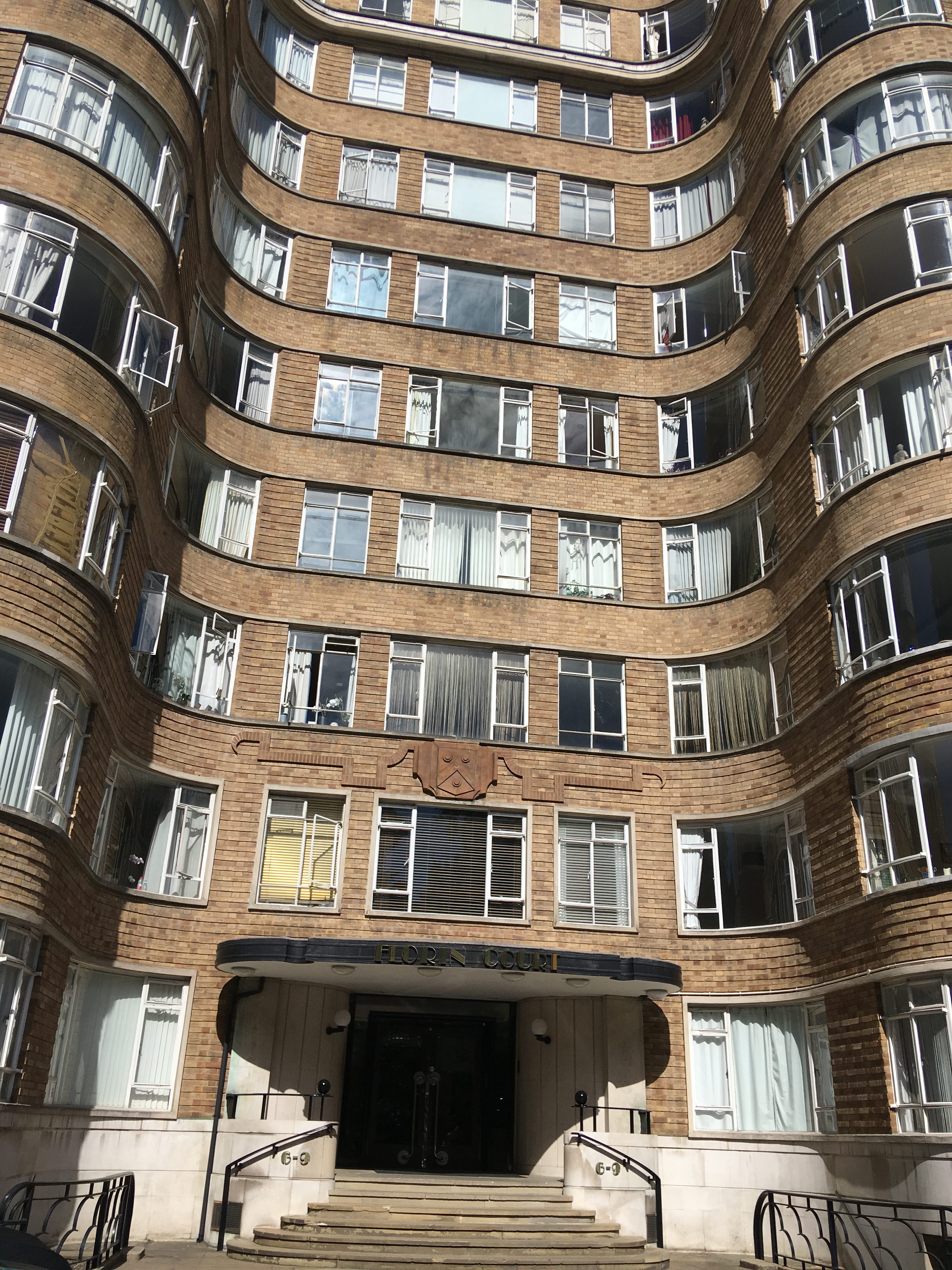
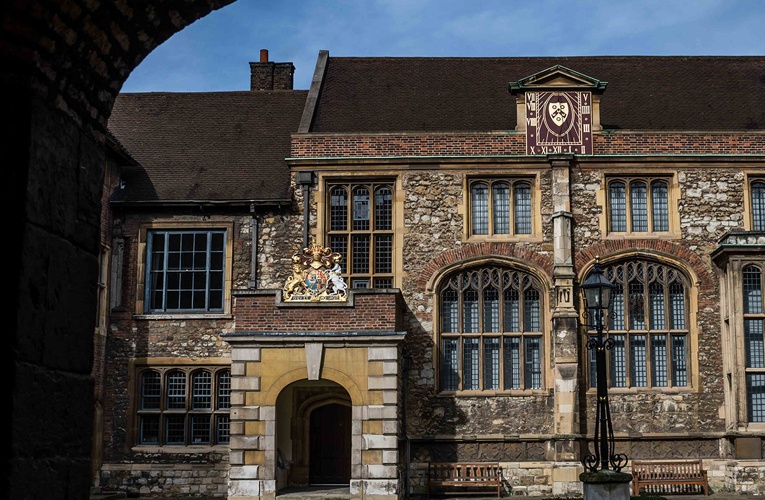
I passed through Charterhouse Square and this art deco apartment building which has served as the fictional residence of Agatha Christie’s character Hercule Poirot.

Here’s the Wikipedia 101 on Charterhouse Square:

“In 1371 a Carthusian monastery was founded by Walter de Manny on what is now the north side of the square. It was established near a 1348 plague pit, which formed the largest mass grave in London during the Black Death, and tens of thousands of bodies were buried there. The name of the monastery, Charterhouse, was derived as an Anglicisation of La Grande Chartreuse, whose order founded the monastery.

“The Charterhouse was dissolved as a monastery in 1537, and in 1545 was purchased by Sir Edward (later Lord) North (c. 1496-1564) and transformed into a mansion house. Following North’s death, the property was bought by Thomas Howard, 4th Duke of Norfolk, who was imprisoned there in 1570 after scheming to marry Mary, Queen of Scots. Later, Thomas Sutton bought the Charterhouse, and on his death in 1611, endowed a hospital (almshouse) and school on the site, which opened in 1614, supporting 80 pensioners ….”

That’s just the first 240 years.

An almshouse is a residence for “poor, old, or distressed” people, and the Charterhouse still serves this purpose.  Here’s what their website says:

“The residents of the almshouse, both male and female, are known as ‘Brothers’. This is a purely traditional term for those living in this community and acknowledges the past when there was a monastery on the site.

“The Brothers were originally those who could supply ‘good testimonye and certificat of theire good behaviour and soundnes in religion’ those who had been servants to the King ‘either decrepit or old captaynes either at sea or land, maimed or disabled soldiers, merchants fallen on hard times, those ruined by shipwreck or other calamity’.

“The Brothers are selected from a wide variety of professions, which includes teachers, clergymen, writers and editors, musicians and artists. At entry they have to be over 60 years of age, in need of financial and social support and in good health. They must be able to live independently but have a desire to be part of a supportive community following a very simple set of rules. Their accommodation is entirely private. All the meals are taken together in the Great Hall and many Brothers participate in the many social events that take place. Many Brothers contribute to the life of the Charterhouse by giving their time as tour guides, arranging entertainment and visits, editing the Charterhouse Magazine (a twice yearly in-house publication), cataloguing the extensive artwork and volunteering to help with events. The Brothers meet as a group at least four times a year with the Master and other senior staff to discuss current topics.”

Now that’s my kind of assisted living!  And here’s the building:

Not too shabby, eh?  If only I were a UK resident, I would say I had found my retirement plan.

London Crawling

Lynn organized a London weekend to celebrate her birthday. She and Richard flew down from Scotland and Possum and I met them for a West End show, Lady Day.  Lynn arranged everything—hotel rooms, tickets for the show, and a pre-show meal.  Of course we bought her presents too, but it’s the fun times like these what we remember later, right?  Not the stuff.

From London I would go to Stonehenge the next day.  A friend who was coming from Minnesota was supposed to have gone with me, but back problems forced her to cancel her trip.

This highlighted a dilemma about travel planning.  Do you buy travel insurance?  I never do, but my friend had and she got a refund for her flights. She paid around $80 for the insurance, but that was nothing compared to losing $1,400.

I had already paid for the Stonehenge tickets.  I couldn’t find anyone to join me so I was out the price of one ticket, about $20.  Should I have waited to buy the tickets?  No, because Stonehenge books up fast in the summer, especially on the day we wanted, which happened to be on the full moon.

My friend had reserved for our tickets for Windsor Castle.  She couldn’t get a refund for them, so she was out $20 and we came out even.

Whenever I lose money like this I consider it a donation to the National Trust.  Lord knows they need it.  Losing triple digits to Expedia or Delta?  That can’t be shrugged off.  Next time I book a flight I’ll look into flight insurance and whether my credit card covers anything.

As usual I meticulously planned my jaunt into London and the boomerang bus ride I would have to undergo to get to Stonehenge.  More about the latter later.

This was the first time I would catch a bus from Waterloo, as opposed to the tube.  When you get off the train at Waterloo the signs quickly devolve from the helpful “All London Bus Stops” with an arrow, to “Buses,” with an arrow, to what could be interpreted as a bus icon with an arrow, to nothing. When I exited the station, there were clearly marked bus stops A through E, but no F, which was what I needed.

London is a mob scene any day of the year, but this was the day of the London Pride parade.  The city was teeming with revelers in rainbow wigs, hats, T-shirts—singing, drinking, laughing and having a great time.

Overstimulated, I started to feel the usual panic that I was lost.  I would never find the right bus stop, would never get to the hotel, I would probably end up unconscious in an alleyway, my ID gone and with amnesia; I would wake up in a locked mental unit, blah, blah, blah.

I’ve written in detail about this syndrome of mine. This summer was good practice for me to just notice it—not try to push it away but not indulge it—and carry on.

Think, Anne—think.  Or better yet, look at the area map five feet in front of you.  Stop F was just around the corner.  In fact once you knew the plan, it was obvious that the stops were arrayed in alphabetical order around a gigantic roundabout.  You just couldn’t tell it was a roundabout because it was impossible to get a view of the whole thing, with pubs and souvenir shops and hundreds of double decker buses blocking the sightlines.

The people watching was so good, I didn’t start to worry again until the third Number 4 bus drove past with an Out of Service sign.  Others who were waiting shrugged and started to walk.  There was no way I could walk—should I take a cab?

Just then, a Number 4 arrived and I happily dumped my exact fare in coins into the collection plate.

“No cash, love,” the driver said.  “Cards only.”

I dug out my credit card and tried to swipe it.  “No, love—Oyster cards.”

Damn.  I hadn’t gotten around to buying one.  But in line with the general celebratory mood of the day, the driver winked and waved me aboard.

A Hole in History

I walked around Canary Wharf after my meeting.  Every single person appeared to be under 40 and was dressed like this.

Yes, there were women too and they were also attired in blue.  Blue was The Colour.

I still felt schlumpy but what did I care?  Now I was a tourist and I intended to wear down my heels even more.  I would take the rest of the day off and wander around.  A sign directed me to the Museum of London Docklands.  The Docklands was, I thought, exactly where I had stayed 30 years before.  The area was unrecognizable, with market vendors’ stalls replaced by food trucks selling “gourmet” macaroni and cheese.  Just as in the US, there was a queue 50 people deep waiting for the privilege of paying £8 for what you could make at home for £1.

I passed a sign pointing to Poplar, an area popularized (that was unavoidable) in the popular (sorry!) TV show Call the Midwife.  The street signage was good and I found the museum easily.  It was free, which was a bonus.

If I had been in the mood to learn about the sugar and slave trades, I could have spent all day there.  Instead, I focused on three exhibits and breezed through the rest of it.  The first exhibit was a recreation of a seedy dockside from maybe the 18th Century, complete with pirates in pubs, houses of ill repute, and the obligatory dental surgery with giant pliers prominently displayed.  This area was undoubtedly for kids, but it was my favorite so what does that say about me?

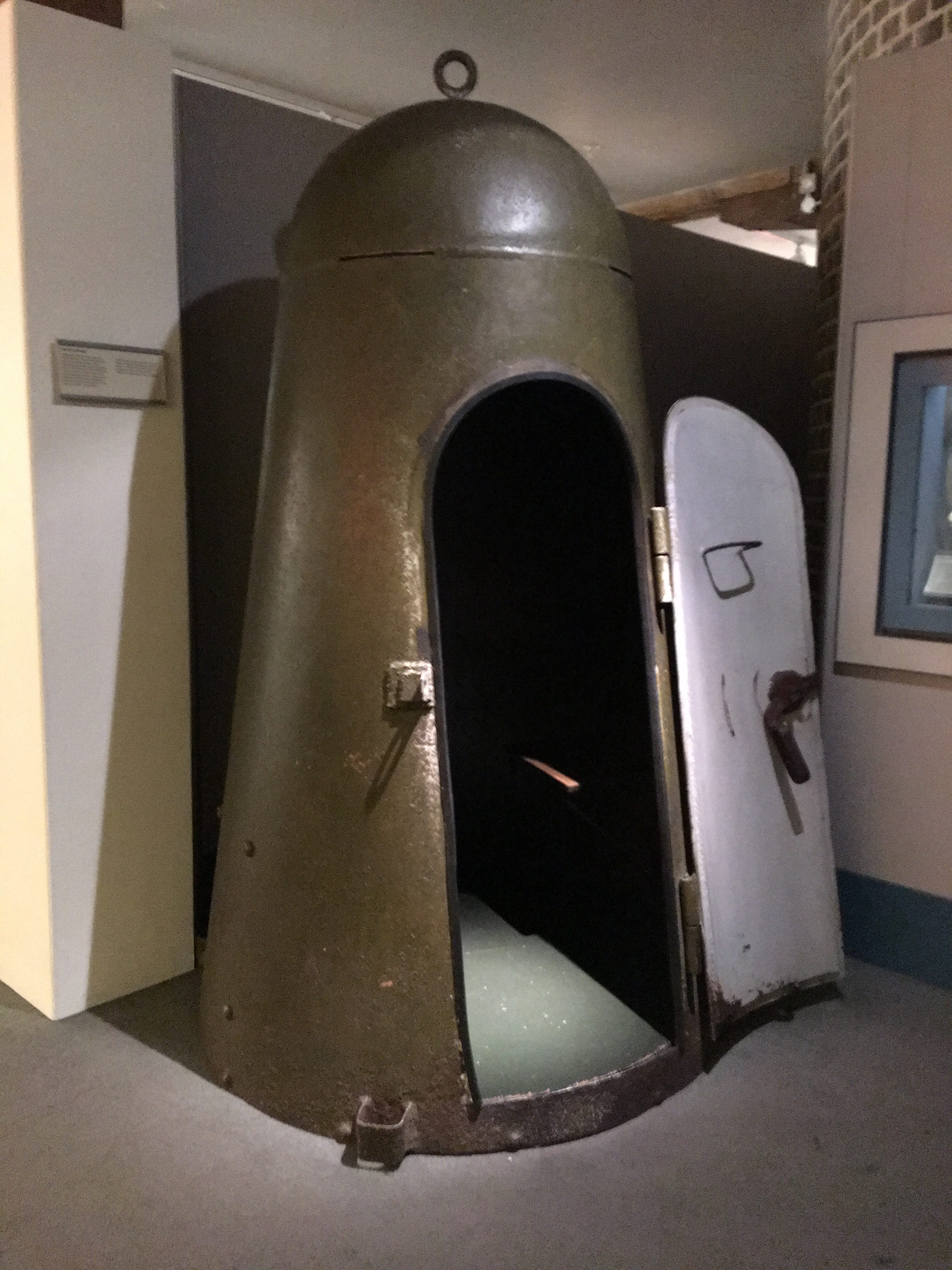
The second section I perused was about World War II specific to the Docklands, featuring bomb shelters for families and singles or couples.

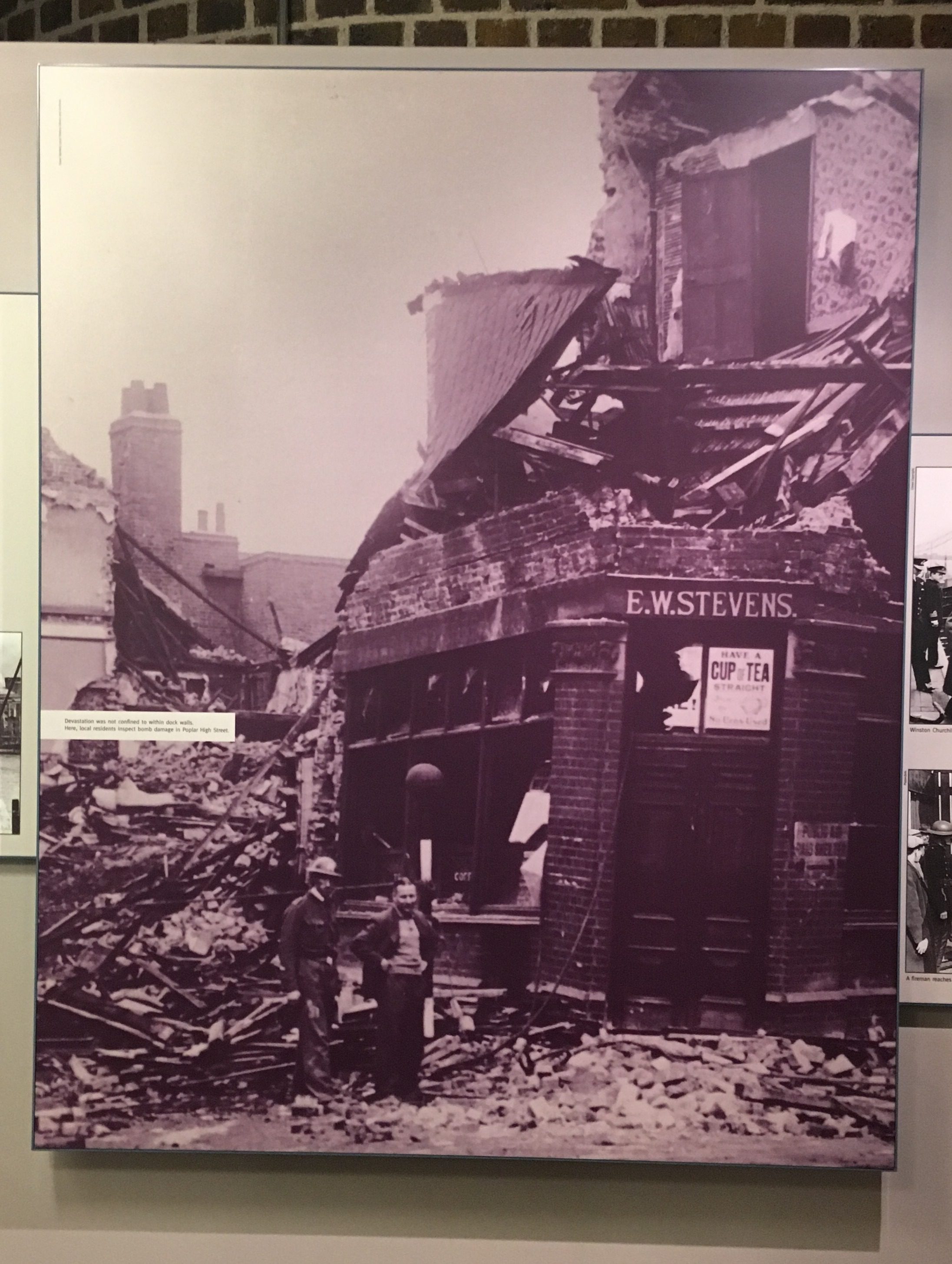
This is the damage the German bombs wreaked:

Imagine, coming across one of these while hoeing potatoes in your garden, five years after the war.

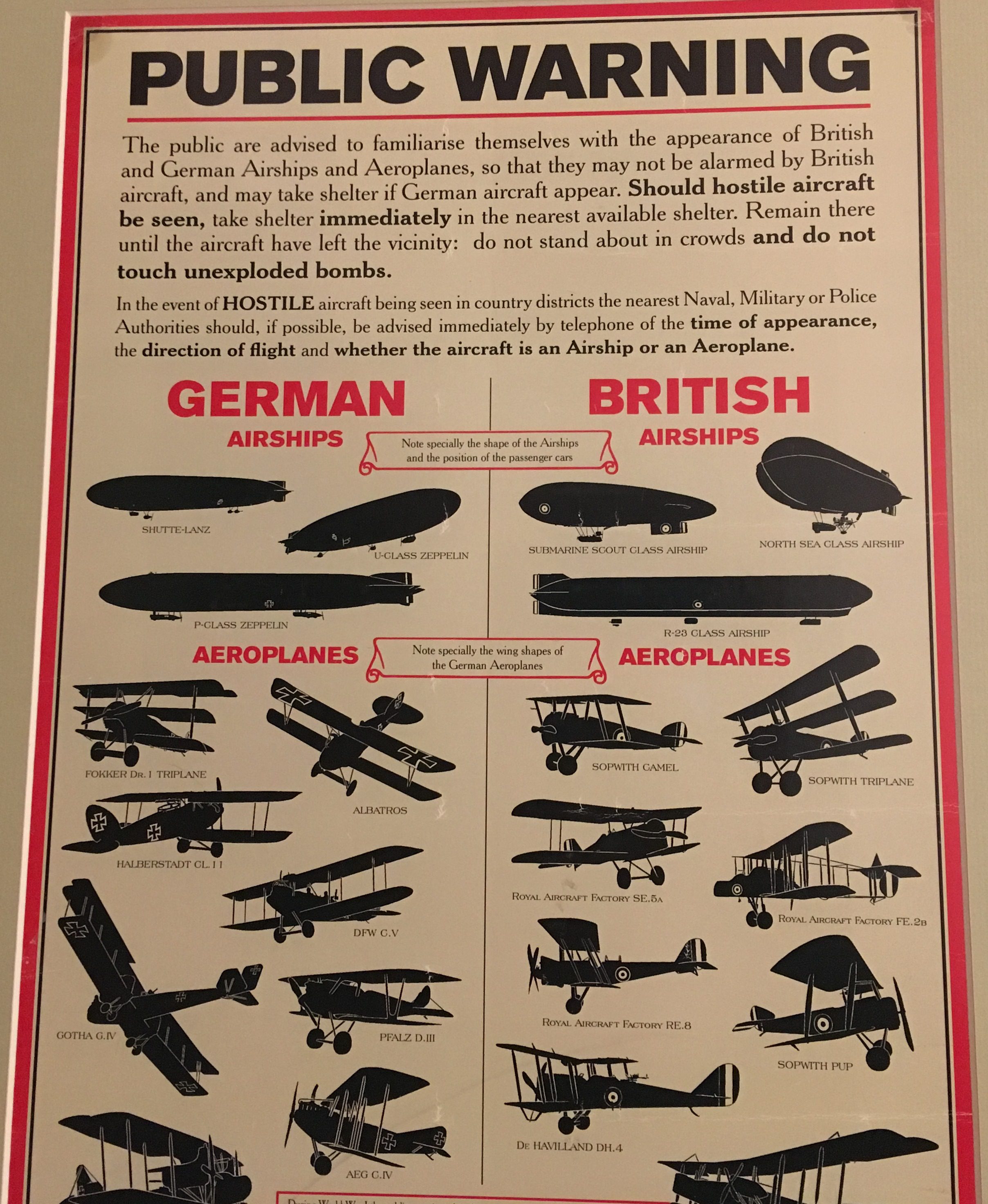
I’m fascinated that people were expected to discern German from British bombers. Can you imagine teaching your kid, “Now Jimmy, study this carefully.  The ones on the left are the bad planes.  When we see them we run for the bomb shelter so we don’t get blown to smithereens like the Evans family.”

I don’t know about you, but I could study this poster all day—even have it in my hands while looking up at the sky—and I would never be able to tell the difference between the good guys and the bad guys.  In the dark, under stress?  No way. I imagine all this well-intentioned poster did was make people more anxious.

They had their version of the American icon Rosie the Riveter; recruitment campaigns to bring women into the workforce to take the place of the men who were off to war:

Of course as soon as the war ended, the women were told to go back home and have babies, which set the stage for women’s lib.

There was a bonus exhibit at the end that displayed items found in the construction of Crossrail, the new Elizabeth train line being built in London.  Imagine, tunneling 26 miles under London, with all the other tube lines down there.  It being London, they had to stop every five feet to make sure they weren’t grinding up a significant archaeological site.  Here’s my favorite artifact, a chamber pot:

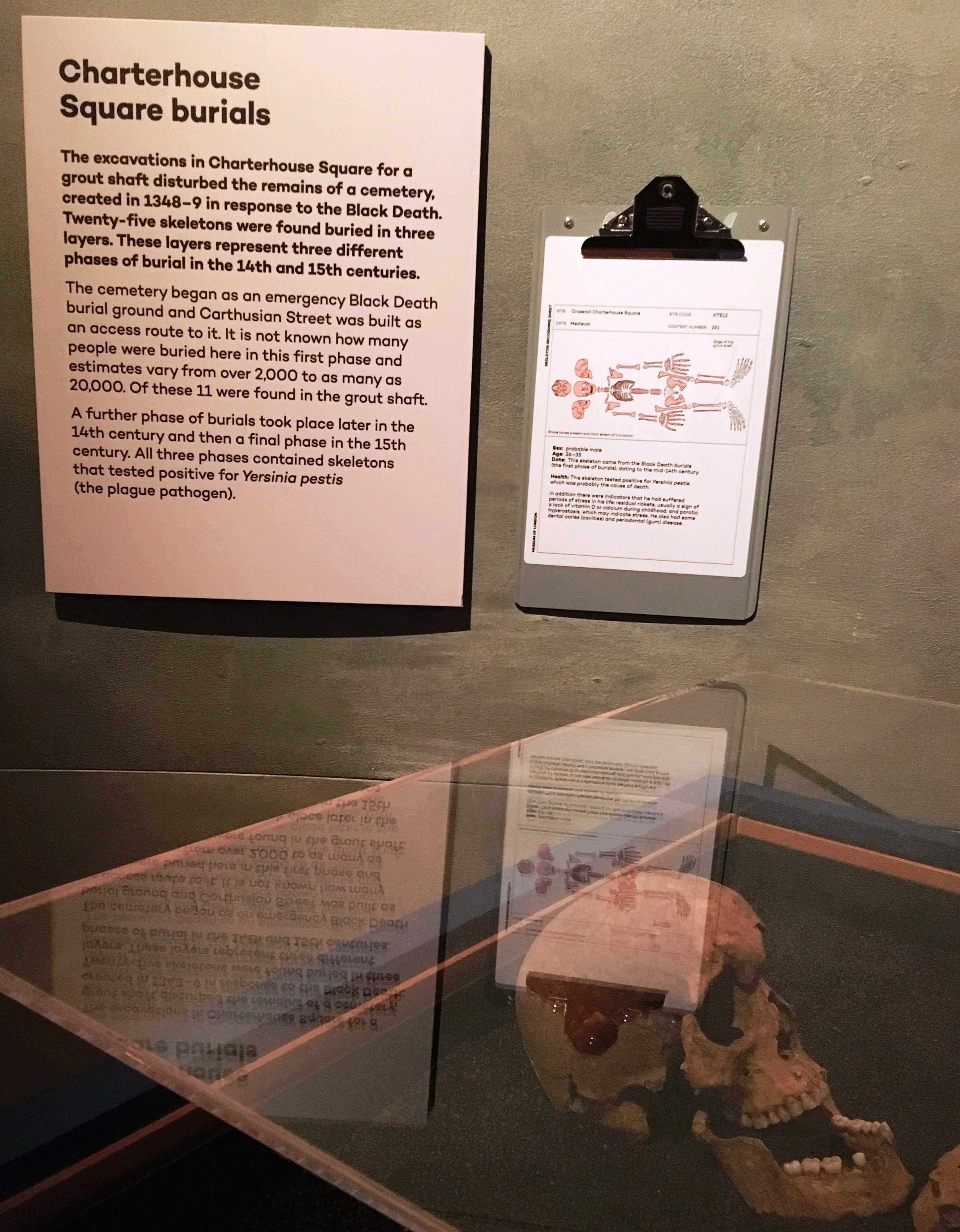
There were skeletons recovered from plague cemeteries.  People died in such numbers they had to be dumped into mass graves—before the grave diggers caught the Black Death and followed their customers into the ground.

I had my eye out for something about the story of how Pakistanis came to work the docks in the 50s and 60s after Indian independence and partition.  It was hoped they would work for cheap, then go home.  But they stayed and brought their families.  This had been the whole learning topic during my Volunteers for Peace week long “work camp” in the east end in 1988.  Now Sadiq Khan, a British Pakistani, is Mayor of London.

There was nothing.  Nothing!  I just went to the museum website and searched for “Pakistani” and found nothing either.  Did I imagine this big historical story, or get it wrong?

London Heels

Once I knew I was going in the right direction, settled back and enjoyed the lovely landscapes along the route.  The word “sweet” comes to mind when I gaze out over the English countryside.  That may sound patronizing but it’s not meant to be.

If you like rugby you will probably want to put Twickenham on your bucket list.  I made a mental note to avoid it on game days.

As we rolled into London there were some great views.  For once I have an excuse for my poor quality photos—taken from a moving train.

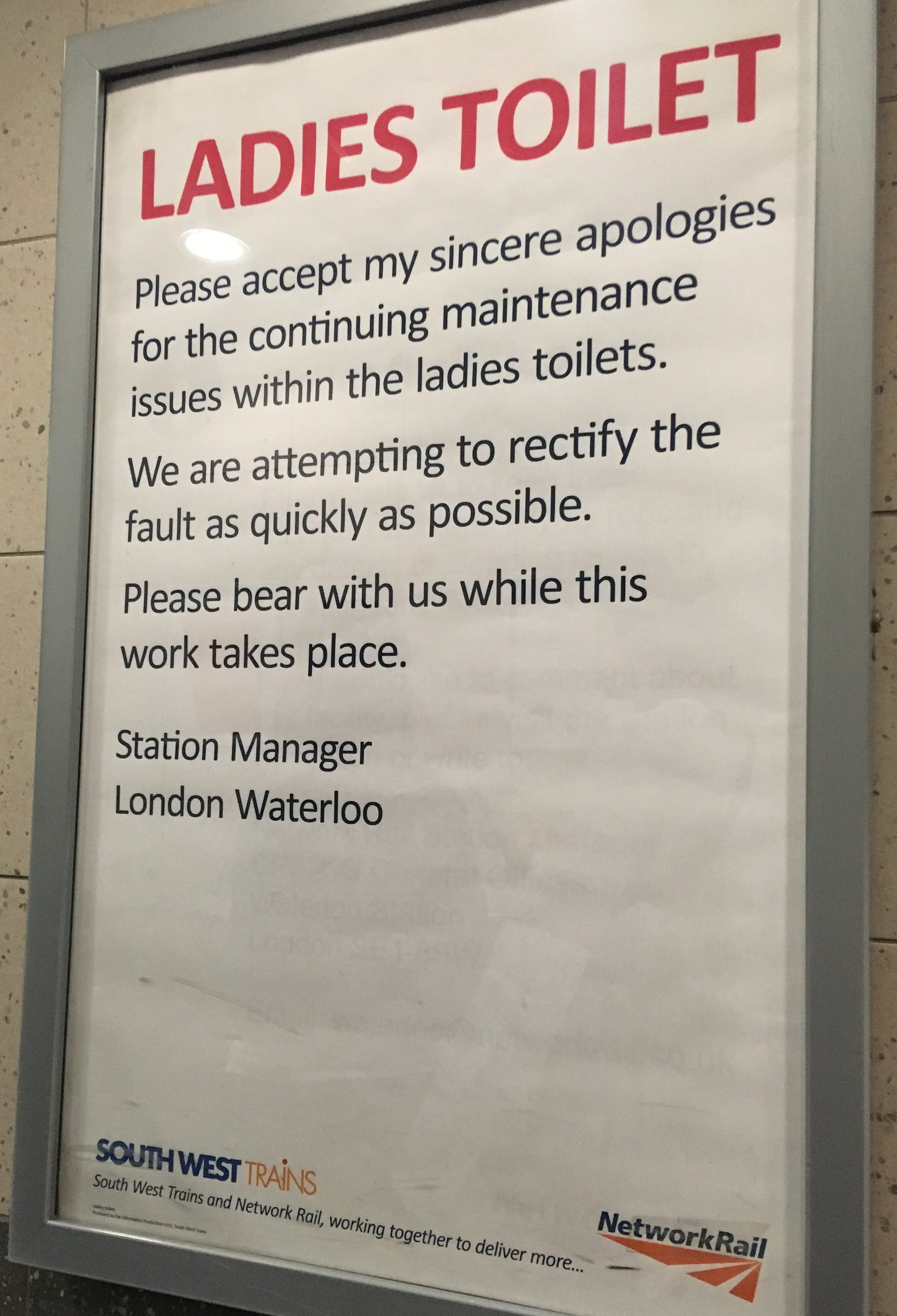
Waterloo would be my toilet stop every time I came into London.  This sign was still in place a month later, so “as quickly as possible” really meant, “someday, maybe.”

The sign made it clear that your 30p got you one visit to the toilet.  I wondered if someone had sued them, insisted they had bought a lifetime pass.

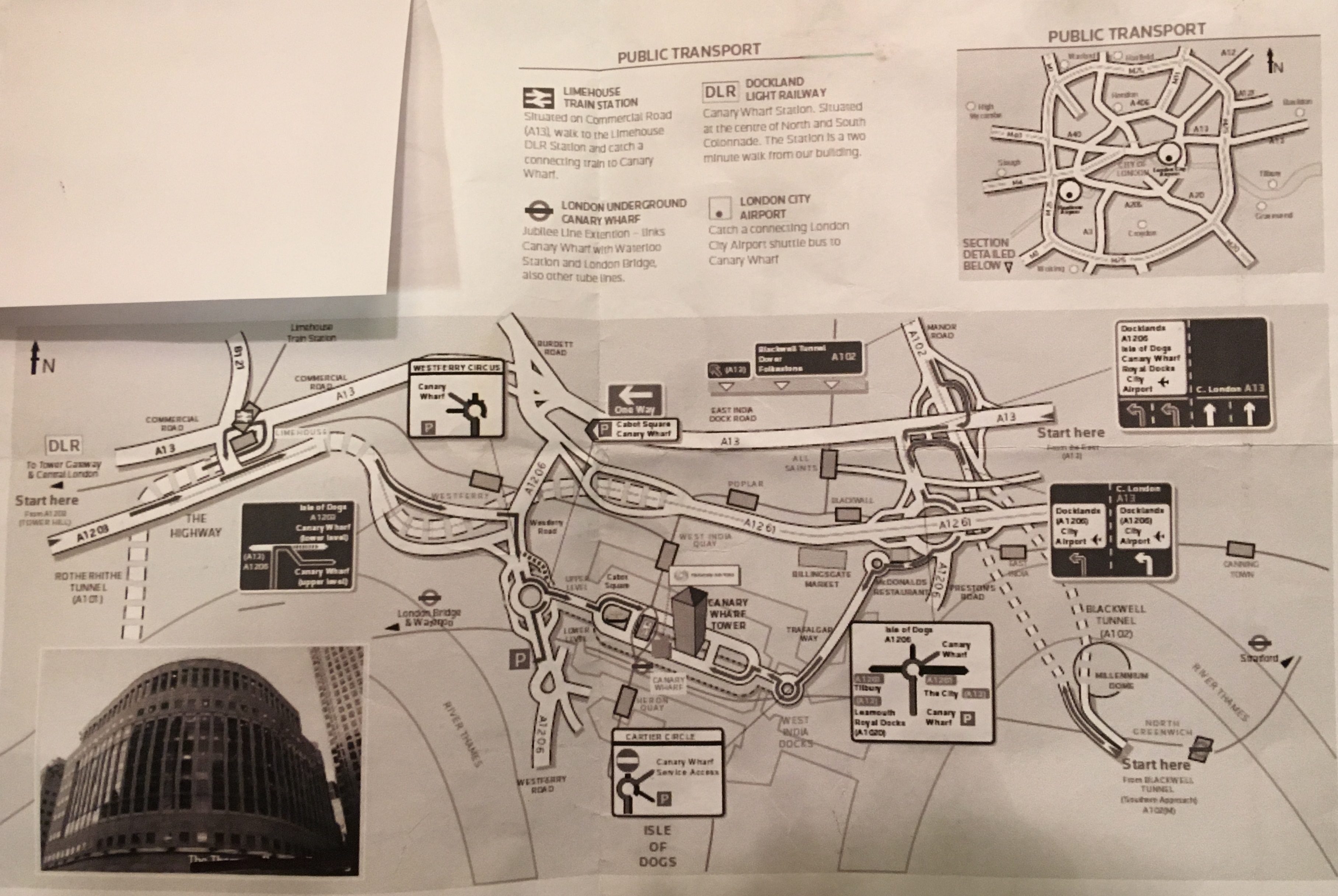
Then I was on the underground, which whisked me under the Thames toward Canary Wharf, where I would exit and try to find my meeting.  I was anxious about finding the building.  What if I took the wrong exit out of the tube station?  What if I got turned around?  They had sent me a map, which was even more out of focus than my photos and really just a jumble of unhelpfulness.

It showed a picture of the building, but how would I find it among all the other buildings?

The first time I came to England, 30 years ago next year, I had stayed somewhere in the vicinity of Canary Wharf.  Then, it was all gritty warehouses, Pakistani immigrants and elderly Holocaust survivors and native English speakers whose English I could not understand; street stalls selling tiny apples and pet goldfish suspended in plastic bags and possibly dodgy cassette tapes by Billie Ocean, Bananarama, and New Order.

Now it looks like this, according to a local news site:

I stepped out of the tube station and saw this:

Of course it didn’t have a giant black squiggle on it but you get the idea.  When will I ever learn to stop worrying and trust that I’ll be able to find things, especially when I have a map and a photo of the building?

I had dressed and accessorized carefully, making the best of what I had.  I had bought a really cute top in Cornwall that was suitable for a country holiday and I thought I could make it work paired with dress pants, my good jewellery, and an up do.  I felt professional when I left the house.  When I entered the building I immediately felt like a schlumpy schlimazel, which is just what it sounds like.

I waited in the gleaming lobby furnished with sleek Danish modern furniture.  I was sure the water glass the attendant handed me cost more than my entire outfit.  The reading selection on the table included The Financial Times, Economist, Wall Street Journal, and International Business Times.  All the headlines were about rich people making deals that would make them richer.

I noticed my heels were a bit worn.  Note to self: Buy new shoes before next work meeting.

One of the people I was meeting with arrived.  She was 30 years younger and 30 pounds thinner than me, blonde, and dressed in stilettos and a killer designer outfit. Mercifully, it was all over in 30 minutes.

I have been to meetings with foundations and corporations.  I’ve been to Ford and Open Societies Foundations in New York.  At Chiron Corporation in Silicon Valley.  And so on.  I normally carry myself well in these meetings and I had come carefully prepared.

But then I spilled my water and as we were wiping it up, my nose started running like a garden hose and I had to ask them for a tissue and blow my nose in front of them. These people were lawyers and I don’t know if they were on the clock but they were clearly impatient and possibly appalled by me.  I managed to maintain my dignity, make my points and ask my questions, but I was relieved when the revolving door swung closed behind me.

Kaukokaipuu

I don’t normally promote travel services, hotels, etc., but I would like to make a plug for a travel agency I used to book my flight to the UK.

You are probably thinking, “A travel agent?  Didn’t they go out with video tapes and big hair bands?”  That’s what I thought, too.  Everything is online, right?  Expedia, Orbitz, Kayak; there’s no need to pay someone to find your cheap flight.

But a coworker told me how an agent had saved him about $500 on a flight to Japan.  The agent and I went back and forth.  This was London, not Japan, so the savings were only about $50, but still—that’s $50 more I’ll have to pay for fun stuff.  If you’ve got an upcoming trip, feel free to contact Caroline at caroline.b@airconcierge.com and tell her Anne sent you.

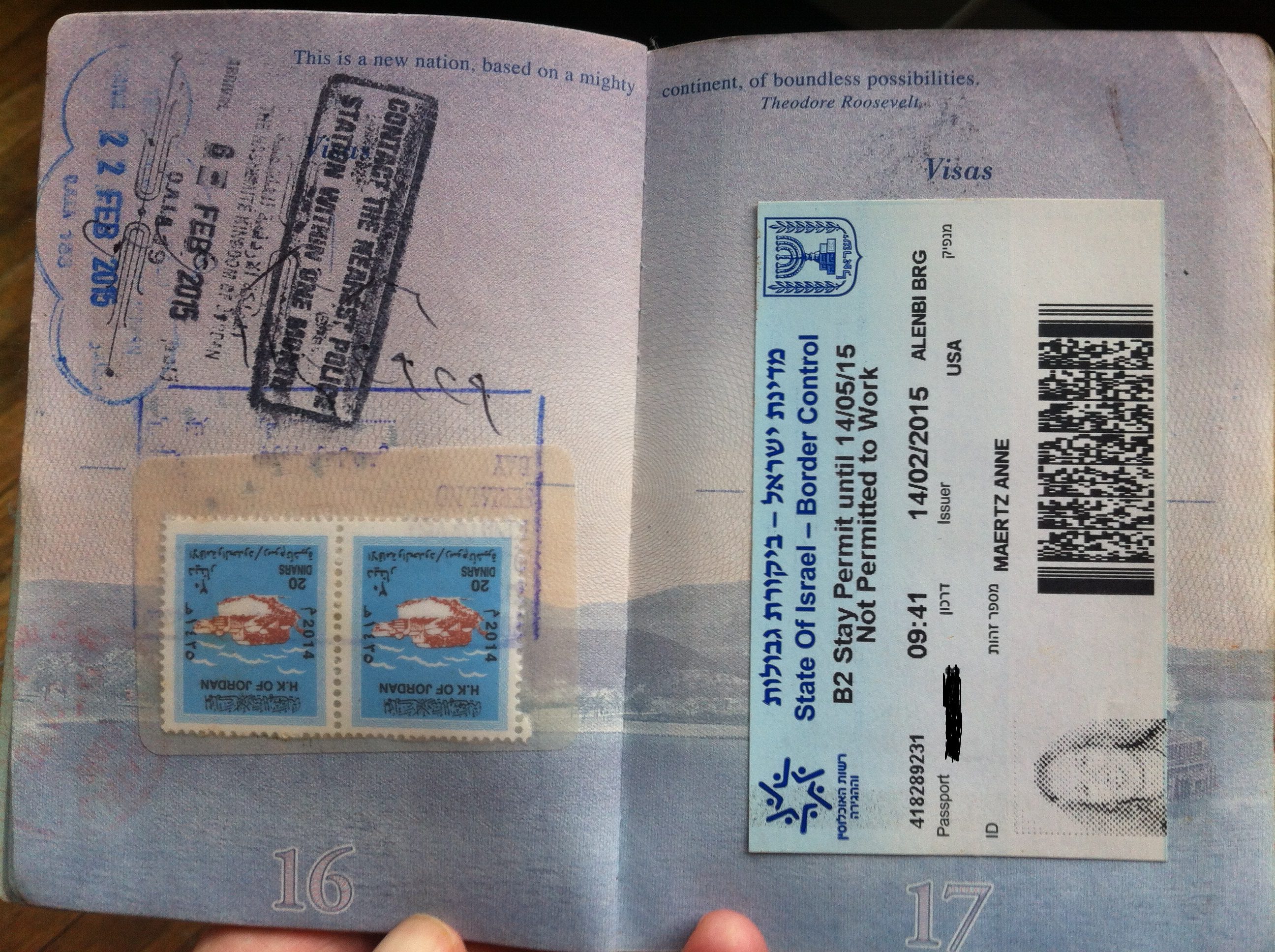
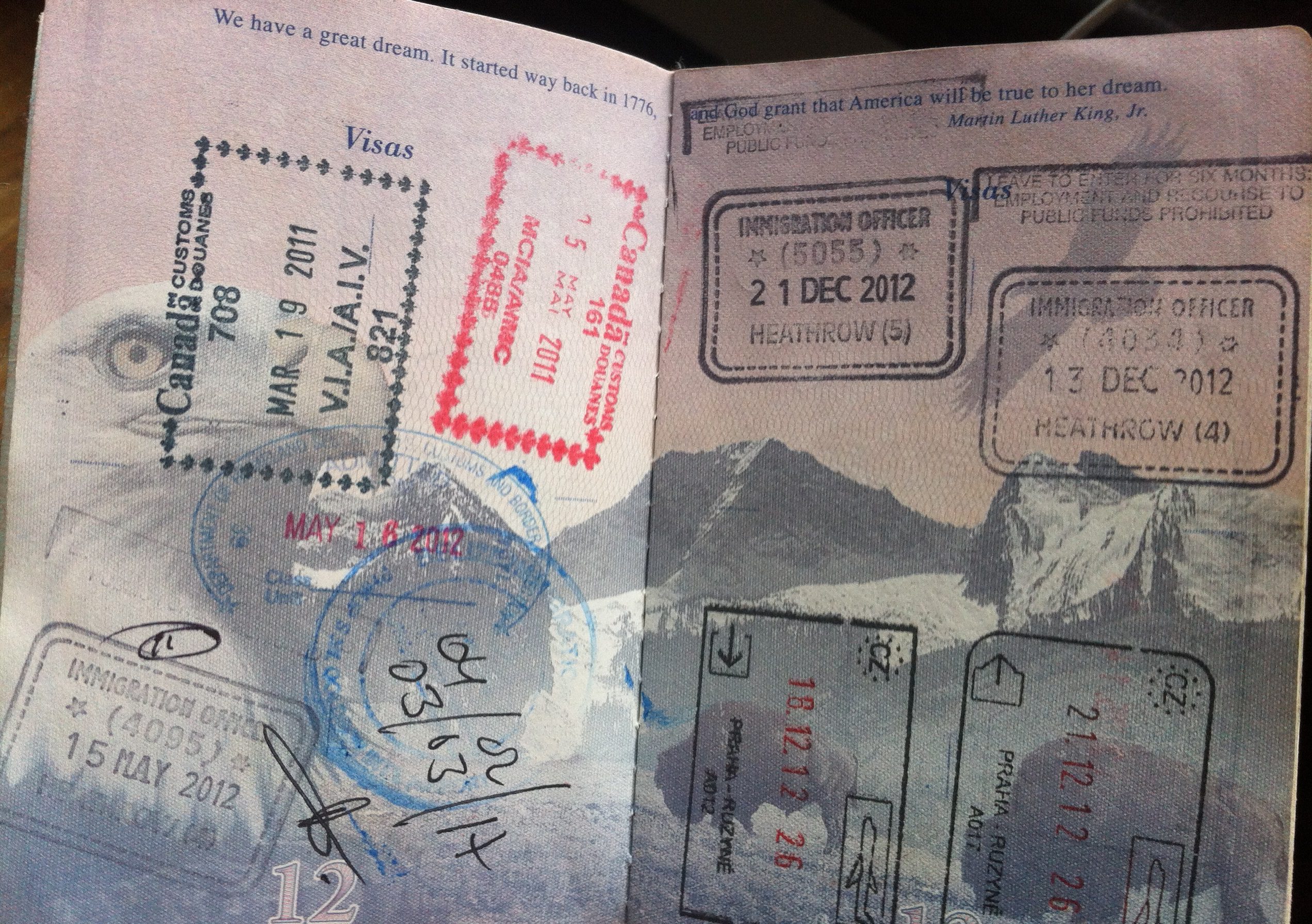
I’m renewing my passport.  I always find it difficult to put the old one in the mail.  What if it gets lost?

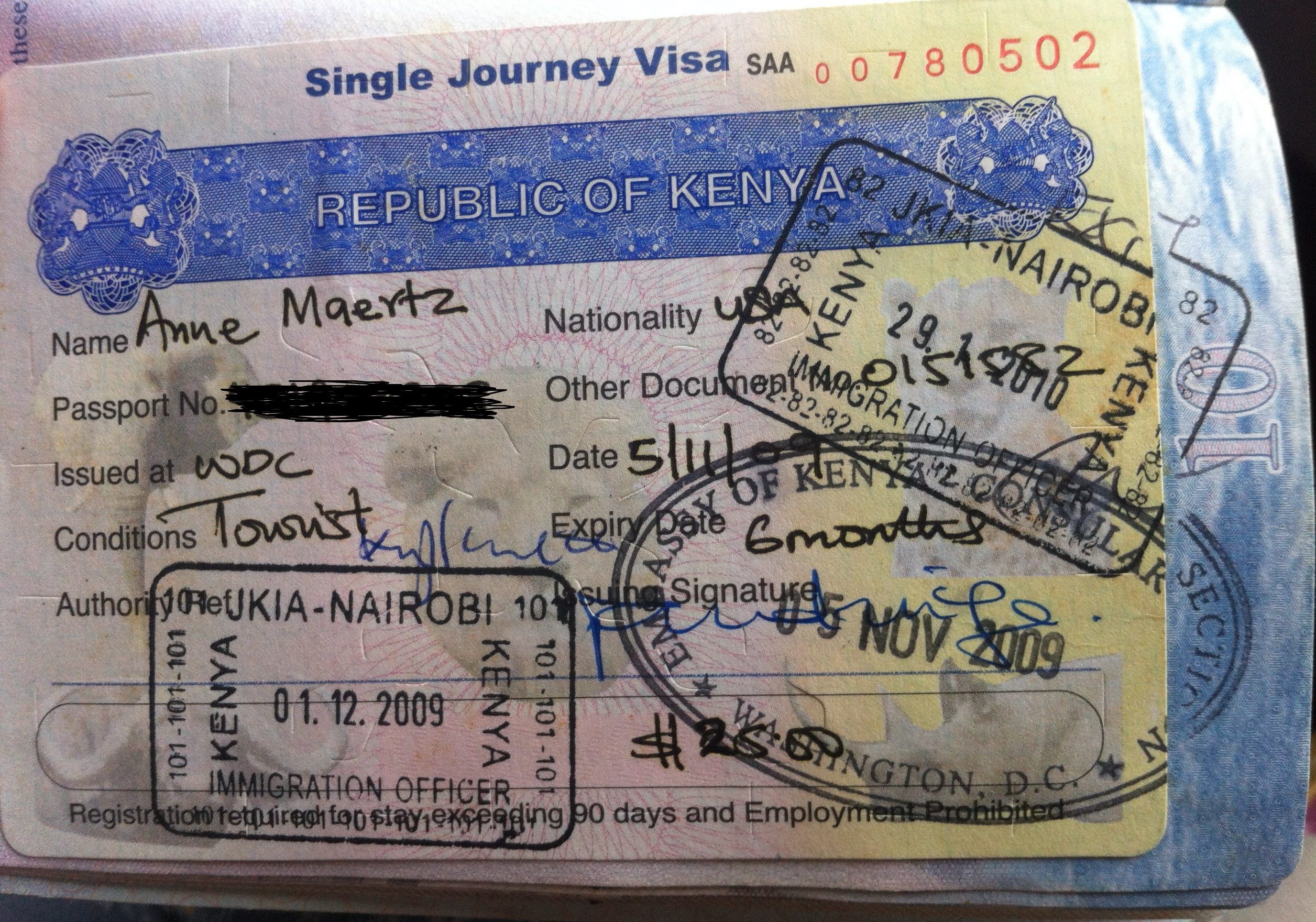
I once worked in the HR department of a certain international organization, so I know how precarious it can get.  I would have to get a transit visa, for instance, for a Canadian public health nurse who was coming to the UK for orientation before traveling on to work in Kenya, via Dubai. She would mail her passport and extra photos.  I would fill out the paperwork, stuff everything in an envelope, courier it to London, and hope for the best.  If all went well, the courier would return with a transit visa and I would mail everything back to the new employee in Canada well in advance of her travels.  There were a few close calls, but the Home Office always came through.

Sometimes when we had leftover passport photos, we would talk about who we thought would make good-looking couples.  Coworkers who had been there a long time accumulated drawers full of photos, so we strung them together and used them to festoon our cubes.  This is probably not something we should have done, so shhhh….don’t tell anyone.

I went to Walmart to get new passport photos.  I hate Walmart, but you can’t beat their price of $7.50.  I was relieved when I compared my pics from 10 years ago to today; I didn’t think my face hadn’t aged more than 10 years.  I accept that I’m aging, but I don’t want to look older than I am.

I reminisced over the places I’d been in 10 years: multiple times to the UK.  Jordan, Israel, and the Occupied Palestinian Territories.  Kenya, Dubai.  Guatemala, Belize. France, Germany, Italy, Malta, Spain.

I talked to my sister and told her I was thinking of summering in the UK.

Our mother and her husband were planning a move to a senior apartment building in April.

“I feel like it’s a good time to do something like this,” I told Connie. “Mom and Jim will be safely ensconced where they’ll have transportation and help if they need it.  Vince is out of prison.  You’re in the clear.”  Connie almost died of colon cancer two years ago.  She had just had her semi-annual battery of tests and been told she was cancer free.
“Yeah,” she replied, “By the way, I was over there today and they’re now saying they’ll wait to move until June.  They want to enjoy one more spring in their house.”

“What!?” I asked, “Do they realize they’ve signed a lease and they’ll have to pay rent for an empty apartment for month?”  Yes, she said, they knew that.

“I guess I can stick around through June, to make sure they’re all settled,” I said. “My remote work request isn’t official yet.”

No,” Connie replied, “Go—you should go.  If it’s one thing I learned from thinking I was going to die within days, it’s that you have to live now.  So go.”

A friend who is an artist gave me a handmade birthday card that said Kaukokaipuu on the cover.  It’s a Finnish word which means “craving for a distant land.”

I’ve always craved distant lands, but since Connie’s illness, Angus’ death, my mother’s frailty, and my son’s stint in prison, I’m feeling Kaukokaipuu on steroids.

Windsor Bound

I’m at a writing crossroads, having written 65 posts about my trip to Italy, Spain, and Malta.  Next up, Belize and Guatemala.  But first, some exciting news. I’m going to spend the summer in the UK.  Yes, the whole of June, July, and August!

It all sprouted, as many trips do, from something completely unrelated.

I learned that the guy I dated when I lived in the UK 10 years ago had died of cancer.  I’ll call him Angus.  He was only 55.  He was a Yorkshire man, so he had a great accent, and he was a maths teacher at the Jewish Free School in London, the largest Jewish high school outside of Israel.  He and my friend Sam were friends, and Sam introduced us.  We hadn’t been in touch for years; our relationship had been fun but not serious and we knew we’d never be able to live on the same continent due to visa issues.  He was such a crusty but sweet guy, if you can imagine those two characteristics in one person.

I was exchanging emails about Angus with Sam, who is originally from Bemidji, Minnesota.  And then he mailed and asked if I would like to house sit for him while he and his family are back in Minnesota for the month of July.  Sam teaches at Eton, the posh boarding school for boys founded in 1440 by Henry VI.  Sam lives in nearby Windsor, just west of London.

Of course I had to think about it—not.

I said yes, then got to thinking … why not take Lynn up on her invitation to let me to stay with her and Richard in Scotland?  August is a good month for weather up there.  And as long as I’m over there, why not try to get permission to work remotely, cut down to 80% time, stay the whole summer, and travel around on my time off? I could get to Croatia or Munich for a long weekend on cheap Ryanair flights.

I started making lists.  I could rent out my condo. What about my plants?  Could I invite a friend to visit me in Windsor?  Ask Sam.  Where would I stay in June—could I rent a canal boat on the Thames?  How close is Windsor to Highcleer Castle, where Downton Abbey was filmed?  Forward mail to Vince.  Cancel newspaper.  Would I store my car?  Put in remote work request.
Late Friday afternoon, I impulsively went on Craig’s List and contacted the first advertiser I found.  A couple from Minneapolis who retired to Florida wanted to be in the Twin Cities for the summer to visit their children and grandchildren.  I killed myself cleaning and arranging things on Saturday so I could take alluring photos of the condo.  We exchanged a lot of emails, and one of their daughters came by on Sunday to see the place.  They wanted in, and my condo association management company would manage the rental so I wouldn’t have to deal with an overflowing toilet from Scotland. With a renter I wouldn’t make a profit, but I wouldn’t lose money.  Everything was perfect!

Except, I didn’t yet have permission to work remotely.  That’s when the What Ifs set in.  We have lots of people who work remotely. But what if I was the first person my employer said no to?   Would I file a grievance?  That would be awful.  I could ask for an unpaid leave for the summer—would they grant it?  Could I afford that?  What if they said no to that?  Would I quit?  I can’t afford to quit!  I would have to tell the renters the deal was off.  And around and around my mind raced.

In the back of my mind, I think I knew all would be well.  Looking at the facts, there was no reason my employer would allow other people to work remotely—from North Carolina, South Africa, Los Angeles, Arizona, Italy, Colorado.  But the mind wants to be in charge.  My mind wanted to have answers, to have certainty, even if that meant a no.

My request was granted–no drama!–so away I go.

Do Gooder Abroad

The first overseas trip I took was to London. It was 1987, and Vince and I had become obsessed with Dr. Who and spoke to each other in terrible English accents. I read that the guy who played the Doctor, Tom Baker, was going to be in a play in London. Like so many trips I’ve taken since, it was that slim thread of a reason that got me started.

But I had also gone to a lecture by Arthur Frommer, the travel guru, on how to travel cheap. He mentioned volunteering with places like Volunteers for Peace. I paid my $400 for the one-week “experience”, bought a plane ticket, and away I went.

Looking back, I can hardly believe I did it. The only other country I’d ever visited was Canada, where in those days you could flash your driver’s license as you drove over the border. I don’t remember what I did there; probably fed potato chips to black bears out of the car window.

My mom was more than happy to keep Vince, who was nine. He was happy to be spoiled.

I went a week before the program started and from dawn to dusk saw all the sights. With my map in hand, searching hopefully for a street sign and stopping people to ask directions, I must have reminded them of Crocodile Dundee in the scene where he says “G’day, mate,” to every passerby on the sidewalks of New York. As I was informed in due course by my fellow volunteers, I was a “typical American” because I wore jeans and what we used to call tennis shoes and I complained that there was no Diet Coke or ice or ketchup.

I was dazzled by the Crown Jewels. I saw Tom Baker on stage in “An Inspector Calls.” I went to Friday services at a synagogue and saw a woman with numbers tattooed on her arm. I got lost over and over which led me to the Dickens Museum, which turned out to be my favorite museum. I was propositioned by a creep in Hampstead. I stayed in a “hotel room” the size of a cracker box with a cold water bathtub down the hall lighted by a dim, bare bulb. I got the exchange rate backwards and paid way too much for a sweatshirt at the Hard Rock Café. I stole some toilet paper from a public toilet that had “Council Property” printed on every square.

You know, the usual London stuff. I took a lot of pictures of cars; I’m not sure why.

UKCars

My VFP group included 20 20-somethings from Poland, West Germany, Holland, India, Sweden, Italy, Spain, and Mauritius, a country I’d never heard of.

We were there for a “work camp”—a terrible name but basically VFP housed us in flats in London’s East End and we babysat immigrant kids during a school holiday so their parents wouldn’t have to take time off work. The flats had peeling wallpaper, cold water, and mattresses on the floor. The smell of rotting garbage was constant.

I was bewildered that my fellow volunteers weren’t hooking up or drinking. I would have expected that from an American group, but these kids were so serious.

Bengalis

At night we were lectured to about how the Bengalis and Pakistanis and Indians came to work in the East End basically as indentured servants, and how now the National Front was outraged they “these people” were bringing their families over.

NF Boys

The kids were adorable and they knew an opportunity when they saw it. Another volunteer and I tried to take a dozen kids to Epping Forest, but before we got there they scrambled over the wall of a private garden and stripped all the apples off the trees. The homeowner ran out, screaming. I think if we hadn’t been foreign volunteers, she would have called the police.

This was when I thought, “What am I doing here, babysitting other people’s kids while mine is 4,000 miles away!?” It was my first extended time away from Vince and I couldn’t wait to get home.

And as soon as I got home I couldn’t wait to go on another trip.