Tag Archives: Road Trips

In New Orleans

This continues a series of posts about a road trip to New Orleans that starts here.

And so we spent five days in New Orleans, and it was pretty much as fun and relaxing as I had expected.  Different places have different vibes.  You can’t explain why, they just do.  New Orleans and Los Angeles feel similar to me—like “anything goes, no judging.”  Within limits, of course.  There’s plenty of crime in New Orleans, and my friend who lives there has a bar near his house that’s a noisy nuisance.

Did it feel relaxed because I was on vacation?  No, that’s not it.  I’ve vacationed in Berlin and Dubai, in Edinburgh, Scotland and Scottsdale, Arizona.  I had some relaxed moments in those places, but they didn’t feel inherently relaxed.

Was it because the car had been towed and was now in a shop?  Maybe. The most memorable part of that was that the tow driver’s name was Earl, and Lynn and Christine thought that was hilarious.  I guess if you think about it, coming from England, no one there would name their kid Earl—you either are an Earl or you’re not—but you wouldn’t be named Earl.  It would be like if I had named Vince Vice President.

I had chosen the dates for New Orleans to coincide with French Quarter Festival.  FQF is smaller than Mardi Gras and more musically encompassing than Jazz Festival.  There were concerts featuring blues, rock, soul, and all sorts of jazz, all performed by Louisiana musicians.

My favorite afternoon was when we were lucky enough to get a table on one of the rickety-looking balconies overlooking Bourbon Street.  Here is Molly demonstrating that we’re on a balcony:

Miss Molly

When we ordered beers, the server asked if we wanted large, medium, or small.  That was an odd question; I’d never been asked that before.  I figured a medium would be the safe choice.

Now, I don’t allow my photo be taken in potentially-compromising situations.  But there are plenty of people who do, so here is a photo I found on the Internet of the “medium” beer, along with the “large,” which I think you’ll agree is an understatement.
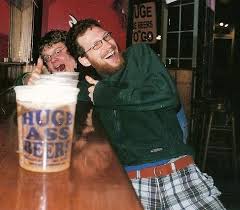

Huge Ass Large

We had all afternoon to sip our beers semi-responsibly, and we were lucky enough to be perched above a Dixieland jazz band which had attracted some energetic dancers of the Charleston.  Here’s what the Charleston looks like.  It’s athletic, exuberant, and just makes you feel happy.

We started each day slowly, which is how it should be when you’re on vacation.  I was always the first up; I can’t help myself.  Still, the freshly-made breakfast would already be waiting for me in dining room.  It was different every day, and a labor of love.  There would be a frittata, muffins or some sort of fruit bread, veggie or meat sausage, homemade marmalade, and of course, coffee.  You could make toast or bagels, or instant grits or oatmeal.  The fridge was stocked with milk and orange juice and yogurt.

I sat on the front porch and savored the morning quiet with my breakfast and a couple cups of coffee.  There were the usual morning sights, like the trash men collecting the trash, parents walking their kids to school, cats skulking by the fence, and people commuting to work on bikes.

Back inside, my crew and the other guests slowly filtered out of their rooms.  There were two women there from Vancouver, one of whom got up early to run despite how late they stayed out every night.  She and I stretched together on the living room carpet a couple times and chatted.  There are six guest rooms at the Ould Sweet Olive, so counting our suite which slept four, its capacity was 14.  The rest of the guests were couples from England, Scotland, the Netherlands, and Germany.

Molly, Lynn, Christine, and I would sit in the front room for hours, chatting and drinking coffee, before we got our day underway.  We talked about places we’d been, places we wanted to go, kids, pets, and—in hushed tones, politics—because our hostess had numerous photos of herself with Donald Trump on the walls.
Lake Eerie

This continues a series of posts about a road trip to New Orleans that starts here.

We crossed the state line from Mississippi into Louisiana just as night fell.  I had hoped and planned not to do any night driving, especially in the south, but it hadn’t worked out that way.

The car started making a subtle chunk-a-chunk-a-clunk-a noise so I got out my secret weapon—Abba.  Yes, Abba.  I have a friend who loves to compile CDs, and she volunteered to make a set for the road trip.  Who was I to say no?  She went above and beyond, and created a boxed set of seven, each with a play list, and two bonus CDs of classical and new age music.

photo 1photo 2

I appointed Lynn the DJ of the car and away we sailed, singing along to Knowing Me, Knowing You.

I could no longer hear the noise—problem solved!

If you’re unfamiliar with New Orleans, here’s the lay of the land.  The city is bordered on the south by the Mississippi River and on the north by Lake Ponchartrain (pronounced ponch’-a-train), which is the 11th largest lake in North America.  If you don’t count the Great Lakes, which are outliers, it’s the 6th largest.

To get to New Orleans (pronounced nu or’-luns, by the way) from the north, you have to cross the world’s longest causeway, which is a bridge over a body of water.  The Lake Ponchartrain Causeway is 24 miles long.

Ponchartrain is a salt lake.  Supposedly there are sharks in it but I didn’t want to think about that.  I also didn’t want to think about my mom’s friends who had crashed in the lake at night in their small plane and drowned because they’d lost their bearings.  In the dark, you can’t see the horizon.  There are no landmarks, no trees or lights to tell you how far you are from land or how far you’ve got to go.  It was pure darkness on either side of the road, except for the one oil rig we saw off in the distance.

“Is that New Orleans?” I asked excitedly.

Lynn, as always, had the US map in her lap.  “No, I think it could be Baton Rouge.”

We drove on and eventually it became apparent that the “city” was an oil refinery.  We’ve got one south of St. Paul that everyone calls The Emerald City.

Emerald City

After a half hour of feeling like we were hurtling through outer space, we cleared the causeway and entered the crazy spaghetti-like New Orleans freeway system.  Once again, I was flanked by semi trucks on both sides going 85 miles per hour.

“This is when the engine light turns red!” I joked—sort of.

“No!  We’re so close!” Lynn said encouragingly.

And then we were there.  New Orleans!  I pulled up in front of the B&B and killed the engine.  I would have her towed away tomorrow, but right then I just wanted a beer.  Maybe three.

Our friend Christine and my cousin Molly had already arrived and they came out to greet us.  “Welcome to New Orleans!” we all exclaimed, hugging and laughing and already feeling the relaxed vibe of the place.

My friend and former neighbor who lives in New Orleans had recommended the B&B, which was called the Ould Sweet Olive.  It was lovely:

ould sweet exterior ould sweet interior

As is the case with old buildings that have been rehabbed for new purposes, the layout was a little weird.  I had reserved the suite, and the entrance was through the bathroom.  The shower had a glass door and the bathtub was in the middle of the room.  There was no real door between the bathroom and the sleeping area, just these:

white-louvered-cafe-door

But hey, who cared?  It was charming.  We had arrived!  The Ould Sweet Olive was in the Faubourg Marigny neighborhood, which was quiet but just a few blocks from Frenchmen Street and the French Quarter where all the action was.  There was a patio outside our suite with a fountain and a giant kumquat tree.  There was beer and wine in a mini fridge for $1 a glass.  Best of all, the weather was 70F and clear, compared with 30F and snowy in Minnesota.

Me, Mom

Before I continue to the exciting conclusion of the road trip, I am sharing this post from Vince’s blog he wrote for Mother’s Day.

Mom, I know I’ve let you down. Over, and over again I’ve made a mess of my life and brought both of us shame.  There were years where you were unable to explain my whereabouts to family and friends, and times where you yourself didn’t know where I was. I’ve put you through more pain and distress than I care to recall.  I’ve not been a son to you for many years, and I have lost your trust far too many times.

But for some reason, you still love me. It’s an unconditional love that I’ve felt nowhere else. Even recently when we didn’t see eye to eye when we lived together, there was never any doubt that you loved me.  I wish I could promise that I will never be lead astray again by the temptation and allure of alcohol and the world of drugs, but I cannot because it’s the nature of the disease that I am always at risk of going back. Tomorrow, when we go out on our secret trip to an unknown location for Mother’s Day lunch, I will be repairing some of the damage I have caused. I will be repairing the bond that had been broken for so long as a result of my actions. I have nobody to blame but myself, which leaves only me to clean up the mess. And so far, I think it’s working.

It’s hard work, searching inside myself to figure out what’s been broken for so long. But through writing this blog, attending A.A., and working with a sponsor, I’m starting to change my life. I no longer do these things to avoid going back to prison, I do them because I want to be out here living life and being with my family as much as I can.

Although you had help from some family members raising me for a small portion of my childhood, I know that you were solely responsible for bringing me up and I know that you not only did the best you could without a father present, you truly were an amazing Mother, I just didn’t see it until later in life.

You imparted upon me how to be a good, loving person, and it took me about 20 years longer than it should have to recognize that. The things you showed me are the things I strive to emulate now because I know that they are righteous, moral, and honorable.

It doesn’t get any more honest than that. You were instrumental in keeping me sane throughout my prison term. You wrote to me, sent me money, and answered my calls. Not everybody is as lucky, or has a person that loves them no matter what. You moved just to accommodate me living with you when I got out, and I am so grateful for that. I may not have acted like it when I lived there, but that was because I was ashamed of myself, and I shut myself in my room, and my own little world where I felt comfortable. I’m breaking out of that shell slowly, and I won’t forget that it’s because of you that I’m even out here in the first place and had a warm safe place to sleep. Sometimes it takes a while to realize what I have to be grateful for, but eventually it comes.
Tomorrow is your day, and I’m excited that I have the ability to take you out for the day, and the means to make it happen. I think this will be the best Mother’s Day we’ve ever spent together, and I look forward to many more.

Mom, I know I’ve let you down. But I’m going to make it up by becoming a good son, and making up for all the hurt I’ve caused. I love you, Mom.

I told Vince, over the sushi feast he had planned, that I appreciated the post. I also told him that by changing his life, he is making amends to me and he never has to apologize for his past actions again.

Sushi n MeSushi n V

Then and Now

This continues a series of posts about a road trip to New Orleans that starts here.

We pulled out of Memphis and began our third 400-mile drive.

This was the most scenic part of the trip.  The rolling hills continued, one long ascent followed by a long descent, followed by another and another and another.  There were woods on both sides punctuated by blooming Magnolias and occasionally something that appeared to be bougainvillea blanketing a full-grown tree.  That was spectacular.  Most of the drive was through Mississippi, which does not have a motto.  It does have a coat of arms which includes the phrase Virtute et Armis (by valor and arms).

And here I must correct what I wrote about Minnesota.  “Land of 10,000 Lakes” is what’s on our license plates, but our official motto is L’étoile du Nord (Star of the North, or in Latin, “I long to see what is beyond.”)

That could explain a lot about me.

Once again, Lynn and I postulated about what could be wrong with the car.

“Maybe it’s overheated,” she said.

“But why?” I asked.  “We’ve only driven 50 miles.”

I had driven many cars that were in much more alarming shape than this one.  When Vince was a baby I had a Buick LeSabre that was so old it didn’t have seat belts.  I would stick Vince in a banana box and put him on the back seat.

Lesabre

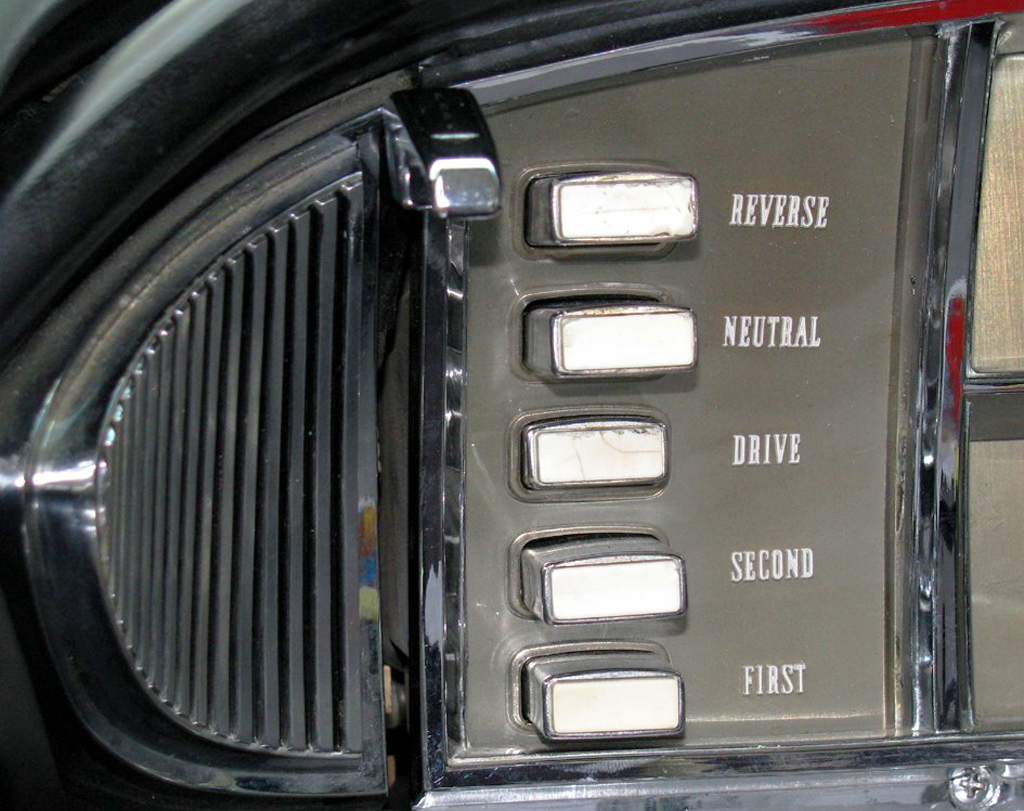
There was the 1964 Chrysler Imperial with push button gears on the dashboard.  Now it’s a very cool collector’s car, but in 1978 it was just a “winter beater,” as we called cars that were expected to just barely get us through the winter.

1950s-gear-shift-g

There was the car whose driver’s side door had to be held shut by…my arm.  There was one that never ran.  Never even started.  I bought it from a neighbor for $125.  He pushed it down the alley into my backyard after assuring me that all it needed was a carburetor.

I went to a junkyard and bought a carburetor out of wrecked car for $50.  My brother and his friend Hans came over to install it.  The result was Hans running down the alley with his hair on fire, waving his arms trying to put it out.  My brother tackled him and rolled him in the dirt before any serious harm was done beyond a temporary bald spot.  I had to pay $75 to have the car towed to the same junkyard where I’d bought the carburetor.

So why was I so worried now?

But then a second, bigger engine light came on with a loud DING DING.  I pulled off in the nearest town, Canton, Mississippi, and parked in front of a liquor store, where I called AAA while Lynn read the manual.  I had forgotten there was a manual.

The AAA representative had such a heavy southern accent I was forced to admit, “I’m sorry, but I can’t understand what you’re saying.”  She repeated herself slowly.  “We can come and tow your car, and you’ll have to find a motel in Canton for the night.”

Just then a monster truck roared into the parking lot. An enormous black man got out and came storming toward us—Lynn literally leaned away from him as he loomed into her window, while I fumbled to lock the doors.

“Ya’ll okay?” he asked.  “Ah didn’t mean ta scare ya!  Ah seen yur car and it don’t look ya’ll from ‘round here and ah thought ya might need help.”

Lynn and I laughed with relief and assured him we were fine.  When he was out of earshot, we analyzed our reaction and agreed we’d been scared because he was a huge, aggressive man and we were in a strange town, not because he was black.

Lynn read from the manual, “If the engine light is red, you should pull over immediately and call for help.  If it’s orange, you may continue driving but have the car looked at your earliest opportunity.”

The lights were orange.  Surely, another 200 miles couldn’t do any harm.  On to New Orleans!

Jim Crow, Old and New

This is the latest in a series of posts about a road trip from St. Paul to New Orleans that starts here.

If you don’t learn something about yourself when you travel … well, that’s okay—I’m not going to sermonize—but I was pleased to learn something important about myself in Memphis.

In the morning, Lynn and I took a walk along the riverfront, which is beautiful:

memphis_riverfront

We walked back to Beale Street, found a restaurant, and ordered breakfast. We were excited to try southern foods like grits and biscuits.  We waited, and waited.  You could say this restaurant put the “wait” in waitress.  She kept coming by and giving us a dose of another southern treat—calling us “honey”, “sweetie”, and “darlin’” as in: “Your food’ll be up in just a minute, darlins’”

It seemed like half the morning passed away before we got our meals, then we wolfed them down and headed over to the National Civil Rights Museum.

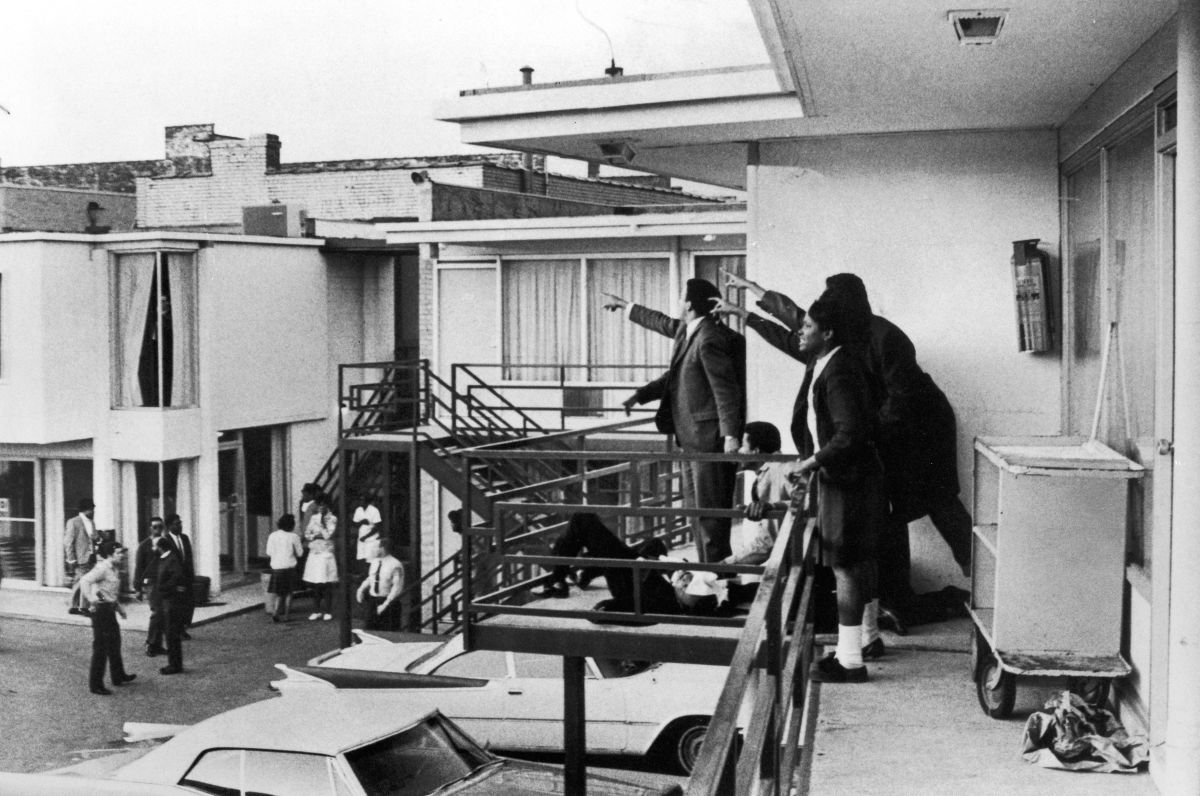
It was difficult to find—there was no signage—but then we turned a corner and there it was, the former Lorraine Motel where the Rev. Martin Luther King Jr. was assassinated.  I recognized it immediately, having seen it a hundred times in iconic photos.

TENNESSEE, UNITED STATES - APRIL 04:  Civil rights leader Andrew Young (L) and others standing on balcony of Lorraine motel pointing in direction of assailant after assassination of civil rights leader Dr. Martin Luther King, Jr., who is lying at their feet.  (Photo by Joseph Louw/The LIFE Images Collection/Getty Images)

And this was the beginning of learning something about myself, because I got so choked up I had to turn away so no one would see me in tears.

I have been to Holocaust museums in Washington, DC; Jerusalem, Berlin, Prague, Chicago, and elsewhere, and they’ve been tear-filled experiences too.  But then, I’m Jewish.  Were my tears only because the story was about my people?  That fear—that I only felt empathy for my own kind—was laid to rest in Memphis.

Can a Man

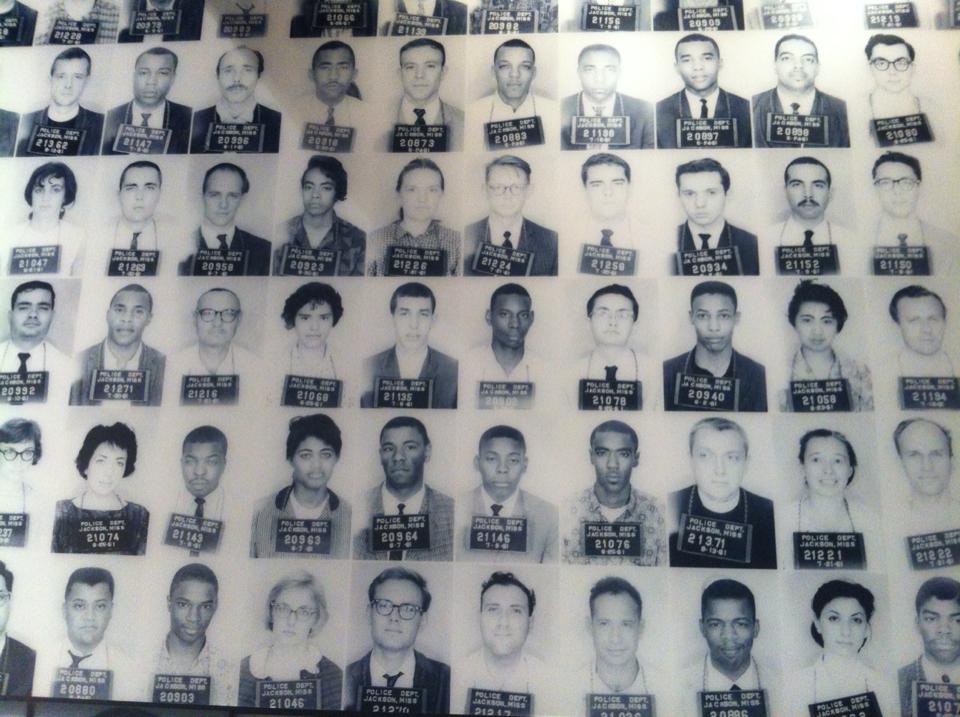
I wiped my tears away but they welled up continually inside the museum, which was one long, sad horror show that traced the abuse of African Americans from slave days up through the assassination in 1968.

There was a large group of school children, mostly African American, going through with docents.  I wondered what they felt seeing Africans in chains, the police dogs, the fire hoses?  If it was my kid I would want to be on the tour to put my arm around him.  There was the usual laughing and fooling around that any group of kids will exhibit, but I wondered if they would have trouble sleeping that night.

I commented to Lynn, “A coworker of mine at Oxfam used to find every opportunity to mention, ‘the UK never had slavery’ in a superior tone.”

“We may not have had slaves in the country, but we certainly benefited and participated in the system,” Lynn replied as we read a display about how global the slave trade was.

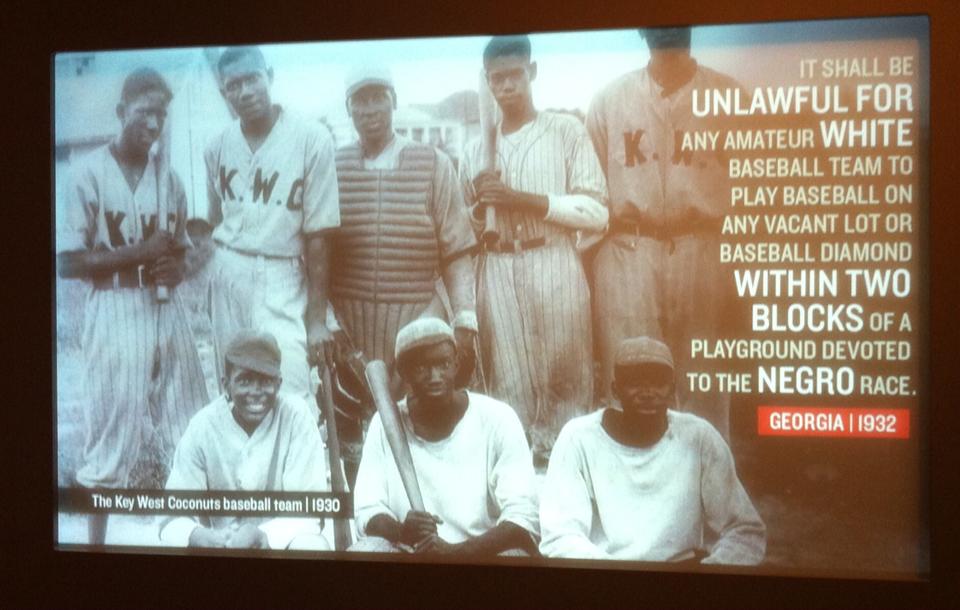
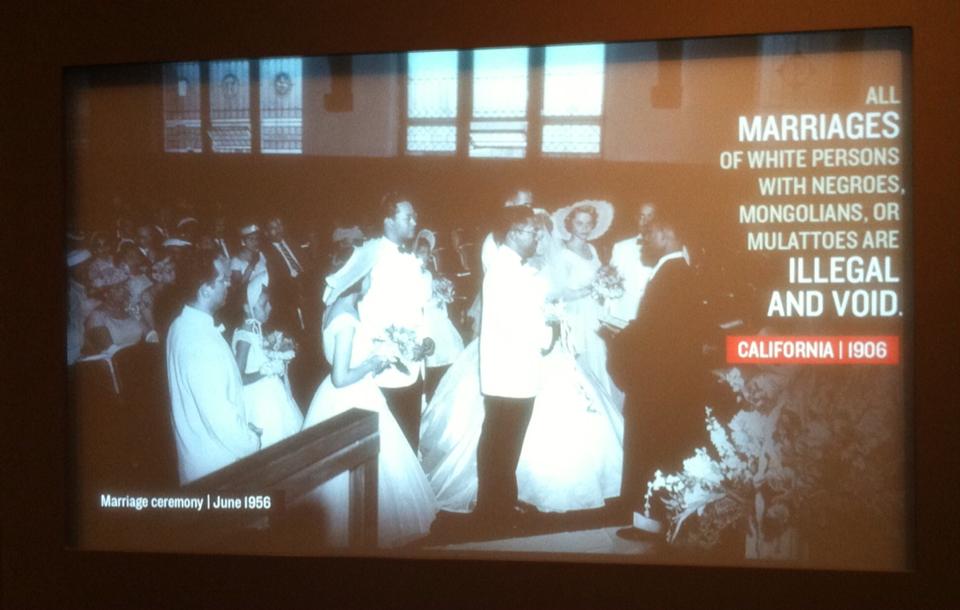
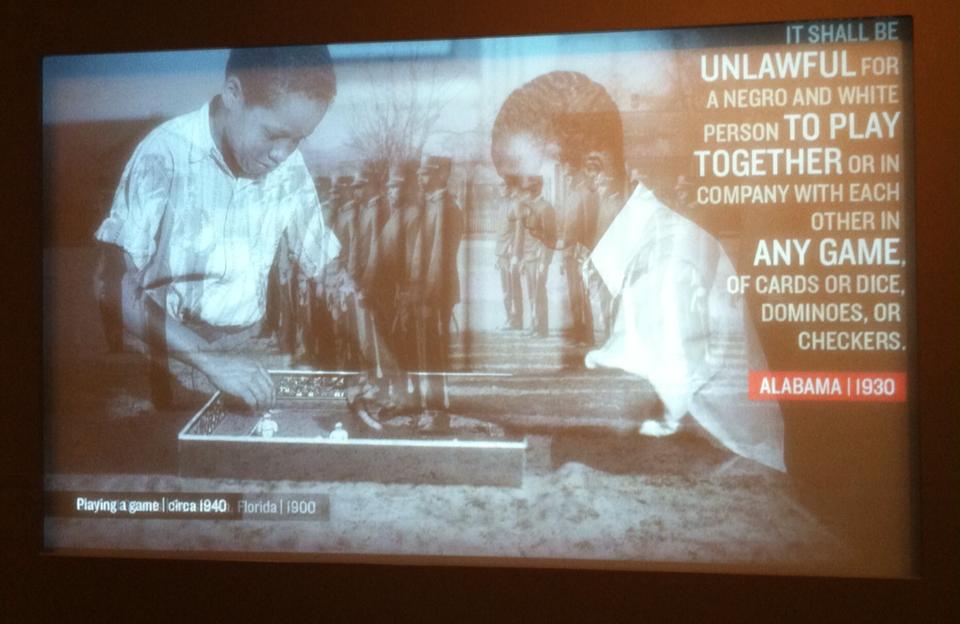
And of course it didn’t end with the abolition of slavery.  “Jim Crow” was the system in the southern United States from reconstruction up through the civil rights era in the 60s that kept “negros” in their place.  Here are a few of the ridiculous laws from that time:

Baseball Law Mulattos Checkers

Really?  Checkers!?  Who knew checkers could subvert the social order?

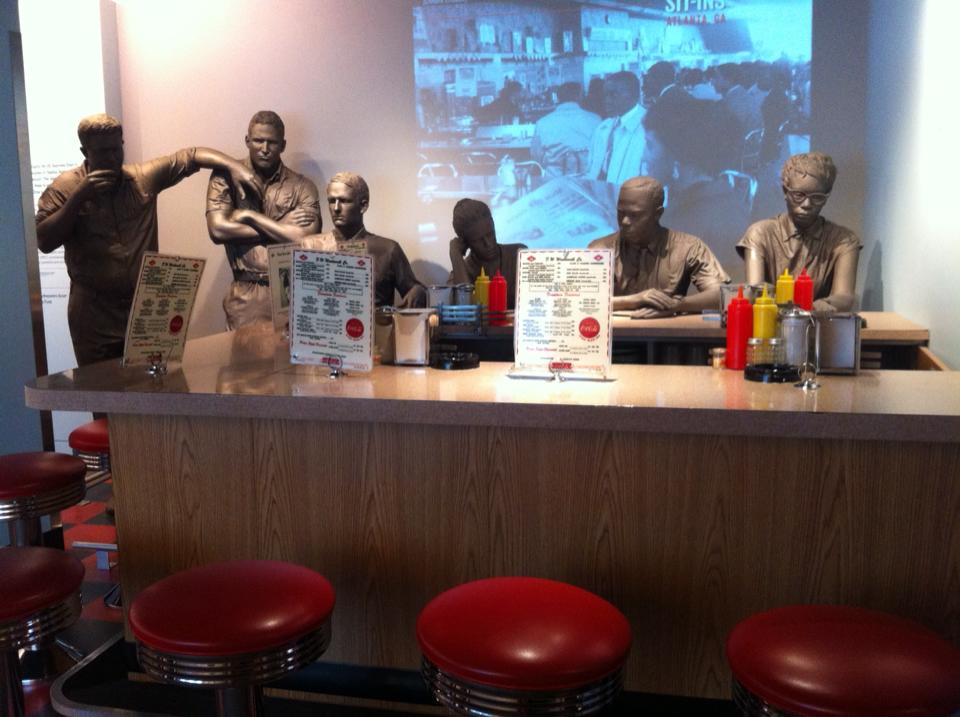
Then we marched slowly through exhibits about bus boycotts, lunch counter protests, and strikes.  Then there were the cross burnings, lynchings, and bombings by white racists; somewhat counterbalanced by the support of white and other allies (including Jews).

Lunch Counter I am a Man Bus Boycott Activists

I watched a video about James Meredith, the first black student to be accepted to the University of Mississippi, in Oxford Mississippi.  Of course he hadn’t mentioned his race in his application, and when he showed up to enroll all hell broke loose.  After weeks of rioting by whites, which resulted in two deaths, he was reluctantly let in, and as Lynn read later, he did graduate and lived a normal life afterwards.

The museum was really well done.  There was a second building that explored African American activism post 1968, but after three or four hours in the first building we had to leave.

Last week Vince and I talked to a group about mass incarceration.  One of the audience members referred to it as the New Jim Crow.  I agree, although in my opinion it’s about poverty, addiction, mental health, and class as much as racism.

Viva, Viagra!

This is the latest in a series of posts about a road trip from St. Paul to New Orleans that starts here.

After recharging with burritos and bucket-sized ice teas, Lynn and I hit the road for the last leg of the drive from Chicago to Memphis.

We wanted to drive through Paducah, Kentucky.  We liked the name.  It would have been our homage to David, our innkeeper in Chicago, and we could have added a fifth state to our route that day.  But even with a GPS and a map we couldn’t figure out how to get to it.  For what seemed like hours—because it was hours—it looked like we were on the verge of crossing the state line into Tennessee and that Memphis would be right on the other side.

“There’s the sign!” said Lynn.  “Tennessee—The Volunteer State?”  Whatever does that mean?”

“I don’t know.  Something to do with the Civil War?”

I tried to find out later why Tennessee is called the Volunteer State lost interest after 3,000 words about the conflicting stories about which war originated it.  Suffice it to say it was some war with England or Mexico or the northern United States.

All 50 states have mottos.  We had passed through five states so far.  The slogans of Minnesota and Illinois are straightforward: Land of 10,000 Lakes and Land of Lincoln (Abe Lincoln was born in Illinois).  Arkansas’, through which we had passed briefly, was Regnat Populus, which means “The People Rule.”

Missouri’s slogan is the strangest—it’s The Show Me State.  The official explanation is that in 1899 a Missouri Congressman said:

“I come from a state that raises corn and cotton and cockleburs and Democrats, and frothy eloquence neither convinces nor satisfies me. I am from Missouri. You have got to show me.”

I liked it better when I thought it might have something to do with voyeurism.

We checked in to the Holiday Inn in downtown Memphis, which I had chosen because it was two blocks from Beale Street and had $22 overnight parking.  I checked the odometer—we’d driven 995 miles since leaving St. Paul.

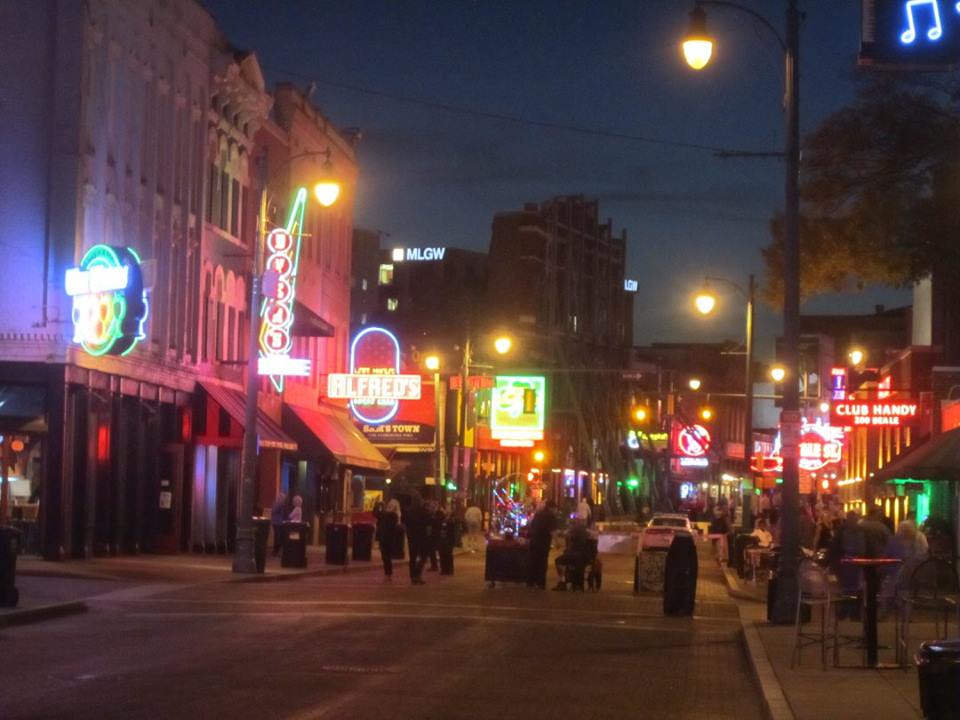
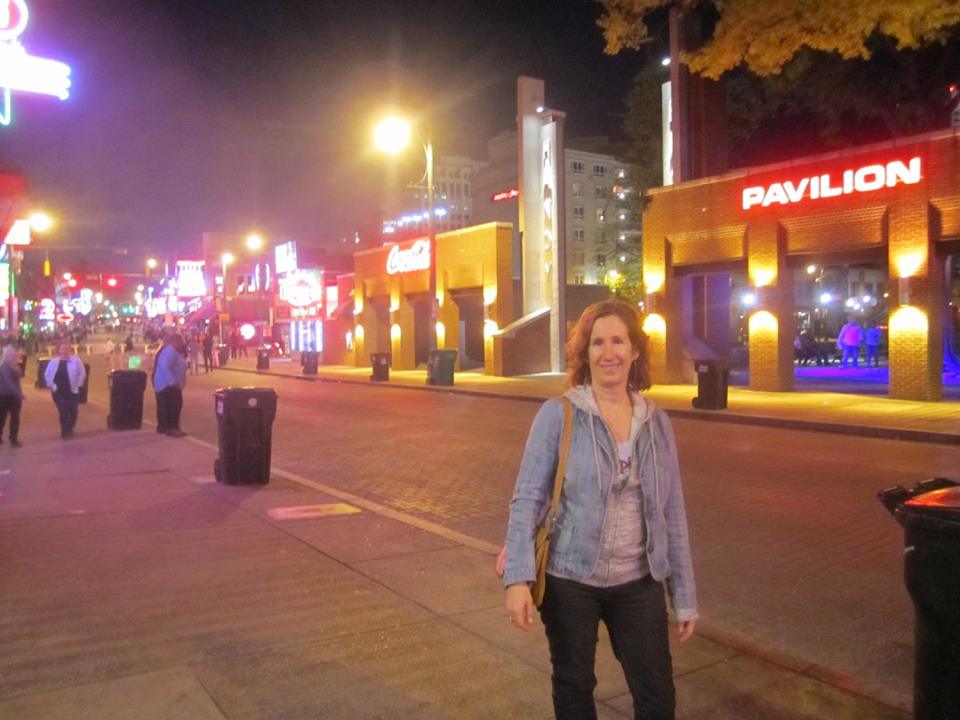
Within 15 minutes we were out on Beale Street, which is supposedly where rock and roll was created.  Or the blues, I can’t remember.  Because Chicago also calls itself the Home of the Blues, and of course New Orleans’ claim to fame is jazz … so it’s hard to keep it all straight.  If you’ve ever been to Hennepin Avenue in Minneapolis or Division Street in Chicago on a Saturday night, that’s what Beale Street is like.  Neon signs.  Bars and more bars, with music pouring out of them and tipsy people wandering from one to the next, laughing.

BealeBeale St Me on Beale

Lynn and I got some drinks and sat on an outdoor patio, listening to the house band.  This was the first of many moments when I would feel like I had been dropped into a giant, never-ending Viagra commercial.  I said this—or shouted it—to Lynn and she gave me the blank look of someone who has never seen a prescription drug commercial.  Because there are no prescription drug commercials in the UK.  So to Lynn, and other readers who have a National Health Service instead of a Medical Industrial Complex, that link’s for you.  Imagine seeing adverts like that 5-6 times during your favorite TV program.

We’re everywhere, we post-WWII western baby boomers.  Now that we’re beginning to retire in mass numbers you will see us at every festival, concert, and tourist attraction.  Boomer men, in particular, have a thing about guitars, and being cool, and fancying themselves as musicians.  Their standard gear is jeans and a white T-shirt with a plaid shirt over it, and either cowboy boots or sneakers.  Fedoras are required at jazz venues.

I don’t mean to be critical.  I’m a boomer myself, although at the tail end, so I’ve seen “my generation” surge along through the pipeline of history all my life.  We get blamed for ruining the economy and we are said to be blazing a trail for “vital aging” for younger generations.  Thank god there was no Viagra in 1946.

The Other Country

I woke at 5am.  My plan was to go to Walgreens—conveniently located at the end of the block—which opened at 7am.  I would buy all the auto fluids they had and pour them into the car in hopes it would make it to New Orleans.

I dressed and slunk out the door to the nearby coffee shop. When I returned, David our innkeeper greeted me and started recounting his early days in Chicago. I had time to kill, so I sat back and enjoyed my coffee and David’s stories.

He had come to Chicago from Kentucky to attend college in 1977.  So David and I were the same age.  He seemed older, like he’d weathered some pretty tough times.

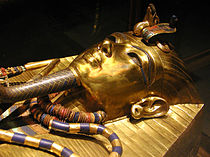
Anyway, his arrival coincided with the Tutankhamen exhibit at the Field Museum of Natural History.  I remembered “Tut Mania” well.  My mother had driven to Chicago with some friends to see the exhibit and came back with T-shirts with images of scarabs and Egyptian cats and—of course—King Tut.

David was taking a class from a professor who was a world expert on Tut, and who was leading the logistics for the exhibit.

“The train from Egypt was escorted by armed guards with shoot-to-kill orders,” he said.  “They packed everything in Styrofoam so if the ship sank, all those priceless antiquities would bob back up to the top.”  He explained that Tut had been a very minor king who was only famous because his tomb “wasn’t very ornate,” and thus hadn’t attract the attention of tomb robbers.

Tutanchamun_Maske Tutanhkamun_innermost_coffin

Talking about King Tut and his college days, David grew animated and could have passed for an archaeology professor himself.

Have you ever heard of magical thinking? That was me as I started the car up after a 36-hour rest.  Somehow, the engine light wouldn’t come on, right?  Wrong.

But there was no going back—we were gonna make New Orleans by Wednesday! Back at the inn Lynn was enjoying breakfast and another of David’s soliloquies.  He was talking about Kentucky again.  “Most people think it’s like Deliverance,” he said.  I gave Lynn a blank look that said, “He’s right.”

Travel does not equal adventure, or vice versa.  Adventures can be delightful but more often, at least for me, they involve dealing with something strange, stressful, or slightly scary.

Once again, the car was fine above 75 miles per hour but shook if I slowed down.

“I wonder if I got a bad tank of gas at the Cranberry Discovery Center.”  This would be the first of many hair-brained theories about the car.

“Maybe it’s the spark plugs,” Lynn suggested.  Then, sheepishly, “Does it have spark plugs?”

“I don’t know!”  The Mini’s engine was sealed inside a sleek black box.  It was just like BMW to make something stylish that prevented access or even viewing.

“Maybe when I get a new tank of gas it’ll fix itself.  I’ll stick to gas stations near the freeway that sell a lot of gas, to make sure I get a fresh tank.”  More magical thinking.

The landscape slowly changed, from flat and sere to lush, green, and hilly.  The car struggled up the hills.  But maybe if I just kept driving… we drove from 9 to 3:30 with two five-minute pit stops.

Finally, starving, we stopped in Charleston, Missouri.  The “downtown” was deadsville.  The only place open was a thrift store.  I asked if there was a place to eat in town.  The response I got from the woman at the register sounded like this:

“Ya’ll gawla rawla dayown aray-owna Mexican raistrawnt gonna donna lowna haw-way.”  Lynn beat it out the door.  I fought the urge to follow her while my brain worked to make sense of what she’d said.

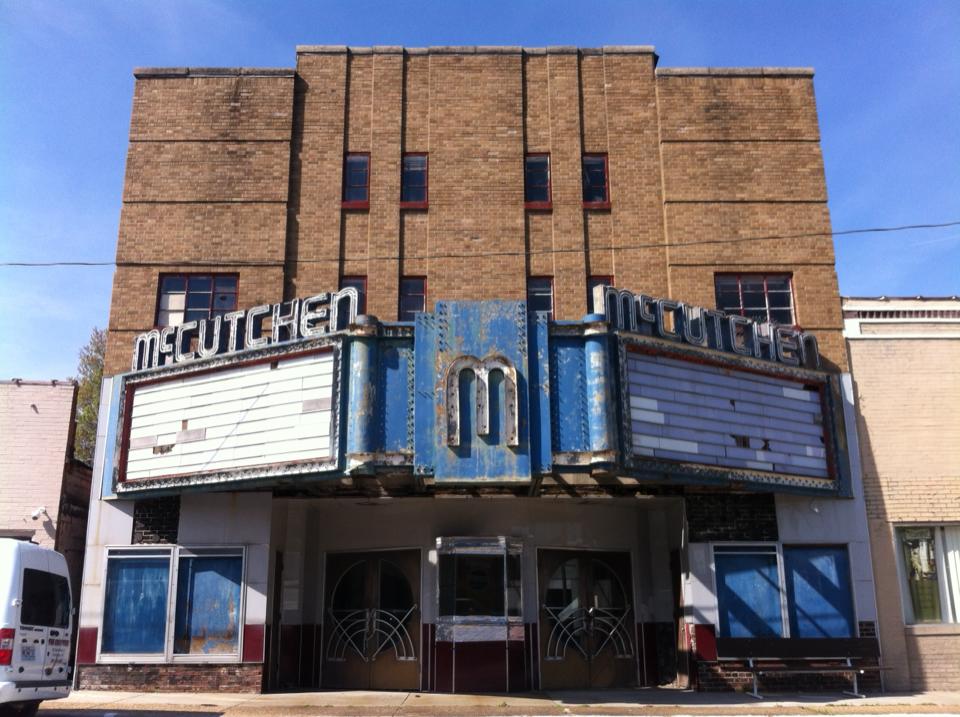
A customer stepped forward and said, slowly, “She said there’s a Mexican place out by the interstate.”  I thanked him and we drove out of town, pausing only to take a photo of this poor old theater.

Old Theatre

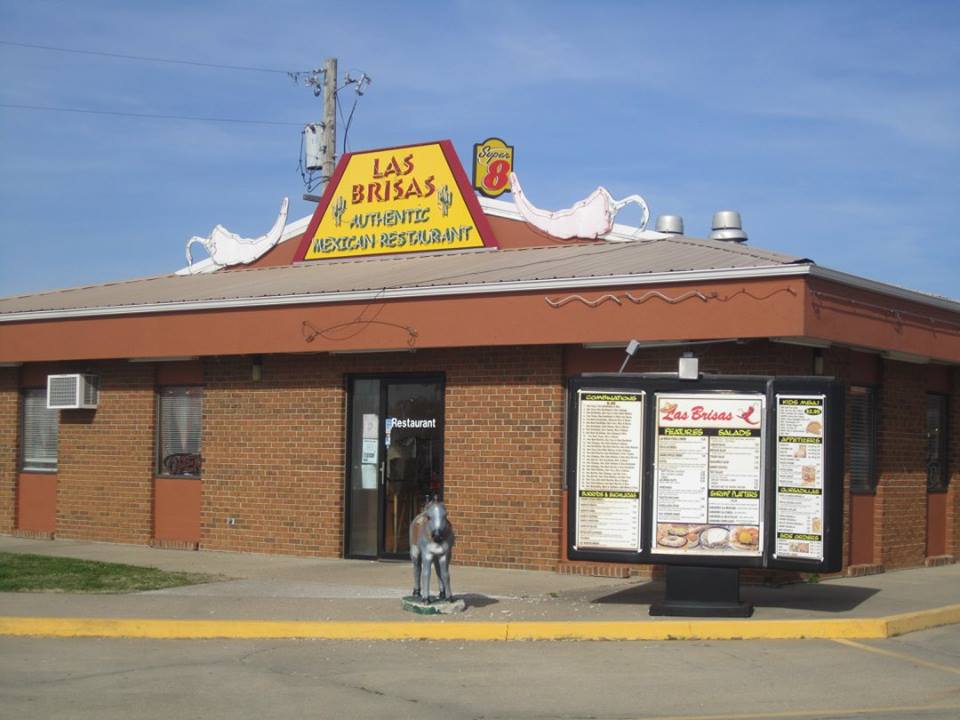
We found Las Brisas and ordered iced teas, which were served in pitcher-sized plastic cups.  Listening to the accents around us, we felt like we were in a foreign country, but it wasn’t Mexico.

Las Brisas

Bobble Heads in Chi Town

This post is part of a series about a road trip to New Orleans that starts here.

I had a surprise up my sleeve for Lynn.  It was a piece of Americana she couldn’t miss, I thought, so after we had our fill of Tiffany at the Cultural Center I led us northwest through the city.  Did I mention it was cold, and how I was dressed for New Orleans?  We stopped in the first of many Walgreens we would see on the trip and bought matching, stupid-looking but warm hats with giant pompoms that bobbed as we walked.

What is it with all the Walgreens? I like Walgreens, but do we really need one every few blocks?

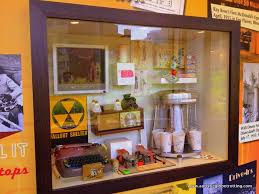
We approached our destination and Lynn was none the wiser until we walked in the door of … a MacDonald’s!  But this was not just any MacDonald’s.  This was the rock ‘n’ roll MacDonald’s. I had visited it every time I’d been to Chicago.  I don’t know why, but it was stuffed full of rock ‘n’ roll memorabilia—or at least it had been the last time I was there.  I was particularly enamored of a hologram—I couldn’t remember who it was—Elvis?  Hendrix?  There was also a life-sized sculpture of the Beatles from the Abbey Road album, and a classic car with characters from the Archie comic books.

mcd's 2 mcd's

These are photos from online, because all of it was gone—gone!

In place of all the fabulous rock ‘n’ roll mementos was an exhibit about … MacDonald’s.    There was no explanation and no indication that there had ever been any rock ‘n’ roll exhibit. I tried to paint a picture of it to Lynn but of course it was impossible.

The building is still cool and there was a lot of mid Century Modern furniture, which I love. So we looked though the exhibit which also included non-MacDonald’s-related stuff from the 50s, 60s, and 70s like hula hoops and manual dial telephones and Twister, plus references to historical events like the Vietnam War and Nixon’s resignation.  We shifted to a different style of tables with each decade, and Lynn nearly fell over trying to get onto a high-concept but wobbly stool.

mcd's 3 mcds

It was okay, but I was really disappointed. We walked across the street to the Hard Rock Café.  Maybe the collection had been acquired by them?  But no, there was no sign of it.

We had a cup of coffee and I asked Miquel, our server, the most scenic route to Rogers Park, where we would meet my niece and her boyfriend for dinner.

Miguel was full of suggestions.  We had plenty of time, so I decided we could take the slow bus that would give us views of the lakefront.  We waited half an hour for the 151 bus in the blistering wind.  It crawled through traffic and just when I thought we were set for a nice scenic ride, the driver shouted, “End of the line!  Everybody off!”

There are two kinds of bus drivers: friendly, helpful ones and crabby, unhelpful ones.  Ours was the second type.

“Will there be another 151 that goes to the end of the route?” I asked.

No,” was all he had to say.

“How far is it to Belmont Station?”  He waved his hand dismissively and said, “Too far to walk.”

“How far is it to Rogers Park?” I asked.

He just laughed derisively, so we hopped off the bus to find ourselves in the middle of nowhere.

It’s times like this that I’m glad to be 56 instead of 26.  Back in the day, this would have been a disaster, and I would have walked all the way to Rogers Park and probably gotten frost bite rather than pay for a cab.  Instead, I hailed a taxi and we were there in five minutes.

Erin and Chris had picked a great Peruvian restaurant and brought a six-pack of local beer to share.  It was nice to catch up with them.  The food was abundant and they took home enough leftovers to last a week.

We took a taxi back to the inn.  I hadn’t thought about my car all day.

Long Talkers, Tiny Rooms, and Tiffany Joy

This post is part of a series about a road trip to New Orleans that starts here.

After what seemed like hours, Lynn and I stumbled out of the van Gogh exhibit.  I blinked like a mole because it had been so dim in there.  I needed to find a bathroom and asked a nearby guard, who launched into the story of her life, which included having diabetes, moving to Chicago from Gary, Indiana, and being a weight lifter.  I made the mistake of saying, “I lift weights too,” and that gave her license to talk some more.  She wasn’t talking with me or even to me; she was just talking.

Lynn had done an about face right away but I would have felt mean walking away. In my imagination I filled in the story of her life—how she must be an impoverished single mother who had to do this excruciatingly boring job, how it must be so hard on her back to stand all day, and so on.  Then I remembered I needed a bathroom, butted in to ask her again, and made my escape after many Minnesota-nice thank yous and repetitions of “Have a nice day!”

This type of talking was a theme on our trip, I realize in retrospect.  People launching into long, one-way recitations about themselves, with no encouragement from us.  There were never any questions about us—none of the give and take that  turns talking into conversation.  It’s like being held prisoner by words.  What is that about?  I’ve experienced it from time to time throughout my life but is it more prevalent now?  Does it have something to do with social media and people wanting to tell their stories?  Is it a symptom of loneliness and isolation in our modern society?

Speaking of long talkers, David our innkeeper had recommended that we see the miniatures at the Art Institute.  “I took mama and Miss Rose to see them, when they visited from Kentucky,” he said. “Mama didn’t say nothin’ the whole time.  I wondered if she didn’t like it. Then I finally said, ‘Mama, don’t you like them?’ and she said, ‘Oh I do!  I do, but I can’t imagine dusting all of them!’”

I laughed and Lynn fake laughed but I could tell she was puzzled.  Once we actually got to the miniature rooms and she saw what they were, she explained why.  “When he said miniatures, I thought of tiny portraits that people used to have done before there was photography.”  Here is an example of an English miniature:

English Miniature

Here is what the miniatures in the Art Institute are:

Miniatures 2 Mini Rooms

Miniature rooms from various periods and countries—hundreds of them.  They are really fun to look at and yes, they must be a pain to dust.

We thought we were done but to reach the exit we had to walk through the Asian section.  So we took another hour or so to admire works from Japan, Indonesia, China, and India. Lynn has been to all these places.  She’s Anglo-Indian and has been to India many times.  She worked for Oxfam in Aceh, Indonesia after the Indian Ocean tsunami.  So she’s learned a thing or two about the vast territory covered by the label “Asia.”

“But I never retain anything I’ve learned,” she explained.  So she knew which god was Ganesh and which was Krishna but I was definitely going to have to Google them later to learn more.

David had also recommended that we visit the Chicago Cultural Center, one block north and across Michigan Avenue from the Art Institute.  “It was a library, but now they hold concerts and have art exhibits there, and it’s fabulous,” he said.

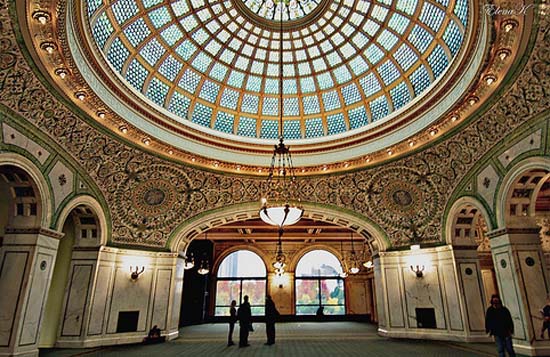
And he was right!  I had never even heard of the place, and it turned out to be the highlight of Chicago for me.  The building was completed in 1897 and features the largest dome of Tiffany glass in the world:

Tiffany Dome

I loved the details.  It wasn’t called The Gilded Age for nothing:
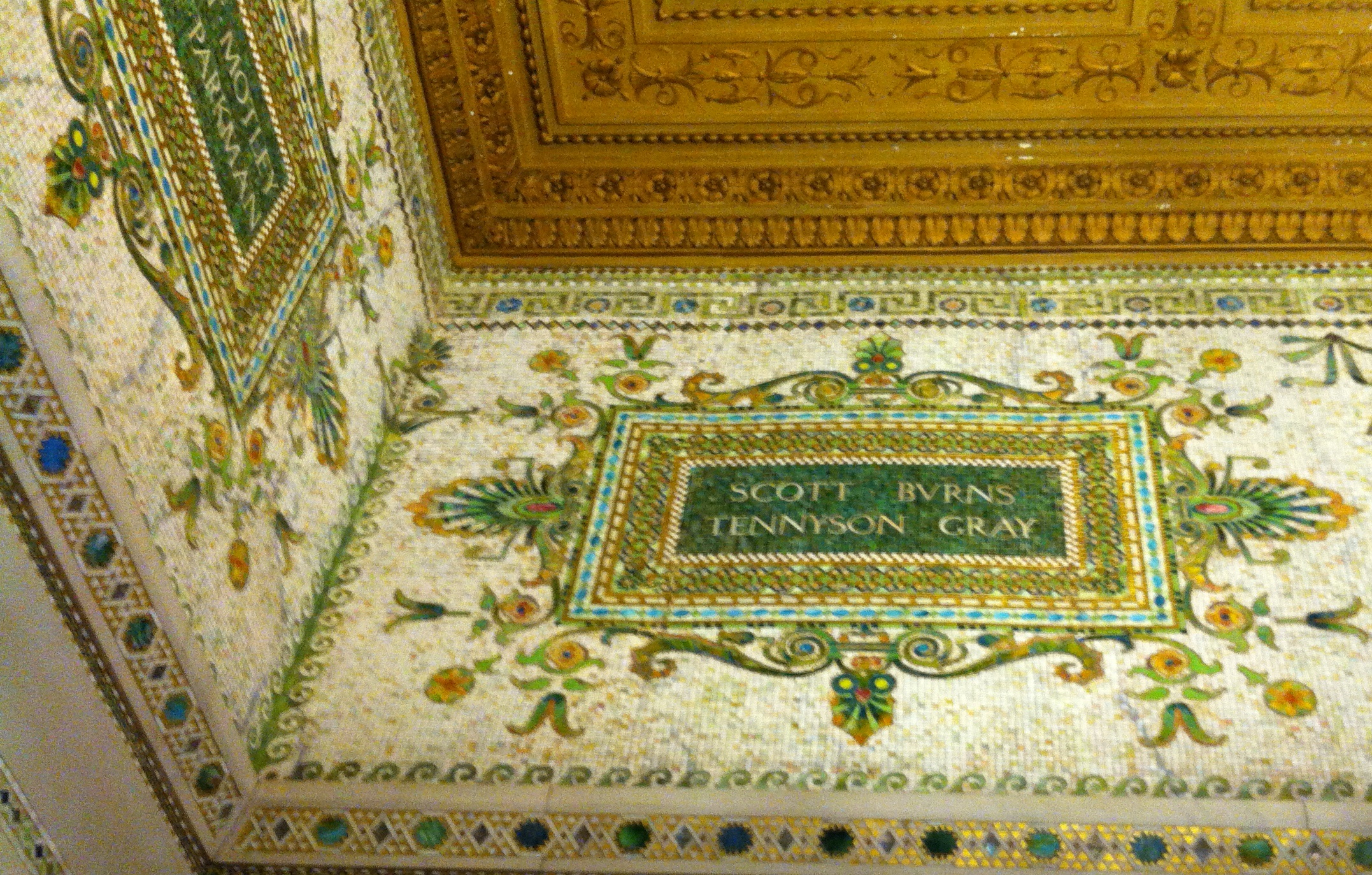
Tiffany Close Up

I was happy to realize that I still had many classic works left to read: Scott, Burns, Tennyson, Gray.  Someday—when I can no longer travel.

Writers

Artisanal Art

This is the fifth post about a road trip to New Orleans that starts here.

Lynn and I spend hours in the Art Institute.  We lingered with the impressionists, then she specifically wanted to see “American Gothic” by Grant Wood.

I found a sweet little website for children, or maybe just simple-minded people, that describes the painting: “After he made sketches of the house, Grant looked for just the right people to go with it.  He thought his family dentist and his own sister, Nan, would be perfect for the farmer and his daughter.  Grant entered American Gothic in a big show at the Art Institute of Chicago, and won the third place prize.  People all over America loved the newspaper pictures they saw of it.  Soon, Grant’s paintings started to become very popular.  One reason for this was that many people felt Grant’s art was easier to understand than a lot of the new modern art being done.”

american_gothic

I could relate to that later, when we visited a modern art exhibit:

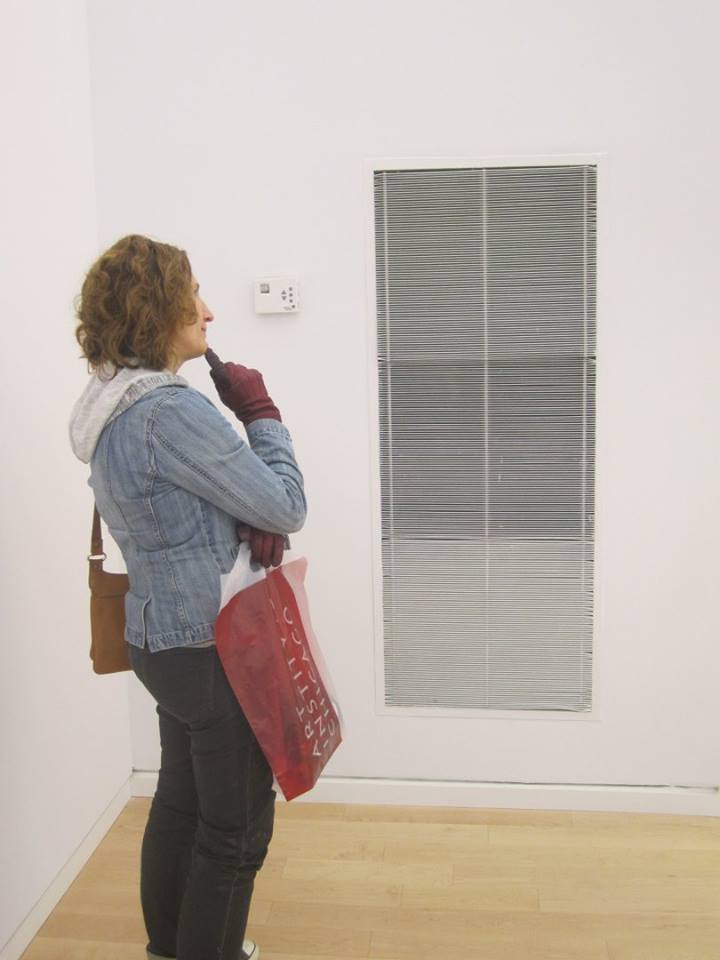
Art 1 Art 2

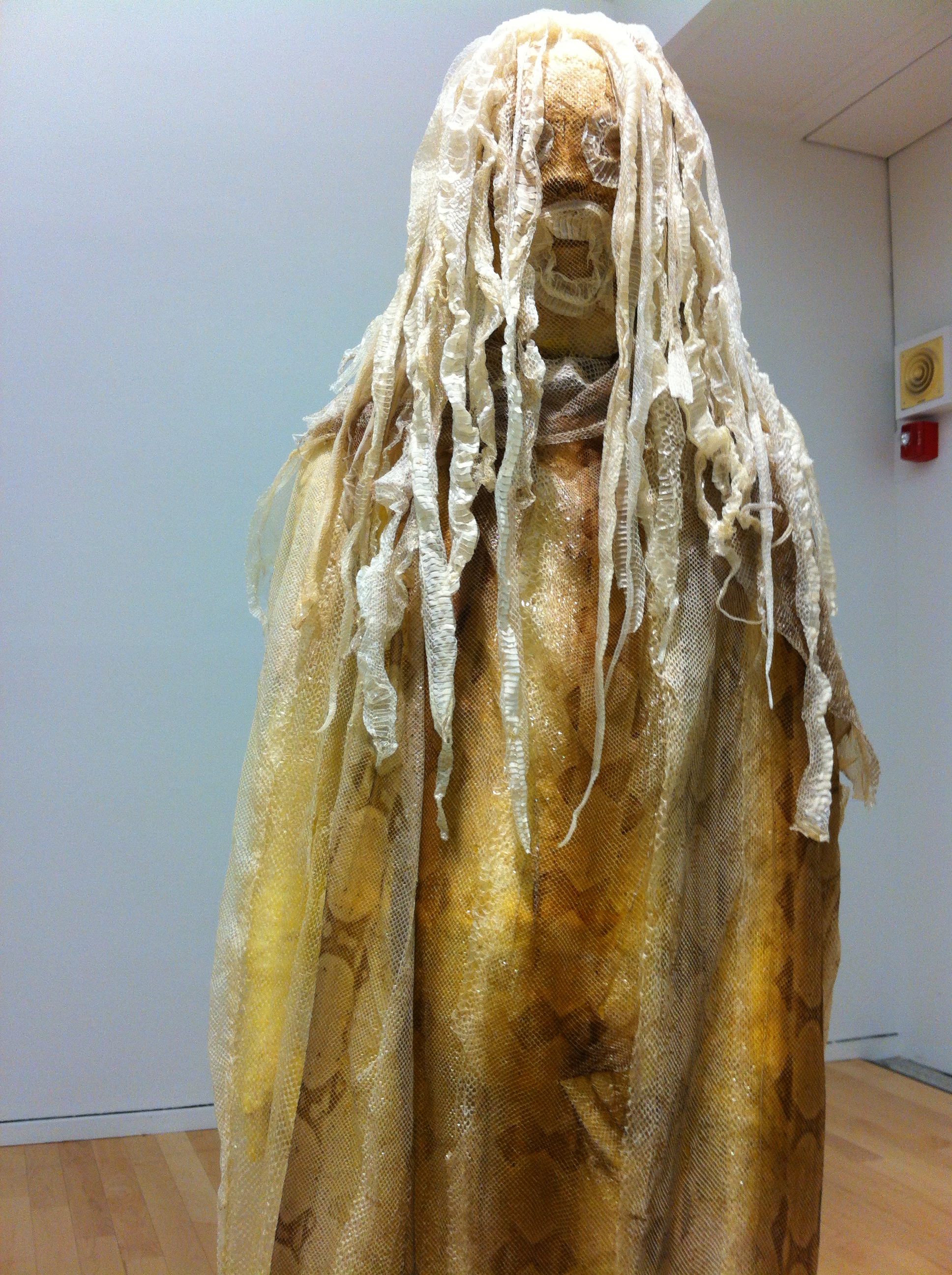
The second photo is actually an air vent, but really, how different is it from the “real art” on the left?  Maybe I’m just a philistine.  But then there was this, made entirely of snake skins:

photo 4

We waited in line for lunch in the shi-shi café at the Institute. The young cook kept up a stream of talk while he worked.  Or, that is, he stopped working every time he started talking. He wasn’t talking to us; it was like a stream of consciousness. After 25 minutes we finally reached a table with our stir fries and some fortifying red wine.

Two couples from St. Louis sat next to us at the picnic-style table and struck up a conversation.  They were all eating giant sausages. Lynn peered at them dubiously.

“This one is a Chicago style brat,” the woman next to me explained.  “And this one is a Polish sausage—there’s a big Polish population in Chicago.”

“And this is a wiener,” said her husband.  Lynn turned to me and gave me her special blank expression that said so much.

After they had wolfed down their sausages, Lynn had her say.  “None of those were proper sausages!  A wee-ner,” she dragged out the name to emphasize its silliness.  “What’s a wiener!?”

“I don’t know, but I’m sure whatever’s inside isn’t good.” I said.  “My mom used to buy them by the dozens and keep them in the freezer.  We would eat them like frozen treats.  A couple years ago there was an outbreak of a mysterious neurological illness at a meat packing plant in Minnesota.  They were using a new technique with high-pressure hoses to blast out every bit of brain matter from pigs’ skulls.”  Lynn recoiled in horror, rightly so.

“I’m so glad I stopped eating pork years ago!  I’ve never paid much attention to British sausages, or to American ones for that matter,” I said.

“British sausages are very different to what those people were eating.  We would never eat anything like a wiener!”  Lynn tried to describe how wonderful and superior British sausages were but it was lost on me.

These are the kinds of conversations you have when you travel with someone from another country.  They’re amusing and confusing, and eventually I find myself Googling “British sausages” late at night.

Back to the impressionists.  There was a special Vincent van Gogh exhibit called Three Bedrooms.  Lynn pronounced his name “van Goff.”  In America we say “van Go.”

There was an interpretive film. They had physically recreated the bedroom.  There were other artists’ paintings of bedrooms or some such.  And on and on.  It really put the “anal” in artisanal.

Then, finally, the three paintings:

Vincent van G

Now, I like Vincent van Gogh as much as the next person.  Again, maybe I’m just an ignoramus.  But I can hear the marketing department at the Institute brainstorming: “I know!  Let’s find three almost-identical paintings by some name-brand artist, make up a story about them, and call it an exhibit!  We can charge extra and sell lots of merchandise!”

The merch part was good, as I was able to buy my Vince a Vincent t-shirt. One souvenir crossed off the list.