Author Archives: Breaking Free

Toxic Clouds, Toxic Smoke

I had been asked to say a few words of greeting from Center for Victims of Torture headquarters to a counseling group of 12-14-year-old Eritrean refugee boys.  This was daunting, not only because I had laryngitis but because, well, what could I say that could possibly be of interest to them?  I stood up and rasped out a few words about how we in Minnesota do our best to tell their stories to the world, and thanked for allowing me to sit in on their group because it would help me raise more funding so we can work with more refugees.  I hoped that last part would actually be true.

The boys watched me with curiosity as I spoke, probably wondering why I sounded like a chain-smoking man.  My words were translated into Tigrinya, then they nodded and smiled at me and turned their attention to the young counselor who would facilitate the group.  I had expected them to maybe feel self-conscious with me there, but I think they forgot all about me.

I love kids of all ages.  Each age has its adorable and unpleasant aspects, but I couldn’t find anything unpleasant about these kids.  Like boys this age anywhere, they were awkward and gangly.  Some were tall for their age and had deep voices while others were puny and squeaky voiced.  Some had peach fuzz on their upper lips.  They slouched, hunched over, spread their legs wide, and tipped their chairs back until I wanted to lunge forward and say, “Don’t do that—you’ll fall over!”  I thought how difficult it must be go through puberty in their situation.  Many if not all of these boys were on their own, without any family members.  They lived in groups with an adult caregiver in very small houses with no privacy.

When my son was 12, if anyone asked him how he was feeling he would have rolled his eyes, made a joke, and changed the subject.  These boys showed no reluctance to talk about feelings and how to manage them.  In fact, they took the group very seriously.  As I wrote in a previous post, this was the third of three groups designed as a kind of “coping bootcamp” for young Eritreans who were at risk of suicide or of leaving the camps in a futile search for a better life.

None of what was said was translated, but it didn’t have to be.  There were visual aids (complete with misspellings) and I was pretty familiar with the concepts being taught by now.
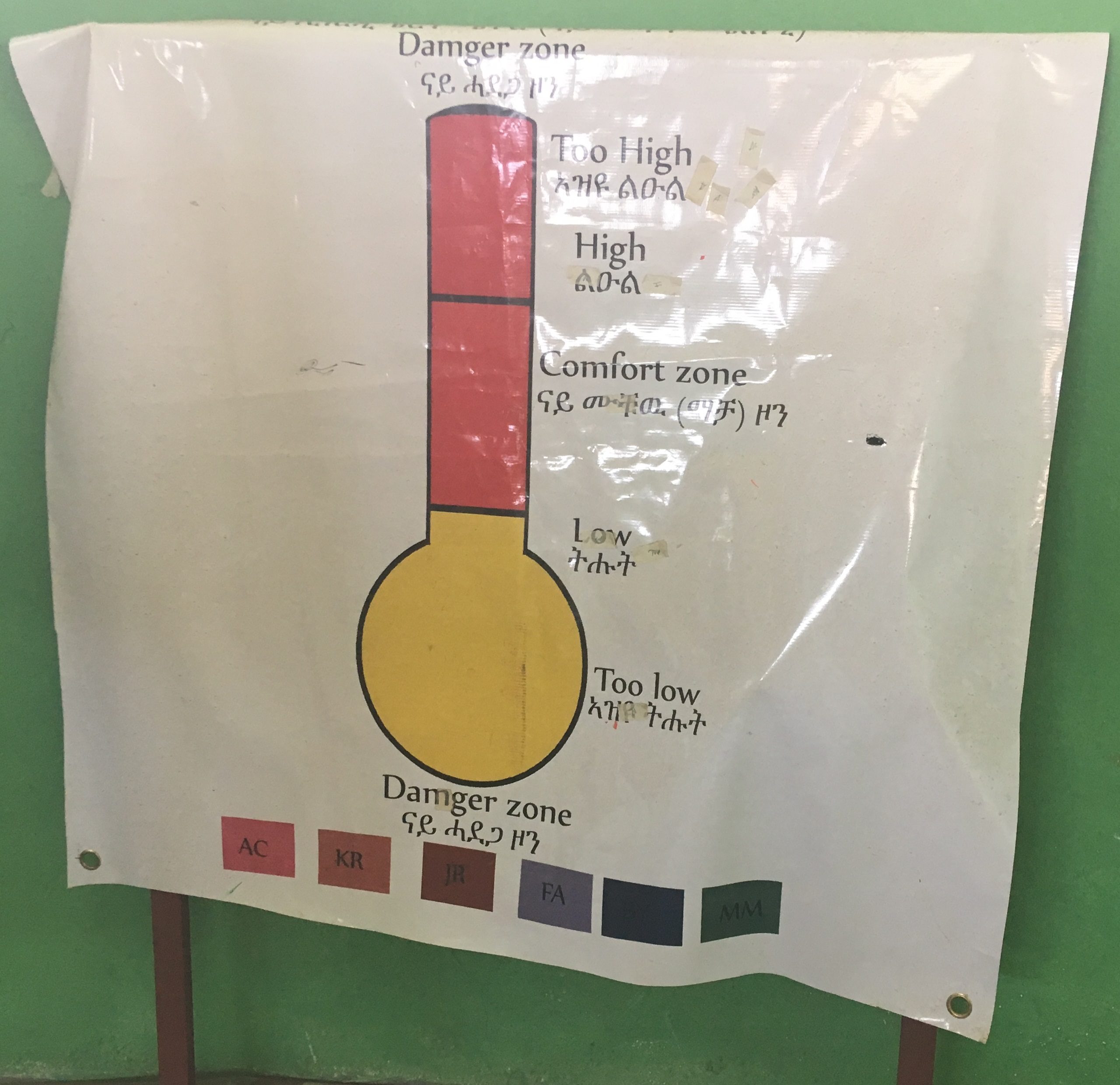
For instance: it’s normal to feel angry or hopeless considering what they’ve been through; feelings come and go, like clouds, so usually if you wait they will change; emotions can be managed by talking, exercise, meditation, etc.  The facilitator had already taught these concepts in the first two meetings and was drilling the boys about them.  They were totally engaged, almost all raised their hands enthusiastically to answer, spoke gravely, and discussed points of clarity with each other seriously and respectfully.  I may have imagined it or may be exaggerating, but it seemed to me as if they treated the information as if it was a matter of life and death.

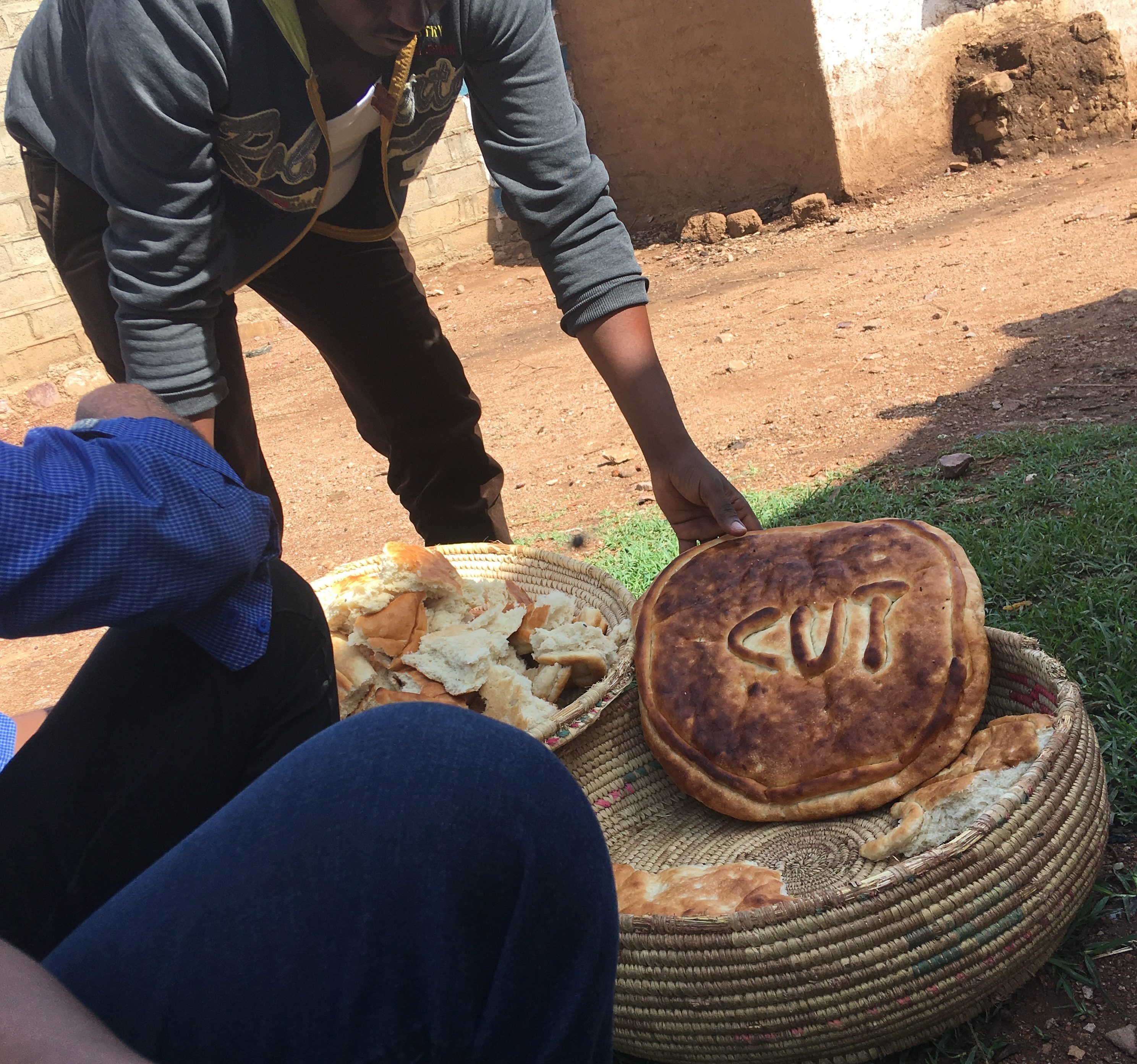
I was a bit relieved when the group ended and the boys spilled outside to share some ambasha, a traditional bread.  You could say that branding is literally baked into everything CVT does.
People have asked me how the food was in Ethiopia.  It was really good.  CVT has a staff canteen where two cooks serve breakfast, lunch and dinner.  I paid about $11 for an entire week of meals.  There was just enough—no seconds, no gorging—you wouldn’t gain weight if you lived there for a long time.

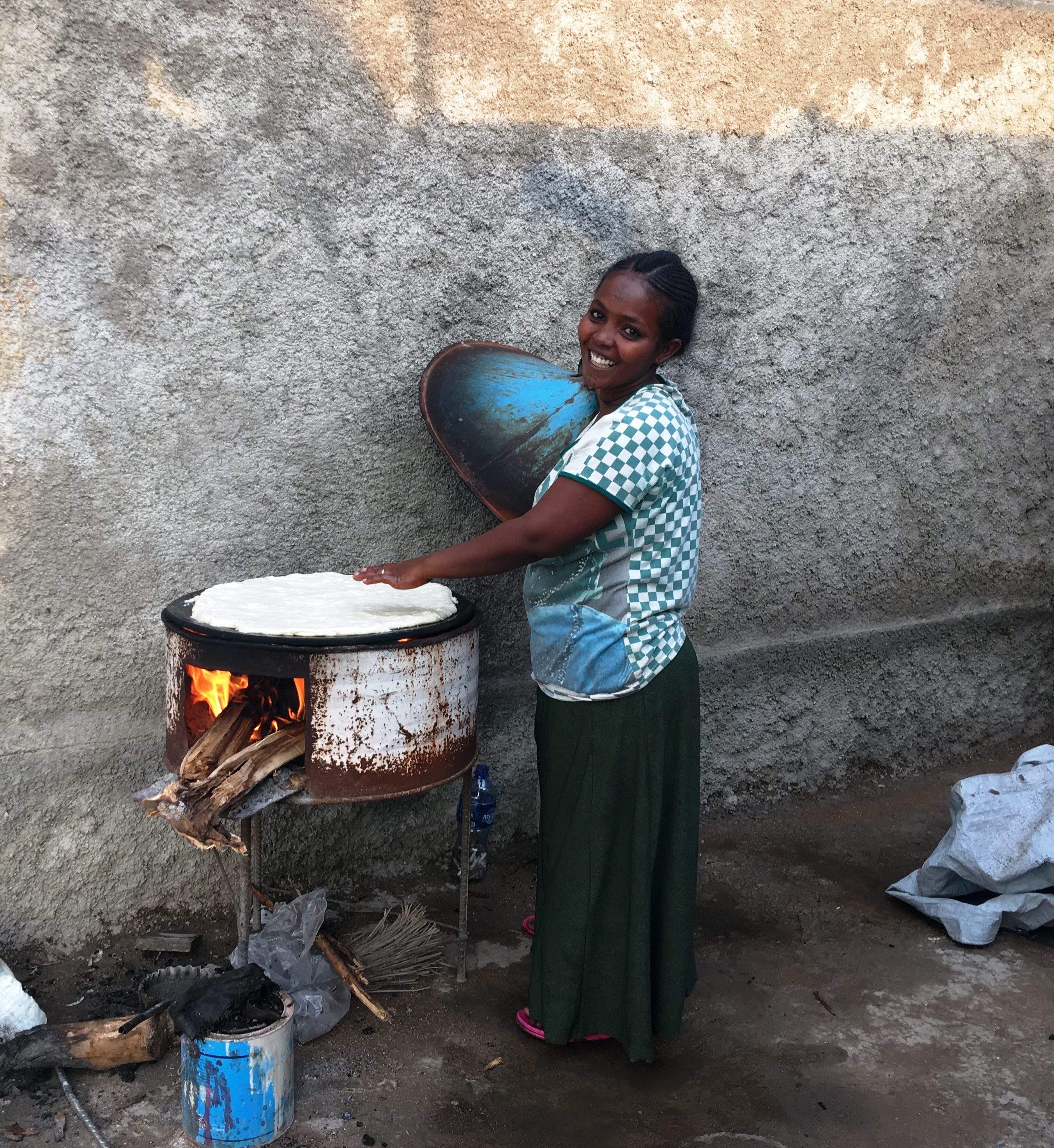
Here is one of the cooks, heavily pregnant, baking ambasha over an open fire on the roof because the power was out (I always asked my coworkers if it was okay for me to take and use their photos).  She had used plastic bags to get the fire started, over my protests.  Note the can of paint nearby, probably highly flammable.  Employee health and safety have a long way to go in Ethiopia.
Scenes from a Refugee Camp

I spent two days in the refugee camps.  On the first day I got a walking tour of the camp from the young colleague who had shown such great interest in tiramisu.  He walked at a brisk pace and I managed to keep up despite the ground being muddy and strewn with large rocks and pocked with water-filled potholes.

We stopped in at the Women’s Centre which was run by International Rescue Committee.  We visited a primary school, where little faces looked up at me briefly and then back to their books.  They were probably used to strangers touring the camps. We walked past the playground:

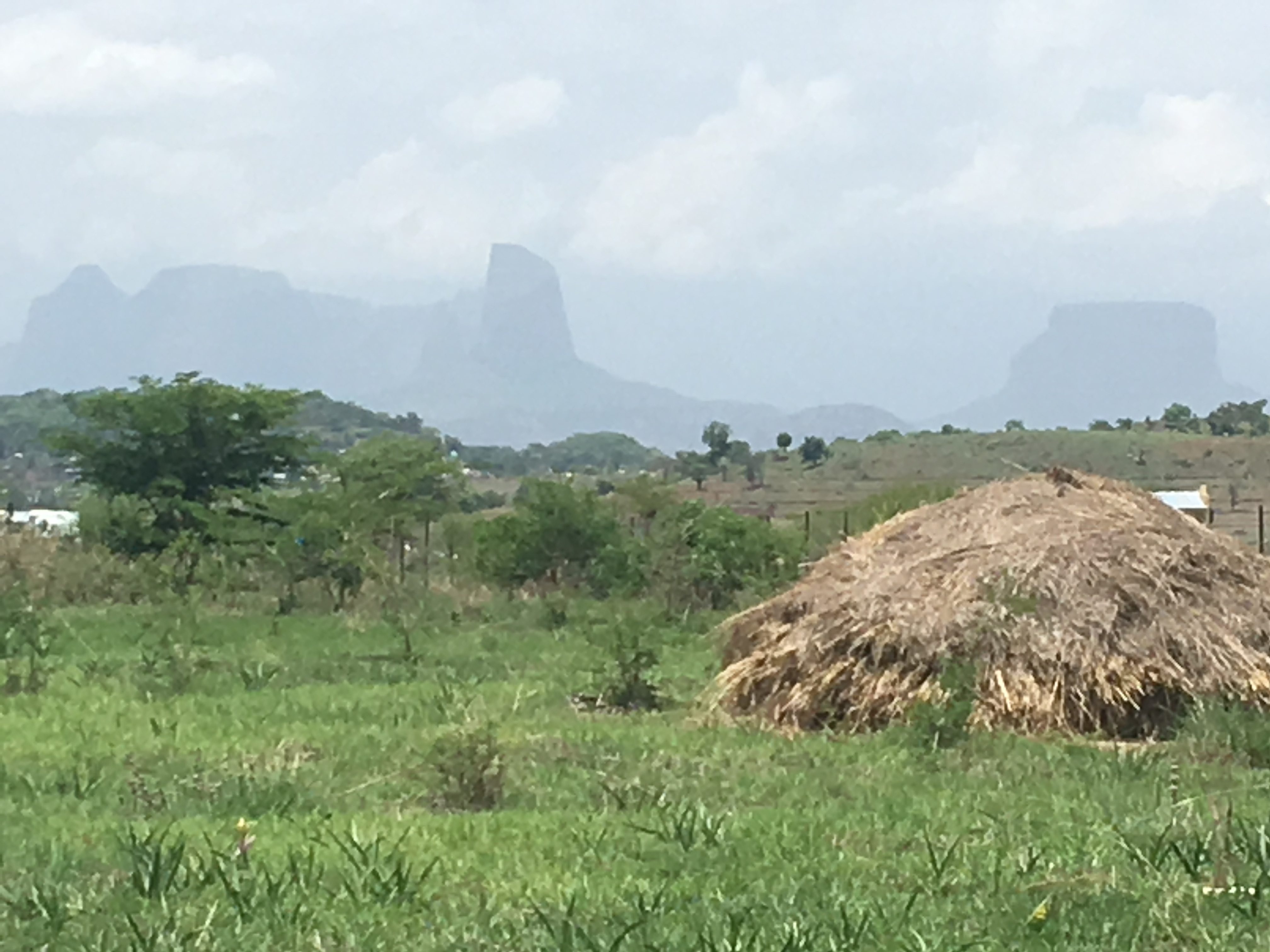
It may look sad, but when you turned around there was this spectacular view of the mountains:

My colleague asked me if I wanted a cup of coffee and I responded enthusiastically.  People had set up small businesses along the main road; some sold beer, some packets of crisps and nuts or single application shampoo packets.  There was a cigarette vendor who sold one cigarette at a time, since no one could afford a whole pack.  We stepped into a thatched hut that served coffee.  I was the only woman and I got a few looks—not hostile or lewd—they just seemed to be noting, “Huh, a woman in the coffee hut.”  Knowing how hard women here worked, I wondered if there was a separate women’s coffee hut somewhere or if they managed without coffee.  Just the thought makes me tired.

We sat on the ubiquitous white plastic chairs, drank bittersweet coffee, and chewed on some kind of beans or nuts.  My colleague’s English was difficult to understand, so as I chewed I wondered if I would soon be seeing flying unicorns.  He talked about being an artist and a project he was working on.  I could croak out a few syllables now, but I didn’t want to be mute while traveling back to Europe in a few days so I mostly just nodded and smiled.

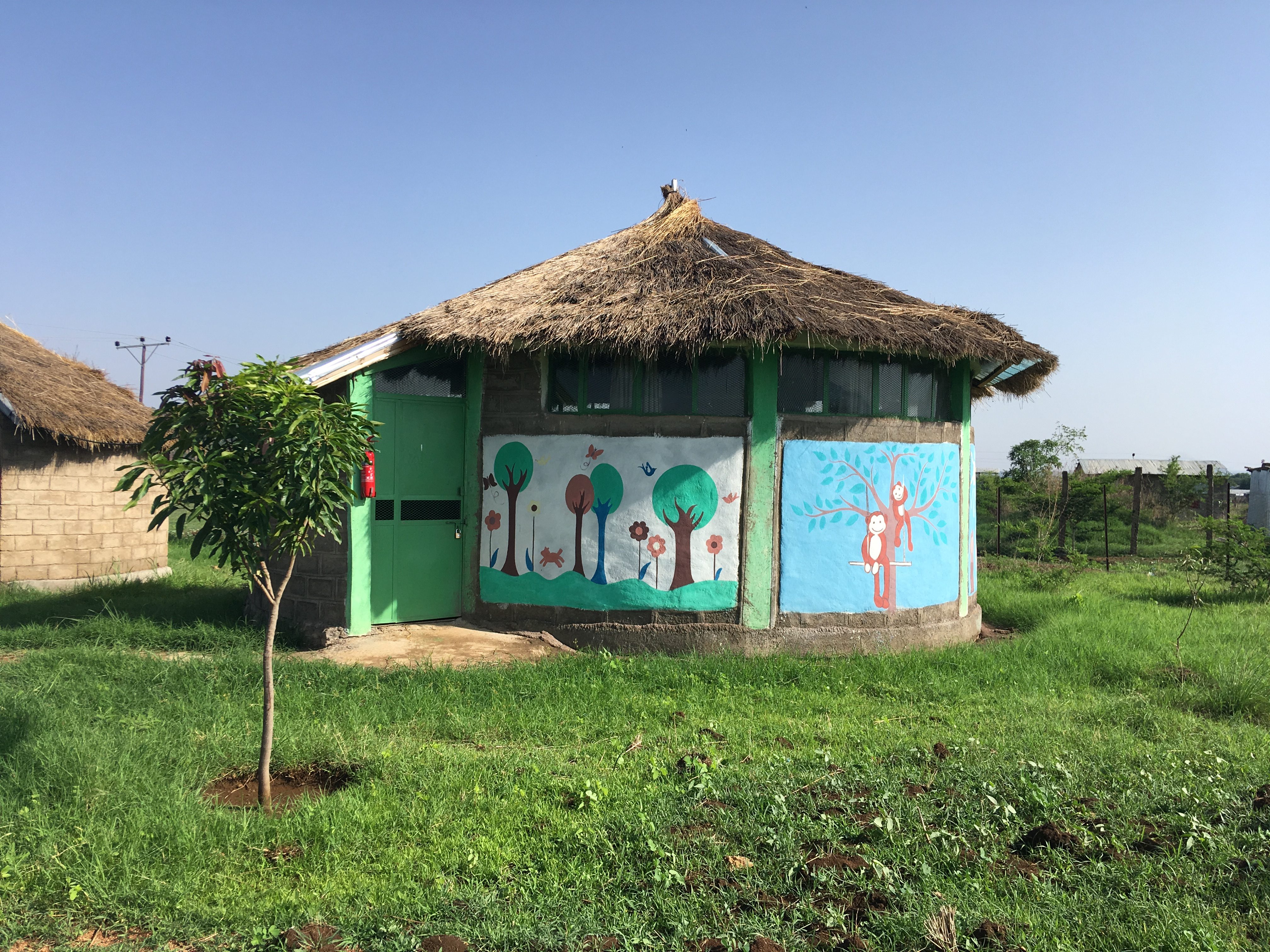
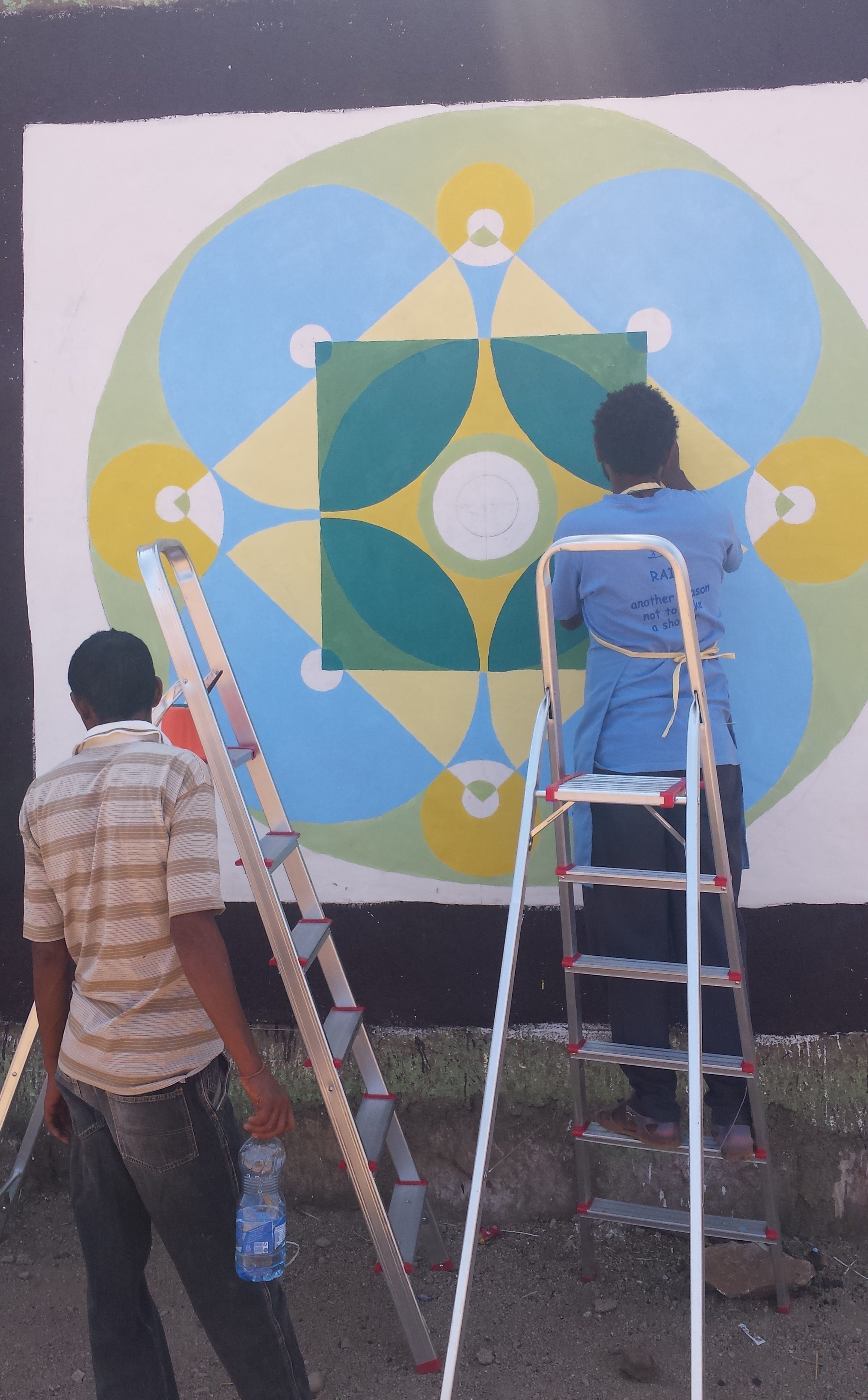
We returned to the CVT area.  There, we have built tukuls that serve as cool, calm oases in which people attend counseling groups.  We’ve got an art therapist from Chicago who is leading the painting of tukuls for children and creating mandalas on others.

We arrived at break time, so there was more coffee and popcorn with the whole staff of about 10 people.  They insisted I sit on the one (white plastic) chair while they stood or squatted on the ground.  I had been warned about this by others from headquarters who visited—that our staff will insist on visitors taking the chair and that it would be embarrassing.  I had just had an hour-long hike around the camp under a blazing sun.  I was twice as old as all of them.  Age is revered in some cultures and if my age or perceived status as a visitor got me the chair, I wasn’t going to say no.

After the break I was taken to a tukul where a group of 12-14 year old boys was assembled for a counseling session.  CVT’s standard counseling groups run for 10-weeks.  However, if you’ve ever had a teenaged boy in your life you know how restless they can be.  These Eritrean teenagers had picked up and walked out of their country.  They did not enjoy hanging around a refugee camp with no prospects.  As I’ve written briefly about before, many of them walk off again, toward the Sinai Desert in hopes of reaching Israel, or farther on toward Libya and the Mediterranean Sea with hopes of reaching Europe.  Some do make it, but most are kidnapped in the Sinai by Bedouin or other traffickers, or drown in the Med.

Ten-week groups are just too long—many of the boys won’t be around by the third week.  So CVT developed a three-meeting group model, and I was sitting in on the third one.  Everyone had a chair.  But first, they made me stand up and give a speech, since I was such an important person from headquarters.  Now this was a little uncomfortable.  Little did they know that I am nobody special, but I rasped out a few words anyway.

Losing My Voice

The day I was supposed to give the second half of my presentation, I awoke with no voice.  I couldn’t force out even one husky syllable.  I don’t know if I had a cold, or if it was all the smoke and chemicals, or both.  regardless, this was going to be awkward.

I wrote, “I Have Laryngitis” on a piece of paper.  Then I thought no, they might not know what that was, so I wrote another that said, “I Have Lost my Voice.”  Then I thought dang, we are always talking about giving refugees a voice to speak up for their rights.  What if they think I am making some kind of bizarre white western yuppie artistic statement?

People did give me strange looks when I showed them my sign, but what else could I do?  I slid a note over the breakfast table to Maki: “I can’t give a presentation with no voice.”  She nodded and shrugged.  Did she think I was faking it to get out of doing the second half because I had worried the first one hadn’t gone over well?

“You can go with Yonas to get your camp pass this morning,” she said.  Yonas, not his real name, is our loggie.  “Loggie” is shorthand for logistician.  I nodded and followed Yonas to the truck.

The power and the generator were both off, so the wireless router was going “BEEEP, BEEEP, BEEEP, BEEEP …” You get the picture.  It was loud and annoying and no one else seemed to notice it.

I had planned to force out some words but didn’t think I could make myself heard above the beeping.  I showed Yonas my note about having no voice and he smiled, nodded, and proceeded to talk to me very loudly.  Ethiopians are normally soft spoken.  I assumed he was trying to be heard over the beeping but he kept it up after we’d left the compound.  I’ve noticed this the other times I’ve had laryngitis; for some reason people seem to think you are hard of hearing.

We went into two camps and called on the administrators with the agency that manages them.  They don’t let just anyone into the camps, for good reason.  Refugees are vulnerable to trafficking or other forms of exploitation because they tend to be desperate for solutions to their uncertain plight.

In each office, Yonas and I sat across from the official and the two of them made small talk.  Yonas did all the talking.  I smiled and nodded deferentially to everything.  Yonas explained how I was a CVT employee who was here to observe the programs, that I had come from the US, that I was a fundraiser  who was here for a week.  The official would nod slowly at each statement and then there would be a very long pause as he or she scrutinized the forms Yonas had submitted weeks earlier.  They appeared to relish the power of being able to keep you in suspense as to whether they would grant the pass or not.  Finally, just when I was sure they would stamp “REJECTED” on my pass, they stamped “APPROVED” and that was that.

If I make it sound like Ethiopia was dreadful, that’s not my intention.  So I had a sore throat and lost my voice.  So what?  The thousands of refugees in these camps had lost their homes, their families, their peace of mind, and their hope.  I was so grateful for the opportunity to experience where we work and what we do first hand.

I can’t and wouldn’t show photos of refugees.  You know, there’s that whole thing about treating people like they’re animals in a zoo.  And the thought of posting photos of people online—people who have no Internet access and so will never even know their photo is out there—feels wrong.

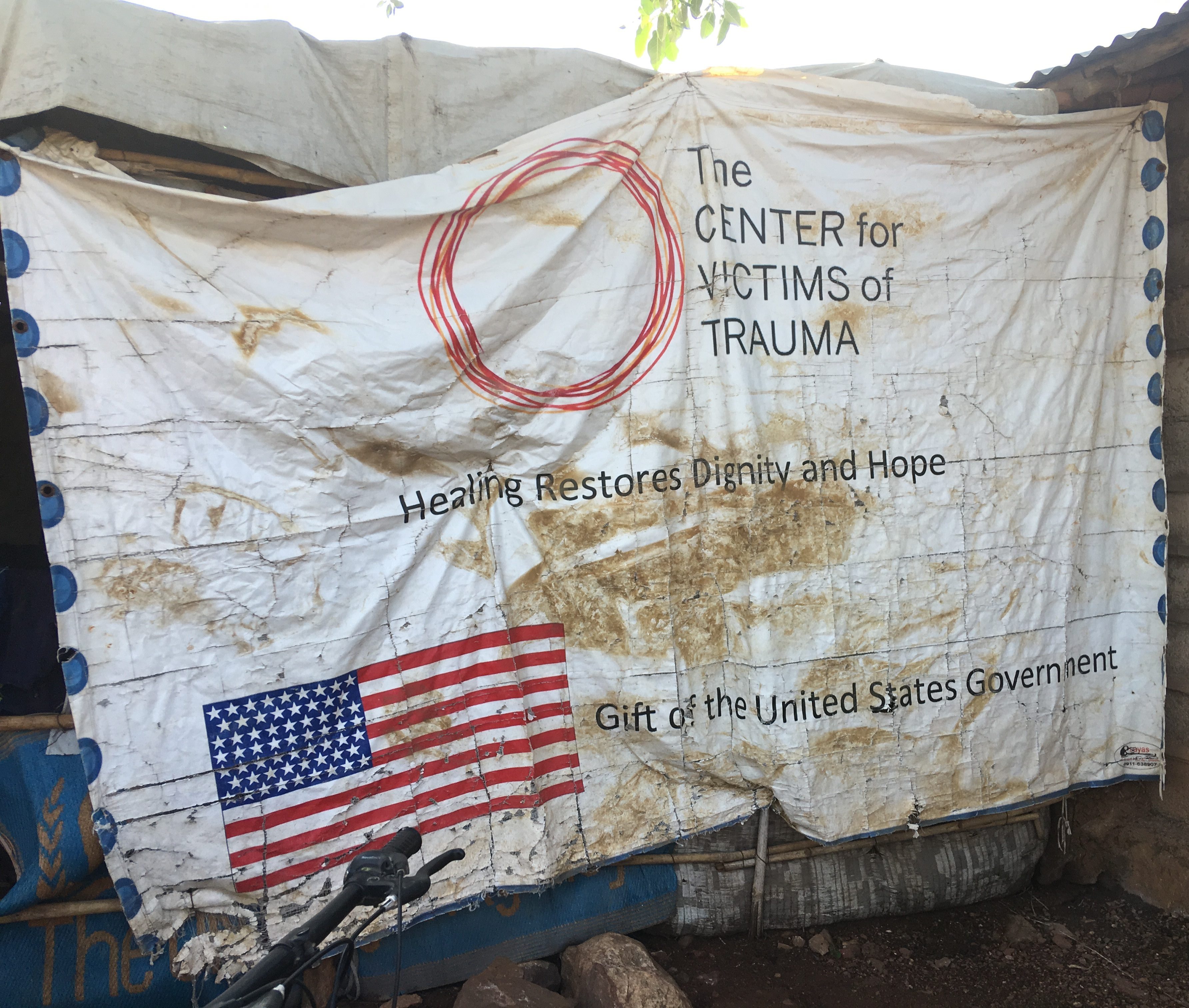
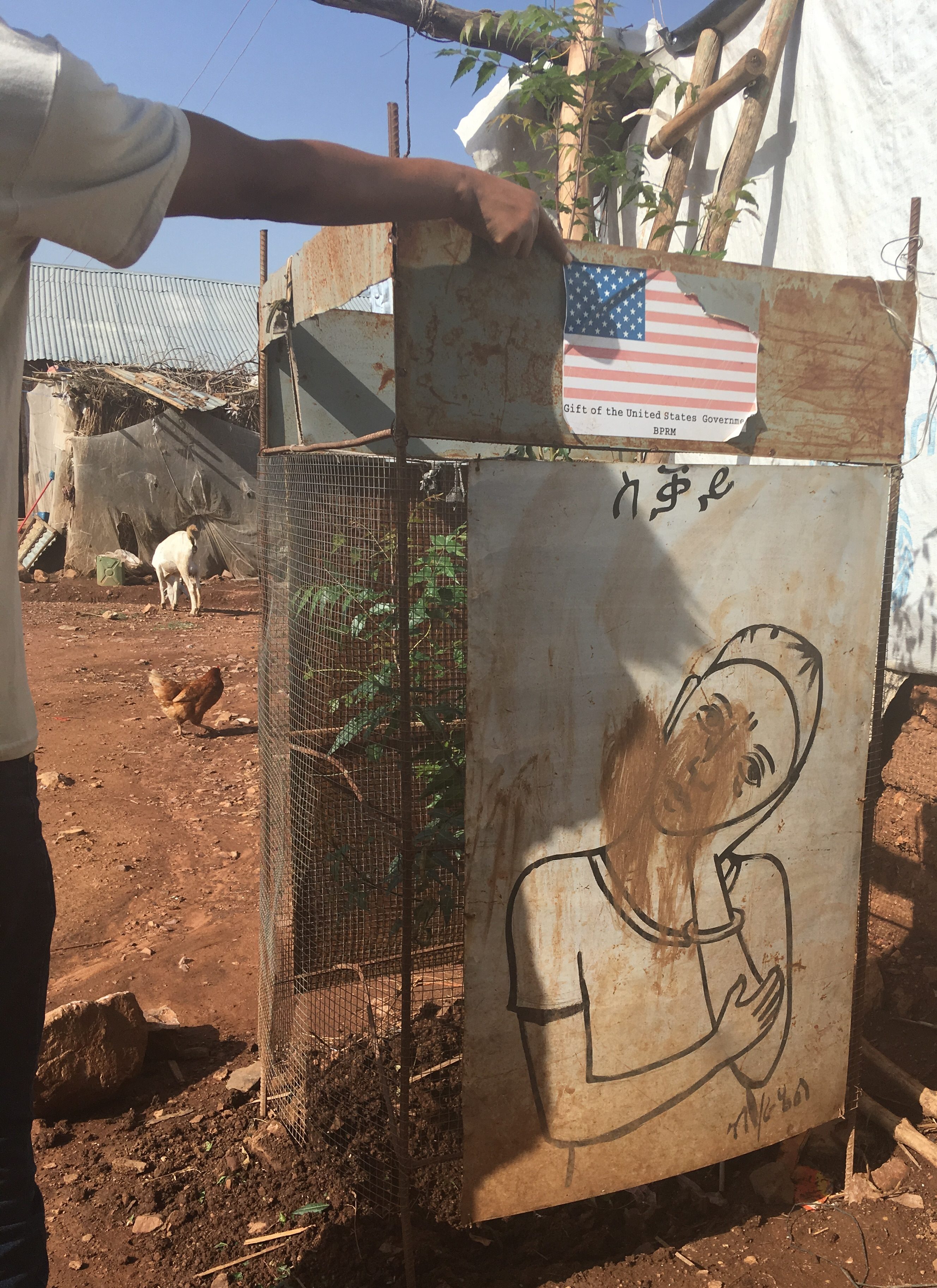
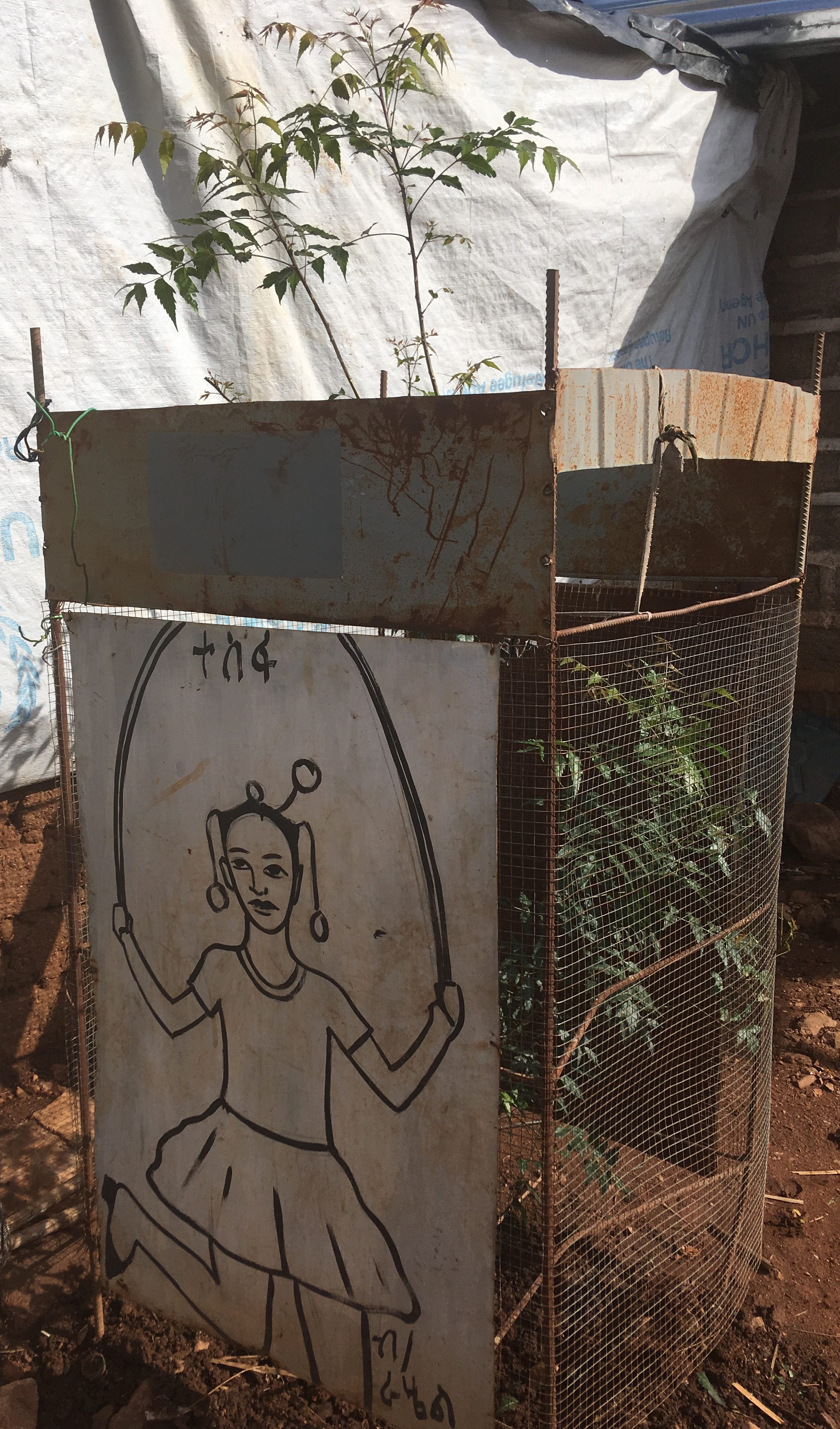
Here’s some CVT signage.  It may look depressing but it’s hard to keep it looking good with the mud and rain.  The good news is that CVT has planted a lot of trees, which makes our corner of the camps welcoming, and the fencing is to protect them from goats.  The illustrations are “before” and “after” counseling.

Where There’s Smoke

I got a common cold in Ethiopia. Coincidentally, in my current location, Scotland, I became violently ill which prevented me from blogging for a couple days.  So if you’re worried about getting sick when you travel, don’t go anywhere.

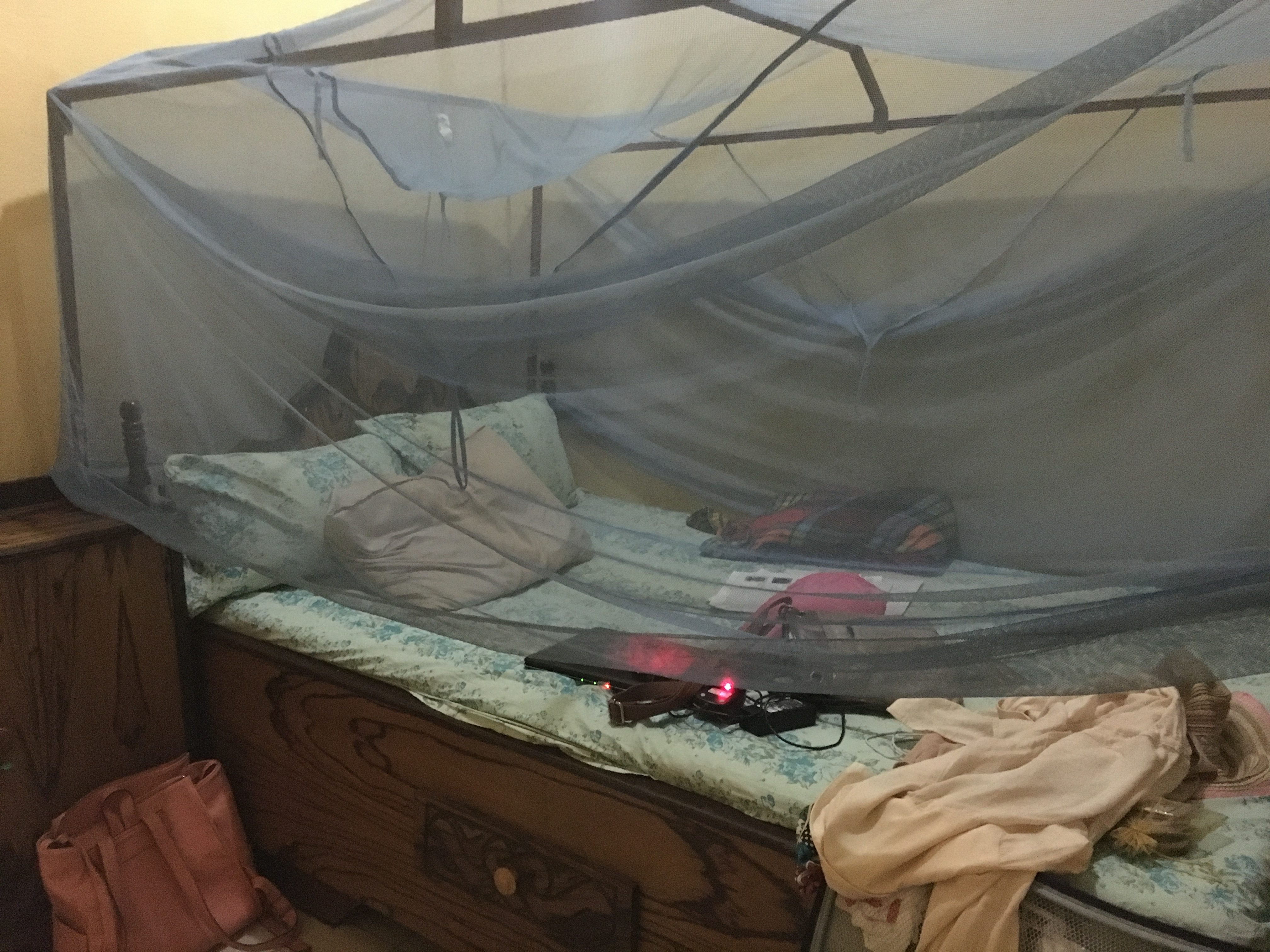
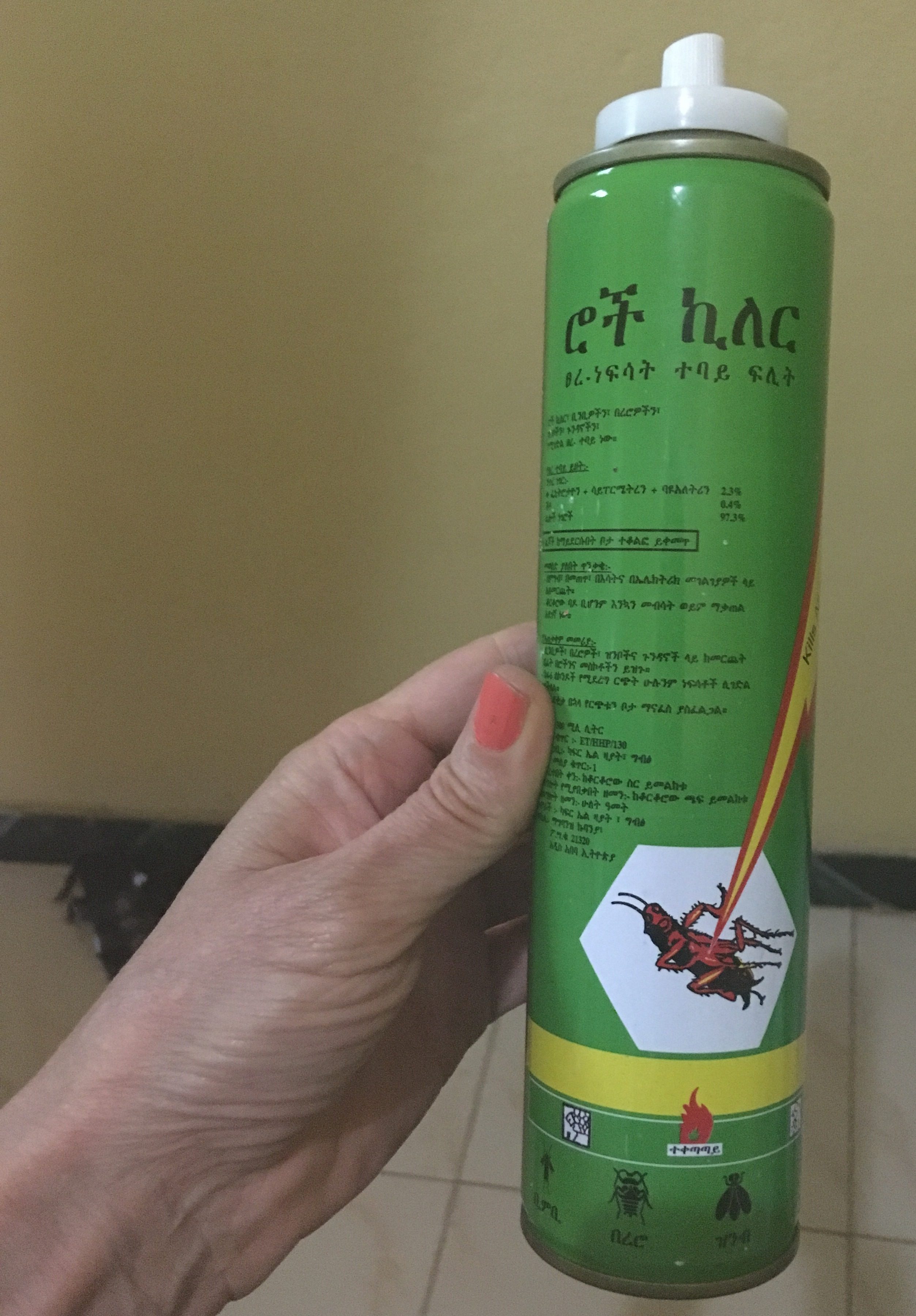
It was the day I would give my training about proposal writing.  I awoke with a scratchy throat.  Was it due to all the chemicals sprayed around my room?  My bed was draped with a bed net to keep out malaria-carrying mosquitoes—was it drenched in the insecticide permethrin?

At breakfast, as usual, all eyes were glued to the big screen TV hanging in a corner.  Germany’s Angela Merkel was being congratulated by Dilma Roussef of Brazil and “World Cup Winner—Germany” was scrolling across the bottom of the screen.

I know next to nothing about sports, but I turned to Maki and said, “That’s strange.  Is the World Cup every year?”

“No,” she said, although she didn’t seem very sure either.  I looked around and all the guys were glued to the screen and didn’t seem to think anything was amiss.

Then, the words “2014 Winners!” scrolled across the screen.  Maki laughed her dry laugh.  “They’re showing 2014—I wonder how many times the staff has watched this.  This is what they call cable TV here.”

She asked someone to change the channel and he flipped it to the other staff favorite, America’s Stupidest Home Videos.

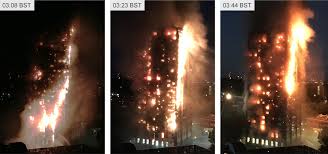
“Keep going,” Maki ordered, and the canteen fell silent because the next channel was live BBC news coverage of the Grenfell Tower fire.

I was the after-lunch-world-disaster-news speaker.  The staff filtered into the training room.  Maki sat in the back working and listening with one ear.

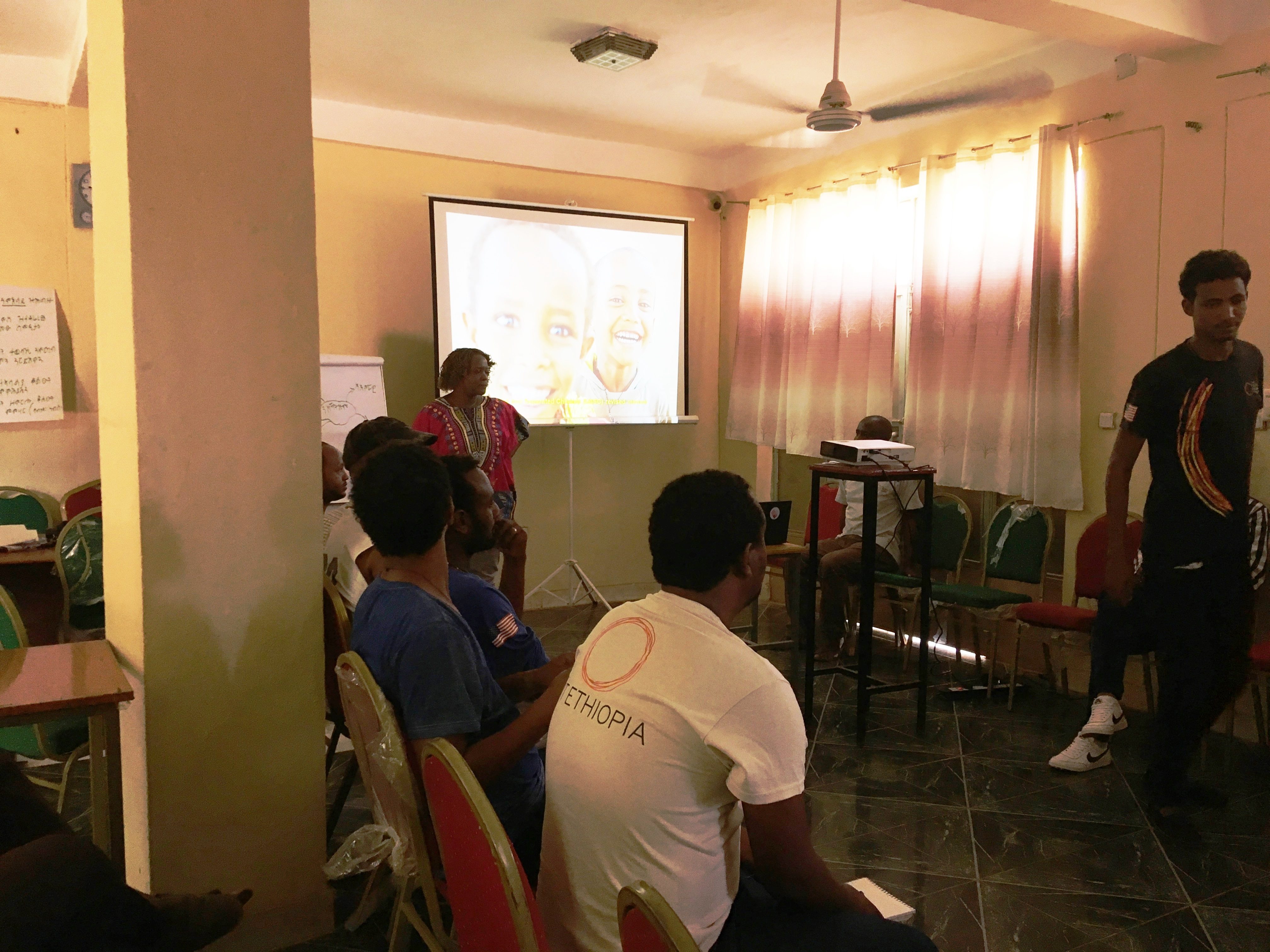
I had a circle of about 20 attendees and since the power was out and I hadn’t been able to print my handouts, I handed my laptop around to try to paint a picture of the global fund raising scene: who is the largest donor to international development in terms of total dollars (the US, by far) and by percentage of Gross Domestic Product (the UK and Scandinavian countries, by far); what kind of programming gets the most support (health, water and sanitation, agriculture, and increasingly, counter terrorism activities); who receives the most funding (giant nongovernmental organizations and corporations) and where (the Middle East is a priority right now).

I looked around and saw inscrutable faces.  They were making eye contact with me.  They weren’t sneaking peeks at their phones.  They weren’t yawning.  But they weren’t nodding or smiling or sitting forward eagerly.

The generator kicked on and I had to raise my voice to make myself heard.  My throat got scratchier and scratchier.  I had been provided with a two-liter bottle of water and I kept trying to sneak sips while talking, which was awkward.

Suddenly the cook appeared with a smoking pot of burnt coffee beans.  She walked around and the staff waved their hands over the smoke and took a deep inhale.  Everyone seemed to think this was great, so I followed their lead.  Ugh.

The hour was soon over.  No one asked any questions.  I hadn’t expected them to applaud, but it was kind of a flat ending.

“Were they bored?” I asked Maki.  “Was it too much, too basic …?”

“That’s normal,” she said.  “The staff just aren’t expressive in meetings like that.  I thought it went fine.”

That was good enough for me.  However, an hour of talking had strained my throat to the point where I now sounded like I’d smoked hundreds of cigarettes.  Which I kind of had, if you consider all the diesel fumes and toxic roach- and rat-killing chemicals and dust and coffee bean smoke I’d inhaled over the past few days.

My throat is kind of my Achilles heel, so to speak.  The previous winter I had had total laryngitis for 11 days.  I retreated to my room to avoid having to talk, but eventually had to emerge for dinner.  People were getting to know me now, and wanted to talk.  When I opened my mouth and croaked they looked puzzled—is laryngitis not a thing in Ethiopia?  Did they think I was talking this way on purpose?

Feelings on a Stick

Day two of my work week in Ethiopia.  I was sitting in on the second day of a training for our staff.  It was interesting enough, but as I wrote it all had to be interpreted into Tigrinya, and the Eritrean staff’s questions had to be interpreted into English, then the answers back into Tigrinya, and on and on.  I was super impressed by our interpreter, who must have been exhausted by the end of the day.  He started every interpretation with a word that sounded like “selezzie,” which I assumed must mean, “he says.”  I also noticed there were certain words that must not have a Tigrinyan word because they jumped out at me in English when he was speaking Tigrinya.  I could understand why “name tag” and “photo copy” might not have a Tigrinyan translation, but “silence” or “responsibilities?”

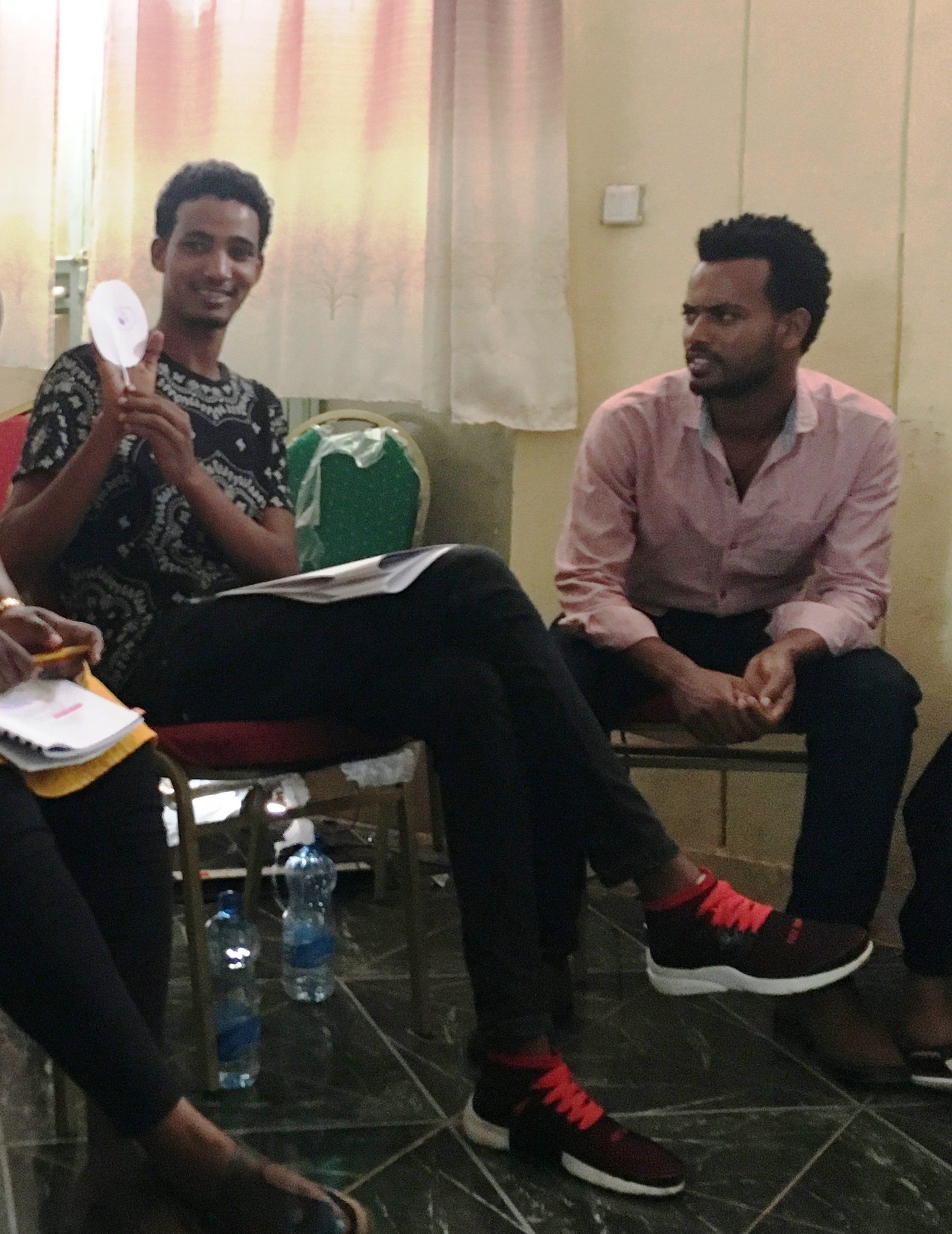
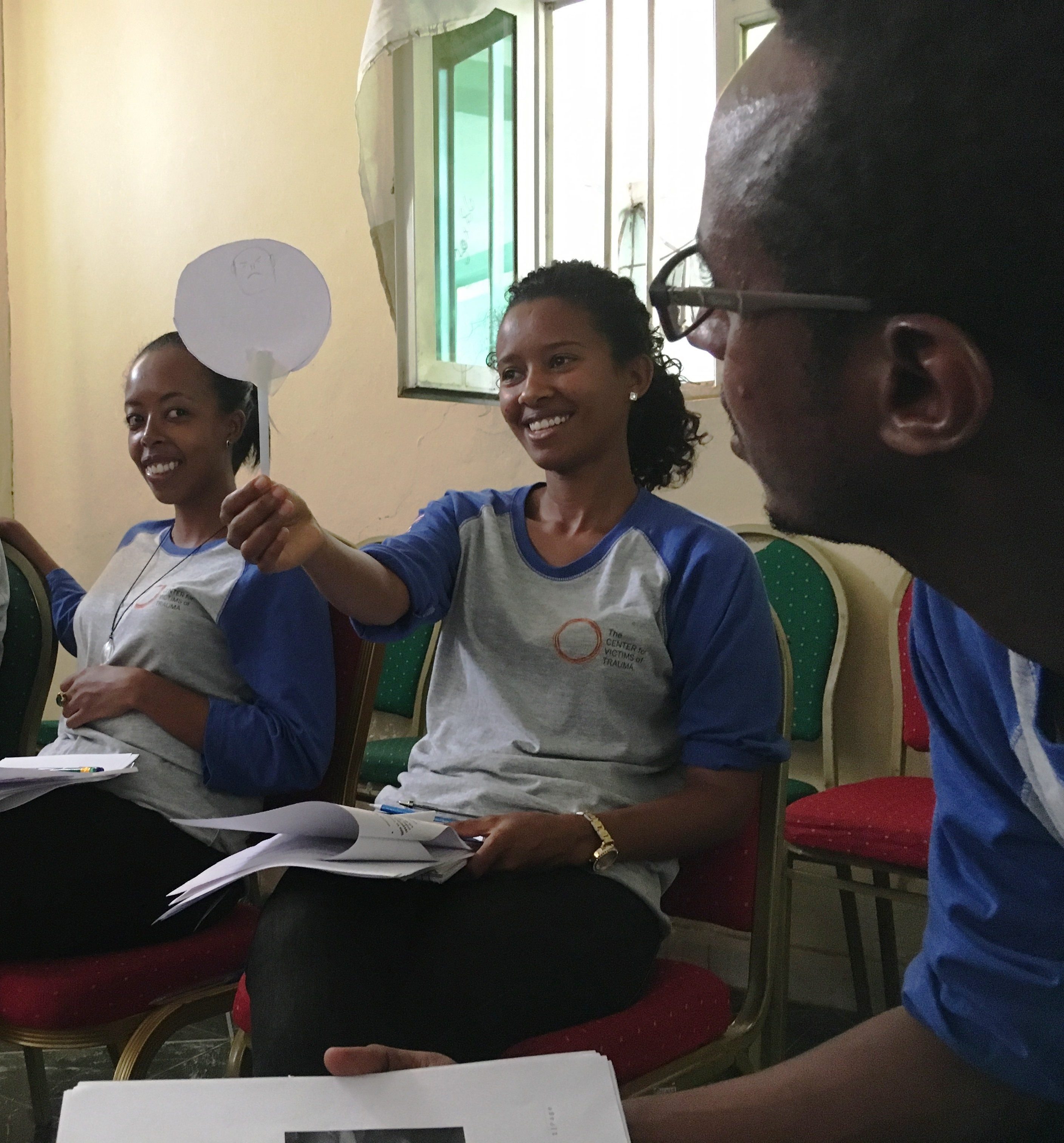
We worked our way through the manual that counsellors would use to run the groups.  One exercise involved everyone drawing a face on a circle of white paper on a stick to show how he/she was feeling.  You can’t see the faces because everyone except one counsellor drew them very, very small.  Well, and because the iphone takes crappy photos in low light.  It was like the faces drawn by the counsellors were floating inside big white balloons.  When it was my turn to show my face, everyone laughed because it fit the white circle.  I will never know what that was about.

During one of the longer interpretations, my mind started to drift.  I was tired due to living through The Night of the Rat.  I began to do what I usually do in meetings to keep myself looking engaged; I counted how many men there were, then how many women, and calculated the percent that were women.  Then I looked around and guessed how old each person was.  Back home, I would normally calculate what percent of the group were overweight, had blue eyes, or were gay, but in Ethiopia those were non-existent or hidden attributes.

I looked down at my feet as though I was concentrating closely on what was being said and thought, “Dang, I need a pedicure.  I wonder if I’ll have time to give myself one later, or should work on my presentation more, or take a nap ….”

I had been asked at the last minute to train our staff in Ethiopia on proposal writing.  I would have one the one-hour after-lunch slots on Wednesday and Thursday.

This was a great opportunity but also a tall order because I felt I couldn’t train people on how to write proposals without backing up and explaining things like, how do you find donors to apply to?  Who gives away the most money? How do you choose among many different funding opportunities?  What kind of skills to you need to raise funds?  And so on.

I had created an outline offline, then spent hours trying to email it to Maki so she could review it.  I considered loading it onto a flash drive, printing it out, or just handing her my laptop before I finally got an internet connection.  We wasted so much time trying, and trying again and again to get a connection.

During our morning break, I finally got to offload the sweets I had brought all the way from Holland and Austria.  I had stroopwaffle and tiramisu cake and a strudel, all hermetically sealed in plastic and probably loaded with preservatives because they were none the worse for wear except for being a little smashed.

The cook cut them up into small pieces and they were circulated with the popcorn and coffee.  Everyone seemed to enjoy this treats, and one of the youngest counsellors came over and asked me what the tiramisu was.  When I told him, and said it was Italian, he looked at me skeptically.  “I thought I knew all the Italian words for foods,” he said.  “Lasagna, spaghetti, linguine,” he rattled off his Italian food vocabulary.  “Teer-ah-mee-soo,” he repeated a few times to himself, then wandered away to find more.

Cool Scotland

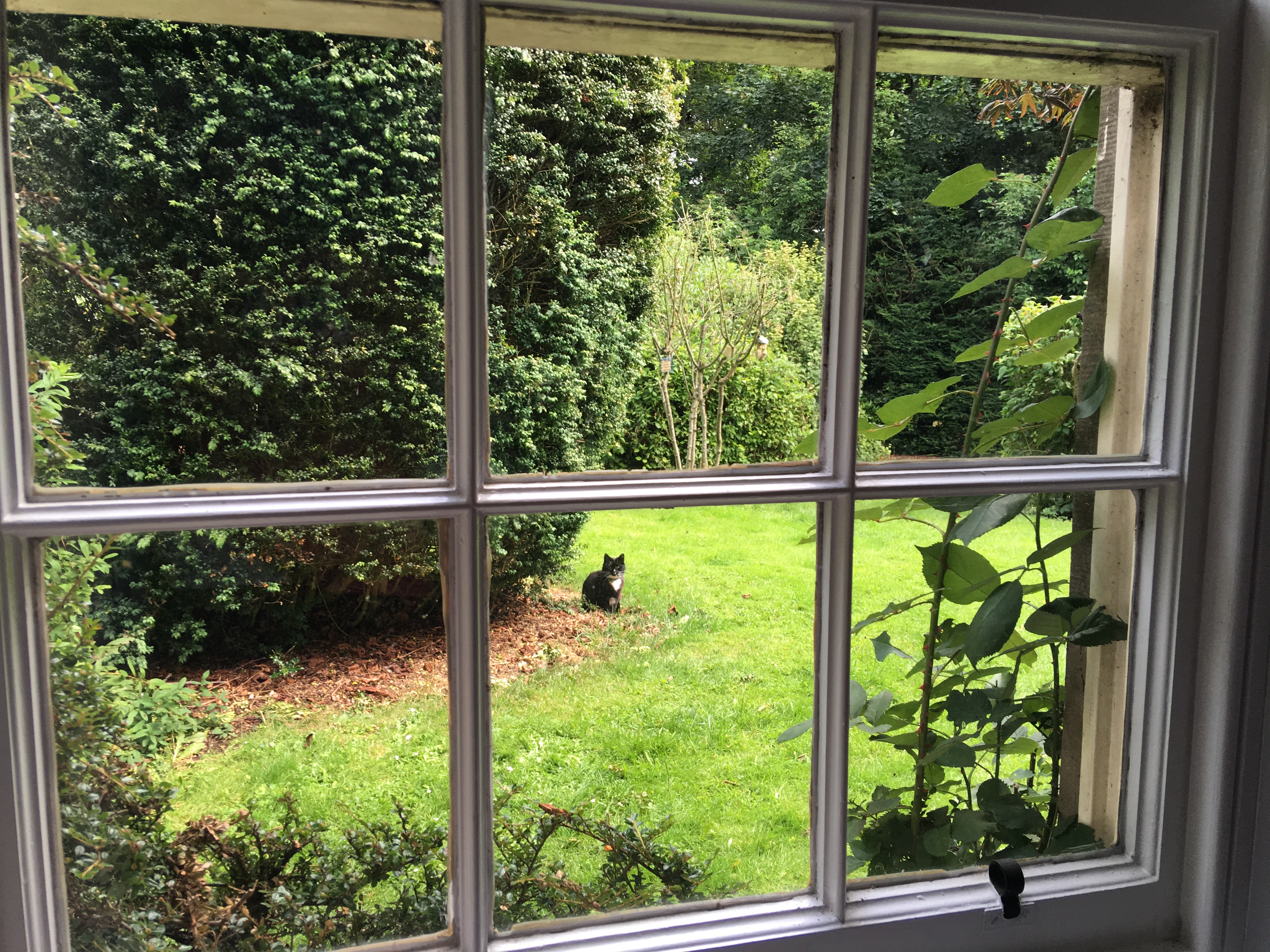
I am sitting on a big bed in a big bedroom in a big house in Scotland.  It’s so quiet, so clean, so cold.  It’s August 6 and there’s frost on the windows.  But the view out my window in the greenest green you can imagine.  Well, you don’t have to imagine it, here’s a photo from yesterday afternoon, when the high reached 60F.

I’m at Lynn’s house; I’ve written about our travels together many times.  I have sunk into a routine of working, eating, reading, walking, more work, more eating, and watching Dickensian, a brilliant BBC TV series that jumbles together all the Dickens characters into one murder mystery.  I don’t know why it never made it to the states.

Europe, Ethiopia, and England seem like dreams.  The episode I wrote about in my last post has already morphed from panic-stricken flurry of drama into something that will make a good story some day.

After returning from Lalibela, I put in a week of work in the refugee camps in northern Ethiopia near the Eritrean border and in our offices in Shire.  I’ve written about the “sensitizations” we carry out to tell people about the effects of torture and trauma on mental health and what we can do to help them heal.

I also sat in on a two-day training in which all of our counsellors were trained in on a new group manual for adolescents.  That probably sounds like a lot of gobbledegook.  There are a lot of adolescents who have fled from Eritrea.  They’re there without their families.  They don’t know when they’ll ever see their families again.  They attend school in the camps and there are recreational facilities where they can play football and so on but in general they feel hopeless and like most teenagers, they’re restless.  So they leave the camps and try to get to Europe.  These are those people you see in the news who are being fleeced by human traffickers, only to drown in rubber rafts in the Mediterranean Sea.  The lucky ones make it to Europe or Israel, where they again live in camps.

So there have been spates of suicides and suicide attempts and the groups for adolescents aim to prevent that and teach kids how to cope with the uncertain situations they live in.

I’ve written about the content already.  This staff training was really good, despite the fact that it all had to be translated, which made it twice as long as if our Kenyan psychotherapist could have just said it once, in English.  It was also despairingly hot and stuffy in the room, and why oh why did they keep one of the Landcruisers running right outside the window, so the exhaust fumes wafted into our room?

We had a break mid morning during which we were served the strongest coffee known to mankind and popcorn.  Yes, popcorn, which happens to be my favourite snack.  (“Counsellors,” “favourite,”—I am working on two grant proposals to British funders right now so my documents are set to UK English.)

This was also my chance to catch the cleaning lady and stop her from spraying poison and air freshener all over my room.  She smiled and gestured as if to say how this was her job, how important the poison was to control the rats, how wonderful the Country Peach air freshener would smell.  I smiled back, trying to convey that under no circumstances did I want this shit in my room.  The toxic-smelling floor cleaner she mopped around was bad enough, thank you.  I would take my chances with the rat sans poison.  She smiled in return and I’m pretty sure she went ahead and did what she’d been trained to do once I was back in the training room.

There were 25 counsellors in the training, and almost all of them were millennials.  They dressed like American millennials, in skinny jeans and Converse and T-shirts.  But unlike their American counterparts would have done, there were no cell phones in sight.  They all had cell phones.  Was it out of respect for Sandra, the trainer?  Or was it because they couldn’t get a signal or wifi anyway?

Moving On, Again

I interrupt this series of posts about Ethiopia to say there’s been an unforeseen development which will prevent me from writing for a week or so.

There was a miscommunication about the dates for my house sitting gig in Eton.  I was looking forward to a leisurely last weekend here, but when I walked in the door on Friday at 5pm and my phone connected to the wifi there was a What’s App message from Sam, “Home tomorrow at 10am, hope you had a good time, remember to leave £40 for the cleaners.”

Aaaargh!  I What’s App’d a friend of a friend to ask if his spare room was free this weekend.

“Honey, do you mean tomorrow?” was his reply.  “I’m leaving for Paris on Monday, the flat looks like a bomb went off, and I’ve got to pull two extra shifts at YSL to make the dosh to spend in par-ee.”

I swore I would never use Expedia again, but Air B& B’s website was agonizingly slow and when it finally loaded it was trying to sell me “Experiences!”  On Expedia, I booked the last room in Eton and Windsor—a family room with three beds—and started frantically packing and cleaning.  I ran down the block and bought some flowers, candy, and a thank you note for Sam and his wife.  I’ve loved this place and will write about it once I get through my travels that preceded staying here.

Gotta go … got to scrub the toilet and tub, take out the trash and recycling, restock the fridge, vacuum, clean the kitchen, probably drink half a bottle of wine while I’m at it, then try to sleep and bug out of here early.

There’s just one other hitch.  I went to an hour and a half long yoga class yesterday. It was taught by an extremely handsome 50-something year old man with a posh accent who kept coming over and looming over me to correct my poses.  “Imagine a soft shower of shimmering light,” he suggested in a hypnotic voice.  I wanted to impress him so I may have overdone the spinal twists.  I feel like I might have some broken ribs but I couldn’t, could I?  From doing yoga?

Bye Bye, Lalibela

After touring Lalibela I returned to my luxury hut, drank a couple beers, and scrolled through a week’s worth of Facebook posts.  One of them was by my son, Vince, who was announcing to his 263 friends that he would undertake a project to remove some of his tattoos and replace them with new ones—to the tune of $4,000 over the course of a year.

Ugh.  Tattoos are, in general, a divider between Baby Boomers and younger generations.  To me, they are a total waste of money.  $4,000 would pay for a very nice European vacation.  It would buy a good used car.  It could even go toward a down payment on a house.  A very small house.

But it’s his money and his body.

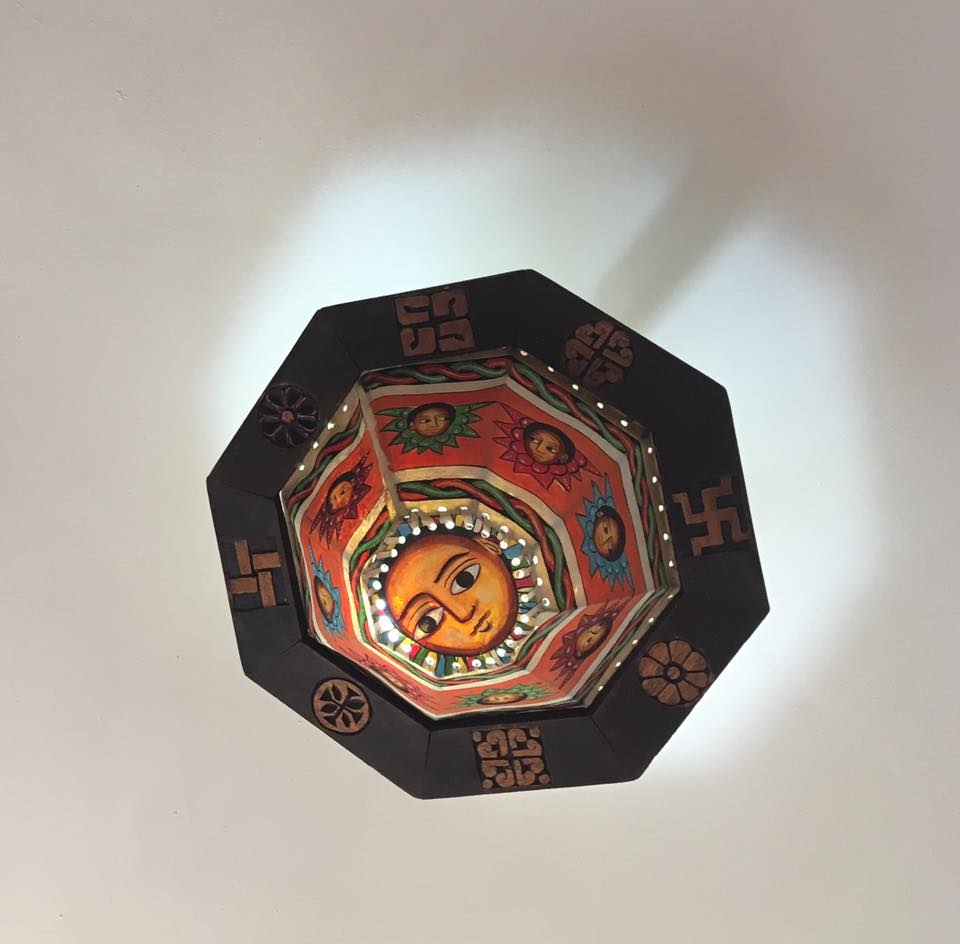
By 10am I was gazing up at the light as I was about to switch it off, and it was a new experience for me to sleep under a light shade with a face on it.  As a bonus nightmare-inducement, it also featured a swastika.

I was looking forward to a good night’s sleep, finally.  But that was not to be.  Again, there were the roosters and the donkeys.  Again, at around 4am, the chanting started.  But also again, I was fortunate to have ear plugs.  When I woke up at 7am, they were still chanting and I could see worshipers in white gauzy robes wending their way up the hill toward Lalibela in the distance.  It was Sunday, so there would be services, and I wondered if the chanting would go on even longer than the four hours it had run the previous day.

I went down to the dining hut and drank a good cup of coffee while I waited for my ride to the airport.  The only other occupants of the room were two Israeli guys who looked like absent-minded professors, with wild shaggy hair, long beards, and thick, 80s style glasses.  I came to believe that they were professors of religion and/or history and would have all the answers to my questions.  But no matter how blatantly I stared at them, they never looked my way but kept talking loudly in Hebrew.  Well, loud is the only volume Israelis speak at, in my experience.

Finally I got up to leave, and that got their attention.  I said hi and asked if they knew how many Jews had been in Ethiopia at the time Lalibela was created—my guide had said Ethiopia was “mostly Jewish” at that time?

They scoffed and said no, that was not correct; there were “only a few million” Jews in Ethiopia at that time.  That didn’t sound right either—how many people could there have been all told in Ethiopia 800 years ago?  But their accents were so heavy I just smiled and left rather than press for clarification.

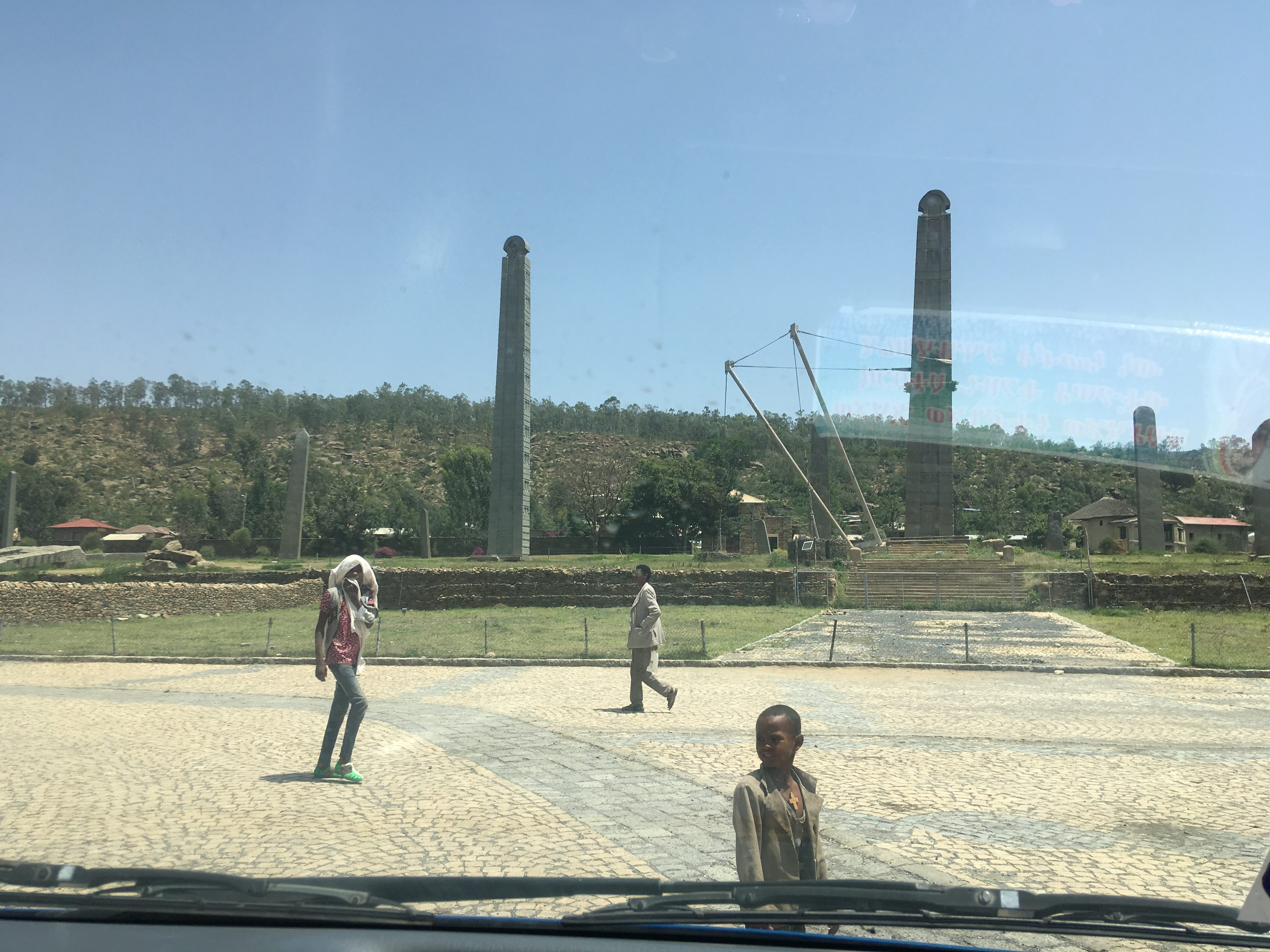
And so 18 hours after my arrival, I was driven back to the Lalibela airport, with the by-now expected young boys in the back seat for the ride.  I flew to Axum, where my driver was waiting to take me back to Shire.  But first, he swung by the Church of Our Lady Mary of Zion.  This is where the arc of the covenant is supposedly kept.  As a woman, I was not allowed to enter.  However my driver pointed out some steles across the road from the church and said, “Italians take.  They break.  We make them give back.”  That’s all I know about that.

The driver had tapped out his English, so for most of the one-hour drive I gazed at the rows of stone shacks along the road, maybe 12 by 12 feet in size, and thought I would go insane in five minutes if I had to live in one.  But so many Ethiopians were born, lived their entire lives, and died in these shacks.  They were home, and as long as there is love in a home, that’s the most important thing, I guess.

Vince, when you read this, you know I don’t “get” tattoos but I’m glad you’ve got a project you’re excited about that doesn’t involve drugs, gambling, or theft.  I’m just so glad you’re home.

Connections

Tesfaye told me he was really worried about losing his job.  It turned out he didn’t actually have a teaching degree, he had taken a course and a test right out of high school to become a guide.

“Now they have changed the requirement to a college degree,” he said pensively.  “My hope is to become a taxi driver.”

His hope?  It must have seemed hopeless to him to earn a degree.  Why wouldn’t the government pay for someone like him, who was obviously smart and experienced, to get a degree?  Or why not grandfather him in? Was it some scheme to make sure all the jobs went to cronies of government officials?  As often happens when you travel, there are questions to which you’ll never have answers.

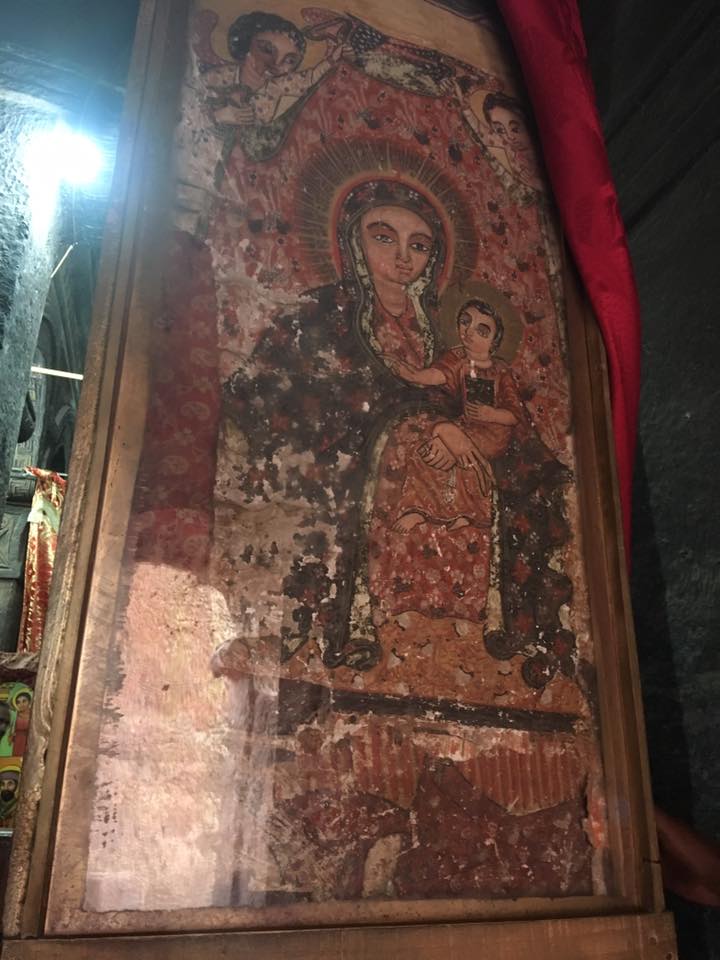
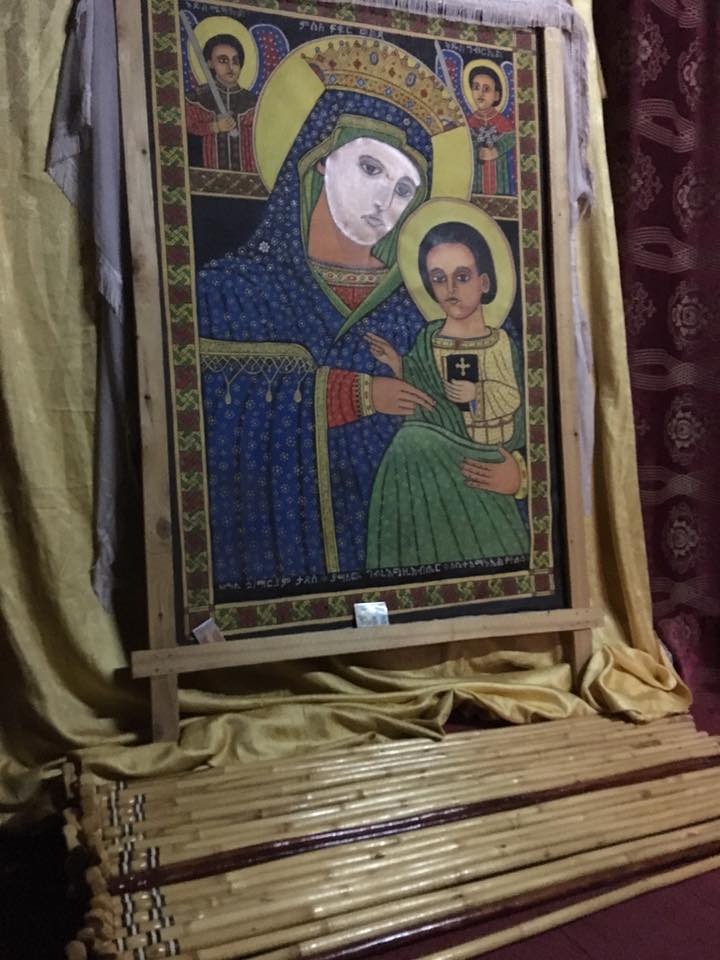
He showed me some of the earliest paintings, and others that were created by the Portuguese.  The difference was stark, both in the brightness of the colors and the features of the Madonnas.  I wasn’t sure why the Portuguese Madonna’s face was so white.  I mean, I’m sure they wanted to impress on the Ethiopians that the Virgin Mary was white, for God’s sake!—but this white?

“The Portuguese tried to convert us, and a lot of Americans come today to do the same.”

Oh ick.  “What religions are they?” I asked.

“Many different ones.  There was one old preacher who was following our girls, so we made him leave.”  That was a nice way to say that they ran the guy out of town.  “We have heard that the Eritrean women prostitute themselves,” he said abruptly.  “Is that true?”

I had told him I worked for an NGO that was operational in the Eritrean refugee camps in the north.  “Uh … I don’t know,” I stammered. “I haven’t heard of such a thing, but sometimes when there’s no other way to make money, people do things they wouldn’t normally do.”

He looked at me and nodded.  “Would you like to have a glass of honey wine with me after we are done?”

Again, uh …awkward.  Coming on the heels of the comments about lechers and prostitutes, was he coming on to me?  He was probably younger than my son.  I’m sure he was lonely, with his wife gone, but.  Maybe it didn’t mean anything.

“I have to do some work after this,” I said, trying to sound light.  “But thanks for the invitation.”

Tesfaye shrugged and walked on.

“Ethiopian Christians are supposed to make a pilgrimage to Lalibela or Jerusalem in their lifetimes.” Tesfaye said.  “They are especially supposed to visit Lalibela at Christmas.”  I had seen some pilgrims wrapped in white gauzy robes.  The thought of thousands of people in white floating around Lalibela during the Christmas season sounded lovely.

Tesfaye talked about the Italians.  The Ethiopians had fended them off in 1895.  Humiliated that an African country had beaten them, the Italians came back and won in 1935.  “But we were only a colony for five years,” he said proudly.

We walked back to Tukul Village and I paid Tesfaye the agreed upon 600 Birr, which amounted to about $25 for the four hours we had spent together.  I wondered if I should invite him for a beer in the restaurant, or tip him, but I was tired and just bade him farewell.

The huts had Internet, so I gleefully spent several hours online.  There’s a myth that “There’s Internet everywhere,” and that “everybody has a smart phone” and is on social media.  At the office, I couldn’t even get an Internet connection using a cable.  Maki gave me some kind of Chinese dongle that was supposed to work but didn’t.  I couldn’t get a 3G signal in the hotel.  When I did get online, the connection was excruciatingly slow.

I was grateful to have a signal.  I was grateful to learn that I could lose five pounds with one simple trick, to see that my son’s friend had installed a new faucet in her kitchen, and to watch a video about Albinism Awareness Week in Australia.

Solomon and Ras Tafari

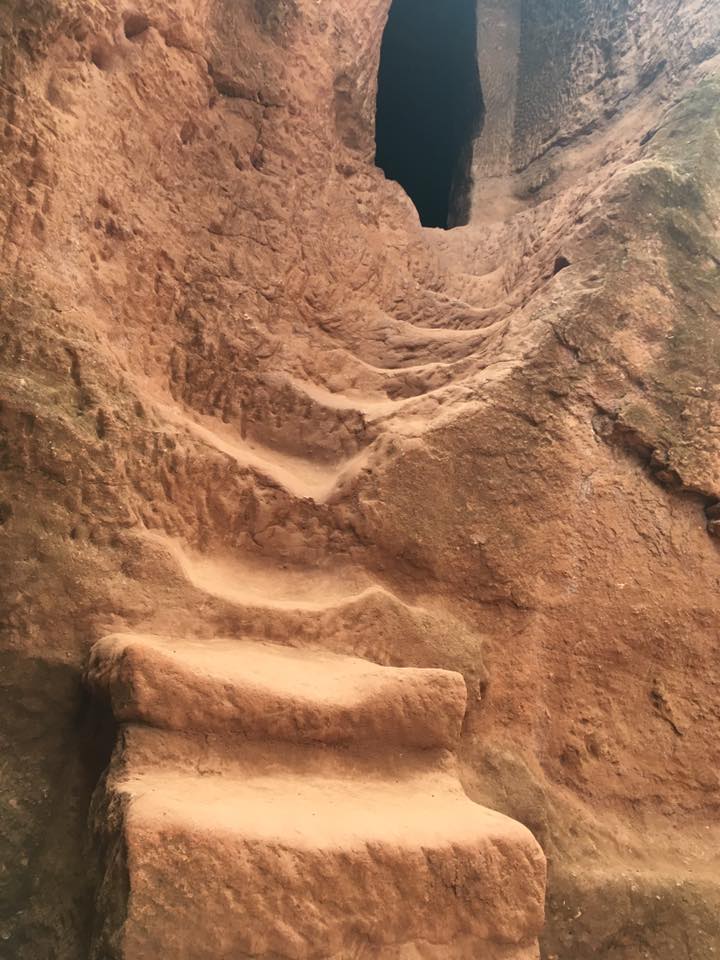
I followed Tesfaye around Lalibela for three hours.  It was pretty gruelling; it involved hiking up and down uneven, twisting stone steps.

The altitude was 2,600 feet.  I don’t know how that compares to Mount Everest but compared to Minnesota or the Netherlands it was up there, and I found myself fighting to catch my breath.

We talked as we hiked.  I asked Tesfaye if he was from the town of Lalibela and he said yes, he had been born here and had never been anywhere else except to the town where his wife was from.  He talked about his two children, a girl and a boy, and said he had a teaching degree.

“And what does your wife do?” I asked, making conversation.

There was a long pause and then he answered, “She went to visit her parents last year and they would not allow her to come back.”

Oops.  I didn’t know how to ask a follow-up question to that.  Did her parents keep her because of something Tesfaye did?  Did he beat her?  Was he an alcoholic?  Or maybe they were forcing her to stay to work for them.  Maybe I was reading too much into it.  He had told me that tourism plummeted after a spate of civil unrest in 2016.  Maybe he was just having such a hard time making a living that his wife’s parents decided she should stay with them?   I wondered about the children—were they with him or her?  I didn’t ask.

Inside one of the churches, Tesfaye told me more about the Jews of Ethiopia.  “The Jews were smart and got rich and the Christians were jealous,” he explained.  Hmm. That’s a familiar story.  “So the Christians took all the Jews’ belongings and made them go away.”

I’m not sure what the timeframe was for this particular episode or where the Jews of Lalibela went.  I do know that Israel airlifted nearly every Ethiopian Jew—over 38,000 people—out of the country in the late 80s and early 90s.  The secret rescue program was called Operation Solomon, in recognition that Ethiopian Jews believe they are descended from King Solomon.

There are still plenty of different groups in Ethiopia to fight each other.  “It’s not religion,” Tesfaye said, “but ethnic tensions.  And the government incites it to distract away from itself.”

“And then there are the Rastafarians!” I said.

“Yes,” he laughed.  “But they are mostly in Jamaica.  They come here on pilgrimages but they’re not Ethiopian.”

That was right. It’s a weird little story, how the Rastafari religion developed in Jamaica following the coronation of Haile Selassie I as King of Ethiopia in 1930.   Ras Tafari was the emperor’s name before he was anointed.  Rastafaris believe his is/was a god who will come to bring them back to Africa.

That’s about all I know about Rastafari.  It’s one of about 437 topics I’d like to spend more time learning about.

Before I left home, I happened upon an old paperback book at the Goodwill called When the Going was Good, by the English writer Evelyn Waugh.  I devoured it, because it was about Ethiopia but also because he wrote it in the heyday of old-school travel.  It used to be only rich people who traveled.  They went by steamer (boat) and it took weeks to reach their destination.  They brought trunks of clothes with them with attire for riding, fancy dress parties, G&Ts on the veranda, safaris and so on.  Some poor servant had to carry the trunks, of course.

Anyway, in 1930 Waugh went to what was then Abyssinia to report on the coronation of Haile Selassie for several newspapers.  He reported the event as “an elaborate propaganda effort” to convince the world that Abyssinia was a civilised nation that concealed that the emperor had achieved power through barbarous means.”  Some things never change.