Category Archives: class divide

Edens and Getsemani

Our tour of San Pedro Claver over, we tipped Charles generously—at least I hope he thought it was generous.  He had clearly poured years of his life into learning everything about St. Peter and his namesake church.

Before we left, he scribbled on some scraps of paper and handed them to us along with some business cards.  The business cards were for his cousin’s store, which sells Handy Crafts.

“My cousin, Fabiola, you can tell her I sent you to get a discount.”  The scrap of paper had his contact details on it.  If you ever go to Cartagena and want a personal tour of St. Peter Claver Church, ask for Charles, aka Carlos Arturo Pelaez Martinez, and tell him Anne sent you and you want your discount.
We wandered out into the blinding, blistering hot sun.  In the square, this woman was posing for tourists with a bowl of fruit on her head.  I really hate things like this, but I took a photo and gave her 10,000 pesos.  It felt a bit like I was photographing a zoo animal.  The irony of us being in the former Black Market wasn’t lost on me.  Did her costume have any cultural significance?  She wasn’t interested in talking.  She needed to sell as many photos as she could, literally—Snap Snap!—to make a living.  I guess it was better than working in a factory.

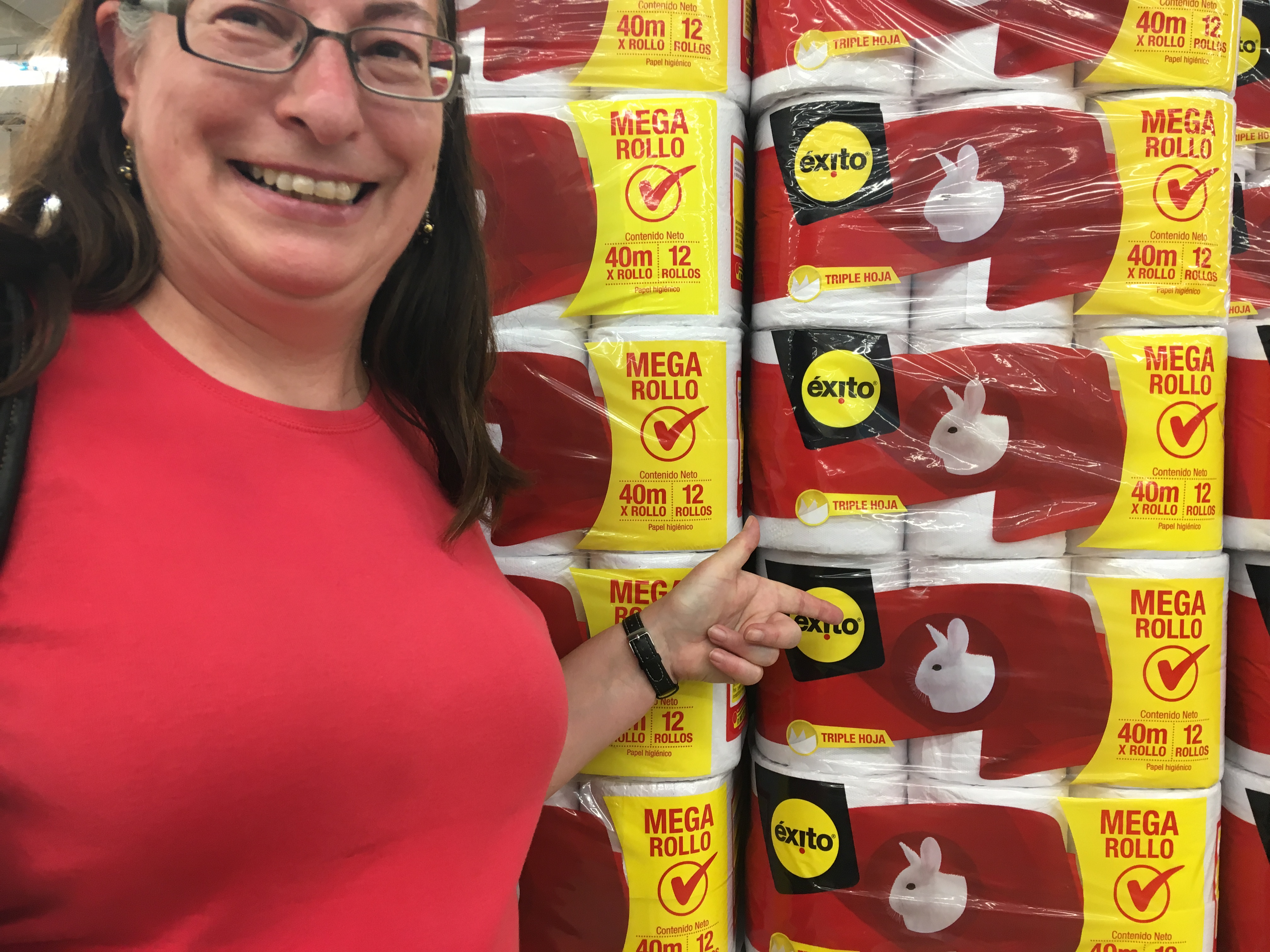
Lynn and I always try to hit a grocery store when we travel. In Colombia, we were fixated on buying some of the crunchy corn kernels—sold in the US as Corn Nuts—which we’d had on salads and in ceviche and soups here.

I don’t know which is more disturbing.  The thought of wiping myself with a white rabbit or that “Exito” means “success.”  An interesting name for toilet paper.
This ranks up with the “Colonial” brand cigarettes I saw in Belize.  I mean really—what was the thinking on the marketing team when they came up with the brand name Dictator for a Latin American rum?  “I’m telling you Jorge, dictators are hot.”  Note that in one photo the man is dressed in a suit with a George Michael beard and in the other he is shirtless and clean shaven.

We found our corn nuts and went to find lunch.

It seems like it’s hard to go wrong in the search for good food in Colombia, especially if you enjoy seafood.  We found a ceviche restaurant and settled in.  There was no point in rushing around the city in this heat.

Being a plant lover, I appreciated that plants, vines, and flower arrangements were incorporated into the décor everywhere in Colombia.
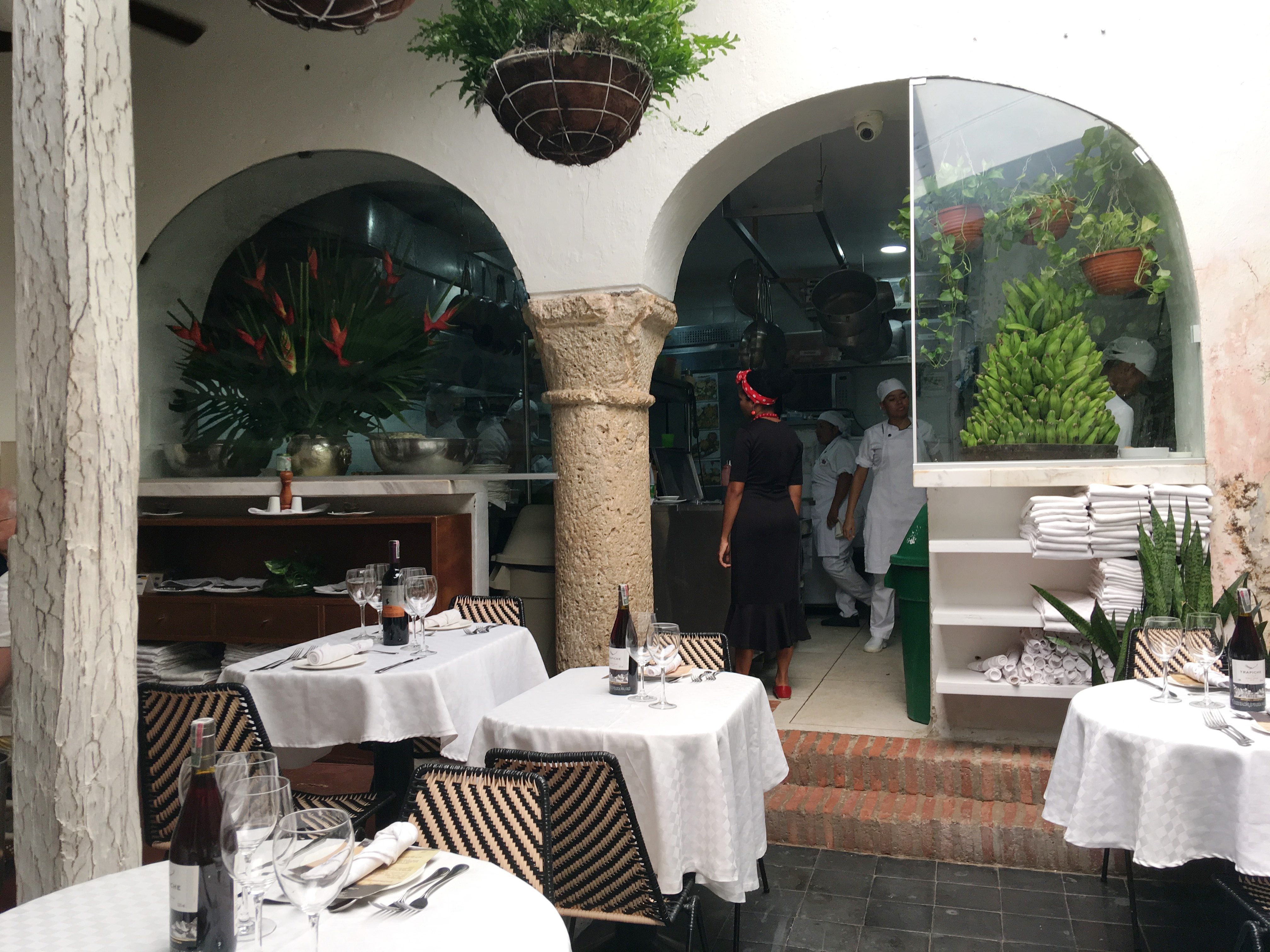
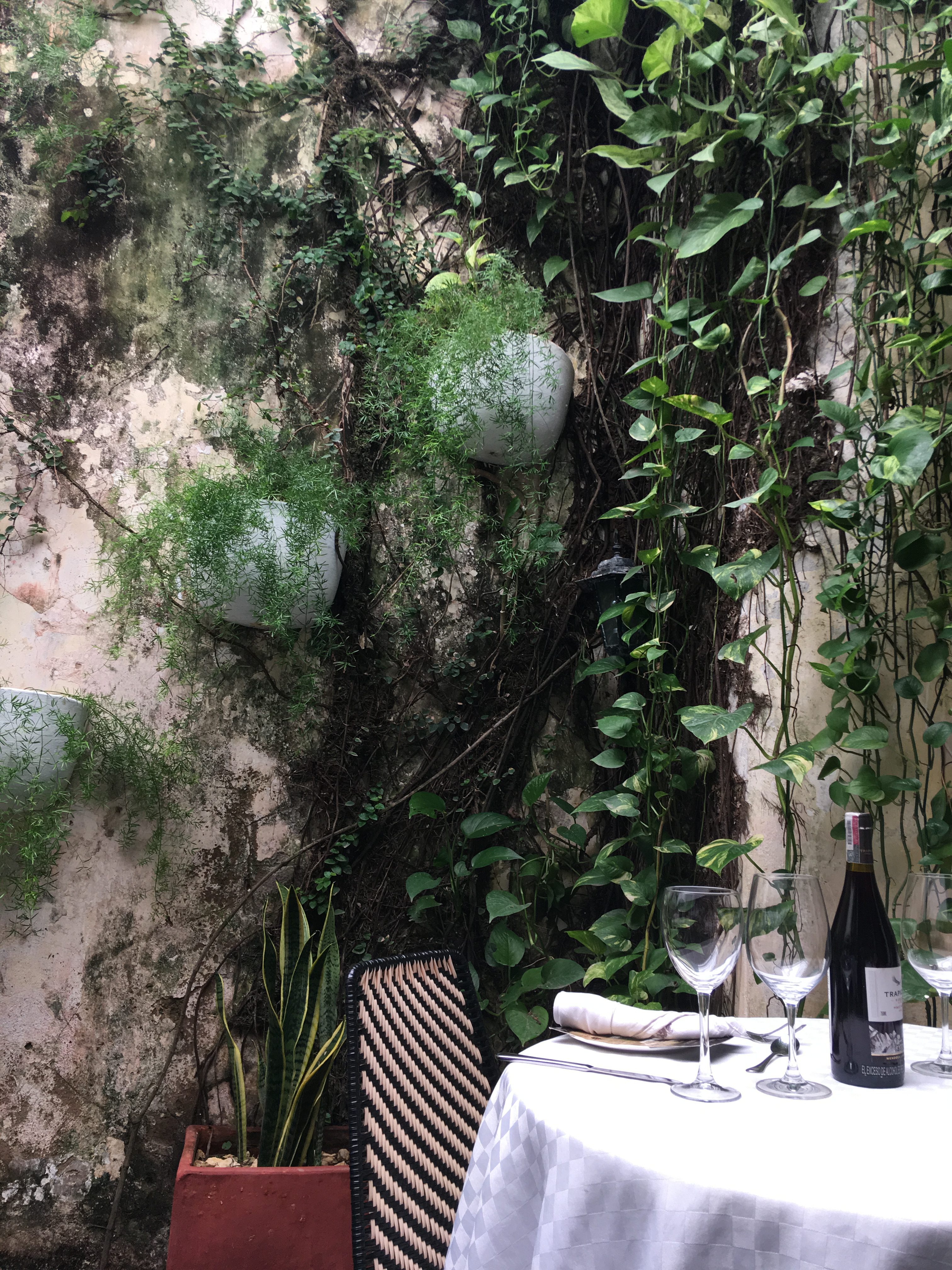
The ceviche didn’t disappoint, although I thought half a pita and Saltine crackers were interesting choices for accompaniments.  I associate Saltines with being broke or nauseous.

The sign on the ladies’ room door.  Again with the fruit hat.  If a restaurant in Minneapolis used this sign, there would be protests that it was racist or at the very least, a case of cultural appropriation.  But this restaurant was owned and operated by Black Caribbeans, so there.

After lunch we returned to the hotel and I headed straight for the pool.  If you’re not a water person, you don’t understand the pure bliss of being in water in the sunshine, surrounded by plants and two very noisy parakeets in a big cage.  I don’t really even know how to swim but I can splash around in a pool for hours.  I ordered a print of this photo and keep it on my desk at work.  I escape here when I need to.

Our last evening in Colombia.  Nora had suggested only one thing—Getsemani—a bohemian neighborhood.

“It looks like all we have to do is cross a street,” I said to Lynn as I consulted the map.

Riiiiiight,” she drawled sarcastically.

But we got clever and left a trail of bread crumbs in the form of photos.
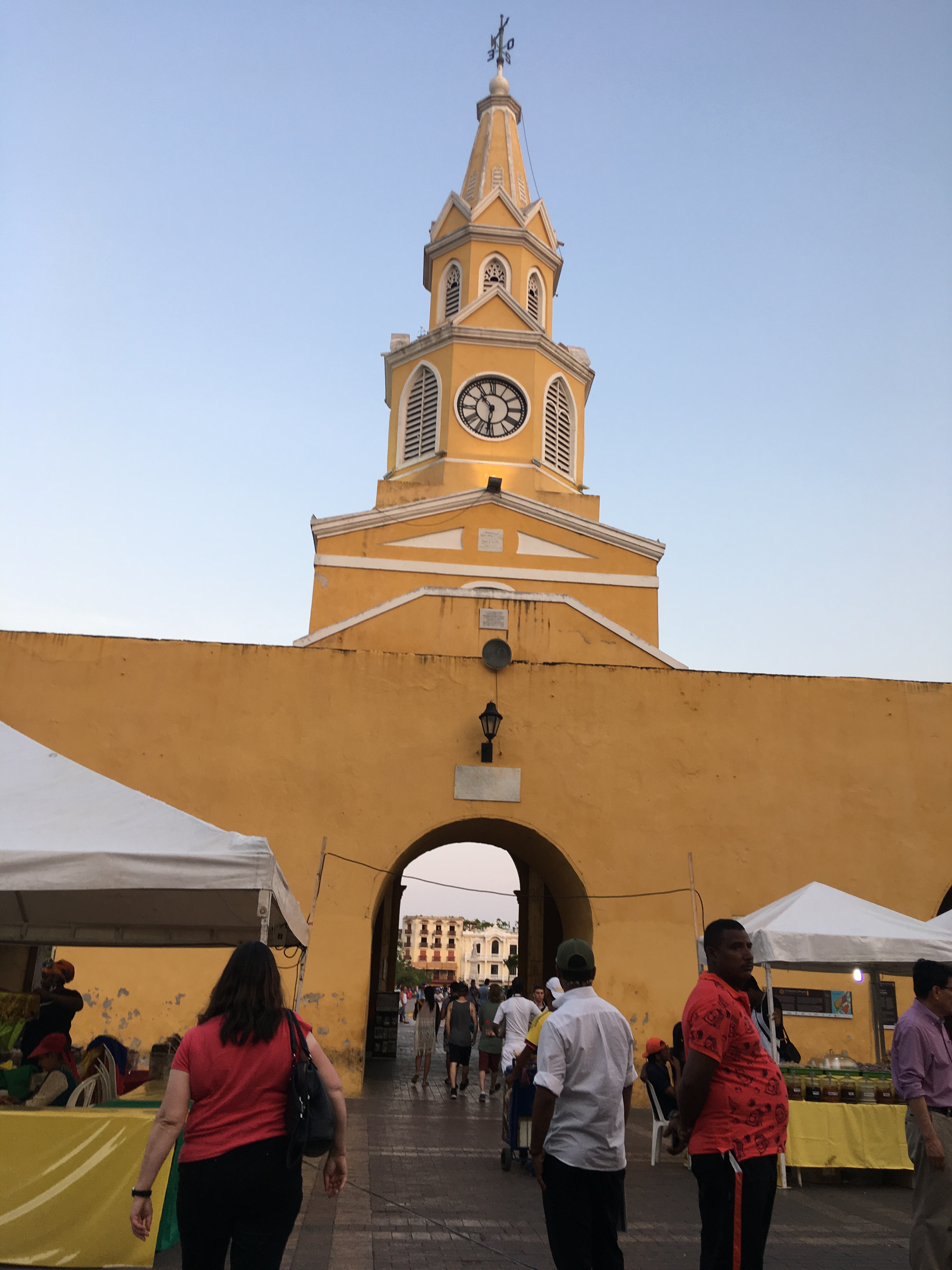
From one side of the clock tower to the other, dusk fell that fast.  With any luck it would be lit up after dark, right?


Beautiful City in a Sad World

Colombia has been in the news lately in the US.  Last night there was this story on the PBS News Hour about the election, which is taking place the day this posts.  Near the end, it talks about all the activists who have been threatened—and more than 50 who have been killed—in the ongoing conflict for power.

So I wasn’t overreacting when I worried about our tour guide in Bogota being at risk.  I wrote that Lynn and I would follow him on Facebook and maybe raise a stink if anything happened to him but in reality, what could we really do?  If he suddenly stopped posting, what would we do—call the police in Colombia?  I’m sure they would get a good laugh out of that.  We could contact Human Rights Watch or Amnesty International.  I don’t know.  It’s another thing to worry about, along with all the plastic in the ocean and the violence in Gaza and Russian interference in the US elections.
Just for fun, I made a list of the first three titles of emails I saw in a typical morning at work:

And here is a sampling of my daily dose of funding opportunities from the US government:

  • Bureau of International Narcotics-Law Enforcement, Combating Wildlife Trafficking in sub-Saharan Africa
  • Health Services and Economic Research on the Treatment of Drug, Alcohol, and Tobacco Use
  • National Technical Assistance Resource Center for the Prevention of Sexual Violence
  • Investigation of the Transmission of Kaposi Sarcoma-Associated Herpesvirus
  • NIH Collaborative Cross Mouse Model Generation and Discovery of Immunoregulatory Mechanisms

That last one is kind of amusing, until you really think about what will happen to the poor mouse.

In one of my daily international news digests this week, there was an article (behind a paywall so I can’t provide a link) about the Colombian government conducting a census of Venezuelan refugees. A few excerpts:

“Exact numbers of people who have arrived are hard to come by and it is difficult to ascertain if people intend to stay in Colombia or move to another country in South America or the Caribbean.

“The lack of accurate data influences the way the United States State Department, U.S. Agency for International Development, and NGOs can plan for and respond to the crisis, a problem the Colombian government hopes the census will help solve. According to [Felipe] Muñoz, there are 30,000 Venezuelan children in the Colombian public school system, and 25,000 in the child care system. Twenty-five thousand Venezuelans have been provided free medical care by Colombia’s public health system.

“The Colombian government also intends to set up a formal process for Colombians who had fled their own country during a decades-long civil war for Venezuela, but now seek to return home. This includes children that have a parent from each country but were born in Venezuela and do not have Colombian identity papers.

‘They have the right to be Colombian,’ Muñoz said.”

This almost makes me weep.  What a contrast between how Colombia, where the average monthly salary is $692, treats refugees vs. my country—where the average monthly salary is $3,428.

We are a country living with an epidemic of fear and hatred.

Lynn and I slept the sleep of the dead after our five-hour drive and two-hour walking tour.

Breakfast was on the rooftop restaurant, which had great views.  That’s the Cathedral in the distance.

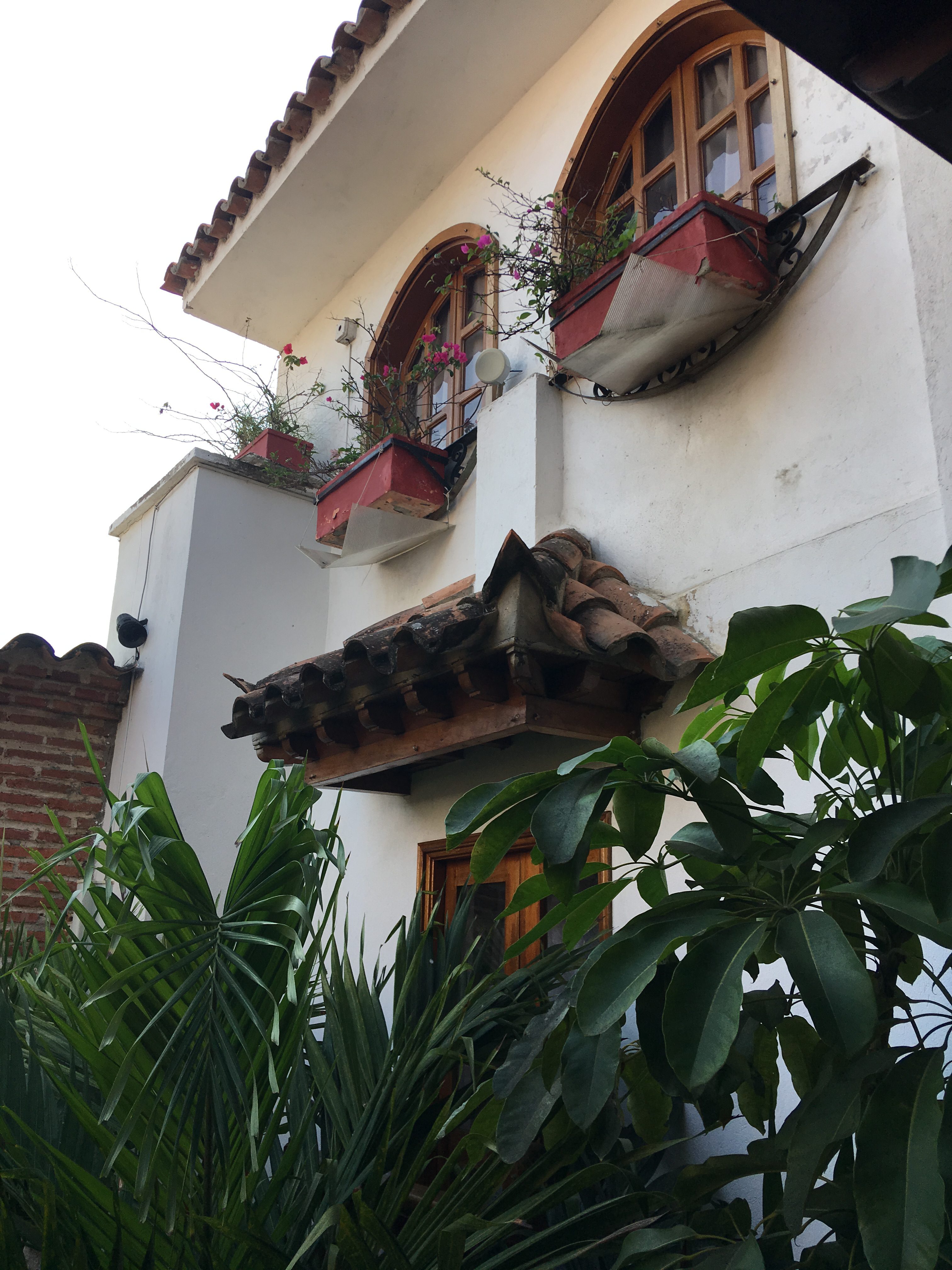
We noted that the hotel had witch points on some of the rooflines.  Nora had told us this was a Colonial-era building requirement by the Catholic Church—to keep witches out of buildings.  I guess it works, because we never saw a witch, inside or out.

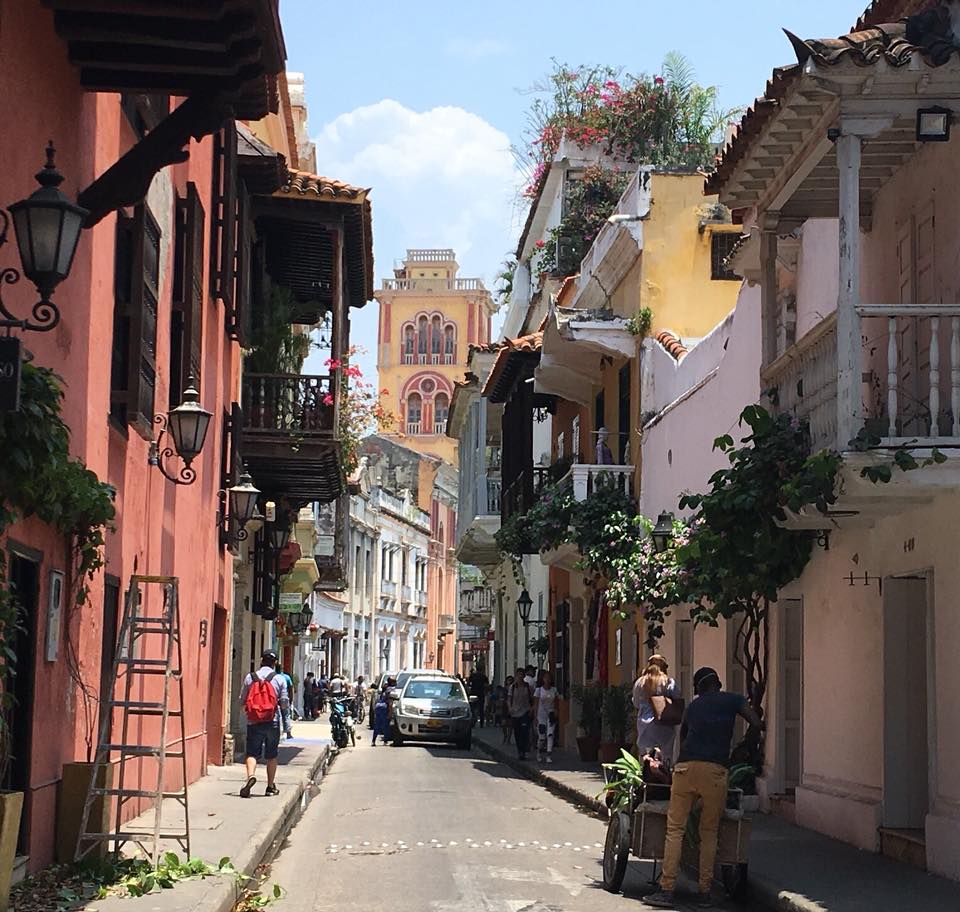
Soon we were out on the street.  Here’s the Cathedral again, in the distance.  Such a beautiful city.

The interior was cool and quiet.

Lynn led us on to Iglesia San Pedro Claver.  St. Peter Claver, as we know him in the US, was a priest from Barcelona, the first saint of the new world, and—so the legend goes—a champion of slaves.

Waterworld, What a World

I’m not sure why we were driven five hours from Tayrona to Cartagena, but Lynn and I agreed it was important that we did because it showed us sides of Colombia we wouldn’t otherwise have seen.

We drove south along the coast past more beautiful beaches.  If we had flown from Santa Marta to Cartagena we might have been left with the impression that all of Colombia was unspoiled.

But soon we were driving over a very long causeway with what I can only describe as water-logged slums on either side. Here’s a photo of the place, Tasajeras.

This area stretched along a couple of miles.  Our driver said something about the residents being dependent on tankers for clean water.  Ironic, given that they were surrounded by water, but it made sense.  There were no signs that the houses had indoor plumbing.

And here we were, sitting in air-conditioned comfort behind tinted glass, our suitcase contents probably more valuable than the entire contents of one of these homes.  In dollar terms, anyway.

Everywhere I go, I am very conscious of being a one percenter.  I’m not a one percenter in the US, but I imagine that, compared with the population of the planet, my net worth is higher than 99% of the rest of my fellow humans.  At home, I am probably solidly in the middle, which is fine with me.

As I’ve written before, I started my adult life at 17 by getting pregnant, going on welfare, and moving into subsidized housing.  I’ve worked hard to get where I am, but I know firsthand that the vast majority of people in the world can never get ahead no matter how hard they work because they have no social safety net to support them until they get traction.  And the US is heading backward in that direction.

So I have donations to certain causes automatically deducted from my bank account (HIAS is one of my favorites).  I volunteer to do some small part in fighting mass incarceration in the US, and I work for a nonprofit that supports people who have been affected by war trauma.

Lately I have been trying to buy less plastic.  It’s so hard. Everything is packaged in plastic.  I got an Amazon order last week where the item came inside a small plastic tub, wrapped in a plastic bag, mailed in a giant bubble-wrap plastic envelope.  It made me feel sick.  I set the envelope aside and meant to write to Amazon to complain, but I never did.  Now, recalling all the plastic and other waste choking this watery community in Colombia, I wish I had made the effort.

When I travel I tell myself I am supporting the local economy.  Is this true? Would it be better if I stayed home, reduced my carbon footprint, and send a check for the amount of the tour to some Colombian charity?  I don’t know.

We drove through Barranquilla, a city of over a million. I’m sure there are many very nice areas of Barranquilla, but this was pretty much what we saw for 20 minutes as we passed the outskirts.

“Shakira,” said the driver out of the blue, pointing to the city.  Apparently the hip-shaking pop singer is from here.

We drove through a nice residential area down a wide boulevard with signs that announced “Free Wireless,” and just for kicks I tried to connect but we moved on too quickly.  That’s great that they’re making internet available in public parks, I guess.

We stopped at a light and two young men started washing the windshield.

“Venezuelans,” said our driver, as he rolled down his window and gave them some money.  “I don’t need my windshield cleaned but they have no other way to earn money,” he explained.

So a few of my tourist dollars did trickle down.

Two more hours.  The driver’s phone rang and he handed it to me.  It was someone from Responsible Travel.

“We have changed your hotel to a much nicer hotel,” she informed me.

Um, okay?  Who knows what happened and it doesn’t matter.  I was just ready to get to a hotel, any hotel.

Melt Downs

It’s when you’re really tired—completely drained—that accidents happen.  I somehow mustered the effort to focus on every step for the two-hour hike back from the beach.

It occurred to me, too late, that I could have hired a horse to carry my back.  But I made it, and there was Lynn sitting under an umbrella outside the dining area, having a cool drink and reading.

I waved weakly at her and kept walking, to the hut—all I could think of was a shower. Cool, cool water … I felt like a loaf of bread just out of the oven.  Was heat radiating off me?

After, I put on one of the white fluffy robes provided to us as luxury hut dwellers and sank into the hammock on the porch but couldn’t sleep.  Lynn came along and asked if I wanted to get some dinner.  “I should,” I said.  “I haven’t eaten since breakfast.”

As I was getting dressed there was a knock at the door.  It was the German guy I had passed on the trail.

“Is this the shower building?” he asked disingenuously as he snoopily glanced around through the open door.

“No, it’s our lodgings,” I responded.  I was still wearing the fluffy white robe, a universal symbol of luxury.

“Ah so, you have your own shower!” he stated accusingly.

“Yes, it’s very nice.”

“Very vell zen—enjoy your privilege!” he tossed off as he whirled and stomped away.

Vee vill, Verner!” I yelled after him. “Enjoy your hammock and your slave girl, you pompous jerk!”

I didn’t say that but I thought it.

I stared at my meal, a pastry packet filled with catch-of-the-day fish and vegetables.  A side of plantains and a salad.  A beer.  Anyone who has shared a meal with me knows I am not a delicate nibbler at the table.  Lynn’s husband Richard once remarked, as I was serving myself a third helping of moussaka or some such, “You certainly have a healthy appetite.” For which Lynn admonished him for being rude.

I could hardly bear to look at my meal, much less eat it.  Lynn had tucked into hers and was talking about her book.

“I have to go,” I announced abruptly as I pushed back from the table and stood up.

“What?!”

“I have heat stroke.  I should have known. I’ve had it before and you’re prone to it once you’ve had it once.  I have to go.”

I felt like I’d been hit between the eyes with a very large meat tenderizer.

“But what about your meal?”

I walked over to the line of backpackers at the buffet and picked out a girl at random.

“Would you like a free meal?” I asked.

She looked at me incredulously.  She was also exhausted, but hungry.

She walked over to our table and I handed her the plate.  She stared down at it and I thought she would cry.  I made a beeline for the hut, fell onto the mattress, and slept for 10 hours.

I awoke to a scream.  I ran downstairs and there was Lynn, pointing to a giant bug on her bed.

“It crawled out of my bag!”

“Eeew, it’s a cockroach.  Better dump out your bag to make sure there aren’t any more in there.”

“No!  It’s never a cockroach!” Lynn countered.  “It’s some kind of beetle.”

I didn’t argue.  I lived in public housing for 10 years, so I know what cockroaches look like.  This one happened to be five inches long.

My appetite had returned with a vengeance. As we walked to the dining area, we saw the young woman I’d given the meal to, sitting on a picnic bench.  She was sobbing while her friend patted her on the back, trying to comfort her.

“Ah, backpacker drama,” Lynn observed.

“I hope the meal didn’t give her food poisoning.”

We had the same waitress as at every other meal, so I asked where she lived.

“In a nearby village, some miles from this place,” she replied in English.

“How do you get here?” Lynn asked, taken aback.

“I walk.  It’s a nice walk.”

Humbled and grateful we were leaving today, I wolfed down my eggs.

Ant in My Pant

“I’m surprised I’m not in agony,” Lynn remarked the next morning as we walked to the dining hut for breakfast.

“I know,” I replied, “I thought I’d be … be… aggghhh!” I screamed as a hot burning pain pierced my right thigh and I turned to run back to our hut.

“Whatever is the matter?” Lynn called after me.

Ants!  Ants in my pants!”  I had left my suitcase on the floor, and fire ants must have crawled in during the night.  I tore of my pants, hopping up and down on one leg then the other.  Turns out it was only one ant, but a very big one.  Everything here was supersized.  I shook my pants out the window to send it flying back to where it belonged.  The burning lasted a few more minutes as I hobbled to the dining hall.

“It was an ant in my pant, to be technically accurate,” I reported to Lynn.

“Sounds like some of the fish stories Richard tells,” Lynn needled m.  “By the time you get back to St. Paul the ant will be the size of a cat.”

Today was beach day.  That’s why people come to Tayrona—for the beaches.  The jungle itself was rather dry and dusty.  The trees, which from what I observed were mainly coconuts and mangoes, were spaced widely. It wasn’t lush and thick like jungles in Guatemala, Costa Rica, or Belize.  Maybe it was the time of year.  Maybe it lushes out during the rainy season.

As soon as we approached the dining hut, our waitress from the night before escorted us to a table.

“Seems like we’re destined to always order off the menu,” Lynn said.

“I know.  They’ve got us pegged as white-linen-table-clothe people.”

“That’s fine with me,” Lynn replied.  We’d been given the bill for our free meal the night before, just for our records.  They had given us two entrees each, then main courses, dessert, a bottle of wine, two bottles of sparkling water, and coffee.  It had amounted to about $40 per person including tip, the most expensive meal we would have in Colombia.

A 30-something couple sat at a picnic bench outside the dining hut with their three young daughters.  They were all eating granola bars.  We had seen them emerging from a tent on our way in.

“I give them a lot of credit for doing this,” I said.  “I hope the kids appreciate it.  They look to be about nine, six, three … I wonder if the younger ones will even remember it.”

“Are they doing this for themselves or for the children?” Lynn wondered.

“For the whole family, maybe.  But they look miserable.”

“More like serious, I’d say,” Lynn said.

“Yeah, you’re right.  They look German or Scandinavian.  They always look so serious.”

We made our way in the general direction someone had pointed when we asked about beaches.  Soon we arrived at a stream, over which someone had thrown some wobbly tree branches.

“Oh really!” Lynn exclaimed.  “This is just not on!  How can they expect to attract tourists to this place if they expect us to cross a river every 10 minutes!”

I would have crossed that thing in five seconds had I been on my own.  It was the kind of stream I’ve crossed a hundred times in Minnesota.

“I am not doing this.  I will not!” stated the London girl who had never been on a bicycle, didn’t know how to swim, and had just experienced her first (and last) horseback ride.

Other hikers passed us, looked at Lynn curiously, and crossed the stream with no drama.

“Here,” I offered as I stepped into the stream.  “You walk over the logs and hold onto my hand to keep steady.”

“But you’ll get wet!” Lynn protested.

“We’re going to a beach.  It’s no deeper than my ankles.”  I hoped there weren’t any schistosomiasis larvae in the water.

“You’re a good friend,” Lynn said as we walked together over the raging river (not).

And there, on the other side, was a giant blue butterfly (not my photo, below).

“This makes it all worth it,” Lynn murmured as we watched it flutter.

Yes, There is Such a Thing as a Free Meal

“That’s awfully nice of them,” Lynn remarked as we were seated in the thatch-roof dining area for our free dinner, courtesy of Responsible Travel.

“The missing driver pales in comparison to that horseback ride.  I will have a word with them about that.  If they are promoting this trip to people like us they should warn that Tayrona is really still a backpacker destination.”

“Yeah, I’ll give them feedback on that too.  There’s no mention of it being an intense physical experience.”  I didn’t fess up that I thought it had been fun—the highlight of the trip so far.

“If you had a bad back you’d be screwed.  You’d have to go back into town and hope you could find a motel room.  I wonder if anyone from Responsible Travel has ever actually been here?”

The waitress brought menus and a bottle of wine.

“It’s a lovely place and I’m glad we’re here,” continued Lynn.  “They didn’t need to give us a free meal and I hope they don’t do it again when I give them feedback on the horses.”

“I know.  I always hope when I give feedback that they use it to tweak the tour for people who do it next.  But I suppose some people are hoping for freebies, in the age of Trip Advisor.”

There are always unexpected turns of event on any trip.  With time, and from the comfort of home, sometimes they become the best memories.

“I’ll just have to have ceviche again,” I said to the waitress.

“And I’ll have the catch of the day,” Lynn ordered.

Nearby, backpackers shuffled through a buffet line where food was slopped onto their plates—it looked like beans and rice—while others sat hunched over picnic benches outside eating granola bars.

“I like having money,” I observed as I smoothed my hands over the white linen tablecloth.  “I’m not rich by American standards, but I pinch myself when I think of where I came from and that I am sitting here in Colombia eating such a good meal and staying in the nicest accommodation.”

“And we’d be eating in here even if it wasn’t free,” Lynn commented.  “I don’t do buffets.”

“Granola bars are nice once in a while when there’s no other choice, but to eat them for a gap year?  Yuck.”

“I did it when I was 17,” Lynn said.  “We traveled all around Italy by train and hitchhiking and slept in stations … and on hillsides.”

“With horrid little men!” I laughed.

“Yep, I’ve paid my dues too.  I once stayed in a friend of a friend’s apartment in Brooklyn. It didn’t have hot water, and when my friend’s friend—I never saw her—complained, the landlord disconnected the toilet and put it in the middle of the kitchen.  I don’t know how long it had been there.  I had to run down four flights of stairs and use the bathroom in the bar at the street level.

“But it was free!  I lived off saltine crackers the whole week and had a blast.”

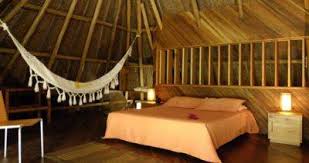
Our luxury hut had a bedroom and bath on the first level, plus a porch with chairs and a hammock.

The beds were hard as concrete so, like Goldilocks, I checked out the ones upstairs.  I suppose firm mattresses are easier to move—especially on horseback.

There was a single mattress off to the side that was probably meant for a spare kid.  It was the softest bed in the place, so I set up there.

The bathroom had some amusing features.  Well, we Americans are always amused and slightly horrified by bidets.  It doesn’t make sense, if I’m being logical.  But this one was set up so it would drip water on the TP roll.

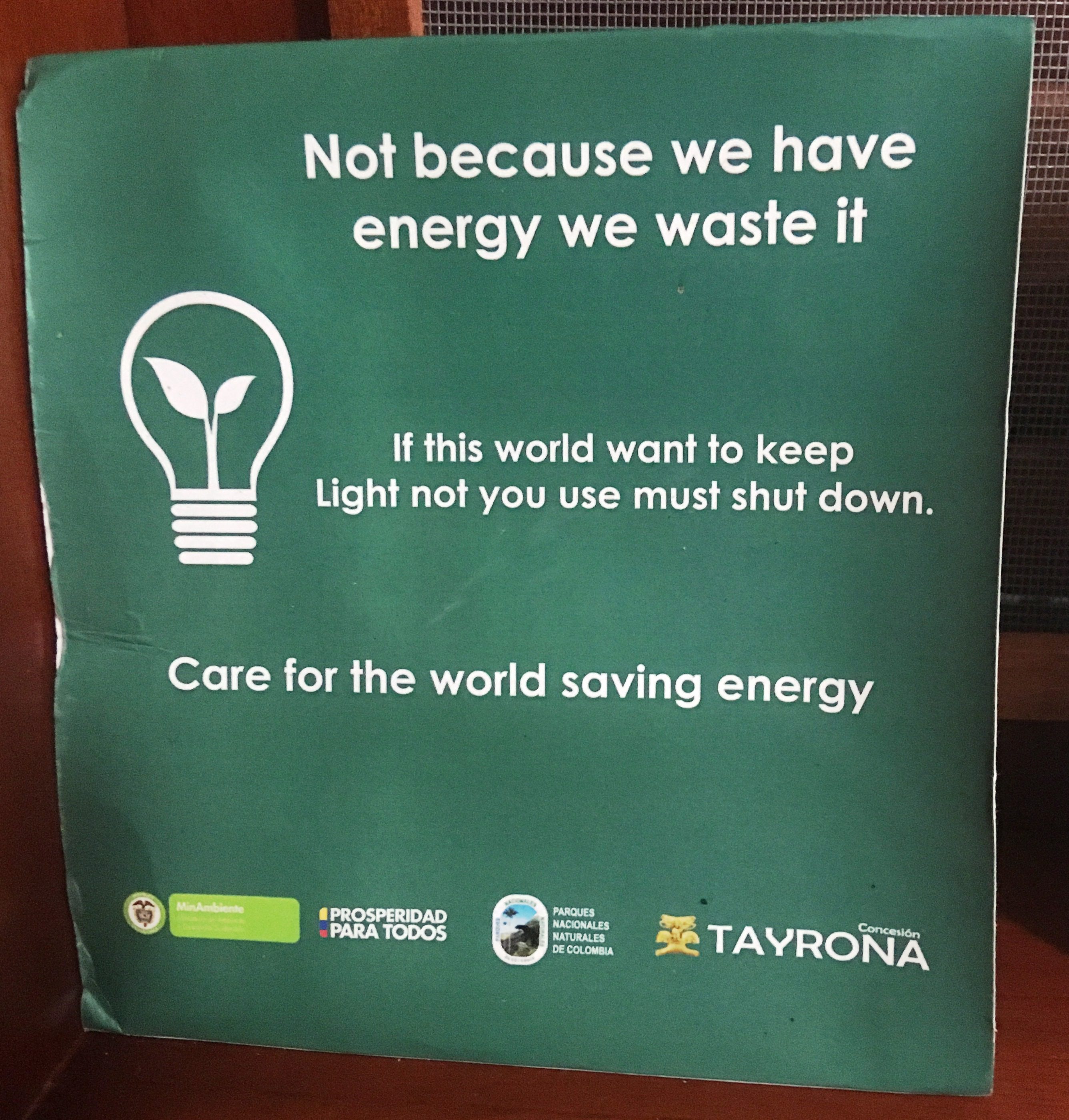
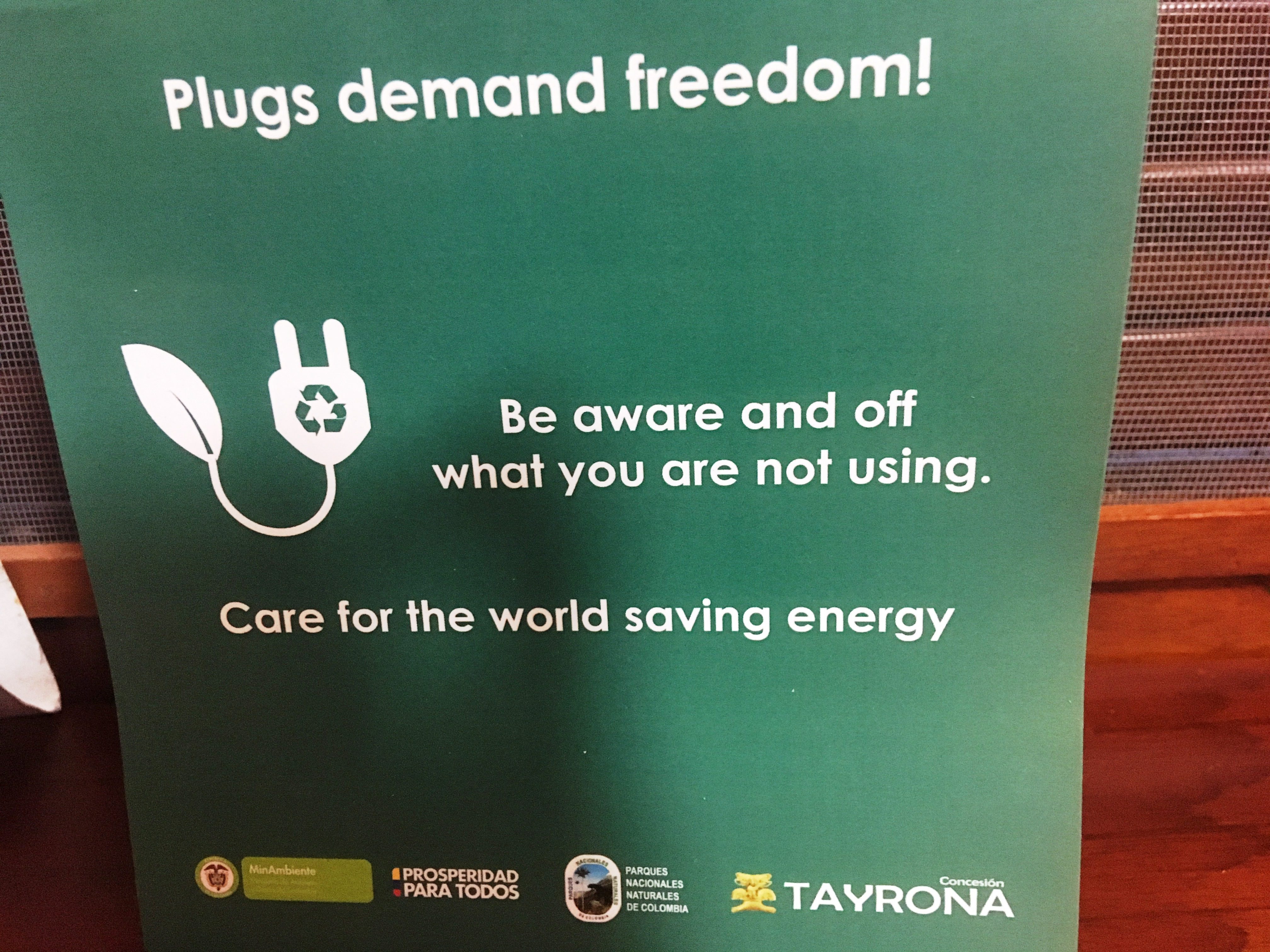
Then there were these bad translations.

Yes—Plugs of the World, Unite!

How hard is it, really, to find a competent translator?  This was a national park, not a mom and pop outfit.  But maybe I’m being too critical.

It seemed like a shame, but we closed the shutters at dusk as we had been instructed, “to keep insects out.”  We would learn that this was an illusion.

Hangin’ in Tayrona

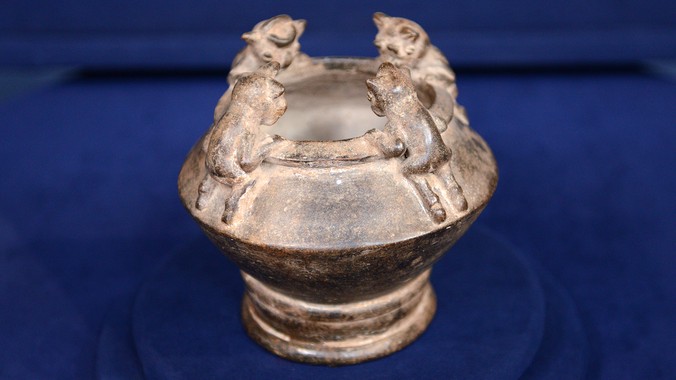
The other night I was watching Antiques Road show.  A guest was proudly displaying an earthen pot with four animals crouched around its rim.

“This is a classic example of what you think of when you think of Tayrona pottery,” said the expert.

There’s Tayrona pottery? I spent two nights in Tayrona National Park and didn’t know what  the “Tayrona” referred to.

“But the opening is only 4 inches wide, and when I knock on it … here … there’s a hollow sound instead of a solid sound.  I’m afraid it’s not genuine,” intoned the expert.

The owner looked crestfallen.

“It’s still a charming piece.  May I ask how much you paid for it?”

“I bought it in a gallery in Seattle for $6,000,” said the owner sheepishly.  “It came with a certificate of authenticity.”

“Counterfeiters will often spend as much time making the certificate of authenticity look believable as they do on the object itself.  As I said, it’s still a very nice piece of pottery, and it might bring $200 retail if you were to sell it.”

Long pause.

“If it was a genuine pre-Colombian bowl, it could bring up to $23,000 at auction.”

Here’s a bit of what my personal librarian, Wikipedia, has to say about the Tayrona—or Tairona—people.

“Ethnohistorical data shows that initial contact with the Spanish was tolerated by the Tairona but by the 1600 CE confrontations built and a small part of the population moved to higher stretches of the Sierra Nevada de Santa Marta. This allowed them to evade the worst of the Spanish colonial system during the 17th and 18th centuries. The indigenous Kogi, Wiwa, Arhuacos (Ijka, Ifca) and Kankuamo people who live in the area today are believed to be direct descendants of the Tairona.”

So they were still around.  I had noticed on the map handed to us at reception that there were villages in the park which were off-limits to tourists.  I liked that.

It’s a beautiful map.  Unfortunately, the type was microscopic so it was only marginally helpful.

The compound in which we were staying was called Cabanas Arrecifes.  On the way to our hut we walked past an area with permanent tents for rent.

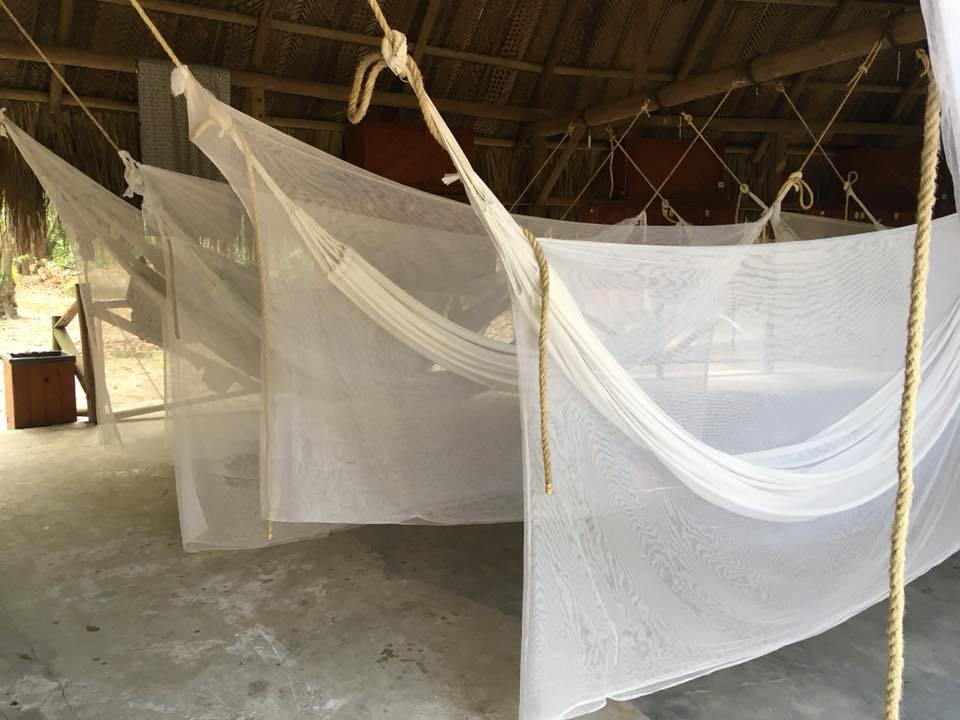
Farther on, there was a big hut with hammocks, also for rent.

The tenting and hammock options were as basic as they look. After all, it’s a national park.  I stepped inside the hut because I’m nosy.  Lockers were the one amenity.

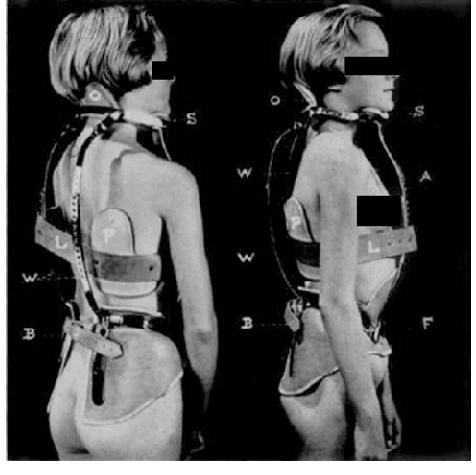
If I slept in one of these, I’d be unable to stand erect for days.  As it was, I worried how I would feel the next day.  As I’ve written, I have scoliosis, for which I got to wear one of these four years (this is not me; I’m grateful none of the photos of me they took for “research” made it online).

One of the activities I was admonished not to do was horseback riding, due to the jostling.  Not that my family belonged to the horse-riding set; I did it once pre-brace at Campfire Camp, where I went on a scholarship.

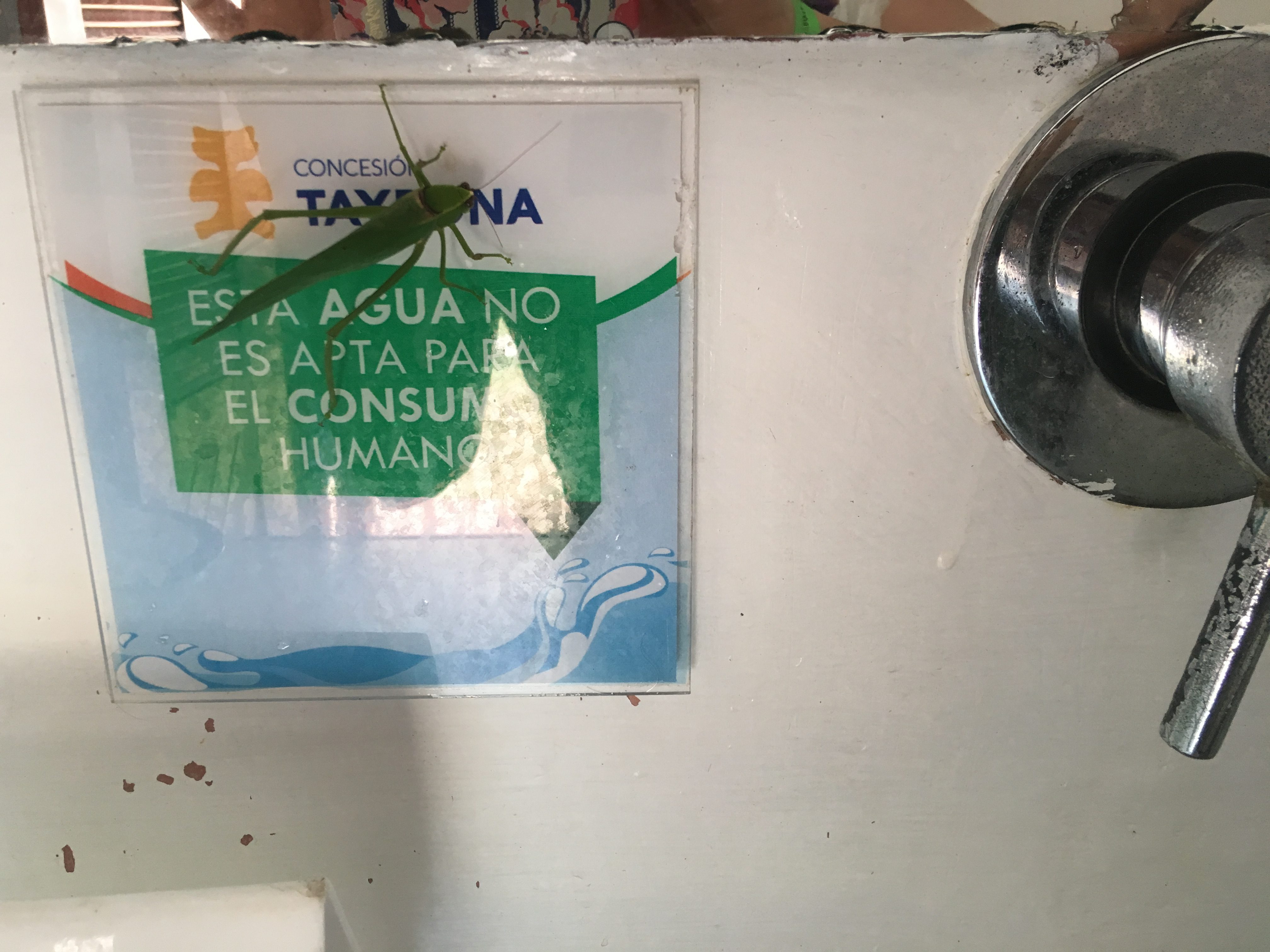
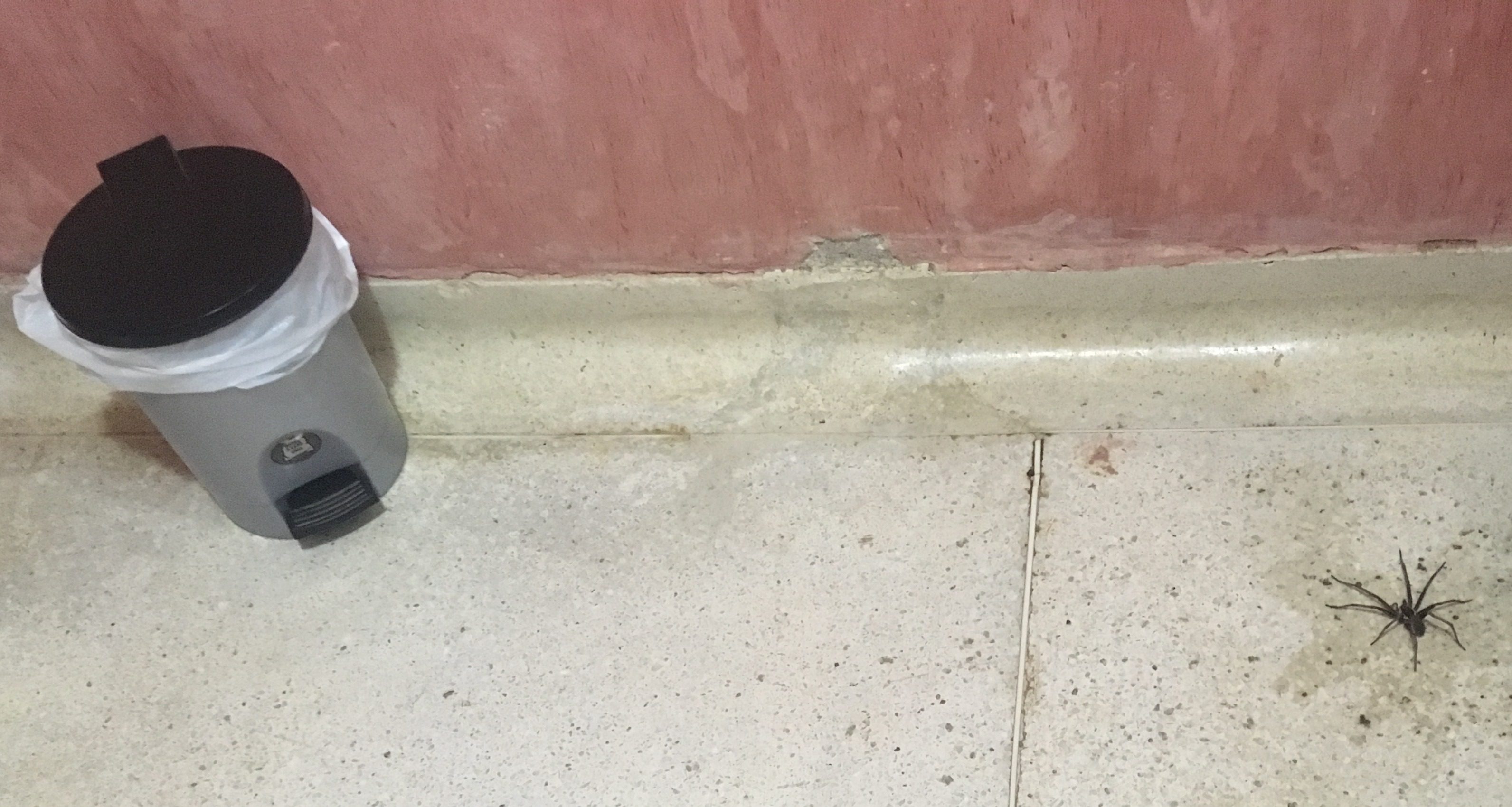
There were communal bathrooms with showers for the tenters and hammockers, but you would definitely want to take a flashlight and wear shoes in the middle of the night to avoid stepping on one of these.

That goes for all levels of accommodation; this was in our bathroom in the cabin.

I’ve tried to find out how much it cost to book a hammock vs. a tent vs. a cabin, and all that comes up is .com sites that want to book the cabin for $280 a night.  Responsible Travel must have an agreement because we couldn’t have paid anything close to that.  Two nights at that rate would have been over a third of our price of our entire 10-day trip.

There was no Internet in the park, so no way to let Responsible Travel know we’d arrived safely.  But they were way ahead of us.

“You have a free dinner tonight,” our young friend with braces informed us.  “Courtesy of Responsible Travel because of your troubles this morning with your driver.”

Driver?  This morning?  The morning seemed like two days ago.

Fat Cats, Fat Ladies, Fat Men

Daniella led us from the light tube square past a lovely old warehouse that was now the Education Ministry.

We entered a pedestrian mall lined with stalls selling everything from “Adidas” to batteries to bananas.

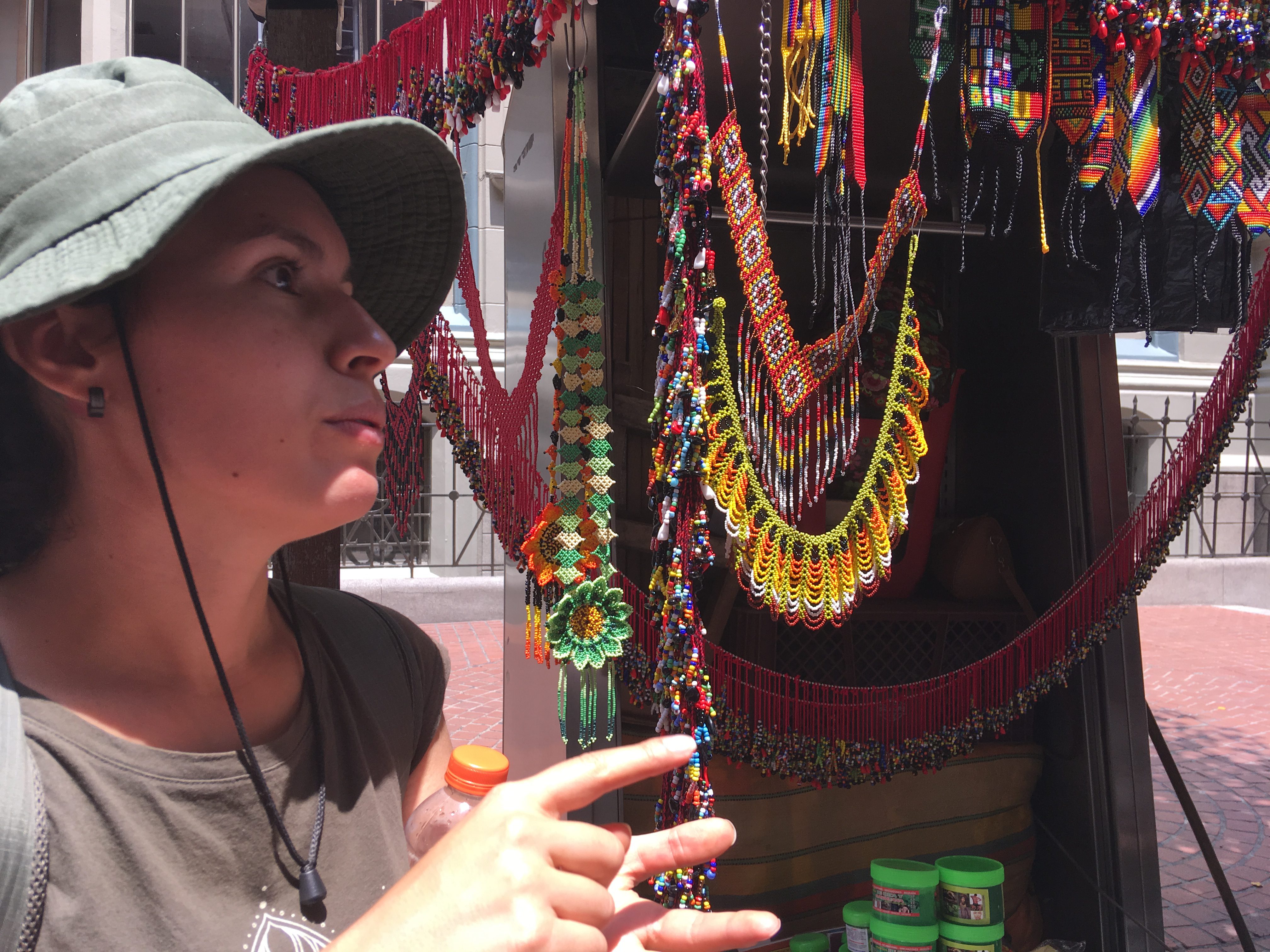
Here is Daniella explaining the significance of some indigenous jewellery.  “My mother doesn’t believe in religion and isn’t superstitious, but when I was a little girl and I got sick, she did buy one of these charms and tied it to my foot—just in case,” she ended with air quotes.  I bought two for the little kids in my life.

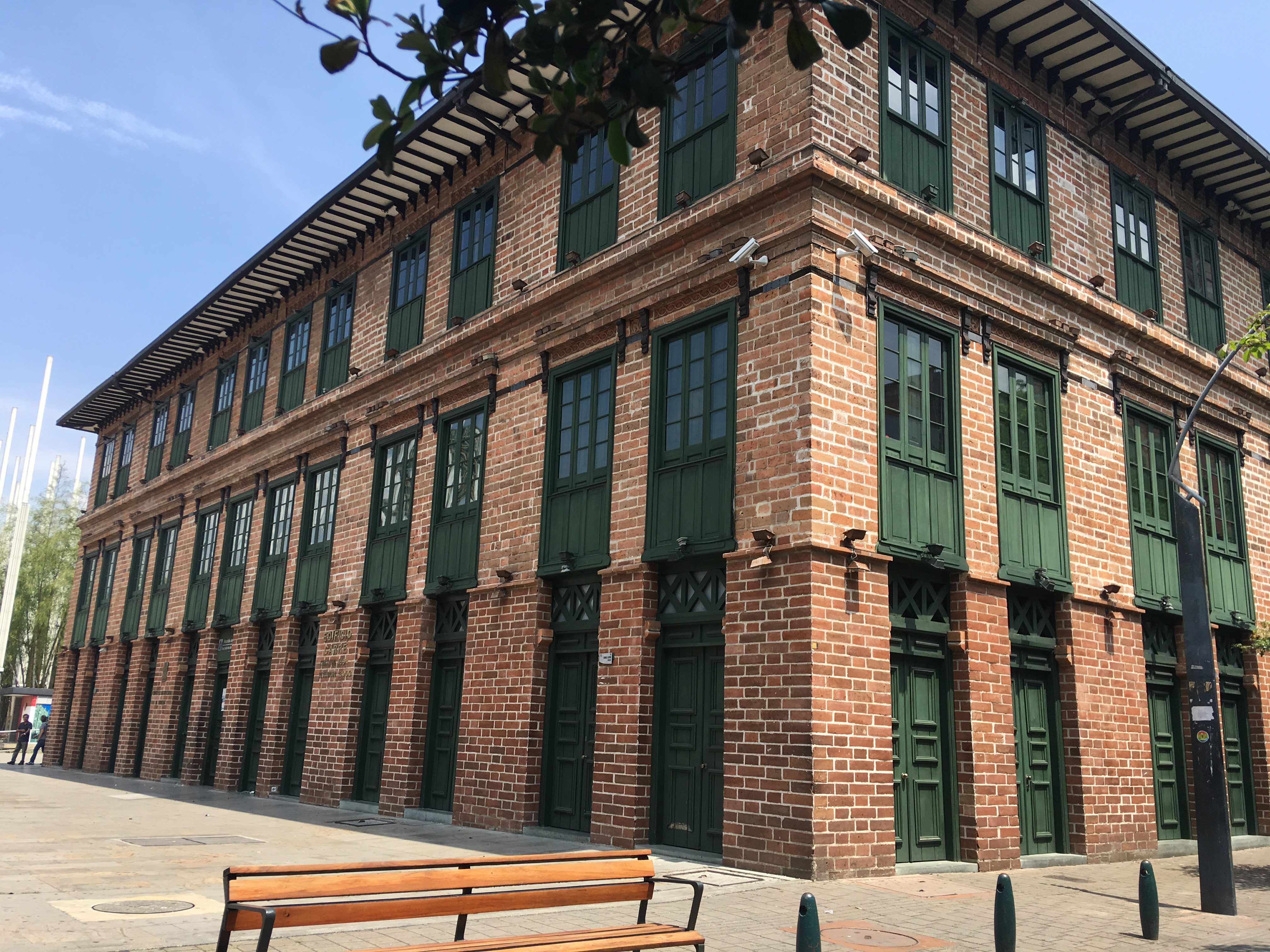
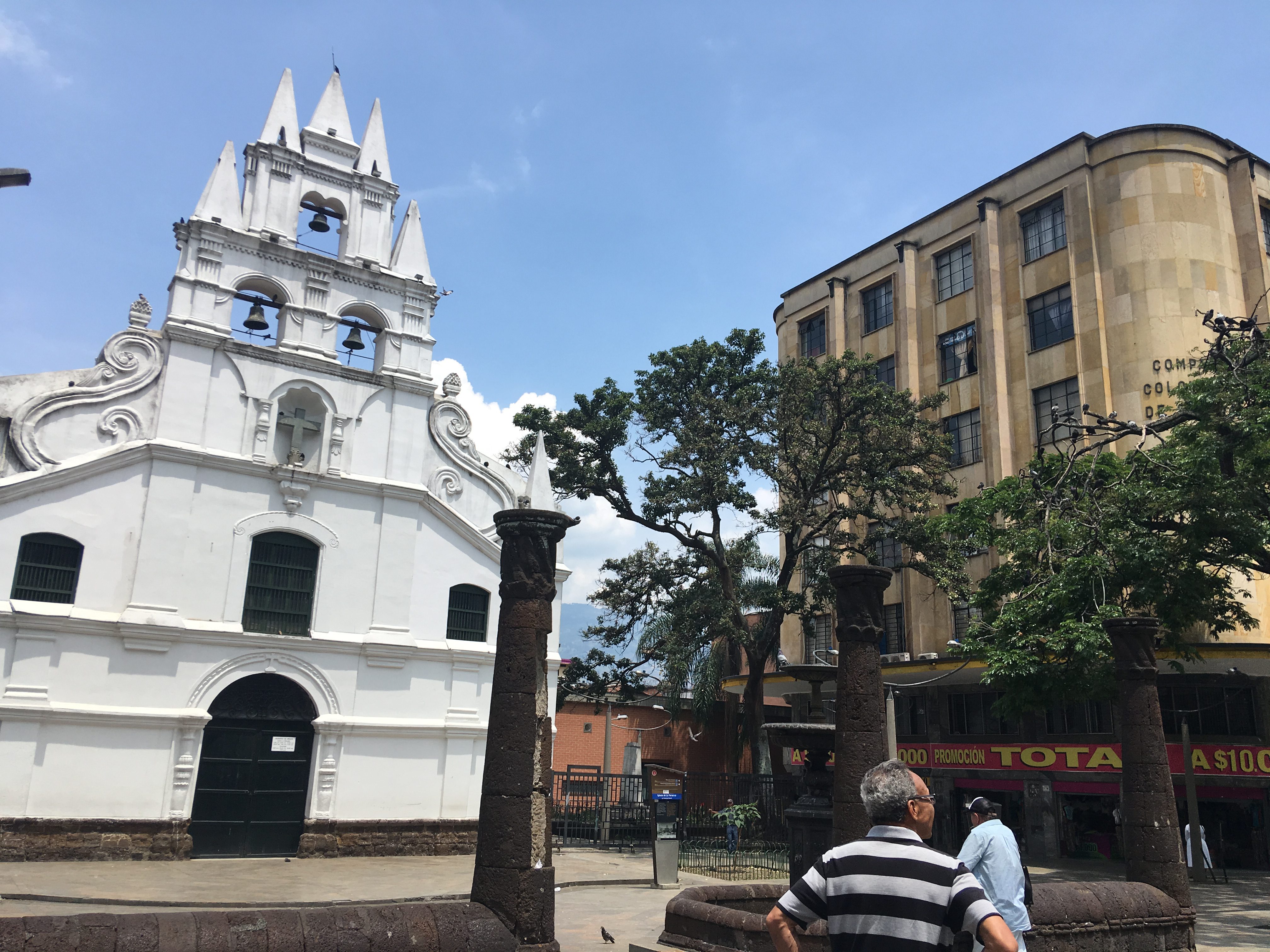
After a few blocks we began to enter an more open area leading to a very large square.  There was a beautiful colonial church—tainted by the fact that slaves had been sold in front—next to an art deco-era office building.

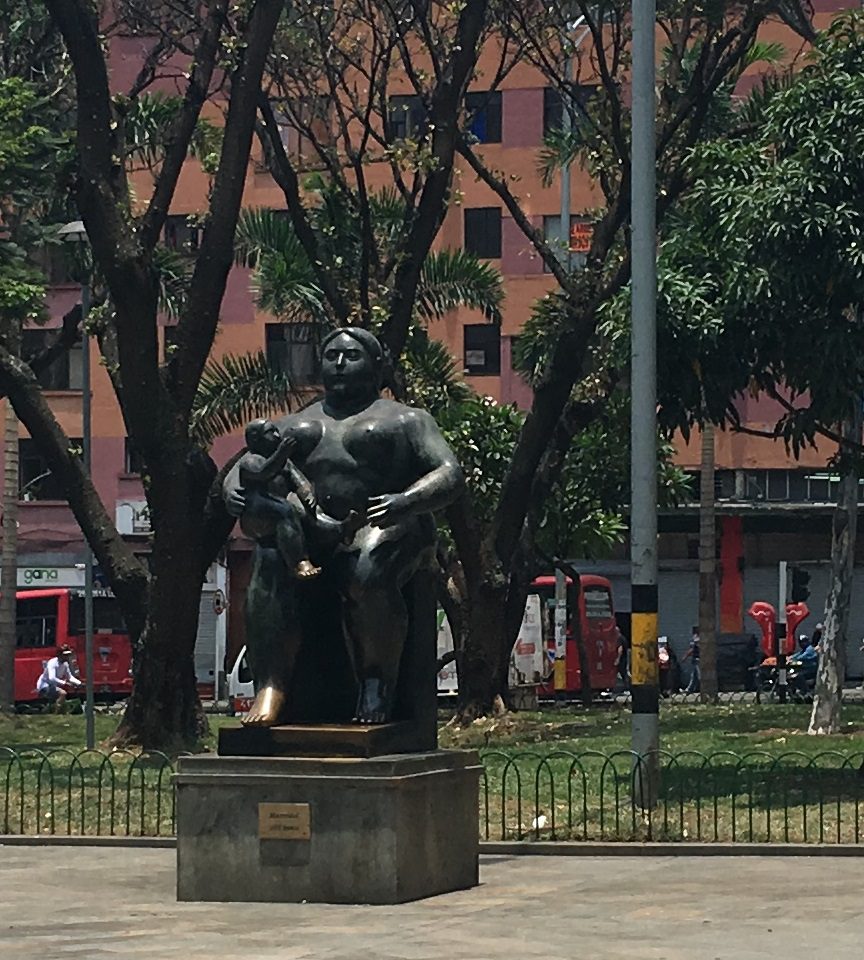
And then the Boteros began. I’d always thought of Botero as a novelty artist—an artist for whom it’s true that “a little goes a long way.”  But somehow, seen outdoors, in situ in the country of the artist’s birth, I became a fan. Here’s Ricardo taking a snap of Roxana.

This part of the tour must drive guides crazy.  We stopped every 10 feet to take photos.

This was my favorite.

We stopped for a coffee in a café overlooking the square. There were a lot of LLLs (large ladies in lycra) strolling by.

“I wonder if Botero was inspired by the women of Medellin,” I asked, hoping I didn’t sound like I was fat shaming, “or were the women of Medellin inspired by Botero?”

Daniella pointed out that all his figures looked like they’d been inflated with an air pump, not just the women. “He means to represent bloated political figures, and egos, and sometimes he’s just being humorous,” she said.

Our waiter had really been hustling to keep everyone served.  “He is Venezuelan,” Daniella said quietly. He is probably working illegally so they don’t have to pay him full wages.  It’s a big problem.”

“So there are Venezuelans here, in Medellin?” I asked.  “In the US, we read that they’re all on the border.”

“No!  They’re everywhere,” Daniella replied emphatically.

“And in the US they’re referred to as migrants,” I said, “probably because if they were officially declared refugees then the UN and US and other countries would be obligated to help them with funding.”

“Yes!” Roxana added, “They are refugees, not migrants!  ‘Migrants’ sounds voluntary.”

“They have no food, no petrol, no toilet paper,” said Daniella.  “How could you choose to stay if your children are hungry?”

We walked across the square toward the Metro.  This building, which looks like a cathedral or palace, is a government office building.

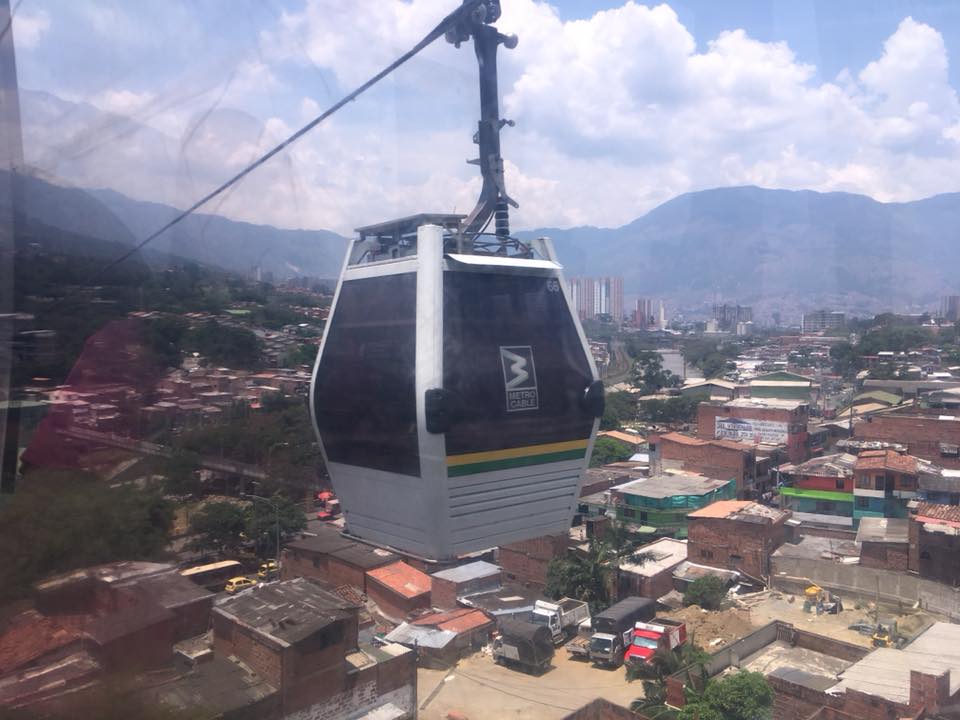
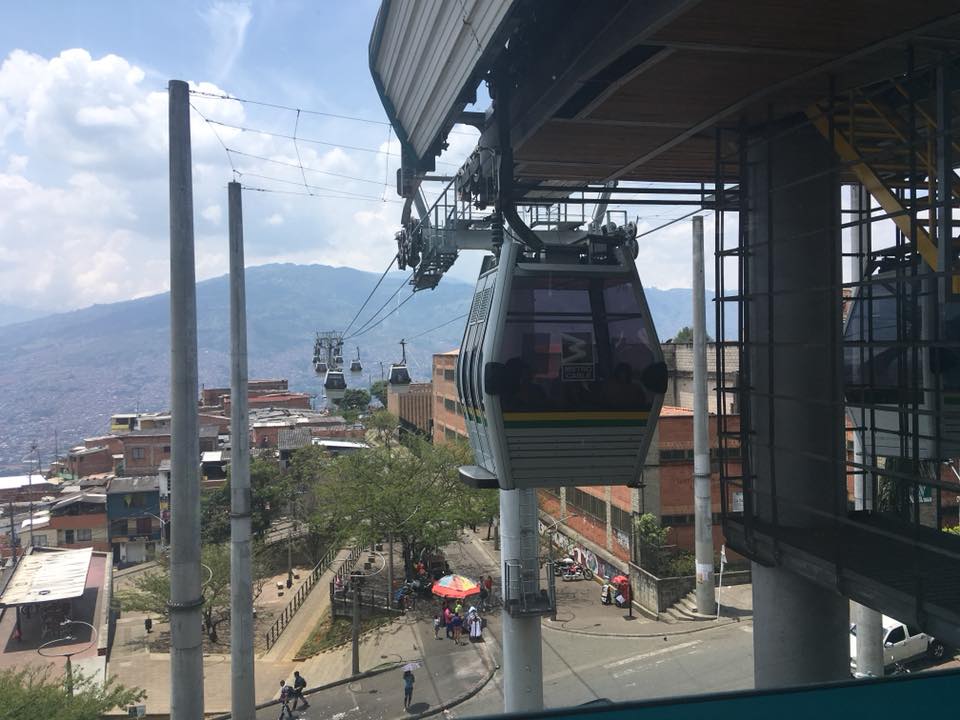
We rode the train a few more stops then got off to take the cable car system to the top of a mountain.  This is not a sight seeing ride, it’s public transport.

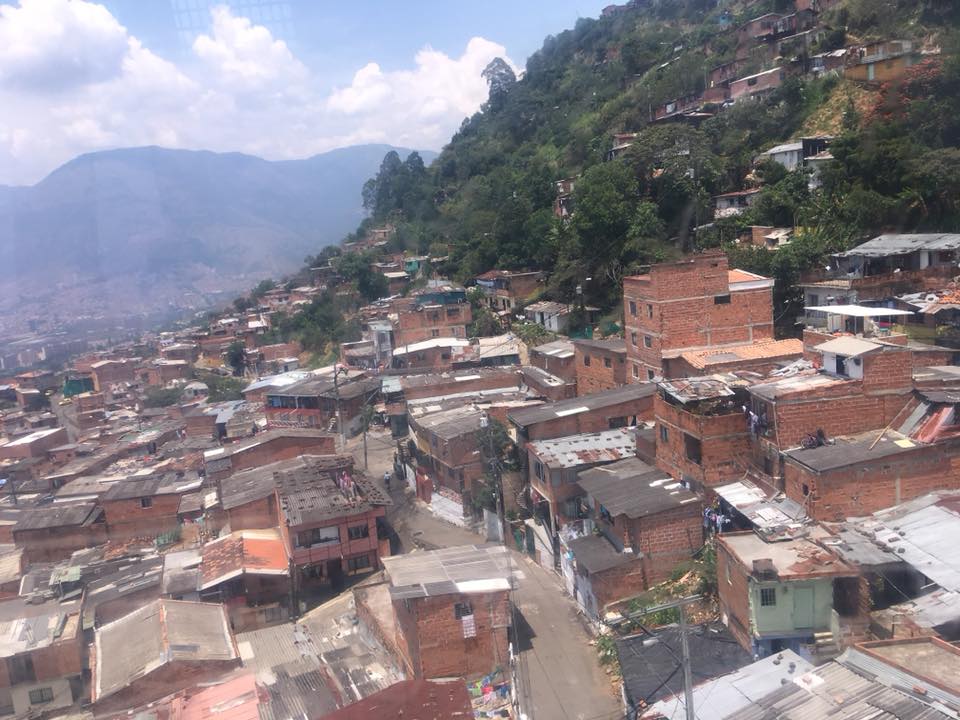
Up we went, over sprawling shanty towns. Six or eight people could sit comfortably in each car.

There was a stop midway.

We stayed on and kept going up, up, up.

Daniella kept saying the last stop was “RV Park,” which had me wondering if there would be trailer homes at the top.  Finally I consulted my Metro map and realized it was Arvi Park.

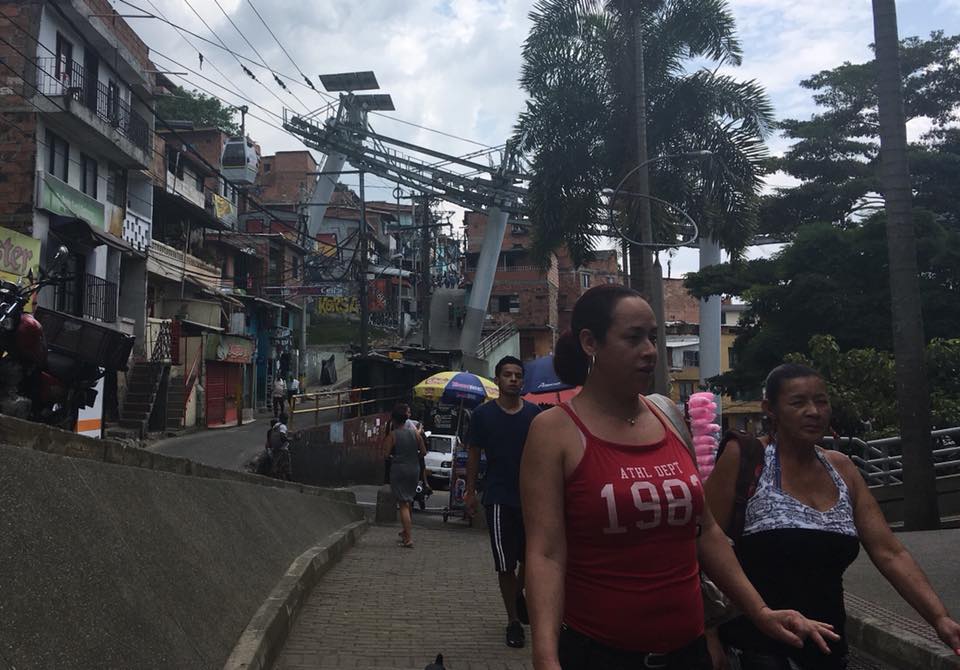
We wandered around the neighborhood at the top.  I imagine the cable cars solve any number of problems, like shrinking people’s commute times and helping women get around without being harassed, or kids being bullied or recruited into gangs.  Imagine, just sailing over the heads of your tormentors!

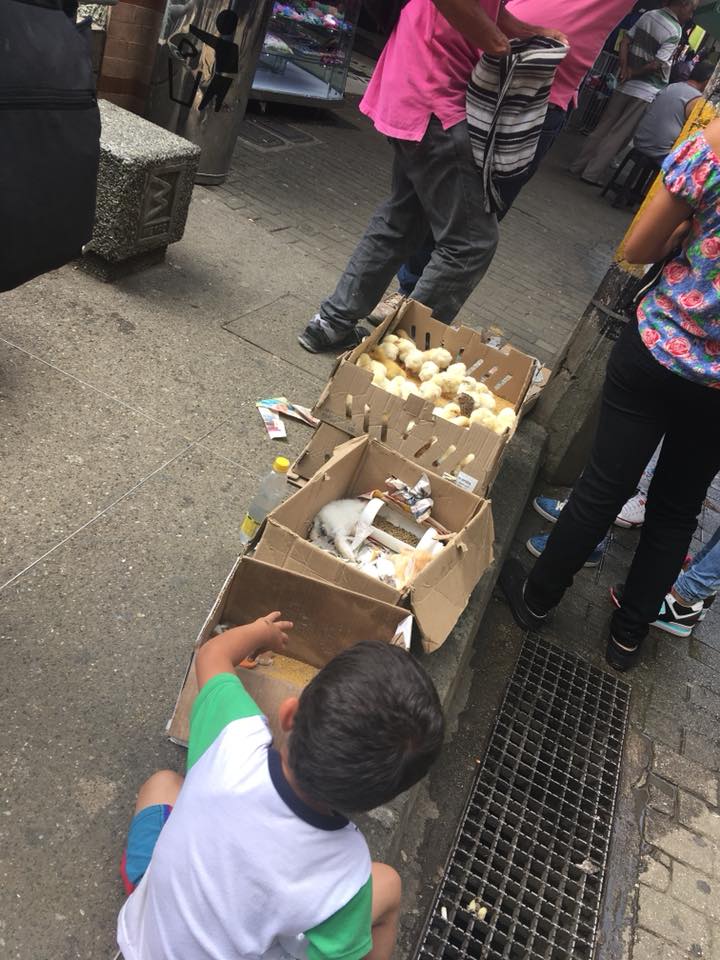
A little boy was running a street pet shop selling ducklings, rabbits and hamsters.

We walked to a cliff-side park where men were pushing little kids in what looked like go carts and young lovers were trying for a bit of privacy.  The smell of weed was pervasive.

There was a lot of poverty, but also a lot of art and people having fun out and about and clear efforts by some to improve their lots by adding second stories to their homes or painting them bright colors.

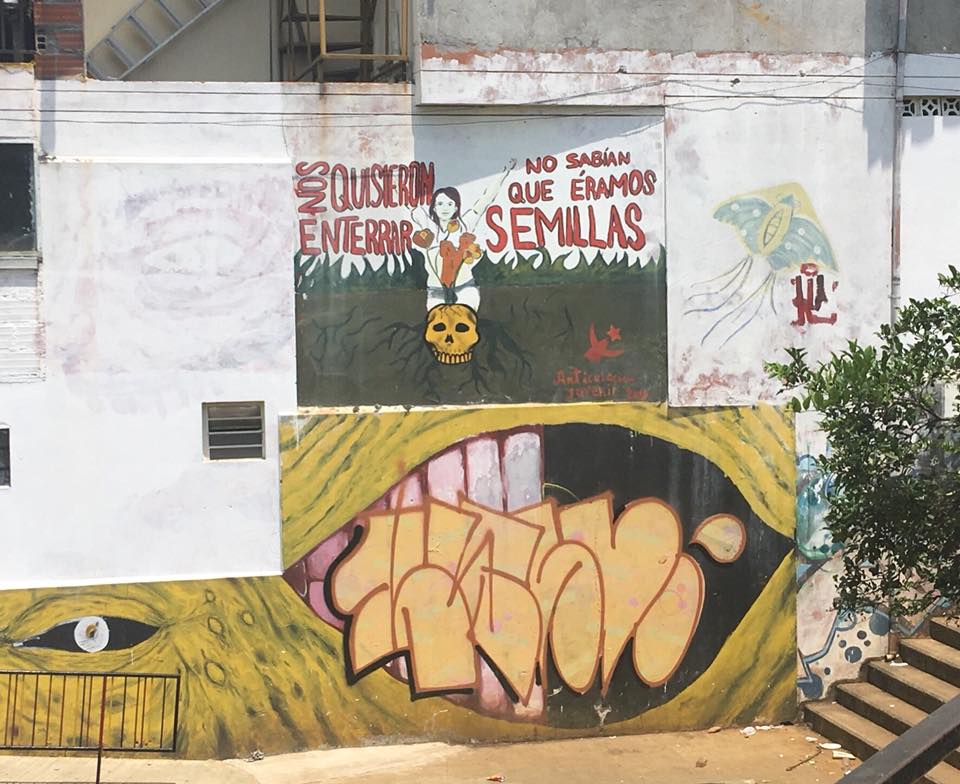
This mural says, “They tried to bury us. They didn’t know we were seeds.”

Monstrances and Rolling Stones

Michael was, literally, a walking encyclopedia of knowledge about Colombia’s war-torn history.  That’s an overused term, “war torn,” but it fits.  We whizzed through a museum complex that featured fine art, massive coin-minting equipment, and gold objects. The complex itself was beautifully designed—simple, clean lines to show off the art and artifacts—and featured serene courtyards with gardens and fountains.

I would have loved to stop and just sit, or walk slowly through to see what all was on display.  But Michael had an itinerary he was holding to, and he seemed disdainful of the museums because they held items from the days of The Conquest and were sponsored by big banks.  I could have that last part wrong.  He was throwing so much information at us.  He showed us a collection of Catholic worship items; I believe one would be a called a Monstrance.  This is a picture of a Monstrance from an online search.

The one in the museum made the one above look bland.  We weren’t allowed to take photos, but it was encrusted with emeralds and pearls and adorned with gold filigree and gold figures from biblical scenes.  I don’t know what Monstrances are for, and I don’t care.  Lynn and I had seen one in Spain that was even more … monstrous. We were well aware that the gold, pearls, and emeralds had been plundered local, probably by enslaved indigenous people.

“I have mixed feelings about it,” said Michael.  “On the one hand it tells the story of the rape of our land by the Europeans and their church, but I think many people look at it and just think it’s a pretty object without knowing how blood was shed to make it.”

True.  I wondered what “regular” tour guides would say about it.  I could imagine some people I know exclaiming, “Oooh, look how gorgeous that is!  The Colombians sure are great goldsmiths!”

We were receiving a great education from Michael, but for three hours he had been marched us through the city in the heat and sun.  The hotel staff had said the water was okay to drink but when I went to fill my water bottle it smelled so strongly of chlorine I decided to leave it behind.

And the altitude was winding us.  I had gone from 700 to 8,660 feet above sea level.

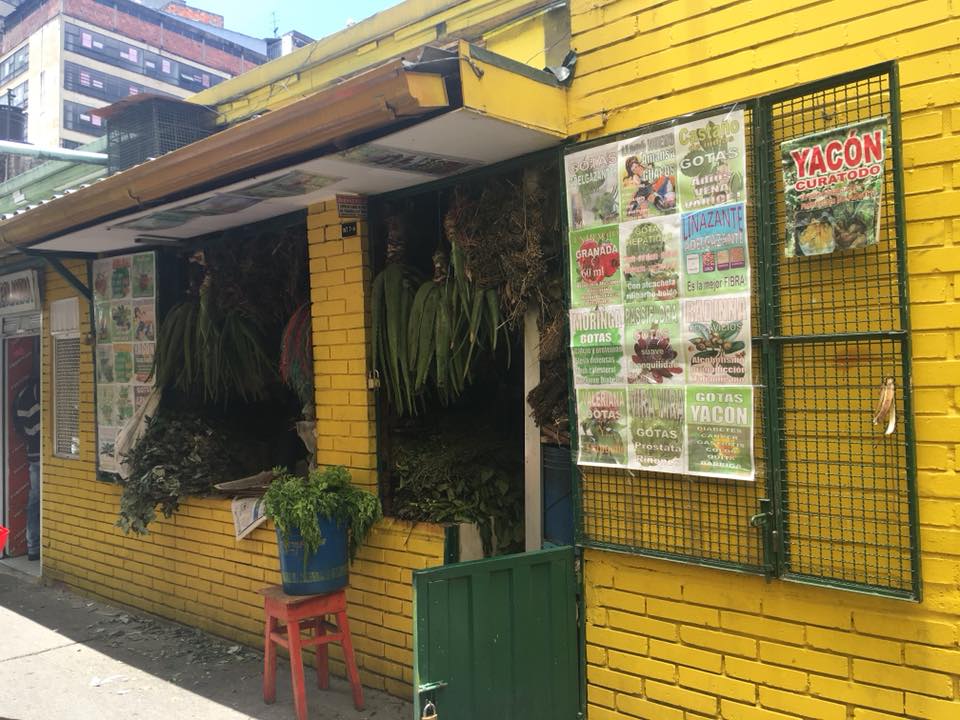
Just in time, Michael brought us to a covered market full of stalls selling fresh fish and seafood, beans and peas and spices and veg and fruits.  This little store outside the entrance to the market sold medicinal herbs.

I think Lynn and I both exclaimed, “Ahhhh….” as we entered, both because it was a respite from the heat and a feast for the eyes.

We stopped at the stall of a fruit vendor Michael knew.  “You can sample seven fruits for 6,000 pesos,” he informed us questioningly.  Did he think we were going to say no?  Six thousand pesos is $2.00.

I cannot tell you what the seven fruits were, only that they were delicious and revived us instantly.

“I keep thinking of that advice you read over and over in guide books,” I murmured to Lynn as we watched the vendor peeling and slicing the fruits.

She nodded.  “Only eat fruits you have peeled yourself.”

“But they’re so good!” answered, as sticky juice ran down my hands.

“Jorge has triplets,” Michael said by way of introduction of his friend.

“Oh, how old are they?” I asked in Spanish.

“The oldest one is 16,” he replied.

Hmmm.  Maybe Michael had meant “three children” by “triplets.”  I was too busy shoveling in fruit to ask a follow up question and besides, Michael and Jorge were clearly having a bit of catch up on the local gossip or something that didn’t need to include us tourists.

Then we were off again, and now we were walking slightly streets that led slightly uphill which normally I would have found invigorating.  But Lynn and I had to stop every now and then to catch our breath.

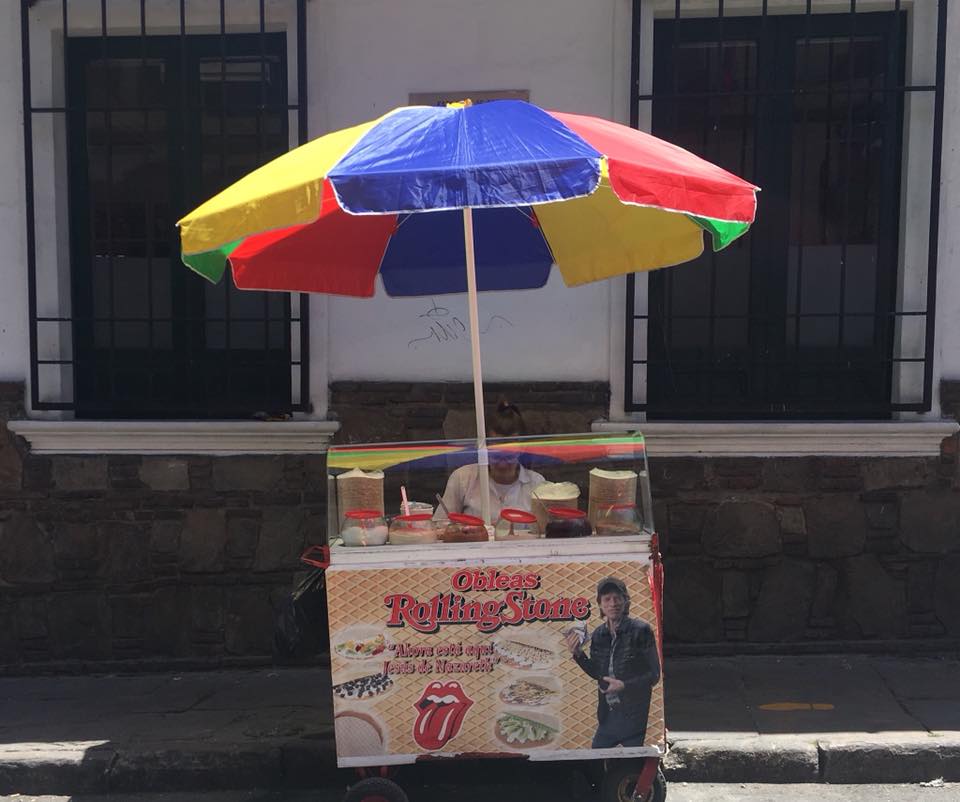
Michael took advantage of one pause to point out a vendor who had purportedly renamed her stall in honor a famous visitor.

Over the Hills

One of my proposals was due in two days and things had gone seriously off piste. It may be that, because we are essentially a mental health organization, we have a way of working that is consultative in the extreme.  When people edit drafts of proposals they never comment, “This number should be 50.”  Instead they write, “I sort of think this number could be 50, but what does everyone else think?”  And then everyone piles on and adds comments until all the edits look like the Babylonian Talmud.

I often suggest that people jump on Skype and talk to each other and make decisions, but with time differences and poor internet and … well … Skype—the program we love to hate—that’s challenging.

A colleague had offered to incorporate everyone’s comments into the proposal.  I just had to give it a once-over to cut down the length and make sure it was clear and responded to the donor’s intent and requirements.  I was free to go with Lynn on an excursion the next day.

The next day.  An email from my colleague to the whole group, “I’m sick and there’s no way I can do these edits. I’m sorry!  I’m signing off now.”

Shit.  It was on me now.

“Will there be internet at the venue?” I asked Lynn.  She didn’t know; Richard Googled it and the website didn’t say anything about internet.

“But it’s an event venue,” Lynn reasoned.  “It has to have internet.”

“Agreed.  It has to have internet.”

Lynn is on the board of Grampian Women’s Aid, one member of a consortium of Scottish domestic abuse organizations.  The event was a celebration marking their 40 years of providing refuge for survivors and advocating for stronger laws to protect women and children.

It took us an hour to get to there.  Richard had hand-drawn a map for us; I held it and nervously called out the turns.  “Left before this bridge!”  “Right after the abandoned pub!”  We only got slightly lost once, which is amazing for Lynn and me.  Why didn’t we use a GPS?  I don’t recall, but we passed through one of the most wild, empty areas of Scotland.  An old-school GPS wouldn’t have known about the washed-out bridge; a smart phone-based app needs 3G, which was iffy in some areas.

I’m looking at a map of Aberdenshire now, trying to figure out where we were. I love the names but none of them sound familiar: Haugh of Glass.  Glenkindie Towie. Bellabeg Strathdon. Longmorn Fogwatt. We may have been in Cairngorns National Park.  I don’t know.

We passed this creepy gate.  I hope it was a joke.

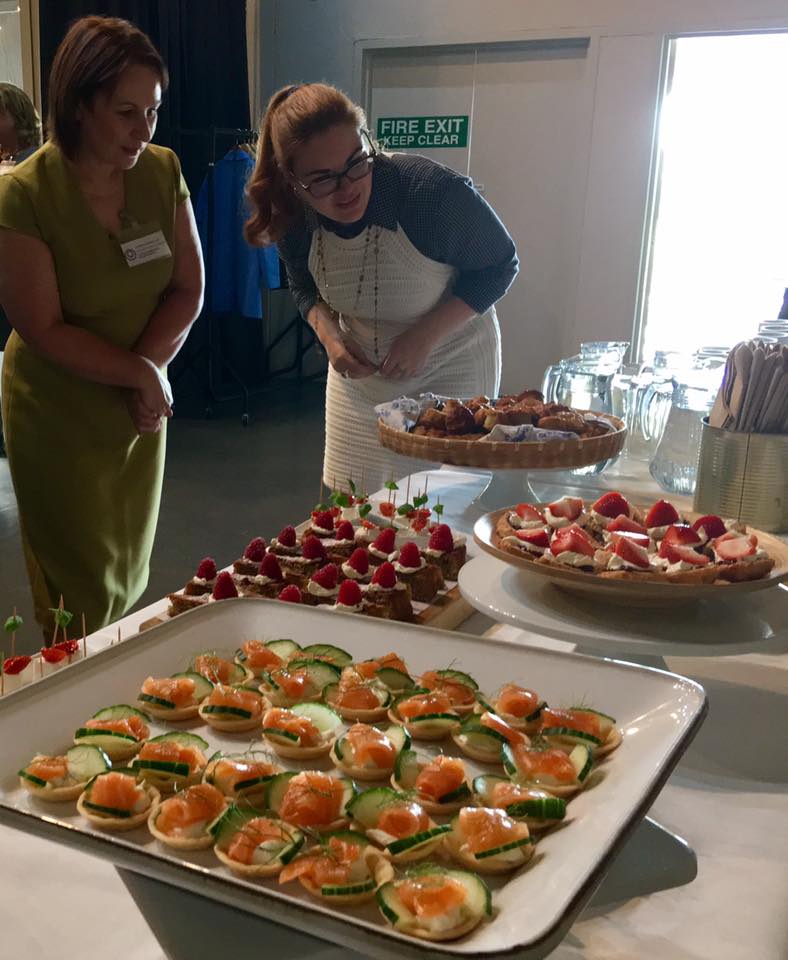
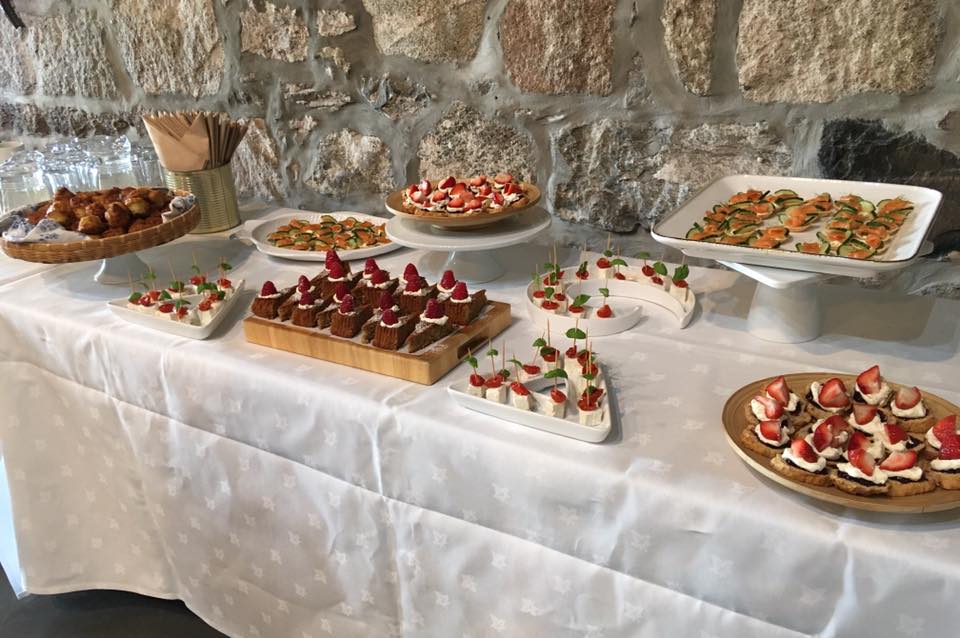
I can’t recall the name of the venue, but it was lovely.  We met some of the other board members in the café to have lunch before the event, which was redundant because there was so much great food at the event.  More great food!  Here is my lunch.  A fresh fish fest!  I forgot all about my proposal.

But after lunch reality hit and while Lynn and her fellow volunteers were setting up, I tried to get an internet connection.  This was complicated by the fact that my laptop battery has been dead for five years so it has to be plugged in.  I walked around with it and finally got an off-on connection and an electric outlet in a back room.

People think everybody, everywhere, is online.  Well everybody isn’t, and doesn’t.  People in Ethiopia.  People in rural Scotland.  People in Nebraska.  Poor people.  Elderly people.  Me.

But I managed to just focus’til I got ‘er done then got enough of a connection to send it off.

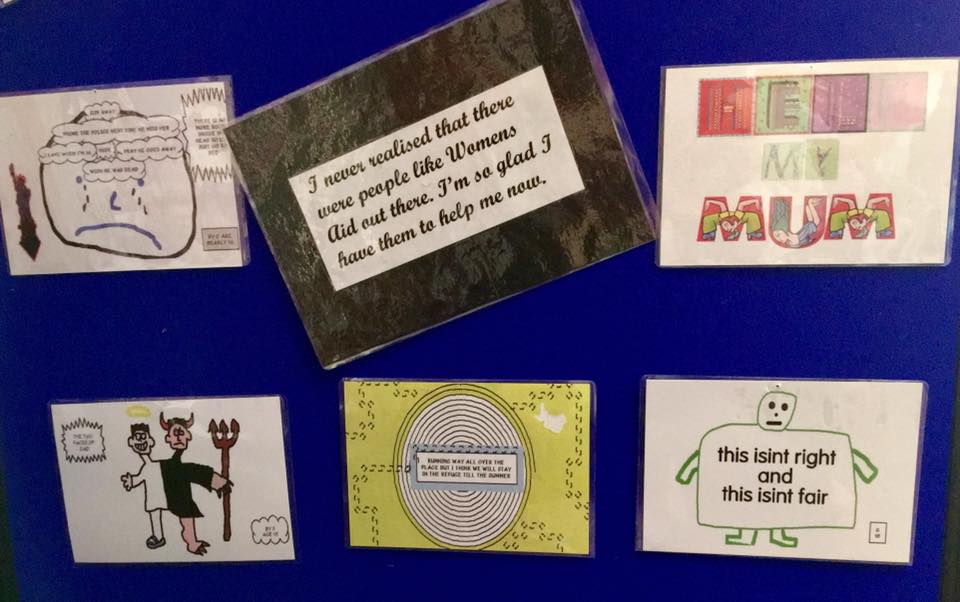
The event was very moving.  About 100 women and men were in attendance, including one of the local lords and a woman politician.  This is artwork by children in refuge.

The most memorable speaker was a woman who had been involved from the start.

The food was fantastic and provided gratis by the caterer.

I felt grateful.  A former battered woman myself, I was now eating strawberry and cream tarts in Scotland to celebrate 40 years of aid to battered women.  There is so much good work being done in this world by so many.