Category Archives: Joie de vivre

40 Quid for a Squid

This is a series of posts about Italy, Malta, and Spain that starts here.

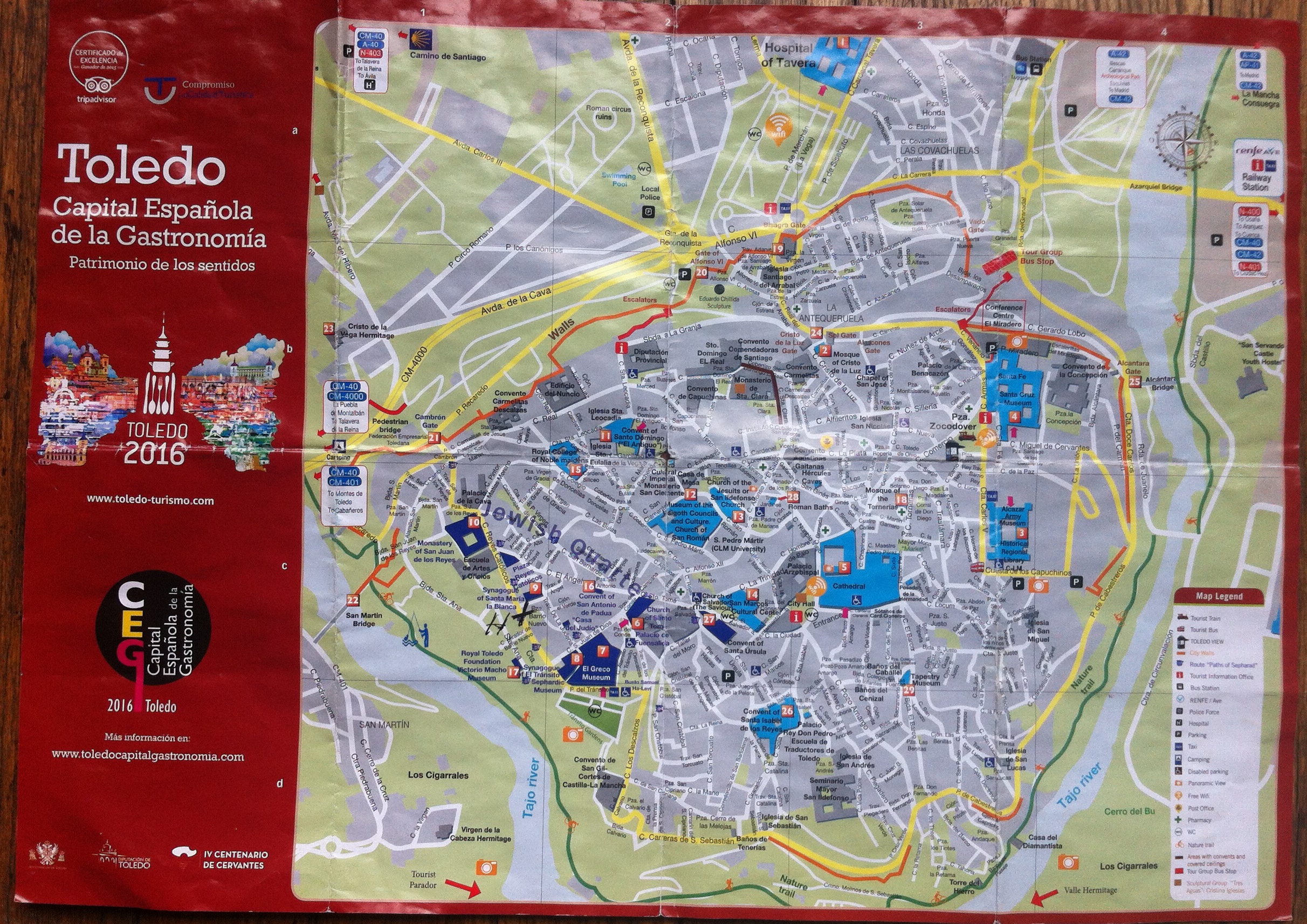
Lynn and I had a wander around Toledo. That’s the only way to approach it—as a wander— because there isn’t one straight street that runs for more than a city block.  Here is a photo of our battered map we consulted seven times a day, and still managed to get turned around:
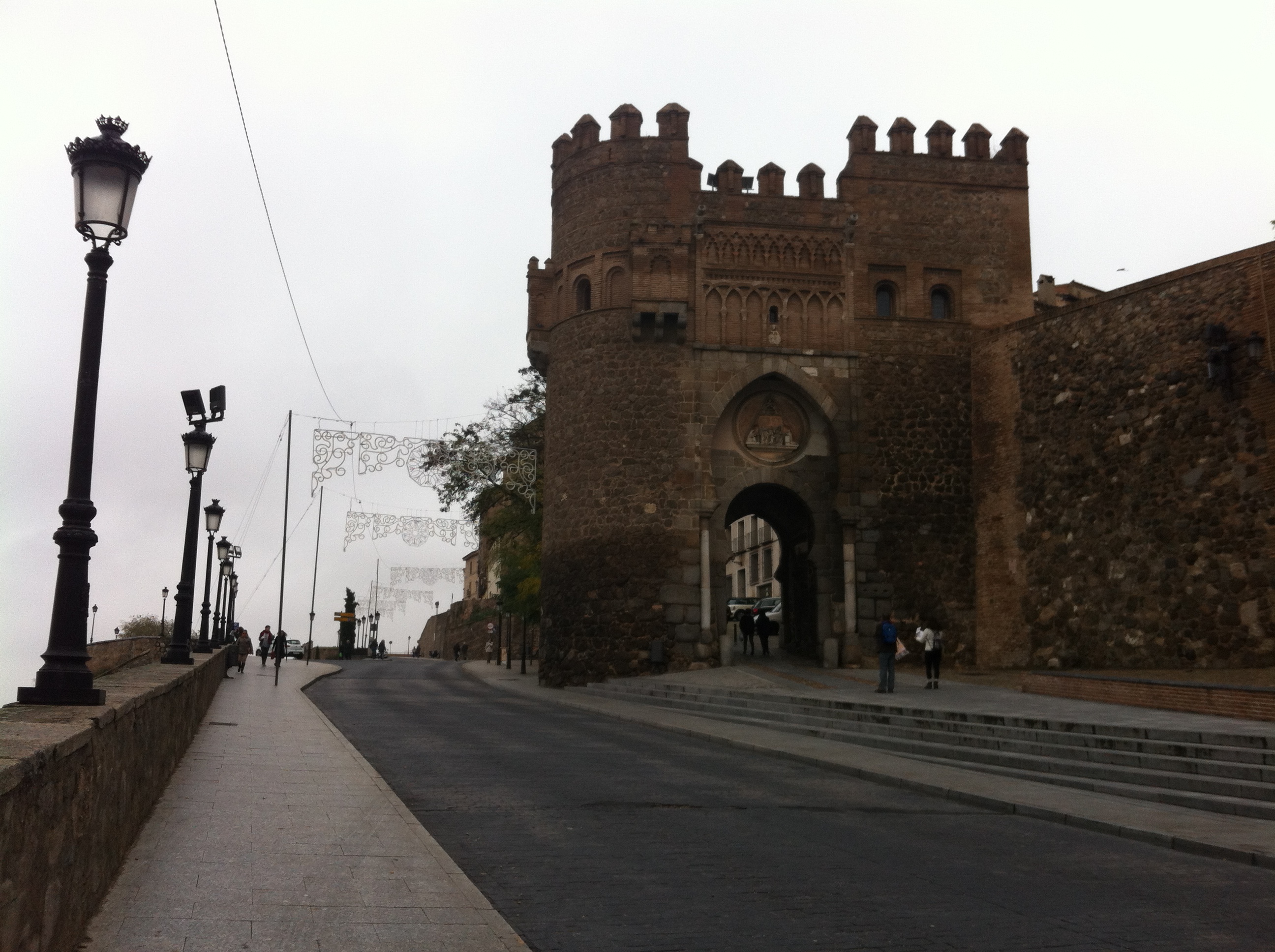
Toledo is on a hill on a peninsula, so it made a great fortress in its day.  There’s a medieval wall surrounding it, occasionally punctuated by imposing gates:
We passed bakeries with marzipan and something baked that looked like a squid:

“It’s never a squid!” Lynn remarked. “What city would have a squid as a mascot?  We’re nowhere near the sea, either.”  We later learned it was a dragon, but I prefer to continue believing it’s a squid.

“I’ve got to buy one,” I insisted, “They’re so beautiful!”

“They’re 40 quid,” Lynn pointed out, using the British slang for a pound.  Ah, maybe not.

We passed shops full of swords, knives, scissors, and everything else that is sharp.  Sharp instruments are one thing Toledo is known for.  I made a note to buy Vince a good knife and also purchase swords for my nephews, who are three and seven years old.  Let you think I’m out to help them murder each other, there were plenty of wooden and foam varieties on offer.

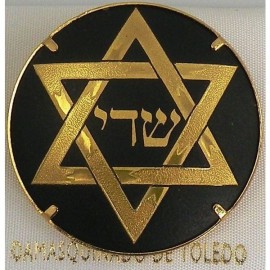
Toledo is also famous for damascene, a craft in which gold wire is worked into a black background to make plates, jewelry, and knick knacks.  It was spectacular to see shop windows full of it.
We accidentally found the main square, which had a Burger King with a bathroom. You had to buy something in order to get the code to use it.  By now it was after noon so I didn’t mind snarfing down a small cheeseburger while Lynn tried a mango shake.  A mango shake—it sounded so exotic and healthy, but according to Lynn it was mainly just sugary.

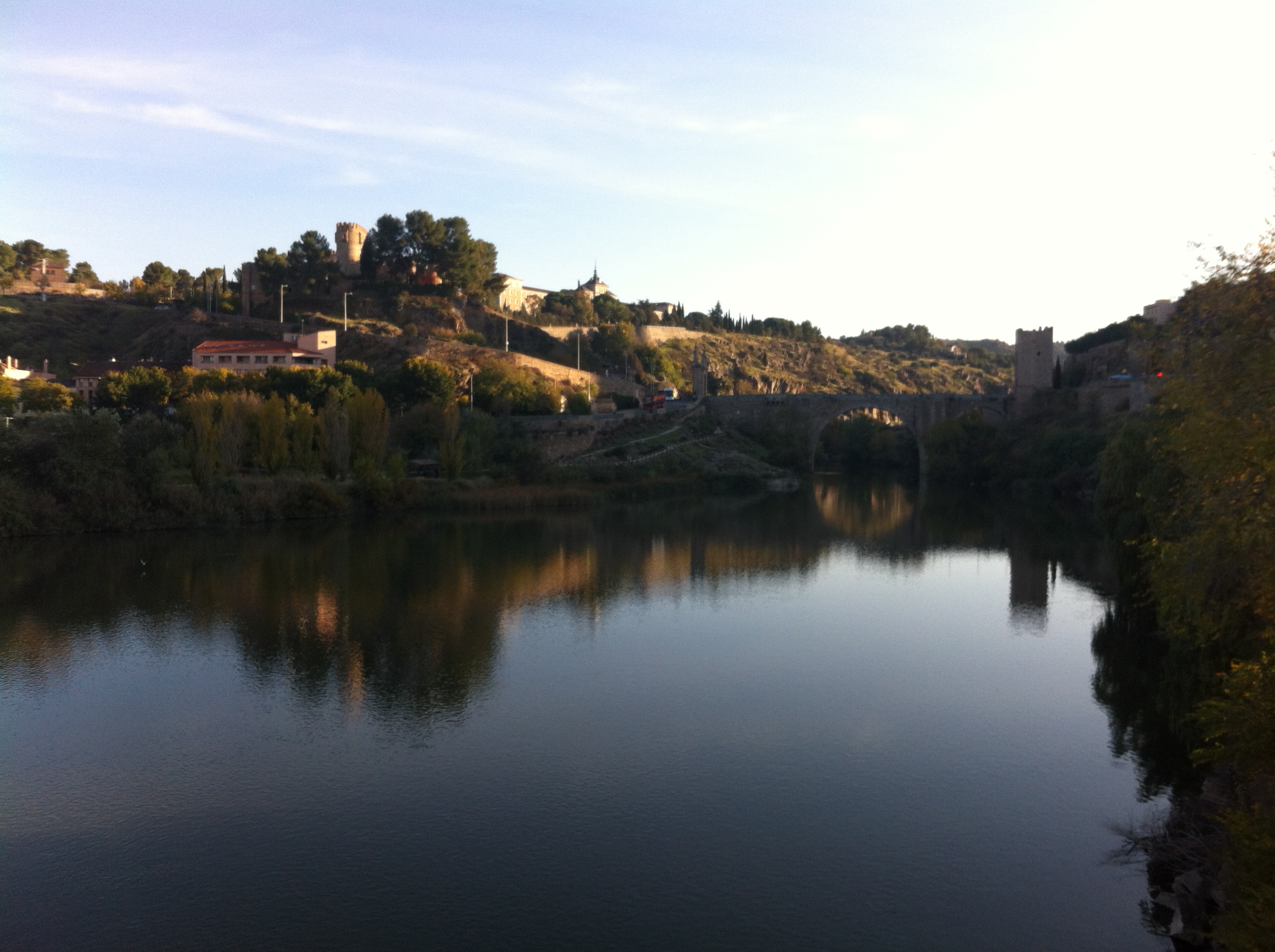
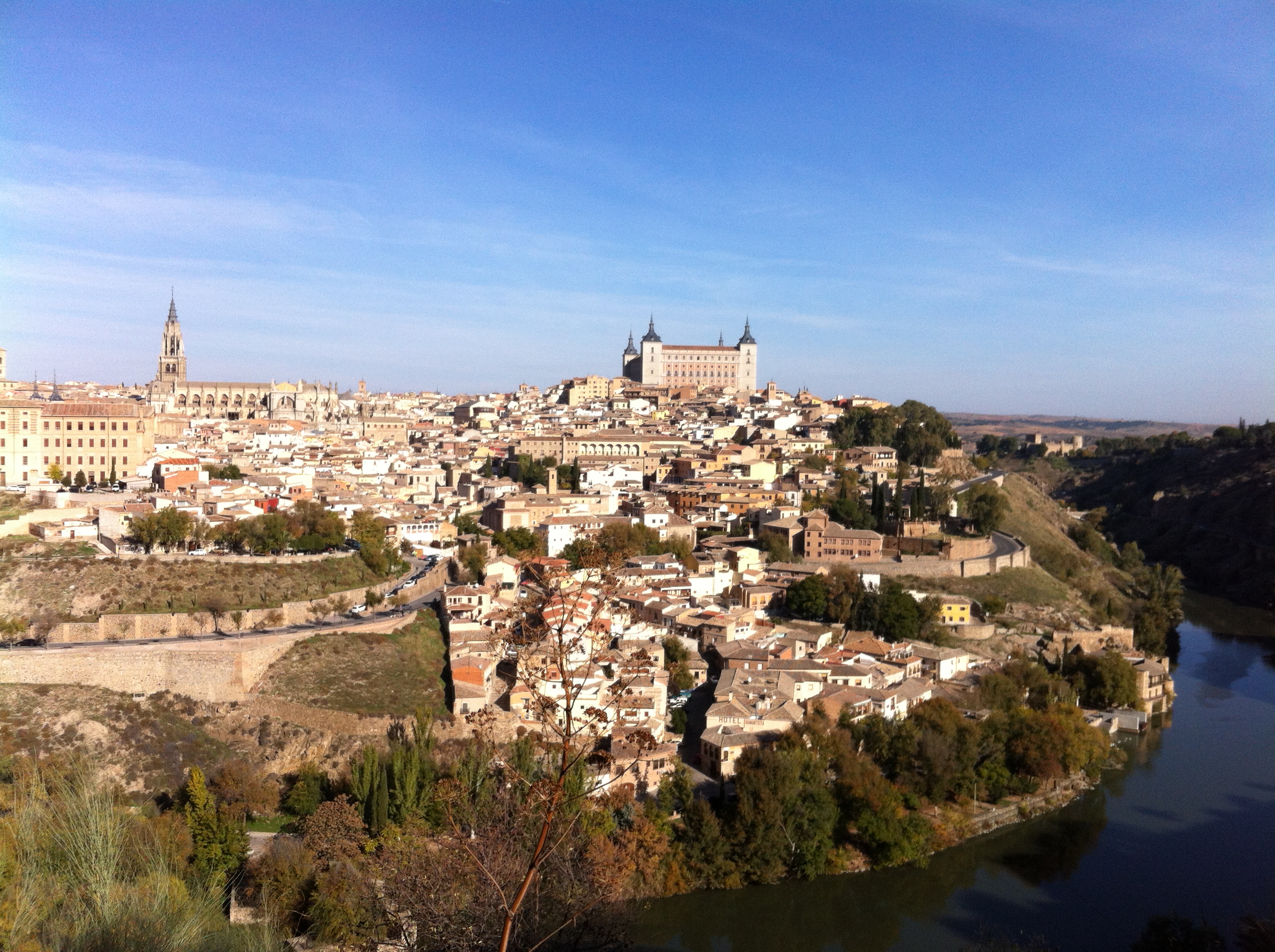
Toledo, like Granada, had a “touristic trolley.”  This one was easier to buy tickets for and board, so in five minutes off we went.  The trolley couldn’t navigate the narrow lanes of Toledo central, so it exited one of the city gates and stopped to let us off for scenic views from across the river.  It really is a romantically beautiful city, and the sky even cleared on one side for a few minutes.

We worked up an appetite saying, “Ooh” and “Aah” so we walked into the first restaurant off the main square that we saw.  I don’t remember what Lynn had, but this would be the best meal I had on my entire trip.  I don’t even remember what my main course was, but the starter was venison carpaccio, and it was fantastic.
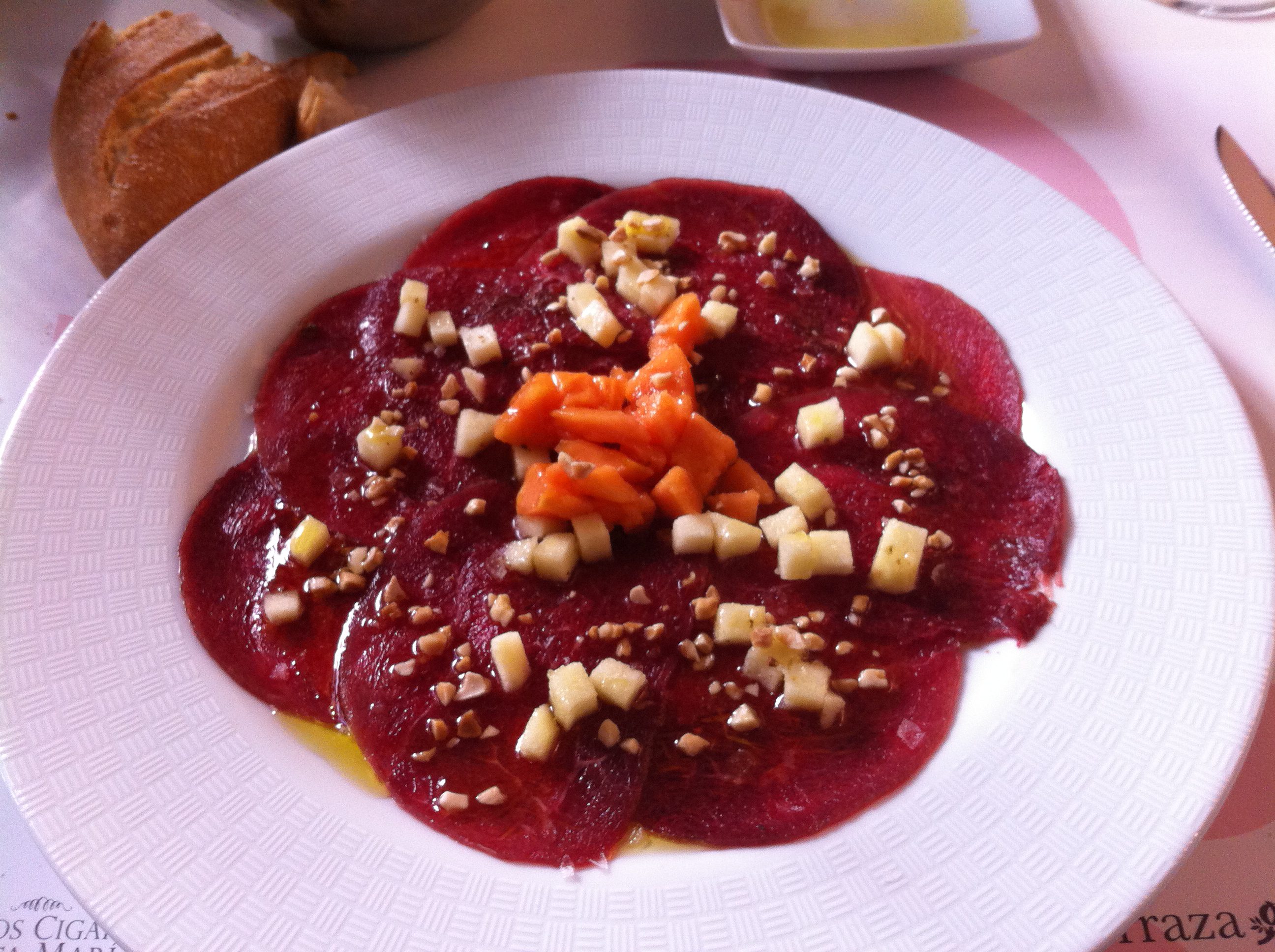
I never knew that venison could be so tender, so flavorful. Maybe the title of our map, “Toledo: Capital Española de la Gastronomía,” wasn’t just marketing bluff speak.

I had wondered how we would fill four days in Toledo.  There were no world-famous attractions there like in Madrid or Granada.

I needn’t have worried. The map offered 29 attractions, and we made it to 13 of them. This afternoon, after my cosmic experience with venison, we chose to visit the Cathedral.  Even though it was far and away the most massive building in the city and had a stupendously tall tower that could be seen from most vantage points, it took us the better part of an hour to find the entry.

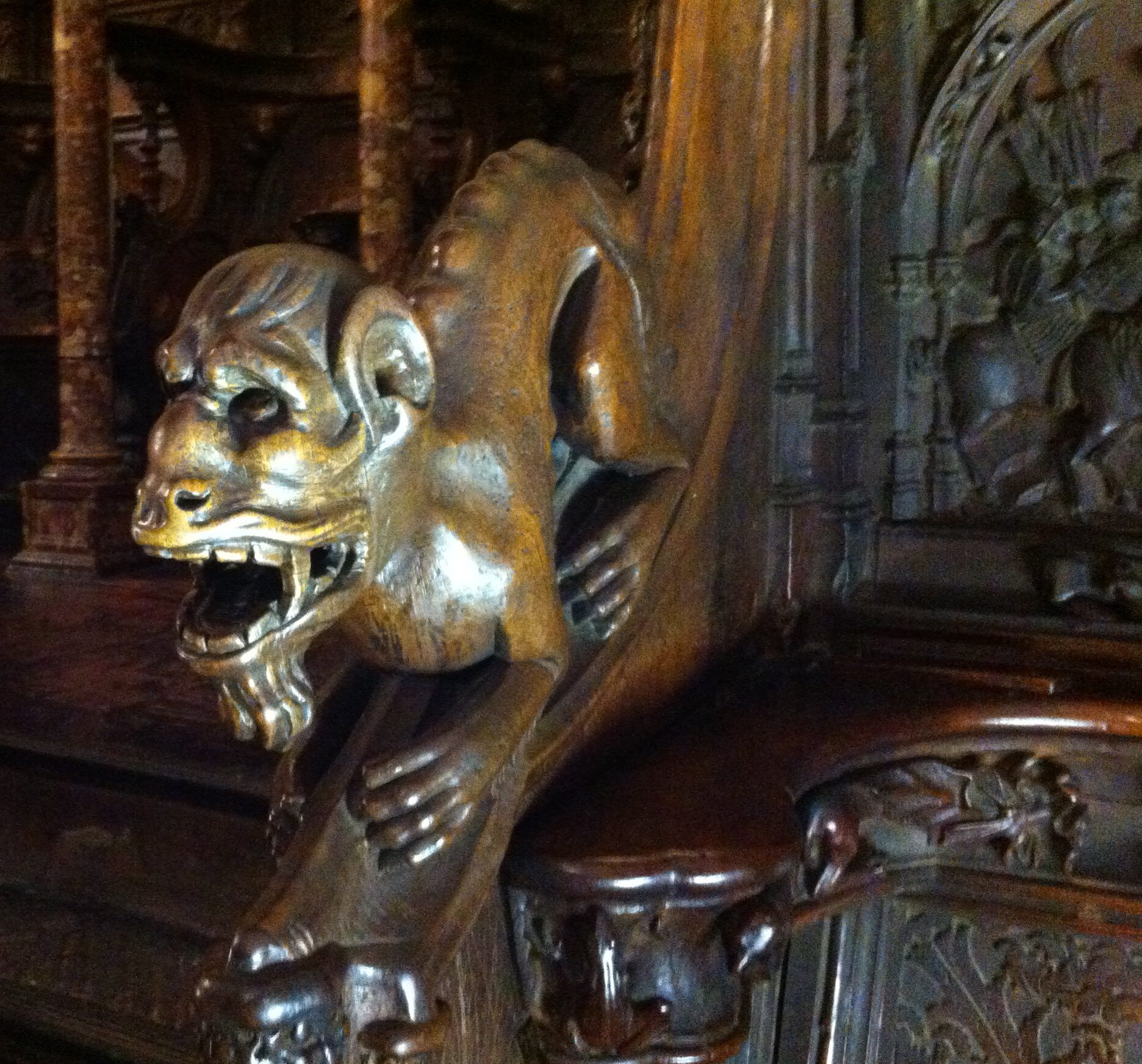
It was worth the effort.  We spent hours there; my favorite thing was the dozens of grotesques carved in wood that lined the seats where the big wigs used to sit.  The one-eyed one was particularly creepy.

There was nothing about them on audio guide, which mainly went on about the architectural features and historical dates. If I knew I could remember any of it, it could be really interesting, but after touring dozens of churches in the last few weeks I knew it would all be a blur.

Out on the Town in Toledo

This is a series of posts about Italy, Malta, and Spain that starts here.

After four hours on a bus with, like, the Valley Girls from Colorado, we arrived in Toledo around 5:00 pm.

I had suggested Toledo when Lynn and I were exchanging emails about the trip.  I dimly recalled from my Jewish education that Toledo was a center of medieval Jewish mysticism.  I can’t say I felt any mystical vibes there, but there were definitely many Jewish—and Islamic—references.  Of course, any actual Jews and Muslims had been expelled from Spain in the 15th Century, but the city did its best to attract tourists based on its religious diversity of 600 years ago.

To sum up the weather in Toledo in one word, I would use the word “gloom.”  It was gloomy all day, with rain off and on, and dark at 6:00 pm.  Dark in the way of someone flipping off a light switch, not in the way of a slow, sweetly colorful gloaming.

I loved it.  I had loved Granada for its sunniness, and now I loved Toledo for its dreariness.  I’m flexible like that, and it’s a really good trait if you’re a traveler because you never know what you’re in for.  You have to roll with changes and surprises; to be delighted by them is even better.

We were famished after our long journey so we popped out onto the street to see what we could find to eat.  Everything in Toledo seemed to close at sundown.  Stores, restaurants, even the street lights, if there were any, were turned off.  This made it difficult for us to find our way around—not that we had any difficulties getting lost in the brightest daylight.

We saw a light at the end of a street and walked toward it.  It was a very unappealing-looking tourist restaurant with the same sign we’d seen elsewhere advertising pizza, hamburgers, schnitzel and sauerkraut, and other dishes that could be defrosted in the microwave for tourists from various gastronomically unadventurous countries.

But it was the only thing open, so we went in.  We were the only customers, it being “only” 6:30, and the kids who ran the place seemed flustered.  What could these tourists possibly want at this time of day?

“Oh look,” Lynn said, pointing at the oily menu, “They’ve got mussels.  Surely those wouldn’t be frozen?  And they come with chips.”

“Will they be chip chips, or crisp chips?” I wondered aloud.  Chips, to Brits, mean what Americans call French fries, while crisps are what Americans call potato chips.

“Ooh, let’s find out!” Lynn enthused as we tried for 15 minutes to flag down one of the teen employees who were loitering in a clutch at the bar.  The mussels with chips arrived, along with a bottle of bubbly, and here’s what they were:

The mussels appeared to be smoked, and they were artistically (possibly accidental) arranged on top of potato chips, with a brownish red sauce poured over it all. Lynn looked dubious but after tucking in we both agreed it was delicious.  Of course we were very hungry, but so what.  The house cava or brut or prosecco or whatever it was cost about 5€ and was excellent.  As I’ve lamented before, why can’t we get good cheap house and happy hour wines in America?  It’s just not fair.

A tour bus appeared outside and about 75 Spanish-speaking tourists who appeared to be retirees poured in.  Every single one ordered a cup of tea.  “Not one ordered a beer or a glass of wine,” I observed.  “Maybe it’s an AA convention?”

“They’re pensioners,” Lynn answered, “on a package tour, and tea is included but they’d have to pay extra for a beer.”

I’ve been on package tours, and on none of them did we talk as garrulously as this group.

Suddenly, at some invisible signal, they all started to file out.  A woman explained as she passed us that they were on a high school reunion trip.  She said this rapturously, as though it was the most exciting thing that had ever happened to her.

Bless her. Being on a bus with my aged high school class would be a nightmare to me.

Why the Jews were Expelled from Spain

This is a series of posts about Italy, Malta, and Spain that starts here.

Lynn and I were ensconced in the back of the Mercedes, well supplied with bottled water and potato chips in case the car broke down in the Sierra Nevada Mountains.

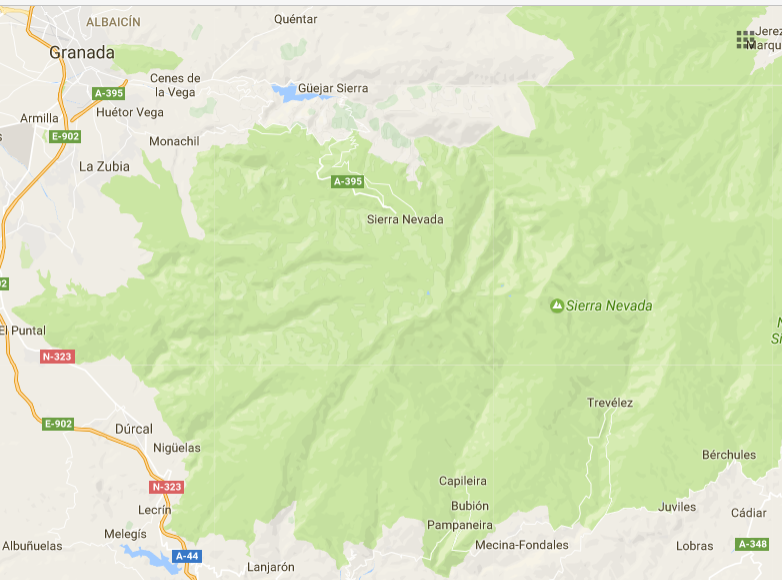
Our destination: the “white vilalges” Pampaniera and Capilera on the other side of the Sierra Nevada from Granada.

white-villages

We took two-lane roads through the mountains, winding around hairpin curves.  If you were prone to motion sickness, you would definitely want to take a Dramamine for this ride.

Lynn and I chatted with each other and I asked Juan questions now and then.  This was the area where Spain’s bottled water came from, he said, which made sense since it was mountains.  He was from a town we would pass through, Bubion, population 300.  His family still lived there.  We stopped for a shepherd with a flock of goats crossing the road.  That answered my question about what people did for a living here.  They kept goats and sheep and bees, but they mostly depended on tourism.

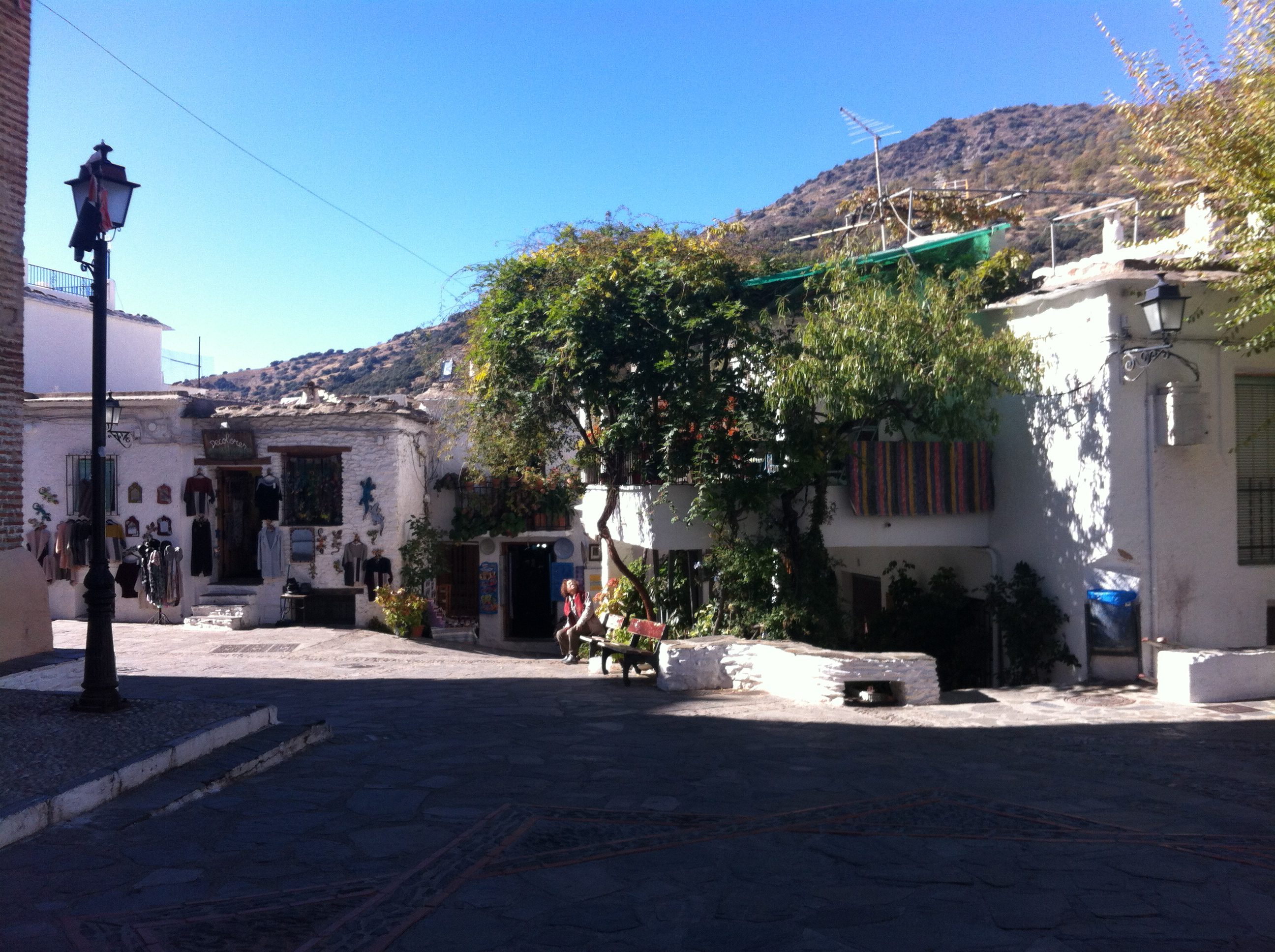
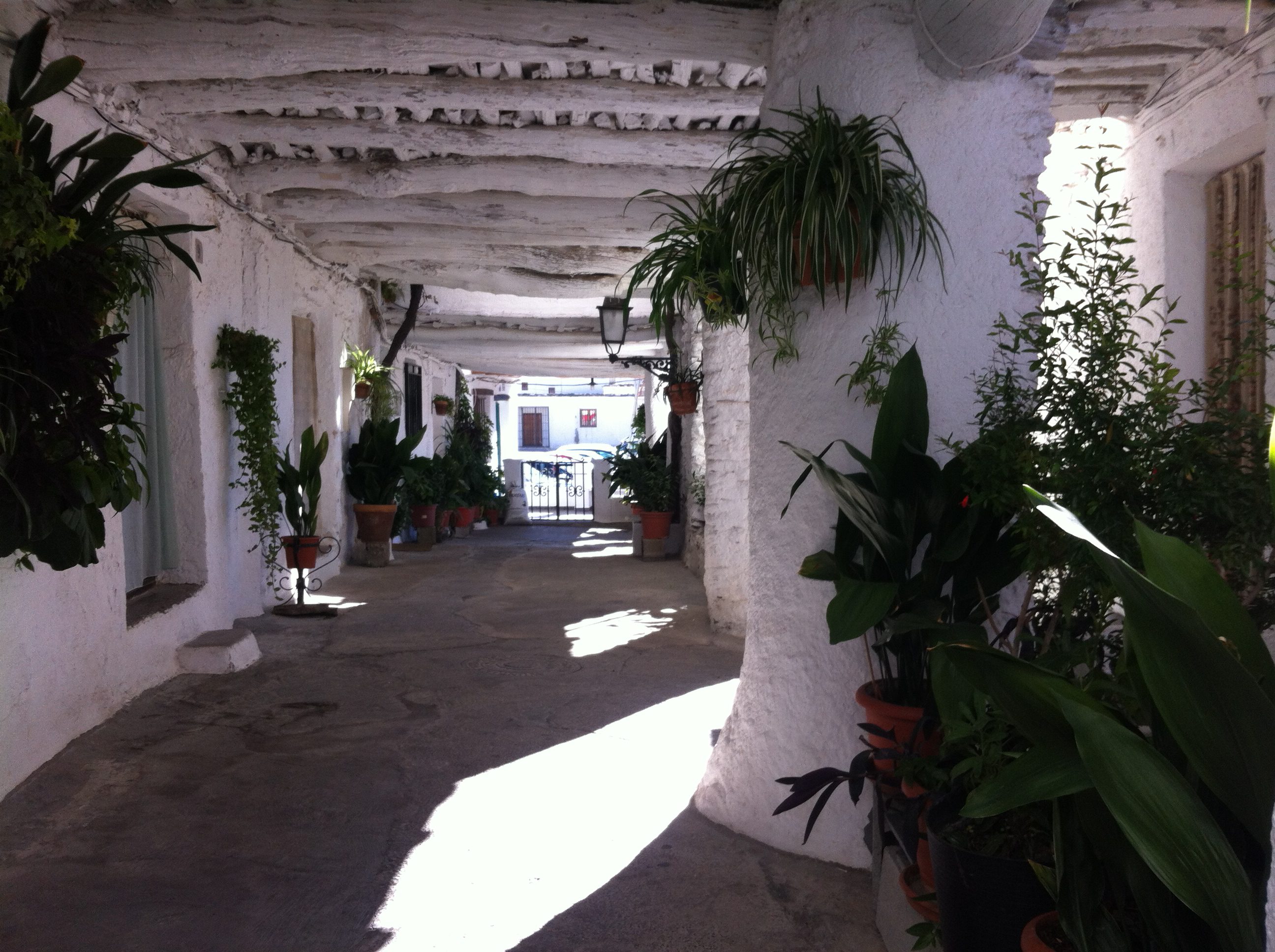
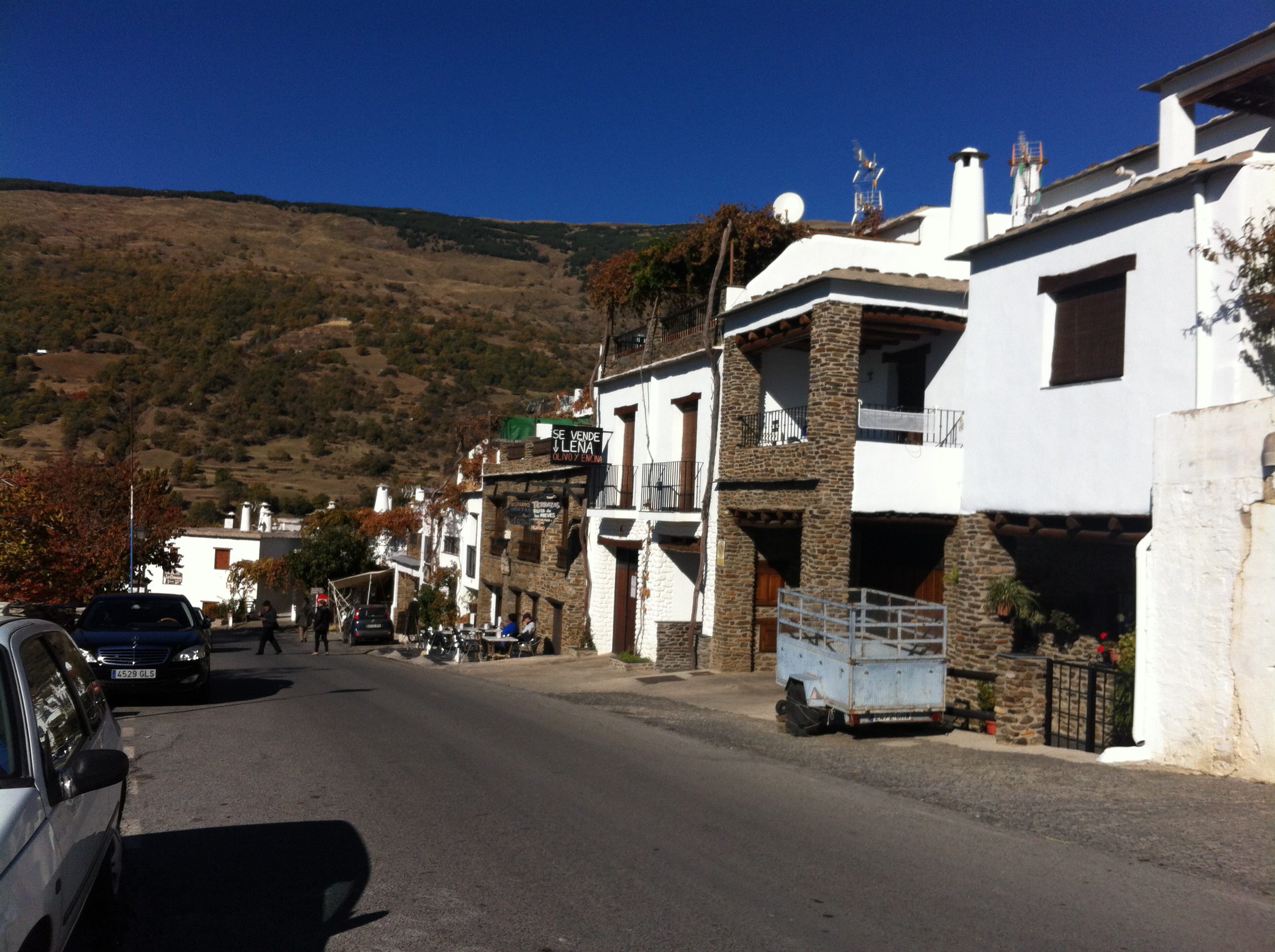
After a couple hours, Juan asked which village we wanted to stop in first. I don’t remember which one it was because they looked the same: tiny, white-washed towns of a couple dozen buildings clustered around a bend in the road.

“How much time do you want here?” he asked.  Ummm…we didn’t know, never having been “here” before, but we thought an hour would be enough.

Juan hung out with some friends while Lynn and I wandered around.  Now remember, it was the off season.  We appeared to be the only tourists, and a lot of businesses were shut, the owners probably off to Florida for the season.

Two shops were open.  They featured the local craft specialty—thick, heavy, woven rugs that you would pay 10€ to buy and 100€ to get home.  There was also much unremarkable pottery and fashionable women’s clothing made in China.  It was one of those places where you feel like you should buy something to support the local economy, but I couldn’t muster enough interest to pick anything out.  I think Lynn bought a pottery bowl.

We walked up the road to get a view of the mountains—which were spectacular—and found a B&B that served coffee.  We sat in the garden and drank coffee; not a bad way to kill a morning.

sierra-madre

After an hour we ambled down the hill, found Juan, and proceeded to the next village, which looked exactly like the first.  I probably sound like I’m complaining but I’m not, they were lovely and picturesque but they did look the same and I knew a limited number of Spanish superlatives so I didn’t know what I would tell Juan about this one when we reconnoitered.

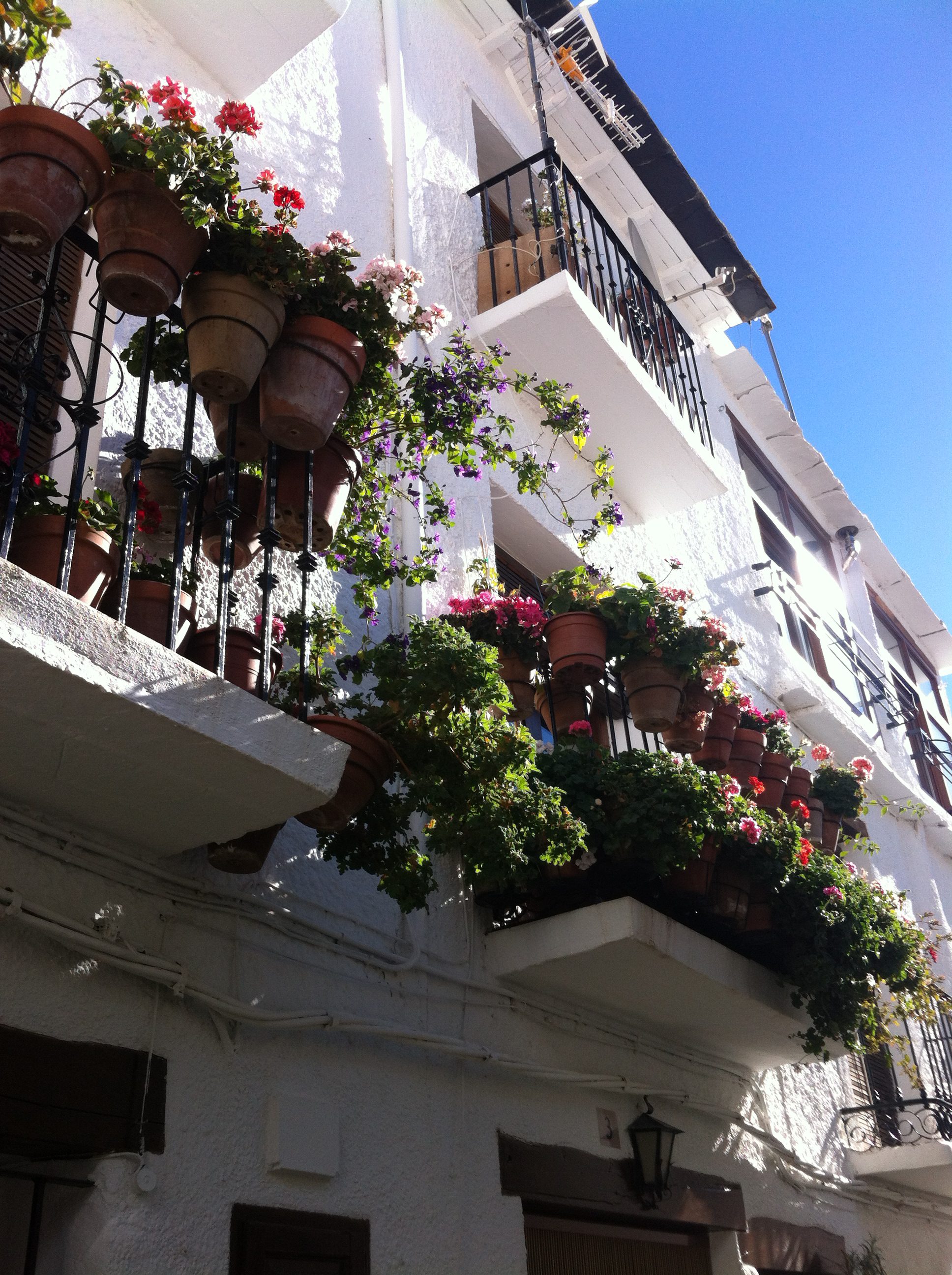
white-village-2 white-village pampaniera balconies

We stepped into a tiny empty church and a man followed our every move.  “There’s a 2€ admission!” he informed us.  We paid it and beat it out of there.

It was nearly 2pm so there was a restaurant open for lunch.  We climbed to the roof top patio and the waitress was clearly not happy to have customers.  The menu was limited to combinations of ham, eggs, and bacon.  I ordered “potatoes with bacon” sans bacon, Lynn ordered ham and eggs, and we both got a beer.  When the food arrived a half hour later, my potatoes were heaped with bacon—sarcastic bacon?—and Lynn’s plate had a pile of ham topped with a raw egg.

I gave Lynn my bacon and she fed it to a cat that was slinking nearby.  The waitress, forced to emerge from the interior by the arrival of more tourists, glared at us.

“I have a theory,” Lynn said, “that the Jews were expelled from Spain because they didn’t consume enough pork products.”  There was much laughter, which the waitress appeared to take as a personal affront.

Within a minute we were surrounded by a dozen cats who consumed all the bacon, raw-egg saturated ham, and the dry white bread in our bread basket.

Beer and potatoes in the sun made for lovely naps as we were driven back to the Alhambra Palace for our last night there.

Un Gran Salud

This is a series of posts about Italy, Malta, and Spain that starts here.

Lynn and I flew from Madrid to Granada, and I don’t remember anything about the flight except seeing these magazines and newspapers with photos of Melania Trump in the airport:

melania-2 melania

The first headline says, “I’ve never been the type of woman who gives her phone number to just anyone,” and the second is, “The Amazing Life of the Most Powerful Woman in the World.”

Um…she may be married to the President of the United States, but that doesn’t make her the most powerful woman in the world.  I would put Angela Merkel, Christine Legarde, or Janet Yellin in that category, but not Melania Trump.  Maybe they expect her to exert a powerful influence on fashion.

The Alhambra Palace Hotel.  What can I say?  It was like a palace.  The room wasn’t huge, but everything was of supremo quality and very clean.  For instance, the white linens on the beds were heavy thick cotton and the tile in the bath was beautiful.

bath

We had two French doors that led out onto a massive terrace:

room-terrace

But the best part was the terrace bar, overlooking Granada:

ah-terrace-2

No, the best part was, Lynn had got a great deal on our five nights.  Again, one of the big benefits of traveling during the off season.  It’s not like it was cold or rainy here, either, so I don’t why anyone wouldn’t visit Granada in November.

We had tickets for the main event of the trip—the actual Alhambra—in two days.  We headed out  to do a re-con walk and were at the entry to the site in about 10 minutes.  It was so easy, and we hadn’t gotten lost.  Feeling a little cocky, we decided to walk around some more.  We walked back to the hotel then onward in the opposite direction down an alley-like lane.  We passed something called the Jose Rodriguez Acosta Museum.

“Never heard of him,” I noted.

“Me either,” said Lynn.  “Something to check out later.”

We walked down, down, down a hill and stairs to a neighborhood called Albaicin.  We stuck to the main drag, which was about 12 feet wide. Every time a vehicle came by, we pedestrians had to flatten themselves against the walls of the buildings on either side.  A river ran along one side, a hill ran up from it, and at the top were old buildings … houses? Whatever they were, they were beautiful:

villa-from-town

Families were out for their evening strolls along with tourists.  We passed shops selling arts and crafts, and tourist kiosks selling Flamenco tickets.

“I would like to see Flamenco dancing,” Lynn commented, “If we can find an authentic place.”

I wasn’t thrilled about seeing Flamenco.  For one thing, all the posters seemed to indicate that the dinner-dance package didn’t start until 8:00pm. I flashed back to a trip to Peru with my Peruvian friend Roxana, whose nickname for me is La Marmota (the marmot) because I sleep so much. She took me to a popular dance club to see a spectacular costumed dance show, which was followed by a free-for-all dance party.  The show didn’t get started until 10:00, you could cut the cigarette smoke with a knife, and worst of all—I am a terrible dancer.  Really.  I was finally cajoled by Roxana and her friends to get out there and dance, and I think they regretted it.  When I made a move to sit down after 10 minutes, they didn’t protest.  It was fabulous—watching everyone else dance—would I be dragged out to dance Flamenco in front of hundreds of people too?

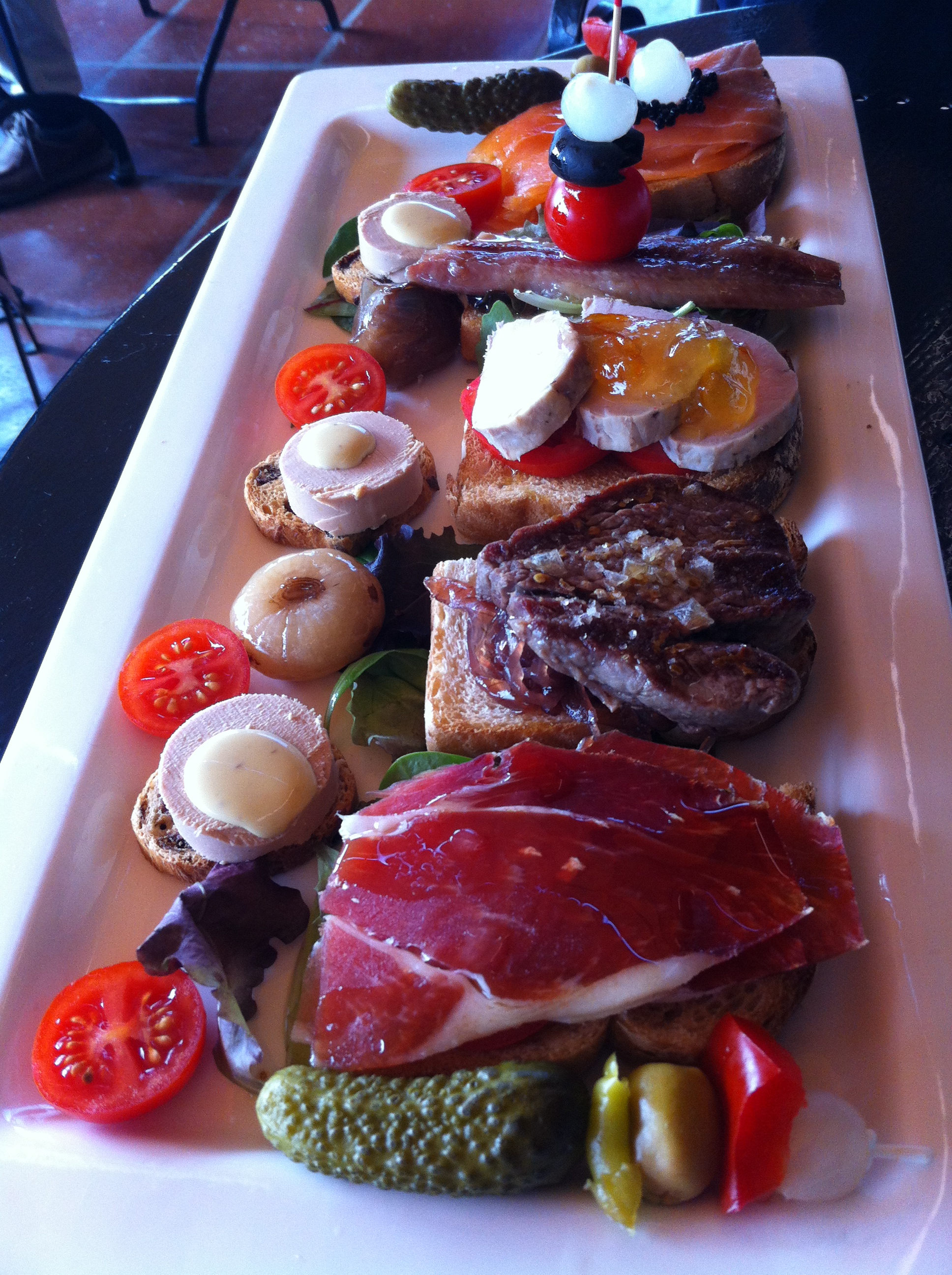
We huffed our way slowly back up the hill to the hotel and ordered drinks and the tapas platter on the terrace.  Now this is tapas:

tapas-on-terrace

“I could eat this every meal,” I enthused, probably with my mouth full of food.  The bartender came to pour Lynn’s dry martini and my rum and Diet Coke.  The glass was the size of a fish bowl and he poured, and poured, and poured.

on-vacation

I don’t remember what we talked about as we watched the sun set, but I know it was very profound.

ah-terrace

Shops Lost in Time

This is a series of posts about Italy, Malta, and Spain that starts here.

Should I say, “in” or “on” Malta?  It’s an island, so it feels like I was on it, not in it.  But it’s also a country.  I would never say, “I was on Germany.” Curious.

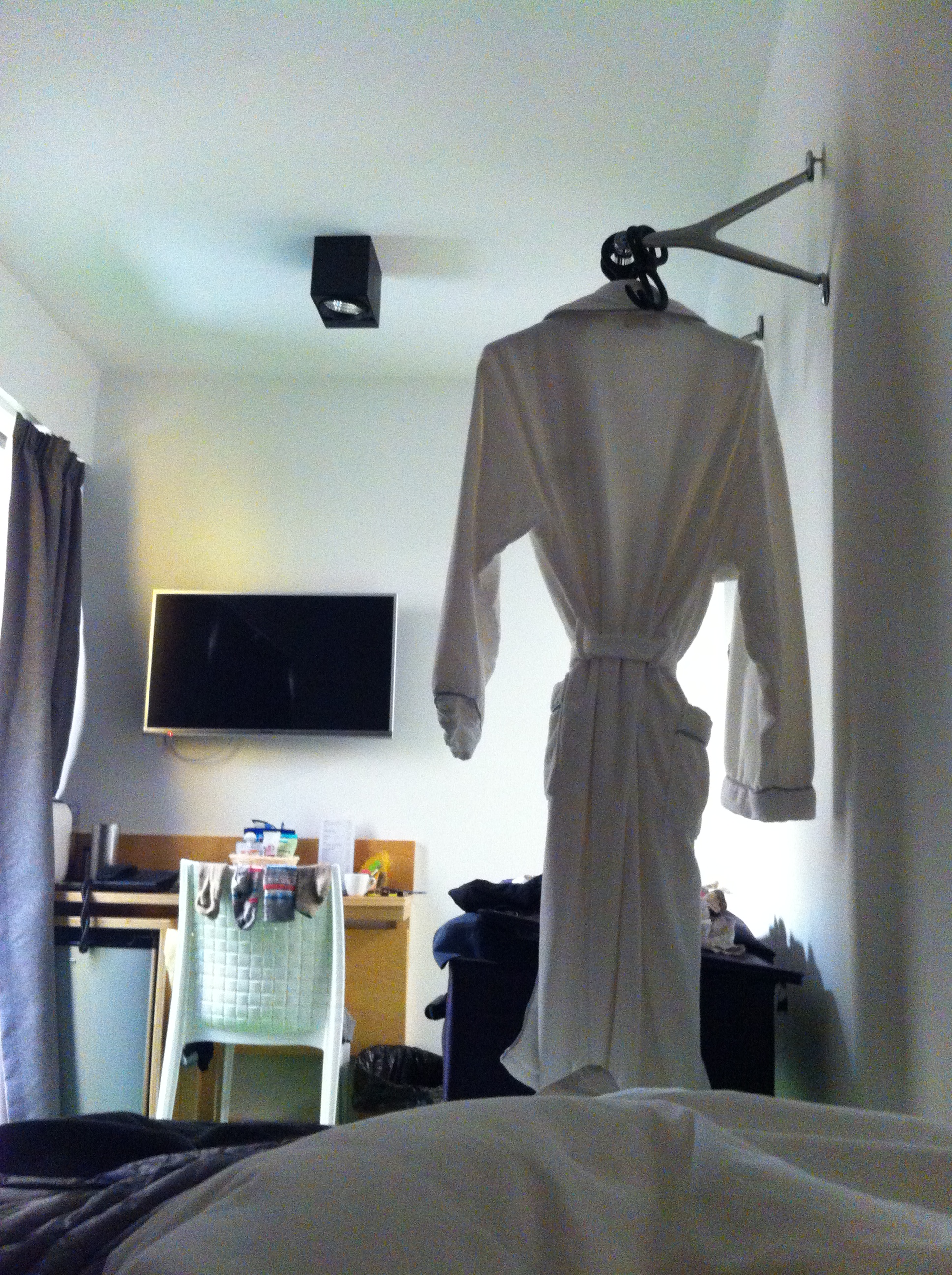
I rarely sleep past 6am, but on my last day in Malta I slept until nearly 9:00.  While the previous day I had been awakened by a message from my cousin alerting me that the election wasn’t looking good for Hillary Clinton, this morning the first thing I saw, at the foot of my bed, was this:

spooky-robe

Why would anyone think this was a good place to hang the complimentary bathrobe?

Spooked, I jumped out of bed.  I had to get moving anyway, since I had only a few hours before I had to catch my flight to Madrid.

People ask what my favorite thing is about traveling.  That’s easy—not being at work.  Now, I like my job, but it does require me to show up every morning, go to meetings, meet deadlines, and achieve goals.  Everything is measured, tracked, and scheduled. I must be organized, coordinate with others, prioritize, and strategize.

Aside from catching flights and trains, little of that applies to traveling.  I can float like a moth from one thing to another, when I like, depending on what catches my fancy.

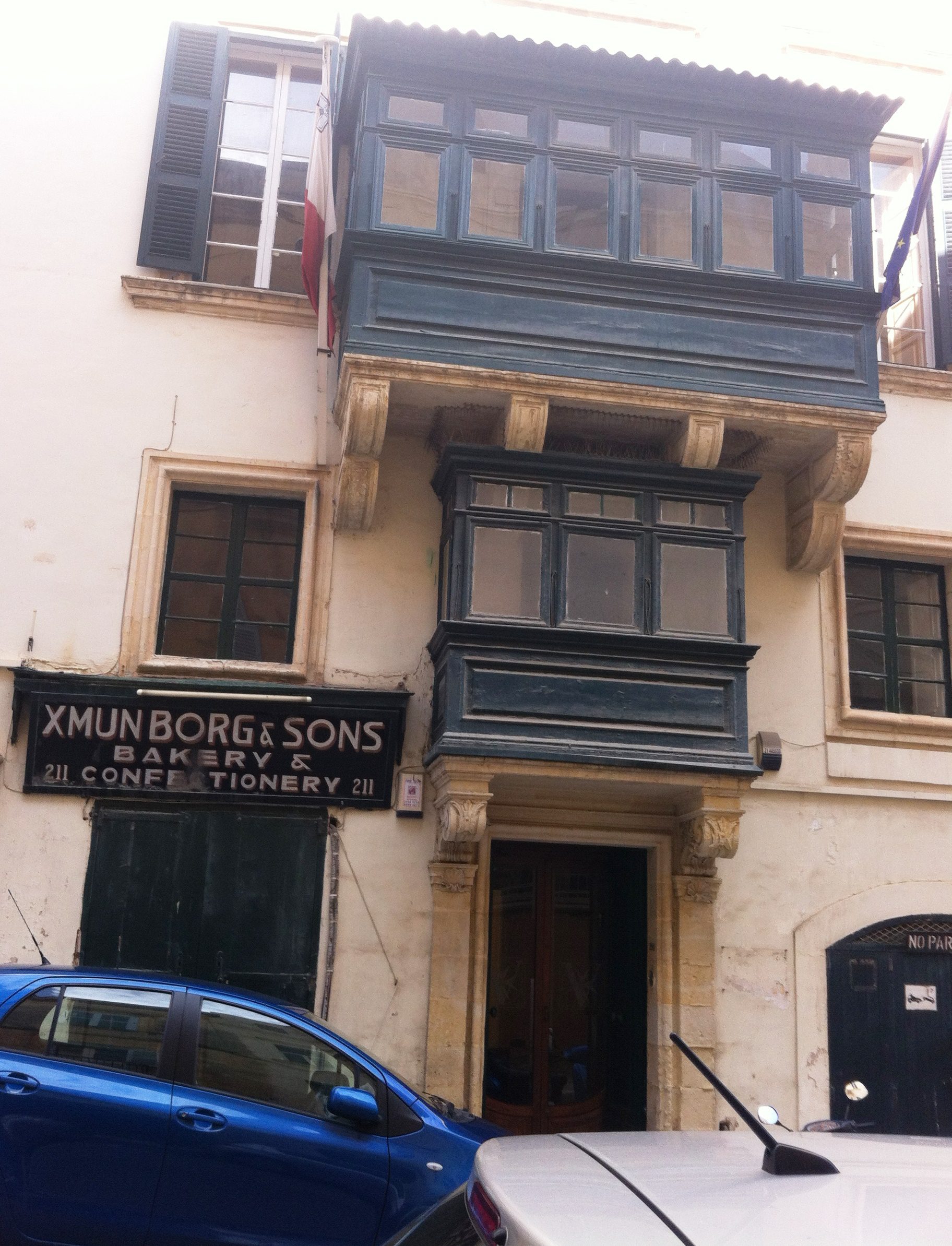
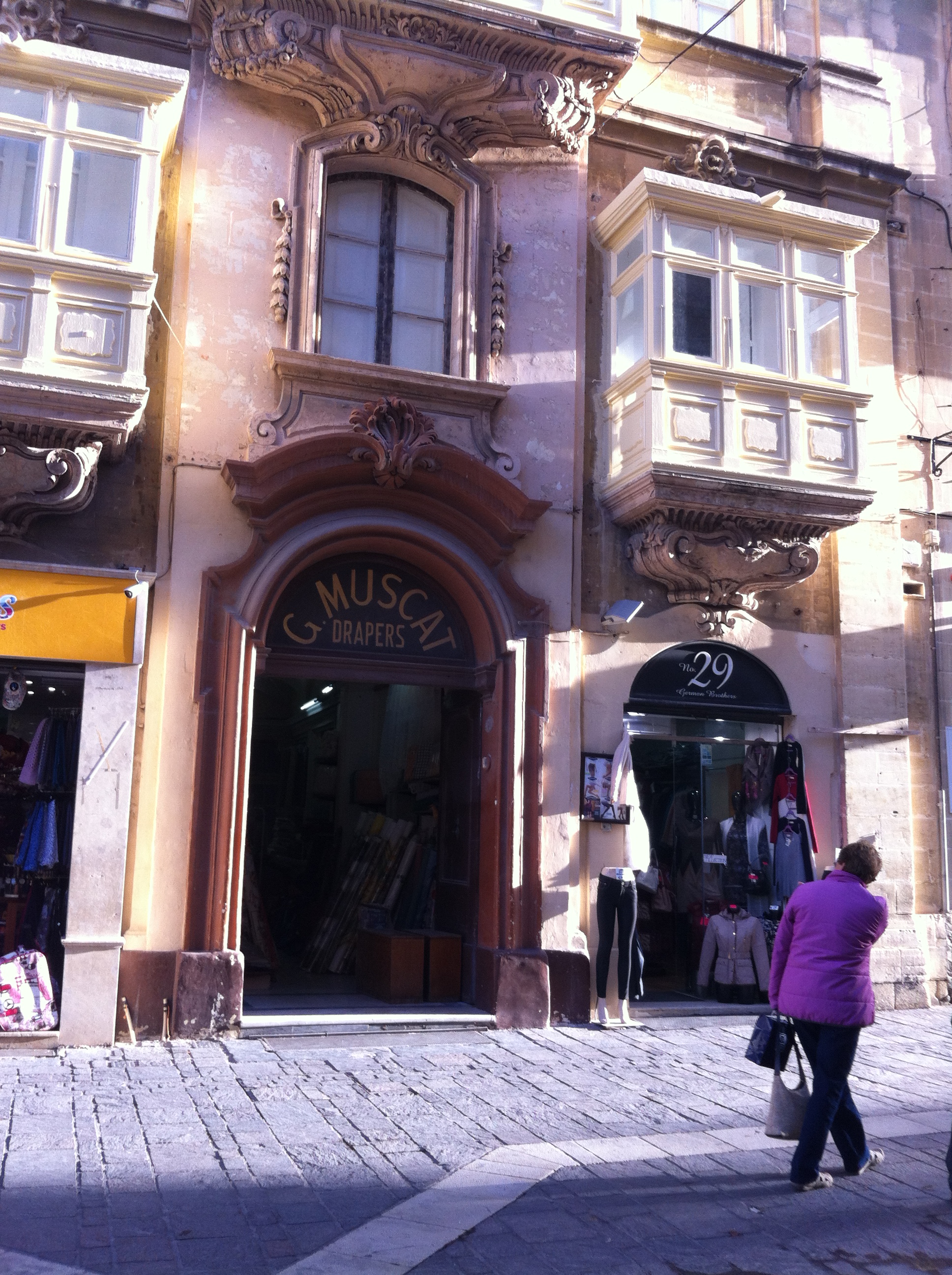
Today, I wanted to revisit the little shops and the Maltese balconies I’d caught glimpses of on my first day.  So I wandered around Valetta for a couple hours and took photos.

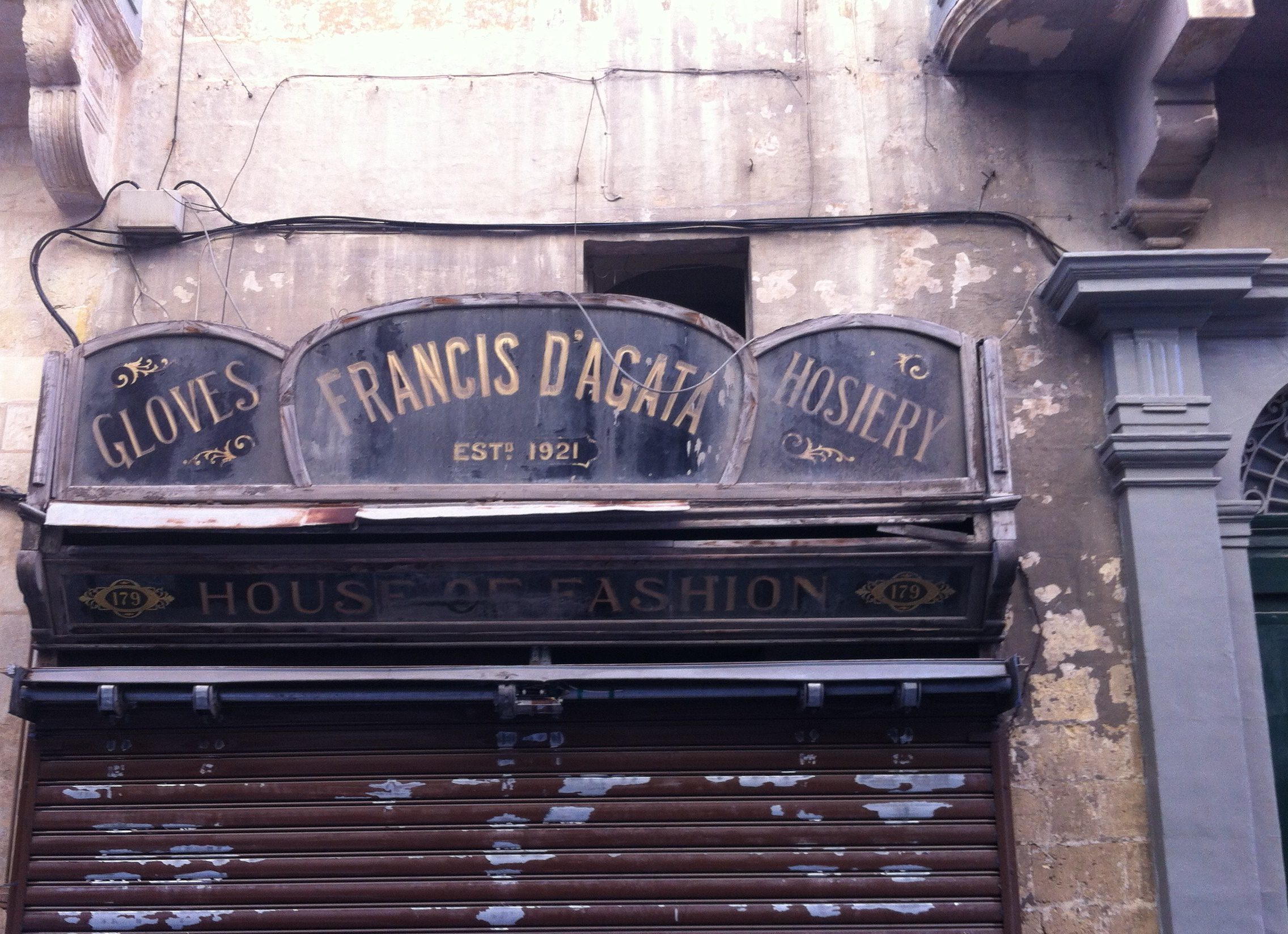
bakerydrapersdagata

There seemed to be a lot of drapery makers.  My grandmother was a drapery cutter, believe it or not.  She was one of the grunts in an interior design shop which made custom drapes for rich people.  Thirty years ago, when I was living in public housing, she gave me a set of exquisite pale green silk drapes that her rich clients had rejected.

Some of the shops were open.  Some appeared not to have opened since 1929, although life on Malta didn’t really started until after 10am.

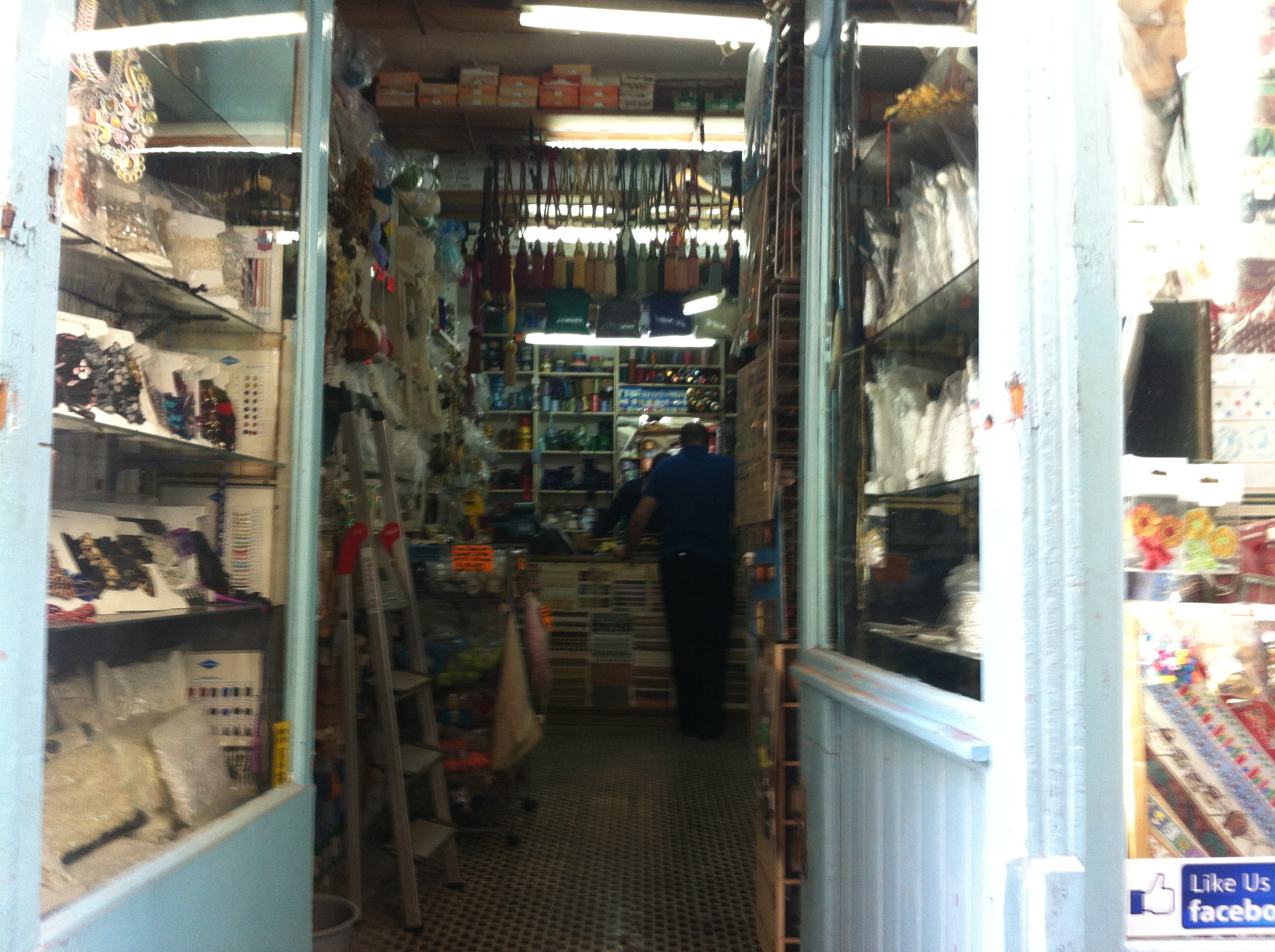
When was the last time you saw a “notions” shop?

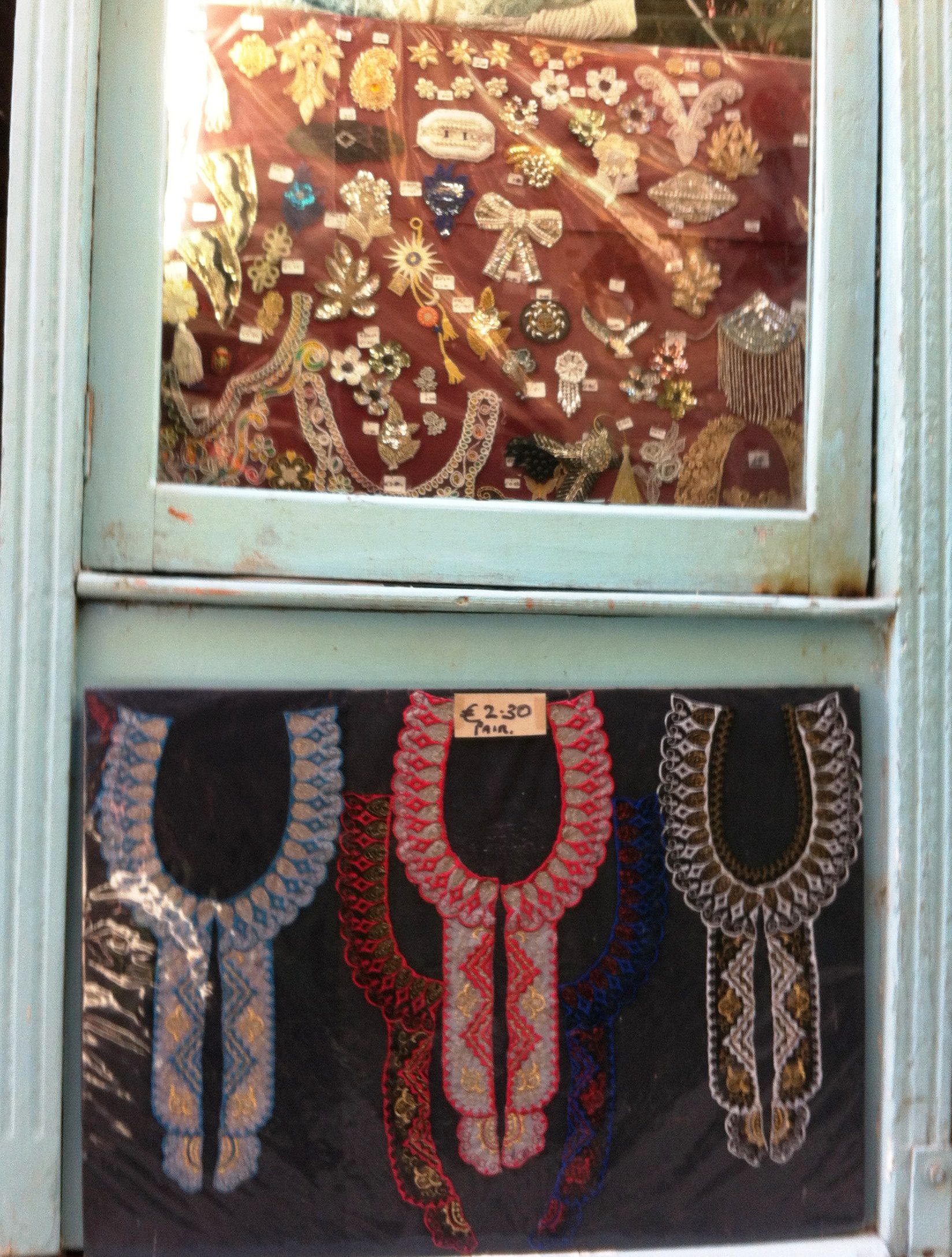
notions-shop-2 notions-shop

I know I will regret not buying a couple of those trim pieces the next time I want to make a dashiki.

There were these two forerunners of Target and Walmart:

family-store-close-up universal-store

Can you imagine taking your kids to the Family Store?  The looks of horror and disappointment on their faces?  I would give anything to visit these places in their heyday.  I wondered when that would have been.

I felt nostalgic for a time when craftspeople like my grandmother worked in neighborhood shops making high-quality goods.  I saved until I could buy them with cash.  I had a couple really good pieces in my closet that I wore over and over.  Now, I have 50 cheap tops; the buttons fall off almost before I get them home.

The top balconies below are Maltese.  What makes them Maltese?  I guess the fact that they have a roof and are enclosed.

balconies

And yes, that is blue sky—at last, my weather luck had turned.

I threw my still-wet socks and underwear in my suitcase, and my friend the desk guy effortlessly carried it up the 200 steps for me.  “People write angry reviews of the hotel because of the steps,” he said mildly.  “But we have them on our website.”

I just looked, and I don’t see any photos or mention of the steps on the SU29 website.  However, if you’re going to Malta—or just about anywhere in Europe—you shouldn’t be surprised that there are lots of steps.

I was at the pickup spot for my prepaid airport shuttle 10 minutes early.  It never arrived, and I had to pay €25 to take a cab to the airport.  I sent Malta Transfer an email when I got home but they never responded.  So scratch them off your list if you go to Malta, but that was the only thing I could complain about besides the weather, which wasn’t Malta’s fault.

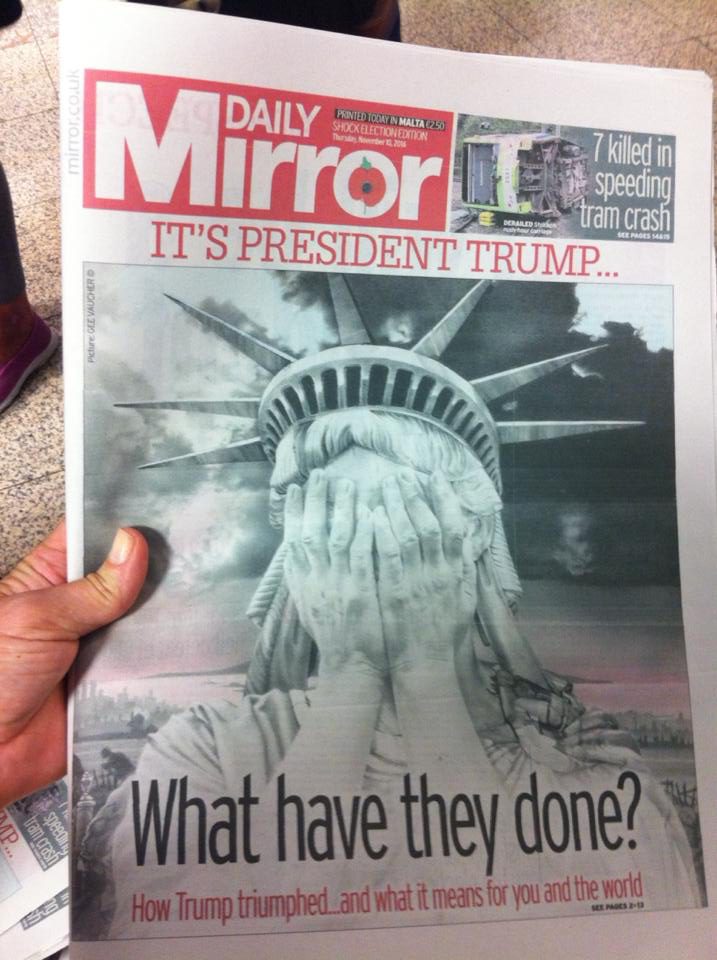
Here were some of the world news headlines in the airport:

trump trump-7 trump-4 trump-3


Alt Amalfi

This is a series of posts about Italy, Malta, and Spain that starts here.

I had seen the one attraction in Amalfi, the Paper Museum, in under 15 minutes.  I wandered back toward the center of town, then saw a little sign that said “Ancient Stairs.”  Of course I had to follow it.

Whoever wrote the sign wasn’t kidding.  The stairs were stone, worn concave by thousands of footsteps.  They were also slippery as hell—at one junction my left leg slid left and my right slid behind me, leaving me face down, arms splayed in the “worshipful peon” position.

Having torn my knee ligament two years ago, I was relieved to get up and feel okay.  I was also reminded of one of the pitfalls of traveling alone.  The town was deserted.  Who would have helped me up, then down all those stairs if I had torn my MCL?  I began paying more attention to my steps.

The stairs led up and around and up and back and down and up and around.  Here are a couple scenic views along the way:

plantsmailboxes

These mailboxes may seem unremarkable if you are Italian, but in Minnesota everyone is named Johnson, Swanson, and Anderson, so they were charmingly exotic to me.

There was another sign that pointed to a Cimitero.  I love cemeteries and, having no other plan, decided to visit.

There were no more Cimitero signs, just crude arrows hand-painted here on a wall and there on stair.  Some of the walls were so close together that the sides of my umbrella brushed against them.  I climbed, and climbed, and counted steps: 200, 300, 400 … every so often the view would open up before me:

view view-3

Heartbreakingly beautiful, eh, even with the rain?

There were more lovely mysterious entryways.  I would have loved to be invited in for lunch:

tile-entrance

500, 600, 700 … Here’s a tip: Go while your knees are still good.

800 … I wondered why the cemetery was at the top of the mountain.  Wasn’t that kind of unhygienic?  I had not seen a single human until now, when a couple came my way and said with in rough English, “The trail is closed.”

I figured they couldn’t possibly be headed for the cemetery.  Only I was weird enough to hike 800 stairs to see headstones.  So I smiled and kept going.

“But it is still beautiful,” said the woman over her shoulder as they hiked down.  And it was:

view-2

This was as far as I got because when I turned around from shooting this photo I saw the sign for the cemetery, which had closed five minutes earlier.  FIVE minutes!  Again, this is one of the hazards of traveling in the off season, many sites have limited hours.

closed

The hiking couple had been right, there was an orange plastic fence across the path just beyond the cemetery entrance.  I stood there a moment, waiting for some special feeling and, feeling none, turned around and walked back down the 800 steps.

All that hiking had helped me work up an appetite, and not for a protein bar.  I found a hole-in-the wall pizzeria (it seemed like every restaurant in Italy was a “pizzeria”).

For 4€ I got an enormous sandwich with grilled red peppers, eggplant, and onions smothered in melted mozzarella, and a Coke Pink, which was everywhere.

Since I come from a land where we must huddle inside for six months of the year due to the cold, I always sit outside when I’m traveling, even if it’s raining, which it still was.  I pulled up a café table under the awning, leaning in to stay dry.

There was a bored English middle-aged couple sitting nearby, and a pair of middle aged Italian women.  Suddenly one of them said to me in perfect English, “You made a joke.”

What?

“You made a joke in the museum.  I’m an English teacher.  I understood.”

We laughed and chatted about languages; it was nice to have a little human interaction.  Then the English guy asked me what I thought about Donald Trump.  What a buzz kill.  I made a noncommittal comment, wolfed down my food, and walked off.

A Very Bad Good Woman

I’m interrupting my series of posts about Italy, Malta, and Spain to write about a memorable New Year’s Eve.

I was in Nairobi carrying out a number of volunteer projects for a human rights organization.  The most interesting was interviewing activists, including a dozen slum-dwelling women who were organizing to fight police shake downs and a guy who had been tortured after protesting the 2007 election results.

I was there for December and January, and just as I was ramping up, the director announced that the office would close for two weeks over Christmas and New Year’s.  I was renting a flat with a 22-year-old German guy who was also volunteering.  He was thrilled about this development and immediately made plans to go to Ethiopia with friends to take photos of the ancient churches there.  This would undoubtedly require massive amounts of alcohol.

The prospect of hanging out in the flat for two weeks was depressing.  Kenyan TV featured the  dregs of American shows, like Baywatch, Keeping Up with the Kardashians, and Beverly Hills Plastic Surgeon.  The Internet was maddeningly slow.  Going for walks was considered dangerous.  My supply of books was already running low; English ones were hard to come by and very expensive in the local malls.

So I booked myself on a safari.

I will always feel very lucky to have had this experience.  I went to Basecamp Masai Mara, a “luxury eco-resort” run by a Norwegian company where Senator Barak Obama had stayed with his family.  If it was good enough for them, it was good enough for me.  These links are to my safari Facebook albums.

The organization sponsoring my volunteer gig, American Jewish World Service, had paid my airfare to Nairobi.  For Americans, airfare is half the price of a safari.  It still wasn’t cheap, but it was possible.

So I spent 10 days going on game drives, touring a Masai clinic, reading, and sleeping.  Each morning I awoke to the dawn chorus of hooting, howling, growling, croaking, and cackling coming from the bush.

For each meal I sat at a white-linen-covered table, by myself except once, when a couple of fellow international development people invited me to join them.  He was Norwegian and she was Swedish.

“We know how it feels to eat alone,” he said.

For the last two nights I moved to a remote camp.  I spent New Year’s Eve gazing out over the Masai Mara and Just Being.  Words cannot describe the beauty of the land and the light.

At my last dinner, a Masai guide named Manfred pulled a chair up across the table from me.  This familiarity was unfamiliar behavior.  Manfred was 30ish and had a sweet, innocent face.  He was short and muscular and his skin had a reddish sheen from working outdoors.

He sat back in the cow-hide chair, spread his shoulders and legs wide, and clasped his hands together in front of his chest.  His body language wasn’t confrontational but he was staking his ground.  He smiled at the floor for a few seconds, then up at me.

“When you first arrived, we all thought you were a very bad woman, but now we know you are not.”

I wasn’t completely surprised by his comments.  I’d had the sense that they didn’t know what to make of me, a woman traveling alone.  But I wondered what theories they had about me.

“Did you think I deserted my husband and children?” I asked.

No, he shook his head but didn’t counter.

“Did you think I was a lesbian?” I asked next.

Manfred laughed uneasily, tipping his chair on its back legs.  Now that’s a universal male thing, I thought.

“No, we have had many homosexual guests and they are very nice people.”

That sounded like a line he’d been instructed to say.  I knew from interviewing a transgender activist that alternative sexual orientations had yet to gain acceptance in Kenya, to put it mildly. 

He couldn’t contain himself any longer; he leaned forward and said, “We thought you were a sex tourist.”

I burst out laughing.  I would turn 50 in a month.  I don’t condone sex tourism, but being suspected of it felt like a compliment.

Happy New Year’s!  Enjoy every moment of your precious life!

Happy Christmas, 10 Years On

This is a reprise post from last year.  Merry Christmas, ya’ll!

In keeping with my gradual transition to writing about unconventional travel and living abroad adventures, I’m looking back on the first Christmas I spent in the UK, 10 years ago.

I had learned a lot since arriving in October. Searching for housing, I had finally figured out that address numbers sometimes went up one side of a block and down the other. Also, many buildings just had names instead of numbers. The Oxfam head office was called John Smith House.

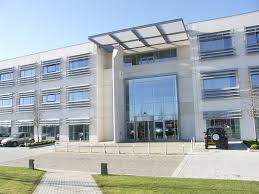
“House” was a misnomer because it was a modern, three-storey building in an industrial park across the motorway from the Mini Cooper factory, and 750 people worked there.

John Smith Houseatriumlobby

I could usually remember that the first floor was the “ground floor” and the second floor was the first floor. I had figured out that when my coworkers asked, “You awl right?” they weren’t concerned about my health; it was the same as someone in Minnesota asking, “How ya doin?” I was avoiding “creeping Americanisms” in my writing, as cautioned in the Oxfam writing manual, so was careful to write “storey” and “tonne” instead of “story” and “ton.” I was no longer taken aback when introduced to a 20-something coworker named Harriet, Richard, or Jane.

Most important, I had learned to avoid any references to my pants, as in, “I got my pants wet biking to work in the rain.” Trousers were pants, and pants were underwear. I loved the expression, “That’s just pants!” which meant something like “that’s insane!”

Everyone spoke in a low murmur. This was partly due to the open plan office, where six people shared one big desk, but I think it was also the culture. A few weeks after my arrival, a new Canadian employee came through for her induction (orientation), and her braying, Minnesota-like accent filled the whole building. One of those moments when I realized, “Ah, that’s what we sound like.”
At Oxfam, everyone walked fast. It was as if, by striding vigorously, they would personally Save the World.  My tall, ginger-haired colleague, Adele, was selling Palestinian olive oil out of her desk drawer. I enjoyed a daily fair-trade, organic chocolate bar from the cafeteria.  Oxfam had a Christmas bazaar in the atrium featuring beaded jewelry made by Masai woman who used the proceeds to buy goats.  Everyone was very earnest.

To be fair, the “Boxing Day”, or Indian Ocean, Earthquake and Tsunami (caution: upsetting video) had happened one year before, killing 230,000 people and leaving millions more without homes or livelihoods. Then, suicide bombers had struck the London transport system in July, killing 56 people and injuring over 700. The week I arrived in Oxford, an earthquake took 80,000 lives in Pakistan. People were reeling, but responding generously. Oxfam had received a tsunami of donations, internally referred to as the “Cat Fund”—for Catastrophe Fund—and rumour had it that they were struggling to do enough, fast enough, to respond.

But for now, Oxfam was abuzz with Christmas cheer. I look in my diary (date book) from that time, and I was busy meeting colleagues after work at pubs named The Marsh Harrier, the Eagle and Child, The Bear, Angel and Greyhound, and Jude the Obscure.

They called Christmas Crimbo, and presents pressies. There were crimbo crackers for sale, too, which are not a crunchy, salty snack, but shiny cardboard tubs “cracked” open at the festive table and containing a Christmas crown and trinkets.

C&CCrackers and CrownsC&C2

There was a panto in the Oxfam atrium, so to use all my new words in a sentence: “Are you going to the crimbo panto or shopping for pressies and crackers after work?”

And what is a panto? It’s slang for pantomime, an extravaganza that takes weeks of planning and involves elaborate costumes, jokes, dancing and singing, skits, and slapstick. Apparently it’s also done by families and in theatres but the only one I’ve ever seen was in the Oxfam atrium. Our usually-serious employees were dressed up as fairytale characters and making fun of themselves, our bosses, and our work. Very healthy, I thought. Take life seriously most of the time, then go all-out silly for a week.

The Queen’s Christmas Message that year was beautiful, in my opinion, and more relevant than ever.

queen

Three Hours in Rome

This is a series of posts about Italy, Malta, and Spain that starts here.

After gulping down a glass of the complementary Prosecco in my hotel room and wisely deciding not to pour the rest of it into my water bottle, I rushed out to see Rome.

People often talk disdainfully about “check list” travel: “I don’t want to do that “check the box” kind of travel. You know, where you run around like crazy trying to see all the famous sites in one afternoon?  You can’t appreciate them that way.  And you need time to process them afterwards, too.’”

I’ve said those words myself, and meant them.  It’s a nice sentiment.  But I had come 5,000 miles and although things were less expensive during the low season, I was still spending plenty of money on this trip.  Why not pack in as much in as possible?  Life is short, so before it got dark—in three hours—I was determined to at least scope out the Coliseum, the Roman Forum, Palatine Hill, and the Pantheon.

The Coliseum appeared to be a few short blocks away.  But “a few blocks” in Rome, for me, meant getting lost immediately, several attempts to surreptitiously look at my map, asking strangers for directions, stumbling upon the almost 2000-year-old Trajan’s Column, being distracted by block after block of Roman ruins, consulting the map again, getting lost again, and saying no to a dozen African immigrants selling selfie sticks along the way.

How would I ever find the Coliseum? Then I turned a corner, and there it was.

aproach-to-the-ampitheatre

Wow.  It’s one of those places you’ve seen in photos and movies hundreds of times but which still takes your breath away.  I wasn’t going in today, but I walked around it.  And I slowed down, savoring this rare feeling of awe.

flavian-amphitheatre

I had read and re-read descriptions of the sites, and they hadn’t given me a sense of their scope or how to tackle them.  Google maps are great, but they don’t indicate elevation.  So one thing appears close to another, but you don’t know about the 400 steps until you’re looking up at them from the bottom.  The Roman forum isn’t one thing; it’s a collection of hundreds of ruins including some intact buildings scattered over a huge swath of land adjacent to the Coliseum.  Apparently there were dozens exits but only one entrance, and that was a closely-held secret.  Palatine Hill is, thankfully, a real hill, but because everything is so packed together, I couldn’t back up enough to get perspective and see where it was.

I had bought my three-in-one ticket for the Coliseum, forum, and Palatine Hill online and it didn’t shed any light:

Gentile Cliente,
informiamo che è stata prodotta la fattura n. 01287080

Da questo momento è possibile accedervi direttamente cliccando qui
Se il file non viene visualizzato correttamente è possibile scaricare il programma Adobe Acrobat Reader cliccando qui  La fattura non sarà inviata tramite posta.

Ricordiamo inoltre che è comunque necessario STAMPARE LA FATTURA E CONSERVARLA ai fini delle vigenti disposizioni di legge. La fattura resterà a disposizione per almeno 1 anno.

ATTENZIONE: questo è una email AUTOMATICA, pertanto vi preghiamo di NON RISPONDERE a questo messaggio per avere assistenza.

In caso di necessità il nostro Servizio Clienti è a sua disposizione per qualsiasi informazione riguardante la transazione effettuata. Per contattarci la invitiamo esclusivamente a compilare il modulo Servizio Clienti all’indirizzo: http://www.ticketone.it/help

Cordiali Saluti

The links led to a receipt.  I knew enough Spanish to decipher that I was supposed to pay attention to something, save something, and not respond to this automated message.

This was going to be fun!

I hadn’t planned to go inside the Coliseum or immerse myself in any of it yet anyway, I just wanted to see the Coliseum and get the lay for the land.  The Pantheon?  That was “nearby” too, which I now knew meant, “Forget it, sucker—you’ll never find it by dark.”

I took my time strolling back to the hotel, retracing my steps, already feeling familiar with landmarks and knowing I could easily find my way back when I returned in two days.

Tomorrow: The Vatican.

Wherever You Go, There’s a Screen

“How was your trip?”

What was the highlight of your trip?”

“What were the top three things about your trip?”

These are questions I always get when I get home from a big one.  The first one is so broad that all I just say, “It was great.” If the asker is genuinely interested in knowing more, he or she will ask more questions.

The other two are meant, I think, to keep the returned traveler hemmed in so he/she doesn’t go on and on.  I don’t blame the asker; not everyone has time or interest in hearing details about someone else’s trip, but when you see someone at work who’s been gone for a month you have to ask them something, if for no other reason than to be courteous.  Personally, I love hearing about other people’s trips, as long as they’re not cornering me on the way to a meeting or shoving their cell phone in my face to show me videos of their roller coaster ride at Disney World.

When people ask for the “top three” they are probably expecting me to say:

  • The Coliseum
  • The Amalfi Coast
  • The Alhambra

Or some such check list of tangible things.  But the highlight of this trip was that I was in the moment.  I wasn’t planning ahead or analyzing what I should have done differently.  I didn’t have To-Do lists, coupons or business cards or post-it notes with reminders to myself stuffed into every pocket.  There are no piles of things by the door ready to return to a store, or library books to return, or bags of plastic bags to take to the recycling center.  I pretty much wore the same two outfits for three weeks so I didn’t have to decide what to wear.  There were no cleaning or DIY projects, unless you count hand washing my socks and underwear—a meditative activity in itself.  I only woke up once with an alarm clock

I hadn’t set out to be mindful, and now I wonder if this is one of the things I’ve loved about travel all along but was never aware of.

I was traveling alone for the first 10 days so I had to really pay attention to, for example, what time the train left.  I had to be aware of my surroundings for safety’s sake.  I needed to remember to ask the hotel front desk to print my boarding pass when I had a flight the next day.  So there were things I had to attend to, but this reinforced being in the moment, I was nothing like the Human Doing I am at home.

Being in the moment doesn’t mean you’re never irritated.

Am I the only one who doesn’t love the screens embedded in airplane seat backs?  They’re great for watching movies.  But they are set to be on, all the time, unless you turn them off.

On night flights, my routine is to gulp down a glass of wine, choke down the “food” Delta calls dinner, then don my ear plugs and sleep mask and try to get a few hours of sleep so that when I arrive I can tell myself I had a good night’s sleep—when I really only had four fitful hours.  (I also bring a full-size down pillow on night flights.  It makes a huge difference; you can use it to pad the wall or the arm rest, or smoosh it up and hunch forward over it.  It’s not counted as a carry on item.)

I woke up at some point during the flight and staggered down the aisle to the toilet.  Delta requires people to lower their window shades and turns off the cabin lights.  But 90% of the screens were on—hundreds of “Delta” logos glowing white and red.  People were sound asleep with these screens a foot from their faces.

Back in my seat, I looked at the guy across the aisle and one row in front of me.  His screen was on, his wife was asleep but her screen was on, and he was playing solitaire on his phone.  And we wonder why it’s so hard to sleep on planes.