Category Archives: mental illness

In Pig’s Eye

I’ve been writing about a road trip to South Dakota that I took for work last week. I can’t say a lot more about it. There were some eyebrow-raising moments which have to remain confidential.

But one of my intentions in blogging is to demonstrate how you can experience adventure close to home—and even in your head. You don’t have to spend thousands on a trip abroad. Your own neighborhood can hold surprises.

I’ve lived in St. Paul almost all my life. It’s not that big of a city—about 300,000 people. I went for a long walk on a Sunday afternoon and found the following things that were new to me.

I crossed the Smith Avenue Bridge, which everyone calls the High Bridge, because it’s, well, high. The High Bridge was new to me. What a view.  I know, my photos are not the best, but they’ll give you the general idea.

Bridgeview 2

Sadly, because it’s high, the High Bridge is one of the preferred bridges in the Twin Cities for people to jump from. There was this tender note from a stranger to a stranger.

Bridge Memorial

There was this makeshift shrine to someone named Teagan. I don’t know if she was the same person to whom the note in the previous photo was written, or a second jumper.

Suicide Shrine

Someone has been thinking about how to prevent suicides from the High Bridge. I don’t know. Would you have the presence of mind to call the number, or would you even see it if you were intent on jumping off a bridge?

Suicide Hotline

Ah, the sun came out, very welcome after being reminded of suicide at every footstep. This is a view from the Wabasha Bridge toward the train bridge.  I don’t know the name of the train bridge; everyone just calls it The Train Bridge.

Bridge View

Now I was in Kellogg Mall, a long strip of greenery between downtown and the river.  I don’t normally read plaques. Because I travel so much, if I read every plaque (and spent time on every portrait of the Madonna and Child, for that matter), I would never do anything else.  But this one said something about Fr. Lucian Galtier, who gave St. Paul its name.

SP Walk Rock

At the base of the rock there was a bag containing a hat, scarf, and mittens with a note that said, “I’m not lost! Please use to keep warm!” Presumably this is for some homeless person who has a preference for pink.

Scarf in a Bag

If it hadn’t been for Fr. Galtier, St. Paul might still be called Pig’s Eye. Pig’s Eye Parrant was a blind-in-one-eye French Canadian fur trader who squatted outside Fort Snelling, near present-day St. Paul.  He made hootch and sold it to the soldiers, then eventually built a shack on the river landing below what would become St. Paul, becoming our first civilian resident. The details are sketchy, but it makes a good myth and we have a pretty good beer named Pig’s Eye as a result.

Pigs Eye Close UP

So go for a walk!  Think how you would tell the story of what you see to a good friend, or to a stranger.  Get out of your rut. Take a different route than the one you’re used to. Take a left turn instead of a right. Follow that path into the woods you’ve always wondered about. Notice things. Snap some pics, or not.  Adventure is all around you if you hold the right attitude of inquisitiveness.

Dakota Bound

I’m on a road trip! No, not to New Orleans. Believe it or not, I am going to meet with three potential donors in Sioux Falls, South Dakota. Yee haw!

Here’s the deal. The Center for Victims of Torture, where I work, does psychotherapy, physical therapy, and social work for survivors of torture and war trauma. We do it in groups in Jordan, for instance, because all the clients speak the same language. We do it on an individual basis in Minnesota, because clients come from 36 different countries and speak myriad languages which must often be translated, which doubles the time everything takes.

This is all good as far as it goes, except that there are an estimated 1.3 million torture survivors in the US alone. We do a lot of training to try to equip professionals outside of CVT to recognize and help torture survivors. But there’s also no way we can train every doctor, social worker, cop, or immigration officer that might come into contact with a survivor.

People have been talking about doing something with technology at CVT for years, but without funding that’s just dreaming. Part of my job is to find new sources of funding, and that’s what I hope I’ve done. I won’t bore you with the details, but there are three HUGE international development innovation funds that we hope to tap. To do this, we need to find partners who know how to reach patients in remote or difficult to access situations. That’s why we’re going to South Dakota.

It’s so important, when you’re trying to get people fired up about complicated ideas, that you have the right people on your team. My co-pilots on this trip are a colleague who is from Sioux Falls and whose father has opened some doors for us, and CVT’s clinical advisor for our international programs, who is Kenyan and a PhD psycholgist. He describes the needs this way:

In Nairobi, there are thousands of Somali torture survivors living in the slums who are not there legally, under the protection of the United Nations. They literally cannot leave their dwellings during the day, because the Kenyan police will round them up and shake them down for bribes. Which would you choose: Pay a bribe, or be sent back to Somalia where you may face certain death? They may not have iphones, but could we develop a text-based therapy intervention?

Among the survivors who are in Nairobi legally, there are many Congolese and people of other non-English speaking nationalities. Kenya is an English-speaking country. The refugee kids may have already missed years of schooling due to being forced to serve as child soldiers and living on the run or hiding. Now they spend 12 hours a day in school—regular school, plus an extra block of time added on to learn English. They have survived unimaginable horrors. Many of them need psychotherapy or physical therapy, but they don’t have time for it. Could we develop a game-like therapy intervention that would appeal to youth?

CVT also works in Dadaab, the largest refugee camp on earth, in northern Kenya near the Somali border. Its population is about the same as Minneapolis—about 350,000 people. Could we do tele-therapy with them—either mental health or physical? If so we could reach so many more people. We could also use videoconferencing to train our own and other organizations’ staff.


“Do they all have smart phones in Dadaab?” I asked. I have been to Nairobi but not Dadaab.

“I don’t know,” he replied. “We would have to do a survey to determine who has the old Nokias, how many have smart phones. The Chinese are making big inroads into the African market with cheap smart phones. Most Kenyans use their mobiles for everything. They don’t have tablets or desk tops or TVs or land lines. They’ve basically skipped over those generations of devices and they do everything on mobiles.”

I love projects like this. They’re big, messy, uncertain, and complicated. They require me to work with people with whom I don’t normally interact. They may have big payoffs. And in this case they require a road trip.

When Worlds Collide

I’ve been writing a series of posts about traveling in Cuba that starts here. I am pausing that for a day to write about an unsettling experience where my worlds collided.

I volunteer with the Minnesota International NGO Network, or MINN. MINN is composed of Minnesota companies and nonprofits that work overseas, like my employer, the Center for Victims of Torture (CVT).

Last year MINN launched a class called MINNspire, which helps 50-somethings to explore doing something abroad. This could be anything from volunteering with Peace Corps, to teaching English as a second language, to consulting on communications, as I have done. MINN isn’t there to find them placements; we’re there to guide them through the thought process. I led one of the four sessions last year and will do the same this year—I think.

I was excited that we had 18 people registered—about twice the number as last year. It’s kind of a big commitment to come to something after work, in the dark, during the winter.

I walked in and said hi to my friend Carolyn, one of the four facilitators of the class. There were already two students in the room. Carolyn said to me, in a way that told me we might have an “issue”, “Something really interesting happened with registration. I spoke to a Rotary Club that happened to have a lot of members of the DOC, and we’ve got 10 people from the DOC registered for the class.”

The Department of Corrections. The people I never wanted anything to do with, ever again.

I had come from work, where I had spent the day writing about Eritrean torture survivors. Eritrea is known as the “North Korea of Africa.” They have forced conscription, which means every young man must join the military or go to prison. In the military, they are worked like slaves and their service is indefinite. If they try to escape, Eritrea throws them into underground prisons where they are tortured. If they make it to Ethiopia, they wind up in refugee camps with no future, and their family back home is persecuted. Sometimes they try fleeing to Israel, the one country that reluctantly takes them in, but often they are caught by—essentially—desert pirates called Rashida who hold them for ransom, torturing them while their families listen helplessly on the other end of the phone.

As you might imagine, a lot of Eritrean torture survivors have PTSD, and that is where CVT comes in. We provide trauma therapy and we hope to add physical therapy next year.

So I was writing about this all day and then I stepped into a room of people who had been my and my son’s tormentors for a year and a half.

I am in no way comparing what I went through to what Eritreans have endured. My point is that I know firsthand what a flashback feels like. A surge of adrenaline surged through me. My heart started racing and my palms got sweaty. I felt a powerful urge to bolt.

“I figure if I was a prison warden for 20 years, I can do anything!” one of the women exclaimed. The thought of her volunteering in an orphanage made me uneasy.

“My son just finished the boot camp program,” I told them. Might as well get it out there before she said something that would cause me shoot my mouth off. They oohed and ahhed said what a great program that was.

Carolyn knows my back story and has a high EQ.   She emailed later:

“I would never imagine that you would come face to face with your oppressor in MINNspire.  I mean, last year you were in Palestine, looking for ways to collaborate, professionally, with enemies of the Jewish state and now you come to St Paul and you are asked to teach the people whom you’ve written about for years.

“ I have to shake my head at what the universe is throwing at you.  But if anyone can handle it, you can.”

I hope she’s right, because I thought about backing out of the class but I’ve decided to stick it out.  I’ll keep you posted.

Happy New Life, Again

Happy New Year!  I am re-posting this from January 1 of last year.  I hesitated to share such a personal story then, but it has been the most-read post of the 232 Vince and I have written.  Maybe it’s the story, or the encouraging advice.  Or maybe it’s the guns.

If you received this twice, that’s because I accidentally posted it for January 1, 2015.  Off to a good start, I say!

Three years ago, I hit bottom. I had lived with depression for as long as I could remember, but then….  I had to have a tooth pulled—boy, will that make you feel old! Then during a Christmas Day blizzard my car was towed and I spent four hours waiting in line outside at the impound lot to pay $300 to get it back. I then drove to Fountain to visit Vince. The trailer he shared with Seth was full of guns, beer cans, and smoke. I figured what the heck, if you can’t beat ‘em, join ‘em, so after he assured me that none of the guns was loaded, we posed for photos that became my holiday cards to my friends in the UK, where they had a good laugh over us gun-crazy Americans.

Vince (11)Vince (7)

Due to the blizzard I spent the night in Seth’s 5-year-old daughter’s bedroom; she was at her mom’s. Here’s a tip for parents who smoke: Keeping your kid’s door closed doesn’t keep smoke out. I couldn’t open the window and after tossing and turning until 5am I slipped out and drove home. On the way I started itching. Great—now I had bedbugs!

I contemplated suicide. I leaned my forehead against the screen of my 20th floor window. I had turned 50 the year before. Thinking about being depressed every day for another 30-40 years wasn’t real appealing.

Here are the things I had tried to manage depression and anxiety:

Meditation

Medication

Prayer (including begging, pleading, and bargaining)

Acting normal

Abstaining from drinking

Cutting down on coffee

Self-help books

Alanon

Exercise

Getting outside every day

Appreciating beauty, be it fine art, nature, music, babies, or kittens

Gratitude lists

Avoiding negative people / avoiding unnaturally happy people

Running away to other countries

Denial

Journaling

Telling myself, “At least I’m not a refugee / amputee / blind / fill-in-the-blank.”

Psychotherapy

Retail therapy

Sleeping, drinking, and movie binges

Reaching out to friends, even when that was the last thing I wanted to do

I thought that jumping out of my window would be exhilarating, until I hit the ground. I had some leftover pain killers from the dentist, and my prescription for Restless Legs. I googled an overdose of the two and learned that they wouldn’t kill me, but that I would likely need a liver transplant. I decided to keep living.

That spring, I visited Vince again and this time, made a reservation at a B&B.  On the free-book-shelf there, I picked up a tattered copy of, “Feeling Good: the New Mood Therapy”, by David Burns, MD. I read it and did what it told me to do, and I stopped being depressed. For good.

The book was about Cognitive Therapy. I had been instructed to use it at least twice in the past, but I’d been too stressed out to do it. Basically, you write down your negative thoughts and then argue with them rationally until you’ve de-fanged them. Writing it down is important; if you try to do it in your head you’ll end up down a rabbit hole.

So was a lifetime of depression cured overnight by one book? No. I think it was all the other things I had tried over the years—the good things, anyway—and then I added this on top of them and together they all added up to a breakthrough.

I still feel sad sometimes–there’s plenty to feel sad about–but I’m not depressed and I’m committed to living.

Sorry for the long post but, if you’re struggling, I want to encourage you to keep an open mind, keep plugging away, and keep trying new things.

PS: I didn’t have bedbugs after all.  I think I was just itchy from the smoke and dry air.  Living with addiction can turn you into a drama addict.

The Choice

This is the second in a series of posts, starting with this one.

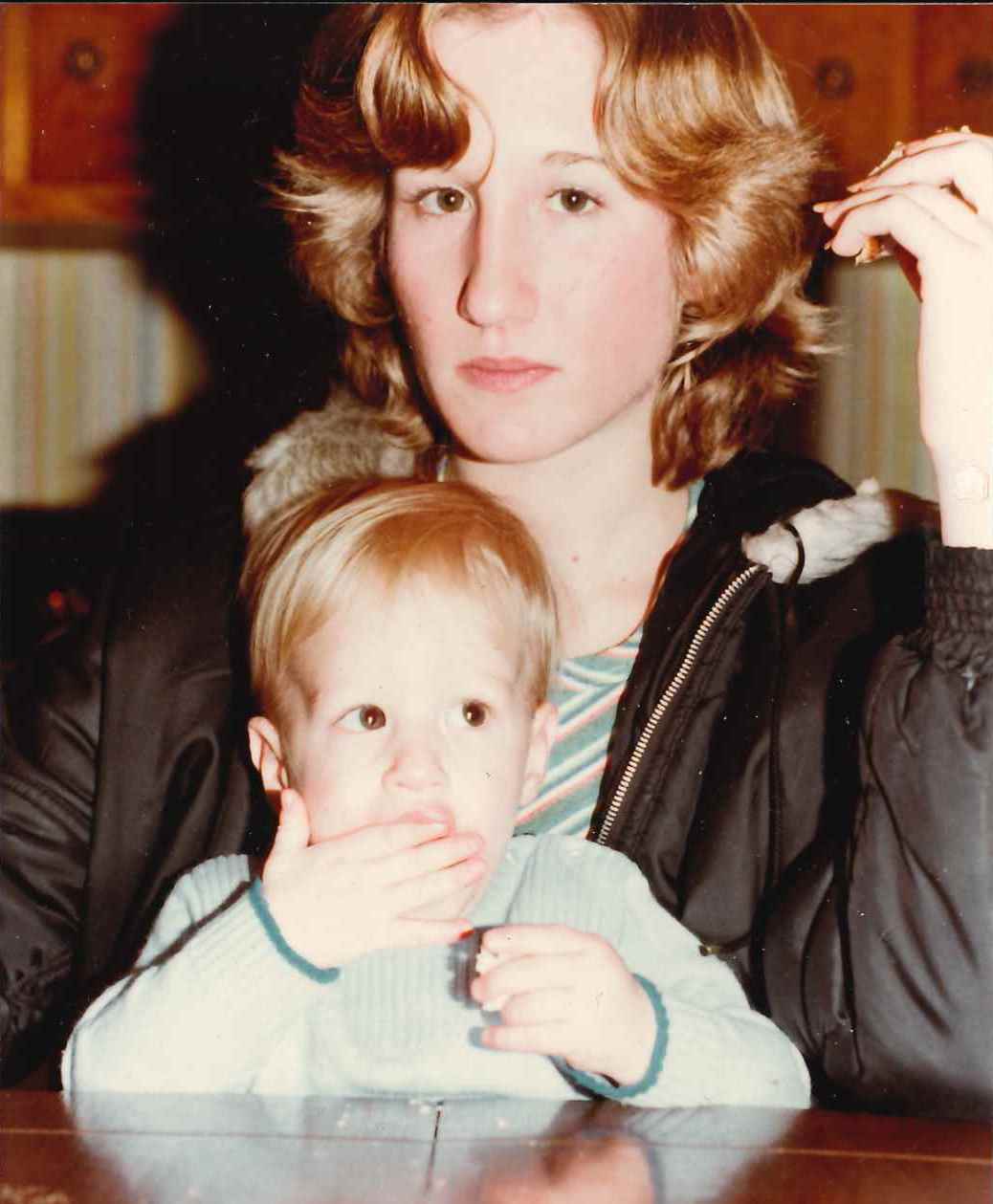
I was unmarried and pregnant with a one-year-old baby, on welfare, living in public housing.  I was 19.

I had just started to feel better about myself and the future.  The first pregnancy had been due to carelessness.  This time it was due to birth control failure.  It was painful knowing people thought I was stupid.

I had just gotten rid of my pet rat, Smiley, because I couldn’t afford to feed him.  If I couldn’t afford to feed a rat, how could I afford to feed another kid?

I had gone to a doctor because I was exhausted.  His name was Charlie Brown, believe it or not.

I figured he would say I was anemic.

He laughed a yucky laugh when he saw the look on my face.

“That’s what happens to girls like you.”

“What?” I was confused.

“Girls who sleep around shouldn’t be surprised when this happens.”

“But it’s the same father.”

He glanced at Vince as though he was a cockroach.

“So the father is white?”  He lowered his voice.  “I know some people who would pay handsomely to adopt this baby.”

If a doctor named Charlie Brown said this to me today, I would punch him in the face, then sue him.  Instead, I thanked him mechanically and never returned.

In spring semester I would take Statistics, English Literature, and part two of Pathology, Anatomy and Physiology, and Abnormal Psychology.  My favorite class was Pathology.  The Hennepin County medical examiner taught it; his name was Vincent which I took as a good sign.  It was basically one long gruesome slide show—or should I say, sideshow.  There was the guy who had been decapitated when his snowmobile ran into a barbed wire fence, a baby born without a brain, and a glistening, five-foot-long tapeworm with eye-like markings.   I loved it.  I didn’t want to drop out.

I went to see a social worker at Catholic Charities.  Her name was Judy.

“You could give the gift of life to a childless couple!” she exclaimed.  I had an image of her as a Tyrannosaurus Rex, drooling and flapping her little claws over this baby.  This white baby.

I didn’t care about helping some rich couple who probably lived in the burbs and had a foosball table in their basement.

“I don’t want Vincent to be an only child,” I said.  My siblings and I didn’t always get along, but I imagined being an only child as very lonely.

“You can always have more children,” said Judy, “when you’re married.  You’re certainly fertile!”

My psych instructor gave a lecture on “high risk youth,” the new buzz phrase.  There were certain early experiences, like being beaten, locked in a basement, or put up for adoption, that caused youth to become drug addicts, criminals, and psychotic.

“Statistics show our prisons are full of men who were abused, neglected, or abandoned by their parents—usually single mothers on welfare.”

My best friend from high school was adopted.  I thought about the times I had seen her mother belittling her.  “You’re so fat!  Are you going to wear that?”  What if I gave this baby up for adoption, which I now understood was an act of abandonment, and his new parents abused him?

I told some of my classmates and they urged me to have an abortion.  “At this stage it’s just a clump of cells,” they reasoned.  This was true, but I couldn’t have an abortion so soon after giving birth.  I couldn’t explain it.  I just couldn’t do it.

“Don’t be a tool of the pro-lifers!” the one male student in my class said.  That was a valid concern too, but I had to set it aside.  Choice meant choice, right?

My mother didn’t tell me what to do.  “If you go through with adoption,” she said, I don’t want you anywhere near the family.  It’s got to be our secret”

Sad Mom

Hedgehogs, Mice, and Echidnas, Oh My

I pride myself on writing realistically about life. You can count on me to tell the truth as I know it, to question everything, and to imagine the worst case scenario. I don’t know why the Pentagon hasn’t called me yet to offer me a disaster-planning job.

But that doesn’t mean I’m depressed, or even “unhappy”—the more generic term. Being a highly-analytical thinker has its rewards. I notice and think about things that other people do not. There’s often absurd fodder for laughs. Sometimes I’m the only one laughing, but that’s okay, right?

There was an article in the Sunday paper about a study that debunked the popular myth that “happy” people are healthier and live longer. Yes! My friend who works in an old folks home—or whatever they’ve been rebranded as now—has always said, “There are plenty of miserable, crabby 90 year olds. And they’ve always been that way, because their kids tell me they have.”

About five years ago, I kicked the depression that had dogged me all my life. Since then I have felt mostly contentment, punctuated with the normal situationally-appropriate emotions. I felt angry when my landlord raised my rent $300 a month, which forced me to move. I was stressed when I moved again three months later so Vince could live with me. I was anxious when Vince was in solitary confinement. I cried for everything my sister and her kids went through when she had cancer. I felt awe hiking in Petra, in the Jordanian desert, and nervous about crossing over into the Palestinian territories. I felt powerless rage when I was banned from visiting Vince. I had a blast with my friends in Berlin. I’ve been bored at work. I was proud when Vince led his squad at his graduation from boot camp. I am excited at the prospect of remodeling my kitchen.

Hey, I guess I just wrote my Christmas letter!  What a year it’s been.

None of it lasts. Some people figure this out somehow, much earlier in life than I did. Emotions come and go. The pleasant and the unpleasant, they’re all fleeting. So enjoy the nice ones while they last and know that the bad ones will dissipate. Don’t panic if you feel blue once in a while. Don’t latch on to the negative feelings or thoughts. If the blues don’t go away for weeks, of course, seek professional help.

In the last week I’ve had some really good times with people I love.

Yesterday I took my mother to tour the Purcell Cutts House, a prairie-style home build in 1913 and owned by the Minneapolis Institute of Arts. This is the living room:

Purcell Cutts

The guide explained that the simple, serene style was in part a reaction to the chaos of the age. The architect was from Chicago, which was the industrial center of the U.S. Meat packing and other industries attracted droves of immigrants and African Americans from the south. There wasn’t enough housing, and the water and sewer systems weren’t up to par. There were no child labor laws, workers’ compensation, welfare, or social security.

So architects brought nature and art inside. Obviously this was not a house that could be produced on a mass scale. The immigrants and African Americans still lived in poorly-heated hovels. But at least this one architect could escape all that and find sanctuary at home!

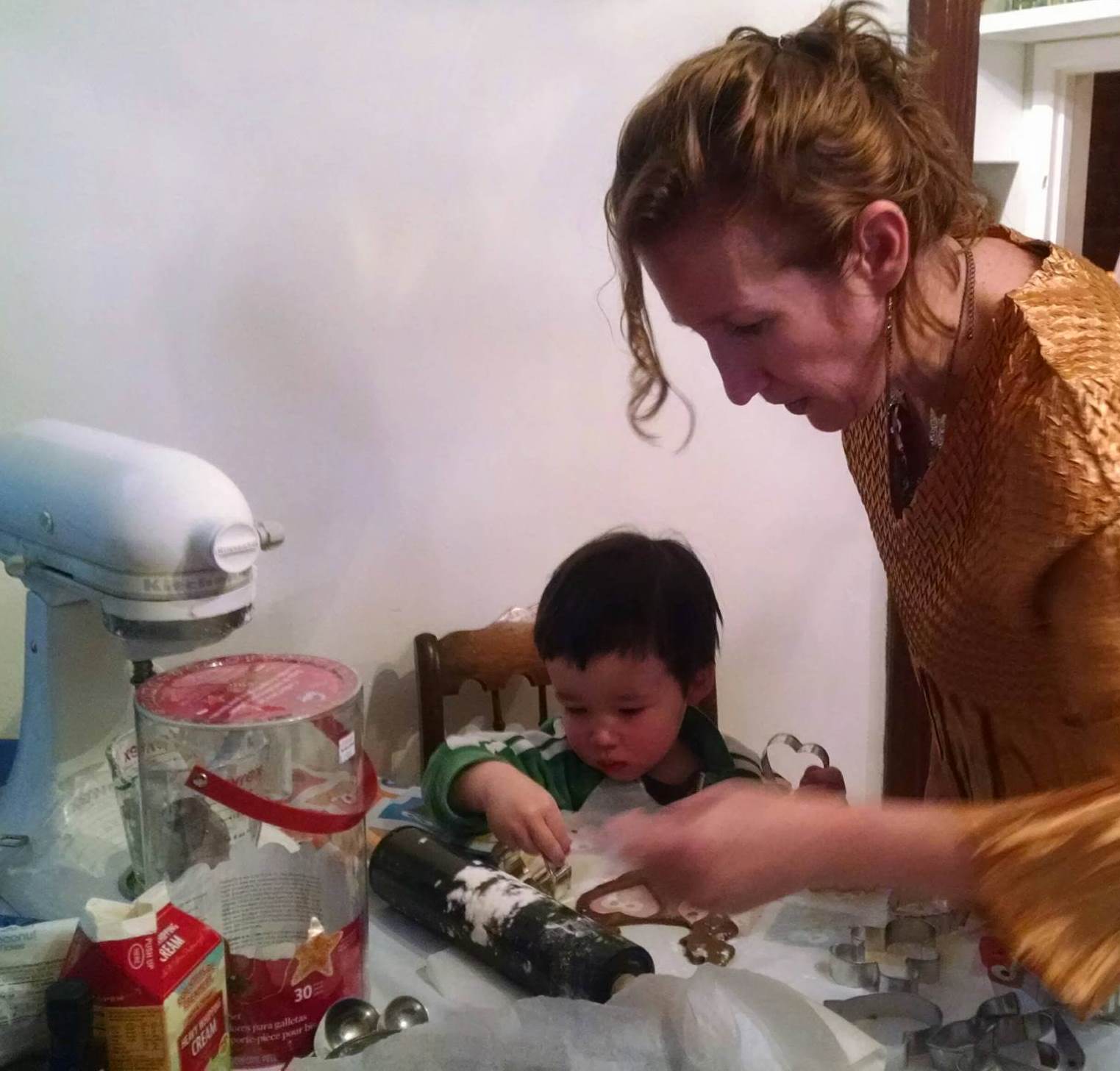
Last weekend, I hosted a cookie-baking party for Vince and his cousins.

Hannukah HedgehogsTaisei n me

They’re not pretty, but we had fun. Strangely, Vince and I had prepared enough dough to yield 16 dozen cookies but only nine dozen made it to the final stage. Hmmm…or should I say, Mmmmm….cookie dough?

So enjoy the moments that contain things you love. In my case: design, craftsmanship, nature, history. Kids, creativity, and cookie dough.

Crazy Eyes, Evil Eyes

The massacre in San Bernardino is really weighing on me.

Right after it happened, I wrote a post in which I suggested that mental illness could have been a factor, just as it is in many other cases.  Why do we assume that white guys are deranged, but Muslims are evil?  In this case, there was an additional question mark for me about possible post-partum depression, since the wife had given birth six months earlier.

But then we learned that both of the shooters in San Bernardino had been radicalized and had been planning some kind of attack for years.  I’ve spent more time than is probably healthy staring at photos of Syed Rizwan Farook and Tashfeen Malik.

They don’t look like these guys:

imagesimages (4)images (3)download (1)

They don’t look crazy.  They look dead.  Cold.

download

What kind of woman leaves her six-month-old infant behind, knowing she’ll never see her again—knowing her baby will be removed from the family, that her life will be tainted by a legacy of death?

What kind of son leaves his mother behind, knowing she’ll be interrogated by law enforcement?  Maybe the mother was involved, too.  In which case, what kind of son would leave his mother to face life in prison?  But these are silly questions.  This couple murdered 14 people and injured many more.  Why would they care about an old woman and a baby?

If they weren’t mentally ill, were they evil?  And what does that mean?  We can sometimes catch mental illness early and intervene.  But how would we spot evil?  Who would we call to report it?

There have been so many mass shootings in the U.S.  Until now I have reacted the same as anyone else—shaking my head, feeling bad for the victims, wondering when we will finally enact some reasonable gun reforms.  Then I’m over it.  Until now.

Where I work, at the Center for Victims of Torture, many of our clients come to us after suffering unimaginable torture during ethnic or religious conflicts in their home countries.  There is always the possibility that someone from the enemy side could enter the U.S. and come looking for them, just when they thought they were safe.  If someone would shoot up a center for developmentally disabled people, like the one in San Bernardino, why wouldn’t they shoot up a torture rehabilitation center?  There have been so many mass shootings, but this was the first one I could really imagine myself being involved in.  I imagine myself hiding in a bathroom stall or coat closet.  Of course I always—miraculously—am one of the survivors.

A father whose six-year old daughter was killed in the Newtown shooting was interviewed on public radio last week.   He and his wife are both scientists and they have started a research foundation to look into the connections between mental illness and violence.

The father said, “We have to recognize that, of course, all of our behavior comes from our brain. So just like any organ can be healthy or unhealthy, when there’s risk factors that lead to malfunction of certain circuits or regions of the brain, that’ll lead to bad behavior.  And yes, it is preventable. It’s a matter of chemistry and not character.”

I hope he’s right.  I hope someday we’ll discover that evil is a biochemical imbalance that can be fixed with a pill.  Maybe some day we’ll routinely test kids’ DNA and put them on medication if they’ve got the gene that could turn them into the next mass shooter.

A Crazy Idea?

I woke up in the dark at 5:40 am and wished I still believed in God.  Fourteen people dead at a center for developmentally disabled people in California.  I wished there was a higher power to whom I could appeal for help.  Help for us all.  For a moment, I thought I could feel something, then … nah … wishful thinking.

It’s up to us, people.  What “it” involves is a matter of dispute.

Someone asked on Facebook, “will this turn out to be a mentally-ill person?  Someone with extreme ideology?  A workplace grudge?”

There’s still a lot unknown, but it looks like it could be all three.  And I’m curious to learn if post-partum depression played a role in this latest incident, where a young mother dropped off her baby then went on a shooting rampage which she knew would result in her death or life in prison.

Here’s the liberal argument I hear: “Why do we label the white attackers mentally ill but the Muslim ones terrorists?”  I think what is really being expressed, by the conservative “side”, is that white attackers are deranged while Muslims are evil.

I’d like to flip that around and suggest that instead of considering every horrendous act an act of murder terrorism, we consider it an act of mental illness.  Hear me out.

I’m not a mental health clinician, but I have worked at two mental health clinics, where I have observed that mentally ill people often have religious fixations.  They think they are Jesus, they hallucinate angels, they hear demons telling them to do bad things.

A number of members of my family have suffered from Bipolar Disorder.  One was convinced that the Catholic Church had a conspiracy that had something to do with the numbers on the clock.

Anne, haven’t you noticed?  The numbers on the clock—there are 12 of them!  It’s so obvious that the Catholic Church is behind it.”

“Behind what?” I would ask.

He could never explain to my satisfaction what the numbers on the clock had to do with the Pope and the Catholic Church, but I would hear him out, hoping he wouldn’t call his parents next and burden them with his ranting.

If mentally ill people can have wacko Catholic theories, why wouldn’t they have wacko Muslim theories?

I was in the Middle East for work in February.  We were in Bethlehem on a long lunch break between meetings.  My two Palestinian colleagues and I were smoking shishas while my colleague from Minnesota gagged.

I had arrived in Amman the day ISIS released a video of them burning to death the Jordanian pilot they had captured.  The streets were packed with people waving the Jordanian flag and shouting.  They were angry, and I didn’t blame them.  I wish Americans got angry about wrong doing and demonstrated more often.

Omar turned to me.  “Tell us, what do you think about ISIS—these people who do such things?  We really want to know what Americans think.”

I had been thinking about this a lot.  “I think there’s an element of mental illness involved.  Who is it that most often gets schizophrenia and other serious mental illnesses?  Young men.  Who is it that is almost always behind violence?  I’m sorry, but it’s men.  And then you get them in a group—call it group think or herd mentality or whatever—and fire them up with ideological rhetoric, and put an AK47 in their hands…”

My Minnesota colleague disagreed.  She asserted that poverty and hopelessness were to blame.

Of course those are factors.  But I’ve been poor and hopeless, and I’ve never even shoplifted.  Millions of people around the world are desperately poor and they don’t kill people.  Many members of ISIS and Al Queda are not poor—they’ve got engineering degrees and come from middle class families.

If we do assume that mental illness is behind sadistic killings by ISIS or mass shootings in California and Connecticut, this does not mean the murderers are not responsible for their actions.  It does mean we can have hope, at least in the US, because there are effective means to identify and manage mental illness.

Happy New Life

ANNE

I am tempted to rebut each of Vince’s “clarifications” in his last post. But one of my favorite self-help slogans is: “How important is it?”

I’m glad to leave 2014 behind and hopeful that 2015 will better, or at least not worse.

I spent Christmas Eve in an emergency room with my poor sister, who has stage four colon cancer. She was feeling pressure in her chest. Apparently chemo can cause blood clots. They administered nitro by pill and patch, did an EKG to rule out a heart attack, and killed her pain with Dilaudid, which is seven times stronger than morphine.

Her worst fear is that she will die alone in the hospital. I stayed until they admitted her and she fell asleep, about seven hours later.

Three years ago, I hit bottom. I had lived with depression for as long as I could remember, but then….  I had to have a tooth pulled—boy, will that make you feel old! Then during a Christmas Day blizzard my car was towed and I spent four hours waiting in line outside at the impound lot to pay $300 to get it back. I then drove to Fountain to visit Vince. The trailer he shared with Seth was full of guns, beer cans, and smoke. I figured what the heck, if you can’t beat ‘em, join ‘em, so after he assured me that none of the guns was loaded, we posed for photos that became my holiday cards to my friends in the UK, where they had a good laugh over us gun-crazy Americans.

Vince (7)Vince (11)

Due to the blizzard I spent the night in Seth’s 5-year-old daughter’s bedroom; she was at her mom’s. Here’s a tip for parents who smoke: Keeping your kid’s door closed doesn’t keep smoke out. I couldn’t open the window and after tossing and turning until 5am I slipped out and drove home. On the way I started itching. Great—now I had bedbugs!

I contemplated suicide. I leaned my forehead against the screen of my 20th floor window. I had turned 50 the year before. Thinking about being depressed every day for another 30-40 years wasn’t real appealing.

Here are the things I had tried to manage depression and anxiety:

Meditation

Medication

Prayer (including begging, pleading, and bargaining)

Acting normal

Abstaining from drinking

Cutting down on coffee

Self-help books

Alanon

Exercise

Getting outside every day

Appreciating beauty, be it fine art, nature, music, babies, or kittens

Gratitude lists

Avoiding negative people / avoiding unnaturally happy people

Running away to other countries

Denial

Journaling

Telling myself, “At least I’m not a refugee / amputee / blind / fill-in-the-blank.”

Psychotherapy

Retail therapy

Sleeping, drinking, and movie binges

Reaching out to friends, even when that was the last thing I wanted to do

I thought that jumping out of my window would be exhilarating, until I hit the ground. I had some leftover pain killers from the dentist, and my prescription for Restless Legs. I googled an overdose of the two and learned that they wouldn’t kill me, but that I would likely need a liver transplant. I decided to keep living.

That spring, I visited Vince again and this time, made a reservation at a B&B.  On the free-book-shelf there, I picked up a tattered copy of, “Feeling Good: the New Mood Therapy”, by David Burns, MD. I read it and did what it told me to do, and I stopped being depressed. For good.

The book was about Cognitive Therapy. I had been instructed to use it at least twice in the past, but I’d been too stressed out to do it. Basically, you write down your negative thoughts and then argue with them rationally until you’ve de-fanged them. Writing it down is important; if you try to do it in your head you’ll end up down a rabbit hole.

So was a lifetime of depression cured overnight by one book? No. I think it was all the other things I had tried over the years—the good things, anyway—and then I added this on top of them and together they all added up to a breakthrough.

I still feel sad sometimes–there’s plenty to feel sad about–but I’m not depressed and I’m committed to living.

Sorry for the long post but, if you’re struggling, I want to encourage you to keep an open mind, keep plugging away, and keep trying new things.

PS: I didn’t have bedbugs after all.  I think I was just itchy from the smoke and dry air.  Living with addiction can turn you into a drama addict.