The Choice

This is the second in a series of posts, starting with this one.

I was unmarried and pregnant with a one-year-old baby, on welfare, living in public housing.  I was 19.

I had just started to feel better about myself and the future.  The first pregnancy had been due to carelessness.  This time it was due to birth control failure.  It was painful knowing people thought I was stupid.

I had just gotten rid of my pet rat, Smiley, because I couldn’t afford to feed him.  If I couldn’t afford to feed a rat, how could I afford to feed another kid?

I had gone to a doctor because I was exhausted.  His name was Charlie Brown, believe it or not.

I figured he would say I was anemic.

He laughed a yucky laugh when he saw the look on my face.

“That’s what happens to girls like you.”

“What?” I was confused.

“Girls who sleep around shouldn’t be surprised when this happens.”

“But it’s the same father.”

He glanced at Vince as though he was a cockroach.

“So the father is white?”  He lowered his voice.  “I know some people who would pay handsomely to adopt this baby.”

If a doctor named Charlie Brown said this to me today, I would punch him in the face, then sue him.  Instead, I thanked him mechanically and never returned.

In spring semester I would take Statistics, English Literature, and part two of Pathology, Anatomy and Physiology, and Abnormal Psychology.  My favorite class was Pathology.  The Hennepin County medical examiner taught it; his name was Vincent which I took as a good sign.  It was basically one long gruesome slide show—or should I say, sideshow.  There was the guy who had been decapitated when his snowmobile ran into a barbed wire fence, a baby born without a brain, and a glistening, five-foot-long tapeworm with eye-like markings.   I loved it.  I didn’t want to drop out.

I went to see a social worker at Catholic Charities.  Her name was Judy.

“You could give the gift of life to a childless couple!” she exclaimed.  I had an image of her as a Tyrannosaurus Rex, drooling and flapping her little claws over this baby.  This white baby.

I didn’t care about helping some rich couple who probably lived in the burbs and had a foosball table in their basement.

“I don’t want Vincent to be an only child,” I said.  My siblings and I didn’t always get along, but I imagined being an only child as very lonely.

“You can always have more children,” said Judy, “when you’re married.  You’re certainly fertile!”

My psych instructor gave a lecture on “high risk youth,” the new buzz phrase.  There were certain early experiences, like being beaten, locked in a basement, or put up for adoption, that caused youth to become drug addicts, criminals, and psychotic.

“Statistics show our prisons are full of men who were abused, neglected, or abandoned by their parents—usually single mothers on welfare.”

My best friend from high school was adopted.  I thought about the times I had seen her mother belittling her.  “You’re so fat!  Are you going to wear that?”  What if I gave this baby up for adoption, which I now understood was an act of abandonment, and his new parents abused him?

I told some of my classmates and they urged me to have an abortion.  “At this stage it’s just a clump of cells,” they reasoned.  This was true, but I couldn’t have an abortion so soon after giving birth.  I couldn’t explain it.  I just couldn’t do it.

“Don’t be a tool of the pro-lifers!” the one male student in my class said.  That was a valid concern too, but I had to set it aside.  Choice meant choice, right?

My mother didn’t tell me what to do.  “If you go through with adoption,” she said, I don’t want you anywhere near the family.  It’s got to be our secret”
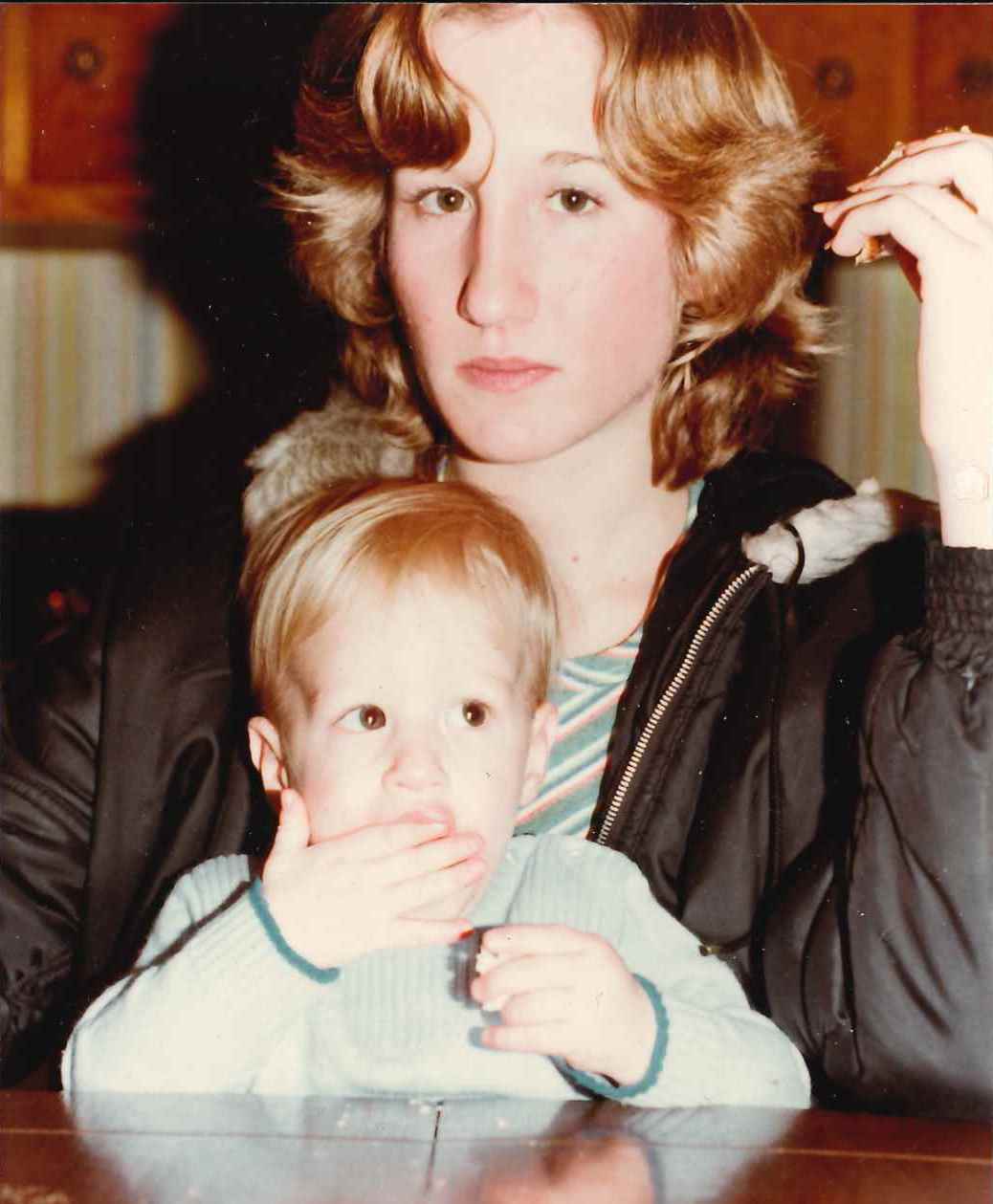
Sad Mom

The Dilemma

Vince has mentioned in his blog that he would like to write about his brother, so I should probably get out ahead of that.

It was 1979.  Nine-month-old Vince and I lived on the 18th floor of Skyline Towers, a subsidized 24-story high rise overlooking Interstate 94.

I had just started my second year of college.  In the spring I would earn my two-year Occupational Therapy degree.  I would be able to get a job and get off welfare, maybe even move out of public housing into a quaint little brick four-plex with wood floors and a stained glass window.  That was my dream.

Here was my routine:

5:30 am: Get up, shower, feed baby Vince

6:00 am: Strap Vince into the collapsible stroller, put on the old beaver fur coat I had found at the Salvation Army and the moon boots I bought new after saving all summer.  Sling my backpack full of text books over my shoulders, and head down the hall to the elevators.

Moon Boots

6:15 am: Exit the front door into the winter morning darkness.  Cross the parking lot, then the pedestrian bridge over I94 where the wind was always biting.  Push the stroller across the athletic field on the other side of the freeway (extra hard if there was fresh snow on the ground), then walk two blocks to drop Vince off at daycare.

6:30 am: Pry Vince off me, ignoring his crying and screaming.  Ignore the guilt.  I had to do this to get ahead, to better our lives.  Walk two blocks to the bus stop.

6:45 am: Catch the 21A to Minneapolis.  This is a slow bus that stops at every corner.

7:30 am: Catch a second bus that drops me off a block from school.

8:00 am: First class.  Study and go to class all day.  Pathology, Anatomy and Physiology, Abnormal Psychology, Medical Terminology, and Fundamentals of Occupational Therapy.

4:00 pm: Repeat above, only backwards.  Sometimes necessary to stop at the grocery, which slowed things down considerably because I had to haul the stroller and one of those little-old-lady shopping carts.

Cart

6:00 pm: Arrive home, make dinner, feed Vince, clean, pay bills, make phone calls, etc.

7:30 pm: Put baby to bed.  Thank god he is such a good baby and loves to sleep.  But I still like our routine of reading books, singing songs, and rocking.

8:00 pm: Study for a couple hours, in bed by 10.

Then I found out I was pregnant again.  I had been using birth control and breast feeding.  Taken together, these were supposed to protect me against getting pregnant.  Lucky me, I was one of the one out of a hundred or whatever who did.

I’ve written about the guy Vince and I call The Creep.  Why had I let The Creep anywhere near me after Vince was born?  Because I felt obligated.  He was Vince’s father, after all, and my boyfriend.  Even though he was terrible at both, I was a doormat.  I can hardly believe this was me—it feels like it happened to another person.

I loved being a mother.  But how could I keep up my schooling with two babies?

I loved babies.  But how could I be a good mother to two of them?

I loved college—I was the star pupil in my class.  But how could I keep it up with two kids?

I told The Creep.  He looked like a badger caught in a snare.

“I spose we have ta get married then, huh?” was his response.

I don’t know what I had wanted from him, but it wasn’t that.

I told my mom.  She was furious.

“This will kill your grandma,” she said, and she wasn’t exaggerating.  My grandmother had run into the bathroom and thrown up when I’d told her I was pregnant the first time.

I told the head of my school program.  She looked so disappointed.

“What are you going to do?” she asked, not expecting that I’d have any answer.


Tumblin’ and Floppin’

What was I thinking when I gave Vince a rock tumbler for Christmas? It’s his long-time hobby, and this is probably the third one I’ve bought him, but it’s the first time I’ve lived with the sound of it, cruncha-rugga-chugga-rugga 24/7. I don’t know how he can sleep with it in his room. .

Here’s an update on Vince’s and my living-together situation.

If I come home and he’s in the living room, he immediately gets up, goes to his room and shuts the door, and doesn’t come out again until the next morning. If I’m the one in the living room when he comes home, he goes straight to his room and doesn’t come out until the next morning. He doesn’t slam the door, so there’s nothing to point to and say, “Stop doing that!”

When we run into each other in the morning, the exchange is:

“Good morning.”

“Good morning.”

“Have a nice day.”

“You too.”

When I ask, “What are you up to today?” he tells me, but there is a tone, as though he thinks I am prying. If I call to him inside his bedroom, there is a long pause during which I imagine he is rolling his eyes, and then a drawn-out, “Yeh-sss?”

I managed to catch him long enough one day to say that people who live in the same house usually talk to each other now and then. He seemed to think I was trying to trick him into talking.

Things came to a head on Christmas day. I found myself crying in my room (into a pillow, so Vince wouldn’t hear, because I didn’t want him to think I was trying to manipulate him). I had been out 16 of the last 18 nights, trying to give him space.

I was tired. I had lost perspective. Was it nosy to ask, “How are you?” Was everything I did annoying? Was the sound of my voice noxious? Should I confront him? Try to be nicer? Suggest we go to counseling together? Ask him to move out? Go live in a motel? Was I acting like a martyr? Maybe if I bought some non-floppy slippers—because surely the sound of my footsteps must drive him crazy.

I recognize Vince’s behavior because I’ve acted the same in the past.

I had a roommate; I’ll call her Irene. She was from Ontario and taught theology at a local private university.

I could not stand being in the same room with her. Everything about her irritated me—her denim dresses and sturdy shoes, the giant jar of Branston Pickle in the fridge, the fact that her favorite color was navy blue.

When I heard her key in the door I would scurry to my room, silently shut the door, and not emerge until I knew the coast was clear. If she tried to make conversation I would deflect it with a curt answer and a stiff demeanor. If I did have to communicate something to her, I left a note on the dining room table.

Poor Irene! She was such a nice person, a good person. She had a sharp wit and obviously was no dummy. We could have had great conversations if I had been open to that. She was also wise, I see in retrospect, because she never got ruffled by my behavior, never seemed to take it personally.

And it wasn’t about her—I can see that now. It was about me being laid off from my job, Vince being missing for the umpteenth time, and other stressful events I can’t even recall now.

So Irene, if you ever read this, I apologize unequivocally. I was horrible to you. Better yet, I will write you an email after I finish this post, and apologize directly.

Vince, here is my version of a note on the dining room table to you. You’re doing so well (a job, a car—health insurance! 19 months of sobriety!). But I know it’s hard to have a social life under the probation restrictions. The solstice has passed, the days are getting longer, soon your time “off leash” time will double.

Now about that rock tumbler….

Happy Christmas, Ten Years On

In keeping with my gradual transition to writing about unconventional travel and living abroad adventures, I’m looking back on the first Christmas I spent in the UK, 10 years ago.

I had learned a lot since arriving in October. Searching for housing, I had finally figured out that address numbers sometimes went up one side of a block and down the other. Also, many buildings just had names instead of numbers. The Oxfam head office was called John Smith House.

“House” was a misnomer because it was a modern, three-storey building in an industrial park across the motorway from the Mini Cooper factory, and 750 people worked there.

John Smith Houseatriumlobby

I could usually remember that the first floor was the “ground floor” and the second floor was the first floor. I had figured out that when my coworkers asked, “You awl right?” they weren’t concerned about my health; it was the same as someone in Minnesota asking, “How ya doin?” I was avoiding “creeping Americanisms” in my writing, as cautioned in the Oxfam writing manual, so was careful to write “storey” and “tonne” instead of “story” and “ton.” I was no longer taken aback when introduced to a 20-something coworker named Harriet, Richard, or Jane.

Most important, I had learned to avoid any references to my pants, as in, “I got my pants wet biking to work in the rain.” Trousers were pants, and pants were underwear. I loved the expression, “That’s just pants!” which meant something like “that’s insane!”

Everyone spoke in a low murmur. This was partly due to the open plan office, where six people shared one big desk, but I think it was also the culture. A few weeks after my arrival, a new Canadian employee came through for her induction (orientation), and her braying, Minnesota-like accent filled the whole building. One of those moments when I realized, “Ah, that’s what we sound like.”

At Oxfam, everyone walked fast. It was as if, by striding vigorously, they would personally Save the World.  My tall, ginger-haired colleague, Adele, was selling Palestinian olive oil out of her desk drawer. I enjoyed a daily fair-trade, organic chocolate bar from the cafeteria.  Oxfam had a Christmas bazaar in the atrium featuring beaded jewelry made by Masai woman who used the proceeds to buy goats.  Everyone was very earnest.

To be fair, the “Boxing Day”, or Indian Ocean, Earthquake and Tsunami (caution: upsetting video) had happened one year before, killing 230,000 people and leaving millions more without homes or livelihoods. Then, suicide bombers had struck the London transport system in July, killing 56 people and injuring over 700. The week I arrived in Oxford, an earthquake took 80,000 lives in Pakistan. People were reeling, but responding generously. Oxfam had received a tsunami of donations, internally referred to as the “Cat Fund”—for Catastrophe Fund—and rumour had it that they were struggling to do enough, fast enough, to respond.

But for now, Oxfam was abuzz with Christmas cheer. I look in my diary (date book) from that time, and I was busy meeting colleagues after work at pubs named The Marsh Harrier, the Eagle and Child, The Bear, Angel and Greyhound, and Jude the Obscure.

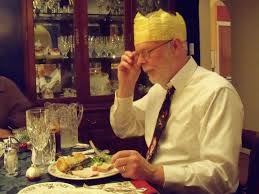
They called Christmas Crimbo, and presents pressies. There were crimbo crackers for sale, too, which are not a crunchy, salty snack, but shiny cardboard tubs “cracked” open at the festive table and containing a Christmas crown and trinkets.

C&CCrackers and CrownsC&C2

There was a panto in the Oxfam atrium, so to use all my new words in a sentence: “Are you going to the crimbo panto or shopping for pressies and crackers after work?”

And what is a panto? It’s slang for pantomime, an extravaganza that takes weeks of planning and involves elaborate costumes, jokes, dancing and singing, skits, and slapstick. Apparently it’s also done by families and in theatres but the only one I’ve ever seen was in the Oxfam atrium. Our usually-serious employees were dressed up as fairytale characters and making fun of themselves, our bosses, and our work. Very healthy, I thought. Take life seriously most of the time, then go all-out silly for a week.

The Queen’s Christmas Message that year was beautiful, in my opinion, and more relevant than ever.

queen

The Fine Print

I got another email from my friends at JPay. They are so sentimental! They know that home is where the heart is, and they’re just like a family. And they have such a great sense of humor; it says, “there’s snowplace like home” – get it?

Oh, I almost missed it. In very small print at the bottom they mention that their terms of service changed the day before they sent this email. Could it be that they said all that other nice stuff to distract me from that legally-required notice?

I decided to check out the terms, even though I am no longer a customer (yeah!). The payment terms of service are over 2,200 words long. And that’s just for starters. There are email terms of service (1,700 words), video visit terms of service (1,850), and music player terms of service (1,870). There is a subpoena policy, a privacy policy, and a consumer protection policy.

All of which is to say, “if you buy anything from us, don’t bother complaining or trying to sue us, because we’ve got lawyers and we’ve thought of everything.”

I’m going to unsubscribe from JPay now. It’s been fun, but they’re just too easy of a target and they bring out a mean, sarcastic streak in me that I don’t want to feed.

Hedgehogs, Mice, and Echidnas, Oh My

I pride myself on writing realistically about life. You can count on me to tell the truth as I know it, to question everything, and to imagine the worst case scenario. I don’t know why the Pentagon hasn’t called me yet to offer me a disaster-planning job.

But that doesn’t mean I’m depressed, or even “unhappy”—the more generic term. Being a highly-analytical thinker has its rewards. I notice and think about things that other people do not. There’s often absurd fodder for laughs. Sometimes I’m the only one laughing, but that’s okay, right?

There was an article in the Sunday paper about a study that debunked the popular myth that “happy” people are healthier and live longer. Yes! My friend who works in an old folks home—or whatever they’ve been rebranded as now—has always said, “There are plenty of miserable, crabby 90 year olds. And they’ve always been that way, because their kids tell me they have.”

About five years ago, I kicked the depression that had dogged me all my life. Since then I have felt mostly contentment, punctuated with the normal situationally-appropriate emotions. I felt angry when my landlord raised my rent $300 a month, which forced me to move. I was stressed when I moved again three months later so Vince could live with me. I was anxious when Vince was in solitary confinement. I cried for everything my sister and her kids went through when she had cancer. I felt awe hiking in Petra, in the Jordanian desert, and nervous about crossing over into the Palestinian territories. I felt powerless rage when I was banned from visiting Vince. I had a blast with my friends in Berlin. I’ve been bored at work. I was proud when Vince led his squad at his graduation from boot camp. I am excited at the prospect of remodeling my kitchen.

Hey, I guess I just wrote my Christmas letter!  What a year it’s been.

None of it lasts. Some people figure this out somehow, much earlier in life than I did. Emotions come and go. The pleasant and the unpleasant, they’re all fleeting. So enjoy the nice ones while they last and know that the bad ones will dissipate. Don’t panic if you feel blue once in a while. Don’t latch on to the negative feelings or thoughts. If the blues don’t go away for weeks, of course, seek professional help.

In the last week I’ve had some really good times with people I love.

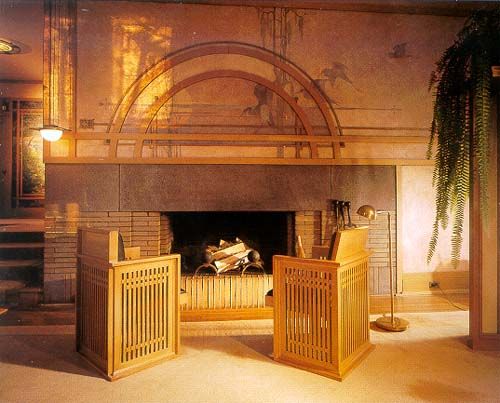
Yesterday I took my mother to tour the Purcell Cutts House, a prairie-style home build in 1913 and owned by the Minneapolis Institute of Arts. This is the living room:

Purcell Cutts

The guide explained that the simple, serene style was in part a reaction to the chaos of the age. The architect was from Chicago, which was the industrial center of the U.S. Meat packing and other industries attracted droves of immigrants and African Americans from the south. There wasn’t enough housing, and the water and sewer systems weren’t up to par. There were no child labor laws, workers’ compensation, welfare, or social security.

So architects brought nature and art inside. Obviously this was not a house that could be produced on a mass scale. The immigrants and African Americans still lived in poorly-heated hovels. But at least this one architect could escape all that and find sanctuary at home!

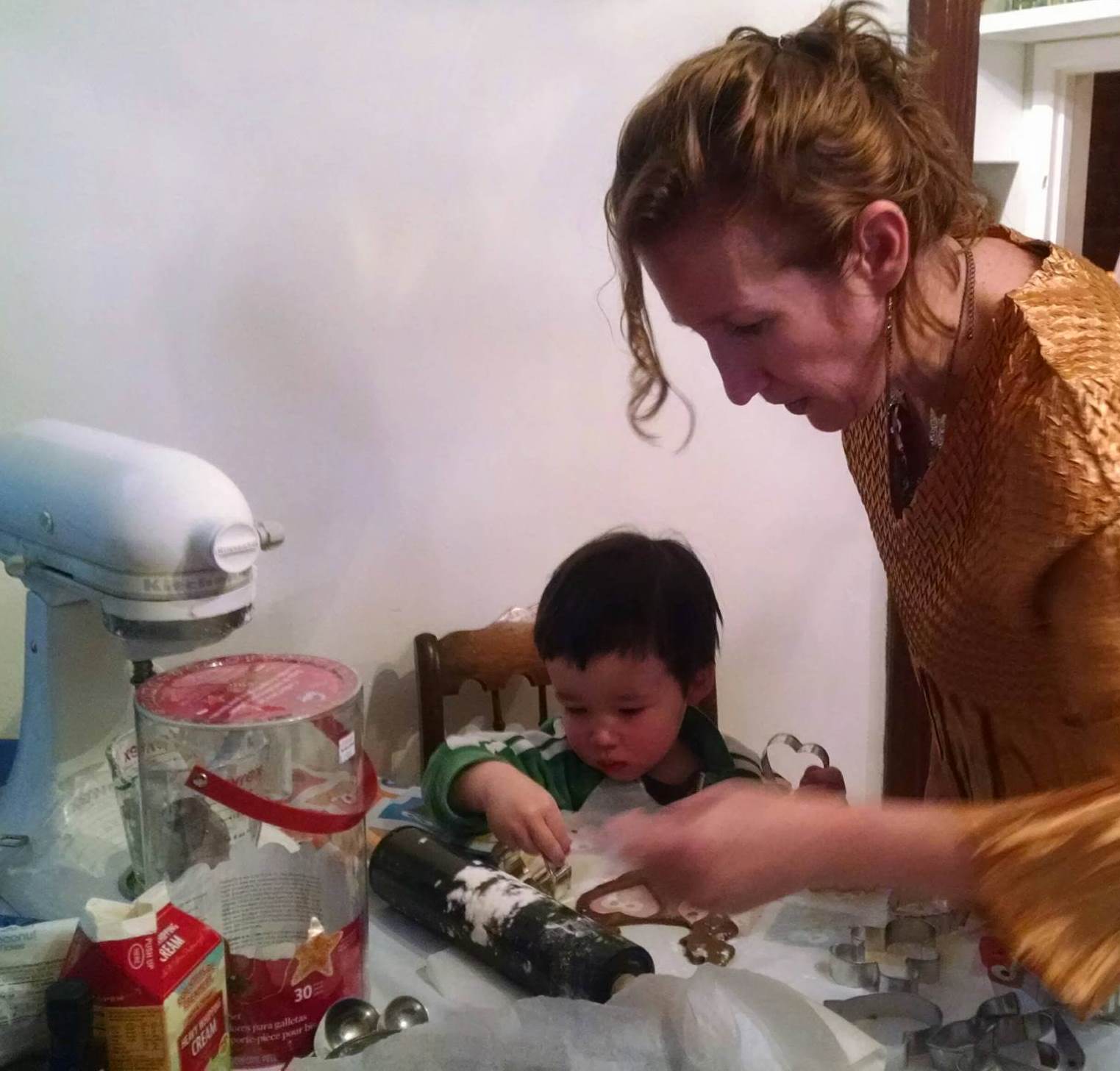
Last weekend, I hosted a cookie-baking party for Vince and his cousins.

Hannukah HedgehogsTaisei n me

They’re not pretty, but we had fun. Strangely, Vince and I had prepared enough dough to yield 16 dozen cookies but only nine dozen made it to the final stage. Hmmm…or should I say, Mmmmm….cookie dough?

So enjoy the moments that contain things you love. In my case: design, craftsmanship, nature, history. Kids, creativity, and cookie dough.

Au Mal Pain

As usual, the prison news includes the good, the bad, and the disgusting.

The good: If I didn’t work in fundraising I might not have caught this item.  The California Endowment has announced it will divest its assets from companies that run private prisons, jails, detention centers, and correctional facilities.  This is fantastic!  The California Endowment is a foundation with $3,668,459,217 in assets.  That’s real money, and maybe it will start a trend.  I look at foundation tax returns almost every day, so I see where they invest their money.  It’s disgusting to see a foundation with a portion of its assets invested in a weapons manufacturer, for instance, and making grants for international poverty programs.  In part, it’s all the small arms the U.S. peddles to warlords abroad that destabilize developing countries and keep them impoverished.  That’s an extreme example but I bet it’s not that uncommon.  If you have retirement investments, you too may own part of Alliant Techsystems or Prison Corporation of America, and you are probably earning fantastic rates of return.

The not-so-good news, also in California, is a report that found abuse, racism, and cover ups a physically isolated prison about 90 miles northwest of Reno.  The town in which the prison is located, Susanville, has fewer than 16,000 people, and the two correctional facilities are its largest employers.  “Employees form tight-knit social groups known as “cars” that can foster what the report terms “a code of silence” that makes it difficult to report wrongdoing.”  They are accused of abusing physically-disabled and minority prisoners, inciting attacks against sex offenders, and conspiring to impede the investigation.   The prison’s nearly 3,500 inmates won’t report abuse because they fear the nearly 1,000 employees will find out and retaliate.  If this is true in this case, why wouldn’t it be true in Moose Lake, where Vince was incarcerated?  Moose Lake has a population of only about 2,700 and, as you might guess from its name, it’s in the sticks.

Then there are two items that would be ridiculous if they weren’t true.

First, rapper Nicki Minaj did a December 10 interview with Billboard Magazine in which she spoke out against mass incarceration, lengthy drug sentences, and the racial bias in sentencing: “What it has become is not a war on drugs.  It has become slavery.  When I see how many people are in jail, I feel like, ‘Wait a minute. Our government is aware of these statistics and thinks it’s OK?’ The sentences are inhumane.”

Earlier this year, she had said about Barak Obama’s prison clemency program, “I thought it was so important when he went to prisons and spoke to people who got 20 and 30 and 40 and 50 years for drugs. There are women who are raped, people who are killed and [offenders] don’t even serve 20 years.”

I guess you could call it a case of bad timing, then when Minaj’s brother was arrested December 3 for raping a 12-year-old girl.  She posted his $100,000 bail.  Blood is thicker than principles, I guess, and I’m not being sarcastic.  As his sister, she probably believes there’s a good explanation.

Last, in prison food news, the New York Times reports that the state’s prisons have announced they will stop serving Disciplinary Loaf—also known as NutriLoaf—to prisoners in solitary confinement.  It was served with a side of cabbage.

God, sometimes I wonder if you think I make this stuff up—that’s why I provide links.

This menu change is part of a slew of reforms to solitary confinement practices.  It was brought about as the result of a lawsuit by the American Civil Liberties Union, whose director said, “Food is very important to prisoners in a deprived and harsh environment; it is one of the very few things they have to look forward to.”

I’ve pasted the recipe below in case you want to serve it to your family over the holidays.

Recipe for Nutraloaf

Makes 50 loaves.

Ingredients

5 pounds whole wheat flour

20 pounds all purpose flour

1.5 gallons milk, 1 percent

8 ounces fast active dry yeast

4 pounds sugar

2 ounces salt

2.5 pounds powdered milk, nonfat

2 pounds margarine

5 pounds shredded potatoes (with skin)

2 pounds shredded carrots


Preparation

  1. Preheat oven to 350 degrees.
  2. Heat milk to 105 degrees, then add sugar, salt and yeast. Let stand for 5 minutes.
  3. Add both flours and dry milk, then mix.
  4. Add margarine, potatoes and carrots. Mix for 10 minutes.
  5. Cover bowl with plastic wrap and let dough rise.
  6. Grease and flour loaf pans and add dough.
  7. Bake loaves for 40 to 45 minutes.


Lasagne, Interrupted

I came home from work, tired and famished.  I was lifting a big slice of lasagna out of a pan to a plate when the landline rang.

This is the phone I am required to have as a condition of Vince’s probation.  He was in the shower, and the phone is in his room.  I respect his space and don’t go in there except to the do the laundry.  (He shares his tiny space with the washer and dryer.)

Brrr-ing…brrr-ing…brrr-ing….  I stood with the lasagna poised between pan and plate.  It stopped.  Then Vince’s cell phone started up—vvvbbbb….vvvbbbbb…vibrating on silent.  It went on and on and still I stood drooling over my longed-for lasagna.

I heard the shower shut off and Vince’s voice, “Hello?  I’m in the shower.”  He repeated himself.  Did the person on the line not believe him?  Then: “MOM!  Will you let the agent in?”

I lowered the lasagna into the pan—it was lukewarm now anyway—and went to the front window.  Yep, there she was, sitting in her car at the bottom of the stairs.  I moved to the front door and opened it, waving down to her.  I stood waited while she got herself out of the car and moseyed up the stairs.

Do not sound sarcastic or mad, I told myself.

“Next time, why don’t you knock on the door?” I suggested.

“Oh, yeah!” she replied, as though she had never heard such an idea.

She stood in the dining room with the urinalysis cup while Vince threw on some clothes.   She smiled, I faked a smile back.  Vince entered the room, retrieved the cup from her, then returned to the bathroom.  As he was returning down the hall, the agent said loudly, “Be sure to tip the cup on its side so the urine gets on the test strip.”

Yum!

Maybe I should have exited at that point but I didn’t realize she was going to linger.  And did I mention I was hungry?

Vince sat at the dining room table.  The agent and I stood in opposite corners in the room.  I was half way into the kitchen, with one eye on the lasagna.

“How’re things goin’?” she asked.

“Fine,” was his reply.  He told the agent he was planning to buy a $300 car.  It would help him get around quicker and he could tinker with it on “the property” which includes the parking lot of the condos where we live.

“The big challenge,” I volunteered, “will be for him to find a landlord who accepts ex offenders.”

“That is a big problem,” she said, “Most landlords take advantage of them, because they can.”

My crabbiness quotient quadrupled.  Or maybe it was just plain anger.  Well, I’ve rarely had a good experience with a landlord, so why was I shocked that they would exploit ex offenders?

“We do know a guy who is open to ex offenders, and fair,” she continued.

One landlord in a metropolitan area of 3.5 million people.

She told Vince she would get him the landlord’s information, and left shortly thereafter.

Finally!  My lasagna.  I sat across from Vince and when I saw his face I thought, “Oh no, I’m in trouble now.”

Mom,” he began slowly, as though he was talking to an utter moron, “Don’t ever bring things up to the agents.  Now the next time one comes, they’ll grill me about why I want to move out.  ‘What’s wrong at home?’  ‘What’s going on with your mom?’”

“But…last week you told me you had that tip on a sober house.”  For a few days we had both been excited but it fell through.  “You want to move out, don’t you?”

“Yes, but we agreed I could stay a year.”

“Yes, but…you were talking about that house….  I thought she might have some resources.”

I ate my lasagna without gusto and offered him some, which he accepted.  “Do you really think I would try to get you in trouble, on purpose?” I asked.

“Sometimes I wonder,” he said.

Just like when he was inside, I didn’t know the rules until I broke one, and trying to be helpful only got me in trouble.

Crazy Eyes, Evil Eyes

The massacre in San Bernardino is really weighing on me.

Right after it happened, I wrote a post in which I suggested that mental illness could have been a factor, just as it is in many other cases.  Why do we assume that white guys are deranged, but Muslims are evil?  In this case, there was an additional question mark for me about possible post-partum depression, since the wife had given birth six months earlier.

But then we learned that both of the shooters in San Bernardino had been radicalized and had been planning some kind of attack for years.  I’ve spent more time than is probably healthy staring at photos of Syed Rizwan Farook and Tashfeen Malik.

They don’t look like these guys:

imagesimages (4)images (3)download (1)

They don’t look crazy.  They look dead.  Cold.

download

What kind of woman leaves her six-month-old infant behind, knowing she’ll never see her again—knowing her baby will be removed from the family, that her life will be tainted by a legacy of death?

What kind of son leaves his mother behind, knowing she’ll be interrogated by law enforcement?  Maybe the mother was involved, too.  In which case, what kind of son would leave his mother to face life in prison?  But these are silly questions.  This couple murdered 14 people and injured many more.  Why would they care about an old woman and a baby?

If they weren’t mentally ill, were they evil?  And what does that mean?  We can sometimes catch mental illness early and intervene.  But how would we spot evil?  Who would we call to report it?

There have been so many mass shootings in the U.S.  Until now I have reacted the same as anyone else—shaking my head, feeling bad for the victims, wondering when we will finally enact some reasonable gun reforms.  Then I’m over it.  Until now.

Where I work, at the Center for Victims of Torture, many of our clients come to us after suffering unimaginable torture during ethnic or religious conflicts in their home countries.  There is always the possibility that someone from the enemy side could enter the U.S. and come looking for them, just when they thought they were safe.  If someone would shoot up a center for developmentally disabled people, like the one in San Bernardino, why wouldn’t they shoot up a torture rehabilitation center?  There have been so many mass shootings, but this was the first one I could really imagine myself being involved in.  I imagine myself hiding in a bathroom stall or coat closet.  Of course I always—miraculously—am one of the survivors.

A father whose six-year old daughter was killed in the Newtown shooting was interviewed on public radio last week.   He and his wife are both scientists and they have started a research foundation to look into the connections between mental illness and violence.

The father said, “We have to recognize that, of course, all of our behavior comes from our brain. So just like any organ can be healthy or unhealthy, when there’s risk factors that lead to malfunction of certain circuits or regions of the brain, that’ll lead to bad behavior.  And yes, it is preventable. It’s a matter of chemistry and not character.”

I hope he’s right.  I hope someday we’ll discover that evil is a biochemical imbalance that can be fixed with a pill.  Maybe some day we’ll routinely test kids’ DNA and put them on medication if they’ve got the gene that could turn them into the next mass shooter.

Sincerely, Barak Obama

I wrote to the White House about a month ago to thank President Obama for his efforts to lower incarceration rates through sentencing reform, reintegration programs and other “upstream” measures. I thought I would share the response I received.  Too bad the White House seal and other graphics don’t show up:

Dear Anne:

Thank you for writing, and for sharing your son’s story.  Today, our criminal justice system holds approximately 2.2 million Americans behind bars, at a cost to taxpayers of $80 billion per year.  Many of these individuals are violent criminals who are off the streets thanks to hard‑working police officers and prosecutors, but many others who are incarcerated are non‑violent offenders whose punishments do not always fit their crimes.  We have to make sure that our justice system is fair and effective and is doing what it can to make individuals, their families, and their communities stronger.

My Administration has taken concrete steps to enhance public safety while also making our system more just.  By channeling resources into early childhood education and issuing discipline guidance to our schools, we are creating pathways to success instead of pipelines to prison.  Through initiatives like “My Brother’s Keeper,” we are promoting reforms to the juvenile justice system and reaching young people before they’re locked into a cycle from which they cannot recover.  Additionally, the Justice Department’s “Smart on Crime” and “Justice Reinvestment” initiatives aim to address the unnecessary use of mandatory minimums in the Federal system and work with states to lower their incarceration numbers and reinvest in crime prevention services.

For currently incarcerated individuals, my Administration has supported critical improvements to our prison system that target overcrowding, solitary confinement, gang activity, and sexual assault.  We are promoting rehabilitation programs that have been proven to decrease the likelihood of a repeat offense, and we are expanding reintegration programs—such as those supported by the Second Chance Act—that work with government agencies and non‑profit organizations to help provide access to employment, education, housing, and health care for the nearly 600,000 inmates released annually.  In addition, I directed the Office of Personnel Management to “ban the box” on most Federal job applications in order to end the practice of disqualifying people simply because of a mistake they made in their past.

While my Administration remains committed to taking action to improve all phases of the criminal justice system, it is time for Congress to act.  Meaningful sentencing reform and juvenile justice reform legislation would make a crucial contribution to improving public safety, reducing runaway incarceration costs, and making our criminal justice system fairer.  There is strong bipartisan support in Congress to achieve these goals, and I am encouraged that the Senate and House will continue to work cooperatively to get a bill to my desk.

Thank you again for writing.  Throughout my Presidency and beyond it, I will continue working to keep our communities safe and make our justice system fair.  To learn more about these efforts, visit www.WhiteHouse.gov/Issues/Civil‑Rights/Justice.

Sincerely,

Barack Obama

Seeing how Vince struggles with the after effects of being imprisoned, it is comforting to know that lawmakers on both sides agree the system must change—drastically, and now—and that my president cares enough about this to take it on even after he leaves office. I believe this is the only issue Republicans and Democrats agree on and are working on together nowadays, which tells you a lot about how messed up the system is.