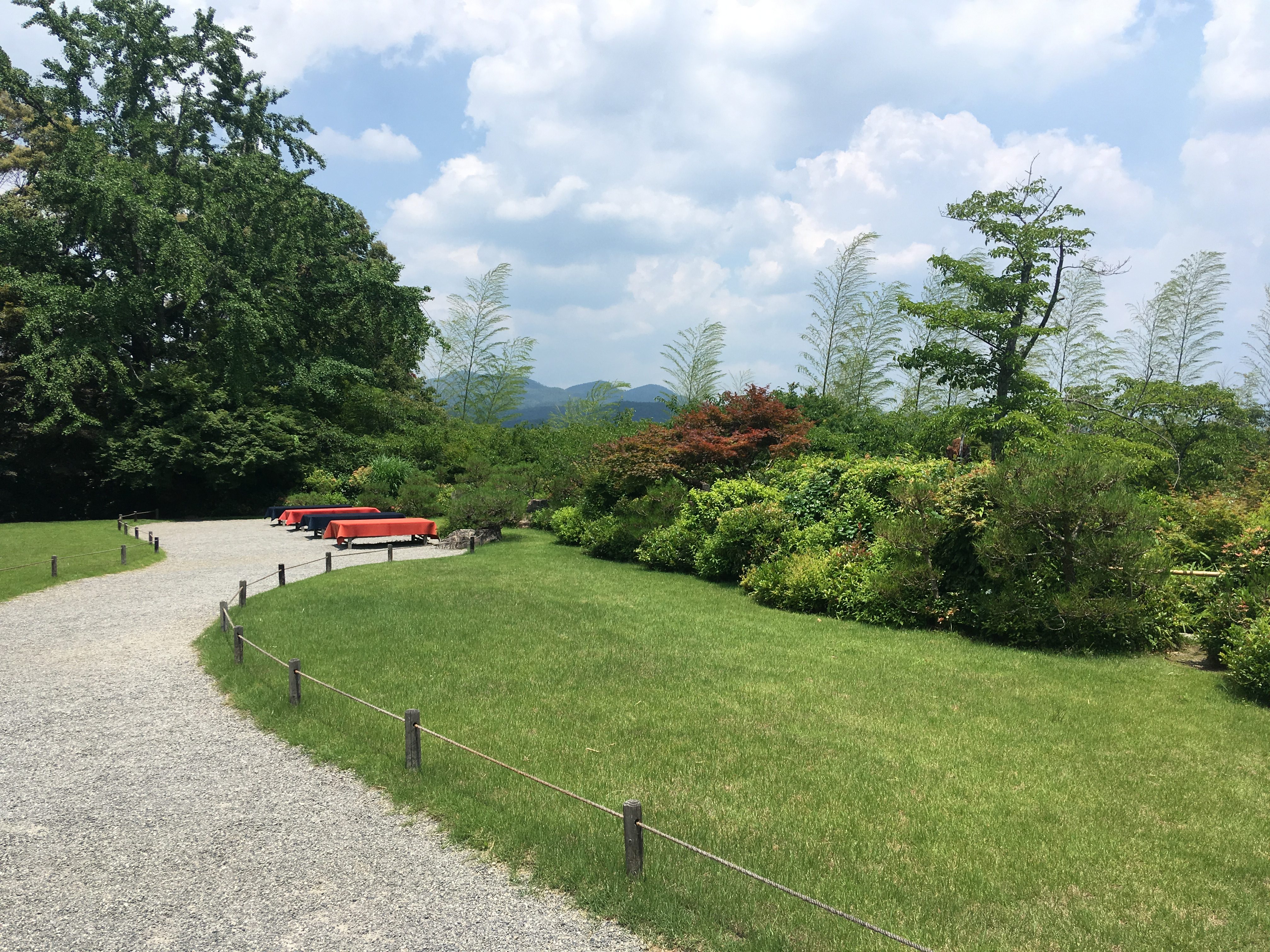
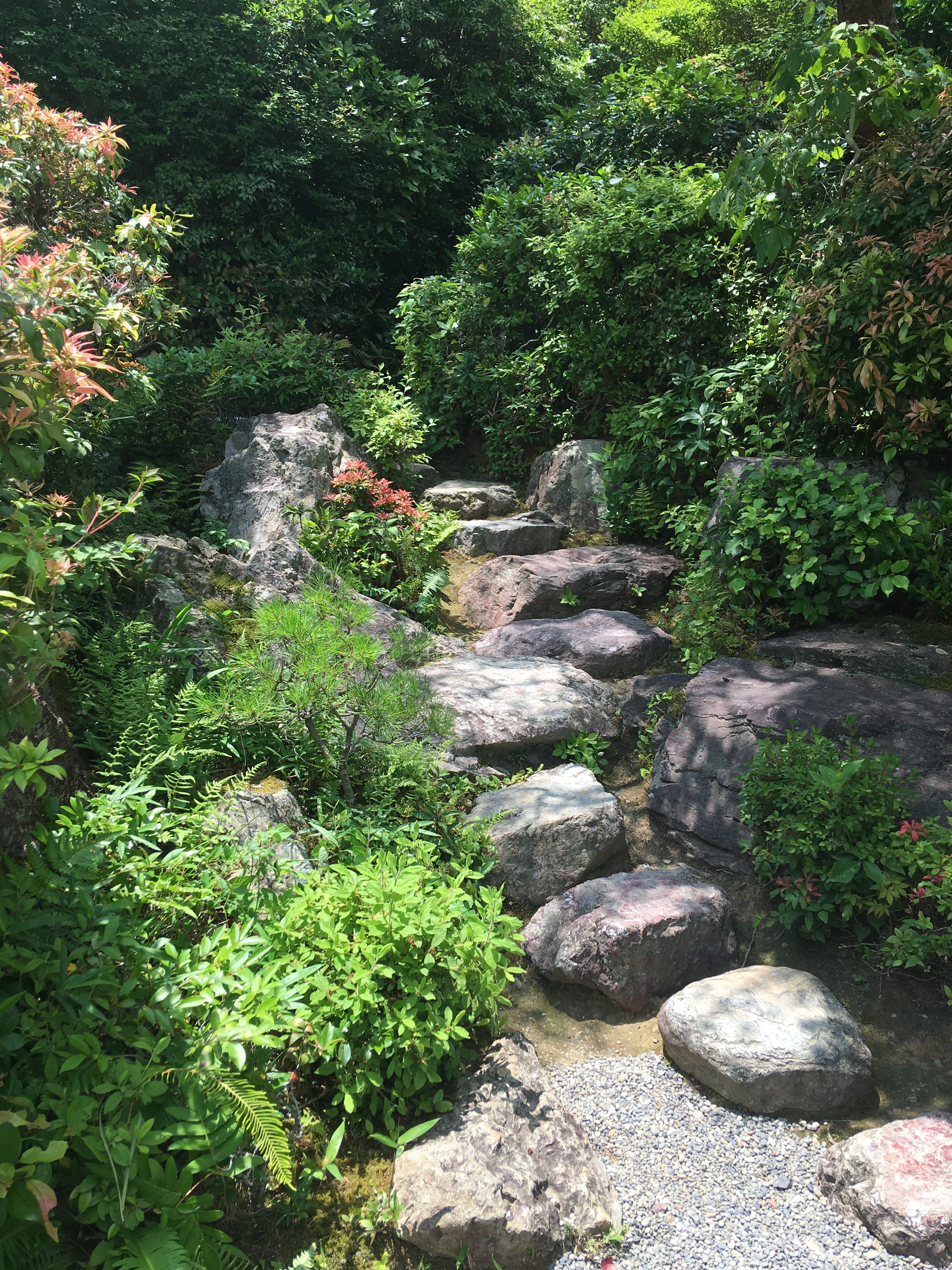
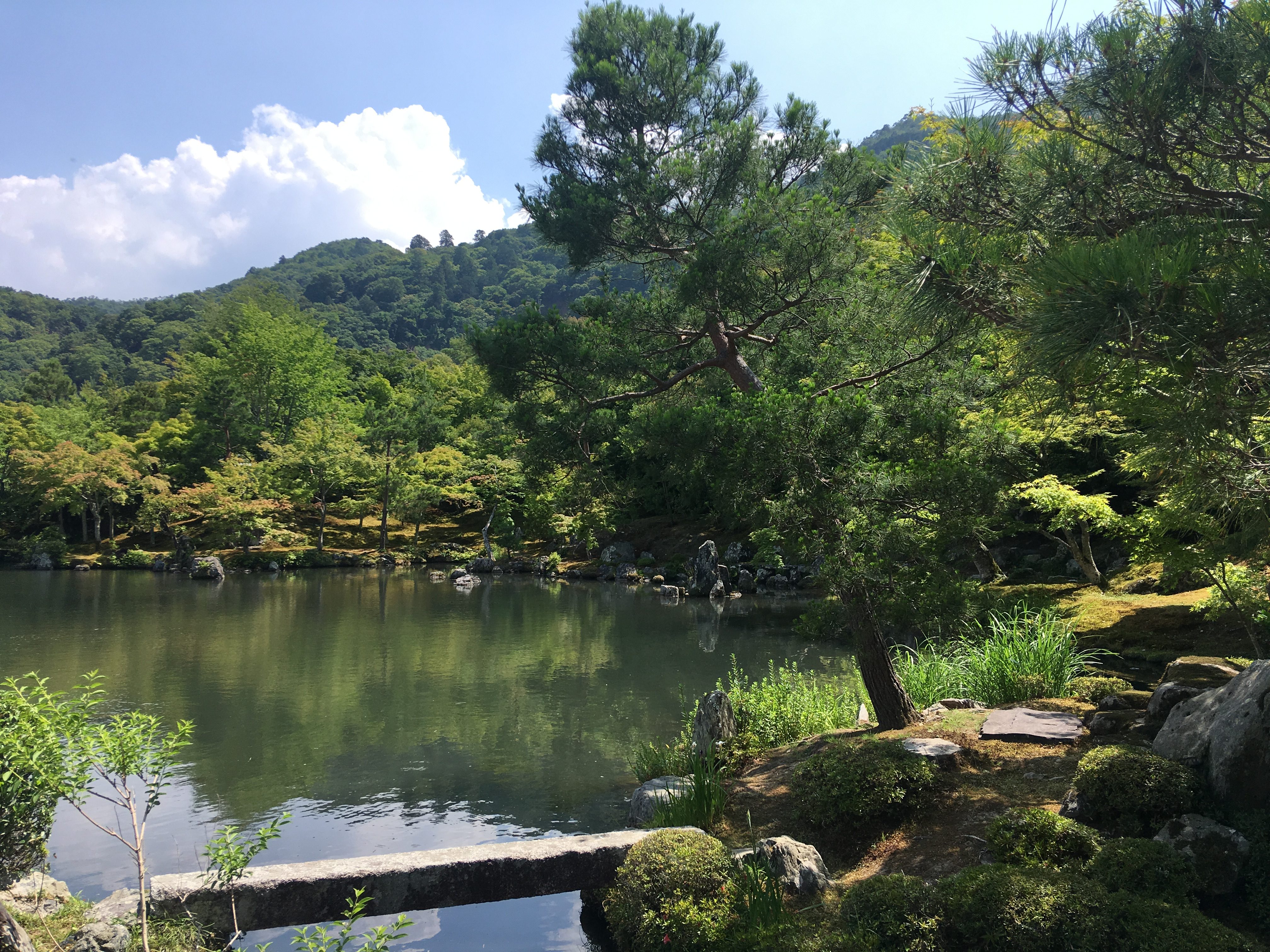
Shrine, Shrine, Everywhere a Shrine

Lynn and I walked slowly around the massive park that was home to Yasaka Jinga, Chion-in, and Shoren-in temples—or shrines. As I wrote previously, the distinction was never clear to me, and Kyoto is blurred together.

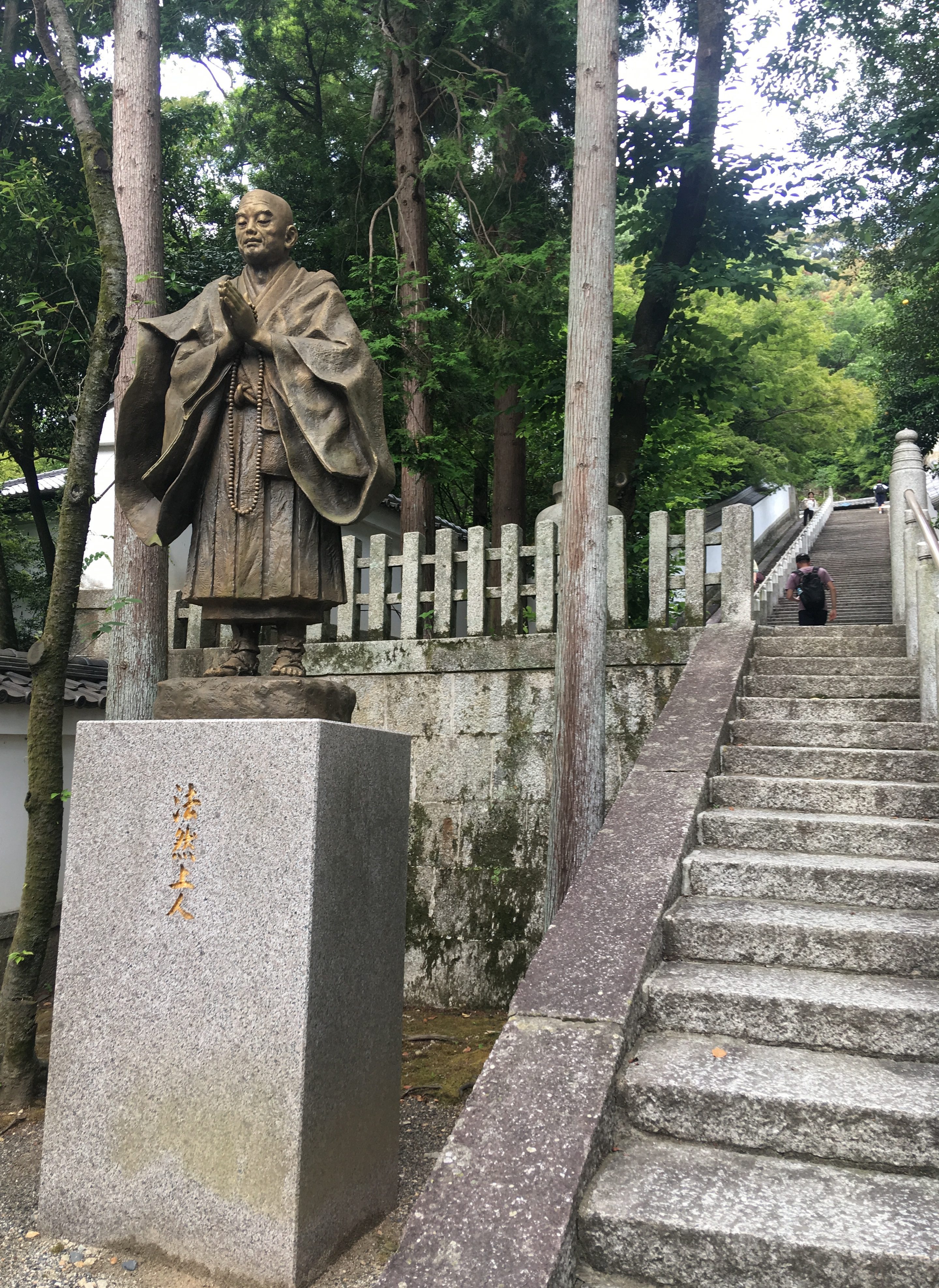
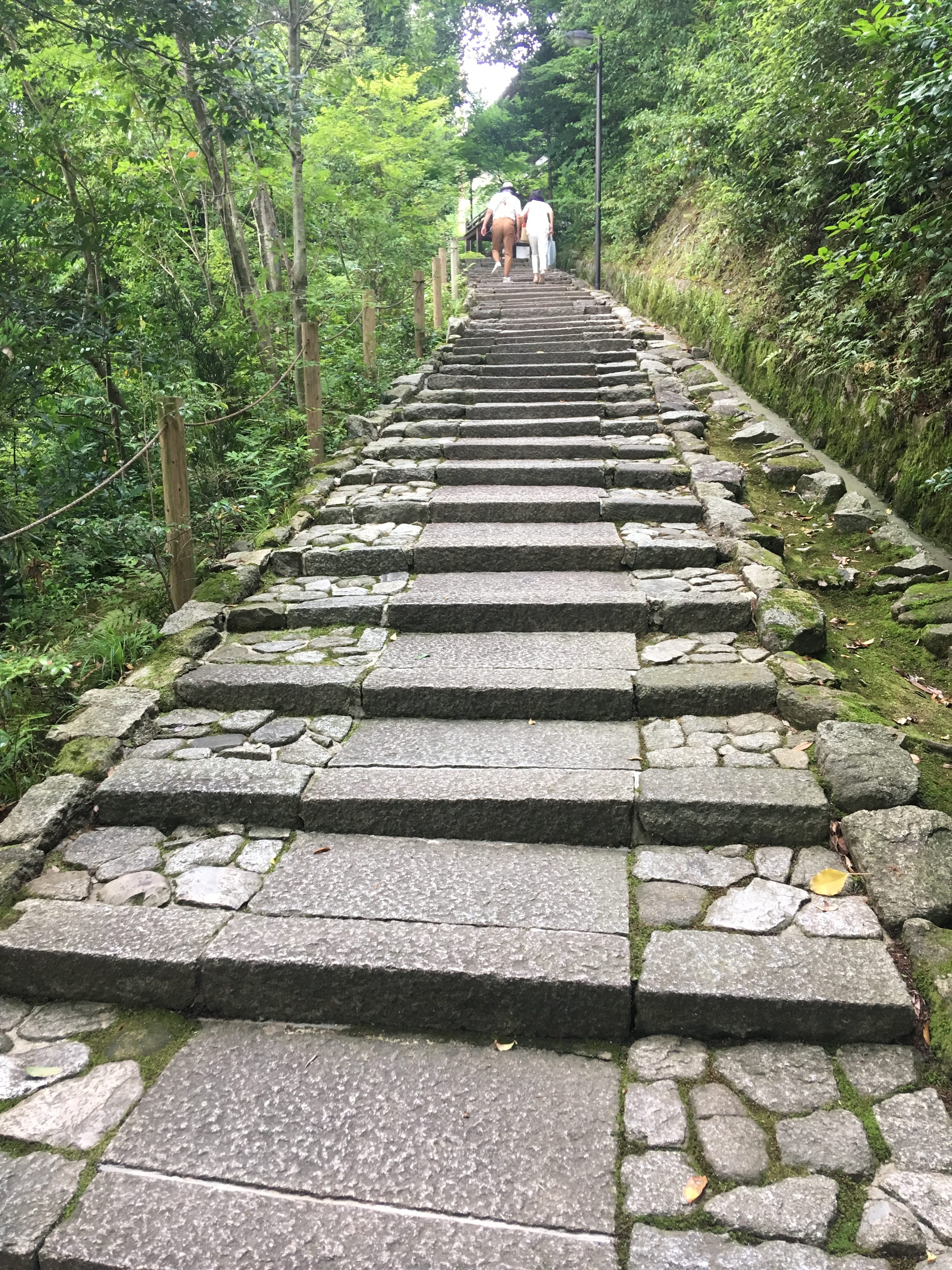
A common theme was stone steps.
As we entered one of the compounds, we caught sight of something humping back and forth in a tiny glass cage.  We both recoiled in shock, then approached it slowly.

“Oh, thank god … It’s mechanical,” Lynn said.

“I thought it was a crippled child!” I said, relieved.  I can say “crippled,” which is politically incorrect now, because I spent much of my youth at Shriner’s Hospital for Crippled Children.  They changed the name to something less pointed years ago.

“I thought it was a very small disabled person,” said Lynn.

I believe visitors were were meant to make an offering, then stick their hands into the tiny window to touch the bodhisattva for good luck.

We walked beyond each shrine and climbed steps as far as we would go.  We were the only visitors to a cemetery where Princess Sen was buried.  This was something we gleaned from a map or guidebook, but there was nothing to mark where she was interred or who she was.  The views were worth the climb.  It was silent except for an occasional bird call.

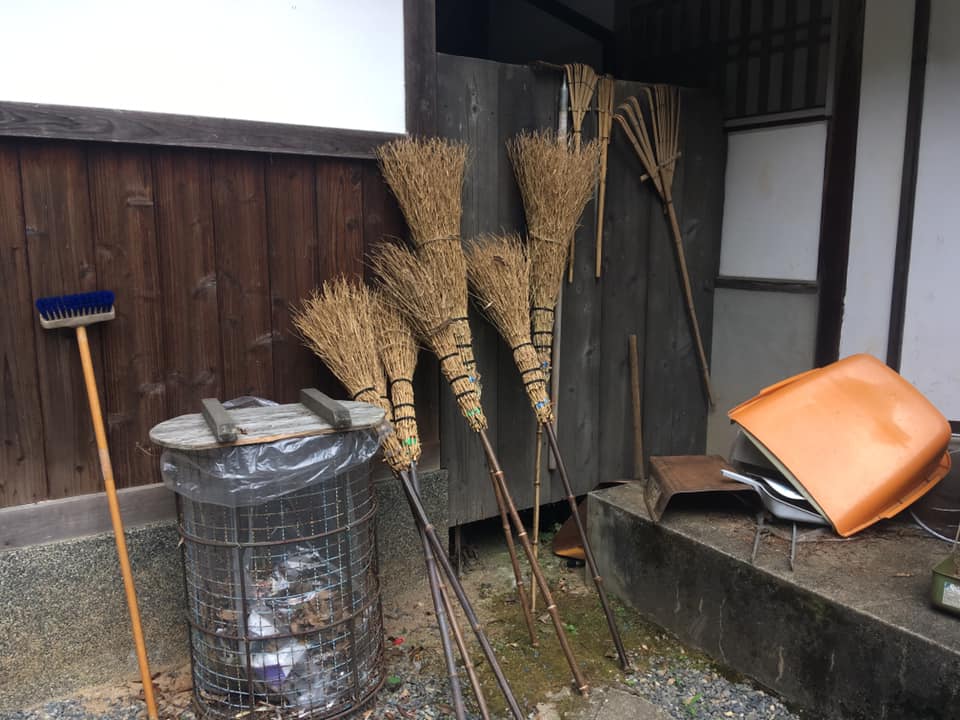
The serenity was thanks to these and other hand-tools.
Later, in a garden, we sat on a bench and observed a gardener at work.  You may just be able to make out his silhouette in the center below.  He worked on his knees, wearing long pants, a long-sleeved shirt, gloves, and a traditional straw hat.  Using a hand-trowel, he knelt forward and dug away at something.
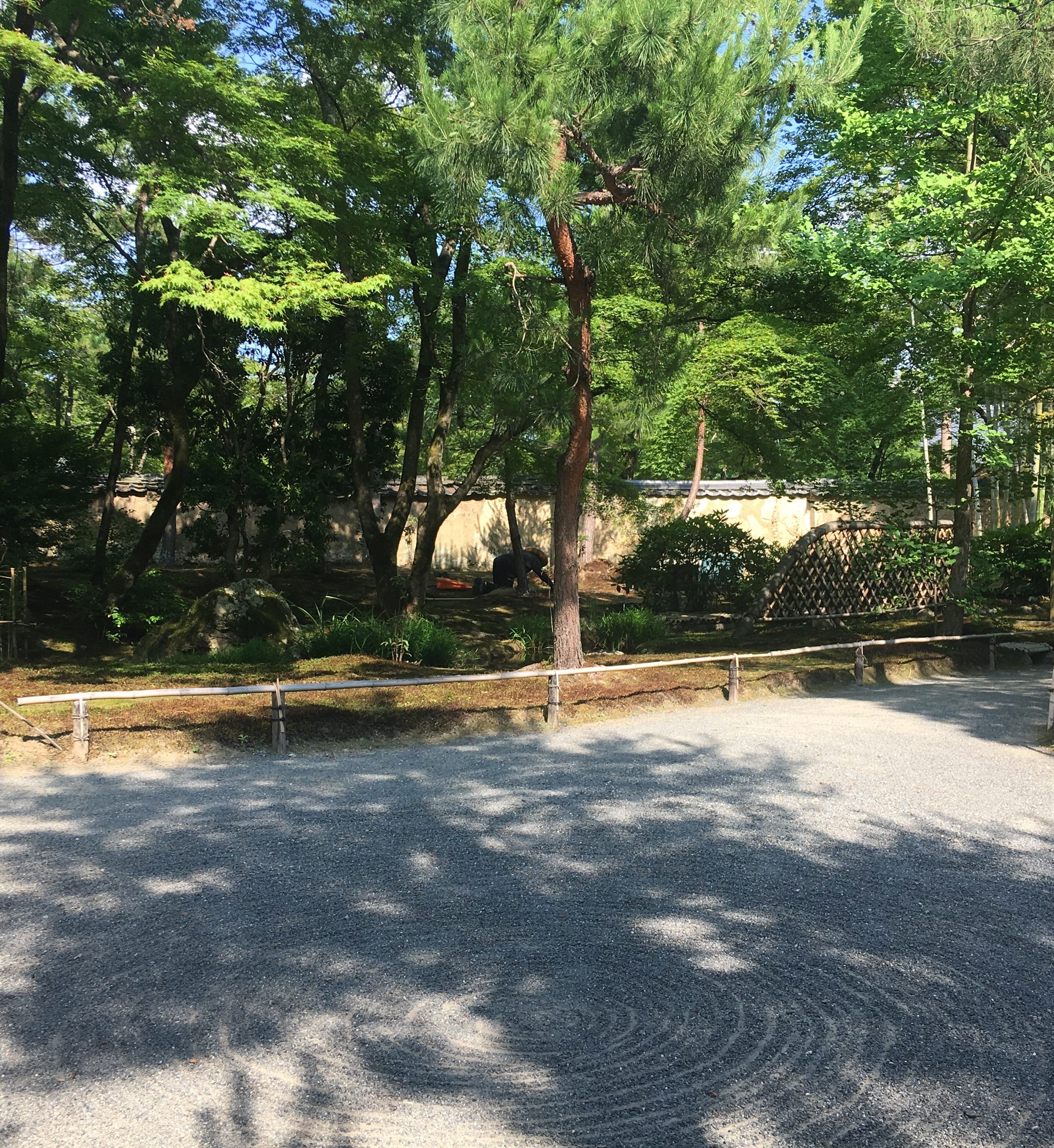
Then he sat back on his knees and stayed that way, looking down at his work, before working away again.

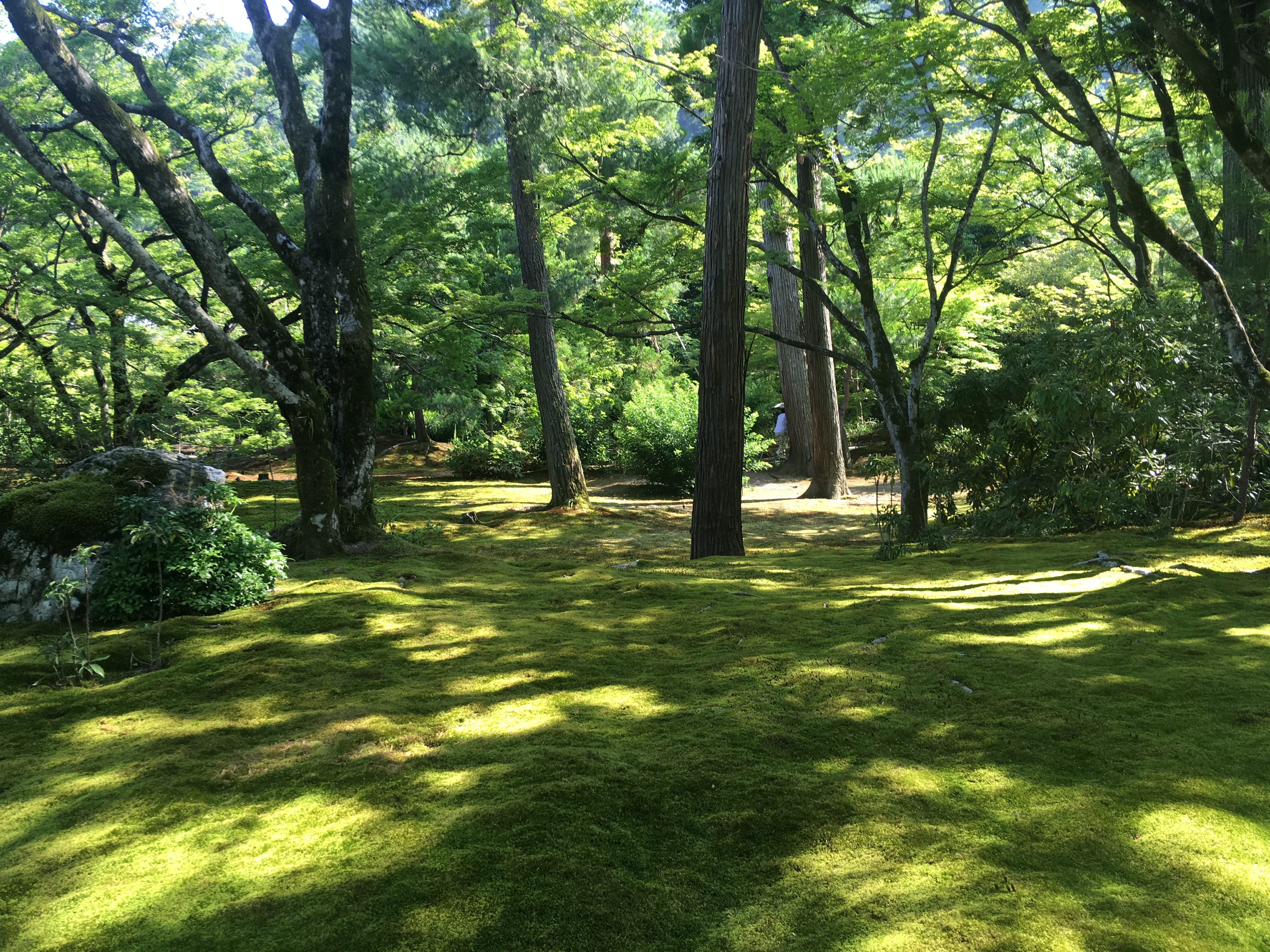
Getting things done fast was clearly not a priority.  We didn’t see any other gardeners.  How he did he keep it all up—was this such an old, established garden that it didn’t require much maintenance?  That seemed unlikely.  There were ponds and bridges, moss lawns and trees,  and meticulously-raked sand.

“I saw those prehistoric trees in the outback, in Australia,” I commented.  “They’re low maintenance for sure.”

“Maybe there isn’t much to do now because it’s the rainy season,” Lynn said.  That seemed like a possibility.

At the bottom of a set of stairs we admired this goddess.

“She looks like a Buddhist version of the BVM,” I said.

“Yes,” Lynn replied.  The Virgin Mary with wings.  She’s lovely.”

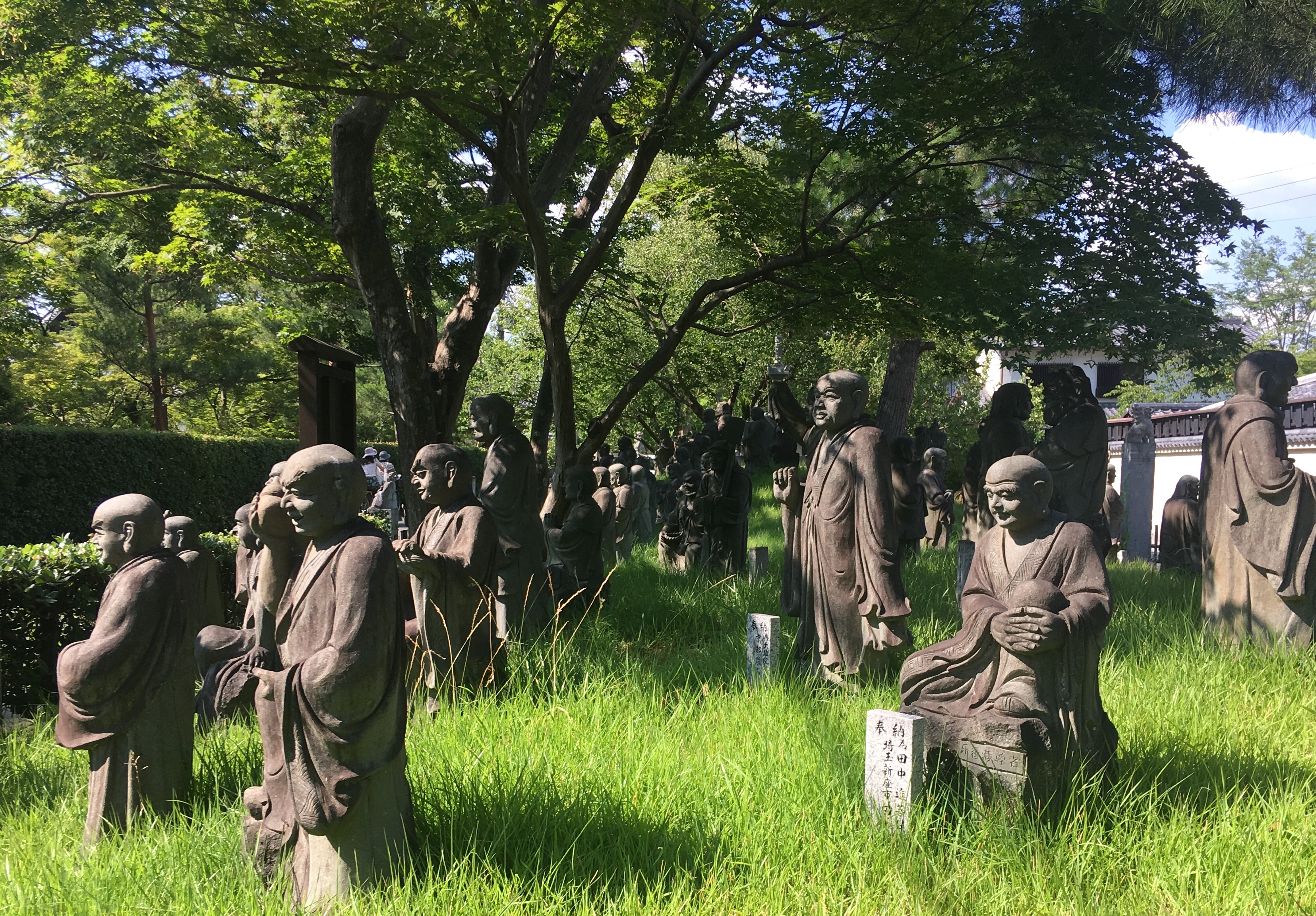
As we exited a garden, we were greeted by stone welcoming committees.
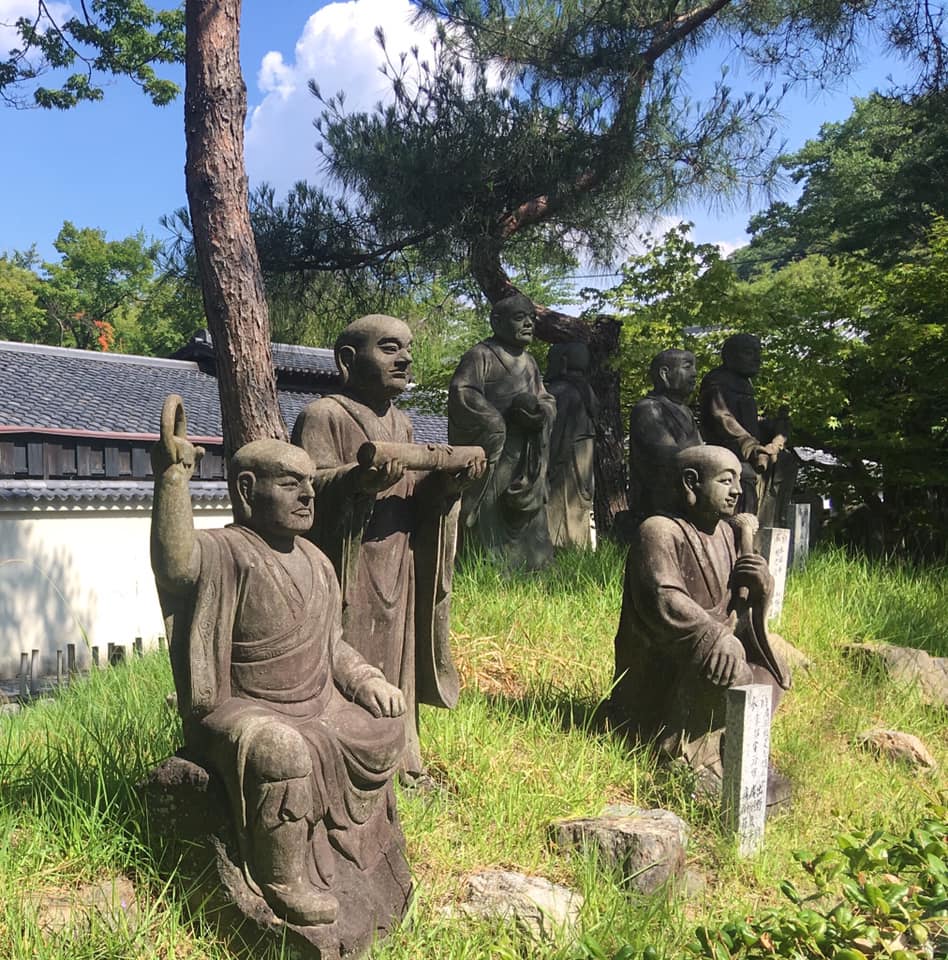
“Is it a cemetery?” Lynn wondered.  There were no signs.

“Or a garden store?” I guessed.  “You know, like in the US or the UK where you can buy gnomes and fake deer?”

“I like the cheery chap with the kumquat on his lap,” Lynn said.
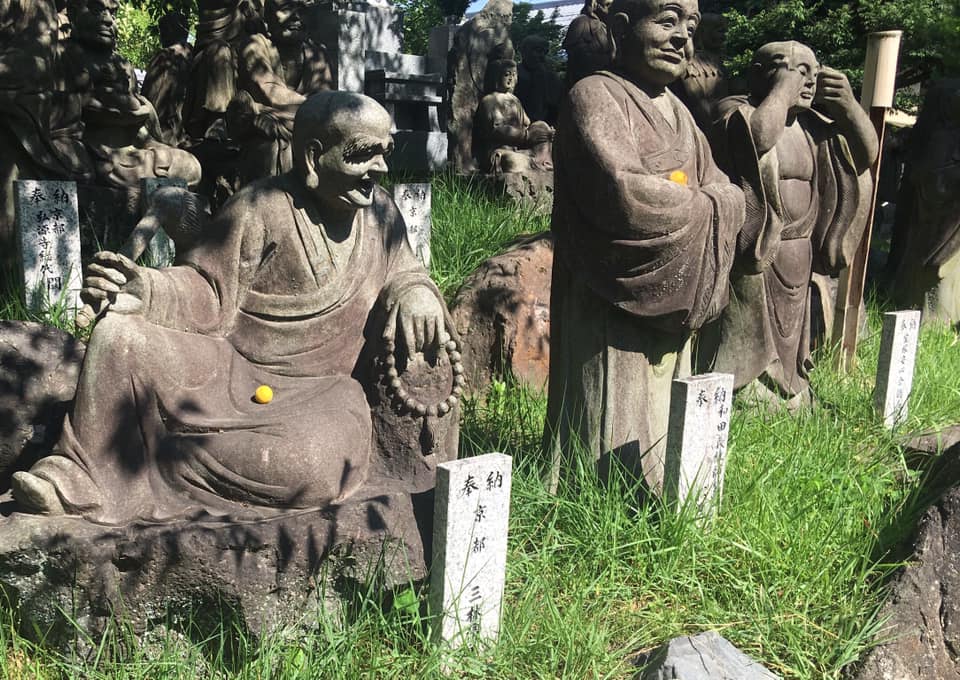
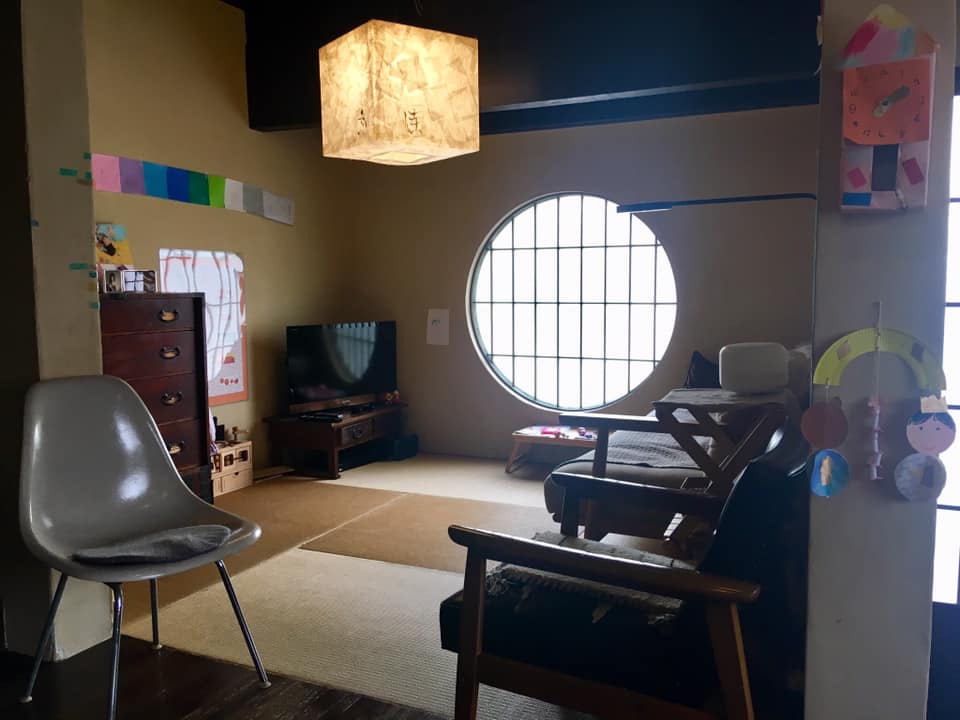
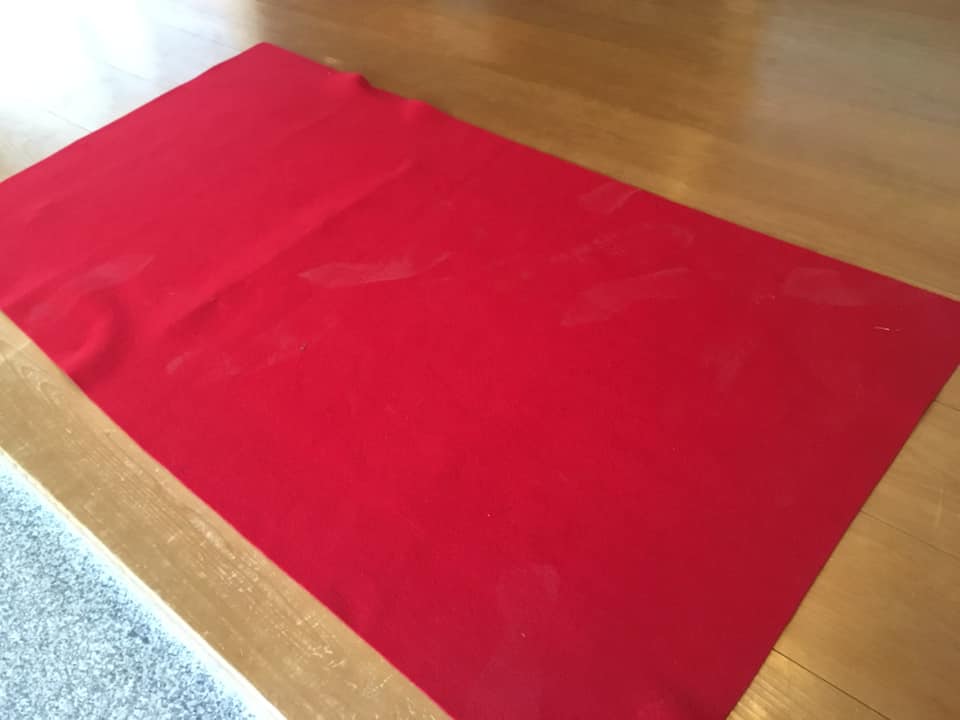
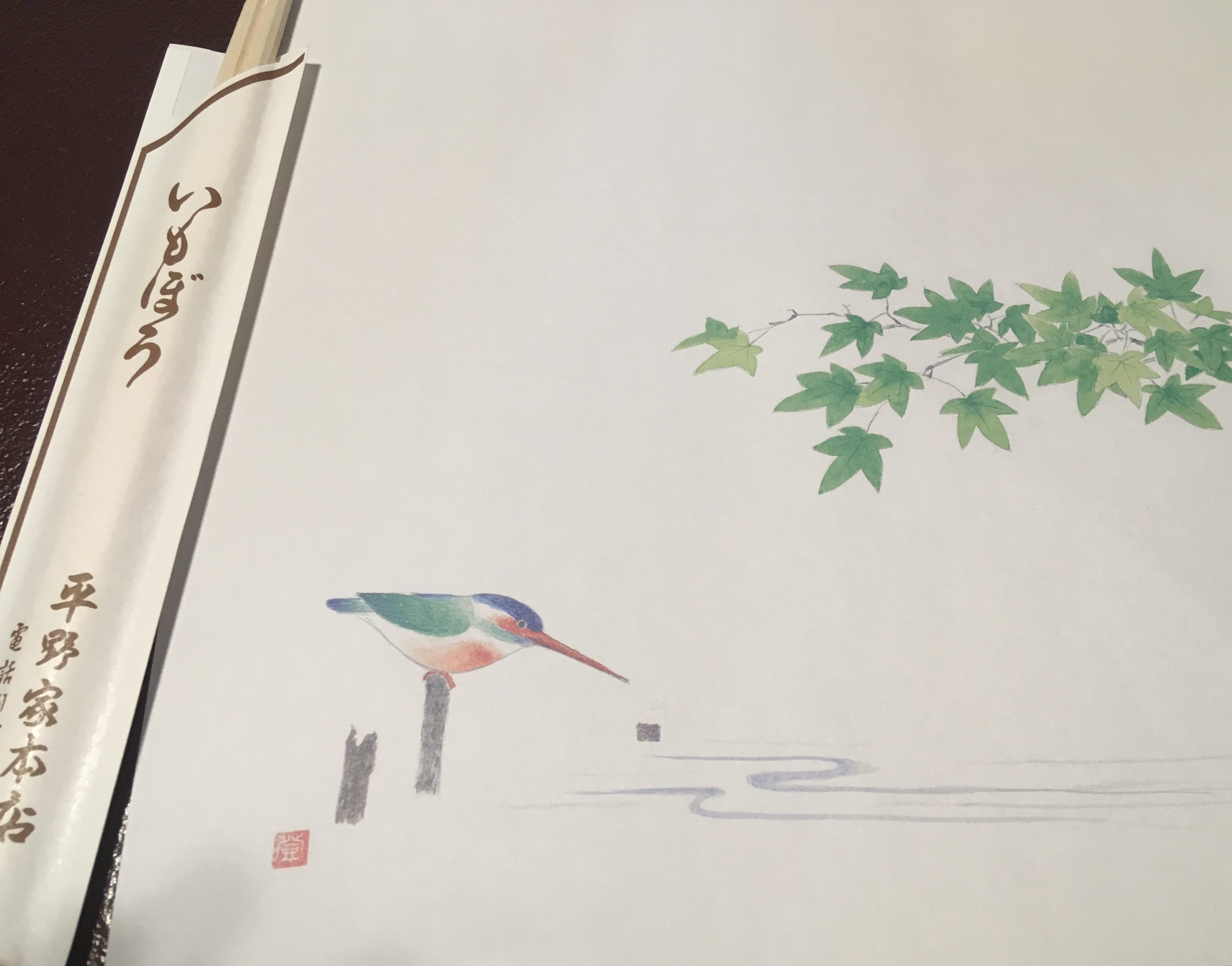
We found a tea house on the grounds and were led into a private room with sliding screened walls.  Everything was tranquil simplicity itself, including the placemats.
Based on the photo menu, I ordered the eggplant dish I’d enjoyed the day before. Untranscribable noises of appreciation issued involuntarily from me as I ate.  “Mmm…I have to ask Taro what this topping is,” I managed to articulate.  He had offered to answer any questions that came up after our class, whether about culture or cooking.
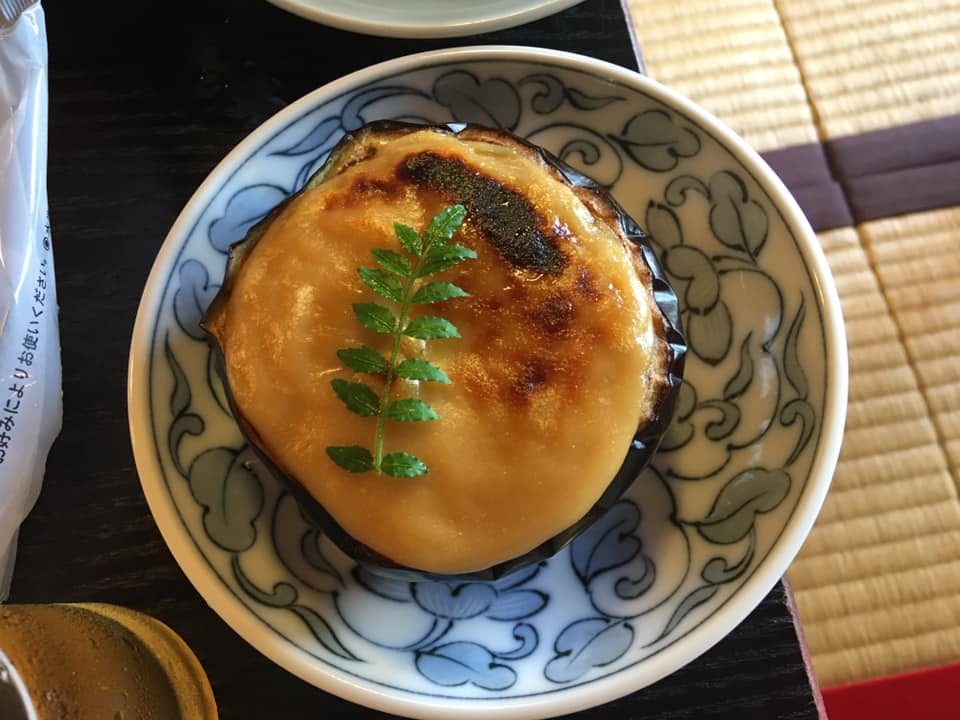
It turns out this was a sauce called miso dengaku, which is made with sake, sugar, miso, and a sweet wine called mirin.  It is used to top off eggplant, daikon, tofu, or whatever else your imagination dreams up.  I’ve tried making it twice since returning from Japan, with mixed success.

Japan is a land of contrasts.  Later that evening we dined in a dive that featured horse meat sashimi, innards stew, and deep-fried chicken cartilage. Some of the customers were smoking inside, something I experienced here and there throughout the month.
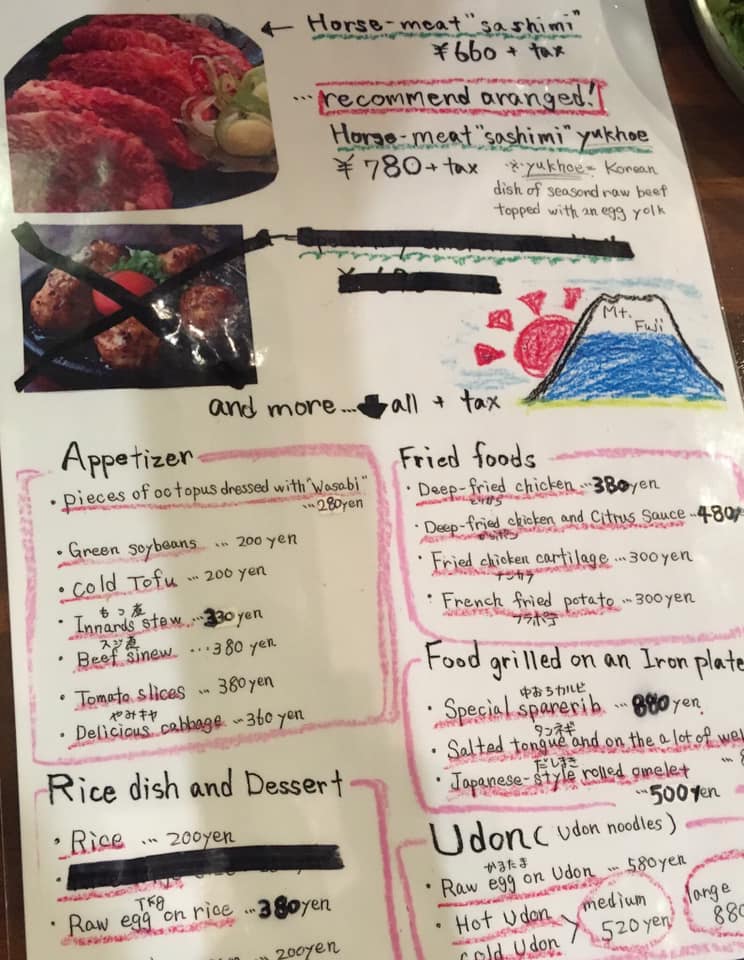
On the plus side, the place had great vintage beer posters.

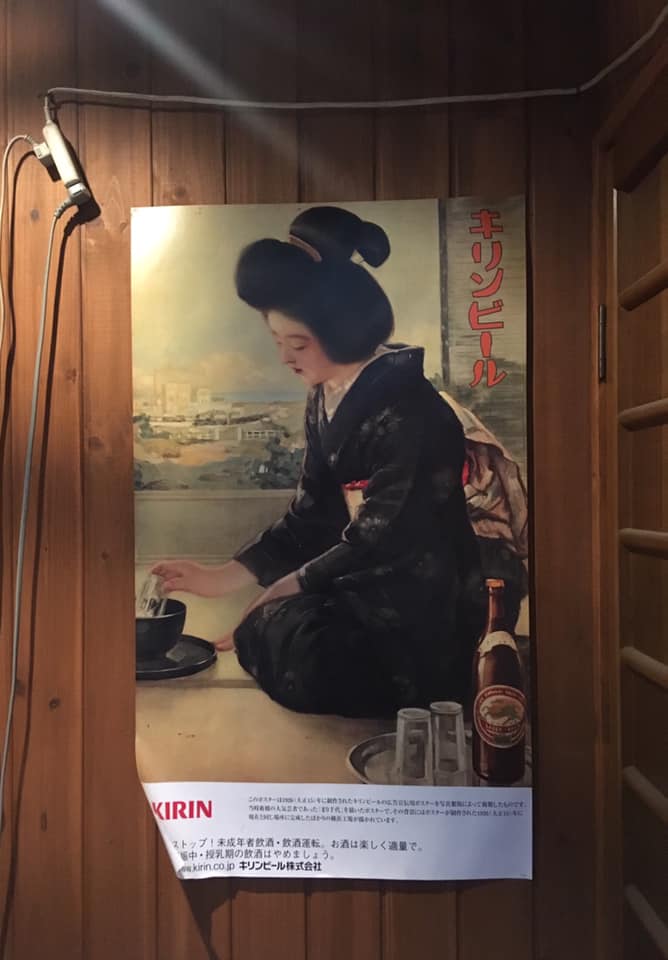
We ate nuts and talked about international development.

How do you categorize a wealthy country that eats horses, we wondered?
Brexit, Burdock, Geisha, and Beans

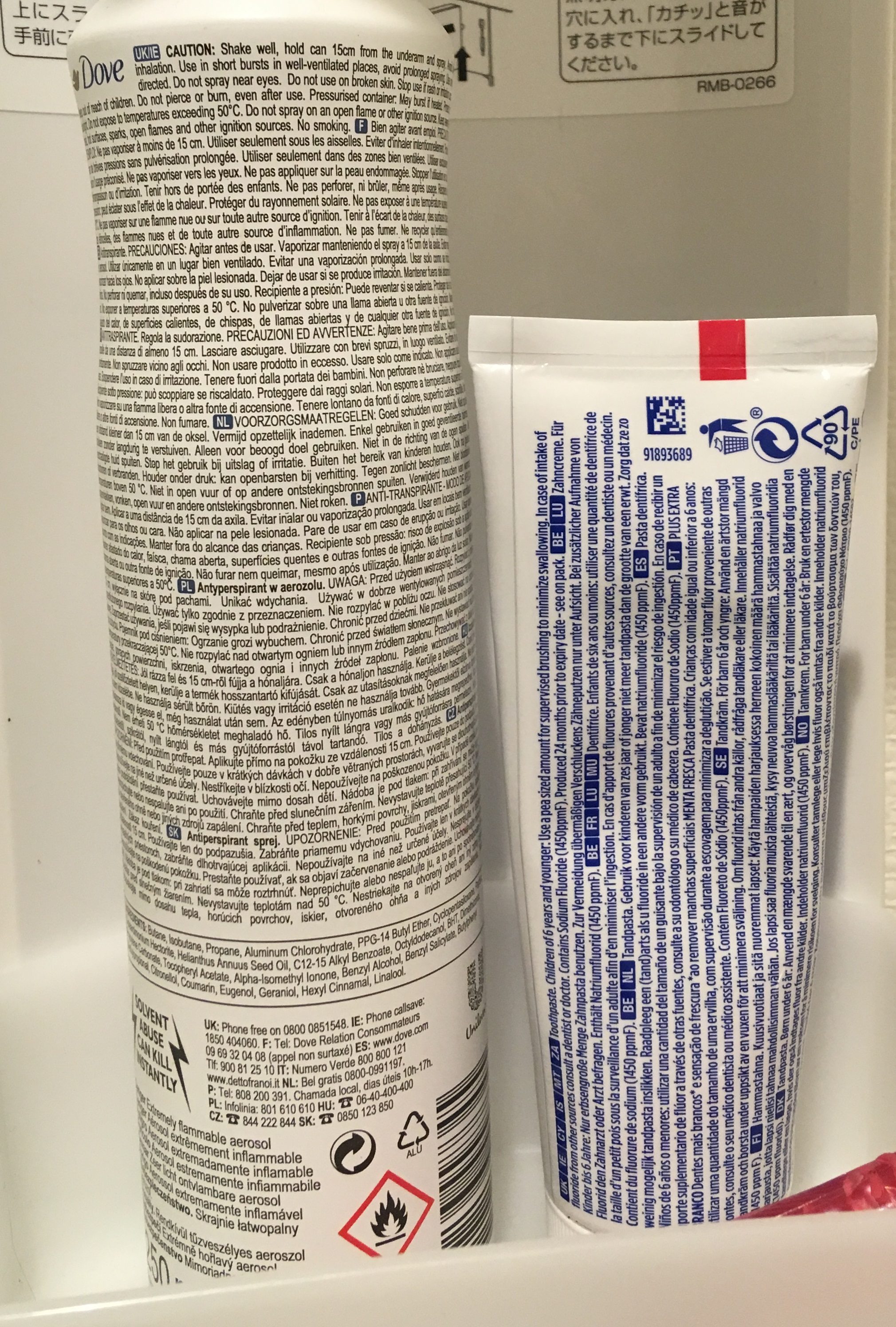
As I stood in the bathroom at 3am stamping my feet to try and get my Restless Legs to go away, I noticed the labels on Lynn’s toiletries.

While I respect all countries’ national pride, does every EU country really have to have precautions about not using more than a pea-sized dab of toothpaste provided in their own language on the back of toothpaste tubes?  Is the swallowing of too much toothpaste a menace to global health?

This is probably one of the things that drives Brexiteers crazy.  Brexit—Britain’s exit from the European Union.

In the US, we have watched, enthralled and horrified, as the country of our mother tongue and many of our ancestors rips itself apart in a very undignified, un-British manner. I imagined some Leaver—as Brexit advocates are called—standing in his tiny damp English loo right now, glaring at his toothpaste tube and muttering, “Bloody bureaucrats in Brussels ….”

The day was hot and humid again.  Lynn and I walked to the shopping district for one of our favorite travel activities, shopping.  We usually have some item in mind we want to buy as a gift. Something that provides the excuse to go shopping. I was looking for a knife for Vince, and Lynn wanted sake for Richard.  But the purpose of shopping was really to experience what stores and products were like in another country. We hardly ever end up buying what we are purportedly looking for, and almost always buy something we didn’t know existed until we saw it on a shelf.

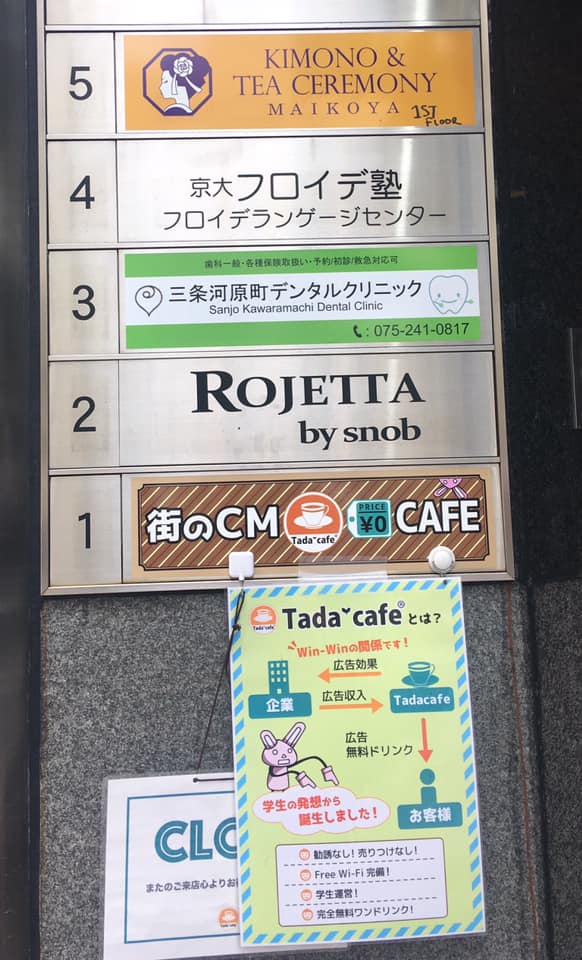
Here are some sights we saw along the way.  This sign, advertising “Rojetta by Snob.”

I hope it’s a bad translation and someone’s name isn’t actually Snob.

Samurai movie posters.

Me with the Japan Rail mascot, I think.  It must have been 100 degrees Fahrenheit inside that costume.

This lovely deco building was kitty corner from Takashimaya, our destination department store.

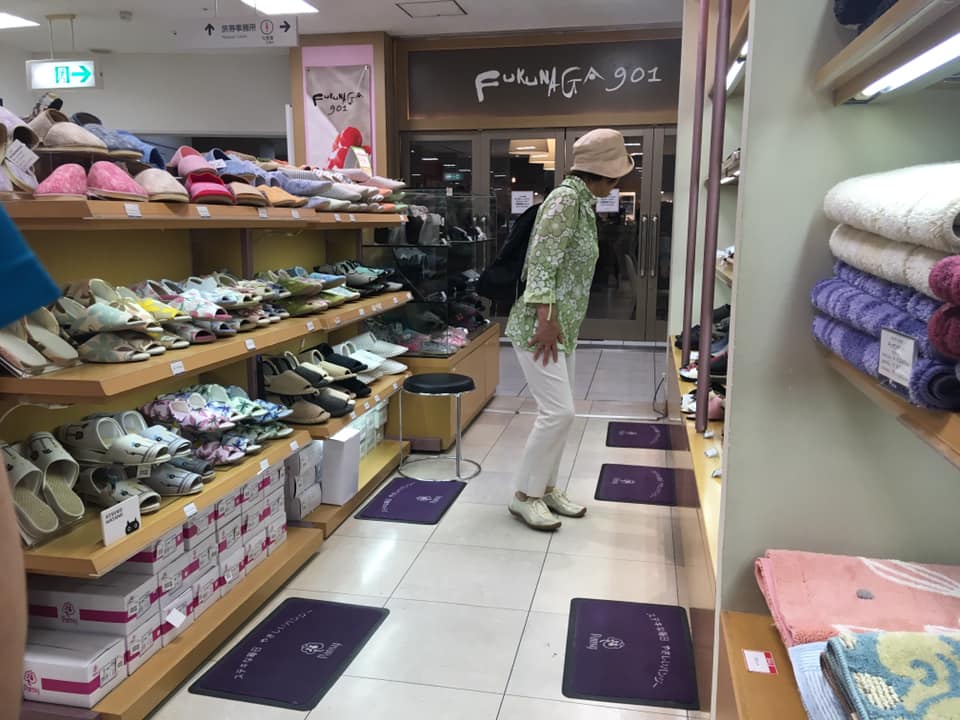
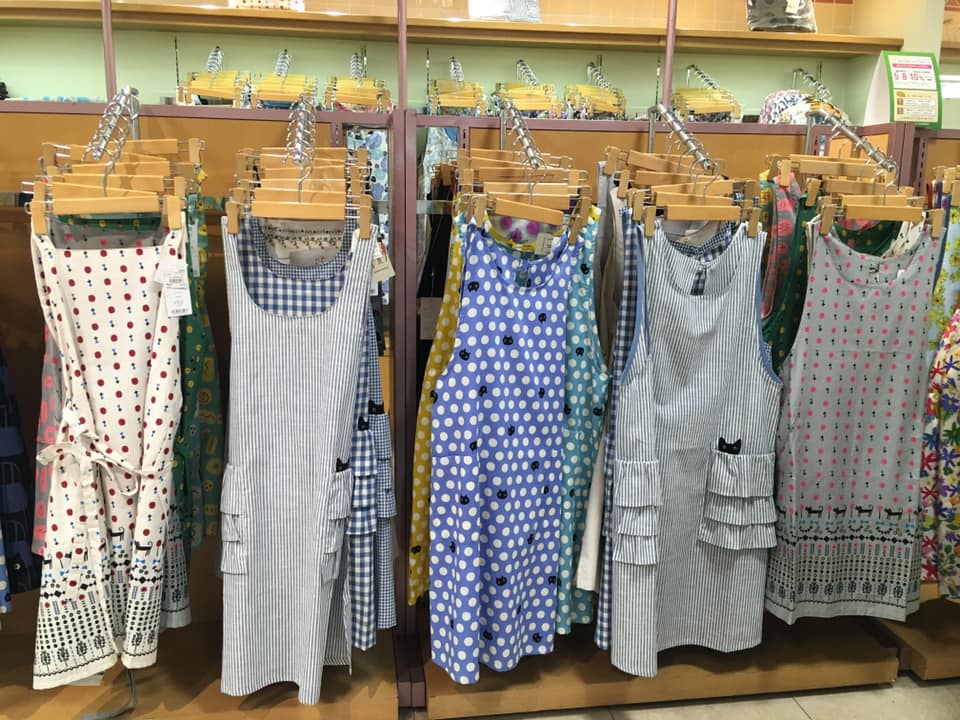
Takashimaya is like Harrods’ in London or KaDeWe in Berlin—floor after floor of luxury goods you cannot afford.  But Takashimaya also had quotidian items like slippers and housedresses.

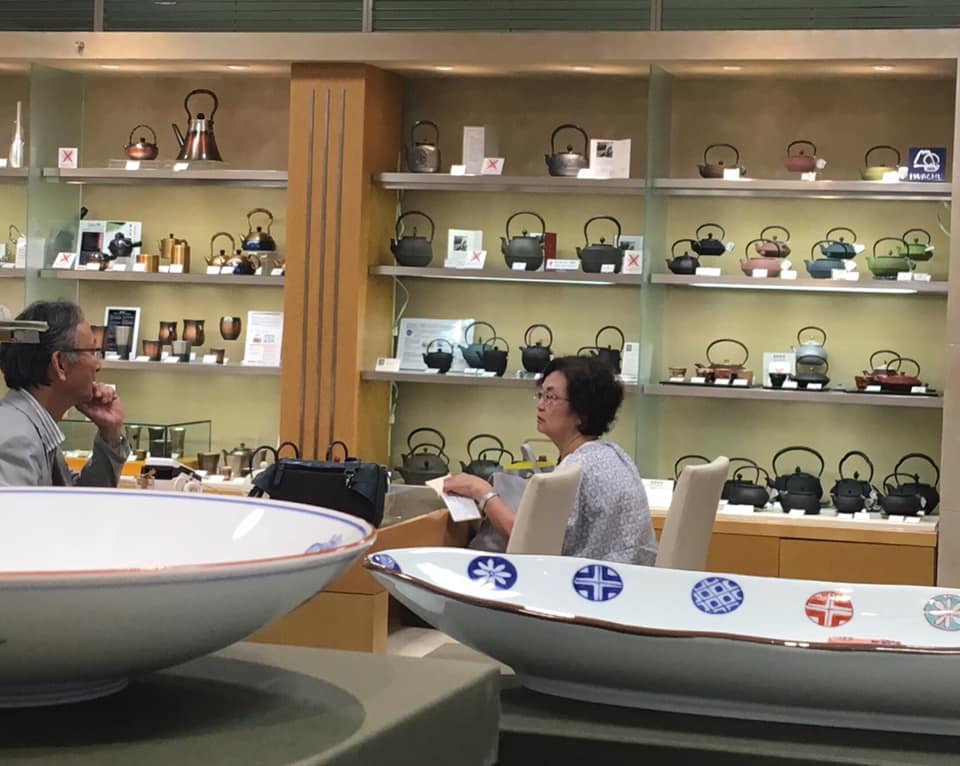
There were sections of tea pots and chop sticks.  I didn’t get too close with my camera because no one but me thought this was remarkable.

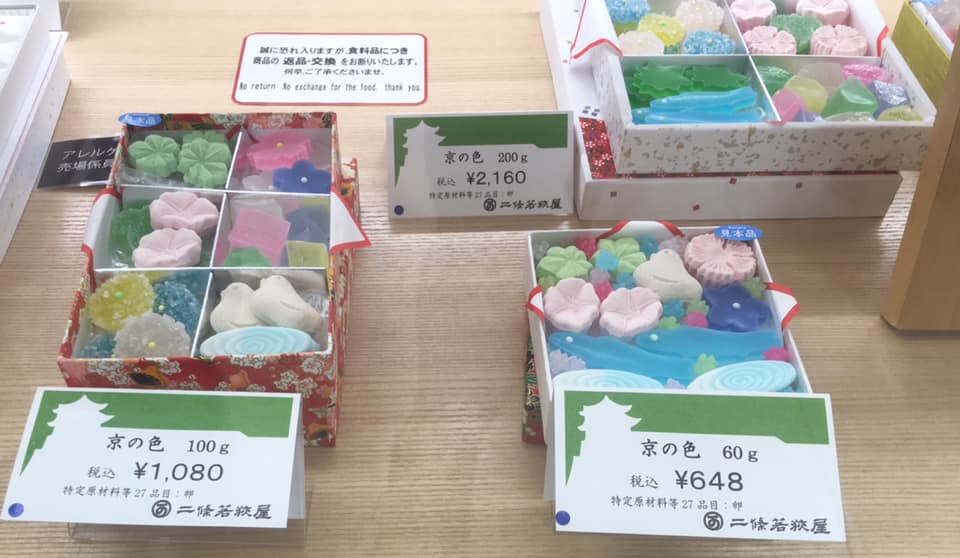
The sweets section was so vast I had a moment of panic thinking we wouldn’t be able to find our way out of it.

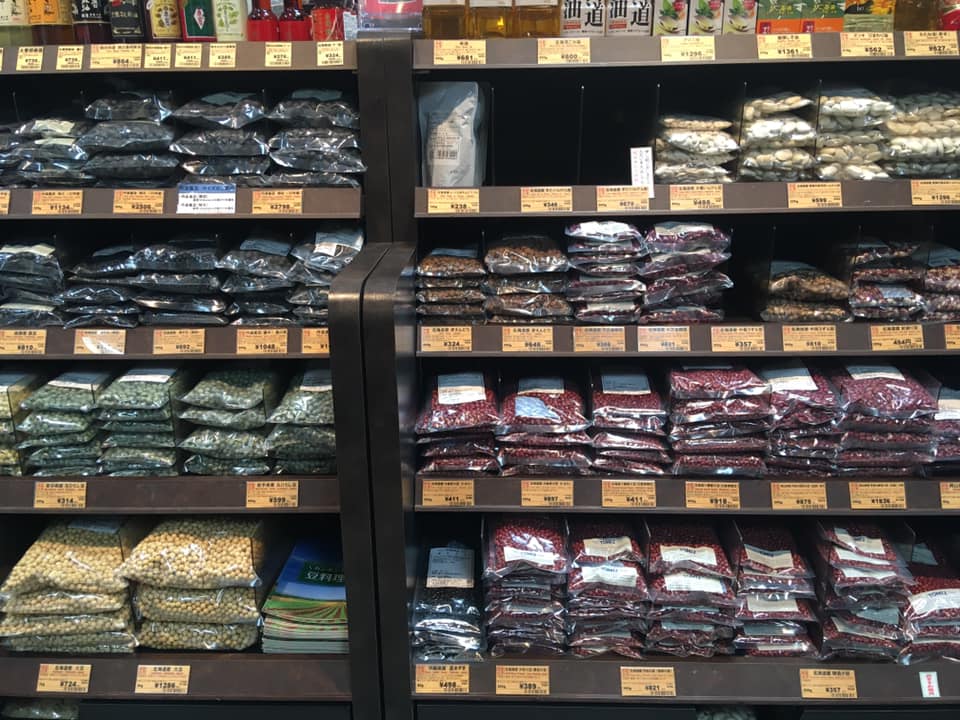
We spent most of our time in the packaged foods section.  Beans were big.

So were dried fish.  Please never buy Manta Ray fins.  The way they are harvested is barbaric.

I bought bonito flakes, red beans, and burdock root, which Taro had told us is referred to as “no doctor” root because of its medicinal properties.

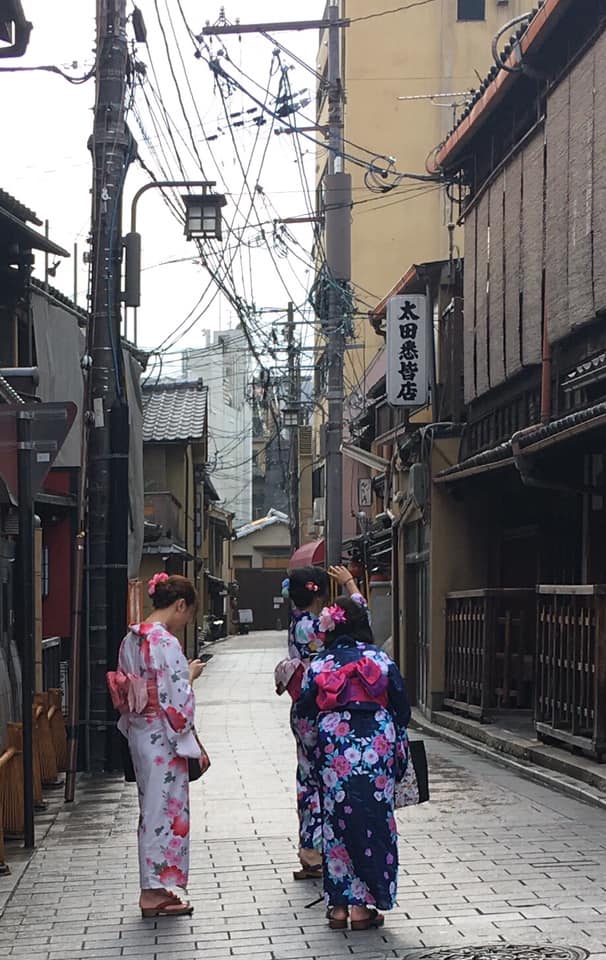
Outside, there were flocks of young people—Japanese? Chinese? Korean?—dressed as geishas and snapping selfies.  It must be fun to come to Kyoto for the weekend and play dress up.

What, exactly, are geisha?  I went through a geisha phase a few years ago.  I read the 1997 bestseller “Memoirs of a Geisha,” by Arthur Golden, a white man born in Tennessee.  I read the 2002 memoir, “Geisha, A Life,” by Mineko Iwasaki, an actual geisha active in Kyoto in the 60s and 70s.  Golden’s novel was supposed to be based on her life; he interviewed her but apparently she was dissatisfied with his rendition and her book is meant to set the record straight.  Her book is heartbreaking and intriguing for what she implies but doesn’t say directly.

We were off to spend the afternoon at the Yasaka Jinga Shrine.  Or was it the Chion-in Temple?  Or the Shoren-in Temple? They’re all part of the same large complex.  We stopped to refresh ourselves at a café near the entry gate.

I’ll tell you this for free—burdock root may have medicinal properties but it is not a good substitute for French fries.  We sat gnawing on burdock fries washed down with non-alcoholic beers, then sauntered on.

Timing is everything.  If we had had regular fries we might have missed seeing this Shinto wedding.  The large hat covers the bride’s horns. Yes, horns.  You know us women, we’re devilish like that.

Cooking with Taro

I had read about Taro’s cooking classes in Fodor’s Easy Guide to Tokyo, Kyoto, and Western Honshu.  These easy guides condense monumental travel planning into one succinct guide.  I had found the Australia version immensely helpful.  For them to include this cooking class said a lot; the guide said it was the highlight of many visitors’ trips.  It was certainly one of mine, if not the only one.

Taro had made it clear in our email communications that he is not a professional chef, but a passionate home cook who loves to share Japanese cooking and culture. He told us a bit about his background.

“My father’s company relocated us to America when I was nine,” he said.  “He could have moved us to Seattle or some other place with lots of Japanese, but he purposely chose Virginia where I was the only Japanese in a school of a thousand kids, so I learned English quickly.  It was a good idea of his.”

He asked about our impressions of Japan so far, and I mentioned how quite it is.  It was Taro who explained this was about harmony and getting along with others.

“So…” I asked, “How do you explain World War II?”

“Ah … that was, that was about colonialism,” Taro said as he got us chopping.  “Japan saw Britain and America invading other countries and didn’t want to face the same fate.”

I have no idea if that’s accurate.

He encouraged us to ask him anything we liked about Japanese culture or food.  Taro had started cooking in high school because he was a picky eater and wanted to control his own food.  This morphed into cooking for his family and friends, and now he eats almost anything.

I told him about the chicken chops.  He explained that chicken is raised so cleanly in Japan that there’s no need to cook it thoroughly, and in fact raw-ish chicken is considered a delicacy.  Hmm.

He gave us a hand out and an overview of our 3-4-hour lesson.  We would learn how to combine kombu (seaweed) and bonito (fish flakes) to make dashi, a base used to many dishes.  We would also make a Japanese omelet, stir-fried root vegetables, and wagu beef.

I told him about my misperception that Japanese eat sushi morning, noon, and night.  He said he makes sushi for his family about once a month.  “It’s just one style of Japanese food.”

Taro walked us through the various seasonings like miso, soy sauce, sake, mirin, and of course, dashi. He pulled out the beef and its certificate of authenticity.  He talked at length about Kobe Beef and Wagu beef, none of which I remember.

He got Lynn up and cooking at the stove.

Taro’s wife and two young daughters came home.  As kids do, the girls immediately turned on cartoons and sat glued to the TV.

Taro had been teaching cooking for 10 years. He had also tried distributing an oil bottle that had a built-in brush in its cap; it sounded like there were 10,000 left over in his spare room.

“I want to focus more on teaching culture,” he said.  “That’s my next venture.”  It seemed to Lynn and me that cooking was an excellent gateway to teaching about culture.  “It’s hard to imagine people paying the same price but not getting a meal,” Lynn commented later.  I agreed but wish him well.

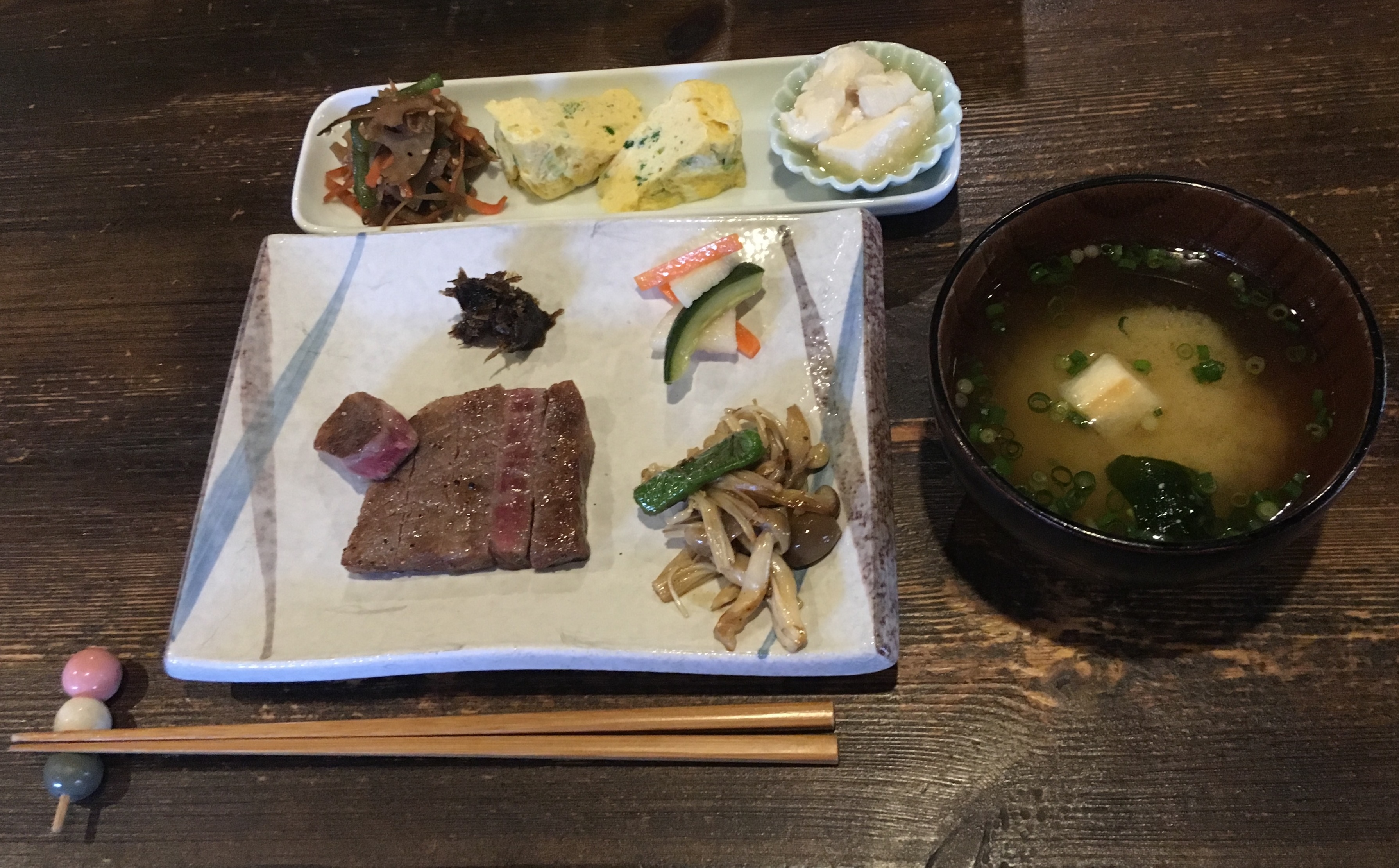
This was our meal.

Taro left us to eat while he and his wife busied themselves elsewhere in the house.  Then he emerged to collect our fee.  When I had inquired about the class I had said we would be open to either the vegetarian or beef version.  He chose the beef version for us, which cost $82 vs. $64 for the veggie option.  It was well worth it.

Taro gave us good directions back to the bus stop.  It was pouring and the bus was packed.  Lynn and I clung to the straps.  Sitting below me, a little boy in a Spiderman costume kept saying, “Hah-loh!” to us shyly, as he leaned against his grandma.

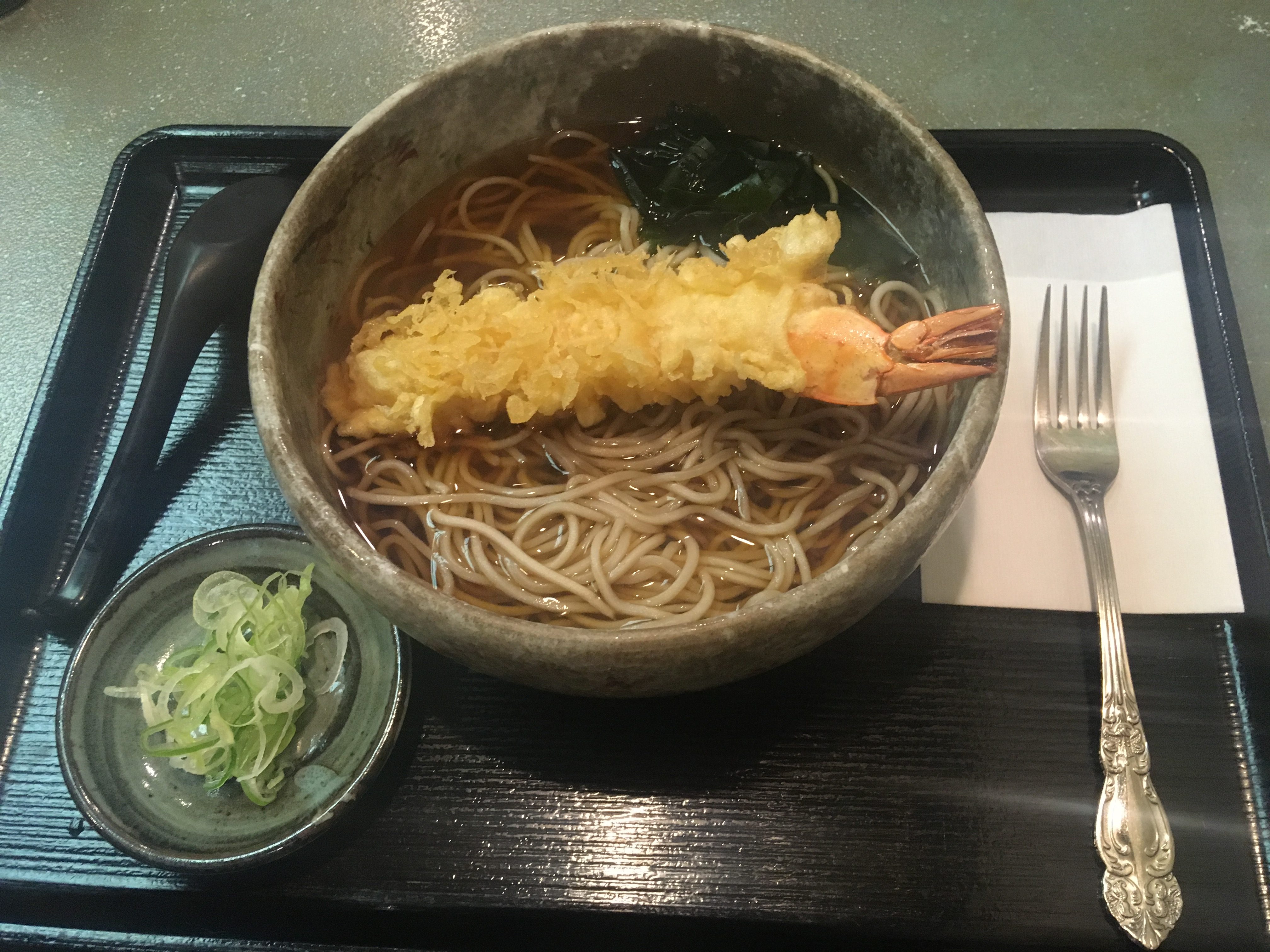
That evening we had a modest tempura ramen and sake, then slept well because our neighbors had moved on.

Chicken Chopped!

As we waited for the bus, Lynn and I recalled the noisy neighbors and laughed over our meal experience the evening before.

“Maybe the chicken was an omen about the Chinese,” she said.

We had walked up and down the main drag near our hotel seeking a good restaurant, then any restaurant.

I had arrived in Japan anticipating I’d be able to eat sushi for breakfast, lunch, and dinner.  I was aware there were other Japanese foods, like tempura and ramen, but that was about it.  I thought all Japanese food was healthy, lean, and fresh.

Every guide will recommend eating kaiseki in Kyoto.  Kaiseki is a type of Japanese haute cuisine that features local, in-season foods.  We never had it because it was too expensive. On the evening in question, we found a basement-level kaiseki restaurant despite its best efforts to hide, but the set meals started at around $70 per person.

“The guides said to eat kaiseki at lunch, when it’s a lot cheaper,” I said as I read the board.  But the lunches on offer here started at $50 per person.  “I’m sure it’s wonderful, but fifty bucks for lunch?”

“And we have to make a reservation,” Lynn read.  “We only have two days left.”

“What if it turned out to be 50 bucks worth of that grey, shredded-tire-like stuff?”

We walked on.  There was an Irish pub and an Italian pizza joint.  Several Japanese places were already closed.  The only Japanese-style restaurant open was a steak place.

“I hadn’t expected the beef here to be so fatty,” Lynn said.  “It makes sense; fatty beef is more tender. But it really is different from British beef.”

“I’m starving.  Okay with you if we just eat at the pizza place?  At least it’ll be familiar and we can order fast.”

We sat at the bar.  Lynn had no trouble ordering but I don’t eat pork, and most of the menu items involved pork.

“I’ll have this,” I told the waiter, jabbing my finger at the “personal pizza with chicken chops.”

“What are chicken chops?” Lynn tried to suppress her laughter.

“I don’t know!” I chuckled.  “For some reason it sounds hilarious, and more ominous than something specific, like chicken feet, or chicken beaks.”

Whatever they were, they were raw.  I looked down at a pizza covered in chicken meat oozing with blood.

“How ghastly!  That can’t be right!” Lynn exclaimed.

With Lynn’s help I managed to flag down the waiter and ask him to cook the chicken more.  He looked at me, puzzled, but took my plate and returned it with the chicken still pink but not bloody.

“I can’t eat this,” I said, “I feel bad because I like to think of myself as an adventurous eater.”

“Well there’s adventurous, and there’s salmonella,” said Lynn.

I removed the chicken chops and tried to eat the pizza, but just the thought of chicken blood oozing into the crust made me gag.

However, for the rest of our lives, whenever Lynn or I want to crack each other up, all we have to say is chicken chops.   It’ll be one of those little inside jokes no one else gets.

We arrived at the bus stop where we were to meet our cooking teacher almost an hour early.  There was nothing around but a little tea shop set in a lovely, wild garden, so we stepped in for another tea break.  We were the only customers and the elderly proprieter talked to us a while about the garden that he and his wife had spent a lifetime developing.  It was serene.

Back at the bus stop, a young man approached and stuck out his hand to introduce himself. We had corresponded over email. “I am Taro,” he said.  Then he spun around and walked briskly through alleys and streets, turning so many times we would have never found our way back to the bus stop if we lost him.

“Here we are,” he said as he invited us into his house.  His was the only Japanese house I would see the inside of.

We washed our hands and then sat at a table, ready to learn and be put to work.

Neighbors

Poor Lynn.  Normally I think she would stay out past the dinner hour and stay up until 11pm or midnight.  Traveling with me, in tiny hotel rooms, she is kind of forced to turn the lights out by nine.

I’m not a night person, but I could certainly stay up until 11 if I wasn’t always exhausted in the evening thanks to Restless Legs.

At the guest house, I went to fetch an extra wash cloth to clean up before going to bed.  On the way back I encountered a trail of Chinese guests carrying chairs and booze bottles into the room next to ours.

“Um, things don’t look good,” I told Lynn as I stood with my back pressed against the door.

“Are your legs already creepy crawly?” she asked.

“No. We’ve got neighbors.”  A din or boisterous voices began to build up on the other side of the wall.

“Listen to that woman’s laugh!” I said in astonishment.  Some people just have loud, braying laughs.

“I can picture her—she’s either the life of the party or the one everyone dreads arriving.” Lynn said.

I knocked on the wall and there was immediate silence.  This lasted about three minutes, then the laughing woman said something declarative and the talking began again accompanied by loud music and the sound of the door banging over and over.  More guests must be arriving by the moment.

“How annoying!” Lynn said.  “Do they think the music will help cover up the talking?  This is really not on!”

Dealing with noisy neighbors is always tricky.  I recently tried to talk to a “neighbor” about his barking dog.  I thought we could work it out between ourselves.  But he—flanked by his barking, snarling Doberman and surrounded by four lunging pit bulls—went straight to “Fuck you!  Go ahead and call the cops if you don’t like it!”

Which is really irrational when you think about it.

“Okay, if that’s what you want me to do,” I said as I walked away—fast.  He lived on the next block, and as I fled some of the guys in the alley who were working on cars informed me, “He ain’t even ‘sposedta be living there.  It’s a vacant house.”

Would this encounter with me make him go postal, or cause him to skedaddle onto the next vacant house?

I double-checked all my door and window locks that night and looked around carefully before exiting the house the next morning.  Nothing bad happened.  And I haven’t heard the dog bark since.

I pounded on the wall and yelled, “Quiet!  Quiet!”  Lynn gritted her teeth.  At me or them, I wasn’t sure.

“It is only 9:30,” she said.

I sat back on my bed.  “So should we wait until 10 to go talk to them?”  Lynn looked distinctly unexcited at that prospect.

“There are so many of them—they must have more than one room.  This whole floor is empty except for these two rooms, I think,” she problem solved from our side of the wall.

I put in my earplugs.  In the morning Lynn reported they had partied until 1am, when they abruptly vacated the room.

“I feel a bit bleary,” she said.

“I feel great!” I replied.  “No RLS last night, for the first time in ten days!”  It’s amazing how quickly the body and mind refresh after one good sleep.  I prize these nights because they are so rare.

We had breakfast at a deli called Dean & Deluca. It seemed to cater to the expat crowd, with western style and Japanese dishes and a full stock of groceries, including ketchup.

Lynn had read about a paper shop, Wagami no Mise.  We found it despite its having no website, accurate mapping in Google, or signage. We spent an hour or so drooling over the beautiful wrapping paper, festival banners, cards, and origami papers.  I bought a load of paper and have no idea what I’ll do with it, but it was all so beautiful.

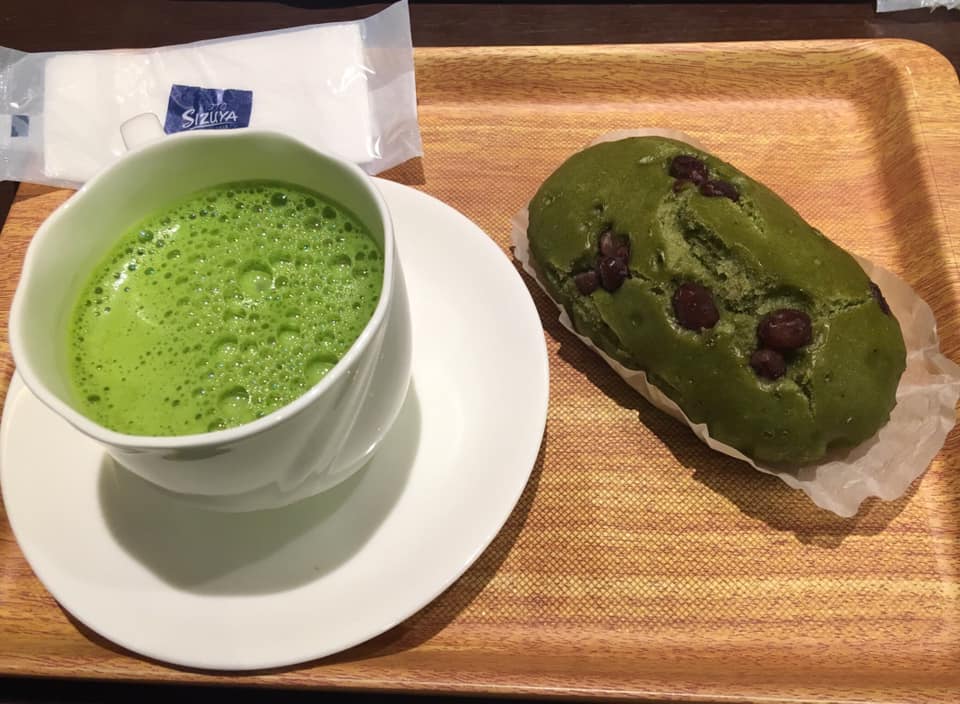
We located the bus stop from which we would travel to our cooking lesson.  We had a snack before boarding our bus: macha tea and a green bean bun.

Crimes Against Shoe-manity

Kyoto is a blur of memories.  Is that because I was traveling with someone, as opposed to being on my own when I have only my own observations to remember?

Or was it because Kyoto was not wat I expected?

It’s not a small town.  The population is around 1.4 million and the city is spread over a wide area.  The neighborhood we stayed in seemed like the business center, with one concrete high rise after another.

Maybe writing about it, with the help of Google maps, will help me put in order what we did.

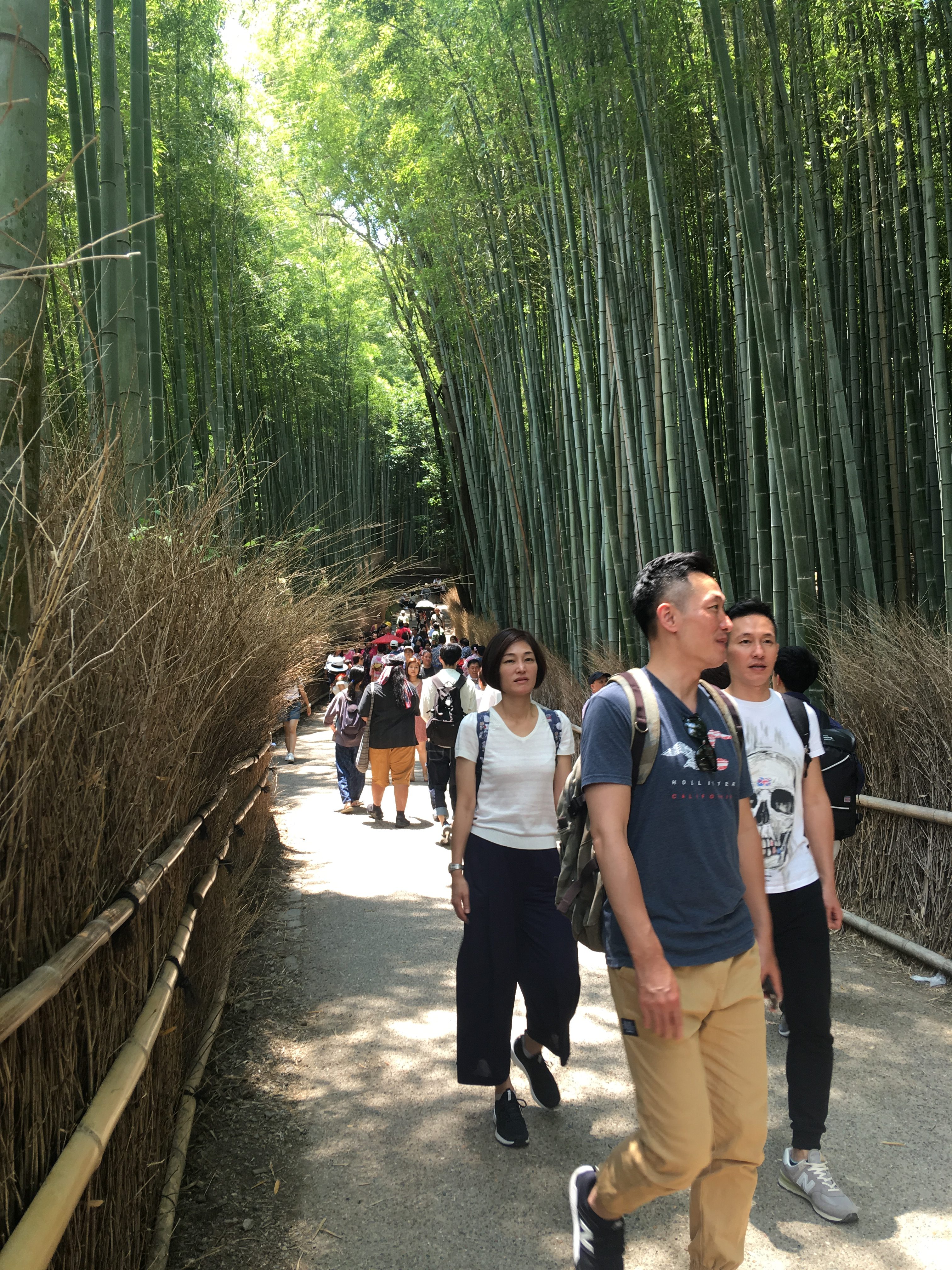
Day two: we took a half-hour train ride to the Arashiyama bamboo forest.  A young couple with a cute baby sat opposite us and we all smiled at each other and at the baby.  When we exited the train Lynn and I played the game where we guessed where they were from.

“The Philippines?” I posited.

“I thought they looked American,” Lynn replied.

Go figure, why we form the impressions about people that we do.  Probably both of us were wrong.

The forest was majestic. It was also oppressively hot and humid; even the younger tourists were dragging their feet.  “I have bamboo in my garden in Scotland,” Lynn reminded me.  “It grows in very wet places, so that must be contributing to the humidity.”

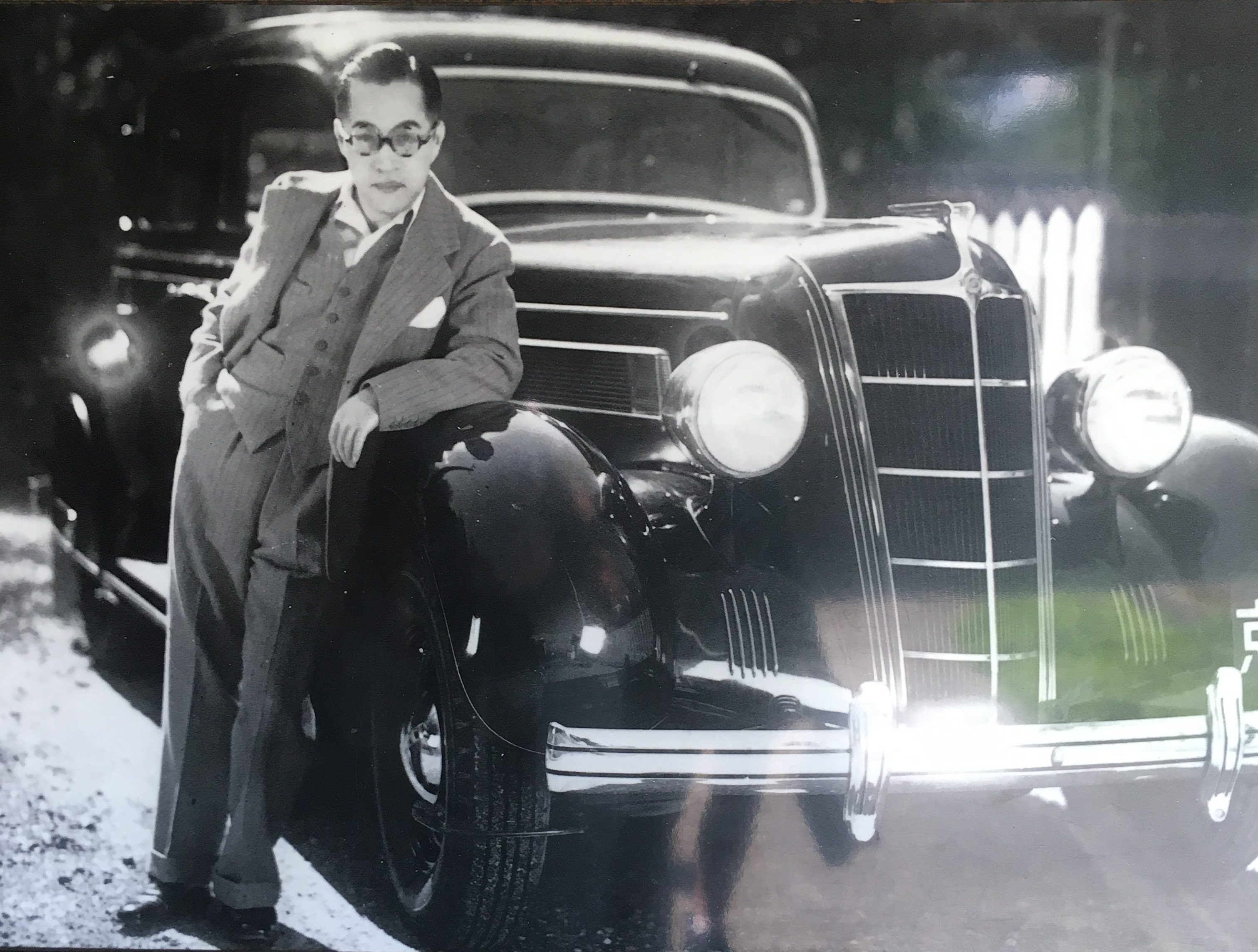
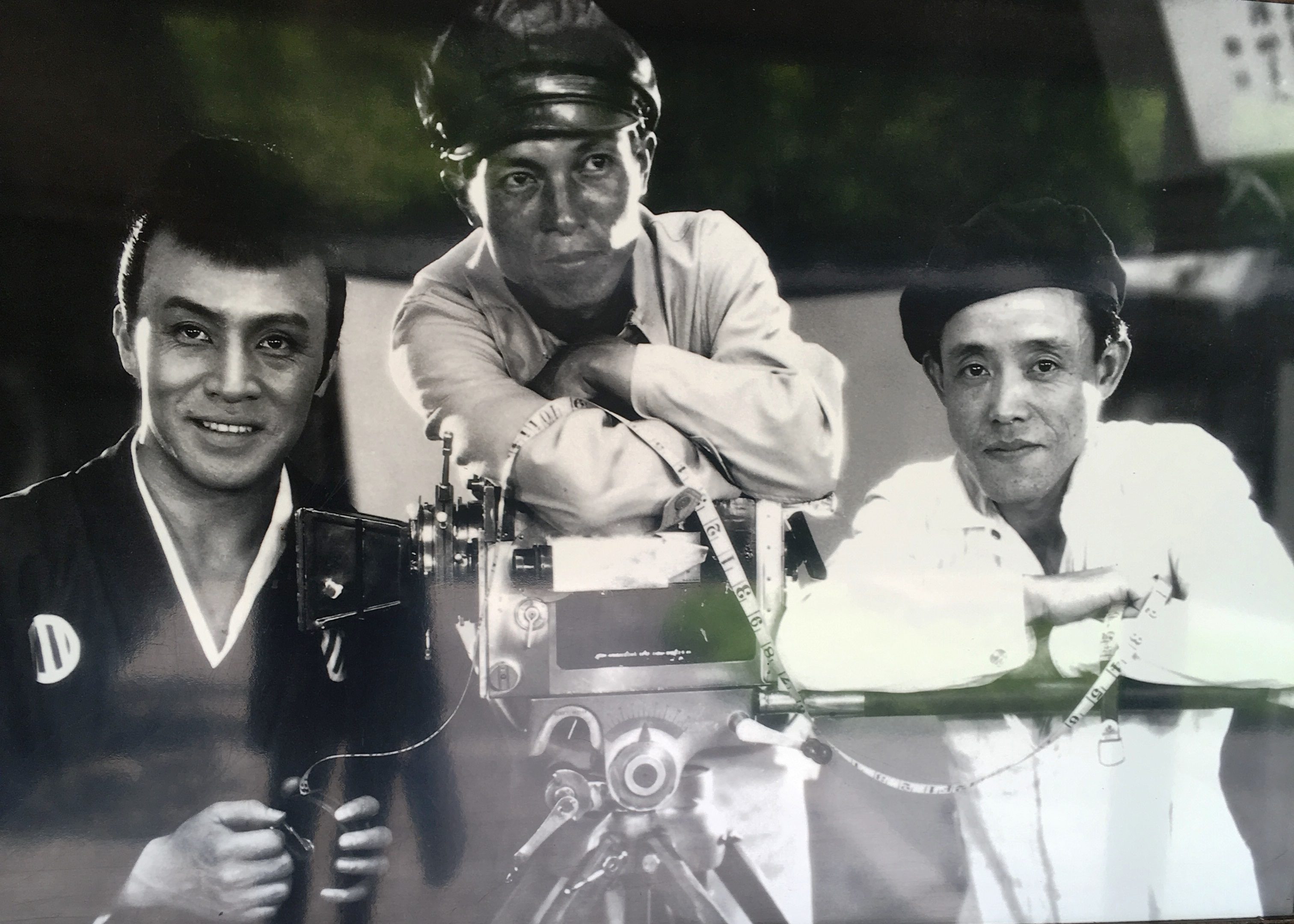
At the top of a very long incline was the entrance to Okochi Sanso Garden.  This is the former home of the actor Denjirō Ōkōchi, who spent the last decades of his life creating these gardens, with lovely views of the Kyoto area.

We followed the paths, slowly.  They were all uphill and but sometimes it’s okay for me to not hike at my usual brisk pace, where I don’t actually see anything, tiny or large scale.

There was a neglected-looking building displaying Okochi photos and mementos.  I know it’s a huge, expensive job to maintain the gardens but I wonder if they couldn’t put more effort toward honoring the man who started it all. Besides, the photos were so charming.

From here, we somehow found our way to the Tenreiju temple in the vicinity of the forest, where we squeaked into the tea house for lunch just before it closed.

But first, disaster!

As I was removing my shoes, balancing myself by clinging to the wall so I wouldn’t fall over, a voice cried out, “No shoes!  Shoes off!”

Lynn was being scolded by the hostess for the unspeakable crime of setting foot onto a mat with her shoes on.

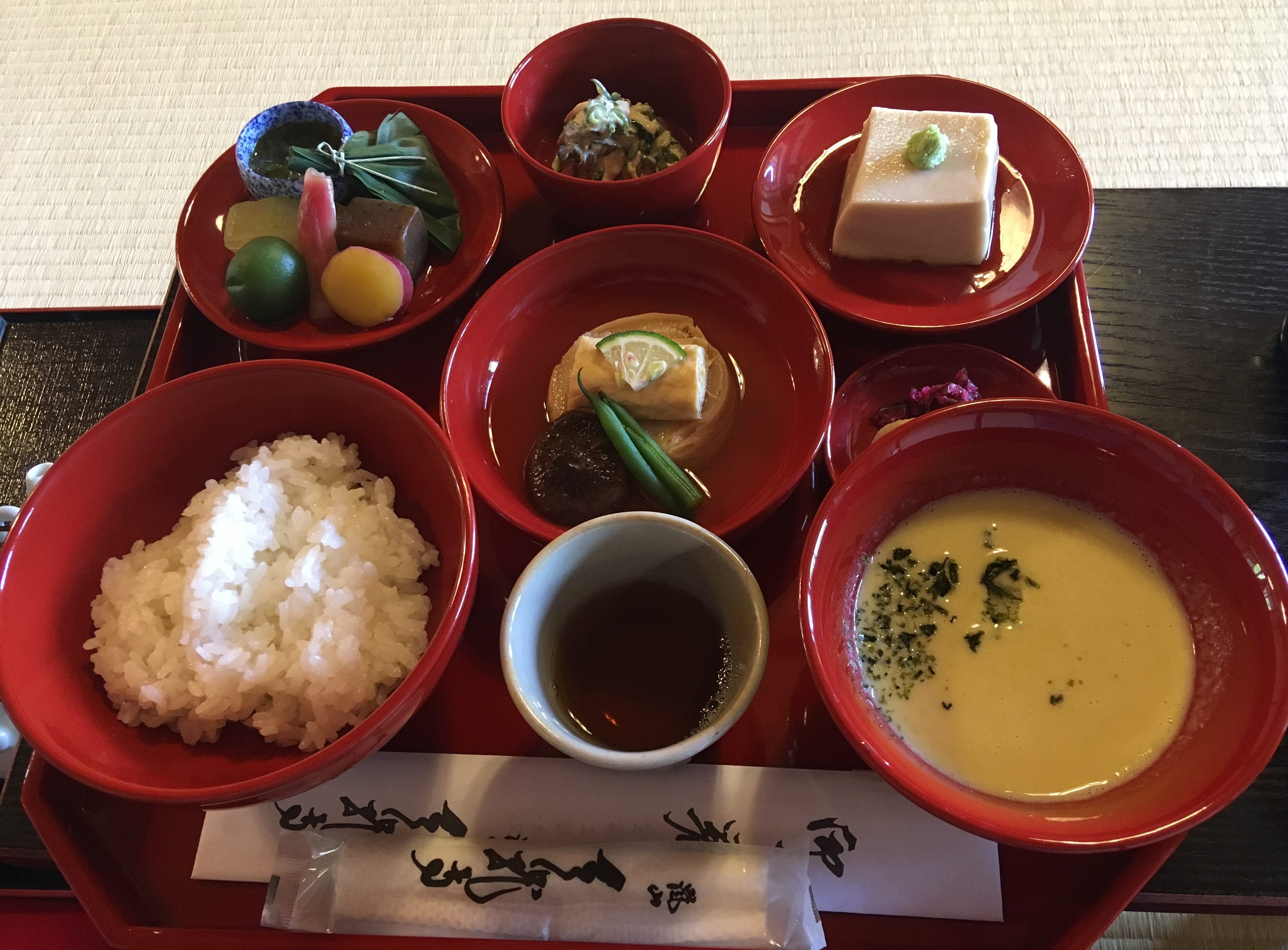
Lynn, looking like a dog that’d been whacked with a rolled up newspaper, beat a hasty retreat to the shoe removal area, from whence, shoeless, we contritely tried again.  We were rewarded with air con and a beautiful vegetarian set lunch.

“This is my first time eating Japanese style,” I said as I shifted from sitting cross-legged to kneeling, then keeled sideways, then tried sitting with my legs straight out in front of me.  “It’s okay for a half hour, but I wouldn’t be able to stand up again if I stayed much longer.”

“Maybe that’s how they encourage customers to keep moving through,” Lynn conjectured.

“This purplish brown thing—is it a giant pencil eraser?”

“The Japanese must have really strong teeth,” Lynn said.

“This is fantastic,” she said, pointing to one of the many bowls.

“Yes, it’s actually the best meal I’ve had so far. The eggplant is to die for.  I love eggplant. I have to find out what this sauce is … This is why we travel, right?  To experience new things,” I murmured with a mouth full of eggplant.

“May as well stay home if you don’t want to try anything new,” Lynn concurred.

On the way out I stopped in the WC.

I don’t understand how anyone thinks that sharing sweaty plastic bathroom slippers with thousands of strangers is more sanitary than just wearing one’s own shoes.  But it’s not my country; see above.

We walked down to the Katsura River, which was very picturesque.

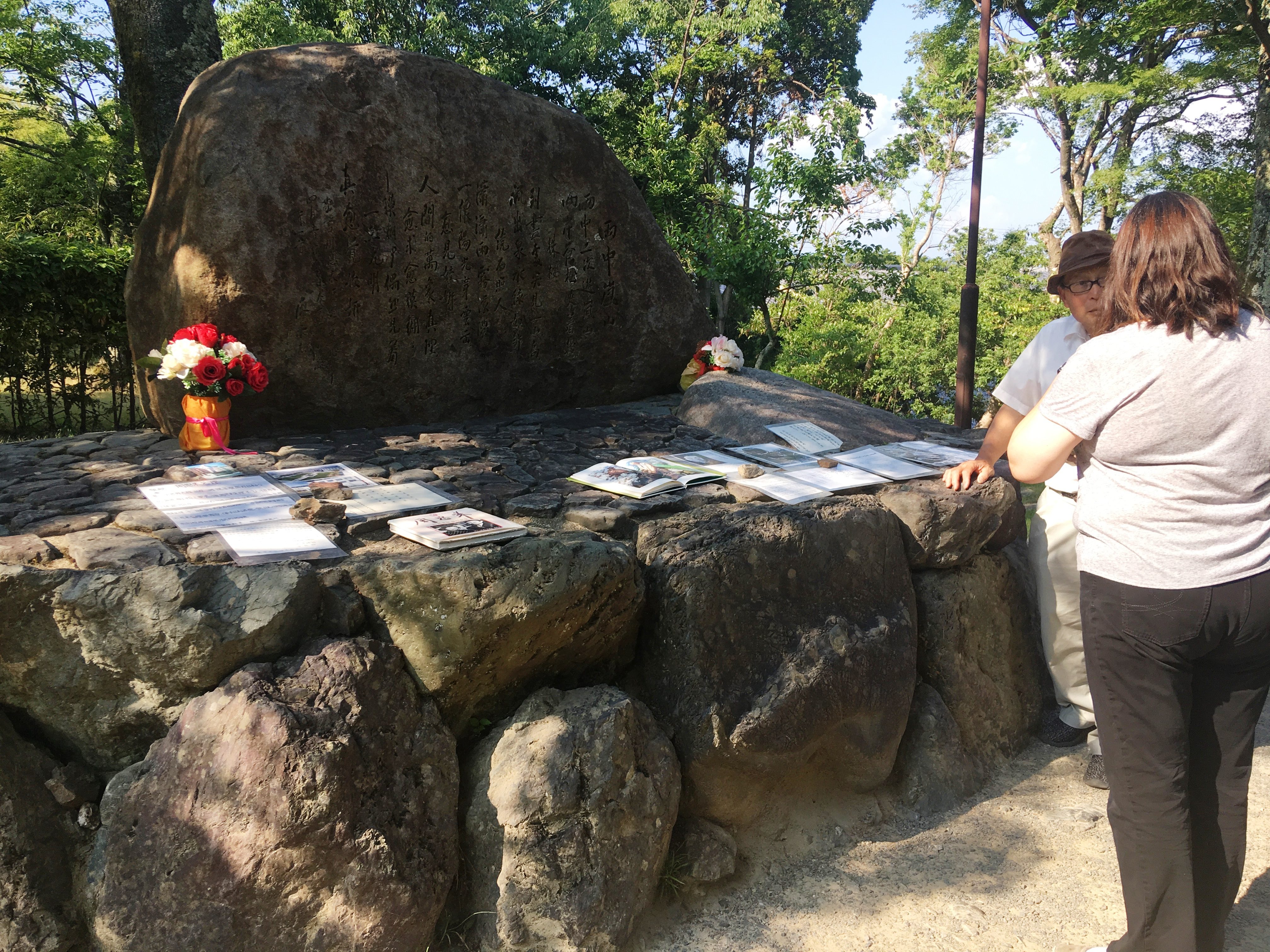
We encountered a Japanese guy promoting Chinese-Japanese relations in honor of a historic visit there by Zhou Enlai, the first Chinese Premier.

He wasn’t much interested in us.  I think he was betting that China is the future.

Going Korean in Kyoto

If you’ve dreamed of visiting Japan, you’ve likely dreamed of Kyoto, the capital of the country before Tokyo and home to geisha culture. Every guide says, “If you can only visit one place in Japan, make it Kyoto.”  My expectations were high.

As per usual, Lynn and I got lost trying to find our hotel.

“We’re going to walk past the cigarette man again!” Lynn said with a visible cringe.

We had asked the cigarette seller, who stood in a shop the size of a phone booth, for directions.

“But he doesn’t speak English, so it’s his fault we’re still lost.” I said.  His lack of English hadn’t stopped him from pointing us in several different directions.

“At least there’s a sign for Murumachi, so we know we’re on the right street, but is that Nichikikoji, or Takoyokushi?” I asked, pointing toward a cross street, which had no sign.  I had not memorized these names; I was reading them—stammering them—from a piece of sweaty, crumpled paper in the mid-day heat and humidity.

Lynn crossed the narrow street to a store and asked a young woman on a bicycle who looked like a local if she knew where the Koiyama Guesthouse was.  The woman conferred with the shopkeeper, who had stepped outside.  Then they nodded and the young woman took off on her bicycle, looking at buildings as she glided by, with the two of us trotting behind with our suitcases.

We proceeded two blocks, then she shook her head and turned around and headed in the opposite direction.

“Fifth pass past the cigarette man,” Lynn noted.

We dragged ours bags back the two blocks we’d covered, then another block beyond, then back to where we’d started, where the two women suddenly exclaimed, “There, there!”  The guest house was directly across the street from where we’d started.  It had a curtain hanging over the entrance with a different but similar name.

“That’s it?” asked Lynn, “You’re sure?”  They nodded vigorously.  “Thank you so much for going to all that trouble!” Lynn said.  “Really, it’s remarkable how friendly and helpful everyone is.  If a Londoner saw a tourist coming toward him, he’d run the other way.”

The guest house was brand spanking new—whatever that means.  It was compact and included a kitchen with sink, microwave, and burners, plus a washing machine and drying rack.  This would save loads of time (no pun intended) since the heat was so intense we would need to wash clothes daily.

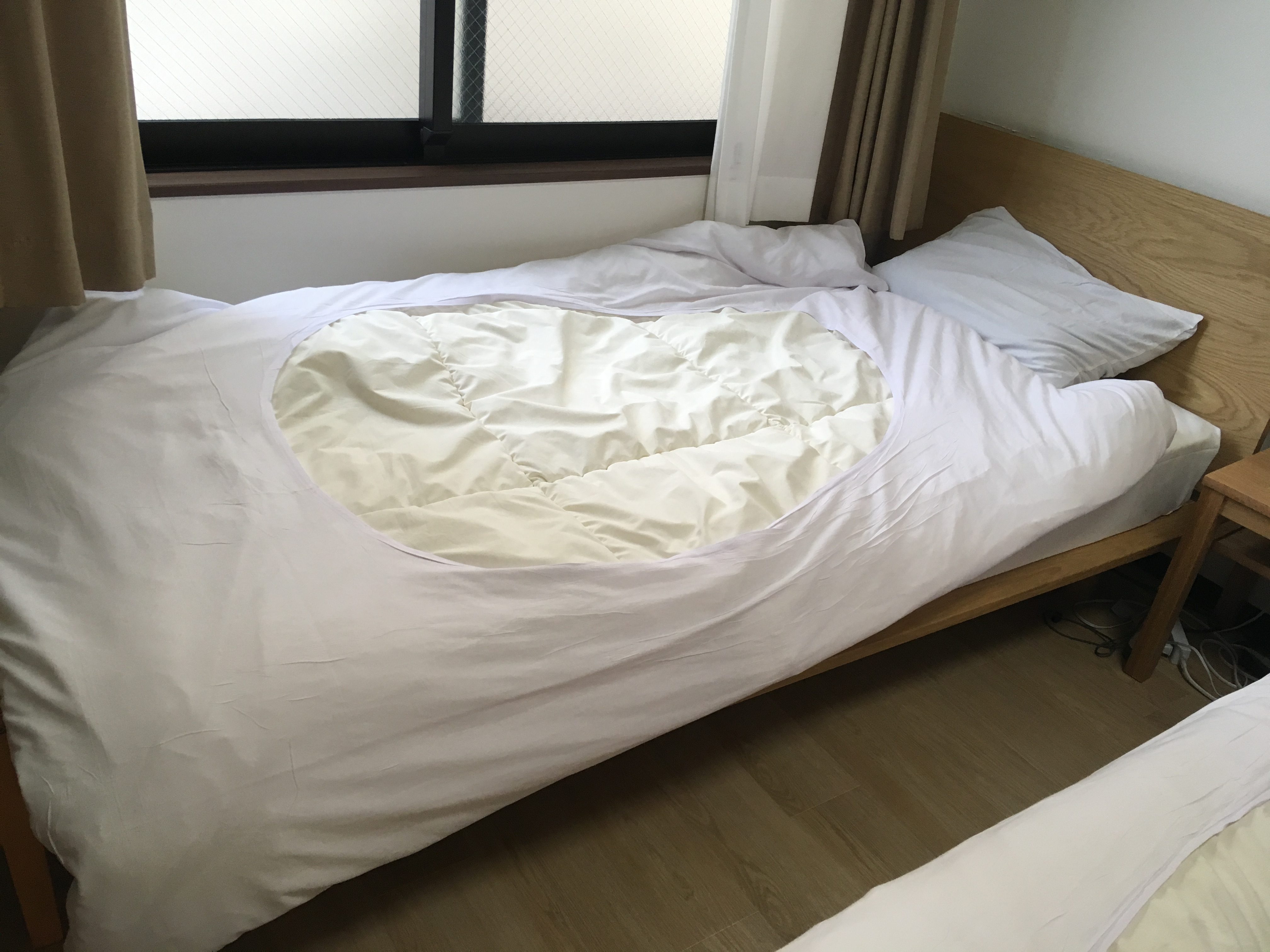
“Why is there a big hole in the duvet cover?” Lynn wondered.  I would see this twice more on my trip, and I don’t know the answer.

Lynn had insisted on transporting the whiskey bottle in her bag and now I got her to relinquish it.  “That sucker is heavy!” I said as I stuffed it into my bag.

Soon we were back outside, trying to find our way to the covered market.  “More to the point, we need to be able to find our way back,” Lynn said.

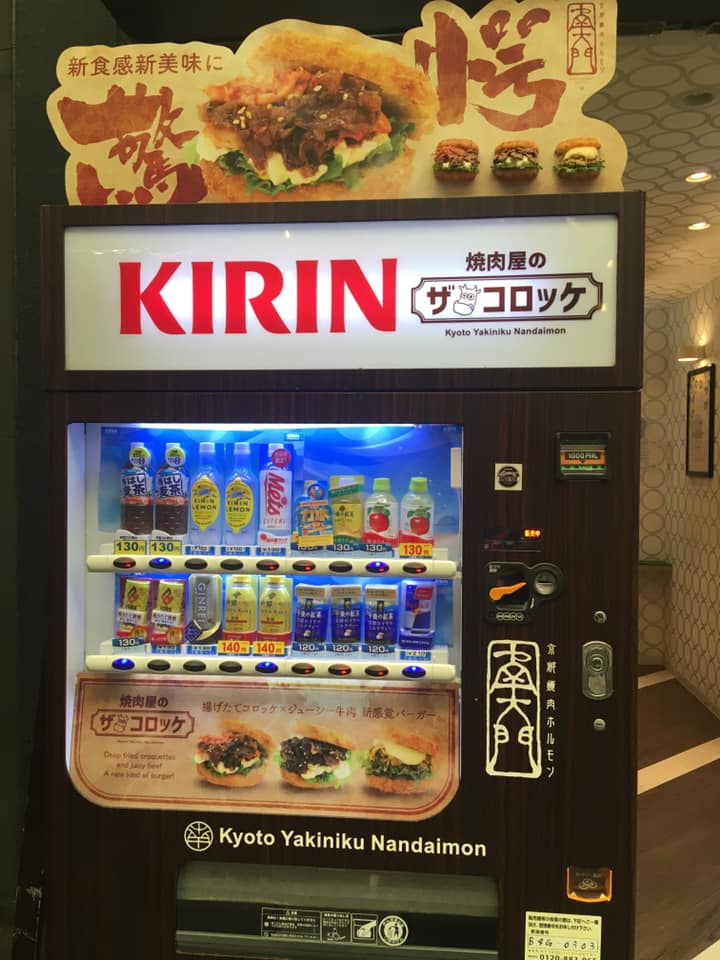
Nishiki Market covers many city blocks and is a collection of stalls, vending machines, and stores featuring everything from deep-fried starlings on a stick to vending machine hamburgers.

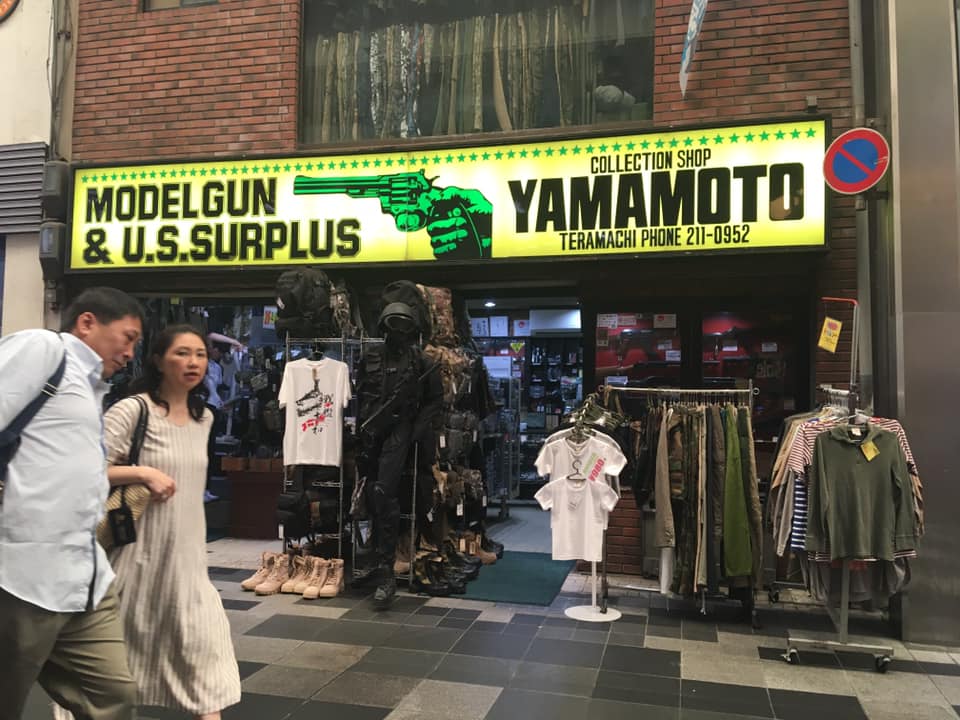
I was embarrassed by this “U.S.”-style shop.  There would be no actual guns for sale here, but plenty of faux guns, army fatigues, and machismo on offer.

Of course there was a Peruvian pan piper.

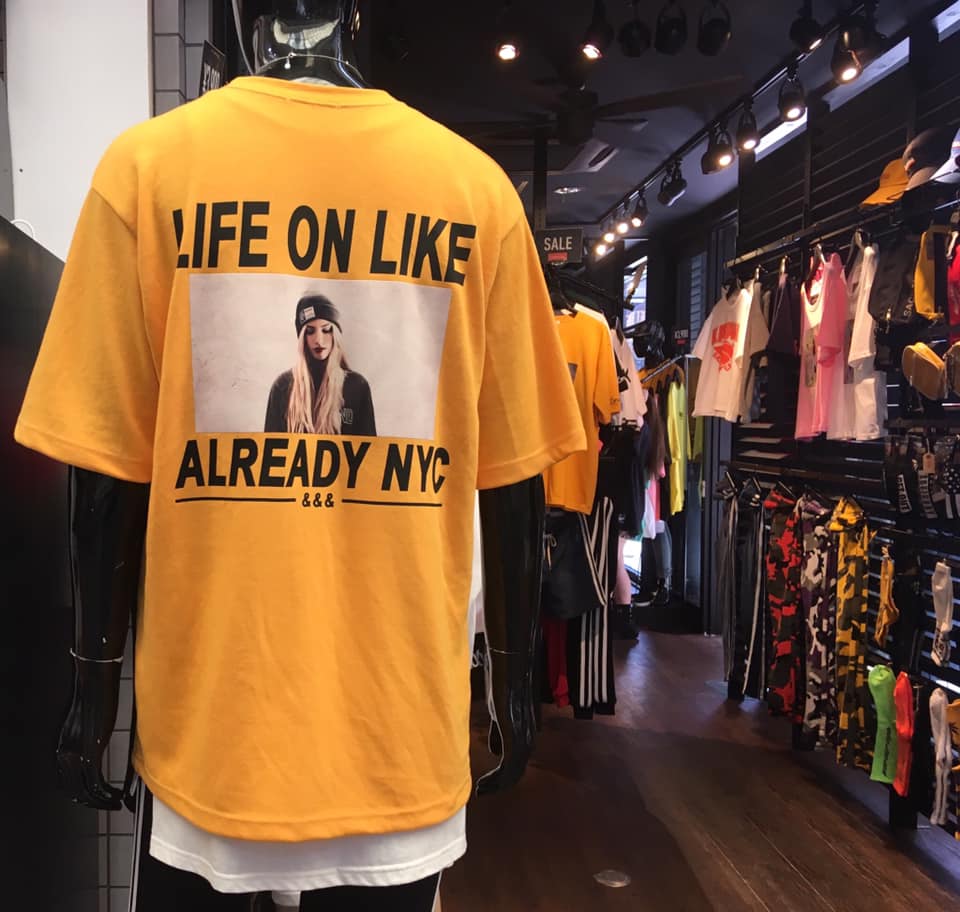
Shirst with nonsensicle or misspelled englesh words and phrasses were all the rage.

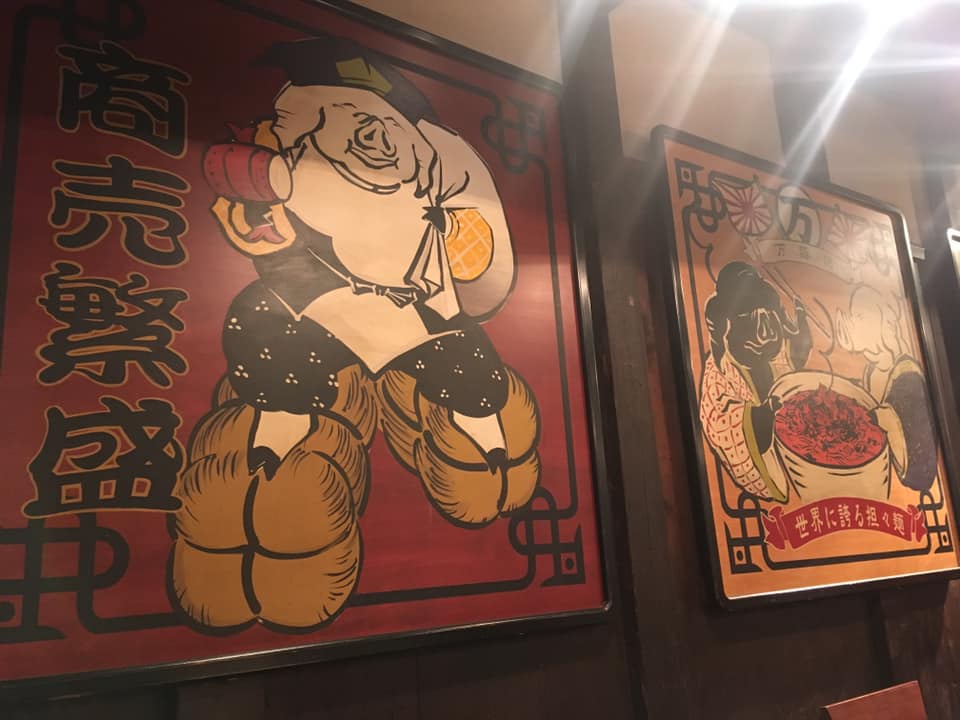
The place was decorated with pugnacious pig posters.

My dumplings came immediately while Lynn waited 20 minutes.  The waitress brought a half-full mug of beer and ice and a bottle of something she indicated I should add at my peril. “Soju, soju,” she repeated and pointed.  Was that Japanese—or Chinese—for Happy Beer?

It turned out to be a Korean rice spirit that tasted similar to vodka. Bracing and refreshing, and a good thing it was watered down with lots of ice.

Never Again

In real time, there’s news that the Trump administration will try to tank the number of refugees admitted to the US to zero in 2020.  Zero.  The average number admitted annually since 1980 has been 98,000.

I am disgusted to say that the person leading this drive is a Jewish guy named Stephen Miller, whose own forebears fled pogroms in Belarus and were allowed to enter the US.  Here is a great article about him entitled, “Stephen Miller Is an Immigration Hypocrite. I Know Because I’m His Uncle.”

This reminded me of an event I left out of my Summer Summary a few posts back. Jewish Community Action, along with other advocacy groups, held a rally themed “Never Again” at the ICE (Immigration and Customs Enforcement) facility near the airport in Minneapolis.  I wasn’t involved in the planning; I didn’t do much except show up and hold up one end of a banner.  But I showed up.  It felt good to get out there and yell and pump my fist.

There were a couple hundred of us.  We blocked traffic and some among us tried to get arrested but were only ticketed, which made it less of a news event.  The event was covered by a smattering of local news outlets.

After a couple hours I had to use a bathroom and there were none to be found.  I walked back to my car and heard a government employee on his cell phone, probably talking to his wife.  “Yeah, I agree with what they’re protesting, but I don’t work for ICE.  Why should I be stuck here?”

I despaired.  I see these policies as having everything to do with all of us. We’re all citizens.  We can vote, protest, write letters, and at the very least, be informed.  If you think it has nothing to do with you, you must be a Native American—the only Americans who aren’t immigrants (volunteers or slave-shipped) or descendants of immigrants.

In Japan.  I didn’t have the National Museum of Western Art on my “must see” list.  I have seen tons of western art in western countries. But Lynn had heard raves about it.

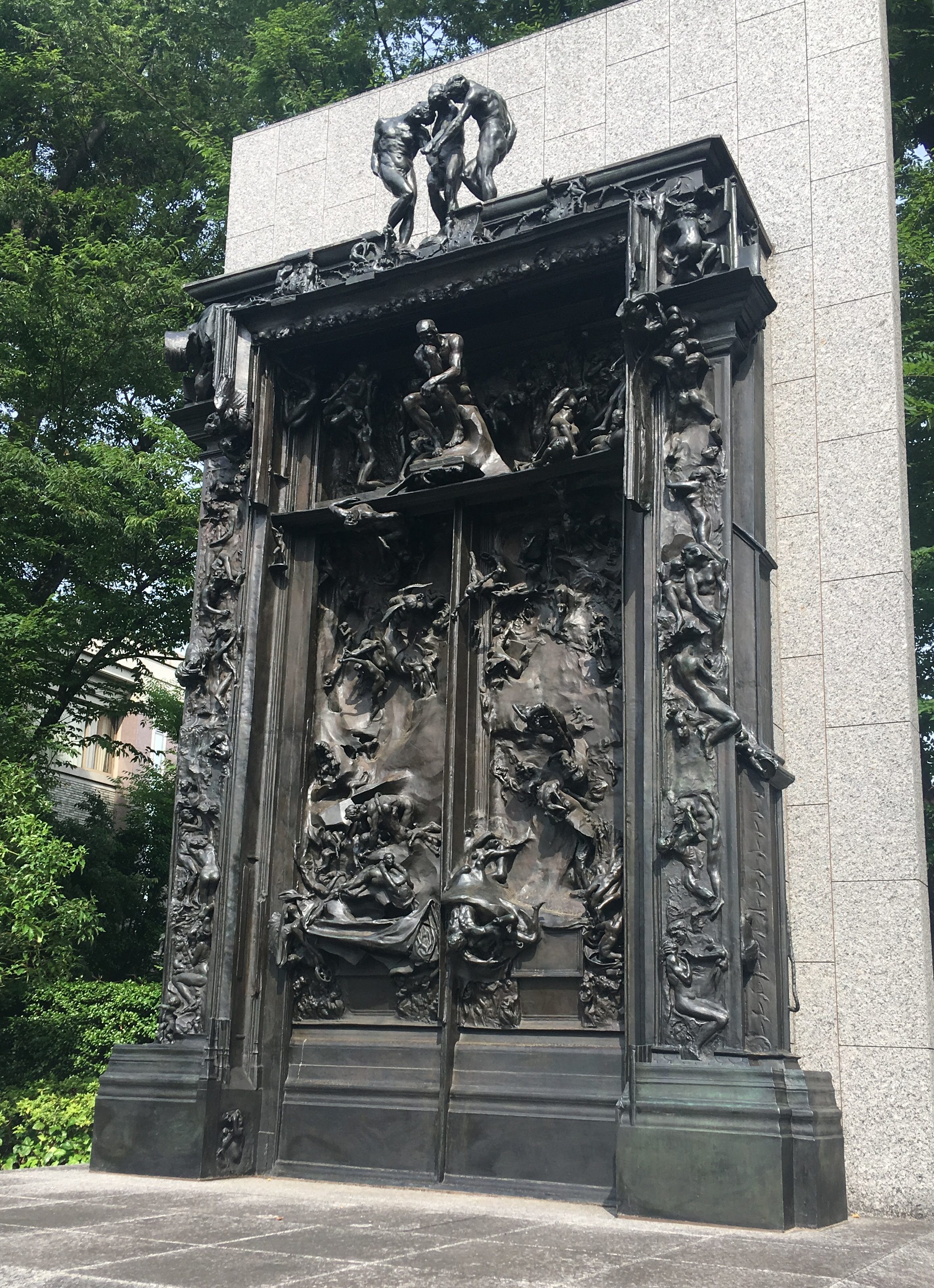
We passed The Gates of Hell by Rodin as we entered.  I hoped it wasn’t a sign of art to come.

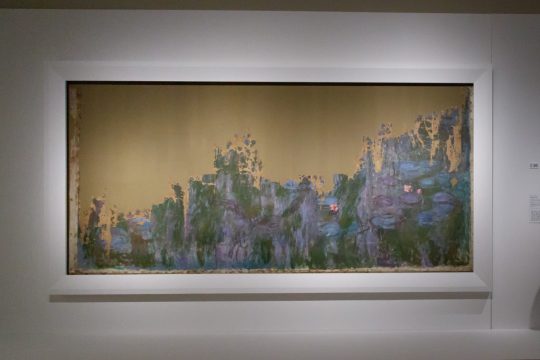
“There are some of Monet’s water lilies, and one of your favorites—Van Gogh’s Bedroom in Arles!”

“No!  Not the Bedroom in Arles!” I exclaimed in mock horror.  We had paid extra to see a special exhibit at the Chicago Art Institute three years ago on our road trip from St. Paul to New Orleans.  There had been a very long build up to two versions of the painting, which looked identical to me.

Normally I am all for art, but I could only shrug.

Now I was going to see another version.  It looked just like the other two.  I’m sure it’s all very significant but I’m too much of a philistine to understand.

The museum in Tokyo houses the collection of shipping industrialist Kojiro Matsukata.  His story—of buying sprees in Paris and World War II efforts to protect his collection from the Nazis, was interesting.  At the very end of the exhibit, here were the water lilies.  What’s left of them.

At first I thought it was an abstract version of Monet’s famous theme. But it was just terribly damaged, which was sad.

Outside, I had a green tea ice cream cone from one of the many vendors in Ueno Park.  Lynn and I sat on a bench for hours; I don’t know what we talked about but it’s always good conversation with us.

The next morning we boarded a shinkansen to Kyoto.  A very loud American extended family sat near us; one of the kids lowered his seat into Lynn’s lap.  She politely asked his parents to corral him—not in so many words—and they did so but the mother then nagged all the children loudly for the two-hour trip, maybe to show the proper English lady what a responsible parent she was.

Contemplations

In Japan.  At the Edo Museum, I perused an exhibit about women’s lives throughout history.  One plaque explained how women were encouraged to pursue hobbies like calligraphy, flower arranging, and incense contemplation.

I joined Lynn, who was sitting on a bench contemplating an abstract rendition of an earthquake or some such natural disaster that had occasionally befallen Tokyo.

“Did you know there’s a hobby called incense contemplation?” I asked.

“How exciting!  I must buy some incense to bring home and contemplate.”

We bought some tchotchkes in the gift shop—my pile included gum in the form of a geisha, geisha-shaped chocolates, and a box of grey candy the consistency of pencil erasers.  This was for Vince, who had requested “something disgusting” he could share with his coworkers in the kitchen at the country club.  It was going to be hard to beat the Crispy Big-Bottomed Ants I had brought from Colombia.

All the guides recommended visiting the Yanaka neighborhood of old wooden houses.  “It’s just one more stop on the train, and it looked like we walk in either direction from the station and we hit Yanaka,” I said to Lynn.

Right,” she replied drily.

We walked east from the station, following a sign pointing to “The FAMOUS Fabric Area.” It was indeed an area of fabric shops.

“I can’t see why it’s famous,” I remarked.  “It’s not like they’re selling silks and satins or kimono fabrics.”

“No,” Lynn agreed.  “I could find these in Aberdeen.”

We walked back toward the station.  It was past lunch time and after dithering in front of a couple restaurants with curtains that obscured what was inside, we plunged into a Korean place.  There was no English on the menu and the server didn’t speak any English but thankfully there were photos.  We ordered what we assumed were pizzas, and the server looked puzzled and tried to explain something to us, pointing to the menus and flipping through rapidly through the pages.

Were the items we’d requested not served at lunchtime?  Was he trying to upsell us?  To dissuade us from ordering something that wasn’t good?
He flipped back to the page with the pizzas and pointed.  We nodded our heads and he smiled and disappeared.  There was a barbecue grill set in each table and the people around us were all grilling delicious-smelling meats.

“What do you suppose we’ll get?” Lynn asked.

“Whatever it is, we’ll eat it and smile!”

“Or I’ll slip it into my handbag, and we’ll bung it in the first bin,” Lynn offered. Lynn carries a legendary, enormous handbag into/from which many things disappear and appear.

The server returned with something like a cross between pizzas and omelets; Lynn wasn’t keen so I ate mine and half of hers.

“We will never know why that was such a difficult order for him to contemplate,” Lynn remarked.

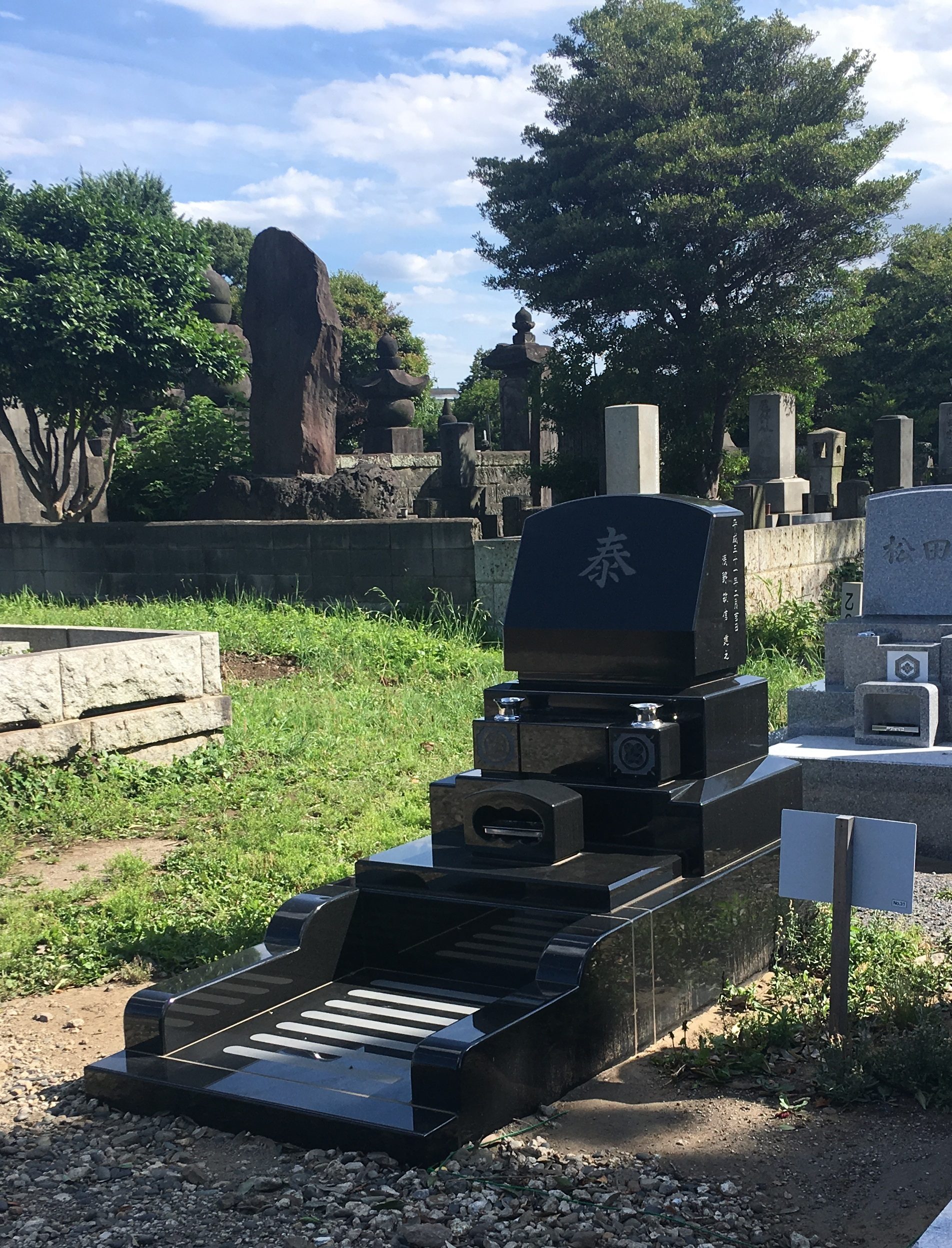
We walked west of the station and wound up in a massive cemetery.  This is what a Japanese cemetery looks like:

Everyone is cremated, and their ashes are interred at a gravesite.  There is an altar where family and friends can leave coins, pray, and … contemplate incense.  Like western cemeteries, Japanese ones have family members buried in a shared plot.

“I wonder what the wooden sticks are?” Lynn said.

“I know, I’ve seen those before.  Are they supplications?”

“Or the names of individual family members?”

“This one looks very Darth Vaderish,” I said.

“Scary!” pronounced Lynn.

We walked forever; the cemetery was like a corn maze only with dead people.

There was a guy sitting on a wall; sunburned and disheveled and possibly inebriated  He was a retired Kiwi who had been traveling around Japan for several months with no definite return date.

“You’re missing a shoe,” I pointed out.

“Aww, I know,” he replied, unconcerned.  “It’s here somewhere.”

He gave us very dubious directions to the neighborhood of wooden houses but we never found it.  We did find a narrow lane with tiny shops where I bought chopsticks for Vince and his family.  Then we got some iced green tea and sat in the sun, people watching and catching up for another hour, then caught the train back to Ueno.

Summer Summary

From time to time, I’ve taken a break from chronicling my travels in far-off destinations to write about small adventures close to home.  I can’t travel abroad 365 days a year, so I try to find new places and things to do in my own backyard.

This summer was no different.  The highlight, of course, we my son’s wedding. I’ve already shared my amateur photos from the day, but here’s one more, of me and my cousin and nieces lining up to show off our green eyes.  It was funny at the time.

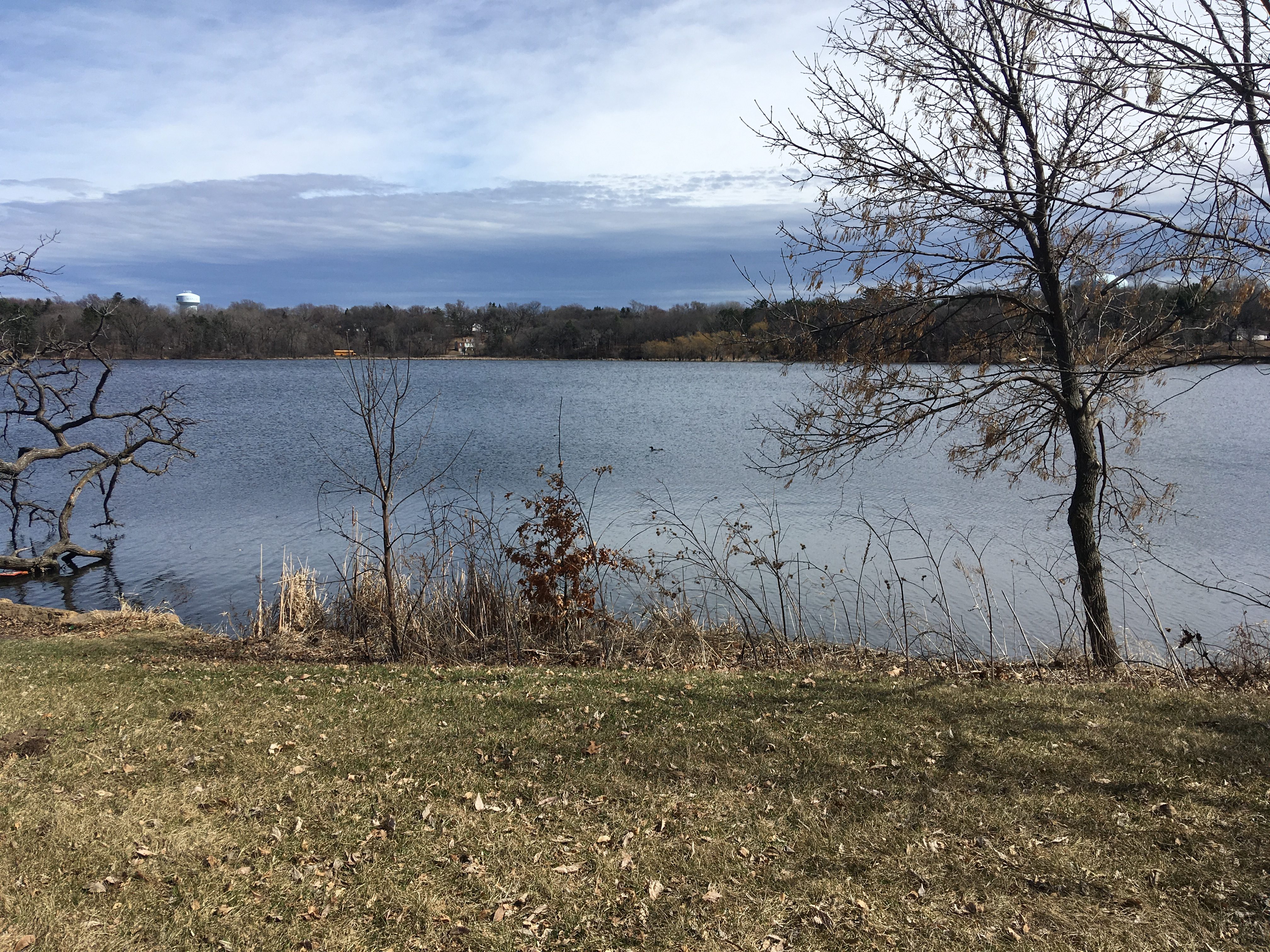
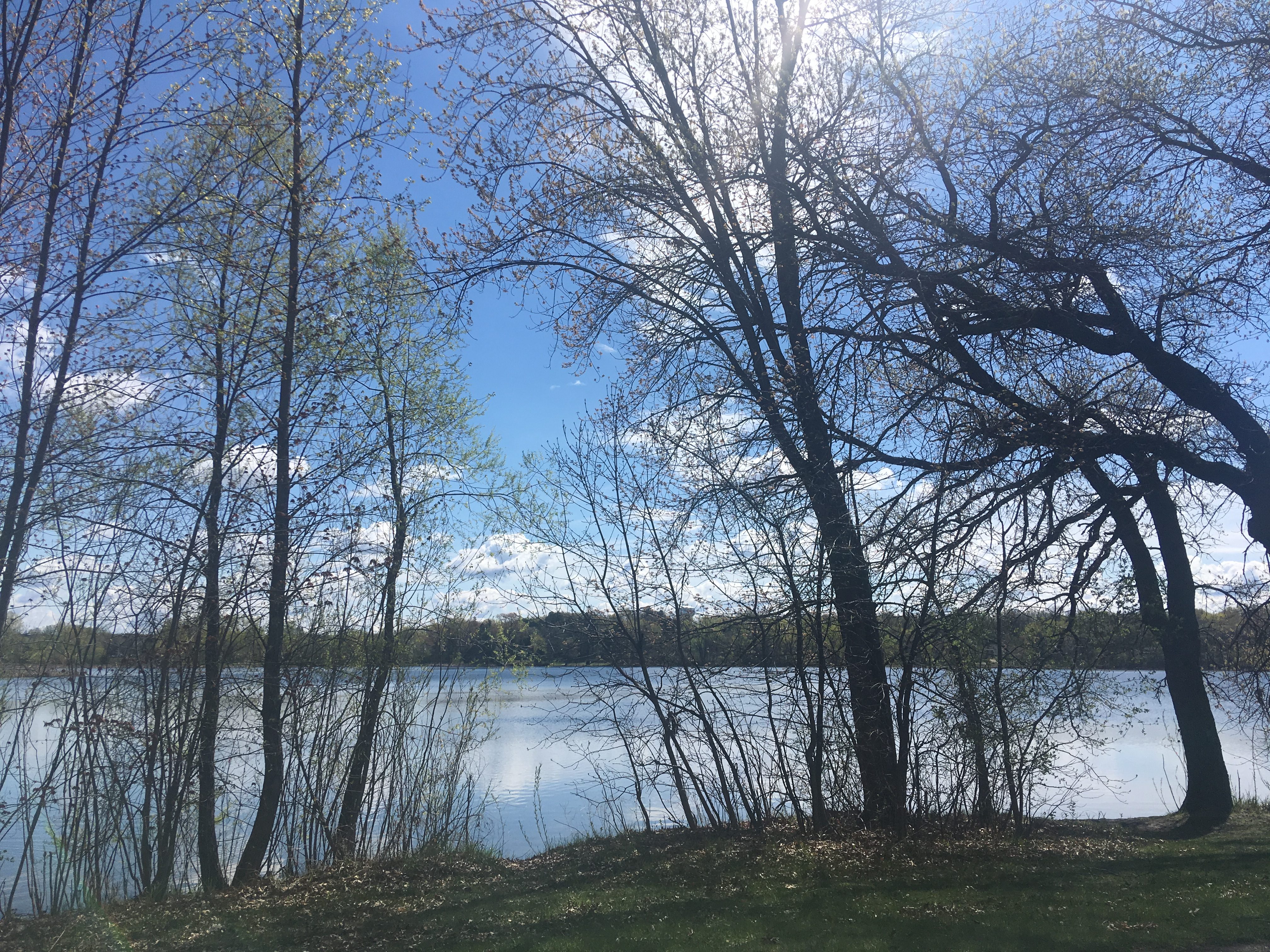
This year, spring lost its luster because of my aunt’s illness.  Soon after her death, I walked around the little lake near my house, Beaver Lake, and did something I never do.  I sat down on a bench and actually looked at the lake, the tree branches loaded with buds, and the sky as spring clouds drifted across and changed the colors on the water.  I listened to the jays, robins, wood peckers, loons, and cardinals.  I didn’t have any great insights into the meaning of life or loss but I felt comforted to know that the wheel turns and the world wakes up every year.

I returned to the same spot a few more times as spring progressed into summer.

I met a friend for a walk at Lake Harriet in Minneapolis.  We never did walk.  We got a pitcher of beer and sat at a table for a couple hours, people watched, and talked politics.

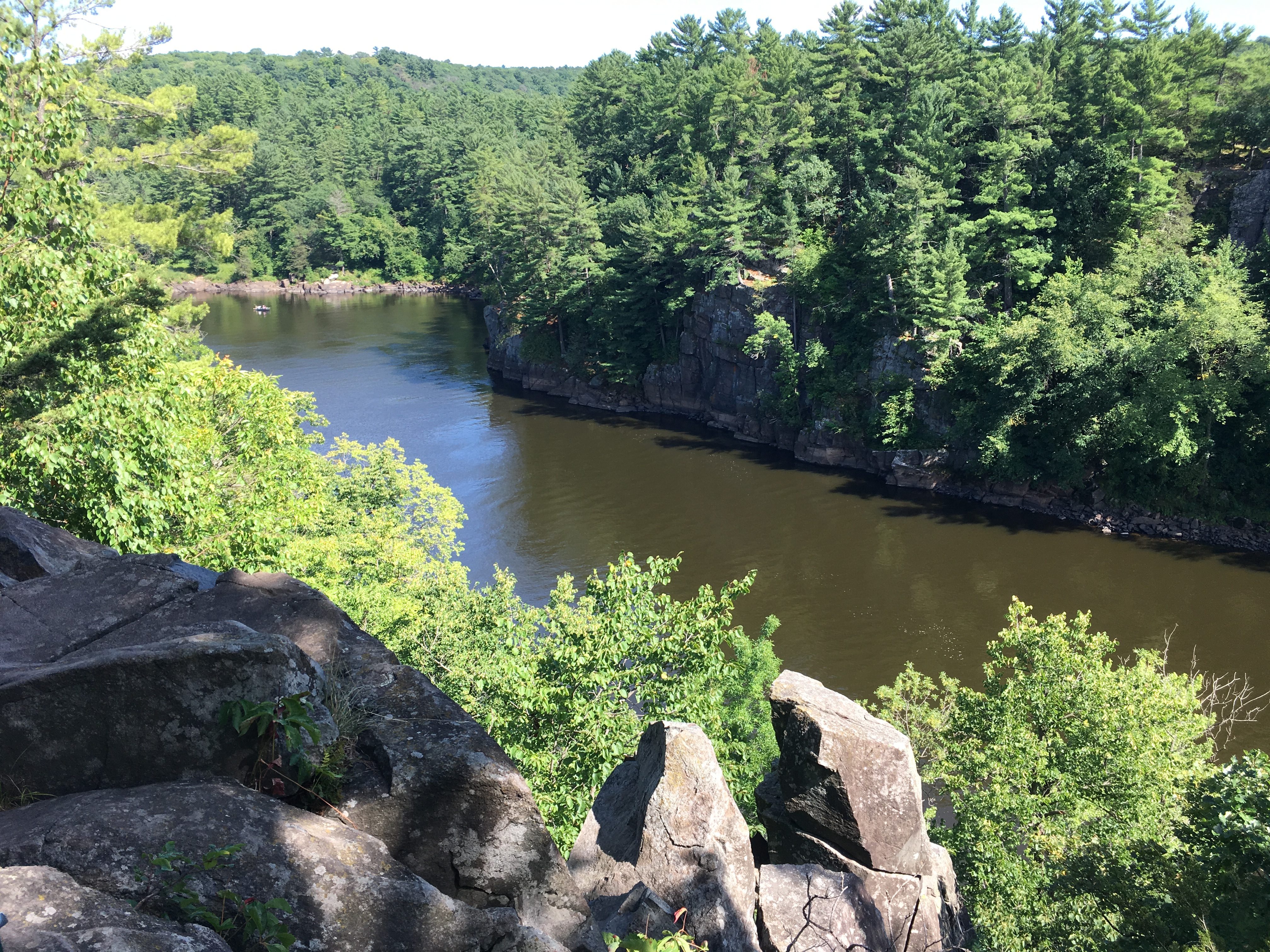
On my last visit to my aunt’s house, I took a long walk along the St. Croix River.  It looked to be shaping up as a great year for mushrooms and fungi, with many rainy nights and steamy days.

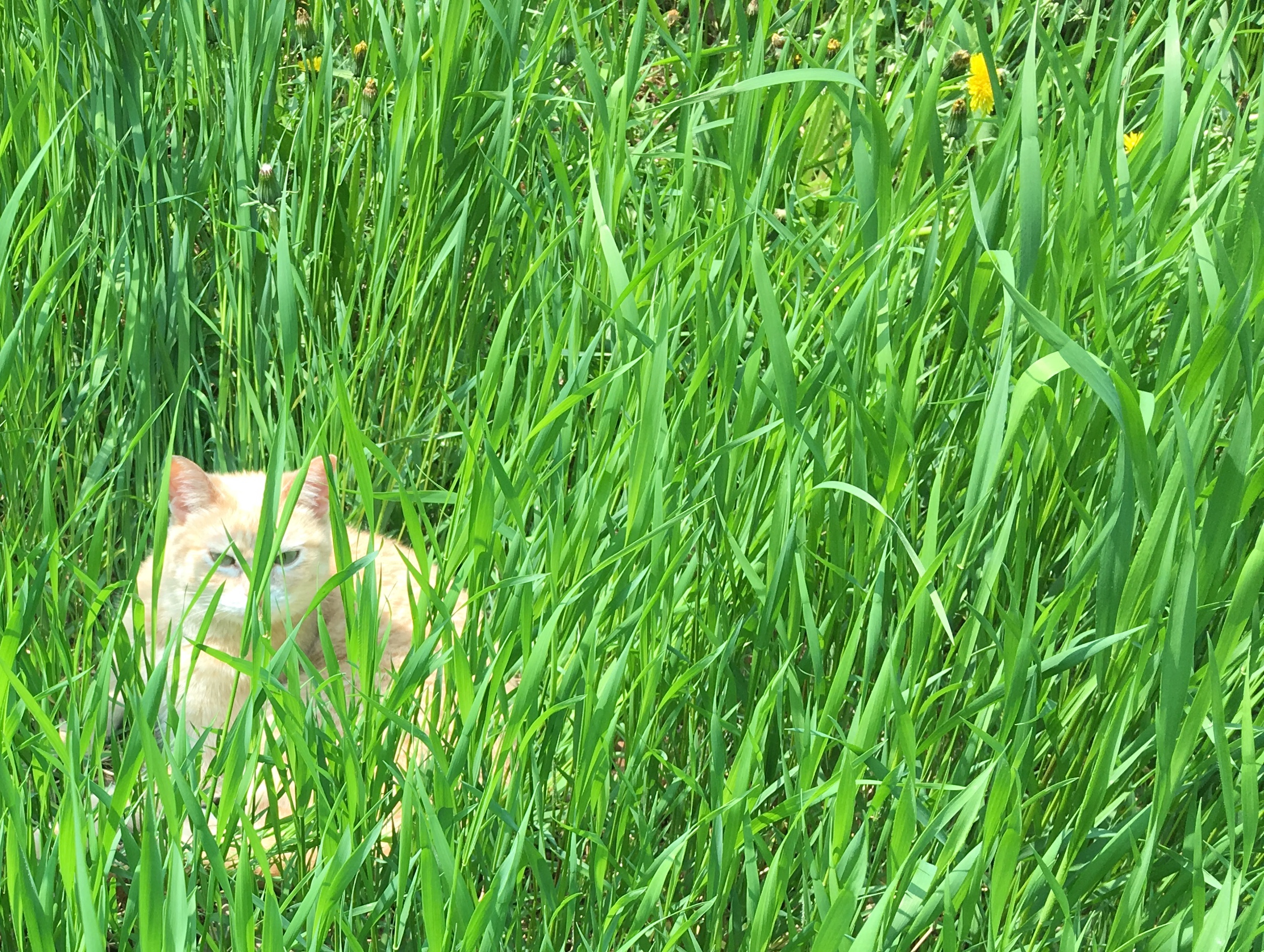
Molly and I hung out on her deck and laughed at her cat playing secret agent in the tall grass.

Then there was Japan, and then I was back.  I visited my favorite paths along the Mississippi, starting at Hidden Falls Park.   I don’t know why this photo looks like my lens was smeared with Vaseline, or if coyotes are a new thing here, or how they know there is only one.

I spent a rainy afternoon and evening at Irish Fair, an annual event in St. Paul that always has great music.  This year was no exception; there were bagpipers in kilts, of course, but the headliners, the Screaming Orphans, got the crowd whipped into a frenzy.

I hosted a Japanese food-making party for Keiko, my nephews, and my brother.  Almost everything turned out oishi (delicious).

In late July I returned to the St. Croix and canoed with some people I knew from the fabulous mid-Century modern high rise apartment building I lived in for six years.

For once in my life it didn’t start raining as soon as I stepped into a canoe.  I was paired with a woman from Nebraska who had never canoed.  She didn’t follow instructions and had no upper body strength, but she was so nice that I didn’t mind that I basically paddled the canoe myself the whole way.

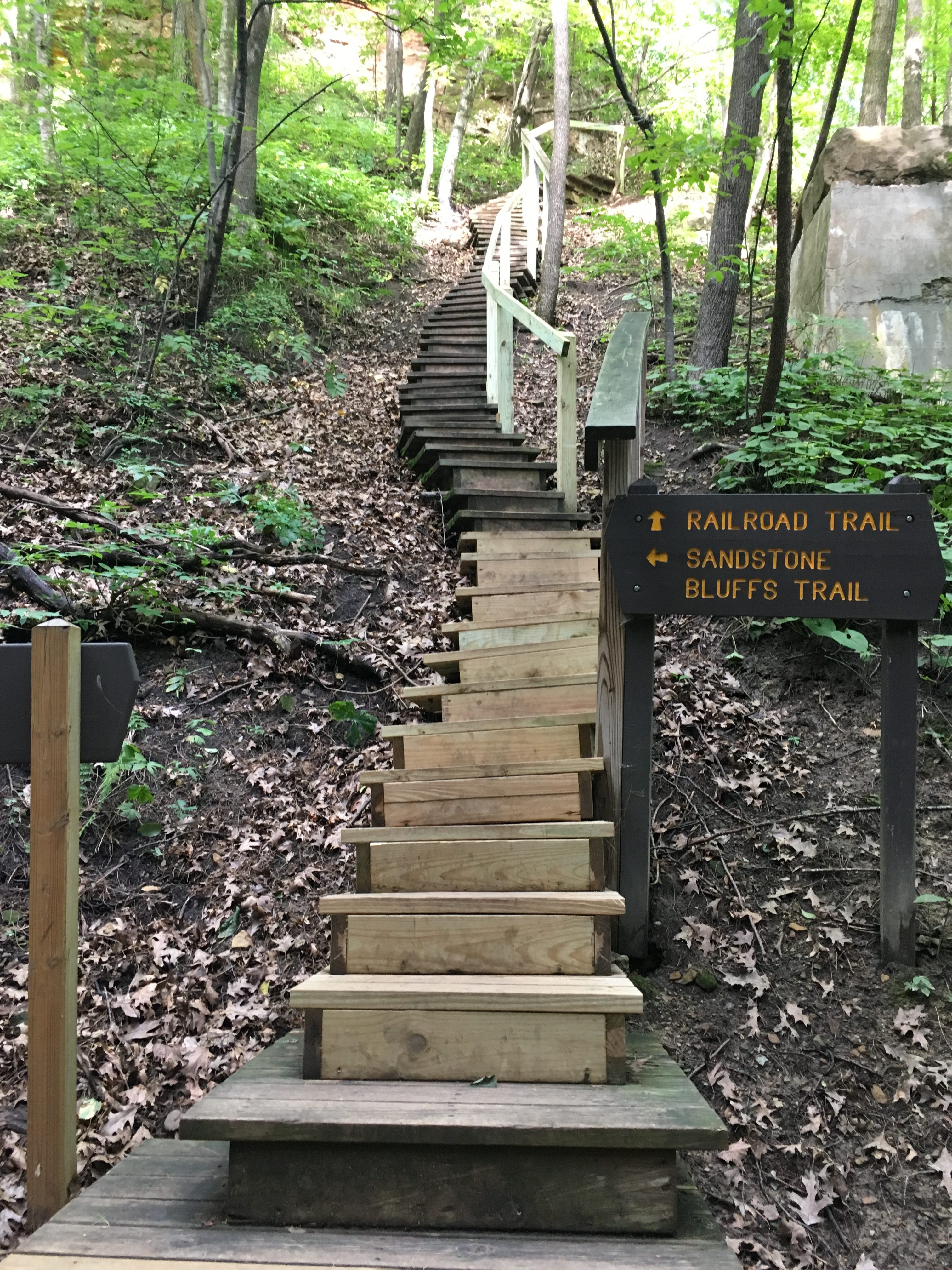
We stopped for a long picnic lunch on an island.  Afterwards, as if I hadn’t gotten enough of a workout, I did a two-hour hike through the Minnesota side of Interstate Park, which is a park that straddles the Minnesota and Wisconsin banks of the St. Croix River.

A friend and I rented kayaks and paddled around Pickerel Lake. I took some long bike rides, went berry foraging, and sat in my backyard and appreciated the hydrangeas that had been a highlight of Japan and were also profuse in St Paul this year.  I even tried my hand at flower arranging.

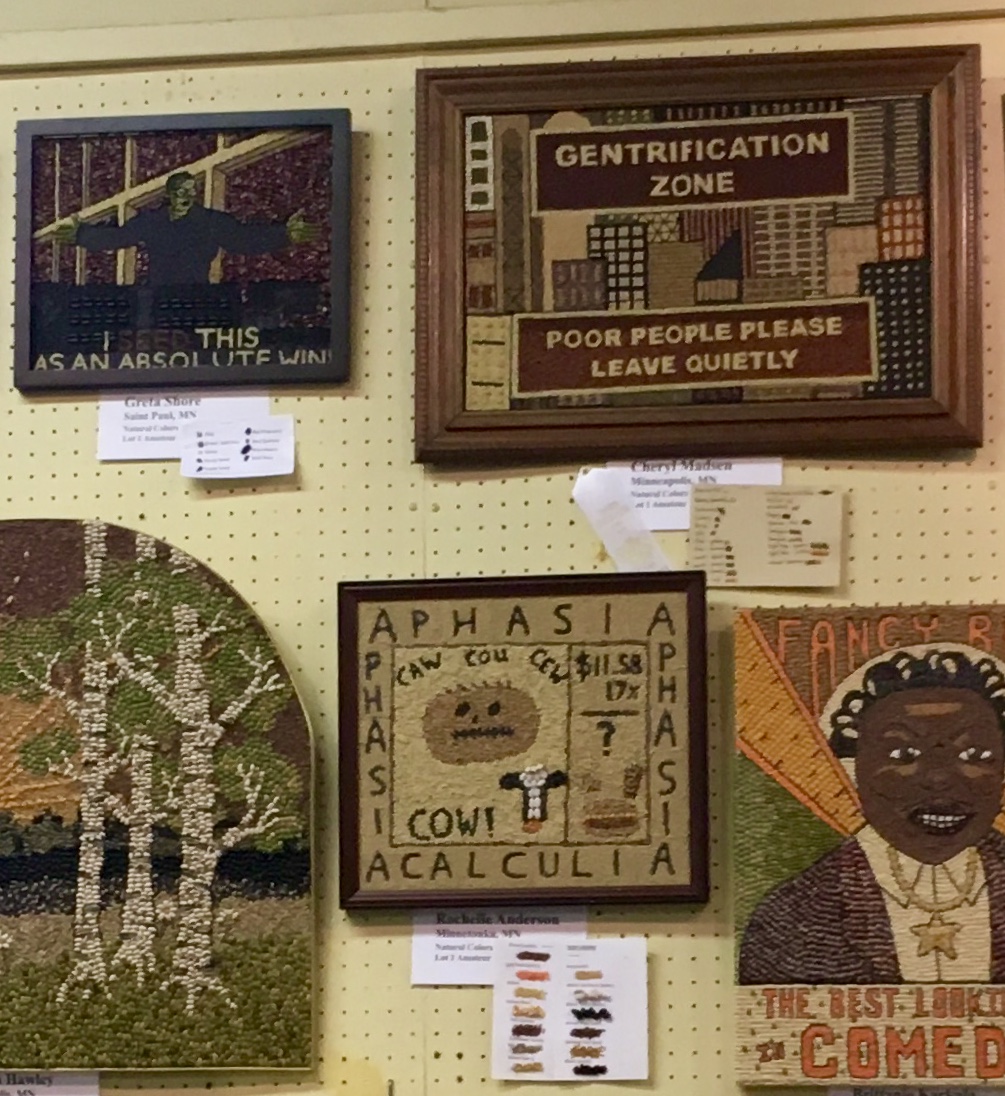
As ever, summer closes with two blockbuster events.  First, the Minnesota State Fair.  This is a small selection of seed art.  Winters are long on the prairie.

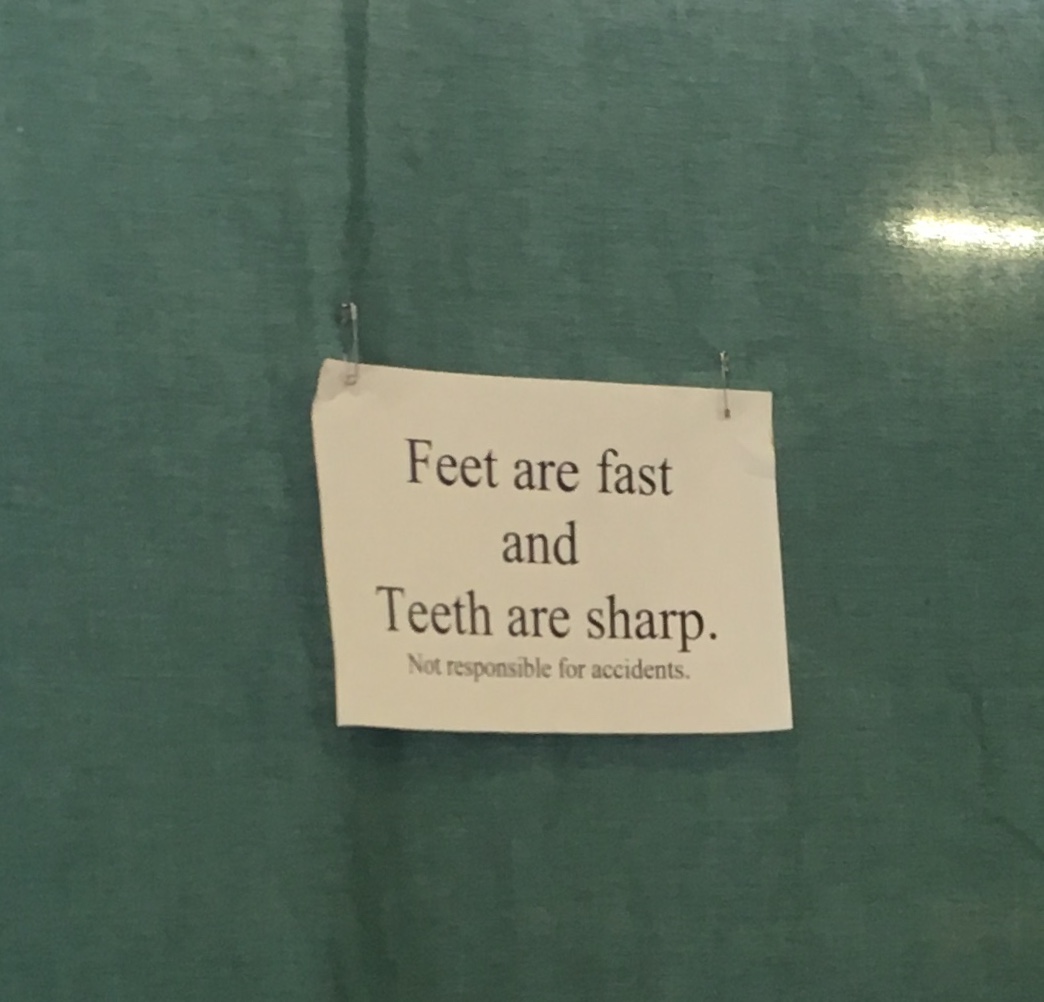
The poor horses.  Of course they bite and kick, cooped up like that.

Bulls on Parade: not just a song by Rage Against the Machine.

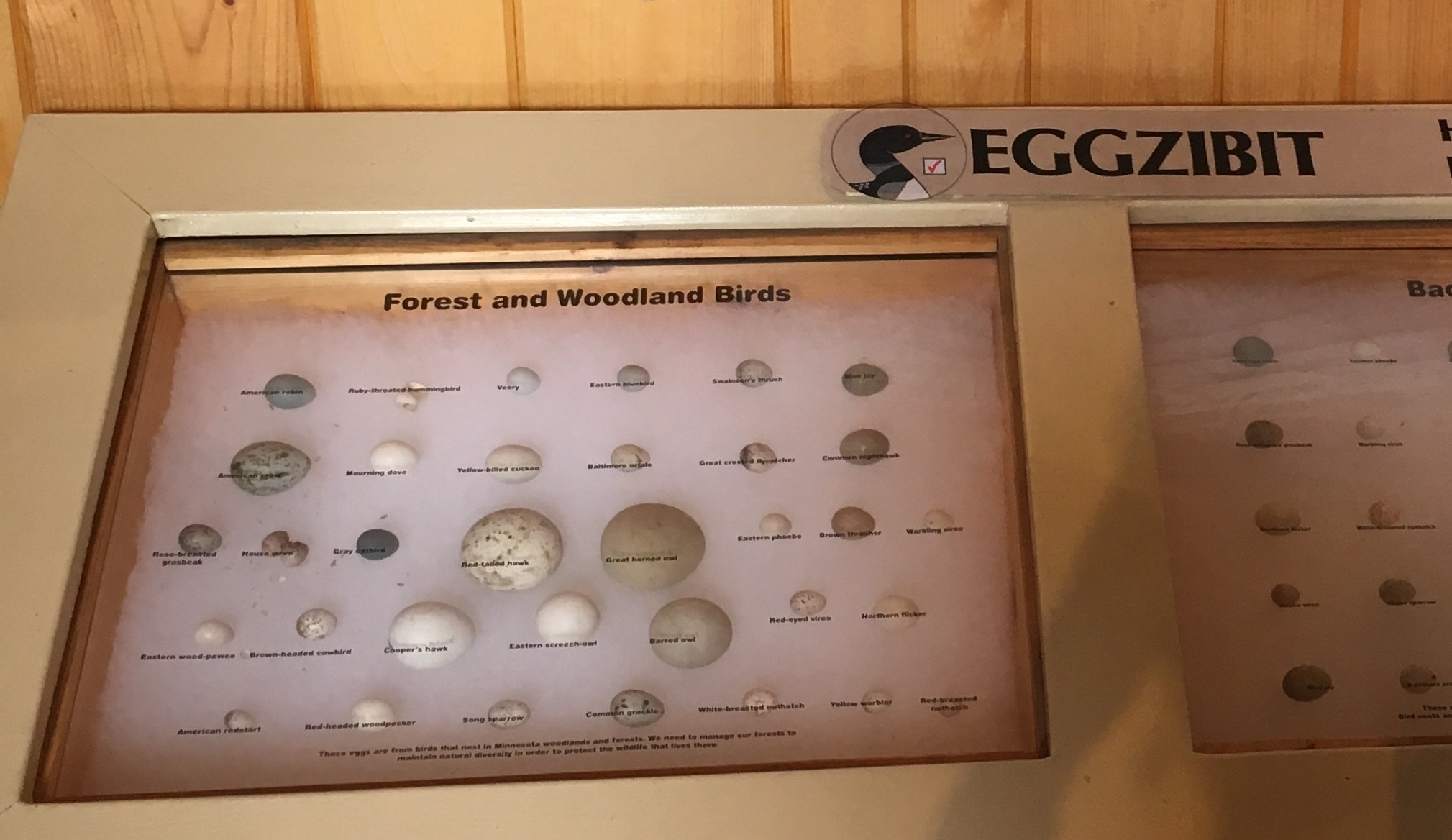
“Eggzibit”—get it?

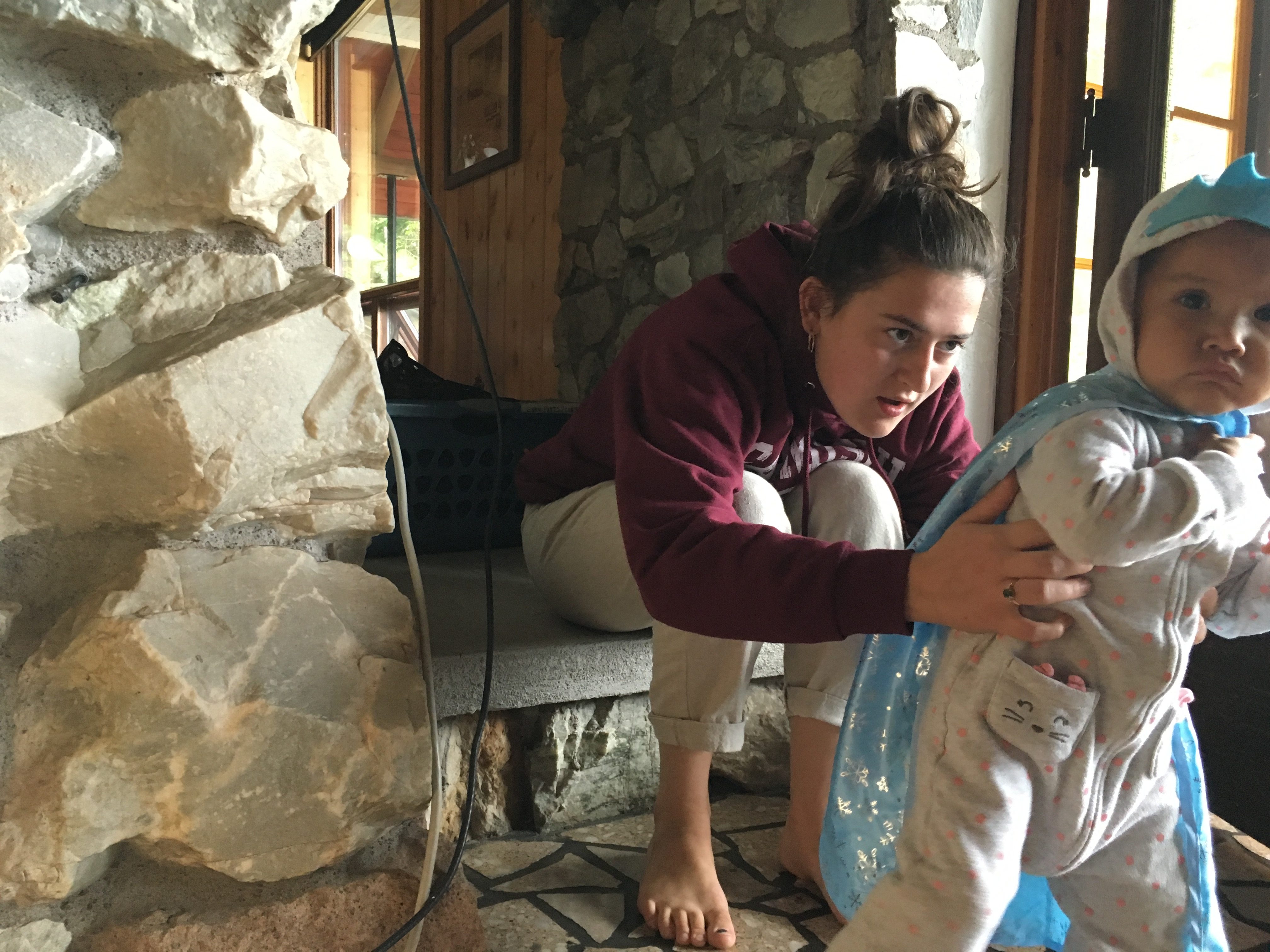
Then, Labor Day weekend in Wisconsin, paid for by my aunt.  It helped to have a super cute super baby there.