Tag Archives: alternatives to prison

Locked Down

As I write this, the phone is ringing. The landline, that is, that I am required to have as a condition of Vince living with me. I had forgotten how loud a landline phone is, and we can’t turn it on silent because Vince has to answer it when he’s home. He’s not home now but I hesitate to turn it off because I might forget to turn it back on, and that could get him into trouble.

When we first got it, there were numerous calls for Mohamed, apparently the previous number holder. Those finally tapered off, but there are still calls now and then. Like now. And the phone is still ringing … 15, 16, 17 rings … I am tempted to pick it up and tell whoever it is to bugger off, but if it’s a robo caller, that just verifies that the number is a potential customer to be strafed with more calls. Still ringing … 18, 19, 20 … ah, silence, finally!

My birthday was last week, and I asked Vince if he would consider going to a classical music concert with me at the James J. Hill House, St. Paul’s equivalent of Downton Abbey.


HillHill Hall

I was pleasantly surprised when he said yes. In fact, he was excited to go, and he spent the next few weeks searching for nice clothes to wear. I told him that Minnesotans are sloppy, but he wanted to dress up anyway. I thought that was great. I always dress up too.

He found a good pair of men’s dress shoes during his community service job at the Goodwill. If you’re a thrift store shopper, you know that decent shoes are the hardest thing to find second hand.

I’m house sitting for a friend for two weeks, and it’s heavenly to have my own place. I’m sure Vince is happy to have the condo to himself, too. Unfortunately, this was the week that the condo association chose to have the chimneys cleaned, and the sweep dropped his tools down our chimney, breaking the flue control so it’s stuck open, allowing all the warm air to be sucked out. I’m just home to write this post, and it’s really cold in here. After many calls back and forth, a guy finally came and shoved a tarp up inside of the chimney. He promised someone would come back “soon” to fix the flue.

It was also at the Goodwill that our concert plan came undone. Vince’s probation officer called him twice, and Vince didn’t answer because he just didn’t hear his phone ring. It’s true, cell phones don’t ring nearly as loudly as landlines. Vince works in a warehouse amid fork lifts and dumpsters and people yelling, so that seemed like a reasonable explanation, but not to a probation agent. Or at least, not to this one on this particular day.

The agent put him on indefinite lock down, which means Vince can’t leave the house except for work or AA meetings. So he’s back to square one.

This happened just a few hours after I posted this piece about the Department of Corrections people in the class I am co teaching. Connection? I don’t know. Just because you’re paranoid doesn’t mean someone isn’t really out to get you, right? And I had written and rewritten this piece to tone it down in case someone with the DOC was monitoring the blog.

This all happened the day before the concert. Vince called his agent and left a message asking for an exception for this one night—his mom’s birthday, tickets reserved weeks in advance, etc. The agent never even called him back. I told Vince we will go to another event.

I went to the concert by myself. The mansion was open for wandering, and it is splendid. Some people, including me, were dressed up but most were not. The woman in front of me looked as though she had just gotten out of bed and hadn’t bothered to run a comb through her hair. Yuck. The music was not good. I go to a lot of classical concerts and it’s rare to have someone play painfully badly, but this was the night. Oh well. I went, and that’s what counts.

When Worlds Collide

I’ve been writing a series of posts about traveling in Cuba that starts here. I am pausing that for a day to write about an unsettling experience where my worlds collided.

I volunteer with the Minnesota International NGO Network, or MINN. MINN is composed of Minnesota companies and nonprofits that work overseas, like my employer, the Center for Victims of Torture (CVT).

Last year MINN launched a class called MINNspire, which helps 50-somethings to explore doing something abroad. This could be anything from volunteering with Peace Corps, to teaching English as a second language, to consulting on communications, as I have done. MINN isn’t there to find them placements; we’re there to guide them through the thought process. I led one of the four sessions last year and will do the same this year—I think.

I was excited that we had 18 people registered—about twice the number as last year. It’s kind of a big commitment to come to something after work, in the dark, during the winter.

I walked in and said hi to my friend Carolyn, one of the four facilitators of the class. There were already two students in the room. Carolyn said to me, in a way that told me we might have an “issue”, “Something really interesting happened with registration. I spoke to a Rotary Club that happened to have a lot of members of the DOC, and we’ve got 10 people from the DOC registered for the class.”

The Department of Corrections. The people I never wanted anything to do with, ever again.

I had come from work, where I had spent the day writing about Eritrean torture survivors. Eritrea is known as the “North Korea of Africa.” They have forced conscription, which means every young man must join the military or go to prison. In the military, they are worked like slaves and their service is indefinite. If they try to escape, Eritrea throws them into underground prisons where they are tortured. If they make it to Ethiopia, they wind up in refugee camps with no future, and their family back home is persecuted. Sometimes they try fleeing to Israel, the one country that reluctantly takes them in, but often they are caught by—essentially—desert pirates called Rashida who hold them for ransom, torturing them while their families listen helplessly on the other end of the phone.

As you might imagine, a lot of Eritrean torture survivors have PTSD, and that is where CVT comes in. We provide trauma therapy and we hope to add physical therapy next year.

So I was writing about this all day and then I stepped into a room of people who had been my and my son’s tormentors for a year and a half.

I am in no way comparing what I went through to what Eritreans have endured. My point is that I know firsthand what a flashback feels like. A surge of adrenaline surged through me. My heart started racing and my palms got sweaty. I felt a powerful urge to bolt.

“I figure if I was a prison warden for 20 years, I can do anything!” one of the women exclaimed. The thought of her volunteering in an orphanage made me uneasy.

“My son just finished the boot camp program,” I told them. Might as well get it out there before she said something that would cause me shoot my mouth off. They oohed and ahhed said what a great program that was.

Carolyn knows my back story and has a high EQ.   She emailed later:

“I would never imagine that you would come face to face with your oppressor in MINNspire.  I mean, last year you were in Palestine, looking for ways to collaborate, professionally, with enemies of the Jewish state and now you come to St Paul and you are asked to teach the people whom you’ve written about for years.

“ I have to shake my head at what the universe is throwing at you.  But if anyone can handle it, you can.”

I hope she’s right, because I thought about backing out of the class but I’ve decided to stick it out.  I’ll keep you posted.

UN-Doing the War on Drugs

I ended my last post by saying I would write about a road trip I am contemplating, from St. Paul to New Orleans.  I don’t know enough to write about it yet, so for now I will revert to one of this blog’s main topics, addiction—and all the consequences of addiction and trying to stop it.

I’m very excited that the United Nations will hold a review of the whole drug control system in April in New York.  It’s called the Special Session of the United Nations General Assembly on the World Drug Problem, or the horrible acronym UNGASS. I’d like to thank the Open Societies Foundation (OSF) for its reporting on this.  OSF promotes research documenting the heavy costs of the war on drugs and shares success stories from countries that have implemented smart policies.  I’ve plagiarized their recent blog posts quite heavily here.

The last time the UN had a special session on drugs, in 1998, the focus was “the total elimination of drugs from the world.”  Ha!  I wonder if there were any actual addicts or former drug dealers involved in coming up with that totally unrealistic goal.

Because it didn’t go well.  The war on drugs has led to public health crises, mass incarceration, corruption, and black market–fueled violence.  Governments—especially those in Latin America that have to deal with the fallout of bad drug policies—have pushed for this UNGASS.

Citizens are fed up too.  A few years ago, a coalition of organizations and individuals in Uruguay pushed until the country voted to become the first country in the world to establish a legal, government-controlled marijuana market.  The main objective of the law was to eliminate narcotrafficking.  But they also have a positive goal, to make the new marijuana production chain beneficial for poor segments of society and a sustainable business for small producers with limited resources.

For the first time, there is significant dissent at the local, national, and international levels.

UNGASS is an opportunity to put an end to the horrors of the drug war and instead prioritize health, human rights, and safety.

I didn’t even know that there was an International Narcotics Control Board, did you?  That sounds creepy.  And it acts like a bully, apparently.

For instance, in the 90s, Switzerland had a major drug problem.  There were open-air drug scenes and one of the highest rates of HIV in Western Europe.  The government pioneered services such as heroin prescriptions, supervised consumption rooms, and community-based treatment.  The Swiss people approved this policy through a series of referenda.

What happened?  The number of new heroin users declined from 850 in 1990 to 150 in 2002; drug-related deaths declined by more than 50 percent; new HIV infections dropped 87 percent, and there was a 90 percent reduction of property crime committed by people who use drugs.

But the UN’s Control Board accused the Swiss of “aiding and abetting the commission of crimes involving illegal drug possession and use.”

On the other hand, when Bulgaria introduced a law that made possession of tiny amounts of drugs punishable with mandatory incarceration for as long as 15 years, the Control Board praised their “political commitment and the will to deal with drug abuse.”  I’ve never been to Bulgaria, but life in a Bulgarian prison sounds horrifying.

OSF is publishing a series of reports in advance of UNGASS, including research into drug courts and their unintended consequences, and an examination of how the drug war affects girls and women uniquely.  You can sign up for their updates here.  Want to get more involved or have a say?  Check out this cool website, Stop the Harm.

So there!  After my recent buzzkill series of posts, I’m happy to share with you some good news and some easy ways to contribute to fixing this world’s drug problem—for real this time.

Hedgehogs, Mice, and Echidnas, Oh My

I pride myself on writing realistically about life. You can count on me to tell the truth as I know it, to question everything, and to imagine the worst case scenario. I don’t know why the Pentagon hasn’t called me yet to offer me a disaster-planning job.

But that doesn’t mean I’m depressed, or even “unhappy”—the more generic term. Being a highly-analytical thinker has its rewards. I notice and think about things that other people do not. There’s often absurd fodder for laughs. Sometimes I’m the only one laughing, but that’s okay, right?

There was an article in the Sunday paper about a study that debunked the popular myth that “happy” people are healthier and live longer. Yes! My friend who works in an old folks home—or whatever they’ve been rebranded as now—has always said, “There are plenty of miserable, crabby 90 year olds. And they’ve always been that way, because their kids tell me they have.”

About five years ago, I kicked the depression that had dogged me all my life. Since then I have felt mostly contentment, punctuated with the normal situationally-appropriate emotions. I felt angry when my landlord raised my rent $300 a month, which forced me to move. I was stressed when I moved again three months later so Vince could live with me. I was anxious when Vince was in solitary confinement. I cried for everything my sister and her kids went through when she had cancer. I felt awe hiking in Petra, in the Jordanian desert, and nervous about crossing over into the Palestinian territories. I felt powerless rage when I was banned from visiting Vince. I had a blast with my friends in Berlin. I’ve been bored at work. I was proud when Vince led his squad at his graduation from boot camp. I am excited at the prospect of remodeling my kitchen.

Hey, I guess I just wrote my Christmas letter!  What a year it’s been.

None of it lasts. Some people figure this out somehow, much earlier in life than I did. Emotions come and go. The pleasant and the unpleasant, they’re all fleeting. So enjoy the nice ones while they last and know that the bad ones will dissipate. Don’t panic if you feel blue once in a while. Don’t latch on to the negative feelings or thoughts. If the blues don’t go away for weeks, of course, seek professional help.

In the last week I’ve had some really good times with people I love.

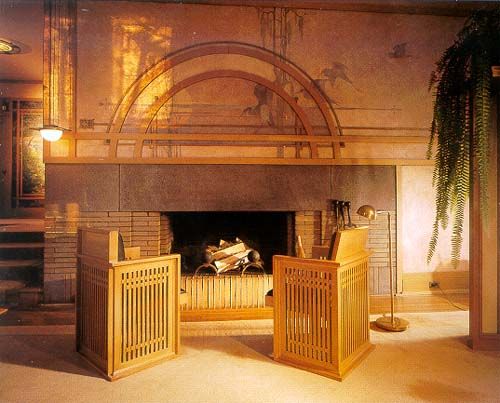
Yesterday I took my mother to tour the Purcell Cutts House, a prairie-style home build in 1913 and owned by the Minneapolis Institute of Arts. This is the living room:

Purcell Cutts

The guide explained that the simple, serene style was in part a reaction to the chaos of the age. The architect was from Chicago, which was the industrial center of the U.S. Meat packing and other industries attracted droves of immigrants and African Americans from the south. There wasn’t enough housing, and the water and sewer systems weren’t up to par. There were no child labor laws, workers’ compensation, welfare, or social security.

So architects brought nature and art inside. Obviously this was not a house that could be produced on a mass scale. The immigrants and African Americans still lived in poorly-heated hovels. But at least this one architect could escape all that and find sanctuary at home!

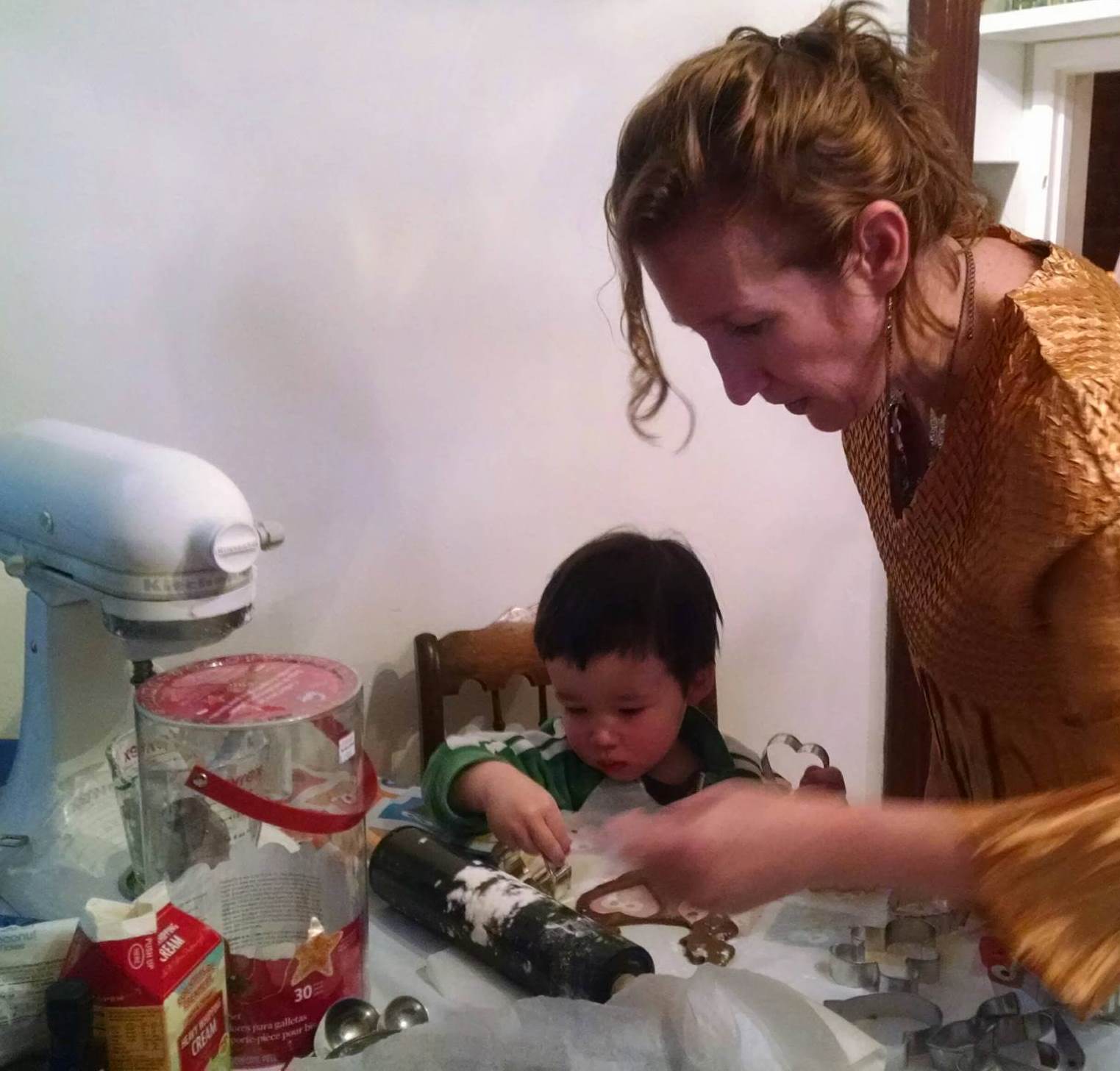
Last weekend, I hosted a cookie-baking party for Vince and his cousins.

Hannukah HedgehogsTaisei n me

They’re not pretty, but we had fun. Strangely, Vince and I had prepared enough dough to yield 16 dozen cookies but only nine dozen made it to the final stage. Hmmm…or should I say, Mmmmm….cookie dough?

So enjoy the moments that contain things you love. In my case: design, craftsmanship, nature, history. Kids, creativity, and cookie dough.

Au Mal Pain

As usual, the prison news includes the good, the bad, and the disgusting.

The good: If I didn’t work in fundraising I might not have caught this item.  The California Endowment has announced it will divest its assets from companies that run private prisons, jails, detention centers, and correctional facilities.  This is fantastic!  The California Endowment is a foundation with $3,668,459,217 in assets.  That’s real money, and maybe it will start a trend.  I look at foundation tax returns almost every day, so I see where they invest their money.  It’s disgusting to see a foundation with a portion of its assets invested in a weapons manufacturer, for instance, and making grants for international poverty programs.  In part, it’s all the small arms the U.S. peddles to warlords abroad that destabilize developing countries and keep them impoverished.  That’s an extreme example but I bet it’s not that uncommon.  If you have retirement investments, you too may own part of Alliant Techsystems or Prison Corporation of America, and you are probably earning fantastic rates of return.

The not-so-good news, also in California, is a report that found abuse, racism, and cover ups a physically isolated prison about 90 miles northwest of Reno.  The town in which the prison is located, Susanville, has fewer than 16,000 people, and the two correctional facilities are its largest employers.  “Employees form tight-knit social groups known as “cars” that can foster what the report terms “a code of silence” that makes it difficult to report wrongdoing.”  They are accused of abusing physically-disabled and minority prisoners, inciting attacks against sex offenders, and conspiring to impede the investigation.   The prison’s nearly 3,500 inmates won’t report abuse because they fear the nearly 1,000 employees will find out and retaliate.  If this is true in this case, why wouldn’t it be true in Moose Lake, where Vince was incarcerated?  Moose Lake has a population of only about 2,700 and, as you might guess from its name, it’s in the sticks.

Then there are two items that would be ridiculous if they weren’t true.

First, rapper Nicki Minaj did a December 10 interview with Billboard Magazine in which she spoke out against mass incarceration, lengthy drug sentences, and the racial bias in sentencing: “What it has become is not a war on drugs.  It has become slavery.  When I see how many people are in jail, I feel like, ‘Wait a minute. Our government is aware of these statistics and thinks it’s OK?’ The sentences are inhumane.”

Earlier this year, she had said about Barak Obama’s prison clemency program, “I thought it was so important when he went to prisons and spoke to people who got 20 and 30 and 40 and 50 years for drugs. There are women who are raped, people who are killed and [offenders] don’t even serve 20 years.”

I guess you could call it a case of bad timing, then when Minaj’s brother was arrested December 3 for raping a 12-year-old girl.  She posted his $100,000 bail.  Blood is thicker than principles, I guess, and I’m not being sarcastic.  As his sister, she probably believes there’s a good explanation.

Last, in prison food news, the New York Times reports that the state’s prisons have announced they will stop serving Disciplinary Loaf—also known as NutriLoaf—to prisoners in solitary confinement.  It was served with a side of cabbage.

God, sometimes I wonder if you think I make this stuff up—that’s why I provide links.

This menu change is part of a slew of reforms to solitary confinement practices.  It was brought about as the result of a lawsuit by the American Civil Liberties Union, whose director said, “Food is very important to prisoners in a deprived and harsh environment; it is one of the very few things they have to look forward to.”

I’ve pasted the recipe below in case you want to serve it to your family over the holidays.

Recipe for Nutraloaf

Makes 50 loaves.

Ingredients

5 pounds whole wheat flour

20 pounds all purpose flour

1.5 gallons milk, 1 percent

8 ounces fast active dry yeast

4 pounds sugar

2 ounces salt

2.5 pounds powdered milk, nonfat

2 pounds margarine

5 pounds shredded potatoes (with skin)

2 pounds shredded carrots


Preparation

  1. Preheat oven to 350 degrees.
  2. Heat milk to 105 degrees, then add sugar, salt and yeast. Let stand for 5 minutes.
  3. Add both flours and dry milk, then mix.
  4. Add margarine, potatoes and carrots. Mix for 10 minutes.
  5. Cover bowl with plastic wrap and let dough rise.
  6. Grease and flour loaf pans and add dough.
  7. Bake loaves for 40 to 45 minutes.


Lasagne, Interrupted

I came home from work, tired and famished.  I was lifting a big slice of lasagna out of a pan to a plate when the landline rang.

This is the phone I am required to have as a condition of Vince’s probation.  He was in the shower, and the phone is in his room.  I respect his space and don’t go in there except to the do the laundry.  (He shares his tiny space with the washer and dryer.)

Brrr-ing…brrr-ing…brrr-ing….  I stood with the lasagna poised between pan and plate.  It stopped.  Then Vince’s cell phone started up—vvvbbbb….vvvbbbbb…vibrating on silent.  It went on and on and still I stood drooling over my longed-for lasagna.

I heard the shower shut off and Vince’s voice, “Hello?  I’m in the shower.”  He repeated himself.  Did the person on the line not believe him?  Then: “MOM!  Will you let the agent in?”

I lowered the lasagna into the pan—it was lukewarm now anyway—and went to the front window.  Yep, there she was, sitting in her car at the bottom of the stairs.  I moved to the front door and opened it, waving down to her.  I stood waited while she got herself out of the car and moseyed up the stairs.

Do not sound sarcastic or mad, I told myself.

“Next time, why don’t you knock on the door?” I suggested.

“Oh, yeah!” she replied, as though she had never heard such an idea.

She stood in the dining room with the urinalysis cup while Vince threw on some clothes.   She smiled, I faked a smile back.  Vince entered the room, retrieved the cup from her, then returned to the bathroom.  As he was returning down the hall, the agent said loudly, “Be sure to tip the cup on its side so the urine gets on the test strip.”

Yum!

Maybe I should have exited at that point but I didn’t realize she was going to linger.  And did I mention I was hungry?

Vince sat at the dining room table.  The agent and I stood in opposite corners in the room.  I was half way into the kitchen, with one eye on the lasagna.

“How’re things goin’?” she asked.

“Fine,” was his reply.  He told the agent he was planning to buy a $300 car.  It would help him get around quicker and he could tinker with it on “the property” which includes the parking lot of the condos where we live.

“The big challenge,” I volunteered, “will be for him to find a landlord who accepts ex offenders.”

“That is a big problem,” she said, “Most landlords take advantage of them, because they can.”

My crabbiness quotient quadrupled.  Or maybe it was just plain anger.  Well, I’ve rarely had a good experience with a landlord, so why was I shocked that they would exploit ex offenders?

“We do know a guy who is open to ex offenders, and fair,” she continued.

One landlord in a metropolitan area of 3.5 million people.

She told Vince she would get him the landlord’s information, and left shortly thereafter.

Finally!  My lasagna.  I sat across from Vince and when I saw his face I thought, “Oh no, I’m in trouble now.”

Mom,” he began slowly, as though he was talking to an utter moron, “Don’t ever bring things up to the agents.  Now the next time one comes, they’ll grill me about why I want to move out.  ‘What’s wrong at home?’  ‘What’s going on with your mom?’”

“But…last week you told me you had that tip on a sober house.”  For a few days we had both been excited but it fell through.  “You want to move out, don’t you?”

“Yes, but we agreed I could stay a year.”

“Yes, but…you were talking about that house….  I thought she might have some resources.”

I ate my lasagna without gusto and offered him some, which he accepted.  “Do you really think I would try to get you in trouble, on purpose?” I asked.

“Sometimes I wonder,” he said.

Just like when he was inside, I didn’t know the rules until I broke one, and trying to be helpful only got me in trouble.

Sincerely, Barak Obama

I wrote to the White House about a month ago to thank President Obama for his efforts to lower incarceration rates through sentencing reform, reintegration programs and other “upstream” measures. I thought I would share the response I received.  Too bad the White House seal and other graphics don’t show up:

Dear Anne:

Thank you for writing, and for sharing your son’s story.  Today, our criminal justice system holds approximately 2.2 million Americans behind bars, at a cost to taxpayers of $80 billion per year.  Many of these individuals are violent criminals who are off the streets thanks to hard‑working police officers and prosecutors, but many others who are incarcerated are non‑violent offenders whose punishments do not always fit their crimes.  We have to make sure that our justice system is fair and effective and is doing what it can to make individuals, their families, and their communities stronger.

My Administration has taken concrete steps to enhance public safety while also making our system more just.  By channeling resources into early childhood education and issuing discipline guidance to our schools, we are creating pathways to success instead of pipelines to prison.  Through initiatives like “My Brother’s Keeper,” we are promoting reforms to the juvenile justice system and reaching young people before they’re locked into a cycle from which they cannot recover.  Additionally, the Justice Department’s “Smart on Crime” and “Justice Reinvestment” initiatives aim to address the unnecessary use of mandatory minimums in the Federal system and work with states to lower their incarceration numbers and reinvest in crime prevention services.

For currently incarcerated individuals, my Administration has supported critical improvements to our prison system that target overcrowding, solitary confinement, gang activity, and sexual assault.  We are promoting rehabilitation programs that have been proven to decrease the likelihood of a repeat offense, and we are expanding reintegration programs—such as those supported by the Second Chance Act—that work with government agencies and non‑profit organizations to help provide access to employment, education, housing, and health care for the nearly 600,000 inmates released annually.  In addition, I directed the Office of Personnel Management to “ban the box” on most Federal job applications in order to end the practice of disqualifying people simply because of a mistake they made in their past.

While my Administration remains committed to taking action to improve all phases of the criminal justice system, it is time for Congress to act.  Meaningful sentencing reform and juvenile justice reform legislation would make a crucial contribution to improving public safety, reducing runaway incarceration costs, and making our criminal justice system fairer.  There is strong bipartisan support in Congress to achieve these goals, and I am encouraged that the Senate and House will continue to work cooperatively to get a bill to my desk.

Thank you again for writing.  Throughout my Presidency and beyond it, I will continue working to keep our communities safe and make our justice system fair.  To learn more about these efforts, visit www.WhiteHouse.gov/Issues/Civil‑Rights/Justice.

Sincerely,

Barack Obama

Seeing how Vince struggles with the after effects of being imprisoned, it is comforting to know that lawmakers on both sides agree the system must change—drastically, and now—and that my president cares enough about this to take it on even after he leaves office. I believe this is the only issue Republicans and Democrats agree on and are working on together nowadays, which tells you a lot about how messed up the system is.

A Draught Experiment

Because my son lives with me and is on intensive supervised release for a 50-month prison sentence, I am not allowed to have alcohol in my house.  Or drugs.  Or weapons.  But I wouldn’t even know where to get my hands on either of those.

I have to admit I was worried that I couldn’t do it—not have alcohol in my home.  Over many years I had developed some habits.  Living alone, there was no one to question them.

It went like this: I would get home and have a beer or a glass of wine.  Then another one, and sometimes another one.  Especially if I was into some TV show, it was easy to just keep the wine bottle on the table next to me so I wouldn’t have to get up and walk to the fridge for a refill.

This was my habit almost every night, except for the occasional night I went out for happy hour, which just involved a different venue.

So I really wondered—what will I do—now that I can’t drink at home?  Was I really an alcoholic after all?  Would I sneak alcohol into the house?  Drink it in my car in the parking lot?  Would I stoop, literally, to drinking in the unheated, spider-web-filled basement?  Would I be going to happy hour seven nights a week?  Would I start stuffing my face with cookies or driving out to Mystic Lake Casino to gamble, as a substitute?  Would I go through withdrawal?  Would I have to check into Hazelden and if so, could I get a family discount since my dad, Vince, and however many cousins were alumni?

I had a notion that this could be an opportunity, but I didn’t know for what.

It’s been three months since Vince was released.  Not drinking in my home has not been a problem.  I joined a private club that’s a block from my house with the idea that I could amble over and have a few cups of cheer without having to drive home.  It’s a nice place but I learned that I don’t like going to the same place all the time, so I dropped my membership after a few months.

I haven’t gone wild with cravings.  I haven’t snuck alcohol into the house except once or twice, when I stopped at home to change in between the liquor store and going out to a dinner party.  I am not aware that I’m eating any more.  Once in a while I do wish that I could watch my favorite TV program and have a glass of wine, but it’s not a huge deal.  I have enjoyed going out for happy hour twice a week or so, with different friends to different places.  I have also found myself shopping more, but that could be because I just bought a new house and I need stuff.

But here’s the unexpected result: I’ve lost five pounds without even trying!  I can only assume it’s from all the alcohol calories I’ve passed up.  I’ve tracked my drinks and calculated that I’ve foregone over 8,000 calories since Vince moved in.  Thank you, Vince!  I’m probably not watching as much TV, either, because without my sedative of choice I don’t get lulled into a stupor in front of the boob tube.

When Vince mentioned last week that he had a lead on a house share situation, I had mixed feelings.  I was happy for him but worried about myself—would I quickly revert to my former habits?  Maybe I could keep up a self-imposed ban on alcohol in my house.  Right.  Uh huh.

The house deal fell through, and I was relieved.

Poppies of Expectation

There’s a saying: “Expectations are disappointments in the making.”

That sounds so cynical. And as with all self-helpy kinds of things, I had to struggle with this concept intellectually before I could accept and employ it.

Some expectations are reasonable. I expected Vince to graduate from high school. I was bitterly disappointed when he didn’t. In this case the saying still holds true but you couldn’t fault me for the expectation, right? It’s a pretty minimal one held by most parents. (Vince has since earned his General Equivalency Diploma and finished two years of college.)

But there are other expectations that are unreasonable.

Vince wrote numerous times from boot camp about how he had spent four hours scrubbing the baseboard in the gym, or all day moving manure from Point A to Point B, or how he made his bed with sharp corners and ironed his clothes with exact creases. This was not the Vince I knew from before boot camp. “Wow!” I thought, “How wonderful that he’s learned to be a perfectionist clean freak like me!” I looked forward to him moving in. It would be great to have someone else in the house who would wash windows, dust and vacuum, wash the car (and here I got really carried way), paint the spare bedroom, clean the spider webs out of the basement, tear up the old patio and cart all the bricks away, maybe even wallpaper the dining room!

Ha. Suffice it to say that none of those things has happened. And why should they? Vince met the expectations of boot camp because his freedom was on the line. I had never even voiced my expectations to him—I was barely aware of them myself.

The progress I’ve made is this: I used to be completely unaware of my expectations, then feel shocked when they weren’t met. Now I catch myself—maybe not in the moment but eventually—and I laugh at myself a bit. The only disappointment I feel is in myself, for having unrealistic expectations.

Vince will never be a neatnik like me, but he does clean up after himself. He takes out the trash and puts gas in the car when the tank is low. He picks up items at the grocery that I forgot to get the day before. He replaces the toilet paper when it’s gone. He makes ribs and bakes cookies and offers them to me. He pays rent. He works full time and volunteers at the Goodwill on Sundays. He exercises. He’s started his own blog. He’s going to meetings and has sober friends.

I still have thoughts like, “I hope he goes back and finishes his degree,” and “I hope he meets a nice girl and gets married and has kids.” I notice these thoughts. I name them as expectations. I am kind to myself. I acknowledge that they could happen but that there are no guarantees and that Vince’s designs for his future may not match mine. Just for today, I’ll be grateful for what’s right. I will not go romping into the poppy field of expectations and disappointments.

Free But Not Free

After avoiding each other for a couple days—not easy to do in an 800-square-foot space—I offered to make dinner so Vince and I could talk and clear the air.  “Unless u want me to write a letter to u instead,” I texted.  No, he texted back, we can talk.

We started with a hug and “I love you.”  It reminded me of our moments on the hug rug in prison.

He wolfed down his stir fry while I talked, then talked while I ate.  We went through our lists of grievances.  To my surprise I didn’t get defensive and he didn’t roll his eyes and walk out of the room.

The one thing I was nervous about was saying, “It is my house.”  That’s a fact, right?  But saying it would feel like I was lecturing a teenager.  This was about my request that Vince ask me—or at least give me a heads up—when he was inviting people over—even family members.  He responded that I had brought my friend Sarah home a few nights earlier without warning him.

“I didn’t even know who she was,” he said.

“Sarah?  You don’t remember Sarah?” I asked.  “We came down to visit you and we spent the day together picking agates.  We had dinner at that nice restaurant where you ended up working….”  Had he been high on something, all day and evening, and I hadn’t been able to tell?  It didn’t matter now.

“It’s my house,” I said, and the world didn’t end.  We agreed to have dinner together a couple times a week so we can talk things over on a regular basis instead of saving them up.

A few days later I texted Vince to ask if he’d like to eat lasagna with me that evening, and he replied that he just wanted to go home and go to be after work.

This is it.  This is what they were talking about the day Vince was released, when they said that adjustment to life on the outside would be harder than anything they experienced in prison.

And now the weather has turned, to the cold, dark days of Minnesota winter.  It’s hard for anyone to get up and leave the house when it’s dark as night and freezing drizzle, but Vince has to walk six blocks, take a bus and a train, then walk six more blocks to his job in the laminating factory.  He still can’t cash his own paycheck because Wells Fargo requires two forms of ID, even for checks drawn on its own accounts.

There was an editorial and an article in the St. Paul paper about criminal justice system reform.  At the end of a local forum, two mothers got up and spoke about the effects of incarceration on the family.

“There’s no help,” said one mother whose son had committed suicide at age 28 because he just couldn’t make it on the outside.

“There really isn’t,” said the second mother.  One of her sons is schizophrenic, and thanks to her persistence he’s in a state hospital, not a prison.  She faces eviction because her landlord won’t let her other son, newly-released on 10 years of probation, live with her.  He was convicted of criminal possession of a firearm.  If I was renting in her building and found out he had moved in, I’m sure I’d be unhappy.

These forums and op-eds are good news—there are reform efforts like this going on at the national, state, and local level, and that they have bipartisan support.  But the words of these mothers weighs on me.  Vince actually said the other day something like, “It would almost be easier to go back to prison that to be trapped on house arrest like this.”  Ugh.

MUST be positive!  Must make gratitude lists!  Must not indulge in self pity!  This too shall pass!

Only eight more months to go.