Tag Archives: travel

Happy Christmas, 10 Years On

This is a reprise post from last year.  Merry Christmas, ya’ll!

In keeping with my gradual transition to writing about unconventional travel and living abroad adventures, I’m looking back on the first Christmas I spent in the UK, 10 years ago.

I had learned a lot since arriving in October. Searching for housing, I had finally figured out that address numbers sometimes went up one side of a block and down the other. Also, many buildings just had names instead of numbers. The Oxfam head office was called John Smith House.

“House” was a misnomer because it was a modern, three-storey building in an industrial park across the motorway from the Mini Cooper factory, and 750 people worked there.

John Smith Houseatriumlobby

I could usually remember that the first floor was the “ground floor” and the second floor was the first floor. I had figured out that when my coworkers asked, “You awl right?” they weren’t concerned about my health; it was the same as someone in Minnesota asking, “How ya doin?” I was avoiding “creeping Americanisms” in my writing, as cautioned in the Oxfam writing manual, so was careful to write “storey” and “tonne” instead of “story” and “ton.” I was no longer taken aback when introduced to a 20-something coworker named Harriet, Richard, or Jane.

Most important, I had learned to avoid any references to my pants, as in, “I got my pants wet biking to work in the rain.” Trousers were pants, and pants were underwear. I loved the expression, “That’s just pants!” which meant something like “that’s insane!”

Everyone spoke in a low murmur. This was partly due to the open plan office, where six people shared one big desk, but I think it was also the culture. A few weeks after my arrival, a new Canadian employee came through for her induction (orientation), and her braying, Minnesota-like accent filled the whole building. One of those moments when I realized, “Ah, that’s what we sound like.”

At Oxfam, everyone walked fast. It was as if, by striding vigorously, they would personally Save the World.  My tall, ginger-haired colleague, Adele, was selling Palestinian olive oil out of her desk drawer. I enjoyed a daily fair-trade, organic chocolate bar from the cafeteria.  Oxfam had a Christmas bazaar in the atrium featuring beaded jewelry made by Masai woman who used the proceeds to buy goats.  Everyone was very earnest.

To be fair, the “Boxing Day”, or Indian Ocean, Earthquake and Tsunami (caution: upsetting video) had happened one year before, killing 230,000 people and leaving millions more without homes or livelihoods. Then, suicide bombers had struck the London transport system in July, killing 56 people and injuring over 700. The week I arrived in Oxford, an earthquake took 80,000 lives in Pakistan. People were reeling, but responding generously. Oxfam had received a tsunami of donations, internally referred to as the “Cat Fund”—for Catastrophe Fund—and rumour had it that they were struggling to do enough, fast enough, to respond.

But for now, Oxfam was abuzz with Christmas cheer. I look in my diary (date book) from that time, and I was busy meeting colleagues after work at pubs named The Marsh Harrier, the Eagle and Child, The Bear, Angel and Greyhound, and Jude the Obscure.

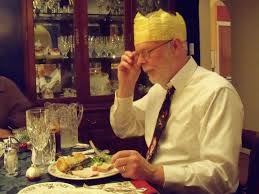
They called Christmas Crimbo, and presents pressies. There were crimbo crackers for sale, too, which are not a crunchy, salty snack, but shiny cardboard tubs “cracked” open at the festive table and containing a Christmas crown and trinkets.

C&CCrackers and CrownsC&C2

There was a panto in the Oxfam atrium, so to use all my new words in a sentence: “Are you going to the crimbo panto or shopping for pressies and crackers after work?”

And what is a panto? It’s slang for pantomime, an extravaganza that takes weeks of planning and involves elaborate costumes, jokes, dancing and singing, skits, and slapstick. Apparently it’s also done by families and in theatres but the only one I’ve ever seen was in the Oxfam atrium. Our usually-serious employees were dressed up as fairytale characters and making fun of themselves, our bosses, and our work. Very healthy, I thought. Take life seriously most of the time, then go all-out silly for a week.

The Queen’s Christmas Message that year was beautiful, in my opinion, and more relevant than ever.

queen

Art and The Avocado

This is a series of posts about Italy, Malta, and Spain that starts here.

As I exited the Borghese Gallery at exactly 2:00 pm I wondered, Why Caravaggio?  Why Bernini? Why did they become famous, while hundreds of other artists who had created most of the art in the gallery remained nameless nobodies?  How do some artists “break out” from the pack? Is it talent, connections, luck, or what?

I could appreciate how difficult it must have been to carve fingers out of marble.  Were no other sculptors able to do that—is that why Bernini stands out?  I could see how Caravaggio’s paintings were darker than his peers.  Is that why he’s considered so much greater than other painters?  Was “darker” a breakthrough in the 16th Century, like cubism would be in the 20th?  Even the worst artist in the gallery—if there was one—was infinitely better than I could ever be.  I felt like a philistine and resolved, as usual, to read up on what I had seen when I returned home.

I sat on a bench outside the gallery next to an elderly couple and pulled out my map so I could think about where to go next.  The man leaned over to me and asked where I was from.  He had never heard of Minnesota and his English was so-so, but that didn’t stop him from talking without interruption for 20 minutes straight.

He commandeered my map so I couldn’t walk away.  He was very nice but he made enough suggestions to keep me busy in Rome for a month.  “You must walk over to the other side of the river and see the Church of St. Celestine of the Bloody Hand,” he said enthusiastically.  “It’s like no other church you’ve ever seen!  It will only take you about a half hour to get there by taxi.”  I made up that church name, of course.

He paused, then sighed, “Ah, that’s-a-Roma.”

His wife leaned forward to peer around him at me with a look that said, “He always does this.”  She must have been 80 but she didn’t have a hair out of place and she was wearing a skirt and high heels.  He was wearing a black trench coat, open so I could see his tweed suit and silk tie.  They were both wearing boxy, trendy eyeglasses.

He said something that sounded like “I am an avocado.”  What?  “A lawyer—retired,” he said in English.  Ah, an avvocato—as in legal advocate— I nodded.

“You must see the Caravaggios in the Church of the Holy Martyrs of the Flagellation,” came next.  “Ah, that’s-a-Roma.”

“You are by yourself?” he asked.  “Alone?”  When I nodded he looked back at his wife and I couldn’t see their faces but I imagined they exchanged pitying glances.

Finally, I maintained eye contact and smiled while gently extracting my map from his hands, then walked off down the tree-lined lane.  They were such a sweet couple.  Why wasn’t I part of a sweet couple?  Why?  What had I done wrong?  Would I ever meet Mr. Right?  Why was I the Only One in the World who was alone?  Blah, blah, blah went my thoughts.  A few tears escaped, and I thought this would be a good time to sit on a bench, rest a bit, and gather my thoughts.  But counterintuitively, it’s often when I’m over tired that I have the urge to Press On No Matter What.  I was determined to find one of the things the old man had recommended—a church in the Piazza del Popolo which had two Caravaggios.

Despite it being close by, I got lost.  I consulted the map, then got lost again.   It was hot, I was hungry and tired.  The thoughts started again: What’s wrong with you?  You’re such an idiot.  No one else gets lost this much.  Finally I stumbled into the church and gazed at the Caravaggios.  Meh.  I think I had OD’d on art.  After three days of nonstop touring, I told myself I had nothing to prove.  I walked back to my hotel, polished off my complimentary prosecco, and slept for 12 hours.

Stories as Old as Time

This is a series of posts about Italy, Malta, and Spain that starts here.

The Borghese, pronounced borrrr-geh’-see-ah, was once a private estate originally owned by a cardinal who was the nephew of a pope.  There was a lot of money to be made in the Catholic Church 500 years ago, which is partly what sparked the Reformation.

The gallery is one building in a sprawling complex.  There was the villa itself, where successive owners lived before the last ones bequeathed it to the state.  There were parks filled with statuary and fountains, and then there was the gallery.  I didn’t see the villa, but I imagine it isn’t too shabby.  So if you were lucky enough to live here in the 17th Century, the gallery was your own private art museum.

My group of a dozen New Yorkers, Floridians, Hoosiers, Ottowans, and one Dutch couple were led around efficiently by our guide, Mario, who said he was an art student.  He was around 35, so I think he may have meant he was a lifelong student of art.

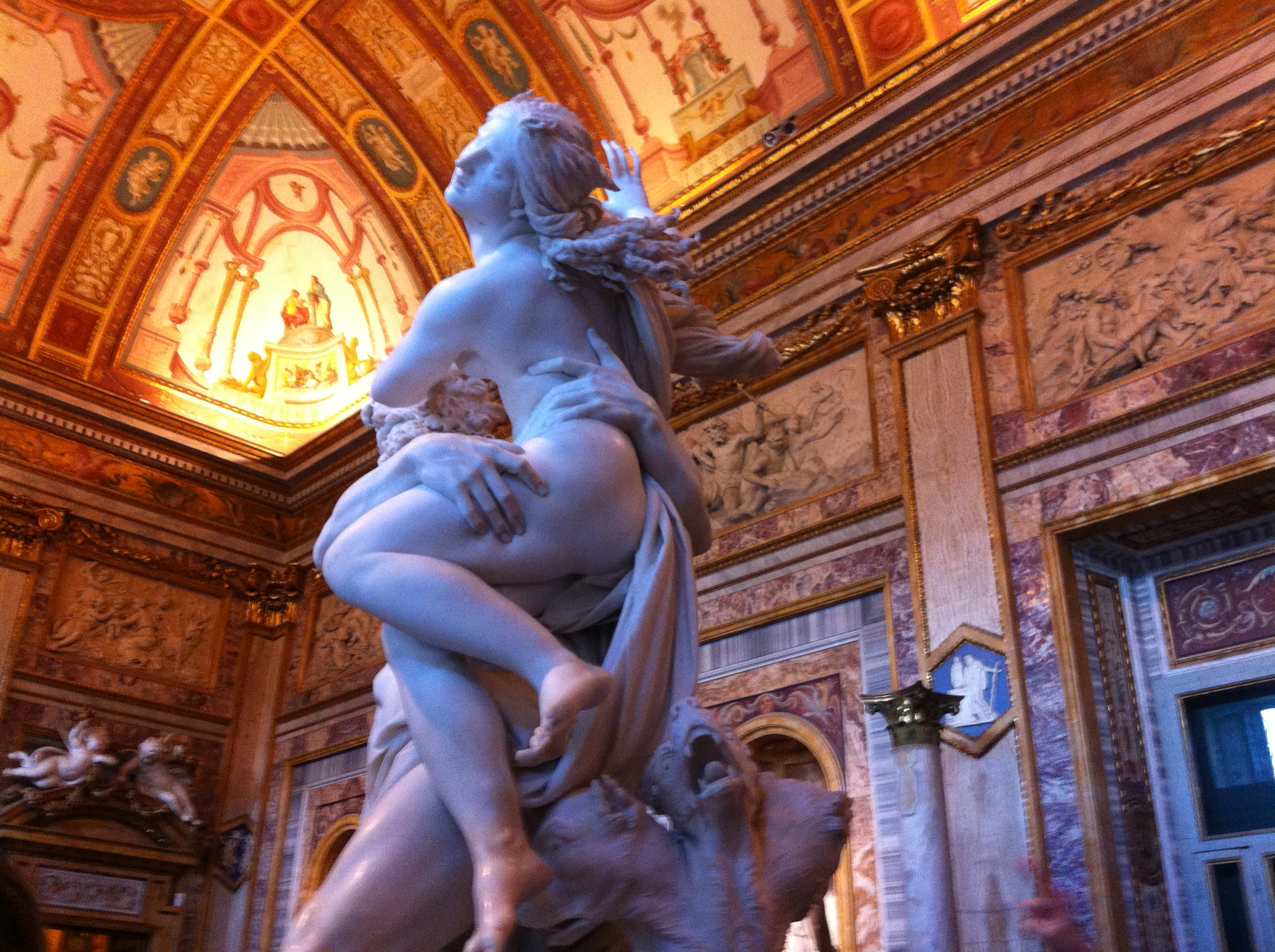
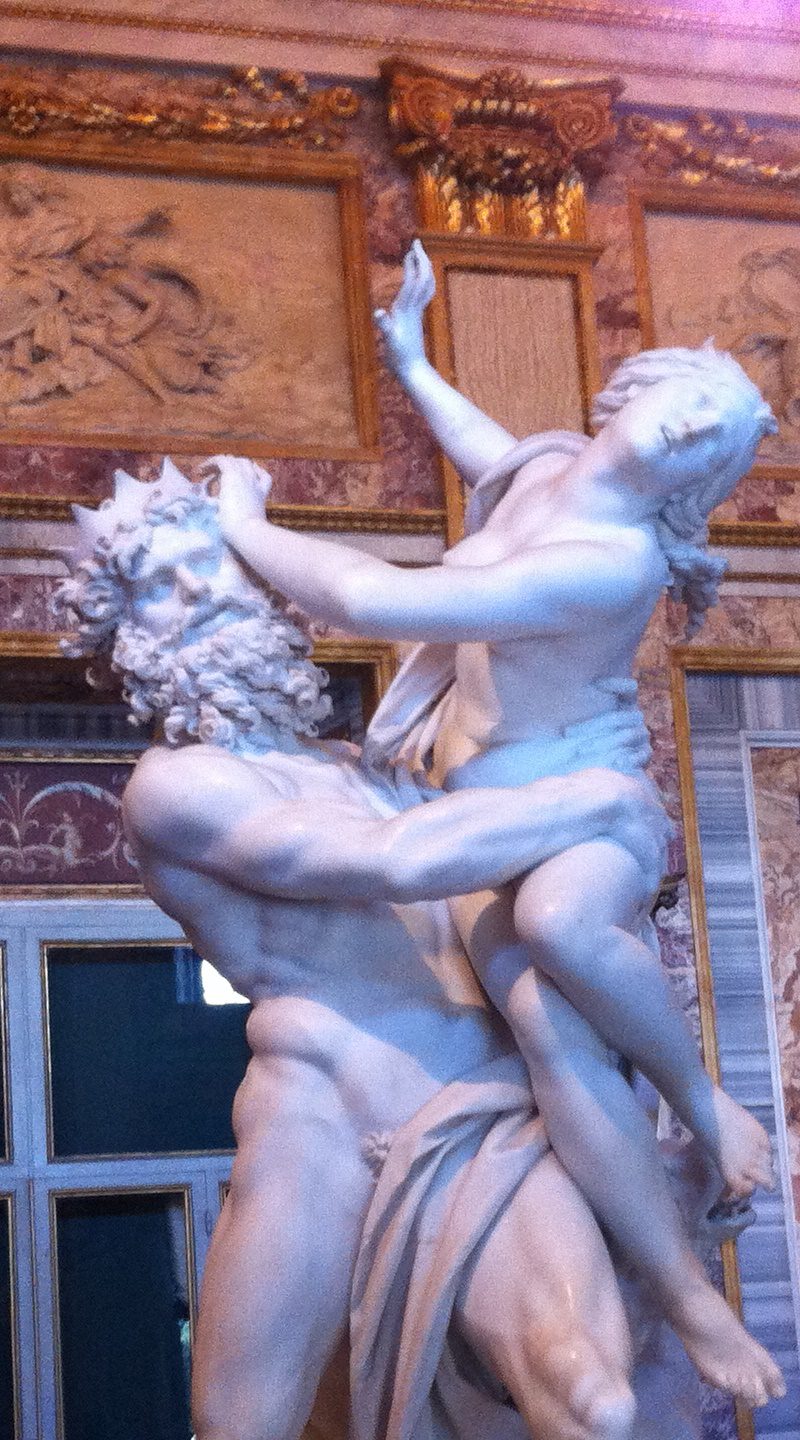
The first room featured a sculpture by Bernini, the Rape of Persephone (by Hades, the king of hell).  According to Mario, they “lived happily ever after.”  Really.

rape-of-persephone

Despite the repulsive subject, I couldn’t help but marvel at the lifelike bodies carved out of a block of solid marble.  Look at Hades’ fingers sinking into Persephone’s flesh.

rape-of-persephone-2

The Rape was the centerpiece in the room, but every inch of the room was covered with art.  Even the walls, floors, and doors were works of art because they had been painted to look like marble or other precious materials.  I wondered how much just one of the friezes above the door would be worth, and what anonymous artist had produced it.

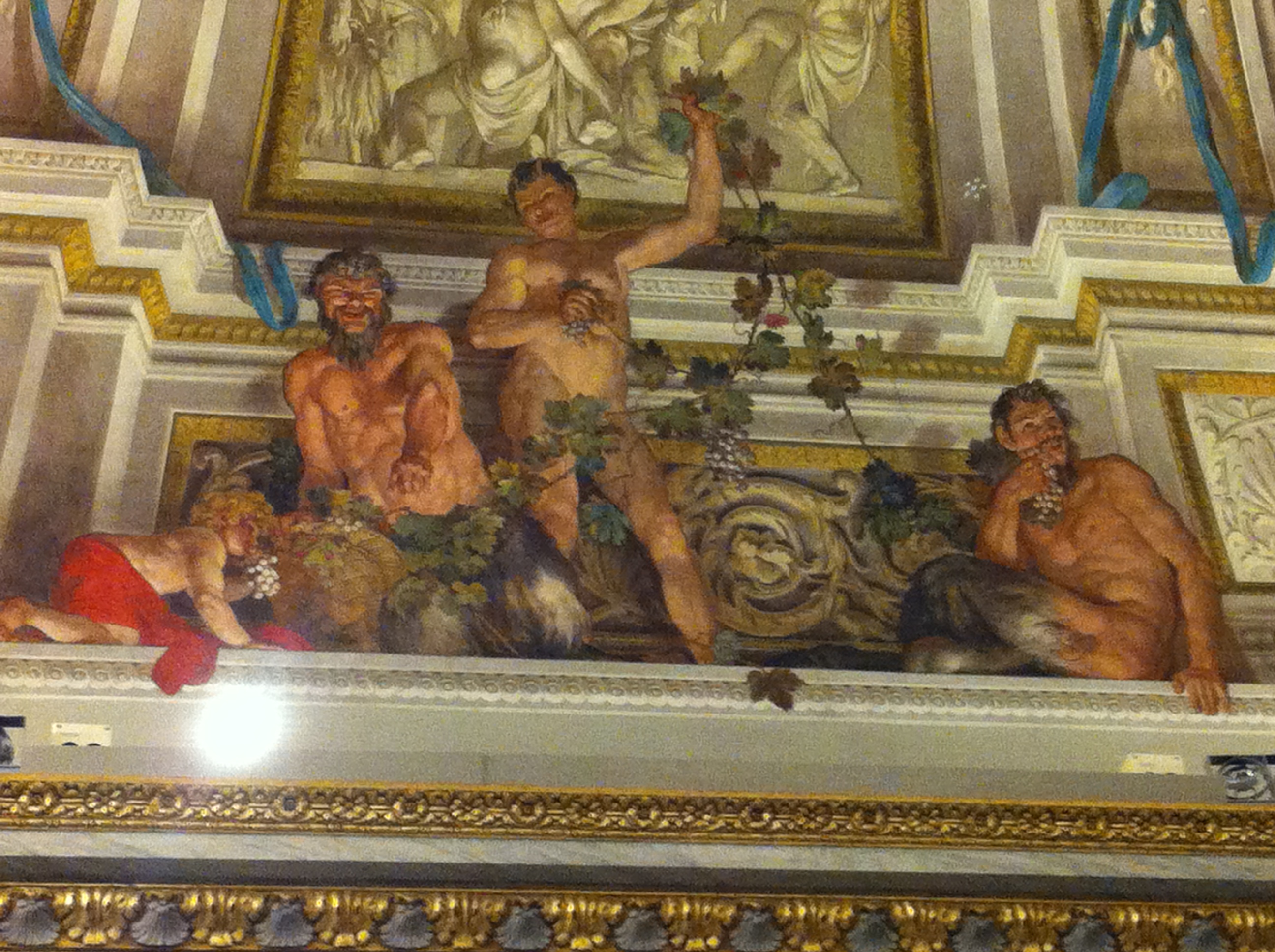
In a hallway, there were these 3D murals on the ceiling:

3d

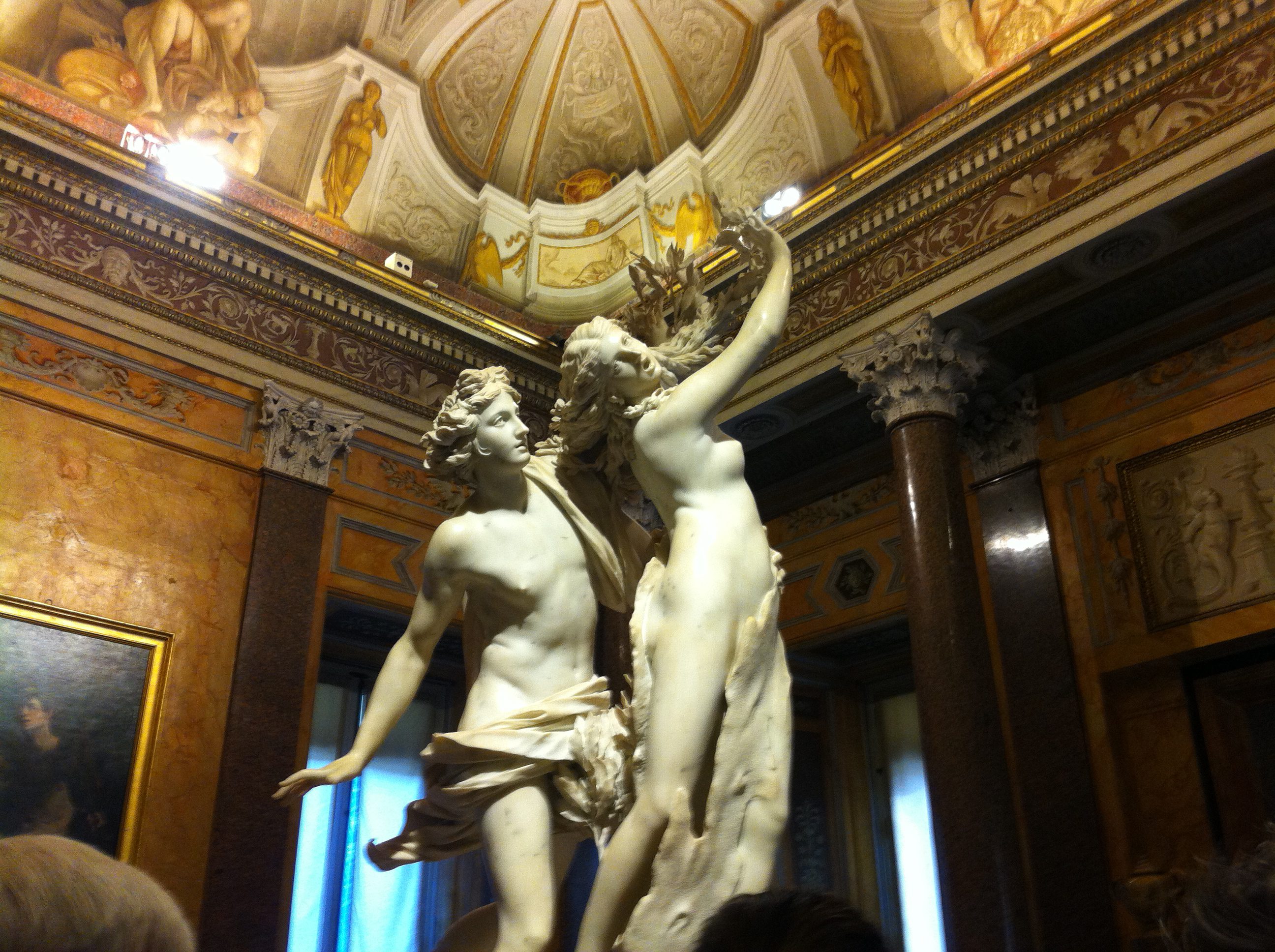
The next room featured another guy (Apollo), who couldn’t keep his hands off a woman (Daphne) who had said “No.”  She pleaded for help to her father, the river god Ladon; and he turned her into a tree.  How did Bernini know where to start?  How did he carve the arms and fingers without cracking one off?

apollo-and-daphne

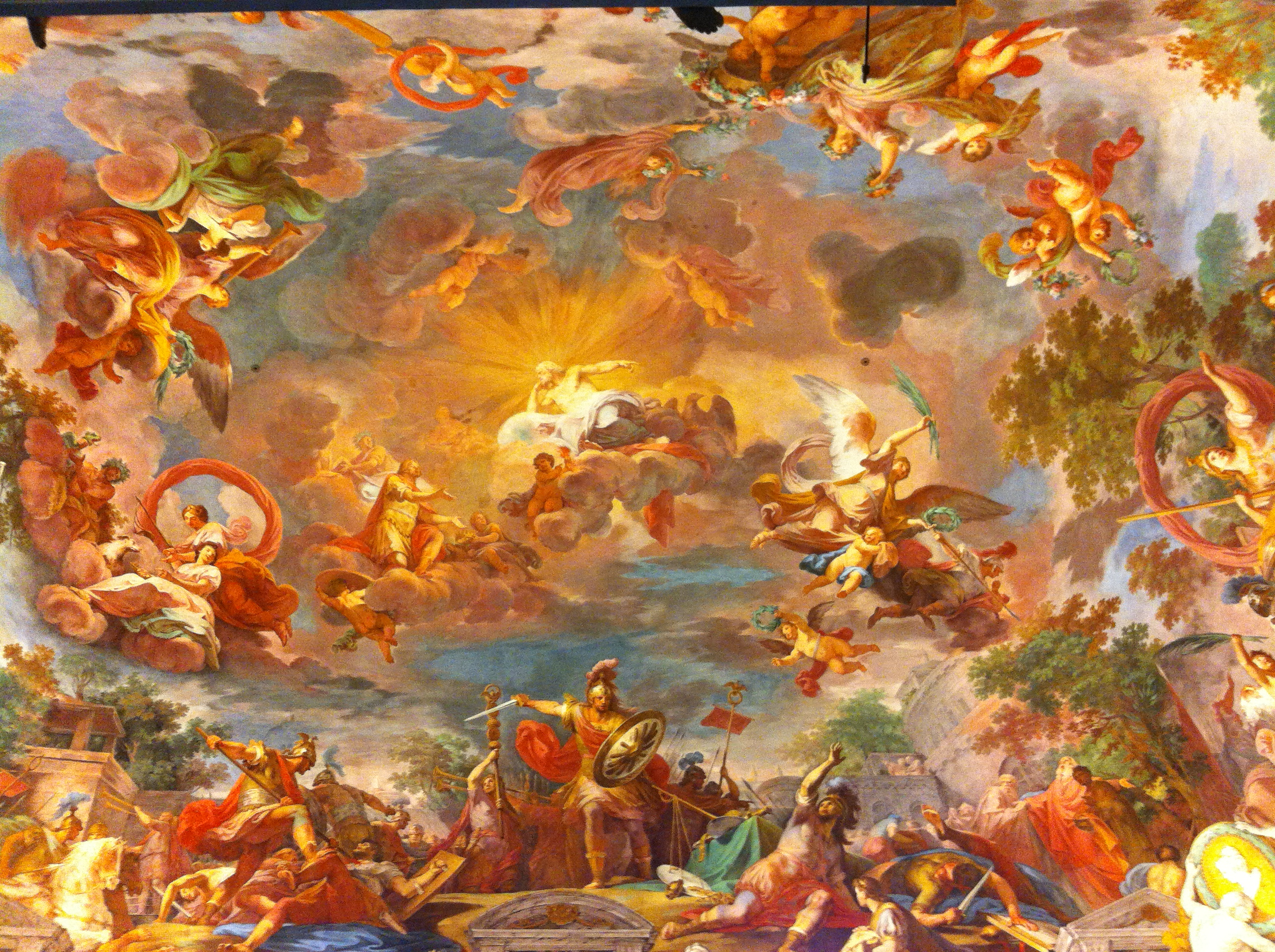
We passed through an enormous room that was closed for renovation, but we stopped to appreciate the ceiling; this is one small section:

ceiling

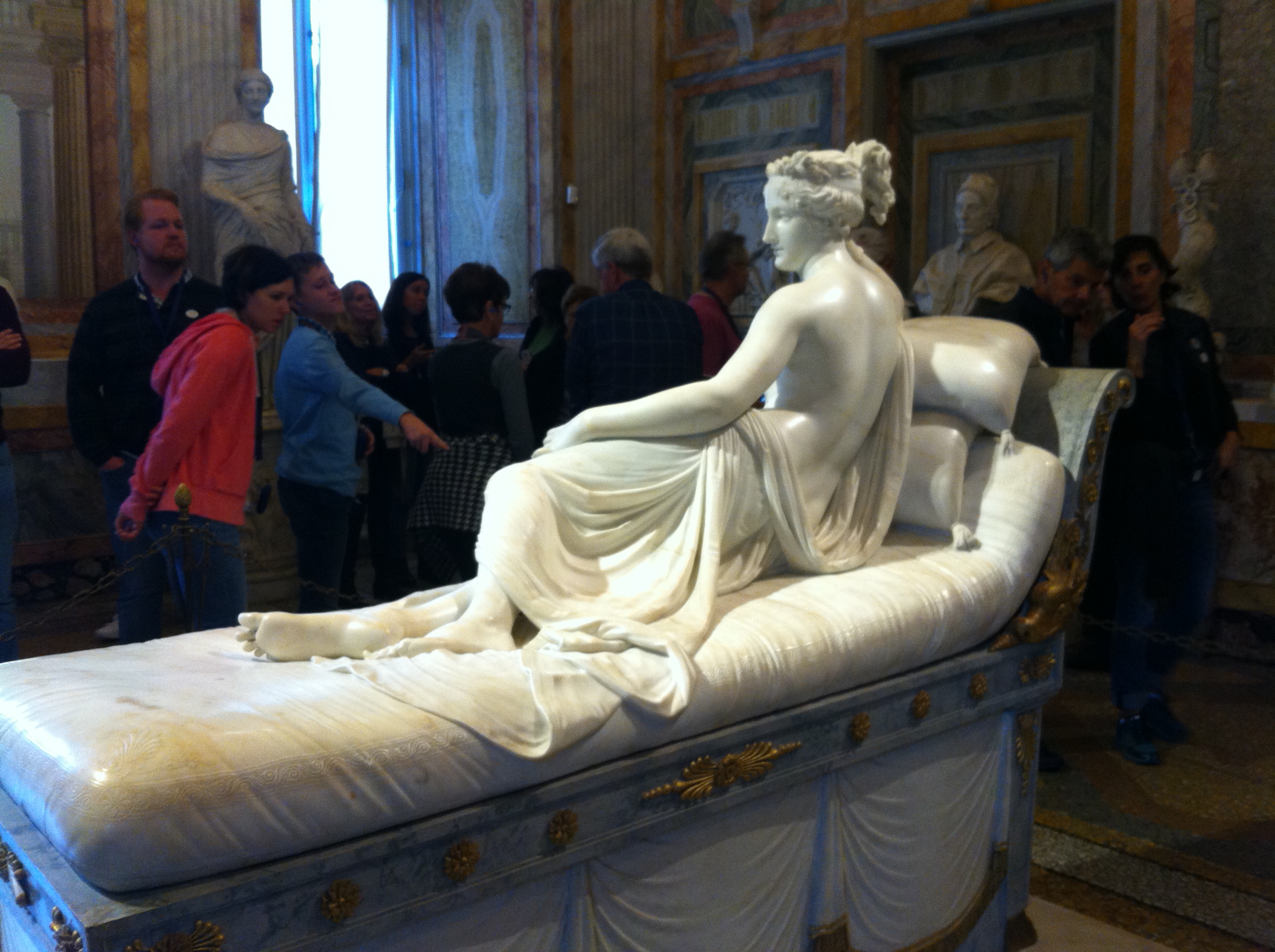
There was a sculpture of Napolean’s sister Pauline, who was married to a Borghese for the political alliance. Note the wrinkles in the marble “mattress.”

pauline-b

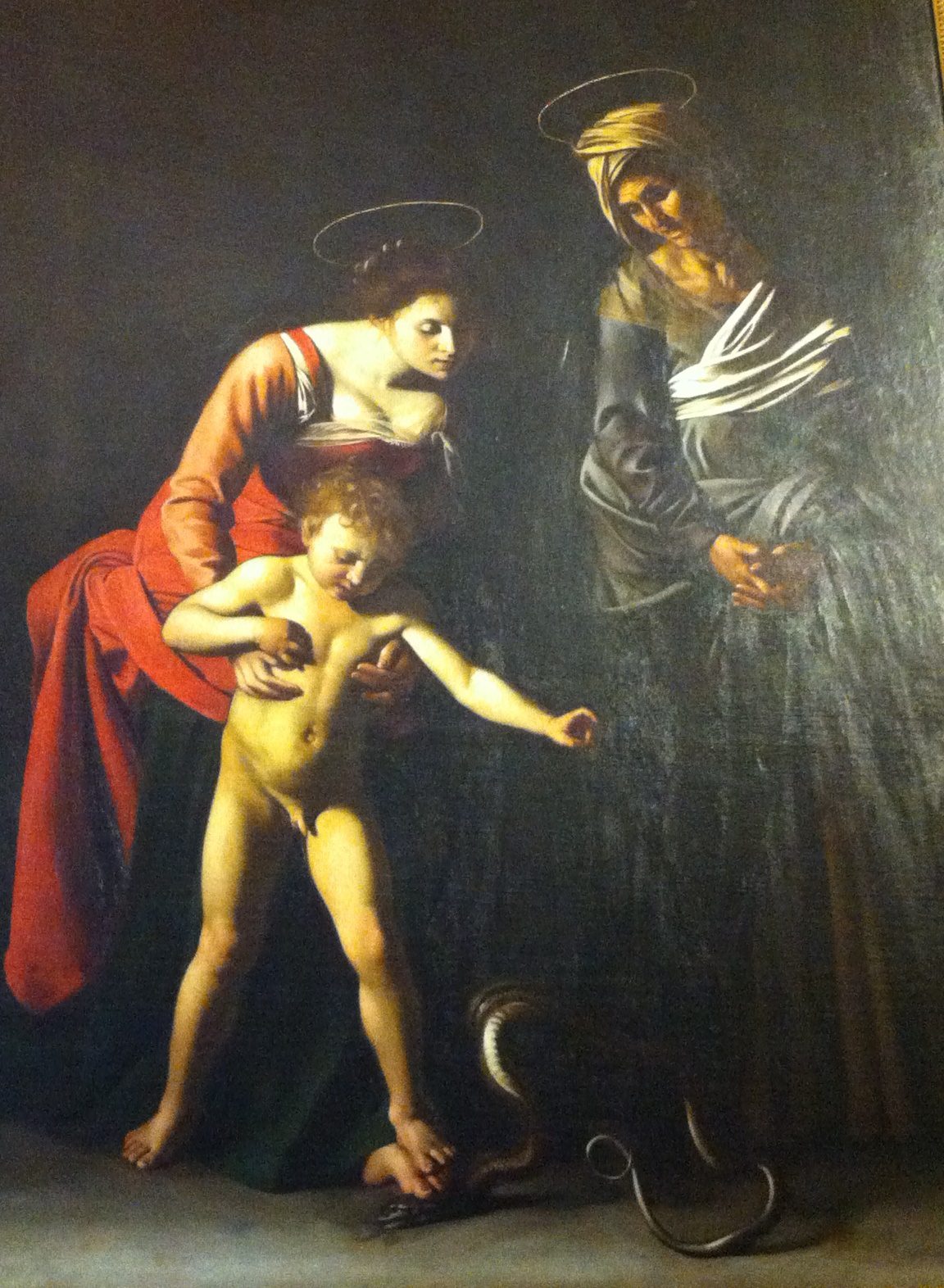
Then there were the paintings by Caravaggio.  This one had been banned because it depicted Mary with cleavage and was unflattering of her mother, Anne.  Full frontal male nudity, I guess, was not a problem.

caravaggio

Continuing along the rape theme, there was this painting of Susanna being raped by the elders.

rape-of-shoshana

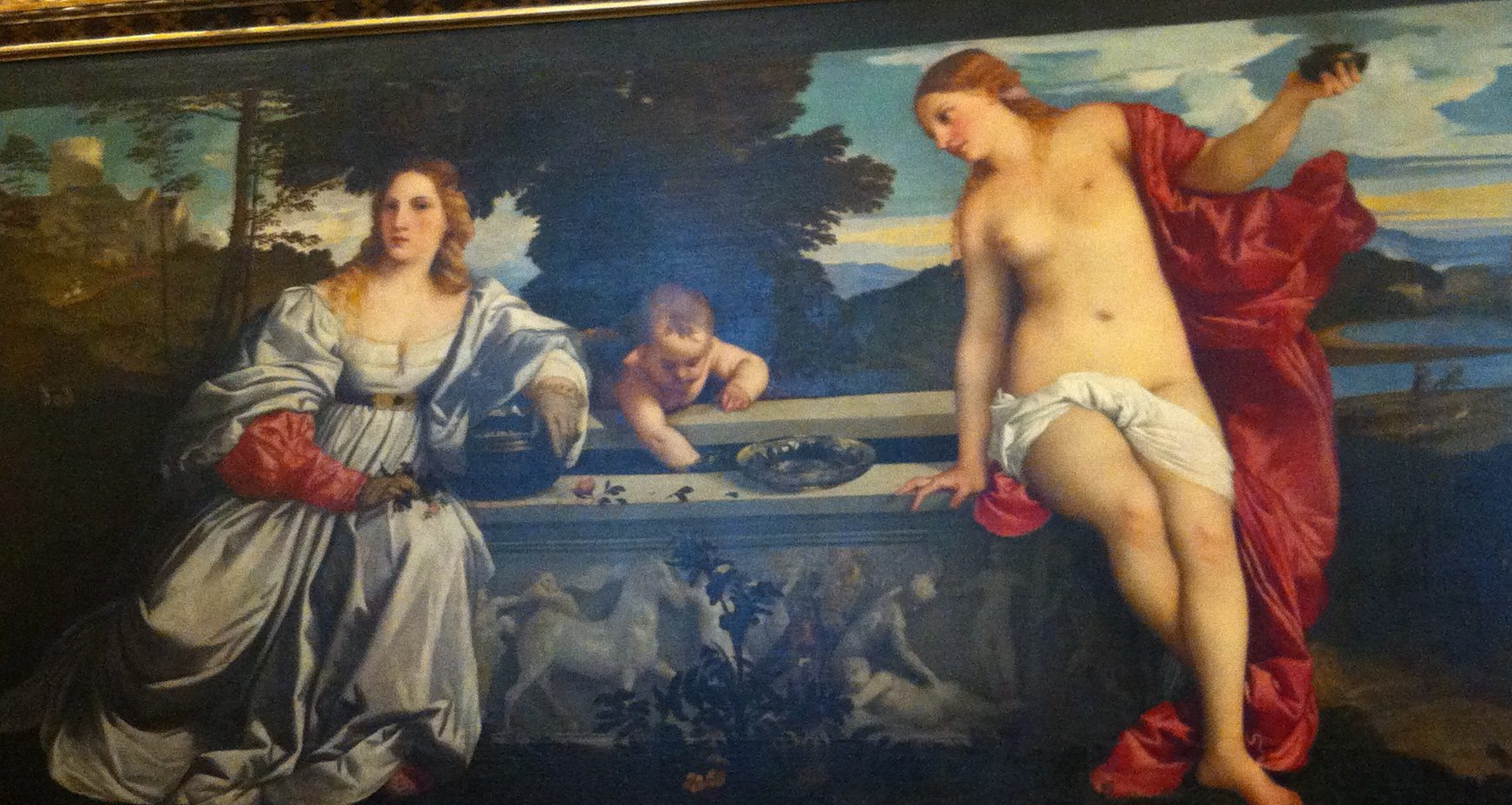
The painting below depicts a virtuous vs. sinful woman. It’s not what you think—the naked one is virtuous because she isn’t hiding anything.  You know us women–always keeping important secrets from men.

virgin-whore

After an hour and a half, Mario said we could walk around by ourselves until our timed ejection at 2pm.  I had read about a statue by Bernini called The Hermaphrodite—female from behind, male in front. Mario had led us past it without comment and it was pushed against a wall—for modesty’s sake?  Was male nudity deemed unseemly when it was an adult?  But there were plenty of other statues of naked men throughout the gallery.  Was it because of the gender fluidity of the statue?

hermaphrodite

I had not expected to encounter these themes of rape, of women being objects for barter and use by men, and of the mixed attitudes toward nudity. Aside from The Hermaphrodite, I didn’t go looking for any of these works; they were highlights of the gallery featured on the tour. Mario didn’t interpret or make any sociopolitical commentary.

Open a newspaper anywhere, any day, and there will be stories about rape and human trafficking and women being killed by stalkers. I’m not one to say “nothing ever changes.” The world is safer and saner in many ways than it was four hundred years ago.  But art suggests that human nature, emotions, and impulses don’t change.


This Way to the ?

This is a series of posts about Italy, Malta, and Spain that starts here.  I’ll be posting every other day for a while until the travel posts catch up with real time.

After five hours in the Vatican Museum, St. Peter’s Square and Basilica were anticlimactic.  The square was … well, a square, and it was filled with white plastic stacking chairs.  There were also plastic ropes demarcating lines this way and that like you would see at Disneyland.  I didn’t bother trying to photograph it because there was no way to capture how big it was without plastic paraphernalia in the way.  St. Peter’s Basilica was … huge, of course.  Maybe, after the glorious collections of the Vatican Museum, I was just beyond being wowed any further.

I did make tremendous progress on a census of nuns and priests I had started upon my arrival.  But it was the Vatican, after all, and I lost track when I reached 12 nuns and nine priests in less than an hour.  This was more nuns and priests than I had seen in the previous 30 years of my life.  Almost all of them appeared to be from the developing world.

The hotel desk clerk had been right, there did seem to be a lot of Argentinians around, drawn by the Argentinian Pope.  I could hear Spanish everywhere.  Its cadence was like a relentless rat-a-tat-tat, whereas Italian was more circular.

This may sound cliché and insensitive, but it’s true.  I didn’t see one obese person aside from a few Americans, who were clearly distinguishable by their sloppy sweats and athletic shoes.  Why are we such slobs?  You can’t even go to an orchestra performance anymore without half the people wearing jeans and sweatshirts with sports logos.

By contrast, the Spaniards and Italians were impeccably dressed—the men with flawlessly-shined dress shoes, women in heels and skirts, everyone in black finely-tailored overcoats.  The women had clearly made an effort to style their hair and accessorize.  Many of the men wore hats.  Not baseball caps—real dress hats like real men should wear.  Boy do I sound old.

What did I wear?  I compromised comfort and style by alternating between two black and grey outfits topped by a silver puffer vest with zip-able pockets, one of which was inside; a secure stash for cash and cards.  I switched my Dr. Scholl’s gel inserts between black boots and a pair of black Coach shoes that were really trainers but looked dressier.

I took the subway back to my hotel, thinking I would nap but I couldn’t.  I boomeranged back out into the streets and wandered around, eventually eating dinner in a tiny ristorante where the first of many waiters asked, “Only one?”

I had a ticket for the next day for the Borghese Gallery, which I’d never heard of until I started reading “Top 10 Rome” lists.  The ticket purchase required me to choose a seat, as if I were going to a concert.  Sometimes just buying a ticket is an adventure in itself.

borghese-2

borghese

My emailed ticket listed three different entry times and an exit time, so I wasn’t sure if I had booked a tour, a concert, a museum, or what.

I got to there early which was good because the place was run like a Swiss clock.  I waited in line to exchange my emailed ticket for a fancy one:

borghese-3

I never saw this passageway.

I got into another line to check my coat and bag, which was mandatory.  Then, being sensible, I waited in line for the bathroom, then got into line for the tour.  All of this took place in a cramped underground room with a hundred other people trying to figure out what they were supposed to be doing.

Finally it became clear to me that the tour was mandatory—you couldn’t wander through on your own and you were required to leave at the time indicated on the back of your ticket.  We all got radio receivers with headphones so the guide could talk at a normal volume.  At precisely 11:10 am, my group—Group 11—followed our guide to a fifth and final line where a guard scanned our tickets and then on into the gallery.

Prison Update

If I don’t step up my posts about my recent trip, I’ll still be blogging about it by the time I go on my next one, which I just booked—a week of hiking, snorkeling, and kayaking in Belize and Guatemala in February with Wilderness Inquiry.  It may sound precious, but I need something to look forward to.  We’re in the midst of our second blizzard in a week now, and today’s low will be -11F (-23C).  Need I justify myself further?  I was able to book with a deposit and somehow I’ll come up with the rest.  Somehow it always works out.

But it’s time for a post about prison.  My son’s imprisonment was the reason I started this blog, in case you are new here.  He’s been out for a year and is doing great.  I continue to do what I can toward changing the system.

Last Sunday I went to a summit on criminal justice reform organized by Jewish Community Action.  About 300 people attended.  At my table were two people whose parents or grandparents were holocaust survivors.  As we talked about the election and the prospects for meaningful prison reform (or reforms of any kind), they both said they felt afraid for the first time in their lives to live in America.  They both said something like, “I remember my father talking about how it happened so gradually that people kept thinking it couldn’t get worse.”

There were a number of passionate speakers.  A professor of African American studies at the University of Minnesota talked about how we needed an abolitionist movement to get rid of prisons all together.  Others echoed this language.

Coincidentally, the Minneapolis Star Tribune had run a feature story about the abuse of solitary confinement this very day.  The last speaker at the summit was the commissioner of the Department of Corrections, and one of the questions posed to him was about completely banning solitary confinement and abolishing prisons in the US.  I could sense he was struggling to be diplomatic.  “There are people in prison …” he began, “… who have raped five year olds.  I have had other prisoners tell me that they would murder again if they could get out of seg.”

Yep.  I’m an idealist, but I hope we can focus on issues that stand a chance of delivering meaningful change to prisoners.

I wrote a letter in response to the Strib story:

Dear Editors:

Thank you for the feature, “Extreme Isolation Scars Inmates: Minnesota prisons pile on solitary confinement, often for minor offenses ….”  Last year my son, who was serving a 50-month sentence for a nonviolent drug offense, was transferred from St. Cloud to Moose Lake, which didn’t have a bed ready for him in general population.  So they put him in solitary for no offense.   I was not informed, and became concerned after not hearing from him for days, but fortunately he was released after “only” six days in solitary, with no explanation, apology, or even an acknowledgement that something had gone wrong.

We didn’t bother protesting.  I had turned to the American Civil Liberties Association after being banned from visiting my son for six months (when I protested a visiting policy).  The ACLU told me that corrections officers and facilities have “almost total discretion.”  It would be their word against mine, and I didn’t want to risk being punished again.

The terrible experience of having a family member in prison has led me to become active in the movement to reform the correctional system, specifically through Jewish Community Action (JCA), which has made the issue one of its advocacy priorities.

I happen to work for the Center for Victims of Torture (CVT), and I organized an event in September which brought together experts from CVT and JCA—and my now-released son—to explore the physical, psychological, and social effects of solitary confinement.  The effects are heartbreaking.  My son experienced some of them after only a few days.  Imagine spending years in “seg.”

I hope others will be moved to demand prison reforms after reading this series.

My letter was the featured letter; I really do hope it gets more people involved.

Bits n Bobs n Dogs n Gods

This is a series of posts about Italy, Malta, and Spain that starts here.

As you might expect, the Vatican Museum contained hundreds of paintings of the Virgin Mary, crucifixions, and saints being burned at the stake, beheaded, and otherwise martyred.  I’ll focus on the non-religious treasures.

It was the off season, but still crowded.  Once inside, 99% of the visitors made a beeline to the elevator so they could get to the “main event”—the Sistine Chapel—asap.  My friend Lynn had told me that in their rush to get to the chapel, most people miss a splendid collection of art along the way.  I couldn’t remember exactly what she had written, so I just stopped and looked around.  Voila!  There was a massive spiral ramp leading to the same destination as the elevators.

None of my photos turned out, so you’ll just have to imagine a spiral ramp like in a parking ramp, maybe eight stories high, but instead of concrete it was made of marble, brass, and wood.  And it was lined with exquisite models of ships and boats.  I love maritime art, so I was happy although I was sure this wasn’t what Lynn had meant.

The display was meant to illustrate the world’s seafaring cultures over time, from the Phoenicians to Papua New Guinean headhunters, the Yoruba of Nigeria, Native Americans, the Vikings, the Chinese, the Spanish, the English.  The models at the bottom of the ramp were of birch-bark canoes with naked warriors holding spears, and as you walked up the boats became more sophisticated, their occupants wore more clothes, and they were armed with more deadly weapons.

I had it all to myself.  I felt lucky but a little sad.  Some anonymous team of historians, art curators, and skilled model builders had devoted years of their lives to telling this story, and hardly anyone knew it existed.

At the top of the ramp I rejoined the crush of visitors pressing on to the Sistine Chapel, but then I diverged when I noticed a room full of statuary.  Was this what Lynn had meant?  There were no placards describing who they were but they looked really old.  I know that sounds dumb—everything in the Vatican is old—but I decided to believe that these were the treasured works of art that everyone misses.  Everyone except me, ha ha.  There was nothing about them on the map, but I did notice that there were about 30 rooms between me and the Sistine Chapel, and suddenly I didn’t feel so smart.  I glanced at each statue for a couple seconds, then scurried on.

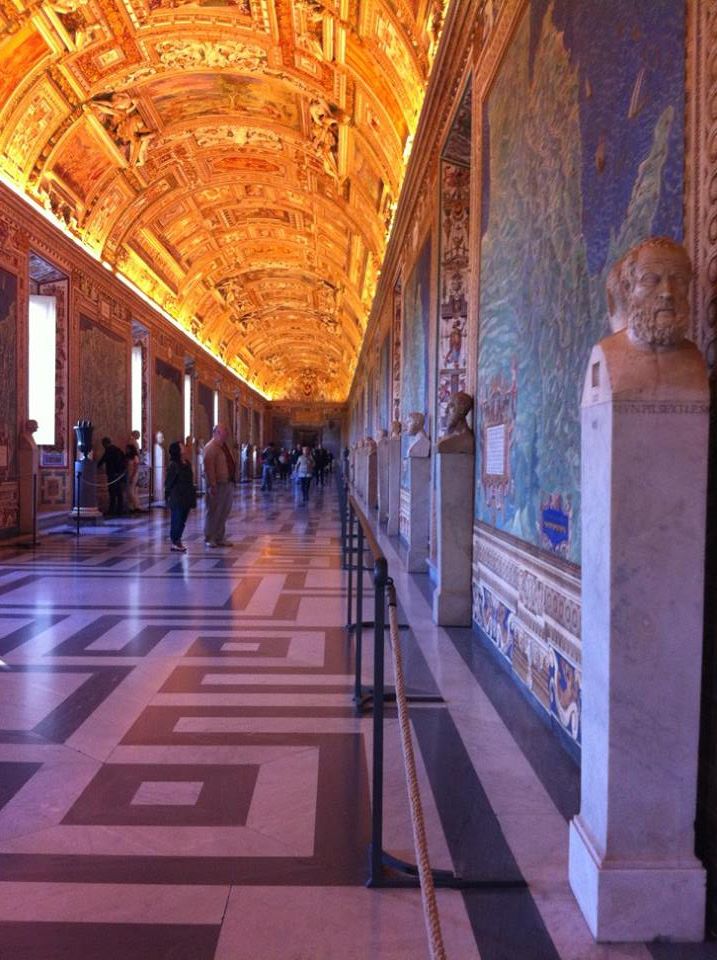
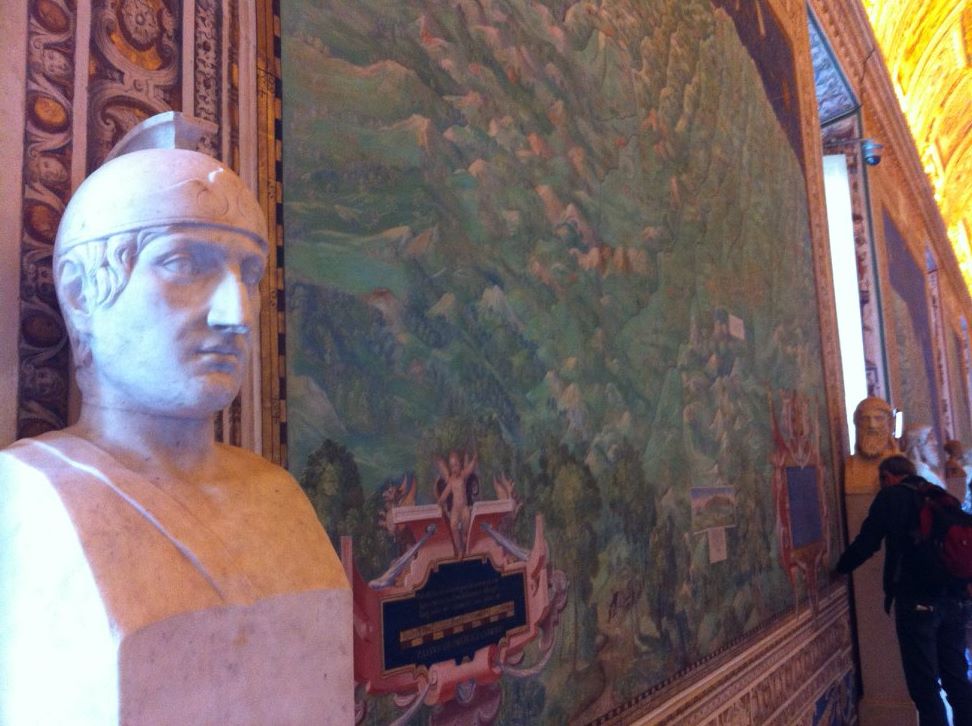
The map room was what its name implies: a room filled with maps of all the Italian regions.  My photos won’t do it justice, but you’ll get the idea. This was the room where they plotted empire.

map-room-vault map side-view

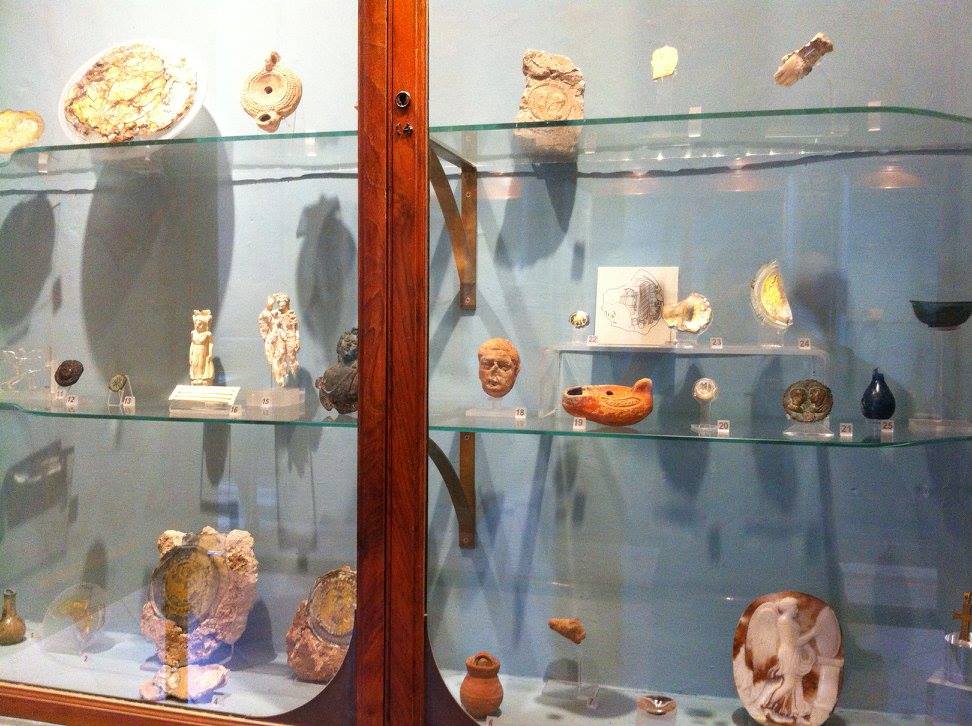
Next were the rooms I’ll call the “Bits and Bobs Collection,” room after room with cupboards full of ancient glass, pottery, coins, etc.  I could imagine some flunky saying to his superior, “Your holiness, what shall I do with this pottery lantern?  It’s only from the Roman period.”

“Oh, throw it in a cupboard in the back room with all the other bits and bobs.”

cupboards bits-and-bobs

This 1510 map was in the bits and bobs collection.  Do you recognize it?

map-of-us

There were rooms crammed with art depicting animals.

animal-room

After several hours I managed to find the Sistine Chapel.  I would love to be one of the guards who stand on a platform and yell over and over, “No photos!”  You’ve seen art from the chapel a hundred times, so I won’t write about it.

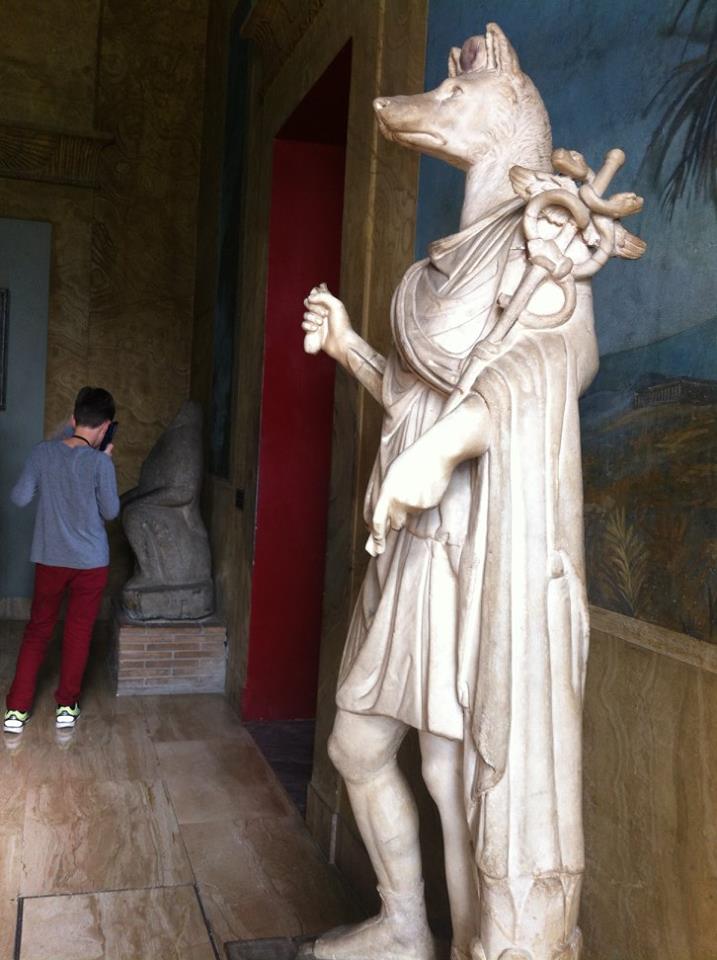
Next up: the Egyptian collection.  My favorite was Anubis, the dog god and perhaps the world’s first palindrome.

anubis

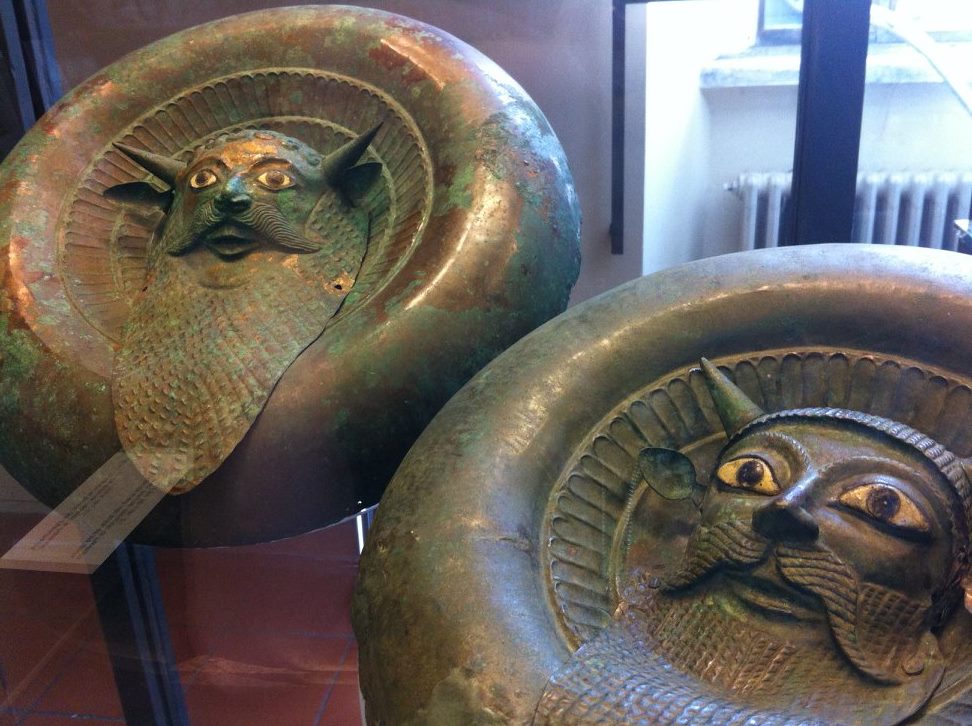
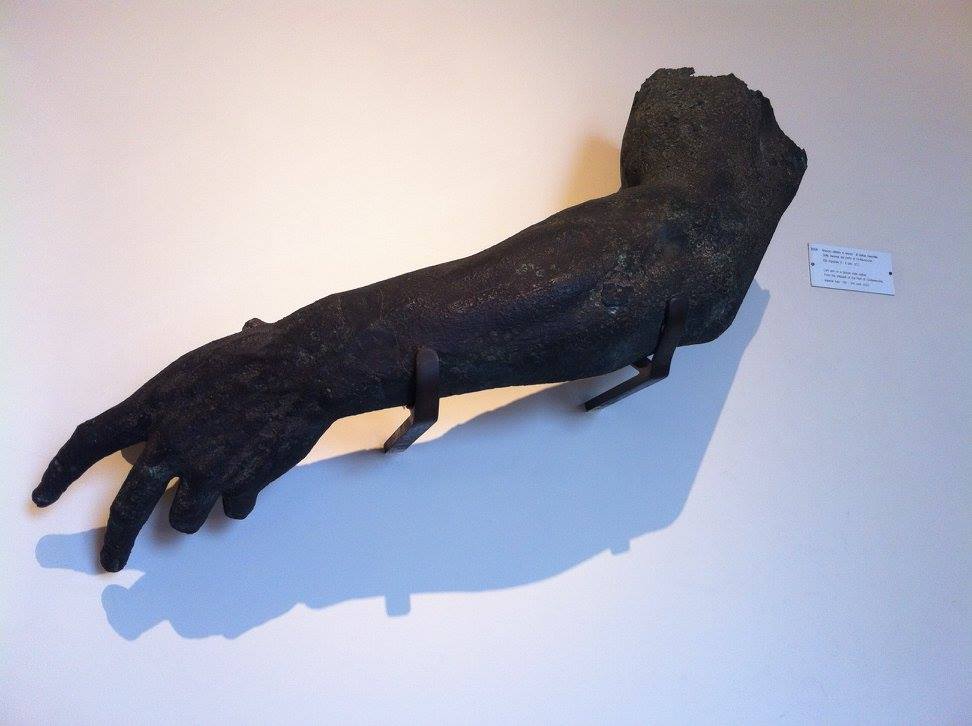
Lastly was the Etruscan collection.  Not much is known about this civilization that founded Rome, and even less was provided in signage at the museum.  I learned that they were the “bridge between the Romans and the Celts,” but what does that mean?

etruscan-eyes etruscan-arm

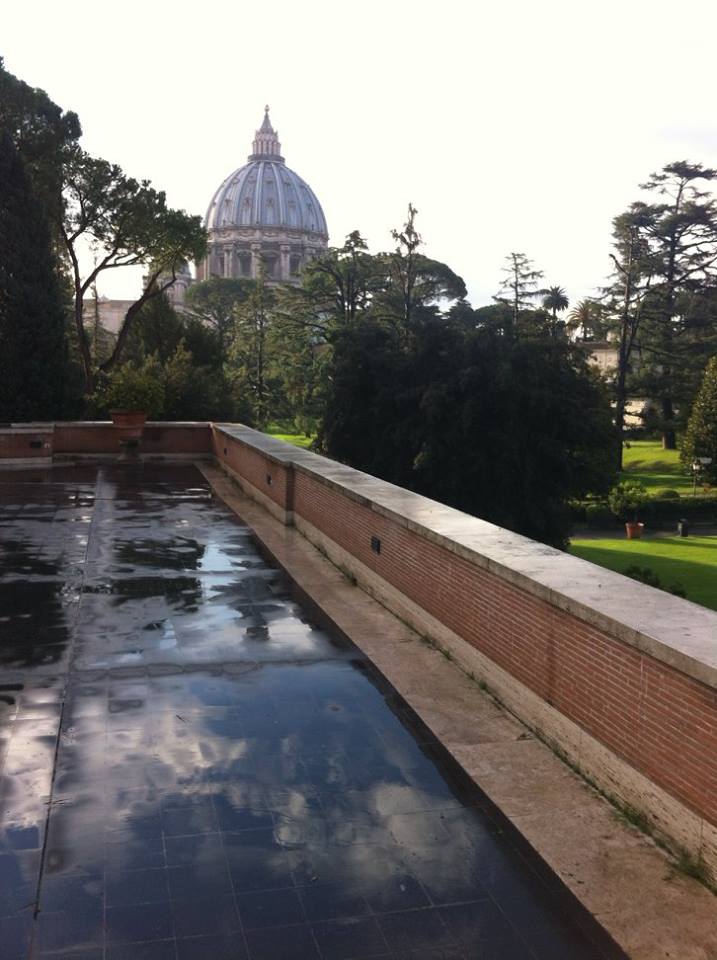
It was 2pm; I took a break to enjoy the views from the windows, ate a protein bar, then exited and walked toward St. Peter’s Square.

view-from-vatican st-peters-dome

A Holy Look-See

This is a series of posts about Italy, Malta, and Spain that starts here.

I had never given much thought to the Vatican.  Did I want to visit it?  Not really.  I’m not Catholic, but maybe standing in St. Peter’s Square with tens of thousands of nuns and other Pope fans could be a scene to be experienced.  I could earn some points with my Catholic friends and family, maybe.  Sure, I would step inside St. Peter’s Basilica and it would probably be amazing, like the other 50 cathedrals and basilicas and churches I would see on my trip. The Sistine Chapel was in there, right?

It all began to come clear when I started reading the “Top 10 Things to Do in Rome” lists.  I learned there was something called the Vatican Museum, which is the fifth largest museum in the world.  Oh no, I groaned, imagining room after room filled with paintings of the Virgin Mary and crucifixion scenes.  But this was where the Sistine Chapel was.  The Vatican Museum also held collections of Egyptian and Etruscan art, and tapestries, and something called a map room.  I love maps.  I went online and booked my advance ticket, as all the guides advised.  I love how it has the fancy shield with keys in one corner and a QR code in the other.

vatican-ticket

I stopped at the hotel front desk to drop off my key, and the Indian desk clerk asked, “You are going to the Vatican today?”

The stereotypical Indian accent is sing-song, right?  The stereotypical Italian accent is lilting, right?  Now imagine an Indian speaking Italian, and you’ve almost got a one-man Broadway show.

When I confirmed that I was going to the Vatican he said, “We are getting a lot of Argentinian tourists here as a result of the Pope being Argentine.”

That explained why I had heard so much Spanish on the streets, even in the short time I had been there.  Spanish is the only language besides Hebrew I can identify with any certainty, although I can’t tell an Argentine accent from a Mexican or Spanish one.

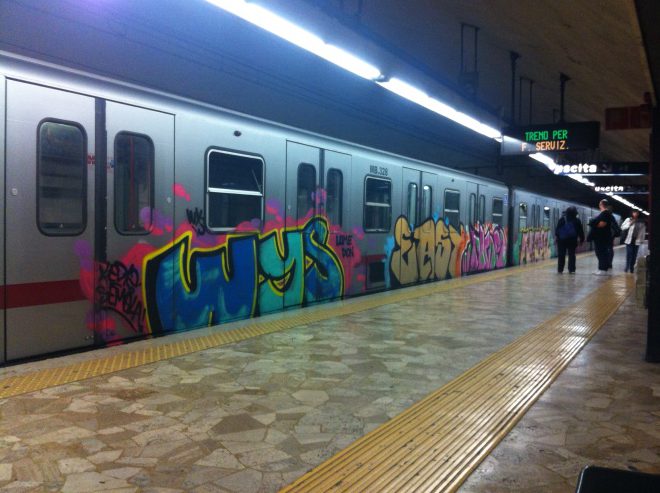
I managed to not get lost in the two blocks between my hotel and the Metro.  There was a 10-foot-tall “M” above the entrance, too, so even I couldn’t miss it.  As metros go, Rome’s was unremarkable.  It wasn’t gleaming like the one in Washington, DC, or quirky like London’s Underground.  There were some clever ads, the cars were covered with graffiti, the signage was clear.  It was all in Italian, so my Spanish helped but even English would have helped.  For instance “Teatro”—anyone would know that means “Theater,” right?

metro-2 metro

It seems like a lot of people’s worst fears about travel involve getting on the wrong train/bus/boat and ending up in the wrong place.  That’s the beauty of subway systems.  Once you’re inside the paid fare zone, if you go in the wrong direction or get off at the wrong stop, you just get back on and keep at it until you get it right.

I zipped right along and found myself at the Vatican stop in 10 minutes.  There was about a 10-minute walk along shop-lined streets to get to the actual Vatican complex, and I enjoyed ogling the beautiful leather goods and clothes (all black, of course—this was Italy) in the window displays.

I followed the signs to the museum and was very glad I had bought my ticket ahead of time, because there must have been 500 people in line for same-day tickets.  I felt very smug and smart striding past them in the ticketholders’ line, although I was a little worried I would get to the entrance and they would tell me my ticket was a fake.  Didn’t I know about all those online ticket scams?  Get to the back of the line!

But the ticket was good; a guard scanned it and then I stood in line to exchange it for the fancy one below.  Then I got into another line to pick up a map and audio guide; then I was in.

vatican-ticket-2

I emerged five hours later and will write tomorrow about what I saw.

Three Hours in Rome

This is a series of posts about Italy, Malta, and Spain that starts here.

After gulping down a glass of the complementary Prosecco in my hotel room and wisely deciding not to pour the rest of it into my water bottle, I rushed out to see Rome.

People often talk disdainfully about “check list” travel: “I don’t want to do that “check the box” kind of travel. You know, where you run around like crazy trying to see all the famous sites in one afternoon?  You can’t appreciate them that way.  And you need time to process them afterwards, too.’”

I’ve said those words myself, and meant them.  It’s a nice sentiment.  But I had come 5,000 miles and although things were less expensive during the low season, I was still spending plenty of money on this trip.  Why not pack in as much in as possible?  Life is short, so before it got dark—in three hours—I was determined to at least scope out the Coliseum, the Roman Forum, Palatine Hill, and the Pantheon.

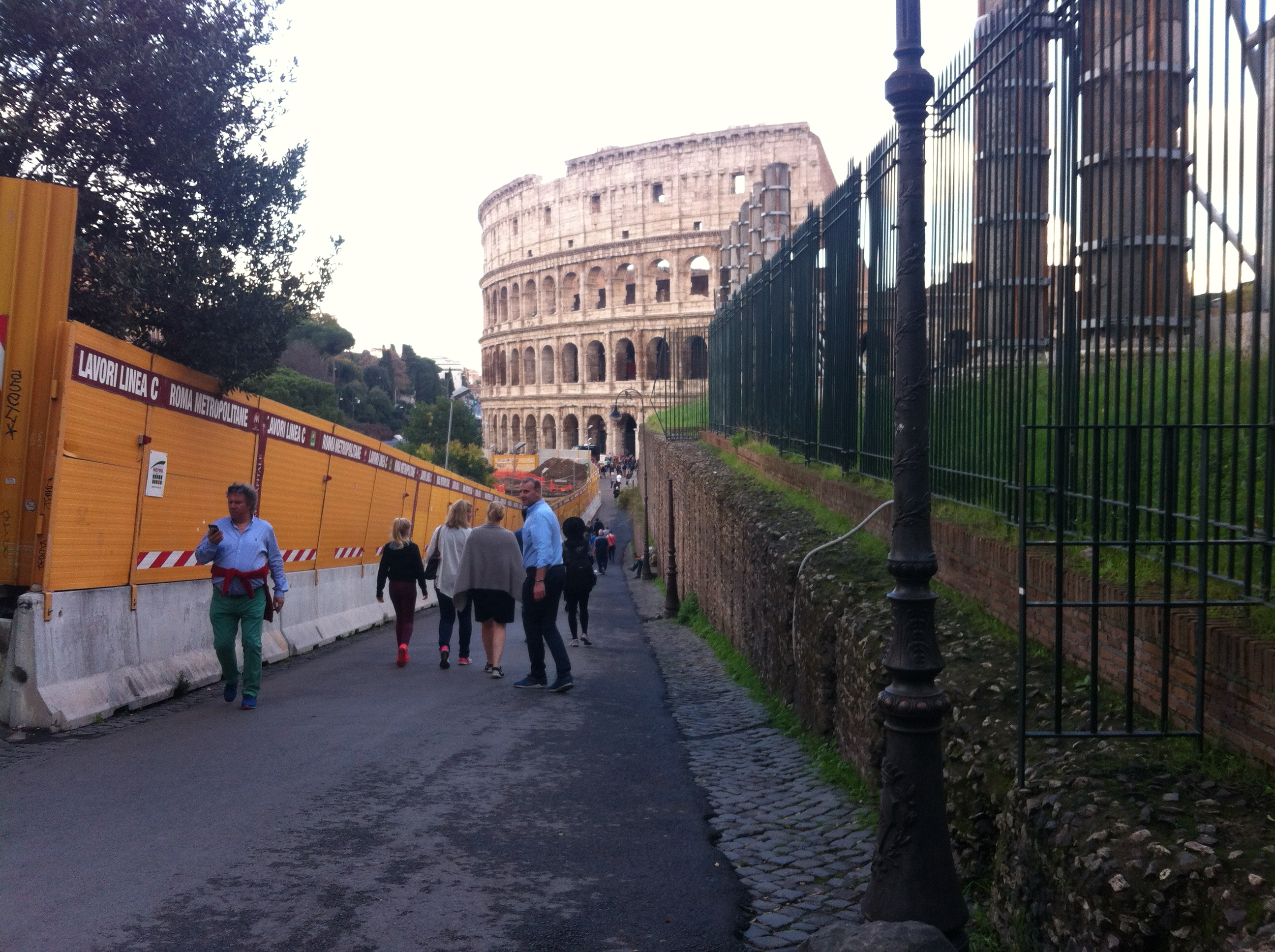
The Coliseum appeared to be a few short blocks away.  But “a few blocks” in Rome, for me, meant getting lost immediately, several attempts to surreptitiously look at my map, asking strangers for directions, stumbling upon the almost 2000-year-old Trajan’s Column, being distracted by block after block of Roman ruins, consulting the map again, getting lost again, and saying no to a dozen African immigrants selling selfie sticks along the way.

How would I ever find the Coliseum? Then I turned a corner, and there it was.

aproach-to-the-ampitheatre

Wow.  It’s one of those places you’ve seen in photos and movies hundreds of times but which still takes your breath away.  I wasn’t going in today, but I walked around it.  And I slowed down, savoring this rare feeling of awe.

flavian-amphitheatre

I had read and re-read descriptions of the sites, and they hadn’t given me a sense of their scope or how to tackle them.  Google maps are great, but they don’t indicate elevation.  So one thing appears close to another, but you don’t know about the 400 steps until you’re looking up at them from the bottom.  The Roman forum isn’t one thing; it’s a collection of hundreds of ruins including some intact buildings scattered over a huge swath of land adjacent to the Coliseum.  Apparently there were dozens exits but only one entrance, and that was a closely-held secret.  Palatine Hill is, thankfully, a real hill, but because everything is so packed together, I couldn’t back up enough to get perspective and see where it was.

I had bought my three-in-one ticket for the Coliseum, forum, and Palatine Hill online and it didn’t shed any light:

Gentile Cliente,
informiamo che è stata prodotta la fattura n. 01287080

Da questo momento è possibile accedervi direttamente cliccando qui
Se il file non viene visualizzato correttamente è possibile scaricare il programma Adobe Acrobat Reader cliccando qui  La fattura non sarà inviata tramite posta.

Ricordiamo inoltre che è comunque necessario STAMPARE LA FATTURA E CONSERVARLA ai fini delle vigenti disposizioni di legge. La fattura resterà a disposizione per almeno 1 anno.

ATTENZIONE: questo è una email AUTOMATICA, pertanto vi preghiamo di NON RISPONDERE a questo messaggio per avere assistenza.

In caso di necessità il nostro Servizio Clienti è a sua disposizione per qualsiasi informazione riguardante la transazione effettuata. Per contattarci la invitiamo esclusivamente a compilare il modulo Servizio Clienti all’indirizzo: http://www.ticketone.it/help

Cordiali Saluti

The links led to a receipt.  I knew enough Spanish to decipher that I was supposed to pay attention to something, save something, and not respond to this automated message.

This was going to be fun!

I hadn’t planned to go inside the Coliseum or immerse myself in any of it yet anyway, I just wanted to see the Coliseum and get the lay for the land.  The Pantheon?  That was “nearby” too, which I now knew meant, “Forget it, sucker—you’ll never find it by dark.”

I took my time strolling back to the hotel, retracing my steps, already feeling familiar with landmarks and knowing I could easily find my way back when I returned in two days.

Tomorrow: The Vatican.

Benvenuti a Roma

This is a series of posts about Italy, Malta, and Spain that starts here.

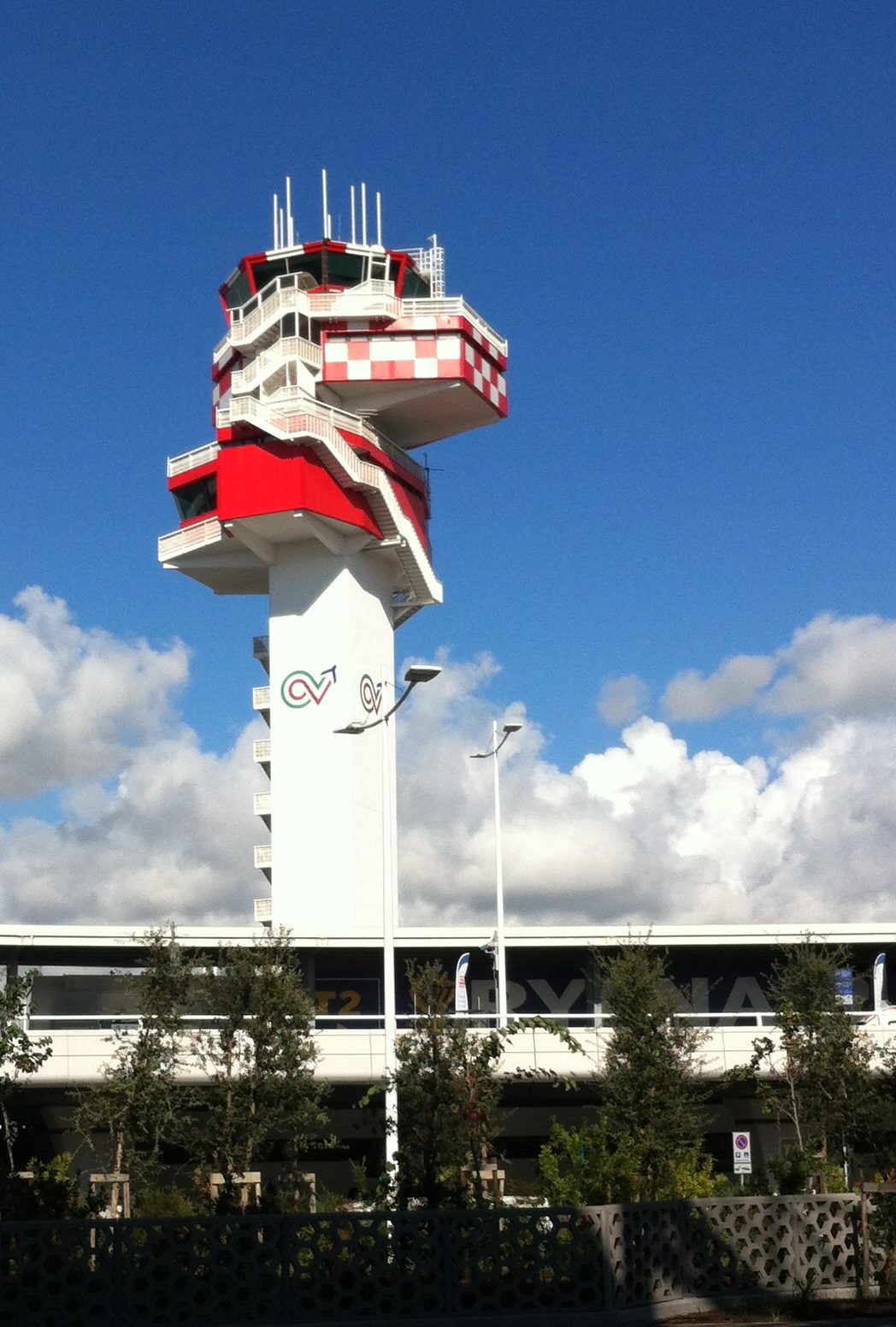
This is Rome’s air traffic control tower:

rome-air-traffic-control-tower

I would find it to be emblematic of Italy—colorful and confusing.

The guide books and websites tell you to take the Michelangelo Express from the airport into the city.  I scribbled down directions for walking from the train station to my hotel.  How hard could it be after flying 5,000 miles, on no sleep, and with a full-sized suitcase and a big backpack?  Why spend 10€ on a taxi when I could walk for free, right?

Fortunately a coworker had been to Rome recently.  “Don’t take that Michelangelo Express thing,” she said.  “Go to the generic ‘Ticket Counter’ and tell them you want the bus that takes you directly to your hotel.”

“But won’t that be super expensive?” I asked.  “It’s like a half-hour ride.”

“No.  It’s only about 6€ more than the Leonardo Express.  It doesn’t have a name and there are no signs for it anywhere, but if you ask for the “door-to-door bus,” you get in a little van with a couple other passengers and they drop you off at your hotel door.  They call it a bus but it’s not a bus—but ask for the bus.  Got it?”

“Why wouldn’t everybody do it?” I wondered.

“Because they don’t know it exists,” she laughed.

It sounded too good to be true.  Since it had no name, I couldn’t Google it.  I couldn’t find anything on Trip Advisor or in guide books.  But it did exist, and it was great to go directly to my hotel instead of schlepping myself and my luggage from the train station.  Plus, since it wasn’t a train, we drove through the city and I got a nice little sight-seeing tour as a bonus.

Welcome to travel, where mysteries abound.  All you can do is laugh a little, go with the flow, and hope for the best—or at least for a little adventure.

I had found the Hotel Italia on Trip Advisor by Googling, “women traveling alone in Rome.”

I have spent time in hotels known as romantic getaways, and it can be depressing to be surrounded by couples mooning over each other.  There are safety considerations, and it’s worthwhile trying to find a place where you don’t pay a double occupancy rate.  Sometimes it feels like I am the only one traveling alone, but I’m not.  We’re out there, and dozens of women had taken time to suggest solo-female-friendly hotels.

I’m not aware that the hotel category “single” exists in the US, but it does in Europe.  In fact, maybe due to the age and quirkiness of European hotels, I have stayed in rooms with three twin beds, four twin beds, and now at the Hotel Italia, I would stay in a tiny room with one twin bed.

The front desk guy was Indian, of course.  He seemed melancholic and perhaps a bit resentful, that he had been meant for greater things than running a two-star hotel.  But he was nice enough. He opened a city map and did what he had clearly done many times—marked the hotel with a big “X”, circled the Big Sights and told me how far they were, and described how to take the metro to the Vatican.

“What time does it get dark?” I asked.  It was already 2:30 and I wanted to get out there and see what I could before nightfall.

“5:00 o’clock, and I would advise you to be very careful after dark,” he said, then retracted slightly. “I don’t mean to discourage you from being out a night, but as a woman traveling alone ….”

Well.  That was discouraging, but I wouldn’t be able to stay awake much beyond 7:00 anyway.

The Hotel Italia website proclaims itself a “Cheap Hotel” and they aren’t kidding.  It cost $85 a night to stay in central Rome, within walking distance of the Coliseum, and included breakfast and a free bottle of Prosecco to boot.  I tipped the bellman who showed me my room, tossed back a glass of Prosecco, then headed out to find the Coliseum.

Wherever You Go, There’s a Screen

“How was your trip?”

What was the highlight of your trip?”

“What were the top three things about your trip?”

These are questions I always get when I get home from a big one.  The first one is so broad that all I just say, “It was great.” If the asker is genuinely interested in knowing more, he or she will ask more questions.

The other two are meant, I think, to keep the returned traveler hemmed in so he/she doesn’t go on and on.  I don’t blame the asker; not everyone has time or interest in hearing details about someone else’s trip, but when you see someone at work who’s been gone for a month you have to ask them something, if for no other reason than to be courteous.  Personally, I love hearing about other people’s trips, as long as they’re not cornering me on the way to a meeting or shoving their cell phone in my face to show me videos of their roller coaster ride at Disney World.

When people ask for the “top three” they are probably expecting me to say:

  • The Coliseum
  • The Amalfi Coast
  • The Alhambra

Or some such check list of tangible things.  But the highlight of this trip was that I was in the moment.  I wasn’t planning ahead or analyzing what I should have done differently.  I didn’t have To-Do lists, coupons or business cards or post-it notes with reminders to myself stuffed into every pocket.  There are no piles of things by the door ready to return to a store, or library books to return, or bags of plastic bags to take to the recycling center.  I pretty much wore the same two outfits for three weeks so I didn’t have to decide what to wear.  There were no cleaning or DIY projects, unless you count hand washing my socks and underwear—a meditative activity in itself.  I only woke up once with an alarm clock

I hadn’t set out to be mindful, and now I wonder if this is one of the things I’ve loved about travel all along but was never aware of.

I was traveling alone for the first 10 days so I had to really pay attention to, for example, what time the train left.  I had to be aware of my surroundings for safety’s sake.  I needed to remember to ask the hotel front desk to print my boarding pass when I had a flight the next day.  So there were things I had to attend to, but this reinforced being in the moment, I was nothing like the Human Doing I am at home.

Being in the moment doesn’t mean you’re never irritated.

Am I the only one who doesn’t love the screens embedded in airplane seat backs?  They’re great for watching movies.  But they are set to be on, all the time, unless you turn them off.

On night flights, my routine is to gulp down a glass of wine, choke down the “food” Delta calls dinner, then don my ear plugs and sleep mask and try to get a few hours of sleep so that when I arrive I can tell myself I had a good night’s sleep—when I really only had four fitful hours.  (I also bring a full-size down pillow on night flights.  It makes a huge difference; you can use it to pad the wall or the arm rest, or smoosh it up and hunch forward over it.  It’s not counted as a carry on item.)

I woke up at some point during the flight and staggered down the aisle to the toilet.  Delta requires people to lower their window shades and turns off the cabin lights.  But 90% of the screens were on—hundreds of “Delta” logos glowing white and red.  People were sound asleep with these screens a foot from their faces.

Back in my seat, I looked at the guy across the aisle and one row in front of me.  His screen was on, his wife was asleep but her screen was on, and he was playing solitaire on his phone.  And we wonder why it’s so hard to sleep on planes.