Tag Archives: travel

The Other Country

I woke at 5am.  My plan was to go to Walgreens—conveniently located at the end of the block—which opened at 7am.  I would buy all the auto fluids they had and pour them into the car in hopes it would make it to New Orleans.

I dressed and slunk out the door to the nearby coffee shop. When I returned, David our innkeeper greeted me and started recounting his early days in Chicago. I had time to kill, so I sat back and enjoyed my coffee and David’s stories.

He had come to Chicago from Kentucky to attend college in 1977.  So David and I were the same age.  He seemed older, like he’d weathered some pretty tough times.

Anyway, his arrival coincided with the Tutankhamen exhibit at the Field Museum of Natural History.  I remembered “Tut Mania” well.  My mother had driven to Chicago with some friends to see the exhibit and came back with T-shirts with images of scarabs and Egyptian cats and—of course—King Tut.

David was taking a class from a professor who was a world expert on Tut, and who was leading the logistics for the exhibit.

“The train from Egypt was escorted by armed guards with shoot-to-kill orders,” he said.  “They packed everything in Styrofoam so if the ship sank, all those priceless antiquities would bob back up to the top.”  He explained that Tut had been a very minor king who was only famous because his tomb “wasn’t very ornate,” and thus hadn’t attract the attention of tomb robbers.

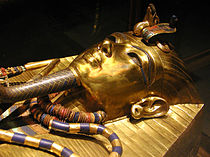
Tutanchamun_Maske Tutanhkamun_innermost_coffin

Talking about King Tut and his college days, David grew animated and could have passed for an archaeology professor himself.

Have you ever heard of magical thinking? That was me as I started the car up after a 36-hour rest.  Somehow, the engine light wouldn’t come on, right?  Wrong.

But there was no going back—we were gonna make New Orleans by Wednesday! Back at the inn Lynn was enjoying breakfast and another of David’s soliloquies.  He was talking about Kentucky again.  “Most people think it’s like Deliverance,” he said.  I gave Lynn a blank look that said, “He’s right.”

Travel does not equal adventure, or vice versa.  Adventures can be delightful but more often, at least for me, they involve dealing with something strange, stressful, or slightly scary.

Once again, the car was fine above 75 miles per hour but shook if I slowed down.

“I wonder if I got a bad tank of gas at the Cranberry Discovery Center.”  This would be the first of many hair-brained theories about the car.

“Maybe it’s the spark plugs,” Lynn suggested.  Then, sheepishly, “Does it have spark plugs?”

“I don’t know!”  The Mini’s engine was sealed inside a sleek black box.  It was just like BMW to make something stylish that prevented access or even viewing.

“Maybe when I get a new tank of gas it’ll fix itself.  I’ll stick to gas stations near the freeway that sell a lot of gas, to make sure I get a fresh tank.”  More magical thinking.

The landscape slowly changed, from flat and sere to lush, green, and hilly.  The car struggled up the hills.  But maybe if I just kept driving… we drove from 9 to 3:30 with two five-minute pit stops.

Finally, starving, we stopped in Charleston, Missouri.  The “downtown” was deadsville.  The only place open was a thrift store.  I asked if there was a place to eat in town.  The response I got from the woman at the register sounded like this:

“Ya’ll gawla rawla dayown aray-owna Mexican raistrawnt gonna donna lowna haw-way.”  Lynn beat it out the door.  I fought the urge to follow her while my brain worked to make sense of what she’d said.

A customer stepped forward and said, slowly, “She said there’s a Mexican place out by the interstate.”  I thanked him and we drove out of town, pausing only to take a photo of this poor old theater.
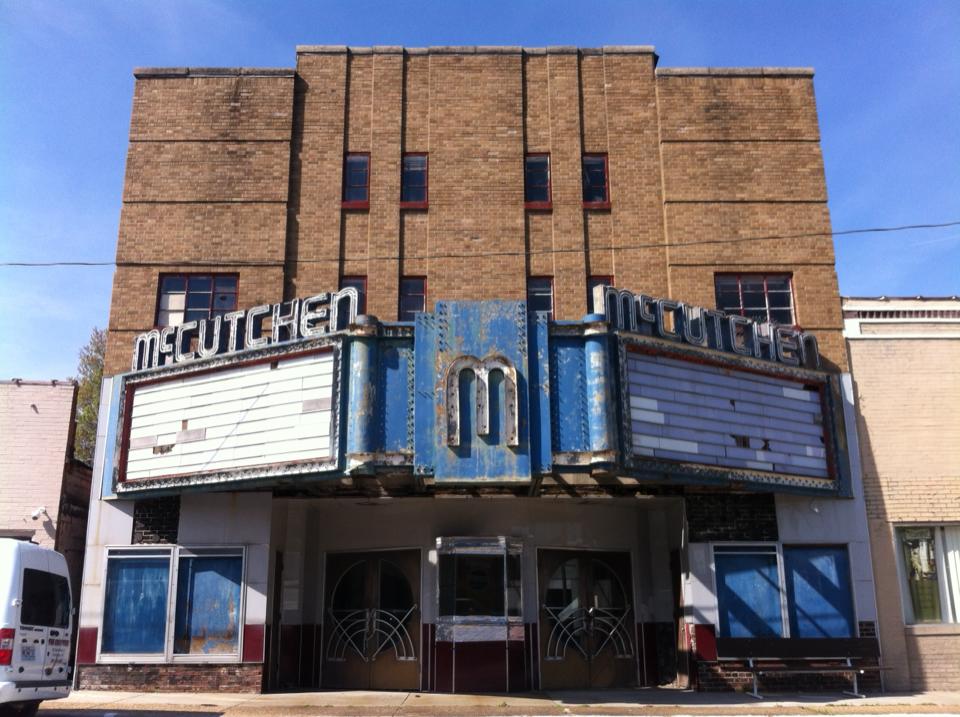
Old Theatre

We found Las Brisas and ordered iced teas, which were served in pitcher-sized plastic cups.  Listening to the accents around us, we felt like we were in a foreign country, but it wasn’t Mexico.
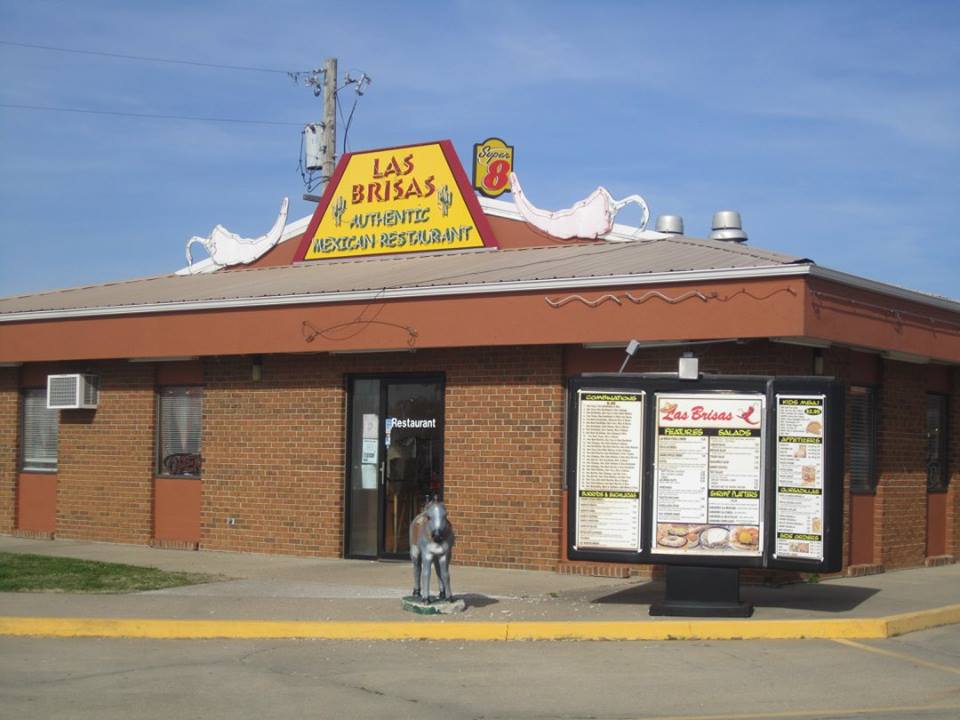
Las Brisas

Bobble Heads in Chi Town

This post is part of a series about a road trip to New Orleans that starts here.

I had a surprise up my sleeve for Lynn.  It was a piece of Americana she couldn’t miss, I thought, so after we had our fill of Tiffany at the Cultural Center I led us northwest through the city.  Did I mention it was cold, and how I was dressed for New Orleans?  We stopped in the first of many Walgreens we would see on the trip and bought matching, stupid-looking but warm hats with giant pompoms that bobbed as we walked.

What is it with all the Walgreens? I like Walgreens, but do we really need one every few blocks?

We approached our destination and Lynn was none the wiser until we walked in the door of … a MacDonald’s!  But this was not just any MacDonald’s.  This was the rock ‘n’ roll MacDonald’s. I had visited it every time I’d been to Chicago.  I don’t know why, but it was stuffed full of rock ‘n’ roll memorabilia—or at least it had been the last time I was there.  I was particularly enamored of a hologram—I couldn’t remember who it was—Elvis?  Hendrix?  There was also a life-sized sculpture of the Beatles from the Abbey Road album, and a classic car with characters from the Archie comic books.

mcd's 2 mcd's

These are photos from online, because all of it was gone—gone!

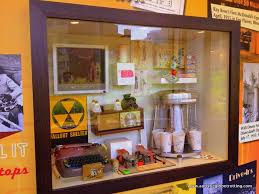
In place of all the fabulous rock ‘n’ roll mementos was an exhibit about … MacDonald’s.    There was no explanation and no indication that there had ever been any rock ‘n’ roll exhibit. I tried to paint a picture of it to Lynn but of course it was impossible.

The building is still cool and there was a lot of mid Century Modern furniture, which I love. So we looked though the exhibit which also included non-MacDonald’s-related stuff from the 50s, 60s, and 70s like hula hoops and manual dial telephones and Twister, plus references to historical events like the Vietnam War and Nixon’s resignation.  We shifted to a different style of tables with each decade, and Lynn nearly fell over trying to get onto a high-concept but wobbly stool.

mcd's 3 mcds

It was okay, but I was really disappointed. We walked across the street to the Hard Rock Café.  Maybe the collection had been acquired by them?  But no, there was no sign of it.

We had a cup of coffee and I asked Miquel, our server, the most scenic route to Rogers Park, where we would meet my niece and her boyfriend for dinner.

Miguel was full of suggestions.  We had plenty of time, so I decided we could take the slow bus that would give us views of the lakefront.  We waited half an hour for the 151 bus in the blistering wind.  It crawled through traffic and just when I thought we were set for a nice scenic ride, the driver shouted, “End of the line!  Everybody off!”

There are two kinds of bus drivers: friendly, helpful ones and crabby, unhelpful ones.  Ours was the second type.

“Will there be another 151 that goes to the end of the route?” I asked.

No,” was all he had to say.

“How far is it to Belmont Station?”  He waved his hand dismissively and said, “Too far to walk.”

“How far is it to Rogers Park?” I asked.

He just laughed derisively, so we hopped off the bus to find ourselves in the middle of nowhere.

It’s times like this that I’m glad to be 56 instead of 26.  Back in the day, this would have been a disaster, and I would have walked all the way to Rogers Park and probably gotten frost bite rather than pay for a cab.  Instead, I hailed a taxi and we were there in five minutes.

Erin and Chris had picked a great Peruvian restaurant and brought a six-pack of local beer to share.  It was nice to catch up with them.  The food was abundant and they took home enough leftovers to last a week.

We took a taxi back to the inn.  I hadn’t thought about my car all day.

Long Talkers, Tiny Rooms, and Tiffany Joy

This post is part of a series about a road trip to New Orleans that starts here.

After what seemed like hours, Lynn and I stumbled out of the van Gogh exhibit.  I blinked like a mole because it had been so dim in there.  I needed to find a bathroom and asked a nearby guard, who launched into the story of her life, which included having diabetes, moving to Chicago from Gary, Indiana, and being a weight lifter.  I made the mistake of saying, “I lift weights too,” and that gave her license to talk some more.  She wasn’t talking with me or even to me; she was just talking.

Lynn had done an about face right away but I would have felt mean walking away. In my imagination I filled in the story of her life—how she must be an impoverished single mother who had to do this excruciatingly boring job, how it must be so hard on her back to stand all day, and so on.  Then I remembered I needed a bathroom, butted in to ask her again, and made my escape after many Minnesota-nice thank yous and repetitions of “Have a nice day!”

This type of talking was a theme on our trip, I realize in retrospect.  People launching into long, one-way recitations about themselves, with no encouragement from us.  There were never any questions about us—none of the give and take that  turns talking into conversation.  It’s like being held prisoner by words.  What is that about?  I’ve experienced it from time to time throughout my life but is it more prevalent now?  Does it have something to do with social media and people wanting to tell their stories?  Is it a symptom of loneliness and isolation in our modern society?

Speaking of long talkers, David our innkeeper had recommended that we see the miniatures at the Art Institute.  “I took mama and Miss Rose to see them, when they visited from Kentucky,” he said. “Mama didn’t say nothin’ the whole time.  I wondered if she didn’t like it. Then I finally said, ‘Mama, don’t you like them?’ and she said, ‘Oh I do!  I do, but I can’t imagine dusting all of them!’”

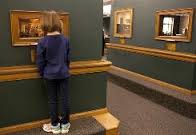
I laughed and Lynn fake laughed but I could tell she was puzzled.  Once we actually got to the miniature rooms and she saw what they were, she explained why.  “When he said miniatures, I thought of tiny portraits that people used to have done before there was photography.”  Here is an example of an English miniature:

English Miniature

Here is what the miniatures in the Art Institute are:

Miniatures 2 Mini Rooms

Miniature rooms from various periods and countries—hundreds of them.  They are really fun to look at and yes, they must be a pain to dust.

We thought we were done but to reach the exit we had to walk through the Asian section.  So we took another hour or so to admire works from Japan, Indonesia, China, and India. Lynn has been to all these places.  She’s Anglo-Indian and has been to India many times.  She worked for Oxfam in Aceh, Indonesia after the Indian Ocean tsunami.  So she’s learned a thing or two about the vast territory covered by the label “Asia.”

“But I never retain anything I’ve learned,” she explained.  So she knew which god was Ganesh and which was Krishna but I was definitely going to have to Google them later to learn more.

David had also recommended that we visit the Chicago Cultural Center, one block north and across Michigan Avenue from the Art Institute.  “It was a library, but now they hold concerts and have art exhibits there, and it’s fabulous,” he said.

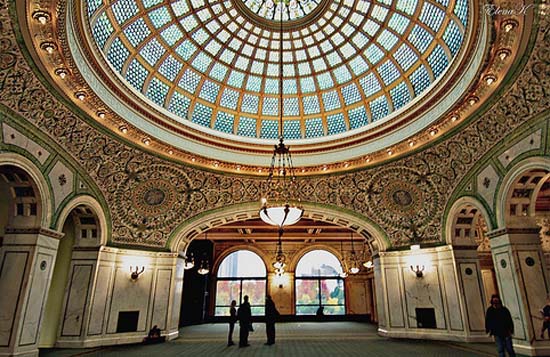
And he was right!  I had never even heard of the place, and it turned out to be the highlight of Chicago for me.  The building was completed in 1897 and features the largest dome of Tiffany glass in the world:

Tiffany Dome

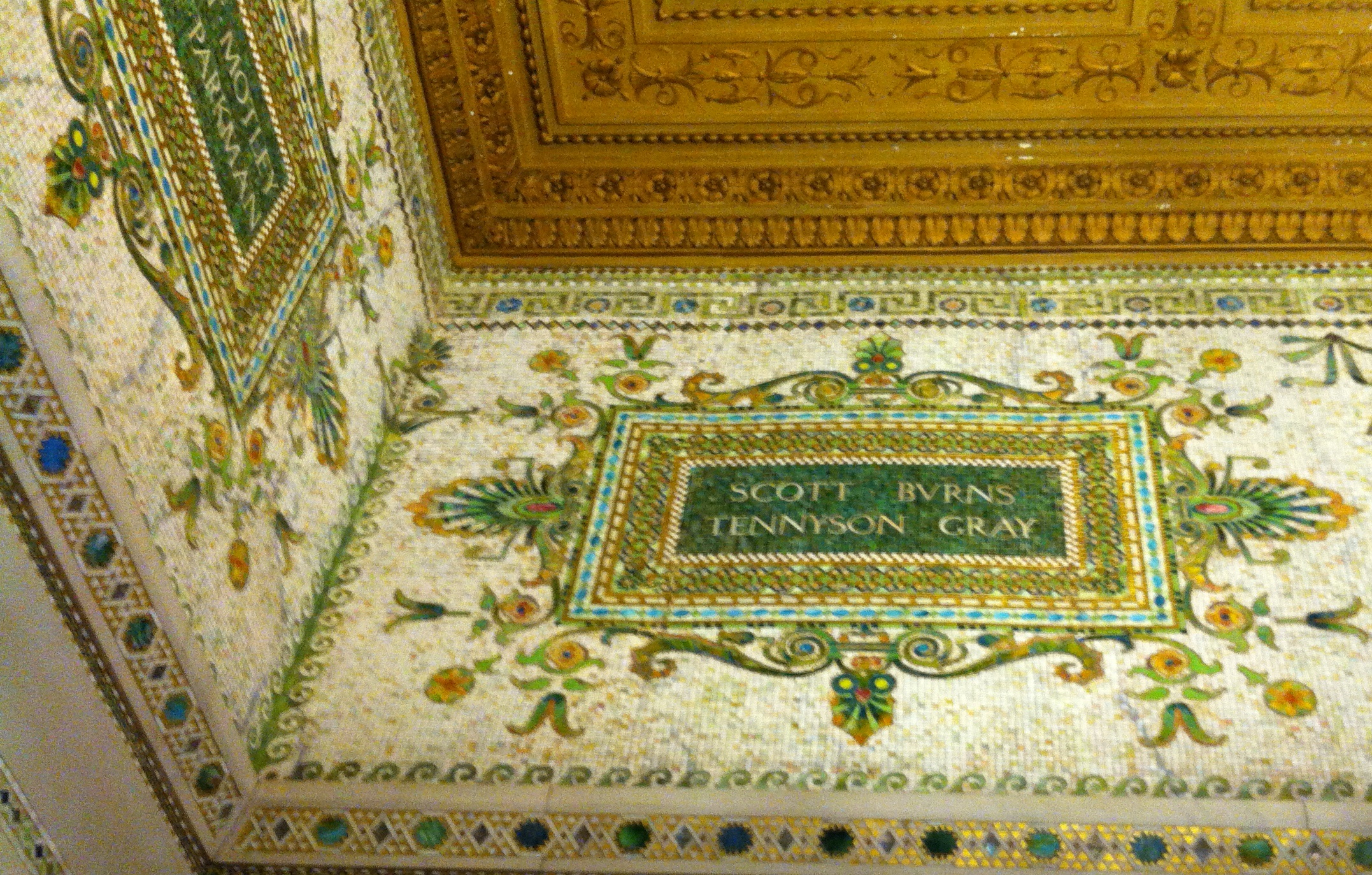
I loved the details.  It wasn’t called The Gilded Age for nothing:

Tiffany Close Up

I was happy to realize that I still had many classic works left to read: Scott, Burns, Tennyson, Gray.  Someday—when I can no longer travel.

Writers

Artisanal Art

This is the fifth post about a road trip to New Orleans that starts here.

Lynn and I spend hours in the Art Institute.  We lingered with the impressionists, then she specifically wanted to see “American Gothic” by Grant Wood.

I found a sweet little website for children, or maybe just simple-minded people, that describes the painting: “After he made sketches of the house, Grant looked for just the right people to go with it.  He thought his family dentist and his own sister, Nan, would be perfect for the farmer and his daughter.  Grant entered American Gothic in a big show at the Art Institute of Chicago, and won the third place prize.  People all over America loved the newspaper pictures they saw of it.  Soon, Grant’s paintings started to become very popular.  One reason for this was that many people felt Grant’s art was easier to understand than a lot of the new modern art being done.”

american_gothic

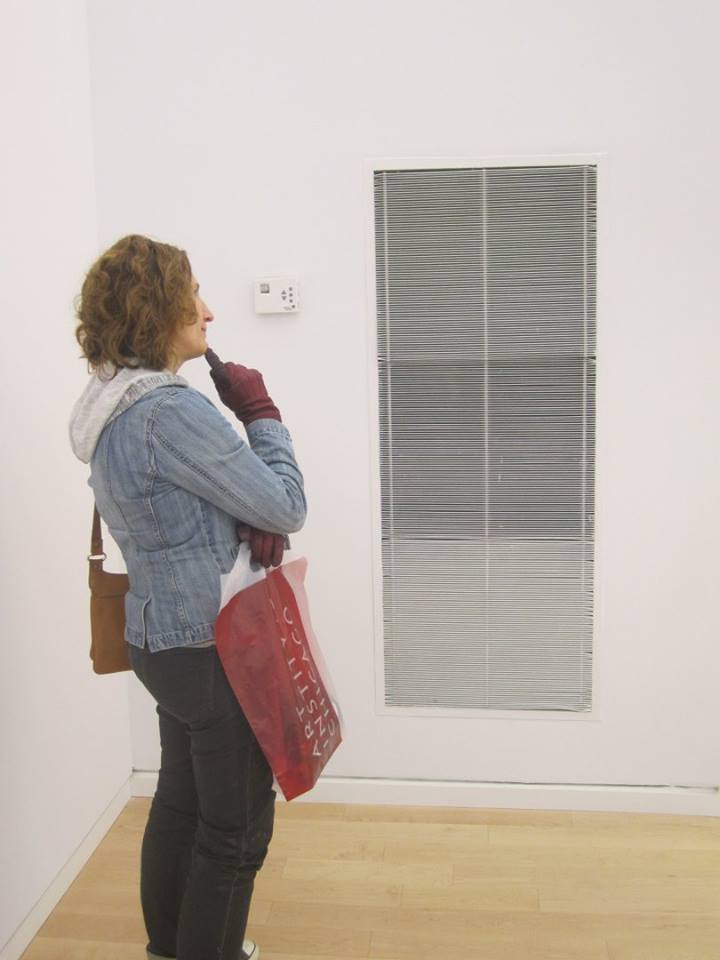
I could relate to that later, when we visited a modern art exhibit:

Art 1 Art 2

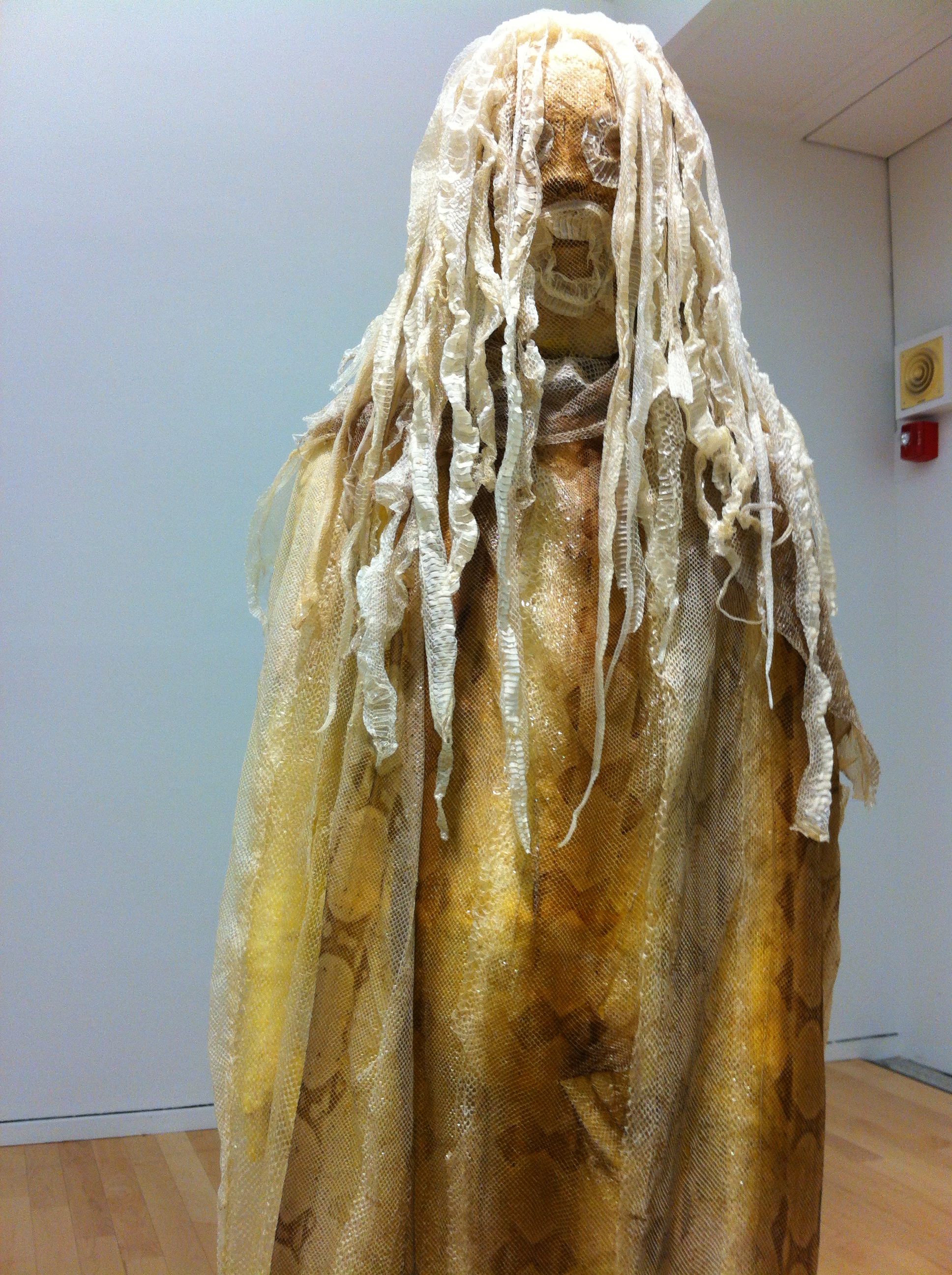
The second photo is actually an air vent, but really, how different is it from the “real art” on the left?  Maybe I’m just a philistine.  But then there was this, made entirely of snake skins:

photo 4

We waited in line for lunch in the shi-shi café at the Institute. The young cook kept up a stream of talk while he worked.  Or, that is, he stopped working every time he started talking. He wasn’t talking to us; it was like a stream of consciousness. After 25 minutes we finally reached a table with our stir fries and some fortifying red wine.

Two couples from St. Louis sat next to us at the picnic-style table and struck up a conversation.  They were all eating giant sausages. Lynn peered at them dubiously.

“This one is a Chicago style brat,” the woman next to me explained.  “And this one is a Polish sausage—there’s a big Polish population in Chicago.”

“And this is a wiener,” said her husband.  Lynn turned to me and gave me her special blank expression that said so much.

After they had wolfed down their sausages, Lynn had her say.  “None of those were proper sausages!  A wee-ner,” she dragged out the name to emphasize its silliness.  “What’s a wiener!?”

“I don’t know, but I’m sure whatever’s inside isn’t good.” I said.  “My mom used to buy them by the dozens and keep them in the freezer.  We would eat them like frozen treats.  A couple years ago there was an outbreak of a mysterious neurological illness at a meat packing plant in Minnesota.  They were using a new technique with high-pressure hoses to blast out every bit of brain matter from pigs’ skulls.”  Lynn recoiled in horror, rightly so.

“I’m so glad I stopped eating pork years ago!  I’ve never paid much attention to British sausages, or to American ones for that matter,” I said.

“British sausages are very different to what those people were eating.  We would never eat anything like a wiener!”  Lynn tried to describe how wonderful and superior British sausages were but it was lost on me.

These are the kinds of conversations you have when you travel with someone from another country.  They’re amusing and confusing, and eventually I find myself Googling “British sausages” late at night.

Back to the impressionists.  There was a special Vincent van Gogh exhibit called Three Bedrooms.  Lynn pronounced his name “van Goff.”  In America we say “van Go.”

There was an interpretive film. They had physically recreated the bedroom.  There were other artists’ paintings of bedrooms or some such.  And on and on.  It really put the “anal” in artisanal.

Then, finally, the three paintings:

Vincent van G

Now, I like Vincent van Gogh as much as the next person.  Again, maybe I’m just an ignoramus.  But I can hear the marketing department at the Institute brainstorming: “I know!  Let’s find three almost-identical paintings by some name-brand artist, make up a story about them, and call it an exhibit!  We can charge extra and sell lots of merchandise!”

The merch part was good, as I was able to buy my Vince a Vincent t-shirt. One souvenir crossed off the list.

Monk-ey Business

This is the fourth post in a series about a road trip to New Orleans that starts here.

Finally!  I will get to our day in Chicago now.  But I have to say, it’s the little sights and interactions and quirky people you meet while traveling that make it interesting.  You can read about the Art Institute of Chicago in any guidebook or on hundreds of commercial websites, but you would probably not learn that a high street and a downtown are the same thing, and you would never get to know David the Innkeeper.

The temperature had plunged overnight, from the mid 70sF to almost freezing.  The wind sliced through the thin clothes I had packed in anticipation of the New Orleans’ heat.  No matter how much I travel, I always pack optimistically, and sometimes I end up shivering as a result.  Home in chilly Minnesota, I can’t imagine anywhere else could be as cold.

I had checked the map and was focused on finding the Architecture Foundation of Chicago.  I had been on their river boat tours several times and they were great.  It was too cold for a boat tour, but they had lots of other indoor tours, according to their brochures.

Lynn and I wandered up and down Michigan Avenue for an hour and never found the AFC.  I hadn’t realized there was a north and south Michigan, there was construction hiding the building numbers, and finally we just gave up because it was too cold and windy. Besides, we kept being approached by guys dressed as monks asking for money. I say “dressed as” monks because we eventually concluded this was a scam. The first guy approached us and thrust some sort of bracelet into Lynn’s hand.  He started speaking badly broken English and pointing to a booklet he had with pictures and symbols that made no sense.

I tried to hand him some quarters, nickels, and dimes leftover from the tollway—win win!  “No coins!” he barked.

I was inclined to walk away but Lynn is nicer than me.  She’s also been to Bhutan, Nepal, Thailand, and everywhere else there are actual monks.

“You’re trying to build a temple, are you?” she asked, as the fake monk showed her a page of writing.  “Where are you from?” she asked.

“Hong Kong,” he replied.

That did it.  She said “No thanks,” and walked away.  “Hong Kong just doesn’t make sense,” she said.  “If he really was from Hong Kong he would very likely speak English.”

“Yeah, I bet as soon as we walked away he muttered ‘bitches’ under his breath!” I replied.

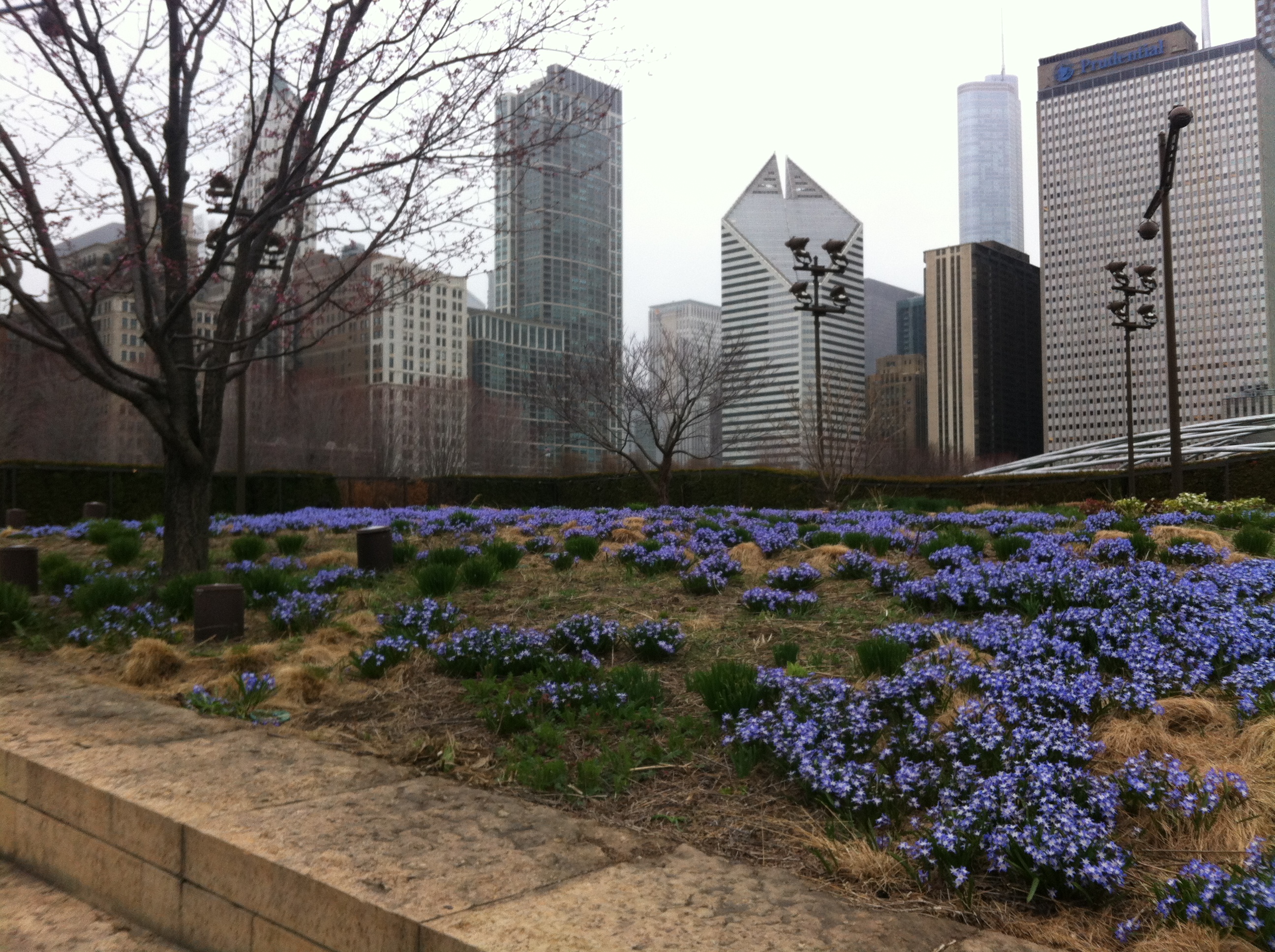
Finally, our site seeing got underway with a walk through Millennium Park:

Bean photo 2

We couldn’t stand the cold anymore so headed over to Starbucks for a hot drink while we waited for the Art Institute to open.  Of course the people in line with us were from Scotland.  That seems to happen all the time.

When the Institute opened we wobbled around for 15 minutes trying to figure out which line to join.  I couldn’t believe it cost $25 to get in. That seemed outrageous.  I was used to the free admission we have at the Minneapolis Institute of Arts, which is a great museum thanks to all the corporate headquarters we have here—like General Mills, United Health, Cargill, 3M, and Target—plus our tradition of individual philanthropy.  Was Chicago really so different?  Was the city in economic straits?  I don’t know, but after I dithered and protested and probably embarrassed Lynn by asking a security guard “do we really have to pay $25 to just to see the permanent collection?” she coughed up the admission fee plus an extra $5 to see a special Van Gogh exhibit.

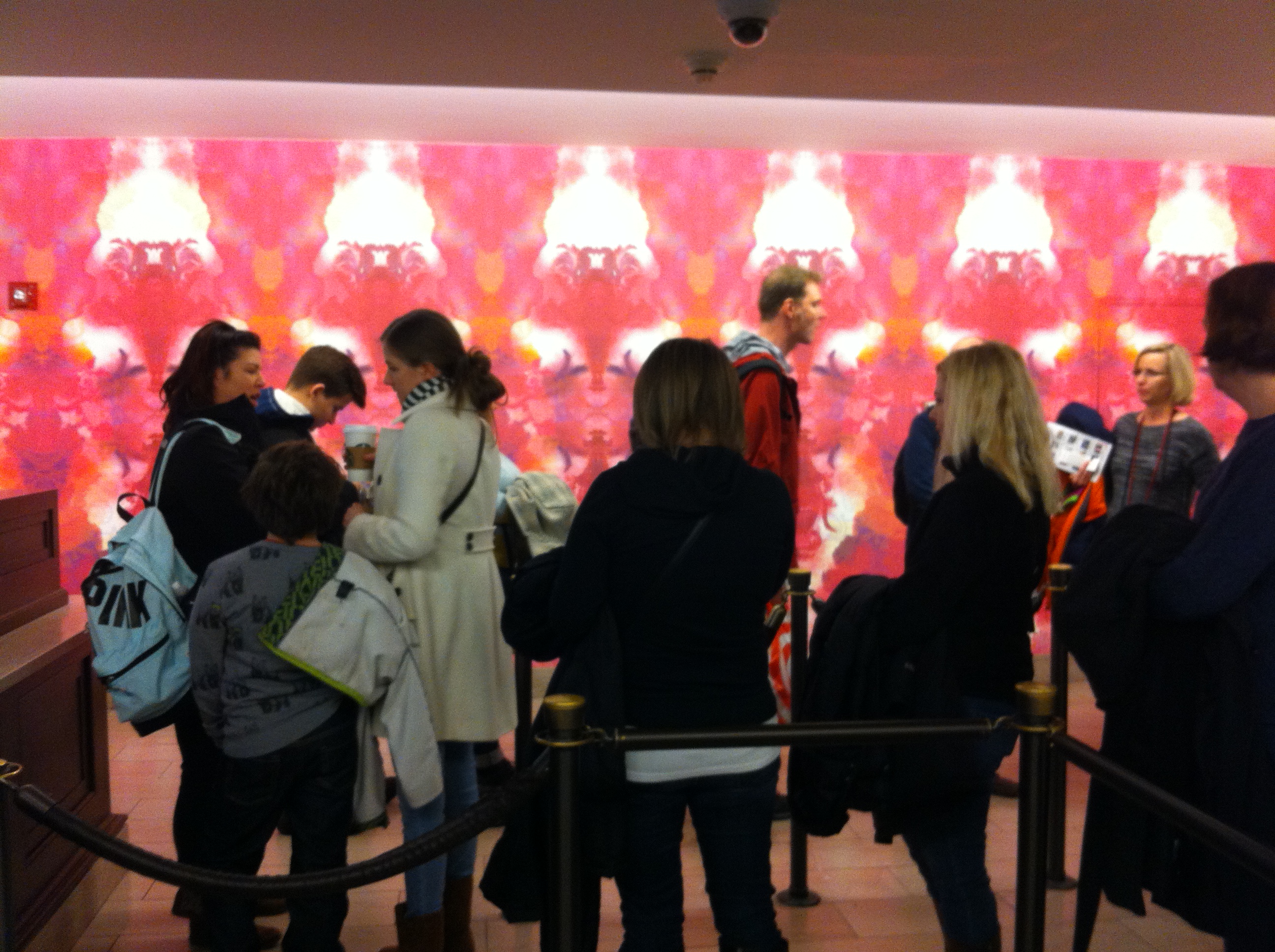
Meanwhile, I was snapping a picture of the back lighted wallpaper in the ticketing hall:

photo 3

I’m kind of a wallpaper freak.  I take photos of beautiful wallpapers when I travel, certain that I’ll somehow recreate them in my tiny condo. How hard could that be?

New Orleans or Bust

This is the second post in a series about a road trip to New Orleans that starts here.

As Lynn and I were about to leave Madison for Chicago, the car’s engine light came on.  I drove to my cousin’s house, pulled Bluebell into the driveway, and popped her hood.

“I don’t even know what I’m looking for,” I told Lynn.

“I know—I always bring mine to a garage—I don’t even know how to open the bonnet,” she replied.

I pulled out the dipstick, already knowing it would be impossible to tell if the oil was full or empty due to one of Mini Cooper’s many design quirks.

“Maybe the engine is hot?” I suggested hopefully.  The coolant container was clearly marked: “DO NOT REMOVE CAP WHEN ENGINE IS HOT.”  I unscrewed it anyway and quickly jerked my hand away as steam exploded out of it and coolant ran out onto the driveway. I screwed the top back on and waited for it to cool down so I could see how low it would be now—now that I had made sure it was low on coolant.

I didn’t think my cousin knew much about cars, but I still wished he was back from the pow wow.  Car problems are the one situation in which I revert to my primitive, dependent woman self.  I wanted a man to deal with it.  A man would know what to do, right? Never mind the many times I had asked some male relative or coworker about a car issue and they got a panicky look on their face because they knew, as men, they should know about cars but didn’t know jack.

I also fell back on an old coping mechanism—denial.  “I think it’ll be okay to drive to Chicago.  I’ll deal with it in Chicago.”  Thus commenced several days of flipping back and forth from outright heart-thumping panic to the blissful Zen of denial.

When you Google “Chicago tollway” here are just a few of the images that come up:

tollway 1 tollway 2 tollway 3 tollway 4

The engine started chuddering along the way and the drive was every bit as stressful as I’d remembered, with the added feature of an endless road construction project which had us all swerving into new lanes every few miles, amidst massive piles of concrete rubble that looked like a moonscape.

Every time we approached a tollbooth I had to talk Lynn through how much money to pull together.  “Those little ones are called dimes; they’re 10 cents, get 15 of them.  And 10 of the big ones, those are quarters.  They’re 25 cents”  This is one of those micro culture shock things: the UK has 20 pence pieces, while we have 25 cent pieces.

Each time we slowed, the car shook harder and I feared it would kill and not start again.  I made a conscious effort to keep my back and shoulder muscles relaxed.  The previous day, it had seemed like a good idea to take a new pilates class.  You know, get some exercise in before sitting all day in the car.  My torso felt as tight and tense as a loaded steel trap.

I didn’t trust what Marge, my GPS, was telling me, so I exited the tollway early and drove stop-and-go slow for miles through the city streets.  The streets were swarming with crowds of people out enjoying the 75F spring weather.  Marge got her revenge by beeping loudly at every intersection to tell us there was a speed camera.  Fat chance of triggering one of those during rush hour.

Lynn had found a great little place called the Old Chicago Inn just south of Wrigleyville. Lynn and  the Innkeeper carried in the luggage while I searched for a parking space.  The inn came with free parking—a permit to park wherever you could find a spot in the vicinity.  I found a spot two blocks away and killed the motor.  I checked the trip odometer—we’d driven 450 miles that day.  I sagged over the wheel and exhaled. I thought about calling AAA but then what?  They would tow my car to some garage in Chicago, one of the most corrupt cities in America.  I was determined to get to New Orleans.

Innformed

This is the third post in a series about a road trip to New Orleans that starts here.

Enough about the car for now!  We had 48 hours in Chicago and I put Bluebell out of my mind for the time being.  Here’s a photo of the Old Chicago Inn at Christmastime.

old chicago inn

It’s an Art Deco-era inn and I was very grateful that Lynn had booked two rooms instead of one.  The small rooms were…small, but they were en suite.  For you Americans, that means they included a bathroom.  The larger rooms shared a bathroom in the hallway.

Our innkeeper was David, and he informed us he was from Kentucky—or “Kaintucky” as he pronounced it.  David turned out to be one of the best things about our brief time in Chicago.

He gave us a couple $10 off vouchers for the restaurant next door, which turned out to be a Key West-themed karaoke bar.  We ordered a couple sandwiches and beers and sat back to watch the show. We must have raised the average age in there by 20 years; duos and trios of inebriated 20-somethings were sang while others danced.  They sang and danced badly, but with a lot of heart.  It was good for a few laughs.  I’m sure Lynn could have stayed out later but I just wanted to lie down.  I know I’m drained when I pass up a second beer on vacation.

The population of the Chicago metropolitan area is almost 10 million. It’s a bustling, busy place full of skyscrapers, art, industry, tourists, and music.  They love their deep dish pizzas and baseball. It’s known as the Windy City, and for good reason. Chicago is perched on Lake Michigan, one of the Great Lakes, and the wind is ferocious. I think of Chicago as like a merger of New York and Minneapolis.  A big city with a Midwestern vibe.

Lynn and I had breakfast in the basement of the inn, which had originally been a speakeasy.  A speakeasy was a secret, illegal bar during prohibition, when alcohol was illegal in the U.S. from 1920 to 1933. It’s hard to believe, today, that we ever attempted to ban booze.  Of course prohibition was a huge fail. My great grandfather went to federal prison for two years because he tried to steal liquor out of a government warehouse where they stored confiscated alcohol. He owned a restaurant and his business had tanked when he could no longer serve drinks. This was in Kentucky, and I mentioned it to David, our innkeeper.

“My grandmother was from Covington, Kentucky,” I said.  “She always referred to it as ‘down home.’”  I didn’t mention that she also called black people “coloreds.”

David was one of those people who knows a lot about a lot of things and appreciates a captive audience.  He didn’t acknowledge my comment but launched into a story about his “mama” and Miss Rose, a neighbor of theirs in Kentucky.  David was probably approaching 60.  He was gaunt, missing a tooth, and wore Malcom X glasses.

I’m conscious as I write this that you’ll know David was white without me having to write it.  I’ve probably done this a hundred times in this blog, but this road trip was packed with interactions around race, so maybe it’s good I’ve caught myself.

David stood between us and the door and talked about his mama and Miss Rose and the antebellum (pre-Civil War) house he’d grown up in.  He described the closets which were designed to store hoop skirts and fancy ladies hats, and how they went to the Kentucky Derby every year.  Normally I can’t stand this kind of person who talks on and on and never asks you a question about yourself. But David was just a lovable guy.

We finally broke away and walked over to the Belmont station to take the train downtown.  Lynn asked me what “downtown” and “uptown” meant.

“Downtown is what you would call the High Street,” I explained.  I wasn’t sure about the term uptown.

We arrived downtown and the first thing we saw was Trump Tower.  We instinctively turned to each other and exclaimed, “Blech!!”

Trump

Spring Surprises

The road trip is now in my rear view mirror, ha ha.  I drove about 2,660 miles.

As you may recall if you’ve been reading along for a while, I planned obsessively for this trip and felt anxious about what might go wrong.  For instance I feared my car would break down in the middle of nowhere so I had all sorts of maintenance work done on it and I joined AAA (the American Automobile Association) a few days before I left.

None of the things I’d imagined would go wrong, went wrong.  What happened was more ambiguous and thus, more stressful.

Lynn arrived as planned and spent the night at my place.  She showed me the guide books and maps she had brought and I said I wouldn’t bring most of mine since hers looked better.  Vince had moved out that morning, so we went to visit him briefly in his new pad before we rolled out of town.  Lynn and Vince had been hearing about each other for years.  It’s great when the important people in your life meet each other.

We left St. Paul around 8am.  We had a lot of catching up to do, and the miles peeled away quickly as we cut across southeast Wisconsin.  I needed to gas up near Warrens, which is home of the Cranberry Discovery Center and Yogi Bear’s Jellystone Park—two sites I’d visited in the past and knew would be strange and wonderful to British eyes.

Lynn had never seen cranberry fields; here is what they look like:

cranberry-bog

We drove around Jellystone, a massive campground for families with kids with a water park, rides, and cabins.

The area was deserted, since it was only early April, and I was glad the gas station was even open.  I filled up as Lynn perused the offerings inside—gun magazines, cranberry wine, bowie knives, cranberry beer, coon skin caps, and a hundred kinds of beef jerky.

Back on the road, we were quickly in Madison, where my cousin Bob lives with his wife Paula.  We were joined by my niece Emily, who attends the University of Wisconsin Madison.  Bob had promised “light refreshments,” which turned out to be a huge spread including many Wisconsin cheeses.  They brought out the inevitable cheese head, an accoutrement of Wisconsin Badgers football fans, which Lynn refused to wear but which I was happy to model:

Cheese Head

We talked about politics.  Lynn, probably like most foreigners, is appalled and bewildered by the rise of Donald Trump.  Bob is a radio news reporter, so he’s steeped in politics.  Paula has been apolitical until this year, but the rise of Trump has got her reconsidering whether to jump into the fray.  Emily, being a college student on one of the most liberal campuses in America, has no shortage of opinions.

Paul is Native, and we lucked out that the spring pow wow was taking place that day at the Madison civic arena.  A pow wow is basically a big social gathering of a tribe—in this case, the Ojibway tribe which is spread across the Dakotas, Minnesota, Wisconsin, and central Canada—to dance and drum.  It was unclear to me if there is any spiritual significance to it all.  There were lots of colorful costumes—they prefer the term regalia.  There were cute kids running around and stalls selling jewelry and fry bread and pop. No alcohol was allowed on the premises.

Since I’m not Native I didn’t take photos because it would have felt like I was photographing animals in a zoo.  But plenty of other people do take photos at pow wows and post them online:

dancingdrumming

After a couple hours it was time to leave so we could get to Chicago by dark.  If you’ve never driven the expressway into Chicago, flanked by giant semi trucks going 85 miles per hour while fumbling for coins for the toll booths, you haven’t lived.  I’ve done this drive half a dozen times and it is nerve wracking.

As I started the car Lynn exclaimed, “Damn!  I must have left my maps and books on your dining room table!”  That’s when I heard the “DING DING! DING!” and my engine light came on.

Easter Interlude

I was Skyping with someone at work who is an attorney who documents torture and other human rights abuses perpetrated against Syrians.  I loved this quote she had on her Skype account:

I arise in the morning torn between a desire to improve the world and a desire to enjoy the world. This makes it hard to plan the day.

It was said by E.B. White, who along with William Strunk wrote The Elements of Style, usually just referred to as “Strunk and White.”  It was first published in 1918 and is considered one of the most influential English language books.  It was like a Bible to me when I first began my career.  Basically, in a little over a hundred pages (1999 edition), they tell you everything you need to know about punctuation, grammar, composition and commonly misused phrases and words.

Here’s another quote from White: “Writing is an act of faith, not a trick of grammar.”  That’s a great affirmation from someone who basically inscribed the Ten Commandments of writing on paper.  As someone who often wonders, “Why am I writing this blog?” I appreciate this one.

And finally, “It is not often that someone comes along who is a true friend and a good writer.” I hope I am both.

I’m going to share a couple posts from my son Vince in the next week or so. We started Breaking Free as a co-blog, to write about his experiences in prison and mine as a prison mom.  Is that a thing?  It is now.

Easter Interlude

The anxiety started a little over a week ago, when I found out how soon Easter actually was this year. I was finally going to jump over another big hurdle. I’ve been out of prison now for almost seven months and haven’t had the opportunity to attend a gathering with the extended family, and today was that day.

I don’t actually know what it was that I was afraid of. I guess it’s the fact that I haven’t seen them for a decade and I really don’t know that any of them have any idea where I’ve been. I visualize a hundred conversations all ending abruptly when they ask what I’ve been doing, or why they haven’t seen me in so long. And of course it’s not their fault that they’d be curious, we’re family. My grandparents are wonderful but as far as I know, they didn’t really spread the word about my trip to prison, or my years of alcoholism and drug addiction. And there’s the shame factor for me that I didn’t really want to go into any of that at Easter (or ever). I mean who wants to hear such a sad story on Jesus’ Birthday? Or whatever it is.

All the worry and apprehension was for naught. I was greeted with hugs, handshakes, and warmth. And truth be told, I felt some connection with a few of them that it turns out I really missed. And once again I was sitting at the table with my family, laughing, conversing, and feeling all the uneasiness dissipate. I didn’t recognize a few of them as they had all literally aged ten years and were just kids the last time I had seen them.

I think what I realized is that it doesn’t matter where I’ve been for so long, only that I am here now. Not just in this particular situation, but in everything. It took me a while to adapt to life outside the walls, but now that I have been away for a while, I think I can let that go. That time of my life is over, and even though I constantly need to be work on recovery, it’s not so much about not going back, but being able to move forward.

I just got home from the gathering and wanted to get those words down while the event was still fresh in my mind. I feel really good right now. As if a weight has been lifted off of me. But like many of these weights, it was put there by me.  I need to quit that. I’m a work in progress.

Good Supplements, Bad Supplements

I get 22 days of Paid Time Off (PTO) per year, which is good for the U.S. (In England I had 35 days.).  I end up using some of those days to spontaneously enjoy a fresh spring day, or just catch up on chores.

As you read this I am sojourning in New Orleans as part of my 11-day road trip.  This will leave me with about 10 days of PTO.

I wish I could live and travel internationally year round, forever, but I haven’t figured out how to do that yet.  I’m not going to sit around moping the other 355 days of the year that I’m not on some fantastic global journey.  That’s why I write about the importance of being able to appreciate every day adventures in your own back yard, or in South Dakota.

Recently there was a development that stepped up the urgency I feel about seeing the world.  I learned that I have osteoporosis.  This is a condition in which the bones become porous and prone to breaking.  This is on top of my lifelong condition of scoliosis, or curvature of the spine.

Since my mother has osteoporosis and I look just like her, I figured it was coming my way.  So I’ve done mostly the right things to prevent osteoporosis, like consuming lots of calcium, doing weight-bearing exercise, and quitting smoking.  But you can’t escape your genetics.

This is my mother on her 80th birthday with my adorable nephew.

Nina

She looks good, but she often says, “The doctor tells me if I sneeze too hard I can break a bone.”  That’s got to be awful to live with.  She wears a brace, has had a lot of pain, and worst of all, she can’t travel anymore—it’s just too hard on her.

You build up your bone mass until around age 30, then slowly lose it.  If you have osteoporosis in your family, or if you are even just a small person, you might want to check with your doc and start taking calcium supplements and jumping rope.  It’s more common in women but men get osteoporosis too.

Mine isn’t bad yet.  I’ll keep fighting it and hope there will be a pill to fix it before I get to my mother’s age.

This development has been a push for me to review my international travel long-term plan.  My general idea is to go to the most far away places on my list, like New Zealand and Japan, first.  I would save the easier places, like Santa Fe, for when I’m older.

I started checking out tours to Japan.  My nephews are half Japanese, so Japan is at the top of my list.  I don’t feel confident enough to go on my own.  I’ve watched my brother’s home videos of their many trips there, and they’re like some science fiction movie about overpopulation—wall-to-wall bodies in the canyons of Tokyo.  The tours looked great, but then I ran up against my nemesis—the Single Supplement.

The single supplement is a surcharge tours add to the price of a tour for solo travelers.  They’re not trying to shame or discourage single people—it’s just economics. Tours can’t make it, financially, if they let a single person have the same rate as a couple.  In this New York Times article about single supplements, they cite this example for a cruise: For two adults, it’s $1,539 each.  For a single traveler, the cost is $2,843 — an additional $1,304.

This article advises on how to avoid the single supplement.  But there’s also the “blah” factor of tours.  I went on a tour to Portugal a few years ago through New Market Holidays. Yes, it was dirt cheap, I saw a lot of Portugal, and I never had to make any decisions about anything.  But it was just me and 50 retired English couples.  They were nice but aloof.  Why wouldn’t they be?  I was the odd woman out.

Life is about trade offs, right?  The road trip to New Orleans may not be on my list of far-flung destinations, but it’s with good friends, so I jumped at the chance to do it.  Laissez le bon temps rouler!