Tag Archives: travel

Independence Day

Happy Independence Day, if you are an American.  I’ve spent the last month with friends and colleagues who are Dutch, Japanese, Kenyan, Ethiopian, Eritrean, Australian, and British.  Now I am in England, where for a long time I had daydreams of moving permanently.  Today I read an article in the Sunday Times by Andrew Sullivan, an English-born journalist who became an American citizen after living there for 30 years.

He says a lot of things about why he has chosen to become an American.  He says it suits his temperament—“independent, pushy, outspoken.”  Um, that doesn’t sound like a compliment.  He talks about how England is focused on the past while American relentlessly strides toward the future.  Americans are optimistic; he finds it funny that a common response to every proposal is, “Sure!”  He appreciates that no one categorizes him based on his accent, and no one cares what class he’s from.  He admires how America has accepted and integrated more immigrants than any country in history.  He notes that America is both “deeply conservative and equally radical,” how if you fail in one part of the country you can start over in another, and he marvels that he was made editor of a national magazine at the age of 28.  There’s plenty that horrifies him about the States, like our gun obsession.

I can’t say I disagree with him on any points.  For me, the word that sums us up as a people is Independence, which many translate into “no one can tell me what to do,” as when former National Rifle Association president and B actor Charlton Heston’s famously said, “you’ll have to pry my gun from my cold, dead hands.”  We don’t like signs.  We don’t like rules.  If someone is poor, we expect them to “pull themselves up by their own bootstraps.”  We look down on anyone who accepts government assistance, even though over 50% of us get it in some form.  We like to believe we are pioneers, clearing the land and building our own house with a white picket fence.

I thought about going to an American expat bar in London on the 4th of July, then came to my senses and realized it could be a terrorist target.  That’s a shame.  I’ll go for a long walk along the Thames instead.

If you’ve ever been to the Netherlands, you probably know that the Dutch are the tallest people on earth.  The average Dutch man is six feet (183 centimeters) tall.  When Ingrid and Chris and I went shopping, I lost them in the store and I thought, “I’ll look for the tall guy,” then realized that Chris, at 6’4”, isn’t exceptionally tall.

Ingrid, however, is short, thanks to her Austrian mother, who met her father through a pen pal program.  The fact that Ingrid speaks German would come in handy.

Since I had a big suitcase, Chris drove us to the local train station.  I averted my eyes while they said good-bye.  It was sweet.  They just celebrated their 18th wedding anniversary.

While Ingrid and I waited at Central Station, I noticed these eyeball-like contraptions everywhere.  Were they CCTV?  Ingrid didn’t know.  If they were cameras, they weren’t catching much because it was early morning on a Dutch holiday.  I realize this is not a great photo but I was trying to take it surreptitiously in case security didn’t have a sense of humor.

On the train, which was clean and quiet, we moved east through Arnhem toward the German border.  We would pass through Duisburg, Dusseldorf, Cologne, Frankfurt, Mannheim, and Munich on our way.

We passed the time talking, which always makes time fly.  Unless you’re with someone you can’t stand, in which case it makes you want to hurl yourself off the train.

I perused the train magazine, whose cover featured a famous actress I’d never heard of who had great eyebrows.  “The Big Wanderlust” was clear, and something I could relate to.

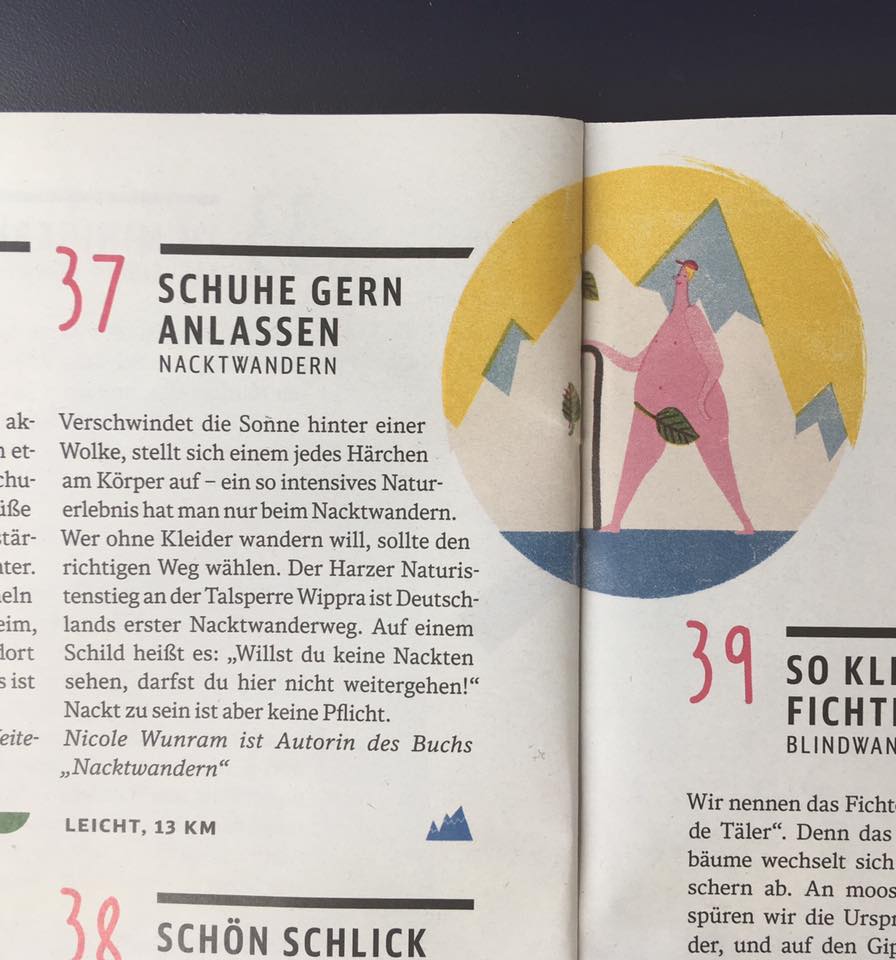
Ingrid translated an article about naked hiking.
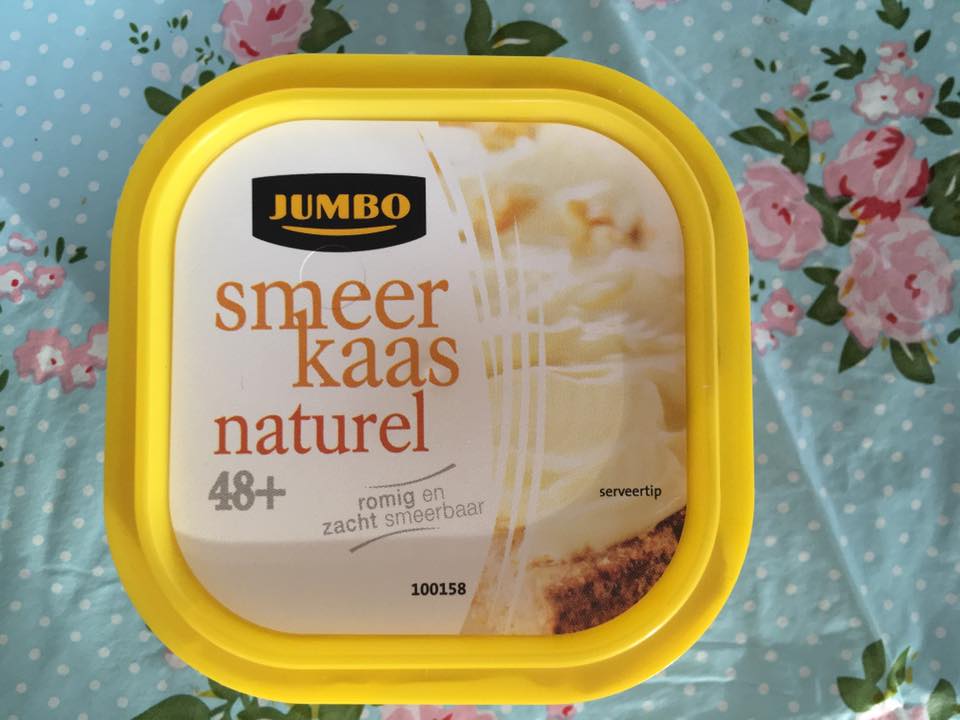
We ate crackers and the funny-sounding (to me) smeer kass.
We passed the enormous Cologne cathedral.

After nine and a half hours, we rolled into Salzburg.
Beaches and Beers, Pancakes and Paying

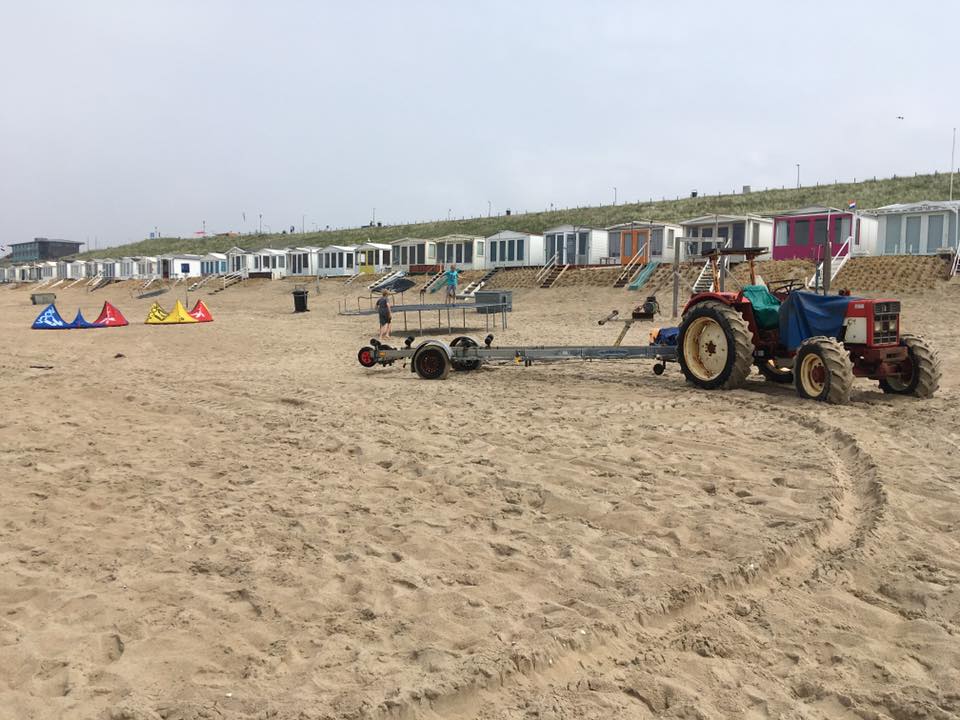
The day after our biking and museum-going expedition, Ingrid took me to the beach.  The beach, you ask?  I know, it’s something I associate with Florida, not Holland.  Still, I had read in a guide book that the beach is a thing in the Netherlands in the summer, so off we went.  We walked a couple blocks to the bus stop, took a bus into central Utrecht, then took a train to the seaside town of Zandvoort (“zand” meaning “sand”, a Dutch word even I can memorize).  If I were in Minnesota, I would have driven the distance – about 45 minutes – to Zandvoort, but I don’t think it ever occurred to Ingrid not to take public transport.

It was a cloudy, blustery day.  We sat on a restaurant patio that had clear plexiglas walls to break the wind.  We ordered some food; in Minnesota such a restaurant would hardly be worthy of the name restaurant, you would only be able to get a frozen burger and fries and ice cream.  But here, we had smoked salmon and pate and incredibly lightly fried battered cod and good bread, plus my favorite mid-day traveling beverage, cappuccino.

We went down to the beach and strolled.  Like kids everywhere, the Dutch kids were having fun in the waves and sand while their parents watched, bundled up in sweaters and wincing at the wind.  Ingrid and I were deep into some profound subject so we didn’t notice the cold.

There were cabins aligned along the beach—for rent?  I suppose it would be fun for kids and dads and dogs to have the family vacation at the seaside, but it would be miserable for moms.  The tent-like things in the background are pop-up wind breaks.

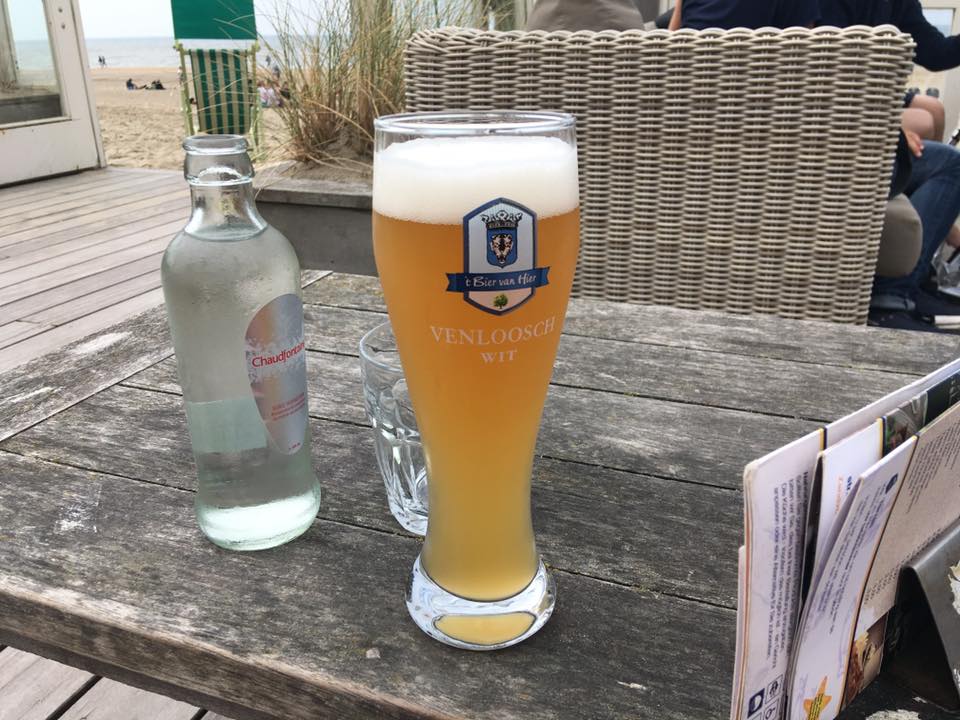
We moseyed back up from the beach and sat at a table on another patio.  I had a beer that was really, really good.  I wonder if I’ll be able to find it again.  I wonder if it just tasted so good because of the atmosphere.

Ingrid went to the toilet and the sun came out for the first time that day.  I leaned my head back against the cushions and half fell asleep.  It was one of those rare moments when I was completely content and at ease and I could have stayed there for hours.

When we got back, we rode our bikes by Ingrid’s son’s baseball game.  Baseball, you ask?  Yes, I was surprised too.  Baseball is catching on in the Netherlands, and Ingrid’s son Simon is an ace pitcher.

That night we went out for pancakes. Pancakes for dinner, you ask?  Yes.  But not just any pancakes, and not just at any old pancake house.  This place, Theehuis Rhijnauwen, was in the countryside with tables on the lawn leading down to a stream.  We had to move inside because it was chilly, but then the pancakes came.  As you can see, they’re the size of pizzas.  Mine was savory, with red peppers, onions, and cheese.  Here is the menu in English.

Now I faced a dilemma.  Chris and Ingrid had sprung for Indonesian take out the night I arrived.  We had gone to a nice restaurant the second night, and Chris had insisted on paying.  Tonight he did the same.  I didn’t know how hard I should push to pay—at least for my own.  The Dutch have a reputation for being very frugal, and of course there is the phrase “Dutch treat” which means splitting the bill.  I was also drinking their coffee and eating their cheese, their most valuable possession, in the mornings.
I never know if this is all about my insecurities growing up in a hard scrabble household, or if everyone else is thinking, “Wow, what a leech Anne is, not paying for anything.”

The next day Ingrid and I were leaving for Salzburg, so being a little anxious, I awoke even earlier than usual.  The house was silent.  Needing coffee, I crept down to the kitchen and turned on the fancy machine that makes coffee, tea, cappuccino, and espresso.  It went “BRRRRRRRRRR!!!” like an alarm clock and woke up the whole household.  And that was the start of our day.


Dutch Landscapes

I’ve spent the last two weeks traveling around the south coast of England—Cornwall, Devon, and Dorset, and now I am ensconced in Eton, home of the boys’ boarding school of the same name that was founded in the 15th Century by Henry VI.

I’ve visited so many quaint little seaside towns, shopped in so many independent stores, and supped in so many Ye Olde Tyme pubs that I’ve lost track.  But all this is to say that it makes me sad that people come to the UK and never leave London.  They say London is a country all its own, and that’s probably true.  But there’s so much more to Britain than London.

And that’s true of the Netherlands, too.  Most people only ever visit Amsterdam. They wander around the red light district (tee hee), take pictures of the canals and all the bicyclists, smoke some pot in a “coffee shop,” and go see the old masters at the Rijksmuseum.

I feel really fortunate that I had my personal guide and good friend Ingrid to show me around. As I wrote in my last post, she lives in Utrecht, a sizeable university town about 45 minutes from Amsterdam.  Probably everything in the Netherlands is about 45 minutes from Amsterdam.

My first night there, I was awake late because it was light out until 11pm.  Then I woke early because it got light at around 4am. Besides, I was excited about the day ahead, which Ingrid had promised would involve bicycling in a national park.

We drove about 45 minutes to Park De Hoge Veluwe. I am no great judge of space but it had to be larger than Central Park in New York.  We parked the car near the entrance, bought our tickets, and picked out bikes in the bike lot.  The bikes were all white, all had child seats, and they were free.  There were no helmets or locks in sight.

The great thing about biking in the Netherlands is, it’s so flat.  Therefore it was no need for more than one gear, since the biggest hill wouldn’t cause you to break a sweat even if you were totally out of shape.  The weather is also mild, so no sweating.

I loved it, biking along on a beautiful summer day in the wild with a good friend.

We arrived at our first destination, the St.Hubertus Jachthuis, a hunting lodge built by the Dutch architect H. P. Berlage in 1915 for a German couple, the Kröller-Müllers, with money pilfered from her father’s company.

Hmmm … it reminds me of something ….

The lake is artificial; the first iteration drained because they hadn’t realized it was sandy soil underneath.

Inside, Berlage had created a unitary design—from floor to ceiling and everything in between, the furniture, carpets, art, light fixtures, etc. were designed as a single work of art.  It was never meant to be lived in, but to be a monument to his genius.  Frau Müller had other plans, fired him, and lived out her days here.

Ingrid joined a group of Dutch tourists with a Dutch guide, while I listened to an English tour on a handset.  The English version would finish, then the Dutch docent would talk on and on for another 15 minutes before we moved on to the next room.  Was it because Dutch words are so long?  No, I learned afterwards, it was because the Dutch guide was telling the group a lot of bonus tidbits, like that Frau Müller had a young male “companion” on whom she lavished attention.

After the tour, we biked to the Kröller-Müller Museum.  Frau Müller was an art hound, and luckily for us she used a lot of the money embezzled from her family company to buy art.

The museum had an incredible collection of van Goghs, most of which I had never seen.  It held lots of other famous painters too, but annoyingly it closed at 5:00 and its surrounding sculpture garden closed at 4:30.  Why?  It was summer.  It was light out until 11.  We arrived at 4:15, made a beeline for the van Goghs, and only saw the rest in passing.

Boeren Bonenstoofschotel on Schoenlappervinlinder

Greetings from Eton, England.  Tonight I will sleep in my 11th bed in a month.  I’ve spent the last 10 days in the southwest of England—in Cornwall, Devon, and Dorset—where the internet connections were not much better than in Ethiopia.  So I’m going back to write about some of the places I visited almost a month ago, and now that I’ve got a good connection I’ll write forward and eventually join up with the present, in Eton.

After three whirlwind days in Copenhagen and being forced to buy a second plane ticket thanks to Expedia, I arrived in the land of long words, the Netherlands.  I was so happy to see my old friend Ingrid waiting in the arrivals hall.

Ingrid and I met in 1986 at a Volunteers for Peace “work camp” in London.  I’ve written before about how she visited me in the US twice and I visited her in the Netherlands twice, including being a bridesmaid in her wedding.  The last time I saw Ingrid in person was after her son was born, about 11 years ago.  Of course we are friends on Facebook but it’s not the same.

By the time we got out of the airport parking ramp and onto the highway headed to Utrecht, where she lives, we were talking about whether god exists, the meaning of suffering, and how humanists can be as inhumane as anyone. Our conversations continued like this for the next six days.  Don’t get me wrong; we also talked about hairstyles, houses, families, health, and jobs, but I can talk to most people about those things.  It is so good to have a friend you can talk to about the big questions.

Plus, she fed me Boeren Bonenstoofschotel, a Dutch folk food, from what I understand.

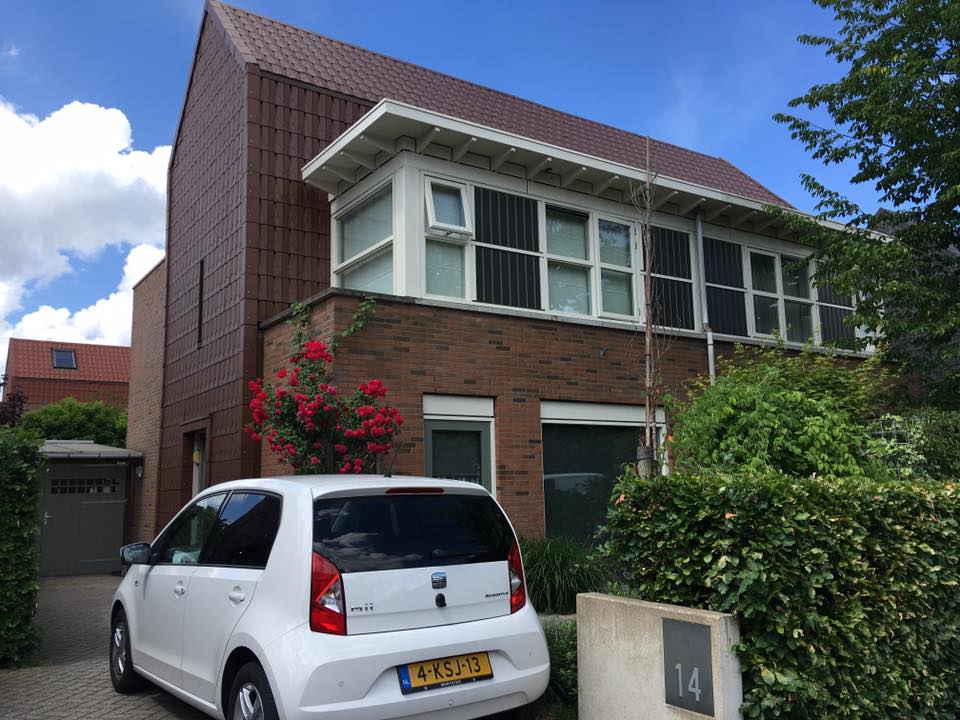
The street Ingrid and her family live on is called Schoenlappervinlinder, which is named for a butterfly.  By the time you’ve pronounced the word, the butterfly would be long gone.

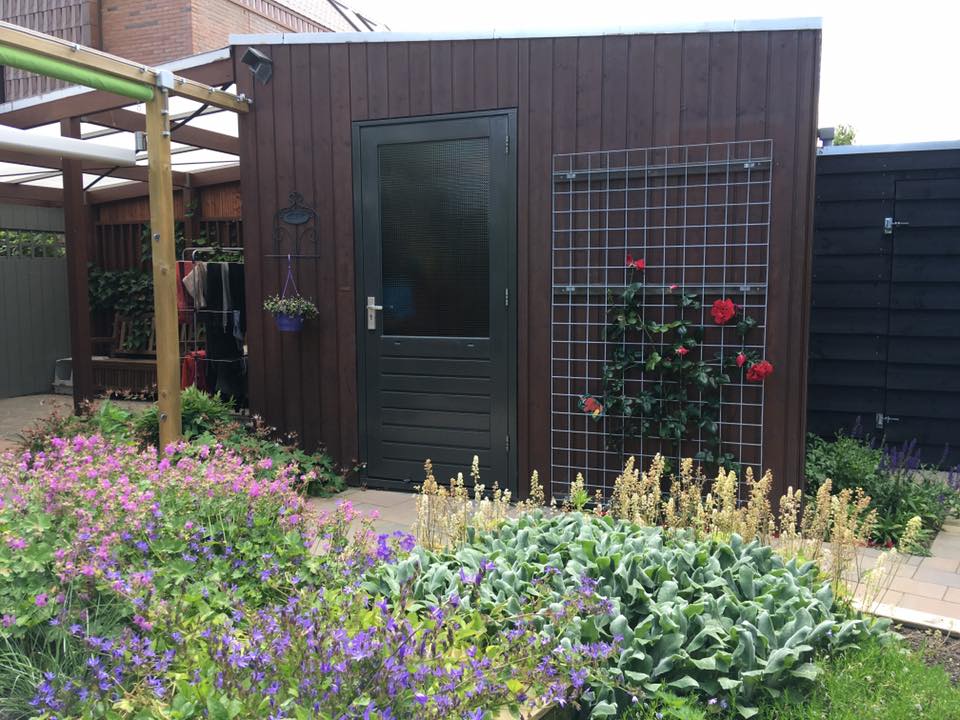
Here are some photos of a typical Dutch side-by-side house in what Ingrid referred to as a “suburb” of Utrecht, which felt pretty urban by American standards.

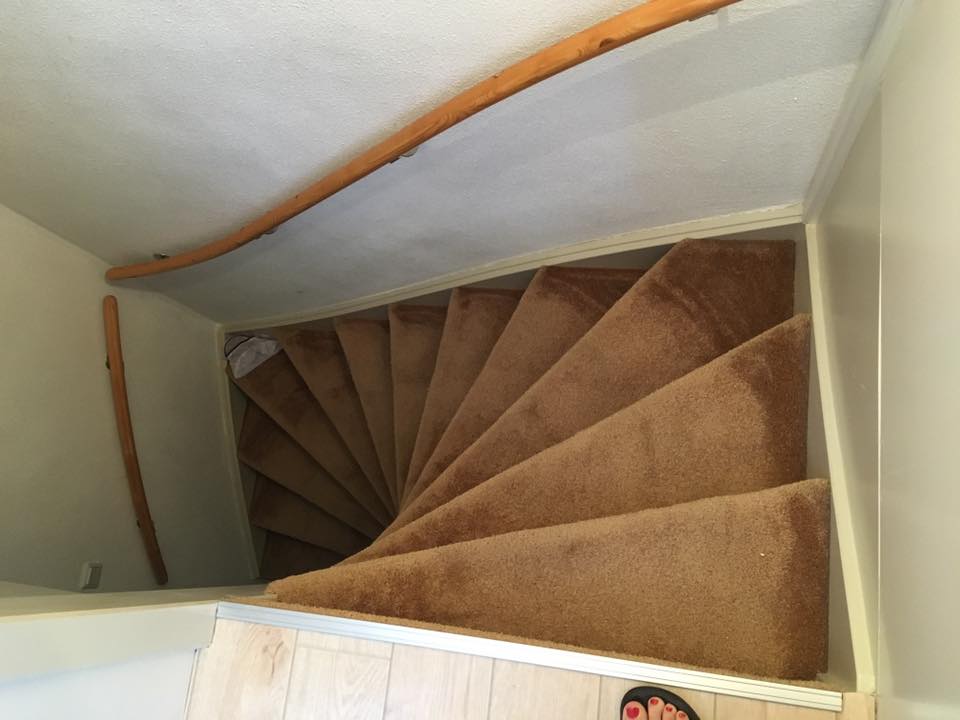
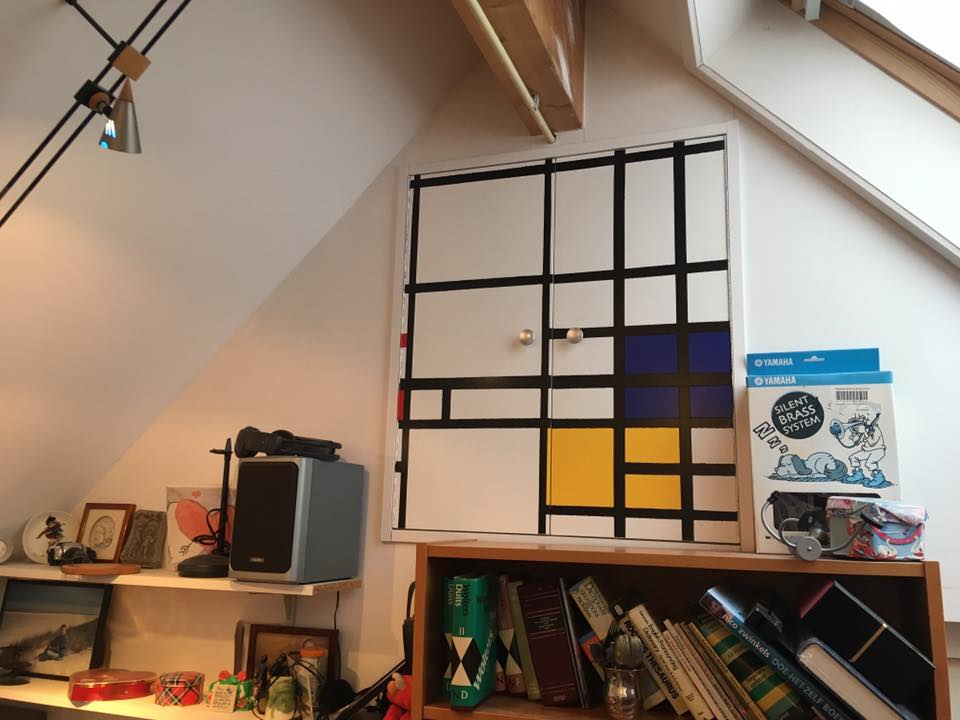
The house was similar to many American homes with the exception of exceptionally steep stairs leading from one floor to another.  They all shrugged when I exclaimed over how steep they were.  There was a bike shed in the back yard to accommodate the four family bikes that they use to go to work, school, and most everywhere else except to the grocery for a big shopping load.  The attic which served as my room had home-painted Mondrian thanks to Ingrid’s husband Chris, and more English language books on the bookshelves than most American homes.

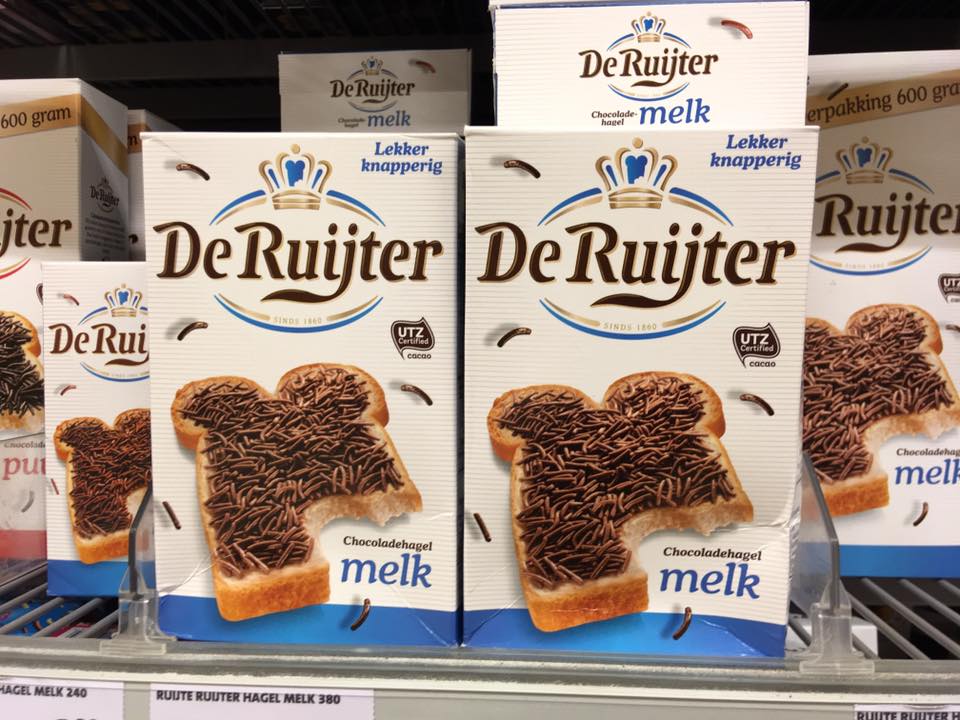
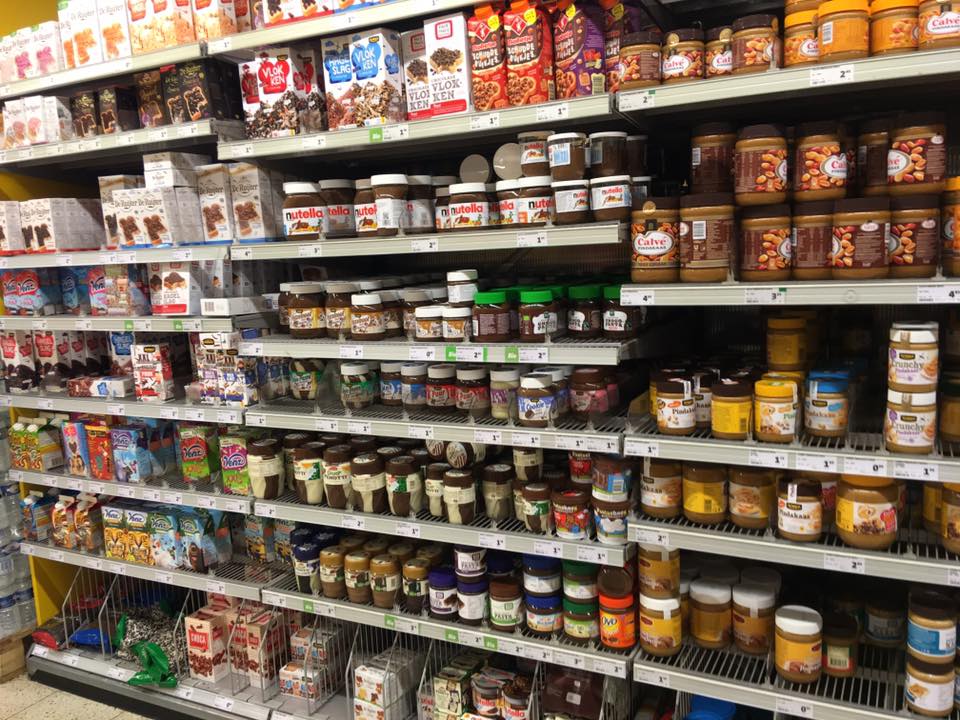
Speaking of grocery shopping, I got to go with Chris and Ingrid to a Jumbo, which is a mid level grocery chain.  The Dutch love sweets.  Stroop koeken/waffle are typically Dutch cookie or waffle “sandwiches” filled with sugar syrup.  There is every other imaginable form of cookie, cake, and candy, plus lots of breakfast sweets stuff, like sprinkles for toast and an entire Nutella section.

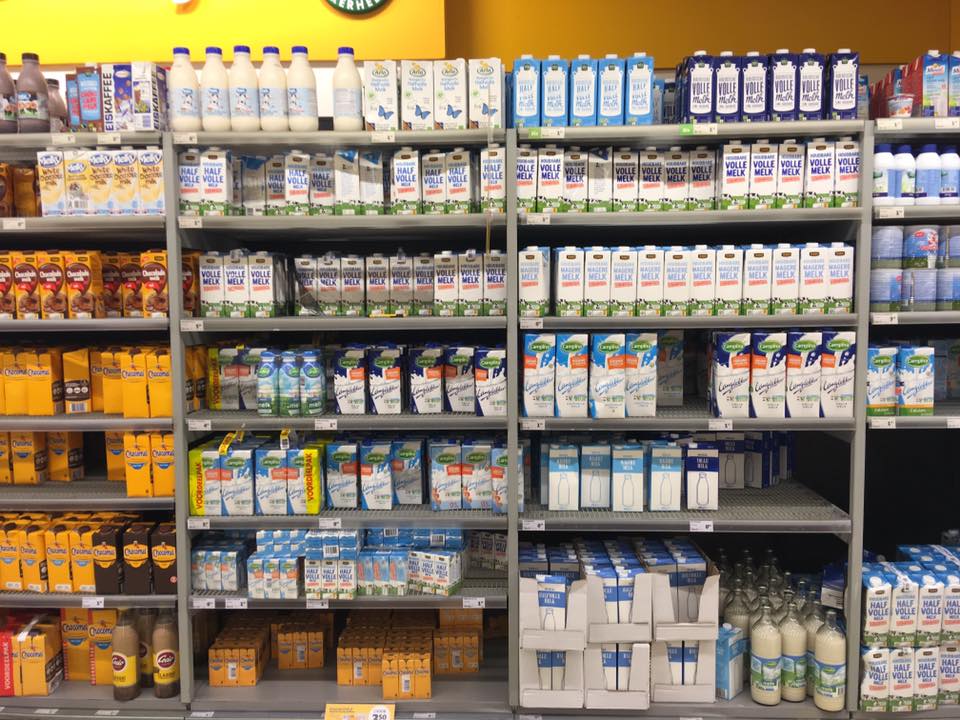
Eggs and milk were not refrigerated.  I guess in the US we refrigerate both because it makes them seem fresher, but it’s not necessary.  If that’s true, what a waste of energy!  If it’s not true, then there should be lot of people retching their guts out every day in the Netherlands.

We have an image in the US of how everyone in Europe eats artisanal, organic, free range food.  There is plenty of it, but they also eat junk, just like us:

This item in the deli case, “FiletAmericain Naturel,” turned out to be Steak Tartare.  Ironically, I believe you can’t buy it in the US.

Then there were the cheeses.  The Dutch love cheese at least as much as sweets, and there must have been 500 different kinds on offer. I could have taken photos of cheese all day.

Finally, this was in the magazine section.  It’s a mag for gay men, and in an American grocery—if it was even allowed—it would have a colored plastic sleeve to hide the content, a la Penthouse and Playboy.

Whirlwind Tour

Five countries in 17 days.  I’ll never get around to writing about it all, but I’ll try to capture some highlights.  Today: Copenhagen.

People: The blondest people I’ve ever seen, and I’m from Minnesota.  People with pointy, turned-up noses whose language sounds like, “Hoon-dah, hoon dah, hoon dah.”  There were also huge groups of Chinese tourists everywhere.

Weather: Cold, grey, rainy.

Quiet: Two reasons: electric vehicles and bicycles.  Throngs of people in suits commuting to work, sitting ram-rod erect as they whiz along with no helmets.

Expensive: A salmon and cream cheese bagel in a nondescript coffee shop cost 55 krone, or about $11.  Two delicious herring appetizers and a small bottle of water at the Design Museum cost $30.

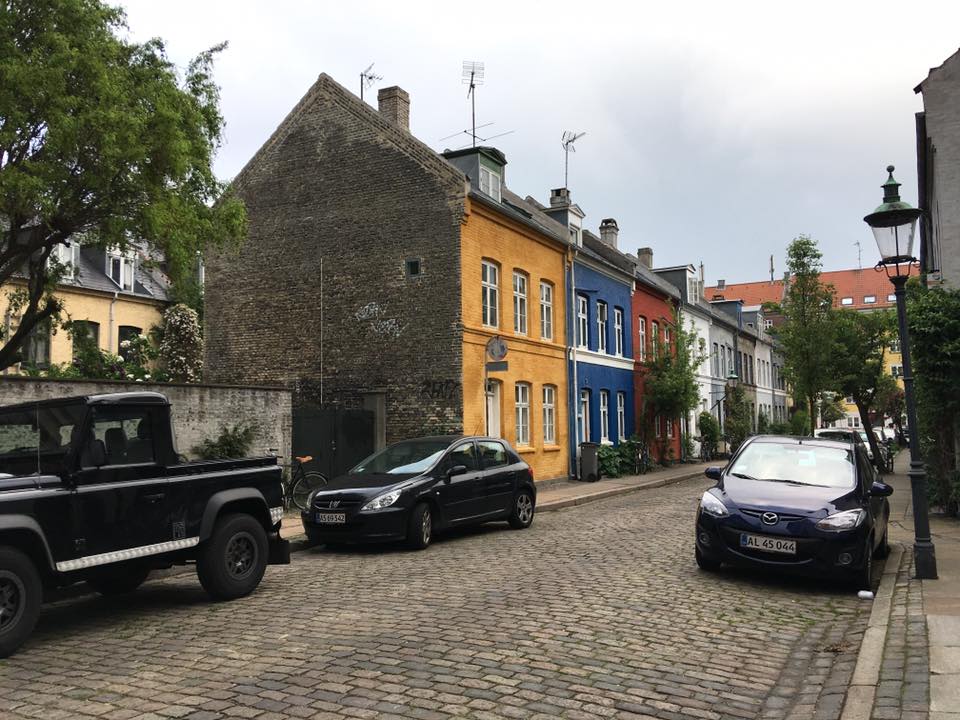
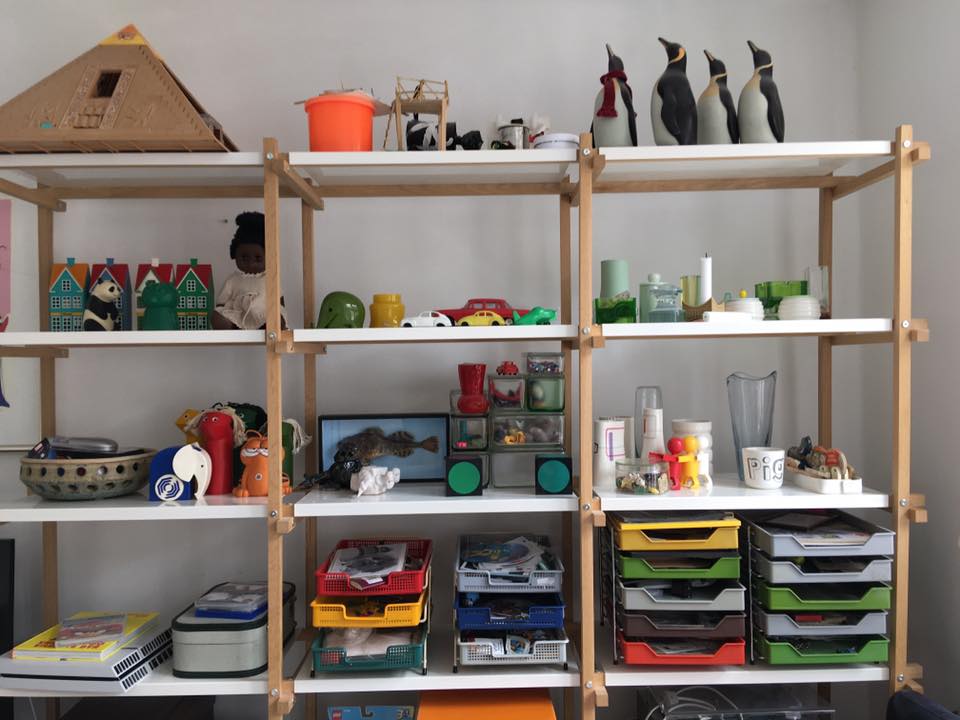
Design: Beautiful wood was used for everything from the airport floor to the bagel counter.  The Air B&B I stayed in was full of Danish Modern furniture and even the most prosaic item was designed, from canisters to ladles to the appliances and bathroom fixtures.

I arrived late at night and splurged to take a taxi from the airport.  That cost about $45, compared with the $4 train ride I would return on, but it also took only 15 minutes, compared with about an hour and 15 minutes on the train, which had multiple delays including all passengers being told to get off and switch to another train.

The accommodation was great for the price, if all you need is a single bed and a good location.  The three-story townhouse was owned by a woman named Mette who was a divorced lawyer with two kids who were at their father’s.  I only saw Mette’s face as I peered down the steps from the second floor late at night, which was when she got home from work. This was fine with me; I was wanting-to-be-alone mode.

The house, as I’ve already written, was a collection of beautifully- and/or sensibly-designed things.  I felt like I was living in an Ikea store.  One surprise was that there was no recycling.  None!  I think it was just Mette’s neighborhood, which had very narrow streets and thus would be difficult to get a recycling truck through.  It felt really weird throwing paper and glass bottles in the trash.

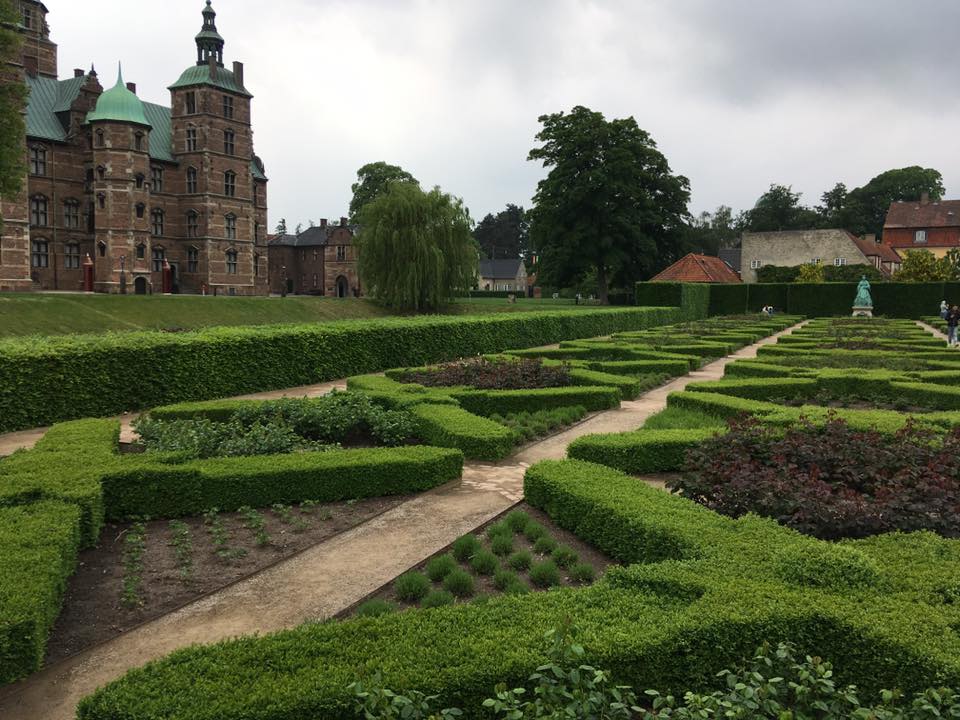
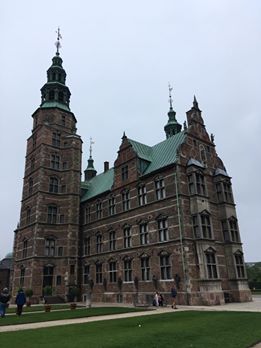
So what is there to do in Copenhagen?  Two things rise to the top—the gardens and the palace.  Maybe because the weather is so crappy, they work to make their gardens in Copenhagen impressive—and they are.  It really would have been spectacular with some sun, but never mind.  There are the botanical gardens, which have enormous greenhouse complexes, and across the street are more gardens surrounding the Rosenborg palace.

Since Copenhagen is so expensive and I was just at the beginning of my journey, when I am always more cautious about spending, I bought a sandwich and some grapes at Aldi and had picnics in the gardens two days.  Interestingly, Aldi is a horrible, dirty, dumpy store in Europe.  This was my impression in Copenhagen, and it was confirmed by my friend in the Netherlands, who said something like, “Eew … you shopped at an Aldi?!”  Still, it was cheap.

I toured the Rosenborg along with 3,000 Chinese tourists.  I’ve been to a lot of palaces.  Usually they are vast, spreading, and sprawling.  I thought the Rosenborg was modest as palaces go, and it was built more on a vertical plan.  That is, the rooms were small but there were four stories, as opposed to most palaces which have two.  Another thing that was different was the lack of religious imagery.

I knew nothing about the Danish monarchy.  Did you know one of the queens had an affair which resulted in an illegitimate daughter?  Any English king probably would have beheaded her, but in enlightened Denmark I guess it wasn’t an issue.

The Nyhavn area is overhyped.  It epitomizes the term “touristy.”  The fortress, called the Kastellet, was a “meh.”  I never got to Tivoli Gardens.  It would have required a bus ride, and I just wasn’t up to figuring out the public transport system.  If I go again, I would start with a Hop On Hop Off bus tour to get my bearings.

Next up: Utrecht.

Beasts of Burden

The first thing I noticed in Ethiopia, and an enduring image I’ll carry in my mind, is how hard people (and animals) toil.

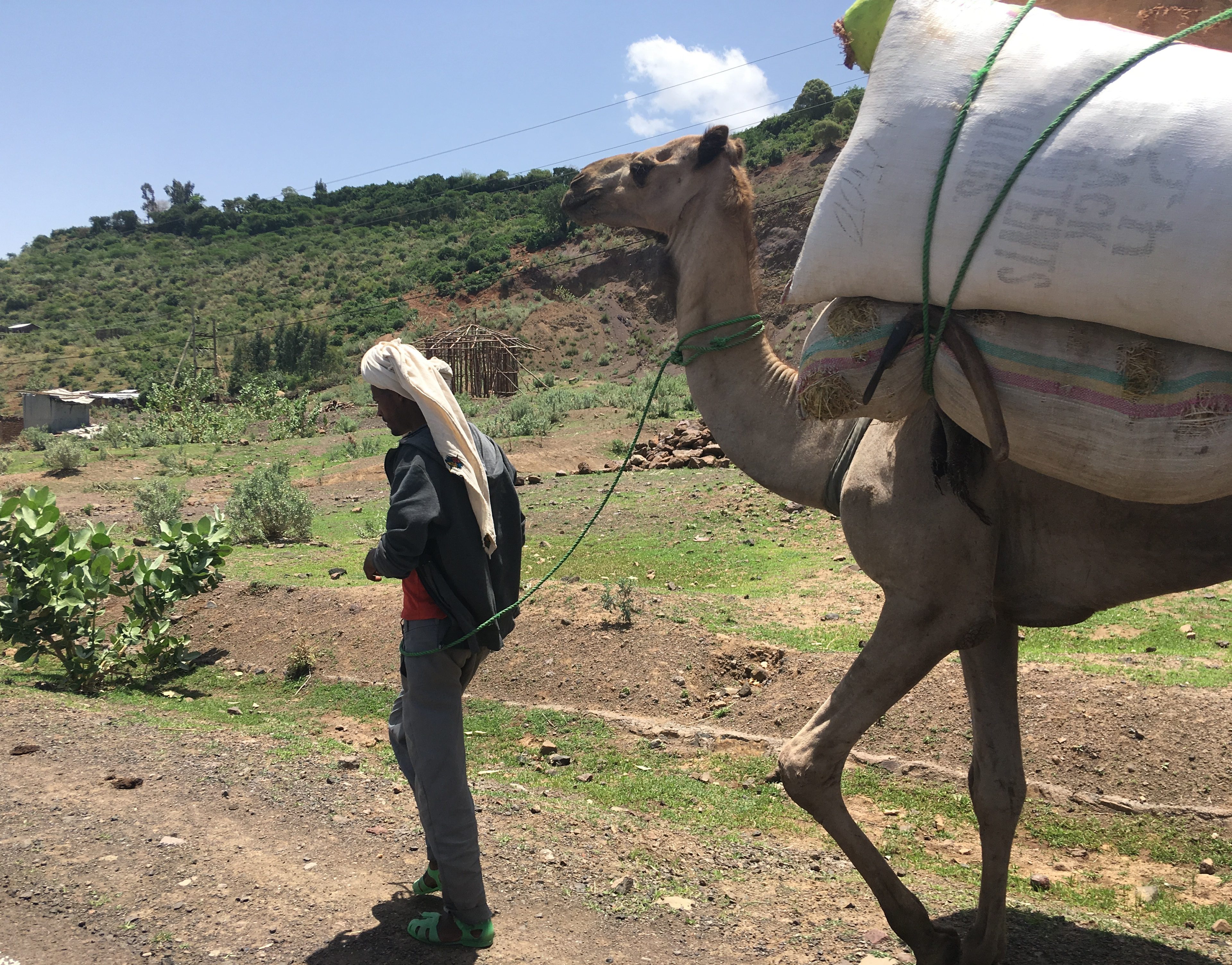
I spent a lot of time being driven in trucks.  Along the side of the roads there were always streams of people walking.  If it took us an hour to get from Axum to Shire, how long did it take people to walk?  It was 90F and humid with no shade.  There were no sidewalks, just rock strewn shoulders.  People walked barefoot or in what appeared to be 99 cent flip flops or jellies. No one was carrying a water bottle or wearing sun glasses.  I’m sure they weren’t wearing sun screen.

Oh, and did I mention that they were all carrying enormous bundles of twigs, gallons of water, babies, rebar, small trees, or sacks of potatoes?  Men, women, children.  Old people, little kids.  I saw a girl who looked like she was four years old walking alone in the middle of nowhere, balancing a case or juice boxes on her head.  Did she ever wonder if this was normal, or okay?

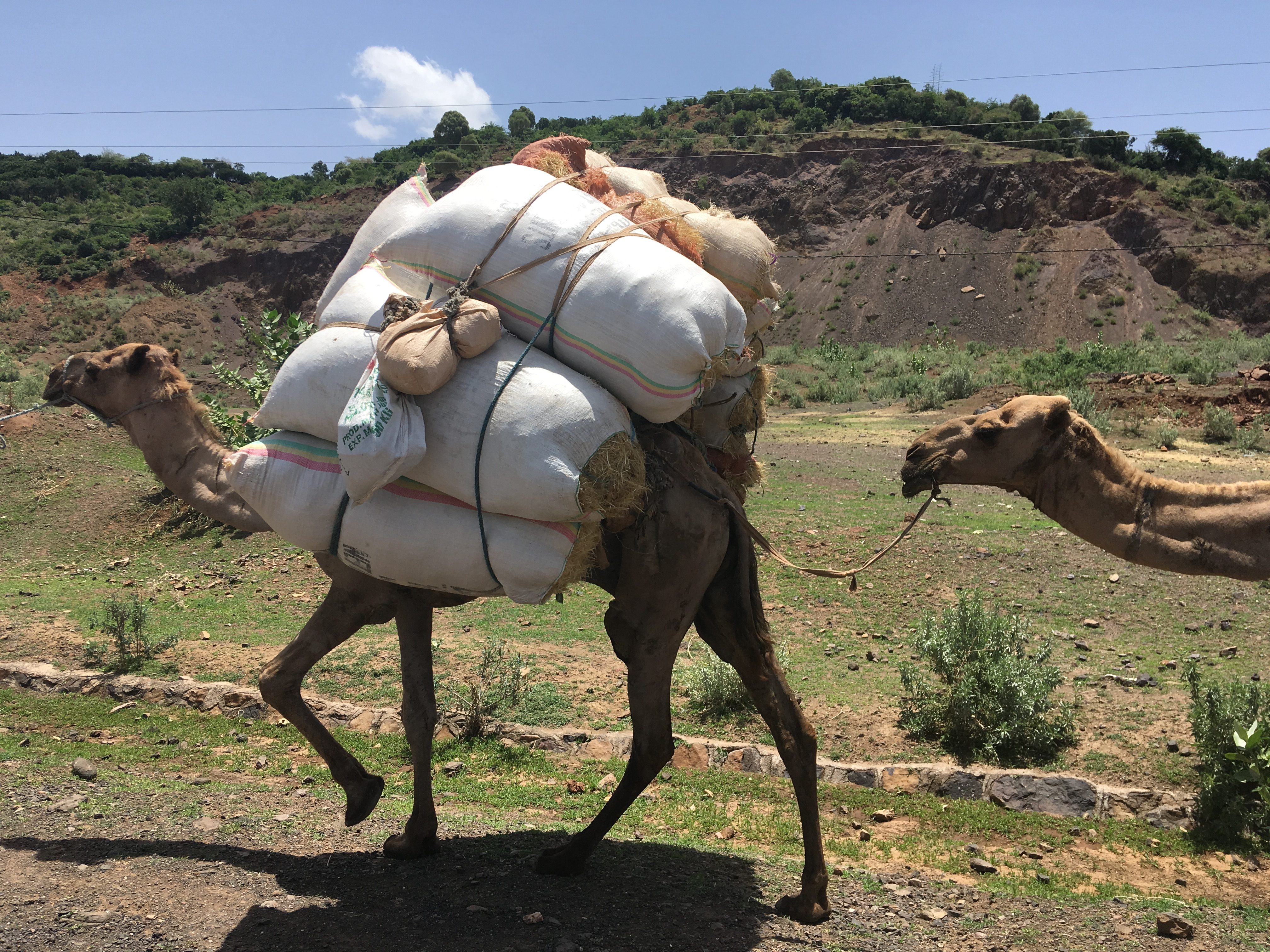
The lucky ones had camels or donkeys whose paniers were loaded with rocks or bricks or 5 gallon water jugs.  I rarely saw anyone riding a donkey or camel; they’re reserved for transporting heavy loads and riding one probably would seem frivolous.

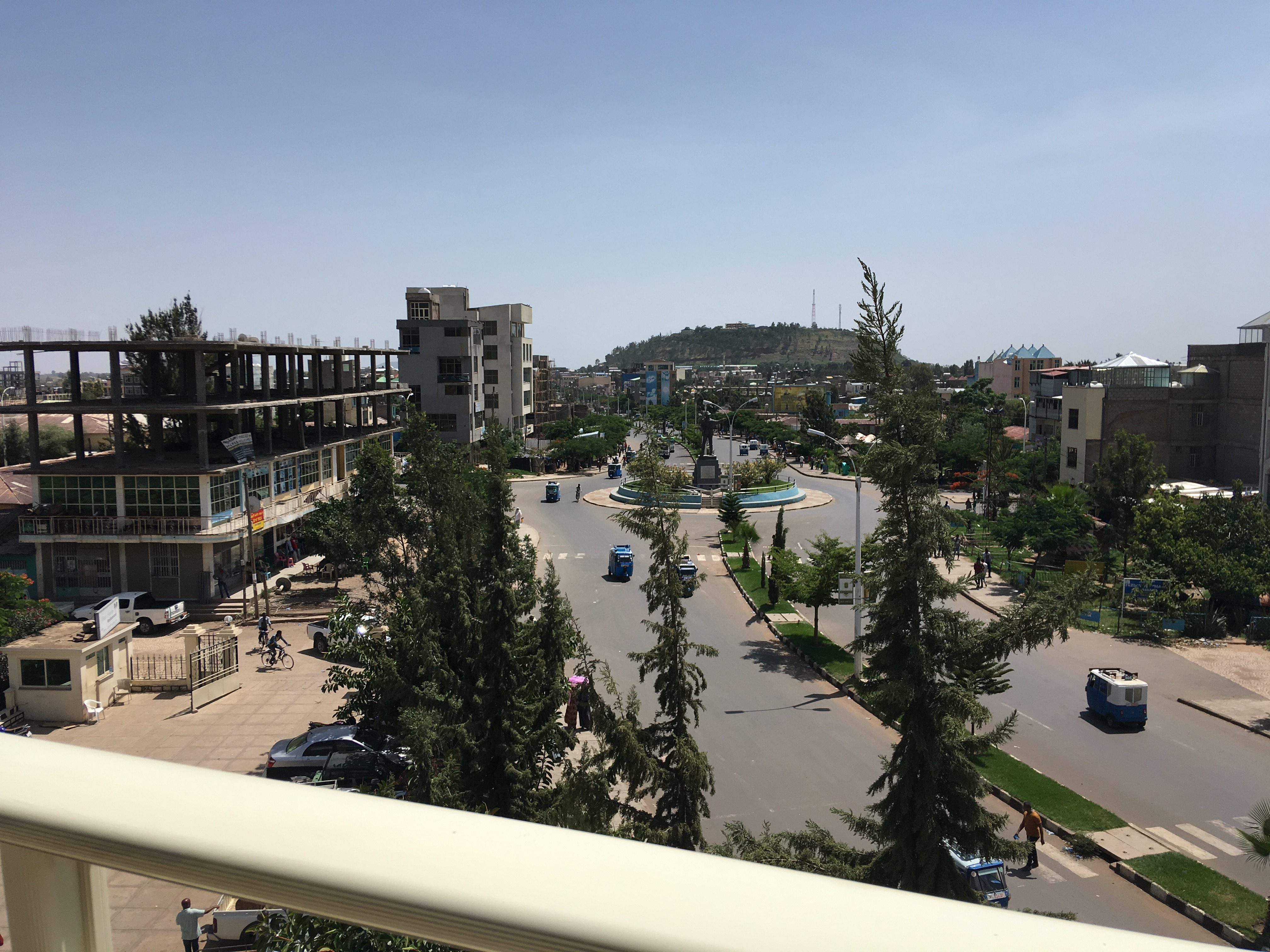
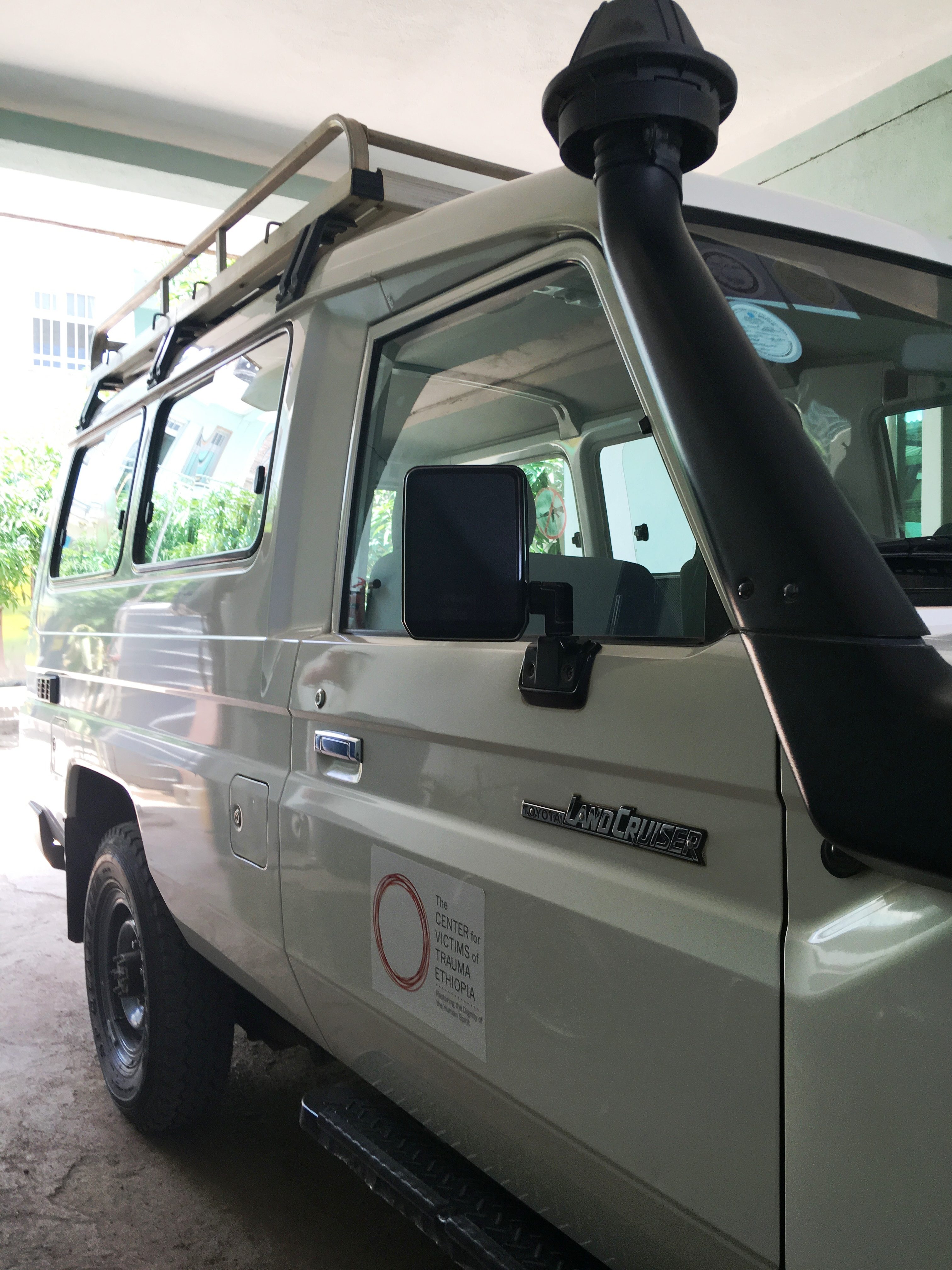
The Ethiopian roads are probably better than what we have in the US—maybe due to not undergoing the freezing and thawing of winter. They’re smooth and black and look like they were laid down yesterday.  And yet there is very little traffic.  No one can afford a car.  In a week there, I only ever saw one passenger sedan.  Everything else is one of four things: a commercial truck, a bus, a white NGO Toyota Land Cruiser, or a Bajaj.  These diesel powered three wheeled vehicles that taxi people around for short distances.  I believe they’re called tuk-tucks in India and cocos in Cuba.  Anyway, don’t bother looking for a taxi because there are none.  And no worries about running a red light, because there are no stop lights of any color, stop signs, or signs pointing the way to anything.

Despite the great road and light traffic, Ethiopians still manage to have a lot of accidents.  I saw four road accidents in the one-hour drive from Axum to Shire, all involving buses.  One appeared to have rolled five or six times; an ambulance was at the scene and I couldn’t imagine anyone survived without major trauma.

Back in the refugee camp, I was listening to our staff tell the group how, if they feel “heavy” or worry constantly, suffer guilt for surviving when their family did not, or have flashbacks and nightmares, those are normal reactions to the abnormal experiences they’ve lived through.  They described how talking about troubling emotions with others can help people heal.

This may seem obvious to you, but I wish someone had told me all this when I was an adolescent because, well, I wasn’t tortured but I believed I was the only one on earth who felt insecure, unpopular, and ugly.  Well maybe I was, but odds are I wasn’t.

A scrawny kid of about 15 sauntered up and started listening.  He was wearing skinny jeans and a black shirt with white lettering that said, “Life is Party.”  He was smoking—the first smoker I’d seen—although I was told later that lots of the kids on their own smoke.

There were other funny T-shirts in the crowd, likely made in China.  One said “Inmy Mind;” my favorite was “Jerry Smith World Famous Surveying Co.”  How cool is that T-shirt?

I wondered how long had it been since he’d seen his mother or father. He looked tres cool but then teenagers always do.

The speaker was now talking about CVT’s services, and making very clear that CVT does not provide any material aid or cash support.  A woman raised her hand to say she’d attended the groups and that “going to CVT does not mean you are crazy.”  The audience was encouraged to contact CVT if they “knew anyone” with the symptoms described.

Happy to Be Here

I’ve written about the rats, dust, diesel fumes, noise, and mosquitoes here in Ethiopia.

Now for the good things.  It is so great to be here.  With others I’ve been trying to raise funds for our Ethiopia program for about three years, and I am finally seeing first-hand what happens here.  It’s easy to get a bit cynical when you’re sitting at HQ.  This has swept my cynicism away.

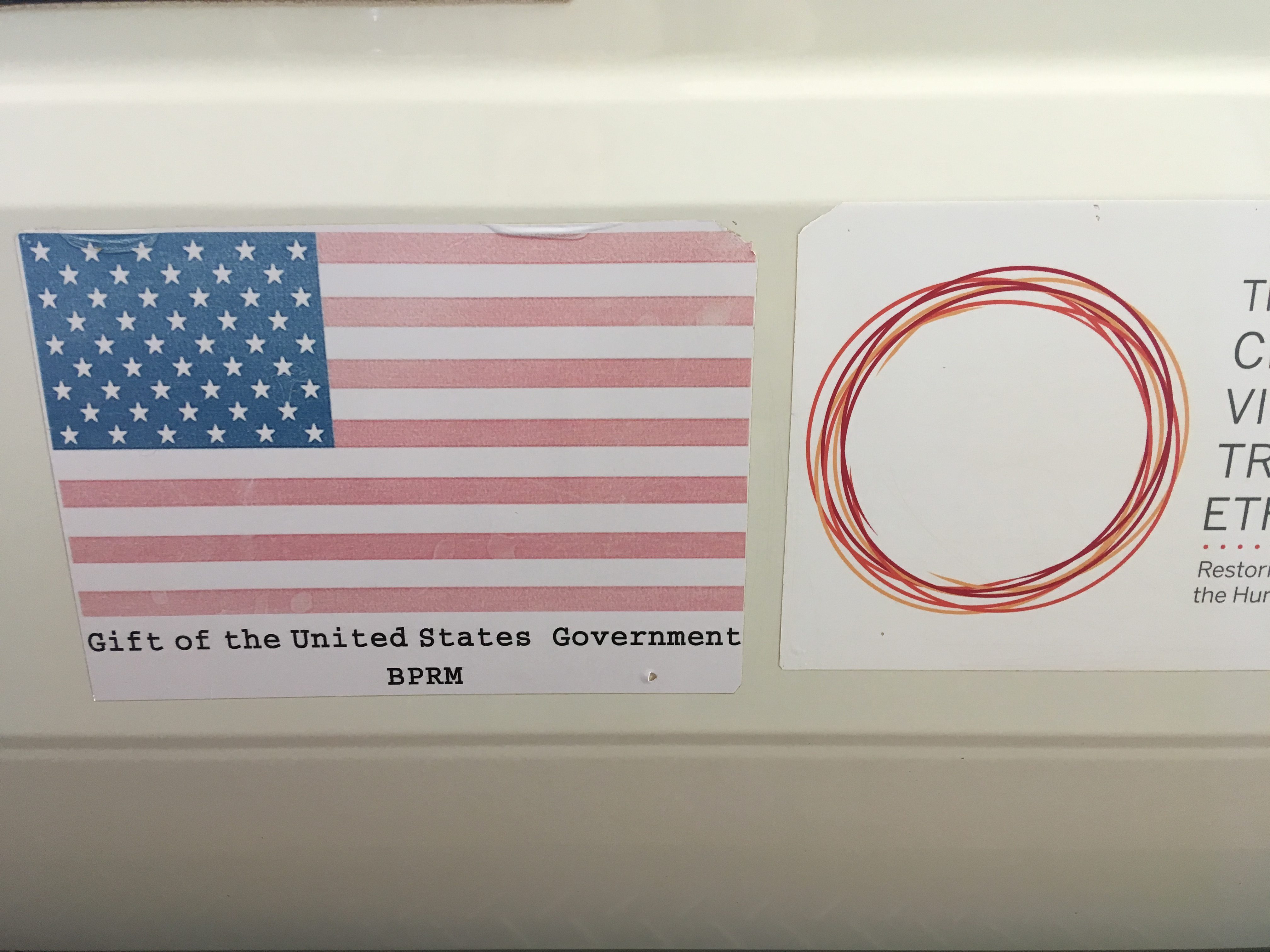
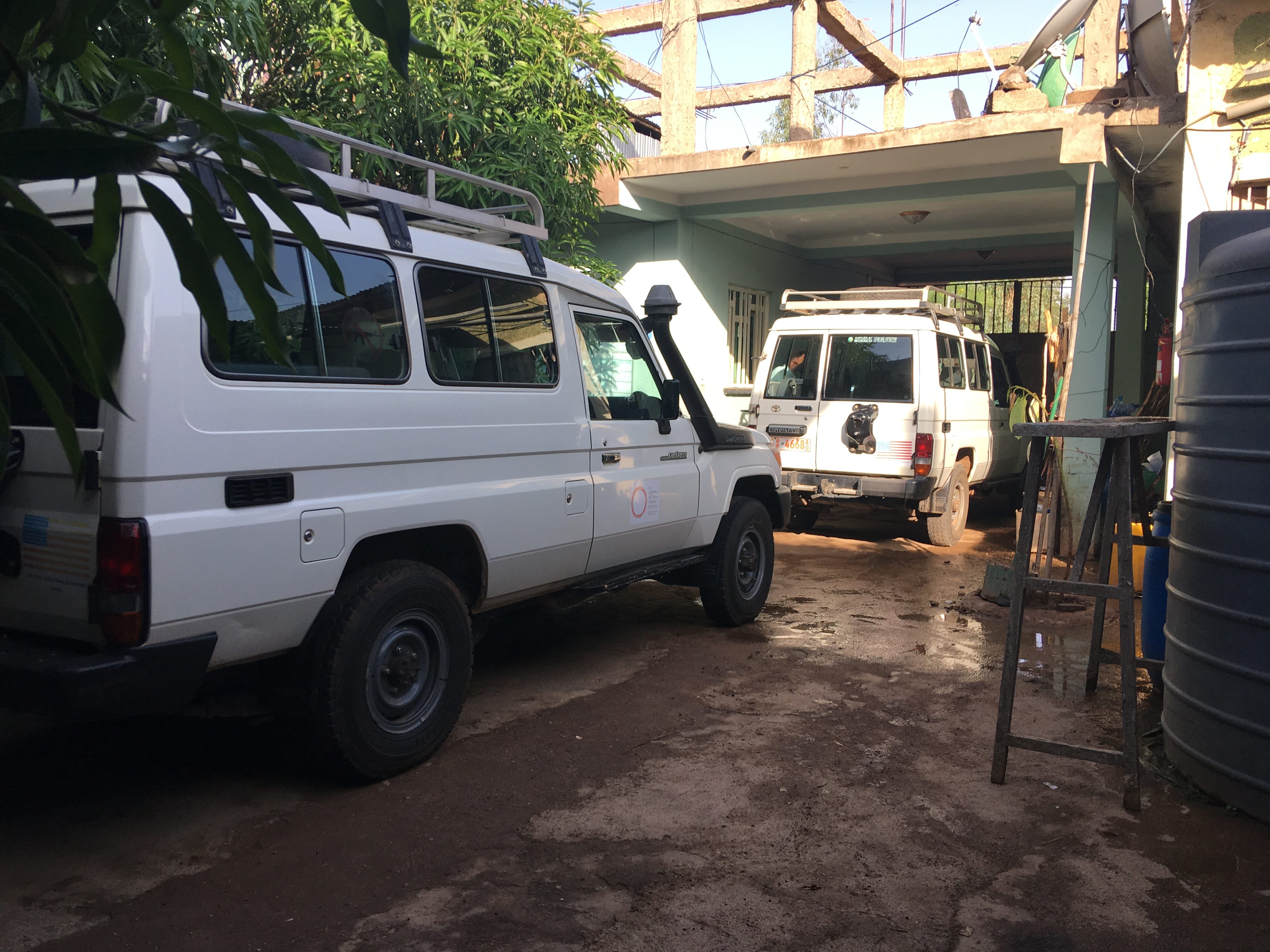
It took a lot to get here.  I took an overnight flight from Frankfurt to Addis Ababa, the capital.  An hour later I flew north to Axum, and from there it was a one-hour drive to Shire, where CVT has an office.  I flew to Lalibela for some weekend R&R and I’ll write about that later.  On Monday morning, back in Shire, everyone piled into one of the ubiquitous white NGO trucks plastered with our logo and donor recognition—in our case, the US flag with the note, “Gift of the United States Government PRM” (Bureau of Population, Refugees, and Migration).

Our destination was Mai Tsebri, home of my dearly departed rat (I hope).  In Mai Tsebri, CVT has a walled compound. The trucks back in through the gate into a courtyard with a dirt floor planted with mango trees and a water cistern as big as a Humvee.  Two floors of rooms ring it—a kitchen, canteen, training room, staff quarters, HR, logistics, and the oh-so important generator shed.

Each morning the staff pile into the trucks for the drive to the refugee camps, which is about a half hour.  It’s spectacular countryside, along twisting roads through the mountains.  I had heard that the ride makes people sick, so I was relieved it didn’t happen to me.

So after eight flights in 13 days and five long, dusty drives, I was in one of the camps where we work.

And it’s great.  I am so happy to meet the staff whose names I’ve entered into online forms.

There’s a lot to write about, but for now I’ll describe the camp and the mornings’ activity.

There’s a small Ethiopian settlement called Adi Harush.  The ground is red, rocky, uneven, and dusty.  The houses are built of square cement bricks and are maybe 15 by 12 feet.  Each has a tin roof, a door, and windows on two sides.  The houses are in pretty rough shape.

Then you cross some invisible line and you’re in a refugee camp.  The houses are the same but they’re brand new, neat and tidy.  The people are the same ethnic group, but they’re Eritrean, not Ethiopian, and they speak Tigrinya instead of Amharic.

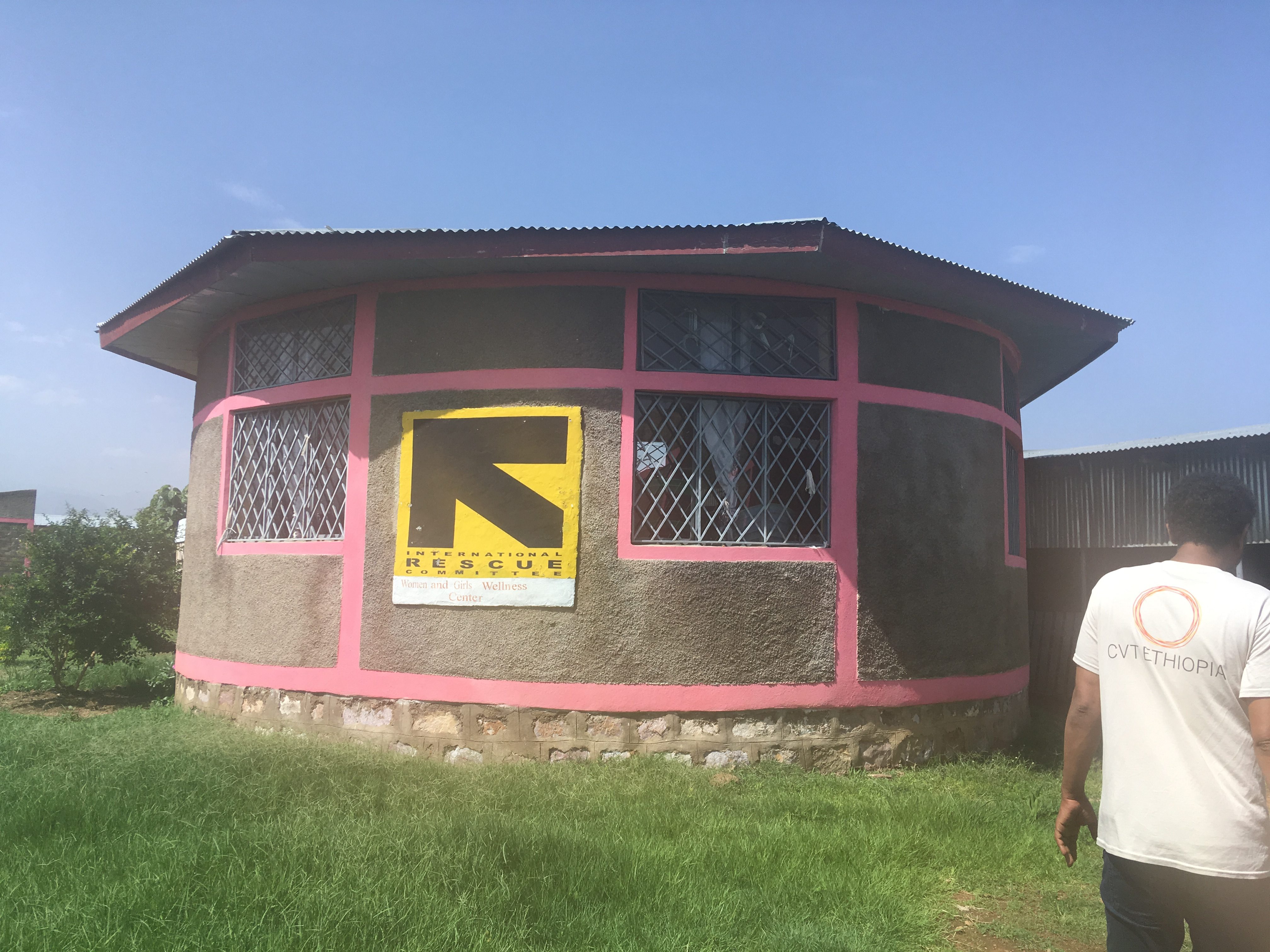
There are communal latrines (below) and water spigots, schools, an amphitheater where boys were playing basketball, a women’s center (below) where the ladies can get their hair done, watch TV, and discuss Gender Based Violence.

There’s no barbed wire fence or armed guard to keep anyone in, and that’s a problem, as you’ll learn.

Three CVT staff found a spot of shade against a house and a group of people began to assemble.  One staffer set down two stools about eight inches high, gestured for me to sit down, and sat next to me.  The other two employees began to present information on trauma and torture to about 30 men, women, and children while my stool mate interpreted for me.  We call this a sensitization—to help people understand that if they’re depressed, anxious or not sleeping, that’s normal given what they’ve been through, and CVT can help.

Almost everyone in the camp is separated from his or her family.  Some were forced into never-ending military service, kept in underground prisons, or trafficked.  There are lots of children on their own, and there are waves of suicide among them.

I had the interpreter seriously repeating everything into my ear, while two tiny boys stood directly in front of me making funny faces.  One had no pants on.  Did I laugh at them and risk looking insensitive to the crowd, or remain serious and miss the joy of flirting with small children?  I think I did all of the above.

Night of the Rat

Greetings from Mai Tsebri, Ethiopia, 25 miles from the Eritrean border—although it’s hard to know because this town isn’t on Google Maps.  I’ve been in Ethiopia for a week now, and I’m ready to get out of here.

Mainly because of the rat.

I am staying at the Center for Victims of Trauma office here (we are the Center for Victims of Torture everywhere else but for political reasons we had to tone down the name here).

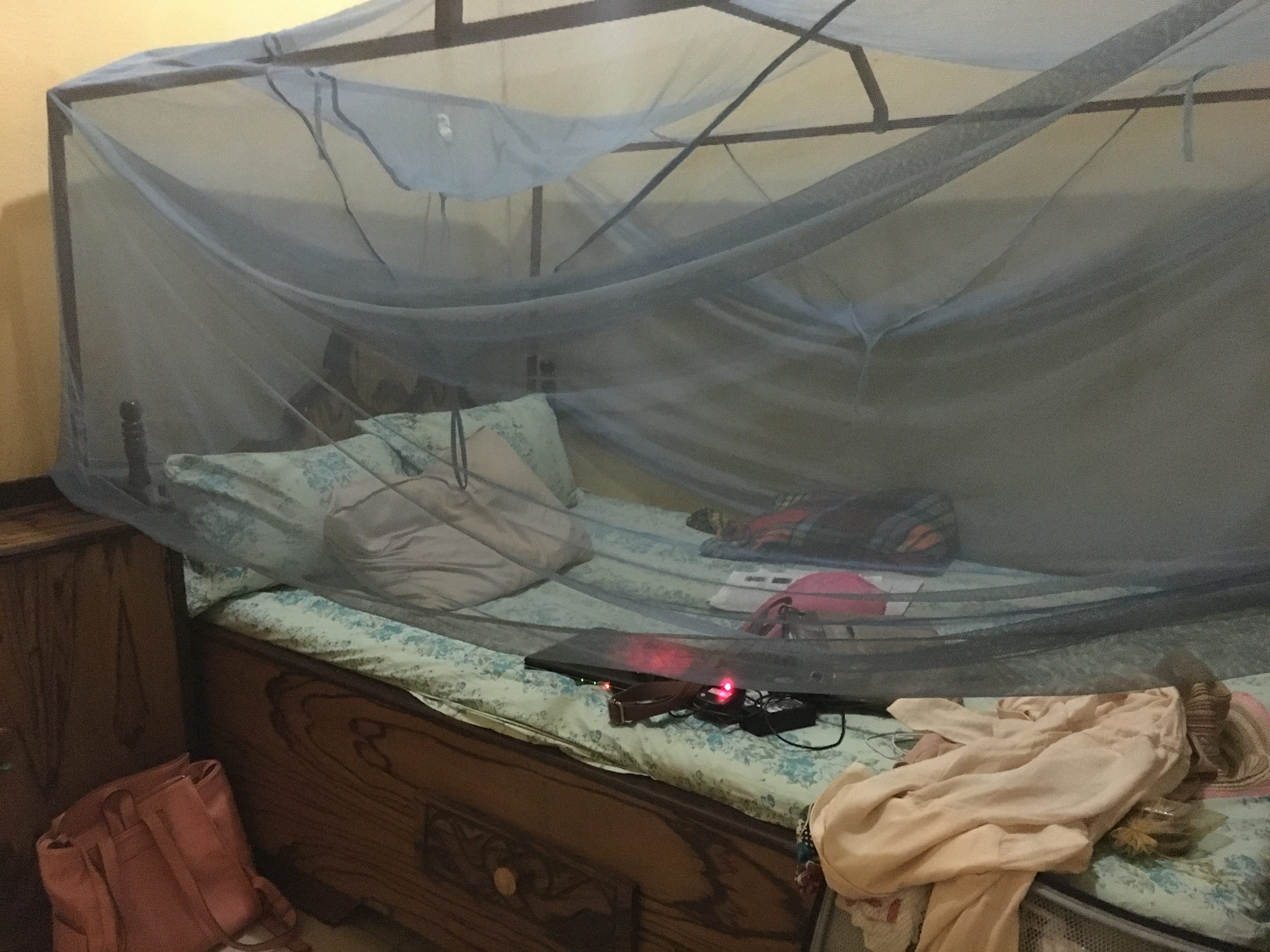
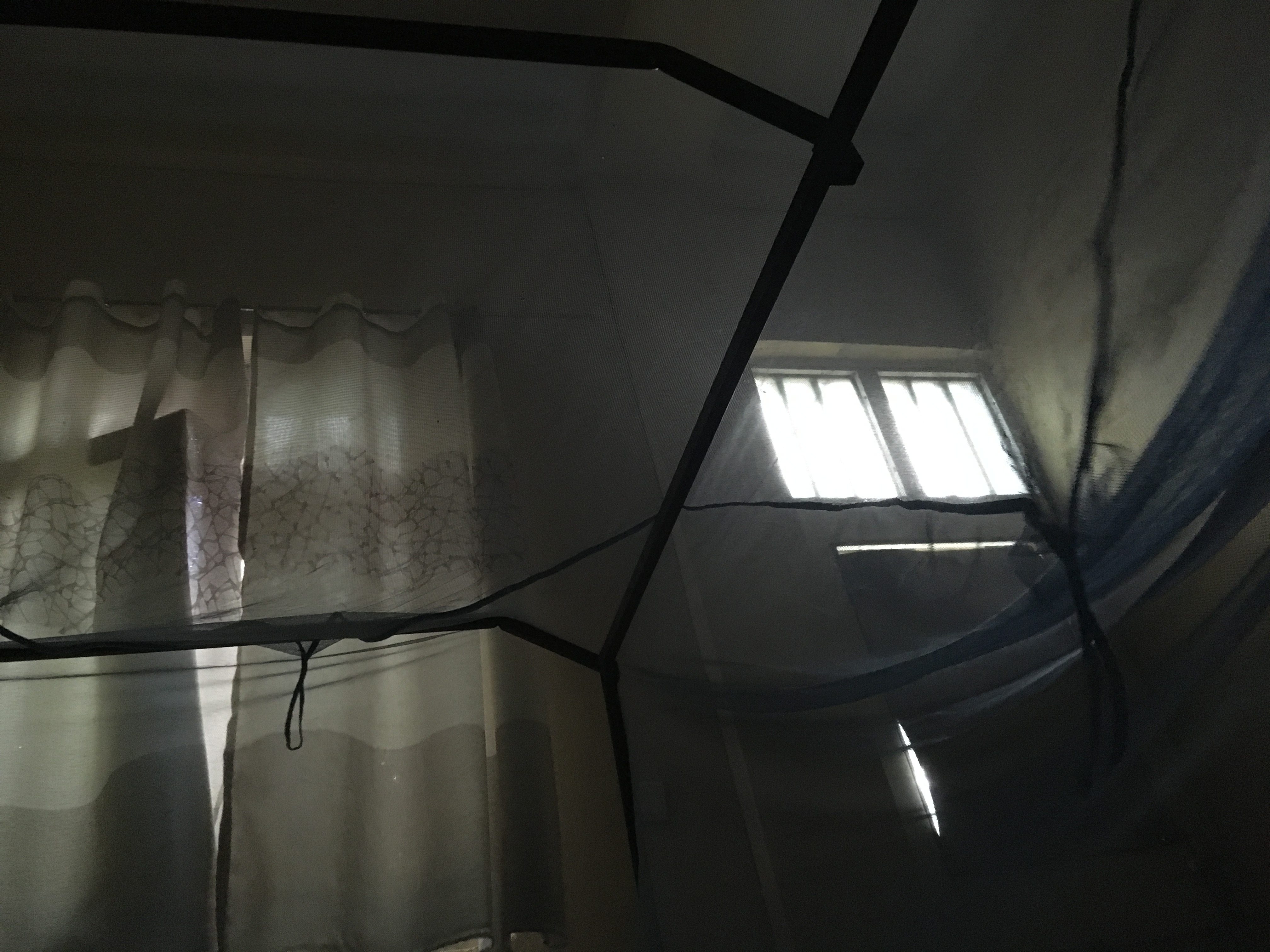
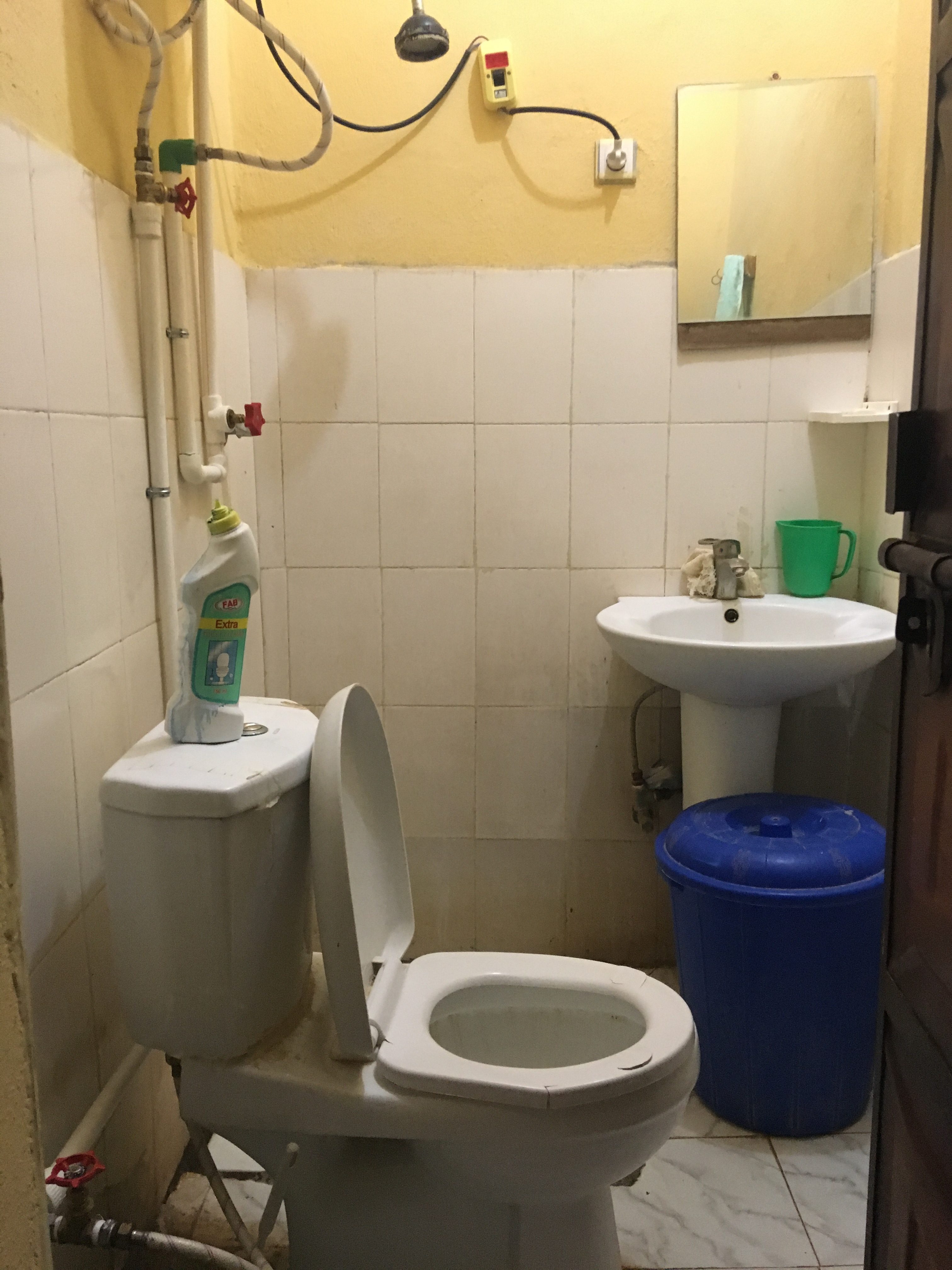
I am in the guest room.  Here are some pictures:

The first night, exhausted from traveling all day, hot and sticky, my head clogged up from the chemicals they use to disinfect everything, I finally fell asleep with the ceiling fan turned on high, wafting my mosquito netting up and down.

Some time later I was awakened by the loud sound of something scrabbling its way up the drain pipe in the bathroom and then slurp! I could hear it pop out and scurry around in the dark.

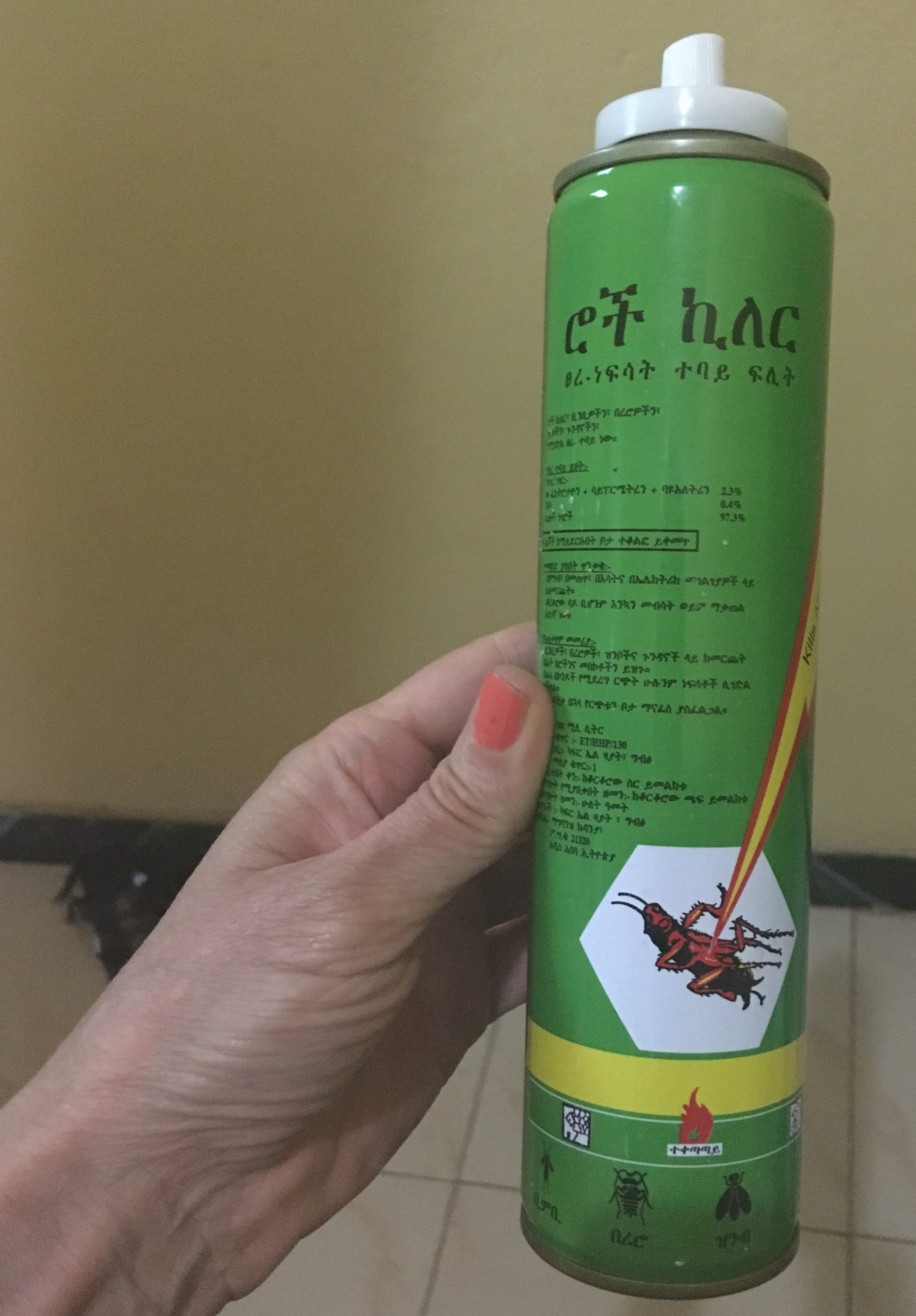
The power had gone out, so I couldn’t turn on the light.  It had to be a rat because the other things that come up drain pipes, like cockroaches and snakes, would be silent.  I have experience with this from Mexico, where you didn’t know the giant cockroaches were in your room until they ran up your arm in the dark.

I wasn’t going to wait for a rat to run up my arm.  I got the first shot in the rabies series before I left home and I would have to get the rest of them if I was bitten by a rat—but where would I find the rabies series here?  It took two flights and three hours of driving to get here.

I turned my cell phone up as bright as it would go, then flashed it into all the nooks and crannies and under the bed.  I didn’t see anything.  I got back into bed and could hear it scuttling around beneath me.  I got up and blasted the phone blindly, then climbed back into bed and fell asleep with the phone clutched in my hand.

Right now I am in a training room furnished with red and green upholstered hotel chairs.  Our master’s-degree-level Ethiopian counselors are training 17 Eritrean counselors who work for Norwegian Refugee Council in how to recognize the symptoms of torture and trauma and what to do about them.  One of the counselors has a small child on her lap and another has a baby strapped to her back.

I did a fundraising training with our employees yesterday. Part II was supposed to be today, but I’ve completely lost my voice.  I don’t have a cold, so it must be the diesel fumes and dust and chemicals.

“Ferenji, ferenji!” come the high calls of children as I walk by.  “White person, white person!”  I pass a woman with a small daughter; the mother pulls her daughter close and says in a hushed warning tone, “Ferenji,” like I’m a monster.  Our country director, who is Japanese, hears “China, China!”, which she doesn’t appreciate.  Sometimes they call me China too.  I guess we all look alike.

In the morning, I thought maybe I had imagined the rat.  Maybe I was just being dramatic.  When I told the country director she said phlegmatically, “Yes, there are rats here.  I hate them.”

Our Kenyan psychotherapist, who has the room next to mine informed me that he’s got traps set.

“Oh great,” I said with a laugh, “That probably drives them into my room!”

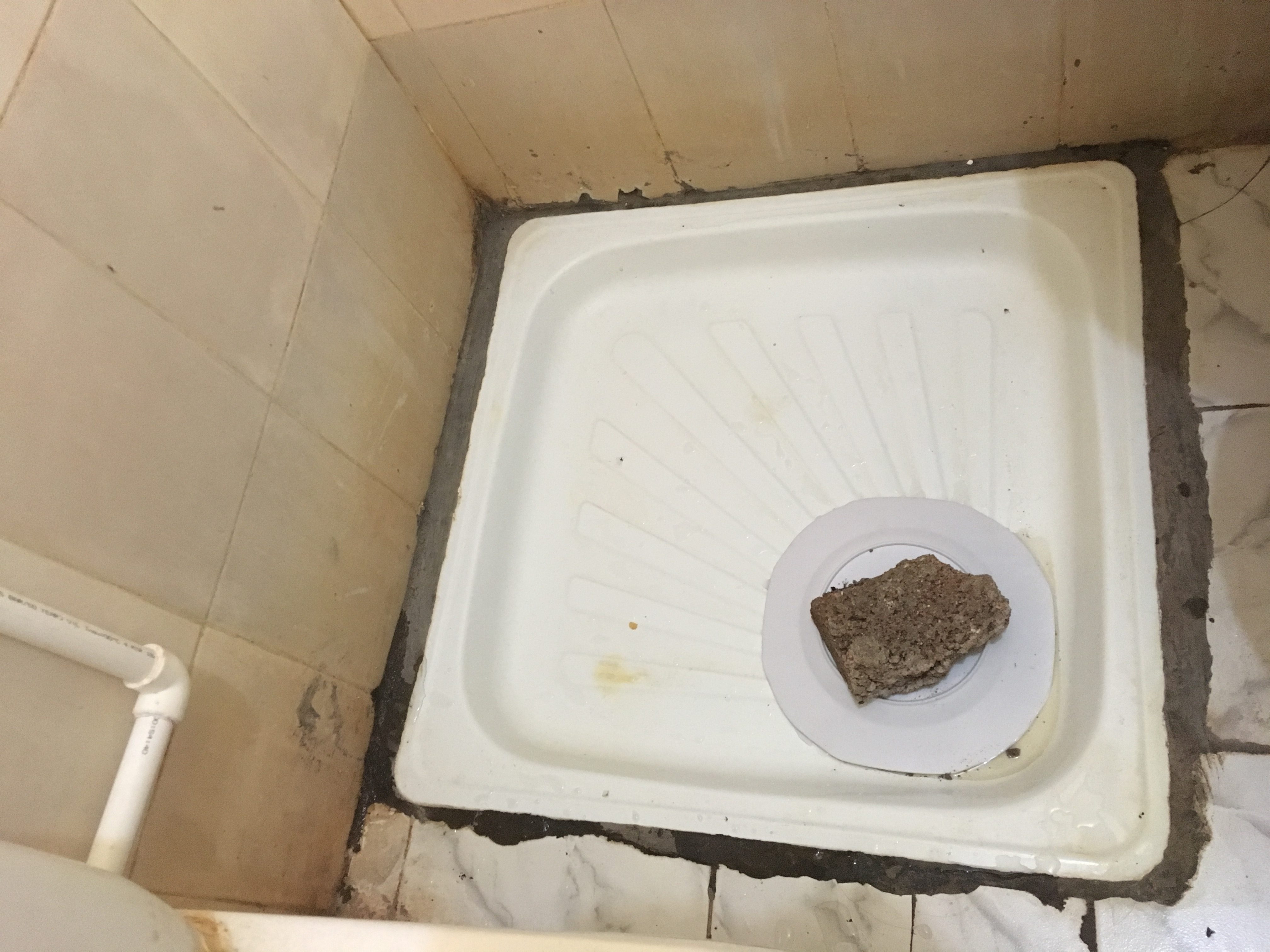
I put a plate over the drain and placed a heavy rock on top of it.

There was no rat that night, although I was wearing ear plugs to blur out the sound of drumming and singing and ululating that went on for hours somewhere nearby, so maybe I just didn’t hear the little bastard.

Third night: the rat was back.  It’s not like the room was well sealed.  Then I heard a terrifying squealing from next door.  I choose to believe it was my rat.  Game over, rat!

Auf Wiedersehen

Greetings from Salzurg, Austria.  I am sitting in the breakfast lounge at Pension Elizabeth, where Abba is playing on a loop, the Internet is super slow, and the hotel staff are having some kind of meeting with a salesperson at the next table.

I’ll leave for the airport in a few hours to fly to Ethiopia, where I’m told I’ll have no Internet.  I would love to say I’m going to write enough posts to take you along with me, but that’s a fairy dream.  Complications are following me, and I can’t say I’ve really had one day off since I left 11 days ago.

I’ve got 200 emails in my work inbox.  The June 1 payment from my renters back home hasn’t shown up in my checking account.  I am getting texts and phone calls from someone who needs to know something about the sale of my condo and I have no idea who they’re from or what they’re about.

The most “exciting” complication happened when I flew from Copenhagen to Amsterdam.  I received a reminder from Expedia the night before to check in.  Norwegian Air’s website didn’t recognize the routing number but I got a message that said, “Don’t Worry! We’re still working on our website.”  Really?  Did Norway just get the Internet?

The train to the airport the next day left late and stopped twice to let other trains go by in the other direction.  In general, I think this is good, but not when it keeps you standing still for 20 minutes at a time. Finally, we were told to get off and take another train.  I had, as they always advise you, allowed plenty of time to get to the airport early but got there about an hour before my flight was to leave.

And Norwegian Air had no record of the flight.

It’s a long story, but I ran from one terminal to another, then back again, then back in the other direction, and was quoted up to $800 for a new ticket.  I did all this with my big bag full of books, since I hadn’t been able to check it.

In the end, I was lucky to get the last seat on a Scandinavian Airlines flight for $406.  Expedia says their records show I took the Norwegian flight.  They are telling me to call Norwegian Air id I still think there is a problem.  Call?—as in make an international call that will cost me $1 a minute to sit on hold?  I protested, but Expedia hasn’t responded.  If anyone has advice to doing battle with Expedia, please let me know.

Four hundred bucks is a lot of money to lose, but also in the mad rushing around in the airport, I must have dropped my bag on my foot.  Once I arrived in the Netherlands and took my socks off at my friend’s house, I saw an alarming gold-ball sized green swelling on the top of my left foot.  I immediately thought of the American journalist Miles O’Brien, who had a freak accident where something fell on his arm.  The incident seemed mild, but it caused something called Acute Compartment Syndrome.  He had to have his arm amputated.  Boy, is he good looking—you really should check out that article.

My foot swelling went down that night, but my whole foot has been black and blue for a week.  I showed it to my friend and we went down a check list: it’s not numb.  I can bend my toes.  It’s tender to the touch but not painful to walk.  The swelling is gone.

Good to go to Ethiopia, right!?

Other than the potentially fatal foot injury, $406 loss, and the nonstop rain that follows me everywhere, I’ve had a great time so far.

Okay, I’m off to bring the rain to Ethiopia.

I’ll write more when I get to Cornwall, England in a week or so.

Welcome, Now Go Away

This is a series of posts about spending the summer abroad that starts here.

Greetings from Copenhagen!  Obviously I got here, and the journey was pretty smooth.

My flight to London from Minneapolis was sold out.  There were only two open seats, in the last row.  I was in the second-to-last row with a guy who introduced himself to me as Chuck.  “Chatty Chuck,” I immediately dubbed him in my head.  I flagged down a flight attendant and asked if Chuck or I could move to the empty row but she explained they were reserved for the flight crew.  I felt rude as I donned my earplugs and sleep mask while Chuck chatted away, but within minutes I was sound asleep.  When I woke after the plane leveled off, Chuck was in the back row.  “They said they wouldn’t need these after all,” he reported excitedly. I flopped down across two seats of heavenly sleeping comfort.

Now, two seats on an airplane are still not much room.  I’m 5’ 3” and still had to assume a fetal position.  But I was horizontal.  And I had my full-sized feather pillow, which gave me something soft to rest my head on instead of the arm rest.

It was the best sleep over I’ve ever had.  I woke the next morning at 11:30 London time, a half hour before arrival, and slugged down two cups of coffee.

My vertigo was gone.  My mother, a neurobiologist in her mind, had predicted, “that thing—you know, that airplane pressure thing,” might make it go and I had snickered but maybe she was on to something.  Now doctors could just prescribe a trans-Atlantic flight for vertigo.

One of my fears was that, because my trip is so long, border control at Heathrow might think I was entering the UK to stay.  I had an envelope with financial documents to prove I had assets in the US—a property, savings, a job to return to.  But the agent asked to see proof of my onward flight to Copenhagen.  When I checked in, the SAS (Scandinavian Airlines) website had promised to send my boarding pass via text “right away,” but it never materialized.

I was explaining this to the agent.  She looked annoyed and bored.  Imagine all the lame stories they must hear.  Typical of an immigration hall, there were signs saying, “The use of Mobile Phones is Expressly Forbidden in this Area.”  I asked permission to use mine so I could show an email with the flight confirmation.  She sighed and said yes, as though that was the most obvious thing in the world and why hadn’t I done it already?  The email wouldn’t load.  She rolled her eyes and said as though speaking to a very naughty five year old, “Madam, I will make a special allowance this time.  But in future, I strongly suggest you do not rely so heavily on technology.”

“But I don’t have a printer at home….”  She stamped my passport by way of saying, “Don’t Care!  Next!” and away I went.  In my passport was stamped this friendly message, “No work or recourse to public funds.”

I wonder what we stamp in visitors’ passports when they enter the US?  If anyone knows, please share.  Since I couldn’t go on the dole in England, I would just have to move on to Copenhagen.  But first I had to get my luggage, check back in, go through security, and hang out at Heathrow for five hours.

To my dismay, there was a five-inch-long gash in my suitcase.  I had been lucky enough to find an “It” bag, the lightest bag in the world, on sale at TJ Maxx. The Delta agent was very solicitous, giving me a claim number, telling me to register it online asap, and fruitlessly trying to tape up the gash with tape that immediately fell off.  As long as the gash doesn’t lengthen, I should be okay.  I’ve got some duct tape in my bag I packed to mend mosquito netting in Ethiopia.  I am keeping my expectations for the claim—for instance if Delta even responds to it within six months—very low.