Category Archives: Adventure

Circles

In one month I’ll be in Japan.  My plans are progressing.  I have been assured that my  investment of over $550 in a Japan Rail Pass will more than pay for itself.  I’ve booked accommodations in five locations and have two more to go.  I’ve downloaded apps like a free wifi finder, a Tokyo subway route finder, an offline map of Tokyo that turns out to be only in Japanese, and Google Translate.  I will test this last one out with my sister in law before using it on the street, just to make sure it doesn’t translate, “Where is the sub-way?” as “Where is the worst route?” or some such.

My aunt’s funeral took place last week.

The young priest at the small-town parish had alienated himself from the townspeople and congregants by firing the choir directors because they were openly gay.

Why couldn’t they stay closeted, like him and his “assistant,” Lance?

One day a month ago, my aunt had said to me and my cousin, “I hope you don’t think it’s weird, but I still want to be buried out of the Catholic Church.”  We assured her it wasn’t weird.  She’d been raised in the Catholic milieu of Small St. Paul in the 1930s and 40s.  She attended Catholic schools through high school and worked at a Catholic college.  There was, and still is, plenty of good work being carried out by nuns and Catholic lay people.

But she didn’t want the young priest saying her funeral mass, so my cousins imported a more liberal-minded visiting priest from St. Paul.  Other than calling her by the wrong name, he did a fine job.

You would think that a funeral would be the saddest part of a death, but this was a Catholic funeral, so it was all about Jesus and not my aunt.  Lance played the organ and belted out the hymns like he was in a broadway musical, so at least the music was good.

It’s the little reminders that catch you off guard.  Like seeing her knitting lying abandoned—the baby hat she’ll never finish. She knit baby hats for the local hospital.  I teared up when I came across her glasses, which she wore to read or work on crosswords, two of my own favorite pastimes.

While my aunt was dying—in pain or during moments of indignity she would have hated if she’d been conscious—someone asked, “What’s the point of all this!?” and I thought, “There is no point.  It’s biology, physiology, pathology at work.  It’s “nature, red in tooth and claw.”

And in my mind I start going around in circles like I always do, asking, “What’s the point of life?”

Some people seem to believe that the point is to be productive.  “I’m so busy!” is their refrain, as though that’s something to be proud of.  Others believe the point is to change the world for the better.  But I’ve seen so many well-intentioned do-gooders make things worse.  Is the point to live in the moment and be appreciate whatever is good and beautiful?  That seems a vapid, not productive….  Like I said, circles.

There are infinite details to figure out for the trip.  I need to get my duplex ready for the Chinese couple who are renting it while I’m away. And figure out how will I meet up with my sister in law’s parents to retrieve my nephew when the time comes.  And how do I buy tickets for a baseball game?  My nephew would love that. Must remember to register with the State Department.  Would it be worth going to Yokohama, where my dad was a sailor with the US Navy before I was born?  Should I get travel insurance?  What kind of gift should I bring for the in laws?  Japanese gift giving is fraught with peril.

And what is the deal with the baths?  Are they for health?  To get clean?  To socialize?  To relax?  There are so many types, and so many rules.  This CNN video clip about Japanese baths features Dr. Sanjay Gupta, who quips, “Having to say a prayer before you do something?  Makes me a little nervous.”

What Iffing

Why am I finding it so overwhelming to plan for Japan?  Is it the language barrier?  I’ve traveled in places like Jordan and Palestine where I spoke none of the language except for marhaba (hi), la (no), and yanni (a sentence filler like ya know).

Is it because I will stand out and look different?  No.  I remember standing in a square in El Salvador, all 5’ 3” of me. I was six inches taller and ten shades whiter than everyone else.  I had a great time.

Am I worried about the expense of a month in Japan?  It’s not a cheap destination.  I quit my job in December.  I’m working on contract for my former employer but after June there’s a cliff.  So yes, cost is on my mind but it’s not what’s making my gut churn.

Is it the sheer number of accommodations, train rides, entry tickets, and restaurants that must be found and booked?  Partly, but my Japanese sister in law and Lynn, my British friend who will join me for two weeks, are both working on this plan too.

The closest I can recall to feeling this panicky is planning three weeks in Italy, Malta, and Spain. The what ifs took over.  What if I can’t figure out how to get from the train station to the hotel in the dark and have to sleeping in a park?  What if I can’t figure out how to use the subway and end up on the wrong end of town, and the subway closes and I have to sleep on the floor of the station?  What if I miss the last bus back to Sorrento and have to sleep on a bus bench?

My worst-case scenario always involves sleeping outside, exposed to muggers, rapists, and crooked cops who try to shake me down for bribes. It is always dark, cold, and raining.  There is always an unshaven man in a ratty coat who tries to steal my suitcase.

I think it goes back to my young adulthood of living on the verge of eviction, bounced check fees, and going to food shelves.  But in all my travels, nothing like this has ever happened.  If it did, I would deal with it.  I’m no longer a passive, vulnerable young single mom. So thanks, blog, for helping me analyze my irrational fears!

I am going no matter what, and if I have to sleep in a train station Japan is the place to do it because it is so clean and safe.

Maps, guidebooks, and websites are not particularly helpful in planning a Japan itinerary, unless you enjoy falling down a rabbit hole.

While my map of Australia was overwhelming due to the vast distances, the Japan map is so densely packed it requires a magnifying glass.

I had found Frommer’s Easy Guide to Australia helpful; it boiled everything down to 300 pages.  I bought their Easy Guide to Tokyo, Kyoto, and Western Honshu.  Notice it’s not the whole country, just two cities and their regions.

This got my attention:

“One difficulty in finding your way around Tokyo is that hardly any streets are named.  Think about what that means: 9 million people living in a metropolis of nameless streets.  To make matters worse, most streets in Tokyo zig-zag—an arrangement apparently left over from olden days, to confuse potential attacking enemies.  Now they confuse Tokyoites and visitors alike.”

And this:

“Tokyo has a unique address system.  A typical address might read 7-10-1 Ginza, Chuo-Ku.  Chuo-ku is the name of the ward.  Wards are further divided into districts, in this case Ginza. Districts are broken down in to chome (numbered subsections), the first number in the series.  The second number refers to a smaller area within the chome—usually an entire block.  Thus, houses on one side of a block will have a different middle number than those on the other side.  The last number refers to the building.”

Lynn wrote, “We’ll have to accept we’ll get lost more than usual.”

I will remind her she said that when we’ve passed the same intersection for the fifth time.

Upside Down

Last night I dreamed that the whole world was—literally—turned upside down.  I was stumbling along the ceiling, with books and coffee mugs falling past me, when someone pulled me into a building where everything had been glued or attached to the ceilings by Velcro. This meant we could hang out on the ceilings, which were the new floors, and everything would feel normal.

But the person who’d brought me along cautioned, “Don’t look out the window.  It’ll remind you that everything is really upside down.”

Like a toddler, I think I am going through a phase.  I left full-time employment three and a half months ago.  Up until now, I’ve been busy with contract proposal writing, working part-time at the Y, and boosting my exercise levels—as long as I’m at the Y twice a week.  I was constantly shoveling and moving my car and scraping my windshield and batting icicles off the roof.  I did about 30 hours of CPR and other training as part of my Y orientation.

Everything was new and different and I didn’t have time to think about whether this was permanent or what.

I stand in the child care center at the Y, watching a group of four-year-old boys play with toy dinosaurs. Their names are Milton, Kash, Zacques and Denzel—Denzel Zhou.  A mom enters and checks in a new boy.  I look at his name on the monitor: βӕrәӦn.

“Umm…” I stammer.  “Baron?”

The mother gives me a withering look as though I am a moron.

“No,” she says very slowly and mock-patiently, “It’s ber-on, the ancient Slovenian god of moss-covered river rocks.”
“Ah, I see!” I reply, trying not to sound too much like Basil Fawlty, and immediately forget how to pronounce it.  I will have to avoid using his name for two hours.

I do love the kids.  I like pivoting from proposals about torture to observing children at play.

My days are also punctuated with emergency room trips for my mother, her husband, and my aunt.

One day I spent three hours at the Y playing with an adorable Hmong baby named Howard, then rushed to the ER because my mom’s husband had fallen and they discovered he had a giant boil on his abdomen he’d been keeping quiet about, hoping it would just go away.

It didn’t.  They had to lance and drain it, and the smell almost caused me to pass out.

So I get to see humanity on both ends of the age and health spectrums every day.

Now the contract work has slowed.  The Y is routine.  The battle with snow and cold is over, for now.

As I sit and watch Howard drool and gnaw on a block, or wait endlessly in windowless ER rooms, I have hours to ask myself, “Is this it from here on out?  Taking care of babies and old people?  Am I taking a break from full-time work, or am I an early retiree?  My sister is moving to Oregon next month.  Why aren’t I planning a move to Belize to escape next winter?  Will I ever have any more adventures?  Shouldn’t I use this time to learn Chinese or write a novel or apply for one writing workshop per day?  Shouldn’t I be setting some goals, instead of reading and doing crossword puzzles and walking in the woods in my spare time?  Damn, I’m so lazy!”

Don’t get me wrong.  I don’t feel sorry for myself.  I know I’m super lucky to be able to take this time out.  Or whatever it turns out to be.

And so I have procrastinated on blogging because I just haven’t known what to write about.  Normally I’d be posting up a storm about my trip to Japan in June, but I have also been procrastinating on that.

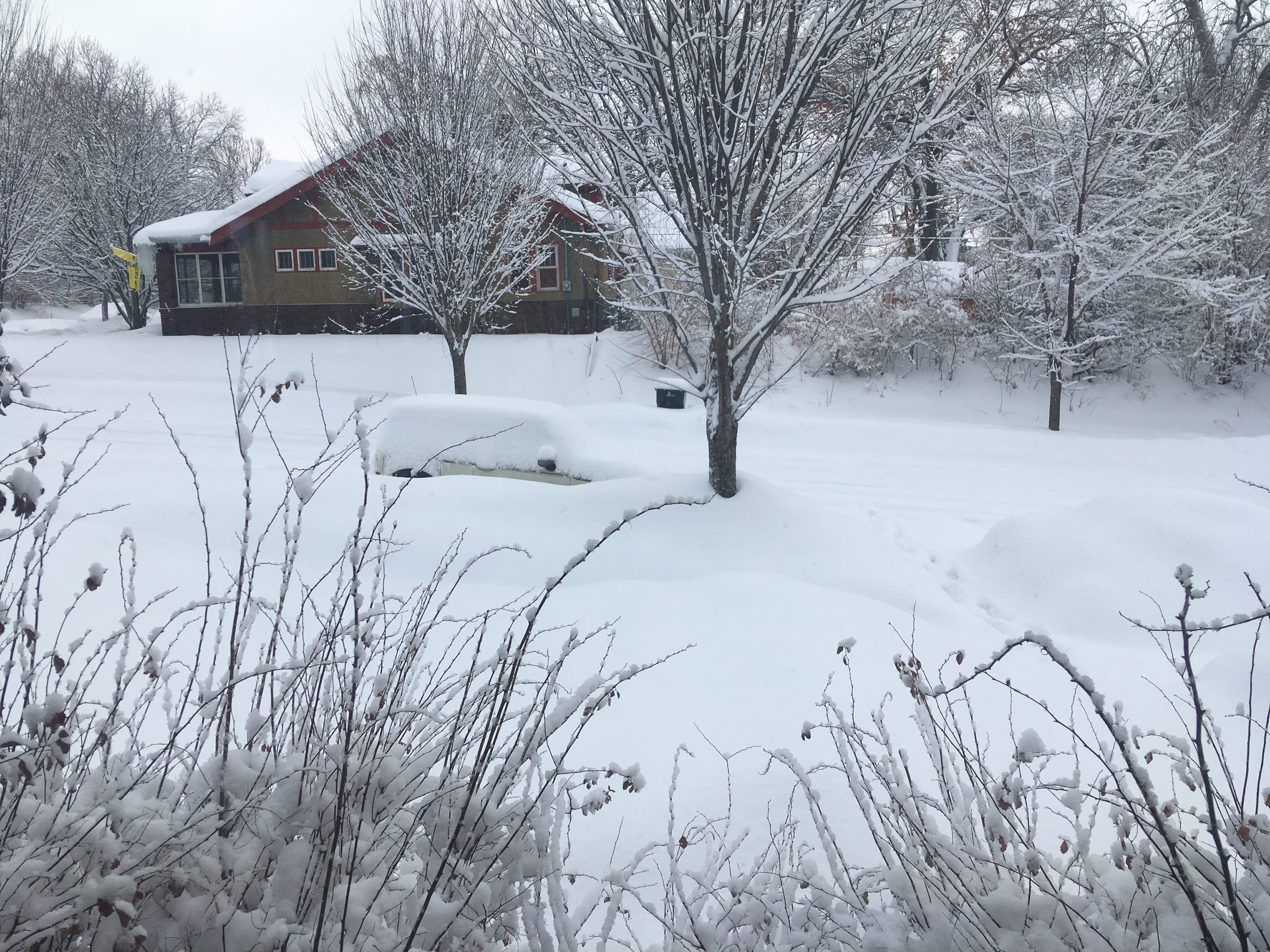
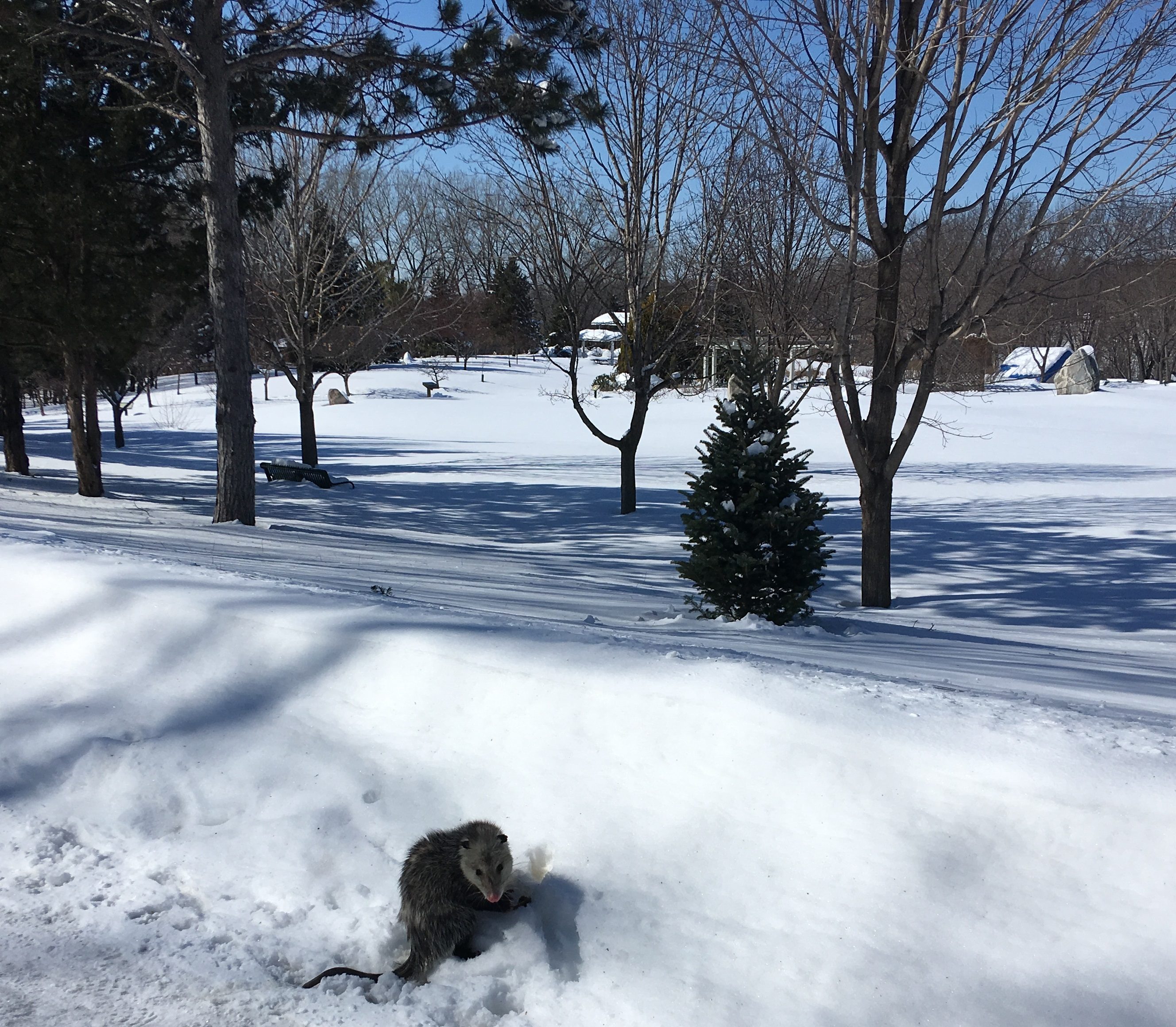
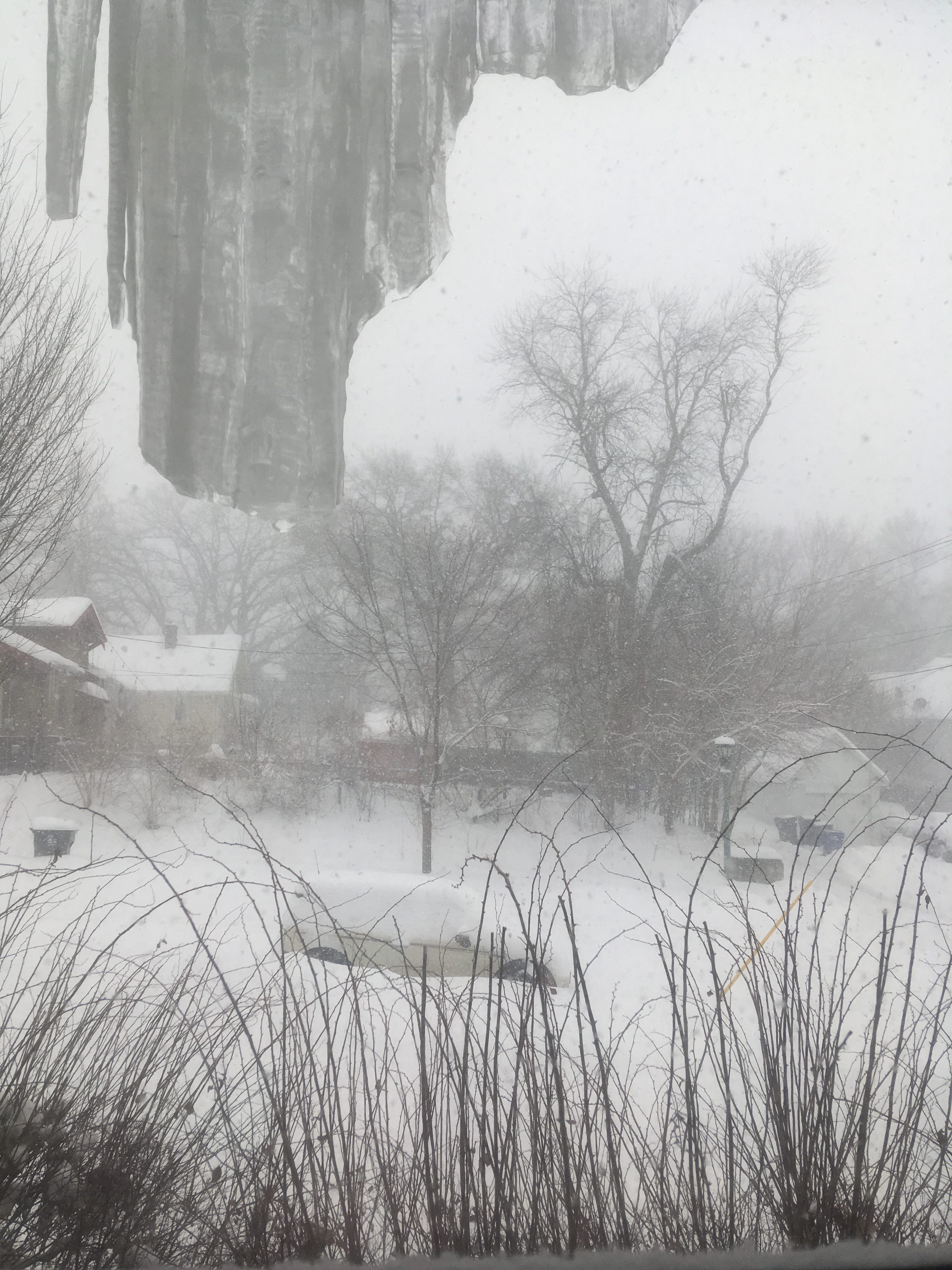
Here are two last photos from winter.

Can you spot my car?

And here’s a big ol’ nasty possum I encountered on my walk in a city park.  It appeared to be eating a wiener, or maybe a baby rabbit.

Ugh.  Thanks for reading; it feels good to get some thoughts out of my head.

Next post, the Japan plan.

Tail End of Australia

In real time, in positive news, my son was featured in a nice article in his local paper.

How can I complain about the weather, or anything, when he is doing so well?

Back at Auntie Margaret’s flat, it was time for packing and laundry for the both of us.  But first, Heidi locked herself out.  The laundry room is outside, she didn’t take the key to the building with her, and the door clicked behind her.

The house phone kept ringing and I ignored it. I was busy!  I had to somehow cram all these kangaroo hats and koala candles and goanna t-shirts into my suitcase—what could I jettison?

“Gee, Heidi’s been gone for a while,” I finally noticed.  “She must be waiting in the laundry room while the wash runs its cycle.”
The phone rang again.  “Wait—maybe she’s not …” and I picked up to hear her voice, a bit strained, “Annie, I’ve been out here for 20 minutes, calling over and over!”
I ran down the hall to let her in.  “What a dolt I am!” I apologized.  This was the only time I detected the slightest hint of irritation in Heidi’s demeanor, although she was soon over it, busy packing and repacking for her week to come.  Clothes for work, for driving to the farm, for bunking at her cousin’s, for one night at Auntie Margaret’s.

In the morning, we pushed my now-much-heavier, bulging suitcase up the hill to McMann’s Point station.  At Central Station, we waited on the platform until my train to the airport arrived, then hugged fiercely and waved good-bye as the train rolled away.  Heidi would catch a different train to work.

When I boarded the plane I discovered that miracle all travelers live for—an empty seat next to mine!  I was in the very last row across from the toilet, but I could live with the whooshing noise.  I am short enough that, curling up in the fetal position, I am able to lie down in a two-seat row.

What I hadn’t counted on was the loud talkers who soon congregated in the open space behind my seat.  Even with ear plugs, I could hear them yammering away.  I turned around and asked them to lower their voices.  They did, for a minute.  Some people just can’t help themselves. It was already a long flight, but this was going to make it seem like eternity.  I got up and stood behind the seat myself.  “I thought I’d join you,” I said, smiling like an imbecile.

They quickly dispersed back to their seats.

Home.  Like I’ve written before, I love leaving it and love coming back to it.

It’s satisfying to dump all the clothes I’ve worn over and over for a month into the laundry bag and to take out something fresh.

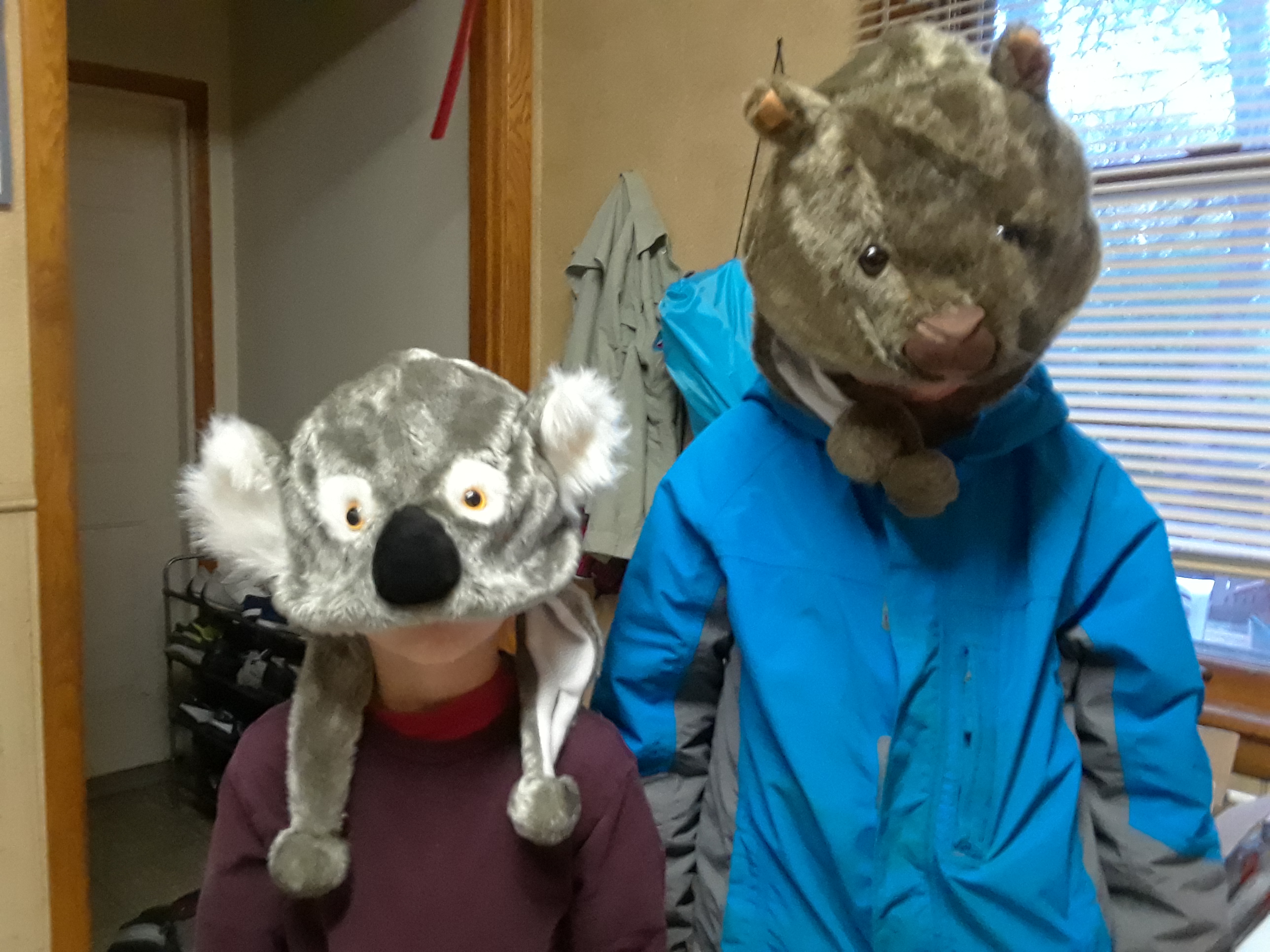
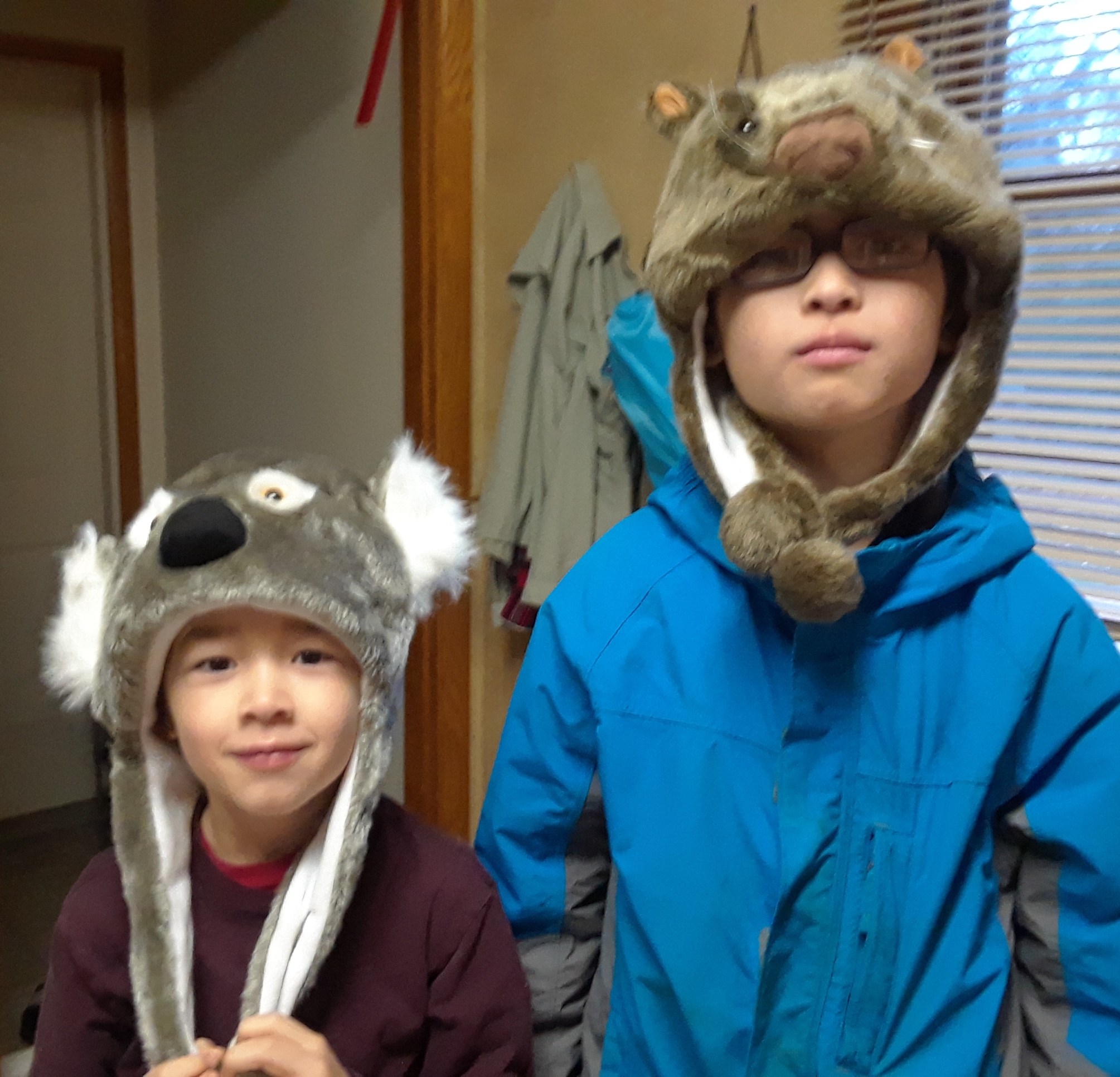
I look forward to unpacking all the cheap crap I bought and bestowing it on people who have no idea why I thought they needed a wallaby-themed calendar.  Taken out of context, much of what I buy on trips seems lame.  But my nephews appreciated their koala and wombat hats.

And lucky me, I will be going to Japan with these guys in June.

From Woolloomooloo to the Mississippi

My last day in Australia.  This was the weather Woolloomooloo, the area in which the Botanic Gardens are located.  And next to that, the weather in St. Paul today.

I’m sorry to be one of those people who whines about weather.  But every other day I get one of these notices.

There have been six snow emergencies so far this year, and March is the snowiest month in Minnesota, so it ain’t over.

What these notices mean—for those of you who don’t live around here—is that I have to move my car by 9pm, then move it again by 8am the next morning so the plows can clear the roads.

Try moving your car when it’s a foot deep in heavy, wet snow (as opposed to light, fluffy snow) and the wheels are encased in ice.  Yesterday, hacking away at wheel-well ice on my knees, my heavy-duty scraper broke in half.  I sent it flying into a snow bank with a primal scream. I then employed an ice chopper, tears, a shovel, swearing, a hammer, grunts and howls of anguish, and cat litter.  It took 45 minutes and I think I blew out a knee, but I got my car moved.  Thank god I’ve got a manual transmission so I can rock it back and forth.

And I will likely have to do it again in a few days.

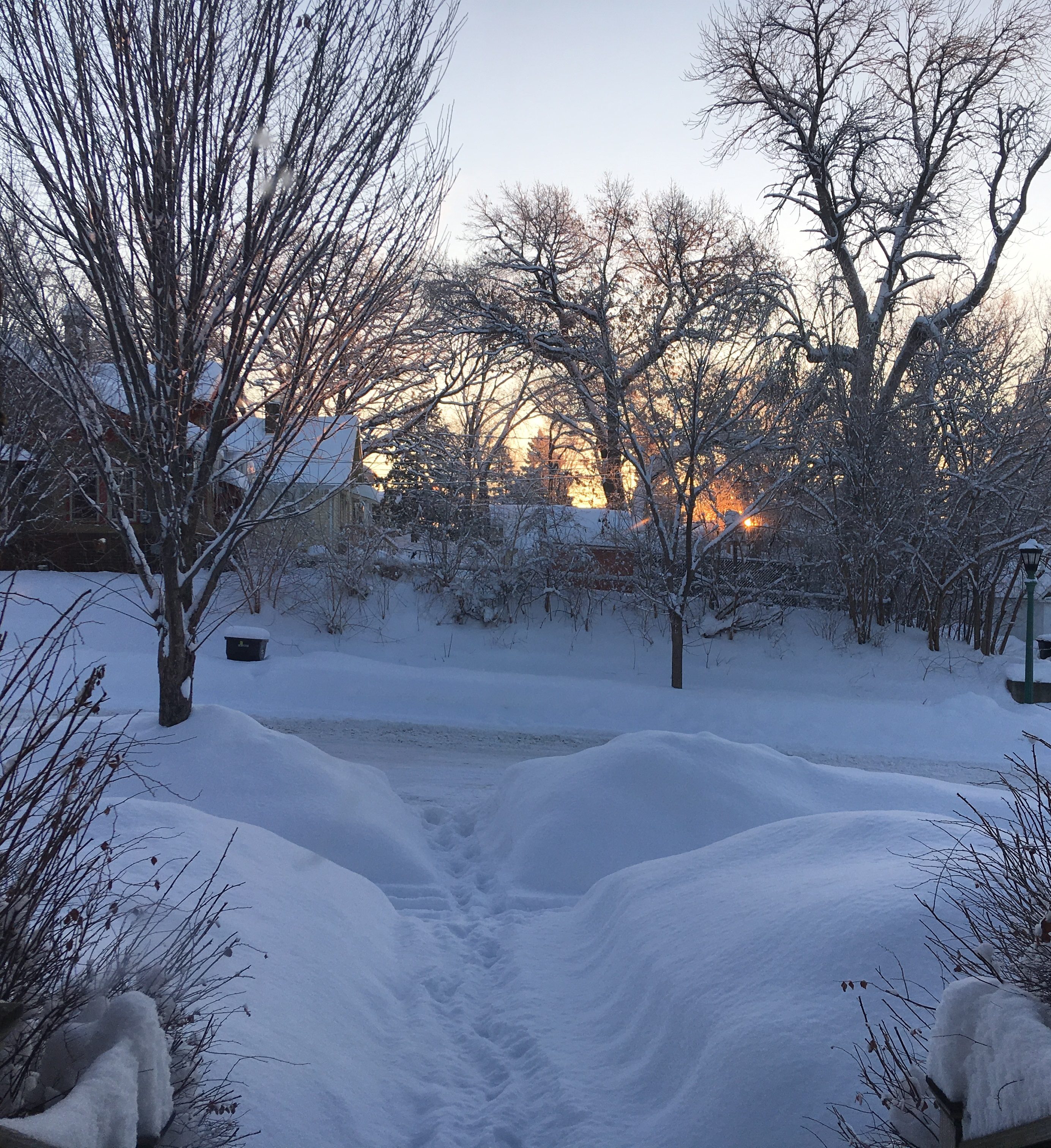
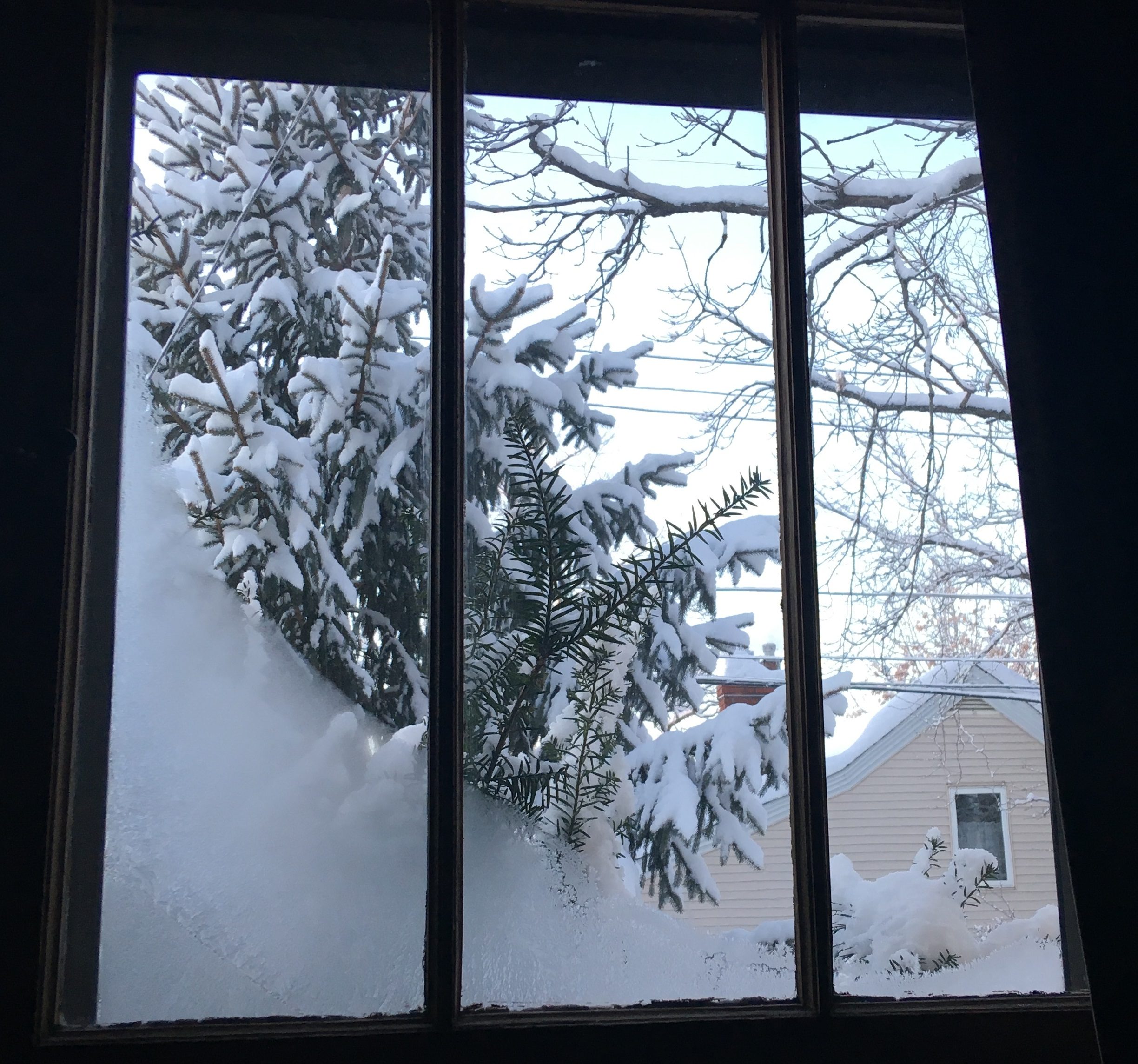
People say the snow is pretty.  I know I should try to appreciate it more. These are some photos from inside my snug, warm house during and after a selection of blizzards.

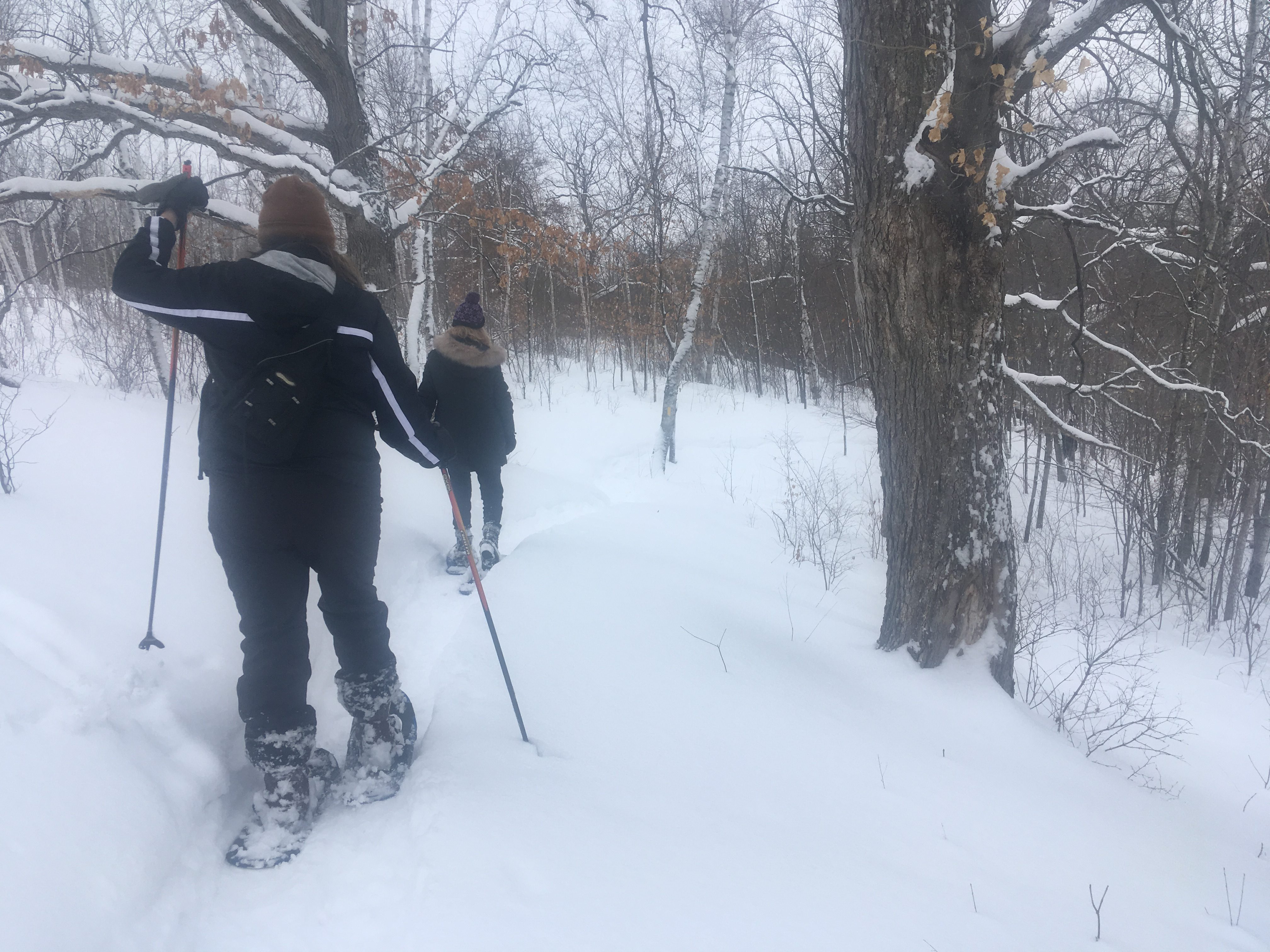
And here are some snaps from the snowshoeing I did with my cousin and friends last weekend.

The dogs had at least as much fun as the people.  I love how she is covered in snow balls.

I’m aware that I am procrastinating on wrapping up my writing about Australia.  As long as I am still writing about it, it feels like part of me is still there.

Another day in the Botanic Gardens.  Heidi was on a mission to see some of the Invictus Games, and I was happy to go along.  Prince Harry was rumored to be making a speech just outside the gardens. Rumored.  We stopped and asked five people, and no one knew, not even the volunteers or employees.

“Sorry, love, we ran out of programs ages ago and none of us even know the schedule,” was one volunteer’s response.

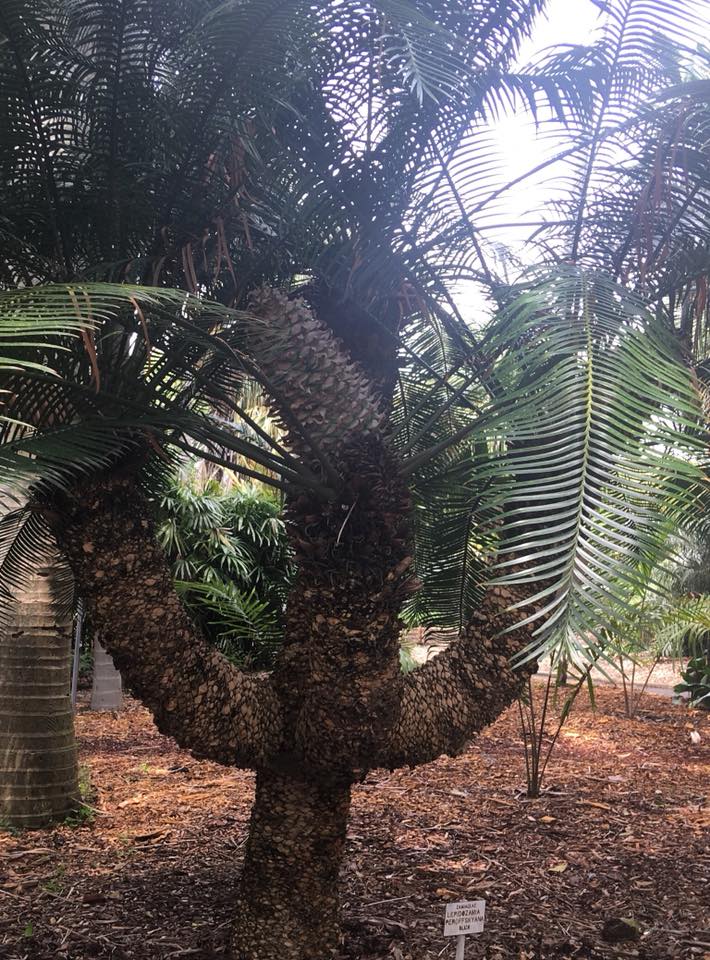
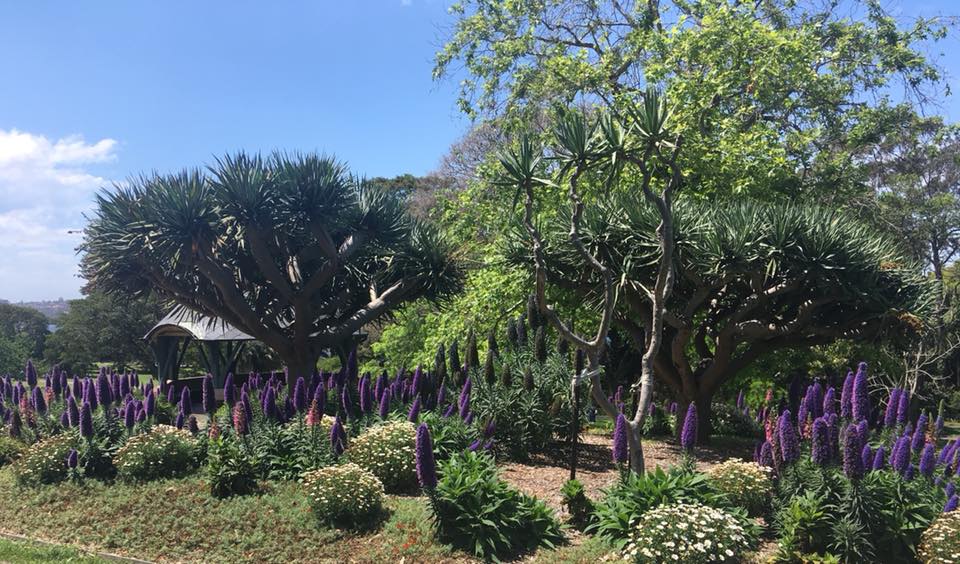
In case you’re wondering if there were any interesting plants in the Royal Botanic Gardens, there were.  I kept lollygagging to take photos.

I wanted to stop at the gift shop again.

“Aw, Annie, I’m afraid we’ll miss Harry’s speech,” Heidi said.

But I insisted. It would only take a minute.  There was a card I had seen that I hadn’t bought and now as long as we were passing by … but we both became mesmerized by the beautiful botanical-themed items and spent 20 minutes there.

We then raced across a broad lawn to find we had just missed Harry’s speech opening the bicycle races.

Heidi’s shoulders sagged and she let out a sigh.  This is a woman who lived in London for 18 years, who had gone to every celebration of the Queen’s birthday, the Golden Jubilee, any and all flag-waving, Hail Britannia, crowds-in-the-street type celebration that came with an extra day off work.

“I’m sorry!  I made you miss Harry’s speech!”

“No drama!” Heidi shrugged as we moved with the crowds to view the races.

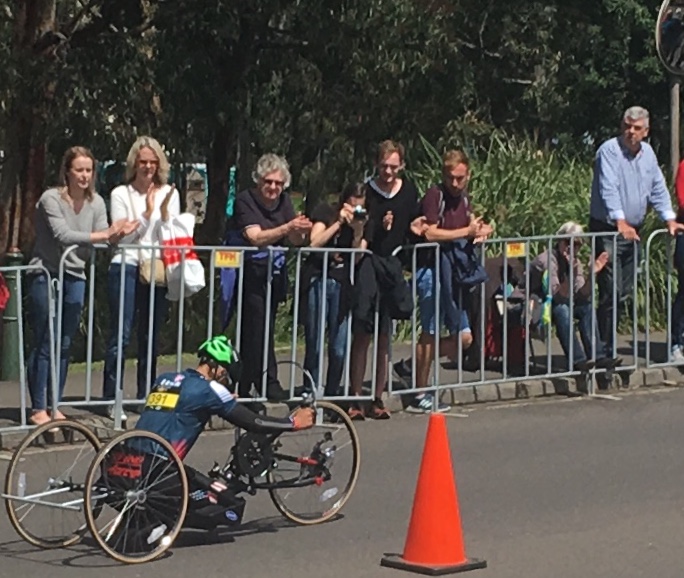
There were competitors from 18 nations, all of them physically or emotionally handicapped.  I was impressed that as much weight was given to veterans’ mental trauma as physical.  It made sense, since Harry and his brother William support mental health charities at home because of the trauma they endured when their mother, Princess Diana, died.

That said, the cyclists with only one leg were the most impressive.

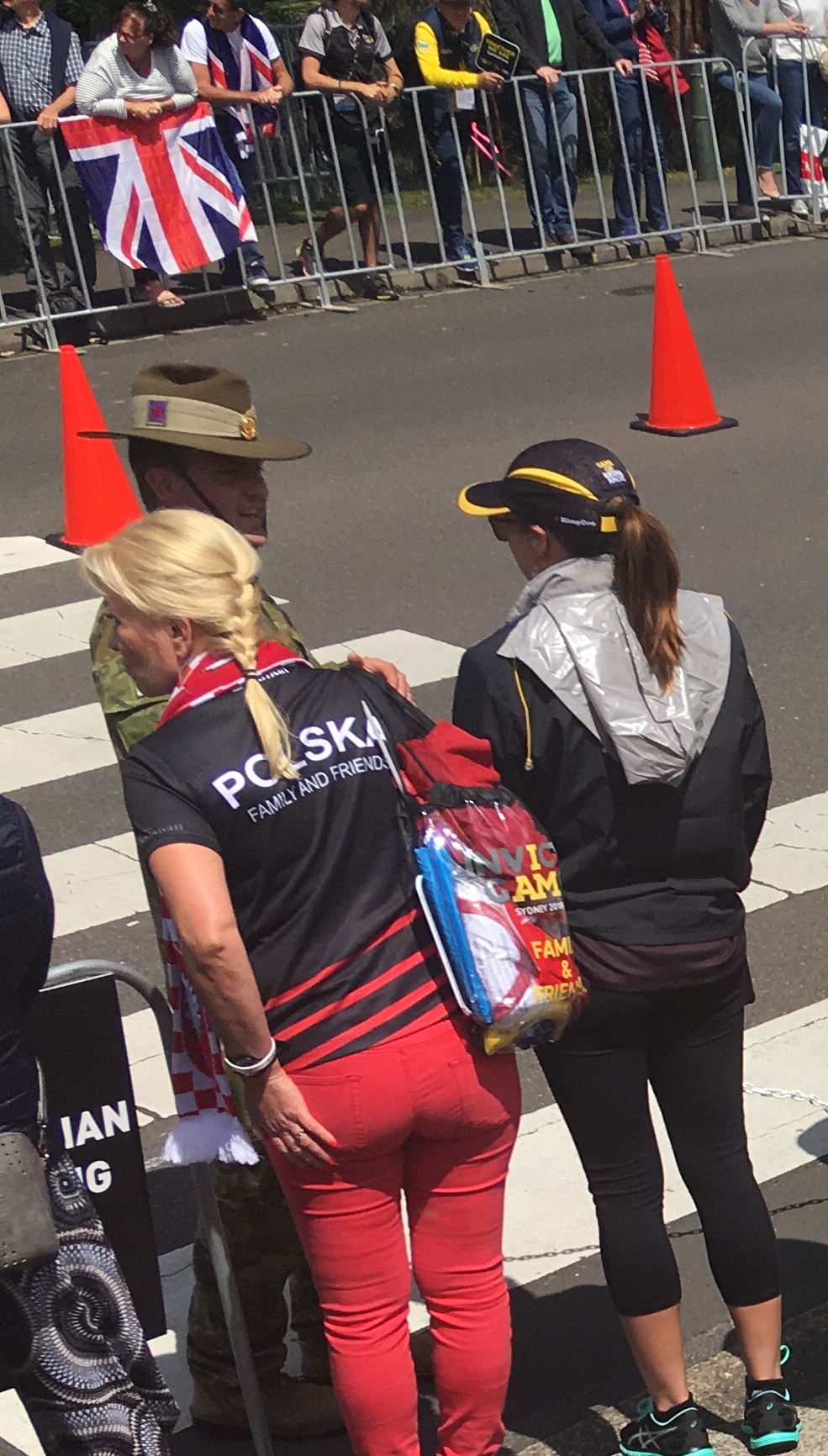
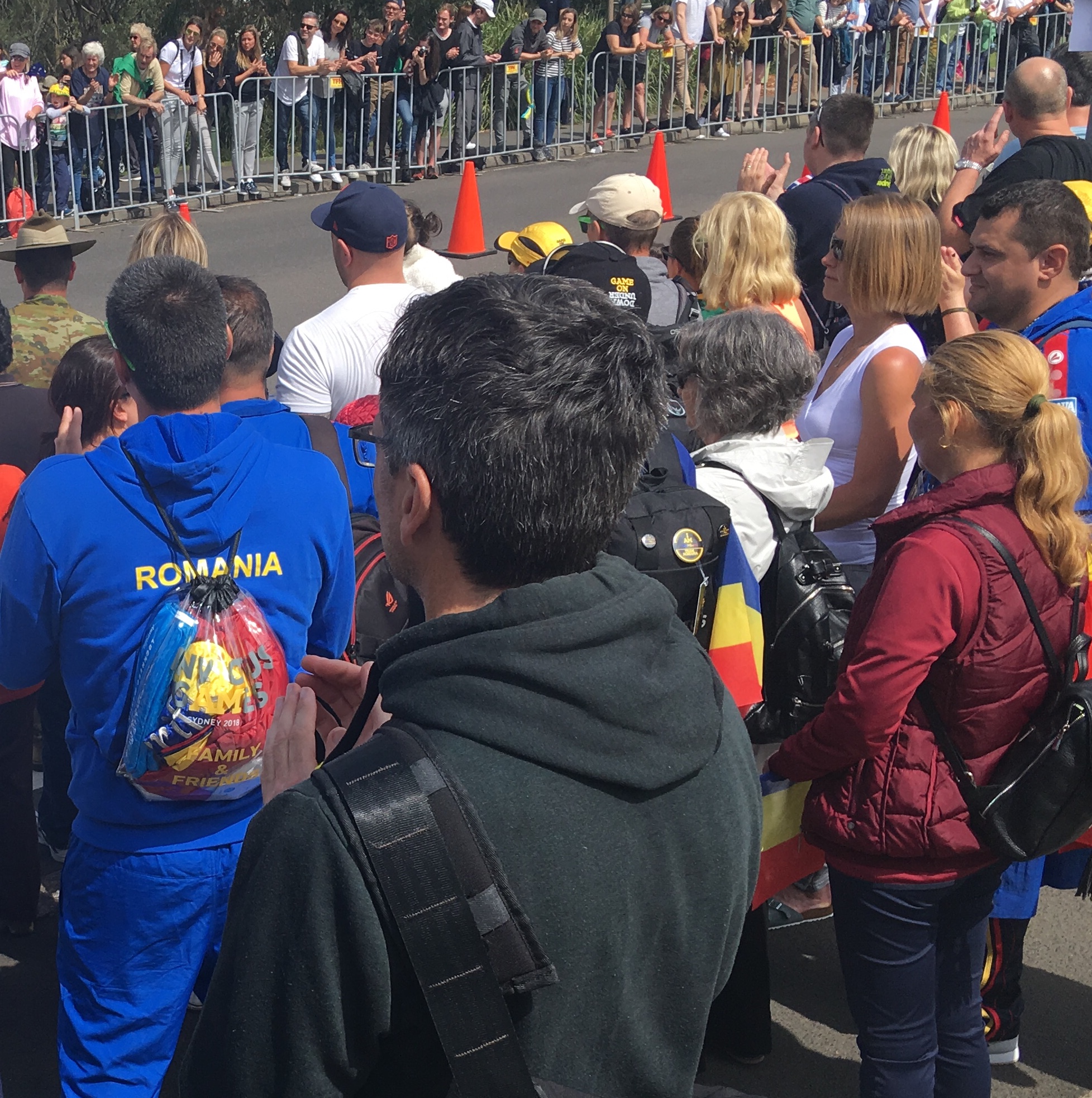
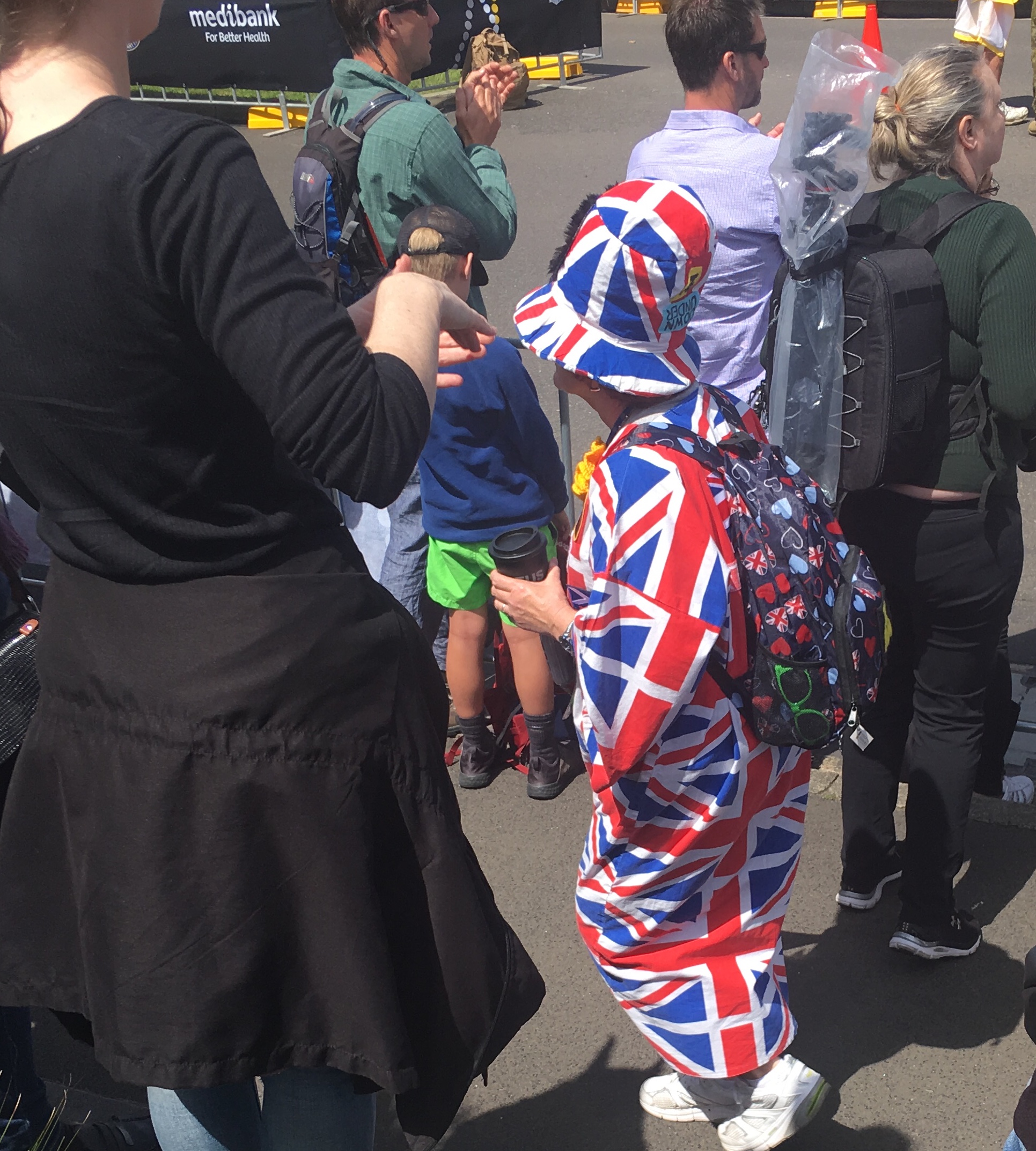
Visitors were wearing their national colors.

Some were more gung-ho about representing their countries than others.

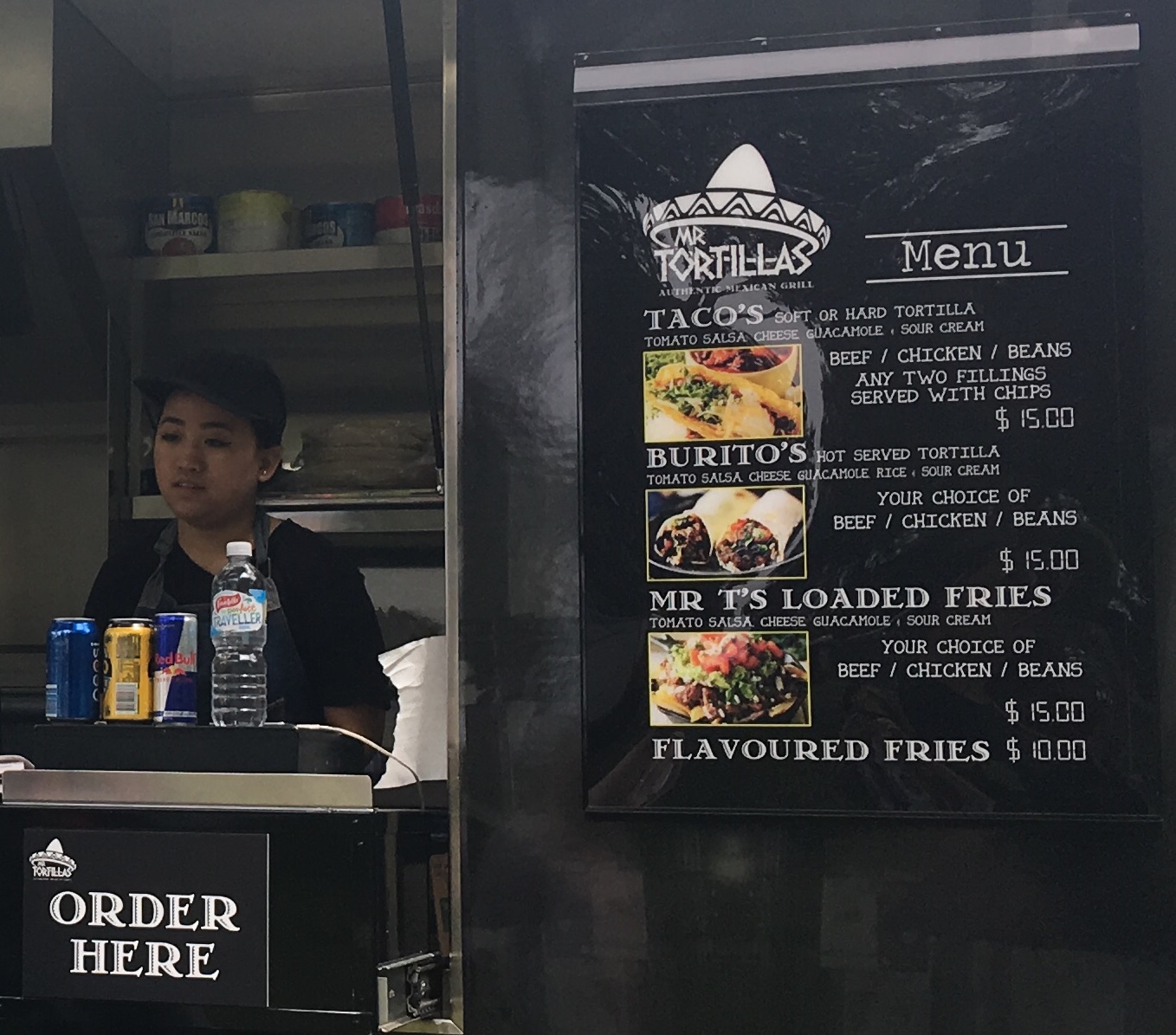
We verbally edited the “Taco’s and burito’s” menu, then moved on to order kimchee chicken burgers for lunch.

Lastly, I added to my collection of photos of myself with large furry animals.

Not Welcome

In my last post I wrote about Australia’s Welcome Wall, on which the names of everyone who has ever immigrated to Australia are inscribed.

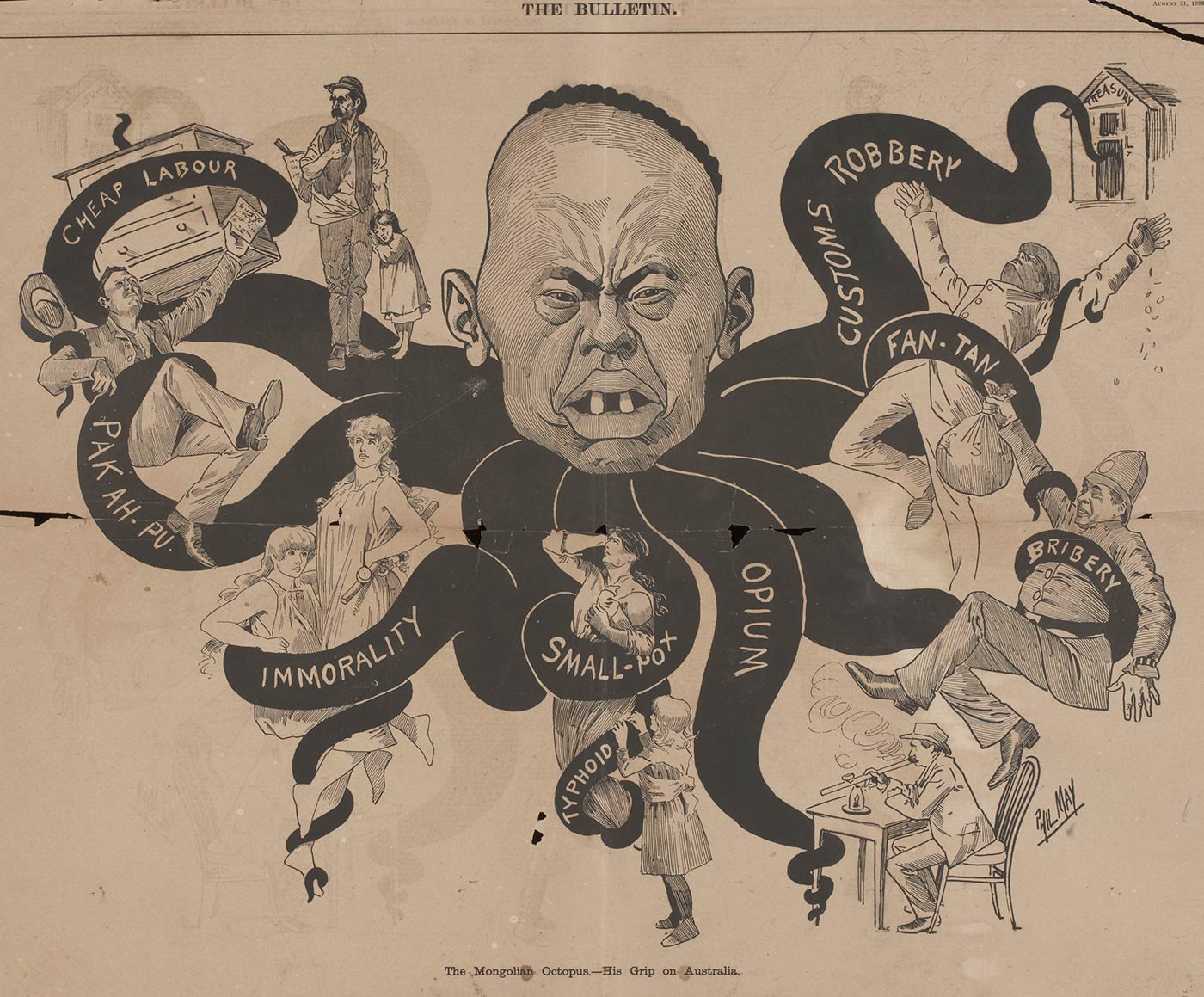
There’s also a very mean side to Australia’s immigration policies, historical and present.  In the Maritime Museum there was a section about the White Australia program that handed out money to people—white people—from Britain to incentivize them to “settle” and “civilize” Australia.  It was specifically meant to exclude “hoards” of invading Asians, many of whom had been brought in as indentured laborers and then had the nerve to move to cities once their servitude in the outback was complete.

This program only ended in 1973.

Nowadays, Australia, like most countries, has a points-based system for immigration.  If you speak English and are a mining engineer or some other valued professional, you’re in!

If you’re a refugee, you are detained on Pacific islands like Nauru, an island so remote it obviously negates the need to build a wall.

One of my favorite news stories of late is of a Kurdish-Iranian journalist, Behrouz Boochani, who won the top prize at the Victorian Premier’s Literary Awards for his book No Friend but the Mountains: Writing from Manus Prison.  Boochani has been detained on Manus, another Pacific island, since 2013.  He wrote the book on his cell phone and sent it in snippets to a translator via Whatsapp.

I’ve been thinking a lot about immigrants and refugees.  The issues are in the news a lot because of Donald Trump’s push to build a wall between the US and Mexico.  But I’ve also been hearing first-hand stories from immigrants that make me lose sleep at night.  I’ll relate three of them here.

One: A fellow employee and I were eating lunch in the break room at the YMCA.  I said his name—Vicente—and told him my son’s name was Vincent.  He stared at me incredulously and replied, “I’ve been in this country 18 years and no one has ever pronounced my name right.” Vicente told me he lived 45 minutes away from work. He left his apartment at 5:15am to get to his job as a custodian.  He was worried whether his car would start when he went outside after his shift because it was so cold and he thought he needed a new battery but he couldn’t afford it right now.

I asked if he liked his job and working at the Y.  He said yes, that in eight years there he had only had one bad experience.  He had been mopping the floor in the men’s locker room when a member screamed at him, “You got my socks wet!  I paid $60 for these socks—they’re high tech!

What an asshole. Vicente had responded that he was just doing his job.  Sort of to his credit, the man returned later and apologized.

Two: Vince works at a country club and his Mexican coworker, Angel, holds the same position as he does but has been there 10 years, as opposed to Vince’s two.  Vince noticed right away that when managers came in every morning, they greeted him (Vince) enthusiastically and made small talk but ignored Angel. Vince has brought it to the attention of HR several times but nothing has changed.

“The saddest part is,” said Vince, “I don’t think they’re dissing Angel.  I think they literally don’t see him—as a human being—he’s invisible.”

Three: At the Y again, one of my young coworkers showed a video on her phone of her car going up in flames.

“Someone doused it with gasoline, threw the gas can underneath, and set it on fire,” she explained. The fireball soared 25 feet into the air.

“But why!?” my other coworker and I were horrified.

“We don’t know,” she said carefully.  “There was this neighbor who was giving us dirty looks … my husband is white ….”

She is of Vietnamese ancestry. Could that be it—the neighbor wasn’t happy with a mixed-race couple?

“The police were useless.  We’d just had the baby, and we were so scared, so we moved out of our new house and we’re living with Matt’s parents.”

My.  God.

What are people so afraid of?

Welcome

I haven’t had time to blog much because I’ve had proposal deadlines galore.  As I wrote a while back, I left my full-time job but am still churning out funding proposals as a contractor.

As I write this, I am at my aunt’s house in small town Wisconsin, where it is snowing—again.  I just read 10 case studies of clients who had been tortured, which is always a sobering and gratitude-inducing experience.  I just submitted a proposal to the United Nations, and am emailing with colleagues in Addis Ababa, Johannesburg, Amman, and exotic south Minneapolis.  As someone who is old enough to remember when faxes and satellite phones were state-of-the-art technology, this is a marvel to me.

Back to Sydney.  I showed up at Auntie Margaret’s apartment to meet Heidi and spend two days with her before returning to reality.  Auntie Margaret was spending the two nights with her sister Jan, and had left a bottle of wine for us and a hand-written note for me in that spidery handwriting that I know mine will resemble one day.

She wrote how happy she was to have met me, if even briefly, and how she hoped I had enjoyed Australia and would return.  I hope so, too.

Heidi and I watched the news; Prince Harry made a good speech to open the Invictus Games.  We could actually see the games in the distance, across the harbor, and I think we had the best view of the fireworks of anyone watching that night.

“He’s turned out okay, hasn’t he?” remarked Heidi about Harry.

“Yes, after a few wasted years—literally,” I replied.

It was nice to sleep in Auntie Margaret’s bed, where I slept my first two nights in Australia.  It felt comforting, almost like I was at my own aunt’s house.

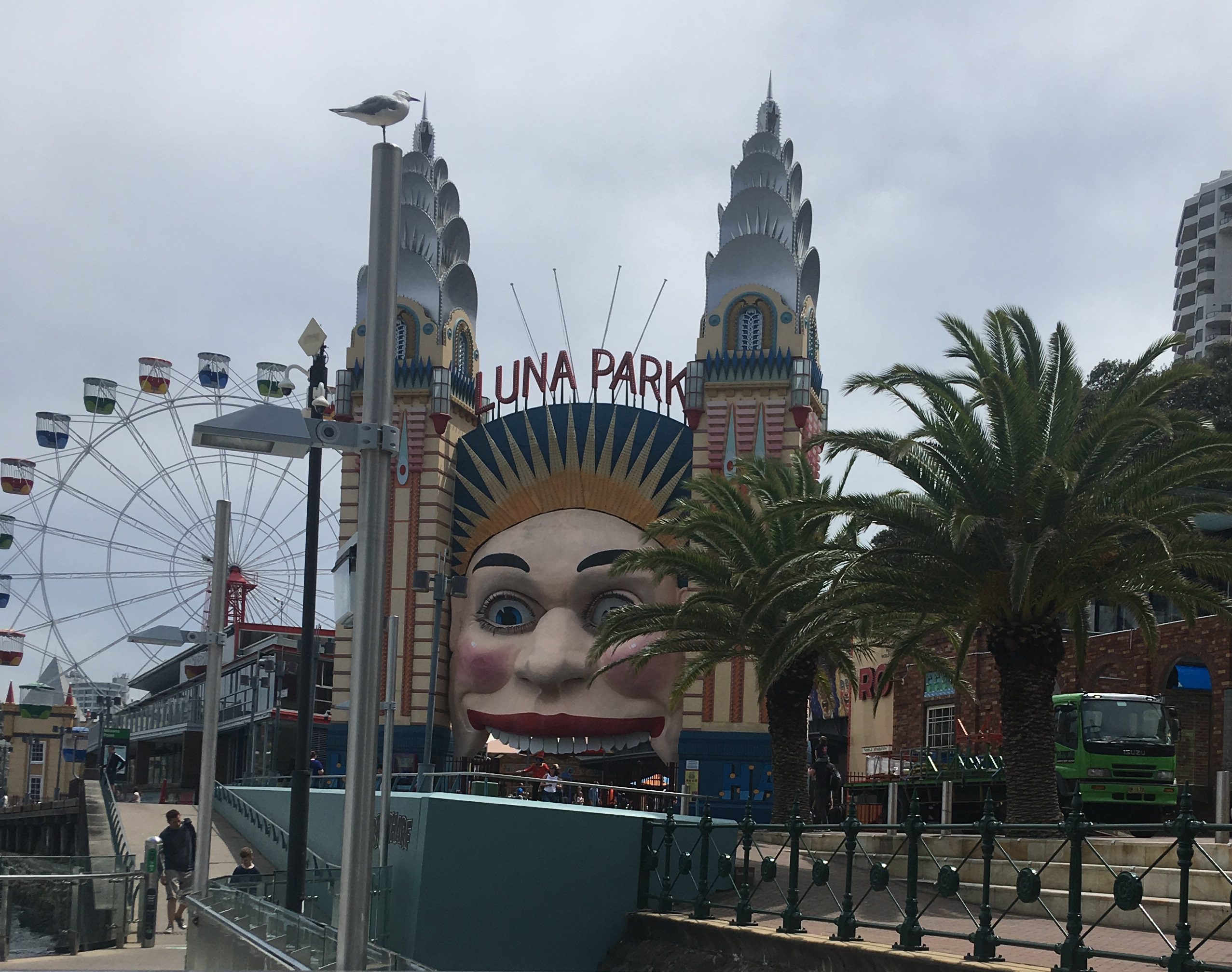
Heidi and I got a late start the next day.  Around noon, we took the ferry across the bay to good old Luna Park, which as you may recall looks like this:

By now, Luna felt familiar since I had stopped there a dozen times going from one place to another on the commuter ferry.  This was the first time I actually walked through it, and I was excited to see that one of its attractions was an outdoor Olympic sized swimming pool.  I gazed at it longingly as we hoofed it up the hill to the base of Sydney Harbor Bridge.

Yes, today we were going to cross it on foot, but not as Harry and Meghan had done—not paying a “stupid amount of money”—as Heidi put it, to wear orange jumpsuits and get harnessed up and walk on the actual arches.

We just took the free-to-all footpath, which had spectacular views.

On the other side we loped down into The Rocks again, just in time for lunch.  Heidi knew that the Mercantile Hotel had great views from the first floor (what we would call the second floor in the US, and we ended up climbing a bonus flight of stairs to find an open table.  The view was great, but what caught my attention as I washed down my chicken piri piri sandwich with cider was the TV show over Heidi’s head.

It was two Australian guys talking about American politics and other embarrassing shenanigans in my homeland.

“That’s the whole show?” I asked Heidi.  “Is it news or comedy?”

“Oh it’s both, I’d say. You lot certainly provide plenty of good material.”

Breaking News scrolled across the bottom of the screen: Man shoots six people in Tampa McDonalds, tells police his Egg McMuffin wasn’t hot enough.

Was that a real headline?  It certainly could have been but it was impossible to know.

We walked to the train station.

And caught a train to Darling Harbor, home of the Maritime Museum, just as it was about to close. We ran through the museum in half an hour, then admired the tall ships outside.

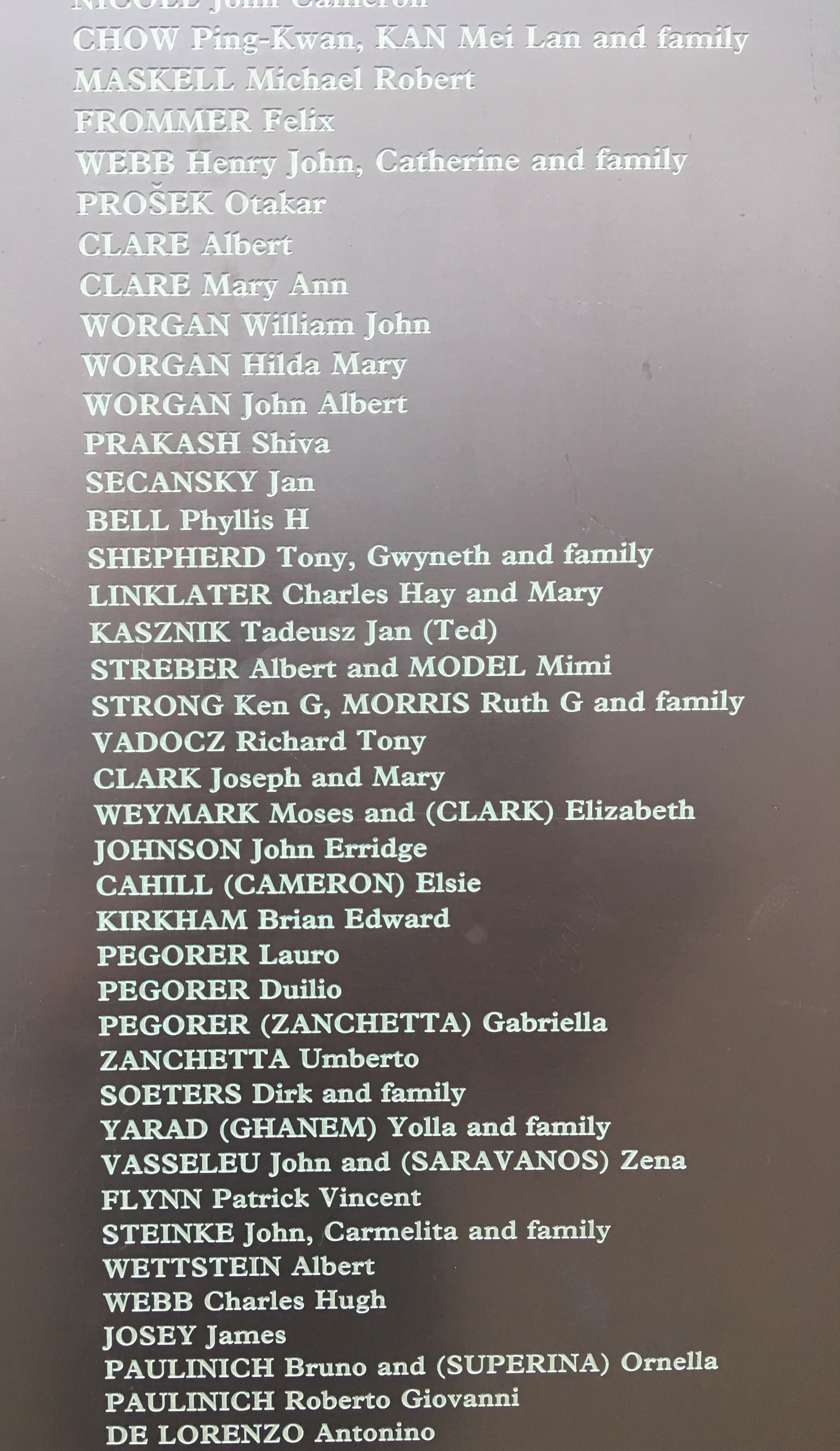
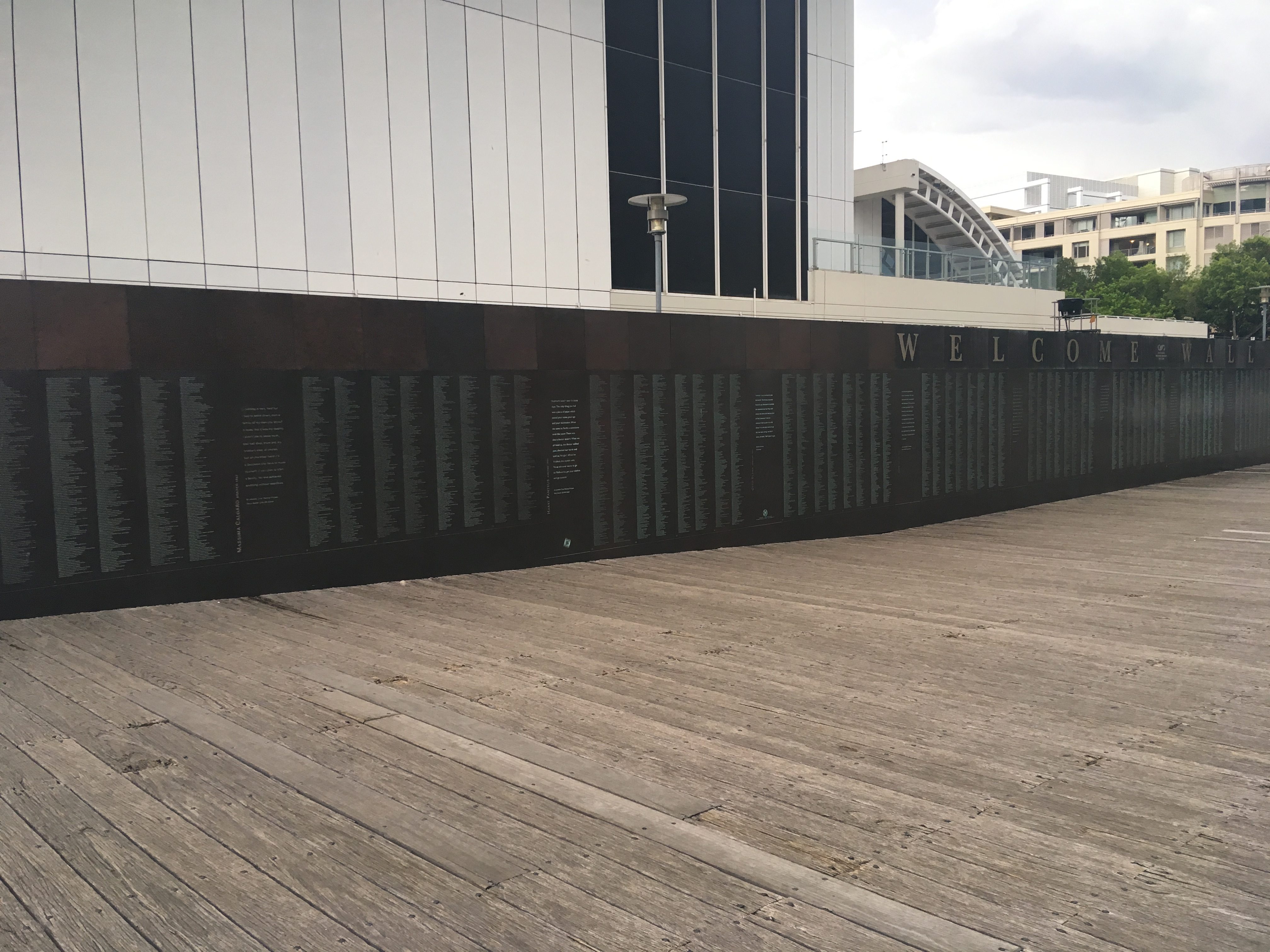
We spent time reading names on the Welcome Wall, which lists everyone who has ever migrated to Australia—Polish, Italian, Indian, Jewish, Chinese, Irish.

It went on and on.

That’s the kind of immigrant wall I wish my county would build.

Smoke Signals

I didn’t want to go back to the hotel so I went to The Bear again and ordered fish and chips.  There was a theater nearby showing—of all things—Jersey Boys.  The Bear was packed with people my age having a bite to eat and drink before the early show.  There were couples, and groups of bedazzled girlfriends, and older women with their even-older elderly mothers.

When reluctantly returned to the hotel there was a message from Heidi—written on a piece of paper.  Her phone had gone dead or she’d been without wireless or GPS or some such thing.

I had just missed her.  I trod back to The Bear to get wireless but didn’t want to wait in line to buy anything so I stood just close enough to the entrance to get the signal.  The waiter walked by, waved and grinned.

I called Heidi using Facebook messenger, and by luck she was also getting wireless somewhere.

“Aw, Annie!  I can’t believe what happened with your passport!  And then me not acknowledging any of it for four days!  I can’t believe you’ve been in Sydney for two days already!”

She was at work and would be staying nearby with her second cousin that night.  We made a plan to meet up at Auntie Margaret’s the following evening.

I consulted my paper map and saw I was actually in Chinatown and there was something that looked like a huge outdoor market a few blocks west of The Bear.  I found it; the outdoor market was closed but it being early evening the whole area was heaving with crowds of shoppers visiting the stores.  I had nothing to prove to anyone by staying out late so returned to the hotel, had a cup of tea, and watched TV.

I was horrified but laughed out loud as I watched the Australian men’s swim team gift Prince Harry with a pair of budgie smugglers on their visit to Bondi Beach.

Budgie smuggler = Australia-speak for Speedo.  Prince Harry took it well. I wonder how his grandmother would have reacted if she’d been gifted a bullet bra on her first trip to Aus in 1954.

Sorry but now you’ll have to picture budgie smugglers for the rest of your day.

The next morning I breakfasted at The Bear on a giant omelet and hash browns, then set off for the RBG.  I was determined to return to the gift shop there and do some damage.

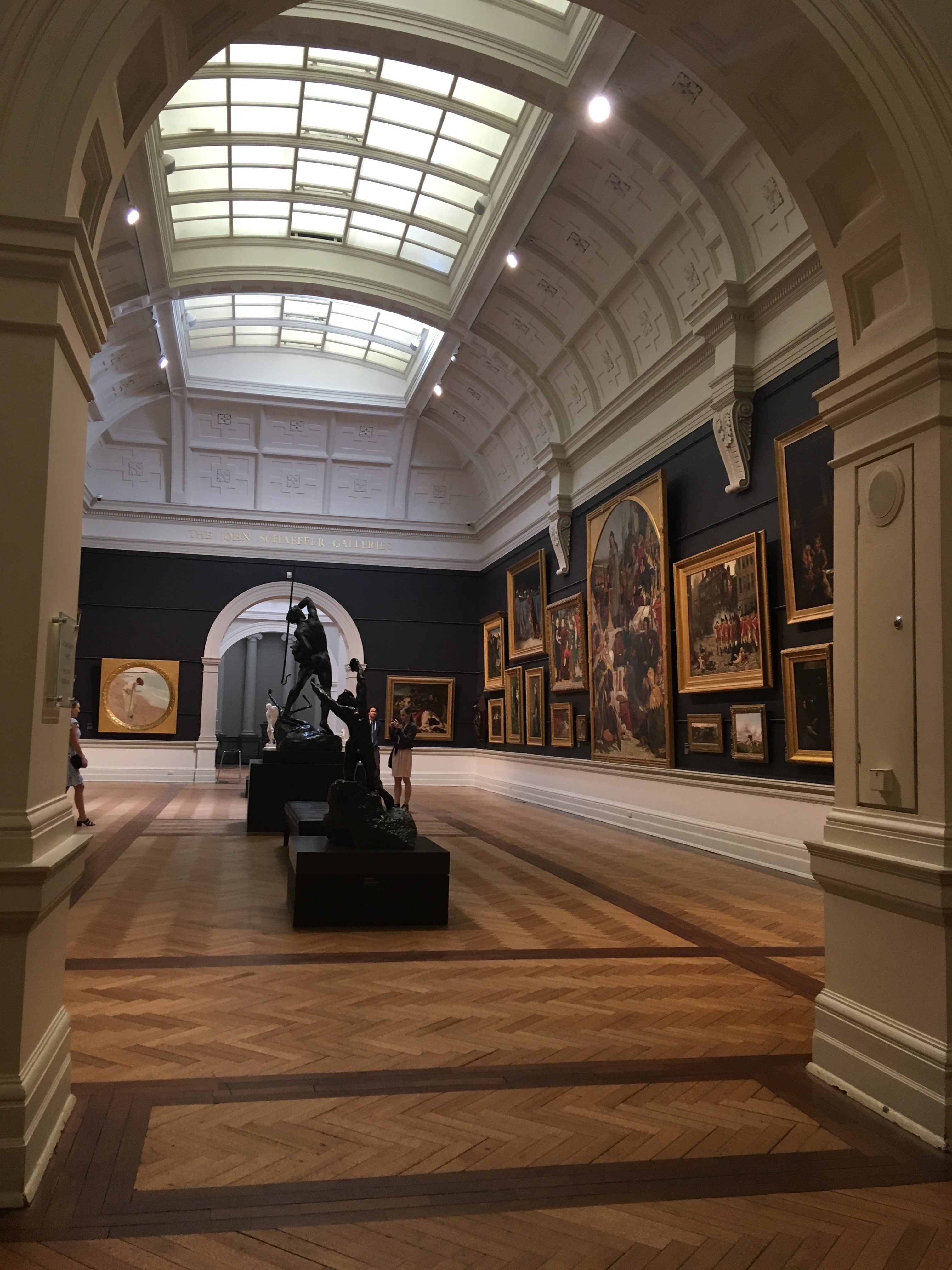
But first, the Art Gallery of New South Wales.  From the outside it looks like most such places—ponderous and intimidating.

But the galleries really took advantage of Australia’s natural light, which was abundant even on a cloudy day.

I decided to have a decent coffee in the café, which was lovely and bright and surrounded by gardens.  There, I registered Heidi and me to win a luxury cruise to Singapore worth $11,000 Australian dollars.  I’m sure we’ll be informed of our big win any day now.

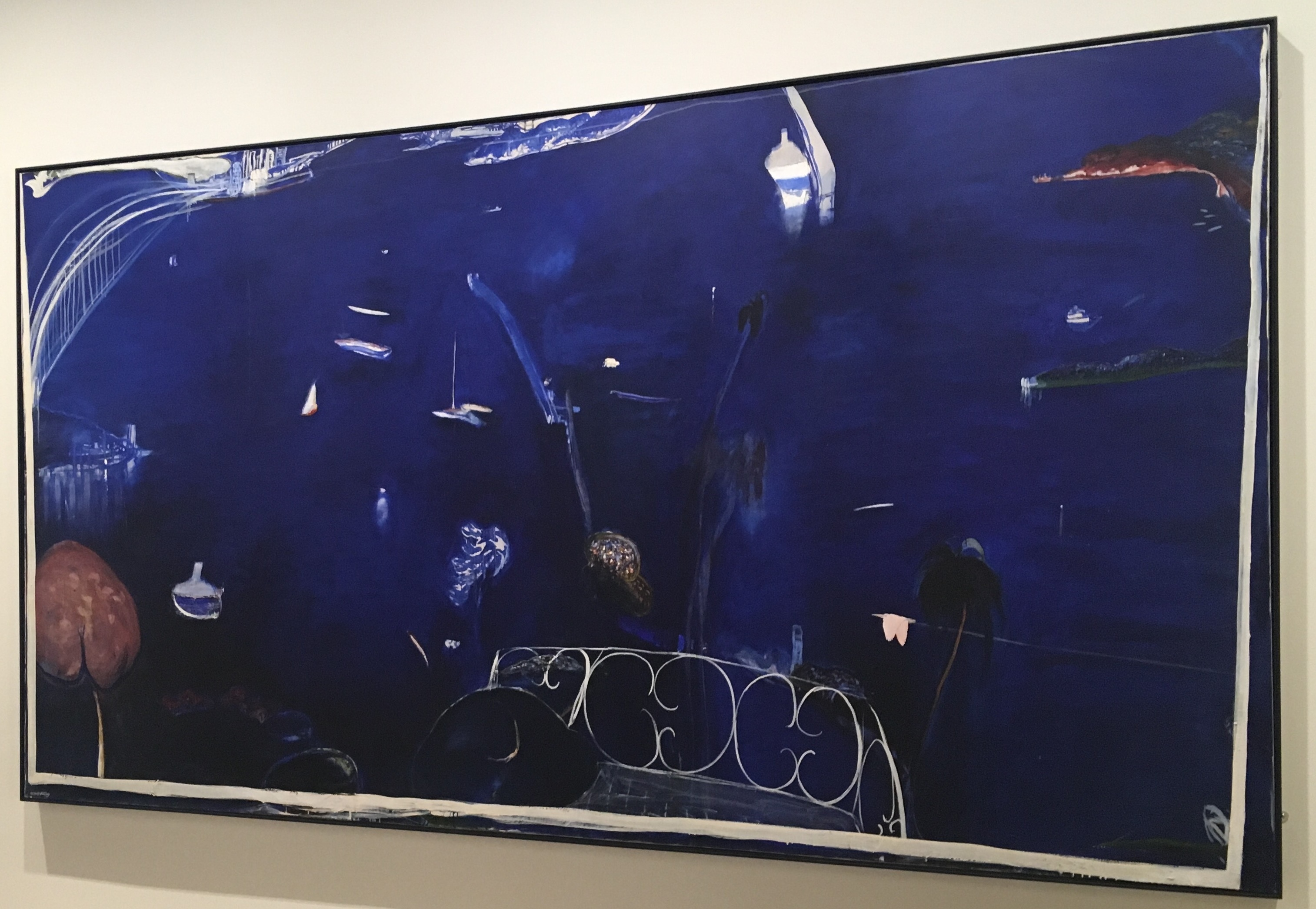
The first art work I visited was a most famous painting of Sydney Harbor by Brett Whiteley, the late husband of Wendy Whiteley, whose hidden garden near Auntie Margaret’s I had enjoyed a few weeks back.  This canvas must have been 12 feet by six, and the blue was so deep and rich that no photo can capture it.

I loved this little landscape with wallabies.

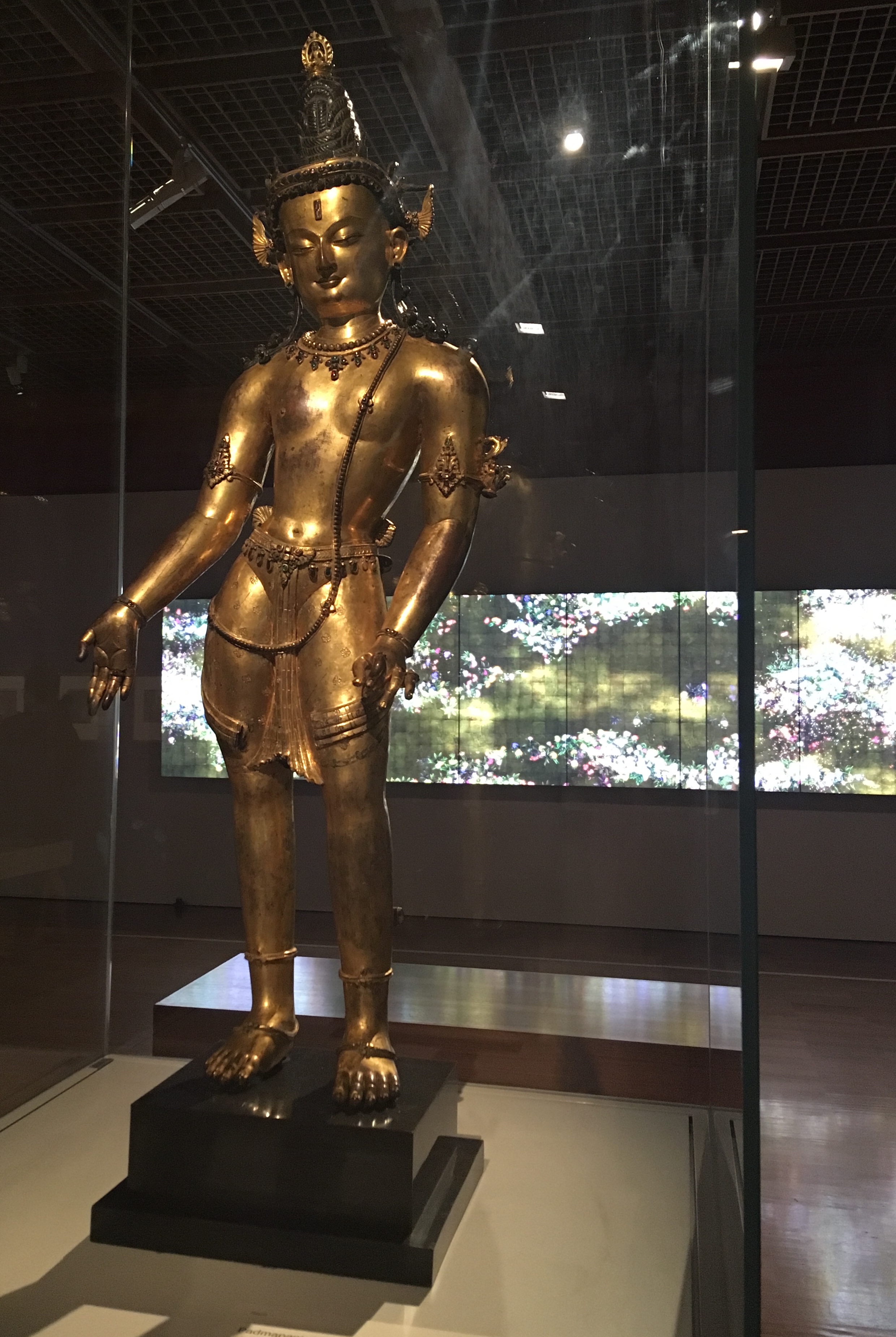
And this Buddha, with some sort of mod video installation in the background.

There was lots of Aboriginal art.  These, as I understand it, are funeral totems.

These woven basket-type things to keep the sun and heat off of food and babies.

This contemporary painting depicted police surveillance of the Aboriginal community, the feeling of living under siege, and a chase which did not end well.

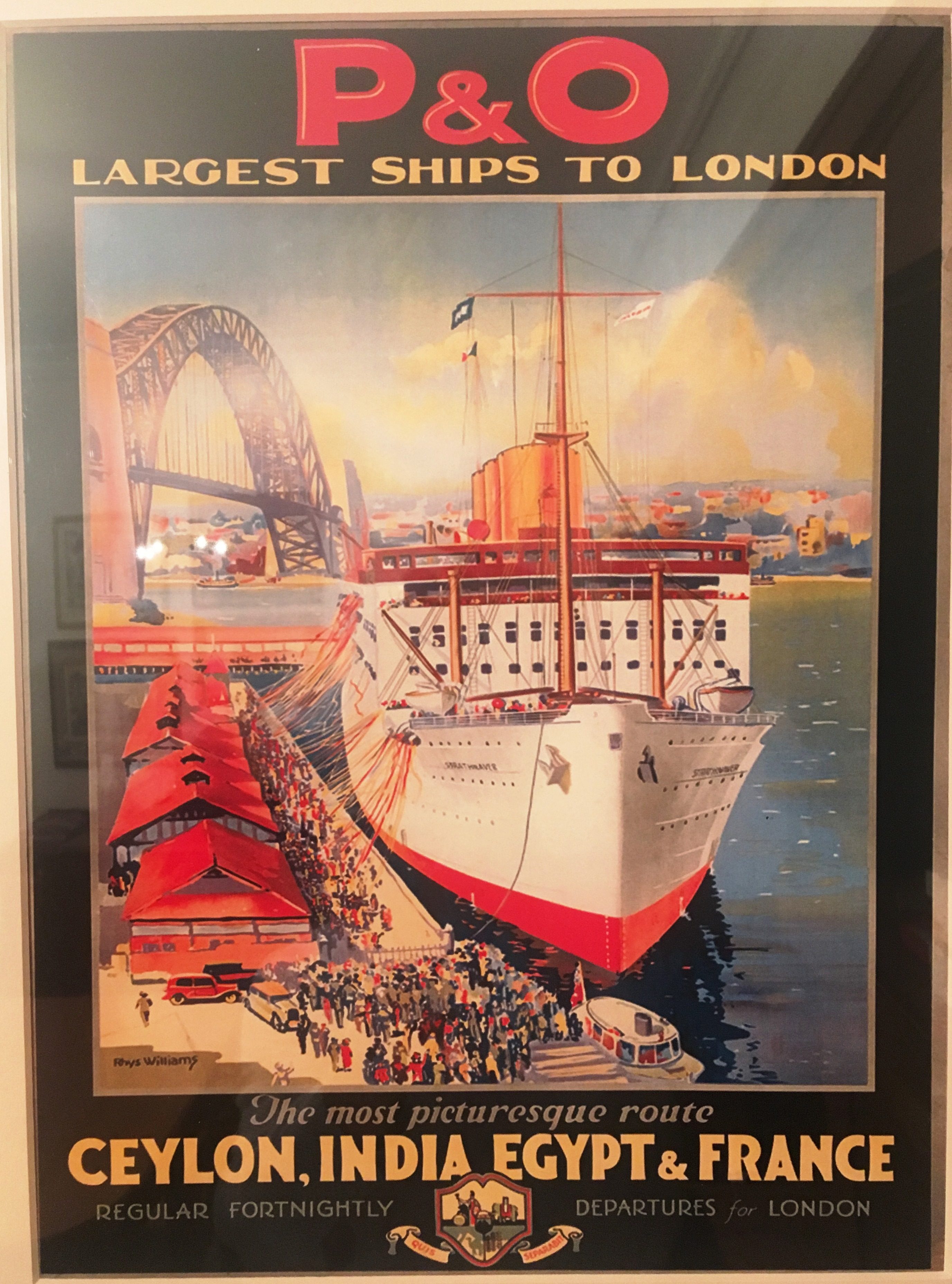
I whizzed through the RBG and hit the gift shop.  I bought the greeting card version of this print and later, once I was home, the poster.  When my friend Farhad saw this he exclaimed, “P&O!  That’s the ship my parents took from India to London in 1950!”

These were the glory days of travel, at least for people who could afford it.

On The Rocks

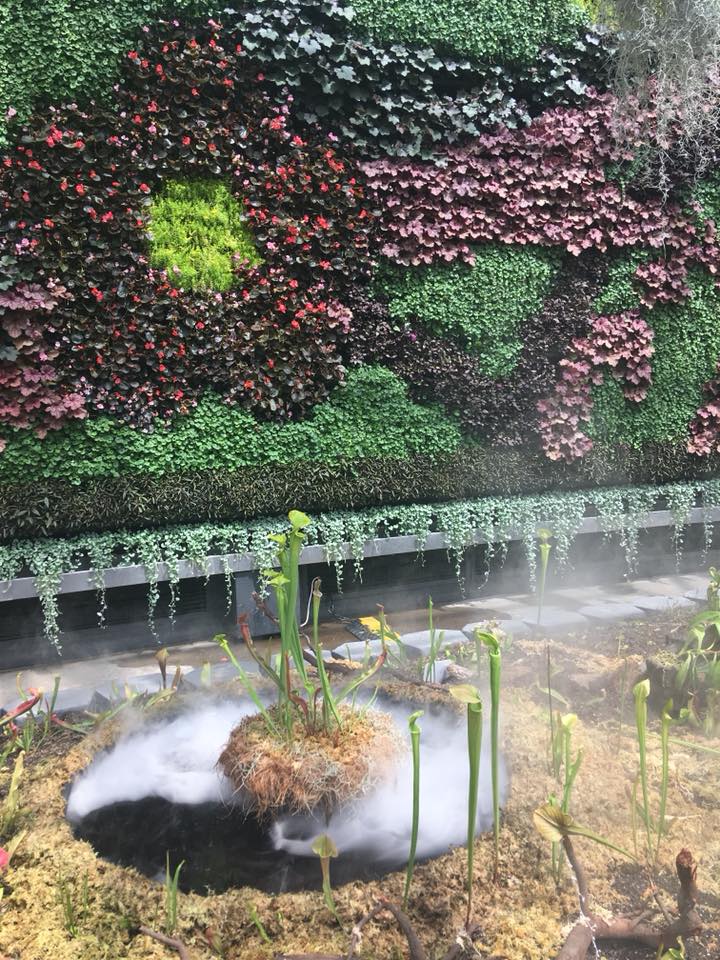
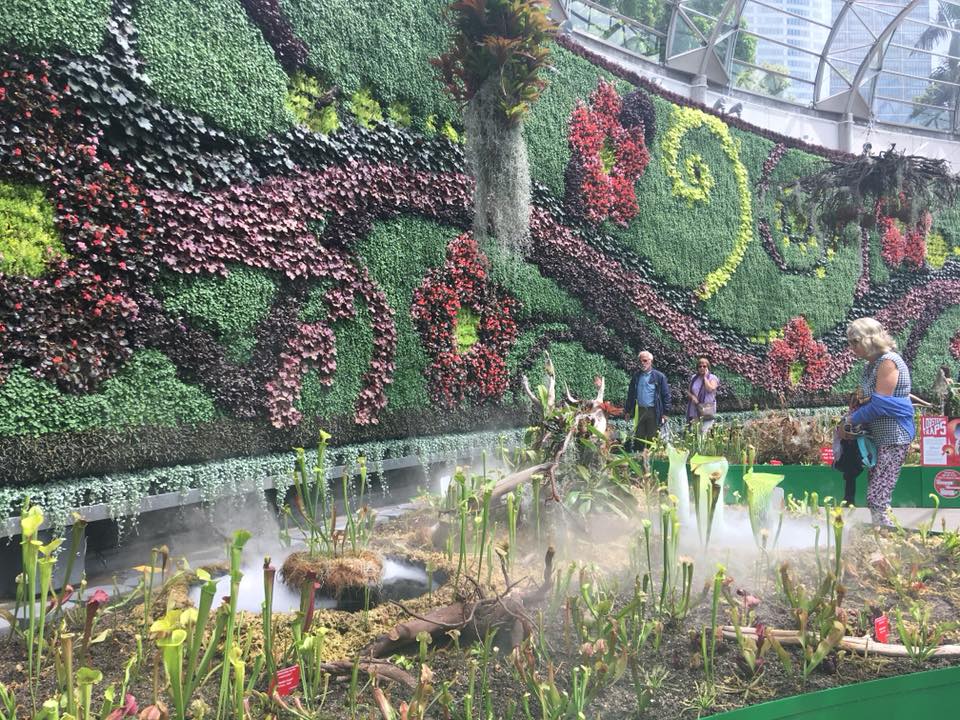
I’ve been sitting here for 10 minutes trying to write a pithy introduction to the carnivorous plant show at the Sydney Royal Botanic Gardens.  I guess I’ll just show, not tell.

The exhibit was a little bit of art, a bit of science, and a whole lot of Little Shop of Horrors kitsch.  It was fun. It was pretty. I learned some facts that I immediately forgot.

I took a gander in the gift shop and didn’t buy anything.  My plan was to find the trolley for which I’d seen signs directing me to the Opera House Gate.  The RBG is enormous, as are most botanic gardens, and I had visions of covering it all with the aid of wheels and a silver-tongued guide as we had in Melbourne.

After walking 20 minutes to the gate, I couldn’t find the trolley.  Construction was under way for the Invictus Games; more about that later.  Perhaps the trolley was under a tarp.  There were volunteers everywhere, bumping into each other, and none of them knew anything about a trolley.

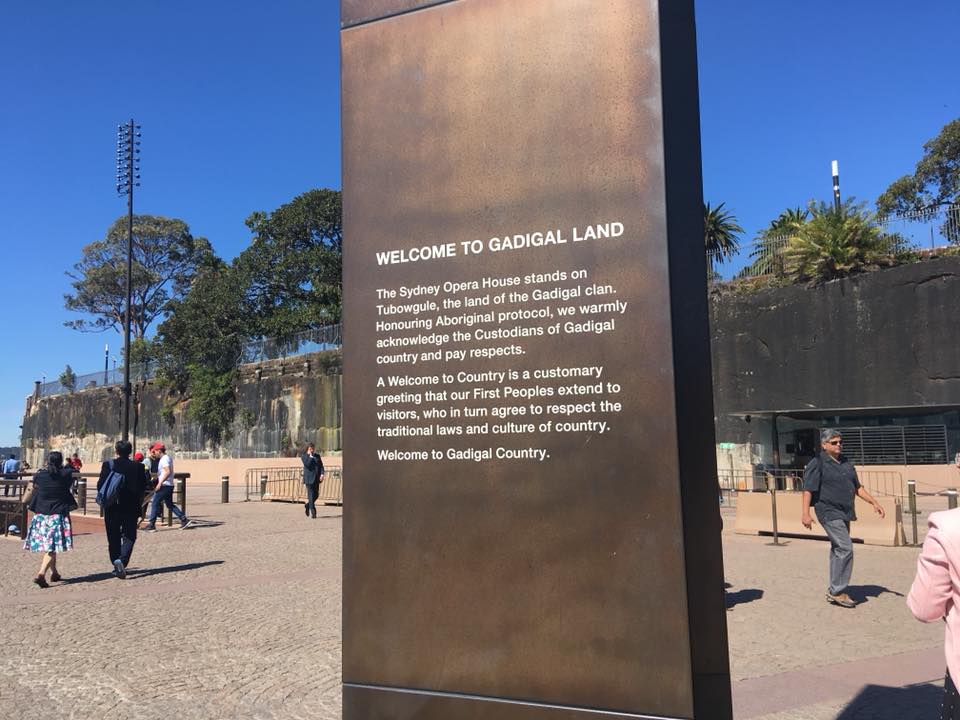
I passed this sign about the Opera House being the site of Gadigal land.  I wonder if the Gadigal people are comforted by these signs and pronouncements of “sorry.”  Or do they say, “Yeh, sorry is nice, but you’ve still got our land.”

As long as I was in the general vicinity and it was a beautiful day for a walk, I headed over to the area called The Rocks.  This was where the original settlers … um, settled.  I guess it’s called The Rocks because it’s very hilly and there must be gigantic rocks in them thar hills.

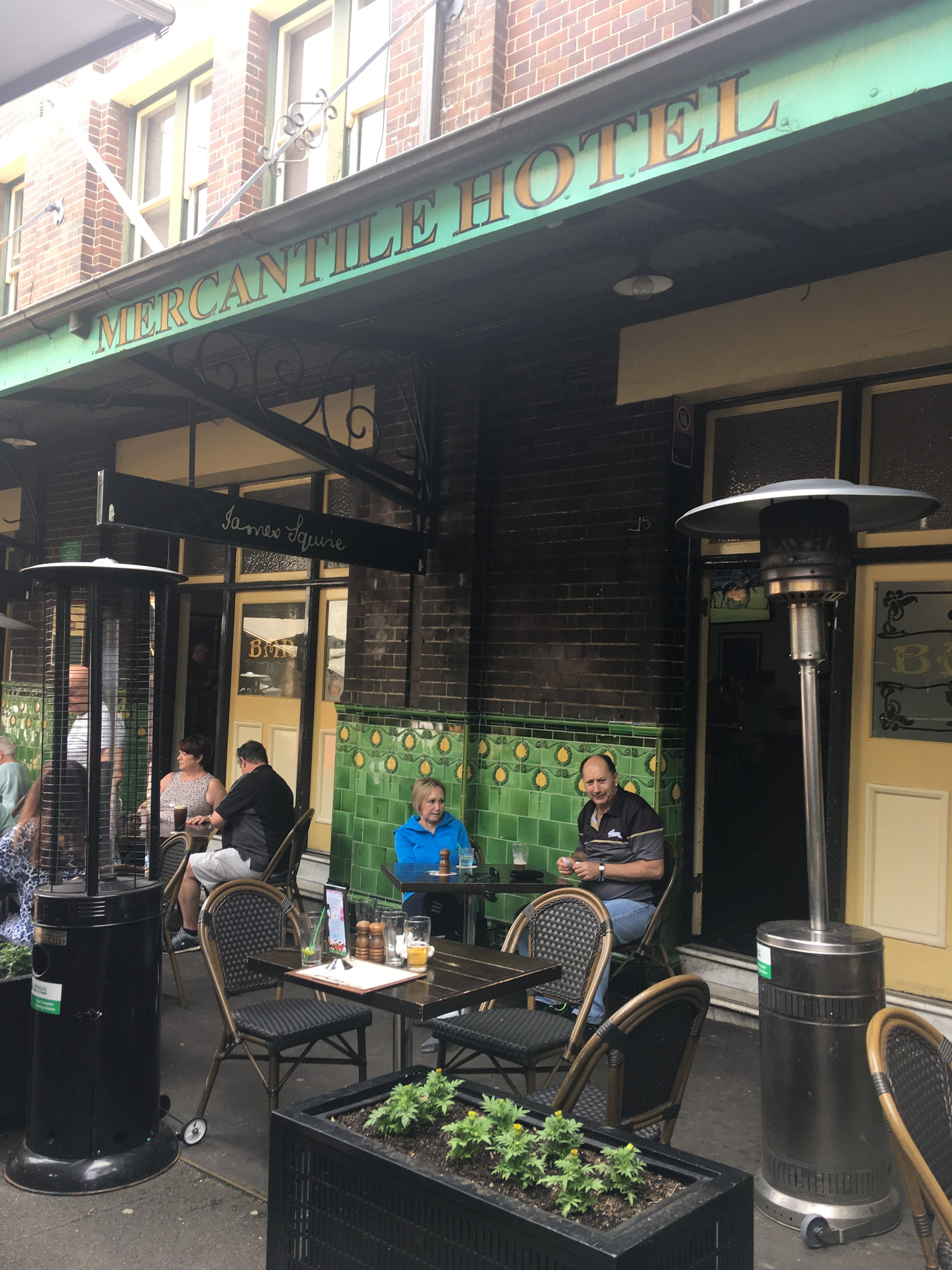
I had been urged to visit The Rocks by my Lebanese friends on the dive boat on the reef, and by other strangers.  It seemed the main attractions were “interesting shops and restaurants.”  I never found any, even after much wandering.  Everything seemed closed, and there was lots of construction so I kept hitting dead ends.  There was some charming Victorian architecture, like the Mercantile Hotel, where I had a wonderful fresh, healthy salad.

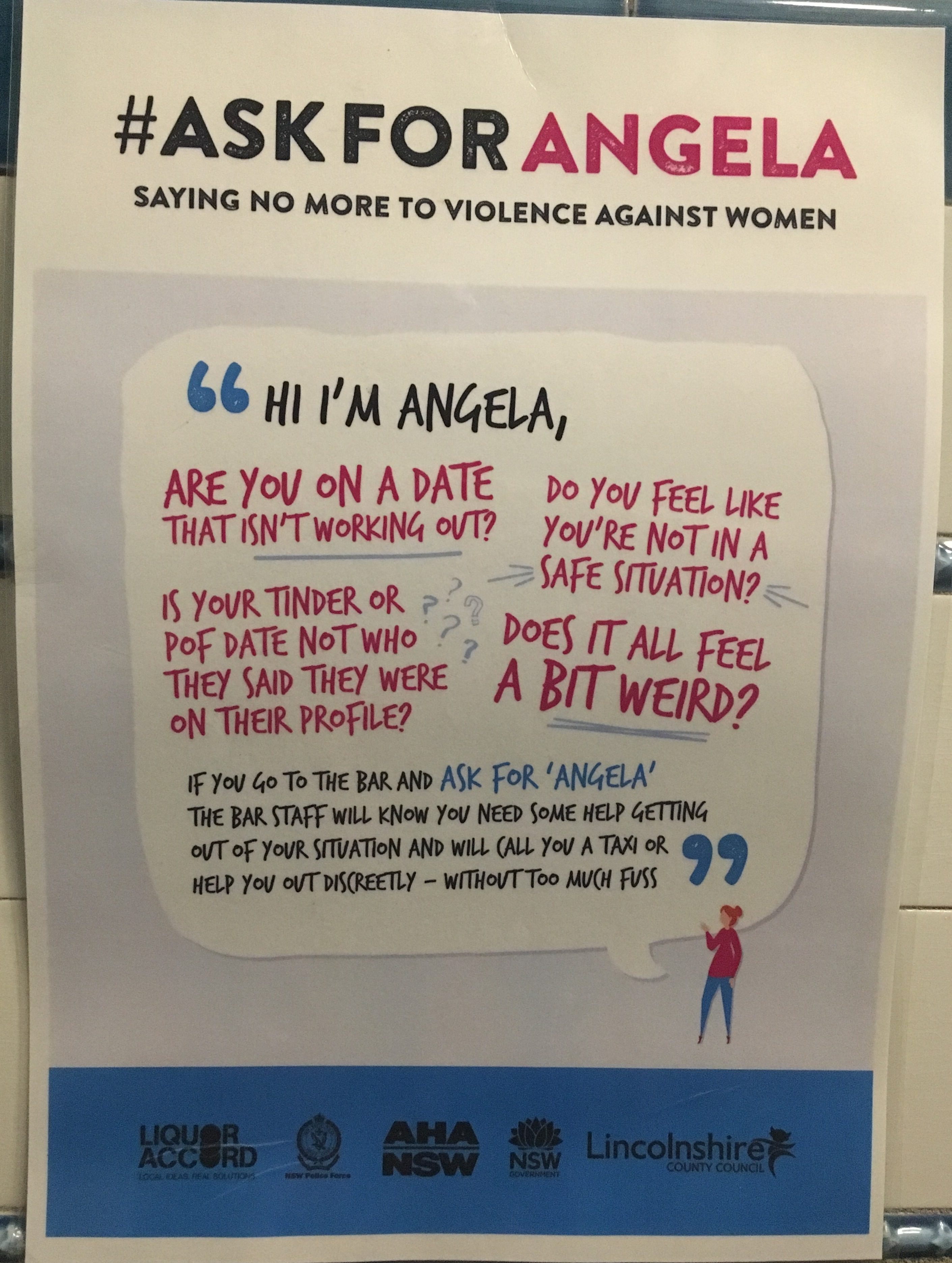
This was in the toilet.

As I often do when I’m traveling on my own, I pulled out my notepad to jot down some notes.  I was pleasantly surprised to see a young woman at the table next doing the same.

I like the texture of pencil, or a roller-ball pen, on paper.

I was once mocked at work for using a pencil.  I was sharpening one in the copy room and a member of management who wears a perpetual frozen smile said in a syrupy but patronizing voice, “Anne, how old school—a pencil!”  She tried to pull it off as a joke so I smiled back, said nothing, and returned to my desk where I shot off a few lines with my razor sharp pencil, then returned to the copy room and shredded the sheet of paper.

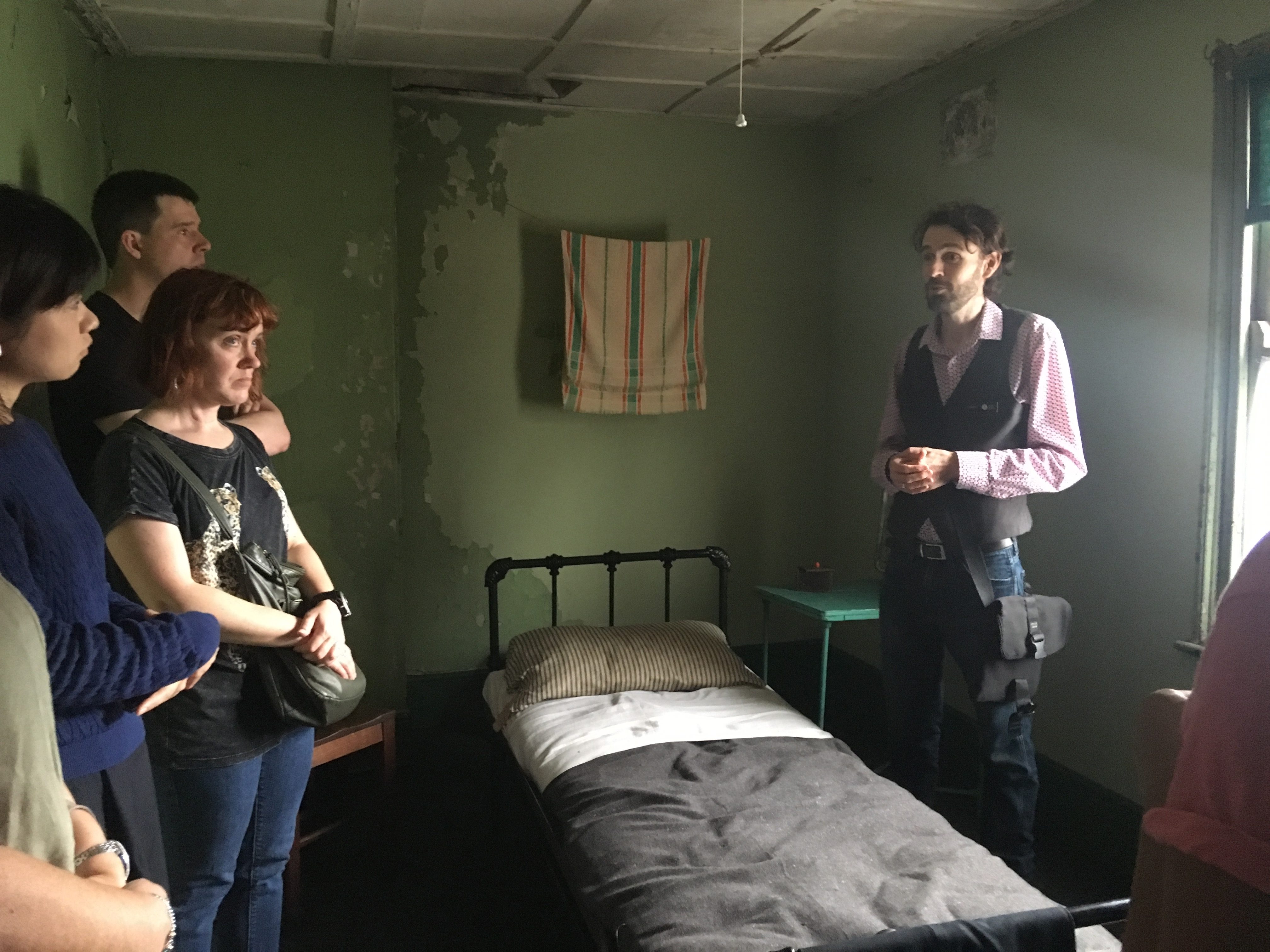
Across the street was Susannah House, an original tenement where immigrants had lived up until the 1970s.

I got there just in time for the 3:00pm tour. This didn’t leave any time to check out the small selection of gift items, but they were all related to household cleaning in the 1980s—think lye soap and wooden scrub brushes—things I could live without.

A very thin man dressed in a period costume led us through the rooms.  He recited the usual types of dreary stories you hear in such places.  You know: ‘This is the bedroom where Mrs. Lopadopalous gave birth to her 14th child after her husband died of alcoholism.  Six of her children had died from smallpox or flu but little George grew up to be the first mayor of Greek ancestry of a medium-sized Australian city.”

I loved it.  In one of the kitchens he told the tale of old Mrs. McGillicuddy’s fight for tenants’ rights against the big-money interests who wanted to tear down the tenement and put up a shopping center.

Then he turned, pointed out the icebox in the corner and said, “That’s an original. The ice came all the way from a vast lake in some place called Mih-neh-soda, in the states.”


Explorers, Convicts, and National Sorry Day

Are you familiar with the Morrissey song, “Throwing My Arms Around Paris?” I hear it in my head sometimes when I am throwing myself out into a city—joyfully embracing as much as humanly possible in however much time I have.  The actual song is a downer, obviously—it’s Morrissey after all, the miserablist. But I re-mix it in my head to be uplifting.

I visited the RBG every day for three days.  There’s that much to see and do, and it’s just a lovely, peaceful oasis in the middle of the big city.

On my first day I caught a walking tour.  The morning was fresh from a night rain and the sun had not yet burned the heavy dew off the leaves.

My group included some Canadians, Melbournians, and Germans.  The guide was giving her first tour and said she was nervous.  She was still getting used to holding laminated photos of flowers and referring to them; they were upside down for her.  She was doing her best but kept saying, “I’m not sure about that, I’ll have to check it later.”

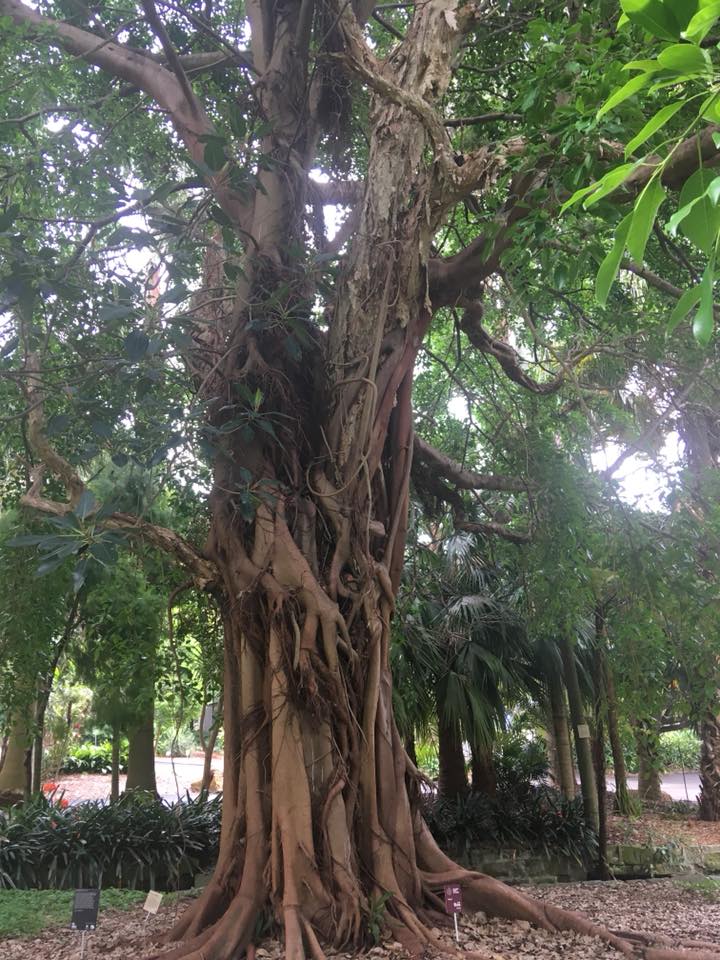
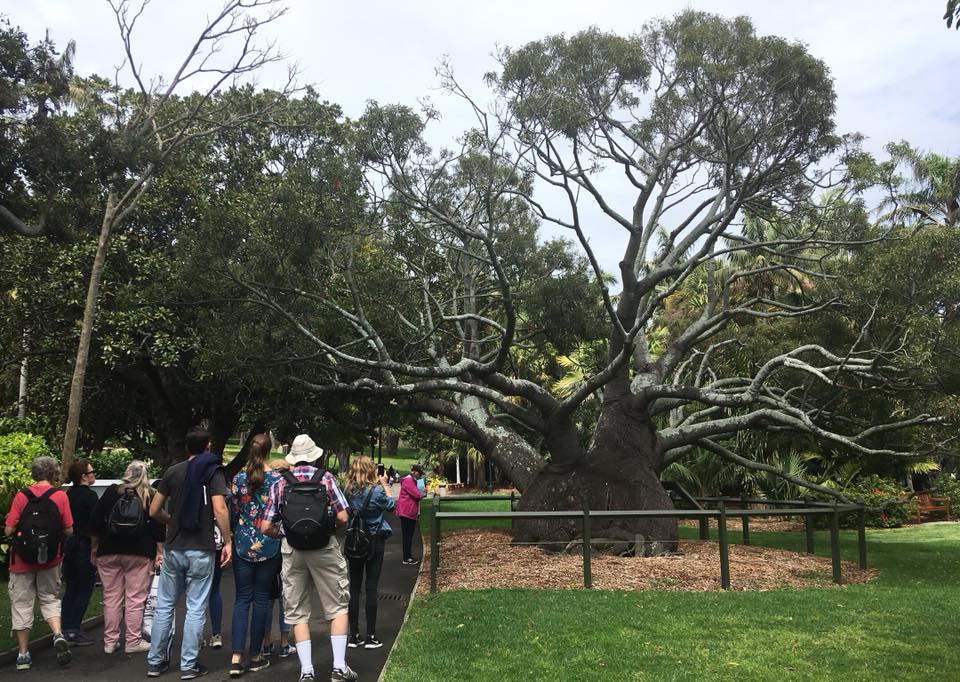
She thought this astounding tree was from South Africa.

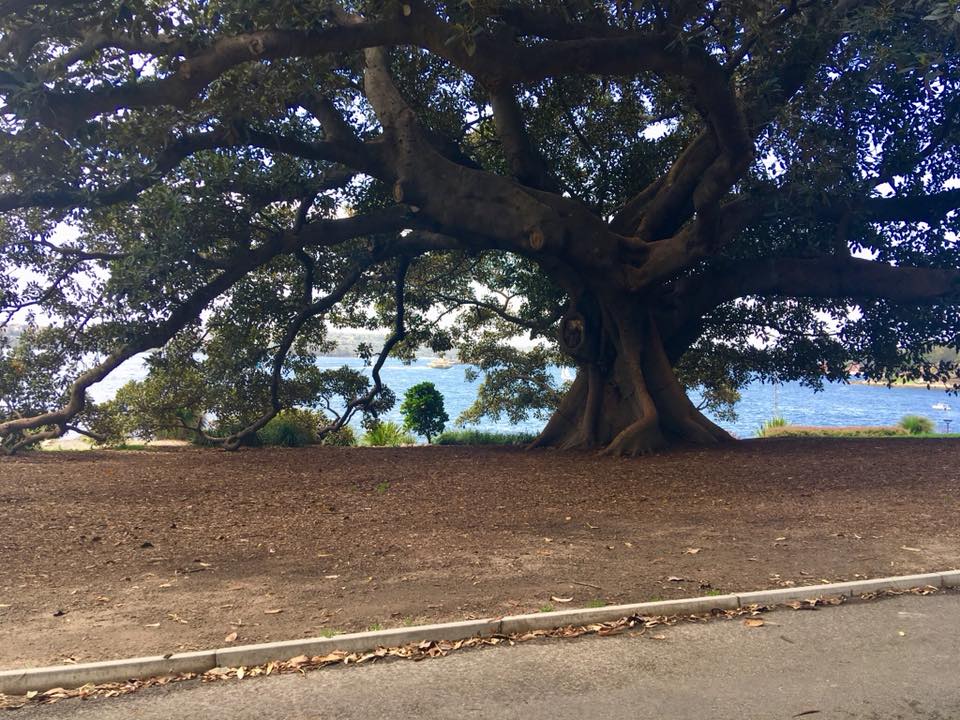
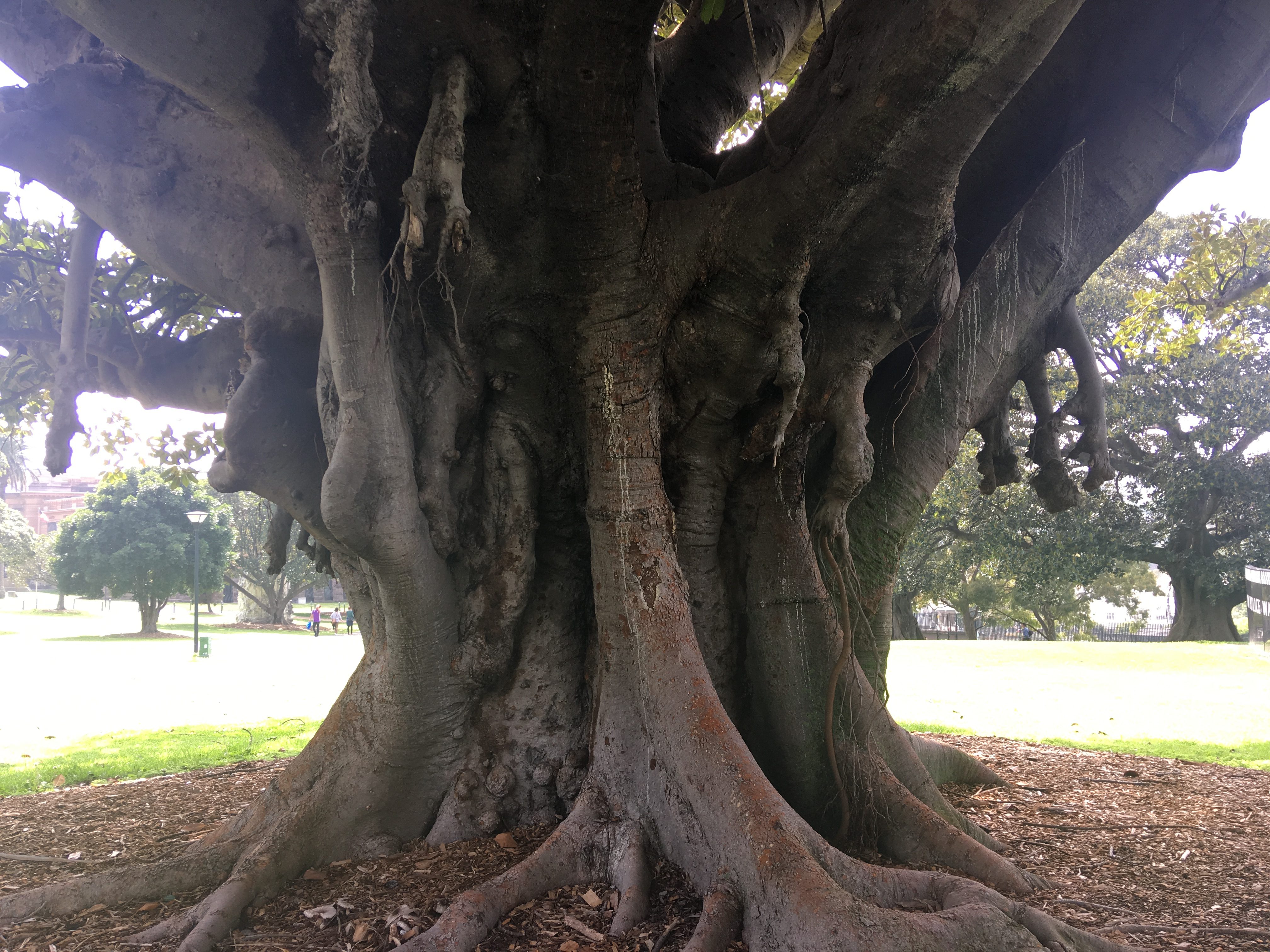
After 20 minutes I carved off into an inviting-looking dark path through thick trees.  Have I mentioned I was enamored with the trees?  I emerged to see this banyan with knobs drooping downward; they would become buttresses for the growing tree.

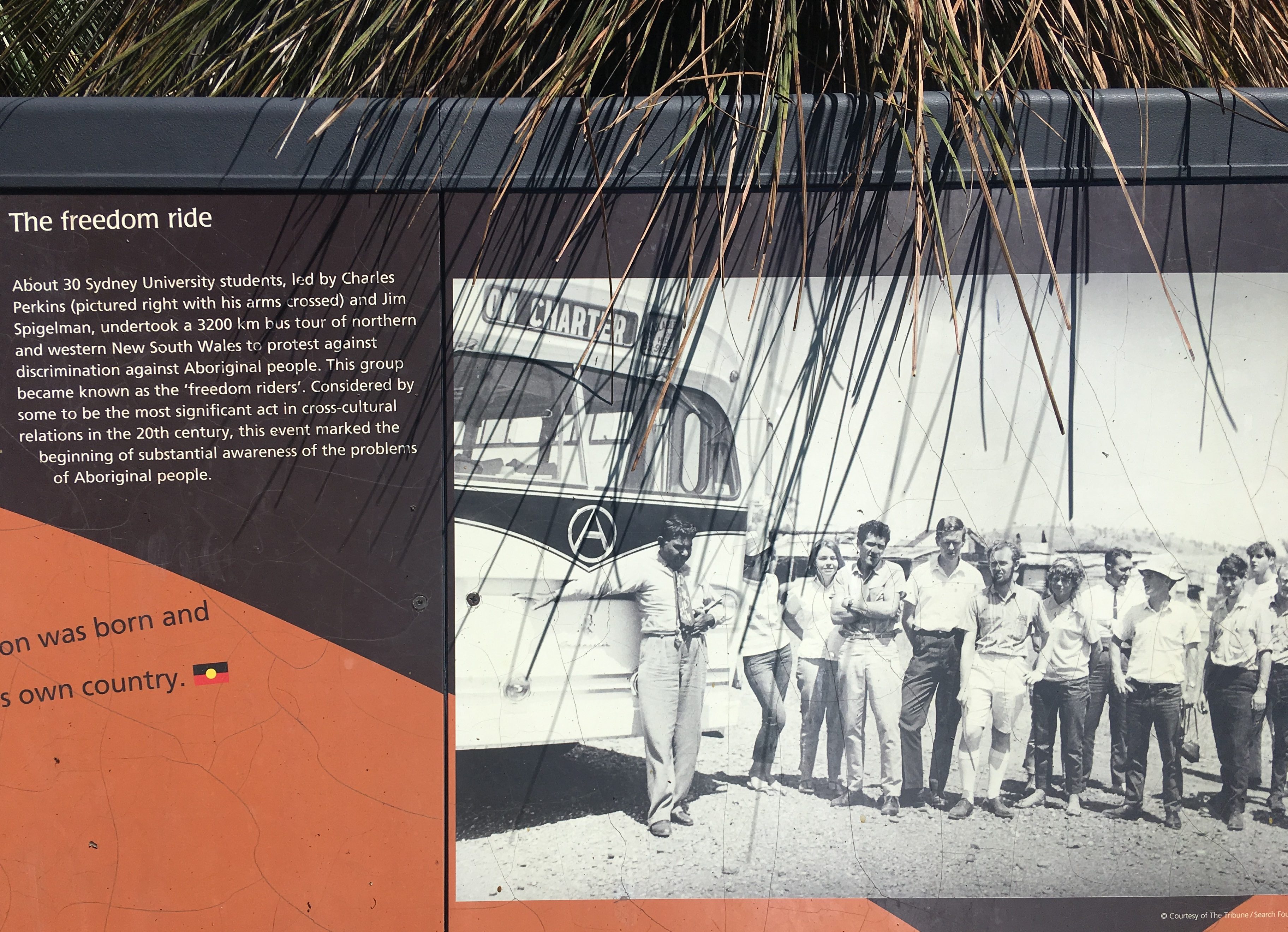
What I hadn’t expected to find in a garden were story lines about three important populations in Australia’s history—explorers, Aboriginals, and convicts.

There was a garden named for Daniel Solander, a Swede who sailed with Captain Cook on The Endeavor around the Pacific and collected 17,000 species of plants, 900 of them from Australia.  Most of those were found around Botany Bay, just five miles from where I was standing.

He did this 70 years before Charles Darwin made his famous voyage on The Beagle. Solander didn’t live to read Darwin’s Origin of the Species; he died suddenly of a brain hemorrhage at age 49.

Next I crossed what appeared to be a dinky, unremarkable bridge over a tiny stream.  But no!  It was built over culvert of “high cultural significance” built by convicts in 1816 so the Governor’s wife could cross the stream in her carriage.

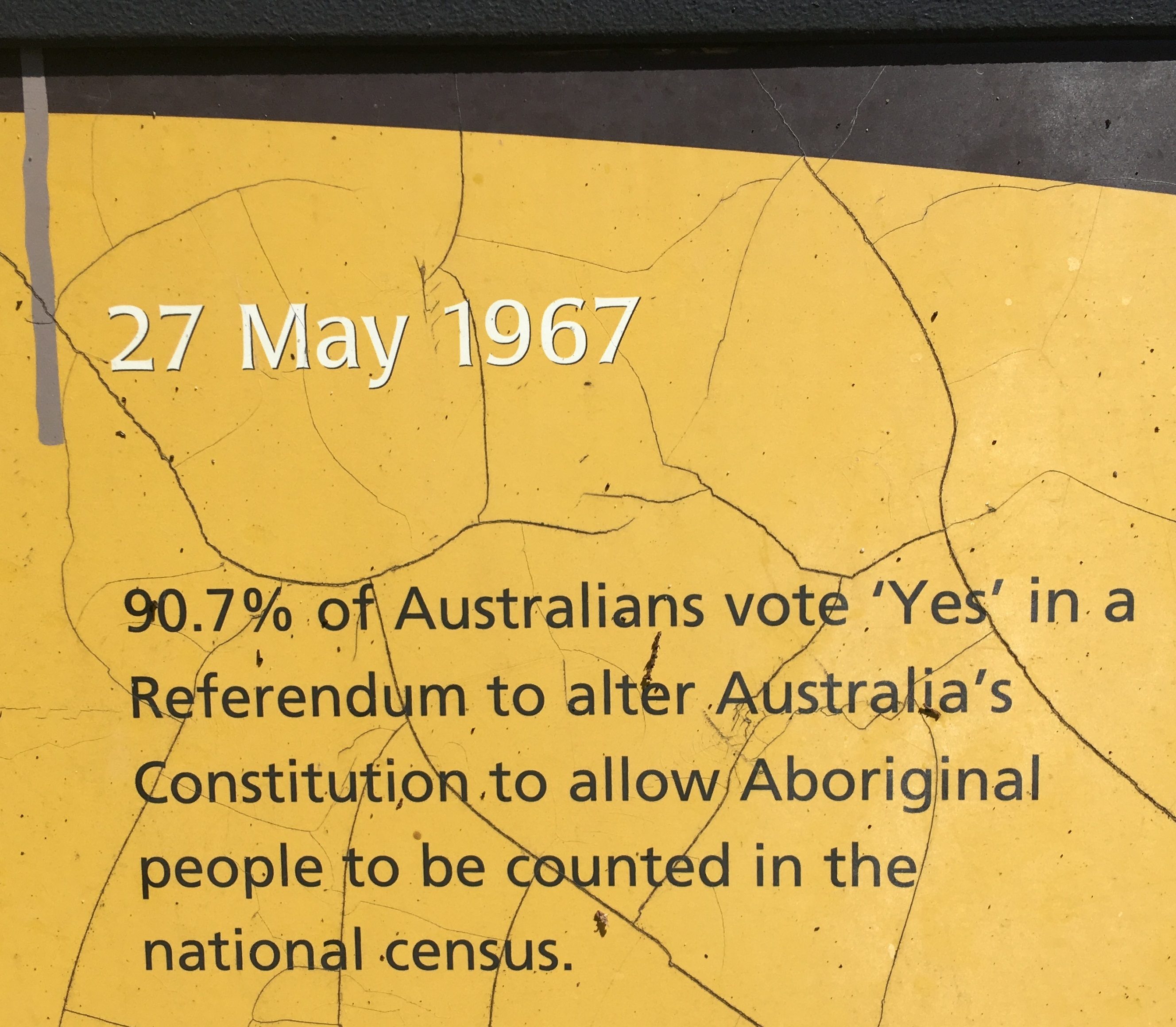
I turned around to find about 15 placards about Aboriginal history.  I already knew about the 1967 vote in which white Australians decided to count Aboriginal people in the census for the first time.  I guess it took that long for them to decide that Aboriginals were actual humans.

I didn’t know there had been a Freedom Ride in Australia in 1965, similar to the ones in the US about five years earlier.

I was pleased to see that one of the leaders had a Jewish name—Spigelman.  When I Googled him I learned he had immigrated to Australia from Poland as a three-year old with his parents, who were Holocaust survivors.  His parents are featured in the graphic novel about the Holocaust called Maus, by his American cousin Art Spiegelman.

Spiegelman was born in Sweden after the war.  His five-year-old brother had been poisoned by their aunt, who then poisoned herself, in order to save them from being taken by the Nazis.  It gets worse, believe it or not.

I have Maus sitting on my bookshelf.  If everyone was required to read Maus, and Kurt Vonnegut’s Slaughterhouse Five, I wonder if we would ever have another war.

Spigelman went on to become an Australian Supreme Court Justice and patron of many humanitarian and arts causes including the UN High Commissioner for Refugees.

It’s no surprise that Jews are overrepresented in human rights causes.  But why should it take something as horrific as surviving a Holocaust to motivate people?

Lastly, I was moved to tears to learn that Australia has a National Sorry Day, which “gives all Australians an opportunity to express their sorrow” about the stolen generations of Aboriginal and Torres Strait Islander children who were forcibly removed from their families “for their own good.”

Wow, who expected so much sad stuff in a botanical garden?

I hastened toward a more uplifting exhibit, about carnivorous plants.