Category Archives: Adventure

Cannibals, Hallucinations, and Tyrants

This is a series of posts about Italy, Malta, and Spain that starts here.

Day Two in Madrid, spent in two big museums: the Prado and the Thyssen Bornemisa.

But first, I have to mention that Lynn was stressed out about how we would get to Granada.  Lynn is usually quite unflappable, so I figured it must be kind of a big deal but trusted that she would figure it out.

I realize that may sound lazy.  I have to admit that after all the planning I had done for Italy and Malta, I had kind of zoned out and let Lynn do all the work on Spain.  I listened with half an ear while I lounging on my hotel bed, scrolling through Facebook.  So I may not have this all exactly right, but apparently getting to Granada would be complicated and a long journey with a higher than preferable chance of getting stuck overnight in a tiny village that might not have any lodgings.

“I booked a train, but we have to stop in a small town somewhere, get off and take a bus to an even smaller town, and then take another bus because there’s construction on the line or something,” Lynn said.

“I’m sure it’ll be fine,” I responded.  This is one of the cons of traveling with someone—you can put all your faith in them, then wake up, too late, in a fleabag motel in a remote dusty village in nowhereseville, Spain. That’s pronounced no-wheres-vee-ya, by the way.

“We leave at nine in the morning and don’t arrive until nine at night, if all goes according to plan—which it looks like it won’t.”

“It’ll be an adventure!” I said absently, which was probably annoying.

“I’m just going to check flights,” Lynn said.  Twenty minutes later we were booked onto a Ryanair or some other cheapo airline flight that would get us to Grenada in half an hour.

This had finally got me engaged, since it would cost money.  Lynn wouldn’t tell me how much the flights were, beyond “dead cheap.”  Then she cancelled the train/bus tickets so she could get her money back, which made me feel better.

“Right!” she exclaimed with relief as she flipped her laptop off.  “On to the Prado!”

I had scoped out the Prado online before the trip and had a couple artists in mind that I wanted to check out.  Like Francisco Goya—I had seen this painting in one of my Spanish textbooks and wondered what else he had done.

saturn-devouring

Not surprisingly, most of Goya’s other paintings were dark and creepy too.  After all the Madonnas and baby Jesus’s I’d seen so far, I found then refreshing.

There was a room of Caravaggios which I slunk through quickly, and three rooms of El Grecos.  I had heard of El Greco and, maybe because I was raised in a Catholic milieu, seen his painting of St. Peter a million times.  It’s not at the Prado, but here it is to give you an idea of his style.

peter

I had never realized—duh—that El Greco was his nickname, probably because his real name was Doménikos Theotokópoulos and no one in Italy or Spain, where he lived most of his life, could pronounce it.

I knew nothing about Hieronymus Bosch, who turned out to be the most thought-provoking artist on display.  I could have spent days studying his Garden of Earthly Delights.  Here is just one of its dozens of detailed scenes:

garden-detail

Doesn’t it remind you of Salvador Dali?  Except that Dali painted in the 20th Century, and Bosch painted this around 1505.  Was he taking hallucinogenic drugs?  Was he mentally ill?  Or was he a very “outside the box” thinker?  If so, how is it that some people can do that?

Finally, to satisfy my obsession with all things related to the Tudors, there was this portrait of Queen Mary, Henry the VIII’s daughter, otherwise known as Bloody Mary.
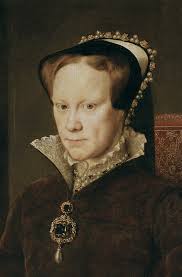
mary

Ugh, scary.

The Thyssen Bornemisa Museum was across a roundabout from the Prado, were this banner was displayed on a government building.  I’d love to see more of this in the USA right about now.
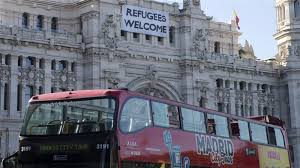
refugees-welcome

The Art of War and of Tapas

This is a series of posts about Italy, Malta, and Spain that starts here.

Lynn and I walked the two blocks to the Reina Sofia museum and were inside, for free, in a few minutes. Even with a floor plan, we couldn’t find Guernica, but we saw a lot of great stuff along the way.  Basquiat, Dali, Gris, Leger, Oldenberg, Ono, Rivera, Sutherland, Twombley, and Warhol.  The collection seemed to be a basket of one or two pieces each of mostly 20th Century artists from all over the world.  There also seemed to be a heavy emphasis on war.

Here is an image of Picasso’s Guernica on the museum’s website; I’m fairly certain I don’t have the rights to cut and paste it.  It’s an enormous mural—25 by 12 feet, and there was a crowd of people standing in front of it, mostly silent.  For once, they weren’t taking selfies or holding up their iPads to video record a great work of art.  Maybe that’s because the subject matter is so grim—the bombing of the Spanish village of Guernica by the Nazis and Spanish fascists in 1937—complete with women and babies and horses being blown to bits.

Sobered by Guernica and the other war-related pieces, it was time for more wine.

I’ve written about all the research I did for the Italy and Malta legs of my trip.  I give Lynn all the credit for Spain.  She found the hotels and figured out how we would get from Madrid to Grenada to Toledo and back to Madrid.  Thank You, Lynn!  She had also scoped out a square near our hotel that was supposed to have wall-to-wall tapas bars.

In case you don’t know what tapas are, they’re basically the Spanish version of hors d’oeuvres, appetizers, entrees, whatever you want to call them.  They are typically slices of baguette topped with ham and cheese, salmon, and other tasty things.  The idea is to go from one tapas bar to another, having a couple tapas and a glass of wine in each place until it adds up to a meal.  We walked toward the area Lynn had in mind, but when we reached what we thought was the right square, almost everything was closed.

“We must be too early,” Lynn said.

“Yeah, and it’s 8:30!” I replied.  Back home, I was usually in bed by 9:00, but I had made a vow to stay up late in Spain—the alternative would to go from lunch to breakfast without eating.

We found one place that was open and ordered the tapas selection from our waiter, whose name was Duong.  I think it’s safe to say he was of Vietnamese background.  I wondered if they hyphenated mixed nationalities in Spain, like we do in the US.  When the census came around, did Duong say he was “Asian-Spanish,” or just Spanish, or what?  The important thing was that, between his limited English, my rusty Spanish, and Lynn pointing at the menu, we managed to make known what we wanted. He brought the platter, which was mostly cheese and crackers and olives, not technically tapas.  It was a ton of good food and clearly we wouldn’t need to bar hop to fill up. I was starving by now so no complaints from me.

We ordered the house white wine, which was delicious.  Why can’t we have that in the US?  I think I’ve complained before about how, at least in Minnesota, the house wine or happy hour-featured wines are always like Manischewitz.  Or, as my mother calls it, Jewish cough syrup.

We sat and talked for an hour or more.  Unlike in Minnesota, the waiter didn’t come back to the table every five minutes to ask how our food was or ask if we wanted anything more, or otherwise interrupt our conversation.  He didn’t hover nearby waiting for us to put the last bite in our mouths, then close in to whisk away our plates and hand us the bill so he could turn the table and thus make more in tips.  This is one advantage of no or very limited tipping in Europe—there’s no incentive to hurry you out the door.

Bienvenido a España

This is a series of posts about Italy, Malta, and Spain that starts here.

I had been contacted by a head hunter about a job.  I wasn’t really looking, but I was intrigued this particular opportunity. It would be based in Cambridge, England.  Having lived in and loved Cambridge’s bigger twin Oxford, this was very appealing.  It was an environmental organization.  At the time, I thought that would be less depressing than torture, but now that the White House is full of climate change deniers, I’m not so sure.

The head hunter was in Madrid, and as I sat waiting for my flight—to Madrid—we tapped Skype messages back and forth.  She wanted to make sure I knew I would “have to” move to England for the job.  Was that okay with me?  Was it?! Yes, I replied, that was a plus, especially given the US election results.  She then wrote a number of long messages about how she and her colleagues at this international recruiting firm were shocked and worried, depressed and sickened.

She said she would put my CV forward, but I never heard from them. Oh well, it was nice to daydream about for a few weeks.

I sat next to a 30-something Maltese guy on my flight to Spain.  He had olive skin, light brown hair, and glass-green eyes.  I told him I had loved Malta and would like to go back.  He listened as I gushed about the sea views, the friendly people, the fishing village, the food, and the humble shops.

“Sometimes you forget,” he said reflectively, “when you have lived in a place all your life, how good it is.”

Lynn sent me a What’s App message telling me how to catch the airport bus to Madrid’s central station, Atocha.  Of course I wandered around the airport first for 15 minutes, but this time it wasn’t my fault.  There was construction everywhere, and if there ever had been signage, it had been removed or covered up.  I went up the escalator, down a long hall, back the other way, back down, down a long hall, then spied an information desk.  It was a handicapped assistance desk, but the two young employees behind it looked as though they hadn’t had a customer since 2010.  They were slouched over with their chins in their hands, looking at their cell phones.

I asked for directions to the bus stop in Spanish.

“This is the handicapped assistance desk,” the young woman said in English.

“I realize that,” I said back in English, “What would you tell a handicapped person?”

She reluctantly struggled to sit up and put aside her phone, while her male coworker ignored us and kept scrolling.  I wasn’t in Malta anymore. She gave me halfhearted directions which turned out to be wrong.  I finally stumbled upon the main assistance desk, which was hidden behind construction sheeting.  The employee there acted surprised by my question, as though I was the first person ever to ask where the bus stop was, but his directions were accurate.

The bus was direct and had wireless.  In half an hour I was at the station, where Lynn was waiting for me.

As usual when we meet up, we had a lot to say.  We don’t communicate a lot in between trips, except via Facebook, so there was a lot to catch up on.  The Brexit vote and Trump’s election alone would be fodder for hours of conversation.

We talked as we walked to the Hotel Paseo del Arte, sine very nice digs Lynn had booked, just two blocks from the station.  We cracked open that bottle of red wine she had ready and talked some more.  It was only 4:00 in the afternoon and life didn’t really get going in Madrid until 8:00, so we had plenty of time.

A couple hours flew by.  Lynn had scouted out that it was free admission night at the Reina Sofia art museum, home to Picasso’s masterpiece about war, Guernica.  Like our trip to Berlin the year before, this would be the first of about a dozen museums we would visit in two weeks.

The End of America

This is a series of posts about Italy, Malta, and Spain that starts here.

Before I move on to Spain, I’m inserting a few real-time updates.

It’s weird to be writing about the November election almost three months later. I recall my sense of unreality.  Unfortunately, that hasn’t changed. I can’t believe we are now using the words “President” and “Trump” together.  I am still in a state of denial, maybe because I haven’t figured out what to do, or how to live, in this new world.

I went on the women’s march in St. Paul with 100,000 other like-minded men, women, and children to protest the new administration’s policies and tone.  It was the first day in months I felt optimistic, but also, sadly, the last.

Conservatives think that liberals hate America.  That’s unfair.  We criticize our country when it acts wrongly.  That doesn’t mean we hate America.  It means we hold it to high standards.  For instance, one thing that has always made me proud of America is all the refugees we take in.  It’s not as many as 100 years ago.  It’s not as many as Germany.  Still, we were on track to accept 110,000 refugees in 2017, with about 10,000 slots designated for Syrians.  That’s one of the things that makes America great.  Oops, made.

All that is on hold for four months.  If and when it restarts, the number of refugees will be cut in half.  Syrians will be banned, along with people from other Muslim-majority countries except the ones Trump want to make deals with, like Saudi Arabia, the main producers of terrorists, including 15 of the 19 9/11 hijackers.

Why is Trump fixated on Syrians?  I don’t believe there have been any terrorist attacks perpetrated, anywhere, by Syrians.  In my opinion, Syrians are victims of war and terrorism.  But there are a lot of Syrian refugees, and they are in the news frequently, so maybe they’re just an easy target.  Most Americans haven’t heard of Tunisia, which actually produces a lot of terrorists.

The mood where I work, the Center for Victims of Torture, is dark.  Our clients in the US are afraid they’ll be deported, or that their families will never be allowed to join them.  We wonder if we will lose our government funding, and thus our jobs.  We worry this administration will return to the use of torture, which is illegal under US and international law.

There’s so much going down.  One final item: Donald Trump managed to talk about Holocaust Remembrance Day without mentioning Jews or antisemitism.  Was it intentional?  Ignorance?  As a Jew, I think it’s ominous. The Holocaust didn’t start with gas chambers, it started with nationalist words and laws against certain groups and bullying of the media and control of the messaging coming out of government agencies.

Thanks for reading this.  You probably already knew most of it.  Now you know why I write about travel and not politics most of the time.

My son and I went on a small adventure recently.  He had asked if I wanted to see John Cleese in person on a certain date, and I said, “sure!”  John Cleese is an English comedian and actor best known for the Monty Python movies and Fawlty Towers TV series.

What I didn’t realize until after Vince bought the tickets was that the show was on a Monday night, five hours away in Green Bay, Wisconsin.  So I took two days off work, got a room at EconoLodge, and we went on a road trip.

It was really fun.  We joked about the cheap hotel and the terrible steak dinner we had at Texas Roadhouse.  We visited Lambeau Field, home of the Green Bay Packers football team, which fits nicely into the neighborhood unlike our own new US Bank Stadium that looks like the Death Star.

We watched Monty Python and the Holy Grail, then listened to John Cleese tell stories for an hour.  Did you know Pink Floyd and Led Zeppelin financed the making of the Holy Grail, and that George Harrison paid for the Life of Brian, which he considers the troupe’s best film?  Cleese is almost 80, and still full of piss and vinegar. It was good to Just Laugh.

cleese

Shops Lost in Time

This is a series of posts about Italy, Malta, and Spain that starts here.

Should I say, “in” or “on” Malta?  It’s an island, so it feels like I was on it, not in it.  But it’s also a country.  I would never say, “I was on Germany.” Curious.

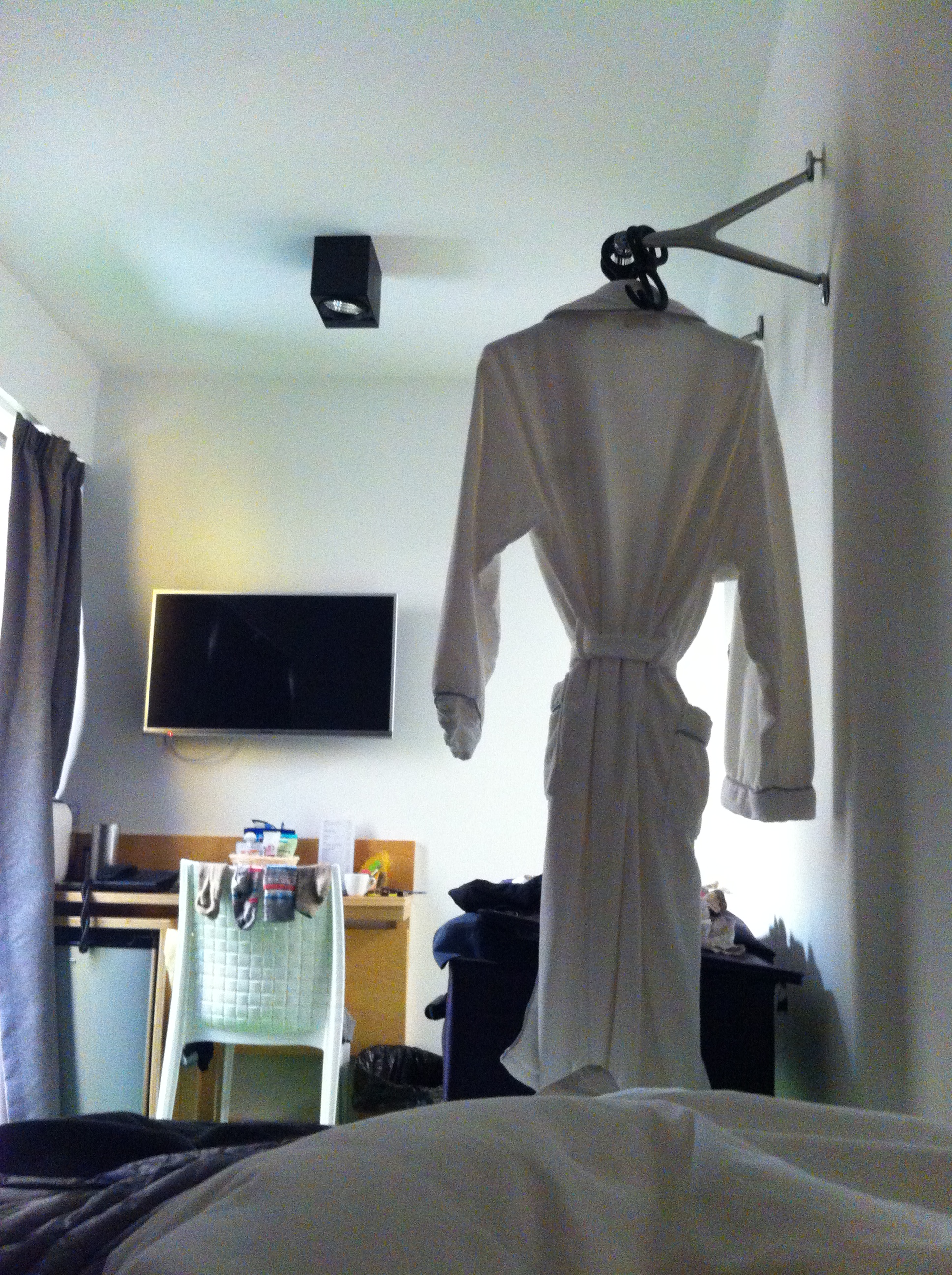
I rarely sleep past 6am, but on my last day in Malta I slept until nearly 9:00.  While the previous day I had been awakened by a message from my cousin alerting me that the election wasn’t looking good for Hillary Clinton, this morning the first thing I saw, at the foot of my bed, was this:

spooky-robe

Why would anyone think this was a good place to hang the complimentary bathrobe?

Spooked, I jumped out of bed.  I had to get moving anyway, since I had only a few hours before I had to catch my flight to Madrid.

People ask what my favorite thing is about traveling.  That’s easy—not being at work.  Now, I like my job, but it does require me to show up every morning, go to meetings, meet deadlines, and achieve goals.  Everything is measured, tracked, and scheduled. I must be organized, coordinate with others, prioritize, and strategize.

Aside from catching flights and trains, little of that applies to traveling.  I can float like a moth from one thing to another, when I like, depending on what catches my fancy.

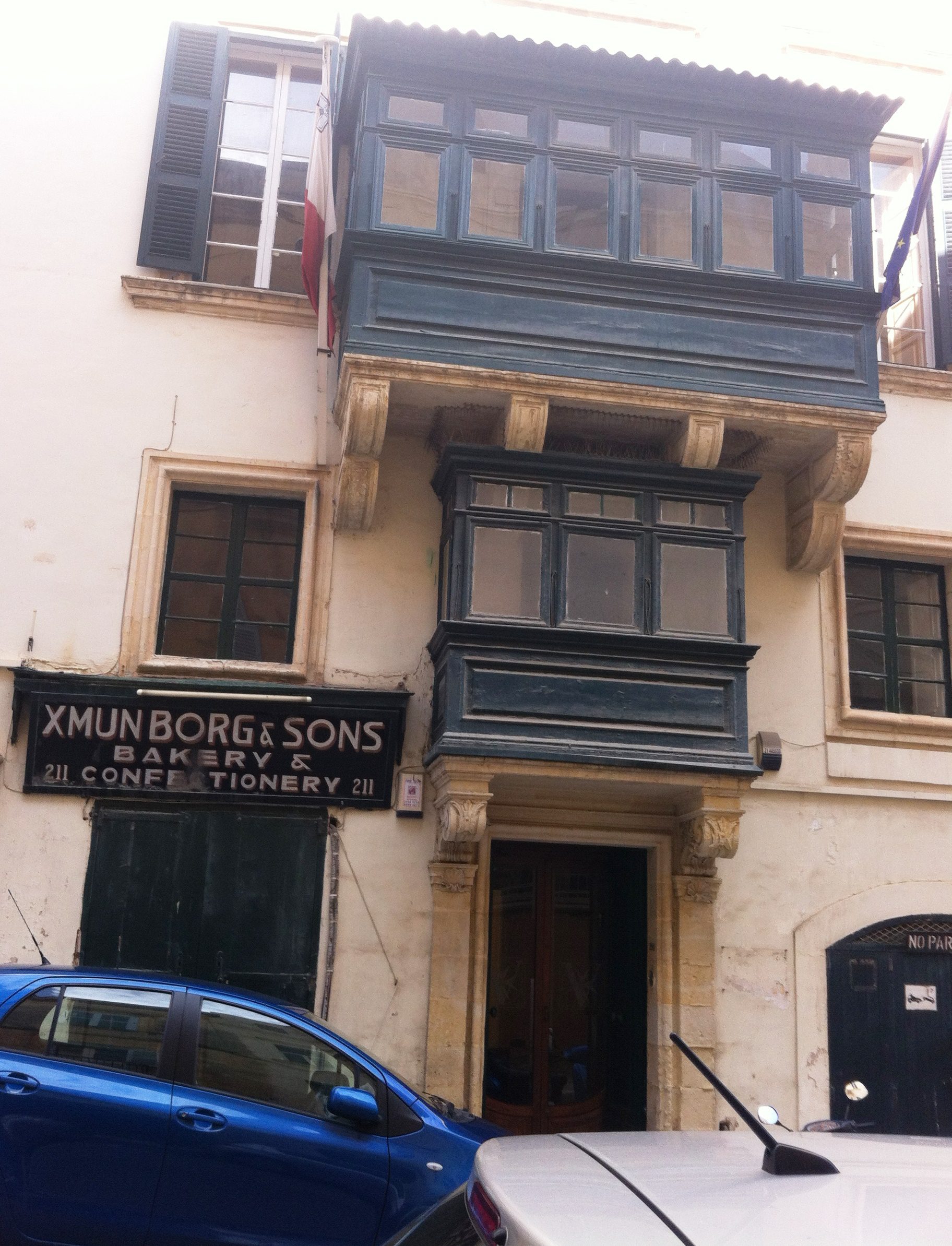
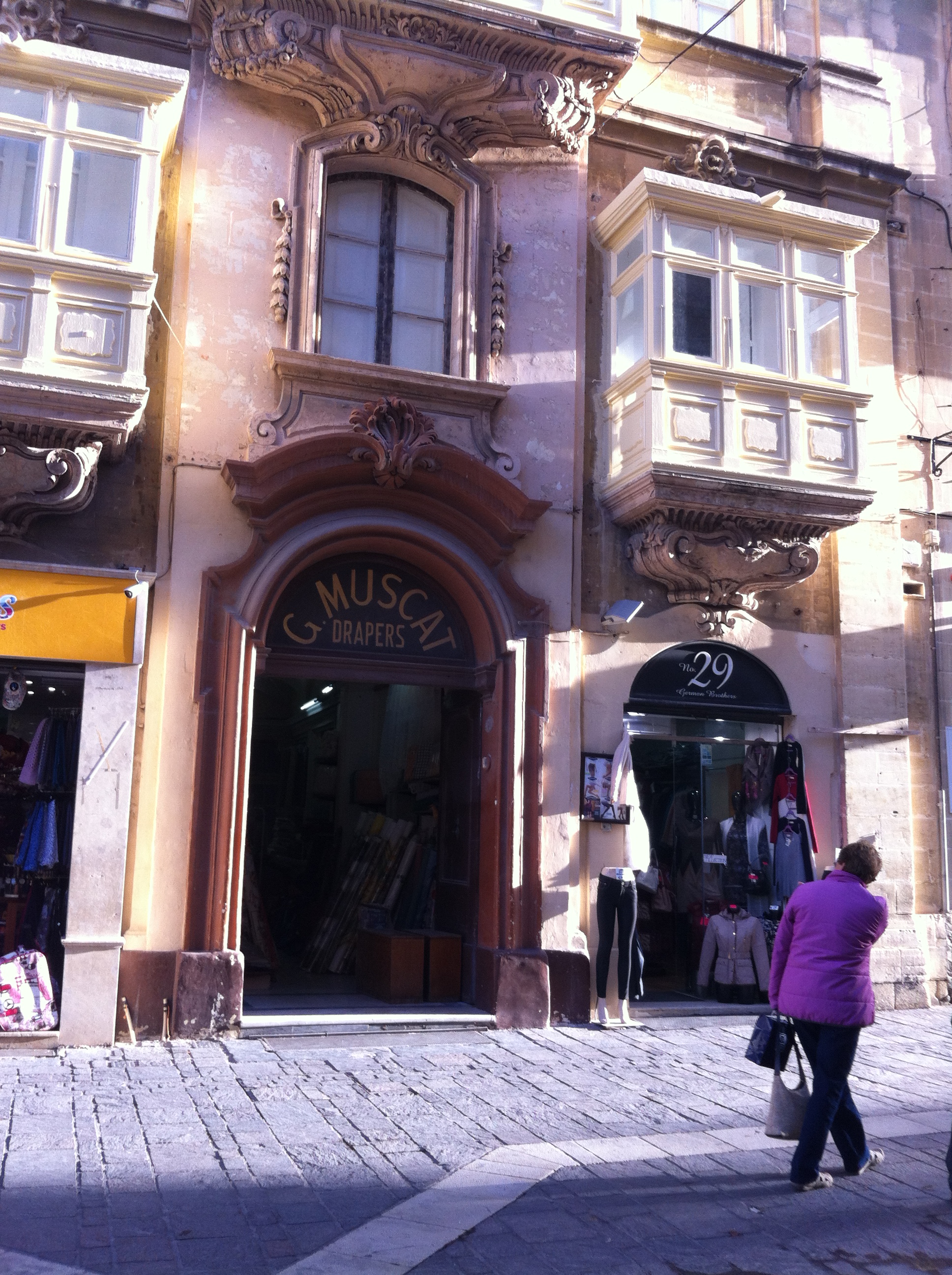
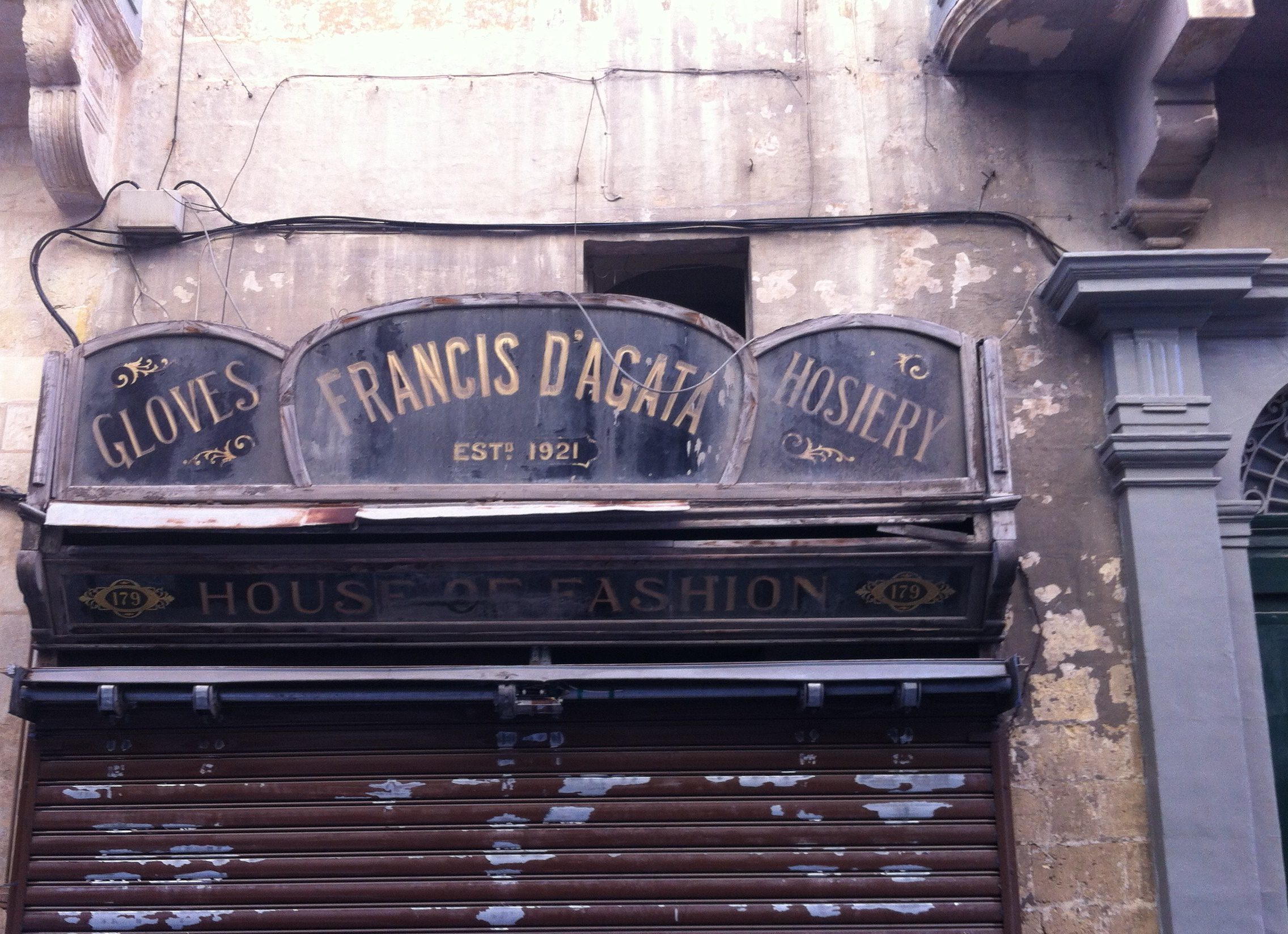
Today, I wanted to revisit the little shops and the Maltese balconies I’d caught glimpses of on my first day.  So I wandered around Valetta for a couple hours and took photos.

bakerydrapersdagata

There seemed to be a lot of drapery makers.  My grandmother was a drapery cutter, believe it or not.  She was one of the grunts in an interior design shop which made custom drapes for rich people.  Thirty years ago, when I was living in public housing, she gave me a set of exquisite pale green silk drapes that her rich clients had rejected.

Some of the shops were open.  Some appeared not to have opened since 1929, although life on Malta didn’t really started until after 10am.

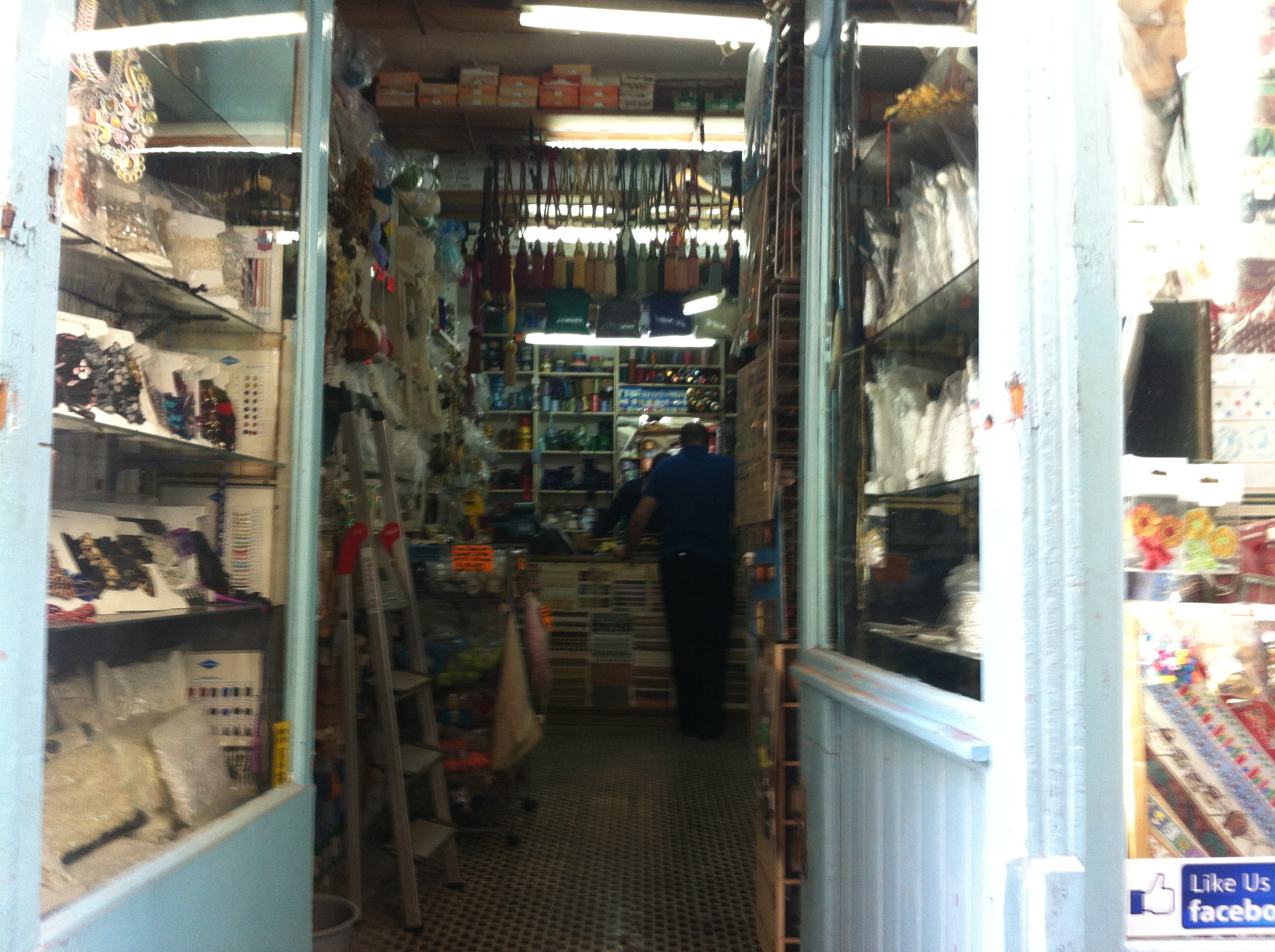
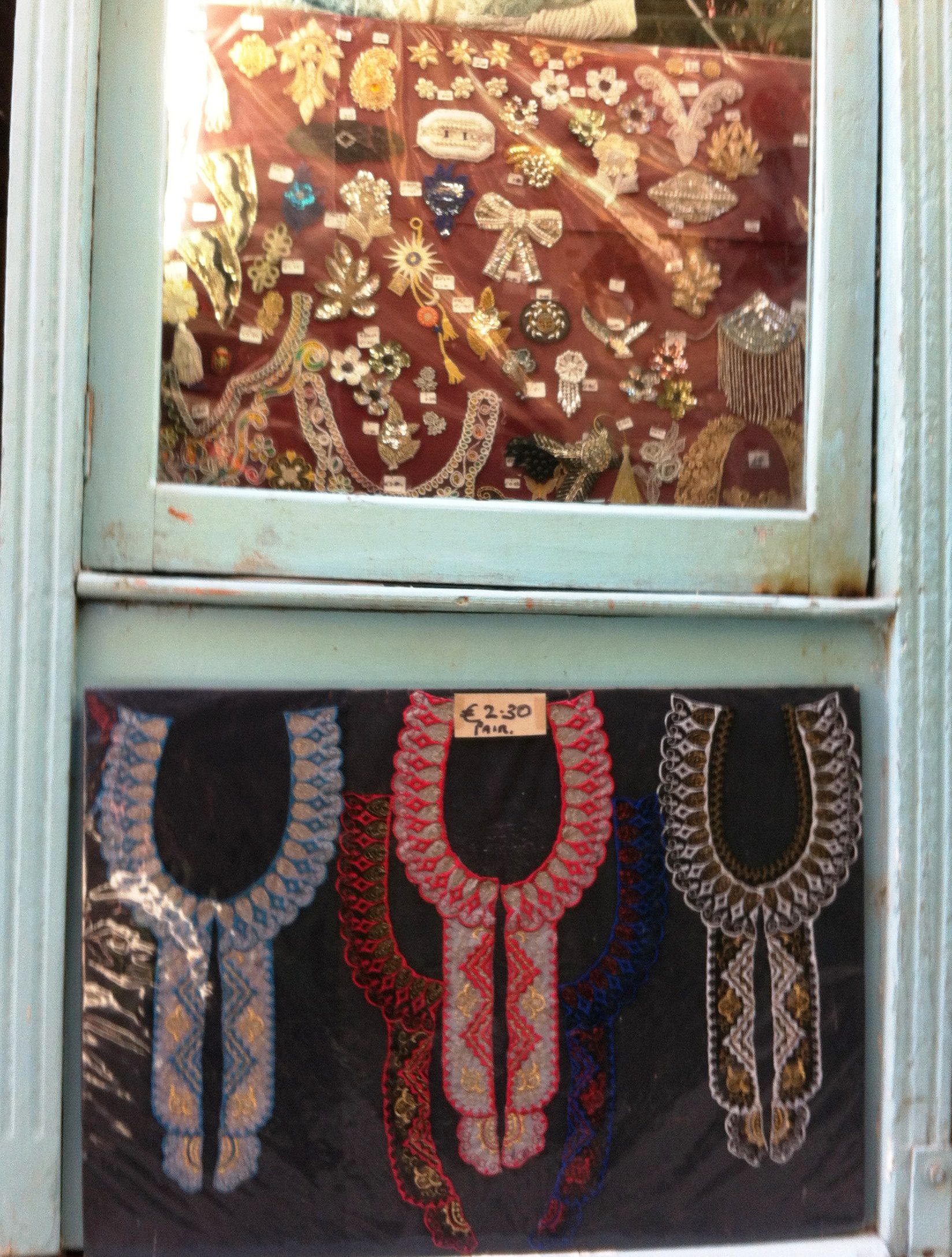
When was the last time you saw a “notions” shop?

notions-shop-2 notions-shop

I know I will regret not buying a couple of those trim pieces the next time I want to make a dashiki.

There were these two forerunners of Target and Walmart:

family-store-close-up universal-store

Can you imagine taking your kids to the Family Store?  The looks of horror and disappointment on their faces?  I would give anything to visit these places in their heyday.  I wondered when that would have been.

I felt nostalgic for a time when craftspeople like my grandmother worked in neighborhood shops making high-quality goods.  I saved until I could buy them with cash.  I had a couple really good pieces in my closet that I wore over and over.  Now, I have 50 cheap tops; the buttons fall off almost before I get them home.

The top balconies below are Maltese.  What makes them Maltese?  I guess the fact that they have a roof and are enclosed.

balconies

And yes, that is blue sky—at last, my weather luck had turned.

I threw my still-wet socks and underwear in my suitcase, and my friend the desk guy effortlessly carried it up the 200 steps for me.  “People write angry reviews of the hotel because of the steps,” he said mildly.  “But we have them on our website.”

I just looked, and I don’t see any photos or mention of the steps on the SU29 website.  However, if you’re going to Malta—or just about anywhere in Europe—you shouldn’t be surprised that there are lots of steps.

I was at the pickup spot for my prepaid airport shuttle 10 minutes early.  It never arrived, and I had to pay €25 to take a cab to the airport.  I sent Malta Transfer an email when I got home but they never responded.  So scratch them off your list if you go to Malta, but that was the only thing I could complain about besides the weather, which wasn’t Malta’s fault.

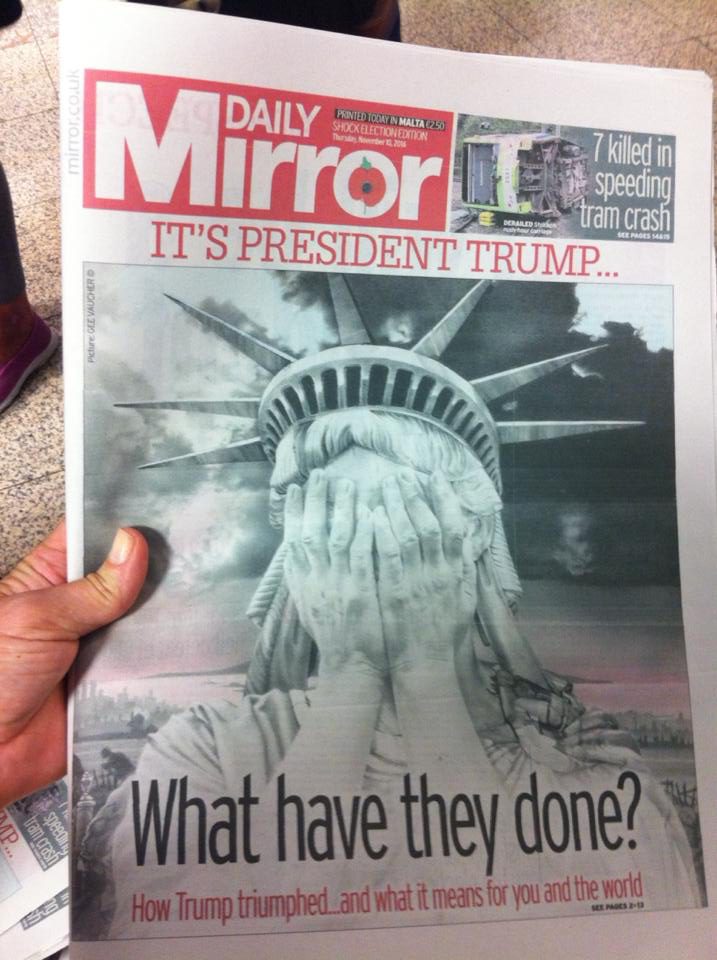
Here were some of the world news headlines in the airport:

trump trump-7 trump-4 trump-3


Skellies and Wabbits

This is a series of posts about Italy, Malta, and Spain that starts here.

Back in Valetta, I still had a couple hours until sunset.  Unlike in Italy, no one had warned me, “Don’t go out after dark by yourself!” Malta is such a sleepy place; the biggest risk of wandering around at night would be tripping over a cobblestone, not being accosted by stick up men.

But first I washed my socks and underwear and draped them all over the room.  For fun, I looked at prices on the laundry bag.  Malta certainly wasn’t any cheaper than Rome—it would have cost me around $50 to have all my items done for me.

I also What’s App’d with Lynn, who I would meet in Madrid the next day.

“Look for American seeking political asylum!”

“I shall have a very large bottle of wine waiting at the hotel,” she replied.

I asked the front desk guy if he would print my boarding pass and if someone could help me lug my bag up the steps the next day.  He was so nice.  You can tell when people genuinely like other people, vs. when they are putting on a smile because it’s their job.  He agreed to both of my requests.  I asked to see the cigars they had for sale in a small humidor.  Cubans!  Perfect.  I bought two, one for my cousin and one for me.

I also asked where I could get a good meal.

“At the British Hotel, right across the steps,” he replied without hesitation. “They are the best restaurant on Malta.”  Much as I enjoy a good fish and chips, I was looking for something more local, but I smiled and thanked him.

I headed out to see the main attraction in Valetta: St. Johns Co-Cathedral.  It cost €10, the most expensive thing I would pay to see on this trip.  I wondered why it cost so much.

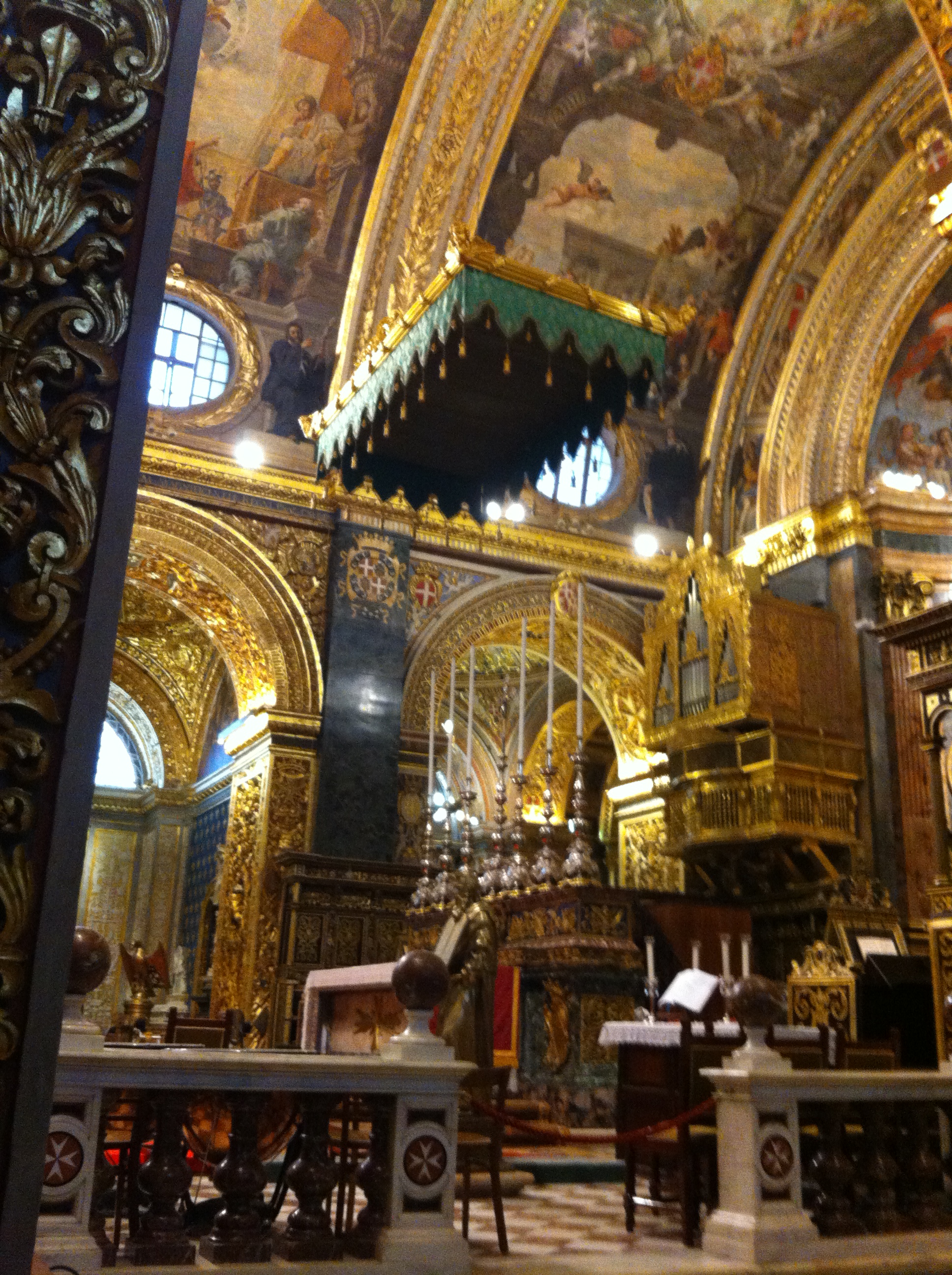
I have seen a lot of churches and mosques and synagogues (as an aside, there are 365 churches in Malta, for a population of about 400,000 people).  Like the church in Marsaxlokk, the Co-Cathedral was outsized for the size of the city, and it was the most over-the-top gilded house of worship ever.  Here is my shaky faux Go-Pro video.  When I posted it on Facebook a friend commented, “Looks like Donald and Melania Trump’s penthouse.”

Here are a couple photos.  I don’t recall seeing twirled columns like this before:

st-johns twirled-columns

As usual I found myself wishing I had read up more ahead of time.  Why was it called a co-cathedral—“co” with what?  It was built by the Knights of Malta.  All I knew about them was that they provided security for the crusaders.  Obviously they had more money than they knew what to do with.  How did they acquire it?

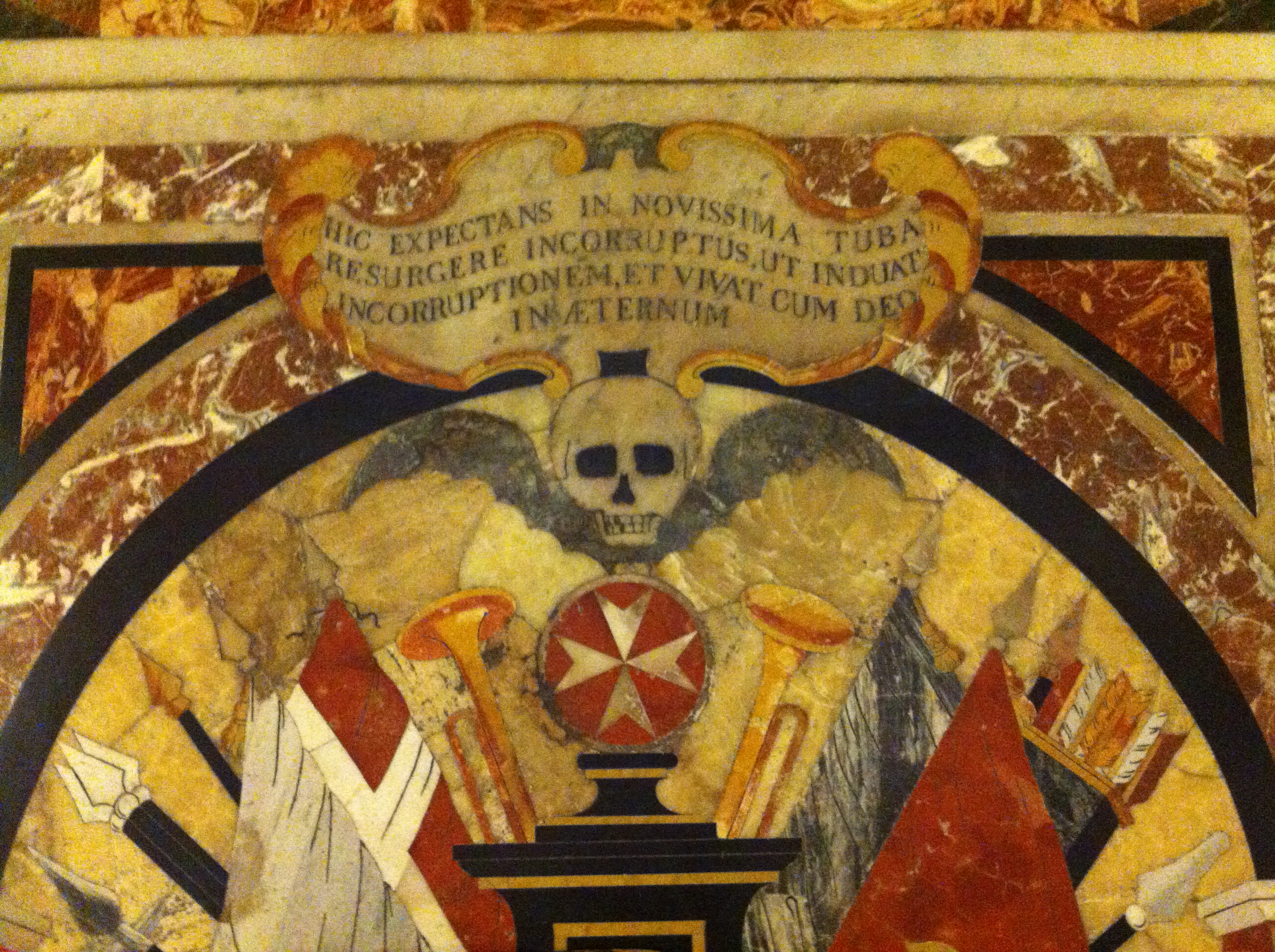
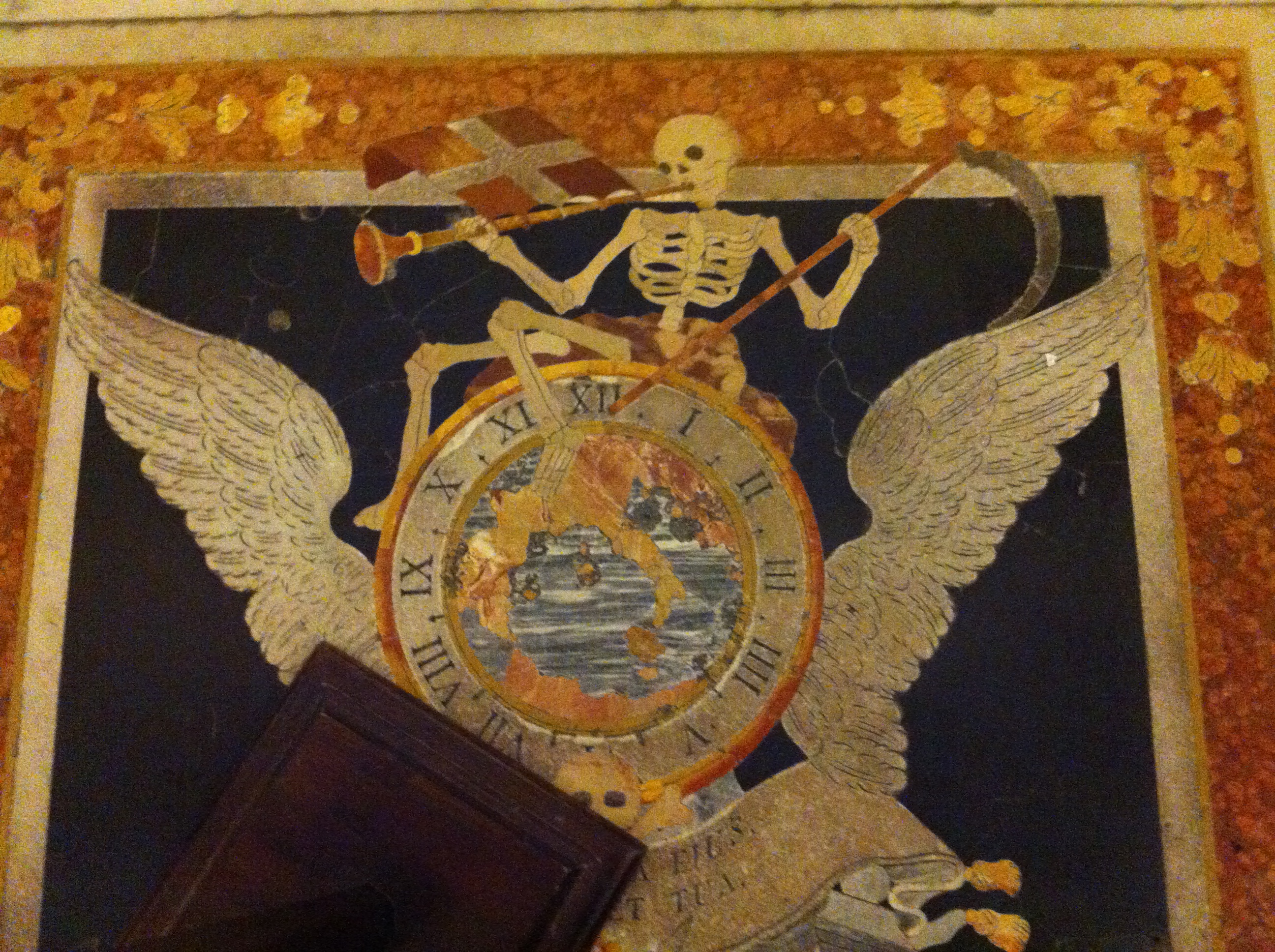
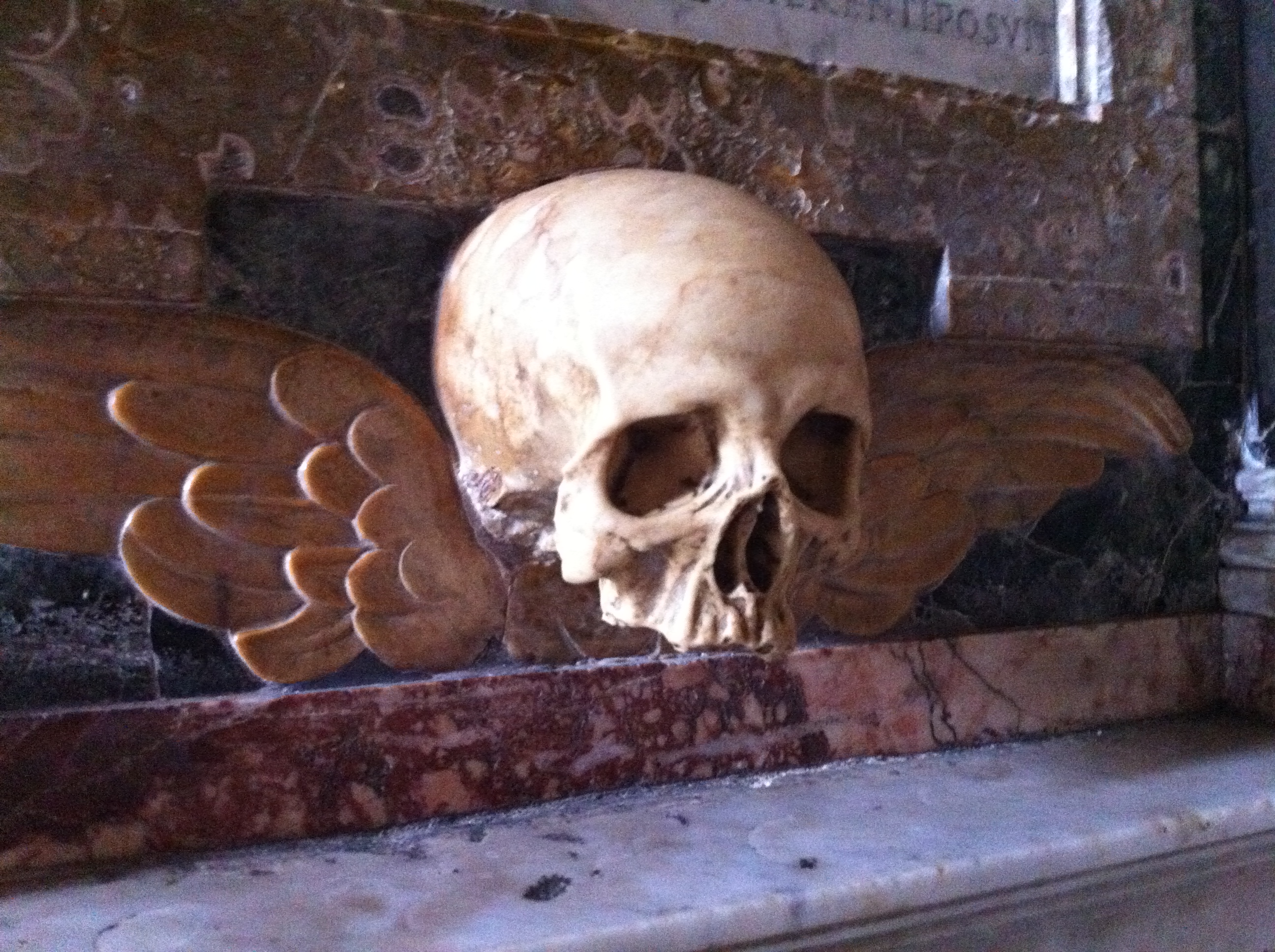
Clearly the knights liked their skellies:

maltese-skull maltese-skelly

These two are from some other church but you get the idea.  Skulls and skeletons were everywhere.

skull skeleton-mama

The football field-sized floor contained hundreds of burial crypts.  These were the big kahunas of their day, no doubt buried with great pomp in this gilded monument.  And now, their images and epitaphs were worn smooth by thousands of tourists’ feet, tourists who shuffled along gawping at the gold, not even noticing they were walking over tombs of great personages.  So much for eternal glory.

The co-cathedral’s main claim to fame is its two Caravaggios, the Beheading of St. John the Baptist and St. Jerome Writing.  These were in a separate room and it was strictly forbidden to take photos, so you’ll have to Google them yourself if you’re really interested.

Malta’s national dish is rabbit stew.  I passed restaurants with placards claiming to have the Best RABBIT Stew!  I’ve had stew of rabbits—shot by Lynn’s husband and stewed by her.  In the end I went to the British Hotel and had the best meal of my trip so far—marinated octopus and prawns in tomato sauce.  It was a white linen table cloth place with ocean views and impeccable service from the Maltese maître de and a Czech waitress—not the kind of place where to photograph your food.

Marsa…wha?

This is a series of posts about Italy, Malta, and Spain that starts here.

I “oohed” and “aahed” at the temples in Tarxian, and now I headed in what I hoped was the right direction toward the Hop-On-Hop-Off bus.  I know I write a lot about getting lost, but this was the worst.  As I wrote in a previous post, all the buildings in Malta look similar.  It was raining, so people were walking with their heads down under umbrellas and it would have been hard to get their attention to ask directions.  Although English is the official language, for the Maltese people I met it was clearly a second language.

I asked a woman in a pharmacy and she haltingly directed me to a city bus stop.  I stood there a few minutes, thinking I could just give up on seeing more of the country and go back to Valetta.  But which direction was Valetta?  I struck out again was soon panicking.  What if I never found the bus stop?  What if I had to spend the night in Tarxian?  I hadn’t seen any B&Bs or even a downtown area.  Could I take a taxi back to Valetta, if they had taxis?  My umbrella blew inside out and splattered me with rain just as a truck drove by and splashed water from a puddle all over my feet and legs. I started to whimper, then told myself, “Anne, buck up!  It’s not like you’re going to die … probably.”

I went into a tiny store and asked the man at the counter if he knew where GymStars was, the landmark I had noted at the bus stop.  He knew it!  He gave me clear directions and within 10 minutes I was on the bus.  But first I bought this orange at a fruit stand.  Look how beautifully wrapped it is.

orange

We were off to the fishing village of Marsaxlokk. I love that name. Like the Maltese people, their language reflects the mix of cultures that have passed through or ruled the archipelago.  Maltese is the only Semitic language in the EU, and it’s a “latinized form of Arabic” that originated in Sicily.  About half the words are of Arabic origin, a third are from Italian, and the rest are from English.  Here’s a sample of Maltese:

malti-paper

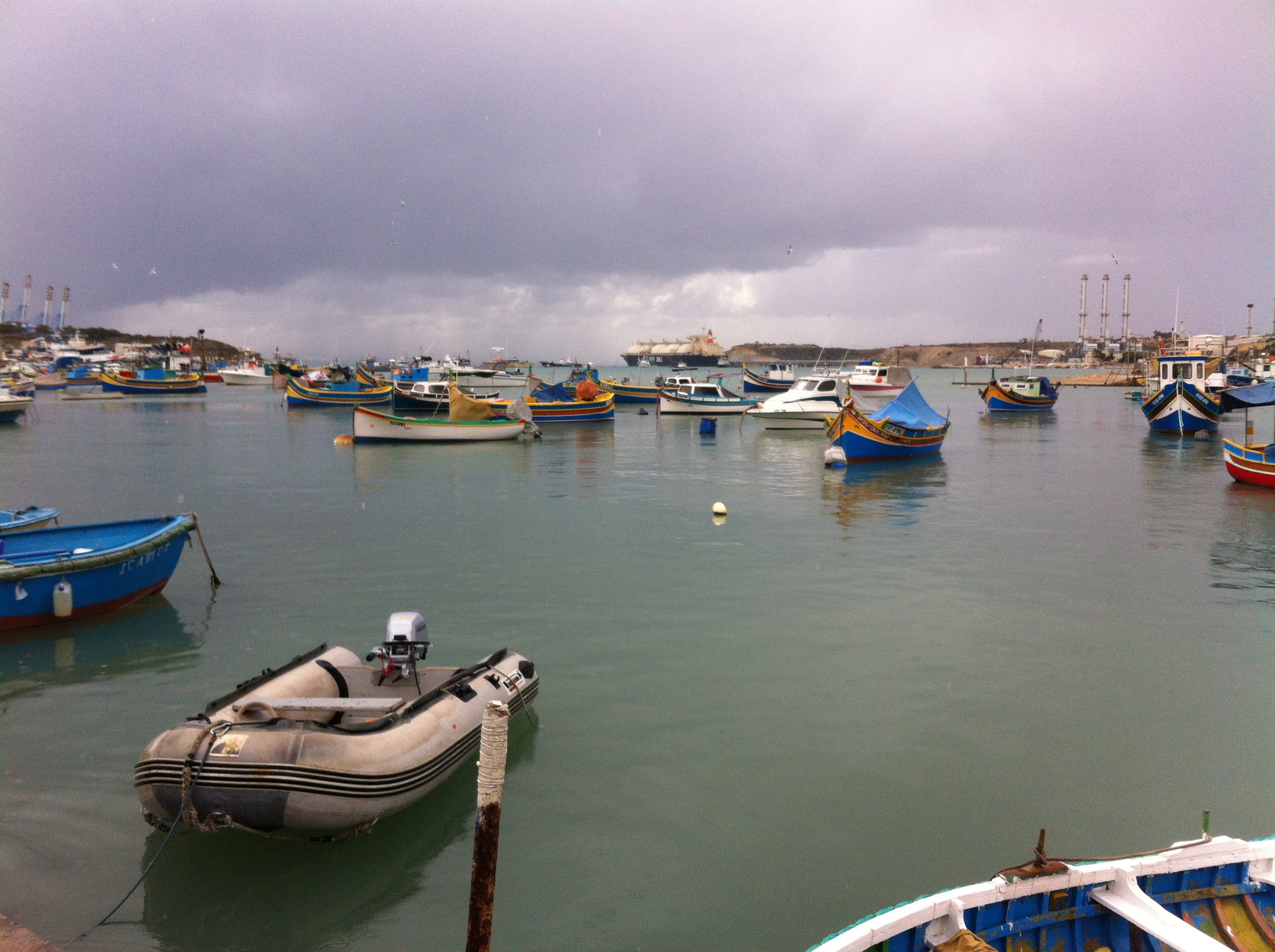
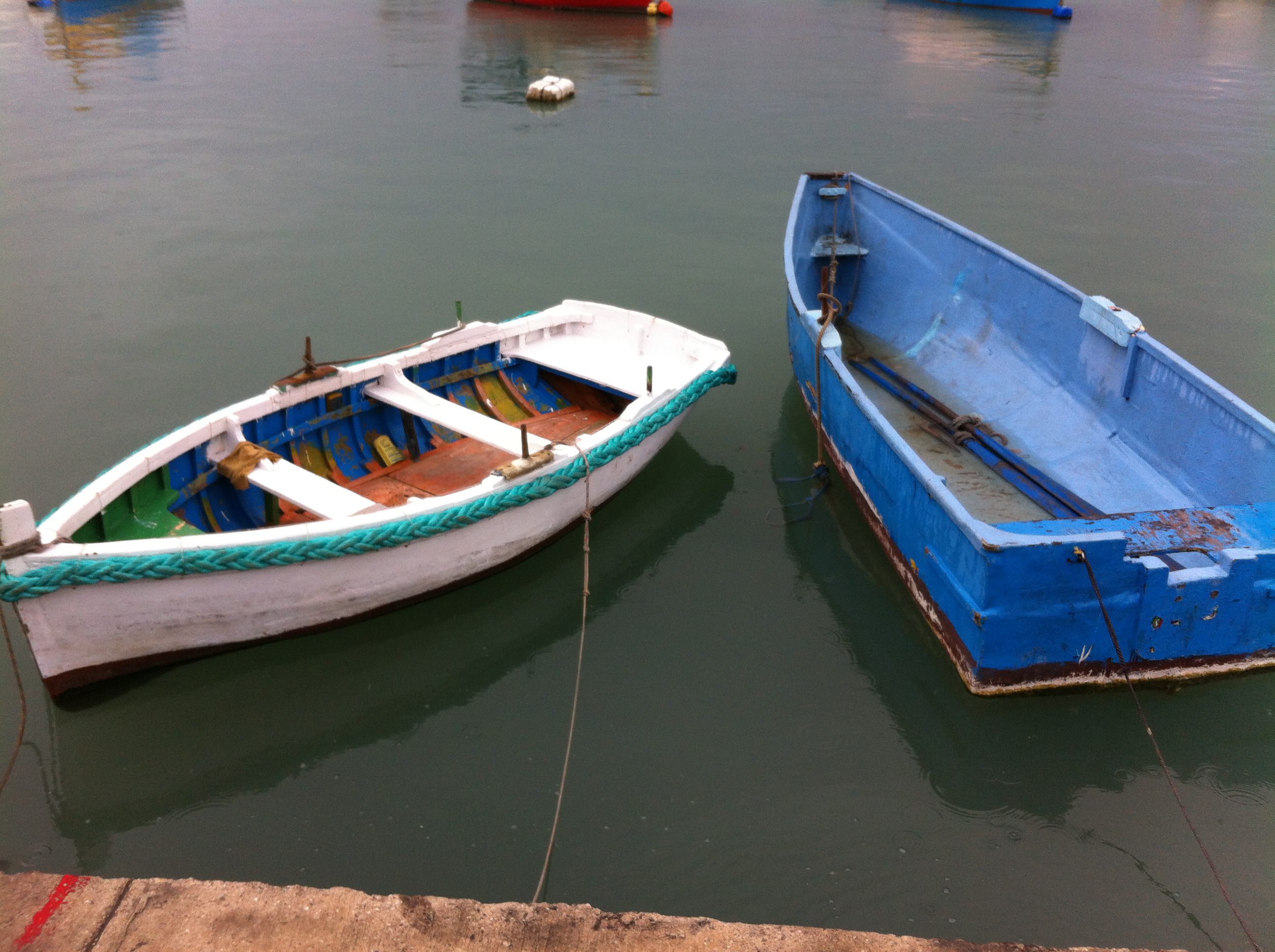
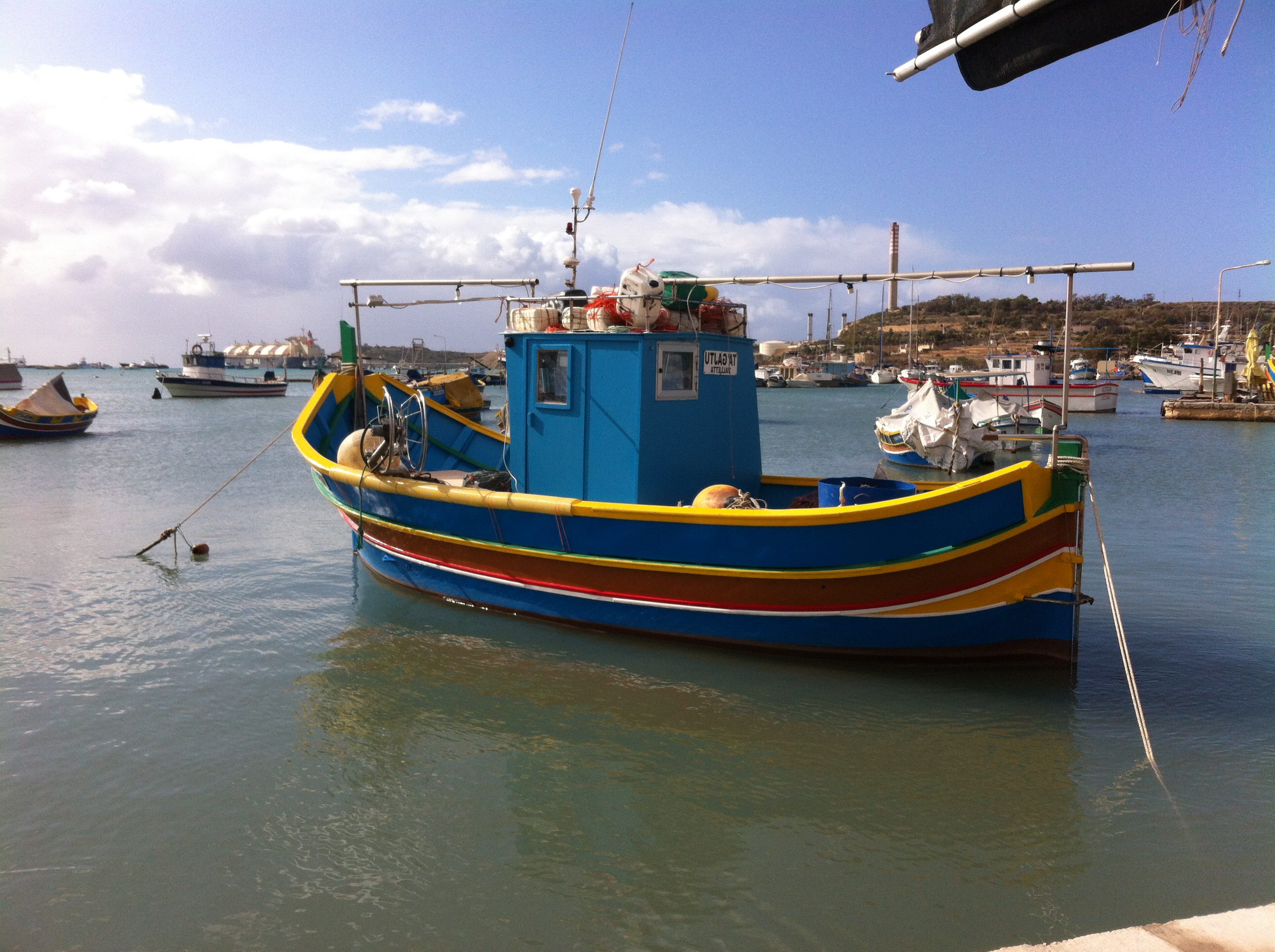
As soon as I stepped off the bus in Marsaxlokk I felt at peace.  I took more photos here than I can count, but here are just a few of the boats in the bay.

best-boat-shot boats-3 boats-5boats-7

I decided I didn’t care about anything else on the bus route.  I was going to savor my time here. It started to rain again, hard, and my umbrella heaved inside out then totally collapsed.  I thrust it into a trash can and stepped into what I assumed from its massive size was a cathedral, although the village couldn’t have had more than a few thousands residents. Here’s the dome:

church-dome

I could hear water dripping from the dome; there was a bucket in the aisle to catch it.  The church had the usual icons such as this one with Mary with a dagger in her heart:

stabbed

I guess a lot of believers find this inspiring.  Personally I prefer female role models who aren’t martyrs.

An elderly man and woman were sitting in the back of the church chatting.  I asked what the name of the church was.

“Our Lady of Pompeii,” came the reply.

Pompeii?”

“Yes, but Our Lady is gone for the month.  She is visiting Sorrento, Italy.”

I walked into a restaurant and was seated at a table facing a TV that was blaring, “Donald Trump … next American President … President Elect Trump ….”  I buried my face in my hands.  It was still sinking in, and as I write this, he has just been inaugurated and it still seems unreal.  If only someone would jump out right now and yell, “Ha ha, pranked ya!”

The hostess very kindly and discreetly changed the channel to music videos.

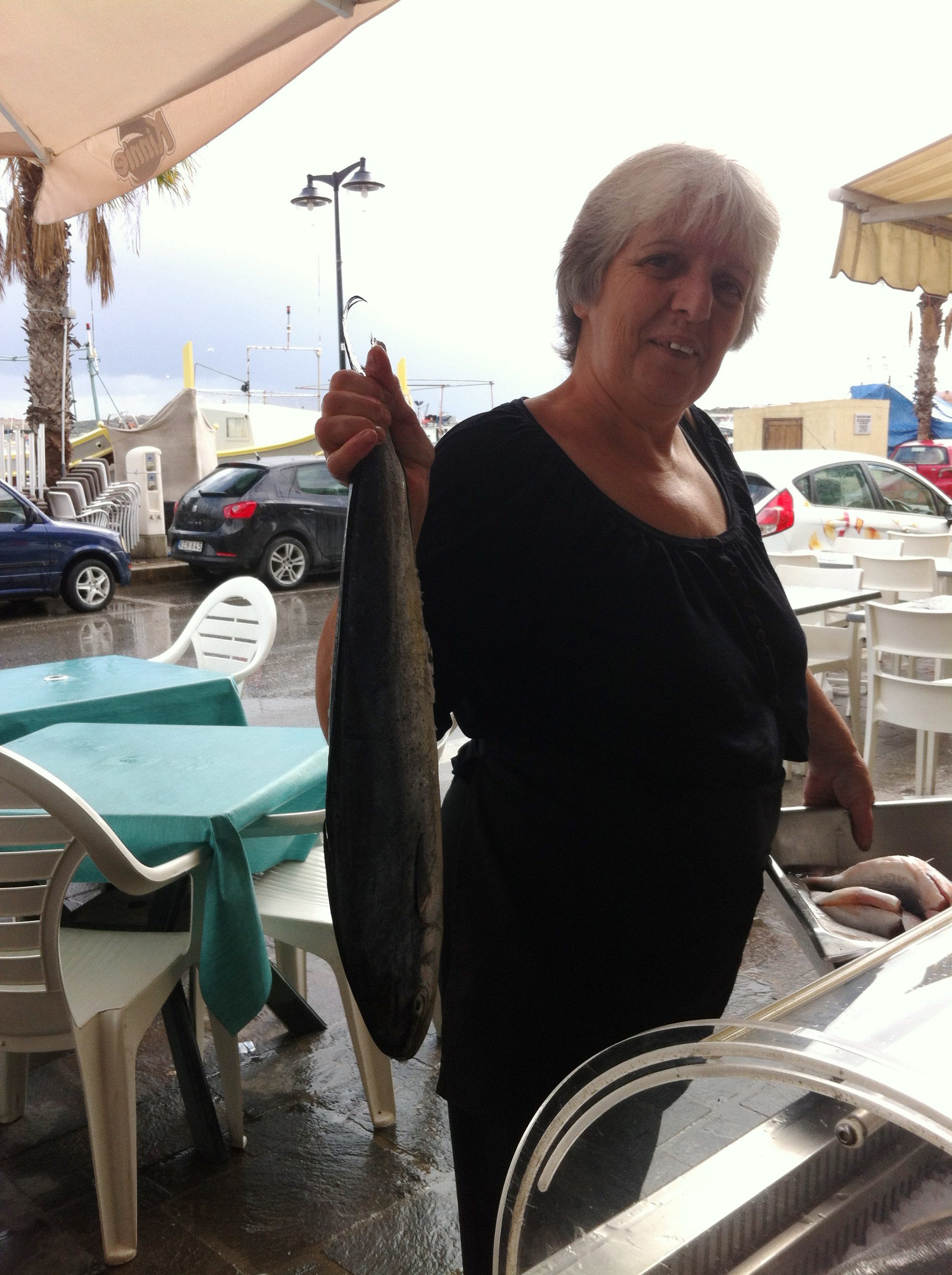
I had a good fish meal (the boats weren’t just for show), then took the bus back to Valetta.

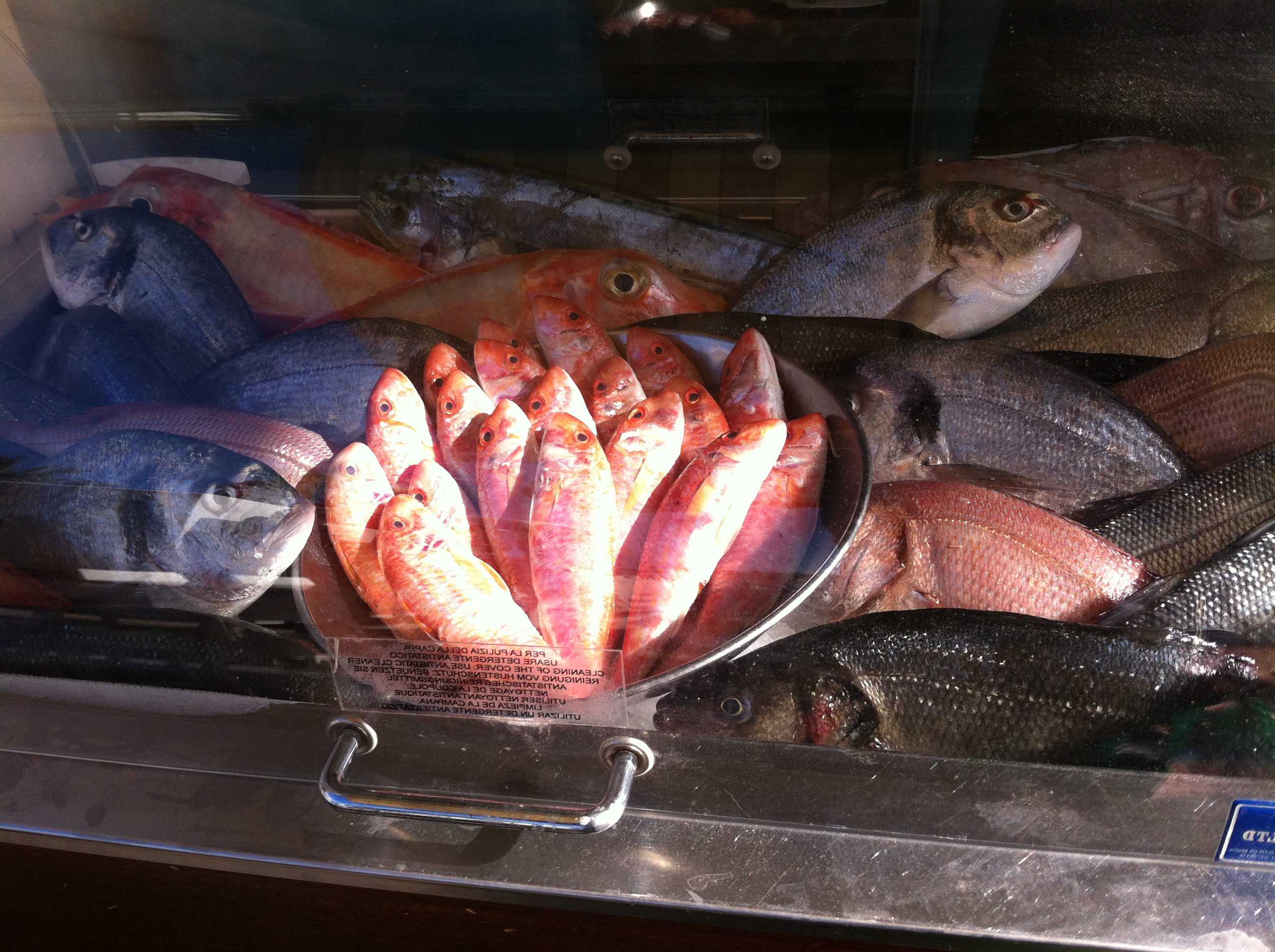
fish fish-2

Here was my last sight of Marsaxlokk:

doors

Tarxien Temples

This is a series of posts about Italy, Malta, and Spain that starts here.

As one does, I hopped off the Hop-On-Hop-Off bus in Tarxian, just outside of Malta’s capital city of Valetta.  I knew that the whole reason I was here—my desire to see the 3000 B.C. underground burial site called the Hypogeum of Hal Saflieni—was closed for renovation. How do you “renovate” a 5000-year-old burial site?  But the driver had said there were other ruins off to the right somewhere, so I decided to have a look.

Here’s something about Malta.  While Italy offers a full palette of colors—ochre, Pompeian red, peacock blue, cerulean, warm beiges, every iteration of green—Malta is monochrome.  Everything is built out of limestone, and limestone doesn’t have a lot of variation to it.  Also, the buildings on Malta are all built to about the same height—two or three stories.  A coworker who had been to Malta told me before I left, “It all looks the same.”  So before I left the bus stop, which had no sign, I took a mental snap shot of the area.  There was something called GymStars which I figured I could remember and which would be unusual enough that people might know it if I had to ask for directions.

Two other women had also hopped off the bus with me, or I should say, I hopped and they stepped down.  They were much too sensible to hop, with their sturdy shoes and serious rain coats and hats.  They were from England, so they were much better prepared for rain than I was.

They were in Malta for the annual convention of Soroptimist.  Had I heard of it?  Umm … it sounded vaguely familiar but a lot of things do to me.  If it was a missionary thing I didn’t want to know.  Was it like the Women’s Institutes—where women in rural England compete on pie baking and floral arrangements? I asked.

No, and here I quote from their website: “Soroptimist is an international volunteer organization working to improve the lives of women and girls, in local communities and throughout the world.”  The italics are theirs; why they emphasize international I don’t know.  Maybe so you don’t confuse it with that local Soroptimist group that keeps knocking on your door and trying to give you pamphlets.

I kicked myself for not knowing there was an international women’s conference in town during my visit.  How great would that have been to attend?  I wondered what kind of freebies they handed out.

We chatted a bit about my job working for a refugee organization and about their convention, but within a few minutes we were lost.

“The bus driver waved in this direction,” one of my companions said, “so we at least know we’re on the right track.”  We asked for directions, walked a few blocks, asked again, and so on for about 20 minutes until we stumbled upon the temples.

There was a tiny office and gift shop where I paid my €4 or whatever it was, then we stepped outside to see the site, which was covered by sailcloth to protect visitors against sun and rain.

The Tarxien temples are megalithic structures built between 3600 and 2500 B.C.  “Megalithic” means “relating to or denoting prehistoric monuments made of or containing megaliths,” or “massive or monolithic.”  You get the idea.

megalithic

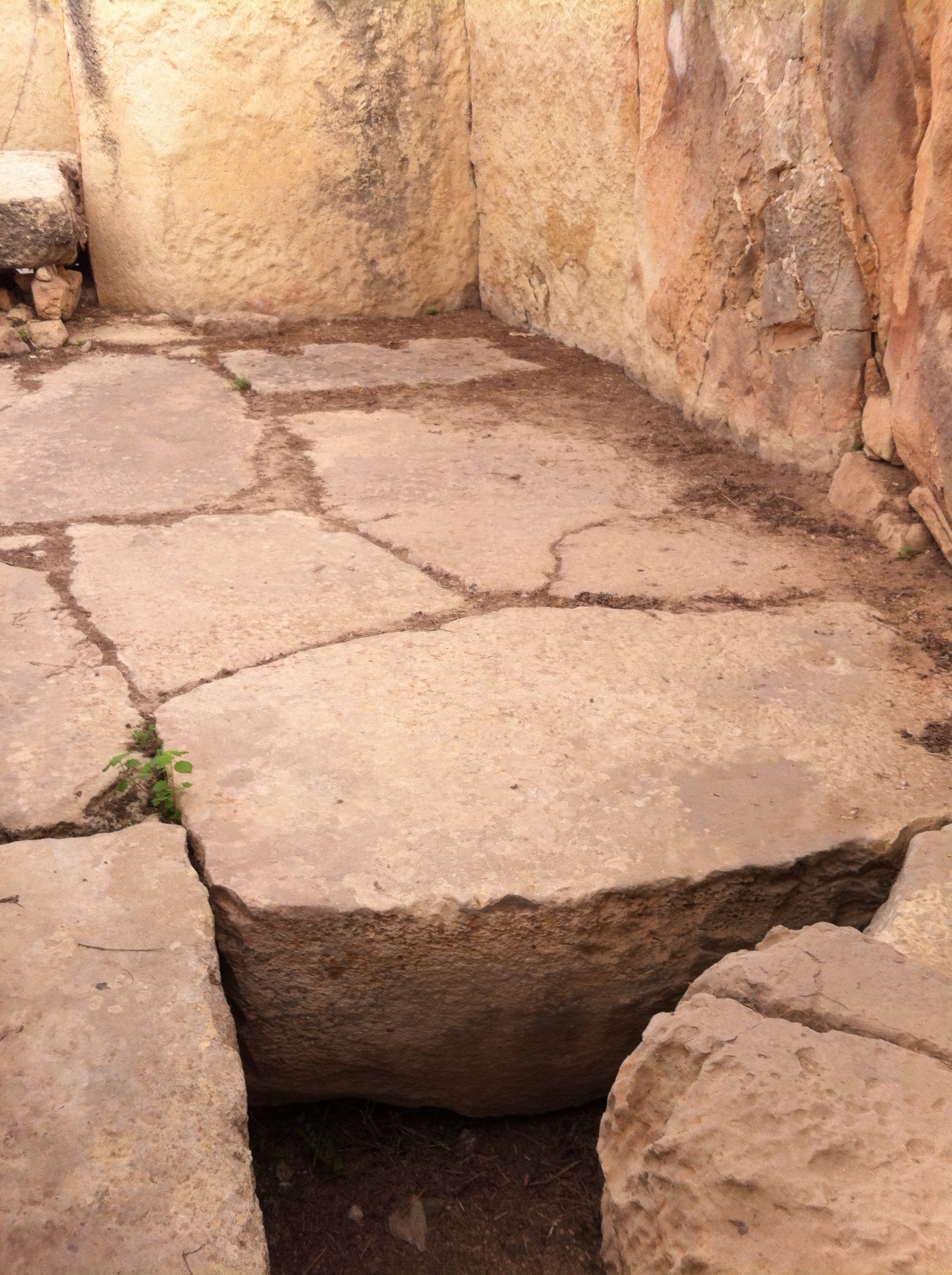
This was a floor section, about a foot and a half thick.

floor

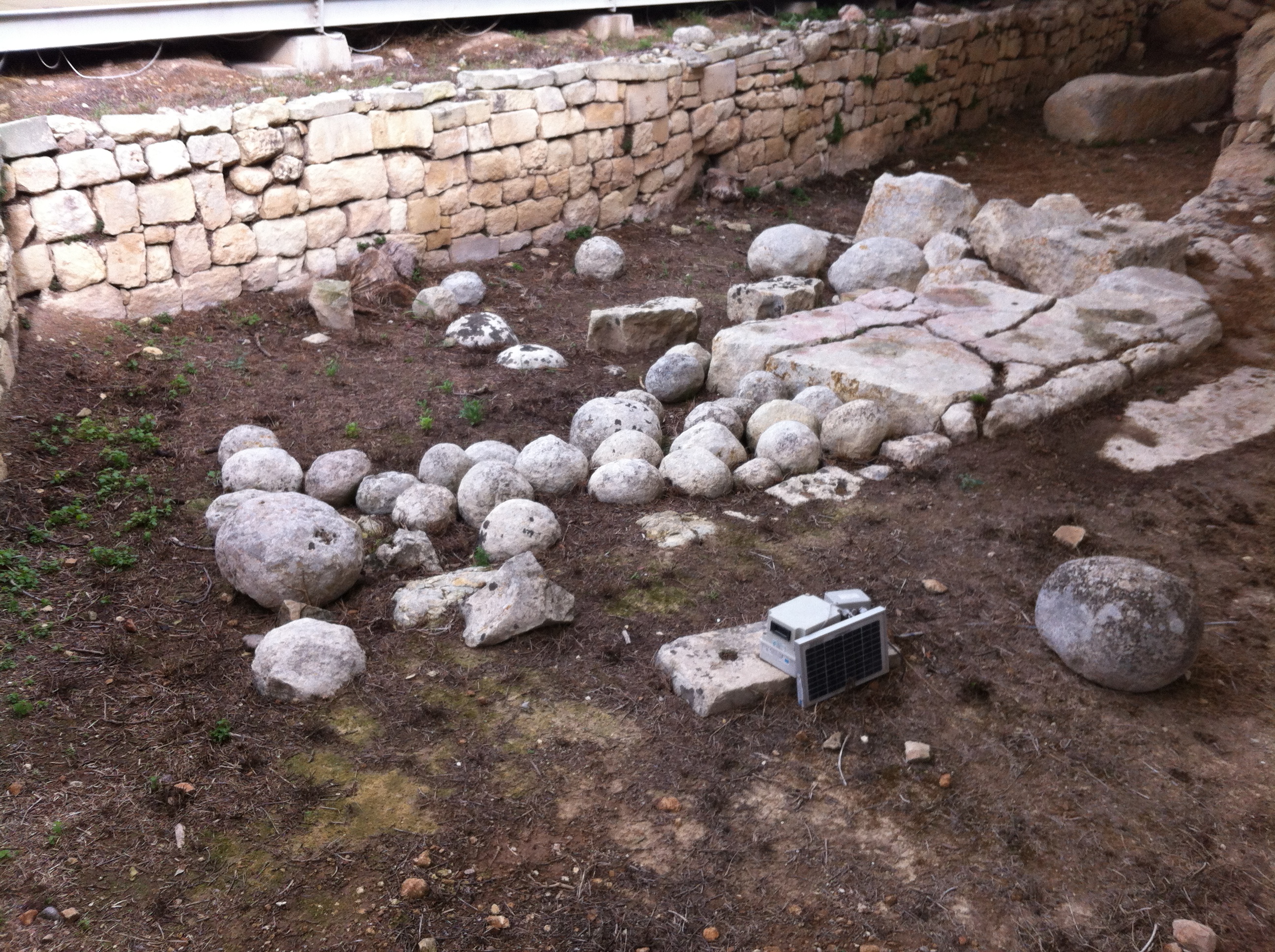
It is believed that these stone balls were used to roll the mega sized slabs into place. No doubt with slave labor.

balls

The holes in these slabs were thought to be used to lash doors to the walls.

door-holes

There wasn’t much left of the decoration except for this lovely half a fat person.

fat-lady

I glanced around to find my two Soroptimist friends.  They were still at the first signpost and were consulting a book, so they were clearly taking a deep dive and would be there for hours. It was 11:00 a.m.  I had 32 more bus stops to go and had to leave the next day, so off I went in search of the bus stop.

On the Move

This is a series of posts about Italy, Malta, and Spain that starts here.

I awoke in Malta to a new a racist, misogynist, and xenophobic regime in my poor country.  Of course that’s just my opinion and I’m one of those elitist, city-dwelling liberals who believes in facts.  Who needs facts when you have someone telling you what to think?

Based on the American news, I had expected to see hordes of refugees in Europe.  I follow the liberal news sources, and the scenes we see are of throngs of swarthy, dusty people behind fences, their fingers entwined in the chain links as they call out to be released from whatever camp they are in. Cut to scenes of dark young men sitting on the sidewalk in some European city, looking like they’re plotting something. Then there are the close-up shots of dusty, tired-looking women (always wearing hijabs) holding young children who have one tear rolling down their dusty cheek.

The impression we get from even the liberal news is that refugees are invading in massive numbers.  Specifically, Muslim refugees.  Now, I don’t know the exact numbers but since I work for an organization that serves refugees, I know there are many thousands of people seeking asylum in Europe.  However, the images we see didn’t play out for me in Europe.  I never saw crowds of refugees—unless they were wearing Prada and I mistook them for Italians.

I may as well say here that my American image of Italians as being dark, short, and well-dressed were confirmed on this trip.  The Maltese were also dark, even shorter, and while not as impeccably dressed as the Italians, I didn’t see many people wearing jeans or sweatshirts.  Many of the Maltese I saw also had beautiful green or amber-colored eyes.  Was this a result of the mingling of many nations that had taken place over millennia?

I could count on one hand the number of women I saw who were wearing hijabs.  I saw more nuns than black people during the entire three-week trip in three countries.

As I wrote on Election Day, I did meet an Ethiopian immigrant in Malta who went to the immigration office with me to find out if I could claim political asylum or just buy my way in.

After I learned that I couldn’t run away to Malta forever, I decided to at least see as much of it as I could in one day.  I had been up drinking espresso since 4:30 am and had had very unsettling news; what a perfect mode in which to explore a new country!

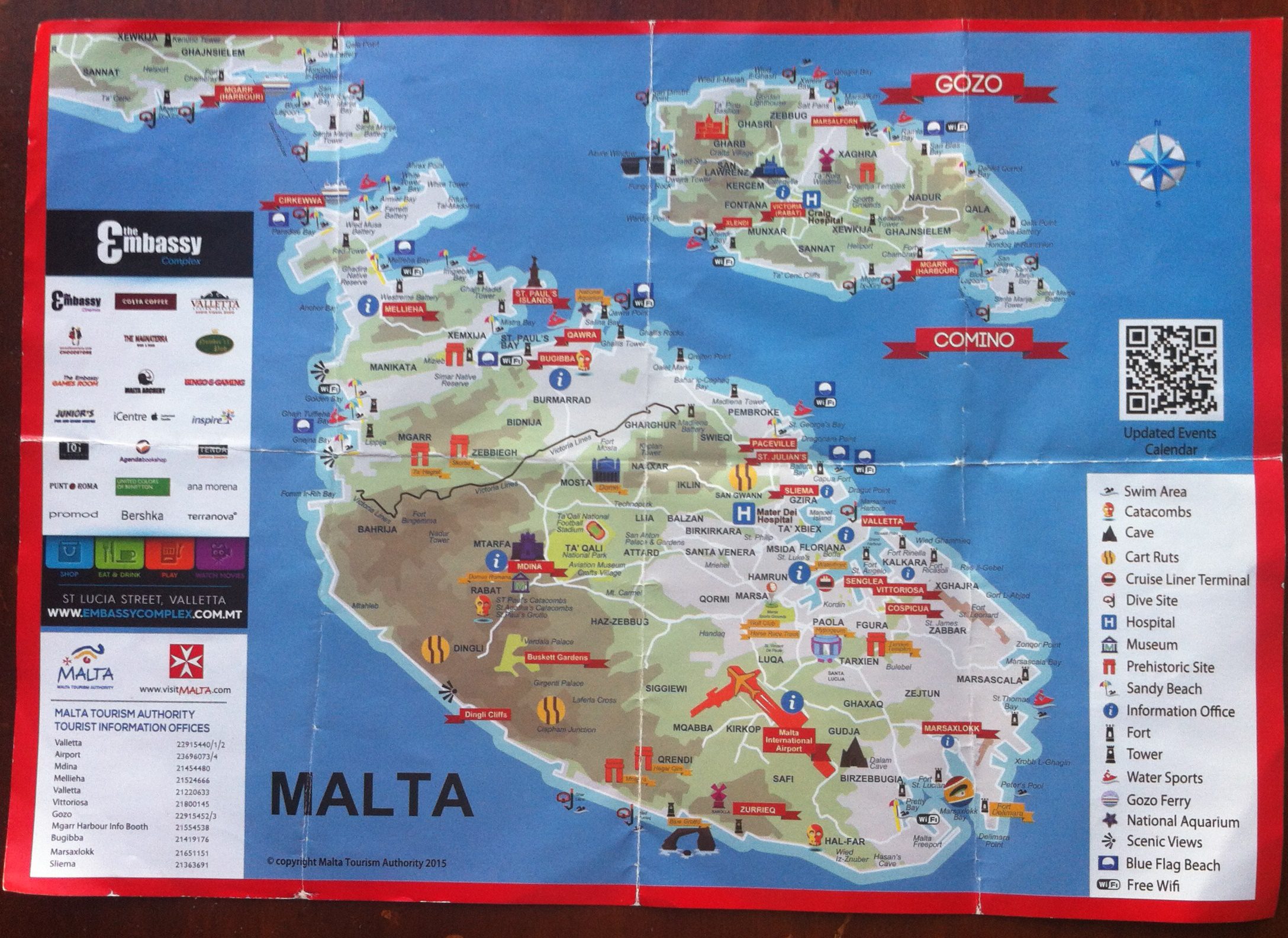
I found the Hop-On-Hop-Off Bus, which is a great way to get the layout of a city without having to figure out public transportation. Here is the map:

hop-on-hop-off

I ran to catch the bus, then sat for 45 minutes and talked to the driver and ticket seller until starting time. Both of the men appeared to be in their early 40s.  There were no other passengers, and the rain drizzled down continuously while we waited.

The driver didn’t have much to say but the ticket seller was up for talking. Topic number one was the American election, and they were as shocked as I was about the outcome.

“Probably some people here are happy about it,” the ticket seller said.  “Malta is a very conservative country.  Very Catholic.  Abortion is illegal and divorce was only legalized a few years ago.  Gay marriage?  Don’t bring it up.”

Maybe it hadn’t been such a great plan, me moving to Malta.

“But things are changing.  We’ve only got 400,000 people and of course a lot of the young ones have different ideas.”

Finally, the bus got going.  We stopped at a few hotels and picked up more passengers.  The first “stop,” if you could call it that, was in Tarxien, just outside of the capital city of Valletta.  The street was so narrow and congested that the bus basically slowed to a roll while some of us leaped off.  The driver waved his arm to the left and yelled, “Hypogeum!” then to the right and yelled, “temples!”

I was hopelessly lost within five minutes.

SU29

This is a series of posts about Italy, Malta, and Spain that starts here.

I was in Malta, at last, after a travel day I had dreaded for a month but which was only stressful due to my own anxieties.

I arrived at my hotel, the SU29, which was named for the alley in which it was located, St. Ursula Steps. This was an apt name since I thunk, thunk, thunked my suitcase down 200 steps to get there, and the hotel was only half way down the alley.

This was the third of my three hotels on which the website had promised, “We won’t charge your credit card until you check out.”  In all three cases, I immediately received texts and emails from my credit card company asking, “Did you approve a $300 charge by Moda Studio?”  Unsure, I texted back “no,” and my account was immediately frozen.  In the end, everything was fine and I hadn’t been duped into paying for $300 worth of Italian clothes that I would never receive.  Just know that when they say you won’t be charged until you’re there, what they mean is, “We will charge you the instant you hit submit, and your credit card company won’t like it.”  I had brought printed copies of my hotel receipts just in case the hotel disputed that I had paid, but none did.

One more thing about booking hotels. In case you’re not familiar with Rick Steves, he’s an American travel guru who specializes in Europe.  He does TV shows, publishes guidebooks, and sells travel gear on his website.  I found my Italian hotels in his books, and he says to mention that to get a discount.  Not.  They could have cared less.  He also recommends staying at least three nights and offering to pay cash in order to get a discount.  Nay.  Neither hotel responded to this.  Of course it was the off season, so maybe the prices were so low already they couldn’t be further discounted.

Here is a photo of my groovy hotel room at SU29.  It rained most of the time I was there, so I never sat outside, but I enjoyed the idea of it.

hotel-room

There is a scene in the old movie Fargo where a typical blond, blue-eyed Minnesota store clerk says all the things that drive me crazy about my home state, in that embarrassing Minnesota accent that surely I don’t have, right?  I can’t find the scene online but she says things like, “Hi der, how ya doin’?  Did you find everything you need?  Cold outside, eh?  Paper or plastic?  All righty den, have a nice day!”  You could spend 20 minutes listening to all the niceties.

In Italy, it was the opposite.  With the exception of Ristorante Fellini, I would be seated at a table and wait.  And wait.  Finally I would flag down a waiter, who would throw down a menu as though it was utterly beneath him, then stalk off before I could ask for a glass of wine.  This would be repeated for an hour or so, and the check seemed to be especially difficult to procure—I felt like I was begging for it.  Not once did any of these insouciant waiters come to my table to ask, “How is everything?” or “May I bring you anything else?”—standard questions in Minnesota.  Even on the street, most Italians walked along looking as though they had just bitten into a lemon.

I immediately noticed that the Maltese were friendly.  They had an openness and innocence that made me feel like I was in Minnesota, and I realized I had missed friendliness, even if it was fake.  I also knew that as soon as I got home, the niceness of my fellow Minnesotans would bug the hell out of me.

I went out for a walk.  I loved Malta!  The steps, the balconies, the sea, the quaint shops, its compactness.  Then I got to bed early so I could wake up at 4:00 a.m.  I couldn’t wait for the election to be over with; I only wanted to know by how much Hillary had beaten Trump, then I could relish my day.