Category Archives: Adventure

Going Korean in Kyoto

If you’ve dreamed of visiting Japan, you’ve likely dreamed of Kyoto, the capital of the country before Tokyo and home to geisha culture. Every guide says, “If you can only visit one place in Japan, make it Kyoto.”  My expectations were high.

As per usual, Lynn and I got lost trying to find our hotel.

“We’re going to walk past the cigarette man again!” Lynn said with a visible cringe.

We had asked the cigarette seller, who stood in a shop the size of a phone booth, for directions.

“But he doesn’t speak English, so it’s his fault we’re still lost.” I said.  His lack of English hadn’t stopped him from pointing us in several different directions.

“At least there’s a sign for Murumachi, so we know we’re on the right street, but is that Nichikikoji, or Takoyokushi?” I asked, pointing toward a cross street, which had no sign.  I had not memorized these names; I was reading them—stammering them—from a piece of sweaty, crumpled paper in the mid-day heat and humidity.

Lynn crossed the narrow street to a store and asked a young woman on a bicycle who looked like a local if she knew where the Koiyama Guesthouse was.  The woman conferred with the shopkeeper, who had stepped outside.  Then they nodded and the young woman took off on her bicycle, looking at buildings as she glided by, with the two of us trotting behind with our suitcases.

We proceeded two blocks, then she shook her head and turned around and headed in the opposite direction.

“Fifth pass past the cigarette man,” Lynn noted.

We dragged ours bags back the two blocks we’d covered, then another block beyond, then back to where we’d started, where the two women suddenly exclaimed, “There, there!”  The guest house was directly across the street from where we’d started.  It had a curtain hanging over the entrance with a different but similar name.

“That’s it?” asked Lynn, “You’re sure?”  They nodded vigorously.  “Thank you so much for going to all that trouble!” Lynn said.  “Really, it’s remarkable how friendly and helpful everyone is.  If a Londoner saw a tourist coming toward him, he’d run the other way.”

The guest house was brand spanking new—whatever that means.  It was compact and included a kitchen with sink, microwave, and burners, plus a washing machine and drying rack.  This would save loads of time (no pun intended) since the heat was so intense we would need to wash clothes daily.

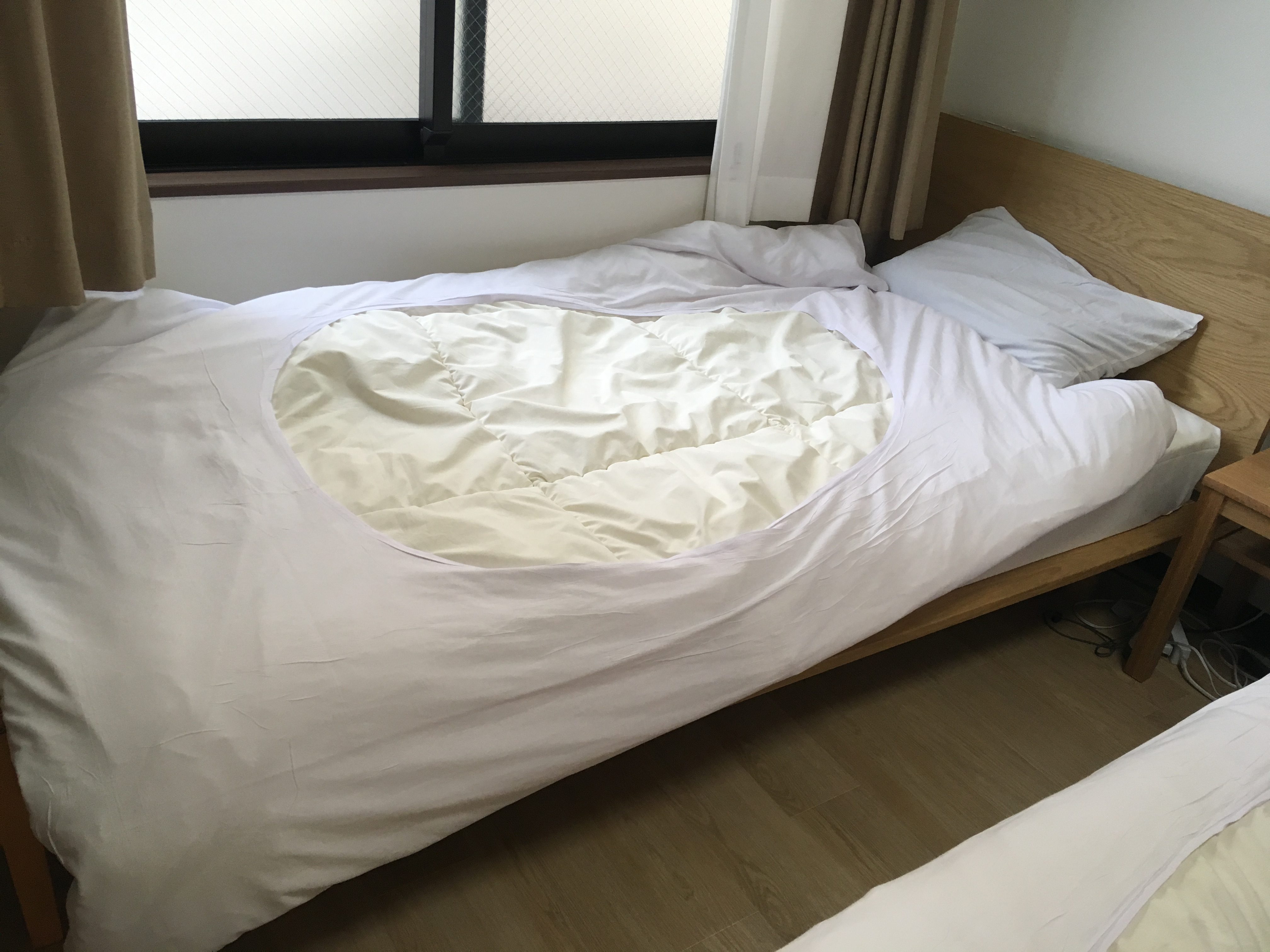
“Why is there a big hole in the duvet cover?” Lynn wondered.  I would see this twice more on my trip, and I don’t know the answer.
Lynn had insisted on transporting the whiskey bottle in her bag and now I got her to relinquish it.  “That sucker is heavy!” I said as I stuffed it into my bag.

Soon we were back outside, trying to find our way to the covered market.  “More to the point, we need to be able to find our way back,” Lynn said.

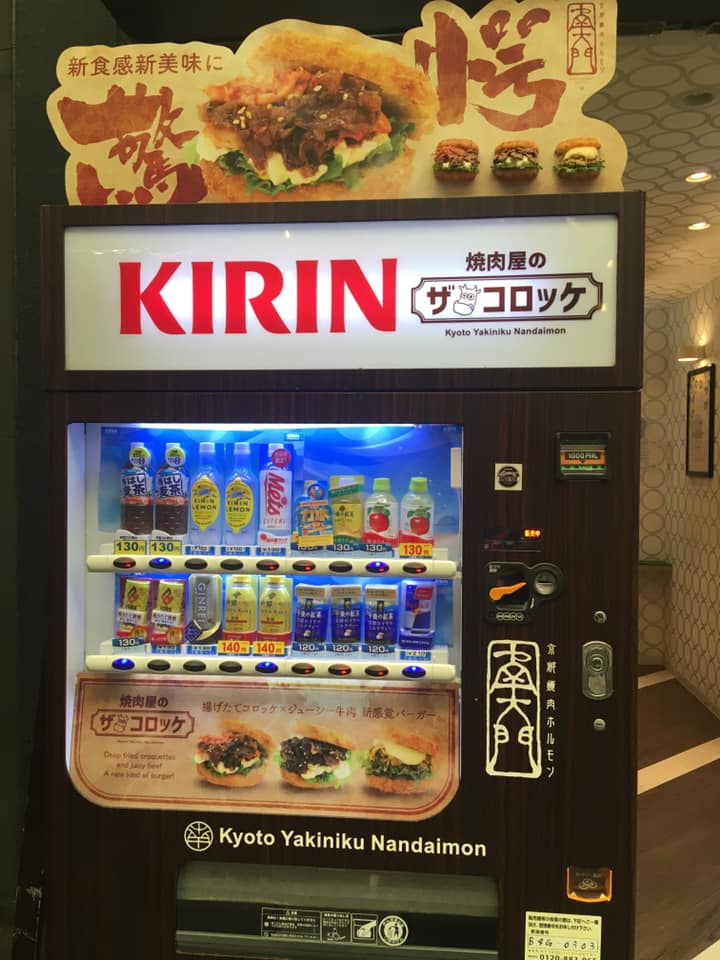
Nishiki Market covers many city blocks and is a collection of stalls, vending machines, and stores featuring everything from deep-fried starlings on a stick to vending machine hamburgers.
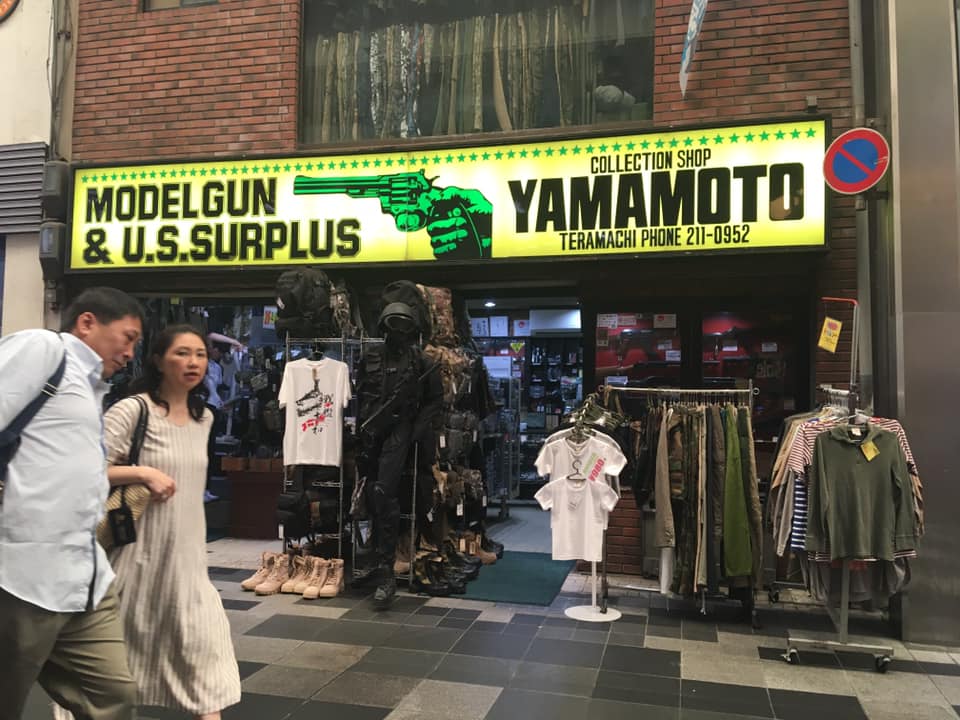
I was embarrassed by this “U.S.”-style shop.  There would be no actual guns for sale here, but plenty of faux guns, army fatigues, and machismo on offer.
Of course there was a Peruvian pan piper.

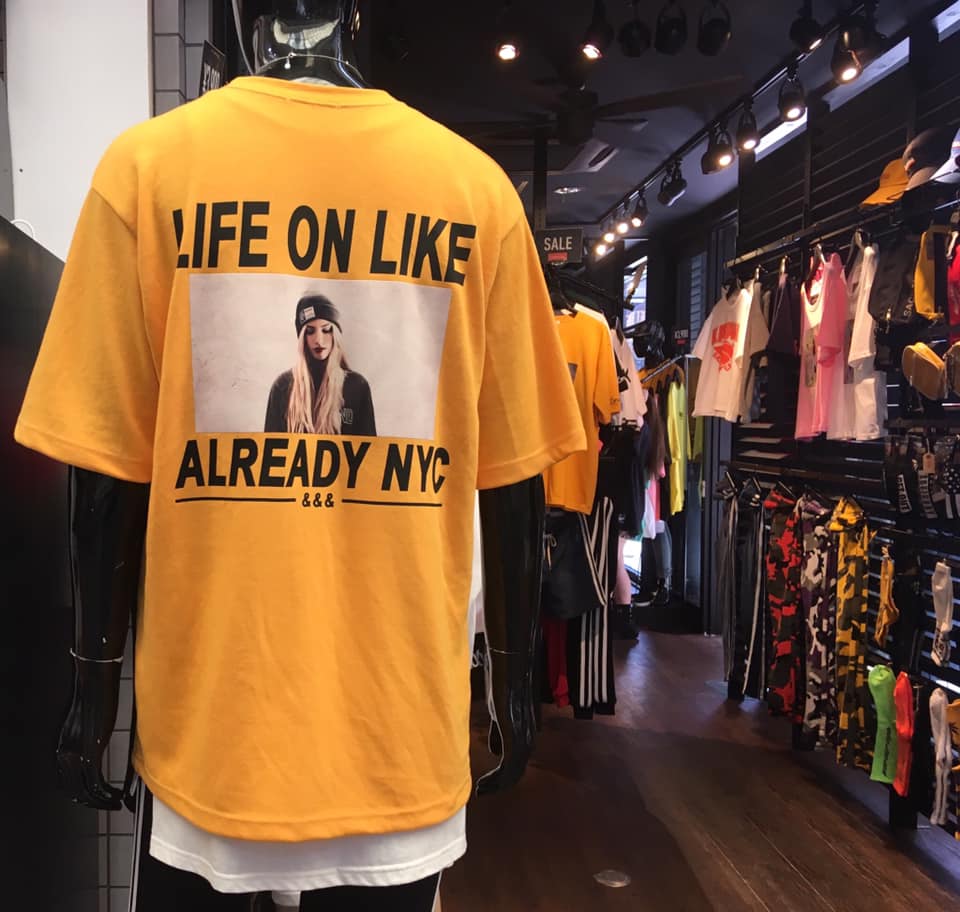
Shirst with nonsensicle or misspelled englesh words and phrasses were all the rage.
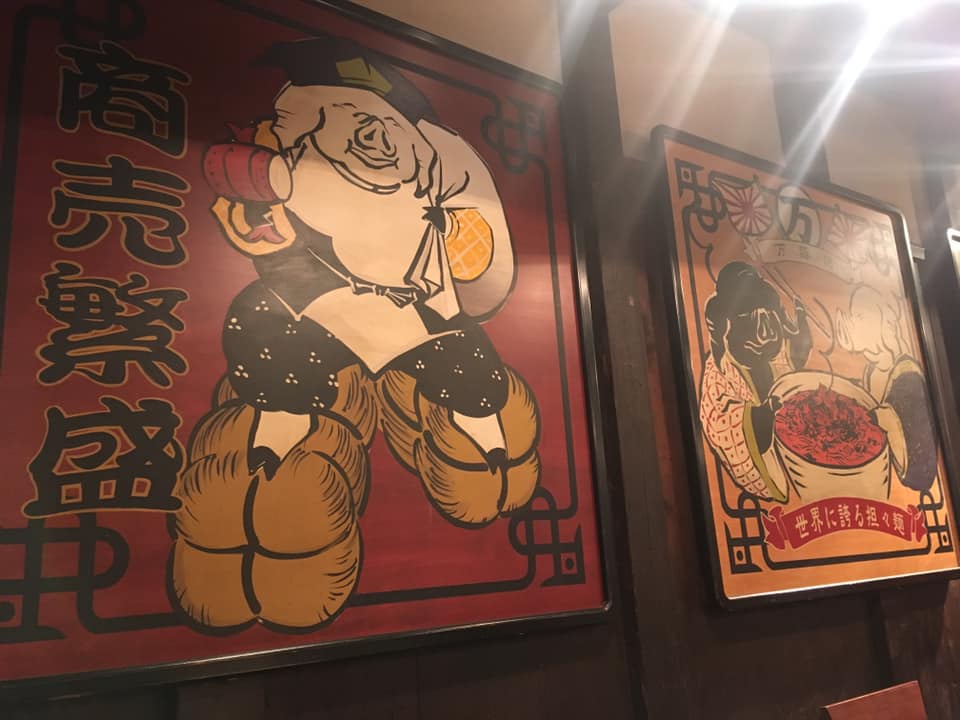
The place was decorated with pugnacious pig posters.
My dumplings came immediately while Lynn waited 20 minutes.  The waitress brought a half-full mug of beer and ice and a bottle of something she indicated I should add at my peril. “Soju, soju,” she repeated and pointed.  Was that Japanese—or Chinese—for Happy Beer?

It turned out to be a Korean rice spirit that tasted similar to vodka. Bracing and refreshing, and a good thing it was watered down with lots of ice.


Never Again

In real time, there’s news that the Trump administration will try to tank the number of refugees admitted to the US to zero in 2020.  Zero.  The average number admitted annually since 1980 has been 98,000.

I am disgusted to say that the person leading this drive is a Jewish guy named Stephen Miller, whose own forebears fled pogroms in Belarus and were allowed to enter the US.  Here is a great article about him entitled, “Stephen Miller Is an Immigration Hypocrite. I Know Because I’m His Uncle.”

This reminded me of an event I left out of my Summer Summary a few posts back. Jewish Community Action, along with other advocacy groups, held a rally themed “Never Again” at the ICE (Immigration and Customs Enforcement) facility near the airport in Minneapolis.  I wasn’t involved in the planning; I didn’t do much except show up and hold up one end of a banner.  But I showed up.  It felt good to get out there and yell and pump my fist.

There were a couple hundred of us.  We blocked traffic and some among us tried to get arrested but were only ticketed, which made it less of a news event.  The event was covered by a smattering of local news outlets.

After a couple hours I had to use a bathroom and there were none to be found.  I walked back to my car and heard a government employee on his cell phone, probably talking to his wife.  “Yeah, I agree with what they’re protesting, but I don’t work for ICE.  Why should I be stuck here?”

I despaired.  I see these policies as having everything to do with all of us. We’re all citizens.  We can vote, protest, write letters, and at the very least, be informed.  If you think it has nothing to do with you, you must be a Native American—the only Americans who aren’t immigrants (volunteers or slave-shipped) or descendants of immigrants.

In Japan.  I didn’t have the National Museum of Western Art on my “must see” list.  I have seen tons of western art in western countries. But Lynn had heard raves about it.

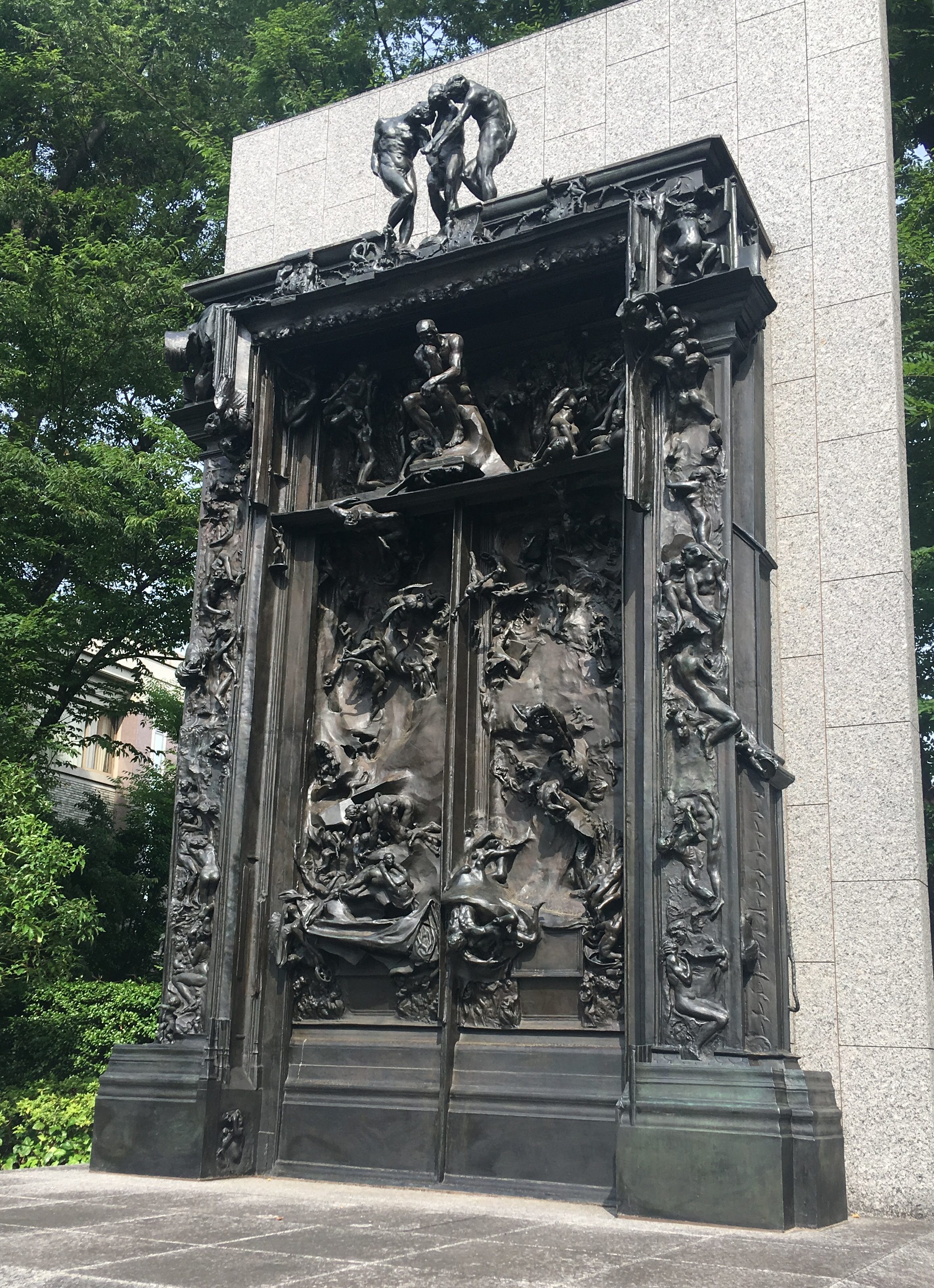
We passed The Gates of Hell by Rodin as we entered.  I hoped it wasn’t a sign of art to come.

“There are some of Monet’s water lilies, and one of your favorites—Van Gogh’s Bedroom in Arles!”

“No!  Not the Bedroom in Arles!” I exclaimed in mock horror.  We had paid extra to see a special exhibit at the Chicago Art Institute three years ago on our road trip from St. Paul to New Orleans.  There had been a very long build up to two versions of the painting, which looked identical to me.

Normally I am all for art, but I could only shrug.

Now I was going to see another version.  It looked just like the other two.  I’m sure it’s all very significant but I’m too much of a philistine to understand.

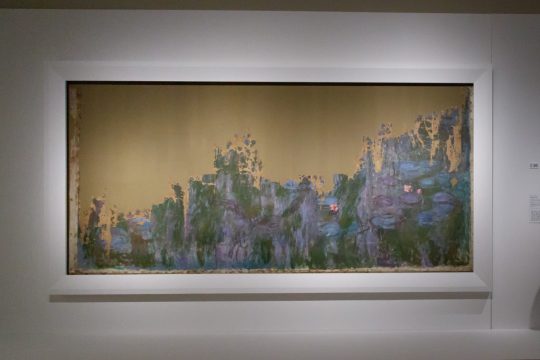
The museum in Tokyo houses the collection of shipping industrialist Kojiro Matsukata.  His story—of buying sprees in Paris and World War II efforts to protect his collection from the Nazis, was interesting.  At the very end of the exhibit, here were the water lilies.  What’s left of them.

At first I thought it was an abstract version of Monet’s famous theme. But it was just terribly damaged, which was sad.

Outside, I had a green tea ice cream cone from one of the many vendors in Ueno Park.  Lynn and I sat on a bench for hours; I don’t know what we talked about but it’s always good conversation with us.

The next morning we boarded a shinkansen to Kyoto.  A very loud American extended family sat near us; one of the kids lowered his seat into Lynn’s lap.  She politely asked his parents to corral him—not in so many words—and they did so but the mother then nagged all the children loudly for the two-hour trip, maybe to show the proper English lady what a responsible parent she was.

Contemplations

In Japan.  At the Edo Museum, I perused an exhibit about women’s lives throughout history.  One plaque explained how women were encouraged to pursue hobbies like calligraphy, flower arranging, and incense contemplation.

I joined Lynn, who was sitting on a bench contemplating an abstract rendition of an earthquake or some such natural disaster that had occasionally befallen Tokyo.

“Did you know there’s a hobby called incense contemplation?” I asked.

“How exciting!  I must buy some incense to bring home and contemplate.”

We bought some tchotchkes in the gift shop—my pile included gum in the form of a geisha, geisha-shaped chocolates, and a box of grey candy the consistency of pencil erasers.  This was for Vince, who had requested “something disgusting” he could share with his coworkers in the kitchen at the country club.  It was going to be hard to beat the Crispy Big-Bottomed Ants I had brought from Colombia.

All the guides recommended visiting the Yanaka neighborhood of old wooden houses.  “It’s just one more stop on the train, and it looked like we walk in either direction from the station and we hit Yanaka,” I said to Lynn.

Right,” she replied drily.

We walked east from the station, following a sign pointing to “The FAMOUS Fabric Area.” It was indeed an area of fabric shops.

“I can’t see why it’s famous,” I remarked.  “It’s not like they’re selling silks and satins or kimono fabrics.”

“No,” Lynn agreed.  “I could find these in Aberdeen.”

We walked back toward the station.  It was past lunch time and after dithering in front of a couple restaurants with curtains that obscured what was inside, we plunged into a Korean place.  There was no English on the menu and the server didn’t speak any English but thankfully there were photos.  We ordered what we assumed were pizzas, and the server looked puzzled and tried to explain something to us, pointing to the menus and flipping through rapidly through the pages.

Were the items we’d requested not served at lunchtime?  Was he trying to upsell us?  To dissuade us from ordering something that wasn’t good?

He flipped back to the page with the pizzas and pointed.  We nodded our heads and he smiled and disappeared.  There was a barbecue grill set in each table and the people around us were all grilling delicious-smelling meats.

“What do you suppose we’ll get?” Lynn asked.

“Whatever it is, we’ll eat it and smile!”

“Or I’ll slip it into my handbag, and we’ll bung it in the first bin,” Lynn offered. Lynn carries a legendary, enormous handbag into/from which many things disappear and appear.

The server returned with something like a cross between pizzas and omelets; Lynn wasn’t keen so I ate mine and half of hers.

“We will never know why that was such a difficult order for him to contemplate,” Lynn remarked.

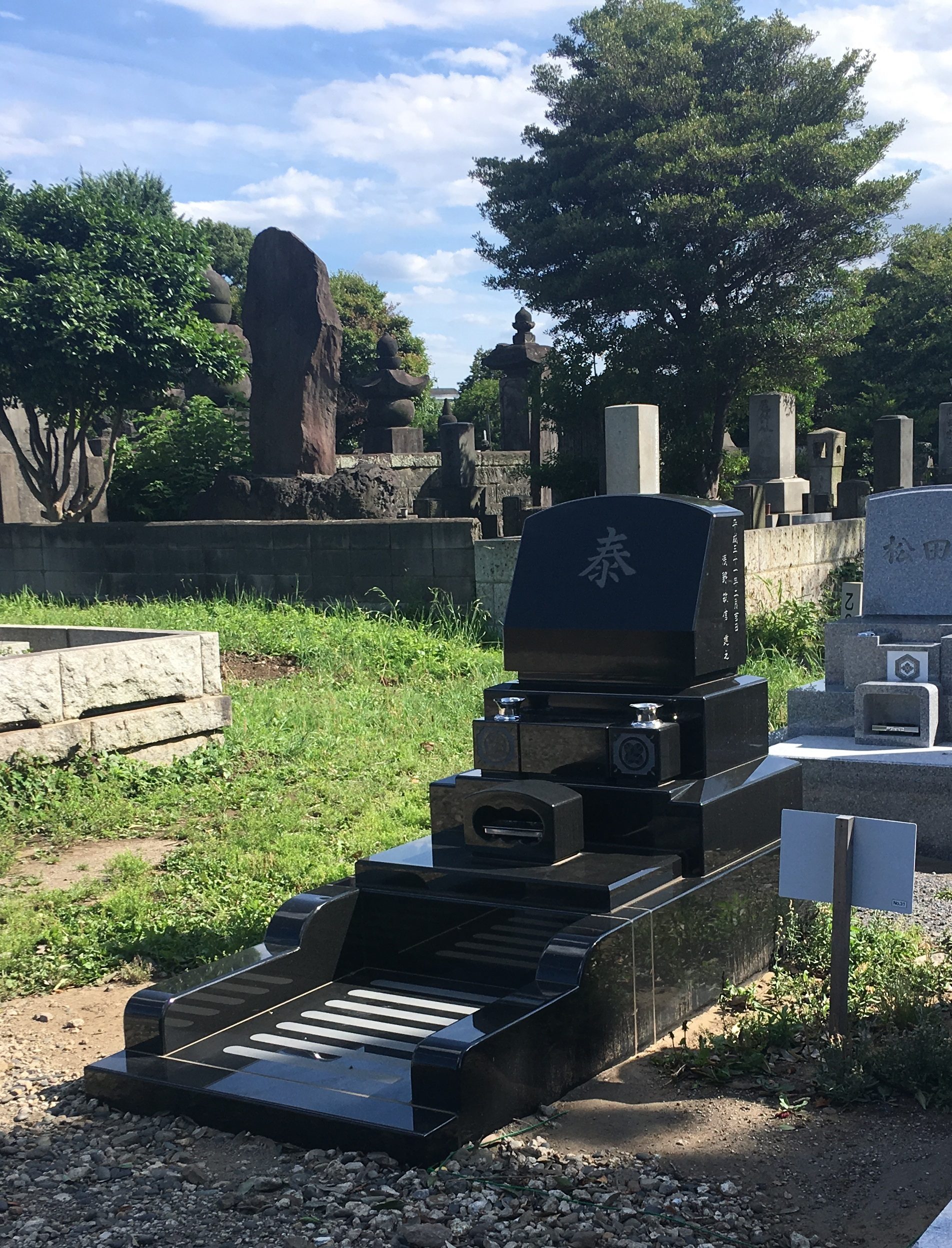
We walked west of the station and wound up in a massive cemetery.  This is what a Japanese cemetery looks like:

Everyone is cremated, and their ashes are interred at a gravesite.  There is an altar where family and friends can leave coins, pray, and … contemplate incense.  Like western cemeteries, Japanese ones have family members buried in a shared plot.

“I wonder what the wooden sticks are?” Lynn said.

“I know, I’ve seen those before.  Are they supplications?”

“Or the names of individual family members?”

“This one looks very Darth Vaderish,” I said.

“Scary!” pronounced Lynn.

We walked forever; the cemetery was like a corn maze only with dead people.

There was a guy sitting on a wall; sunburned and disheveled and possibly inebriated  He was a retired Kiwi who had been traveling around Japan for several months with no definite return date.

“You’re missing a shoe,” I pointed out.

“Aww, I know,” he replied, unconcerned.  “It’s here somewhere.”

He gave us very dubious directions to the neighborhood of wooden houses but we never found it.  We did find a narrow lane with tiny shops where I bought chopsticks for Vince and his family.  Then we got some iced green tea and sat in the sun, people watching and catching up for another hour, then caught the train back to Ueno.

Summer Summary

From time to time, I’ve taken a break from chronicling my travels in far-off destinations to write about small adventures close to home.  I can’t travel abroad 365 days a year, so I try to find new places and things to do in my own backyard.

This summer was no different.  The highlight, of course, we my son’s wedding. I’ve already shared my amateur photos from the day, but here’s one more, of me and my cousin and nieces lining up to show off our green eyes.  It was funny at the time.

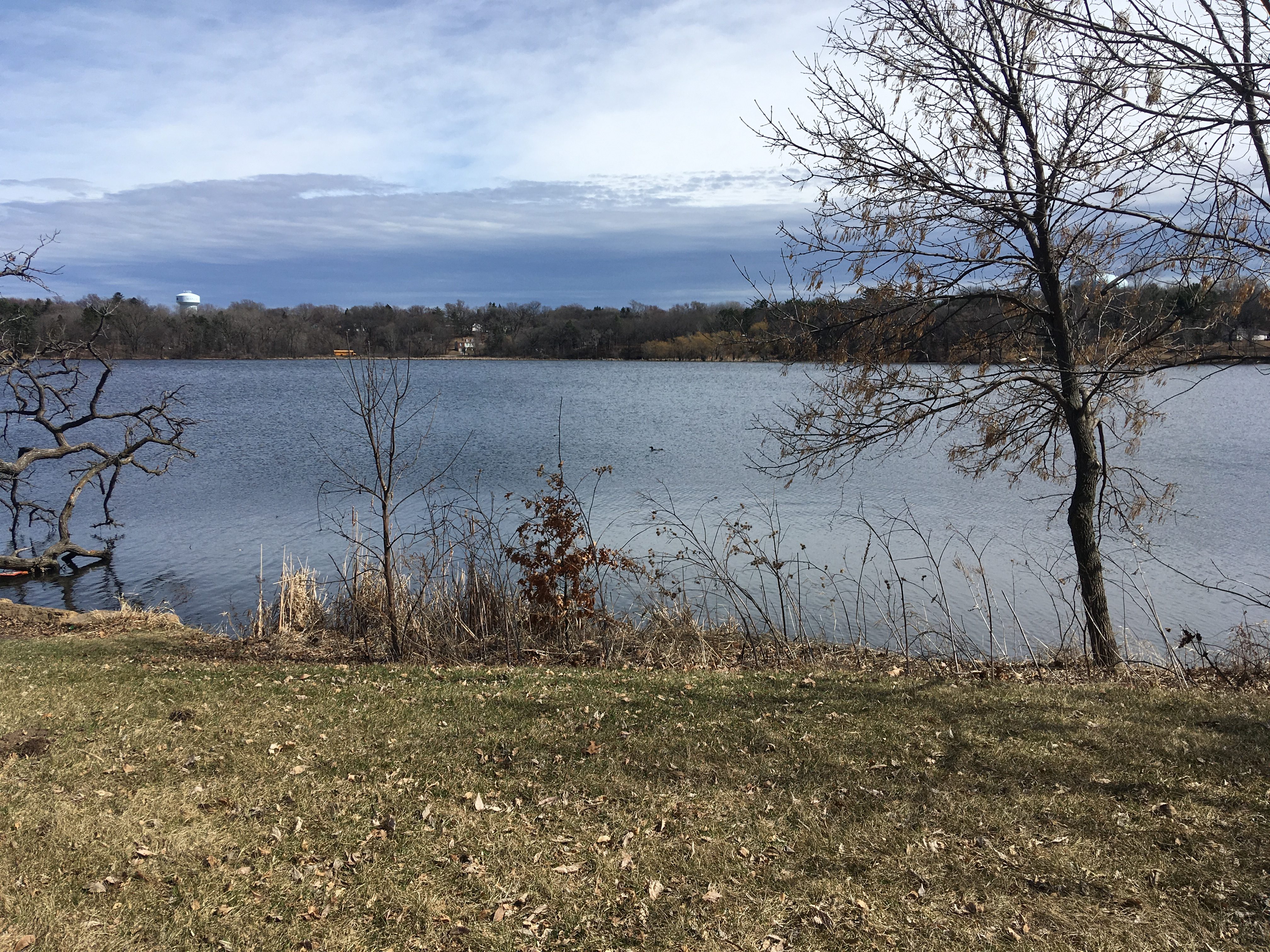
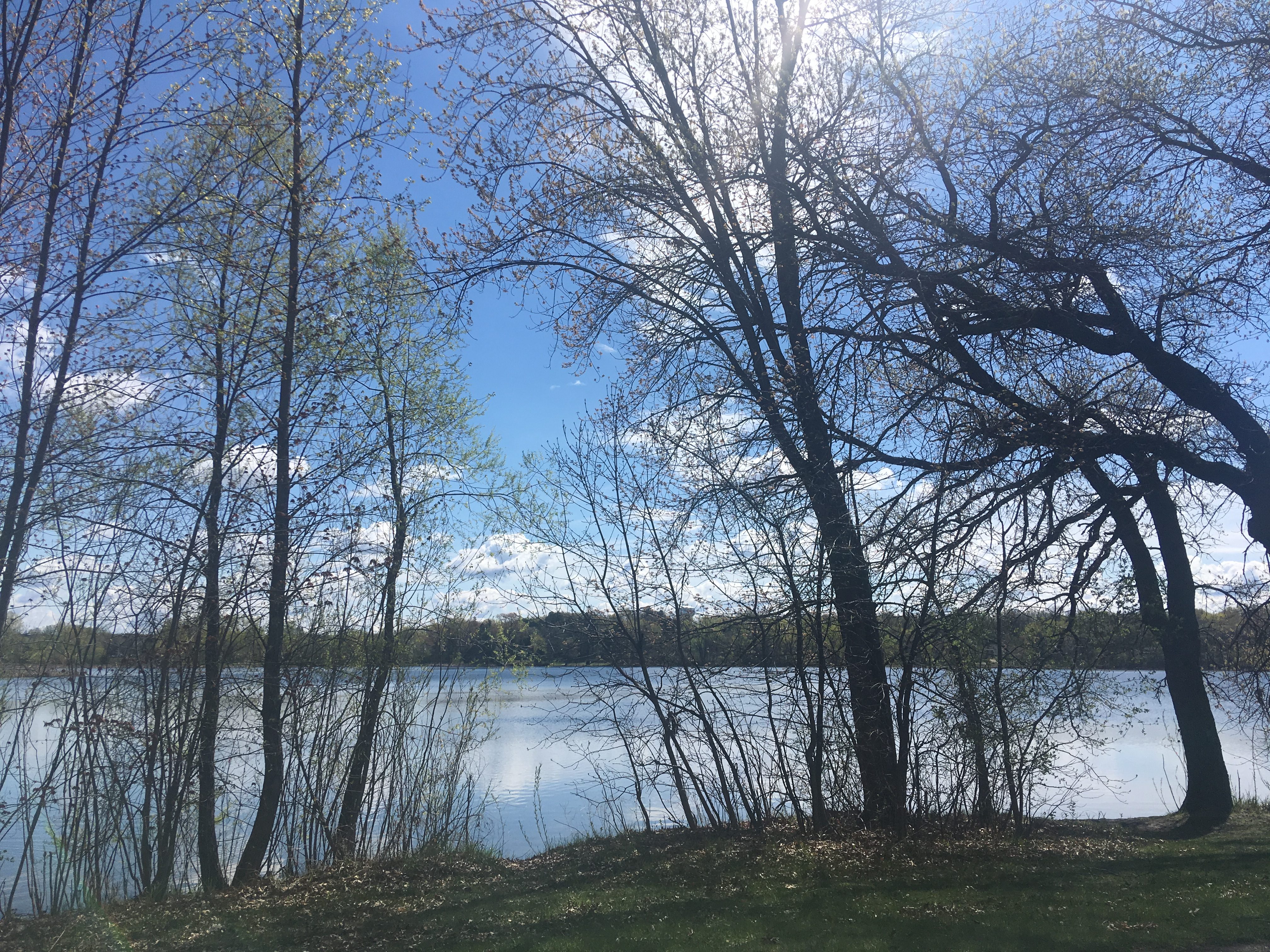
This year, spring lost its luster because of my aunt’s illness.  Soon after her death, I walked around the little lake near my house, Beaver Lake, and did something I never do.  I sat down on a bench and actually looked at the lake, the tree branches loaded with buds, and the sky as spring clouds drifted across and changed the colors on the water.  I listened to the jays, robins, wood peckers, loons, and cardinals.  I didn’t have any great insights into the meaning of life or loss but I felt comforted to know that the wheel turns and the world wakes up every year.

I returned to the same spot a few more times as spring progressed into summer.

I met a friend for a walk at Lake Harriet in Minneapolis.  We never did walk.  We got a pitcher of beer and sat at a table for a couple hours, people watched, and talked politics.

On my last visit to my aunt’s house, I took a long walk along the St. Croix River.  It looked to be shaping up as a great year for mushrooms and fungi, with many rainy nights and steamy days.

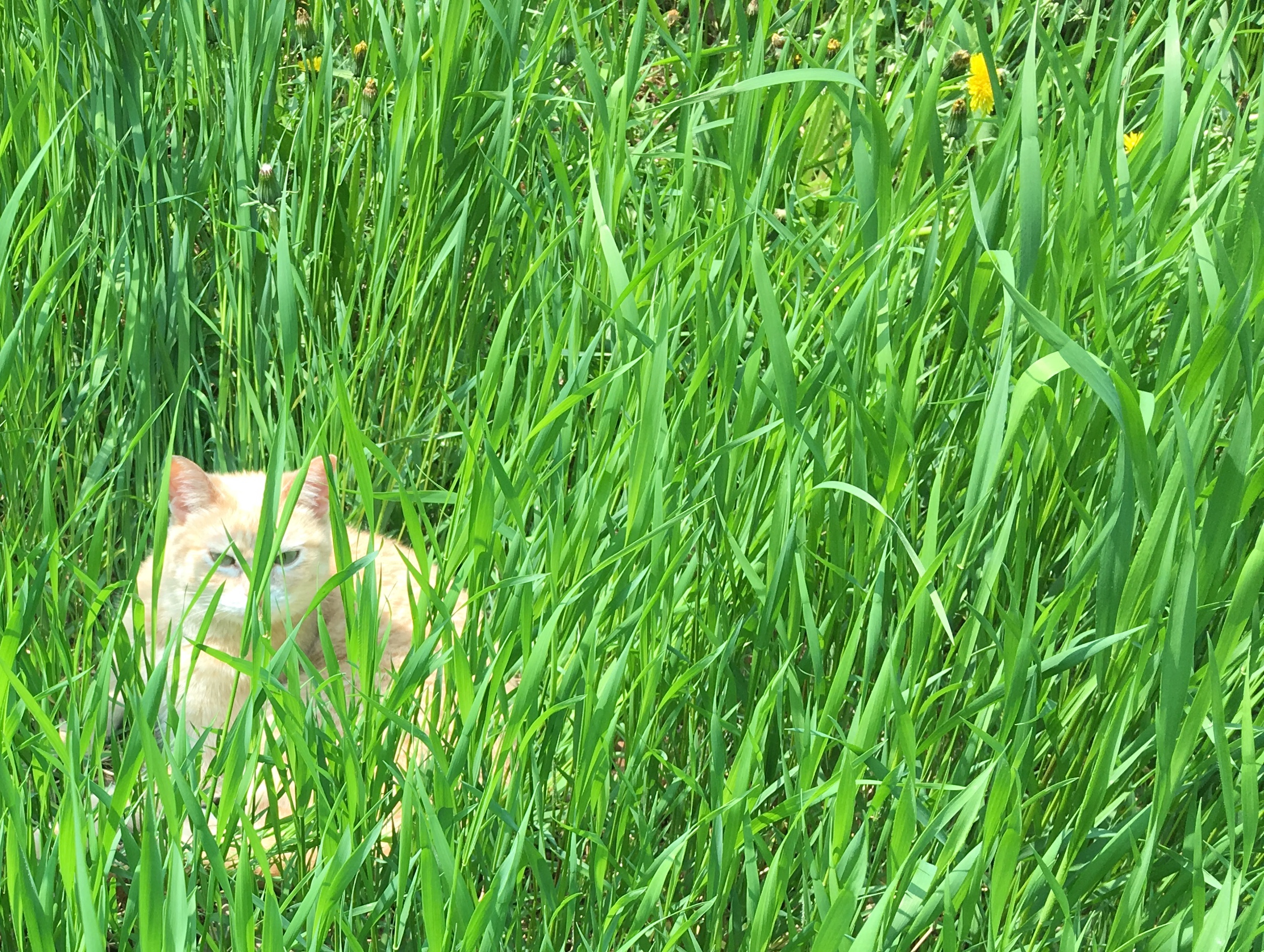
Molly and I hung out on her deck and laughed at her cat playing secret agent in the tall grass.

Then there was Japan, and then I was back.  I visited my favorite paths along the Mississippi, starting at Hidden Falls Park.   I don’t know why this photo looks like my lens was smeared with Vaseline, or if coyotes are a new thing here, or how they know there is only one.

I spent a rainy afternoon and evening at Irish Fair, an annual event in St. Paul that always has great music.  This year was no exception; there were bagpipers in kilts, of course, but the headliners, the Screaming Orphans, got the crowd whipped into a frenzy.

I hosted a Japanese food-making party for Keiko, my nephews, and my brother.  Almost everything turned out oishi (delicious).

In late July I returned to the St. Croix and canoed with some people I knew from the fabulous mid-Century modern high rise apartment building I lived in for six years.

For once in my life it didn’t start raining as soon as I stepped into a canoe.  I was paired with a woman from Nebraska who had never canoed.  She didn’t follow instructions and had no upper body strength, but she was so nice that I didn’t mind that I basically paddled the canoe myself the whole way.

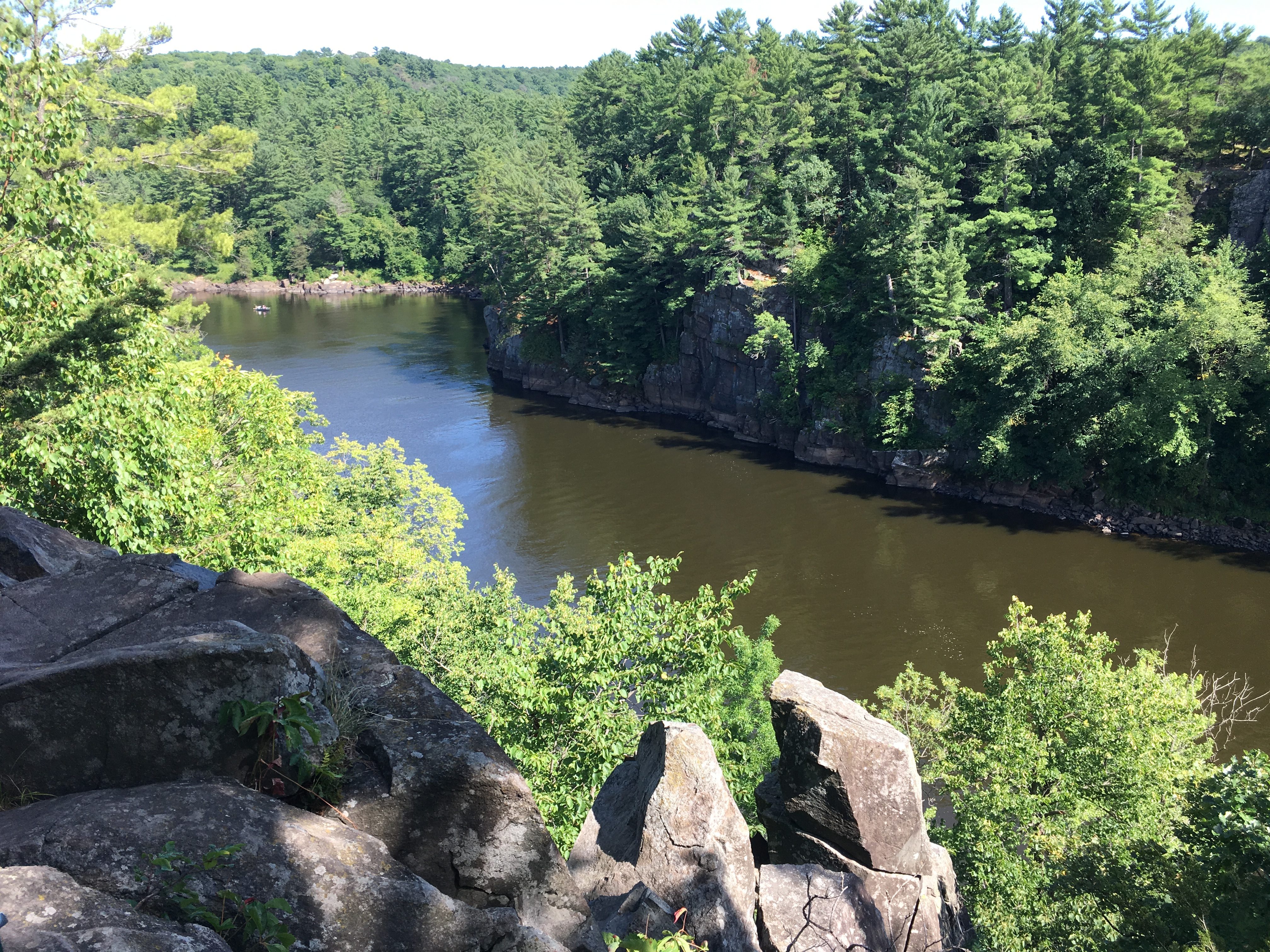
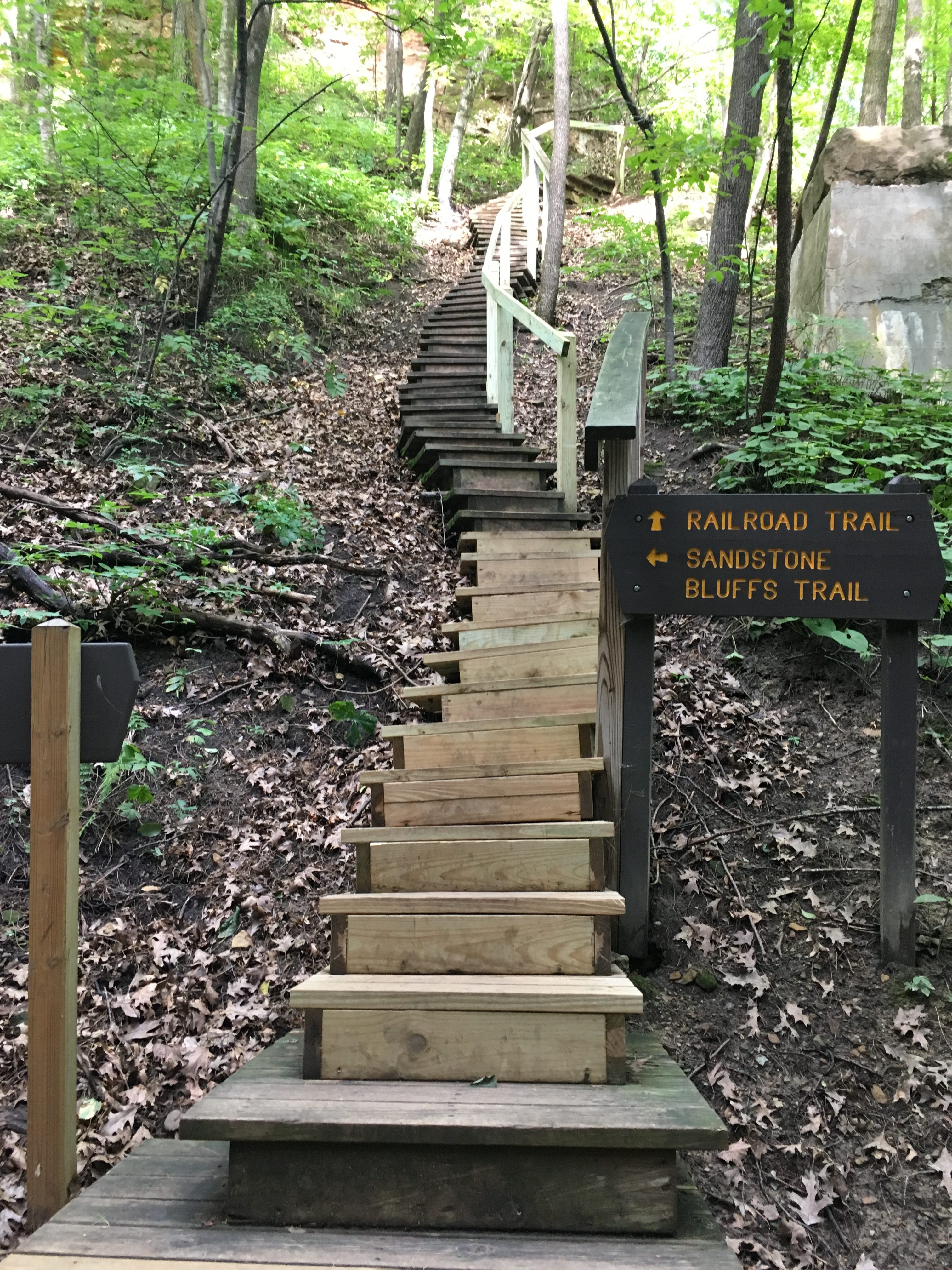
We stopped for a long picnic lunch on an island.  Afterwards, as if I hadn’t gotten enough of a workout, I did a two-hour hike through the Minnesota side of Interstate Park, which is a park that straddles the Minnesota and Wisconsin banks of the St. Croix River.

A friend and I rented kayaks and paddled around Pickerel Lake. I took some long bike rides, went berry foraging, and sat in my backyard and appreciated the hydrangeas that had been a highlight of Japan and were also profuse in St Paul this year.  I even tried my hand at flower arranging.

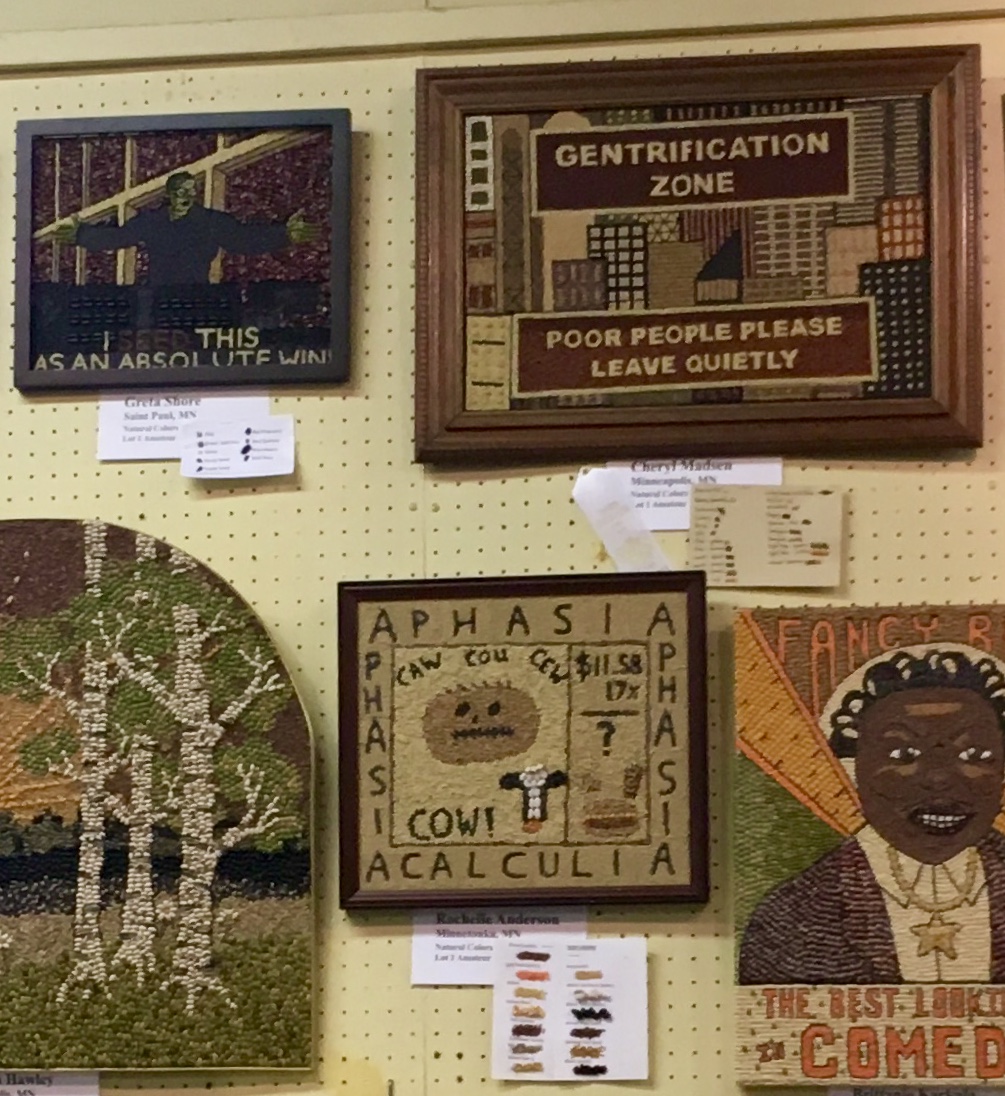
As ever, summer closes with two blockbuster events.  First, the Minnesota State Fair.  This is a small selection of seed art.  Winters are long on the prairie.

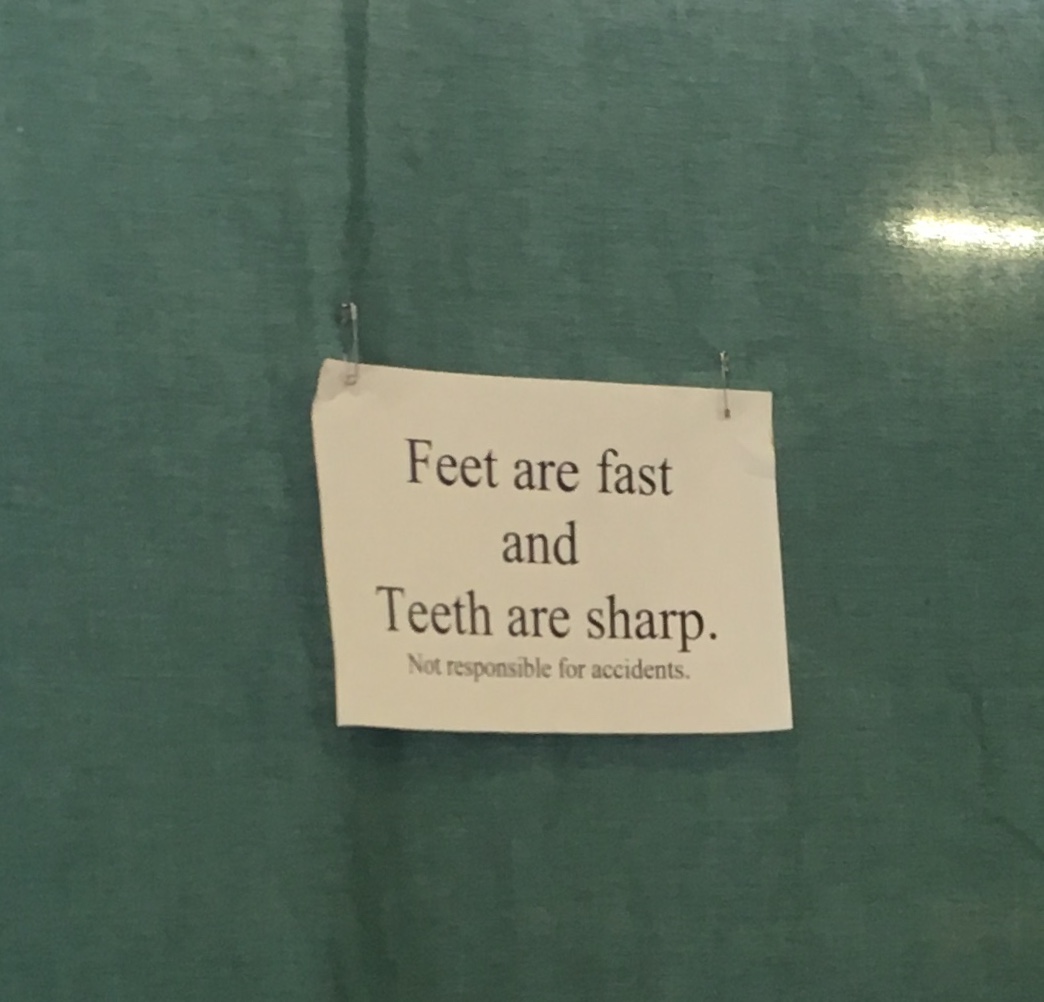
The poor horses.  Of course they bite and kick, cooped up like that.

Bulls on Parade: not just a song by Rage Against the Machine.

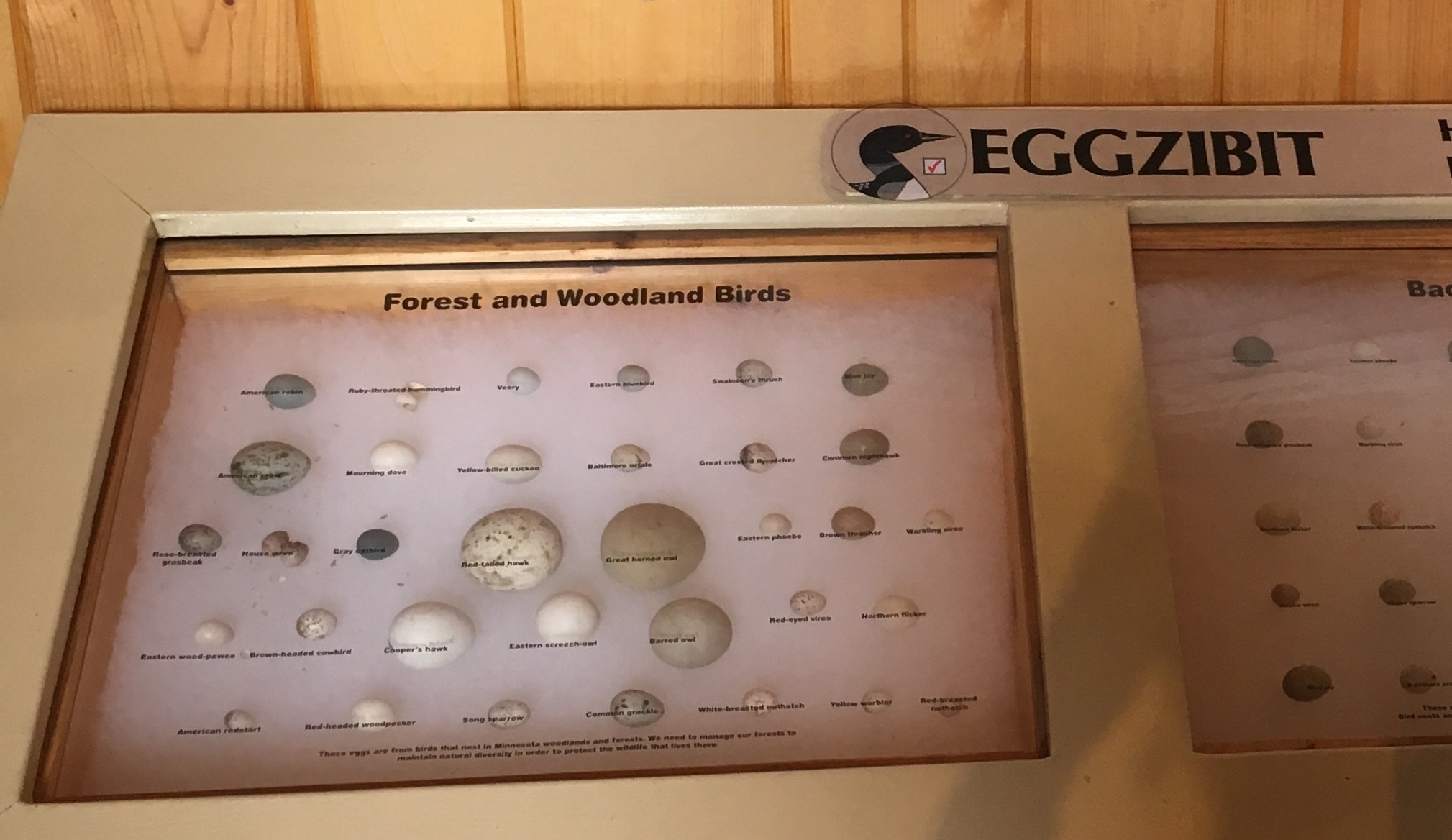
“Eggzibit”—get it?

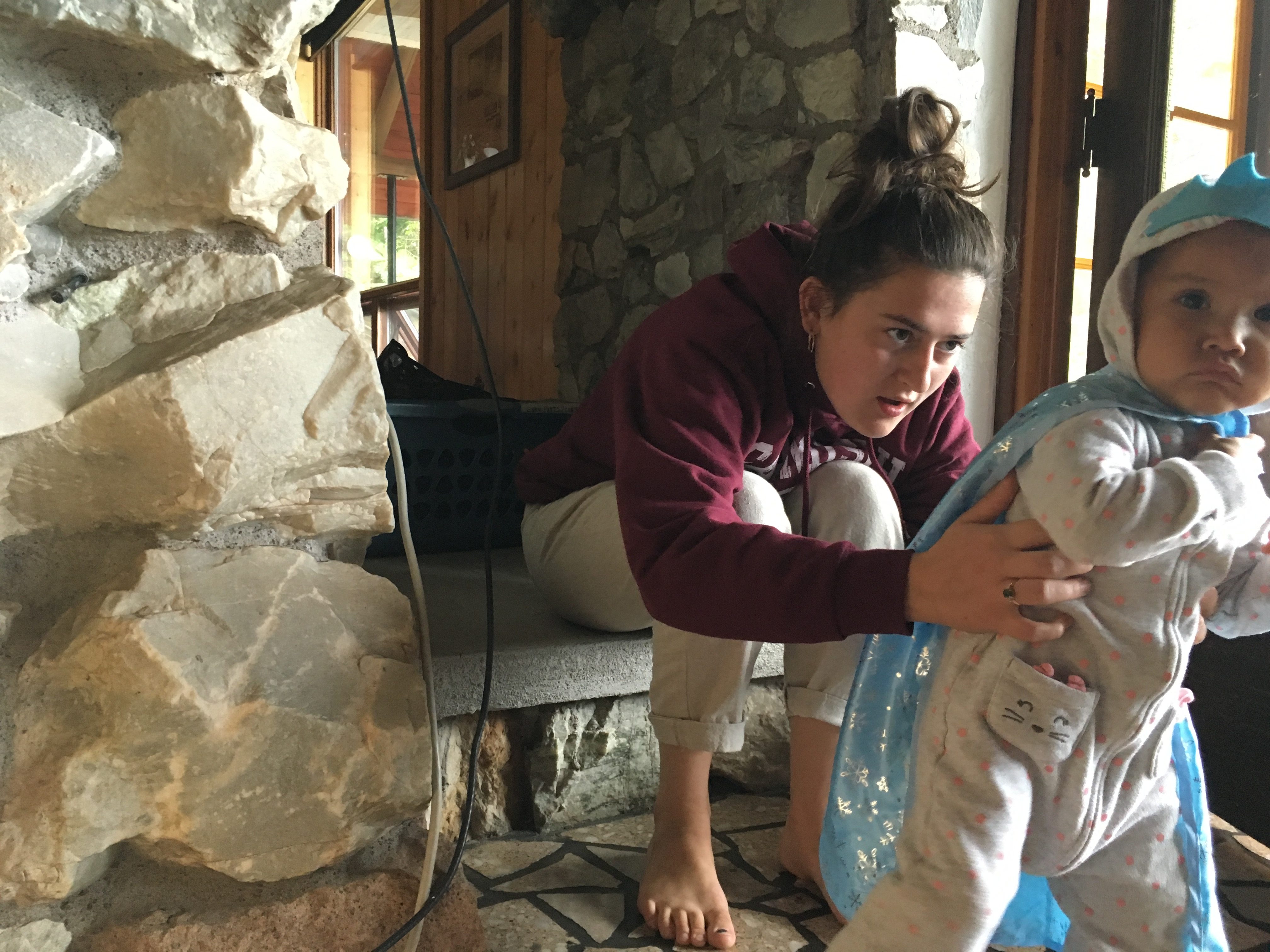
Then, Labor Day weekend in Wisconsin, paid for by my aunt.  It helped to have a super cute super baby there.

Selective Whiskey, Selective Memory

Back at the hotel, Lynn revealed the reason for her bag being so heavy.  In addition to half a dozen guidebooks and books for reading pleasure, she had schlepped this all the way from Scotland.

Here are the notes Richard provided to explain its provenance.

We would have to figure out how I could reimburse them for it; Richard had paid for it in pounds sterling, I operate in dollars, and here we were in Japan.

We walked over to Ueno Park, and I—the old hand—showed Lynn the hydrangeas and the shrine.  We had a long, late pizza lunch at an Italian restaurant, which was the only place we could find that was open.  As usual we had months of updates to download.

Heading back to the hotel at dusk, we accidentally walked down an alley lined with Pachinko parlors.  It was dazzling, blinding—thousands (millions?) of blinking lights and beeping noises—with people streaming in and out to try their luck.

“What is pachinko?” Lynn wondered.

“I think you hit a lever … and balls fall down … there are pegs or some such, and … somehow you gamble with it?” was my authoritative reply.

Neither of us is a gambler, but we enjoyed the garish street display.

“This isn’t the Tokyo I’ve experienced so far,” I observed.  “I’ve been pleasantly surprised so far by how sedate the place is.”

“This seems like ‘typical Tokyo’ according to everything you see in guidebooks,” Lynn replied.

We were in bed, reading, by nine.

“If you see a ghostly figure pacing the room at 3am, that’s just me with my RLS,” I warned her.

“Oh, nothing stops me from sleeping,” Lynn assured me.

That was good, since I was up almost all night.  The more I tried to be quiet, the more noise I made, so I spent most of the night in the can, doing the RLS cancan.

The next day was packed.  We would have one day in Tokyo, then leave for Kyoto the following morning.

Fred and Hiromi had strongly recommended we prioritize the Edo Museum over the two art museums in nearby Ueno Park.

I was glad for their advice.  The Edo was just a quick one-stop on the train, and easy to find thanks to much signage involving large red arrows even I couldn’t miss.

As we walked, a flock of little kids in cute school uniforms passed us and called out, “Hah-loh, hah-loh!” practicing their English on us.  It was delightful.

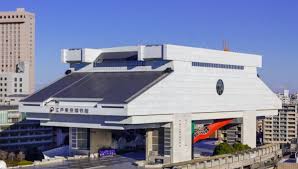
“Edo” is the old name for Tokyo; the museum was all about the history of Tokyo.  The building itself is worth a look.  It is modeled after an old storehouse, but to us it appeared like a samurai helmet.

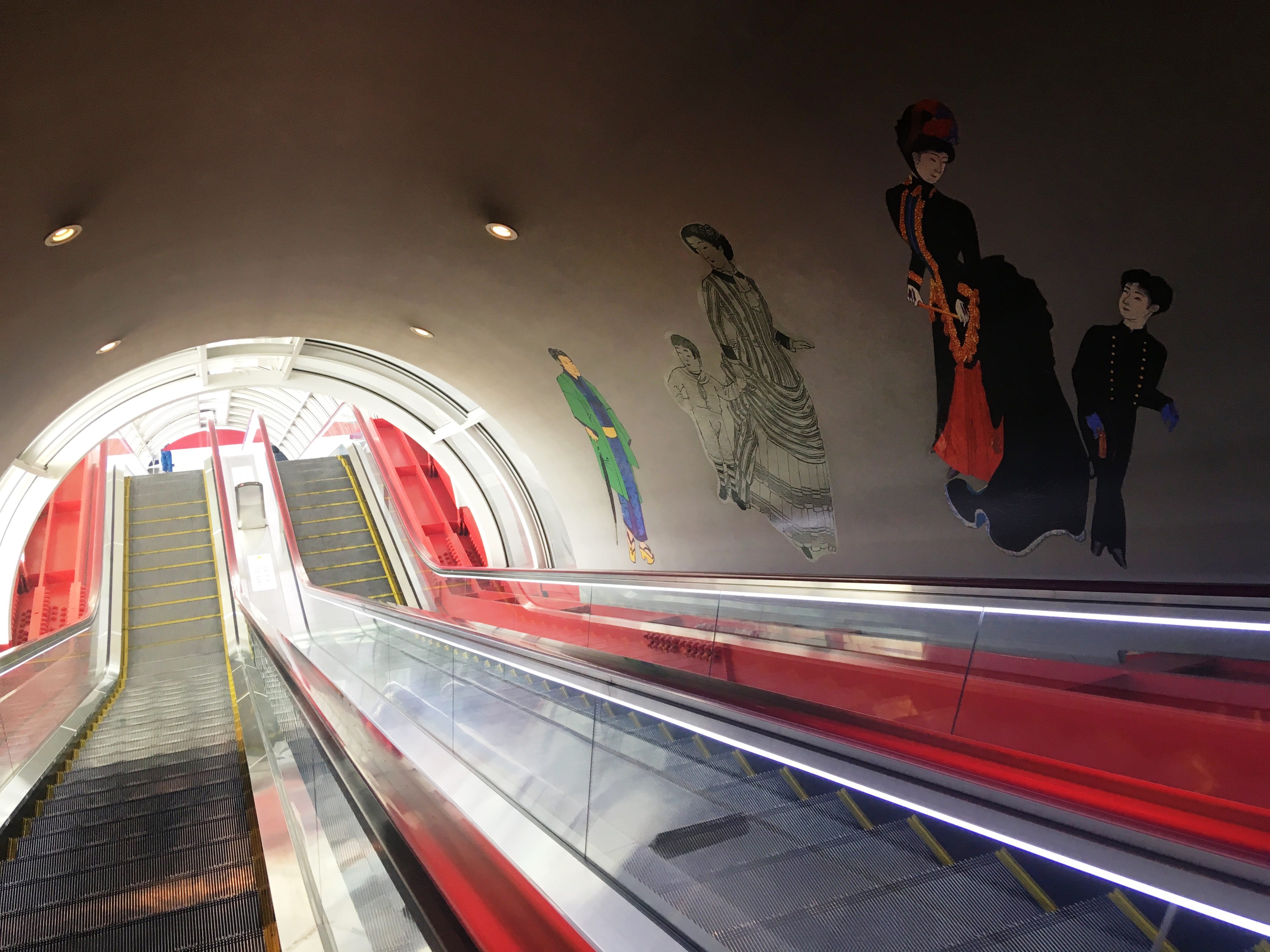
It is basically built on stilts, and you take a very long escalator to the sixth floor of museum, then work your way down.  Lynn and I had never seen an escalator that turned into a people mover (a moving walkway), back into an escalator, and so on.  It was marvelous.

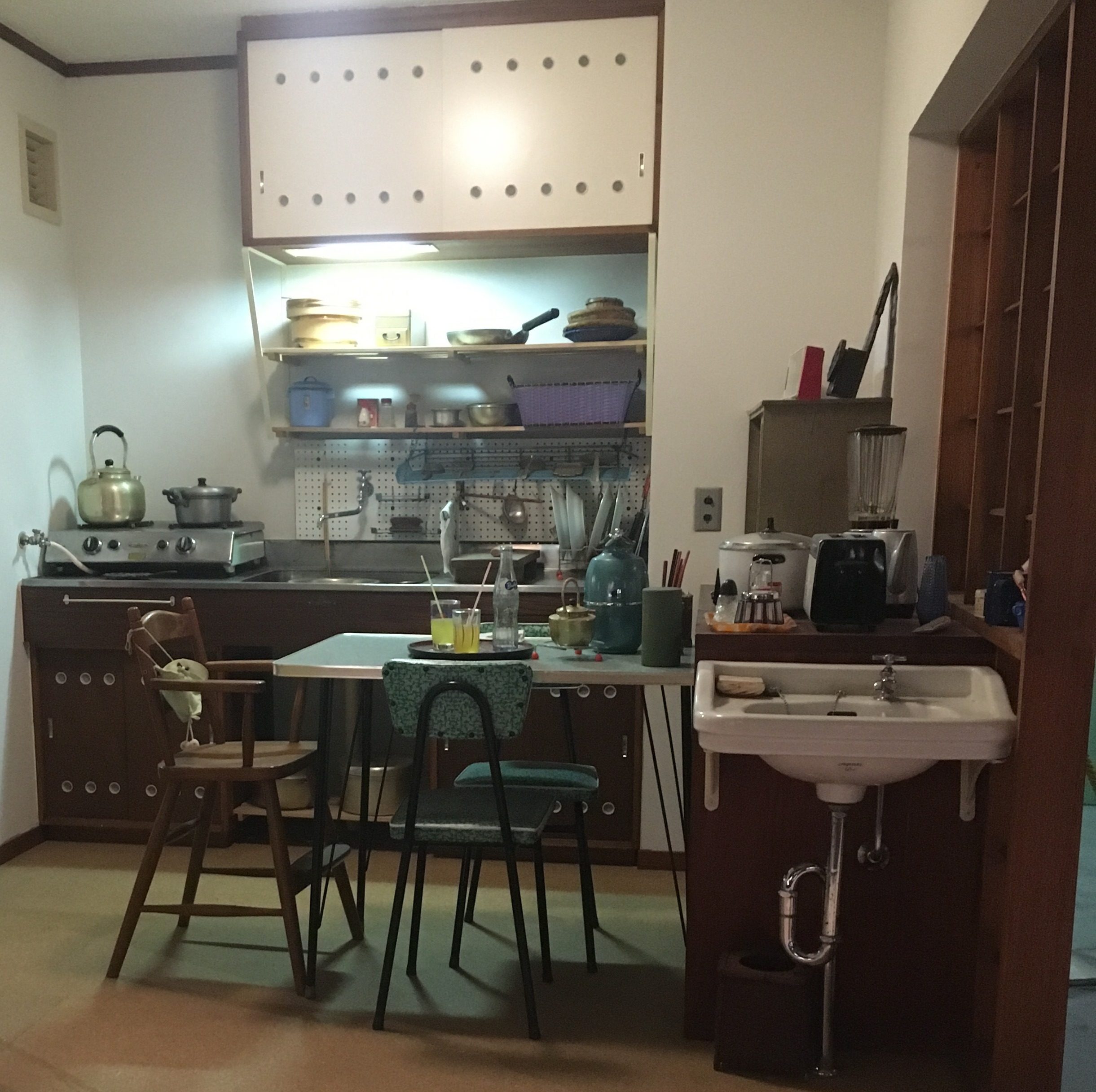
I could write an encyclopedic post on this museum, since it covered everything from prehistoric cave dwellers to the post World War II period.  There were a lot of model recreations of typical homes and shops and schools from different periods.  This was a post war kitchen.

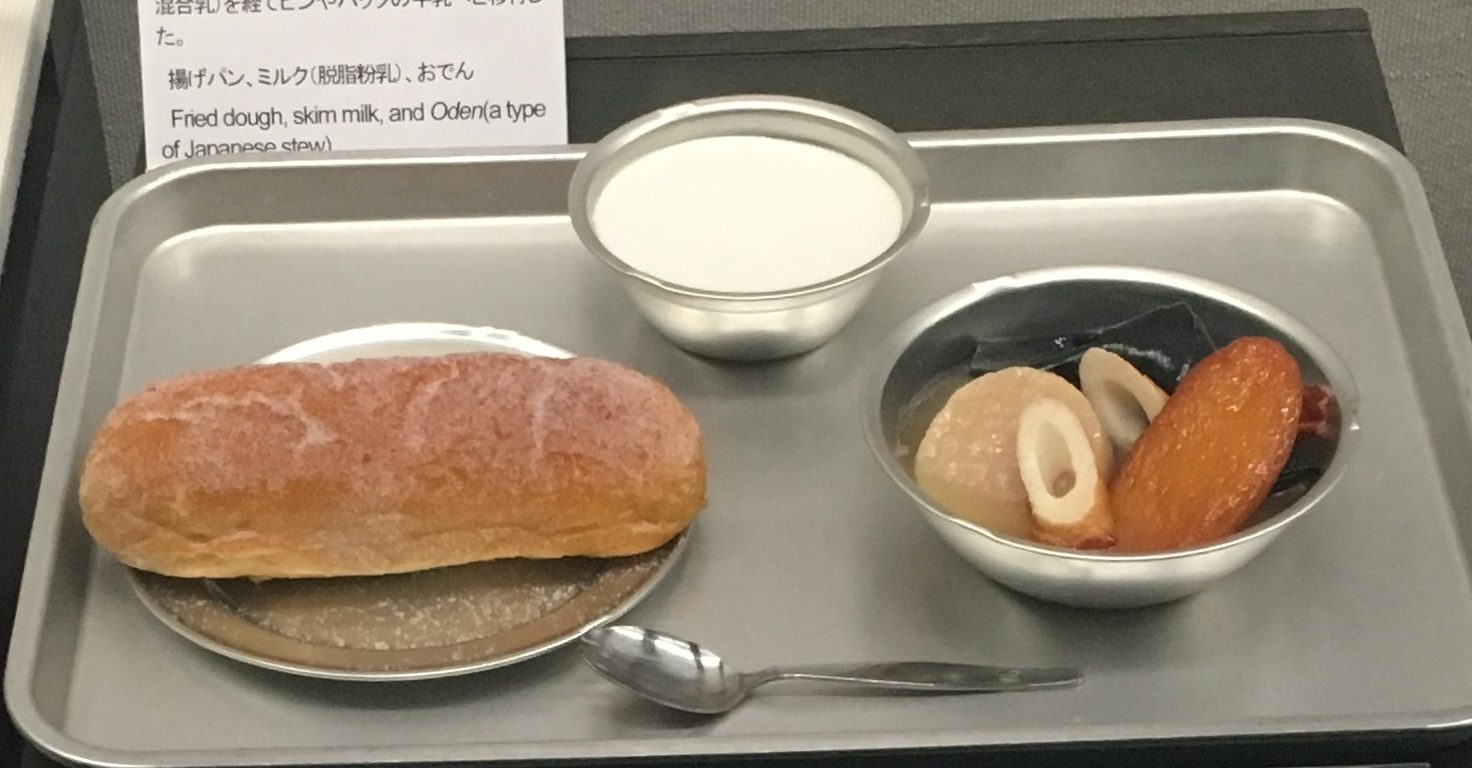
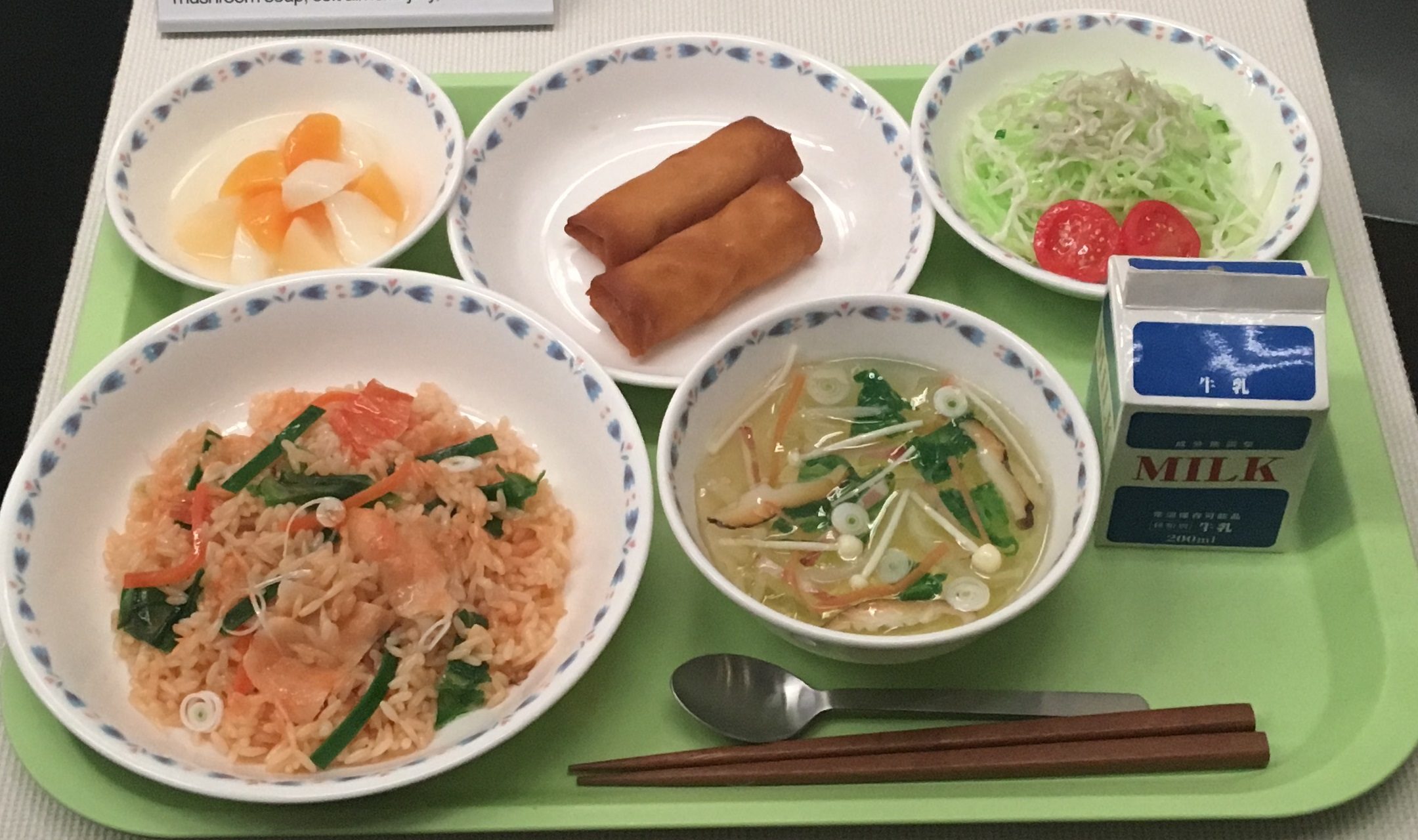
This was a typical school lunch in 1960, when Japan was still rebuilding.  Pretty grim.

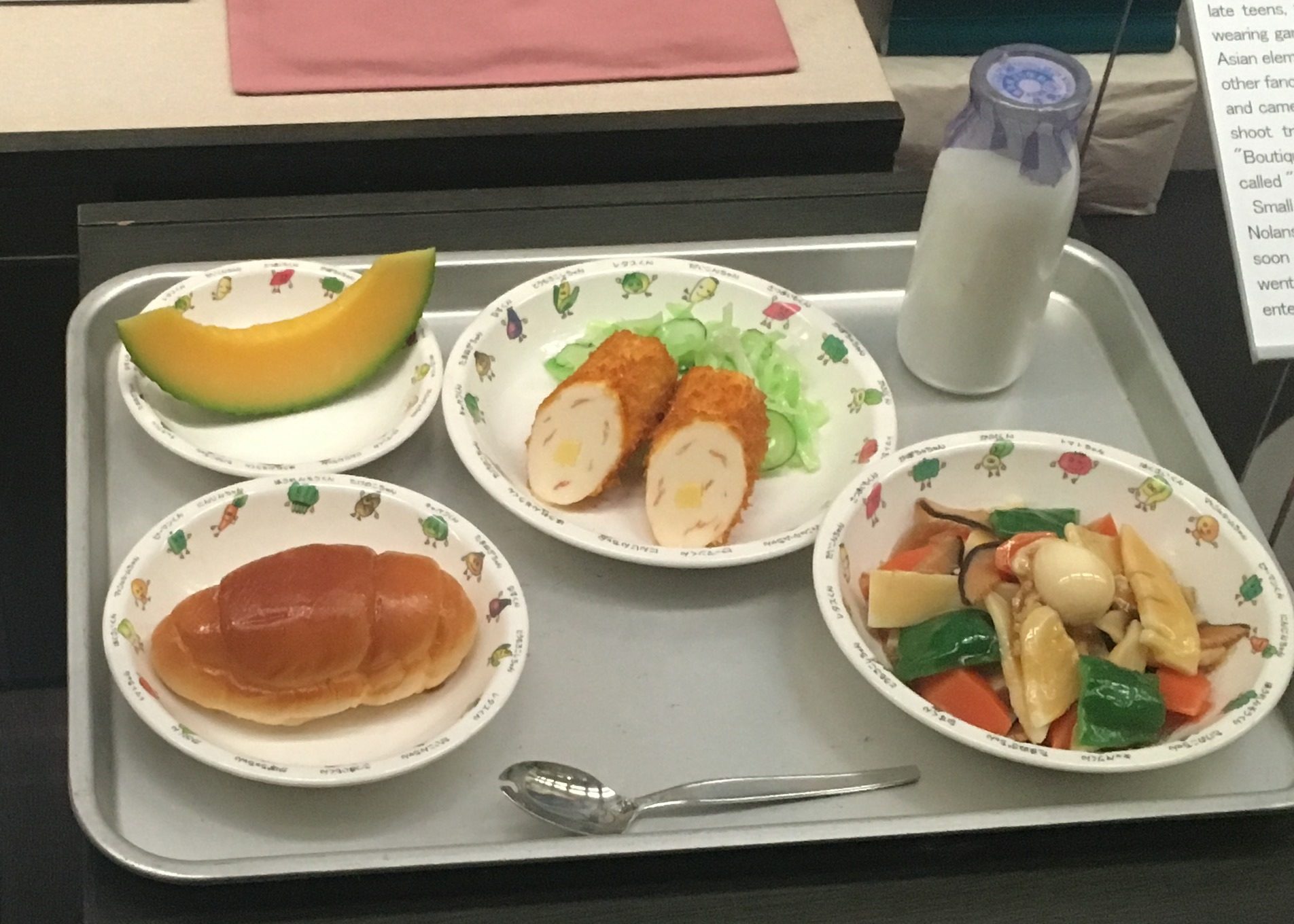
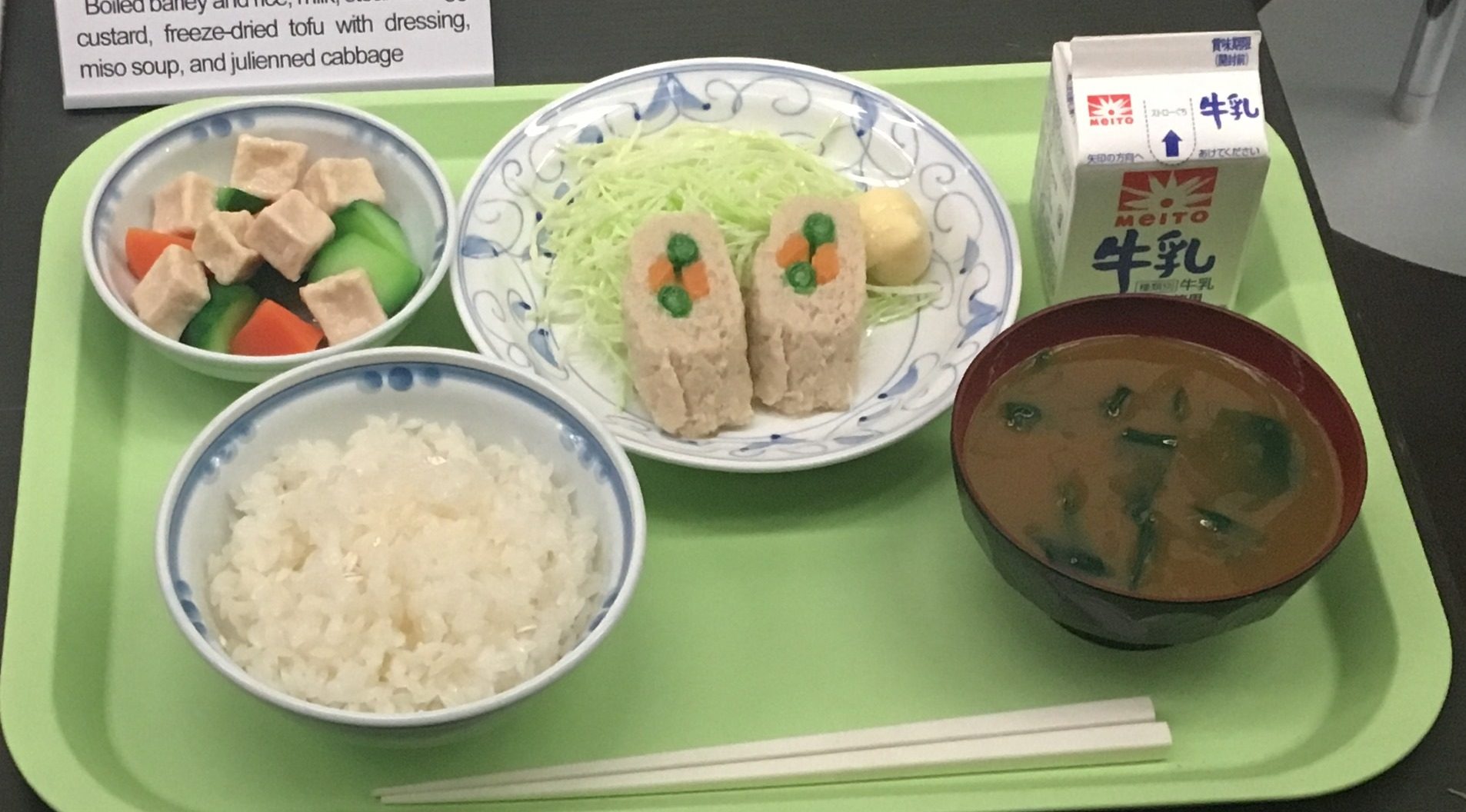
This was 1970:

The 1980s:

90s:

And the 2000s, looking pale and starchy, like American lunches, in my opinion.

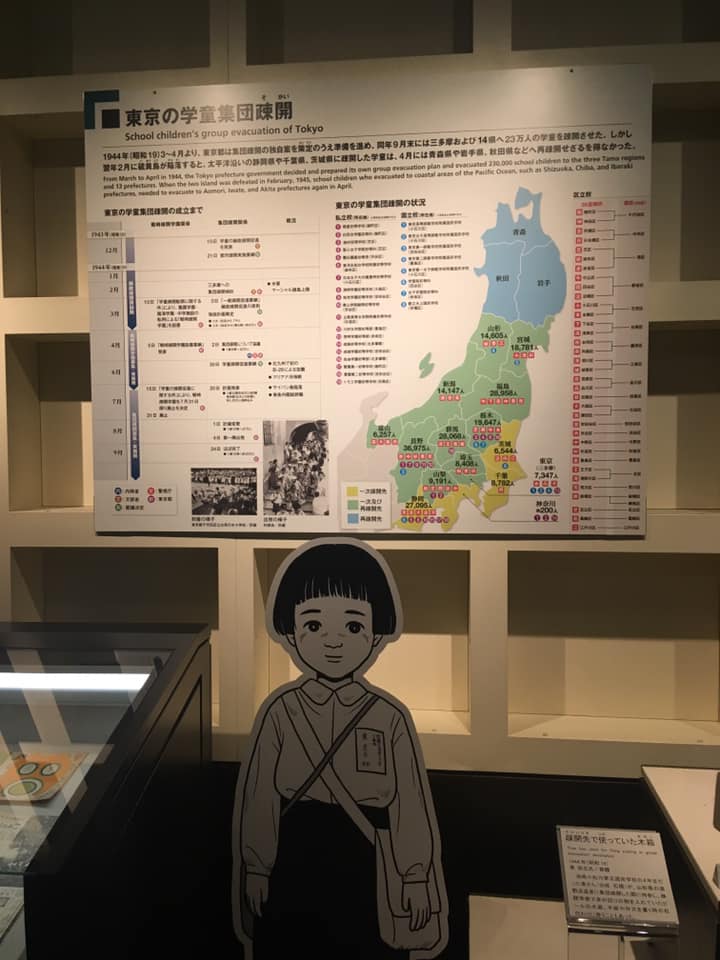
I stood in front of this for a long time, wondering.

I know it’s too small for you to read.  It’s about the US bombing of Tokyo during WWII. There’s no context as to why America might be doing such a thing.

No mention of 1941 and Pearl Harbor, when Japan attacked America—a neutral country at the time—without provocation and killed 2,400 Americans.

I may sound like a five-year-old, pointing a finger and shouting, “He started it!”  There were plenty of atrocities and needless destructive actions committed by all parties.  But here, only America is mentioned as the aggressor.

To lighten things up, here is a gratuitous photo of a goat from the taxidermy exhibit!

You say Shimoda and I say Shimota

Back at the New Tohoku after the day at the seaside, my Restless Legs woke me every 45 minutes.  I finally gave up at 1am and cracked open my book.  Then my brain did a side eye to my phone, sitting on the bedside table.

I try not to look at my phone after 9pm.  “They” say the blue light stimulates your brain and keeps you awake.  But I had posted some photos on Facebook … had anyone Liked them?  I tried to resist, then grabbed the thing and saw who had Liked and commented on my photos, tried to read my book again, went back to Facebook after 10 minutes like an alcoholic who says, “Just one more,” repeat.

Social media is like those pellet dispensers in B.F. Skinner’s psychological experiments.  You know, the one’s where the rat gets a food pellet every time it performs whatever task the researcher is trying to teach it.

I wasn’t being taught a new trick (that I am aware of).  I was succumbing to intermittent reinforcement.  This is where a reward is dispensed intermittently, and it’s the most addictive kind.  On social media, you never know when you’re going to get rewards, or in what form.  When there’s a flood of them, you get a rush, so you try and try to get a repeat.  Ugh.

I gave up on sleep at 4:30am and did some rejiggering of my itinerary.  As I’ve mentioned, I was going to have my nine-year-old nephew, Charlie, for five nights at the end of the trip, and after much research with Keiko we had settled on Hakone as the ideal destination.  Hakone is a resort area about an hour from Tokyo.  It’s got cable cars, a lake with boat tours, and lots of kid stuff to keep an active child busy.

But Keiko had received an alert from the Japan Meteorological Agency about volcanic activity near Hakone.  According to NHK, Japan’s equivalent of the BBC, Hakone’s cable cars were closed, there was danger of landslides, and some local restaurants couldn’t get black eggs—a local delicacy—because certain roads were shut.

We would have to cancel Hakone and find another destination.  We lobbed ideas back and forth on Skype, then she and her dad suggested the Izu Peninsula.  When I saw there was a city at the very southern point called Shimoda, I figured it was a sign, since as I wrote in a previous post I have an ancestor from Shimota in the former Czechoslovakia.  I have built travel plans around flimsier hooks.

I started getting What’s App messages from Lynn, who had landed at Narita.  It took her an hour and 45 minutes to get from her gate to the Skyliner, the airport train which took another hour and 15 minutes to arrive at Ueno.  I could see why Keiko had insisted on flying into Haneda, which is so much closer in to central Tokyo.

I would not make Lynn try to find the hotel on her own.  I walked to the station, then serendipitously decided to wander a bit and discovered there was a separate station with the same name across the street, just for the Skyliner.

To kill time I took photos of panda buns and a posse of school kids.

There were many groups of cute little kids, but I would never take photos of small children.  I figure high schoolers are fair game because they’re posting selfies all the time anyway.

I spotted Lynn and we were off.  I insisted on carrying her suitcase up the 30 stairs.  She fought me but I won, this time.  Lynn always travels with a very small bag—just one step up from a carry on.  But it’s like a black hole—tiny but extremely heavy.

“What the hell have you got in here?” I asked as I huffed up the stairs.

“A very large bottle of whiskey for Vince,” she replied.

Vince, my son who is in recovery.  This is not what it seems.  Lynn’s husband Richard had sourced a very good bottle of whiskey with which Vince would pay the officiant at his wedding in two months’ time.

Speaking of which, here’s another photo:

To Sun or Not to Sun

I had worried about how long it would take to get to Kasairinkai Park on the train, but arrived an hour early.  As the train became crowded with day trippers, I could no longer see the station names outside the windows.  Good thing I had counted how many stops I needed to go and got off at the right one.

I scored some krill-flavored nuts at the station convenience store, caught their wireless signal, and sat munching on a bench outside while I Skyped with Keiko, who was en route with the family.

People walked, biked, and scooted by.  It was a hot, sunny day but no one was wearing shorts, sweat pants, tank tops, or flip flops as one would normally see at any western beach.  I saw no cleavage in the month I was in Japan—except on one young western tourist who made up for the whole month.  There were no tattoos.  Tattoos are something only gang members sport.  Anyone with a tattoo must cover it up in order to use a public hot springs bath.

Most people wore sun hats and long-sleeved cotton shirts.  Many women wore black fingerless gloves and carried umbrellas.  Later, Keiko explained that Japanese women are very, very concerned with getting age spots and other sun-damage. This seems sensible, and I’ve even read that Japanese skin does not age as well as other skin types, but I don’t know if that’s true.  You sure see a lot of products, like snail gel, marketed as the “Japanese secret to younger-looking skin.”

Anyway, I was wearing a tank top with a crocheted top over it.  My head and shoulders were bare. Most of my arms and hands were exposed to the sun.  I had on flip flops. I wondered if passers-by were giving me the side eye and thinking I was scantily dressed, but it was too late now.  I’m a sun lover, but of course I was slathered with sun screen to protect my visage and décolletage.

I had brought the gifts I bought in St. Paul, Minnesota-made soap for Keiko’s mom, Hiromi, good chocolate for Fred, and a Minnesota Twins vs. Tyrannosaurus Rex t-shirt for the boys’ cousin, Ichiro.

I couldn’t wait to unload them.  They only added about three pounds of weight to my bag but the longer you travel, the more three feels like ten.

I handed Ichiro’s gift to him while we were at the top of the giant ferris wheel.  He looked flustered, nodded a vague acknowledgement, and held it on his lap.  Had I committed a giant faux pas?

“Go ahead and unwrap it,” I encouraged.  My nephew, Charlie, made a grab for it.  “I’ll do it!” he exclaimed. Charlie would rip the thing open in two seconds.

“No, no, it’s for Ichiro, not you,” I interceded.

The boutique had wrapped it creatively, included tying pipe cleaners in intricate knots to close it all up.

Ichiro couldn’t make headway with the knots, so I nodded to Charlie.  He tore it open and held up the t-shirt to Ichiro, who said quietly, “Thank you.”  Did he hate it?  Had I embarrassed him?  I think he was just shy, especially around a western lady with holes in her shirt.

Next we had a snack.  Here I am eating octopus balls.  No, not their testicles—deep fried bits of octopus.  If I look a deranged, it’s because my nephews were next to me and we were hamming it up, but I’ve edited them out.

We strolled to the beach and the boys threw rocks in the water while we adults talked.  Needless to say there were no women in bikinis, and hardly anyone wearing a swim suit.  I had mine on under my clothes but wouldn’t have dreamed of stripping down.

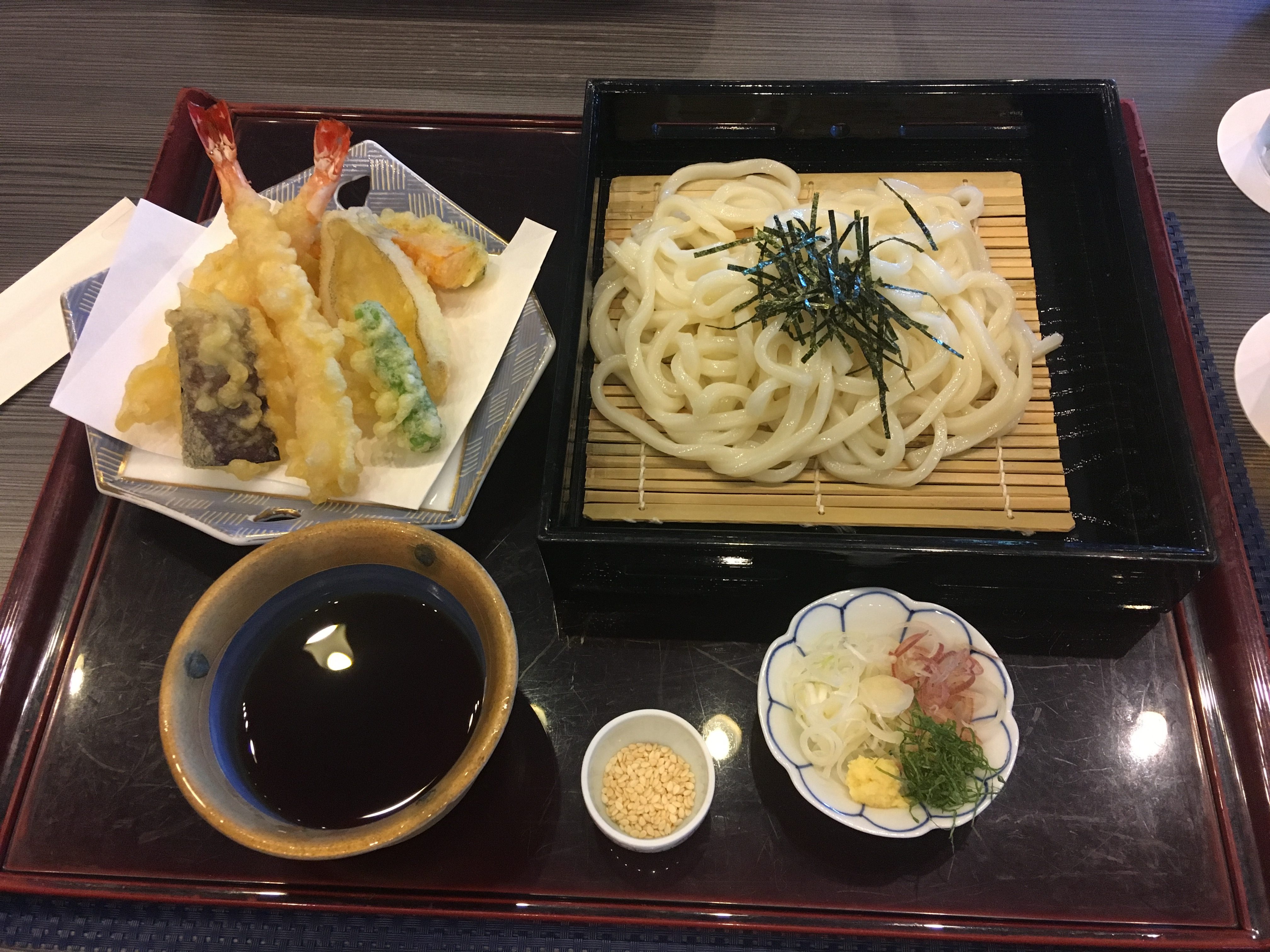
“Let’s have an early dinner at the hotel here,” Fred suggested.  “They have very good Chinese food.”  The dumplings were very good; I also had tempura and cold soba.

I gave Fred and Hiromi their gifts and they seemed to like them.  It had been a nice day, capped off by an auspicious siting of Fuji in the sunset, to the bottom left of the ferris wheel.

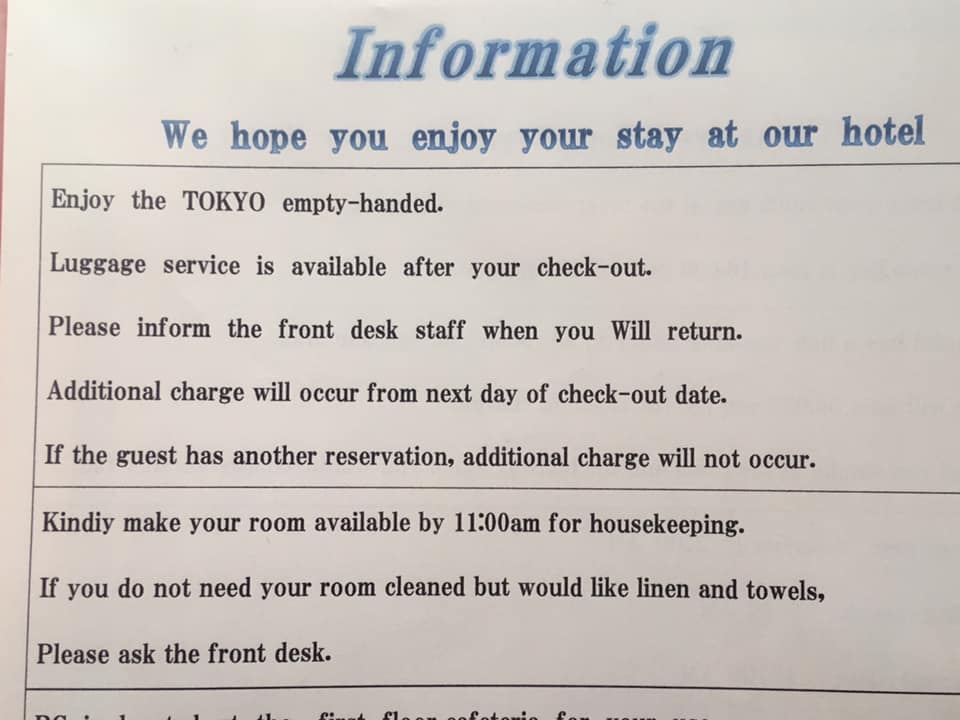
Enjoying the TOKYO

I had been traveling and walking in the rain all day.  If only I could sit down and have a cappuccino or a beer, and people watch ….

But there were no coffee shops or bars in the covered mall.  I didn’t want to duck under the restaurant curtains into a restaurant without knowing what awaited inside.  Were they empty at this time of day, or packed?  I didn’t know if it was okay to sit and nurse a cappuccino for an hour, taking up a table that could seat people spending a lot more than me.

I walked back to the hotel, hoping the abrasive landlady would let me into the room early, and she did.  This hotel, the New Tohoku, ranked 5th cheapest out of the eight places I lodged.  It ranked #1 as the most run down.

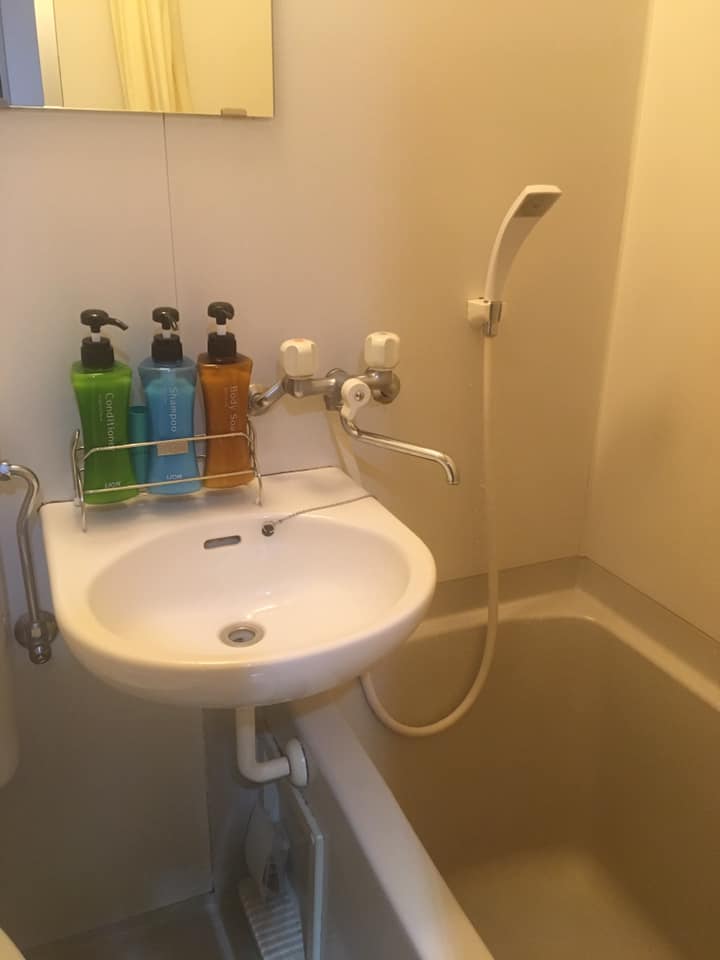
The carpet looked like it had been installed in 1972 and never shampooed.  This was the bathroom; I shared the photo already in my post about Japanese bathrooms.  Yes, you could swivel the sink faucet over the sink to wash your hands, then over to the tub to fill that up.  The tub was stained yellow, and the shower curtain was composed of the flimsy plastic used to make Walmart shopping bags—and spotted with blackish mildew.  Couldn’t they have spent 100 yen to buy a clean shower curtain?  I am halfway tempted to buy one at the Dollar Store and mail it to them.

The good thing about a grotty hotel is that you aren’t tempted to spend a lot of time there.  I changed into dry clothes, drank a couple mugs of green tea to fortify myself and perused the guest book.

Most of it made absolutely no sense, especially the opening line, “Enjoy the TOKYO empty-handed.”

I headed back out into the rain.

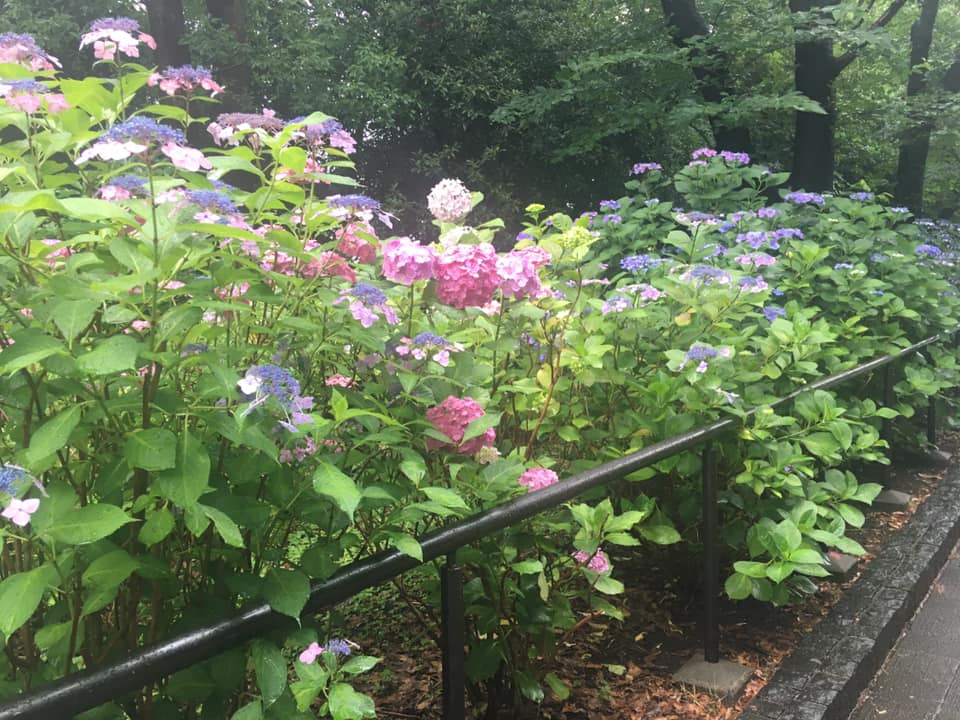
On the other side of the station lay Ueno Park, a vast urban oasis with museums, shrines, restaurants, and gardens.  There was a sparsely-attended festival in progress but it looked like the few attendees were all teenagers so I kept walking.  The hydrangeas were unendingly gorgeous, and the rainy weather made the colors—cobalt blue, violet, lime green—appear all the more saturated.

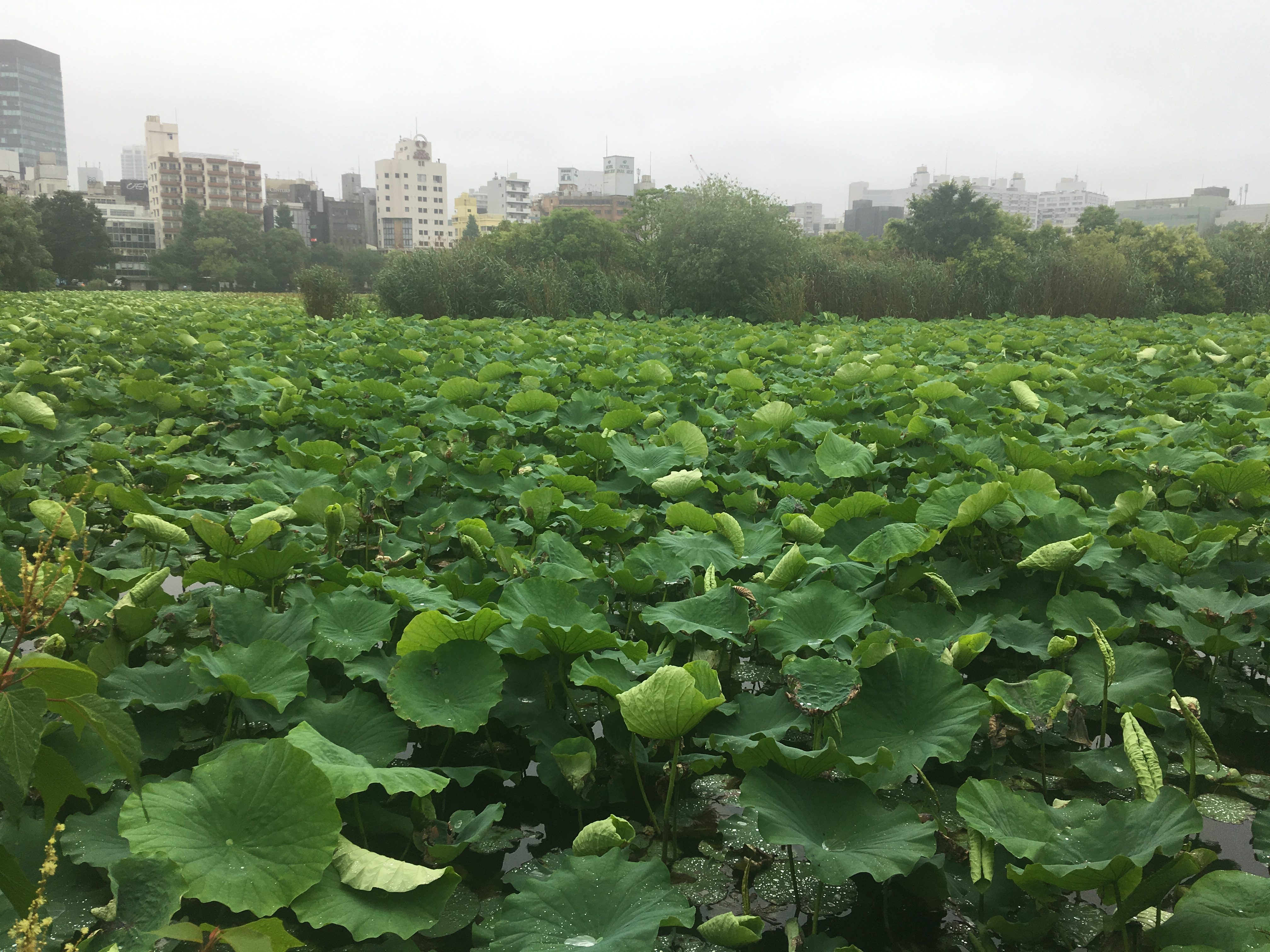
I crossed the park and walked down a hillside toward an enormous water-lily-filled lake.  I wondered if I had missed the water lilies blooming, or if they might be in bloom when I returned to Tokyo in ten days’ time.

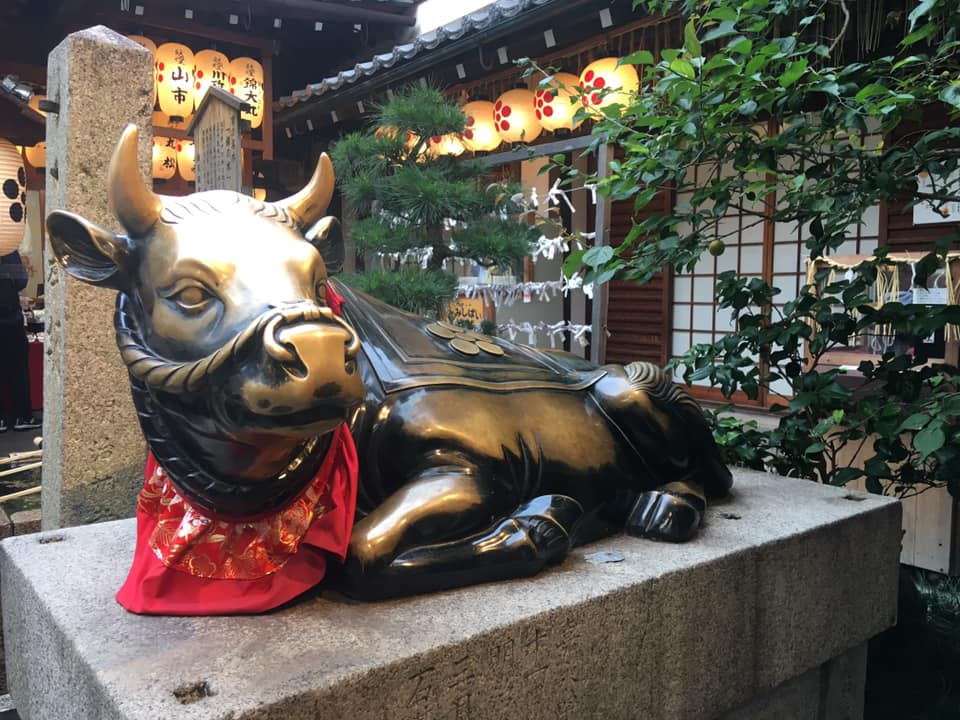
There was a land bridge with food stalls which to my disappointment were all closed, and it led to a shrine.  This bull was at the entrance.
If you look closely you may be able to see the crow on a post and ginger cat sitting below it.  I watched them for some time, wondering if they might start talking—they looked so much like an illustration from a fable.
These were the prayer plaques being sold at the shrine; they looked like sitars.
I bought a couple, putting my money in the offering box.  So there, Mr. Judgmental Buddhist in Nikko! I am not a thief!

I found an open restaurant back in the park and made the mistake of ordering the Chinese special.  I’ve been wondering—I’ve had great Chinese food in London and Minneapolis and elsewhere.  Why not in Japan?  Again, it was a pile of gristly meat on top of white rice and doused with a shiny, gelatinous sauce.

Back at the New Tohoku, I pulled back the 1981-vintage polyester bedspread with trepidation and was relieved to find crisp white sheets.  My RLS was a living hell that night. I gave up any hope of sleep at 4am and fiddled around online and drank instant coffee until the breakfast service began, at 7am.  Brekky was served in a storage room.  Paint cans, pieces of scaffolding, and tarps had been pushed aside and three tables for two squeezed in.  But the food wasn’t bad.

At 8am I was out the door to meet Keiko, her parents, and my nephews at a seaside amusement park.  I usually arrive before anyone else, but today I was a whole hour early.  Keiko had proposed meeting at the west entrance of the train station, but none existed.

Waterbugging

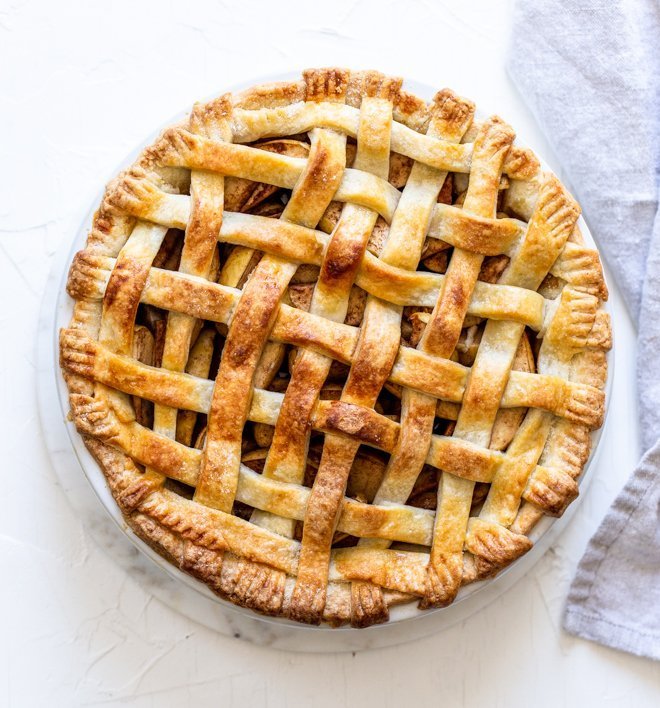
The hotel website’s directions were so detailed and clear.  On the east side of Ueno Station, there was a massive roadway criss-crossed with pedestrian overpasses.  Seen from the air, it probably resembles this lattice-top pie, only a lot messier.

I just had to spot the Joyo Bank building and everything would flow from there.   It was pouring again, so I donned my poncho, furled my umbrella, and with my other hand dragged my suitcase up the 30 steps to the pedestrian level and scanned the horizon for Joyo Bank.

No Joy. No Joyo.

And no one around to ask except the smokers huddled in the smokers’ corral back at the station entrance.  I chose to walk on, hoping I just hadn’t spotted the word “Joyo” yet.

Just when I was about to give up and go back to the station to catch a taxi to my hotel, which really was only five minutes from the station, I ducked under an overpass to shelter for a moment and found a couple students also huddling from the deluge.  They were supposed to be handing out flyers for a hair salon but there were no takers around because in the downpour.

One of them handed me a flyer, looking very doubtful that I was the trendy salon’s intended demographic.

“Do you speak English?” I asked.  One of them did, although it was patchy. I asked if she knew where Joyo Bank was, and showed her the word in English when she didn’t understand.  She nodded vigorously; she and her coworker googled it and pressed the screen toward me to show me an image of a red sun.

I immediately spotted it at the top of a building.  I thanked them profusely and walked on.  Obviously this incident makes the case for having a mobile hot spot.  On the other hand, I got to interact with some delightful young people who were happy to be helpful.

The hotel had provided detailed, excellent directions in English, but it had failed to realize that not everyone knows the Joyo Bank logo.  Or maybe it’s just me.

I rolled into the New Tohoku Hotel and was greeted by another chatty—but brusque—hostess.  “You pay now!” she barked at me as I fumbled with my dripping wet suitcase, umbrella, backpack, and poncho.

I paid. “You leave bag, room ready at 3:00!” she ordered.  There were a half dozen other bedraggled would-be guests hunched together on a couch in the tiny lobby.  I left my bag and walked out for a look around the neighborhood.

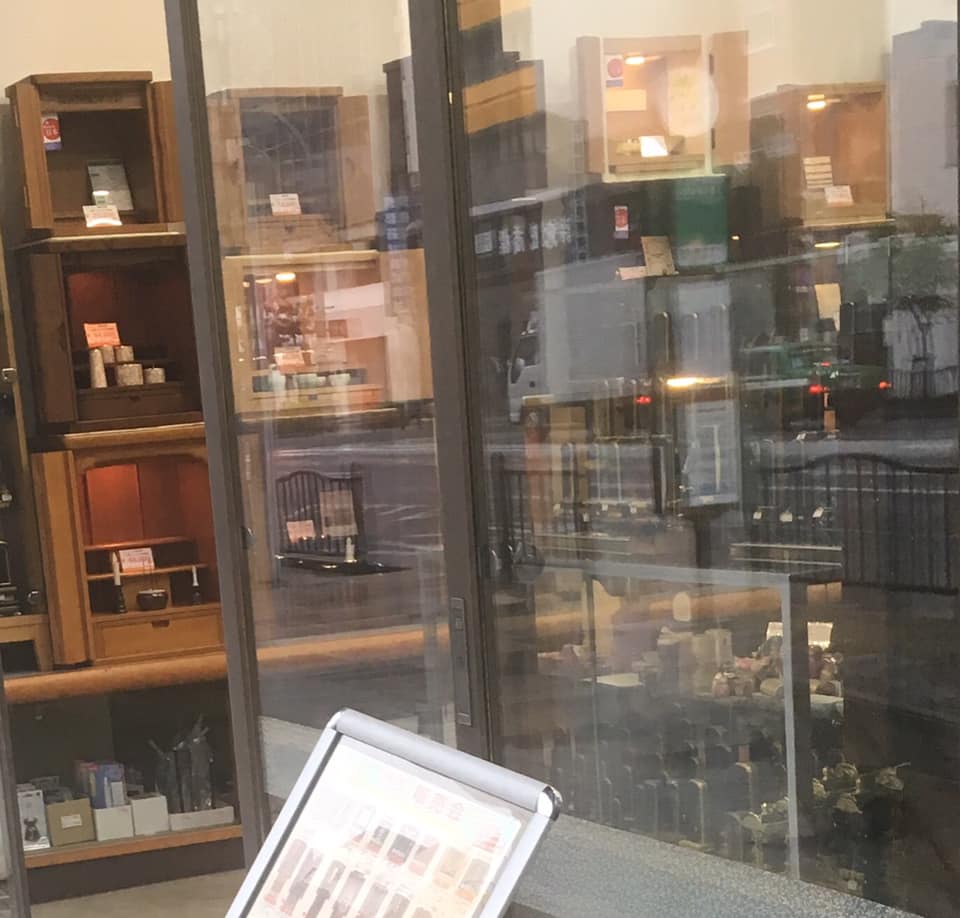
I carefully counted the blocks and memorized landmarks so I would be able to find my way back.  There were several blocks of stores that sold nothing but household shrine supplies.

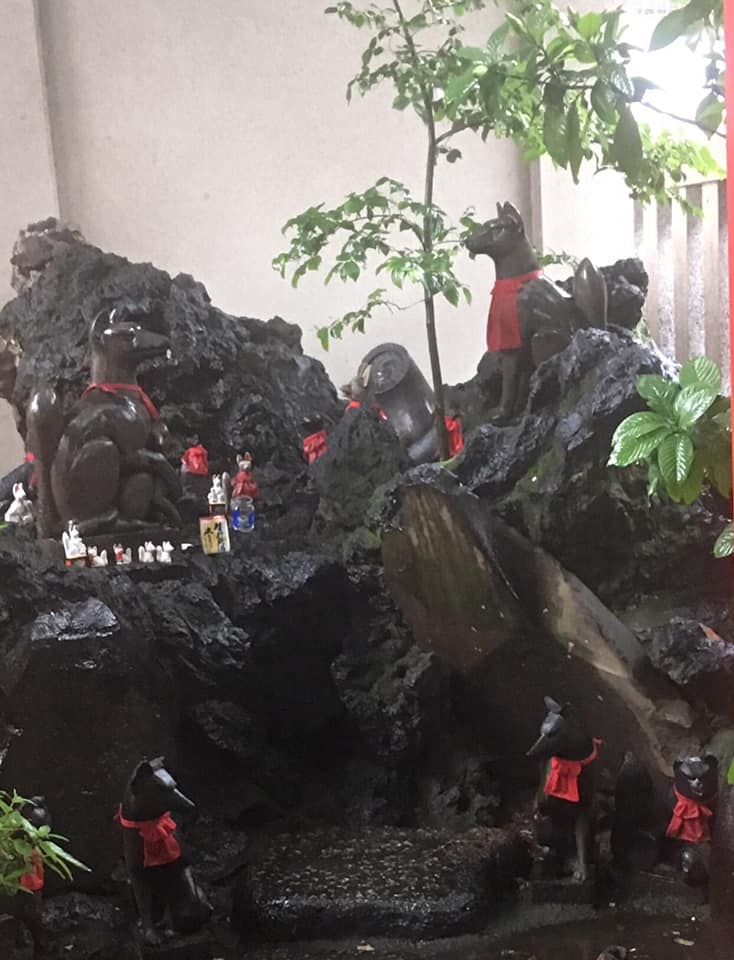
I came upon the tiny dog shrine I wrote about in a previous post.  My sister-in-law wondered if it was actually a shrine to foxes, but there’s no way of telling.

It was now 1:30 and it was still raining, hard.

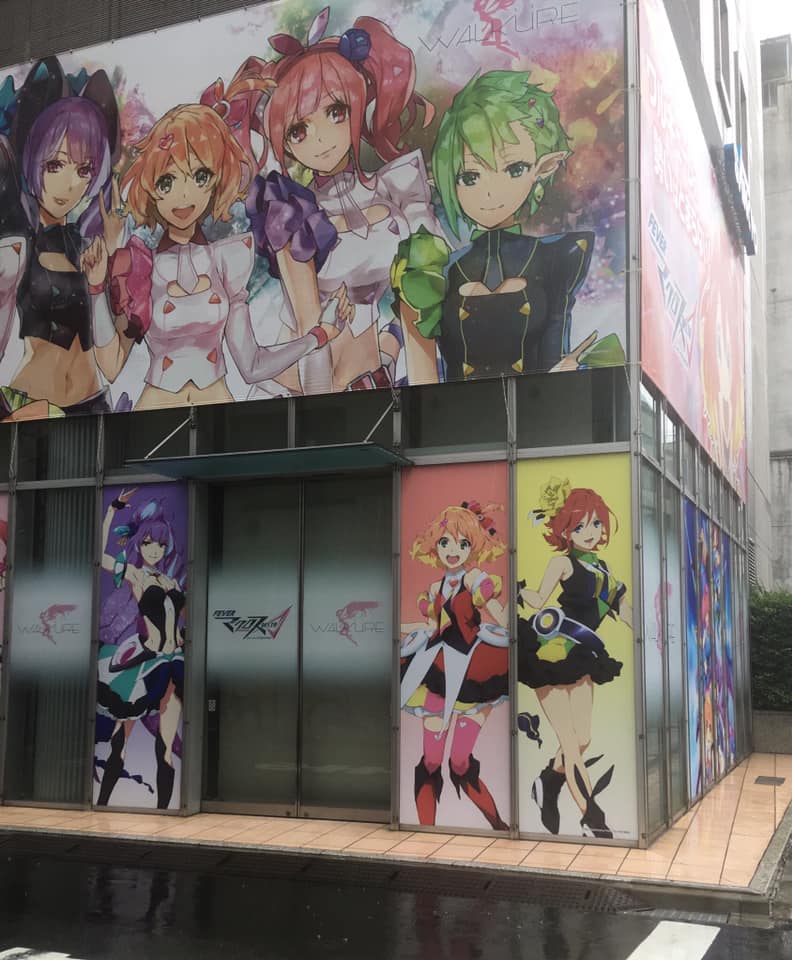
I walked back, passed the hotel, and kept walking.  There was this cool street art; did it indicate what went on inside?

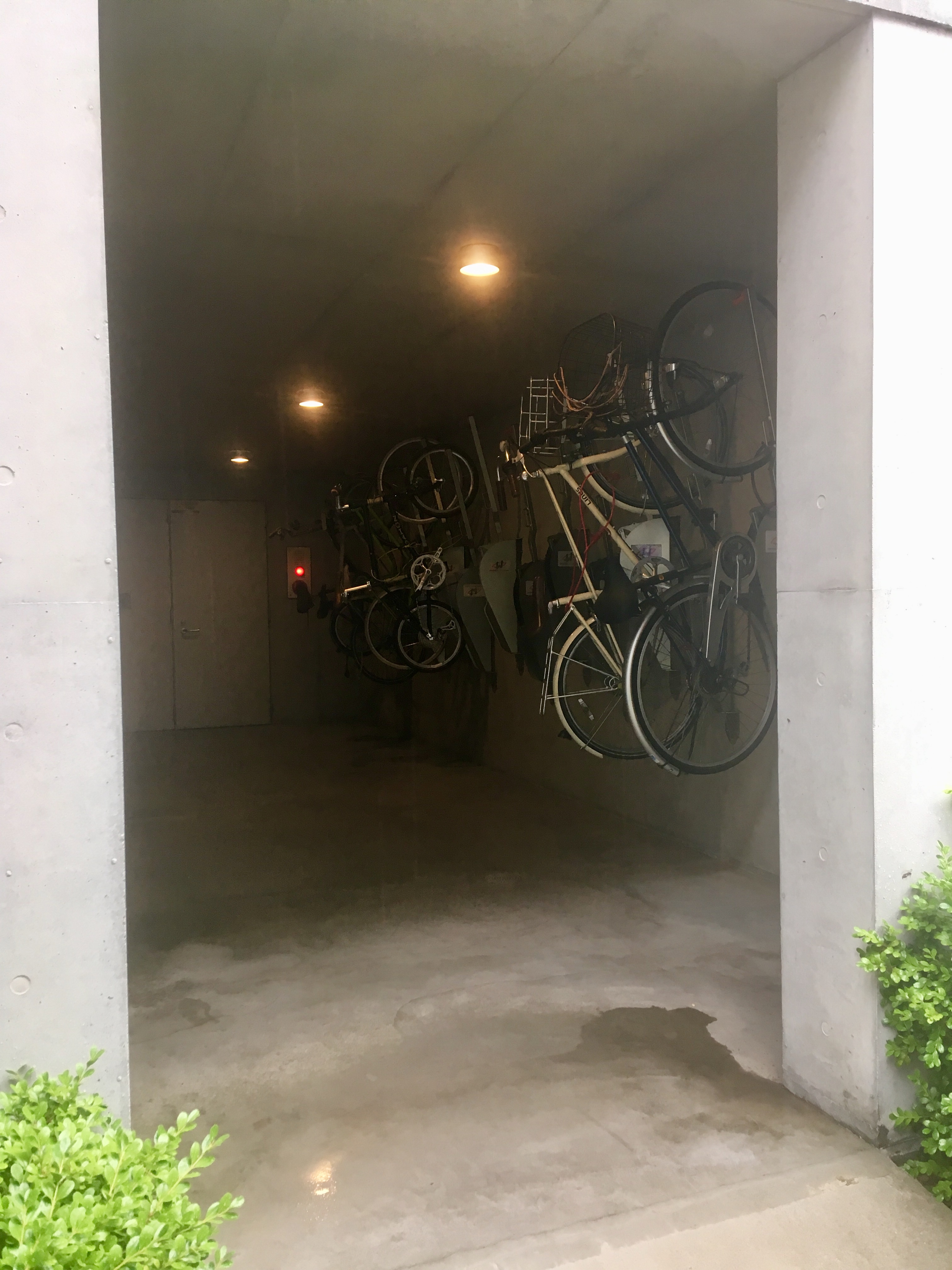
I passed an apartment building bike storage area.  Note it isn’t locked.  There isn’t even a door.

After six or eight blocks I was relieved to find an open-air but covered mall. It was full of veg stalls, restaurants, and posters for mysterious products, like these water bug toys.  Water bug toys!?  I kind of felt like a water bug myself right now.  My sister-in-law would shrug the next day and say, “Yeah, it’s a thing.”

There is crime in Japan, and here’s the “Most Wanted” poster to prove it.

From my limited understanding, most crime is gang against gang as they vie for lucrative prostitution and gambling franchises.

While I’m posting photos of unpleasant things, I will share this one of ugly wires and an ugly building.  Tangles of wire and ugly buildings are everywhere.  It was hard to take a photo of something beautiful without wires getting in the way.  You will never see these wires or unsightly high rises in tourist guides.

Brits in Japan

On the Lake Chuzenji area map I saw there was a former British embassy and a former Italian embassy on the opposite side of the lake.  I had already hiked for an hour and climbed 212 steps.  It looked like the embassies were about a half hour hike.  Should I go?

Of course!

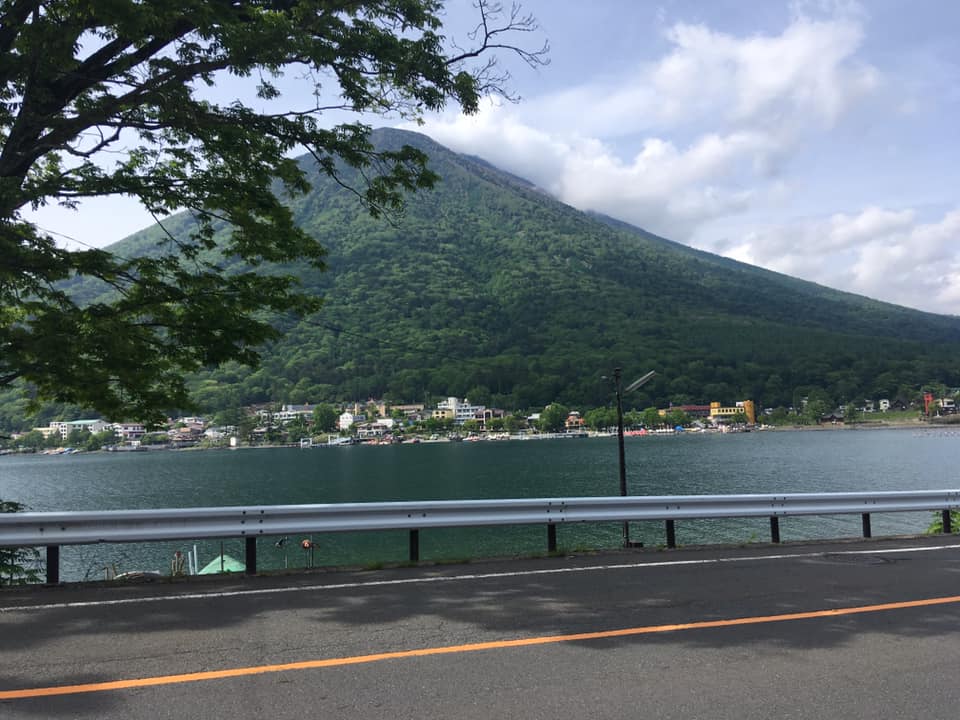
So I did, and I was glad.  This was the view from the other side of the lake.

There was a sign about the 29-kilometer (18-mile) hike you could take around the lake.  Wouldn’t that be cool?  Once in a while I daydream of hiking the Pacific Crest Trail or the Superior Hiking Trail.  Then I remember that my scoliosis makes sleeping on the ground a bad idea.  If there were inns along the route I would consider it—someday.

The former British embassy is now a memorial park.  I paid the trivial entry fee and wandered through.  There was a tearoom offering formal British-style teas but I had had my fill of ramen.

This was the former ambassador’s office.  Not a bad view.

There was a photo display about Ernest Satow, a British diplomat who represented England in Japan at the end of the Edo Period and start of the Meiji Period.  He “went out to Japan,” as the British say, when he was still a teenager.  Edited from Wikipedia:

Satow is better known in Japan than in Britain or the other countries in which he served. He was an exceptional linguist, an energetic traveler, a writer of travel guidebooks, a dictionary compiler, a mountaineer, a keen botanist, and a major collector of Japanese books and manuscripts.

He also served in China, Siam, Uruguay and Morocco, and represented Britain at the Second Hague Peace Conference in 1907. In his retirement he wrote A Guide to Diplomatic Practice, now known as ‘Satow’s Guide to Diplomatic Practice’ – which is widely used today.

Satow was never able, as a diplomat serving in Japan, to marry his Japanese common-law wife, Takeda Kane. They had an unnamed daughter who was born and died in infancy, and two sons, Eitaro and Hisayoshi. Eitaro was diagnosed with TB in 1900, and was advised to go and live in the United States, where he died before his father. His second son, Takeda, became a noted botanist, founder of the Japan Natural History Society and president of the Japan Alpine Club.

What a full and fulfilling life, with quite a burden of sadness, too.

There was this little tribute to QEII and Japanese-British relations.

It made me wonder.  I hadn’t seen any glossy mags with princesses on the covers or heard about scandals by members of the Japanese royal family.  Were they just very low profile and non-scandalous, or did the media not report on them?

I had had enough walking and passed on a visit to the Italian embassy memorial park.  Besides, it was getting late.  I hopped a bus back to the Lake Chuzenji bus station, then caught the bus back into Nikko.  The road down the mountain was one way.  I have taken some vertiginous rides through mountains—in Jamaica, Ethiopia, Belize, Arizona—but this was the scariest ever.

I fell asleep to the sound of rain pattering on my window, and slept through the night with only a few RLS twitches.  Maybe that’s the cure—hike for hours and climb hundreds of steps every day in clean mountain air!

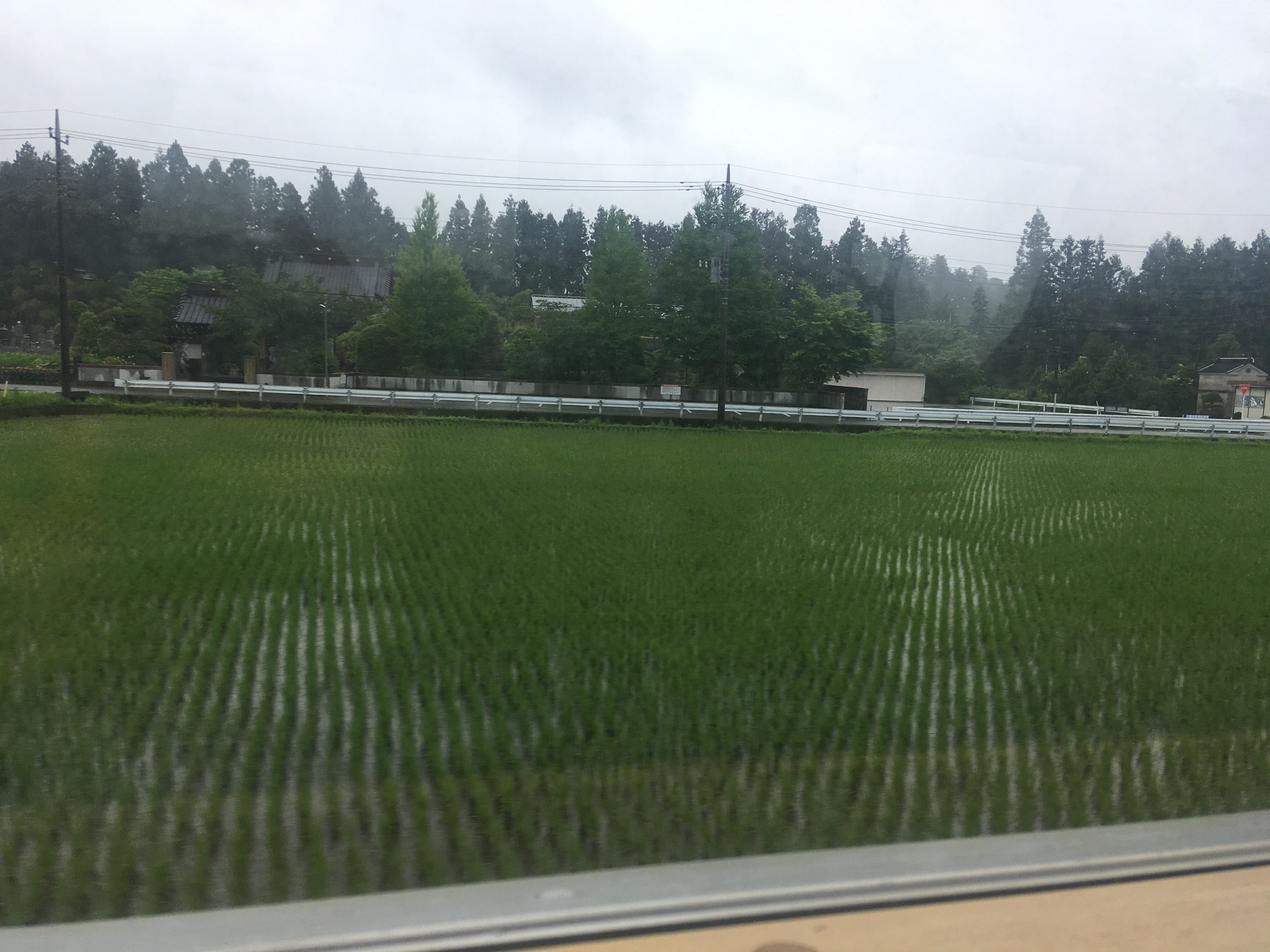
The next day I headed back to Tokyo.  On the train, I again meditated on how most visitors “do” Nikko in one day as I gazed out at the rice paddies.

It was an easy return trip; the local train was beautiful, with wood paneling and classic Japanese paintings adorning the luggage racks.

I bought a to-go bento box in Utsonimiya.  It was beautifully wrapped but not good food.  Still, I ate it as I watched the usual assortment of train officials walk up and down the aisles wearing their caps and white gloves and badges, bowing to us passengers at the end of each car before walking through to the next.

At Ueno Station, all I had to do now was follow the easy directions printed off from my next hotel’s website.