Category Archives: Budget travel

A Fish Tale

I joined Lynn and Possum and their friend Andrew for a long dinner at the Italian restaurant.  Andrew was a former Oxfamer, now a finance consultant.  He was preparing to walk along the south coast of England to raise money for Oxfam, and we ribbed him about the impending stormy weather.

He laughed back at us, Ha, ha, I’m going to Italy for a week after the walk.”

When you work for an international organization, you meet such interesting people.  People who love to travel, people with good hearts, people with good stories.

The organization I work for supports survivors of torture and war trauma to rebuild their lives through counseling, physical therapy, and social work services.

You might think torture is a rare occurrence, but it’s not.  Governments all over the world employ it to scare their populations into submission.  My own government has tortured people it suspects of being terrorists.  My organization estimates that about 1.3 million of the refugees in the US were tortured in their home country.  And there are likely tens of millions more in other countries.

One way for us to reach more people is to work with other organizations, and that’s why I had come to Oxford—to meet with some people about possibly partnering with Oxfam.  Oxfam is an international organization that started in Oxford, and the largest branch, Oxford Great Britain, is there.  OGB dwarfs my organization.  It had income of $565 million last year, compared our income of about $15 million.  Was there some way we could go in with OGB on funding applications, doing a small part of a big project?  It could make their proposals more competitive to add our specialized services, and we could reach more survivors.

That’s the theory, anyway.  It takes a long time to bring these partnerships to fruition, if they ever do.

I had meetings the next day in three different locations.  When I asked the driver of the #8 bus to Headington where I should get off, he gave me a rude and incorrect answer.  I ended up walking about eight blocks in the warm rain.

I still arrived early, so I did reconnaissance for how I would catch my next bus, and then looked at ads in an estate agent’s window.

This one is pure Oxford:

Yes, the house comes with a giant fish sculpture.  What’s so excellent and British is that there is no reference to it in the ad.   Entrance hall?  Check.  Three bedrooms, check.  Living room, yes.  Garden?  Yes.  Giant fish? Huh, what fish? Pay no attention to that fish plunging through the roof.

I found the coffee shop and had a lovely talk with a woman who worked for OGB for 17 years and is now a fundraising consultant.  Her two young children played quietly while we talked NGO-speak.

“Which sector are you under?” she asked. “Health, GBV, protection?”

“Usually health but with PRM we’ve been protection and also with this DFiD NOFO we’re responding to, and we’re thinking GBV for Iraq with OFDA.”

“That makes perfect sense,” she nodded.

It was nice to talk to someone who spoke the same code as I do.

I next boarded the #10 bus, which wound along Windmill Road, which turned into The Slade, then Holloway Road, then Between Towns Road.  I alighted at The Original Swan pub, from where I would walk to OGB.  I had walked this route every day when I lived here, but today—when I was running a little late—I got lost.

OGB is in a business park where all the buildings look alike and are arranged in a circle so you can go around and not realize you’ve gone around.

It’s a nice office park, as such places go.  There are fountains and trees.  But there are no signs or directories, or I missed them.  I was so sure I would remember the route, but I didn’t.  After my disastrous meeting in London I had invested in some big-girl professional work clothes and now they were damp with sweat as I huffed along.  I tried to ask directions from three passersby and they looked at me like I was insane and scurried off.
Sight Seeing, Blind

I love how quiet most pubs are, in contrast to American bars, where you can’t sit anywhere and not face a bank of TVs showing nonstop sports, in addition to blaring, manic music.

Not that pubs can’t be noisy, especially toward the end of the night in a university town like Oxford.  But it was a Wednesday afternoon and I had a quiet nook to myself.  I pulled out a notebook and started making lists—things to buy, places to go, writing ideas.  I listed all the writers associated with Oxford and who might have sat on this very bench before me: JRR Tolkien, CS Lewis, Phillip Pullman, Thomas Hardy, William Golding, Aldous Huxley, TS Elliot, William Boyd, VS Naipaul, Dorothy Sayers, Evelyn Waugh, Lewis Carroll, and even Dr. Suess!
Maybe some of their collective genius juju would rub off on me.

My reverie was interrupted by a woman braying loudly in an American southern accent, “I’m afraid of the beef!”  I glanced over and saw a woman of generous proportions and her husband, both wearing sweat pants and sweat shirts with sports logos.  He was quite beefy but I assumed she wasn’t referring to him.  He was peppering the bar maid with questions about the menu.

“Now, is that bawled, or frahhed?  What kind of awwl is it frahhed in?  Does it come with French fraaahs or puh-tay-ta chips?”

He was clueless about the growing irritation of the bar maid and the line of people queuing up behind them.

“I’m afraid of the beef!” his wife announced again, as if we hadn’t been able to hear her the first time.

What did she even mean?  Naturally she supplied an explanation.  “The beef hee-ah is so coarsely gray-ound! It’s very tough in England.  Aahhm afraid I’ll break a tooth!”

Please, please, please, I said to myself, don’t make a comment about British teeth.  Fortunately she didn’t, or I might have had to out myself as an American by intervening loudly and pushily.

They finally placed their orders and shambled away in their Nikes or whatever they were wearing.  Have you ever noticed that a lot of people who wear “athletic shoes” are not athletic?

When I related this story at dinner, I was informed me that, to Brits, American ground beef has the texture of baby food.

Still at the Turf, watching the tide of people come and go at the bar.

Next up was a young Chinese woman.  “I’rrll have a pint of Ord Rozzy Schrumpy,” she said.  How brave she was to formulate that sentence, when you think about it.  I know nothing about Chinese, but if it’s anything like Spanish, it has different sentence structures and verb tenses from English.  And “Old Rosy Scrumpy” must sound even funnier to Chinese ears than it does to me, a native English speaker.

I finished my pint, then wove my way slowly through Oxford.  There wasn’t enough time to visit any of the fabulous museums, like the Ashmolean or the Pitt Rivers, which is basically a collection of collections from dead people’s attics—people who had traveled the world and brought back plunder like shrunken heads, taxidermy dodo birds, and totem poles.

I hadn’t planned anything.  I’d already taken hundreds of photos of the city so I walked for a block, sat on a bench and watched people, and repeated this for an hour.

Mainly what I observed is that people are oblivious.  I have been in this state myself, so I know it when I see it.  People are rushing around, trying to see everything on their tourist guide check list.  They find something, snap photos, then consult a map for the next thing.   They don’t get lost anymore thanks to GPS, so they never see anything by accident.

They don’t see—really see—the other human beings around them.  Many people looked straight at me but didn’t really see me, seeing them, as they frantically pinged from one site to another.

It made me think of a line from a Hebrew prayer: “We walk sightless among miracles.”

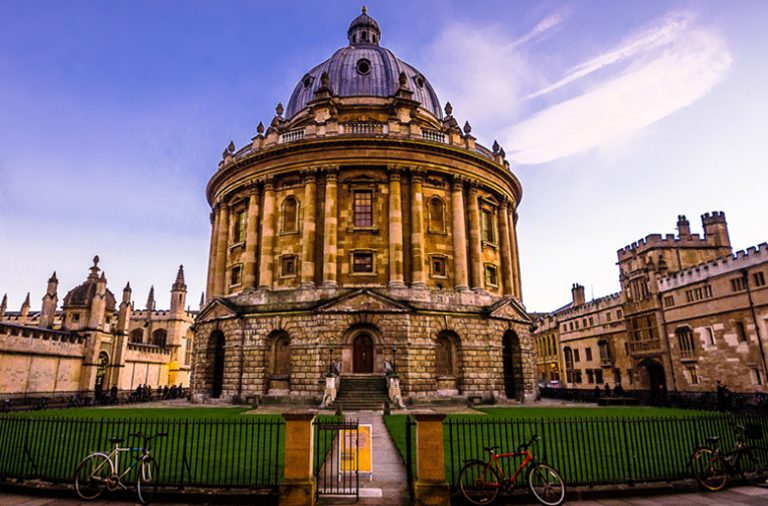
At one point as I sat in front of the magnificent Radcliffe Camera, part of the Bodleian Library—one of the oldest and largest libraries on earth—a van screeched to a halt at the curb. A dozen Spanish tourists jumped out, took photos, then jumped back in and the van tore off to the next photo opp.

Oxford: Good, Bad, and Ugly

My sappy, sentimental life review of my idealized time in Oxford was wiped away once we got into town.  The road was torn up for construction and blocked off with blaze orange barriers.  The bus would take a very long detour, so I jumped off early.

I walked across east Oxford, noticing for the first time how shabby it is compared to Eton and Windsor—with derelict buildings, front gardens full of weeds and rubble, smeared dirty windows, and gum and spit and trash on the sidewalk.  They call cigarette butts fag ends, and there were loads of them.  It had all seemed exotic when I’d first arrived.  Now it just looked ugly.

East Oxford, as you may have guessed, is the sort-of east side of Oxford.  It has a distinct personality.  East Oxford is where people can still afford to live.  It’s home to immigrants and students and transient people like me who come to work for Oxfam or the Mini factory in Cowley, beyond East Oxford.

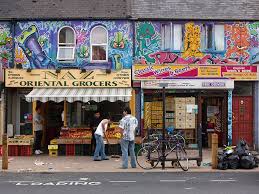
Cowley Street, which runs through East Oxford, bustles with small shops selling everything from books to buckets.  There are Bengali groceries and halal fried chicken fast food restaurants.

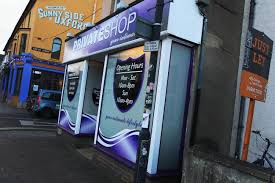
And at least one porno store, called “Private Shop.”

Lynn was in town too and had booked a room at a guest house on the Iffley Road.  My plan was to swing by there, drop my bag, then spend the afternoon having a wander until meeting her and Possum and a guy named Andrew for dinner at an Italian restaurant in St. Clement’s Street.

Lynn was at the guest house when I arrived and we chatted a bit, then she went off to Oxfam.  The guest house was serviceable and dirt cheap, for Oxford.  It had what is so hard to find in the US—a room with three beds—two singles and a double.  If Possum didn’t have her own flat, there would have been plenty of room for us all.

Those of you who have been reading this blog for a while know I don’t write restaurant or hotel reviews.  There are plenty of people willing to do that, and I just like to tell stories.  I do remember thinking at the time that the bath in this place was pretty grody, that the bare walls could use a coat of fresh paint, and that the coffee at breakfast was barely drinkable.

Looking back six months later, I had to work to recall those details.  What came to mind right away was how good it was to see Lynn again, how fun the dinner was, and the sense of mastery I felt navigating my way around Oxford on the bus and meeting people in three locations in one morning.

I also have to work to remember how hot it was.  Our room was on the third floor and as is common in the UK, there was no AC.  Opening the window resulted in a flood of traffic noise from the busy road below.  But again, I have to work to remember these things that bugged me at the time.  I guess that’s a sign that I don’t hang on to these passing irritants.

I walked over to the Cowley Road and caught a bus into the medieval city center.

Sitting in a top front seat on the double decker bus, I found myself getting sentimental again as we passed Magdalene College (pronounced “maudlin”), then Brasenose College, and on into the High Street, which ends at Carfax Tower. There’s a reason so many TV series and films are set here.

Oxford University is made up of 38 colleges.  Some are open to tour often, some never, some only on Tuesdays during a full moon. If there is any “system,” it is a mystery to me.  I feel lucky to have seen half a dozen of them.

Ten seconds after alighting from my aerie on the air conditioned bus, it all came back to me—the heat, the smells, the sidewalks packed with oblivious tourists taking selfies.

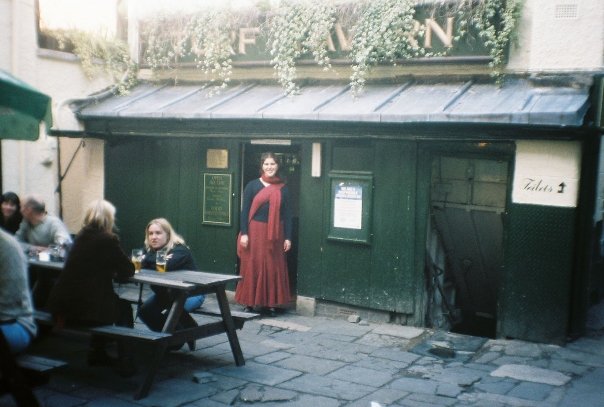
I slipped down a narrow passage to the Turf Tavern, got a pint of Old Rosie Scrumpy, a cider beer, and slid into a booth by a window.

Oxford, Again

On the coach to Oxford.  The longest part of the journey, as in most places, is getting out of the city.  There’s no way to magically part the traffic, so you may as well sit back and enjoy the scenery.

The seats on UK coaches are raised up to make space for luggage compartments.  So you can see a lot from a coach that you won’t see at the pavement level. I hadn’t been on this particular route for a few years.  We passed a row of luxury car show rooms … McLaren, Ferrari … the type of gaudy wheels Donald Trump would love.

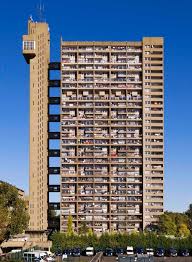
We passed my favorite hideous but marvelous building, Trellick Tower.

I turned my head and there it was … the ill-fated Grenfell Tower.

Grenfell had gone up in flames in June, when I was in Ethiopia. I recalled being in the canteen at work and how everyone stopped eating and stared at the TV, in disbelief that this was London, not Addis Ababa. Seventy-one people died in the Grenfell Tower disaster.

We passed the Hoover Building, as in hoovers, which Americans call vacuum cleaners.

This art-deco bonbon is being converted into luxury flats.  I’m sure they’ll be fab, but they’ll still overlook a motorway clogged with traffic that produces plenty of noise and exhaust fumes.

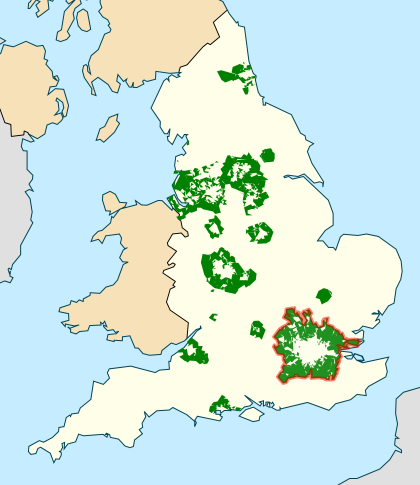
In England, there are Green Belt policies aimed at preventing urban sprawl.  And they really do look like belts. (image by Hellerick).  The big one is London.

While my fellow nature lovers and I love green belts, they have been criticized for pushing up house prices, since 70% of the cost of building new houses is the purchase of the land (up from 25% in the late 1950s).

There are no signs stating, “You are now entering a green belt,” but I have been on a coach many times where I was surrounded by relentless concrete high rises and industrial areas and suddenly it’s like we’ve been transported into a Nature Valley Granola Bars commercial.

We entered the Chiltern Hills.  I have friends who have hiked these, camping along the way; I prefer to enjoy them from a coach for now.

In under an hour we were entering Oxford from the east, along the Headington Road.  It felt so familiar and I felt nostalgia well up.

I have never been so in love with a place.  I think it was because of what it represented in my life at the time.  From the teenage welfare mom living in subsidized housing, when I arrived in Oxford I had a master’s degree, I had traveled all over central America and Israel and some of Europe, and my son was stable—for the time being.  Moving to Oxford was my triumphal escape from St. Small, and I was never going back.

Of course I did come back, because my work visa couldn’t be renewed.  And I have come to appreciate many things about St. Paul, like how affordable it is.  It’s clean.  We’re a hub for theater and other culture.  I can drive five minutes and be at the Mississippi River or two hours and stand on the shores of Lake Superior. The Twin Cities of Minneapolis and St. Paul are one of the most progressive metropolitan areas in the US, which I appreciate a lot right now.

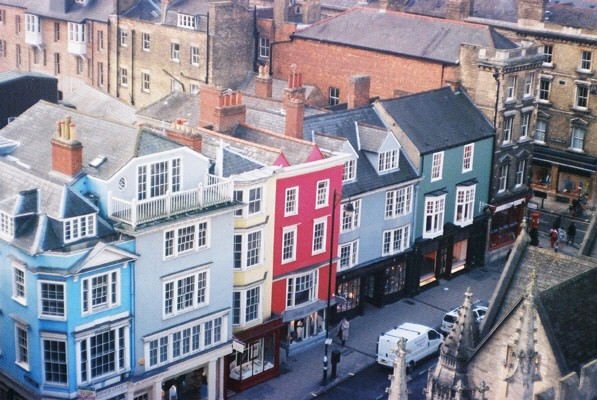
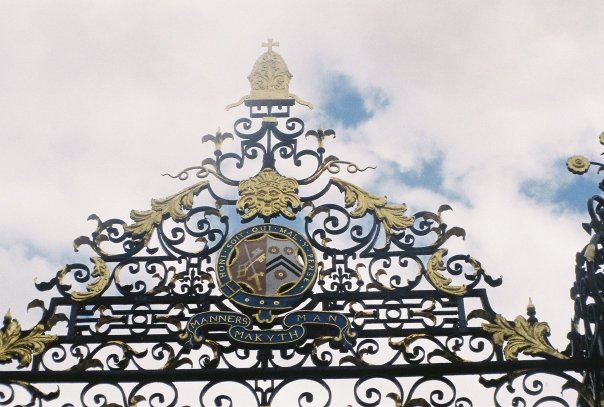
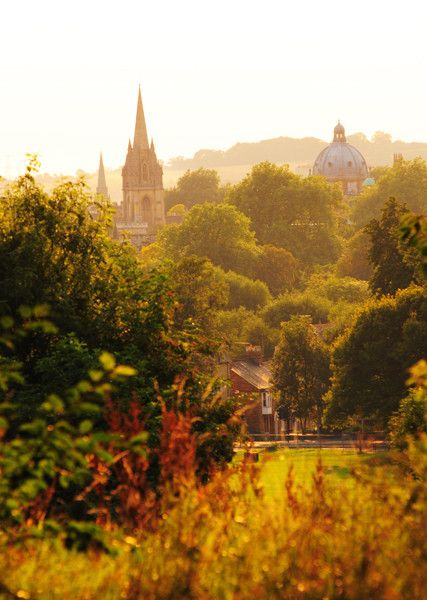
But Oxford is a medieval city that is home to the most storied university on the planet.  It’s called the City of Dreaming Spires, and I won’t gush on about it but here are a few photos from some sight-seeing days I spend with my niece when she came to visit me.

I believe we’re atop Carfax tower here.

This is a tourist and TV detective-series directors’ favorite.

There are the Harry Potter-esque colleges.

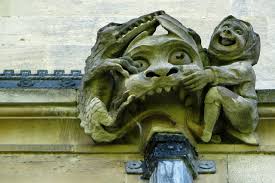
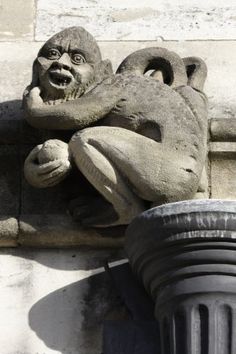
Everywhere you look there are gargoyles and grotesques.


Oxford is also surrounded by woods and rivers and meadows.

Moving to Oxford is how I met Lynn, and Sam, and Possum, and Heidi.  It got me started in the international development biz.

How lucky am I to have lived there and returned again and again?  Most people never get to visit once.

Power and The Pig

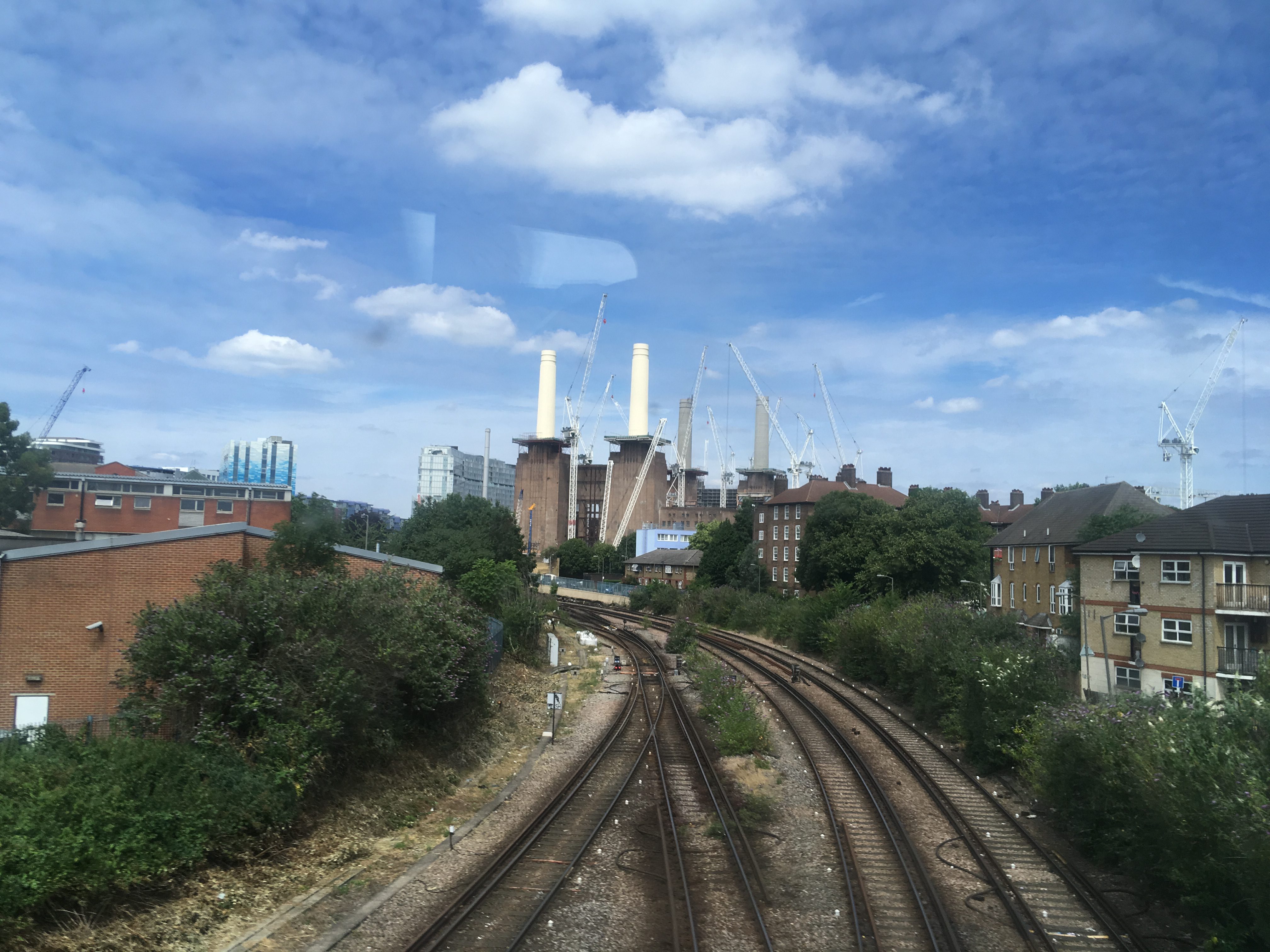
I was on my way to Oxford.  This involved taking the train into London, then boomeranging out to Oxford by coach.  I had taken both routes many times so I felt no anxiety about getting there.  From the train I could see Battersea Power Station.

When I first spotted it, I thought I recognized it from somewhere.  After a couple more trips it came to me—this was the scary structure featured on Pink Floyd’s album Animals, which I had listened to over and over in my youth.

Animals is loosely based on George Orwell’s novel Animal Farm.  It’s the debut of the pig that Roger Waters, the band’s former bassist and lead song writer, still features in his concerts.  The album critiques the socioeconomic conditions in late 70s in Britain, with the pig symbolizing despotic, ruthless capitalism.

This is one of those moments where I feel overwhelmed and amazed by coincidences and connections, but I’ll write on.

Battersea Power Station was decommissioned in the late 70s and early 80s.  It looks ominous and cool from a distance.  It took me back because my first day at Oxfam involved a group “field trip” to another coal-fired power plant in Didcot, a half hour south of Oxford.

Yes, my first day happened to be an “away day,” which we in the US would call a staff retreat.  It was disorienting, to say the least.  Here I was, ready to start researching issues like small scale agriculture and industrial mining, and instead my new boss picked me up in front of the liquor store near my hostel and whisked me away to a coal-fired power plant.

This is what it looked like as we approached.

All I could think was, “What the fuck?!  Maybe we’re really on an undercover mission to sabotage it.  I could be deported on my first day!”

But no, we were really going on a tour.  The Didcot plant has also since been decommissioned and transitioned to natural gas. Sadly in the process, part of it collapsed and four workers were killed.

But back in 2006, the management was in full marketing buzz-speak mode.  We got to don jump suits and hats and masks; we must have looked like the Oxfam version of Devo.

We were lead around by a perky young woman who made coal power sound so cool! and really—just super for the environment! We received cardboard model coal plants to assemble at home with our children.  These actually were really cool.  I wonder whatever happened to mine.

I never received a clear explanation of why we went.  Maybe to try to understand “the opposition?”

Back on the train to London, seeing Battersea reminded me that there was a Pink Floyd exhibit at the Victoria and Albert Museum.  Strangely, my son is a bigger Floyd fan than I ever was, and I made a mental note to go check out the exhibit in order to obtain Cool Mom Points.

Now, sitting in my living room in January in Minnesota, I am reading Donald Trump’s tweet about Nine Elms, the area where Battersea is located.

“Reason I canceled my trip to London is that I am not a big fan of the Obama Administration having sold perhaps the best located and finest embassy in London for “peanuts,” only to build a new one in an off location for 1.2 billion dollars. Bad deal. Wanted me to cut ribbon-NO!”

An off location?  I read several articles about the redevelopment of Nine Elms and specifically Battersea Power Station when I was in the UK.  The plan is to invest £8 billion ($11 billion) into Battersea to create luxury penthouses.  $11 billion!  Yes, billion!  There are all sorts of other fantastical buildings springing up around Battersea, including the new American Embassy.  This is an artist’s rendering; the real thing was more impressive, although I didn’t know what it was when I saw it in the distance from the train.

This kind of phantasmagorical development project should be right up Donald Trump’s alley—affordable only to the one percent.  I’m surprised he doesn’t recognize a great real estate investment deal when he sees it.  I’d invest in it if I had his money.

Deserving Immigrants

The next day I would go to Oxford for some meetings with Oxfam people and to hang out with Lynn and Possum.

I had to leave the house early but first I let in the cleaners into the flat.

People in the States have asked me what Brits thought about Donald Trump.  Typically, I would meet a new person and he or she would make small talk while looking down at the ground, then after 10 minutes broach The Topic.

“Sooo … what do you think of your new president?” They weren’t sure where I stood, so they posed an open-ended question.

When I expressed my opinion, they invariably let out a sigh of relief that I wasn’t one of “those Americans” who think he’s Terrific, and they would launch into a screed about him, usually looping in the themes of Brexit and nationalism.

“We think he’s a complete tosser!” was a typical comment.  Tosser, wanker, arsehole, mad as a bag of ferrets.  Just a few of the British endearments I heard about our president, not to mention the universal terms racist, sexist, nationalist, moron, jerk, sociopath, and narcissist.

Granted, I tend to hang out with very liberal people, but I went to a few parties where I wasn’t sure what was coming.  It was always the same.

So when the Polish couple who cleaned the flat once a month stated that they love America, I expected the same.  They were immigrants, after all.  Fortunately they didn’t ask my opinion first.

“And we love your President Donald Trump!” the husband exclaimed as the wife nodded heartily.  The husband waxed enthusiastic.  “He is strong man!  In Europe, we understand about the Muslims.  You Americans need a strong man to keep them out!”

There was a lot going through my head at that moment.  Normally I’m a fighter and I would have challenged them.  But here I was, alone in Eton.  No one knew I was here aside from Sam and my people back home. This guy was about 6’ 2” and burly, with blonde hair and blue eyes—an ideal Aryan.  He was yelling—not angrily but animatedly—and waving the five-foot-long wand of the Hoover around in the air.  This was not the time to mention I was a Jew, and how I empathized with Muslims and hated all of Trump’s anti-immigrant policies.

The wife stepped forward, excited to share her opinions.  “We live in UK 11 years.  We go home to Poland every year, town near German border, and see what the Muslims do.  They change the country.  They make crimes, they are dirty.  They rape German women!  No, no, we stay here.  We have two kids; the boy he 13, the girl she 11.  They English!  We want keep refugees out of England.”

Wow.  I couldn’t even begin to know how to tango with the illogic of her statement.  During the election, I had heard a Vietnamese immigrant to the US on National Public Radio lauding Donald Trump and stating she would vote for him.  I had figured she was an outlier.

But now I wondered.  Is it a thing?  “I made it to safety/prosperity so screw all of you in line behind me.”  Or did a Vietnamese immigrant really see herself as completely virtuous and deserving of being taken in, while no Muslim was?  It boggled the mind.

I couldn’t resist asking, “What will happen to you with Brexit?”

They beamed.  “We love Brexit!  Brexit will keep new immigrants out.  There are enough immigrants here now.”

I really wanted to ask if they were aware that many Brits think Poles are pond scum.  Google “British views of Poles” and 18 million results come up.  I thought one chat room comment summed it up well:

“Poles are the second-largest overseas-born community in the UK after Indians. This isn’t new (Polish Jews came in 19th century) but much of it has to do with Poland joining the EU in 2004 making migration easier.  So I’d imagine anti-Polish sentiment being the British equivalent of American dislike for Mexicans.”

But instead of diving into this conversation, I grabbed my bag, waved good-bye, and exited to catch the train to Oxford.

Adieu, not Good-Bye

Heidi and I worked our way through the first and second floors of F&M (remember, what Americans call the first floor is the ground floor, and so on).

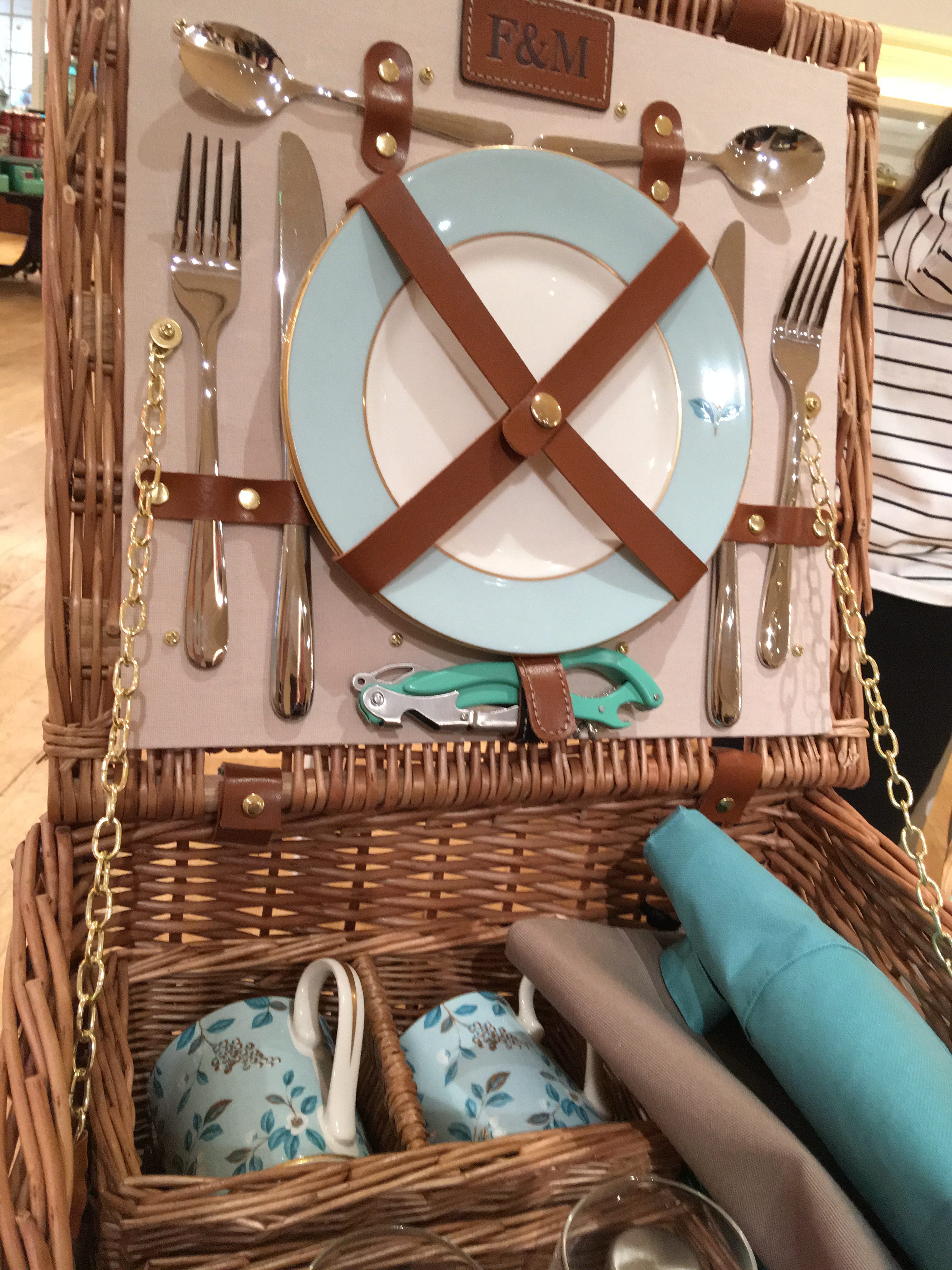
F&M doesn’t carry clothing or accessories; its focus is on food and home goods.  One of their signature items is picnic baskets, or hampers as they call them.  I hate that buzz word “signature,” but in this instance it fits.

I don’t recall how much this hamper cost, but this is one of those cases where if you have to ask, you can’t afford it.

“But how heavy it would be?” I remarked to Heidi.

“Oh dahling!  You wouldn’t carry it yourself!  You would have your man carry it!”  And by “man” she didn’t mean my lover but my manservant.

There were many hampers of varying sizes and with different contents, all with the signature F&M bluey-green colors.

“You buy these as a wedding gift?” Heidi suggested in her Aussie upspeak.

“Yes.  And then the happy couple use it once, put it in a closet, and every time they move they say, ‘Oh this heavy old thing—why don’t we get rid of it?’”

“But they can’t because Cousin Harriet gave it to them as a wedding gift,” Heidi finished my thought.

“That’s right.”

“Maybe some people use them all the time,” Heidi suggested.

“Maybe.  Maybe if you live in the country and your man only has to drive the Bentley a short way down the lane to get to the picnic spot near the river.  Not if you live in London and have to transport this on the tube.”

“Oh darling, no cousins of Harriet’s would ever be seen dead on the tube!”

We eventually staggered out of the store.  This is the entrance, with a couple of customers Kath Kidston’d to the max.

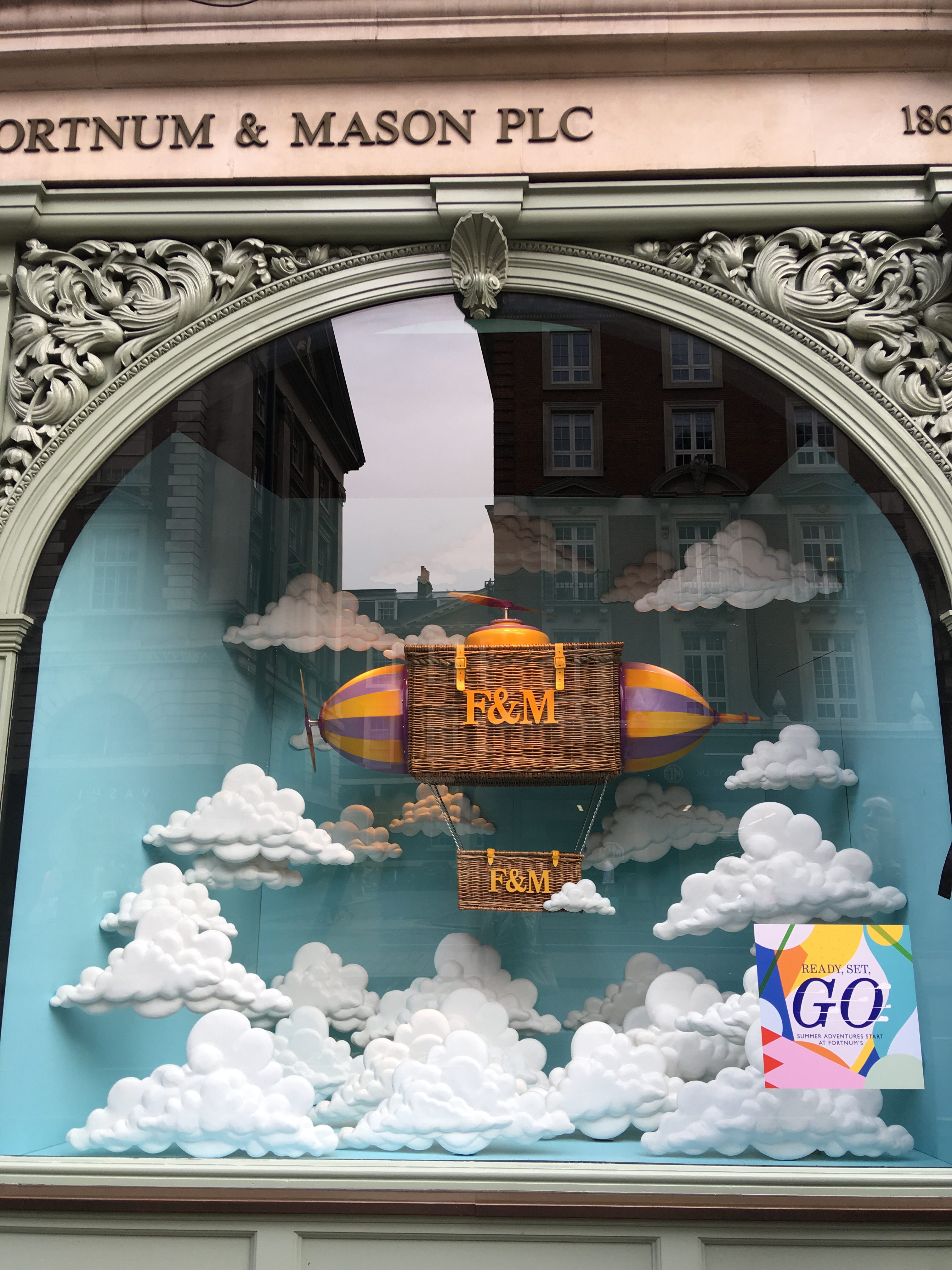
F&M had lovely window displays which I wasn’t able to capture due to the glare.  Since it was still raining, I’m not sure where the glare was from.

There were also windows featuring trains, a boat, and a bicycle, all incorporating the Signature Hamper.  I guess the message was, “Go explore the world with a 300-pound basket of china and cutlery!”

We stood on the pavement in the rain under our umbrellas.  It had been a long day.  First the Churchill War Rooms, then Victoria Park and the flashback of seeing my dad standing on that same spot, the unexpected Jewel Tower, Houses of Parliament, the Red Lion, then Fortnum and Mason.  My bags of accumulated trinkets were feeling heavy.  All I had had to eat was a bag of crisps and a pint in the Red Lion. It was 9:00ish and beginning to get dark.  Suddenly I felt tired to the bone and wished I had access to a Star Trek transporter machine so I could be home instantly.

“Now let’s see … what shall we do next?” Heidi mused.

I paused, because Heidi would leave in a few days to go back to Australia and who knew when we would see each other again?

But I am no longer willing to force myself to keep going. I simply said I was tired and needed to start getting home.  I started to apologize.

“No drama!” responded Heidi. This is her Signature Phrase and I love it.

“Where will we see each other next?” she asked rhetorically.  Since meeting through Sam in 2006, we had met up in Berlin, the south of France, London, and St. Paul.

“I would love to come to Aus, but it’s so expensive and I would need a ton of time off work.”

“It would be great to see you there—but I know, it’s sooooo far.  Well, think about it.  I should be there at least through New Year.”

We said our good-byes, I dropped down into the tube tunnel, and Heidi walked off toward Green Park station where she would catch the Jubilee Line to Swiss Cottage, the station closest to her flat. Her flat with the room she lets out when she isn’t in Aus.

A tube, a train, and a walk and I was back in the flat running a bath an hour and a half later.

Seeing, Really Seeing

Am I a bad, shallow person to enjoy places like Liberty so thoroughly?  Only the one percent can actually buy anything there, right?  True, although I did buy some nail varnish, as they call nail polish in Britain.  It cost £12 ($15)—the most expensive nail polish I’ve ever bought—but I love the color and it reminds me of my day there.

But no regular person can actually afford to buy a pair of pants at Harrods.  Isn’t that wrong?  Isn’t it criminal that people spend £1,500 on baby carriages made by Maserati?  Or £2,000 for jeweled clutch purses, or £200 for a canvas tote bag because it has the Liberty look and label?

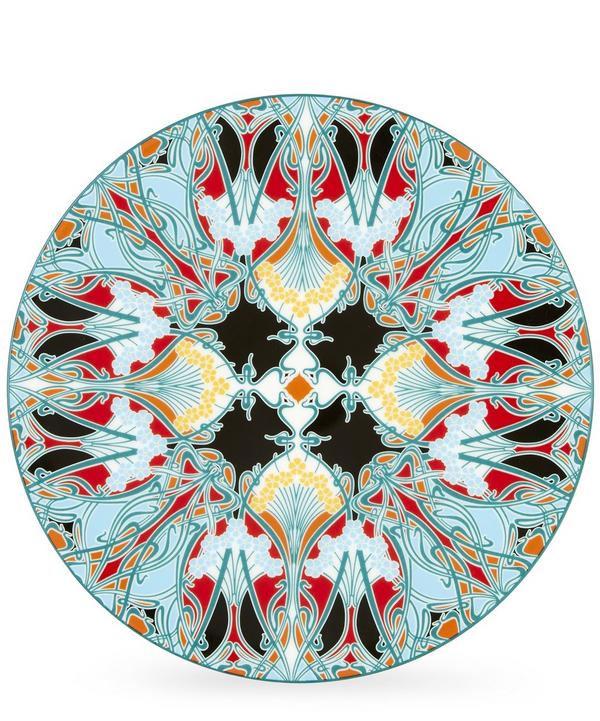
Isn’t it outrageous that people spend £95 for a small plate with a Liberty design on it, when they won’t give £5 to the homeless person sitting on the pavement outside the store?

Yes, it is outrageous.  And I’m glad there are people designing, making, selling, and buying beautiful things in this world.

Maybe, if the contents of all the high-end department stores were liquidated and the proceeds given to homeless people, those folks would get new clothes, get jobs, find apartments, fall in love, and live happily ever after.

Nah.

Some would, some wouldn’t. Some might use the money to start a small business, and build it into a business empire … like Harrods.  Some have such intractable problems that no amount of money or social service intervention can solve them.  Some poor people would be offended by the offer of cash and continue on their own path of working their way up.

No, it’s much more complicated. I’ve worked in nonprofit organizations almost my whole career and I know that rich people and businesses can be part of the solution.

I just searched the Liberty website for the terms “donations,” “charity,” “corporate social responsibility,” and “philanthropy” and came up empty handed.  It would be nice to think that they hired ex offenders or donated unsold shoes to charity auctions.

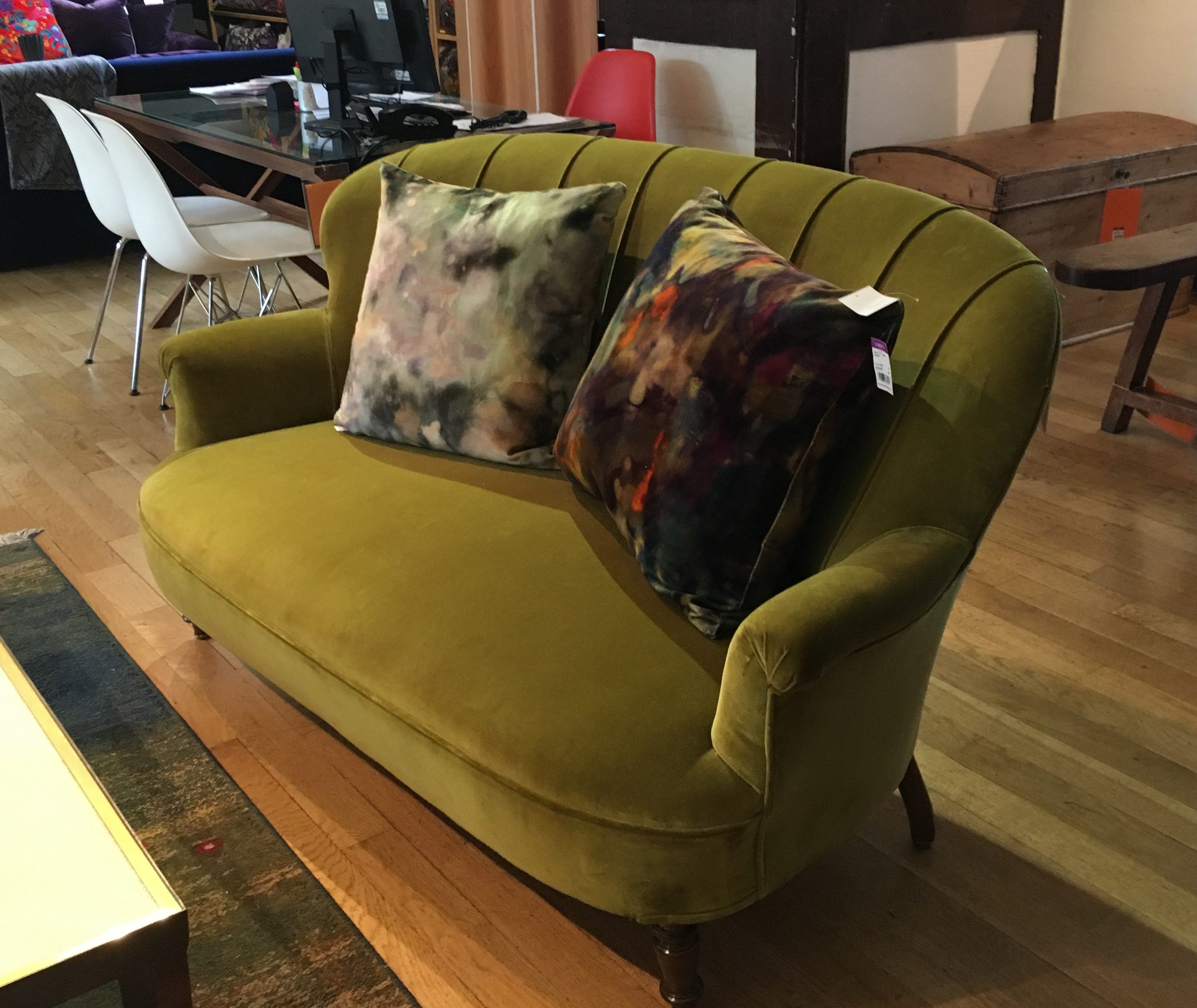
I would be happy to help them start a corporate philanthropy program if they would just allow me to work from that green velvet sofa.

For better or worse, I have an “eye” for color, composition, and all things beautiful, whether they’re manmade or natural.  You may be thinking, “Well everyone loves beautiful things!” but you would be wrong.  I have friends who have nothing on their walls.  Nothing.  No art, not even Art-in-a-Box from Target.

They come to my house, look around, and say, “Wow, you have so much stuff on your walls.  Interesting.”  As if it has never occurred to them that they could do the same, much less surround themselves with beautiful, interesting, uplifting objects.

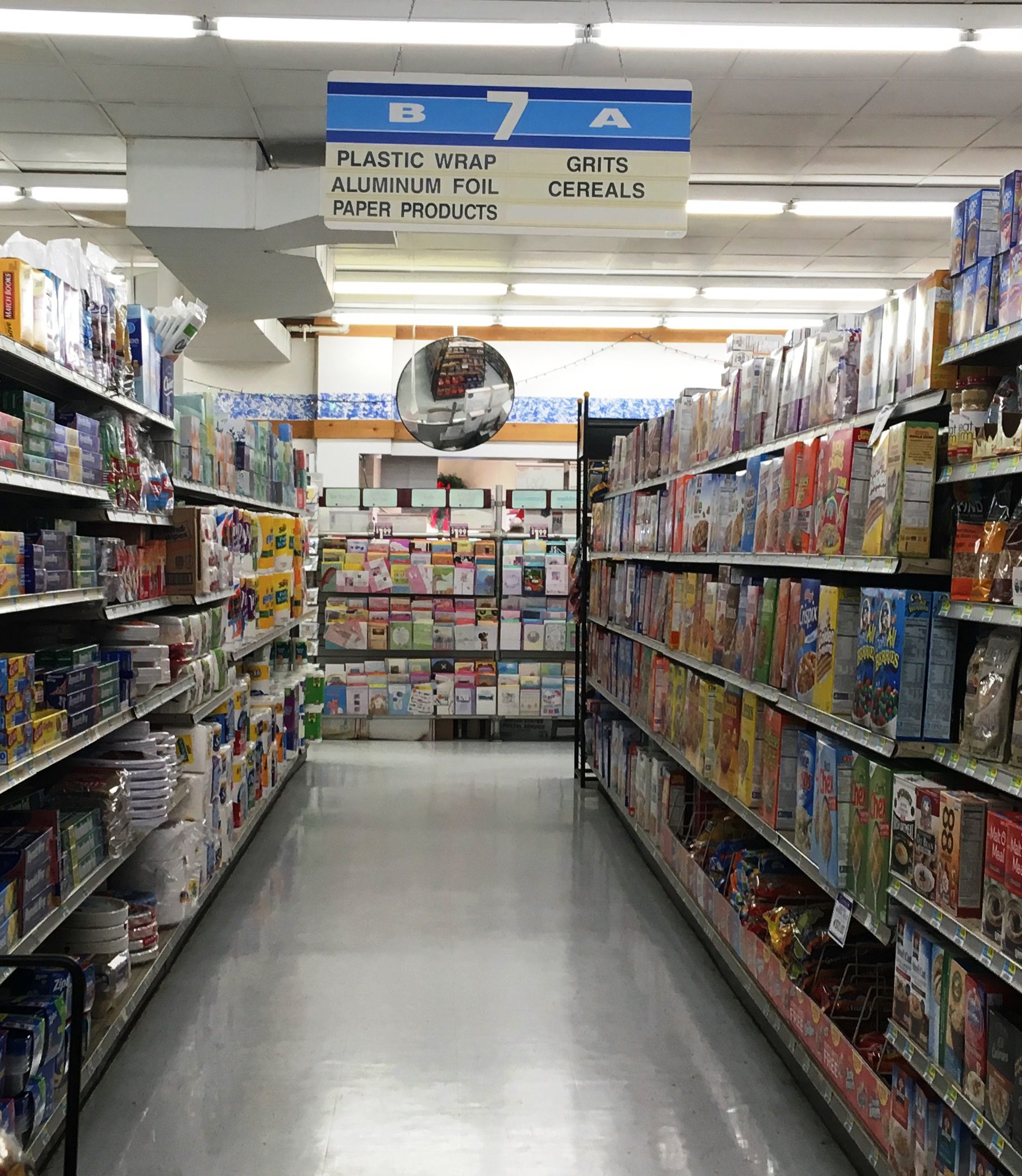
I have been told that I notice things, in general.  The other day, I was in an old-timey grocery store in St. Paul and said to my friend, “Hey!  When was the last time you saw a grocery store with a ‘Grits’ aisle?”

She laughed and said, “You always notice things like that.”

Doesn’t everyone?  I guess not.

I asked my landlady, “What are those tracks?”

“What tracks?”

“The ones there—that look like a snake made them,” I pointed.

“Oh, those.  I’ve never noticed them.  Maybe a mouse?”

I am in a hyper-state of noticing when I’m traveling.  It was good to know I could see things—delightful, humorous things—right at home.  This new year, I’m going to try to pull it in even closer, and notice things in my house that I use or pass by—sightless—every day.

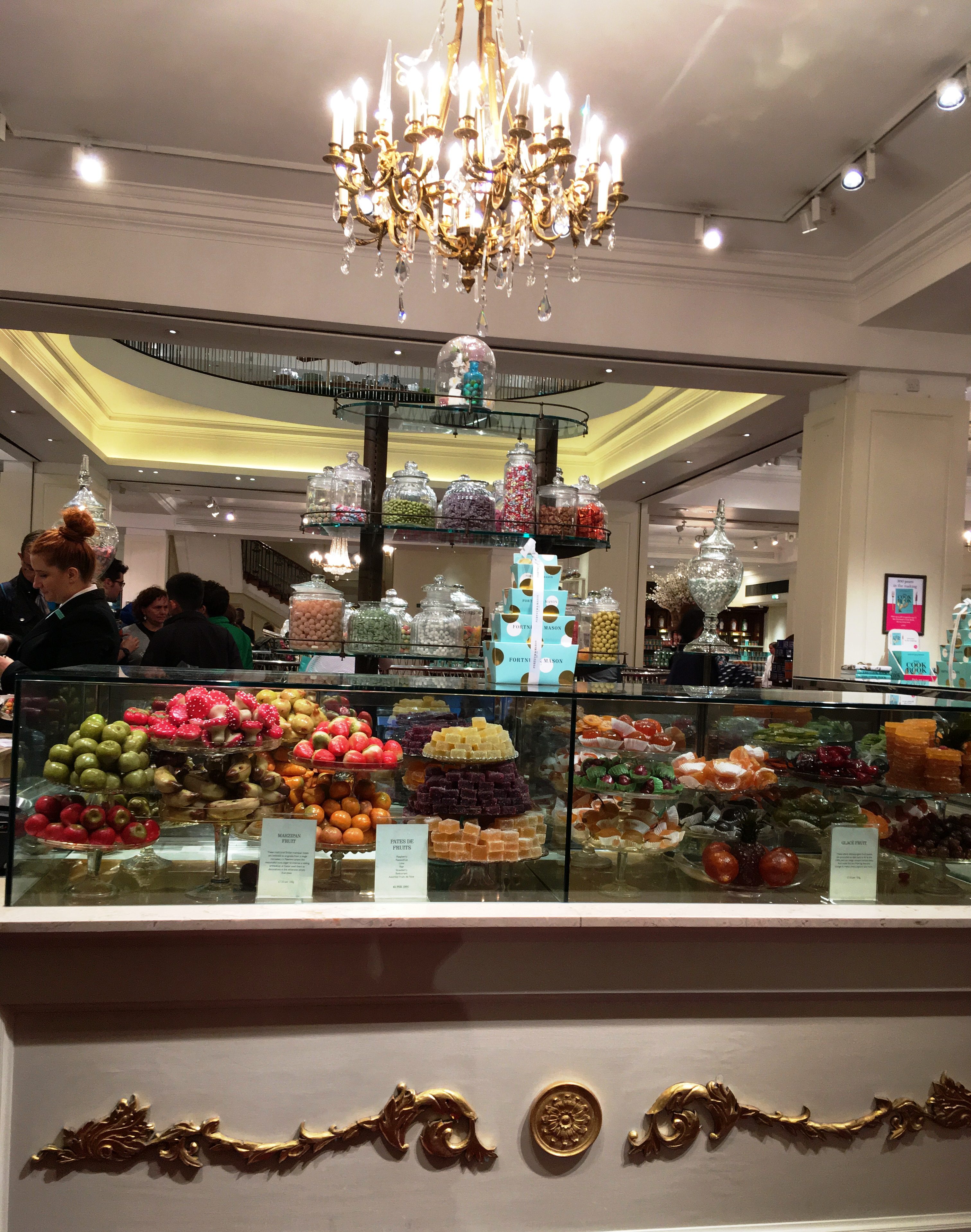
Back at Fortnum and Mason, Heidi and I worked our way slowly through the food hall.

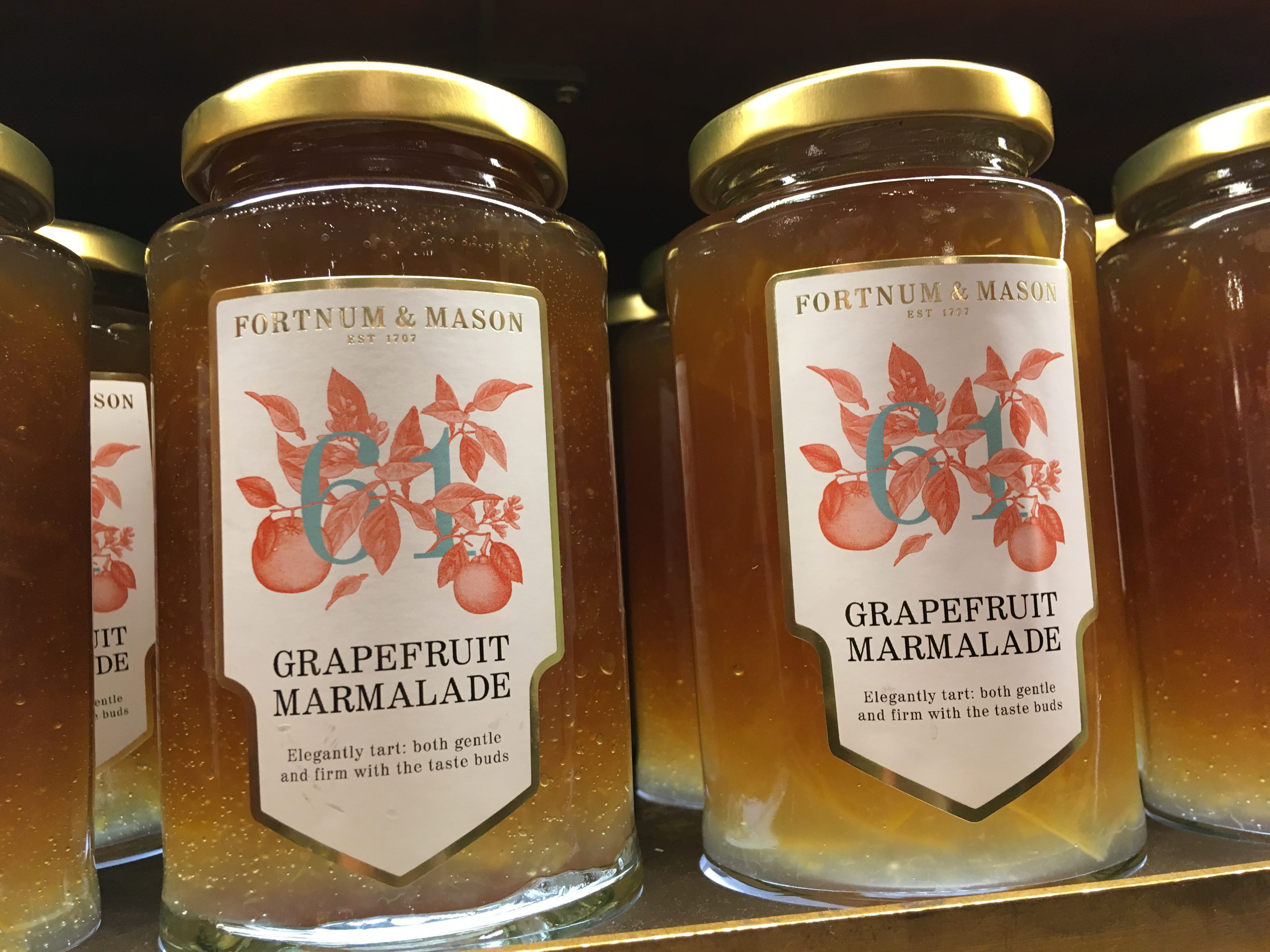
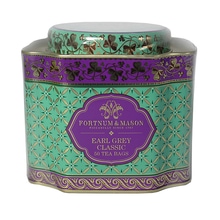
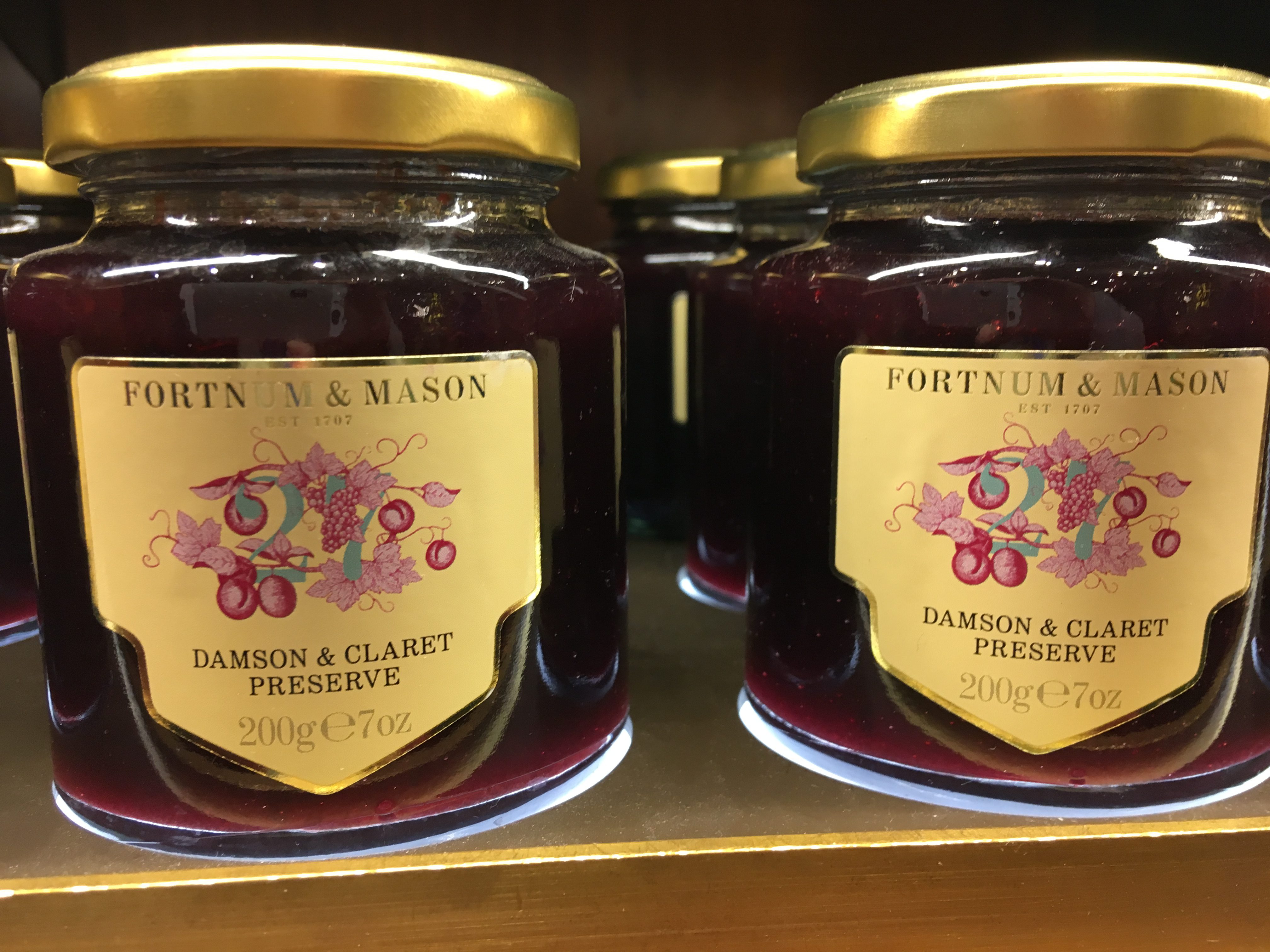
I bought a box of Earl Grey tea for Lynn and a box of English Breakfast for myself.  I didn’t buy these exact containers but you get the idea of the packaging.

Yes, they cost more than a canister of PG Tips at Tesco.  They may not have been grown in a socially-responsibly, environmentally-sustainable manner.  But so what?  They’re beautiful, and six months later I am still dipping into my stash and enjoying the tea and the memory.

At Liberty

I can always count on Heidi to show me something new in London that I wouldn’t have read about in a guide book.  She lived there for 15 years, maintains her claim on her rented room, and will return to work there—that’s the plan—after her sojourn in Australia.

From Parliament Hill, she led me on to Fortnum and Mason, in Picadilly.  I look at a map now and wonder, did we pass Banqueting House?  What is Banqueting House?  Did we pass Scotland Yard?  Surely I would remember walking through Trafalgar Square and along Pall Mall.  I love that name because my grandparents smoked Pall Mall cigarettes.  So sophisticated.  And then they died of cancer, emphysema, and strokes.

Maybe we cut through Horse Guards and walked up Waterloo?

Regardless, F&M is one of those fancy schmancy brands with a royal warrant:

F&M is a department store founded 300 years ago and in the same stratosphere as Harrods’s or Liberty.  I rarely step foot in places that have $$$$ next to their listing in a guide, but on a rainy day it’s fun have a look and take pictures, especially with a friend to whom I can exclaim, “Oooh, look at this!” to which she replies, “Aaahhh…so beautiful!  How much?” and when I flip over the price tag we both suck in our breath in a combination of pleasure and pain.

The last time I was in London, Heidi and I spent a whole day doing this in Harrods and Liberty.  I prefer Liberty to Harrods because the building itself is so beautiful; it’s reminiscent of something out of a Harry Potter movie.

They say you will know you have found your passion when you discover the thing that makes you lose all track of time and your surroundings.  I just spent 20 minutes looking at photos I took at Liberty.  I forgot it was -10F outside.  I wasn’t worried that my laptop battery was about to die, or that friends were coming over and I needed to tidy up my place.

This happens frequently when I blog.  Not just about going to posh places like Liberty, but during the process of coming up with words like posh … lush … luxuriant … sumptuous.  Focusing on stringing the right words together and complementing them with just the right photos—it transports me to another world.

And we all want to go to another world once in a while, don’t we?

As I said, I had visited Harrods and Liberty a few years ago with Heidi, and I returned to Liberty right before I left London for Scotland this summer.  I’ll give you a quick bad-photo tour of Liberty, then return to Fortnum and Mason.

The exterior.  Note the golden ship on top, undoubtedly an originally-proud way of proclaiming, “Come and see all the beautiful things we have plundered from around the empire!”

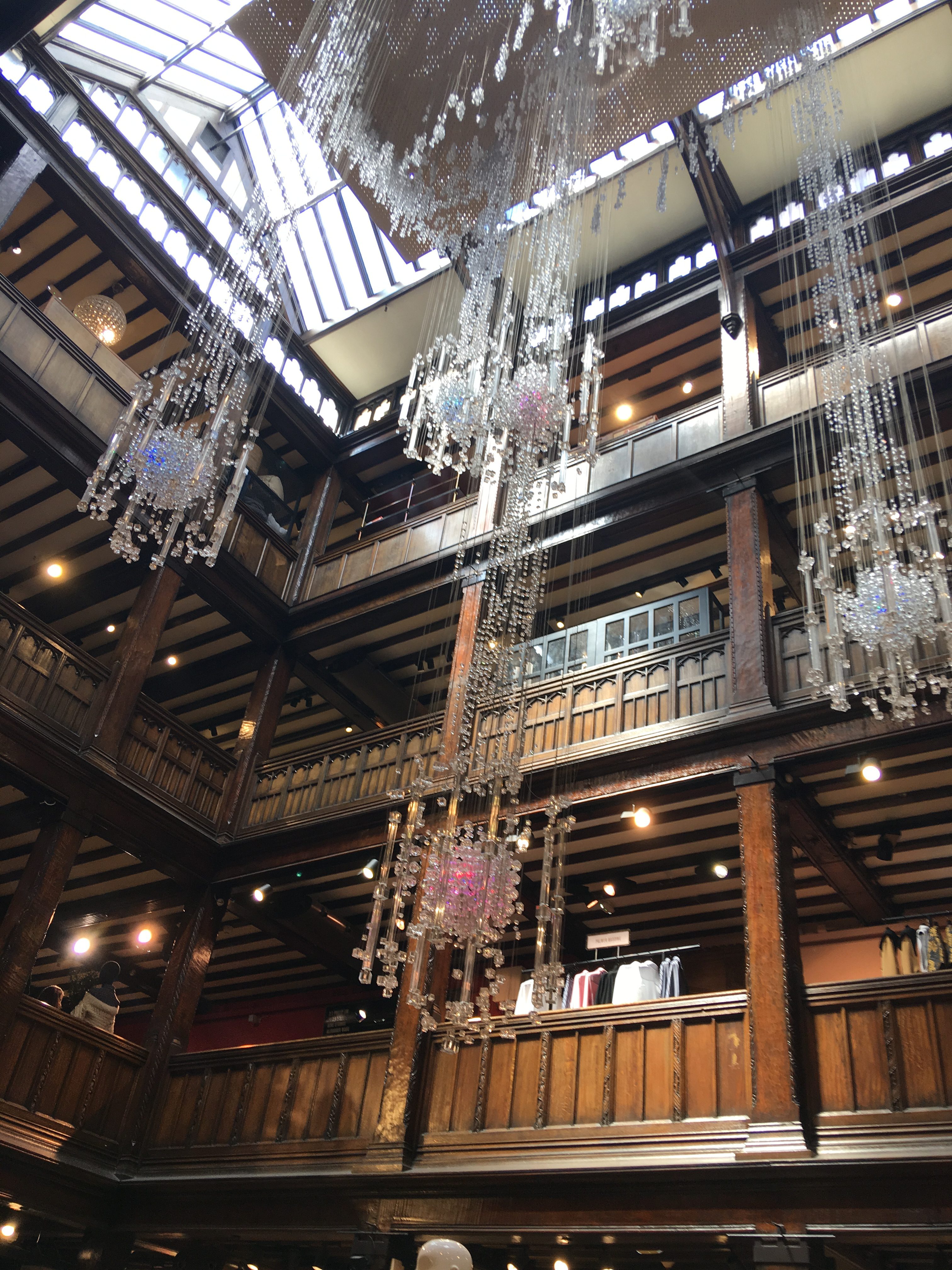
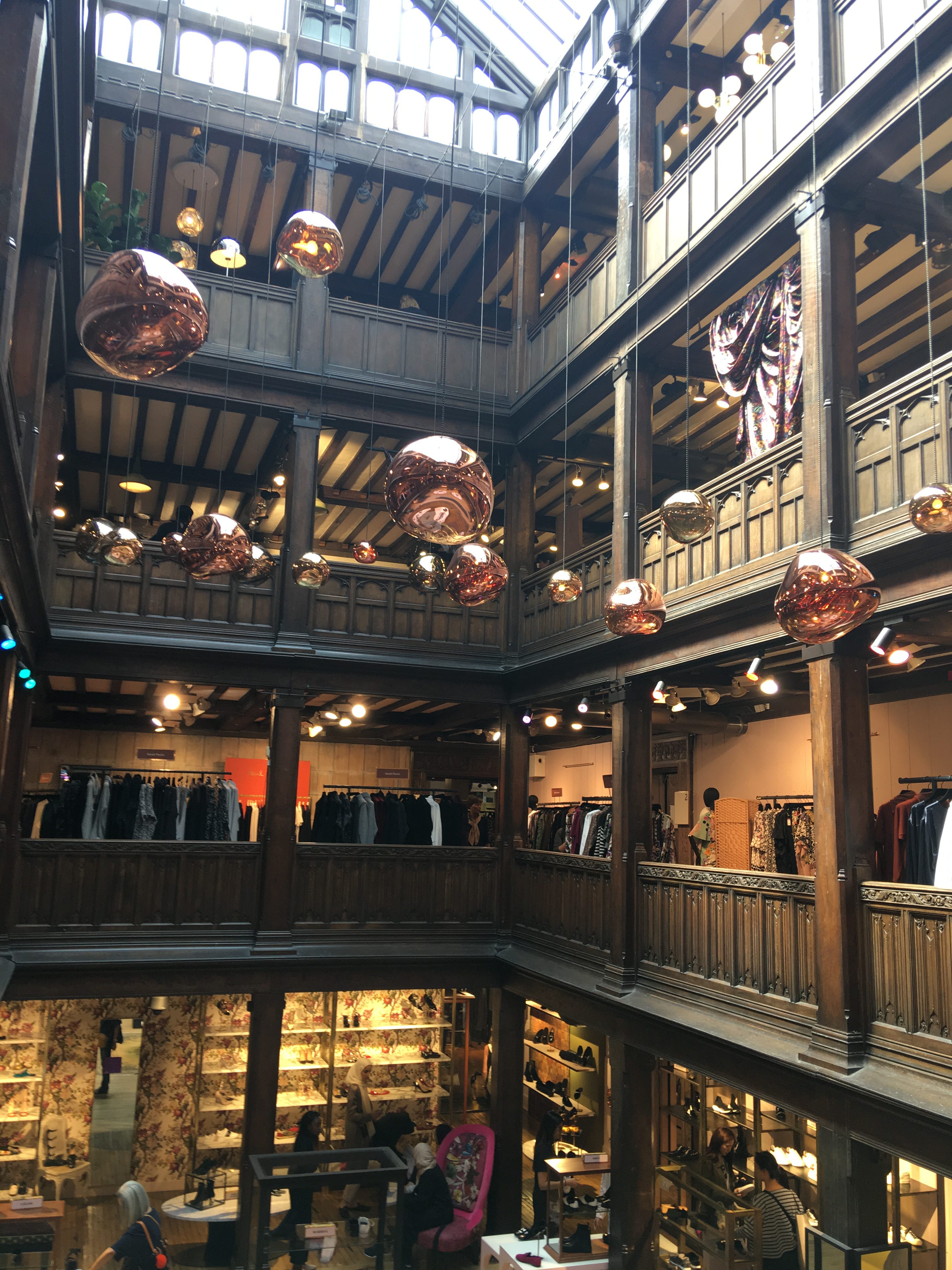
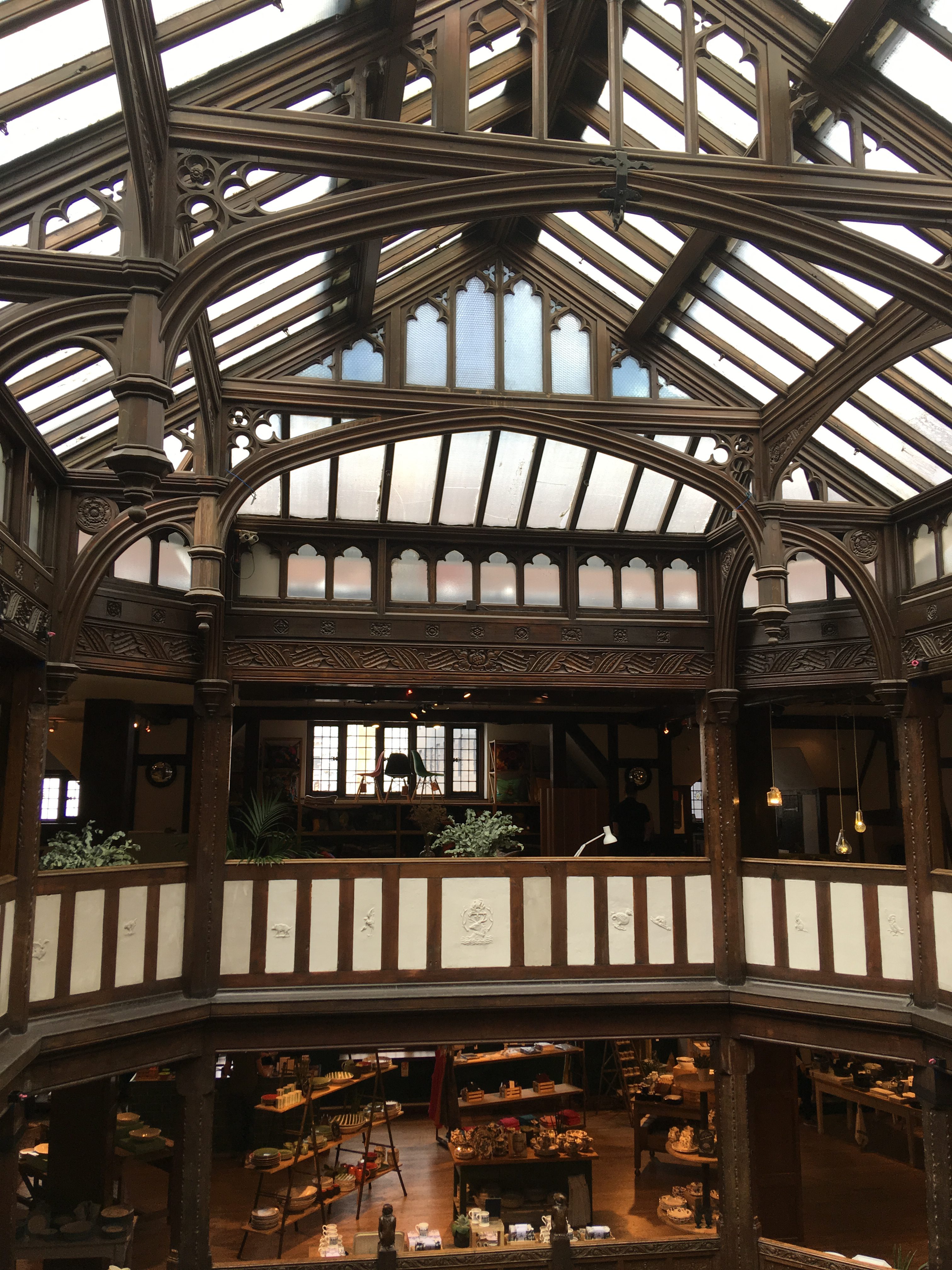
The atriums, from bottom to top.

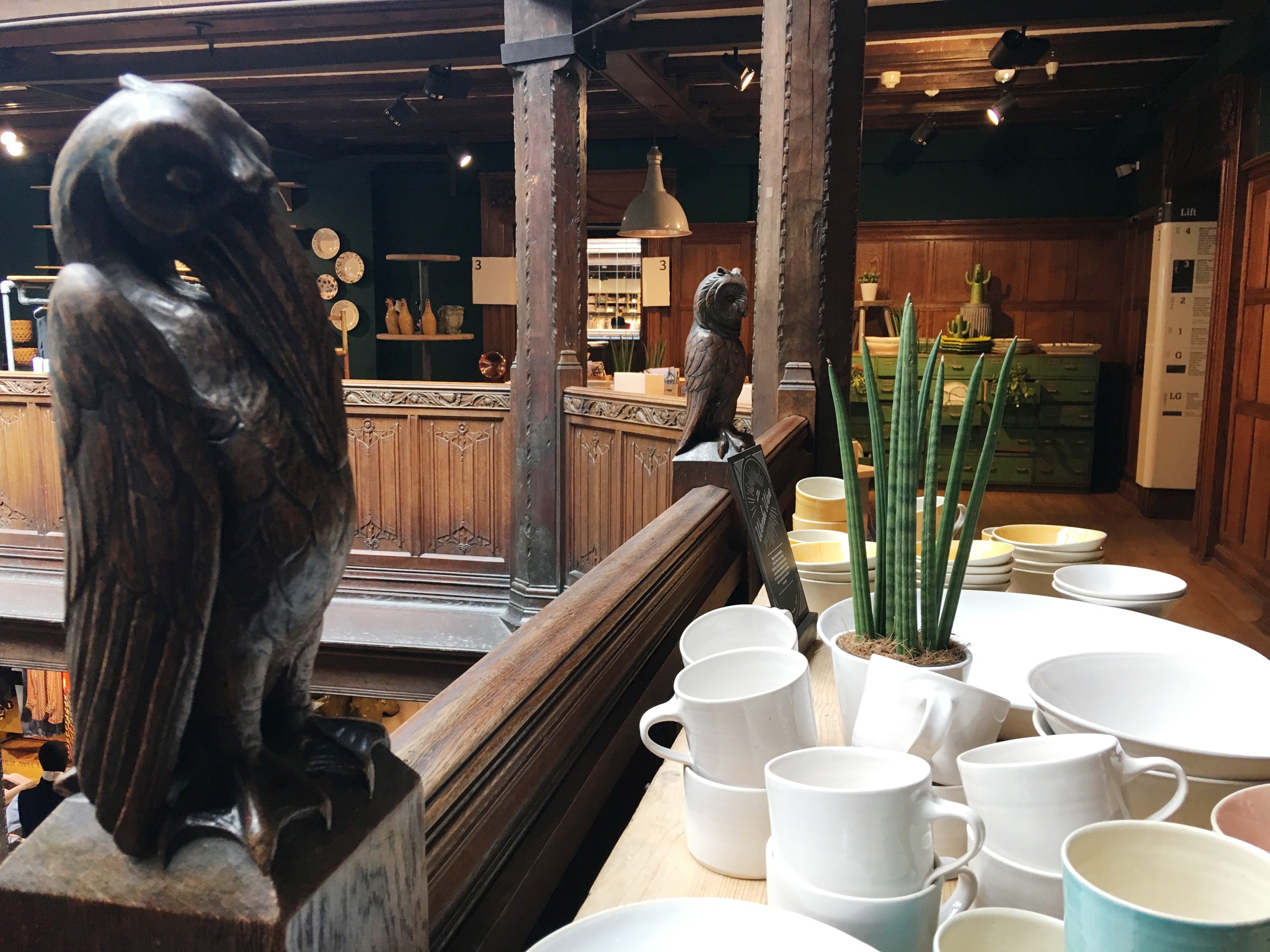
Carved wild things on the railings.

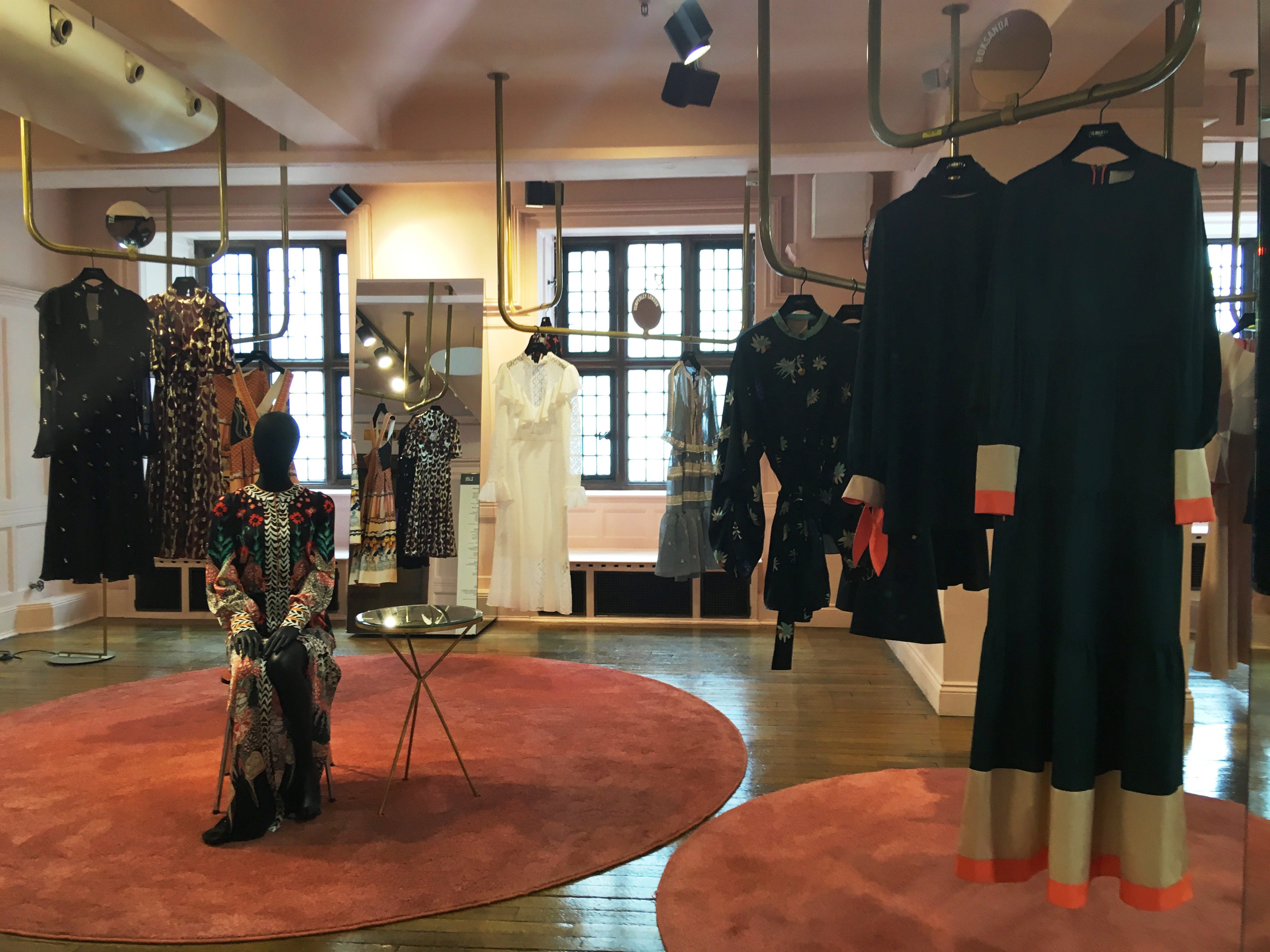
It’s just fabulous.  If you are not fabulously rich, there are some signs that you don’t belong there.  First, rooms with precious few items.  This is not Walmart.  It’s about price, not volume here.

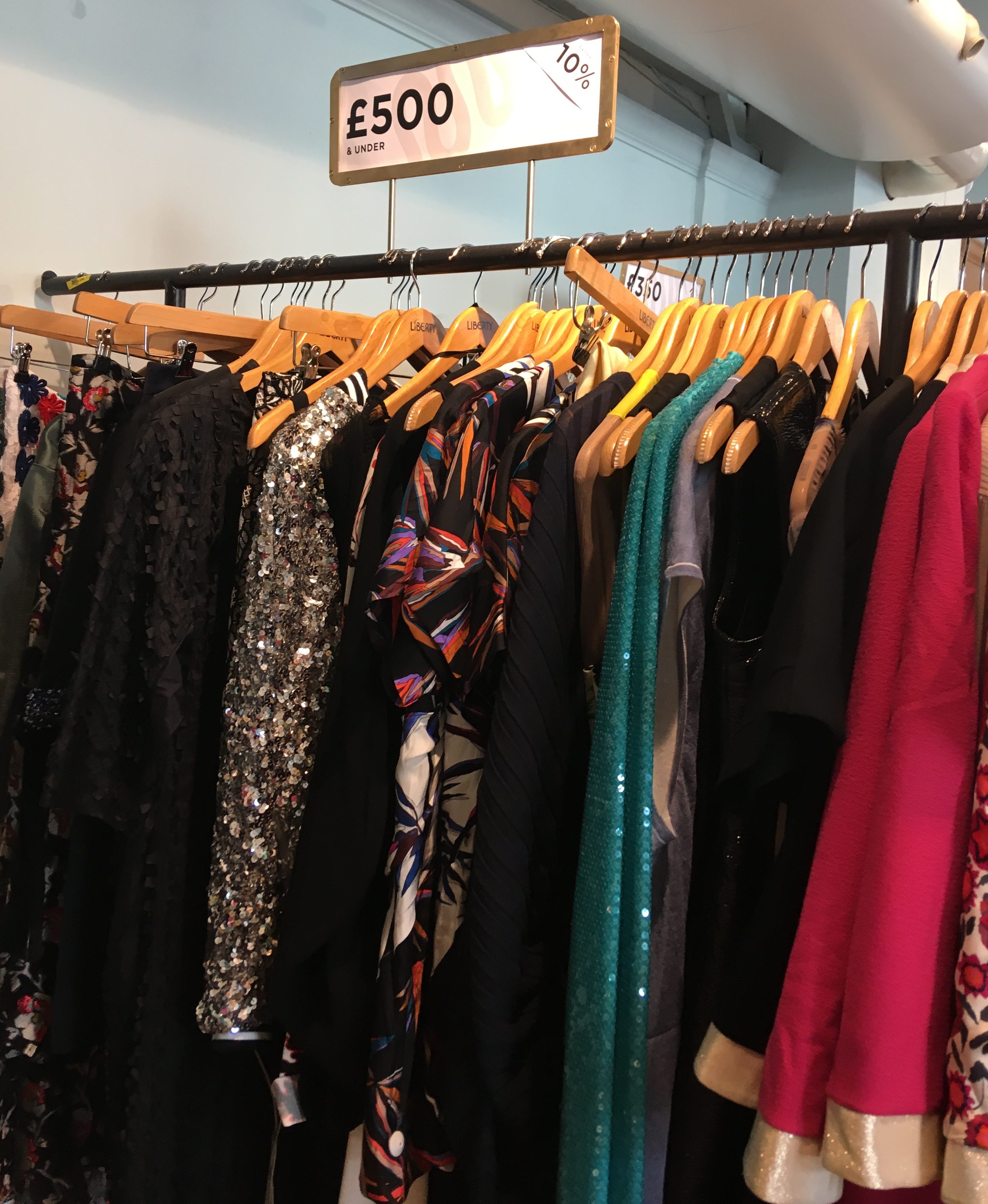
There are sales, but.

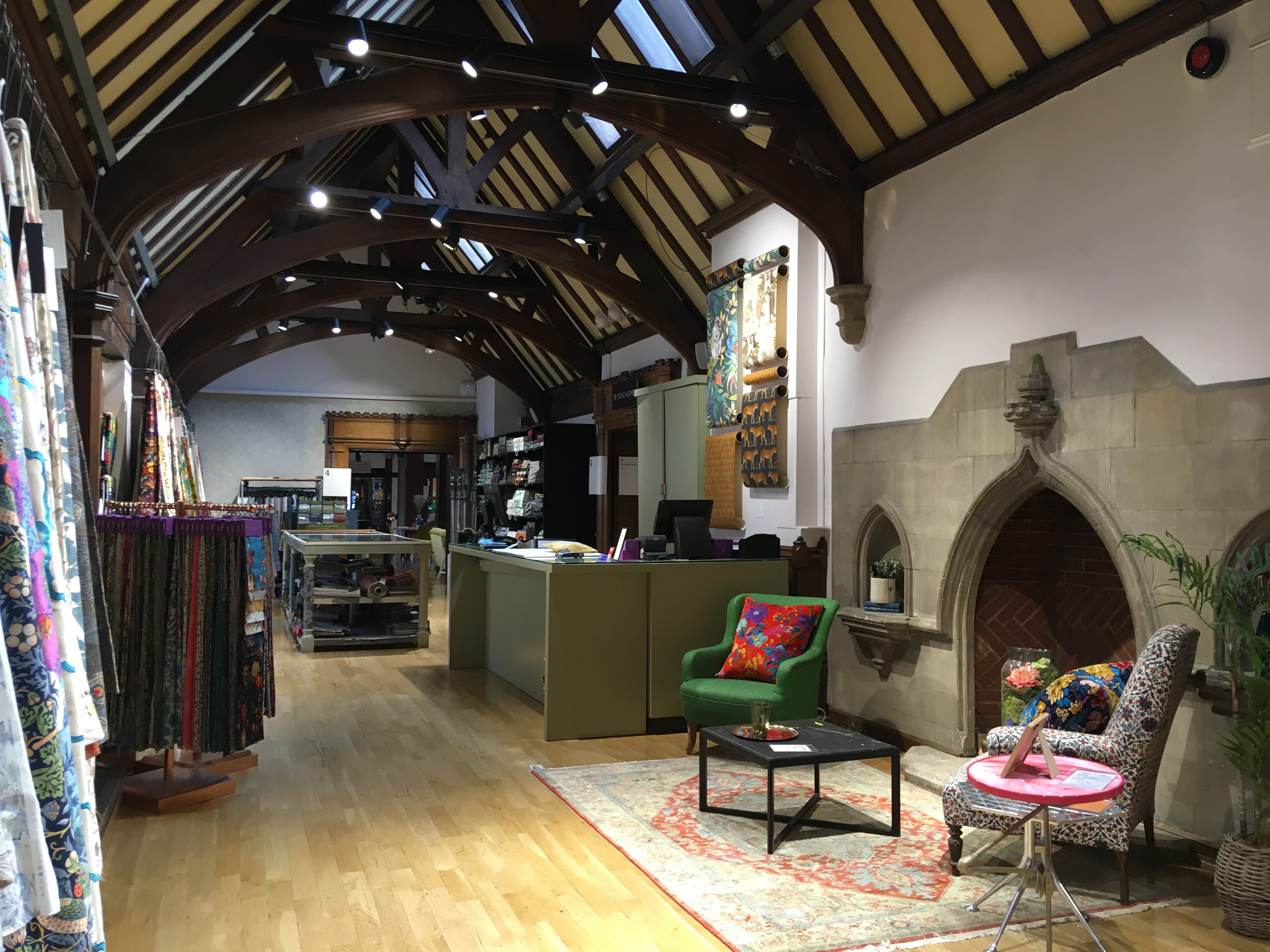
Five hundred pounds is $678.  But it’s all so beautiful.  The William Morris fabrics and wallpaper.  Persian carpets.  I pretend I’m in a museum.


A green-velvet love seat!  My inner gay man was ecstatic.

Some of it went too far.  These faux mounted heads were £695 ($943).  If you want a hand-crafted fake deer head, buy one on Etsy for one tenth the price.

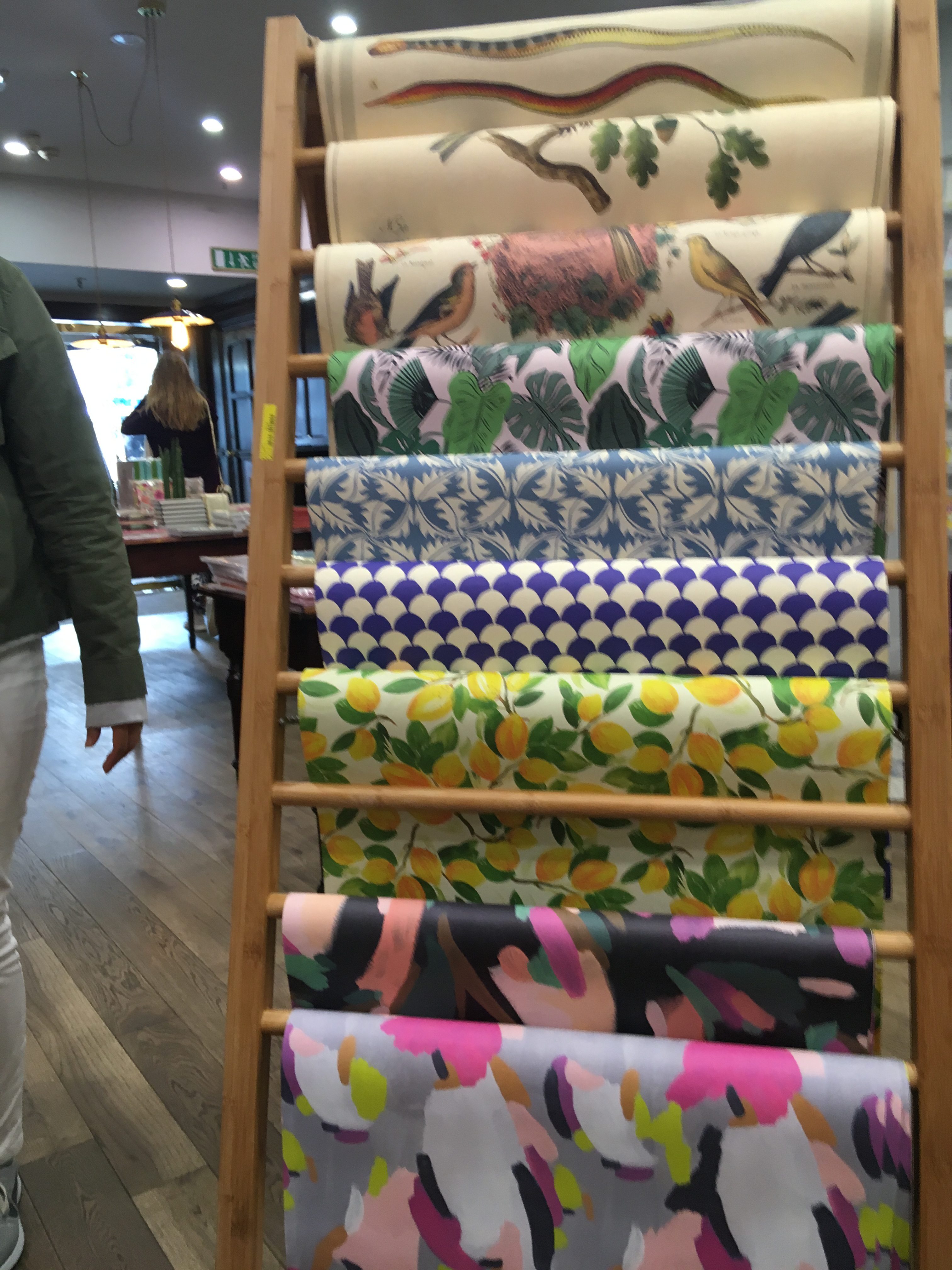
Some smaller items were affordable but not easily portable, like the wrapping paper.

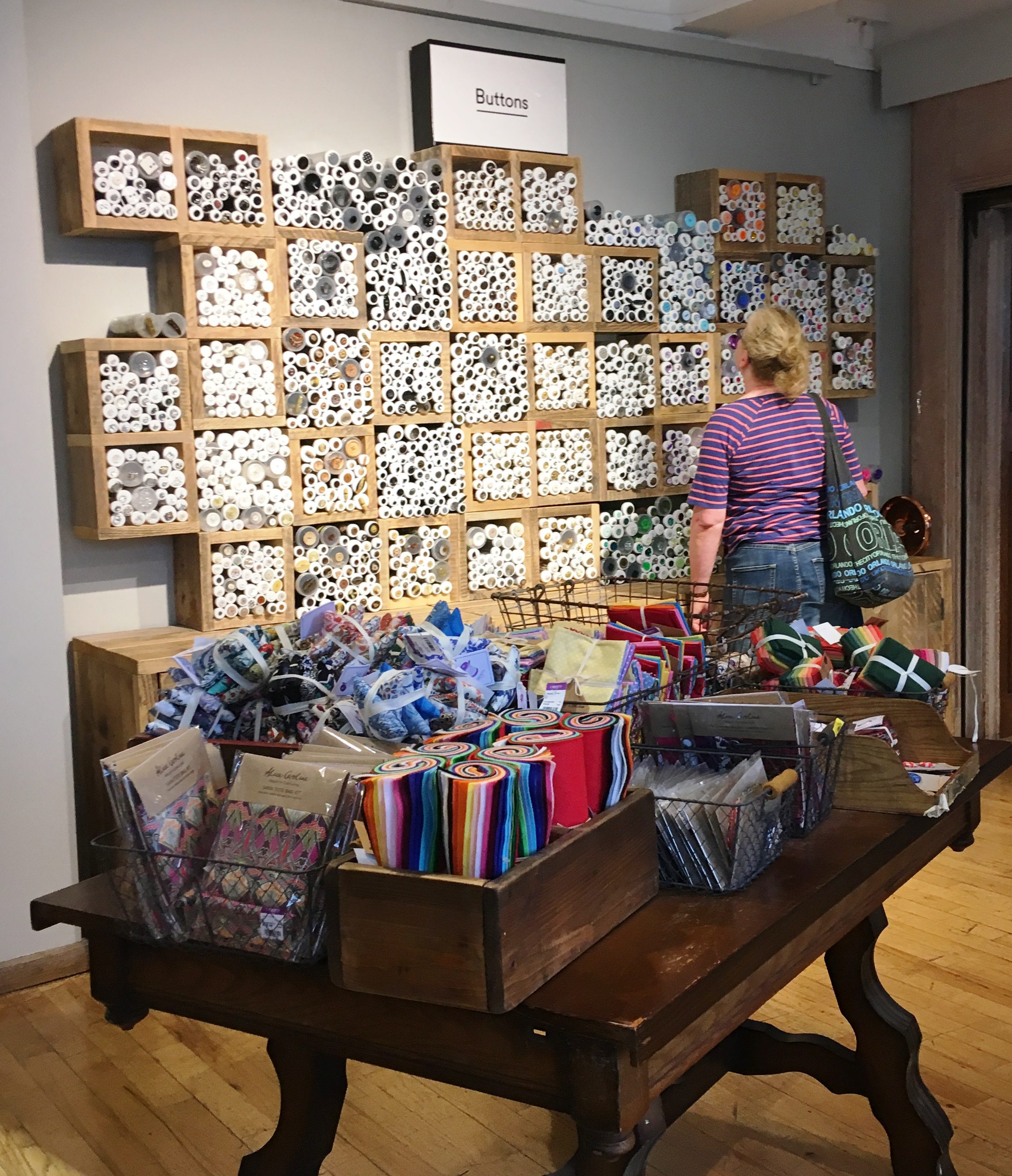
Buttons.  This woman appeared to be in a trance.

The conservatory. You could probably buy these plants at Tesco for £14.99.

I had had enough of being dazzled and felt almost nauseous from all the colors, textures, and other stimulation.  I made my way down, down, down one of the wooden staircases and encountered this on the ground floor.

As always in Britain, you can count on being reminded of all the men who gave their lives so we can buy green velvet love seats.


Swells and Bells

Time to meet Heidi.  The tour with a human guide had sold out so Heidi was on her own with an audio guide.  We kept seeing each other, even in the immense palace heaving with thousands of people.

Visiting Parliament was the tourist highlight of my summer.  I don’t know why I’d never been before.  We weren’t allowed to take photos, which was probably good because there was so much to absorb.

London is made up of inner and outer boroughs, Westminster being one of them.  Westminster is also a city.  Then there’s The City, which is the business hub of London, while Westminster is everything else.  Westminster originally meant “that church on the west side of town” and there was also an east minster.

Is that clear?

Westminster was originally built as a palace in 1016 for Canute the Great. What Americans think of when we hear Westminster—if we think anything at all—is of Big Ben and Westminster Abbey and the Houses of Parliament overlooking the Thames, and that’s all spectacular.  Occasionally we’ll be treated to news clips of parliamentarians ranting at one another.  Our politicians don’t yell—they smile and talk in circles and stab each other—and us— in the back.

The guide for our group of 20 informed us she was a Blue Badge, which meant she knew her stuff and had undergone extensive training to present information in a clear and entertaining manner.  Standing in the enormous great hall where the tour started, I had my doubts about how well I’d be able to hear her, but she projected beautifully.

I won’t go into an explanation of how the UK government is organized and how it functions.  I was curious to hear what she would have to say about the House of Lords and the role of the monarch.  As an American, the idea of unelected representatives living lavish lifestyles is incomprehensible.  We like that England has a royal family we can read about in the tabloids, but we wouldn’t put up with (and pay for) one ourselves.

When I was relating this to some friends of Lynn’s the following month, in Scotland, the wife pushed back and said, “But you have dynasties!  What about the Kennedys?  The Clintons?  The Bushes?”

Fair enough. We do give extra points for name recognition.  However, George W. Bush did have to run for office, and it wasn’t a foregone conclusion that he would win.  His brother Jeb bombed in the last election. You know what happened to Hillary.

By contrast, the queen and princes not only don’t have to run for office, they really can’t escape them unless they do something drastic like marry a divorced American commoner … oops … times have changed, that’s no longer enough to get you disqualified.

The nearly 800 members of the House of Lords are appointed, and the monarchy is hereditary.  Members of the House of Lords receive a £300 per day attendance allowance.  They get this whether they spend 10 minutes in the chambers or 10 hours, is my understanding. This feels outrageous to me, but I guess if UK tax payers are okay with it, it’s not my problem.

The 650 members of the House of Commons, who have to run for office, earn a basic salary of £74,000 plus supplements based on their role, ranging from £15,025 to £74,990 (for the Prime Minister). This is does not seem out of line to me, given that London is one of the most expensive cities on earth.

Our guide posited that their unelected branches of government are a strength because they aren’t constantly thinking about the next election and what moves they should take to look good to the electorate.  The monarchy and House of Lords balance the constantly-changing winds of politics with continuity and stability.

Speaking of divisions, the guide spoke about the “division bells” which are set in pubs around Parliament.  When they ring, MPs have eight minutes to run back to Westminster for a vote.

Heidi and I, being great students of history, took it upon ourselves to conduct further research on Parliament in the Red Lion.  We didn’t hear the bell ring but we had a smashing time while planning our next move.