Category Archives: redemption

Telling It

It’s always difficult to transition back to current life after writing a series like the last one about camping in Wales and Mini extravaganza.

I love traveling, and then I love coming home—so I can start planning the next trip. When you read this, I will be in Chicago on my way to New Orleans from Minneapolis/St. Paul.  Live blogging a road trip sounds good, but I really just want to be there, in the moment.  My friends are coming all the way from Scotland, Oxford, and Wisconsin—I think it would be rude and weird to say, “Sorry guys, I’ve got to rush back to the hotel to write a blog post.”

But it’ll be fun to write about afterwards; travel writing is a way to enjoy the trip again.

A few updates, and back to the other theme of Breaking Free, my road trip with my son through the worlds of mass incarceration, addiction, and redemption.

I saw a notice for a lecture at the U of MN by Dr. Christopher Uggen, Martindale Chair and Distinguished McKnight Professor of Sociology and Law.  It quoted him, “We think of probation as a humane alternative to incarceration. It’s not.”  This is a concept I can’t emphasize often enough—just because you’re out of prison now, doesn’t mean you’re “over it.”

So I was a little concerned about Vince talking with Jewish Community Action, a local group advocating for prison reforms.  I had shared the blog with them, and they invited Vince and me to meet with them, which we did a few days ago.  It happened to be in the same building as Vince’s probation agents.  Would he be “triggered” by rehashing his story?  He still seemed uncomfortable in social situations sometimes.

We met with a young woman named Angela, who listened intently, asked questions, and filled us in on their plans. She talked about the changes they want made to sentencing, and Vince had some insights she hadn’t been aware of.  I can’t explain what he said, but the depth of knowledge you gain about these things by actually being inside is like a mini master’s degree program.

She talked about how they are trying to block the privatization of the prison in Appleton, Minnesota, which has been closed for years.  It wasn’t true, she said, that it would create a lot of jobs, or that conditions are better in private prisons.

“Word is,” Vince said, “among the prison population, that conditions are much better in the private prisons.  Better food, better paying work, more activities.”

This took her, and me, by surprise.  “I wonder if there’s a marketing campaign to spread that idea,” I suggested.  “After my experience with paying for phone time and email, I know those companies are good at promoting themselves.”  But how could anyone get access to the population inside?  I was Vince’s mom, and it had been maddeningly hard for me to communicate with him.

Vince talked about prison drugs (common) and rape (uncommon), MyPillow and Bob Barker products, not being able to vote, and his terms of probation.  It was very relaxed, and I give a lot of credit to Angela—turns out she was a former social worker.

Vince had told us he had to be home at 6:30.  Suddenly Angela said, “I just remembered that clock is slow …”  It was 6:21.  Vince jumped up, ran down the hall and waved at his agent, then bolted out the door.

Later, at home, he said, “I could have talked for hours.” I was so proud of him.  He’s doing so well.

He’s doing so well, in fact, that he announced he may move out soon.  Another ex offender lives in a three-bedroom house that has an opening.  The landlord is accepting of ex offenders.

I felt sad.  I know it’s normal for a 37-year-old man to want to live on his own, and I fully support that.  It was really rocky in the beginning when he came to live here.  We had been separated by miles and drugs and prison for so many years.  Now we get along fine.  I enjoy having him around.  He could do more cleaning, but no one’s perfect.

Updates Part II

In the prison good news / bad news” category, I’ve got some doozies.

First, I was highly amused to read about a brilliant project in which prisoners create portraits of people they think should be in prison. This was in The Guardian—a liberal British newspaper that reliably reports on the most embarrassing elements of American life:

“To find the artists, the activists approached art rehabilitation programs in prisons, but those groups were not interested in being involved with something political. So the pair turned to eBay, where there is a section devoted to art made by prisoners and sold by family members. They found similar prison art networks on Facebook and began conversations with the families of people whose worked they liked. From there, word spread around prisoners and other artists began sending them work.”

No surprise, they’ve captured (ha ha) the usual suspects (ha ha ha) in art: the Koch brothers, Goldman Sachs’ Lloyd Blankfein, BP’s former boss Tony Hayward. But then there was the CEO of one of my favorite companies, along with Pillow King and Bob Barker Inc. (that’s sarcastic, in case you can’t tell): JPay.

I was disappointed to see that the guy’s name is Ryan Shapiro. He must have a Catholic mom and a Jewish dad. I hate to see stories that reinforce the stereotype that Jews are better at making money than most people. Exploiting—oops, I mean “providing services” to prisoners and their families is very, very lucrative.

JPay Prez

Speaking of Jews and prison, a local organization called Jewish Community Action (JCA) has taken up two prison-related issues:

“Jewish Community Action is currently working on two campaigns related to criminal justice reform and the impact of mass incarceration: One addressing the for-profit private prison system and seeking to push back on the building and opening of private prisons in Minnesota, and one demanding the restoration of voting rights to felons who have completed incarceration and are living and working in their communities.”

I wrote to the executive director and shared the link to this blog. I can’t remember exactly what I wrote; I share the blog with a lot of similar organizations and usually hear nothing back. I mentioned that we’re Jewish and that we’d be happy to support their efforts if we were able. The executive director and two staff members replied—first, to assure me that ours is not the only Jewish family that’s had a run-in with the law or the prison system and second, to ask if Vince and I would come in and meet with them. That will be in a couple weeks and I’ll write more after we meet.

I am not a big fan of Oprah; I have nothing against her but she tends to promote books like The Book Thief, which I regard as one of the most poorly-written books I’ve ever read. But she is currently promoting a book written by an ex offender, Shaka Senghor, called Writing My Wrongs: Life, Death, and Redemption in an American Prison. Next week, Oprah will air an interview with Senghor on her network, OWN TV. I haven’t read the book; I’m only mentioning it because it’s written by an ex offender.

I’ve only ever read one prison memoir, and I can highly recommend it: Willow in a Storm, by James Peter Taylor. The writing is just okay, but the story is harrowing and heart breaking and he tells it real.

Finally, there is this (in the end) uplifting story about Albert Woodfox, who spent FORTY YEARS in solitary for the murder of a prison guard at Angola prison in Louisiana.  He maintained his innocence all these years.  He was released on his 69th birthday.

The Nitty Gritty

I wrote in my last post about how you can find adventure close to home. But you can experience it even closer—inside your own head. The best example I can give, for me, is the rush of adrenaline I get when I am planning a trip. Not on a trip, just anticipating it. Looking at maps, checking airfares, considering the pros and cons of various destinations, imagining all the fun I will have with my friends.

I’ve written about how these kinds of thoughts cause physical reactions in my body, like a racing heart and sweaty palms. But I’ve never known how that works.

Strangely enough it was an article about solitary confinement that explained the phenomenon. Solitary confinement: the opposite of travel, right? The full title of the article is “How would you do in Supermax? The answer may lie with imagination and grit.”

First, here’s the negative side of solitary, which will be no surprise to anyone with a shred of empathy:

“Solitary confinement has been linked to a variety of profoundly negative psychological outcomes, including suicidal tendencies and spatial and cognitive distortions. Confinement-induced stress can shrink parts of the brain, including the hippocampus, which is responsible for memory, spatial orientation, and control of emotions. In addition to these measurable effects, prisoners often report bizarre and disturbing subjective experiences after they leave supermax. Some say the world regularly collapses in on itself. Others report they are unable to lead ordinary conversations, or think clearly for any length of time. The psychiatrist Sandra Schank puts it this way: “It’s a standard psychiatric concept, if you put people in isolation, they will go insane.”

But here’s where the article veers away from the usual, “it’s horrible, we should stop it” article about solitary. This article examines how some prisoners use mental imagery to survive, and even rehabilitate themselves.

Mental imagery is basically imagining something so vividly that it affects you physically or psychologically. Lots of us do this involuntarily—for instance since I am terrified of public speaking, if I have to give some remarks I will probably have involuntary flashes of imagining myself stammering and making a fool of myself, and this will make me even more nervous, and it may actually cause me to do what I feared.

On the other hand, controlled mental imagery is considered so effective that it is used by athletes to improve their performance. Before a competition, for instance, they will close their eyes and imagine every detail of a successful performance, and this contributes to their bodies and minds performing successfully in reality.

With all external stimulation stripped away, some people in solitary use controlled mental imagery to stay sharp, pass the time, and keep their spirits up. No one tells them about it, or how to do it; they somehow figure it out on their own.

Why are some prisoners in solitary able to summon controlled mental imagery to improve their lot, while most are at the mercy of involuntary mental images?

That’s the second point of the article. The thinking is that this small subset of prisoners possesses a quality called grit. I’ve always wondered how it is that I overcame the odds and became as successful as I am, when there are so many other unmarried teen moms out there who are still mired in poverty. Well, I’ve got grit. If you want to find out if you have it, here’s an online test. Apparently I am in the 90th-99th percentile of other users who have taken it.

What is grit? I would call it “stick-to-it-tiveness.” An innate persistence, perseverance, single mindedness, and diligence despite setbacks.

So some prisoners, who happen to have grit, are able to use controlled mental imagery to improve themselves and leave prison better, not broken.

Where does grit come from? Why do some people have it and others don’t? Can it be learned? I don’t know the answers to these questions. I do know that if I could bottle grit and sell it, I would be a wealthy woman.

The Fox and the Hen House

This is the second in a series of posts about a road trip to South Dakota that starts here.

When you think about it, South Dakota makes sense. It’s a very rural state where people have a hard time getting to an ER or clinic. Therefore the largest provider of telemedicine in the world is in South Dakota. We’ll also visit a guy who is the CEO of the country’s largest ethanol producer, and his wife, who have an interest in east Africa.

Then we’ll visit the Helmsley Trust, which is named for the late Leona Helmsley. One of Leona Helmsley’s grandsons lives in South Dakota, and I imagine that’s why the trust is in Sioux Falls. Leona, originally named Lena Rosenthal, was the daughter of Polish Jewish immigrants and became a hotel tycoon in New York City. Sadly she spent time in prison for income tax evasion and was controversial for being demanding. I’m sure she was demanding. You don’t get to be a billionaire by being meek. But when Donald Trump is demanding, no one thinks twice about it.

Leona Helmsley left $12 million to her dog in her will, and the Helmsley Trust, which has around $5.4 billion in assets, was originally mandated to only benefit dogs.

By the time you read this I’ll be back from this exciting trip and will let you know how it went. I don’t expect anyone to write us a big check. Fund raising—or development as it’s called in the US, is a long-term process of relationship building.

Here are a few prison-related updates.

Close to home, Vince got the final word on his punishment for not answering the phone when a probation agent called. He’ll be on lockdown for a total of a month and have an extra month added to his probation. I told a friend about it; she works for the St. Paul City Council and was an admin at the St. Paul Police Department before that so she is no stranger to bureaucracies and the sometimes difficult people who work in them.

“I always figure the guy had a fight with his wife,” was her assessment. “If he hadn’t, or if Vince had a different agent that day,” Vince’d still be on track to finish his probation on time.”

“Are they trying to goad him into doing something that’ll send him back to prison?” I wondered. “He also got two parking tickets that day—one was for parking more than 12 inches from the curb. Do you think they could be in cahoots with the police?”

“No,” she laughed. “They’re not that organized. It’s just random.”

On the prison reform front, the New York Times ran an editorial, “Holding Sentence Reform Hostage.” The pending legislation would “reduce absurdly long mandatory minimum sentences for many nonviolent drug crimes, give judges more control over the terms of punishment and provide inmates with more opportunities to get out early by participating in rehabilitation programs.”

Some Republicans are scaremongering, Willy Horton style. At least that sort of makes sense.

But some Republicans say they won’t approve the bill unless it includes a change in federal law that would make corporations and their executives harder to prosecute for environmental or financial crimes. This has nothing to do with prison reform but is a standard tactic used by politicians to get what they want without having to work hard for it. I know, it’s hard to believe they could be much lazier.

In my opinion, this is evil. I don’t like to call people evil, I really don’t. But making it easier for companies like BP or Goldman Sachs to get off the hook?

In related but also absurd-news category, there’s this item: Former Tyco CEO, Who Served Time in Prison, Appointed Chair of Prisoner-Assistance Nonprofit.

Dennis Kozlowski, who did six years for stealing millions of dollars from his own company, is now in charge of the Fortune Society, a nonprofit that helps former prisoners find jobs, housing, health care, and education.  What a great idea: putting an old, white, rich man–a former thief–in charge of a  nonprofit with $10.8 million in assets.  How nice for him.  What could possibly go wrong?

Two Lists

The New Orleans trip is beginning to take shape. My English friend Lynn will fly over to St. Paul from Aberdeen, Scotland, where she lives. We’ll hit the road and wend our way south, taking about three days to reach New Orleans. I booked a suite in a B&B. Our friend Christine, an Australian who lives in Oxford but spends much of her time working in Africa or Asia, will fly over to join us, as will my cousin Molly, who turns 50 that week.

So it’ll be four of us all together for French Quarter Festival, then Lynn and I will drive a different route back. My friend Ferruh also lives there with his wife. They’re Turkish. He’s a drummer who used to play in a belly-dancing troupe, then moved to Denmark and then the US, all the while working on his PhD. Now he teaches at Tulane. He’s a great guy and I hope we can all have dinner together.

I alternate between worrying: “What if the car breaks down in rural Tennessee?” and feeling excited about the music, the heat, riding in a swamp boat and feeding marshmallows to alligators, touring a creole plantation and one of New Orleans’ fantastic cemeteries, maybe getting in on a second line, which I was lucky enough to do last time I was there.

My mom’s husband, Jim, is from St. Louis, so I sat down with him and pored over an atlas. He is 86 now and done with road trips, but they took some great ones and they love to talk about them. It must be hard to know that you’ll never drive to St. Louie again, or fly to Phoenix to escape the winter cold.

Jim had drawn up a list of things to do and see in St. Louis and Memphis:

Jim's List

I find these scraps of the folks’ handwriting endearing.

Jim told me about the great Italian neighborhood I had to visit in St. Louis. “We called it Dago Hill when I was a kid,” he said a little sheepishly. “But now it’s just called The Hill.”

I also want to write a bit of an update on Vince and how well he is doing despite the challenges he still faces.

When he was put on indefinite lockdown he was phlegmatic about it. “They’re trying to get me to react,” was his take on it. “And I’m not going to. This too shall pass.”

I know it’s called Alcoholics Anonymous, but it’s no secret that Vince is in the program and I think it’s okay to say that he’s really working it—he found a sponsor, who is like a mentor, and they are working on the 12 steps together.

He’s taking care of his health. He hasn’t taken up smoking since being on the outside. Besides just being bad for you in every way except for being an instant stress reliever, smoking is hugely linked to drinking and drugs and can trigger a relapse.

My sister gave him a used Bowflex machine. It’s in our basement, which could win an award for grossest, creepiest basement ever. But he goes down there and uses it. I told him he should feel free to clean the basement up and make it his man cave.

He’s eating decent food. It would be easy for him to buy lunch at the Arby’s that a few blocks from his work, but instead he packs a lunch every day. He even bought lettuce and whole grain bread! We’re talking about bacon sandwiches, just to assure you he hasn’t completely gone around the bend and become a gluten-free, chewy crunchy vegan.

Vince was beginning to meet people and make friends when he was granted more time out of the house. That’s off the table now due to the indefinite lockdown. Thanks to social media, he can still be in touch with the outside world.

Most gratifying of all is Vince’s gratitude—for those who send words of encouragement, read his blog, and in particular to the anonymous person who gave him a new laptop so he no longer has to type his posts with two fingers on his phone.

From AA to LA

This is the eighth and final post in a series that begins here.

Vince went to live with my mother, and I attended outpatient chemical dependency treatment.  If you are in the “helping professions”—social work, psychotherapy—or if you even just have common sense and empathy, you won’t be surprised to learn that I wasn’t an alcoholic.

The expectation had been that I would go through pregnancy, birth, and adoption without any support, then go on as though nothing had happened.  People seemed surprised that I was sad and angry.  They were uncomfortable when I talked about it.

“You signed the papers; it’s over—why keep bringing it up?  Just don’t think about it.”

Alcohol is a time-honored stress reliever in such dissonant situations.

Sobriety—and a break from being a full-time mother and student—helped clear my head and face my emotions.  I spent the month working the Twelve Steps of Alcoholics Anonymous and reading piles of self help books, and doing all the other things people do to get back on track.

After a month Vince came home.  What–you were expecting some big drama?  Sorry.  In Minnesota we don’t like drama.  In fact we are all about avoidance of discomfort, or as I call it, “reality.”

I didn’t drink for a couple years.  I went to AA, where the members often listened to my story skeptically and said, “I don’t think you’re an alcoholic.”  I should have been referred to Alanon, which is for family members and friends of alcoholics.  People impacted by alcoholic behavior act just as crazy as their alcoholics, but there’s no rehab for them.  In fact I can recall my mother complaining that my dad got to go to “that country club”—Hazelden, a rehab center nestled on a lake with a pool, wooded walking trails, and tennis courts—while she stayed home with the four kids, the house, and the bills.

I got a job, moved out of the hi-rise, and started paying back my student loans.  Vince began school and, while his grades were never great, he was popular with teachers and students.   I made sure he brushed his teeth and washed behind his ears.  I took him to baseball practice, religious school, and family functions.  We watched Dr. Who together and went on little road trips to Lake Superior to hunt agates.  You know, normal life.

Every spring I would find myself feeling blue and wonder what was wrong with me.  Then it would hit me: Ah ha!  Isaac’s birthday is coming up.  On Rosh Hashanah, the Jewish New Year, I would tear up when they read the story of the sacrifice of Isaac.  Every couple of years I would send a letter to be placed in his file, knowing it would probably never be read.  When my mother talked about how many grandchildren she had, didn’t count Isaac.  Intellectually, I knew this was the whole point—that it remain forever a secret—but to me he was always out there, somewhere.

When Vince was 10, I got entangled with an abusive guy and we ended up losing our home.  Three times in one year, we had to move and Vince had to change schools.  I chose this time to tell him about Isaac.  I thought it would comfort him to know he had a brother out there somewhere, assuming he was alive.  Clearly I am not a psychotherapist, or I would have known this would backfire.  Vince was devastated—it was a loss on top of losses.

He met his brother, eventually, and some day one or both of us will write about that.

Did these events have a permanent effect on Vince?  They deeply affected me, so why not him, since he was so much younger and couldn’t understand what was happening?  If they did affect him, it’s his job now to delve into them and resolve whatever leftover effects may be holding him back, which is what he seems to be doing in AA.

Thanks for reading this series.  Several people have commented offline that it’s been emotional to read.  I’m ready for a happier subject for the next post: my plans for a road trip to New Orleans!

Happy New Life, Again

Happy New Year!  I am re-posting this from January 1 of last year.  I hesitated to share such a personal story then, but it has been the most-read post of the 232 Vince and I have written.  Maybe it’s the story, or the encouraging advice.  Or maybe it’s the guns.

If you received this twice, that’s because I accidentally posted it for January 1, 2015.  Off to a good start, I say!

Three years ago, I hit bottom. I had lived with depression for as long as I could remember, but then….  I had to have a tooth pulled—boy, will that make you feel old! Then during a Christmas Day blizzard my car was towed and I spent four hours waiting in line outside at the impound lot to pay $300 to get it back. I then drove to Fountain to visit Vince. The trailer he shared with Seth was full of guns, beer cans, and smoke. I figured what the heck, if you can’t beat ‘em, join ‘em, so after he assured me that none of the guns was loaded, we posed for photos that became my holiday cards to my friends in the UK, where they had a good laugh over us gun-crazy Americans.

Vince (11)Vince (7)

Due to the blizzard I spent the night in Seth’s 5-year-old daughter’s bedroom; she was at her mom’s. Here’s a tip for parents who smoke: Keeping your kid’s door closed doesn’t keep smoke out. I couldn’t open the window and after tossing and turning until 5am I slipped out and drove home. On the way I started itching. Great—now I had bedbugs!

I contemplated suicide. I leaned my forehead against the screen of my 20th floor window. I had turned 50 the year before. Thinking about being depressed every day for another 30-40 years wasn’t real appealing.

Here are the things I had tried to manage depression and anxiety:

Meditation

Medication

Prayer (including begging, pleading, and bargaining)

Acting normal

Abstaining from drinking

Cutting down on coffee

Self-help books

Alanon

Exercise

Getting outside every day

Appreciating beauty, be it fine art, nature, music, babies, or kittens

Gratitude lists

Avoiding negative people / avoiding unnaturally happy people

Running away to other countries

Denial

Journaling

Telling myself, “At least I’m not a refugee / amputee / blind / fill-in-the-blank.”

Psychotherapy

Retail therapy

Sleeping, drinking, and movie binges

Reaching out to friends, even when that was the last thing I wanted to do

I thought that jumping out of my window would be exhilarating, until I hit the ground. I had some leftover pain killers from the dentist, and my prescription for Restless Legs. I googled an overdose of the two and learned that they wouldn’t kill me, but that I would likely need a liver transplant. I decided to keep living.

That spring, I visited Vince again and this time, made a reservation at a B&B.  On the free-book-shelf there, I picked up a tattered copy of, “Feeling Good: the New Mood Therapy”, by David Burns, MD. I read it and did what it told me to do, and I stopped being depressed. For good.

The book was about Cognitive Therapy. I had been instructed to use it at least twice in the past, but I’d been too stressed out to do it. Basically, you write down your negative thoughts and then argue with them rationally until you’ve de-fanged them. Writing it down is important; if you try to do it in your head you’ll end up down a rabbit hole.

So was a lifetime of depression cured overnight by one book? No. I think it was all the other things I had tried over the years—the good things, anyway—and then I added this on top of them and together they all added up to a breakthrough.

I still feel sad sometimes–there’s plenty to feel sad about–but I’m not depressed and I’m committed to living.

Sorry for the long post but, if you’re struggling, I want to encourage you to keep an open mind, keep plugging away, and keep trying new things.

PS: I didn’t have bedbugs after all.  I think I was just itchy from the smoke and dry air.  Living with addiction can turn you into a drama addict.

Tumblin’ and Floppin’

What was I thinking when I gave Vince a rock tumbler for Christmas? It’s his long-time hobby, and this is probably the third one I’ve bought him, but it’s the first time I’ve lived with the sound of it, cruncha-rugga-chugga-rugga 24/7. I don’t know how he can sleep with it in his room. .

Here’s an update on Vince’s and my living-together situation.

If I come home and he’s in the living room, he immediately gets up, goes to his room and shuts the door, and doesn’t come out again until the next morning. If I’m the one in the living room when he comes home, he goes straight to his room and doesn’t come out until the next morning. He doesn’t slam the door, so there’s nothing to point to and say, “Stop doing that!”

When we run into each other in the morning, the exchange is:

“Good morning.”

“Good morning.”

“Have a nice day.”

“You too.”

When I ask, “What are you up to today?” he tells me, but there is a tone, as though he thinks I am prying. If I call to him inside his bedroom, there is a long pause during which I imagine he is rolling his eyes, and then a drawn-out, “Yeh-sss?”

I managed to catch him long enough one day to say that people who live in the same house usually talk to each other now and then. He seemed to think I was trying to trick him into talking.

Things came to a head on Christmas day. I found myself crying in my room (into a pillow, so Vince wouldn’t hear, because I didn’t want him to think I was trying to manipulate him). I had been out 16 of the last 18 nights, trying to give him space.

I was tired. I had lost perspective. Was it nosy to ask, “How are you?” Was everything I did annoying? Was the sound of my voice noxious? Should I confront him? Try to be nicer? Suggest we go to counseling together? Ask him to move out? Go live in a motel? Was I acting like a martyr? Maybe if I bought some non-floppy slippers—because surely the sound of my footsteps must drive him crazy.

I recognize Vince’s behavior because I’ve acted the same in the past.

I had a roommate; I’ll call her Irene. She was from Ontario and taught theology at a local private university.

I could not stand being in the same room with her. Everything about her irritated me—her denim dresses and sturdy shoes, the giant jar of Branston Pickle in the fridge, the fact that her favorite color was navy blue.

When I heard her key in the door I would scurry to my room, silently shut the door, and not emerge until I knew the coast was clear. If she tried to make conversation I would deflect it with a curt answer and a stiff demeanor. If I did have to communicate something to her, I left a note on the dining room table.

Poor Irene! She was such a nice person, a good person. She had a sharp wit and obviously was no dummy. We could have had great conversations if I had been open to that. She was also wise, I see in retrospect, because she never got ruffled by my behavior, never seemed to take it personally.

And it wasn’t about her—I can see that now. It was about me being laid off from my job, Vince being missing for the umpteenth time, and other stressful events I can’t even recall now.

So Irene, if you ever read this, I apologize unequivocally. I was horrible to you. Better yet, I will write you an email after I finish this post, and apologize directly.

Vince, here is my version of a note on the dining room table to you. You’re doing so well (a job, a car—health insurance! 19 months of sobriety!). But I know it’s hard to have a social life under the probation restrictions. The solstice has passed, the days are getting longer, soon your time “off leash” time will double.

Now about that rock tumbler….

Hedgehogs, Mice, and Echidnas, Oh My

I pride myself on writing realistically about life. You can count on me to tell the truth as I know it, to question everything, and to imagine the worst case scenario. I don’t know why the Pentagon hasn’t called me yet to offer me a disaster-planning job.

But that doesn’t mean I’m depressed, or even “unhappy”—the more generic term. Being a highly-analytical thinker has its rewards. I notice and think about things that other people do not. There’s often absurd fodder for laughs. Sometimes I’m the only one laughing, but that’s okay, right?

There was an article in the Sunday paper about a study that debunked the popular myth that “happy” people are healthier and live longer. Yes! My friend who works in an old folks home—or whatever they’ve been rebranded as now—has always said, “There are plenty of miserable, crabby 90 year olds. And they’ve always been that way, because their kids tell me they have.”

About five years ago, I kicked the depression that had dogged me all my life. Since then I have felt mostly contentment, punctuated with the normal situationally-appropriate emotions. I felt angry when my landlord raised my rent $300 a month, which forced me to move. I was stressed when I moved again three months later so Vince could live with me. I was anxious when Vince was in solitary confinement. I cried for everything my sister and her kids went through when she had cancer. I felt awe hiking in Petra, in the Jordanian desert, and nervous about crossing over into the Palestinian territories. I felt powerless rage when I was banned from visiting Vince. I had a blast with my friends in Berlin. I’ve been bored at work. I was proud when Vince led his squad at his graduation from boot camp. I am excited at the prospect of remodeling my kitchen.

Hey, I guess I just wrote my Christmas letter!  What a year it’s been.

None of it lasts. Some people figure this out somehow, much earlier in life than I did. Emotions come and go. The pleasant and the unpleasant, they’re all fleeting. So enjoy the nice ones while they last and know that the bad ones will dissipate. Don’t panic if you feel blue once in a while. Don’t latch on to the negative feelings or thoughts. If the blues don’t go away for weeks, of course, seek professional help.

In the last week I’ve had some really good times with people I love.

Yesterday I took my mother to tour the Purcell Cutts House, a prairie-style home build in 1913 and owned by the Minneapolis Institute of Arts. This is the living room:

Purcell Cutts

The guide explained that the simple, serene style was in part a reaction to the chaos of the age. The architect was from Chicago, which was the industrial center of the U.S. Meat packing and other industries attracted droves of immigrants and African Americans from the south. There wasn’t enough housing, and the water and sewer systems weren’t up to par. There were no child labor laws, workers’ compensation, welfare, or social security.

So architects brought nature and art inside. Obviously this was not a house that could be produced on a mass scale. The immigrants and African Americans still lived in poorly-heated hovels. But at least this one architect could escape all that and find sanctuary at home!

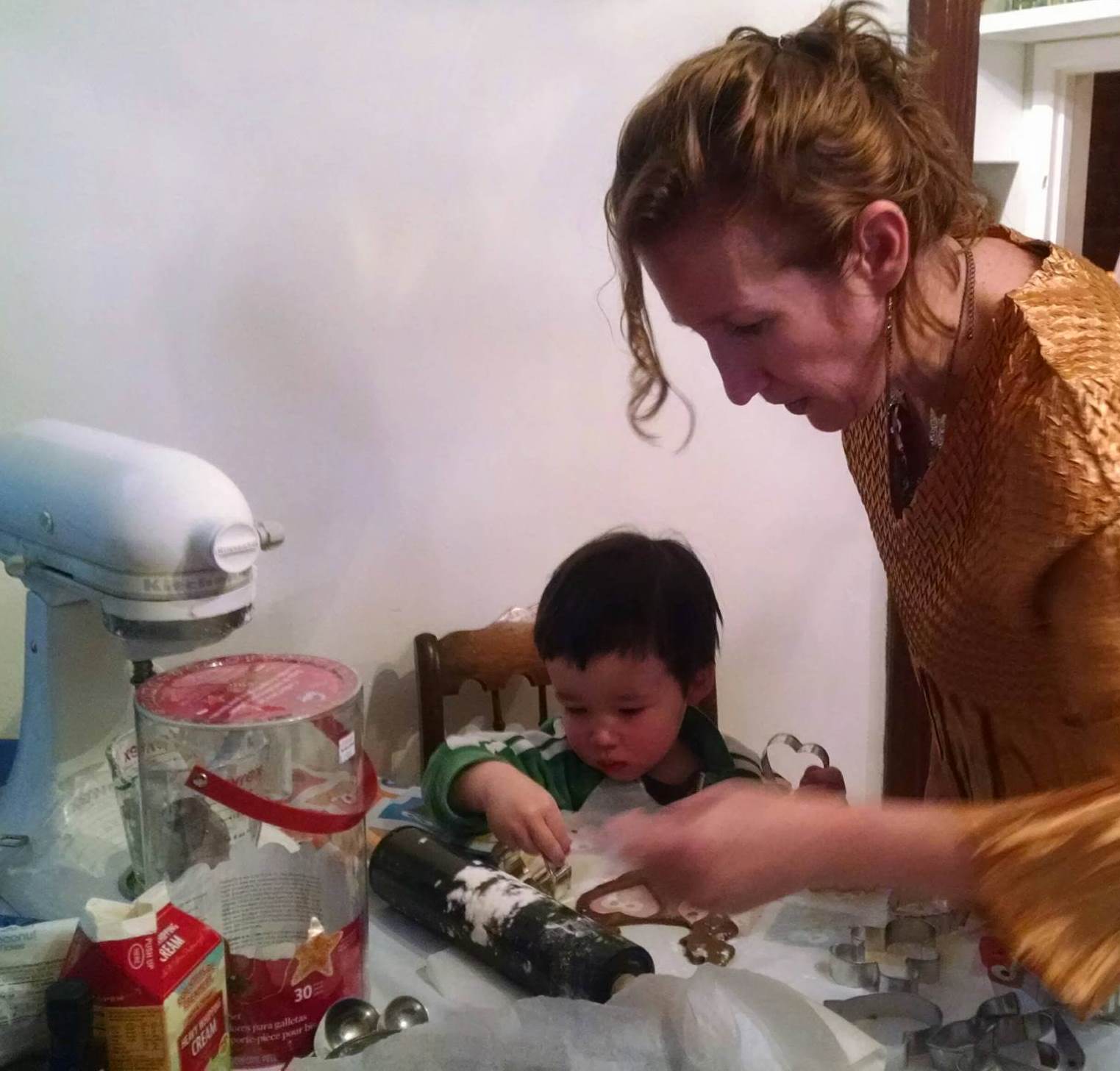
Last weekend, I hosted a cookie-baking party for Vince and his cousins.

Hannukah HedgehogsTaisei n me

They’re not pretty, but we had fun. Strangely, Vince and I had prepared enough dough to yield 16 dozen cookies but only nine dozen made it to the final stage. Hmmm…or should I say, Mmmmm….cookie dough?

So enjoy the moments that contain things you love. In my case: design, craftsmanship, nature, history. Kids, creativity, and cookie dough.

Poppies of Expectation

There’s a saying: “Expectations are disappointments in the making.”

That sounds so cynical. And as with all self-helpy kinds of things, I had to struggle with this concept intellectually before I could accept and employ it.

Some expectations are reasonable. I expected Vince to graduate from high school. I was bitterly disappointed when he didn’t. In this case the saying still holds true but you couldn’t fault me for the expectation, right? It’s a pretty minimal one held by most parents. (Vince has since earned his General Equivalency Diploma and finished two years of college.)

But there are other expectations that are unreasonable.

Vince wrote numerous times from boot camp about how he had spent four hours scrubbing the baseboard in the gym, or all day moving manure from Point A to Point B, or how he made his bed with sharp corners and ironed his clothes with exact creases. This was not the Vince I knew from before boot camp. “Wow!” I thought, “How wonderful that he’s learned to be a perfectionist clean freak like me!” I looked forward to him moving in. It would be great to have someone else in the house who would wash windows, dust and vacuum, wash the car (and here I got really carried way), paint the spare bedroom, clean the spider webs out of the basement, tear up the old patio and cart all the bricks away, maybe even wallpaper the dining room!

Ha. Suffice it to say that none of those things has happened. And why should they? Vince met the expectations of boot camp because his freedom was on the line. I had never even voiced my expectations to him—I was barely aware of them myself.

The progress I’ve made is this: I used to be completely unaware of my expectations, then feel shocked when they weren’t met. Now I catch myself—maybe not in the moment but eventually—and I laugh at myself a bit. The only disappointment I feel is in myself, for having unrealistic expectations.

Vince will never be a neatnik like me, but he does clean up after himself. He takes out the trash and puts gas in the car when the tank is low. He picks up items at the grocery that I forgot to get the day before. He replaces the toilet paper when it’s gone. He makes ribs and bakes cookies and offers them to me. He pays rent. He works full time and volunteers at the Goodwill on Sundays. He exercises. He’s started his own blog. He’s going to meetings and has sober friends.

I still have thoughts like, “I hope he goes back and finishes his degree,” and “I hope he meets a nice girl and gets married and has kids.” I notice these thoughts. I name them as expectations. I am kind to myself. I acknowledge that they could happen but that there are no guarantees and that Vince’s designs for his future may not match mine. Just for today, I’ll be grateful for what’s right. I will not go romping into the poppy field of expectations and disappointments.