Category Archives: Travel

Accidental VIPs

This is the sixth post in a series about a UK road trip that starts here.

We had arrived in Silverstone, England for the Mini United festival tired, hungry, crabby, and on a budget.  “You can sleep when you’re dead,” is one of my mottos.  Hungry could be fixed with overpriced, tasteless vendor food, but a budget was a budget, and incompatible with a long weekend of overpriced vendor food.  I was doing okay financially—obviously—since I could afford the airfare to get there.  But Rebecca worked as a carer, which is someone who cares for elderly and handicapped people in their homes.  It’s a super important and supremely underpaid job.

We crawled out of the tent and surveyed our surroundings.
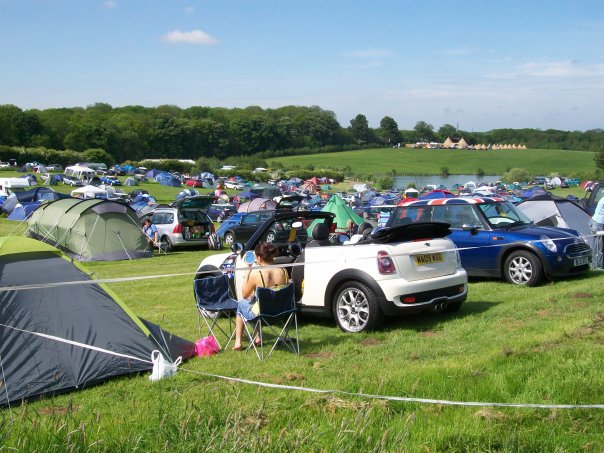
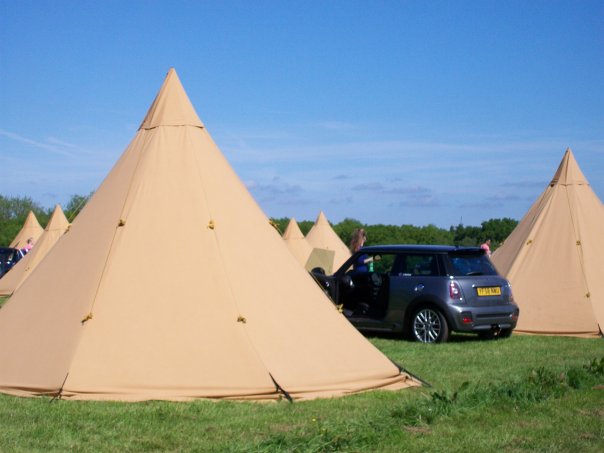
Tent City Tee pees

Yes, teepees—they’re big over there.  I subtly strolled by one that was open to get a look at the interior but didn’t have the guts to take a picture. There’s a permanent platform, so you’re never going to get wet unless it’s flood-mageddon.  You rent the teepee with all the gear, which can include cots and coolers and all the bulky heavy stuff that’s a drag to store and pack if you own it.

Is this cultural appropriation?  I don’t know. Maybe they’re just triangle-shaped tents.  It’s not like these campers were dressing in rawhide and eating dried strips of deer meat and doing war dances.  At least, not that I saw.

We used the porta loos, which weren’t bad as far as giant storage containers of feces and urine go.  There were sinks with warm water but no showers.

I was having a hard time getting excited. But hey, it was just three days.  How bad could it be?  I didn’t want to ask Rebecca what she was thinking because it had been my fool idea to come here.

We slogged for what seemed like a mile, following the other ratty-looking campers, to get to the registration point. “Okay I’ll just say it,” I said.  “We can walk back to the tent and cook over the stove every meal, which will take forever but save us money.  Or we can buy the overpriced food at the concessions.”  I was wondering how much a beer would be.

“Yep,” Rebecca replied, stonily.  Then she turned to me with a forced but radiant smile, “Let’s just see how it goes!”

“Hmm … what a novel but healthy idea!”  I was on board.

“We can always bitch and moan later.”

“Yes, it’s a beautiful day!” I replied, and it was.  We were tromping through a farm field on a sunny, warm spring day.

We arrived at the registration point and there was a line a hundred people deep.  An employee came by and scanned our confirmations.  “Oh,” he said meaningfully, “You’re North Americans.”  I didn’t correct him, that Rebecca was not a North American, in case that was a bad thing which would cause her to be ejected.

He waved us over to a different line where no one was waiting.  This was good.  I showed the confirmation.  “Welcome!” our staff greeter said enthusiastically.  “Here’s your swag bag.”  He handed us each some nice-looking messenger-type bags emblazoned with the festival logo and stuffed with … stuff, to be revealed.  “And these are your VIP badges.”

Rebecca and I exchanged glances that said, “do we keep our mouths shut, or not?”

“Thanks for thinking we are VIPs,” I said regretfully, “But we just paid the regular admission like everyone else.” I waved my arm toward the hoi polloi waiting in the very long line.

This guy had the best job in the world, because he got to say this to people: “You are VIPs, because you–you North Americans–are our best customers.”  I didn’t feel like an uber customer, but I just smiled and nodded in order not to break the magic.

We made our way straight to the VIP lounge, where we sat speechless, smiling dumbly at one another, emitting the occasional giggle.  “What if it’s a mistake?” I kept asking.

“Let’s just stay in here the whole time so we don’t have to risk not being re-admitted!” was Rebecca’s idea. And that’s pretty close to what we did.
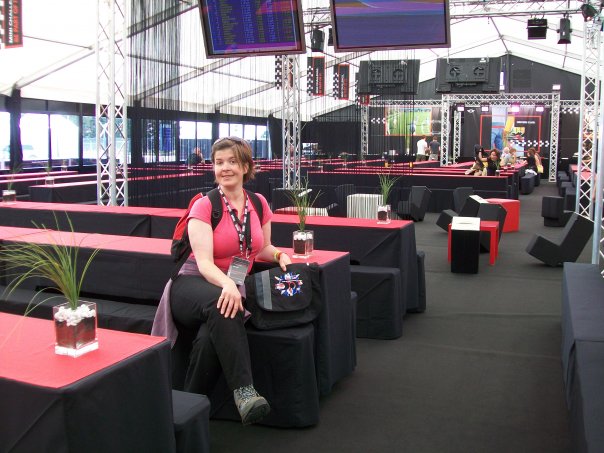
VIP Lounge

On the Road Again

This is the fifth post in a series about a UK road trip that begins here.

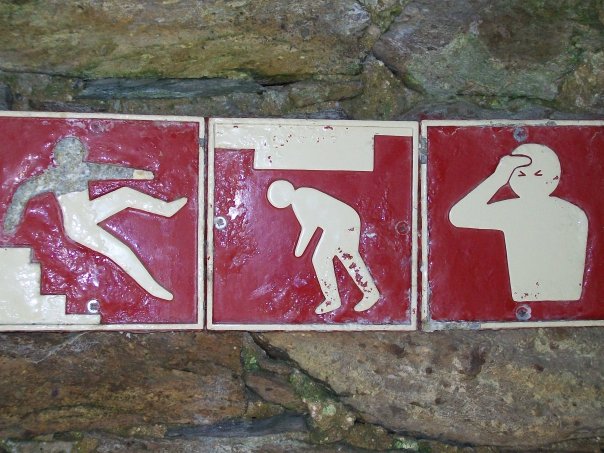
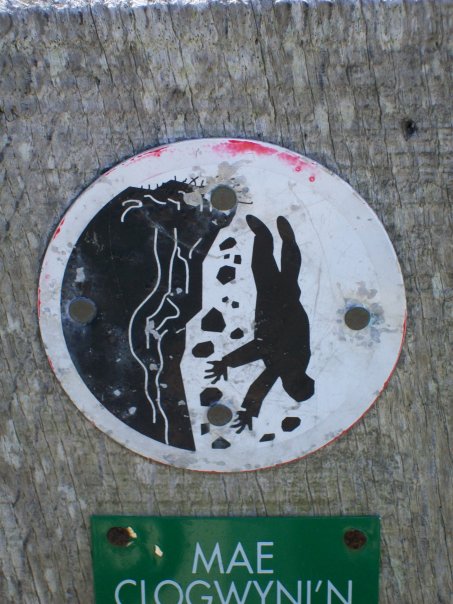
Rebecca and I whiled away a week in Wales.  We hiked along the cliffs; this was my favorite sign:

Man Overboard

We spent a day at St. David’s Cathedral, which is a functioning place of worship. St. David is the patron saint of Wales.  He punished himself for his sins by standing neck deep in the sea.  The ice cold sea.

St David's

The cathedral was erected on top of a monastery circa 500 AD.  The interior was fantastic, though cramped, with signs like this throughout:

Free Fallin

It was impossible to get good photos inside because it was so dark and I couldn’t back up enough to get perspective.  That’s okay; sometimes it’s good to just be and really see, and not be preoccupied with getting the best shot.

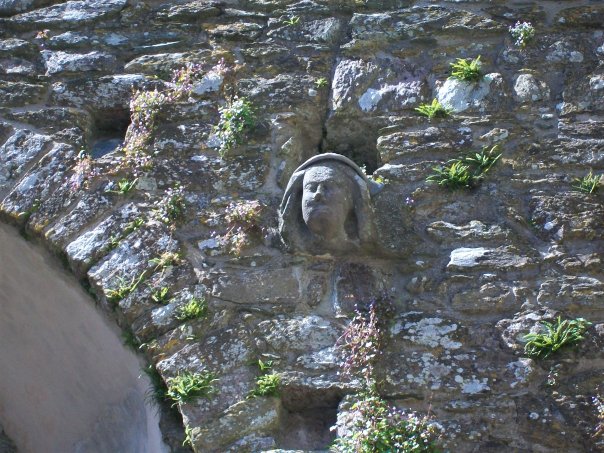
The little gem below is from the exterior.  It’s important, in the UK, to look up or you’ll miss the gargoyles, murals, and curlicues.

Rock Face

We wandered about the countryside.  You know the expression, “take the high road?”  Well there really is such a thing as a high road.  They’re useful during floods, apparently:

Hi road, low road

Back in town, we stopped at the butchers—a real butcher shop—to buy lamb.  This is Wales, after all, which has more sheep than people.

Butchers

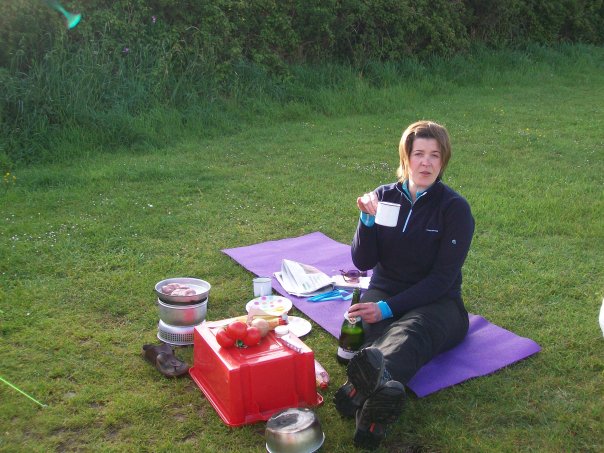
Rebecca is a great cook, and she managed to make lamb stew with spring potatoes and peas on a camp stove.  Here she is doing her impression of a posh Oxfordshire camper, complete with pinky aloft.

Pinky

There was one rainy day, so naturally we attempted to cook inside the tent.  This is a Very Bad practice.  As experienced campers, we should have known better.  The stove toppled over, the meths ran along the floor, flame followed, and we screamed and scrambled to put them out.  We succeeded, but there was a burn hole in the floor of Rebecca’s newish tent.

We often recall this story.  She remembers it being her fault, and I remember it being mine.  At least it’s not the other way around!  All that matters is that neither of us got burned and we still had a tent over our heads, if it did have a hole in the floor.

We returned to the pub a couple times and learned a great deal about McGiver, Mr. T., Luke, Bo, and Daisy.  The farmers just couldn’t get over that I, and American, was so ignorant about my own culture.

If our road trip had only been this much—this sojourn in Wales—it would have been enough.  But we had only begun!  We packed everything back into the Micra and bade farewell to our beautiful, peaceful, seaside outpost.  Off we went to our next destination, Silverstone, England, for the Mini Cooper Festival.

The “Welcome to England” sign made me laugh.  The drive was like going from Minnesota to Wisconsin, and yet here we were crossing country borders, sort of.

Welcome to England

Rebecca wasn’t laughing.  She was driving 200 miles on a week of sleep deprivation and encountering Bank Holiday weekend traffic jams and spring road construction projects every two miles.  As we slowly progressed I watched her shoulders rise up to the level of her ears.  This was my introduction to certain charming British terms such as “buttock clenching,” and “fuckwit.”

The drive took most of a day.  By the time we neared Silverstone, Rebecca was laughing in a way that made me nervous. Once again, as we neared our destination, the skies darkened and the winds rose.  We pulled into the campground adjacent to the racetrack and festival grounds at dusk and this time did a little better at pitching the tent.  We looked around.  We were surrounded by a sea of tents and teepees populated by rag-tag Mini owners from all over the world. We were famished, so we walked and walked and walked until we found the food stalls and bought some extremely overpriced and under spiced curry in a paper cup.

We trudged back to the campsite to use the porta loos before it started raining.  Neither of us said anything, but we were both thinking we should have stayed in Wales.

Springtime of the Daleks

Have you ever tried to pitch a tent in the dark in a gale force wind?  That’s what Rebecca and I did on the second night of our UK road trip.

“Park the car between the cliff and the tent site to block the wind,” I yelled helpfully.

“But the tent is bigger than the car!” Rebbeca pointed out.  There was a lot of flapping and flopping and “f—ing!” and hysterical laughing before it was done.

Here is Rebecca blowing up her “lilo,” which is what Brits call an air mattress.  She is purposely not looking at me, or she would burst out laughing and end up sleeping on the hard ground.

Lilo

We got things pretty well organized, then settled down to sleep.  Our bodies were the only thing weighing the tent down.  We lay there in the dimness watching the top billowing wildly.

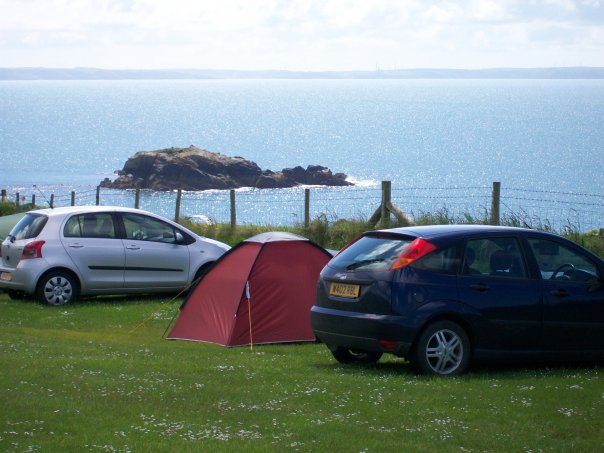
In the morning, we crawled bleary eyed out of the tent to scenes like this:

Cliff camping Cliff

That’s the wonderful thing about seaside weather; it can change within hours.  Rebecca made some coffee and porridge on the cook stove with the meths.  I still couldn’t get over that that’s what they called camping fuel.

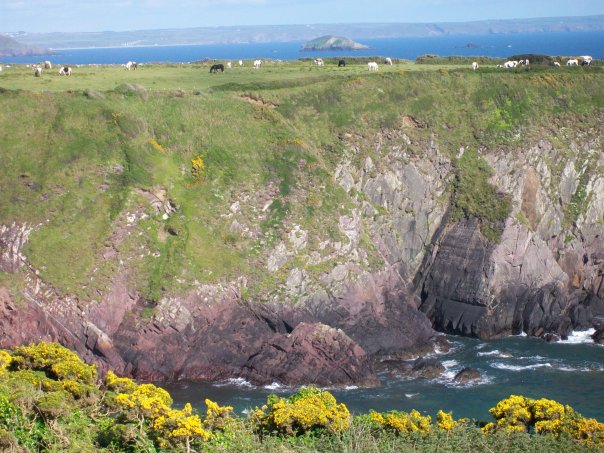
Then it was off on a hike:

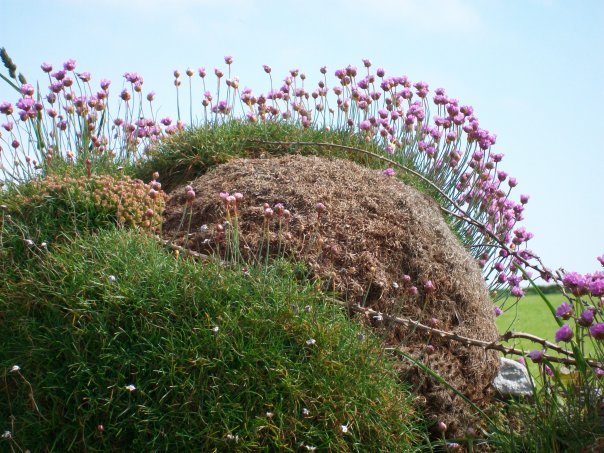
Cliff Walk 1 Cliff Walk 2 Cliff Walk 3 Cliff Walk 4

If you live in a place with four distinct seasons, like Minnesota with its harsh grey winters, you appreciate the pure bliss of a spring hike.  I do believe that our bodies are attuned to the seasons and nature in general, although that connection is blunted by indoor lighting, artificial schedules, and screens, screens, screens.  But if you get outside on a spring day and start paying attention to the colors of the sea and the tiny blossoms and the sounds of larks that you can’t even see because they fly so high, very quickly you feel alive—alive, and free, and joyous.

We hiked for hours and said barely a word to one another; it wasn’t necessary.  Then we headed into St. David’s via narrow, hedgerow-bordered roads and farm fields.

HedgerowFarm Equip

We learned we would have to return the next day to tour the cathedral, so we wandered around and ended up in the pub, which fortuitously had a pub quiz that evening.  We were enjoying our fish and chips with mushy peas and a pint of ale when a crusty farmer sidled up to us and began making marriage proposals.  “I’m a millionaire farmer,” he declared.  “Ye could do worse.”  We laughed at first, until we started wondering if he was serious because he was so persistent.  Thankfully the quiz started and he went back to join his crusty friends.

Now, Rebecca and I had been to many pub quizzes in Oxford, where the typical question was, “In which scene of Hamlet does Polonius offer Laertes a string of aphoristic clichés enumerating the shoulds and shouldn’ts of a young man’s life?”

This wasn’t Oxford.  The first question was, “What common household items did McGiver use to escape from a drug lord in Season 3?  Was it: a fork and spoon, a pen and paper, or chopsticks and a cigarette lighter?”  The rest of the questions were based on other great American TV series like the Dukes of Hazzard and The A-Team.

Rebecca and I looked at each other and tee-heed.  We weren’t going to win this quiz, but this was much more entertaining than playing cards in the tent.  We had had a few pints when Rebecca raised her hand.  I can’t recall what cheeky question she asked of the quiz master, because as soon as she opened her mouth the whole pub turned and stared.

“Where are you from?” he asked.

Ahx-fohrd-shaw,” she replied (Oxfordshire), intentionally overdoing the posh Oxford accent.  They all laughed, we laughed, and the questions about McGiver went on for hours.

If you ever go for a walk in the country, be sure to bring a flashlight in case you end up walking back to your tent much, much later, in the dark, on unlit country roads after having maybe one too many pints.

Fortunately, Rebecca and I had packed our headlamps, so we had loads of fun impersonating the daleks from Dr. Who:

“You shall be exterminated!”

Dalek

Croeso i Gymru

Before I resume my series on the UK road trip I have to mention a meeting I attended today.  For those who are new to this blog, I work for an organization that provides psychological and physical rehabilitation to torture survivors.  We had a lunchtime talk by an attorney who is representing one of the 70-some detainees at Guantanamo.  I can’t repeat much of what he said because it is top secret.  Seriously!  I’ve always wanted to say that and now it’s true.

Let’s just say that he firmly believes his client is innocent, that his client was tortured severely and repeatedly, and that his client has horrendous, humiliating physical problems as a result.  As the attorney described his client’s symptoms I watched as, one by one, we stopped eating our lunches.

Well, I kept eating.  I felt like a schmuck but it was my only chance to wolf something down between meetings.

Again, for those of you who are new to the blog, it began when my son Vince went to prison.  He was never tortured, unless you count being kept in solitary confinement for a week.  However, this attorney described actions taken by Gitmo guards that were just like things done by guards in Minnesota.  Mostly, it involved random acts of violation.  For instance, out of nowhere they would go into his cell and rifle through his things and scatter them around.  They weren’t expecting to find anything; it was about throwing him off balance, making it clear they could do whatever they wanted whenever they wanted, and intimidating him so he would never feel safe.

Now he is home free and doing well.  But I found myself feeling upset during the meeting.  It’s well understood in our organization that many former prisoners have PTSD from what they endured on the inside.  I sometimes think I have what’s called secondary trauma, which is caused by hearing the stories of people who have suffered.  So even though I’ve never been in prison I am affected by it.  I just needed to get that off my chest.  Thanks for reading.

Back to the road trip!

Rebecca packed all our gear into the Micra and we were off to Wales.  We agreed at the start that I wouldn’t drive, since I had never driven in Britain and didn’t have an international driver’s license.  But mainly it was because every time she took a turn I was inclined to yell, “head on collision!” because in my mind we were in the wrong lane.

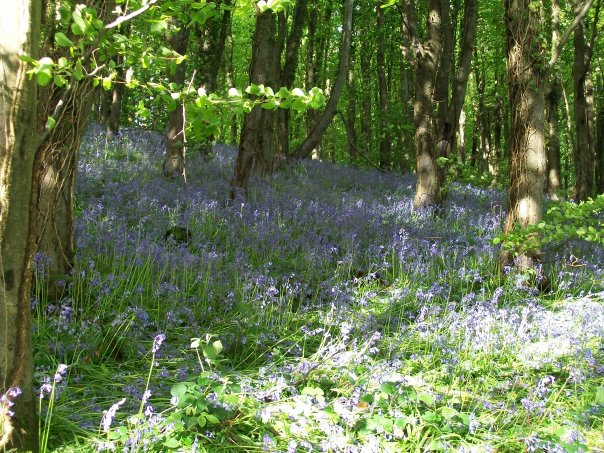
It’s only about 200 miles from Oxford to St. David, Wales, but it was spring so road projects had sprung up everywhere, along with the famous bluebells.

BluebellsRoad Works

We were headed for Abergavenny to spend a night at Rebecca’s brother’s house.  The route was clear as a corn maze.  I had never encountered round abouts and I asked Rebecca to explain the rules to me.

She tried, but I think it’s one of those things—if you grow up knowing it, you just know it—and you can’t explain it to someone else.

Bewildering Sign

We stopped at an outdoor store to buy fuel for the camp stove, which they call meths.  Even Rebecca, a native who had visited Wales many times, was stumped by this one.

ParkingParking 2

Back on the road, I asked, “How is it that Wales is part of the UK but still separate country?” Again, she tried, but it seemed to be another case of “it’s clear and obvious if you were raised here, and it’s hopelessly bewildering if you weren’t.”

We had dinner with Rebecca’s brother and his wife.  Rebecca referred to her sister-in-law’s “charming Welsh accent” but I couldn’t hear it.  We left their house early the next morning; ominous dark clouds and high winds increased as we drove toward St. David’s.

We found the campground at dusk, and when we checked in, the woman in the office retracted her lips and sucked in her breath.  She didn’t tell us we couldn’t camp, but she clucked and fussed with a worried frown on her face before she finally pointed out our site, on the edge of the cliff overlooking the sea.

How’s that for a cliff hanger?  Ha ha ha.

The Original Woodstock

This is the second post in a series about a road trip across England and Wales that starts here.

It was May. It was still wintery in Minnesota but spring was well underway in England when I arrived. Rebecca lived in Woodstock, a small, charming town outside of Oxford most famous for Blenheim Palace, where Winston Churchill was born. The palace is okay, if you like that kind of thing.

Blenheim

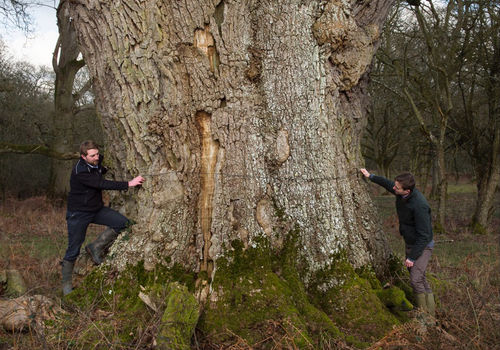
My favorite aspect of Blenheim is the grounds and “pleasure gardens” which surround it. You can literally walk for hours and never see another human, just sheep. And the old trees…it just doesn’t get much better.

Oak!

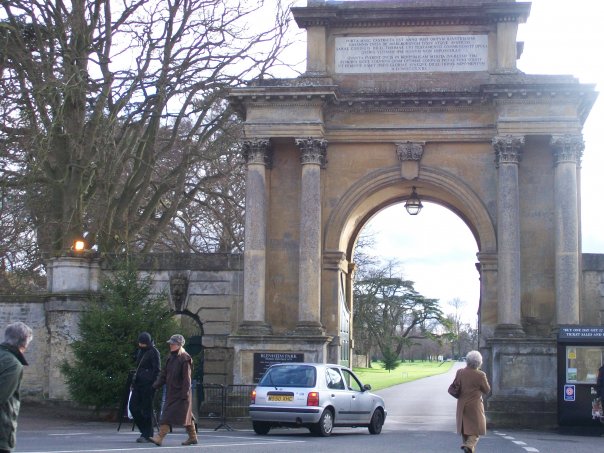
I could step out of Rebecca’s door, walk one block past the public entrance to Blenheim, then slip into the “neighbor’s gate.” I don’t understand how it all works, but apparently the Duke of Marlborough, who is the current occupant, must allow the public access to hike and enjoy the grounds. But you have to know there’s a no-fee gate, otherwise you’ll pay £14.90 just to walk in the gardens. Here are the two gates:

Pay GateFree Gate

Woodstock is an expensive place to live. It has quaint shops full of locally-sourced organic gluten-free wool jumpers and cozy old pubs like The King’s Head, the Bear, and the Black Prince. People come from Oxford and London for the weekend to shop and eat and see Blenheim.

Rebecca’s address was The Maisonette, 1 Brown’s Lane. Maisonette just means “little house” in French. The building was just like the church where we had met—everything crooked, cramped, and damp—except it was about a hundred years older and had enjoyed that much less maintenance and upkeep. The ground floor was an antiques shop called The Dickens House, and the building/shop owners, believe it or not, lived below it in the windowless basement.

Rebecca and her flat mate had a three-bedroom, two-story flat above the shop—thus the term maisonette. It’s very common for flats in the UK to come furnished, with everything from (of course) furniture to appliances like toasters and kettles, down to the silverware and dishracks. The maisonette was furnished with the leftover antiques from the Dickens House, which were dark and heavy and took up so much space there was barely room to walk. The chairs and sofa were upholstered with worn puce velvet and the carpet was some sort of dark teal astro turf. The living room walls were adorned with William Hogarth prints depicting the 18th Century gin epidemic.

GinWilliam_Hogarth_-_Gin_Lane

Charming!

The Maisonette was located next to the public pay urinal and across from the one party pub that had some sort of heavy metal karaoke night, so Rebecca had her own personal gin epidemic on the weekends.

Her flat mate was never there because she worked two jobs in two other towns—as a DJ in Oxford and as some sort of communications officer for a nature preserve way out in the boondocks. I stayed in the spare room, in which was stuffed a queen sized bed, more antiques, and the flat mate’s boxes and bags of stuff which I had to crawl over to get to the bed, which was perfectly comfortable.

So I flew to London, took the bus to Oxford, and Rebecca picked me up in front of the Ashmolean Museum, which was our usual pickup place, and we headed to Woodstock to pack everything into Rebecca’s Nissan Micra.

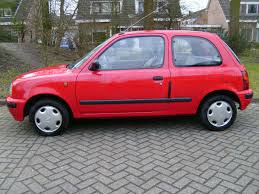
Micra

Yeah I had a Mini, but she had a Micra, into which we—well she, really—meticulously packed my suitcase, her hiking backpack, the tent, sleeping bags, cook stove, food, a cooler, and other camping gear for our two-week camping road trip.

My Name is Anne, and I’m a Travelholic

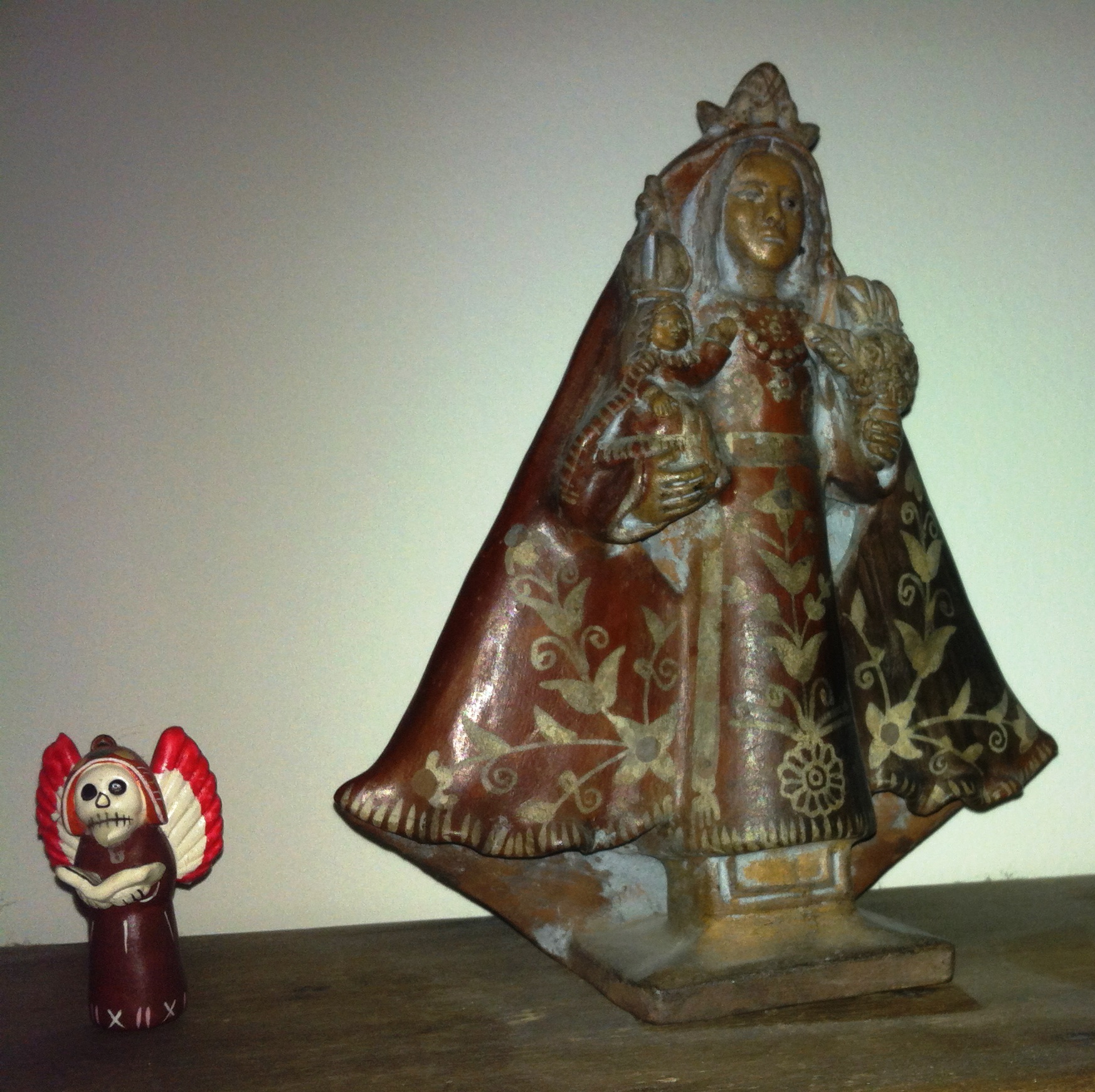
I’m house sitting again, this time for a friend who has a huge apartment and two cats who need minding.  My friend is Peruvian and collects art and artifacts every time she goes home.  Here are some of my favorites:

Maria y MuertoMariaTrabajo

My last post about the road trip, and my anxieties around it, brought to mind the only other Big Road Trip of my life.  I’ve driven to Chicago a half dozen times but that’s nothing compared to the trip where I never once got behind the wheel.

My friend Rebecca and I met at an Alanon meeting in Oxford.  AA and Alanon meetings vary greatly from one culture and location to another.  In St. Paul meetings, people go around at the beginning, say their names, and the crowd responds, “Hi Anne!”  The meetings are pretty squirrely.  There’s lots of laughter and disorder.

Not so in Oxford.  The meeting was in an 18th Century church.  The ceilings were low and building was cold, cramped, and crooked.  The chairs were hardwood with no cushions and the backs were a 90 degree angle from the seat, making for maximum discomfort, especially since the tilted floors meant your chair teetered to one side.  I regret I never brought a marble to set in the middle of the table so I could see which direction it would roll off.

At my first meeting, the introductions started and the first person said slowly and with perfect enunciation, “Hello, my name is Roger”—or “rwah-jah” as he pronounced it.  I exclaimed, “Hi Roger!”  Just me.  No one else.  Everyone stared at their hands, neatly folded in their laps.  I’m sure they were thinking, “Bloody Americans, they’re so enthusiastic about everything!”

I heard a barely-stifled guffaw and a snort on the other end of the table just as a woman introduced herself, “Hello, my name is Rebecca.”  She looked straight at me and laughed.  The rest of the group carried on as if nothing out of the ordinary had happened.  It took a while, but Rebecca and I would become good friends.

A year later my work visa had expired and I was back in St. Paul.  I job hunted for seven months, taking the bus everywhere because I had sold my car when I moved to England.  It was a painful stretch.  As soon as I landed a job I bought a Mini Cooper.  Maybe it was a foolish thing to do, since I hadn’t even started the job yet, but I thought of my Mini as sort of like the greatest souvenir / consolation prize I could have from my time in England.

And did you know?  There are Mini events going on all the time all over the world.  I learned that there would be a “Mini Festival” in England the following spring.  It was as good an excuse as any to go back and visit.  So I Skyped with Rebecca and she was in.

“Let’s go to Wales though, too, okay?” she proposed.  “We can visit my brother the sheep farmer and camp on the cliffs overlooking the sea.”

Was that okay with me?  Was it!  Oh boy!  I bought my ticket and started looking at maps.    

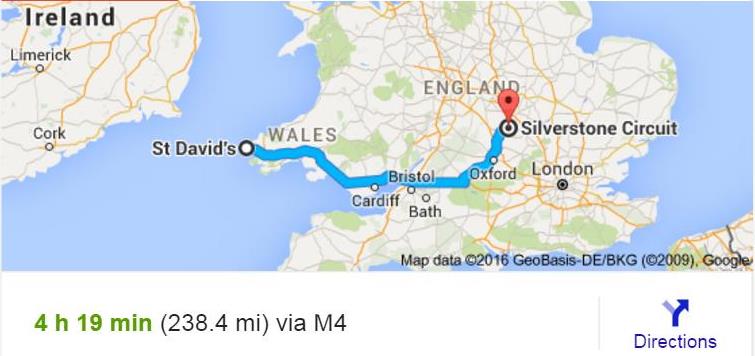
We would drive from Oxford to Wales, then slingshot back to Silverstone racetrack for the festival.  It doesn’t look that far on a map but … I’ll get to that.

Map

If you’ve read this blog from the beginning, you know I started my adult life on welfare, in subsidized housing, with no car.

Here’s how I afford trips—my two indulgences—on a nonprofit salary: I live below my means.  I make do with small living spaces.  I have a dozen pairs of shoes—which is nothing for an American female.  I shop at thrift stores and get my haircuts at Cost Cutters with coupons.  I make my own coffee and cook from scratch instead of going to coffee shops and restaurants.

I hope I don’t sound smug.  My intention is to encourage you—if you love travel but don’t have a lot of money—to consider offbeat adventures like the volunteering, language immersion, and medical missions I’ve described in the last few months.  Or even just every day adventures like house sitting for a friend.

A Case of the What Ifs

In three weeks I will be on my big road trip to New Orleans.  My friend Lynn arrives on Saturday afternoon from Scotland and we’ll head out the next morning.

Here’s the itinerary I’ve mapped out:

Sunday, April 3: 8-hour drive from St. Paul to Chicago with a stop for lunch with cousins and a niece in Madison, Wisconsin.  I am told we must see the protest singers at the state capital.  I have no idea who or what they are.

Monday, April 4: A full day in Chicago—Millennium Park, architectural boat tour, another niece

Tuesday, April 5: 8-hour drive from Chicago to Memphis, check out Beale Street and Sun Studio or the Rock ‘n’ Soul Museum.

Wed, April 6: Visit the National Civil Rights Museum which is in the Memphis motel where Martin Luther King was assassinated, then hit the road for the 7-hour drive to New Orleans

Wed-Sun, April 6-10: In New Orleans for 5 days!  French Quarter Festival will be on, and there are so many other things to do, like an alligator swamp boat ride, plantation tours, and fabulous architecture, gardens, and cemeteries.

Monday, April 11: 6-hour drive from New Orleans to Oxford, Mississippi.  The University of Mississippi at Oxford is where America’s university system was forcefully integrated.  I also wanted to stay in at least one sort-of-small city.  Oxford’s population is 20,000, although I don’t know if that accounts for university students.

Tuesday, April 12: 6-hour drive from Oxford to St. Louis.  Dinner with a friend from grad school, preferably in The Hill neighborhood renowned for its Italian food.  At least eight people have told me we must—must! visit the City Museum.  They say it’s lots of fun, that you can play around on the art like a kid, but it’s really for adults.  I’m not that good at fun, but it is something I’m working on.  I wonder if Lynn, being English, will find it fun.  I’m not at all clear on what it is, but we’re going to find out.

Wednesday, April 13: 8.5-hour drive from St. Louis to St. Paul to get Lynn to the airport in time for her late evening flight.

Whew.  I admit I am anxious about how it will all play out.  What if the route times on Google maps don’t allow time for bathroom breaks or lunches?  That would mean all my times are off.  What if the routes aren’t scenic?  What if Lynn thinks all Americans are racist yahoos?  What if every city is just a mass of Walmarts, Star Bucks, and strip malls?  What if my GPS breaks and we get lost?  What if one of us is mugged?  What if the museums aren’t open on the day we’re there?  What if my back hurts from so much driving?  What if we get into a fight over what to do in New Orleans?  What if we arrive after dark in one of these big cities and the hotel has no record of our registration?  What if a meteorite hits the car?  What if the car breaks down in a bayou and we hear banjo music?

My anxiety is nothing like it used to be, but it’s interesting to notice it.  I’ve learned a lot of tricks for dealing with anxiety over the years.  Some of the ones that work best for me are to:

– bring myself out of my head to focus on my surroundings.  Notice that I am not currently in my car surrounded by alligator-filled swamps or muggers, but in a chair in my dining room writing this post.  This usually helps bring me back to reality.

– remember that nothing lasts.  I may feel anxious right now, but it will pass if I don’t latch on to it.  It’ll probably come back, but then it will pass again.  So it’s not permanent.  If it did get to be constant and lasted for a week, I would call a professional.

– know that, if I do end up surrounded by hillbillies, I will deal with it then.  For now, I only need to do the next indicated thing—finish this post and post it.  And so I will.

The Awakening

This is the seventh post in a series that started here.

I wrote in the first post in this series, “Wrestling with Restless,” that I would eventually make a point about my question: “Why would I want to leave Minnesota, one of the cleanest, healthiest, most progressive states in the U.S.—a state with great microbreweries—to go study/work/volunteer in a developing country?”

I’m finally at the point of making the point.

I was on a bus in central Mexico with 50 other mostly American Spanish-immersion students, and we had just been directed to gaze upon a garbage dump a big as a mountain.  It was beautiful—from afar.  Trash is colorful.  Flocks of seagulls soared and reeled above it and the sun glinted off the metal and glass it contained.  Our guide had called it a garbage dump city.  Why would anyone live in a garbage dump?  The stench would be overpowering!  Think of the filth and the disgusting things you would see!

To my relief, we didn’t stop but kept going until we arrived at Nuetros Pequeños Hermanos, or Our Little Brothers and Sisters.  As I mentioned previously, the Spanish school we attended specialized in Spanish for social workers, health care professionals, and teachers.  I wasn’t any of those; I just had just liked the school so much the first time that I wanted to return for more.   Now here I was, about to tour an orphanage.

We piled out of the bus and someone walked us around.  This is how I know I was having a Yerkes-Dodson moment, because I cannot remember whether it was a man or a woman or a priest or one of the older kids or a volunteer.

“We have 550 children here, from toddlers to teenagers,” the guide informed us.  “Most of them aren’t orphans; their parents are just too poor to feed them.  Or they’re alcoholics, or unwed mothers, or mentally ill, or in prison.”  The guide talked as we walked.  We passed a half dozen teenage boys shaving the heads of little boys.  We stood and listened in a dorm with rows of bunk beds and cartoon murals on the walls.

“Then there are the children from the garbage dump city,” the guide said.  I was transfixed.  “Hundreds of families make their living by picking through the rubbish and salvaging anything that can be sold.  Mostly it’s metals like copper but also appliances, furniture, shoes ….  We send buses every morning to pick up about 250 children.  We bring them here, give them showers, delouse them and put them in clean clothes, and they spend the day in school here.  Then we bring them home at the end of the day.”
Home.  To the garbage dump city.

We kept walking; we saw the dark little volunteer quarters and the kitchen garden tended by the older children.  A teenage girl and boy were flirting over a fence.  Since it was a Catholic home, I assumed there was no sex education or birth control.  How many babies were born here, to children like them?

The census of children is lower now than when I was there, but at that time, as I did the math, they were in charge of feeding, educating, housing, clothing, and providing health care to about 800 children.

“We have a dozen homes in nine countries,” the guide stated.  This is the moment when I had my “international awakening,” for lack of a better term.  I don’t know if there are homes like this any more in the U.S.  There are thousands of children are in the foster care system.

But the scale of this … for every adorable, doe-eyed two year old there were a dozen or a hundred more who needed someone to care for them.

I felt like I was in one of those videos where the camera pulls back from the earth so you feel lifted off the ground. You look down on the tree tops, then you can see rivers and highways, then shorelines of countries.  You zoom out farther until you are looking down on the blue marble we called Earth, and then out, out, out until you can see the Milky Way.

The Mountain

This is the sixth post in a series on studying Spanish in Mexico that starts here.

I returned from my inaugural week of Spanish immersion and started graduate school. A few months later, I returned for three more weeks.

It was on this was the trip that I had my “international awakening”—the experience that committed me to working in international development. Years before, I had worked for the American Refugee Committee for two years on contract, writing their newsletters and annual reports. I read a lot of background materials and interviewed employees to get material. I already knew that terrible things were happening in Sudan; this work required me to know the gory details. However, nothing compares to being there.

I returned to the same school and requested a home stay with Mirta. I couldn’t wait to see her again and bask in the warmth of her household. Since I was in grad school, I could take all the classes I wanted in addition to those in my program, so I already had a semester of Spanish under my belt and I was excited to be able to talk to her more. Things had been falling into place: The maid’s name wasn’t Ella. “Ella,” meant “she” in Spanish. If you know Spanish you may be shaking your head that I didn’t know this sooner, but it was one of many light-bulb moments in learning a language I found thrilling.

Since I was staying for three weeks, I would be more involved in the life of the school. Cemanahuac specializes in Spanish for teachers, social workers, and heath care professionals. They asked me to bring donations of vitamins if I could, so I took up a collection and filled a suitcase.

Lisa n Alex

This is my former housemate and her son. I financed this trip, and many to come, with funds from my part-time student job, student loans, and rent from people who shared my space or rented the whole place when I went for extended periods.

Mirta had no recollection of me. I felt wounded. That first week in Cuernavaca had been so vivid to me. I attempted to jog her memory, “I’m from Minn-eh-sota, near Can-a-da, where it’s very cold, remember?” I said in Spanish.

She gave me a kindly but blank look. She nodded and smiled but it was obvious I was a blank slate to her. I knew Mirta was married to an elderly, retired doctor she had to care for and support. She had this big compound too, and she worked as hard as the maid to keep it up. Mirta needed students to pay the bills. She was saintly, listening to our stammering, canned Spanish 101 attempts at conversation. She was genuinely warm. We weren’t all white 22 year olds. But as soon as one student left another arrived, and we probably all blurred together.

There’s a phenomenon where people go on tours of slums in the developing world and snap photos of the residents like they’re zoo animals. I hope I wasn’t like that, but my mouth may have gaped open a few times.

I was really into my Spanish studies and hadn’t paid much attention to where we were going for a “field trip” on Saturday. About 50 of us traipsed onto a bus and we drove for an hour. My head was swiveling back and forth from whatever conversation I was having with the student in the seat next to me—she was an African American woman who worked for the U.S. State Department as some kind of administrator and lived in Washington, D.C.—and the scenery out the window.

I was looking at her when I saw her eyes lock on to something in the distance over my shoulder. “What is that?” she wondered.

I turned to look and my first thought was, “A mountain?”

“But look how colorful it is. And why are there so many seagulls?”

“It’s beautiful,” I said.

Then one of our teachers stood up, pointed to the mountain, and announced, “Welcome to Miacatlán garbage dump city.”

Garbage City GullsG Dump City

Zizzybalooba

This is the fifth post in a series on studying Spanish in Mexico that starts here.

Zoe managed to get her footing over the course of the week but she couldn’t wait to get home. She was from Salinas, California. Her mother was from Spain, her father was Portuguese, and they had chosen to not expose her to either of their native tongues. They wanted her to be American.

“It’s funny what people think an ‘American’ is”, I said.

“And I’m a social worker, in California!” She laughed at the absurdity. “All my clients speak Spanish. They start speaking Spanish to me because they assume I speak it. Then when they realize I don’t, they have their kids interpret. All they have to do, if they want to hide anything from me, is to speak Spanish—right in front of my face.” It was clearly humiliating for her.

The next morning Zoe put her hair in a ponytail and after a breakfast of tortillas and beans with white crumbly cheese and pastries we ventured out to the street, caught the combi, and found our way to the school.

Mine was the Spanish for Dummies class. It wasn’t called that, of course. The school’s philosophy was pure immersion. The instructor spoke in Spanish and had us repeat after her. There were lots of written handouts with kindergartenish illustrations which helped. If she explained any rules of grammar or defined any words, that was lost on me.

This was a great learning method for me because I over think things. If there had been any opportunity to discuss things in English, I would have spent half the class asking questions about sentence construction and verb conjugation. That would have been fascinating and I would have gained a lot on an intellectual level but I wouldn’t have learned how to ask for a bottle of milk in a store.

Immersion is amazing—it works, and it works fast. I attended classes five hours a day and spent hours on my homework in the evening. Zoe and I spoke English together occasionally but we were on different schedules so it didn’t interfere with our learning.

The only other time I heard English was as I left the school each evening. Cemanahuac has English classes for Mexican business professionals in the evenings, taught by a young English woman. I could hear them chanting, “My name is Richard. I am a solicitor. I go to the cinema at the week-end.” Funny that they were learning British English, I thought. But maybe having an English accent would give them a leg up if they wanted to work in the U.S. We’re so dazzled by English accents.

On Day Four I passed an important milestone. I was able to walk into a store after school and ask for a six-pack of beer. I had read that women in Mexico don’t drink, but that American women weren’t really considered women, so it was okay for us. Yay! I bought a six-pack of Negra Modelo, sat in the garden by the pool, and had a couple brewskis while I did my homework.

On my last day I was able to ask my teacher what English sounded like to her. I could now understand about 70 percent of what she and Mirta said. Of course they talked very slowly and clearly and didn’t use big words. But when I arrived, Spanish had only sounded like a babbling brook, lifting, and dropping, and splashing like watery music.

“Zshuh zshah zshuh sha sha,” was her musical interpretation of English. It wasn’t nearly as bouncy as Spanish and sounded suspiciously like Russian. I did my version of how Spanish sounded to me and we laughed.

I was in love—with Mexico, sunshine and warmth, my teacher, the birds of paradise, Spanish, Negra Modelo, Mirta, and most of all, feeling good about myself for beginning to master a new language at 40.

I had been fired from my job and was about to start graduate school. I would have a part time grad assistantship with totally flexible hours. Before I left Cuernavaca I signed up to return for three more weeks.