Greater and Lesser and Lost

Now that I know more about the Charterhouse, I wish I had had the time to tour it.  I realize only a tiny, tiny percent of British pensioners can live there, but what a great model that could possibly be replicated.

The two places on my To-See list today were Smithfield Market and St. Bartholomew the Great church.

Smithfield is the original meat market.  It’s a wholesale market which takes up several city blocks so even I couldn’t miss it.  I had had it up to my eyeballs with other shopping areas and markets that sold artisanal caramels and hand-knit tea towels and reproduction antiques. I wanted to go somewhere where I couldn’t buy anything.

Smithfield exceeded my expectations by being closed.  Of course, it was Saturday.  Few people set out to buy half a cow on a Saturday in London. So I walked around and through the parts that were open.  There wasn’t much to see; the site has been a stock yard and meat market for over 800 years and the buildings appeared to be Victorian but who knows.  Later, I learned that they do indeed sell meat retail, so if you are looking for a deal on offal or a lamb shank, check it out.

Now I had to find St. Bart’s, as it’s commonly called, which was one block away but which required me to take the following route: Poultry Avenue to West Smithfield, which turns into Long Lane.  Right on Cloth Street, then right on Middle Street which turns into Clothe Fair, and it should be right there.  Right. 

I passed Barley Mow Passage, Rising Sun Court, Kinghorn Street, and Bartholomew Passage.

Don’t turn, I said to myself each time, because I always have the urge to turn at the first place I see.  Maybe they were shortcuts.  And Rising Sun Passage sounded intriguing.

I steadfastly stuck to the route on the paper map I had printed out, and immediately became lost.  The neighborhood was deserted except for a few shady-looking guys unloading trucks, and I wasn’t going to ask them for directions.  I doubled back, retraced my steps, still couldn’t find anything indicated on the map, started to whimper and imagine myself murdered; some poor vendor would find me hanging from a meat hook when he opened his stall on Monday….

I decided to walk down Rising Sun Passage after all, and there was St. Bart’s.
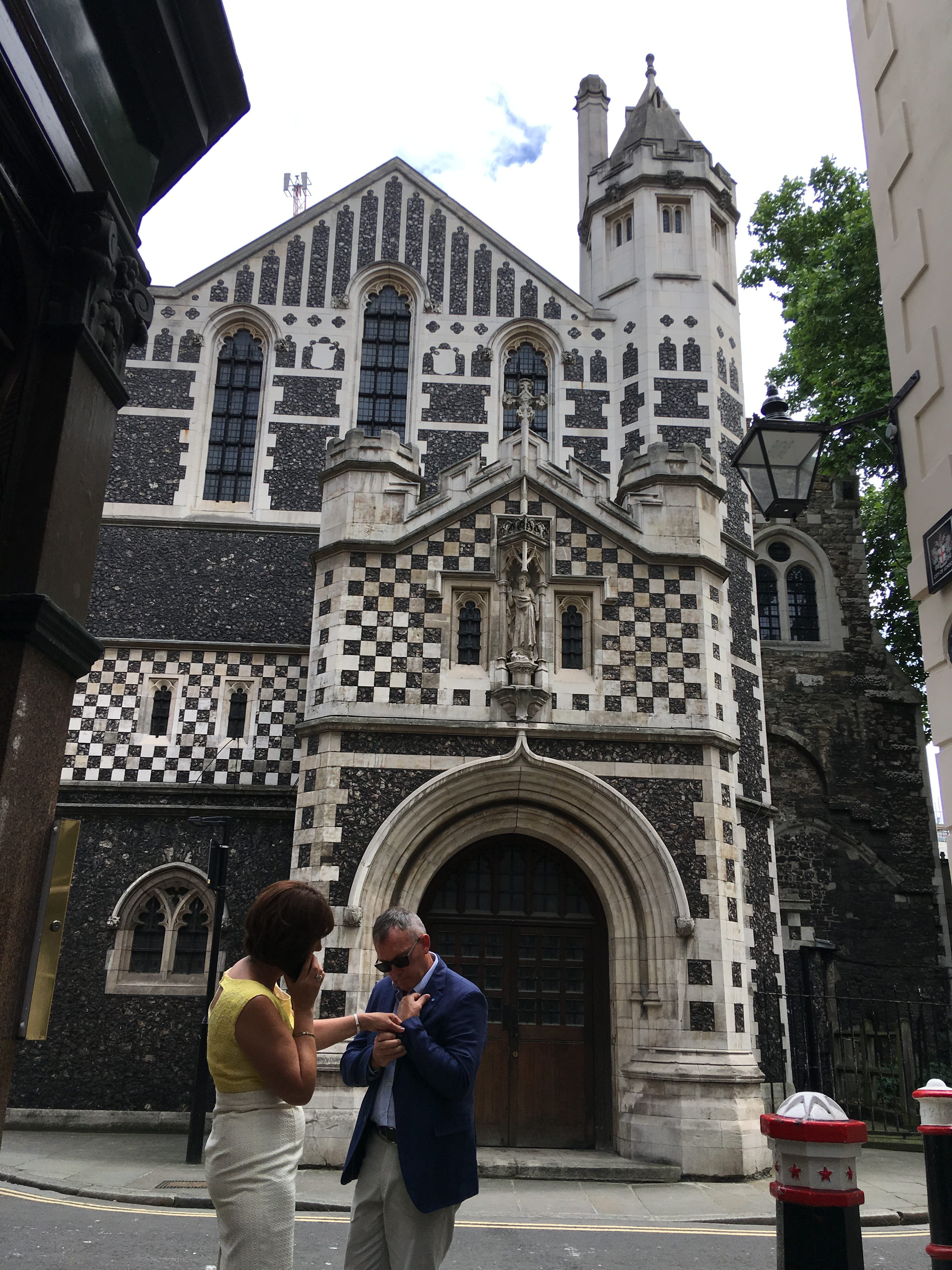
Rising Sun was named for a pub, so that was a relief.  When in doubt, go into a pub and have a pint and a packet of crisps, and everything will be ok.

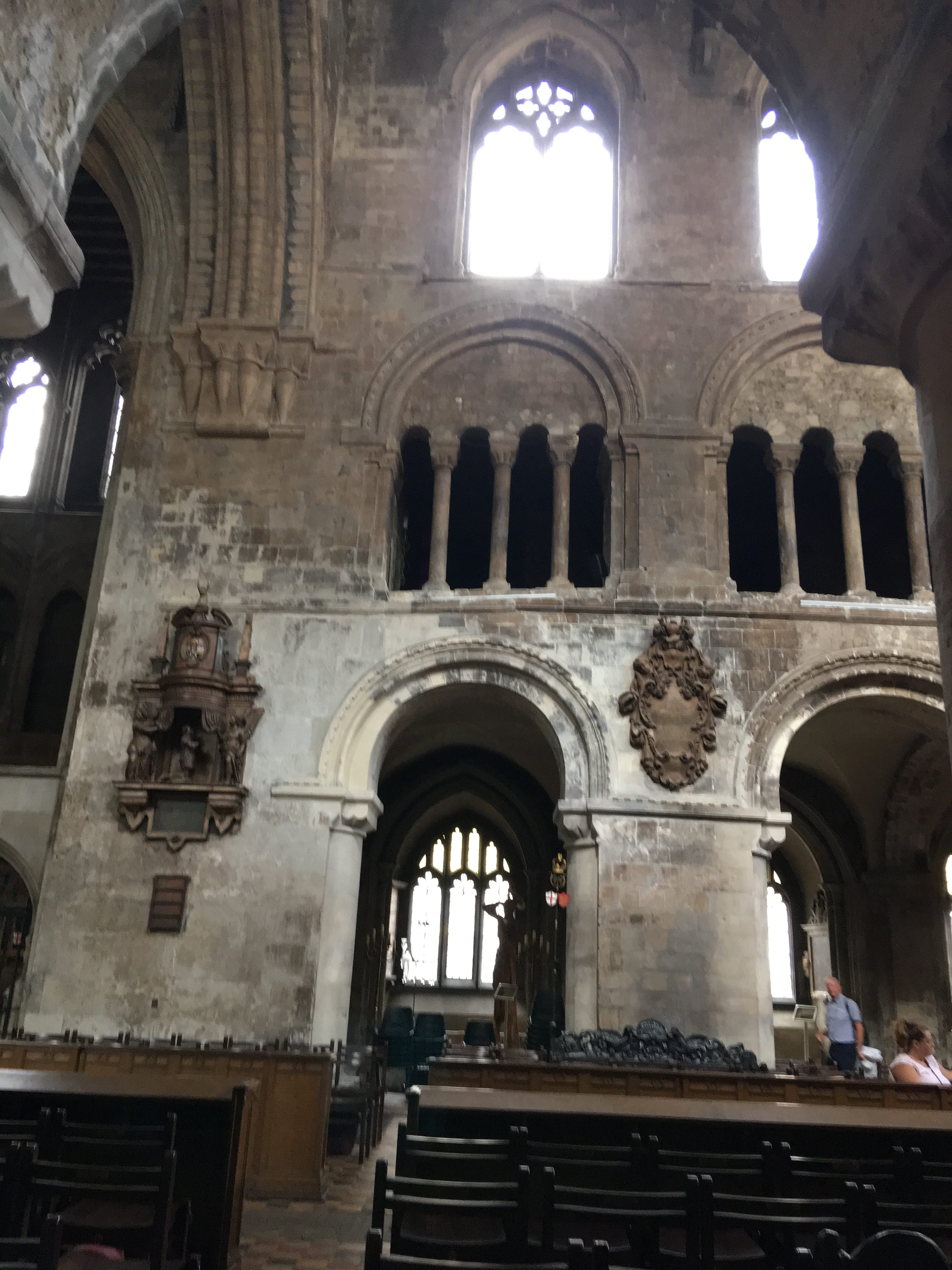
I knew that St. Bart’s was old.  In fact it’s the oldest church in London, which is saying something. It was founded in 1123 as an Augustinian monastery.  In case you’re wondering, there is also a St. Bartholomew the Less, also founded in 1123, and “It was called the Less to distinguish it from its larger neighbour.”  So there weren’t two St. Barts, one who was great and one not so great.  There are two churches named after the same guy.

I have been in many, many old churches but St. Bart’s struck me immediately as really ancient.  Which of course it is.  But after visiting a dozen old churches in a month, they all blurred together. St. Bart’s was different.

As usual my photos won’t do it justice, but maybe they’ll give you a feeling for the place.

In old sites where they built one thing on top of another, it’s good to look up, down, and around so you don’t miss anything.  There were crypts that told sad stories.

I liked the contrast and detail in the flooring and wondered what was below the grating.

I spent a half hour inside, then wandered back out into the passageway.

I was glad I had come on a Saturday.  The quiet seemed fitting and I felt at peace.  I had a pint and a packet of crisps in the Rising Sun, then walked back toward the hotel, where I ran into Lynn and Richard having a bite to eat at a sidewalk café.

“They’ll let anyone eat in this neighborhood!” I exclaimed as I joined them.
Assisted Living, UK Style

There was a festive atmosphere on the bus, with all the Pride celebrators.  As we snaked northward, they alighted and quiet descended.  I got off at the Barbican and it was utterly deserted.

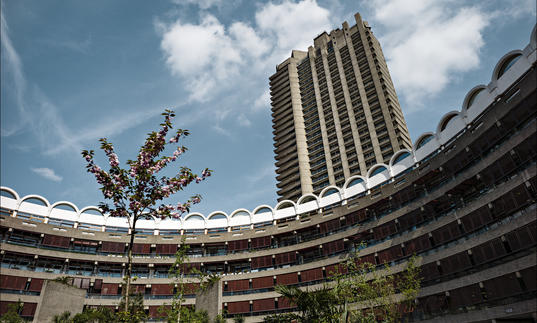
The Barbican Centre is the largest performing arts center in Europe. It’s designed in the Brutalist style.  One of my favorite London buildings, Trelick Tower, is Brutalist. I think it’s creepy but in a cool way.

To me, the Barbican is just not that interesting.  However, it is home to lots of wonderful companies, like the London Symphony Orchestra and the Royal Shakespeare Company.

My plan was to wander around the Smithfield neighborhood adjacent to the Barbican, then meet Lynn, Richard, and Possum at the hotel.  I had packed a backpack as light as possible for my two nights away but it still felt like I was lugging around a bowling ball after a couple hours.  Much as I love to daydream about hiking the Appalachian Trail or the Superior Hiking Trail, I am realistic that they are not for me.

Smithfields is not a “Top 10” London sights in any guidebook, so I was caught off guard by all the fascinating history it contained.  I don’t usually like to cut and paste from websites, but I’m making an exception today.

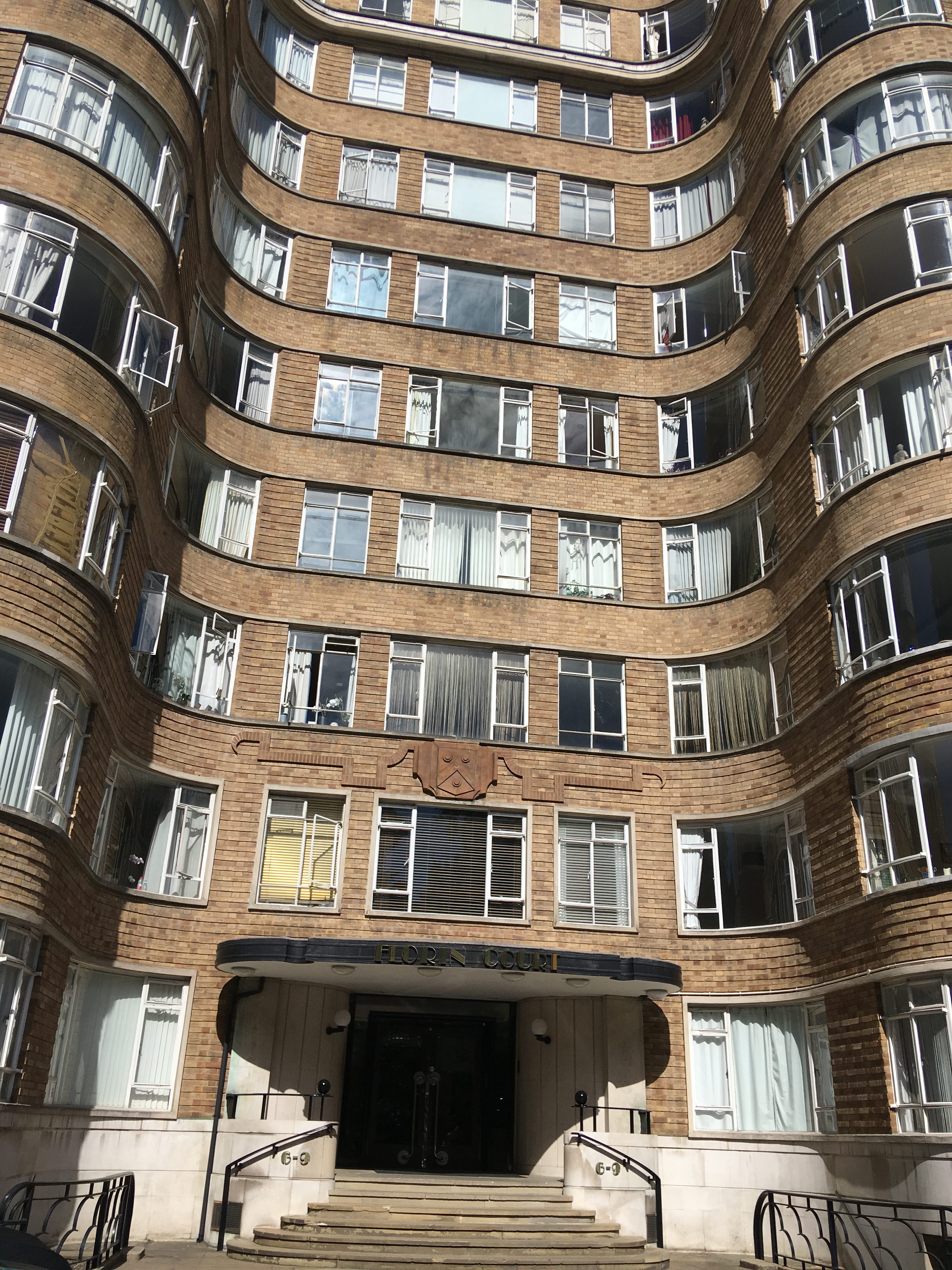
I passed through Charterhouse Square and this art deco apartment building which has served as the fictional residence of Agatha Christie’s character Hercule Poirot.

Here’s the Wikipedia 101 on Charterhouse Square:

“In 1371 a Carthusian monastery was founded by Walter de Manny on what is now the north side of the square. It was established near a 1348 plague pit, which formed the largest mass grave in London during the Black Death, and tens of thousands of bodies were buried there. The name of the monastery, Charterhouse, was derived as an Anglicisation of La Grande Chartreuse, whose order founded the monastery.

“The Charterhouse was dissolved as a monastery in 1537, and in 1545 was purchased by Sir Edward (later Lord) North (c. 1496-1564) and transformed into a mansion house. Following North’s death, the property was bought by Thomas Howard, 4th Duke of Norfolk, who was imprisoned there in 1570 after scheming to marry Mary, Queen of Scots. Later, Thomas Sutton bought the Charterhouse, and on his death in 1611, endowed a hospital (almshouse) and school on the site, which opened in 1614, supporting 80 pensioners ….”

That’s just the first 240 years.

An almshouse is a residence for “poor, old, or distressed” people, and the Charterhouse still serves this purpose.  Here’s what their website says:

“The residents of the almshouse, both male and female, are known as ‘Brothers’. This is a purely traditional term for those living in this community and acknowledges the past when there was a monastery on the site.

“The Brothers were originally those who could supply ‘good testimonye and certificat of theire good behaviour and soundnes in religion’ those who had been servants to the King ‘either decrepit or old captaynes either at sea or land, maimed or disabled soldiers, merchants fallen on hard times, those ruined by shipwreck or other calamity’.

“The Brothers are selected from a wide variety of professions, which includes teachers, clergymen, writers and editors, musicians and artists. At entry they have to be over 60 years of age, in need of financial and social support and in good health. They must be able to live independently but have a desire to be part of a supportive community following a very simple set of rules. Their accommodation is entirely private. All the meals are taken together in the Great Hall and many Brothers participate in the many social events that take place. Many Brothers contribute to the life of the Charterhouse by giving their time as tour guides, arranging entertainment and visits, editing the Charterhouse Magazine (a twice yearly in-house publication), cataloguing the extensive artwork and volunteering to help with events. The Brothers meet as a group at least four times a year with the Master and other senior staff to discuss current topics.”

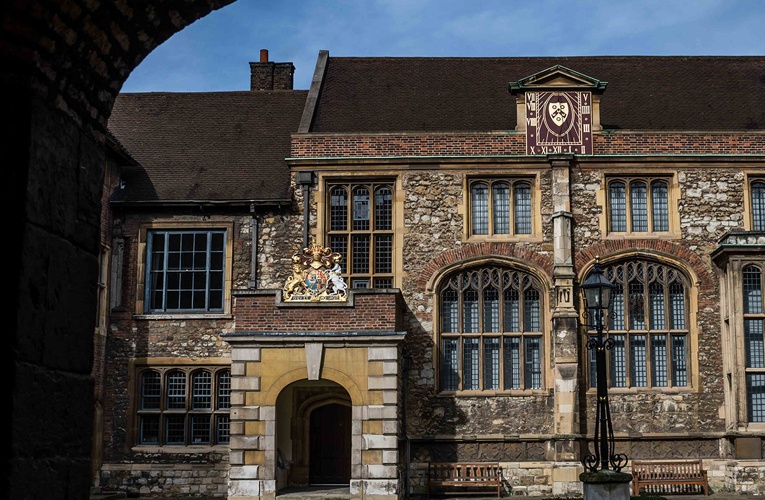
Now that’s my kind of assisted living!  And here’s the building:

Not too shabby, eh?  If only I were a UK resident, I would say I had found my retirement plan.

London Crawling

Lynn organized a London weekend to celebrate her birthday. She and Richard flew down from Scotland and Possum and I met them for a West End show, Lady Day.  Lynn arranged everything—hotel rooms, tickets for the show, and a pre-show meal.  Of course we bought her presents too, but it’s the fun times like these what we remember later, right?  Not the stuff.

From London I would go to Stonehenge the next day.  A friend who was coming from Minnesota was supposed to have gone with me, but back problems forced her to cancel her trip.

This highlighted a dilemma about travel planning.  Do you buy travel insurance?  I never do, but my friend had and she got a refund for her flights. She paid around $80 for the insurance, but that was nothing compared to losing $1,400.

I had already paid for the Stonehenge tickets.  I couldn’t find anyone to join me so I was out the price of one ticket, about $20.  Should I have waited to buy the tickets?  No, because Stonehenge books up fast in the summer, especially on the day we wanted, which happened to be on the full moon.

My friend had reserved for our tickets for Windsor Castle.  She couldn’t get a refund for them, so she was out $20 and we came out even.

Whenever I lose money like this I consider it a donation to the National Trust.  Lord knows they need it.  Losing triple digits to Expedia or Delta?  That can’t be shrugged off.  Next time I book a flight I’ll look into flight insurance and whether my credit card covers anything.

As usual I meticulously planned my jaunt into London and the boomerang bus ride I would have to undergo to get to Stonehenge.  More about the latter later.

This was the first time I would catch a bus from Waterloo, as opposed to the tube.  When you get off the train at Waterloo the signs quickly devolve from the helpful “All London Bus Stops” with an arrow, to “Buses,” with an arrow, to what could be interpreted as a bus icon with an arrow, to nothing. When I exited the station, there were clearly marked bus stops A through E, but no F, which was what I needed.

London is a mob scene any day of the year, but this was the day of the London Pride parade.  The city was teeming with revelers in rainbow wigs, hats, T-shirts—singing, drinking, laughing and having a great time.

Overstimulated, I started to feel the usual panic that I was lost.  I would never find the right bus stop, would never get to the hotel, I would probably end up unconscious in an alleyway, my ID gone and with amnesia; I would wake up in a locked mental unit, blah, blah, blah.

I’ve written in detail about this syndrome of mine. This summer was good practice for me to just notice it—not try to push it away but not indulge it—and carry on.

Think, Anne—think.  Or better yet, look at the area map five feet in front of you.  Stop F was just around the corner.  In fact once you knew the plan, it was obvious that the stops were arrayed in alphabetical order around a gigantic roundabout.  You just couldn’t tell it was a roundabout because it was impossible to get a view of the whole thing, with pubs and souvenir shops and hundreds of double decker buses blocking the sightlines.

The people watching was so good, I didn’t start to worry again until the third Number 4 bus drove past with an Out of Service sign.  Others who were waiting shrugged and started to walk.  There was no way I could walk—should I take a cab?

Just then, a Number 4 arrived and I happily dumped my exact fare in coins into the collection plate.

“No cash, love,” the driver said.  “Cards only.”

I dug out my credit card and tried to swipe it.  “No, love—Oyster cards.”

Damn.  I hadn’t gotten around to buying one.  But in line with the general celebratory mood of the day, the driver winked and waved me aboard.

Tea and Training

It wasn’t all nonstop fun and adventure in England.  Because I had been to Ethiopia, I had to watch a security video.  It had been a month since I’d returned and I finally got around to watching it.

There are all sorts of ex US Marines and ex MI5 types who sell security training to nongovernmental organizations.  I don’t want to poo-poo the seriousness of the security risks in some locations.  Aid workers do get kidnapped, raped, and killed.  But it’s rare.  The worst risk I ran in Ethiopia, I think, was getting hit by a truck.  A lot of people who are new to international work might assume that kidnaping is the biggest danger, while they’re stepping out into a chaotic street full of speeding land rovers and tuk tuks making up rules as they go along.

I plunked down on the couch with a cuppa (a cup of tea).  Below is another iconic item you find in British homes—the tea bag caddy.  They come in an endless assortment of shapes, materials, and designs.  You can buy one for 99p.  They are always stained with tea, like mine below, and usually piled with wet, cold used tea bags.

The tea bag caddy is not to be confused with another item of the same name.

This second item holds a selection of tea bags.  This is often given as a hostess gift and politely stored in the back of a cupboard until the tea becomes fossilized.  This is because, like anyone, Brits have their regular tea they are accustomed to—usually English Breakfast or Earl Grey.  They may try a bag of oolong green tea with ginger hibiscus super antioxidant goji berry essence—once—which will be enough.

Most homes have a box of PG Tips, which is referred to as “builders’ tea.”  This means it’s strong—strong enough to get a construction worker revved up to go back to his heavy labour.  It’s a utility tea—you only need to dunk it into hot water two or three times to get a massive hit of caffeine; no herbal tea “steep for seven and a half minutes in 140 degree water” here.

Plus they have an amusing spokesmonkey.

Back to the security training.  I try to keep an open mind and assume I will learn something new.  But I have watched similar videos at least four times before, and I’m also a woman who lives alone in the city and who travels the world on her own.  So yes, I am aware that I should always lock my hotel room door, and wear a seatbelt, and not leave my drink unattended in a bar.

The video was narrated by a robotic female voice.  I felt like I was on hold for an hour with a nightmare call to my internet provider customer service line.

The video was really a powerpoint with whiz-bang transitions. The clip art below isn’t from the security training, but it featured menacing versions of these ubiquitous blue playdoh powerpoint people.

The internet at Sam’s was so slow that the training kept freezing and shutting down and I’d have to restart it.  I was missing pieces of it, I knew, but it seemed to be all about men in balaclavas kidnapping aid workers.  This would be, of course, anyone’s worst fear.  It’s also how they sell these security trainings.

Again, I don’t want to downplay the seriousness of using common sense and taking precautions.  You prepare for the worst and hope for the best, as they say.

Smarty pants me, there was a test at the end and I couldn’t pass it because I had missed one of the scenarios:

“Your car is stopped at a security check point, and soldiers demand you get out of the vehicle.  What do you do?”

  1. Loudly inform them that you are American/British/Etc.
  2. Get out, then run in a zig zag pattern into the bush.
  3. Politely refuse. Do not make eye contact.
  4. Offer them a small bribe.

None of these seemed like a good idea so I chose a different one until I passed. I am recreating this from memory, so don’t ask me the correct answer.

Floating Dreams

I looked forward to my walk to the Leisure Centre every couple of days.  Once I was able to fight my way through the tourists snapping photos of swans (I, of course, was not a tourist when I did the same thing), and maneuver around the tourists who stopped abruptly in the middle of the sidewalk to consult a map, and make a wide berth around the tour groups queuing at the boat landing waiting for their tour, I dropped down to the level of the river and was home free.  No tourist was interested in going to the Leisure Centre, but the route was one of the prettiest in Windsor.

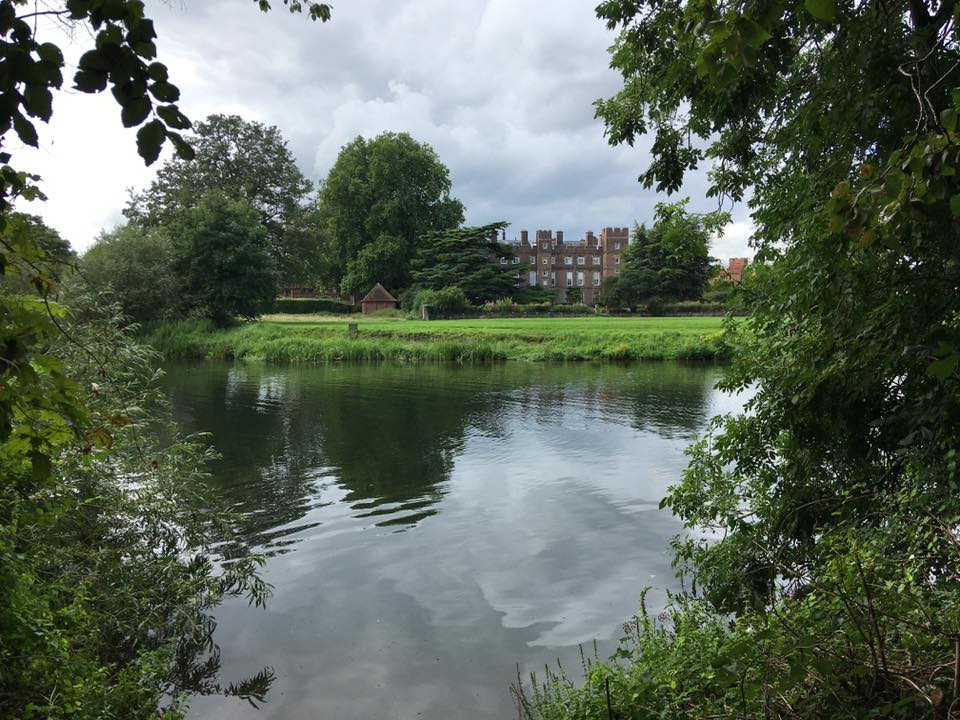
Over the period of my month there I rambled all over. I’ve never been one to take the same walk over and over, and this part of the world offered a different path every day—across meadows, along each bank of the river and its tributaries, and through quiet parts of Eton and Windsor—yes, they do exist.  These are views from the south bank of the Thames.  You can see Eton College buildings in the background.

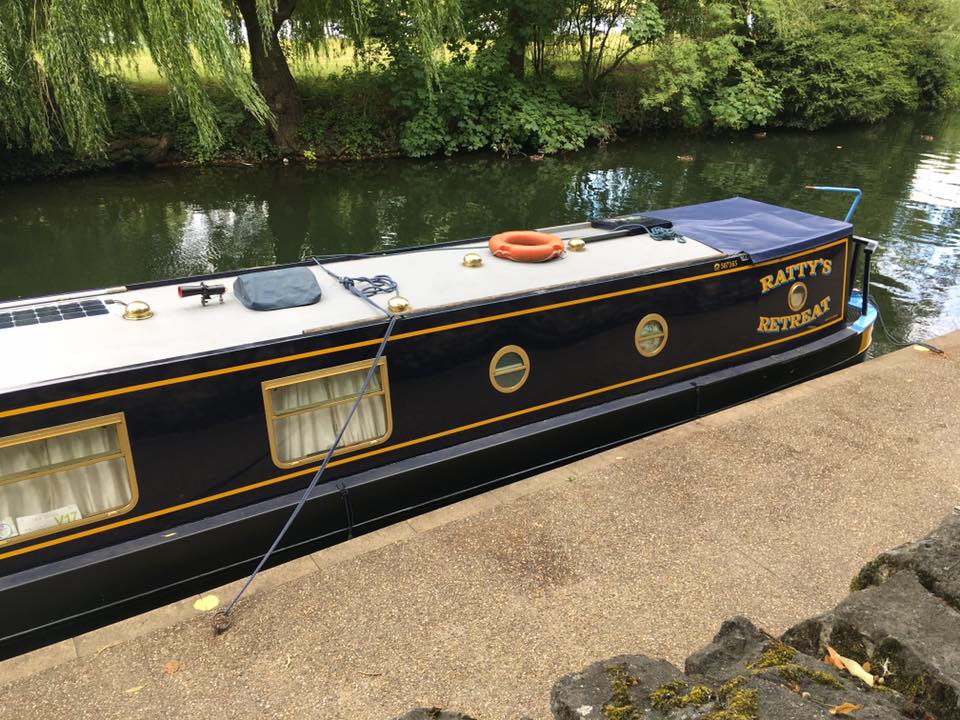
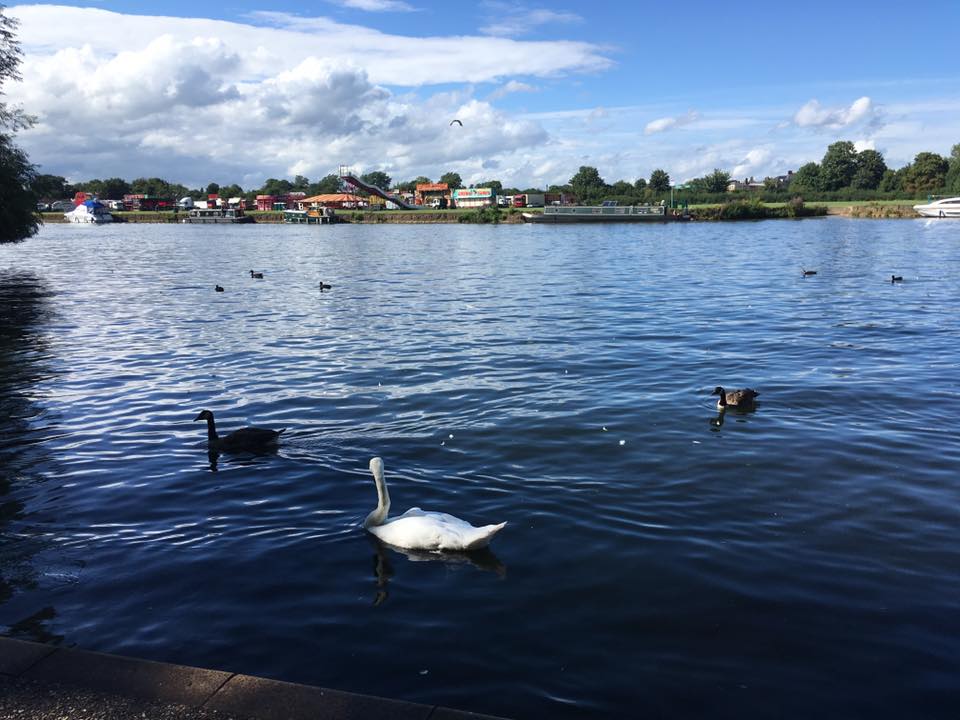
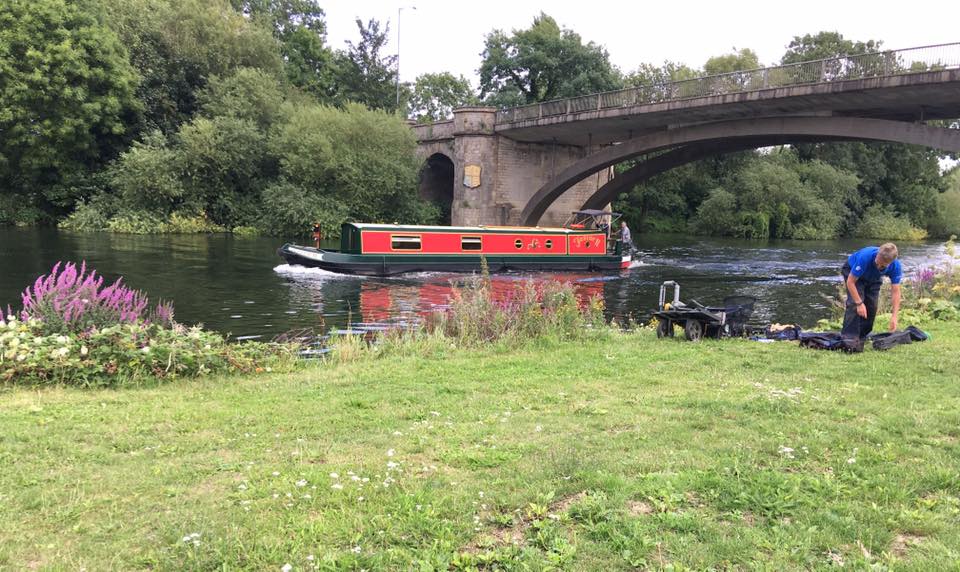
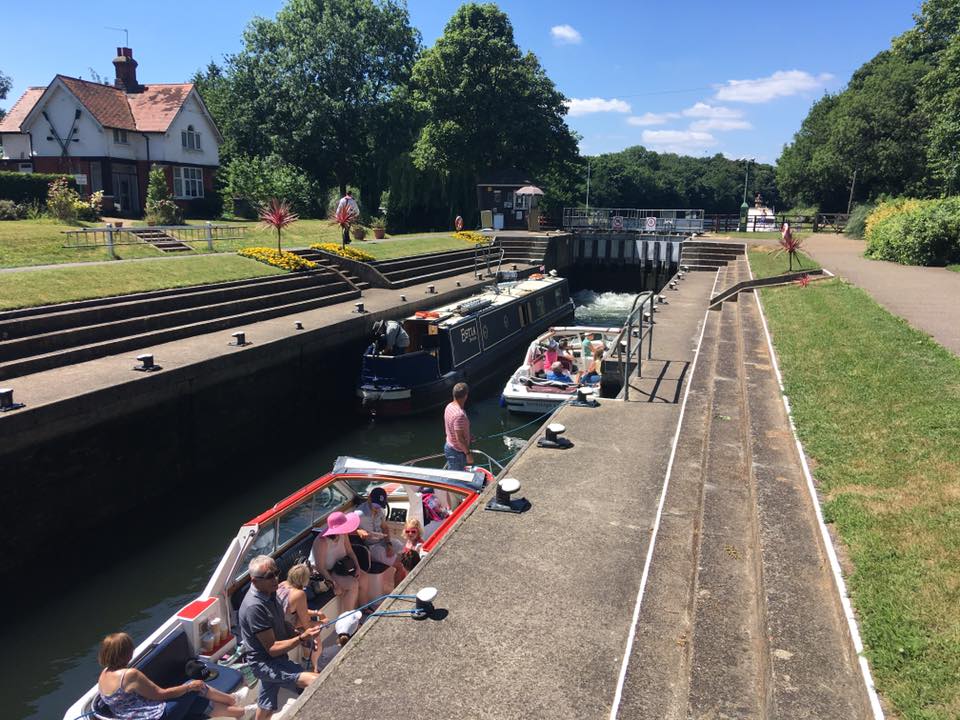
I passed three narrow boats (or canal boats as they are also called) on my way to the Leisure Centre: Theresa Jones, Liberty Bell, and Ratty’s Retreat. Also a gratuitous swan photo.

I went on a very long walk one day and caught all kinds of narrow boats.

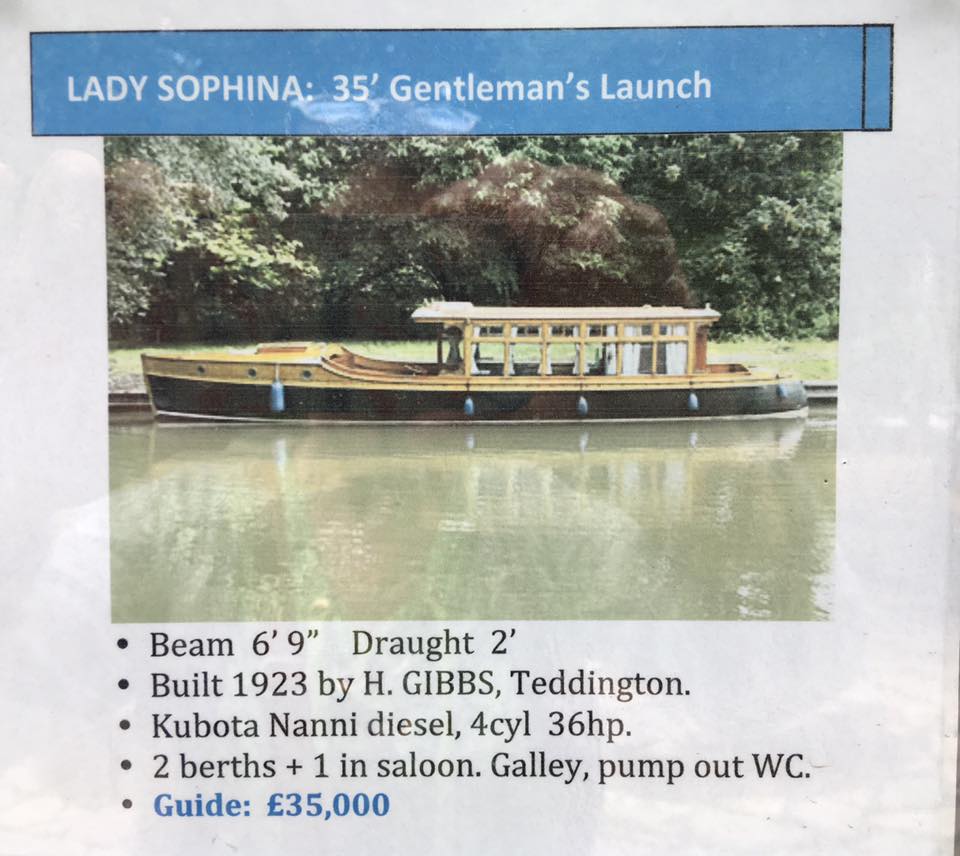
There was a boat yard with a bulletin board full of boats for sale.

Naturally I started daydreaming about buying and living on a boat.  “Edwardian Launch,” “Swedish Weekender,” “Gentleman’s Launch.”  The types of boats sounded so romantic.

The biggest one was 35 feet long.  But how wide was it?  Did 6’ 9” beam mean how high the ceilings were?  What was a Kubota Nanni diesel, 4cyl 36 hp—ah, presumably a motor.  Was that big, fast, and good brand?  “Pump out WC”—that didn’t sound like much fun, although my sister has described the process of sewage sucking from her camper and it’s not as bad as it sounds.

I looked at houseboats in St. Paul once.  I was enamored of one that was quite spacious, with a deck and a hot tub. For only about $25,000, I could have had her.  Then I would have had to install a new engine ($10,000) and replace the composting toilet with a suckable one ($2,000).

I wouldn’t have to pay property taxes!  My view of the city would have been fantastic.

However, my neighbors’ views of me would have also been spectacular, since the boats were berthed with only about 10 feet apart.  When winter came, I would have to place bubbler$ around the boat to prevent this from happening:

And in spring when the ice melted, there was the risk of this, and having to have your boat towed back to the marina ($$).  Or maybe just sold for scrap.

I barely know how to check the oil in my car, and in the end I decided I wasn’t a great candidate to live on a boat.  There’s a saying among boat owners, “The happiest day of your life is the day you buy your boat.  The second happiest is the day you sell it.”

There’s an outdoors club called The Minnesota Rovers. A member is organizing a boat and hiking trip in England next spring.  If you’re interested, I can send his contact info.

Leave Wootten Wawen, Warwickshire and cruise the Avon Ring for the first two weeks of May 2018 on a boat like this.

Video about canal boating: Boater’s Handbook

TV show “Great Canal Journeys”: Stratford-on-Avon canal

“No one is obligated to keep to the same schedule as me, although I would enjoy the company for any or all of it!  For the hiking part of the extended trip, I’m planning to take the English “Gentleman Hillwalker” approach, where we set up a base in some central location, like Stow on the Wold, and walk circular day trips along the high ridges and through picturesque villages, using trains and buses to reach trailheads when needed.  This would be immediately after the boat trip, in the Cotswolds Area of Outstanding Natural Beauty.’

A Good Sport

Lest you conclude from my last post that I hate men and think they’re all groping, drooling, creepers, that’s not the case.  In fact I joined a dating website recently.  I’m not optimistic about my prospects.  I will let you guess which of the photos below are from the ads for the company, and which are actual personal ads once you join the site.

Now, you know me—I’m not one to judge.  But 85% of the men on this site are looking for a woman to share their interests, which are hunting, fishing, snowmobiling, and watching sports.  So they’re not really looking for the 85% of us women who have no interest in those things.  They’re looking for a buddy.

I don’t expect a man to go thrift store shopping with me.  In fact I wouldn’t be caught dead with a dude who would shop where I shop.  But if I can put myself in men’s shoes and know—in general—what they would and wouldn’t be interested in, why can’t they?

And here’s a tip: Don’t use a handle like “qualudes57” or “weirdo2u” or “chestypuller.”  What the hell? 

Looking for a nice backdrop for your personal ad photo?  Why not use a $1.99 plastic shower curtain from Walmart?

It’s nice to know there is someone out there who takes worse photos than I do.

This website is called Our Time.  It should be called Ouch Time.

But I tried. You never know.

The weekend after my day trip into London, I met up with my friend Heidi.  Heidi is Australian and has lived in London for over 15 years.  She teaches Under 5s, which we in the US would call preschoolers.  She’s also a never-married female, although she’s 15 years younger than me so she may still stand a chance.  We met on the way to Greece, where we went with another Australian woman and Sam back when I lived in the UK.  Since then, she and I have met up in France and Berlin and she visited me in Minnesota.

Heidi had to return home to help her parents out, but she was in the UK to take care of some business with her flat and her job and just enjoy the English summer.

She messaged me to ask if I wanted to go to Wimbledon.  “Uh, no,” I replied, “I’m not a sport person.”

“But it’s the scene, Annie!” she messaged back.  I’m so glad I gave it a go.

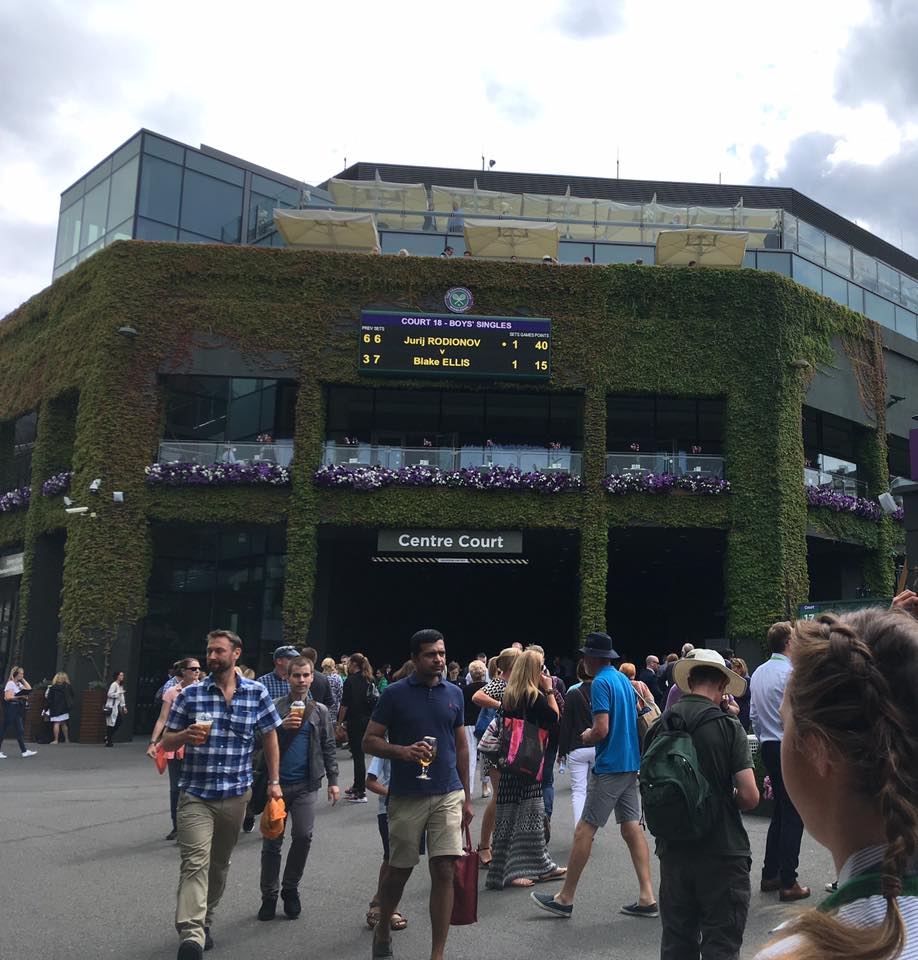
Heidi and I met at Putney station, from whence we took a bus, then walked to the venue.  We were handed a queue card with lots of instructions front and back, most importantly, “Queue jumping is not acceptable and will not be tolerated.”

The alcohol limits were “one bottle of wine or Champagne (750ml) or two cans of beer (500ml) or two cans of premixed aperitifs per person. Bottles of spirits or fortified wines will not be allowed into the Grounds.”

These limits were per person, and there was alcohol for sale on site.

It was a rainy Thursday afternoon so there was no queue, which Heidi seemed a bit disappointed about.  Apparently that can be a scene of its own.  The Centre Court tickets were £58.  We bought the £20 lawn tickets.

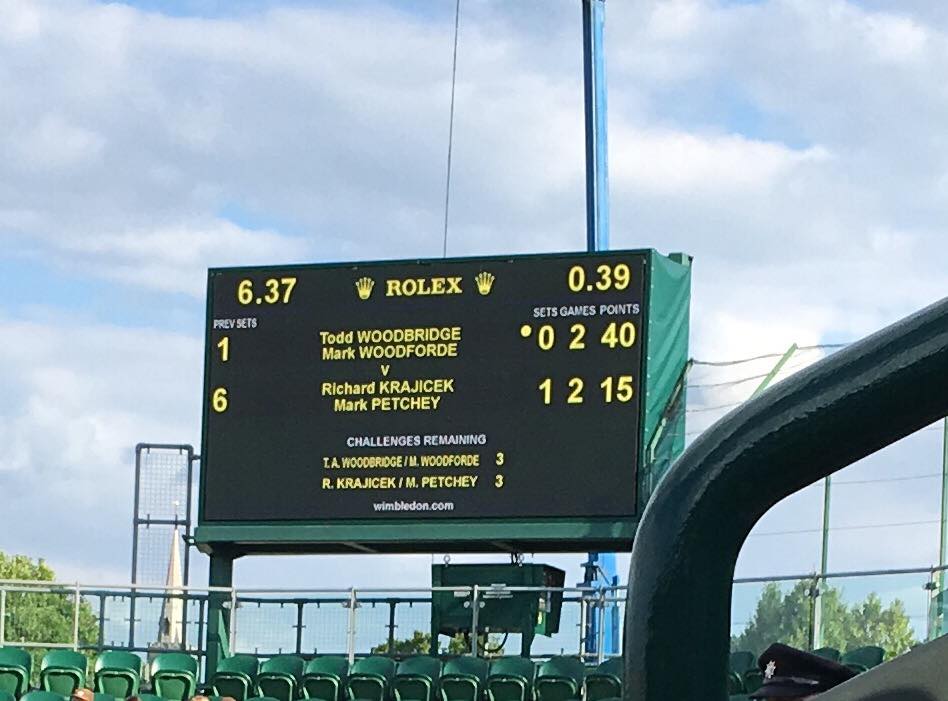
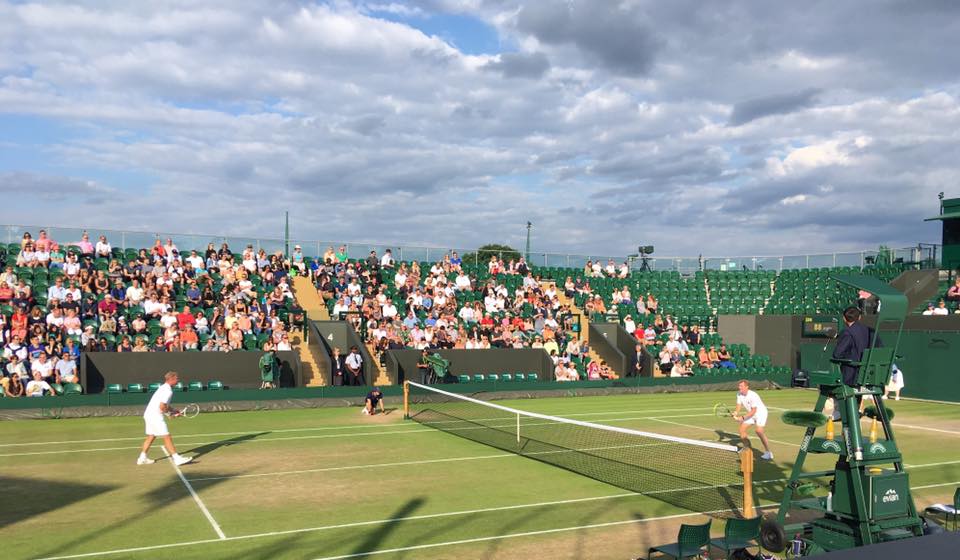
The rain held off so we were able to watch the youngest and oldest players in exhibition matches, which were fun.  The two “oldies” were Aussies nicknamed The Woodies.  They kept up an amusing banter which kept the crowd laughing while they played.

I was fascinated by the officials’ uniforms and stances.

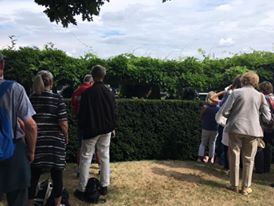
We walked up to a high lawn where in theory you could watch the super star players on a big screen.  People queued up politely to look over a hedge at the screen.

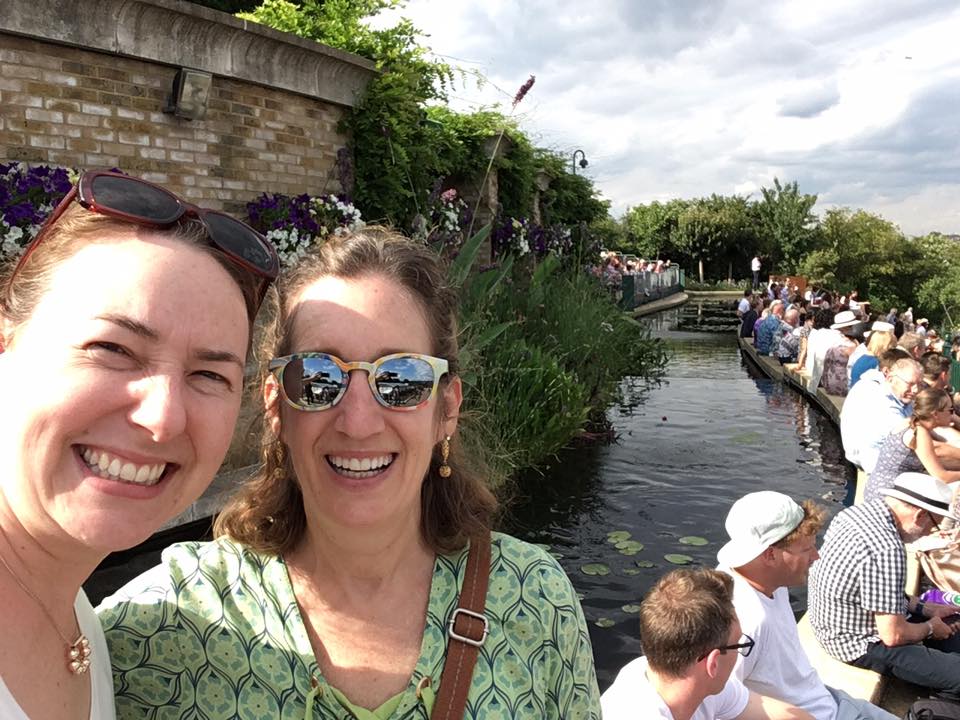
We spread an oil cloth and plunked down on the ground to drink talk.  We never saw the big match, but we had a nice view of London in the distance and the people watching was good.

There were men in pale yellow suits and hats and women wearing flowery dresses, so I fit right in.

It was a fun day with my buddy Heidi. I guess I do watch sports!  But I draw the line at hunting.


Pigeons

Sometimes I get a notification from WordPress: “Your stats are booming!”  I used to get excited, thinking it must be a publisher in New York reading every post I’d ever written and reaching for the phone to call me with a book deal which would come with a huge advance.

I went to the stats page to investigate and for some reason my last post had attracted the attention of three dozen Canadians.  Why?  I looked at the tags and categories. Were they drawn by the word “England?”  I’ve written loads of posts about England.  The only words that were different were “shopping” and “charity shops.”  Who knows?

Maybe I have a Canadian stalker.  Or three dozen.

Everyone I know is talking about the powerful men in media and politics who are being outed for sexually harassing or assaulting women.  All I can say is: it’s about time.  And I’m not surprised.  It’s happened to me at least a dozen times.  No one famous, but plenty of regular men who had some kind of power over me by virtue of age, title, or size.  It stopped when I hit my 40s—one advantage of getting older.

I never reported any of the incidents because first, I was very naïve and often unsure what was even happening.  Maybe I was misinterpreting things?  I mean, the social worker who was helping me get my act together after I spent two months in a psych unit after trying to off myself when I was 16—when he said he’d like to see me in a lace nightie, he was just trying to help me feel like a woman again.  That’s what he told me.  And that 30-something guy who stopped his car at the bus stop and asked if I wanted to go party—I was 18 and eight months pregnant—he didn’t really want to …?  No!  That’s gross!  I must have misunderstood.

And surely that Greek Orthodox minister hadn’t meant to press his hard-on against my derriere in that crowd of people at the Justice for All rally, right?  Wrong.  When I turned around in shock, he smiled as if to dare me, “What are you going to do about it?”  It must have been my fault.  I had thought how handsome he was and maybe he had sensed that and thought I would like what he did.

Surely my boss’s boss had been fiddling with the coins in his pants pockets when he stood next to my desk talking about nothing and staring at my boobs, right?  I had just started that job and really needed it.  It was 1986 and I had never heard the term “sexual harassment.” It never occurred to me to report him.

A friend described how she tried to get her husband to understand what it’s like.

“Imagine there’s a third kind of human out there.  They’re a foot taller than you and 50 pounds heavier.  They own everything and run everything.  And they want to fuck you in the ass.  Every time you go for a job interview, you know they’re imagining you naked.  They walk past your cube and look at you sideways, and you know they would like to bend you over, pull down your pants, and fuck you in the ass.  They brush up against you and act like it was an accident, but you know they just wanted to cop a feel.  If you say anything, you’ll probably be out of a job and nothing will be done anyway because HR works for them.”           

Back to England, and a more uplifting note.  There are things about the UK with which I have a visceral association.  One is the little teaspoons.  Below are my American teaspoon and a British one, which is larger than many.  Every British home has loads of these.  Something to do with tea, I think. I bought a couple at the £ Store to remind me of the UK.

Then there are the wood pigeons.  When I asked Lynn’s husband, Richard, What’s that bird?” he replied, “What bird?”  He didn’t hear them anymore; their call is so ubiquitous.

It’s this call and these spoons that made me smile every morning.

Knock Offs and Knick Knacks

I went shopping the day after my meeting debacle.  The UK is not a cheap place to live.  The Sales were on for the summer holidays, but things were still “very dear”, as they say.  For instance, a pair of black leather ballet flats cost £80—on sale.  When I worked for Oxfam years ago I was paid in pounds, which helped.  But now I had an American job that paid in dollars, so those shoes would have cost me $105.

My usual shopping strategy is: Go to every store in town, look at every item in every store, buy nothing, go home. Sometimes I buy things but then for one reason or another most of them have to be returned.  It was going to be extra hard to make decisions here.

Also, it seemed like English women must have smaller feet than me, because my size shoes were in the section that, in America, very large tall transvestites would have shopped.  Bras were the opposite problem.  The bra cups on offer were big enough to fit over my head.  Not that I did that.  At least not when anyone was looking.

I looked in Cath Kidston, almost as a joke.  I love her stuff but a little goes a long way and as I already knew, country flowers weren’t a good work look.


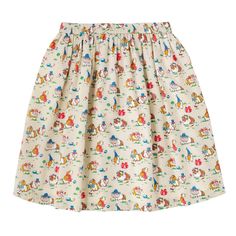
I bought a phone case and some pajama bottoms patterned with guinea pigs having birthday parties.  I resisted the flouncy guinea pig skirt.

Next I went to TK Maxx, which is called TJ Maxx in the US.  Still expensive and hard to find anything that worked.  Then I hit rock bottom and bravely walked into Primark, which is dirt cheap with quality to match.  Because it was the sales, the store was packed with teenagers and their mothers and clothes were strewn all over.  The clothing was adorable but if I even had to ask myself, “Would this lacy, skin-tight, fuchsia, sequined, leopard patterned hoodie be appropriate for my next work meeting?” I had my answer.  I bought a pair of pink satin ballet flats for £6.  Not exactly work attire but I couldn’t resist.

The queue was 25 people deep and Justin Bieber was bleating at an ear-shattering volume on the overhead speakers.  I ran out of Primark like I was being chased by a velociraptor and started to hit the thrift stores, which they call charity shops because well, they are all run by and for charities.

Oxfam has 650 shops in the UK. They stock second hand clothes but also new stuff from around the world like beaded bracelets made by Kenyan orphans, organic Palestinian olive oil, and cards designed by blind tribal elders in Nepal.  It’s all beautiful stuff, and I bought some cards and a pair of socks knit in Bolivia that were guaranteed not to fall down.

I hit Age Concern, British Heart, Save the Children, and Mind, which is a mental health charity.  Second hand clothes in the UK are really rubbish. I don’t know if someone skims off the cream and sells it on EBay before it reaches the charity shops, but they are full of sweaters with stretched out sleeves and 1980s jungle print dresses.

The Thames Hospice shop specializes in vintage. I spent an hour in there and left with a pair of vintage shoes that were too small, a pair of shoe stretchers, and horse brass, which is useless but I like how it looks on my wall.

I bought the ship, which has a useful hook, in Amalfi, Italy.

None of this was going to impress in my next work meeting except maybe the shoes, if I could stretch them out a couple sizes.  Once I inspected closely, however, I discovered they were not vintage at all but in fact made of plastic.  They would have to go back to the shop, along with the shoe stretchers.

Eventually I discovered Daniel, a department store with only beautiful, high-quality things.

I went in several times to fondle the cashmere sweaters, drool over the shoes, and try on hats.  Eventually I bought some things, using the time-tested rationale, “I deserve it.” And ya know, maybe I did.

A Hole in History

I walked around Canary Wharf after my meeting.  Every single person appeared to be under 40 and was dressed like this.

Yes, there were women too and they were also attired in blue.  Blue was The Colour.

I still felt schlumpy but what did I care?  Now I was a tourist and I intended to wear down my heels even more.  I would take the rest of the day off and wander around.  A sign directed me to the Museum of London Docklands.  The Docklands was, I thought, exactly where I had stayed 30 years before.  The area was unrecognizable, with market vendors’ stalls replaced by food trucks selling “gourmet” macaroni and cheese.  Just as in the US, there was a queue 50 people deep waiting for the privilege of paying £8 for what you could make at home for £1.

I passed a sign pointing to Poplar, an area popularized (that was unavoidable) in the popular (sorry!) TV show Call the Midwife.  The street signage was good and I found the museum easily.  It was free, which was a bonus.

If I had been in the mood to learn about the sugar and slave trades, I could have spent all day there.  Instead, I focused on three exhibits and breezed through the rest of it.  The first exhibit was a recreation of a seedy dockside from maybe the 18th Century, complete with pirates in pubs, houses of ill repute, and the obligatory dental surgery with giant pliers prominently displayed.  This area was undoubtedly for kids, but it was my favorite so what does that say about me?

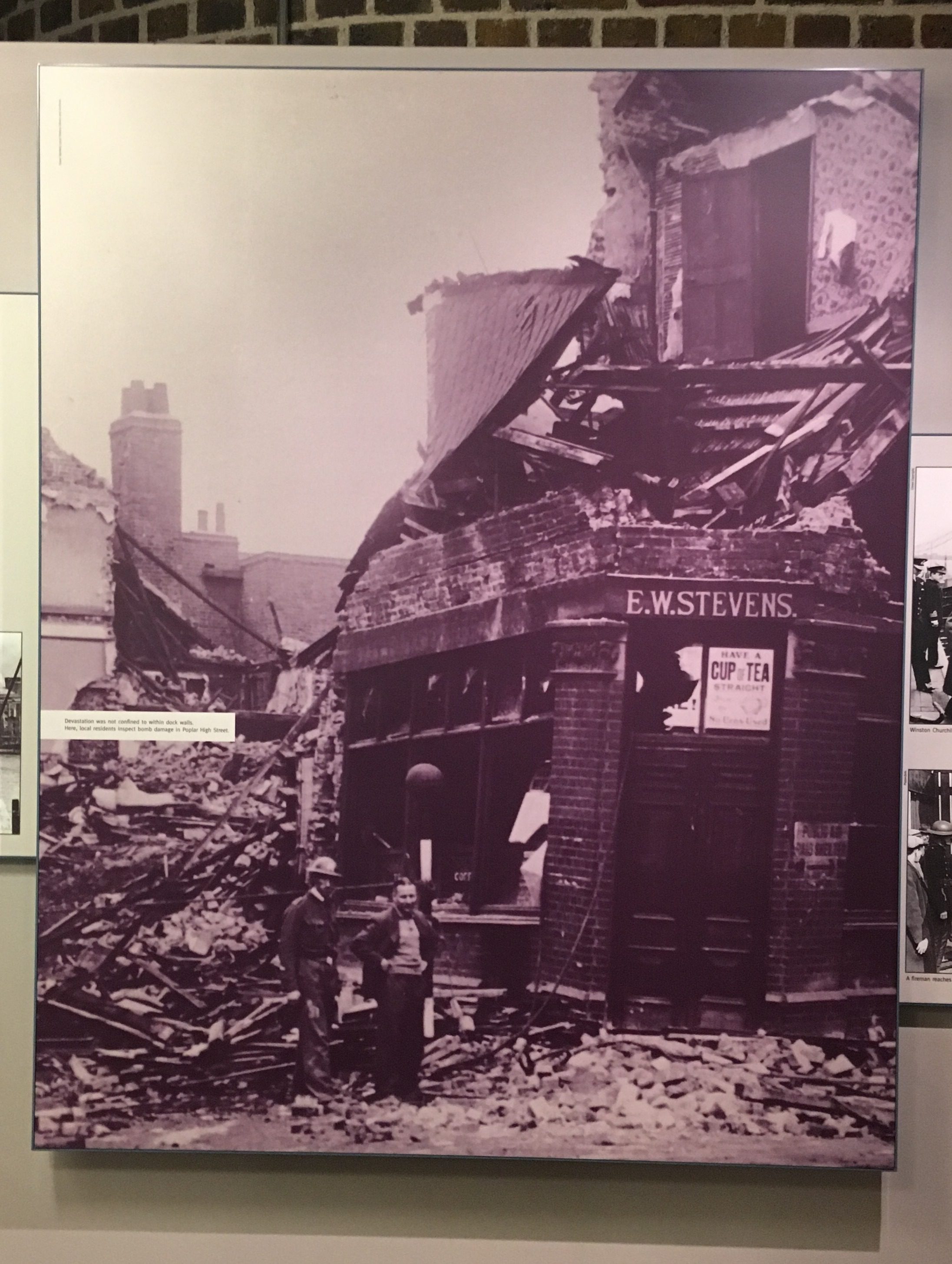
The second section I perused was about World War II specific to the Docklands, featuring bomb shelters for families and singles or couples.

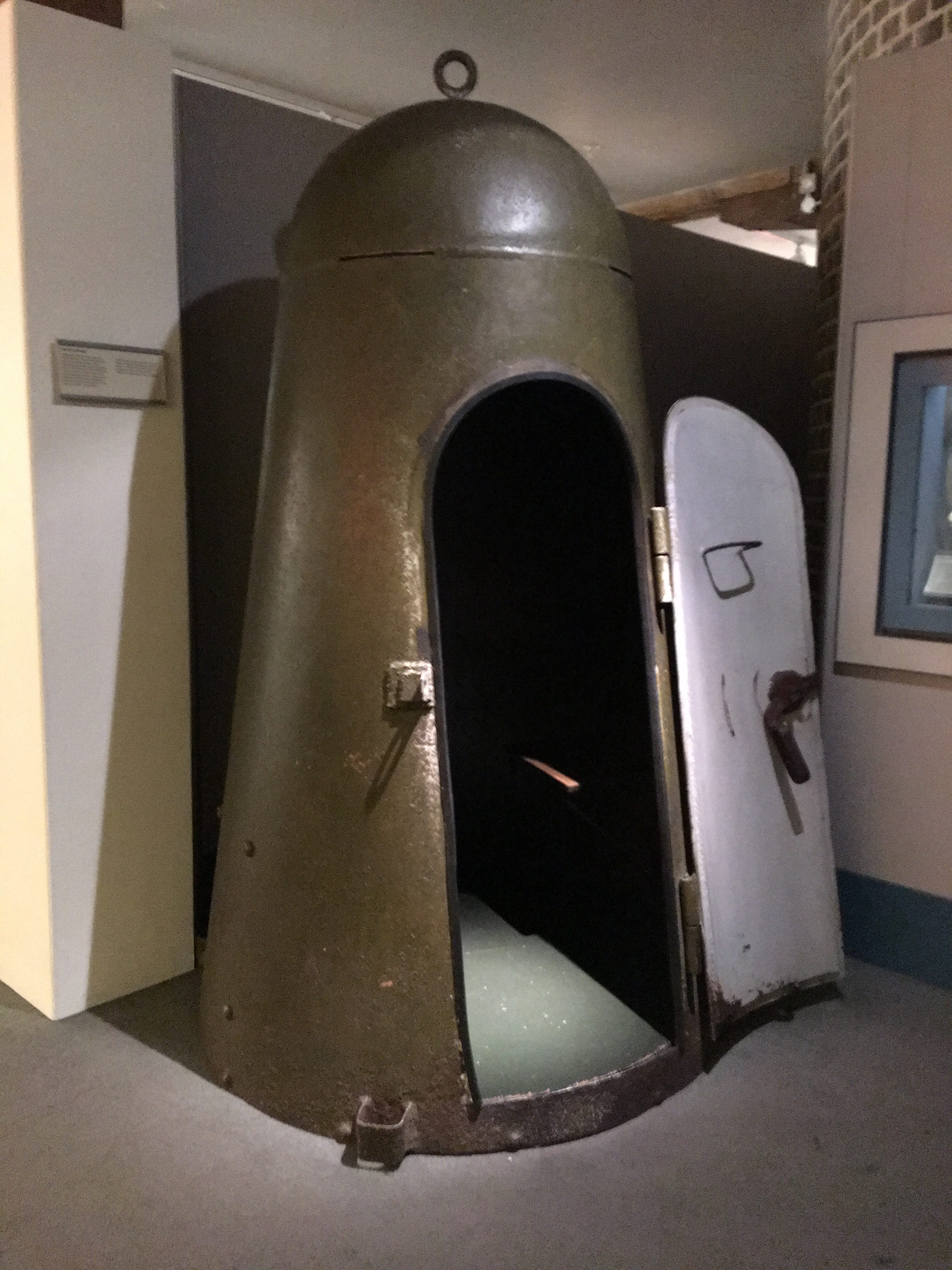
This is the damage the German bombs wreaked:

Imagine, coming across one of these while hoeing potatoes in your garden, five years after the war.

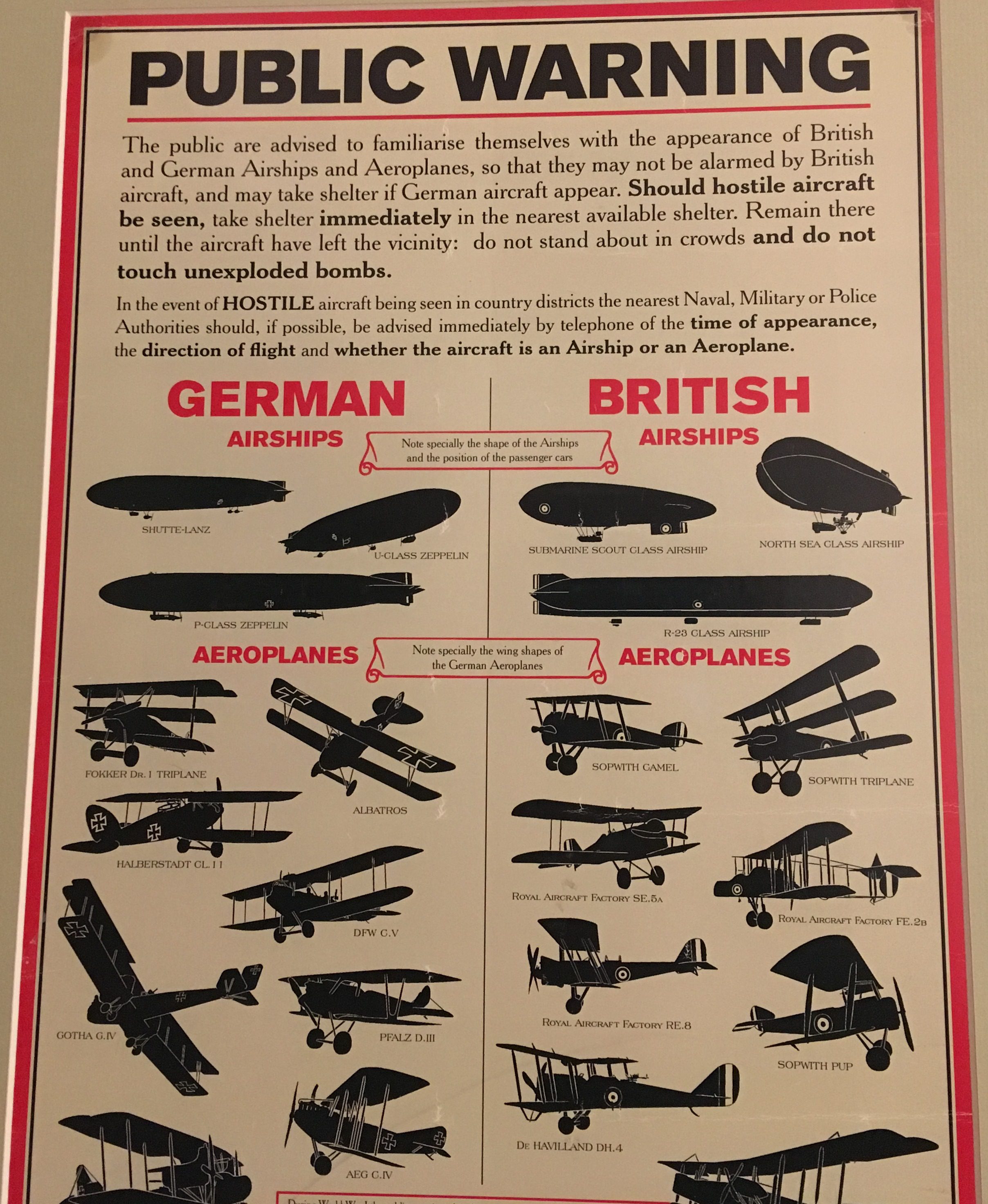
I’m fascinated that people were expected to discern German from British bombers. Can you imagine teaching your kid, “Now Jimmy, study this carefully.  The ones on the left are the bad planes.  When we see them we run for the bomb shelter so we don’t get blown to smithereens like the Evans family.”

I don’t know about you, but I could study this poster all day—even have it in my hands while looking up at the sky—and I would never be able to tell the difference between the good guys and the bad guys.  In the dark, under stress?  No way. I imagine all this well-intentioned poster did was make people more anxious.

They had their version of the American icon Rosie the Riveter; recruitment campaigns to bring women into the workforce to take the place of the men who were off to war:

Of course as soon as the war ended, the women were told to go back home and have babies, which set the stage for women’s lib.

There was a bonus exhibit at the end that displayed items found in the construction of Crossrail, the new Elizabeth train line being built in London.  Imagine, tunneling 26 miles under London, with all the other tube lines down there.  It being London, they had to stop every five feet to make sure they weren’t grinding up a significant archaeological site.  Here’s my favorite artifact, a chamber pot:

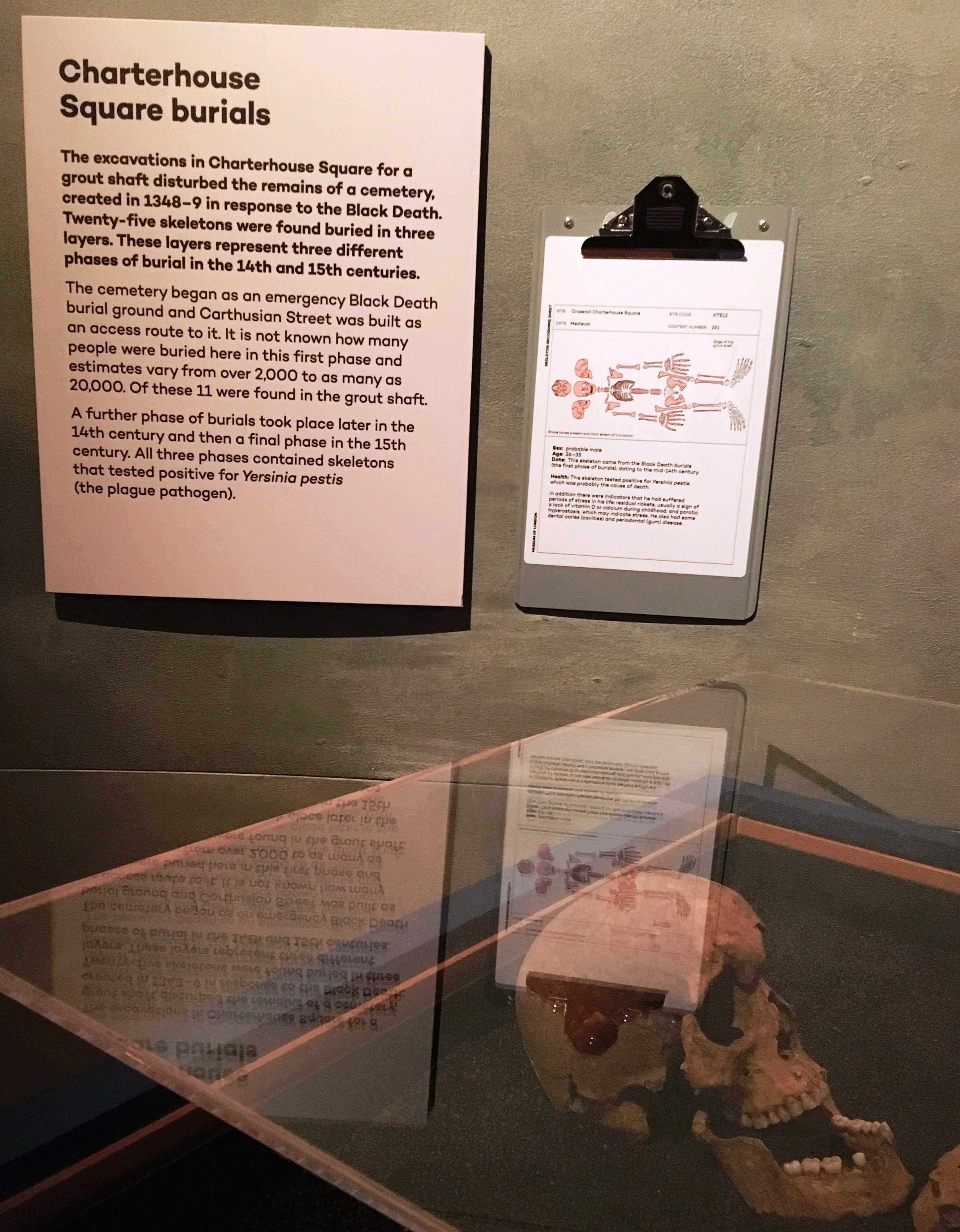
There were skeletons recovered from plague cemeteries.  People died in such numbers they had to be dumped into mass graves—before the grave diggers caught the Black Death and followed their customers into the ground.

I had my eye out for something about the story of how Pakistanis came to work the docks in the 50s and 60s after Indian independence and partition.  It was hoped they would work for cheap, then go home.  But they stayed and brought their families.  This had been the whole learning topic during my Volunteers for Peace week long “work camp” in the east end in 1988.  Now Sadiq Khan, a British Pakistani, is Mayor of London.

There was nothing.  Nothing!  I just went to the museum website and searched for “Pakistani” and found nothing either.  Did I imagine this big historical story, or get it wrong?

London Heels

Once I knew I was going in the right direction, settled back and enjoyed the lovely landscapes along the route.  The word “sweet” comes to mind when I gaze out over the English countryside.  That may sound patronizing but it’s not meant to be.

If you like rugby you will probably want to put Twickenham on your bucket list.  I made a mental note to avoid it on game days.

As we rolled into London there were some great views.  For once I have an excuse for my poor quality photos—taken from a moving train.

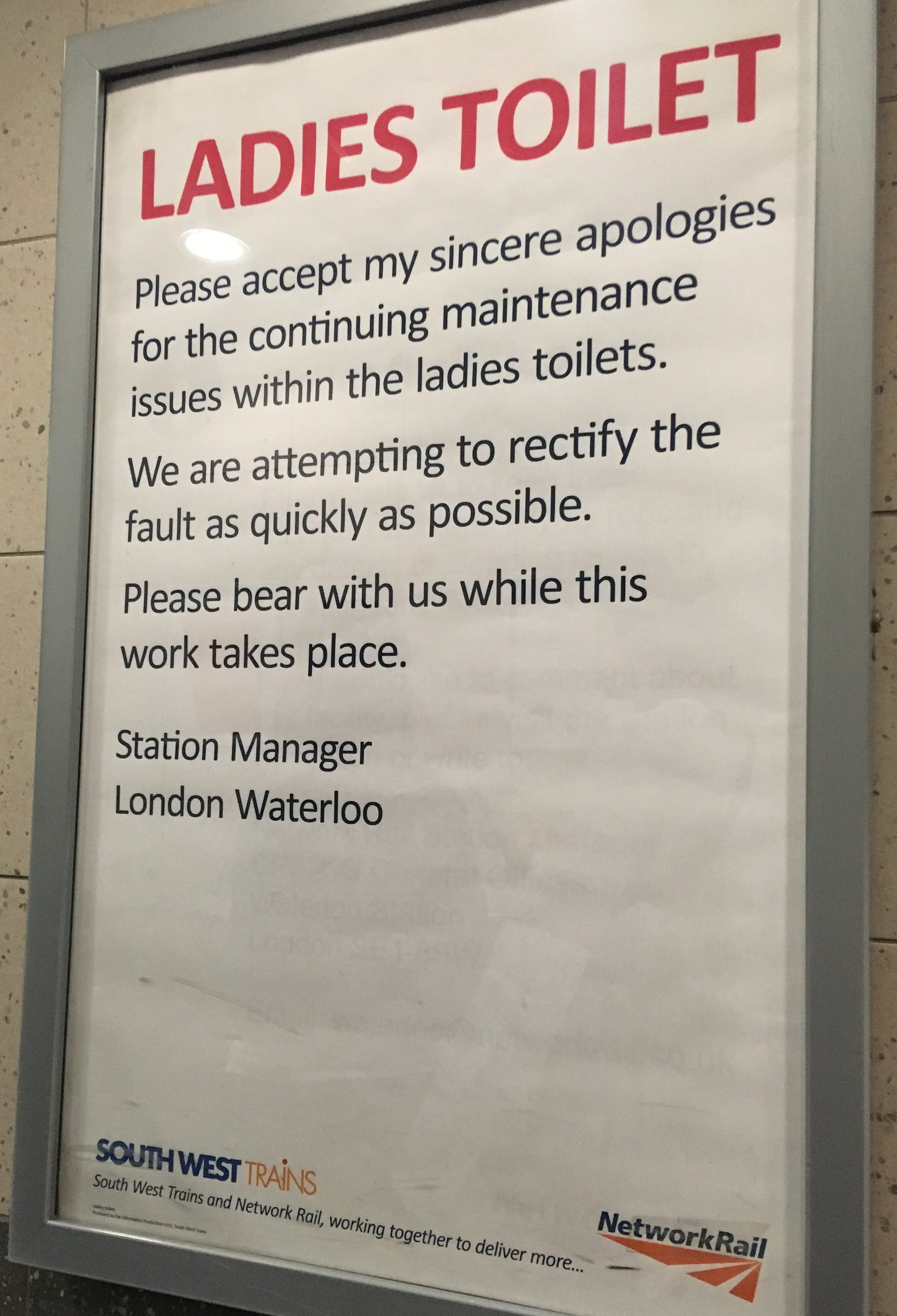
Waterloo would be my toilet stop every time I came into London.  This sign was still in place a month later, so “as quickly as possible” really meant, “someday, maybe.”

The sign made it clear that your 30p got you one visit to the toilet.  I wondered if someone had sued them, insisted they had bought a lifetime pass.

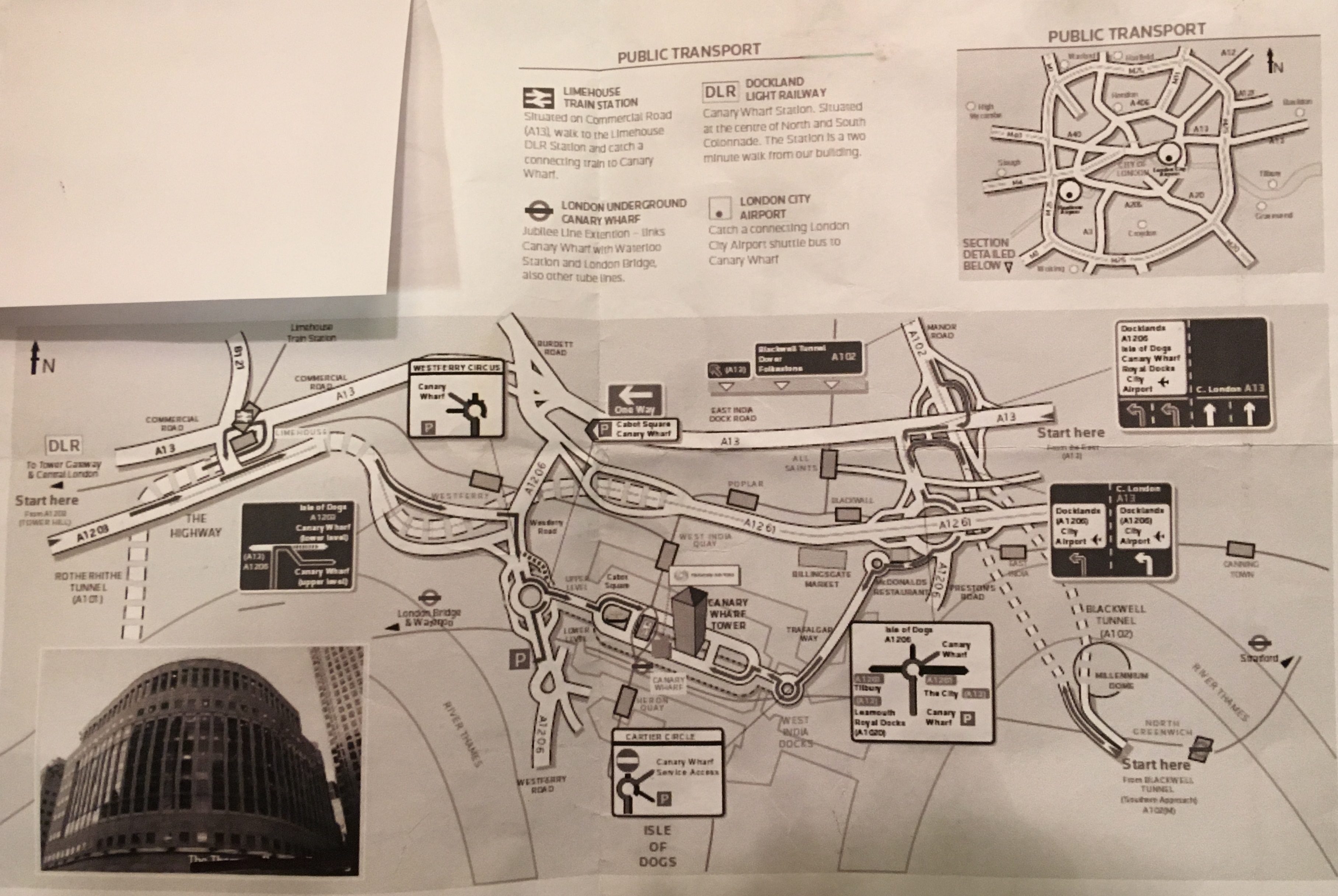
Then I was on the underground, which whisked me under the Thames toward Canary Wharf, where I would exit and try to find my meeting.  I was anxious about finding the building.  What if I took the wrong exit out of the tube station?  What if I got turned around?  They had sent me a map, which was even more out of focus than my photos and really just a jumble of unhelpfulness.

It showed a picture of the building, but how would I find it among all the other buildings?

The first time I came to England, 30 years ago next year, I had stayed somewhere in the vicinity of Canary Wharf.  Then, it was all gritty warehouses, Pakistani immigrants and elderly Holocaust survivors and native English speakers whose English I could not understand; street stalls selling tiny apples and pet goldfish suspended in plastic bags and possibly dodgy cassette tapes by Billie Ocean, Bananarama, and New Order.

Now it looks like this, according to a local news site:

I stepped out of the tube station and saw this:

Of course it didn’t have a giant black squiggle on it but you get the idea.  When will I ever learn to stop worrying and trust that I’ll be able to find things, especially when I have a map and a photo of the building?

I had dressed and accessorized carefully, making the best of what I had.  I had bought a really cute top in Cornwall that was suitable for a country holiday and I thought I could make it work paired with dress pants, my good jewellery, and an up do.  I felt professional when I left the house.  When I entered the building I immediately felt like a schlumpy schlimazel, which is just what it sounds like.

I waited in the gleaming lobby furnished with sleek Danish modern furniture.  I was sure the water glass the attendant handed me cost more than my entire outfit.  The reading selection on the table included The Financial Times, Economist, Wall Street Journal, and International Business Times.  All the headlines were about rich people making deals that would make them richer.

I noticed my heels were a bit worn.  Note to self: Buy new shoes before next work meeting.

One of the people I was meeting with arrived.  She was 30 years younger and 30 pounds thinner than me, blonde, and dressed in stilettos and a killer designer outfit. Mercifully, it was all over in 30 minutes.

I have been to meetings with foundations and corporations.  I’ve been to Ford and Open Societies Foundations in New York.  At Chiron Corporation in Silicon Valley.  And so on.  I normally carry myself well in these meetings and I had come carefully prepared.

But then I spilled my water and as we were wiping it up, my nose started running like a garden hose and I had to ask them for a tissue and blow my nose in front of them. These people were lawyers and I don’t know if they were on the clock but they were clearly impatient and possibly appalled by me.  I managed to maintain my dignity, make my points and ask my questions, but I was relieved when the revolving door swung closed behind me.