Tag Archives: Australia

Power Trippin’

I am a morning person, but 3am?  I sprang out of bed, threw on my clothes, grabbed my bag, said a silent farewell to the Reef Retreat, and met the airport shuttle.

As I wrote at the time, if I hadn’t lost my passport and had to fly back early to Sydney, I wouldn’t have seen the World Wide Wallaby convention on the side of the road.  Those little hoppers made it all worth it.

At the airport I ate banana and a protein bar while waiting for to board.  It was me and about 50 retirement-age Chinese couples who were wide awake and yammering at full volume.  Thankfully the plane was half empty so I was able to lie down in the fetal position across three seats but it was so cold I kept waking up.  I flagged a passing flight attendant and said, “It’s freezing in this plane.”  She gave me a look that said, “You’re crazy,” and when I very politely asked if the heat could be turned up she replied with barely concealed rage, “Ma’am, it’s a plane,” as if that explained it.

She did bring me a cup of very hot coffee a few minutes later, so maybe she felt bad about being a bitch.

Off the plane, and it was a good thing I had done this routine with Heidi a few weeks previous. I knew where to find the train station, which train to take, and where to get off.

On the street, I consulted the paper map I’d marked with red circles.  I found the photo shop and smiled for the camera.  “Don’t smile,” said the photog, so I didn’t, and I walked out with two passport-sized photos of me looking like I’d just been booked at the county jail after a night on the town.

On to the consulate, which was in the MCL Building.  Hooray, I spotted a tower with MCL in giant letters at the top.  But at ground level, there were no unlocked doors.  I walked around the building, dragging my suitcase behind me.  Finally I spotted a delivery man and asked him.

“Oh, you want the new MCL Building,” he said. He was super friendly and helpful, pointing out not only the new MCL Building but which entrance I should use.

I rode to the 10th floor, where a cheery Australian guard informed me I would have to check my laptop.  “There’s a photo shop just down that hall, with rental lockers.”

A photo shop.  I paid $10 to check my laptop, then got in the “American Citizens Services” line outside the consulate.  I was the only American.  The “All Others” line lived up to its name.

There was another elevator ride to the consulate’s floor, with an armed guard. I would have to go through security, fair enough.  As I entered the security hall, the Aussie guard at the baggage scanner was barking at a couple in front of me who were flustered and had lost whatever English they had had.

“Who speaks English here!?” he yelled jeeringly.  They appeared to originally be from India or Sri Lanka.  “Do you speak English?  Speak English!”

My blood boiled, and I also felt panic. I knew exactly what was happening.  I was being “triggered”—to use an overused word—by this bully. All the feelings associated with being bullied, leered at, and jerked around by prison guards while my son was inside came to the fore.

I was next.

“You can’t bring that suitcase in here!?” he screamed, as though it was the first time anyone had brought a suitcase to an embassy.

“You’re going to have to go leave that somewhere and come back,” he said.

“But I have a 10 o’clock appointment,” I said.

“Well it might fit through the scanner, but if it doesn’t, you can’t enter.”

I knew from eyeballing it that it would fit.  He probably did too, but he had to make his point—that he was in charge.

A second Aussie guard, who was manning the scanner yelled, “She’s got electronics in here!” as though he was seeing the outline of a bundle of TNT and a lighted fuse.
Lucky Me

In my last post I wrote about how content and grateful I feel.  And why shouldn’t I?  I didn’t have the easiest start in life, but I am now one of the most comfortable creatures on the planet.

I live simply, in a cheap but nice apartment.  My indulgence is travel, and last year I got to go to Colombia with two great friends, Lynn and Roxana.  Now Colombia is in the news almost daily, since its next-door-neighbor, Venezuela, is imploding and Colombia is taking in its refugees in a model way.

And I got to spend a month in Australia with Heidi and other friends and see the place through their eyes!  My interest had been tepid going in.  Would it be like Canada, with kangaroos?  No offense, Canada, but you’re not exactly exotic to an American.

But Australia grabbed my imagination and heart.  I would love to go back.

Back in Australia.  But not for long.

You may have wondered, as I wrote about snorkeling on the Great Barrier Reef, if I saw coral bleaching. Yes, I did.  However, we were told that bleaching is normal, to a point.  It’s part of the ebb and flow of weather conditions.  I’m not an expert so I can’t say how much is normal, but as with most things, it’s more complicated than your friends’ Facebook posts would have you believe.

As I walked into the office of the resort, I knew from Jim’s face what he would say.

“They’ve found your passport.  Someone at the casino-cum-liquor-store turned it in to the police.”

“So if I had waited a day, I wouldn’t have had to change all my plans and lose a day here.”

“Do you feel lucky, or unlucky?” Jim asked.

“Oh, lucky, definitely. I’m nearly 60 and have traveled all over the world—that’s lucky.  And nothing like this has ever happened to me before, so that’s lucky.”

On the “not lucky” side, I didn’t know if my passport had been cancelled and I had a lot of hoops to jump through before I would be allowed to exit the country.

You may wonder why I didn’t retrace my steps and try to find my passport.  I don’t know.  This didn’t even occur to me until I was in Sydney. In an urgent situation I go into “just-deal-with-it” mode, instead of “figure-it-out” mode.  I would not make a very good detective.

This was an instance where it would have been preferable to be traveling with someone.  I know for a certainty that if Lynn or Heidi had been there, they would have suggested, “Let’s go back and check at all the places you stopped,” and I would have done it, and probably avoided all this drama.

Oh well.

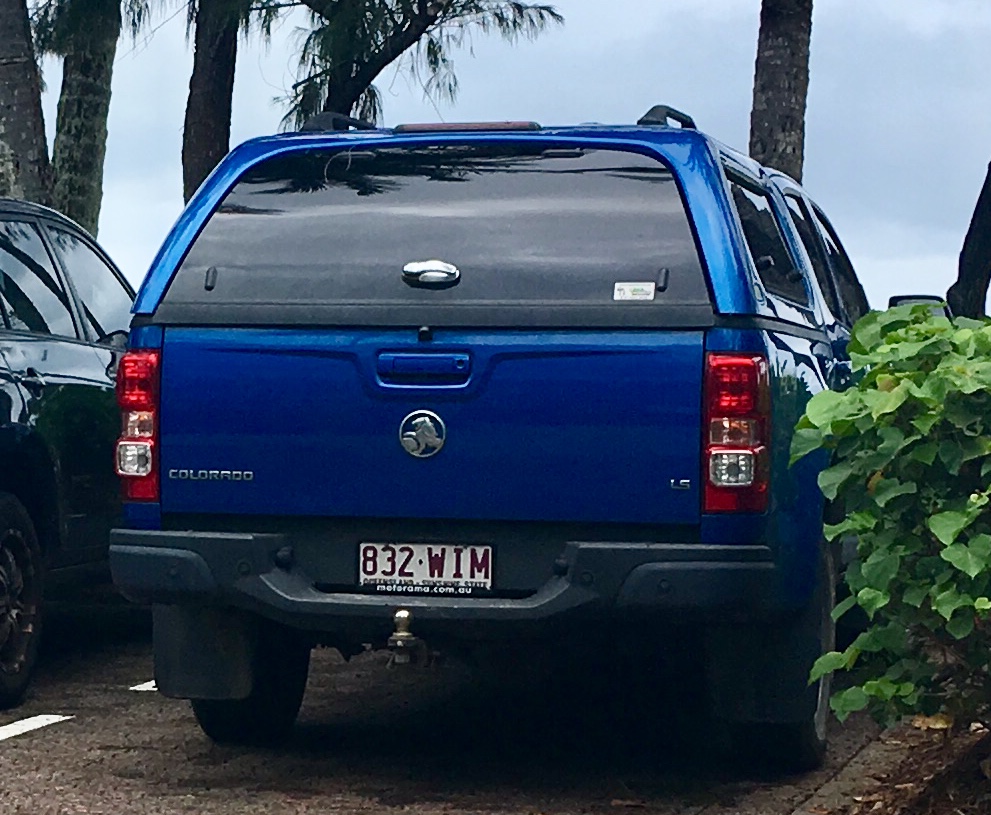
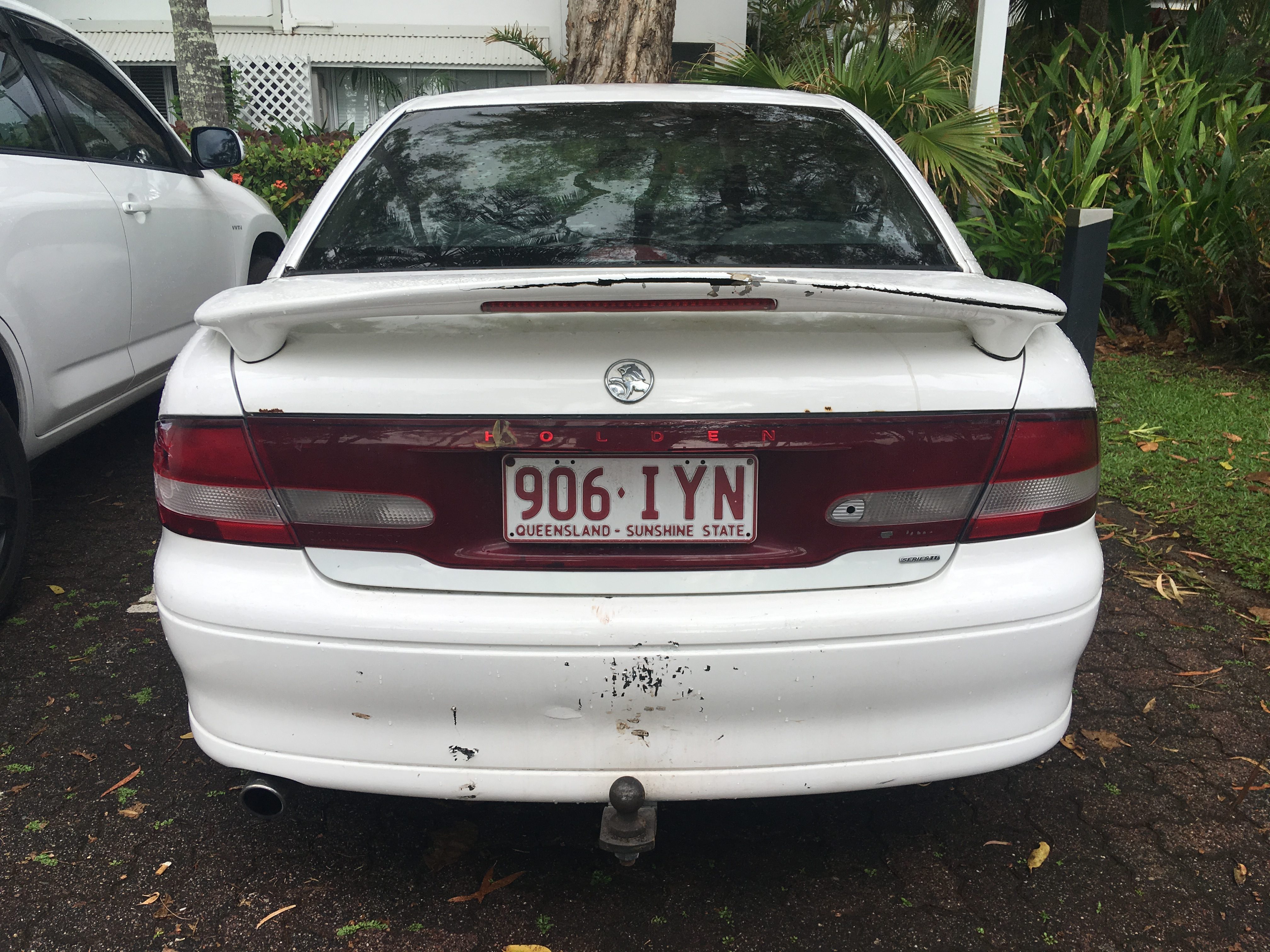
I went out for s last walk around Palm Cove. These are Holdens, the Australian car brand that started out as a saddle maker in the 1850s.  Heidi had told me that every Australian family drove a Holden Colorado or Commodore in the 70s and 80s.  Then this venerable company declined and was bought by GM, which shut down all car manufacturing in Australia.

You can still buy a car called a Holden, but it is merely a re-branded import of some other car company’s model, made in Thailand or elsewhere, with the Holden lion insignia slapped on.

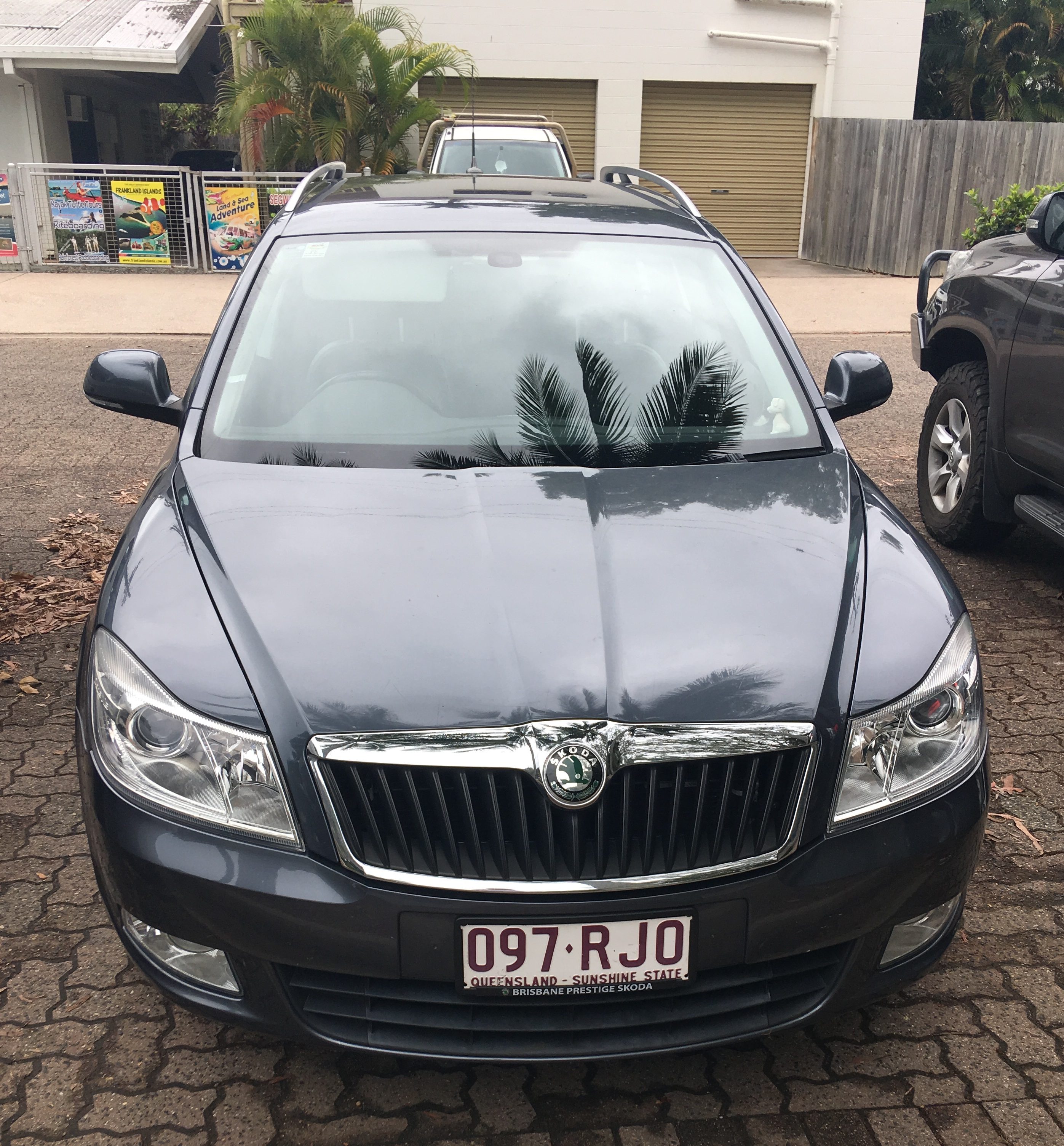
This is a Skoda.  I love that name; it sounds like a disease.  I saw all models and makes of cars and utes (trucks) in Australia but if I had to guess I’d say the majority were Toyotas.

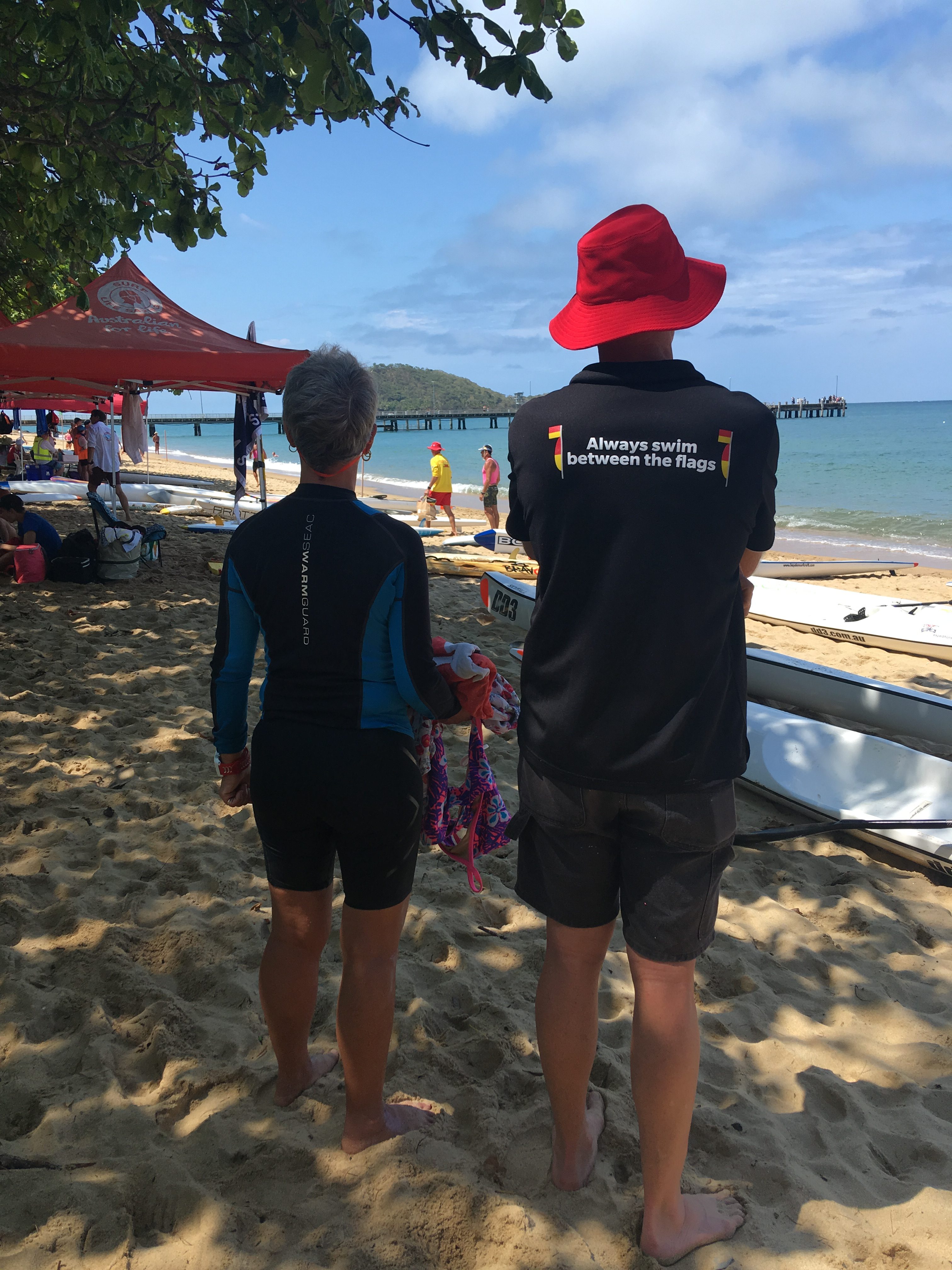
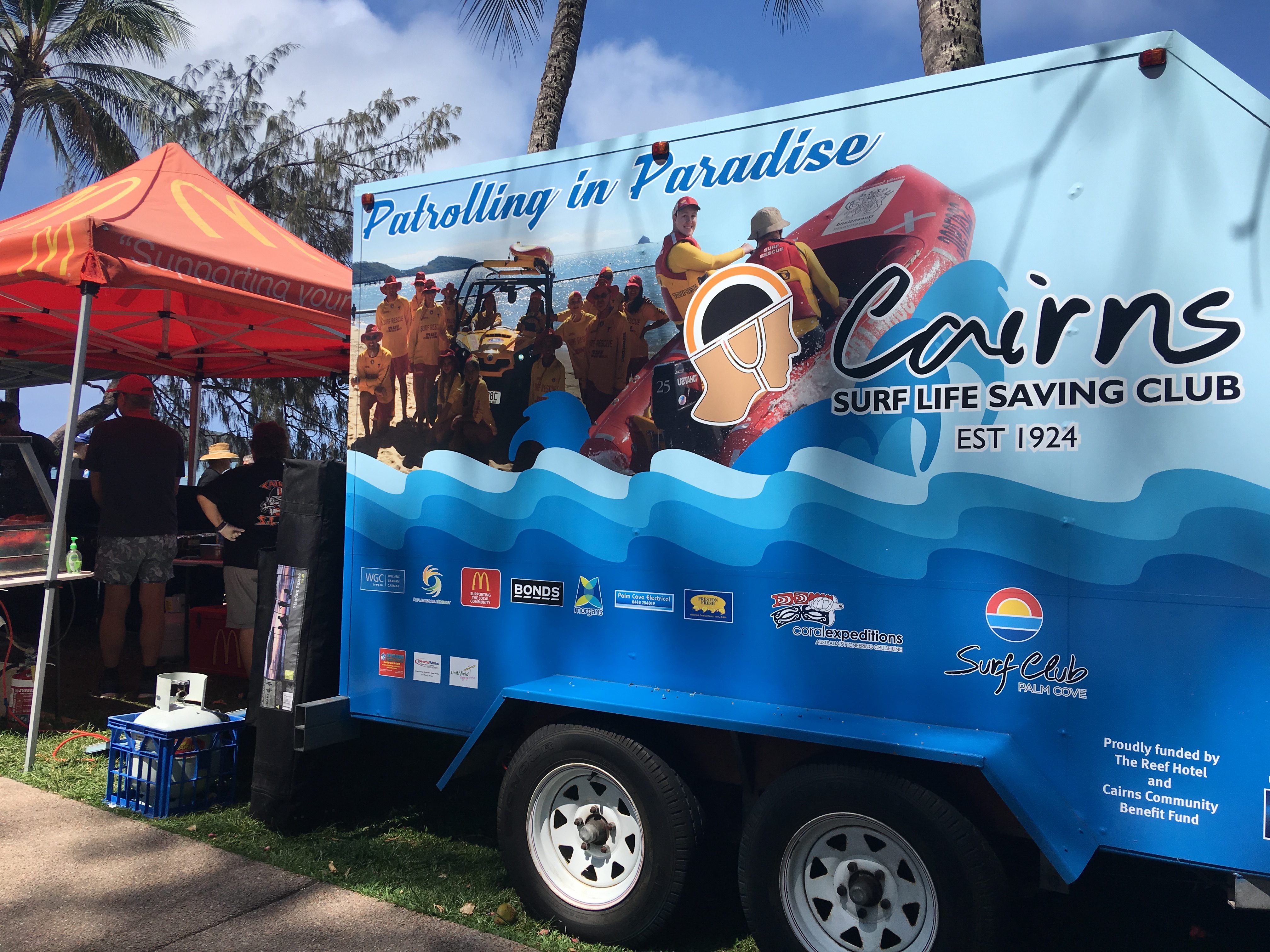
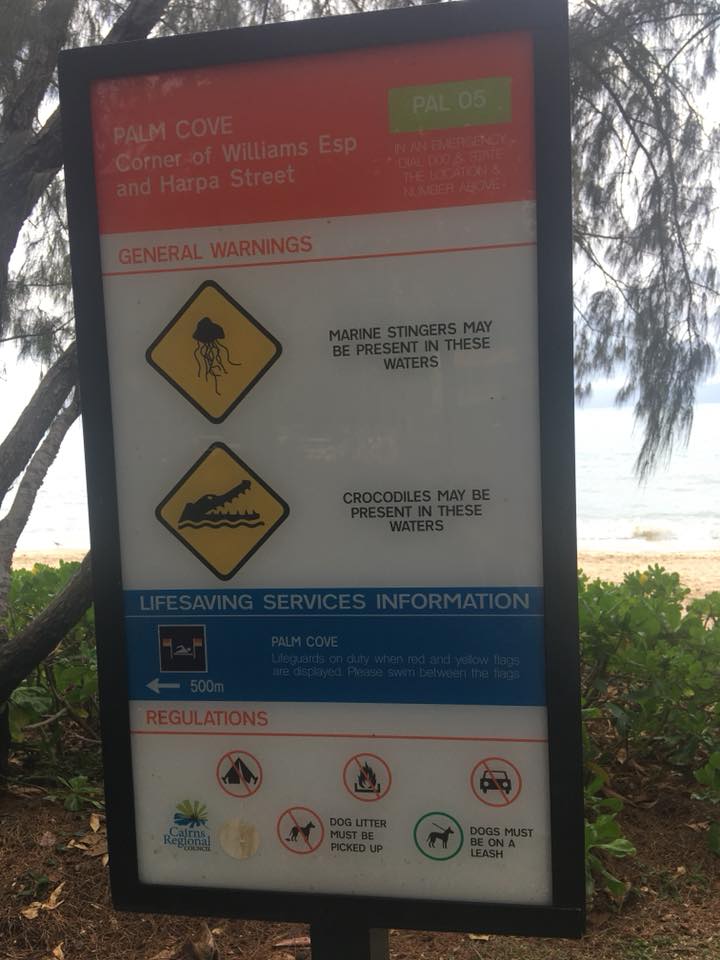
I walked along the beach.  Aussies have beach safety down to a science. There were signs about sunburn, rip tides, and marine stingers.
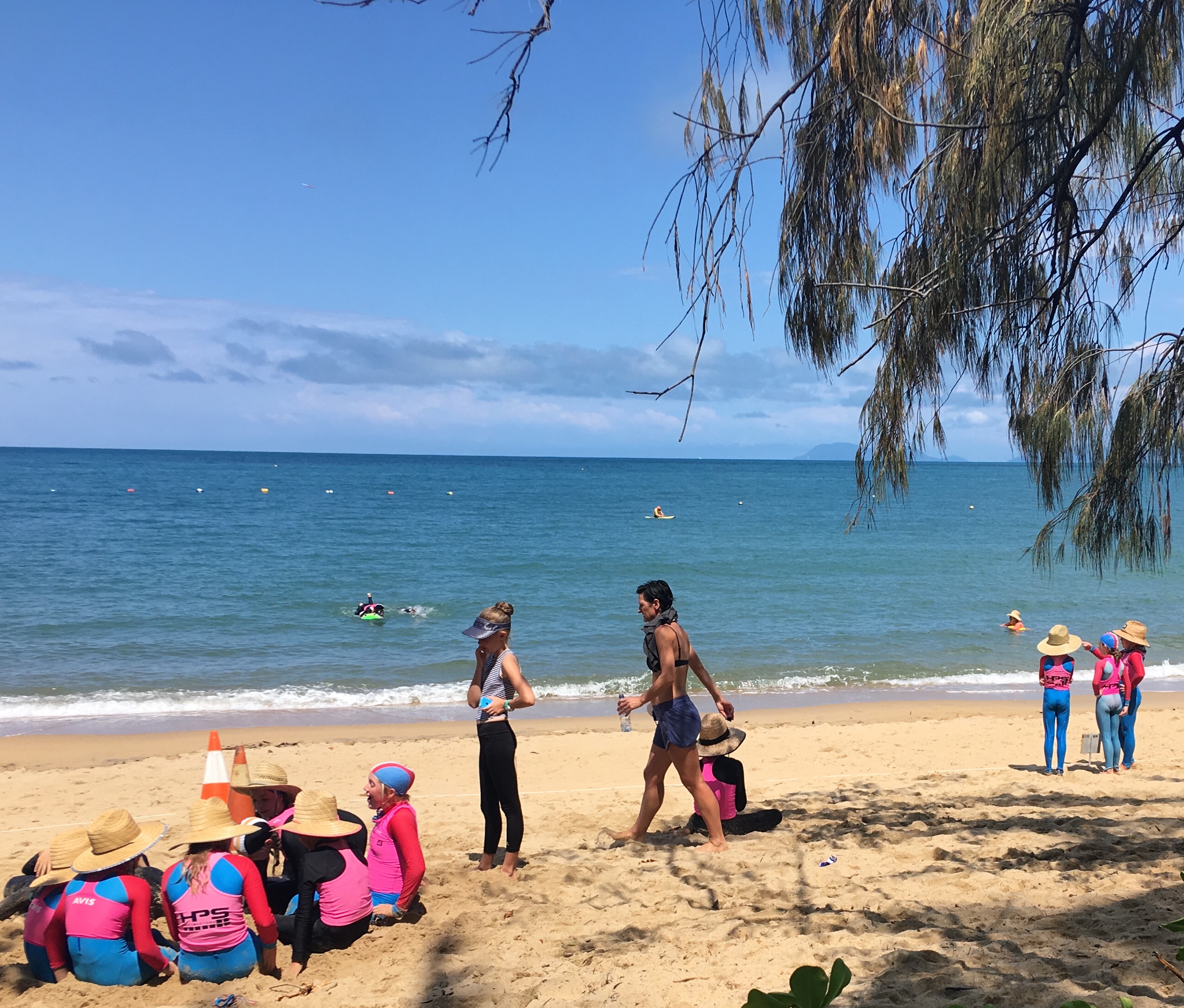
These kids had everything but their faces covered, just like Minnesota kids in winter.

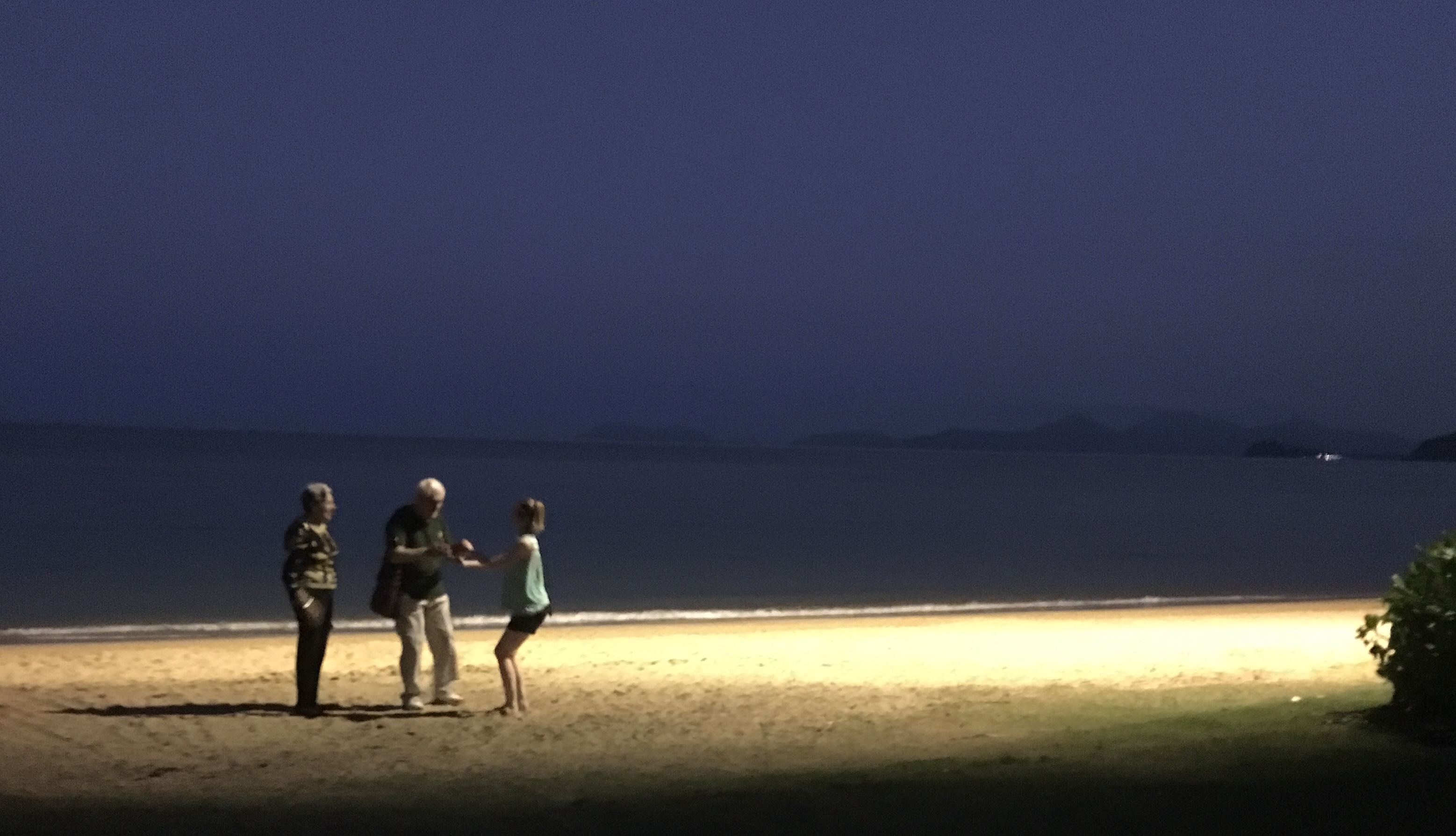
Night came and I was still hanging out; I like this photo of a young woman being asked to snap a photo of some senior holiday makers, as they call vacationers.

Back in my room, I read, then tried to force myself to sleep but my nose was stuffed up and it was futile.  My mind was also stuffed up with worries about the next day.

Suspended

Last summer I took swimming lessons in hopes of feeling confident enough to get scuba certified, but observing the dive instructors on the ship, I knew it would have been too much for me.

The ship was a “speed catamaran” with “state-of-the-art computerized ride control systems.”  This meant we got out to the reef faster, with less choppiness, and for that I was grateful.  It still took an hour to reach the reef, and one hour of seasickness would have felt like eternity.

The dive instructors had convened the tourists who would scuba in the front of the ship.  Most of them weren’t certified—they would get one hour of instruction and dive with the instructors.

As I watched, I recalled my mother exhorting me, 50 years ago, to finish my food with her mantra, “Think of all the starving people in China.”

They aren’t starving anymore.  All the divers were young Chinese.  The base tour wasn’t cheap—$176 US—and they would pay extra for each dive.

The instructors were hunky, sun-browned he-men.  They demonstrated scuba hand signals, “This means low on air,” said one as he held his fist to his chest, “and this means out of air,” as he slashed his hand across his throat.

No thanks.

Suddenly a crew member yelled, “Dolphins!” and everyone rushed to look.  Dolphins indeed!  There were a dozen cavorting in our wake, and when a crew member went out on a wave runner they jumped for joy around him. It was absolutely delightful.

Everyone around me was taking photos and video but I desisted.  There was no internet out here, and I had decided to leave my phone wrapped in a plastic bag with a small amount of cash and my Minnesota driver’s license. For all I knew my passport had been stolen.  Maybe Aussies weren’t as honest as I’d thought.  Would someone pay $176 to spend the day on a ship and pickpocket their fellow passengers?  Probably not, but I wasn’t going to leave my phone in the open.

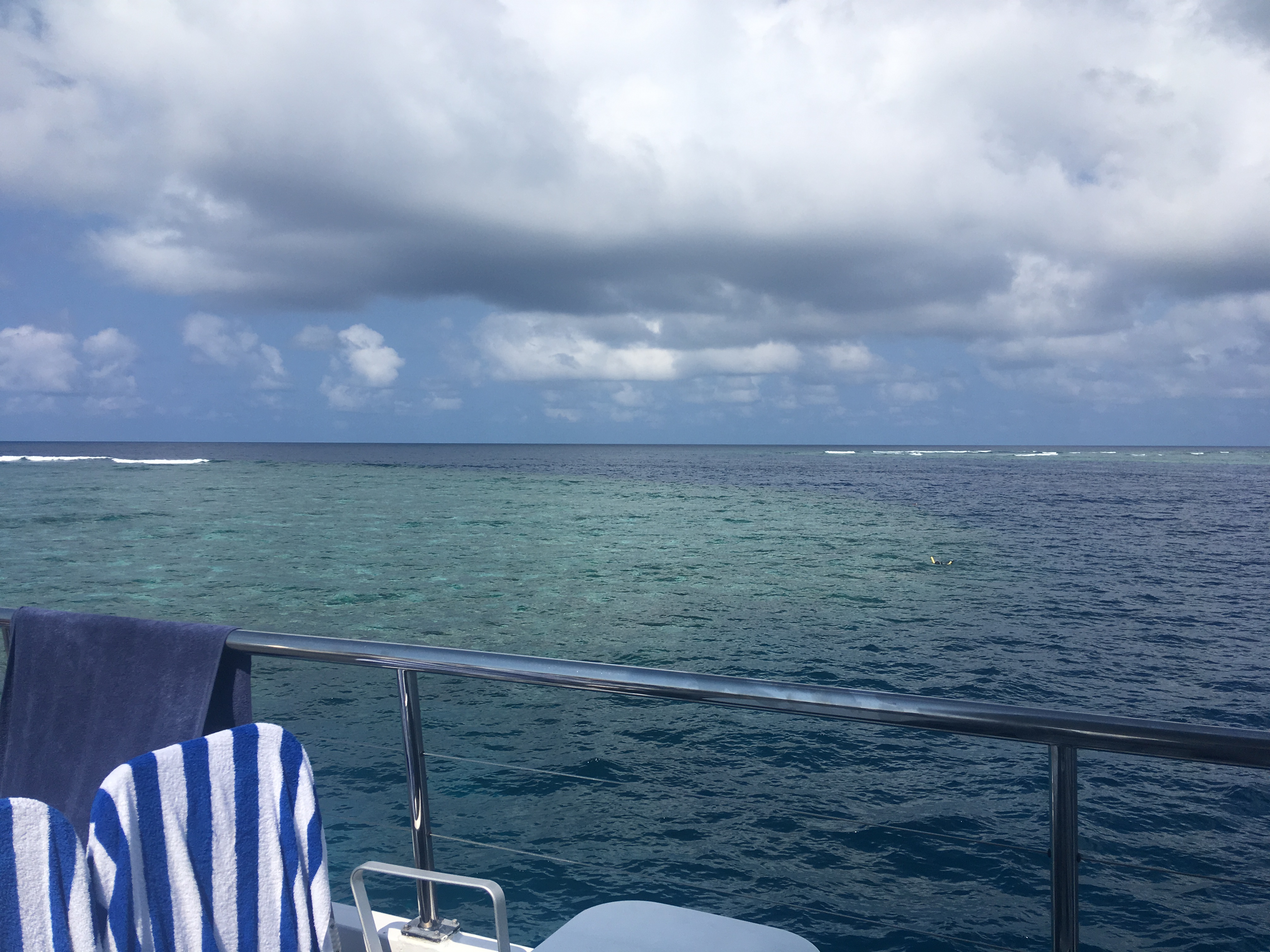
I took two photos of the sea all day, at our first stop. Then I decided to just enjoy and not try to capture it.

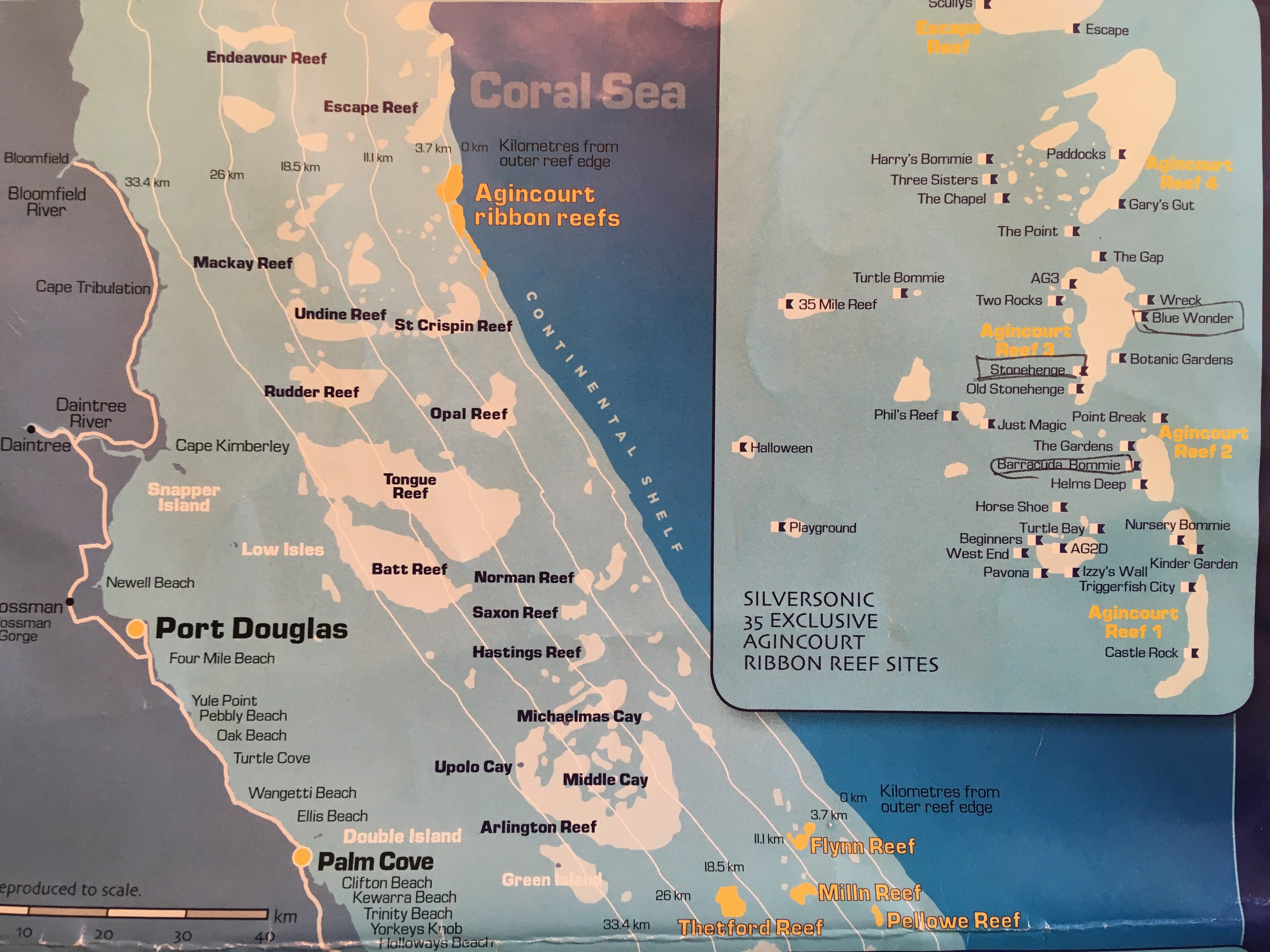
We snorkeled and dived for an hour at a site called Stonehenge, where rock formations jutted from the ocean.  I understand the naming system, but Stonehenge is part of Agincourt Reef 3.  The ship stopped at three sites out of 35 in the vicinity, depending on weather conditions.

The fish were astounding.  There were angel fish with yellow, blue, and white vertical stripes and yellow tails and beaks.  Whatever kind of fish Nemo the cartoon is, it was there.

I glanced down and make a muffled exclamation into my mask, “Giant clam!” My dad had played Giant Clam with us when we were little—sitting akimbo on the floor and pretending to eat us—the little fish.  Giant clams really are giant—maybe four feet across.

When I am fortunate enough to be in an environment like this, I feel a peace and oneness with everything.  I don’t believe in god but I do believe in heaven-like places and states of mind, and this was one.

The horn sounded and we exited the water for lunch.  There was an enormous buffet with fresh seafood, fruits and veg, and healthy hearty salads.

As I ate, three women in the adjacent booth invited me to join them.  They were Lebanese-Australians from Melbourne.  They appeared to be my age but they all rocked bikinis. Was it their Lebanese skin they should thank for their faces being without a wrinkle?  They were well-educated, smart and funny world travelers who were very kind to invite me to join them.

After lunch we stopped at Barracuda Bommie.  A bommie is an underwater tower.  I floated face down, mesmerized as I watched thousands of barracudas swirl around the bommie—down, down, down into the darkness until I couldn’t see anymore.

Why do scenes like this bring on such a feeling of peace, at least for me?  Perhaps because it’s so humbling.  I realize how vulnerable I am, and how insignificant.

At our last stop—Blue Wonder—the sea began to swell and I hit a wall of exhaustion and nausea.

Lost

I lugged my laptop all over Australia with the intention of trying to live blog.  this reinforced what I already knew, that I love travel because I can be in the moment.  I don’t like feeling like I have to post before I can do anything else.  So my laptop just added four pounds to my load.

I had flipped it open once, to add an extra night in Palm Cove and change my return flight.

Now, after tearing my room apart to no avail in search of my passport, I flipped it open a second time to visit the US State Department website.  If you like stories about people fighting with their internet provider or getting root canals—well, what’s wrong with you?—but you will appreciate this story.

The US Government gets a lot of flak for treating foreigners badly and being a bureaucratic abyss.  Surely things would go better for me—a US citizen—right?

I read the lost passport info and learned I would have to appear in person in Sydney to get a replacement.    This was the auto reply to my email in which I asked if I could possibly see them on Friday, the day I was already scheduled to arrive in Sydney.

The answers to most inquiries can be found on our website:

  • If your inquiry can be answered through one of the links, you will not receive another reply. 
  • If your query warrants a more detailed response, we will endeavor to provide a personal reply within two (2) business days.
  • If you have emailed about renouncing your U.S. citizenship, please allow 10 business days for a response.

I wondered how often people send an email to renounce their US citizenship.  Related to my concerns—two business days before I could expect a response?

But then someone named Alex did respond: “Due to routine maintenance in the building our office occupies, there will be a complete supervised power outage beginning Friday afternoon.  We expect to return to normal functionality by Monday afternoon.”

Seriously?  In Australia?

I would have to go to Sydney early.

Alex also listed the things I would need to bring with me to my appointment:

  • Completed (but not signed) Form DS-11: Application for a U.S. passport;
  • Completed and signed Form DS-64: Statement Regarding Lost or Stolen Passport. Please include the Police Incident/Report number on this form;
  • Evidence of identity (if available);
  • 1 x U.S. sized passport photograph. (Note: these are a different size from Australian passport photographs);
  • Applicable fee. (All fees are subject to change without notice)

The only form that could be submitted online was the missing passport one.  I submit six- and seven-figure grant applications online all the time; I know how to submit online forms. I got an error message, and when I emailed the Help contact I got an autoresponse saying they would get back to me in two days.  No one ever did.  Even if I found my passport now, I had no way of knowing if it was cancelled or not.

I wept a bit as I booked the last available appointment this week at the consulate in Sydney.  It was for 10am in two days’ time.  I filed a police report online.  I tried to change my flight, but Expedia required I call them, so I wiped my face, traipsed down to the office, and asked Jim if I could use their landline.  I don’t regret not paying ATT $10 a day for phone service in Australia. After 20 minutes the flight was changed back to my original date with, amazingly, no charge.  Jim print out the forms I needed, cancelled my last three nights, and booked a van ride to the airport for 3:30am.

“Do you still want to go to the reef tomorrow?” he inquired delicately.  I must have looked like I was on the verge of a meltdown.

Yes,” I replied without hesitation.

I moved through my last day there in a zen-like state.  This was it—my last chance to enjoy the sun, warmth, humidity, scenery—I appreciated how lucky I was.

I was going snorkeling on the fucking Great Barrier Reef!

Crocodile Adventures!

Day 21 of my Australia sojourn. I waited eagerly in the reception area of the resort to catch my 7am bus to the Daintree Rainforest. As I’ve mentioned, I’m sort of obsessed with plants.  I also love heat and humidity, so rainforests are my kind of environment.

A German couple sat on the couch opposite and we chit chatted about where we were going. Their bus came and went.  An Aussie couple I had made small talk with at the pool came out, said they were going on “a brekky reccy,” and left.  It was 7:15.  An English family of four came and we didn’t talk because their bus pulled up as if queued to their arrival and whisked them away.  I began to feel anxious.

Jim had said 7:00, right?  Maybe I had misunderstood.  Maybe he had said 7:30; it was just 7:30 now, and maybe the bus was late.  It was probably me—I had gotten too relaxed yesterday.

People came and went.  It was just past 8:00.  The Aussie couple returned and were surprised to see me.  Maybe I imagined it but I thought they looked at me pityingly.

Pangs of emotion welled up.  It wasn’t all the couples and families and no one else sitting by themselves waiting for a bus that never came.  It was not wanting to waste a day.  One day of leisure was enough for me.  I want to do and see everything.

Jim arrived to open the office and did a double take when he saw me.  It turned out there had been a mix-up on the tour company’s end, and he apologized.

“It’s not your fault,” I told him.  “What can I do, still today?”“All the tours are either full day or half day,” he said as he rifled through piles of brochures.  “It’s too late for the full day ones,” so the reef and the Daintree are out.”

“The two things I came all this way to see,” I replied glumly.

“There’s Hartley’s

Crocodile Adventures,” he suggested weakly.

I had seen ads for this place in the airport, on the street, and in brochures for other attractions. They certainly were good self-promoters.  I felt a surge of fear at the word ‘crocodile.’  Did I want to spend 5 hours in being surrounded by them?  The place sounded like a totally tacky tourist trap.

“Sign me up.”

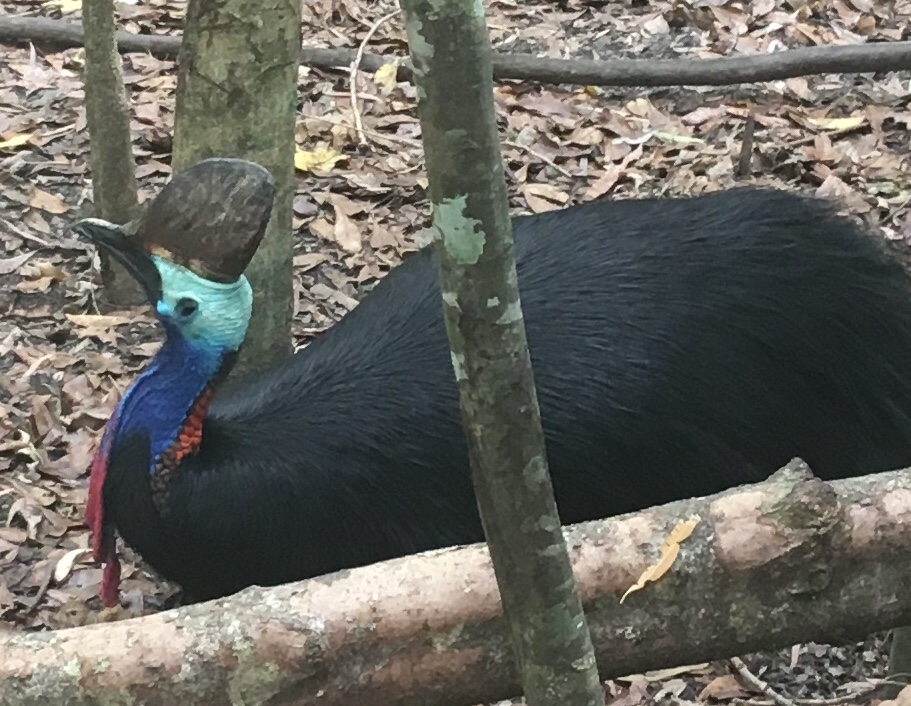
Hartley’s turned out to be pretty fun.  There was much more wildlife than crocs.  Did you know Cassowaries are prehistoric Kung Fu fighters with giant claws with which they can disembowel you?  They’re actually very shy and avoid humans, but here’s video about how to survive a cassowary attack in case you decide to plunge into a jungle, locate one, and provoke it.

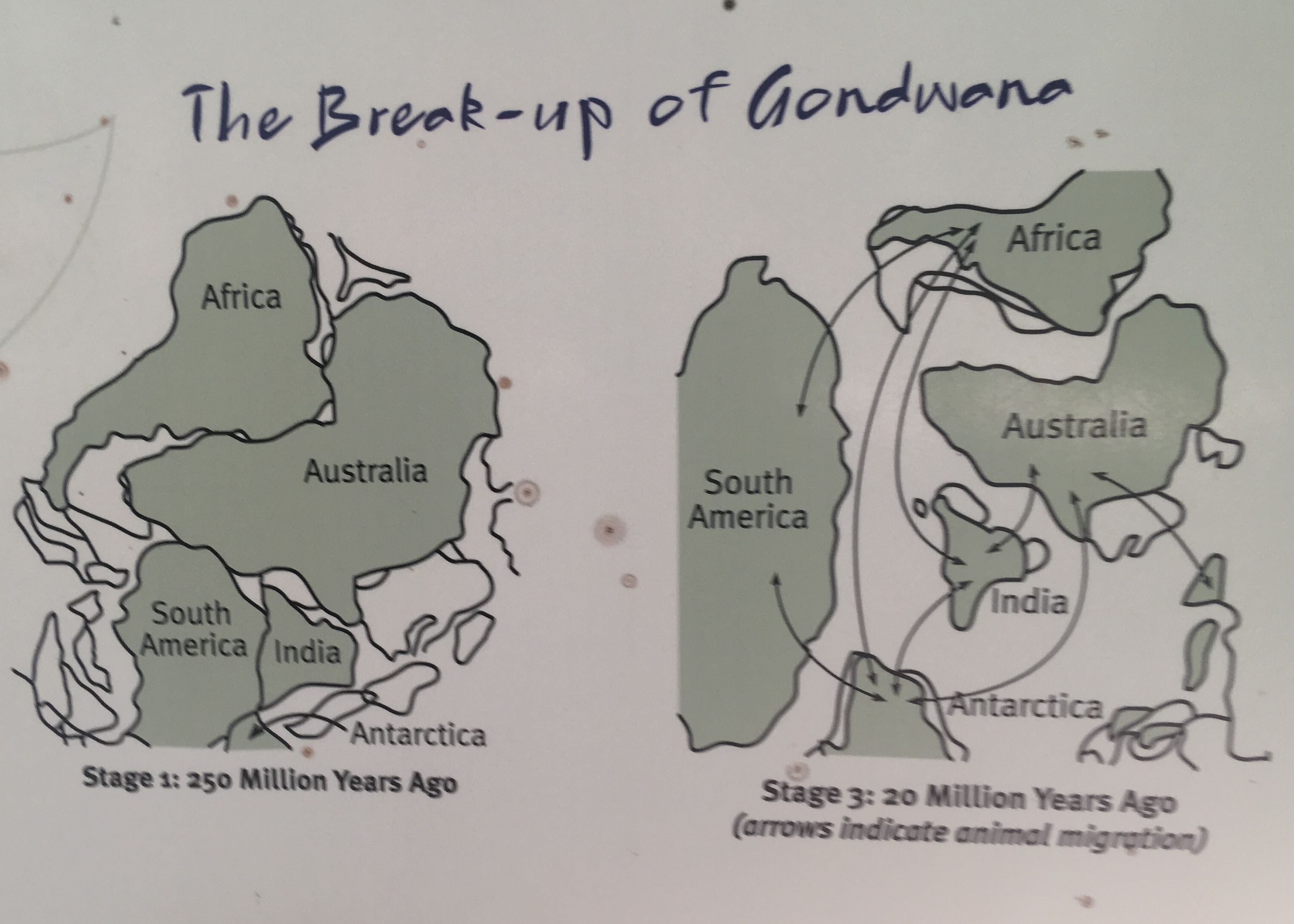
There was an interesting small exhibit about the break-up of Gondwana, the mega continent that had included almost all the continents.

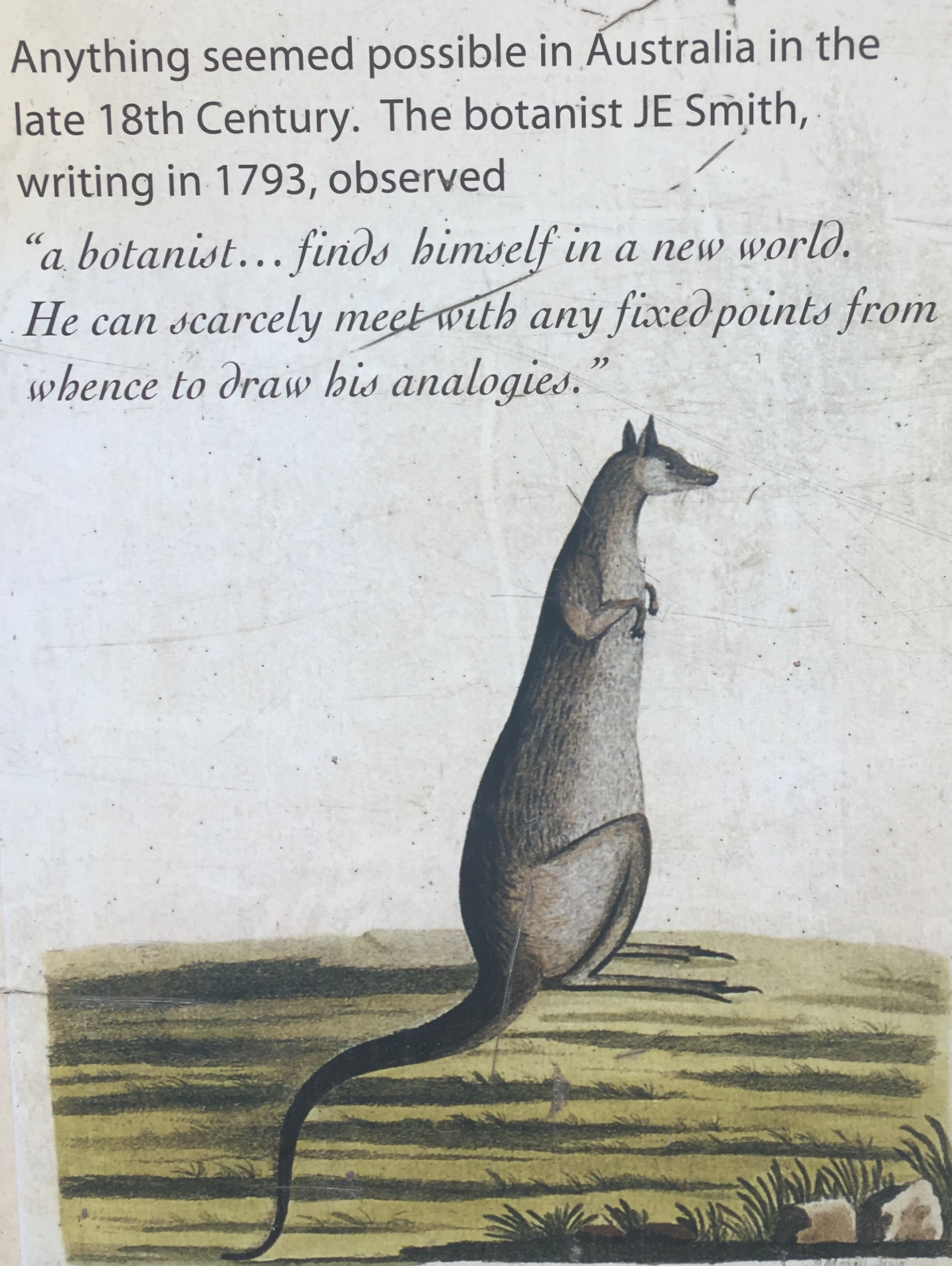
And about first encounters with kangaroos.  People back in Britain thought the explorers’ tales and early depictions of roos were tall tales until someone managed to bring back a live specimen.

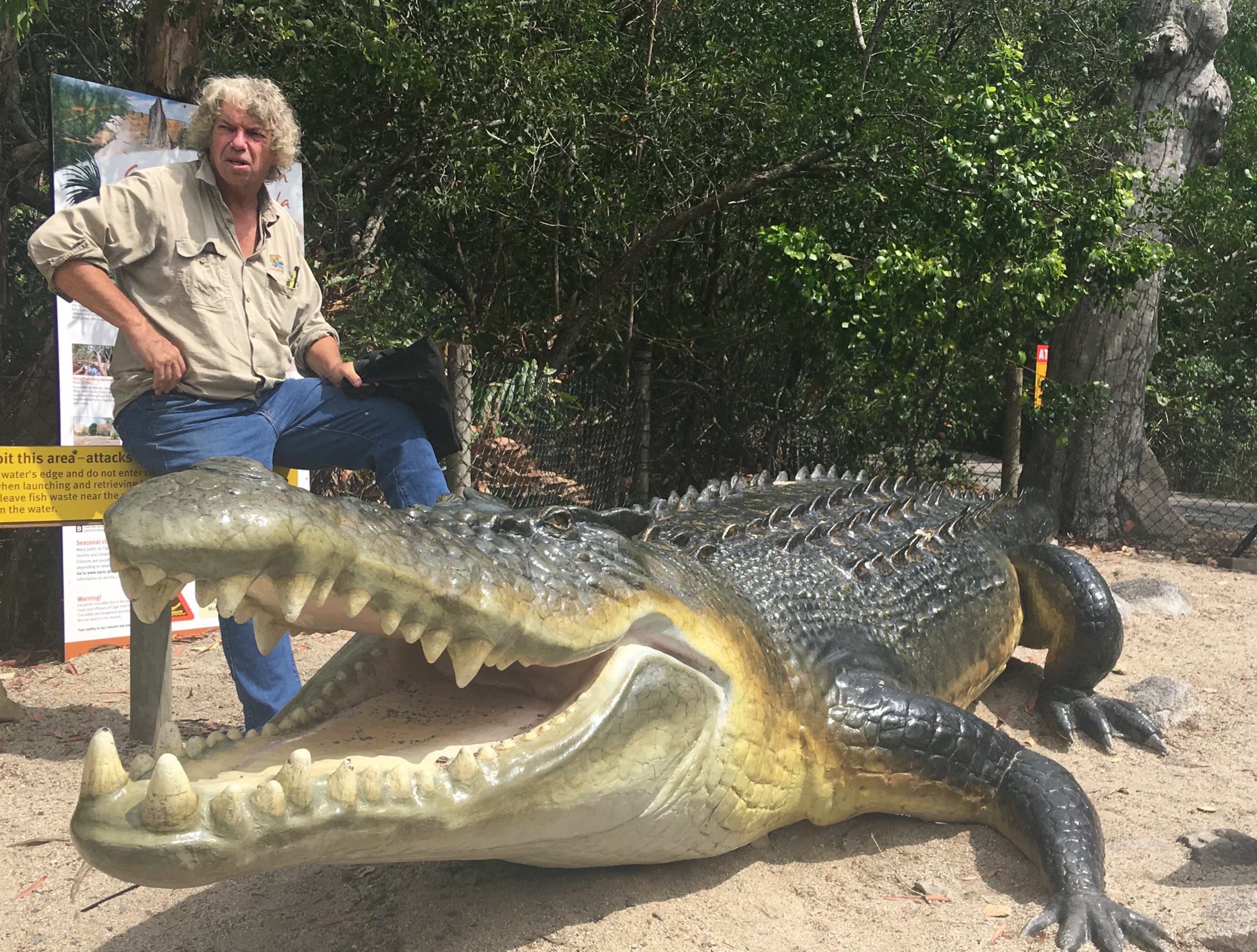
There was the obligatory croc boat ride, where a young blonde guy named Matt fed dead chicken parts to gigantic crocs and made dismemberment jokes.

Having worked up an appetite, I had a burger in the café.  It had beets in it; beets on burgers are an Australian thing.

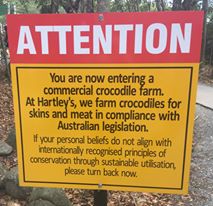
I toured Hartley’s crocodile farm. I’m not sure to which end of the spectrum this sign was directed—animal rights activists or poachers.  Maybe both.

Our very earnest guide downloaded so much knowledge about breeding and raising crocs I felt confident I could start my own crocodile farm.

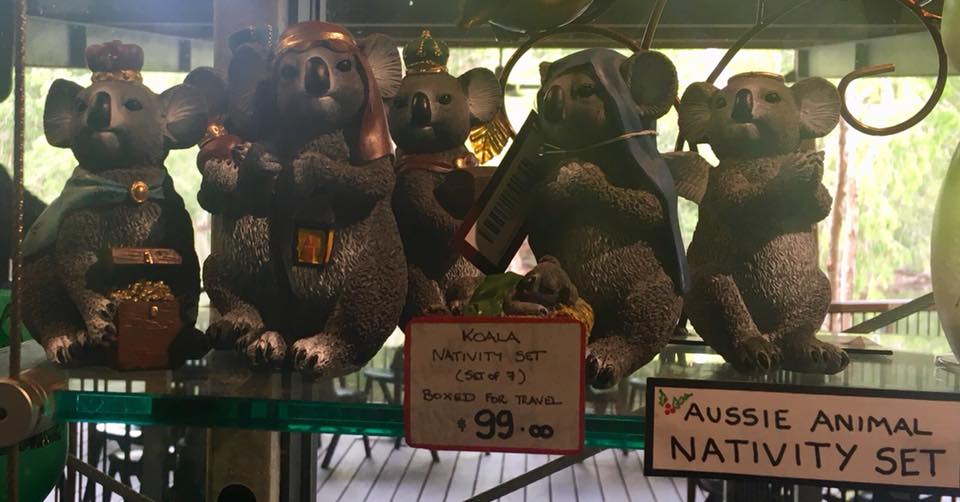
You could pose with a Koala for $$.  The poor things.

I bought yet more souvenirs in the gift shop.  All my unsuspecting friends’ and family members’ birthdays and holiday presents for the next year were now covered.

Which nativity scene would you have chosen—kangaroos or koalas?

I went to pay, the cashier asked for ID, and that was the moment I realized my passport was gone.  She let me pay anyway.  I said the only logical thing: “It must be in my room.”

But I knew it wasn’t.

Down Day

I allowed myself one down day in Australia, in Palm Cove.  I didn’t plan anything, I went where I was called.

I took a couple long walks on beach.  I had not realized that crocodiles swam in the ocean, but that helped me decide I would not be swimming here or renting a kayak.

I had wondered, before arriving in Australia, if the whole crocodile thing was overblown—something they played up to titillate the tourists and TV audiences.  But no.  As I wrote before, on the shuttle on the way from the airport I had seen signs that warning people not to swim or wade in streams, and just beyond the signs were people standing in the water up to their thighs, fishing.

“So … isn’t that dangerous?” I asked the driver.

“Yeah, it is.  A ranger was doing the same just last week with her family. She was an Aboriginal. You would think she would have known better.  One minute she was there, the next she was gone. They found her body a couple days later.”

I walked through the jungle around Palm Cove.  There were paths and boardwalks so I knew I wasn’t crazy to be walking here, but there were also warning signs about crocodiles everywhere.

I’m normally a pretty intrepid hiker.  My mother would freak if she knew some of the deserted places I have hiked alone down by the Mississippi River.

All the time I was in Australia, I never felt afraid of crime.  I’m sure crime happens there, but I never saw warnings about crime like one does everywhere else.  You know: “Be vigilant on trains and on the street for pickpockets.”

I would take my chances with a pickpocket any day, I thought, over a crocodile.  I was really on edge, watching for signs of fast movement on the sides of the paths.

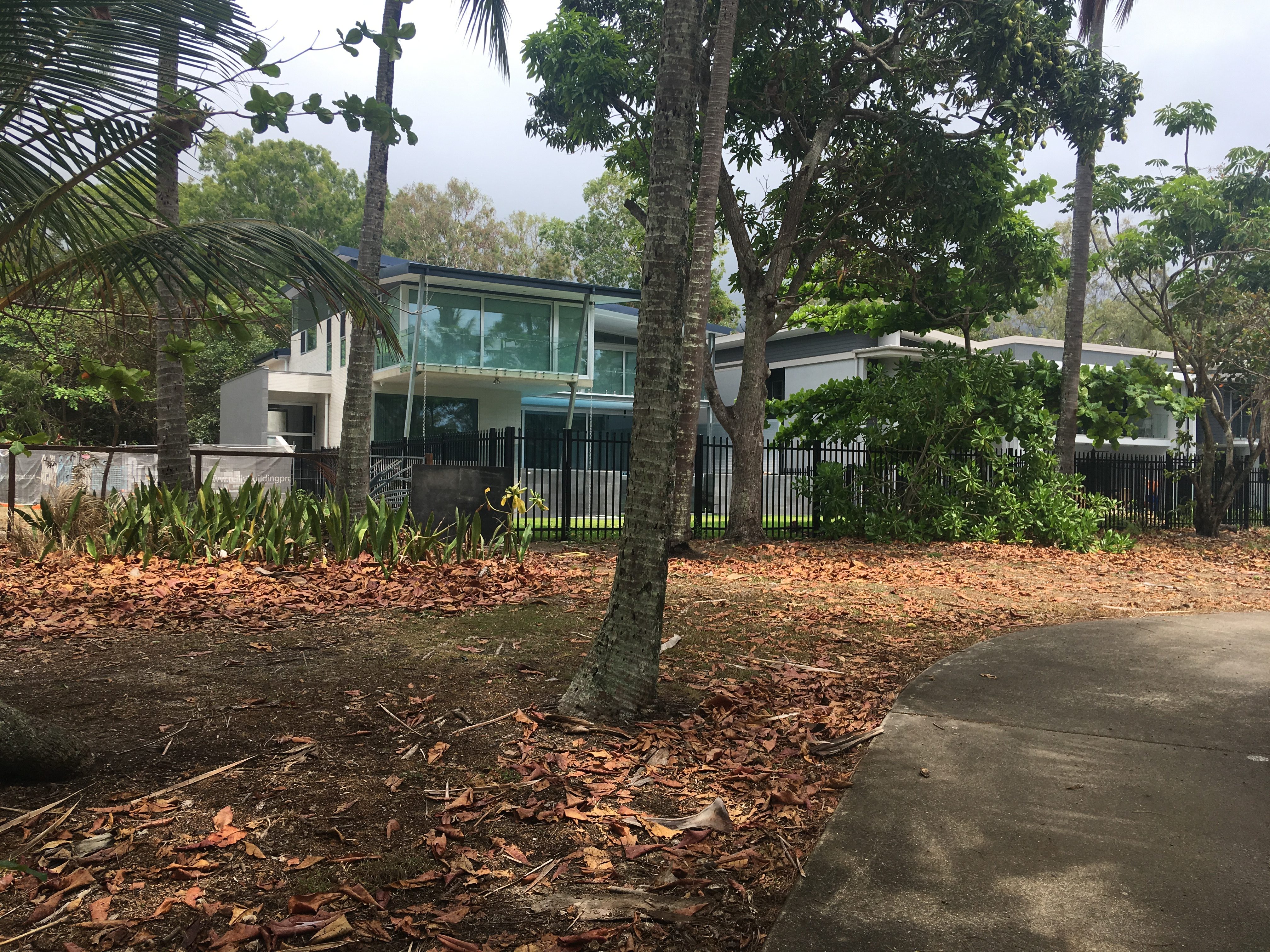
It really wasn’t very relaxing, so I headed back toward the beach, past a new housing development. I imagined walking out my back door to find a big croc in my pool, or leaping out at me as I gardened.  No thanks.

I stopped for a fried barramundi sandwich at the corner restaurant/grocery and perused the Sunday papers while I waited.  I don’t know who this guy was, what really happened, or what his greatest triumph was, but he was handsome in a Cro-Magnon Man way.

They had all manner of fried snacks that sounded like exotic variations on fish sticks; I imagine my five-year-old nephew would find them appealing.

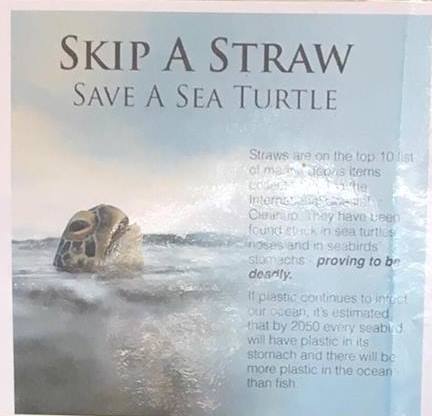
There was this sign explaining why they don’t issue plastic drinking straws.  Because of the glare you won’t be able to read it, but trust me—straws are bad for sea turtles.

I checked out every shop along the promenade and bought a few things but it was basically resort wear—nothing I would have occasion to wear in Minnesota.

Back in my room, I pored over the brochures, then arranged with Jim at the front desk to take an excursion through the Daintree Rainforest the next day.  I was excited; it would involve a train ride through the jungle, then a couple hours in the village of Kuranda, where I could buy more trinkets and have a beer, then a hike through the rainforest, then a cable car ride back.  I would be gone all day.  I couldn’t wait.

I sat by the pool and read my book.  I was half way through my 800-page Somerset Maugham short stories.  I was tearing them out as I read not only to lighten my load, but because he uses the N word and other offensive language.  He was a product of his time.  These were the words people used.  But I would not be leaving this on the take one, leave one shelf.

I took a dip in the warm salt water pool, gazing up at the pointillist canopy of gum tree leaves way above me.

I capped off the day with a gag-inducing “Japanese” dinner.  Imagine sushi made with “local fish.” Now think—like I didn’t—that the local fish is not tuna or shrimp or  salmon, but barramundi, which is nice fried, but not raw.


Palm Cove

After a 20-minute drive I alighted at the Reef Retreat in Palm Cove.  This was my big splurge. I had read about the place in Frommer’s Easy Guide to Australia; it wasn’t easy to find the website and when I did, it was fully booked for some of the nights I wanted.  I went back and forth for a month before securing five nights there, then I added a sixth night when I was in Blayney.  I felt so lucky to get the place I wanted.

I wanted it because it was one block off the beach, which was traced by a road full of traffic. I didn’t want to stay in a B&B because I didn’t want to talk to anyone. I didn’t want to stay in a chain hotel. I didn’t want to stay in a sterile high-rise where you had to take an elevator and walk down a long hallway.

Two stories of rooms were built around a central courtyard with a pool and, basically, a miniature rain forest. I could be close to the action but feel like I was in the jungle.

And it was only $95 a night.

The place did not disappoint.  I checked in with Jim and Joanne, the owners, who would soon become my personal support group.  I loaded up on brochures from the Wall of a Thousand Brochures, then rolled my bag through the courtyard to my room, which was up a flight of about 20 stairs.  This was the only downside of the place—you would have to stay on the first floor if you couldn’t manage stairs.

The rooms were clean and bright and had everything one needed to be a hermit in paradise.  Balcony screened by trees, couch and TV, and fridge.

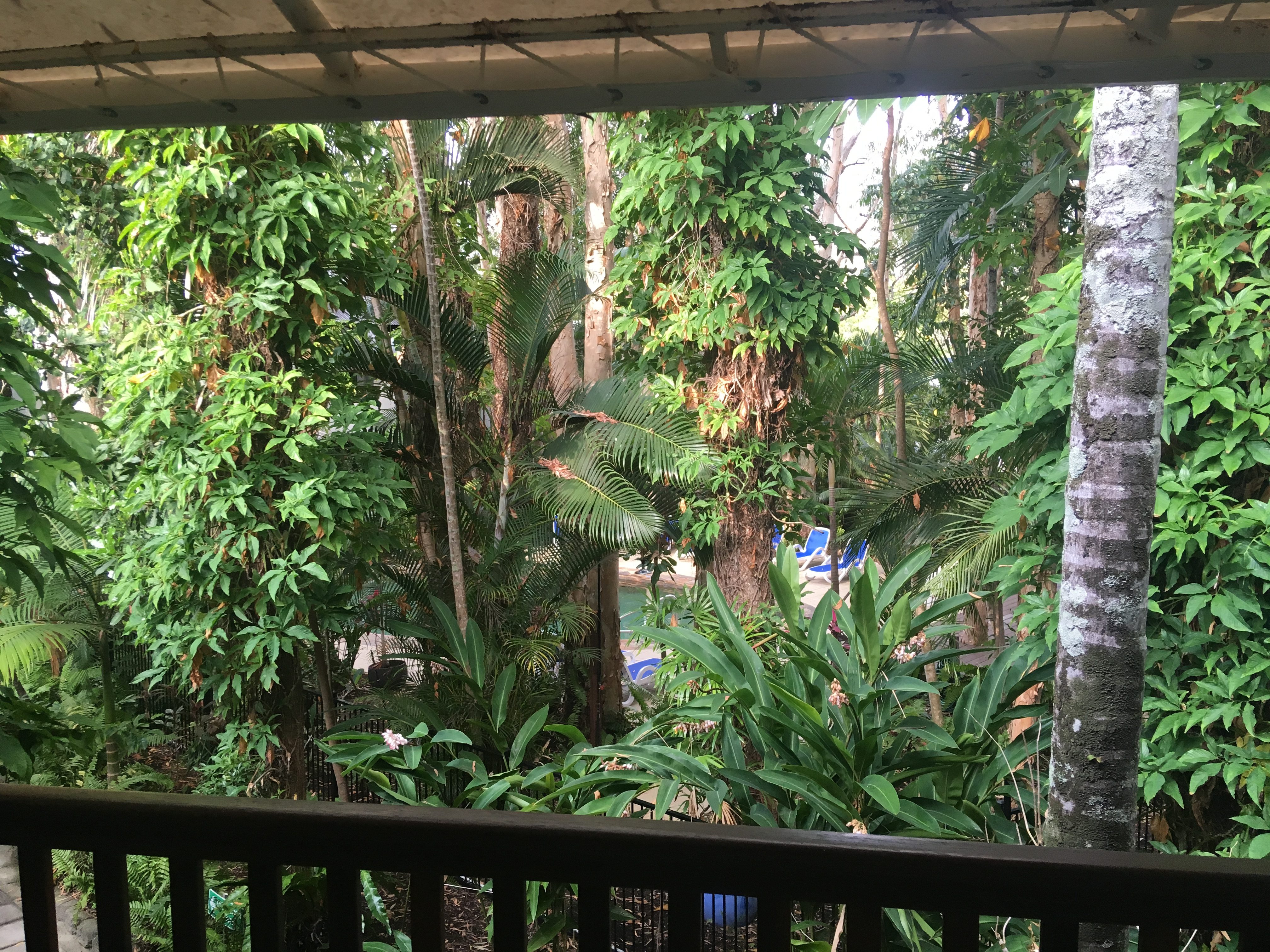
These are the views from my balcony.  The big screen is to keep people who are using the barbie from being barbecued themselves, by the sun.

I hung up my dank clothes to air for the first time in weeks, then hustled out to buy supplies.  The books in the “take one, leave one” shelf in the laundry room were typical of a resort that attracts an international crowd.

I would pass on “Analfabeten” but I had a couple books with me and I could read by the pool every day!  I could catch up on blogging.  I could sleep late.  I could take long walks, rent a bike, maybe a kayak.  I would alternate excursions, like to the reef, with down time.  This was going to be great.

This was the night I would lose my passport.  This was not going to be great, but I didn’t know it yet.

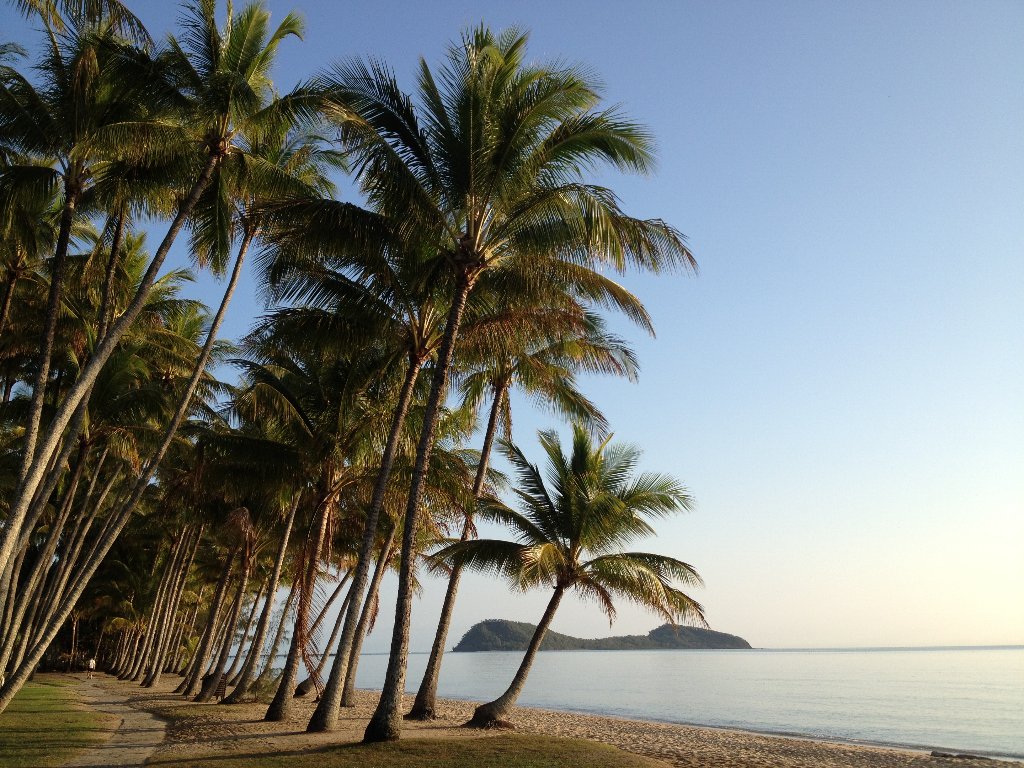
I walked on the beach and took a few excellent photos, for once.  They somehow vanished off my phone, so here’s a photo from the official tourist site.

I have been to tropical beaches in Belize and Colombia in the last two years, and I have to say that one beach looks very much like another to me.  There’s sand, and water, and palm trees.  But that’s not to take away from their beauty.

I walked along the promenade and bought groceries, then donned my rain poncho so I could keep my bag from disintegrating until I got to the casino/bottle shop where I could buy wine and beer.  The 16-year-old kid who waited on me asked for my ID, and I fumbled with my poncho, backpack, and grocery bag to find it and show it to him.  If you like casinos, you would have loved this place.  I hate them so I hurried to get back to my quiet retreat.

I watched TV; there was the Ernie Dingo Show, where an Aboriginal guy walks around the outback and shows sites of cultural significance to a white guy, whose job is apparently to nod and show keen interest in everything Ernie says.  Megan and Harry were on the news, as they would be every night during the Invictus Games.  Harry was climbing Sydney Harbor Bridge, and it was raining hard.  “Guess I picked the wrong day to cross the bridge,” he quipped.

People with Points

As I waited for my flight, I reflected on how wonderful it is that people welcome me into their homes.  I knew Dean and Lisa from UK days, but we hadn’t been close.  I had never met Auntie Margaret.

Getting to know new people, and getting know acquaintances better, is such a huge attraction of travel for me.  Spending time with people I care for, like Heidi, is a luxury.

That said, I do like my alone time.  I’m an introvert who likes people, but I’m still a loner.  I can happily spend days in my house without hearing a human voice.  I’m never bored.  I get lost in household projects, a book, or long walks in the woods.

After 18 days of being crammed into planes and trains and cars with fellow human beings, I was ready to be alone.

As I boarded I was diverted from these lofty thoughts by a woman behind me asking the flight attendant for a seat belt extender.  This was my first knowledge that there was such a thing.  Australia doesn’t have quite as high a percentage of its population who are obese as the US (33%), but it’s up there, at 27%.

A flight attendant asked if I would like something to drink.  I replied yes, a Diet Coke please, which was when she informed it would cost $3.  Three dollars for a can of coke!  Way to nickel and dime, Virgin Australia!  I asked if I could have a cup of water, if it was free, and she gave me one, smirking like I was a cheapskate.

I read the thick weekend edition of a newspaper from front to back except for the sport section.  I compiled a list of new Aussie vocab to Google when I had wireless: squiz, spruiking, chook.

There was an article about young members of rich Aussie families who posted photos of themselves with products on Instagram.  They had millions of followers and made millions of dollars which they didn’t need.  They were beautiful, vapid, and dull eyed.

Another article was about an immigration scheme to make people settle in “regional areas,” meaning underpopulated areas that need workers.  To quote:

“Australia is in the self-inflicted paradox of having vast amounts of space but no room.

“Australia has pursued a big immigration intake for the entire post-war era for the very selfish reason that it’s in the national interest.  It boosts the economy.  It lowers the average age of the population.  This means that national aging is slowed.  As a result, the rising cost to the taxpayer of healthcare and aged care and welfare is slowed.  And it adds skills.  And cultural richness.”

The debate is: is it unconstitutional to dictate where people must live?  Is it impossible? Is it unconscionable?

“It is none of those things.  Australia already has such a program in place. It’s a category known as designated area migration agreements. There’s only in in effect, in the Northern Territory, but it exists in principal and in practice.”

In the proposed national scheme, people applying for Australian work visas will be given extra points if they indicate they are willing to live in Tasmania, for example.

Why can’t America have debates like this about immigration?  All we talk about is whether to build a wall or not.  A wall—such a 15th Century solution.

Australia has its version of a wall.  It’s the island of Nauru, where desperate migrants from Syria and Congo are penned like animals. But there seemed to be a lot of other ideas afloat.

It’s about control, right?  Any country justifiably wants to know who is entering and how they will contribute to the common good.  The US is one of few countries with a diversity lottery—most countries manage immigration based on merit, conferring extra points for engineering degrees, fluency in the native tongue, or big bank accounts.

As we approached Cairns, I looked down at the verdant scenery.  No wonder people want to come here.

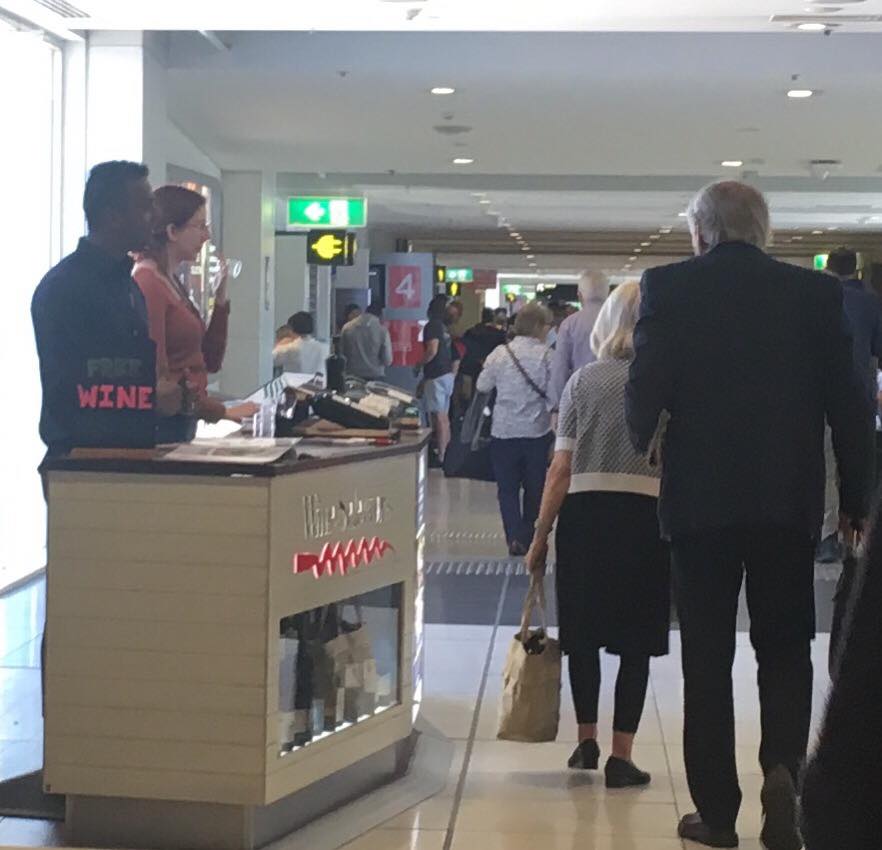
I made a note to partake in the airport wine tasting ahead of my return flight.

My van driver was a British immigrant.

“Twenty years on, and me and the wife ain’t never been back.”

Posh Birds

After the cruise we walked along the river to the Royal Botanic Gardens.  I am a crazy plant lady.  Or am I normal?  At this time of year I make several runs to my local garden shop and spend loads of money to surround myself with doomed house plants. Is there something in the human spirit, our circadian rhythms, or our sensory organs that craves green in the winter?  I think this is one explanation for the origins of the Christmas tree.

Anyway, I was in my glory in Melbourne as we boarded a trolley and listened to the silver-tongued commentary of our driver.  She had one of those soft voices that lulls you into a trance.

Once again, my photos were subject to that particular effect of the Australian sun that makes them look like my lens was smeared with Vaseline.  I kind of like it.

The guide said, waving toward a tree, “And here are some of our famous elms. We get lots of Americans coming here to see them,” she looked meaningfully at me.

Hmm.  We have elm trees in America.  A lot of them were wiped out in the 70s by Dutch Elm Disease, but we still have plenty. I wasn’t sure what she was talking about, but I kept my mouth shut because she was obviously proud of those trees.

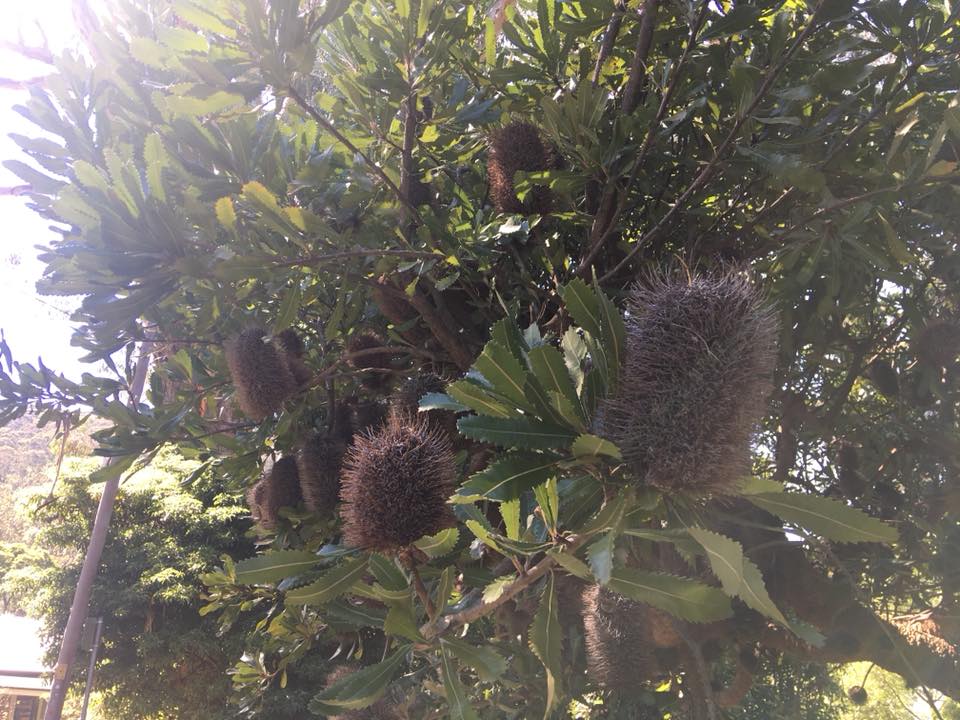
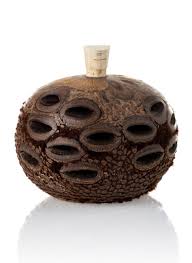
These are banksia nuts; what I would call cones.

I bought some diffusers in the gift shop made out of polished banksia nuts.  Normally I don’t like anything scented but I have one of these by my bedside filled with Eucalyptus oil.

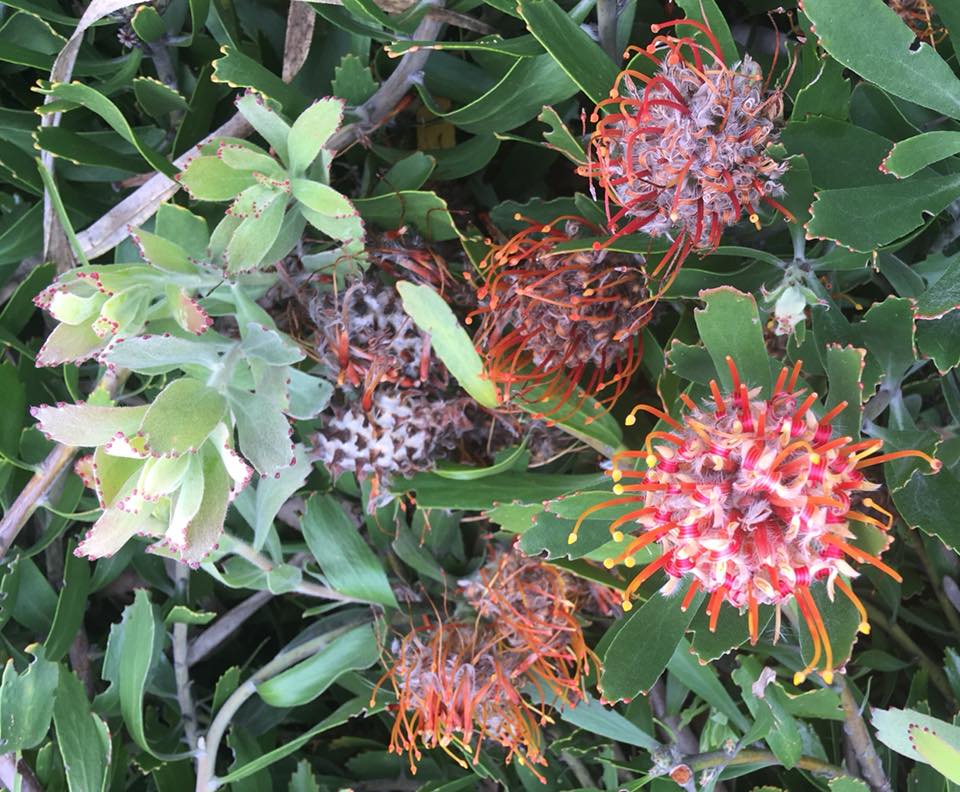
These are banksia flowers, one of 70 varieties.

And gum nuts. I don’t know why Eucalyptus trees are called gums, or why their flowers are called nuts.  It kind of looks like the nuts burst open and flower.  So are they really nuts?  Who cares, they’re fantastic.

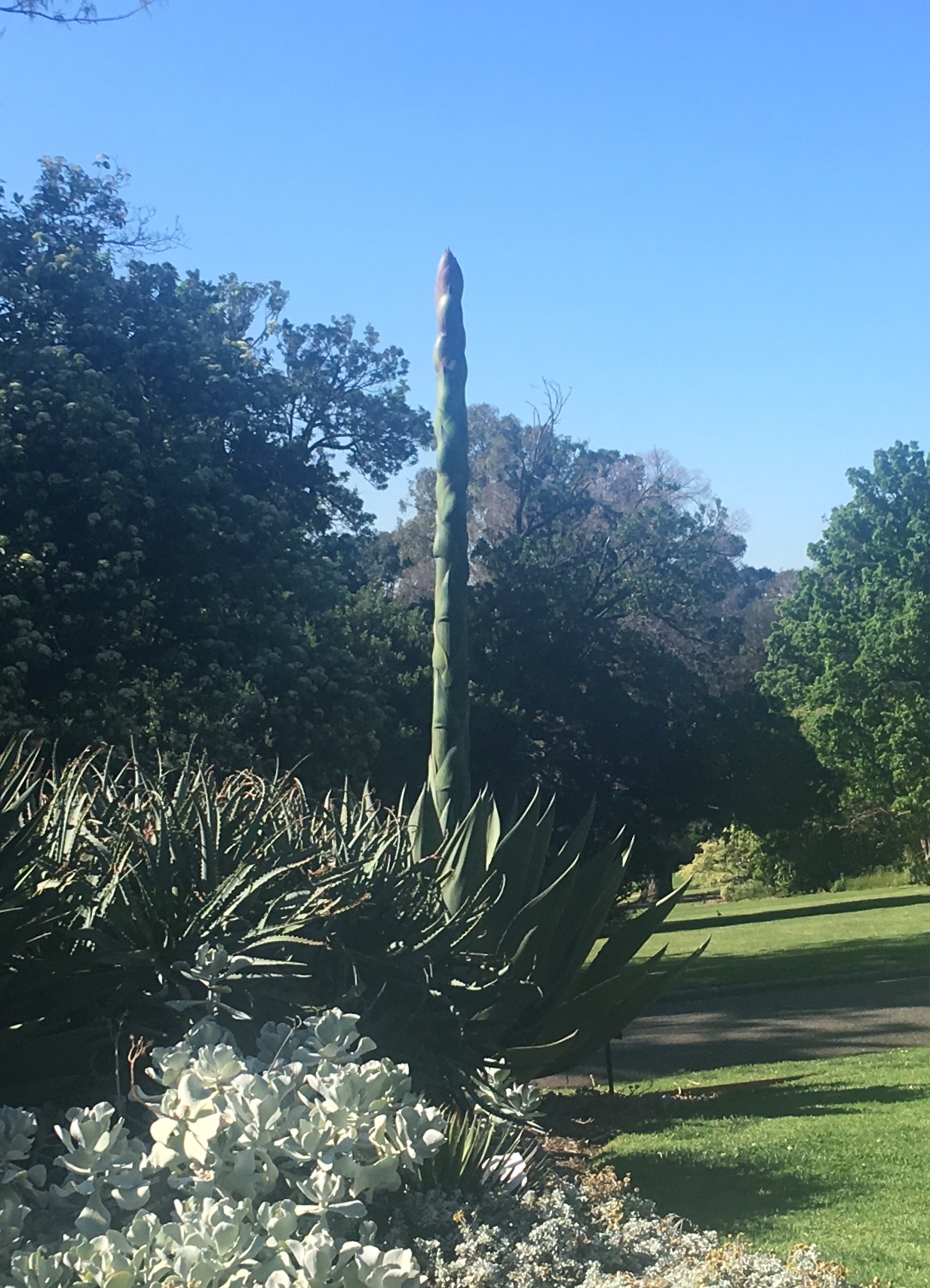
I don’t know what this was; all I knew was that anything that appears to be a 20-foot-tall asparagus spear must be photographed.

I snapped this shaky photo of a banyan tree from the trolley.  I wonder if the guide found me an annoying American due to the many times I exclaimed, “Wow!”

“I could have stayed on that trolley all day,” I said to Heidi and Danielle after we reluctantly disembarked.  The driver had politely but firmly said no when we suggested going around a second time.

“I know,” said Heidi, “Our guide had such a posh Melbourne accent.”

“Is that what it was?” I asked.

“I think so.  It’s hard to tell if she was putting it on or if that was her real way of speaking.  There aren’t loads of different accents here, like in the UK.  Mainly, we have regular … ”

“Like us,” Danielle interjected.

“Country,” Heidi continued.

“Like Crocodile Dundee,” said Danielle.

“And posh,” finished Heidi.

“That guide was posh, obviously,” said Danielle.  “I don’t think Melbourne is any different from the rest of the country.”

Heidi replied, “I guess I was talking about the lilt she had, like a bird.  Hearing all the birds of Australia—I hardly notice them but Annie, you’ve been bringing them to my attention—I wonder if our accent was influenced by them.”

She glanced at her watch.  “Oh my gawd!  We’ve got to meet Andrew!”  Andrew, an old uni chum of Heidi’s.  We raced past the Victorian keeper’s house and children’s garden.

We got to Lygon Street in Little Italy where, once again, I had a moment of disorientation where wondered, “Where am I?” because all the restaurants were Italian and people were speaking Italian.

We found Andrew and settled down at a sidewalk table with wine and pasta.  Andrew works for a Member of Parliament and commutes to Canberra during the week—a seven- to eight-hour drive or one-hour flight. We talked more about language.

“The state south of yours is the Mexicans,” Heidi said.

Fair dinkum means, ‘You’ve got a point’,” said Danielle.

“What’s a slice?” I asked, and was informed it was another name for a bar-type dessert, like a brownie.

“And tucker?”

“That’s just food,” Andrew explained, as he twirled his spag bol.

On the Yarra

I’m not a food snob.  I cook a lot but nothing fancy, and I enjoy whatever is put in front of me when I go out to eat.  Our meal at the Independent was memorable because the food was so flavorful.  We had scallop ceviche, maple-smoked carrots with coriander and peanuts and chili, crispy chicken with smoked eggplant, and on and on.  We had drinks and desserts and coffee and aperitifs. Being a tapas restaurant, we ordered a dozen dishes for the four of us, and I could hear a little “cha-ching” in my head with each plate we added.  This was a special meal, with friends I might not see again for a long time.  When we split the bill we each paid $60Aus, or $42US, for an amazing meal with great company.

On the subject of drinks, when ordering beer in Australia you must know the difference between schooners, pots, and pints. A pint is a pint—20 ounces—except in Adelaide where it’s an Imperial Pint.  A schooner is 15 ounces except in Adelaide, where it’s a pint. A 10 ounce glass of beer is a pot—not a half pint—except, apparently, in Canberra, where it may be called a middy.  Apparently you can order a seven-ounce glass of beer called (creatively) a glass or a five- (or four-) ounce glass called a pony depending on where you are.  There are also shetlands, middys, handles, butchers, bobbies, foursies, and small beers.  I ordered a local craft brew in a schooner because I liked the sound of it and hoped for the best.  It was good, but the waitress swooped it away before I’d finished.

The next day we were old hands at taking the train and got up early to get a move on.

We boarded a cruise ship on the Yarra River in downtown Melbourne and sat back to enjoy the scenery and listen to our captain, who was also a comedian.  I won’t attempt to reproduce his banter here but he really was clever, assuming you like jokes about drowning.  He had clearly made an effort to make what would otherwise be a boring job into something entertaining for himself and his passengers.

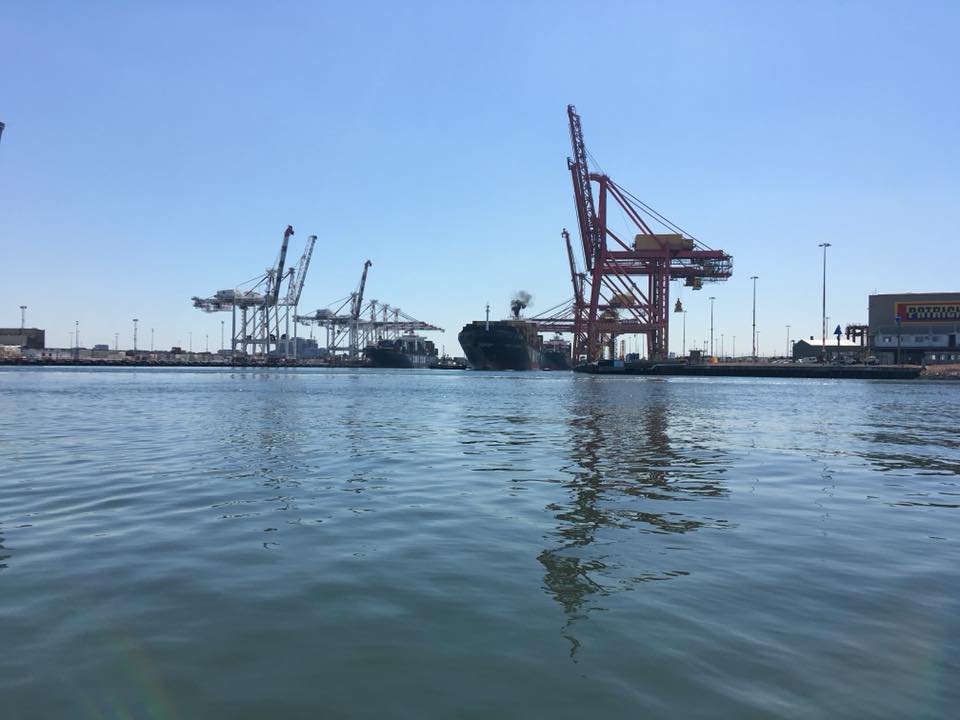
Melbourne is a deep-water port.  I write that as if I know what it means.  There were gigantic cranes everywhere; we didn’t see them in action but I guess they load and unload containers onto ships so we can all have our plastic pens and clothes and storage bins that will all end up in the Great Pacific Plastic Island some day.

There was an interesting assortment of architecture and many more cranes building new buildings in which more people can keep more plastic items.

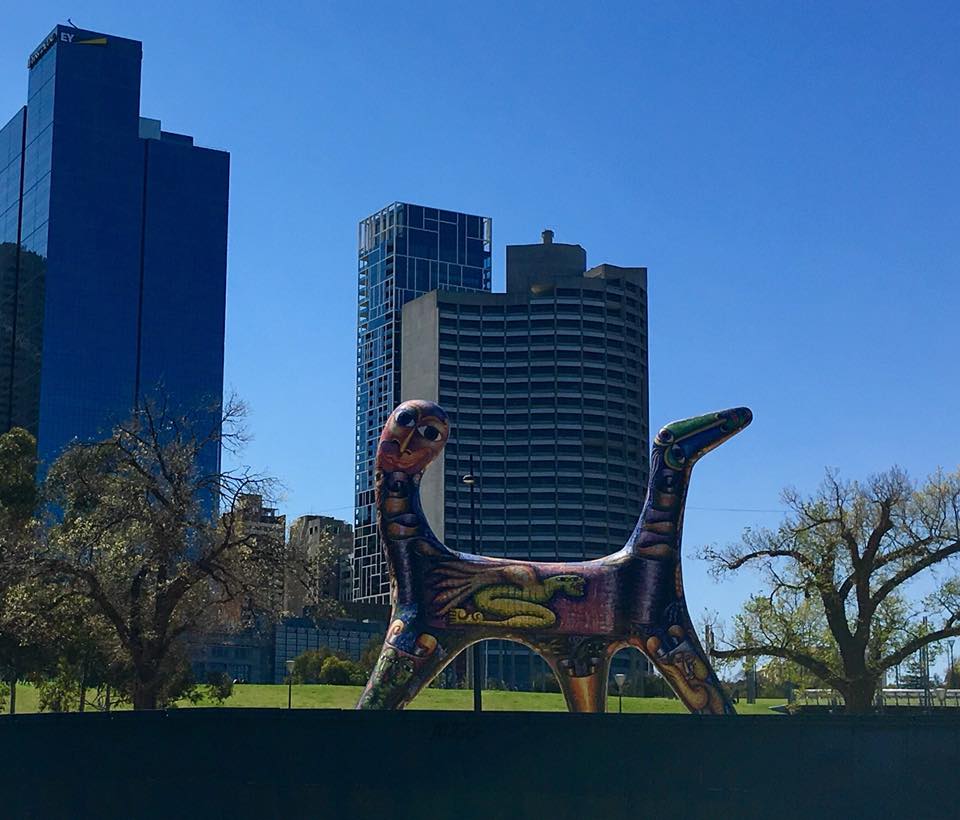
There was a fabulous Aboriginal statue that served as a nonlinear counterpoint to the buildings.

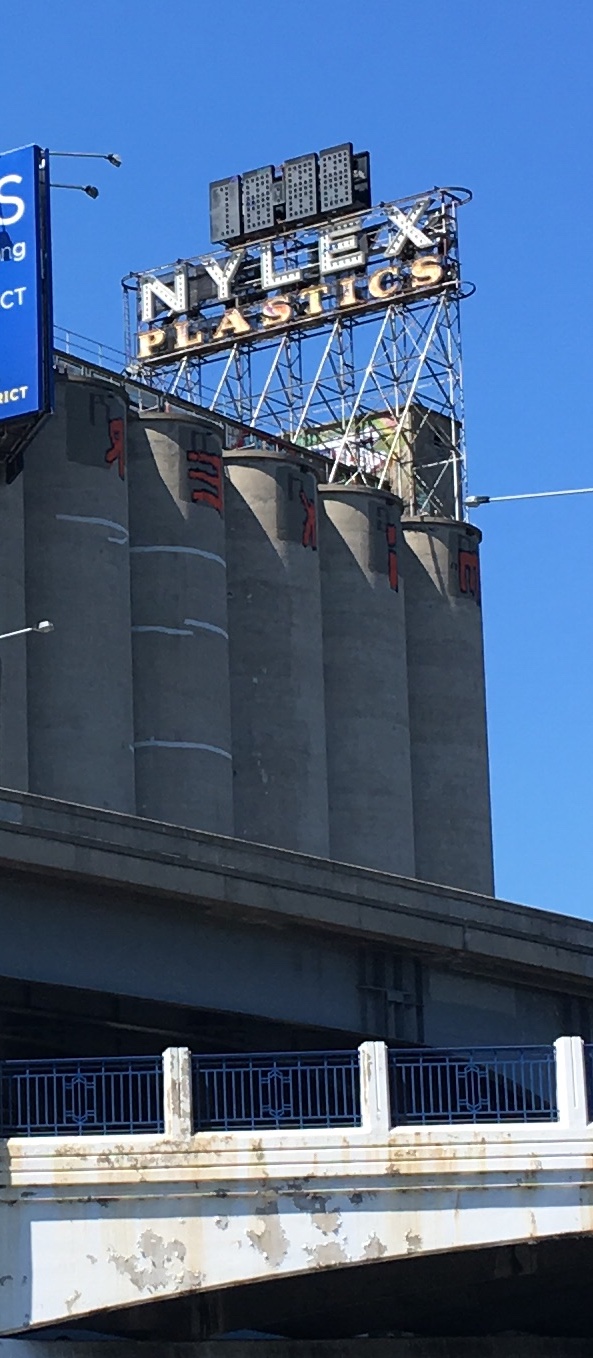
My favorite building was this deserted, burned-out, graffiti-covered former plastics factory.

What does that say about me?

About 80 Japanese businessmen boarded.  They dashed around taking photos of every building and paid no attention to the commentary.

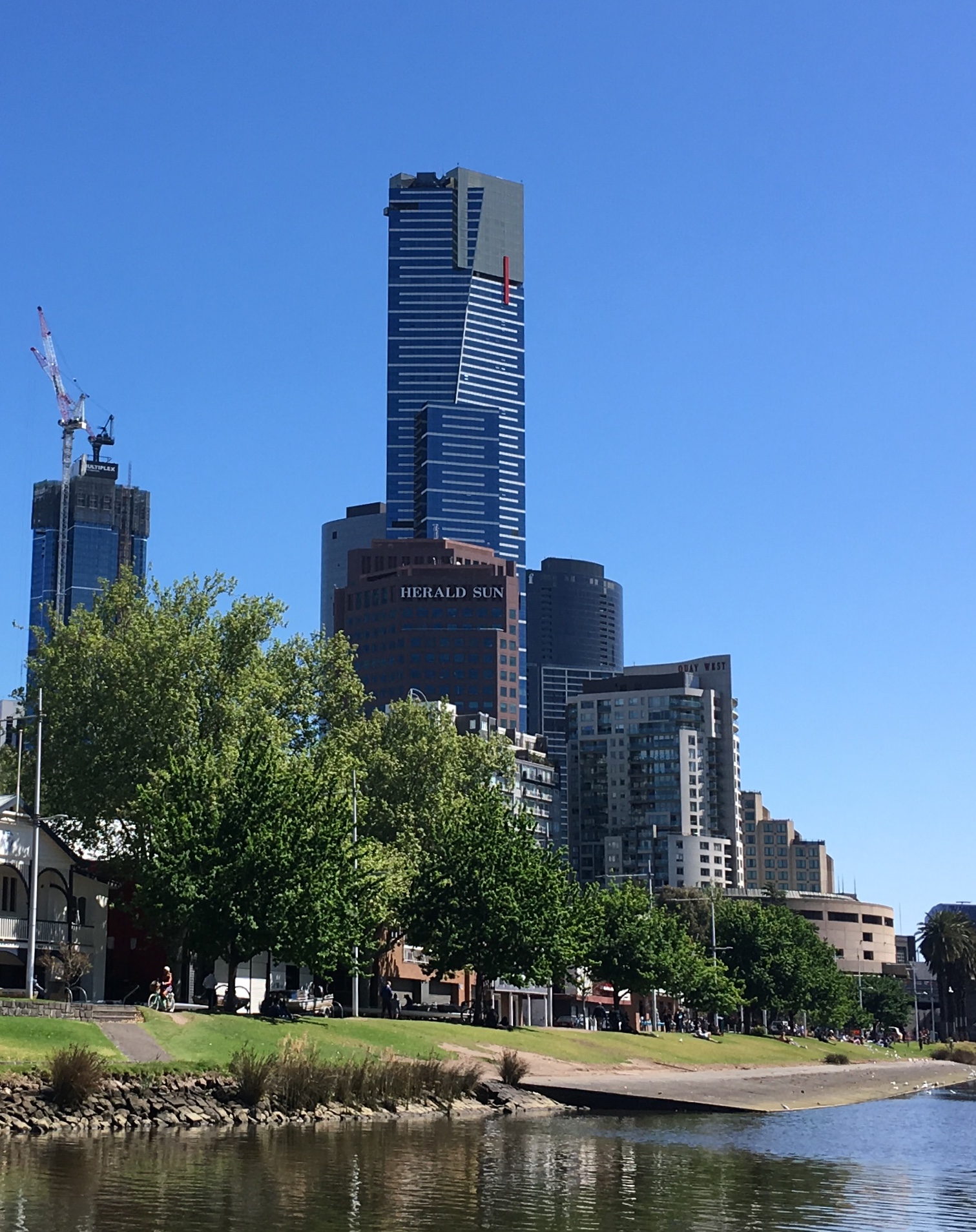
This building came with a long background story where every feature symbolized the Eureka Rebellion in nearby Ballarat.  I believe this was like the American Tea Party, except it was gold miners rebelling against the British over taxation without representation.

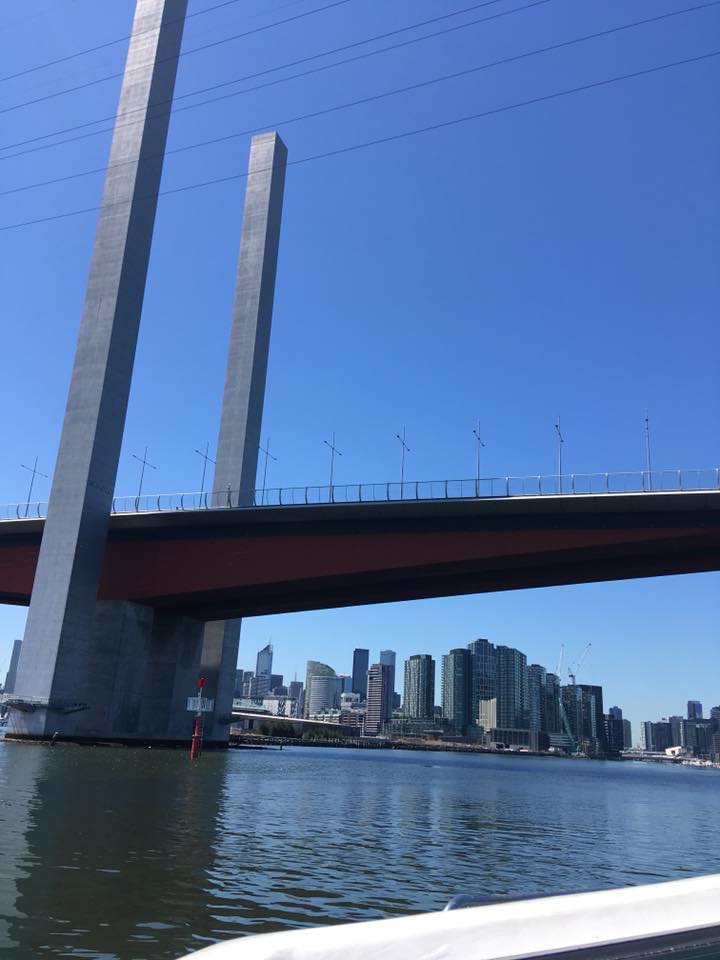
This bridge was unremarkable until the captain informed us that the pylons are one meter higher than Sydney Harbor Bridge.  That was the whole point of the bridge, besides getting cars from Point A to Point B.  They were not out to build a beautiful bridge, just one tall enough to best Sydney.

Melbournians are mad about sport.  We passed Melbourne Cricket Ground, and this is Marvel Stadium, formerly Emirates Stadium.  Maybe next year it will be Amazon Stadium.

“Those low-rises on your left,” intoned the captain, “are condos that’ll sell for $7 million once their finished.  Each one comes with its own private yacht berth.”

“Crikey!” he said next.  “I just got a Google alert that the Dow Jones fell 800 points today.”  This was not in the script, and he sounded genuinely alarmed.  “Good thing I didn’t invest in one of those condos.  It might only be worth $4 million now.”