Tag Archives: England

At Liberty

I can always count on Heidi to show me something new in London that I wouldn’t have read about in a guide book.  She lived there for 15 years, maintains her claim on her rented room, and will return to work there—that’s the plan—after her sojourn in Australia.

From Parliament Hill, she led me on to Fortnum and Mason, in Picadilly.  I look at a map now and wonder, did we pass Banqueting House?  What is Banqueting House?  Did we pass Scotland Yard?  Surely I would remember walking through Trafalgar Square and along Pall Mall.  I love that name because my grandparents smoked Pall Mall cigarettes.  So sophisticated.  And then they died of cancer, emphysema, and strokes.

Maybe we cut through Horse Guards and walked up Waterloo?

Regardless, F&M is one of those fancy schmancy brands with a royal warrant:

F&M is a department store founded 300 years ago and in the same stratosphere as Harrods’s or Liberty.  I rarely step foot in places that have $$$$ next to their listing in a guide, but on a rainy day it’s fun have a look and take pictures, especially with a friend to whom I can exclaim, “Oooh, look at this!” to which she replies, “Aaahhh…so beautiful!  How much?” and when I flip over the price tag we both suck in our breath in a combination of pleasure and pain.

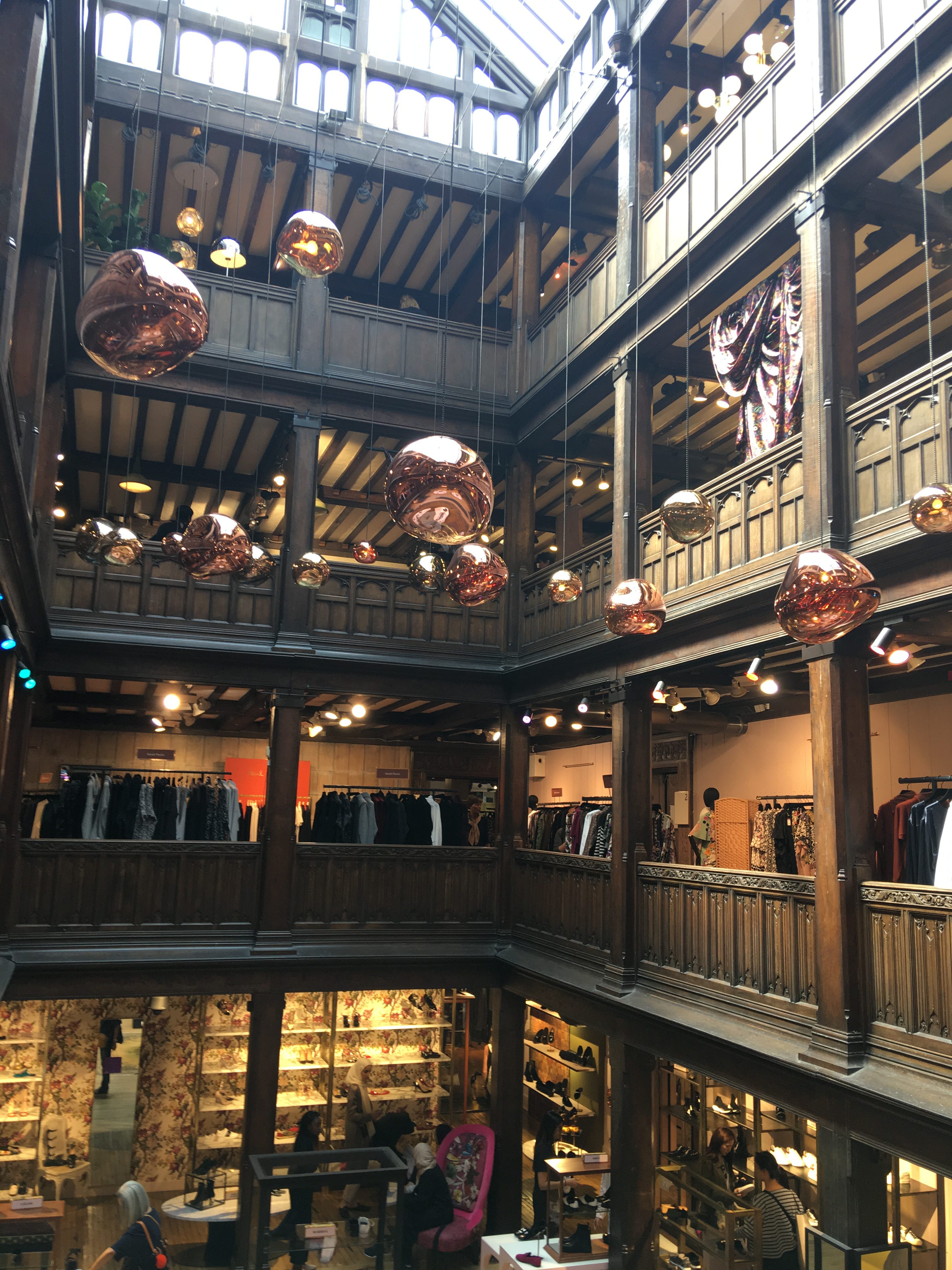
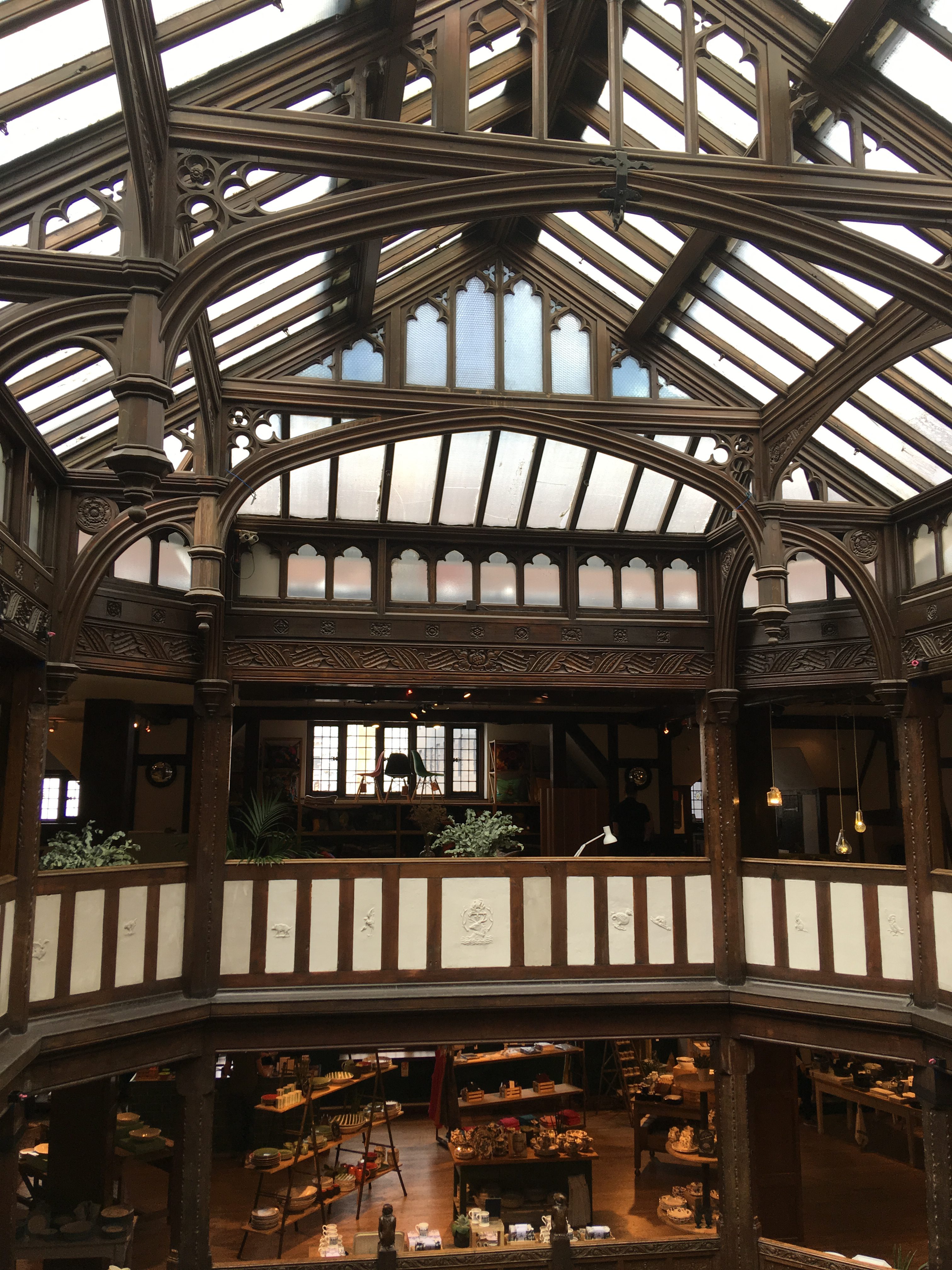
The last time I was in London, Heidi and I spent a whole day doing this in Harrods and Liberty.  I prefer Liberty to Harrods because the building itself is so beautiful; it’s reminiscent of something out of a Harry Potter movie.

They say you will know you have found your passion when you discover the thing that makes you lose all track of time and your surroundings.  I just spent 20 minutes looking at photos I took at Liberty.  I forgot it was -10F outside.  I wasn’t worried that my laptop battery was about to die, or that friends were coming over and I needed to tidy up my place.

This happens frequently when I blog.  Not just about going to posh places like Liberty, but during the process of coming up with words like posh … lush … luxuriant … sumptuous.  Focusing on stringing the right words together and complementing them with just the right photos—it transports me to another world.

And we all want to go to another world once in a while, don’t we?

As I said, I had visited Harrods and Liberty a few years ago with Heidi, and I returned to Liberty right before I left London for Scotland this summer.  I’ll give you a quick bad-photo tour of Liberty, then return to Fortnum and Mason.

The exterior.  Note the golden ship on top, undoubtedly an originally-proud way of proclaiming, “Come and see all the beautiful things we have plundered from around the empire!”

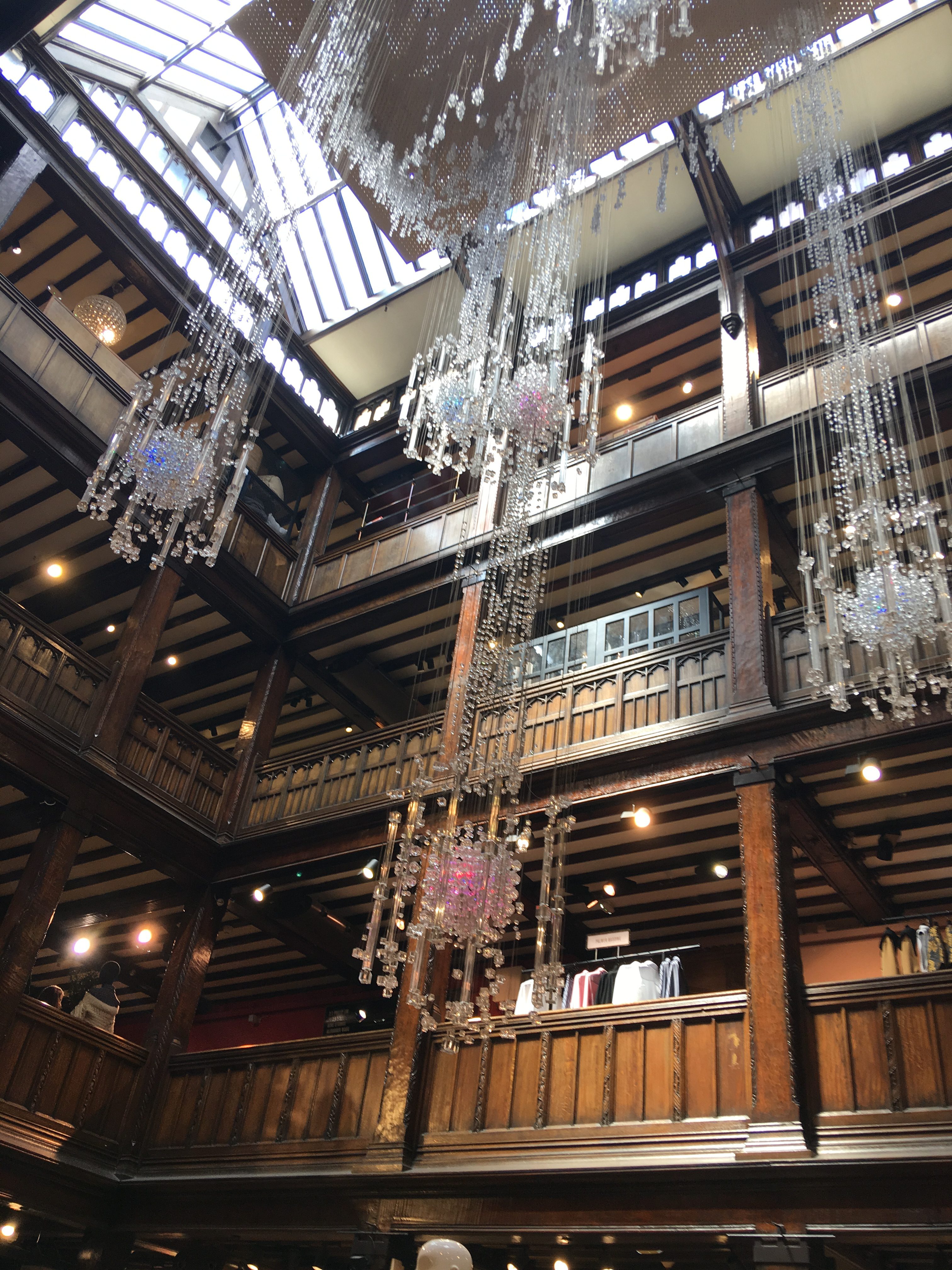
The atriums, from bottom to top.

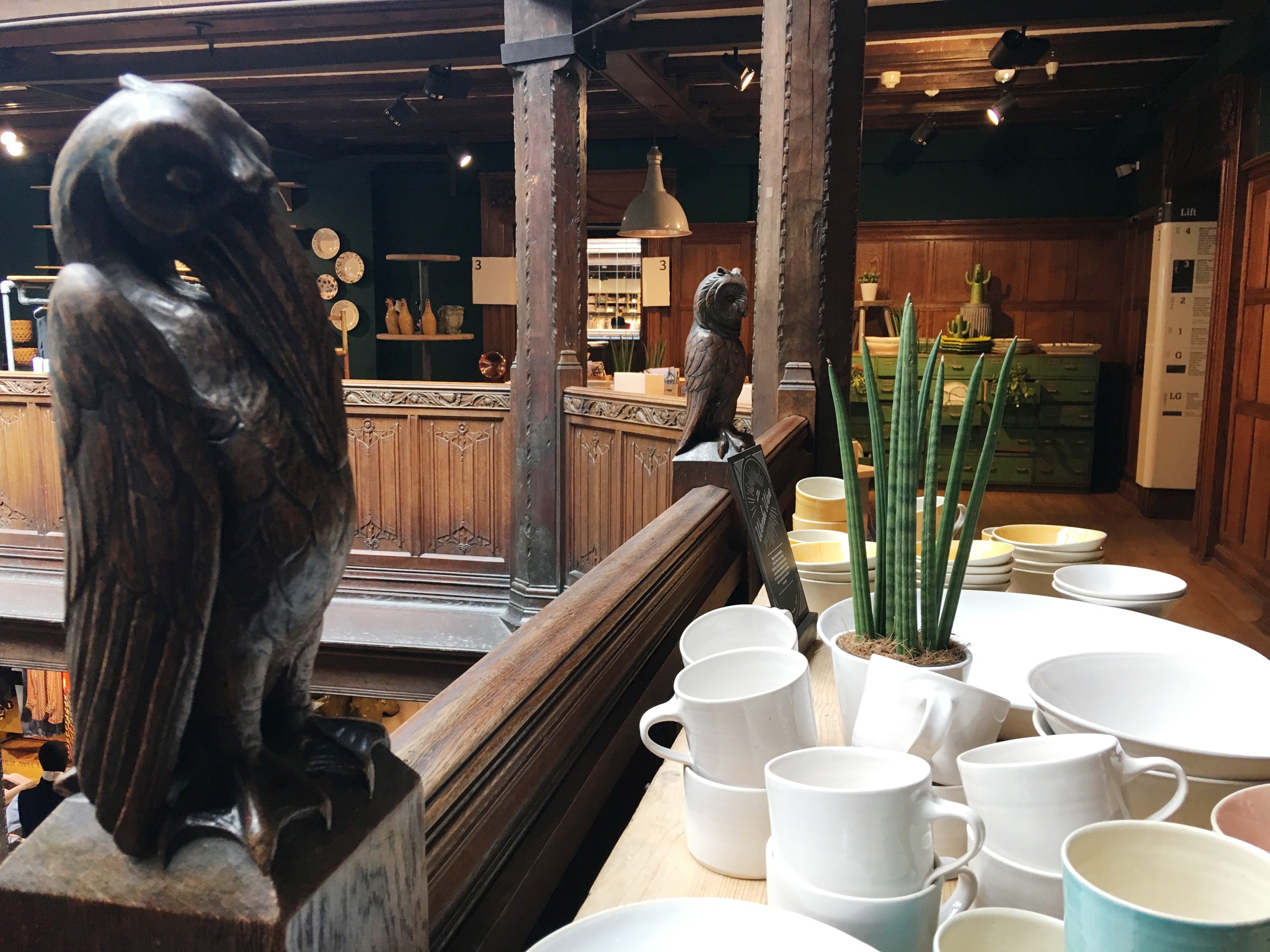
Carved wild things on the railings.
It’s just fabulous.  If you are not fabulously rich, there are some signs that you don’t belong there.  First, rooms with precious few items.  This is not Walmart.  It’s about price, not volume here.
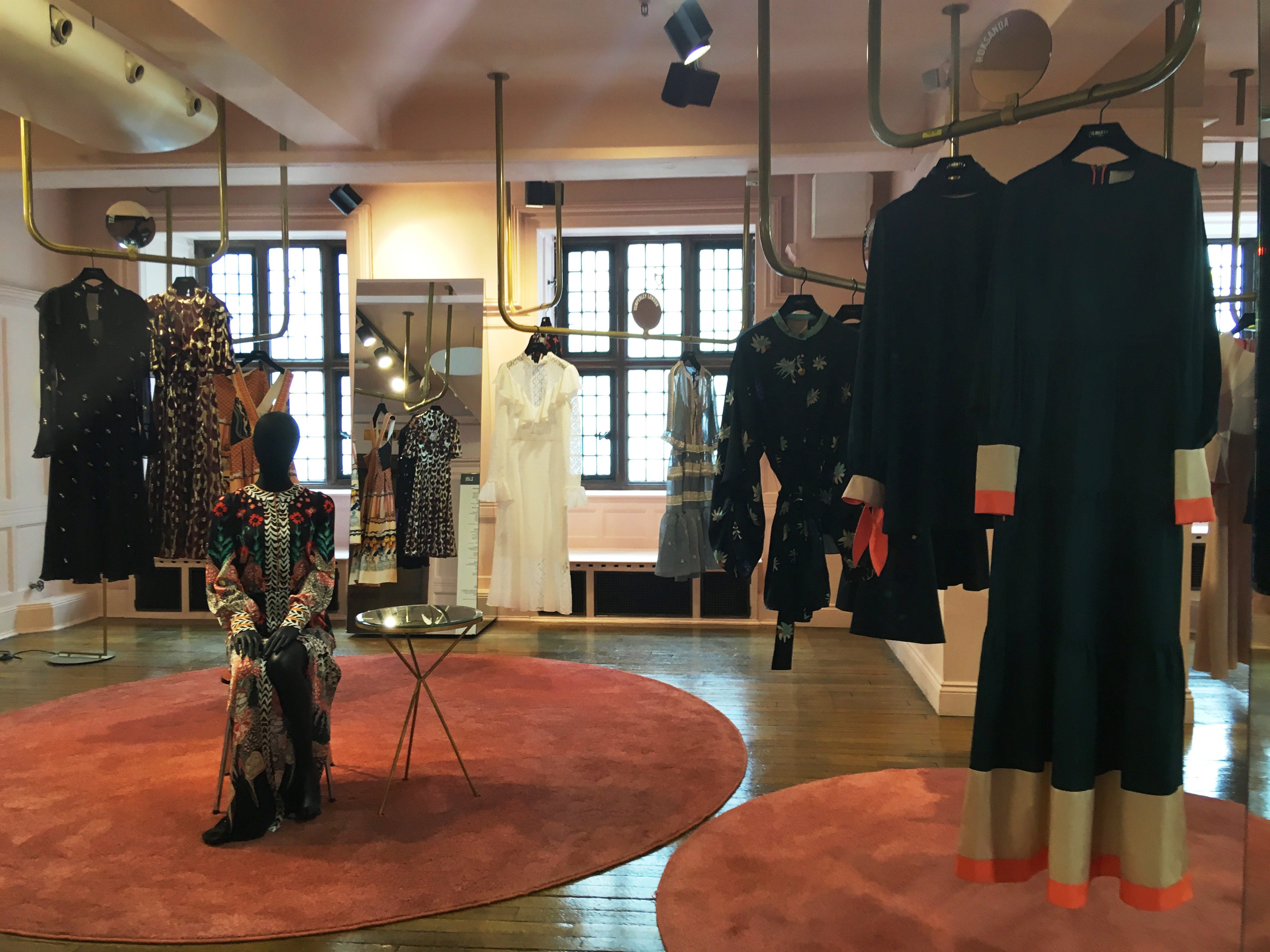
There are sales, but.

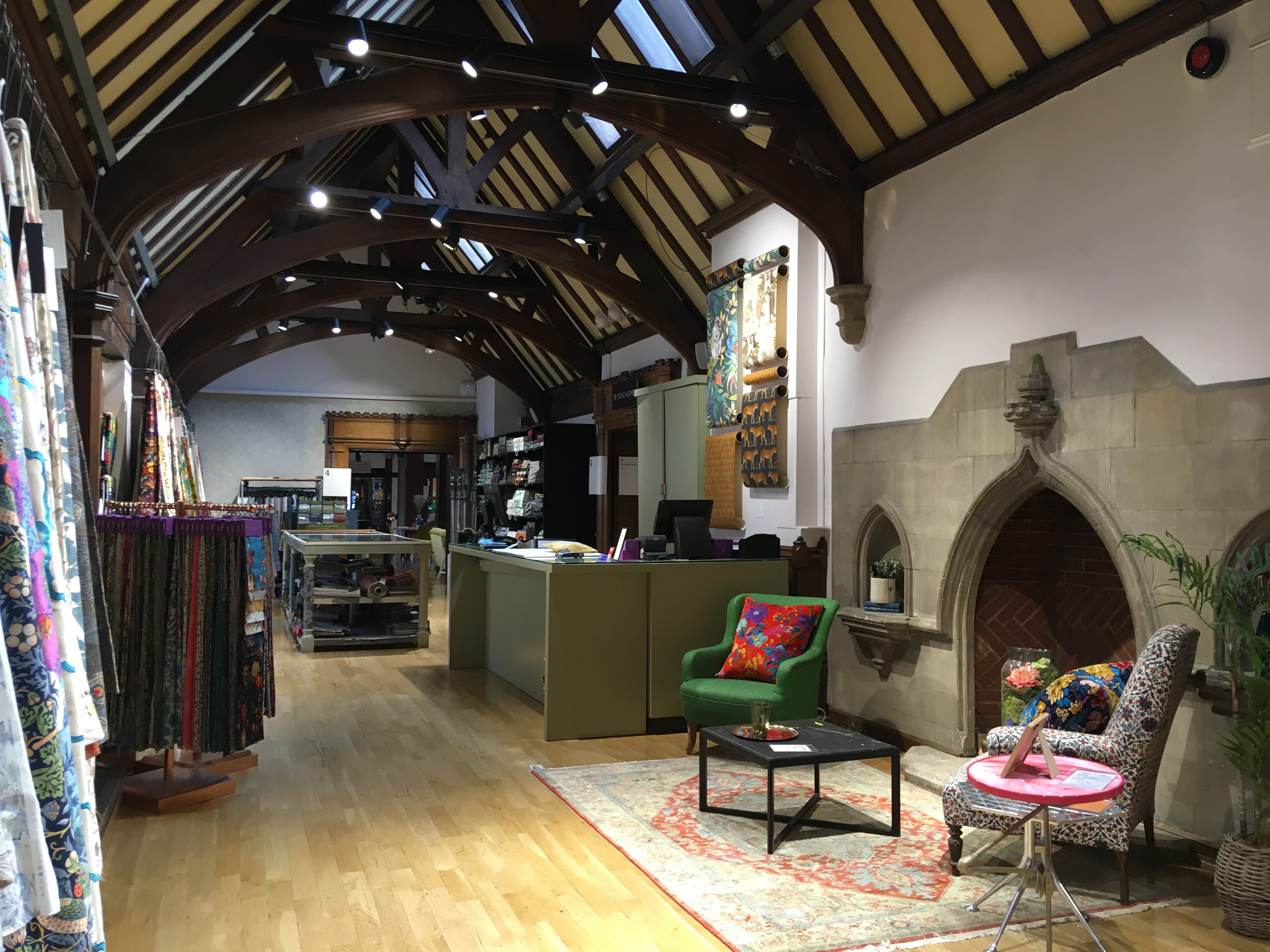
Five hundred pounds is $678.  But it’s all so beautiful.  The William Morris fabrics and wallpaper.  Persian carpets.  I pretend I’m in a museum.


A green-velvet love seat!  My inner gay man was ecstatic.

Some of it went too far.  These faux mounted heads were £695 ($943).  If you want a hand-crafted fake deer head, buy one on Etsy for one tenth the price.

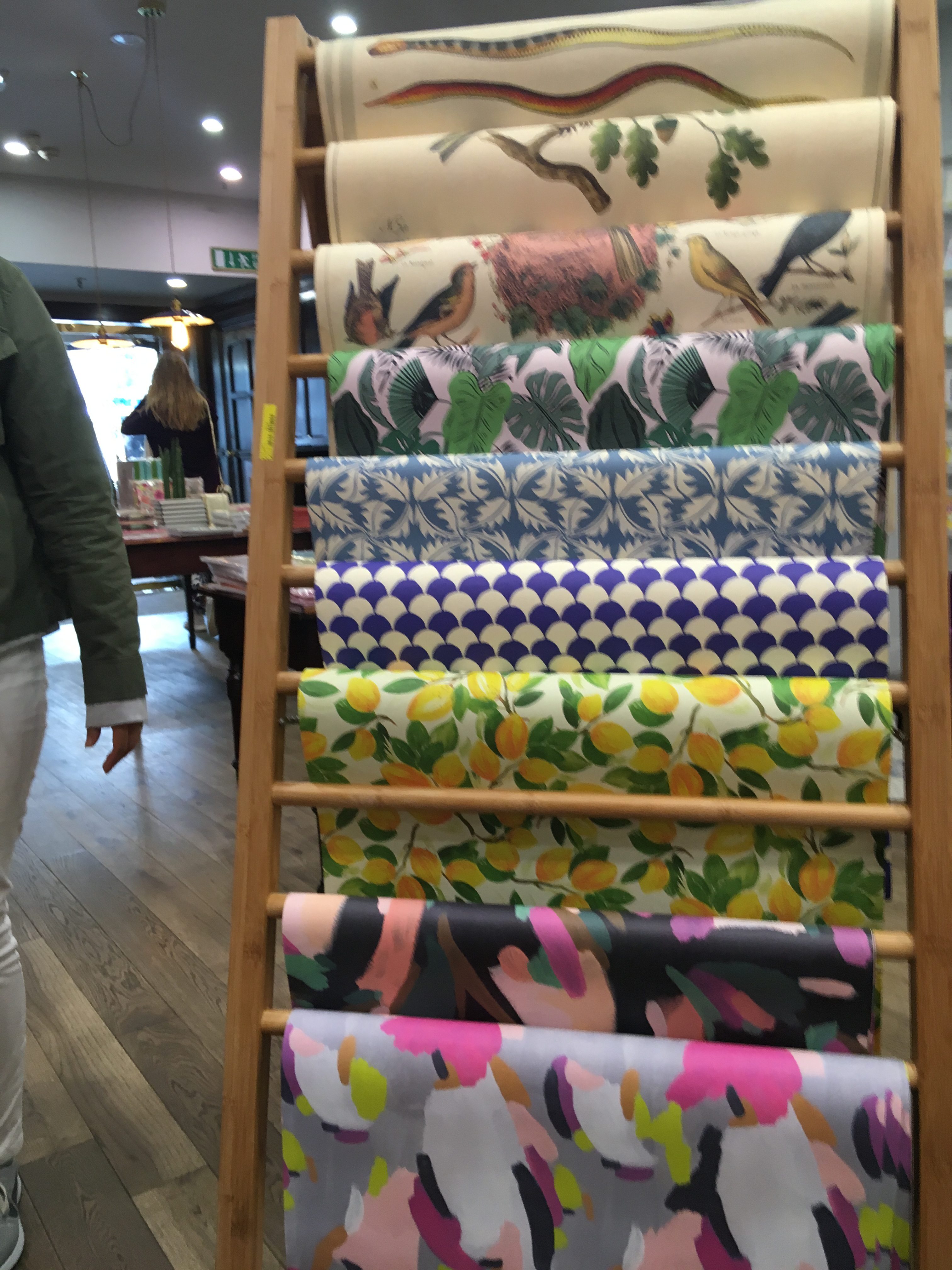
Some smaller items were affordable but not easily portable, like the wrapping paper.
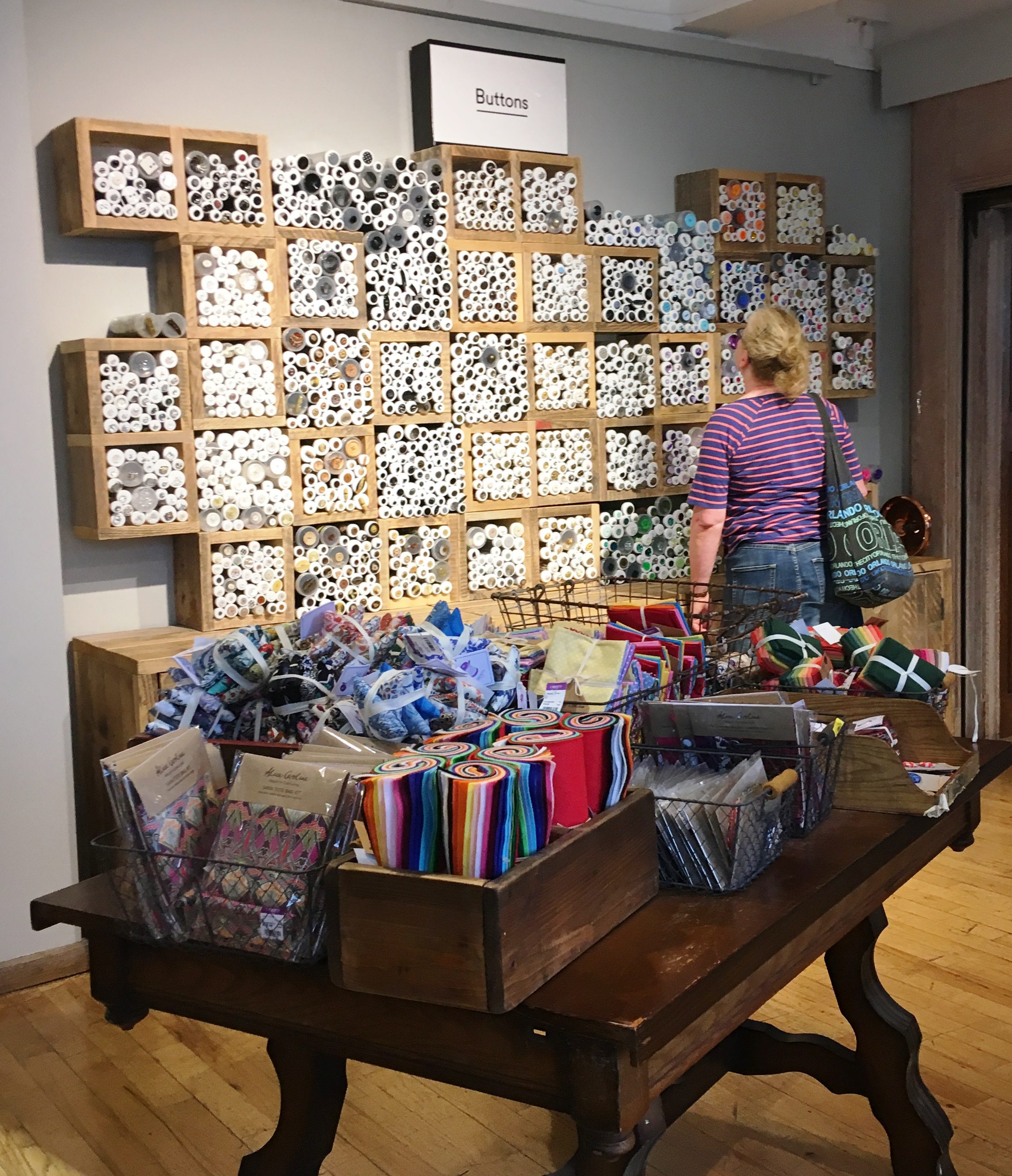
Buttons.  This woman appeared to be in a trance.
The conservatory. You could probably buy these plants at Tesco for £14.99.

I had had enough of being dazzled and felt almost nauseous from all the colors, textures, and other stimulation.  I made my way down, down, down one of the wooden staircases and encountered this on the ground floor.

As always in Britain, you can count on being reminded of all the men who gave their lives so we can buy green velvet love seats.
 

Being There

I had an hour before I would meet Heidi and there were swarms of people on the streets but nowhere to sit and have a cup of tea.  Normally I would have gone for a walk to see what I could stumble upon, but the rain hadn’t let up and I just wasn’t in the mood to get splashed by taxis and spend the rest of the day with wet pant legs and shoes.

Then I noticed a modest structure across from Parliament with a sign out front and wandered over to have a look.  It turned out to be what was left of the original Royal Palace of Westminster, the Jewel Tower.

Before I paid my five quid or whatever it cost, I asked the guy at the till, “Will I be able to see it all in an hour?”

He laughed a little.  “Oh yes.  It’s smaller on the inside than what you see on the outside.  No one’s been in all day,” he said.  “You’ll have the place to yourself.”

“It’s weird there are thousands of people standing in line for a tour of Parliament, just steps away across the street, but no one in here.”

“I know.  This place isn’t on any of the Top 10 lists. It’s the kind of place people visit the fifth time they come.”

Erm…that would be me.  I hadn’t known of the Jewel Tower’s existence until now, as I began climbing the steep, winding, stone steps to the top floor.

The Jewel Tower was built around 1365 to hold the treasure of King Edward III.  It was used as a store house for special-occasion clothing, public records, and jewels—as you might expect.  In the late 18th Century it was turned into the office of Weights and Measures—exciting stuff!  There were displays in the small rooms of some of the objects stored or measured there, but the best part was the views of Parliament from inside the tower.  None of my photos turned out, but trust me; it was very atmospheric to see Victoria Tower in the rain through the wavy, hundreds-of-years-old window glass.

I was done in 15 minutes but felt like the guy downstairs might be offended if I popped down too soon, so I sat on a window ledge and enjoyed the views, including the forever queuing tourists.  It was warm and cozy in here. After a few minutes I traipsed down the steps and bought a cup of tea in the tiny café area.  The ceiling was only maybe 12×12 feet, but richly adorned.  My friend was busy with two new guests, so I gazed up and around between sips and killed a half hour.

How often are we forced to do nothing?  Rarely.  And I have to be forced.  I can’t do it on my own.  After 15 minutes I began to notice things I wouldn’t have if I’d given the place the usual cursory once over. Differences in colors where a wall must have been repaired.  Was that from the great fire?  There was a lion’s head—was it carved in stone, or wood?  How was it attached to the ceiling?

Looking straight on, my view was a little display of souvenirs and a freezer full of ice cream treats.  Ice cream treats!  This is one regard in which the Brits are eternally optimistic.  There might be that one warm day when an ice cream treat wouldn’t freeze off your already cold cockles.
I realize I’m writing about a lot of nothing here, but that’s my point.  I had nothing to do, nowhere to go.  I wasn’t in any hurry, and there wasn’t a lot to see but what there was, I really saw that day.

I realize I’m writing about a lot of nothing here, but that’s my point.  I had nothing to do, nowhere to go.  I wasn’t in any hurry, and there wasn’t a lot to see but what there was, I really saw that day.

I was kind of impressed with myself that I wasn’t ruminating about my dad, after feeling the shock of recognition in Victoria Park.  I didn’t think about shopping, or work, or paying my bills, or how I was going to lose 10 pounds, or what time I needed to catch the train to get back to Windsor by sunset.

I was just there, off leash.  This only happens when I’m traveling.


Happy New Year, You’re Beautiful!

Yesterday I went to the British Arrow Awards with Vince.  Five years ago, I would never have imagined going to the Walker Art Center to watch 70 minutes of British TV commercials with my son.

Five years ago, I would have spent New Year’s Eve an agony of wondering where he was.  Three years ago, I knew where he was—in prison.  Two years ago, he was living in my 10×10 foot (3×3 meter) spare room alongside the washer and dryer, and things were extremely tense.  A year ago, he had moved out with sober friends, had a job, a car, and things were looking up—or at least were stable.

Today, he has a job he likes with benefits—for the first time in his life.  He’s moving in with his girlfriend.  He’s got three and a half years of sobriety and works his program of recovery like today is his first day.  Well, maybe not every day, but he does work it.  I realize things could fall apart, as they have before, but I don’t worry about him every day like I used to.  It’s such a relief.  Thank you, Vince.

So even though it was -15F (-26C) I got in my frozen car and drove to Minneapolis to meet Vince and his girlfriend and her two daughters for Thai food and sushi.

I had bought two tickets to the Arrow Awards a month ago, then when I went back to buy more so others could join us, they were sold out.

There is a weird phenomenon in Minnesota.  It’s the only place in the US where we get 10-year-old episodes of EastEnders on TV and pay $14 to watch British TV commercials.  Two weeks ago, my local PBS station started airing the great series Dickensian, which Lynn and I had binge watched in Scotland.

So in addition to being quirky in a general way (Minneapolis-St. Paul is the #12 quirkiest metro area according to Travel + Leisure), we are eccentric in a particularly Anglophile way.

If you’ve been reading this blog for a while you will likely think I am an Anglophile and I am, but I am also a Francophile, and a Berlin-o-phile, and a Malta-o-phile, and So-Many-Other-Places-o-phile.  I’m sure there are plenty of fantastic shows and ads in other countries but since I don’t speak French or German or Maltese, I’m not qualified to writing about them.

The Walker Art Center is a place I like to know is there for other people, but where I never go except for this annual event.  I used to belong to the Walker when I was young and hip and trying to meet young, hip men.  But my days of pretending that giant rusty chains suspended from the ceiling are Avant-garde art are over.

The Walker screens back-to-back showings of the Arrow Awards Thursday through Saturday from 1:00-8:00pm and tickets sell out within days.  It must be a real income generator.

The ads make you laugh, then cry.  Two of the funniest, Vince and I agreed, were for Rustlers frozen hamburgers and the Lottery, featuring James Blunt.

And then, when we were laughing out loud, the next ad would be for UNICEF or another organization trying to get the world’s attention about the biggest refugee crisis since WWII.  I had heard about this theme ahead of time so I was prepared with Kleenex.

Since I work for an NGO and blog about travel, I am always feeling the juxtaposition of my safe, happy life with the terror and despair with which millions of people are living.  This was another contrast, in the newspaper a few weeks ago.

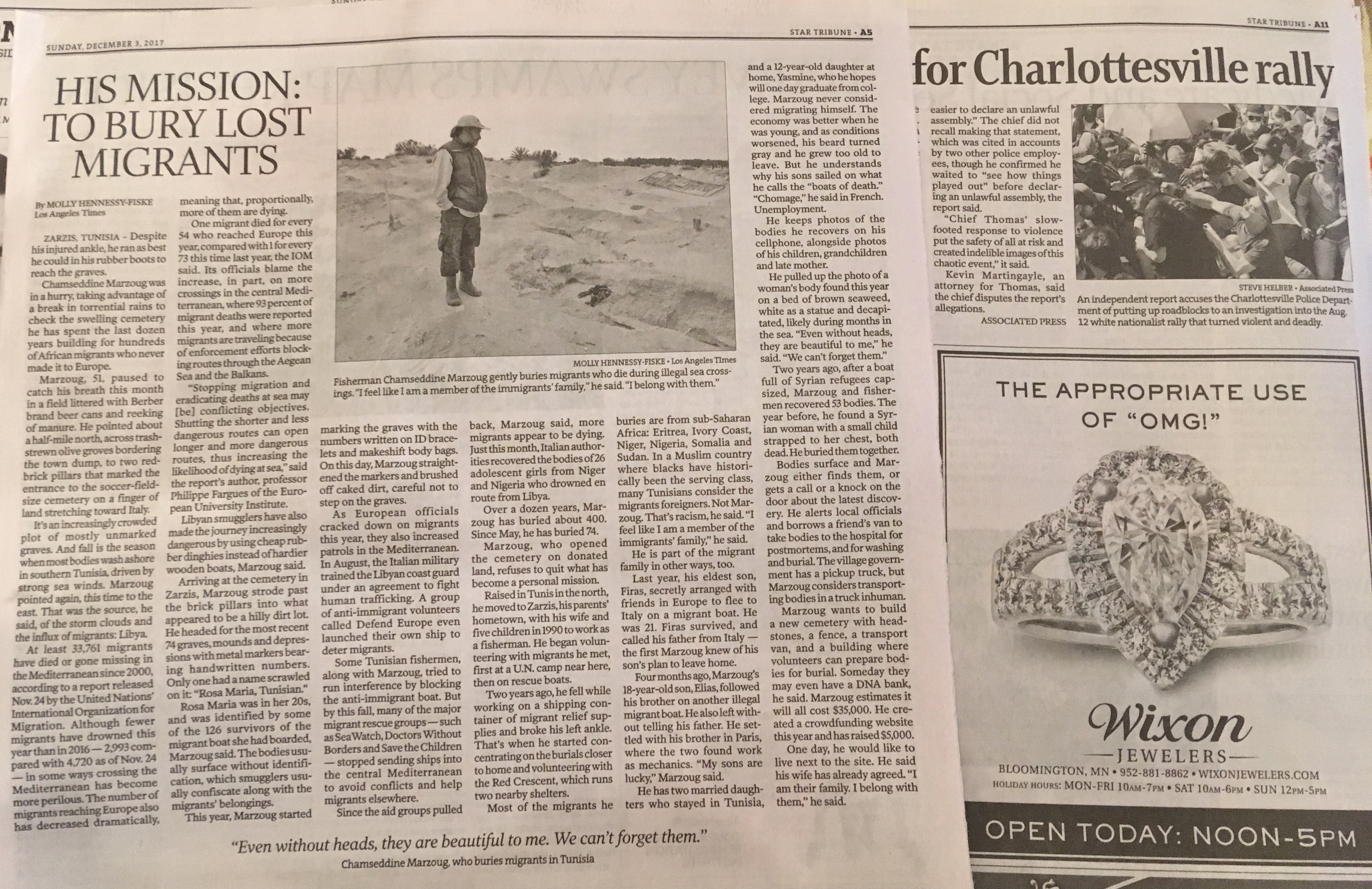
Articles about a man burying drowned migrants and the racist rally in Charlottesville, then an ad about diamond rings.

I don’t care about diamonds, but should I skip a trip this year and donate the money to UNICEF?  Do I justify travel, my one big indulgence, by saying it sustains me to carry out my work raising money for refugees?  Should I call travel an indulgence?  Do I have to justify myself?  I don’t think there are any right or wrong answers, but I constantly struggle with the questions.

A Great Life and a Rainy Ghost

It was my turn to go into London and spend the day with Heidi.  I wanted to visit the Churchill War Rooms, which are an underground complex near Parliament that are operated by the Imperial War Museum.  Heidi had already been there, or wasn’t interested, I can’t remember—so we planned to meet at the Houses of Parliament for a tour at 2pm.

I bought tickets online for both places which enabled me to breeze past the block-long line of suckers hoping to get in to the Churchill rooms.  There’s a reason they control the number of people who enter.  These were the underground bunkers where Churchill and his team lead the war effort, and so they are dark and cramped.  I was only inside for a couple hours and I felt claustrophobic.  I can’t imagine spending days and nights down there—breathing in thick cigar smoke and hearing bombs falling overhead.

Winston Churchill was complicated.  He was born into wealth—at Blenheim Palace, near Oxford, where I had enjoyed many long walks on the pleasure grounds.  He joined the army, was captured in South Africa during the Second Boer War, and made a movie-script-like escape.  He was elected Prime Minister and indisputably led the nation through World War II with world-famous speeches with lines like:

“I have nothing to offer but blood, toil, tears, and sweat.”

“Never in the field of human conflict was so much owed by so many to so few.”

“… we shall fight in France, we shall fight on the seas and oceans, we shall fight with growing confidence and growing strength in the air, we shall defend our island, whatever the cost may be, we shall fight on the beaches, we shall fight on the landing grounds, we shall fight in the fields and in the streets, we shall fight in the hills; we shall never surrender.”

“Let us therefore brace ourselves to our duties, and so bear ourselves, that if the British Empire and its Commonwealth last for a thousand years, men will still say, ‘This was their finest hour.”

World War II—and the US making England repay every penny we contributed to support them during the war—and lots of other factors, broke the Empire. The official end wouldn’t be until 1997, when they turned Hong Kong over to China, but many would argue that it really ended with decolonization/independence of India, Malaysia, Singapore, Jamaica, Sudan, Ghana, Kenya, Jordan/Israel/Palestine, and many, many others after the war and into the 60s.

Churchill opposed Indian independence on paternalistic grounds—the Indians needed the British to get them organized.  If Ghandi went on another hunger strike, he said, they should let him die.  When Churchill was elected PM a second time, he had a front-row seat for the Empire’s dismantling. He lived to be 90 despite being—famously—a chain cigar smoker and heavy drinker.

I feel so inadequate when I write these posts about which hundreds of books have been written and dozens of movies and TV shows made … go see the film that’s just out now, called Churchill.  All I can do is repeat my caveat that I am not a history professor, although sadly I think I could play one on TV.  I am just a curious person traveling around, learning a bit here and there, and forgetting most of it by dinner time.

One thing I can say with certainty: the War Rooms have a really good cafeteria and gift shop.  After spending time and money in both I emerged into the rainy street.

I had hours to kill before meeting Heidi.  I opened my souvenir Wimbledon umbrella and fought my way through the crowds to the Houses of Parliament bookstore, where I bought more stuff which forced me to carry more bags.

I made my way to Victoria Tower Gardens, a quiet park on the west side of Parliament, and gazed out over the Thames through the rain.

Suddenly I felt something like an electric zing.  I have few photos of my father.  Being here triggered a memory of a black and white photo of him standing in this exact place with his umbrella open, 50 years ago.

Euros and Doors

Mid July in Eton.  I was listening to a webinar about raising funds from European foundations.

Probably a quarter of my job consists of keeping up with what’s going on in my industry. I call it an industry because it is.  We like to think we’re all singing Kumbaya arm in arm while saving people, but without professionals who know what they’re doing, adequate funding, and an international infrastructure to support and coordinate everything, it’d be a big mess  Well, a bigger mess.

The international infrastructure is made up of what are called multilateral institutions, which are organizations that have funding from multiple countries: the World Bank, World Health Organization, and some of the United Nations bodies, like UNICEF.

The other day I was looking for a potential partner in Yemen.  I went to the UN’s Office for the Coordination of Humanitarian Affairs (OCHA) to see who is working there, in what sectors.  Sectors are activities like Water and Sanitation (WatSan or WASH for short) or Health or Protection. I browsed OCHA’s Humanitarian Response Plan interactive map to find other NGOs working in Yemen, in this case specifically in the Education sector.  For better or worse, there are only two in Yemen due to it being in a state of war—Save the Children and Norwegian Refugee Relief. I queried my colleagues to ask if anyone knew anyone at those organizations.  In this case we didn’t have relationships with either organization so my search ended there.

The mechanics are pretty straightforward if you know where to look, but the type of thinking involved is something that takes a while to acquire, and I really like that about my job.  I have three dozen other projects going on at once, large and small, that require the same strategic thinking, focus, communications, and persistence.

There are newish master’s degree programs in international development studies that package and deliver this information.  Most people my age, or with my number of years of experience, have learned it on the job from coworkers, at a conference, or from reading articles in an online community like Devex.

My organization, the Center for Victims of Torture, just got a grant from a Swiss foundation that I found on a European foundations website almost five years ago.  What were the odds— finding a foundation in Switzerland that is specifically interested in mental health and Uganda?  But after clicking through a hundred other foundations, there they were, and after years of Skype and in-person meeting, writing proposals that weren’t funded, and having them visit our program in Uganda, they will now be supporting us in significantly expanding our work there.  It took involvement from 10 people at CVT, and someone else wrote the proposal that got funded, so it was a group effort and we’re all feeling pretty good about it.  When I am sifting through hundreds of foundations that aren’t good fits, I keep this one in mind.

Back in Eton.  The webinar informed me that the 28 member countries of the EU have the same number of foundations and give the same total amount of funding as the US ($160 billion in 2015).  Did you know that IKEA is probably the world’s largest foundation? I didn’t.  The UK, Netherlands, Germany, Italy, Switzerland, and France have the highest number of foundations with the most money, but the French foundation websites are all in French, so it’s a good think I have French-speaking colleagues to check those out.  The webinar made some common sense suggestions, like looking to the former colonizing country for funding (Italy for Ethiopia, the UK for The Gambia, France for Vietnam, etc.) and to look at the donor lists of our “competitors” to see who funds them.

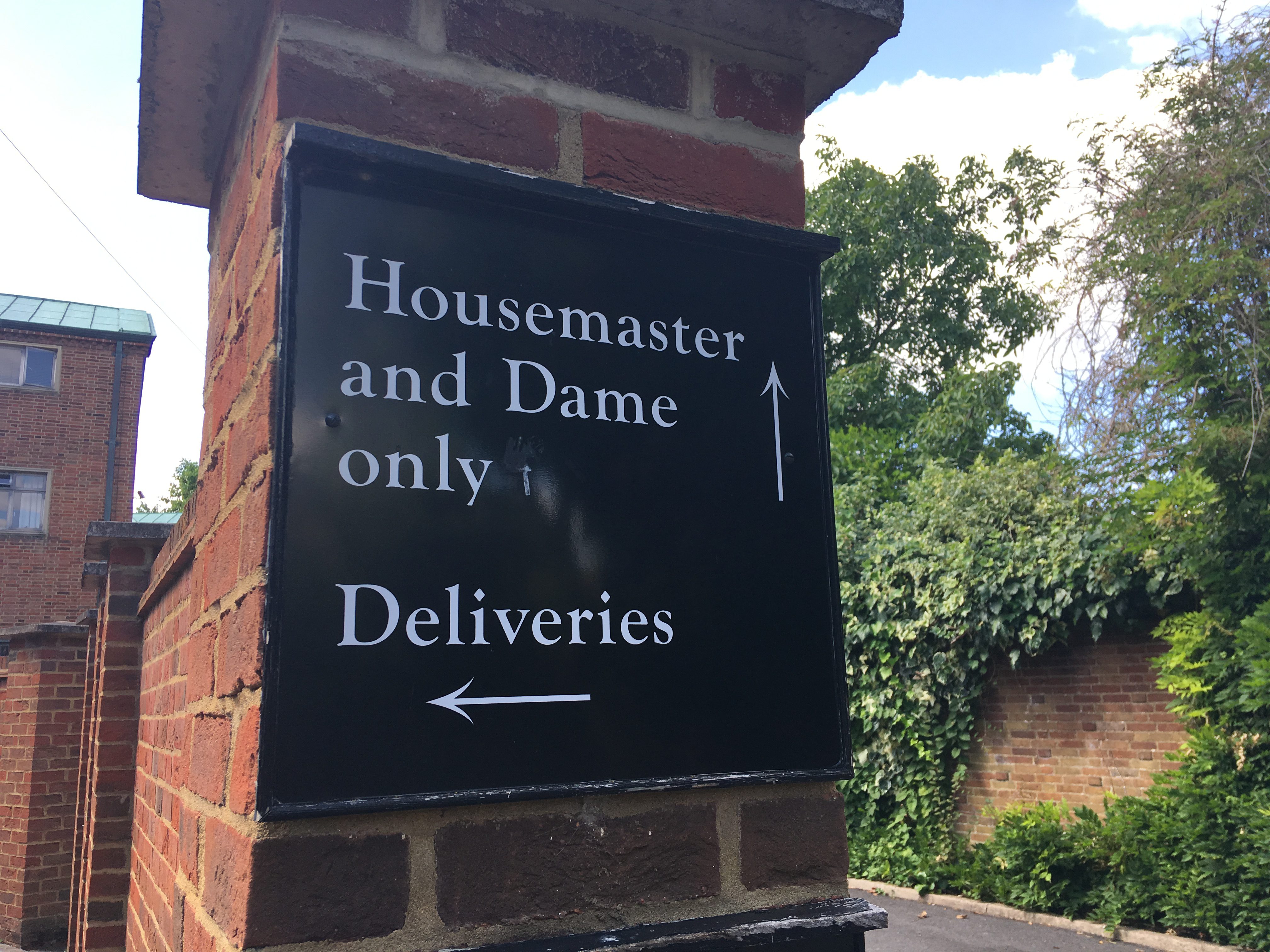
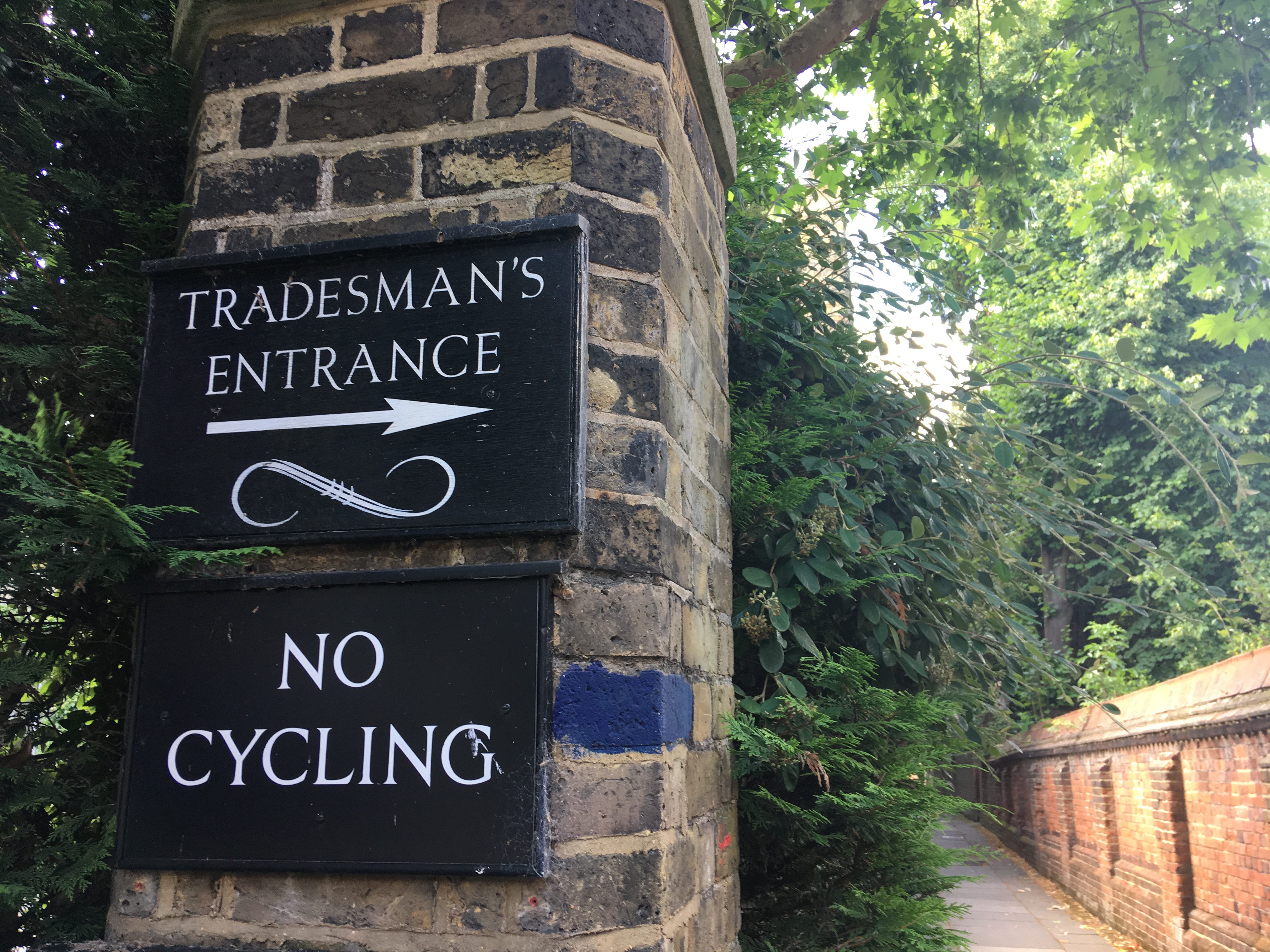
That afternoon, my walk was through Eton proper, where I photographed signs.  I was fascinated by how signs seemed to direct everyone to stay in their lane. I know how rambunctious boys can be, but was it really necessary for the grownups to have separate entrances?  Was a dame—as I imagined—a bosomy older woman with white hair in a bun who wore a flowered housedress and pinafore?  And was there really only one tradesman?

Boxing Day Look Back

It’s a joy to look back at my photos and remember all the warm summer moments in Windsor and Eton, now that it’s bleak and cold outside.  We had the coldest Christmas day in 20 years yesterday—2F (-17C) and we are headed into a prolonged cold “snap,” as they call it.  The high in the next week will be 14F (-10C) and the low will be -14F (-26C).

When there’s a streak of warm weather, they call it a warm “spell” or a heat “wave,” both of which sound lazy and relaxed.  A cold snap feels like it sounds—crisp and harsh—and it rhymes with slap which is also how it feels.  In Minnesota, we exchange wane smiles with strangers in the grocery store the day before the cold snap slaps.

“Gonna be a cold one,” we say.

“Yah, time ta hunker down.  Buyin’ the food supplies.”  This is when you check out what they have in their cart, which is usually lots of frozen pizzas, bags of Doritos, and hunks of cheese.

“Liquor store is next.”

“Yep, good thing they’re open Sundays.”

Minnesota has archaic laws governing liquor sales.  Unlike most places where people drink alcohol, liquor is sold in separate “liquor stores.”  You cannot buy it in a grocery or a corner shop, with the exception of low- or no-alcohol beer.  I actually like NA beer; sometimes I have a hankering for a beer at noon on a Saturday but I don’t want to fall asleep by 2pm, so I have an NA beer.  I still have to show my driver’s license in the grocery when I buy it.

Until this summer, you also couldn’t buy alcohol anywhere on a Sunday.  I guess this was because we were all so busy praying and going church.  Anyway, that ban was lifted and no appreciable rise in sinning has been recorded to my knowledge.

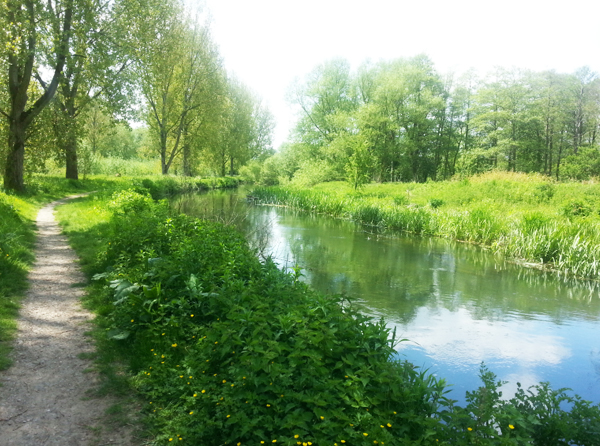
I worked, walked, and worked every day.  This was an ideal schedule for me.  My walks cleared my head and restored my spirits.  I would be pissed off about something I or someone else did or didn’t do, and a long walk in the country erased any negative thoughts or feelings.

This scene reminded me of a Dutch landscape by an old master, only with a vivid blue sky.

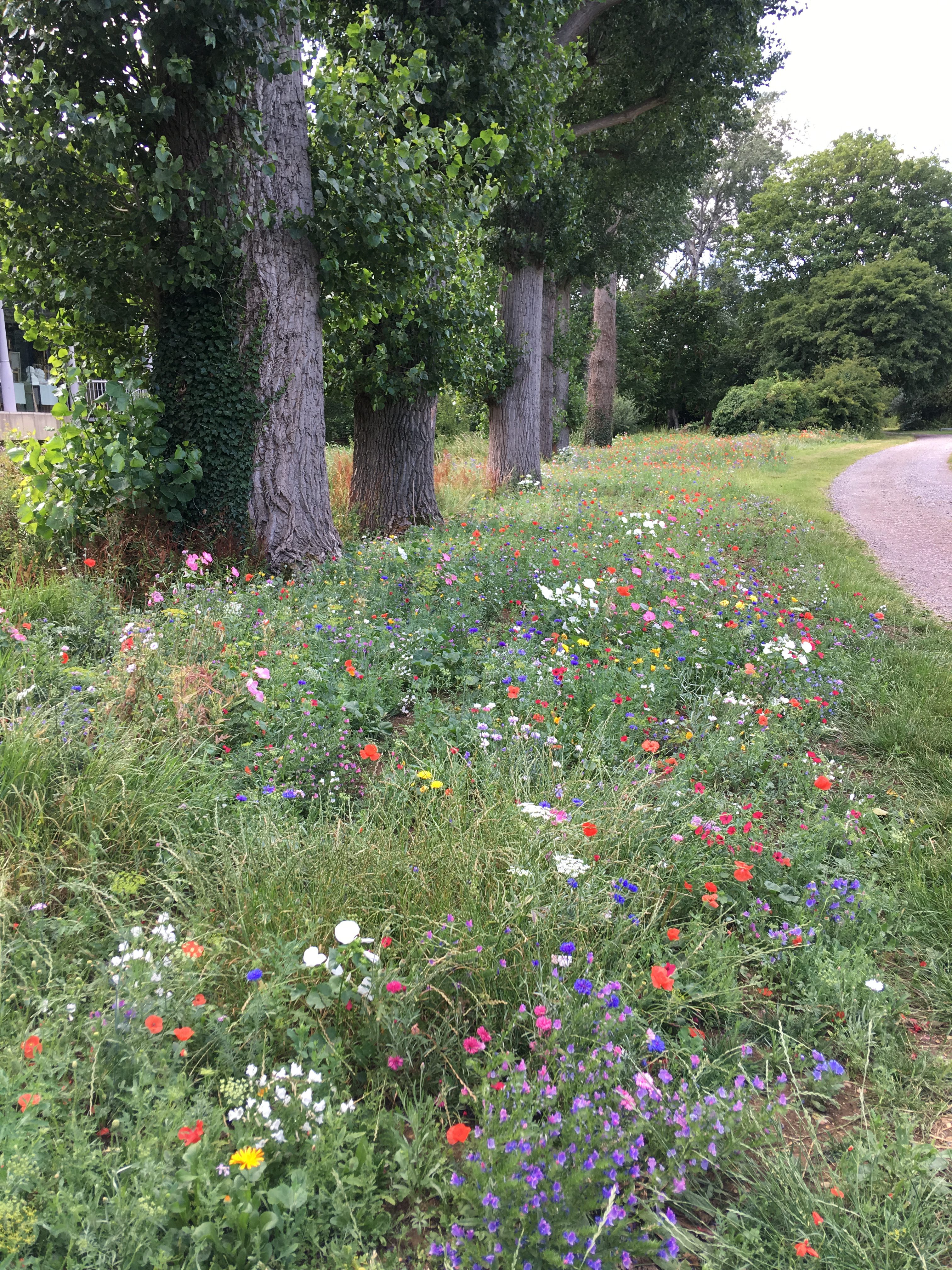
Someone had planted a strip of wild flowers.

It was set between a line of trees and hedges and the road, so no one would see it unless they happened to walk along this remote stretch of path.  It went on and on … for maybe a half mile?  I wondered on Facebook why someone would have sown wild flowers in such a hidden area, and Lynn responded, “They were probably planted to attract bees.”  Of course!  They weren’t for people, they were for bees.  But what joy they gave to those of us who stumbled upon them.

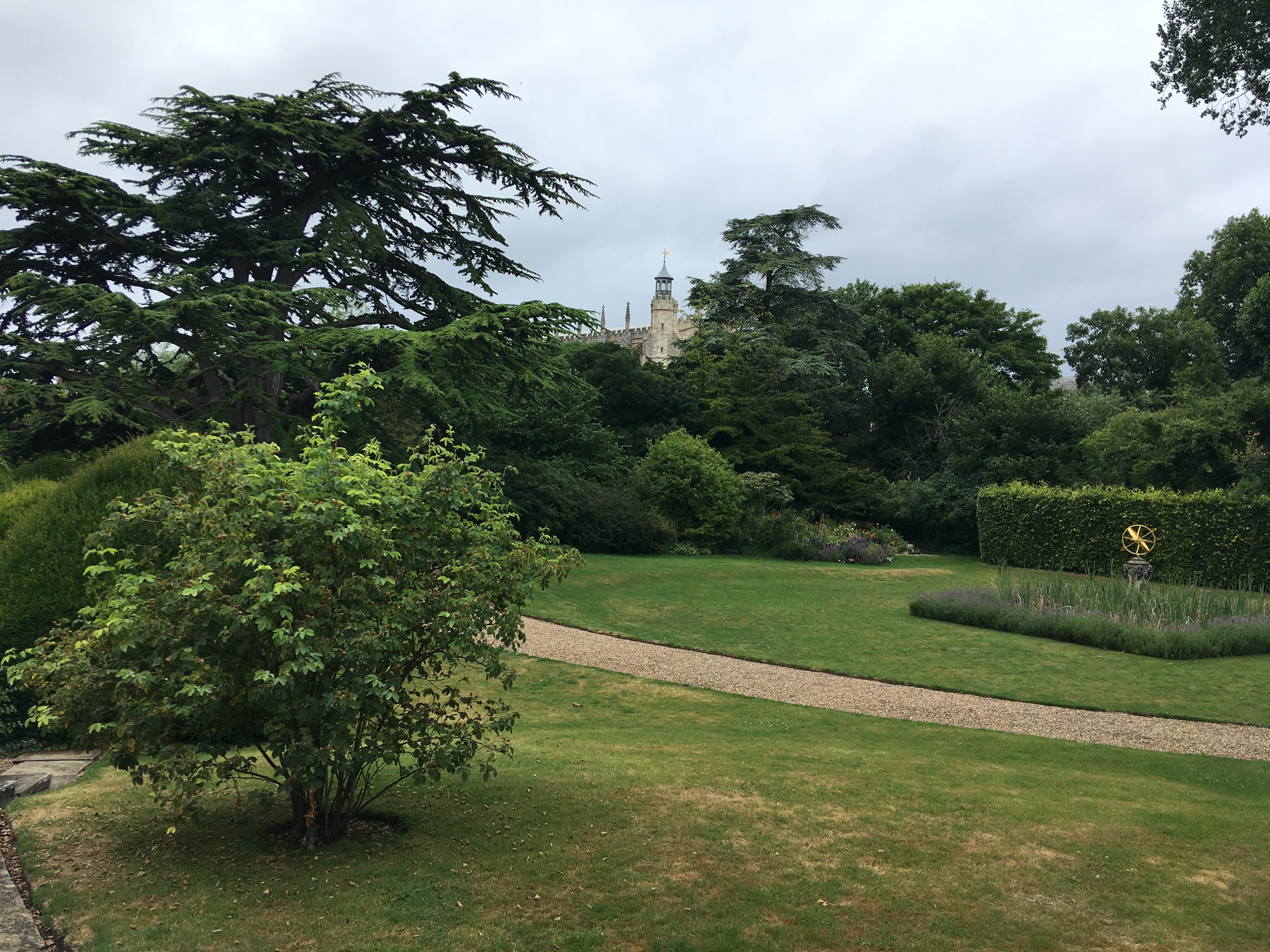
Heidi came for a day and I walked her around the Thames meadows where I went swimming and showed her a place I had discovered called Luxmore Gardens.

Of course I had not “discovered” it but it felt like I had, since there was no explanation for why it was there or who created or maintained it except a plaque dedicated to an “Eton Old Boy” as their alumni and former headmasters are called.

We went on a boat tour up and down the Thames and talked the whole time so I can’t say I learned anything new.  They handed out a brochure with all the information and I kept it for months, meaning to read it but I never did.

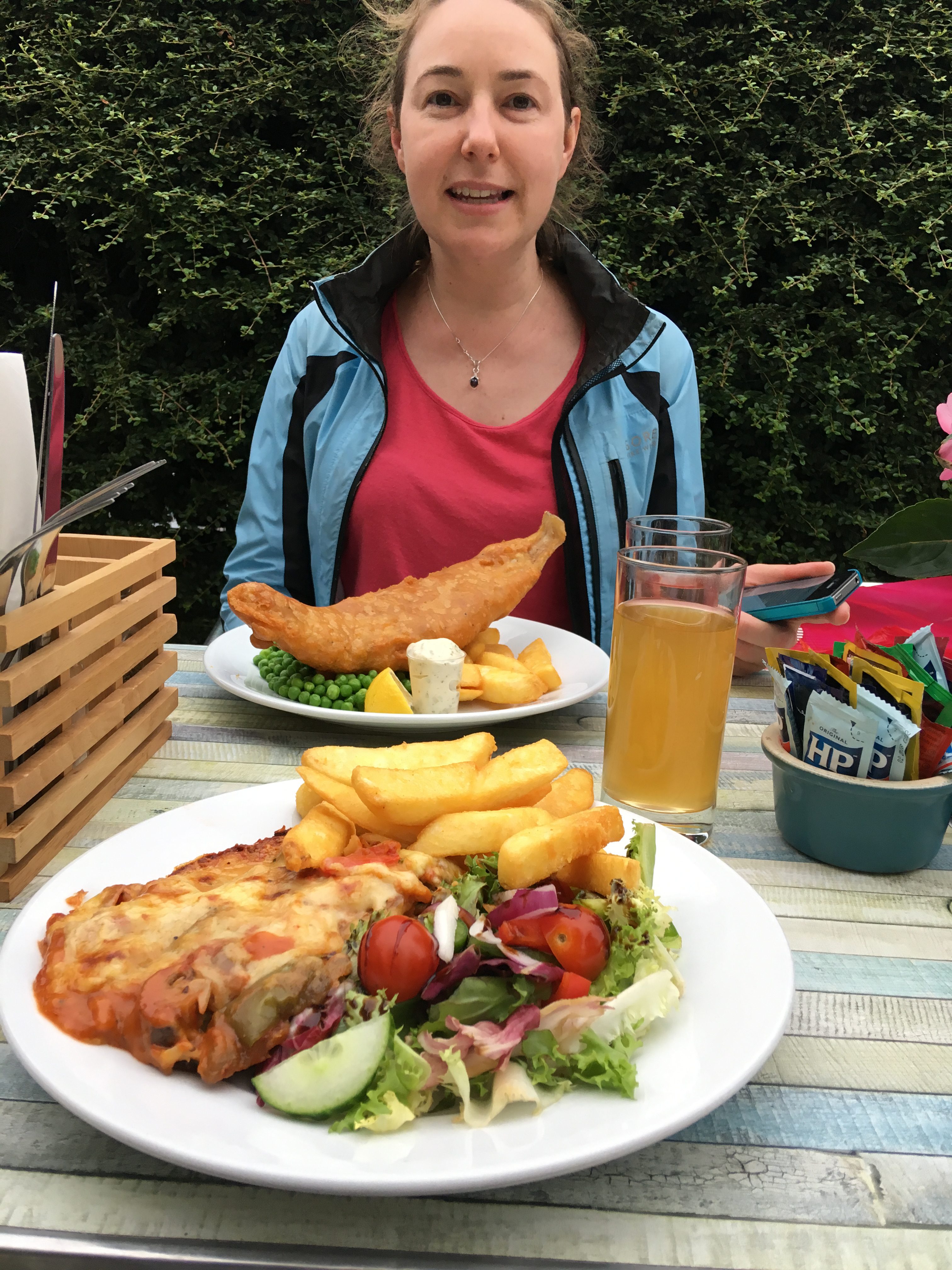
We ate at the Waterman’s Arms pub.

We talked about going to the continent but by now Heidi was running out of time so we sighed and promised we would do it another time.

“This is the second time we’ve discussed it,” I remarked between mouthfuls of lasagna.

“I know,” Heidi said between sips of the local raspberry cider.  “It’s going to have to stay on the old bucket list until I come back from Aus next time—if you’re around.”

“It’s good to have things on it, right?  How it would feel to have everything checked off?”

Castles and Christmas

A typical Monday morning: write and respond to emails, schedule meetings, edit a proposal, and visit Windsor Castle, built a thousand years ago by William the Conqueror and present home of Queen Elizabeth II.

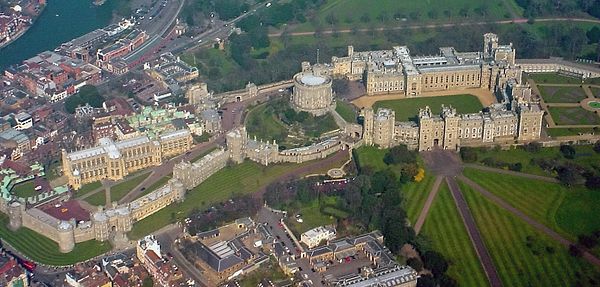
When you hear the word “castle” you may think of a large but single building.  Windsor Castle is really a compound of buildings. The scope, history, and contents of the place are mind boggling.  Here’s an aerial view:

You can’t enter most of it or take interior photos and in a way that’s a blessing or I might still be writing posts about it next Christmas Eve.

I spent about three happy hours there and will just hit a couple highlights.

First, Windsor is where it is because it’s on the river and a slight hill, which means it can be seen from most surrounding points from a distance.  I would often be out for a walk, way away from the castle, and spot it in the distance.  It was meant to see and be seen.

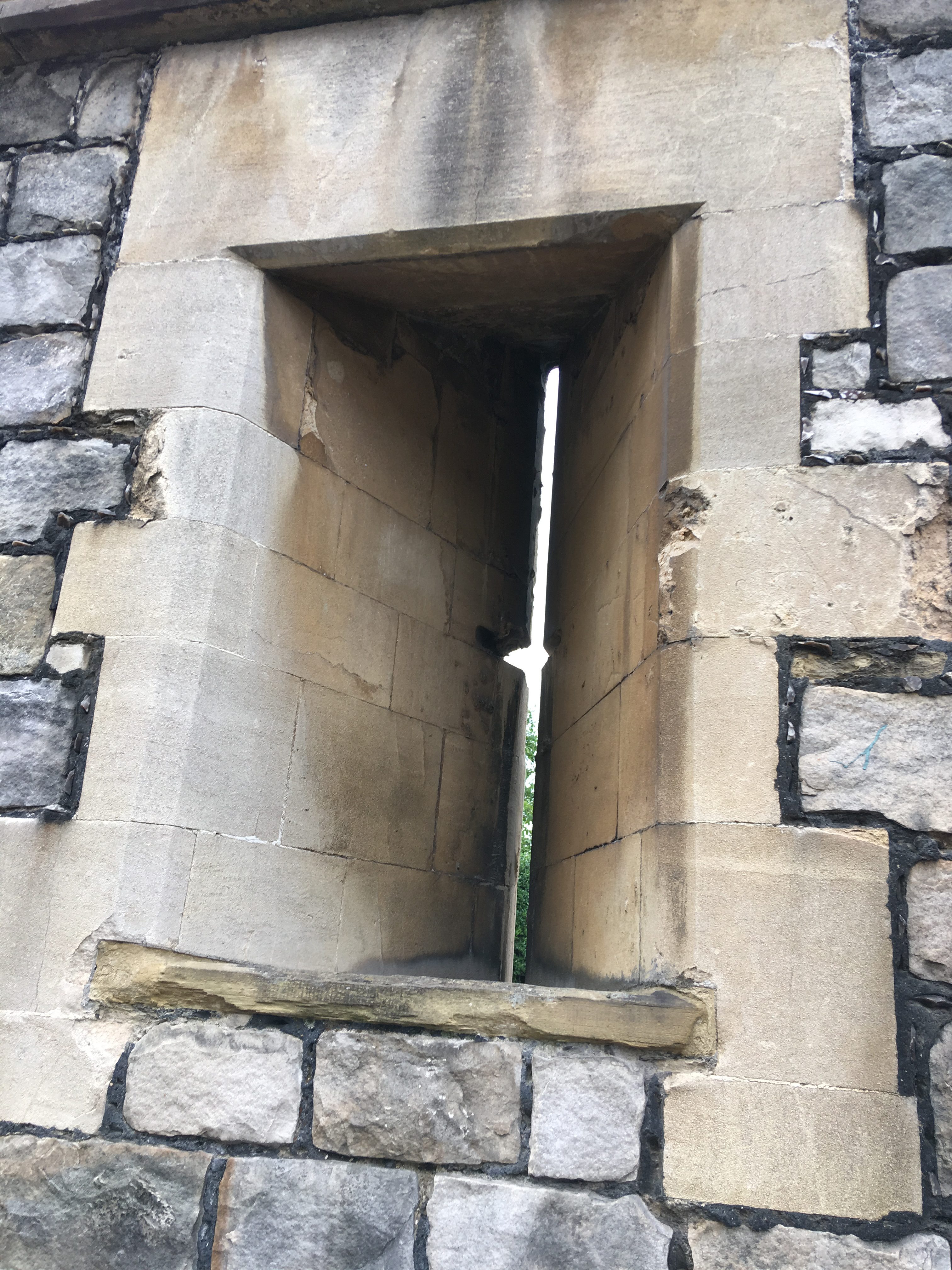
If seeing it from afar didn’t discourage you from attacking, you would next have to somehow breech the walls, which of course were manned with soldiers shooting arrows through these slits.

And possibly catapulting boulders or plague-infested dead bodies into your midst.

So much for highlights.  I just spent 45 minutes lost in this kids’ field visit workbook about Windsor (it’s a PowerPoint).  There’s some pretty gripping stuf in there about siege towers, battering rams, gun powder, and other items of interest to 10-year-olds. And me.

Have you ever read the term “castle keep” in a novel or history book?  I must have, but I had never given any thought to what it meant.  The keep at Windsor is below on the left.

The keep is the structure with the well and supplies; the place its inhabitants would withdraw to if all else failed, and make their final stand.

If you are wondering if Windsor was ever attacked, the workbook says:

“On two occasions during its 900 year history, Windsor Castle has been attacked.   In 1216 local Barons attacked many castles, including Windsor.  Why do you think this happened?

“Answer: During 1216 Windsor was under siege, this was 1 year after King John signed the Magna Carta at Runnymede in June 1215.  The Magna Carta was the first Human Rights Charter, importantly it gave the ordinary people of the land the right to have a fair trial. It also gave rights to the Church, Barons, and the people.  The King was bound by this law of the land too, however King John was not happy with this and changed his mind.  So, in anger at the King’s decision, the rebel Barons rose up against him.  The Castle was held by King John, and 60 Knights that were loyal to him.  The siege lasted 3 months and of all the Castles that were attacked at that time, only Dover and Windsor were held for the King. (King John died late in 1216).”

It doesn’t say what the second occasion was, and I must move on.

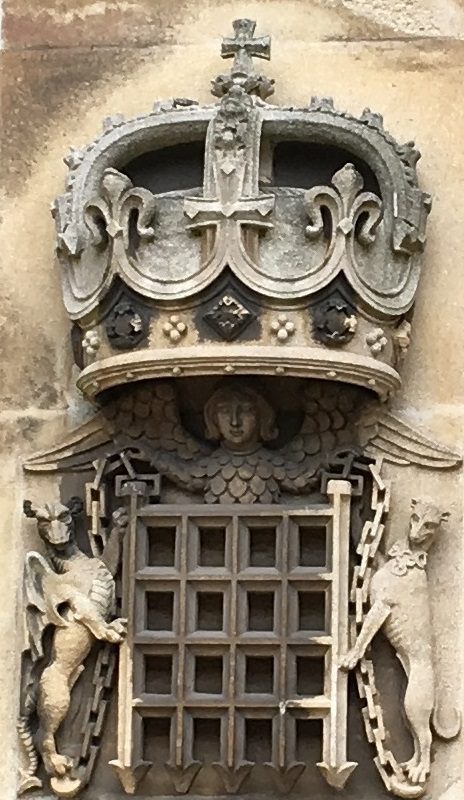
Two highlights for me were the Chapel of St. George and the choir quarters.  Here is one carving on the chapel exterior.

Note the detail.  Now multiply that by a thousand, inside and out.

I had just read a Phillipa Gregory novel about King Edward IV and his wife Elizabeth Woodville, who was five years older, a widow with two children, and a woman of low rank.  They married for love.  And there they were, entombed below my feet in the chapel.

My head was bobbing and swiveling to take it all in—the ornate ceiling, walls, benches—everything is carved, gilded, painted, and over the top so when I stumbled slightly and looked down to regain my footing I gasped a bit to see the plain black tomb of Henry the VIII, grandchild of Edward and Elizabeth and all-around tyrant who changed the course of history.

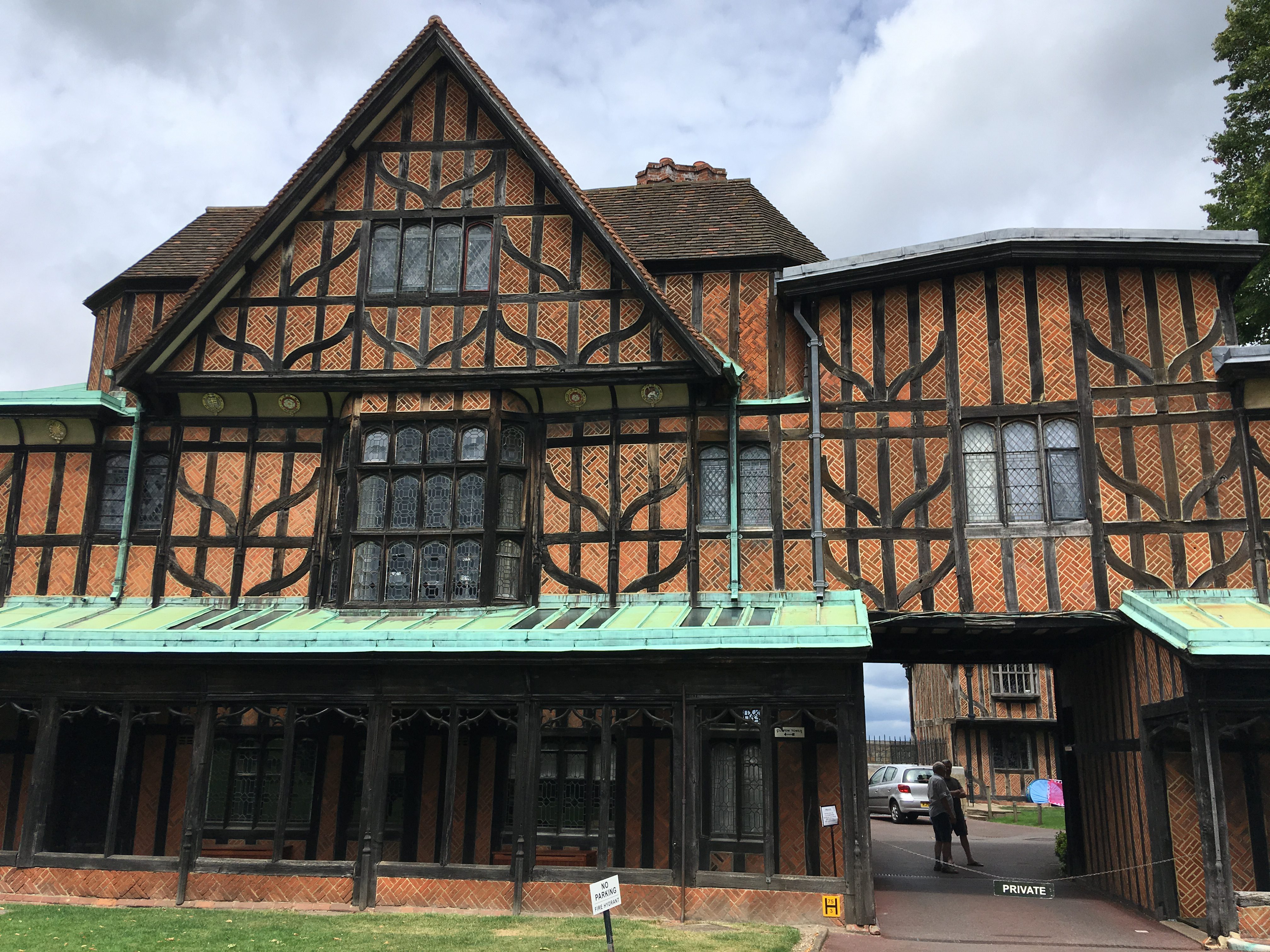
Outside, here were the lodgings for the children who sing in the chapel choir.

I came away—and am reminded now—of how much there remains to be experienced and learned in this amazing world.

Merry Christmas!

Napping and Knapping

I set my alarm to ensure I would wake up in time to catch my 9am bus.  I’m such an early bird; there was no way I was going to oversleep, but just in case.  I collapsed into bed at 10:30 and woke with the alarm at 8am.  I guess the previous day had been a long one—starting out in London with a couple tube rides, finding and catching the coach, sitting for three hours on the coach with nothing to do but look at the beautiful landscape, hiking four miles across open fields in the hot sun, “doing” Stonehenge, “doing” Amesbury, and capping off the day with a “meal” at Little Chef.

I flipped on the TV while I got ready.  There was a long news segment about how to survive a terrorist attack whilst on holiday.  When they got to the end and quizzed the viewers, I yelled my answers from the bathroom.

“What should you do if you see terrorists invading your hotel from your balcony?” droned the guy in the suit who was an ex-marine-cum-highly-paid terrorism expert.

“Hurl your Margaritas at them!” I yelled.

I got that one wrong. “What should you do if you if terrorists invade your hotel room?”

“Cover your head with both hands so they can see you are unarmed!” I yelled.

I got it right!  I wondered why the woman was wearing nurses’ scrubs if she was on holiday.

To my surprise, I got most of them right.  Watching that security webinar for work had really paid off.

I was soon out the door of the Travelodge and on my 10-minute walk to the bus stop.

Does this ever happen to you?  You’ve visited an amazing place like Stonehenge and as you leave you think, I’ve seen Stonehenge, now I’m one World Heritage Site closer to death. 

No, I didn’t think so.

Or even just leaving an unremarkable place like the Travelodge, do you ever feel like you have to break some sort of surface tension in order to leave?  I will probably never be here again.  Why do I care?  Why do I have to exert myself to leave?  It’s a cheap motel!

Of course I did leave, and after I crossed under the motorway I saw on my left a place called The Lord’s Walk.  I had passed this five times now.  It looked so inviting.  To walk through cool woods along a stream would be refreshing after the hike of the previous day.  It looked like my kind of paradise.

I read the placard.  It was the Lord as in “Lord of the Manor,” not as in “the Lord God.”  The local lord had gifted some of his land to the local populace and they had done a beautiful job of making it available to all for walking, fishing, picnicking, smoking pot, and so on.  I imagine few tourists go there because they are all focused on Stonehenge—or anxious about catching their bus.

I could have taken a short walk with the lord.  I had 45 minutes before the bus was due.  But I walked on.

Amesbury, and the southwest of England in general, are full of walls and buildings covered in what Lynn had informed me was flint knapping. Here are more images if you’re a rock hound.

We joke about artisanal products made by bearded millennials these days.  There is a guy in Minneapolis who is dead earnest about his artisanal flour, which costs $20 for a five-pound bag (that’s a lot).  I’m sure it’s very fine flour.  I don’t know much about flint knapping, but I met a guy once who was a dry-stone wall expert.  I would call both of these trades artisanal; it must take years to develop the eye and the skills to maintain these old structures.

At the bus stop, I felt anxious I was at the wrong stop, even though the taxi driver had shown me this stop and there were people with suitcases milling around, obviously London bound.

On the bus, I felt grungy, but content.  My phone connected to wifi immediately and there was a message from Heidi, “Let’s go to the continent!”

Church Goin’

It was a hot Sunday night in Amesbury, and I mean hot only in the sense of the temperature.  If this was 1986 I would have gone into The Bell, drank way too many pints of cider (“It was on sale—£2.20 a pint!”), picked up a guy, danced until closing, woken up in a strange place, slept with my contacts in, missed my bus, and had to hitch hike back to Eton.

But this was 2017, so I’m afraid this won’t be such a titillating tale.

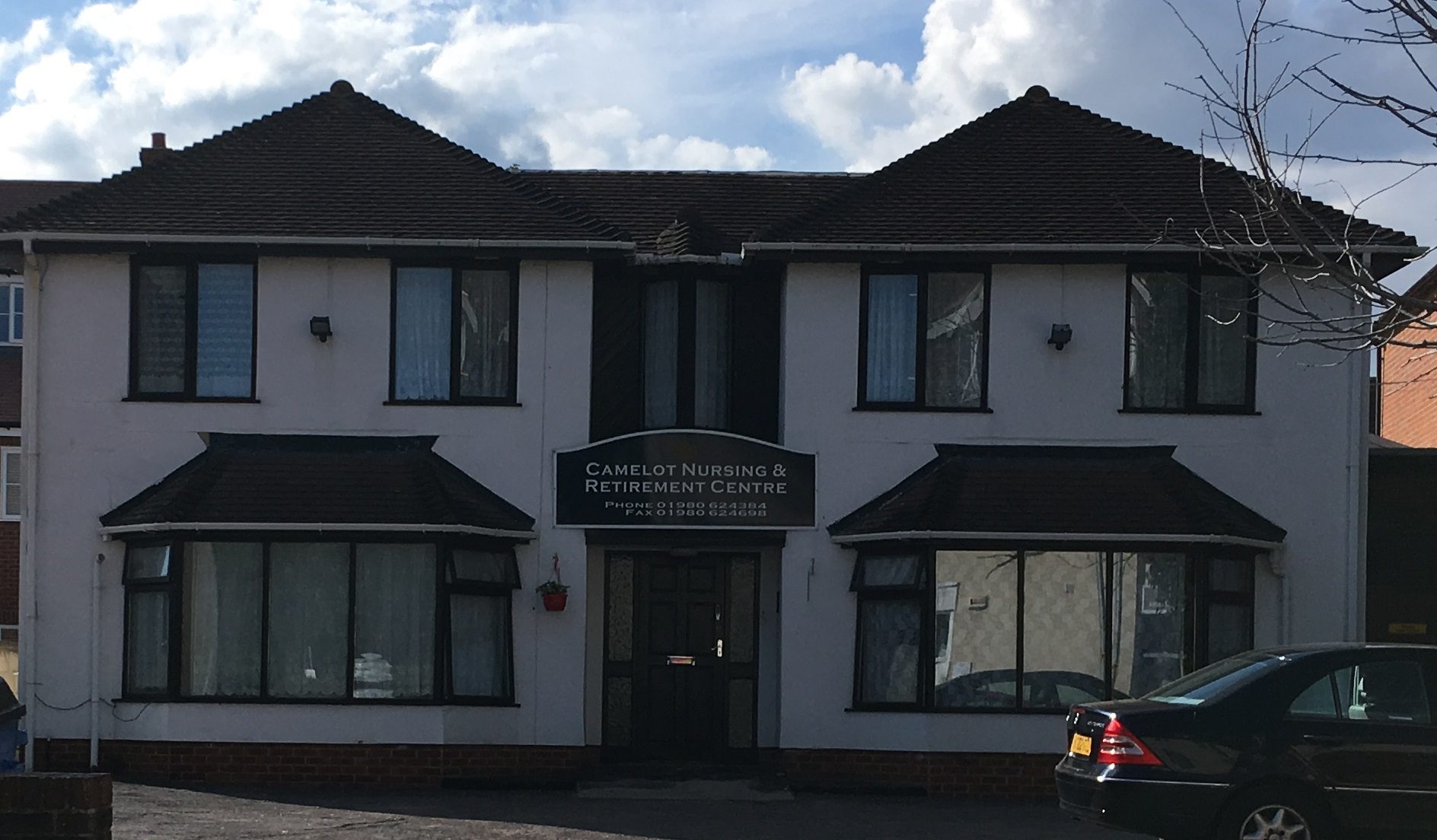
My interests these days run more to quiet places. That included all of Amesbury on a Sunday night, since almost everything was closed.  I passed the euphemistically-named Camelot Nursing & Retirement Centre.  Camelot?—Not.

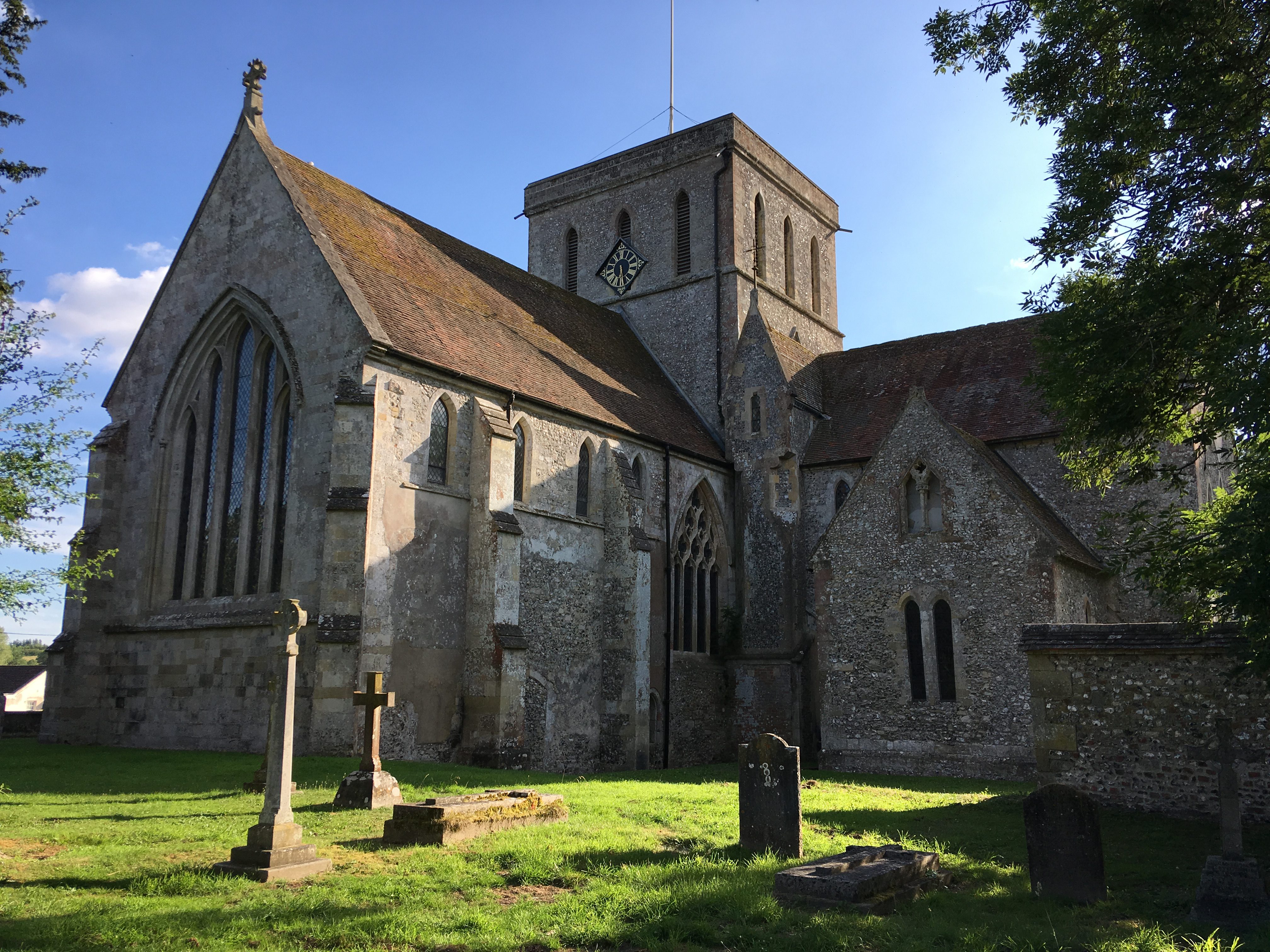
I found the parish church and spent a quiet hour there.

Singing drifted from inside, so I snuck into the musty-smelling interior.  I’m always afraid the minister is going to wave me over, “Come, join us, sister!  Come sing praise to the Lord with us!”  So I tip toed and hid behind one pillar after another until I could get a look at them. There were half a dozen women, all over the age of 40, being led by a man I assumed was the minister.  He kept stopping them and instructing them to do something different, better … I couldn’t make out what he was saying but the tone of his voice was stern.

I spied a table with stuff for sale on it.  Oh joy!  This is always the best.  I darted from behind my pillar to the one in front of the table.  Postcards, tea towels, greeting cards, aprons.  Aprons!  Aprons went out with the Betty Crocker Cook Book and Tater Tot Hotdish, but they were only £2 so I grabbed two, and five tea towels, and a pack of greeting cards, all with the image of Amesbury Parish Church on them. I was set for hostess and housewarming presents for the next six months, and all for only £8.

In my excitement I nudged the table and it made a scraping sound.  “Who’s there!” the minister called out.  I waved and smiled as I quickly exited.

As you know if you’ve been reading this blog for any length of time, my favorite subjects are death and travel.  So I enjoyed some time in the churchyard. Poor Leonard Frank George Williams had a long name but a short life.

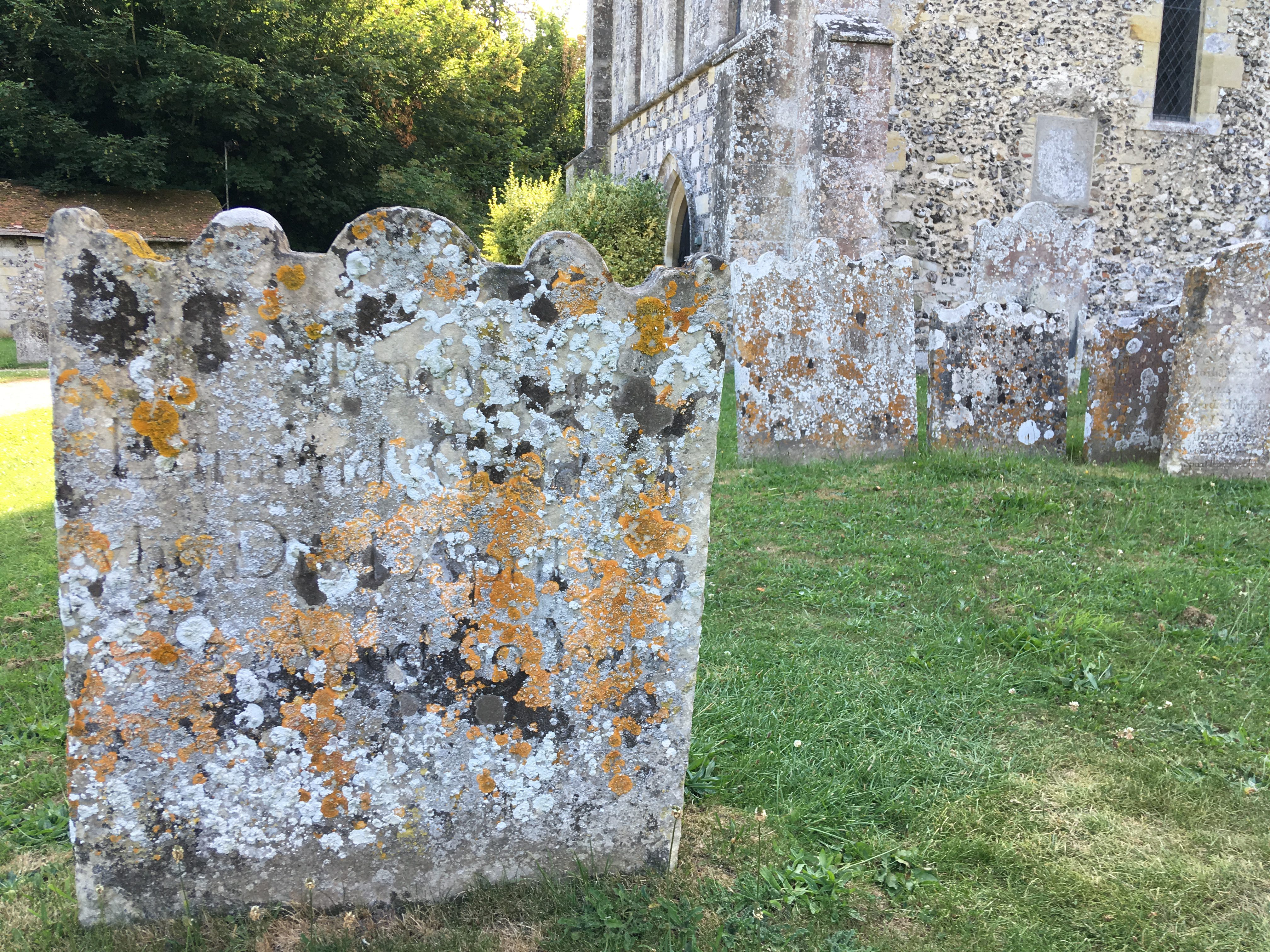
There were lovely mossy tombstones.

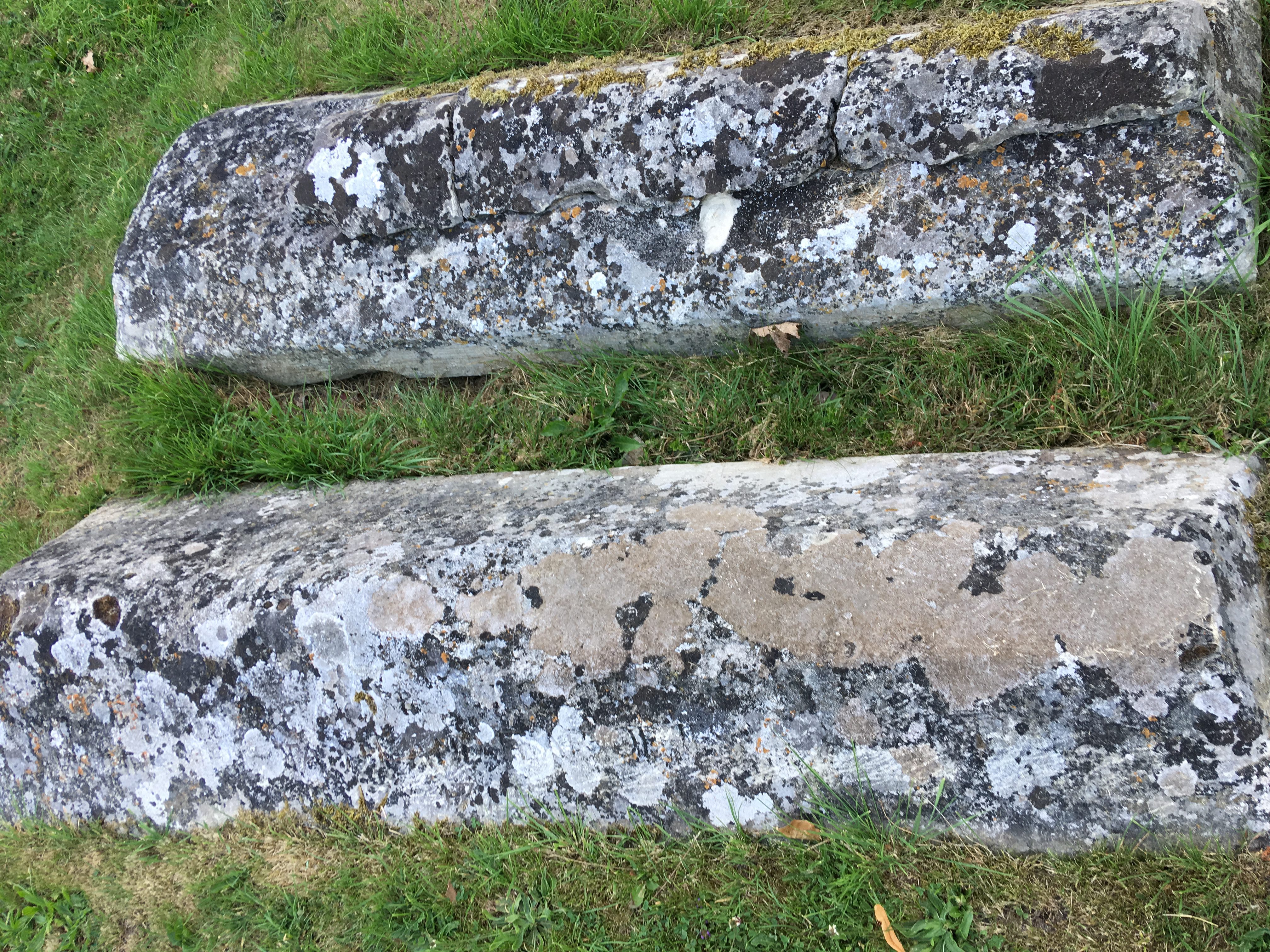
And these above-ground crypts.

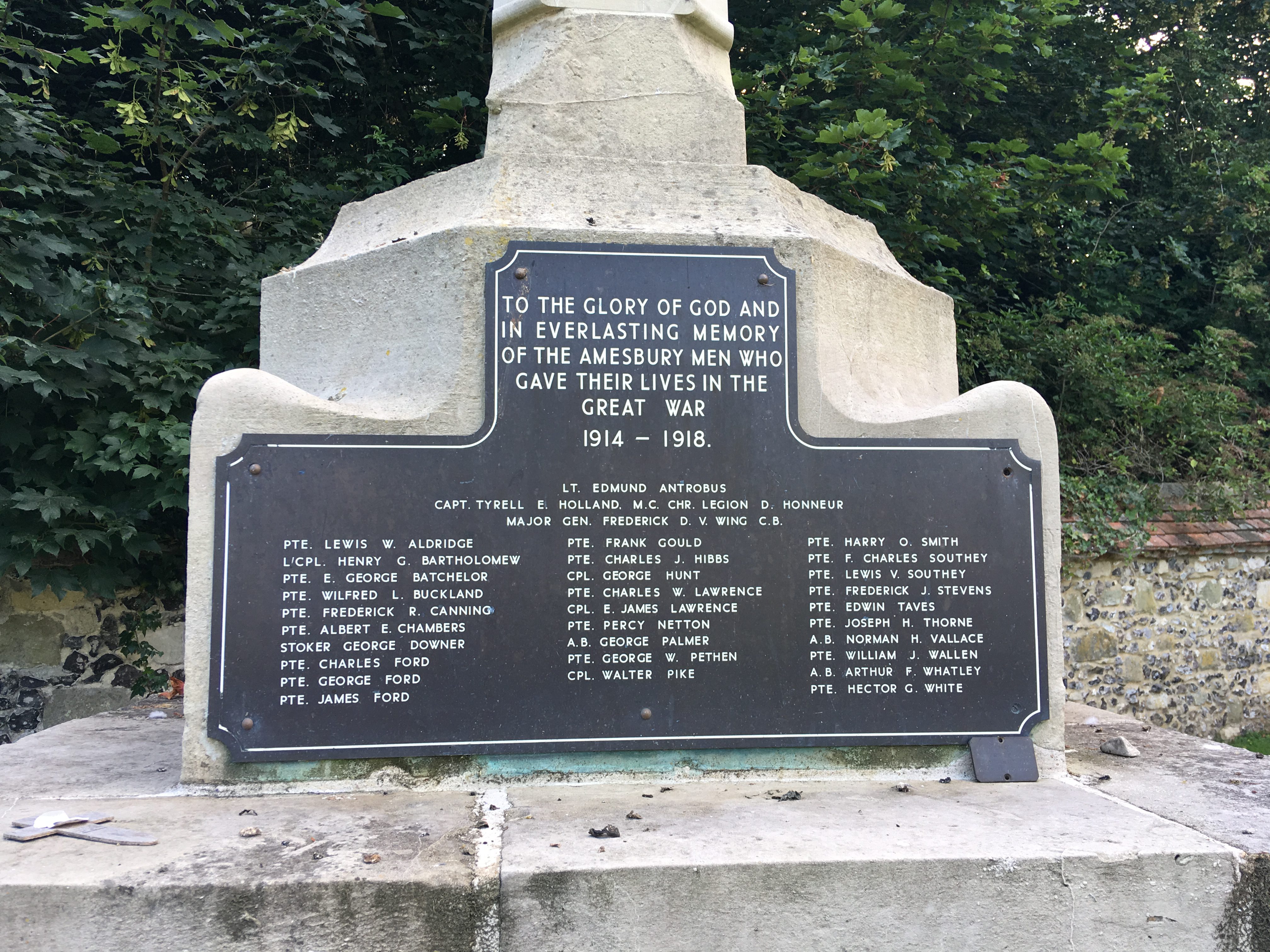
There was this monument to the Great War.  Note that there are three deceased named Ford, two Lawrences, and two Southeys.  This was before the geniuses in command figured out that you shouldn’t assign all the men from one town to the same unit.  Because when the unit was annihilated in a battle, every son in every family in town was killed.  So incredibly sad.

Here is the plaque for the Word War.  Hmmm…I thought they had learned a lesson by then, but there are repeat names on here, too, including a woman who appears to have died along with her brother.  I guess it was literally all hands on deck during these wars.

The Great War.  The World War.  What will we call the next one?

I saw this and thought I was in for some comic relief.  A pet cemetery!

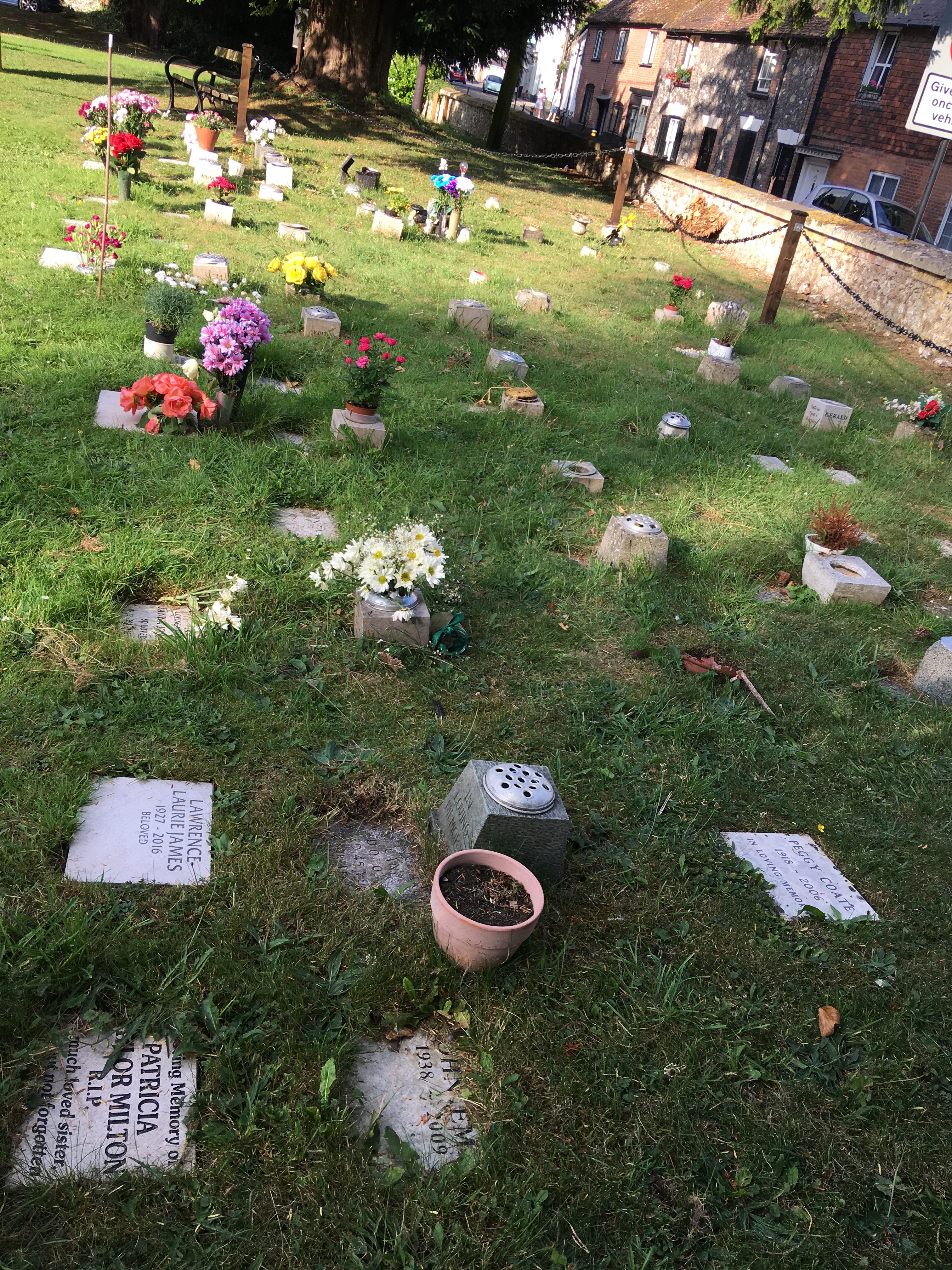
But no.  It was more dead people, just a section for the new tradition of cremation.

I was feeling “peckish” as they say (meaning hungry) so I wandered along, looking for food.  The bakery was closed but the pennants in the window provided a lovely photo opp.

I ended up back at the Econolodge, which had a Burger King and something called a Little Chef next to it. I waited in line at the Burger King for 45 minutes.  Everyone in town must have been there, since all the other restaurants were closed.  I gave up and went to the Little Chef, which I highly doubt employed any chef—little or otherwise.  It was supposed to look like a 1950s American-style diner.  If such diners were filthy and served horrible, dry, bland food back in the day, then it was completely authentic.

Woodhenge

It was 5:30 pm.  I could take the shuttle back to the stones of Stonehenge or take a taxi from right outside the visitors’ center back to town.  It wasn’t a hard decision; I was knackered and I’ve been in this situation enough to know that it doesn’t work to force myself to keep trying to find “that wow feeling.”  I had said, Wow! when I caught my first glimpse of Stonehenge from across the fields.  I had felt a mild wow when I saw my ancestor, homo-erectus-bradpitticus.

Sure, the wows! hadn’t come over and over like at Machu Picchu or Petra.  But those sites cover square miles.  Petra has over 800 structures.

I took the taxi.

The visitors’ center lady had told me the fare would be £8.  I always ask taxi drivers before I get in the vehicle.

“How much will the fare be, approximately?”

“£20,” he replied.

“Twenty!  I was told it would be eight.”  If he had said 10 I wouldn’t have pushed it but 20?

“It’s Sunday,” he explained, irritated.  “The local council sets the rates; I don’t have any control over it.  It’s all here on the rate card if you don’t believe me.”  This was all said in a thick southwest accent that I could barely understand.

“No, no, I believe you.”  No sense in upsetting a taxi driver who clearly has a chip on his shoulder—and will be driving you through remote farm fields.

Now, did I sit in the passenger seat or in the back—to make it clear I was not interested in any hanky panky?  Some tourist guides actually advise this, but I figured it didn’t apply to a 65-year-old guy who was a big gob I was sure I could outrun.

So I sat in front, where he proceeded to verbally assault me as he took a circuitous route.  “There’s an old military garrison there,” he growled, “Everyone should be in the military.  It’s compulsory here, you know.”

I was quite sure that wasn’t true.

“Our military is just a defense force now,” he complained.

And the problem with that is?  Do you really want your military to be an offensive force?  Do you really want to be paying 50% more in taxes for more bombs, guns, and to send young people to Iraq?

Of course I didn’t say any of this.

“My dad, brother, and sister were in the military,” I said.

I’m sure he had been assuming I was a new-age, trust-funded American liberal coming to Stonehenge to worship the sun and howl with the wolves … if there were still any wolves in England.  I am not from a military family.  None of them served during war time, and my brother and sister were in the reserves.  They all joined for the usual reasons that blue-collar kids join—it was something to do besides go to college.

But the driver was now warm to me.  We were driving through farm fields, and he explained that the buff colored ones were barley while the green ones were alfalfa, or maybe it was the opposite.

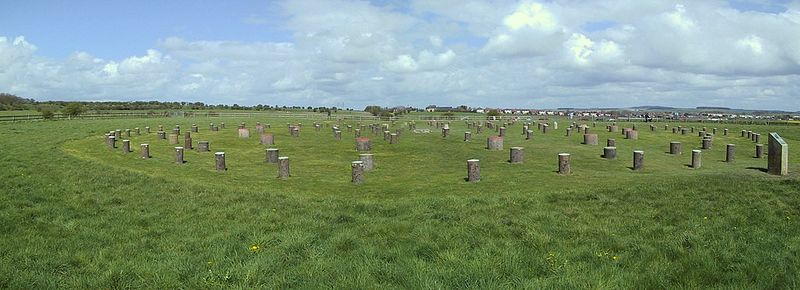
“And over there—you can’t see it—but over there is another henge, only it’s wooden.  It’s called Woodhenge.”

I just plucked this photo of it off Wikipedia.

“Woodhenge is a Neolithic Class II henge and timber circle monument.”

Oooh…a Neolithic Class II henge!  I assume these are not the original wood posts.

“It is 2 miles (3.2 km) north-east of Stonehenge.”   

I could have walked to it easily from the Econolodge.

I asked, and the driver agreed, to show me where I would catch my bus in the morning.  His phone rang.  “That’s the wife,” he said to me.  Then to her: ’ello, luv.  Yeh, yeh, yeh.  Ok, ok, yes, yes, yes, ok.  No, no, no worries, I’ll remember.  See you soon.  Love you, buy-eee.”

So he was a big softie after all.

He pulled up at the bus stop to let me off; I was going to walk around downtown Amesbury.

“That’ll be ten quid … for you.”

For me?  I felt guilty for implying I was from a military family.  I handed him a tenner and hopped out.