Category Archives: class divide

Happy New Year, You’re Beautiful!

Yesterday I went to the British Arrow Awards with Vince.  Five years ago, I would never have imagined going to the Walker Art Center to watch 70 minutes of British TV commercials with my son.

Five years ago, I would have spent New Year’s Eve an agony of wondering where he was.  Three years ago, I knew where he was—in prison.  Two years ago, he was living in my 10×10 foot (3×3 meter) spare room alongside the washer and dryer, and things were extremely tense.  A year ago, he had moved out with sober friends, had a job, a car, and things were looking up—or at least were stable.

Today, he has a job he likes with benefits—for the first time in his life.  He’s moving in with his girlfriend.  He’s got three and a half years of sobriety and works his program of recovery like today is his first day.  Well, maybe not every day, but he does work it.  I realize things could fall apart, as they have before, but I don’t worry about him every day like I used to.  It’s such a relief.  Thank you, Vince.

So even though it was -15F (-26C) I got in my frozen car and drove to Minneapolis to meet Vince and his girlfriend and her two daughters for Thai food and sushi.

I had bought two tickets to the Arrow Awards a month ago, then when I went back to buy more so others could join us, they were sold out.

There is a weird phenomenon in Minnesota.  It’s the only place in the US where we get 10-year-old episodes of EastEnders on TV and pay $14 to watch British TV commercials.  Two weeks ago, my local PBS station started airing the great series Dickensian, which Lynn and I had binge watched in Scotland.

So in addition to being quirky in a general way (Minneapolis-St. Paul is the #12 quirkiest metro area according to Travel + Leisure), we are eccentric in a particularly Anglophile way.

If you’ve been reading this blog for a while you will likely think I am an Anglophile and I am, but I am also a Francophile, and a Berlin-o-phile, and a Malta-o-phile, and So-Many-Other-Places-o-phile.  I’m sure there are plenty of fantastic shows and ads in other countries but since I don’t speak French or German or Maltese, I’m not qualified to writing about them.

The Walker Art Center is a place I like to know is there for other people, but where I never go except for this annual event.  I used to belong to the Walker when I was young and hip and trying to meet young, hip men.  But my days of pretending that giant rusty chains suspended from the ceiling are Avant-garde art are over.

The Walker screens back-to-back showings of the Arrow Awards Thursday through Saturday from 1:00-8:00pm and tickets sell out within days.  It must be a real income generator.

The ads make you laugh, then cry.  Two of the funniest, Vince and I agreed, were for Rustlers frozen hamburgers and the Lottery, featuring James Blunt.

And then, when we were laughing out loud, the next ad would be for UNICEF or another organization trying to get the world’s attention about the biggest refugee crisis since WWII.  I had heard about this theme ahead of time so I was prepared with Kleenex.

Since I work for an NGO and blog about travel, I am always feeling the juxtaposition of my safe, happy life with the terror and despair with which millions of people are living.  This was another contrast, in the newspaper a few weeks ago.
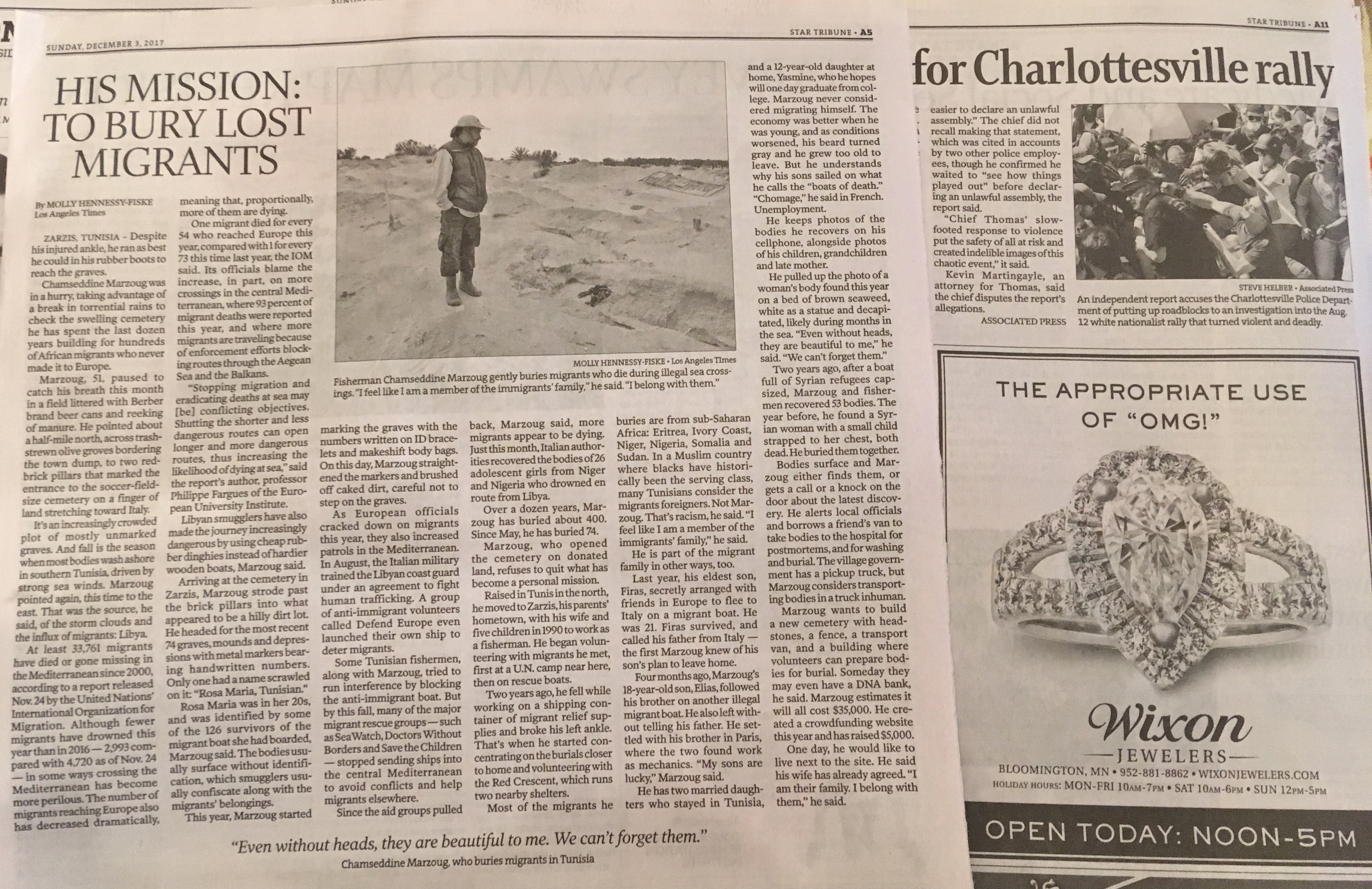
Articles about a man burying drowned migrants and the racist rally in Charlottesville, then an ad about diamond rings.

I don’t care about diamonds, but should I skip a trip this year and donate the money to UNICEF?  Do I justify travel, my one big indulgence, by saying it sustains me to carry out my work raising money for refugees?  Should I call travel an indulgence?  Do I have to justify myself?  I don’t think there are any right or wrong answers, but I constantly struggle with the questions.

Euros and Doors

Mid July in Eton.  I was listening to a webinar about raising funds from European foundations.

Probably a quarter of my job consists of keeping up with what’s going on in my industry. I call it an industry because it is.  We like to think we’re all singing Kumbaya arm in arm while saving people, but without professionals who know what they’re doing, adequate funding, and an international infrastructure to support and coordinate everything, it’d be a big mess  Well, a bigger mess.

The international infrastructure is made up of what are called multilateral institutions, which are organizations that have funding from multiple countries: the World Bank, World Health Organization, and some of the United Nations bodies, like UNICEF.

The other day I was looking for a potential partner in Yemen.  I went to the UN’s Office for the Coordination of Humanitarian Affairs (OCHA) to see who is working there, in what sectors.  Sectors are activities like Water and Sanitation (WatSan or WASH for short) or Health or Protection. I browsed OCHA’s Humanitarian Response Plan interactive map to find other NGOs working in Yemen, in this case specifically in the Education sector.  For better or worse, there are only two in Yemen due to it being in a state of war—Save the Children and Norwegian Refugee Relief. I queried my colleagues to ask if anyone knew anyone at those organizations.  In this case we didn’t have relationships with either organization so my search ended there.

The mechanics are pretty straightforward if you know where to look, but the type of thinking involved is something that takes a while to acquire, and I really like that about my job.  I have three dozen other projects going on at once, large and small, that require the same strategic thinking, focus, communications, and persistence.

There are newish master’s degree programs in international development studies that package and deliver this information.  Most people my age, or with my number of years of experience, have learned it on the job from coworkers, at a conference, or from reading articles in an online community like Devex.

My organization, the Center for Victims of Torture, just got a grant from a Swiss foundation that I found on a European foundations website almost five years ago.  What were the odds— finding a foundation in Switzerland that is specifically interested in mental health and Uganda?  But after clicking through a hundred other foundations, there they were, and after years of Skype and in-person meeting, writing proposals that weren’t funded, and having them visit our program in Uganda, they will now be supporting us in significantly expanding our work there.  It took involvement from 10 people at CVT, and someone else wrote the proposal that got funded, so it was a group effort and we’re all feeling pretty good about it.  When I am sifting through hundreds of foundations that aren’t good fits, I keep this one in mind.

Back in Eton.  The webinar informed me that the 28 member countries of the EU have the same number of foundations and give the same total amount of funding as the US ($160 billion in 2015).  Did you know that IKEA is probably the world’s largest foundation? I didn’t.  The UK, Netherlands, Germany, Italy, Switzerland, and France have the highest number of foundations with the most money, but the French foundation websites are all in French, so it’s a good think I have French-speaking colleagues to check those out.  The webinar made some common sense suggestions, like looking to the former colonizing country for funding (Italy for Ethiopia, the UK for The Gambia, France for Vietnam, etc.) and to look at the donor lists of our “competitors” to see who funds them.

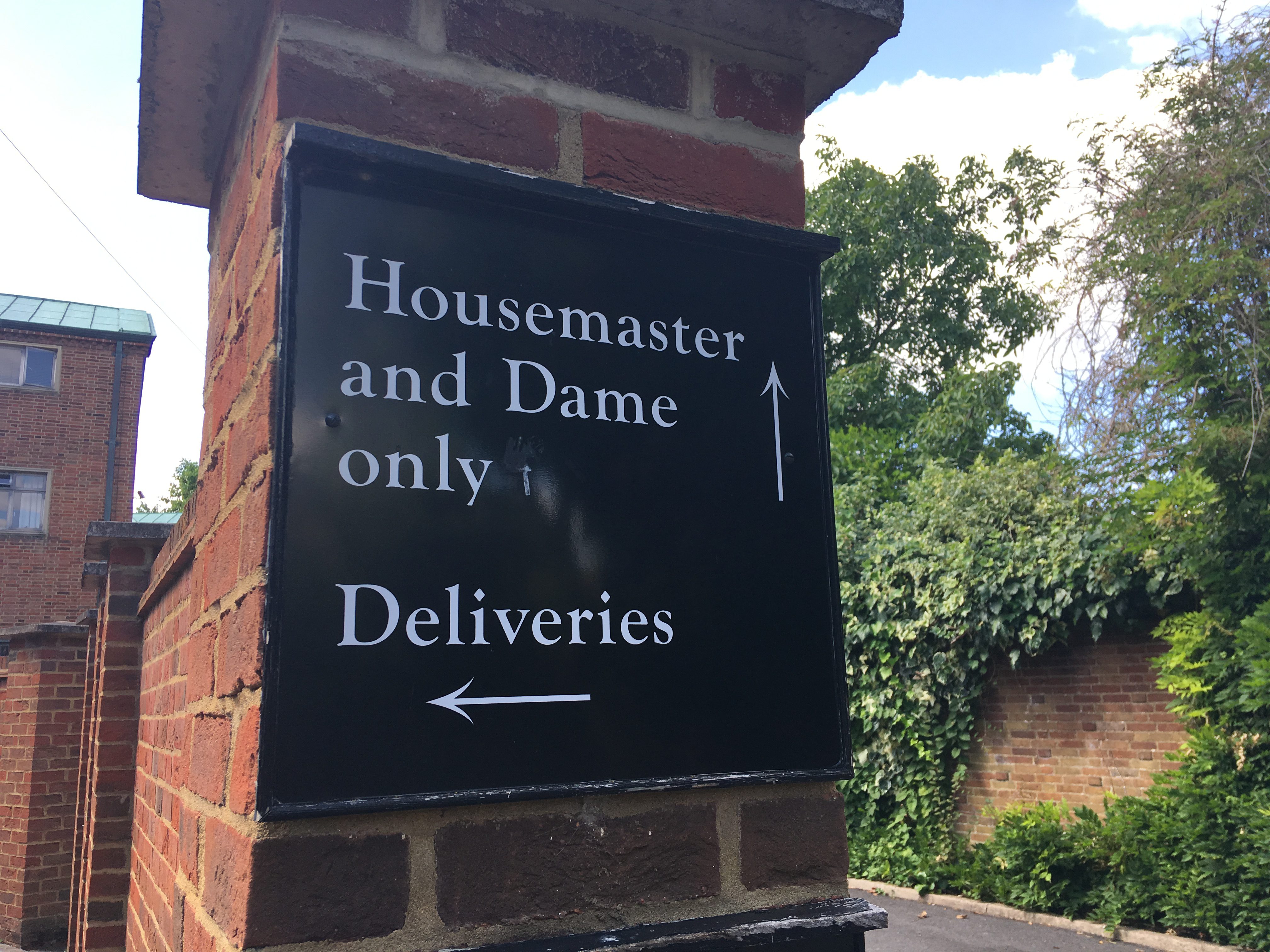
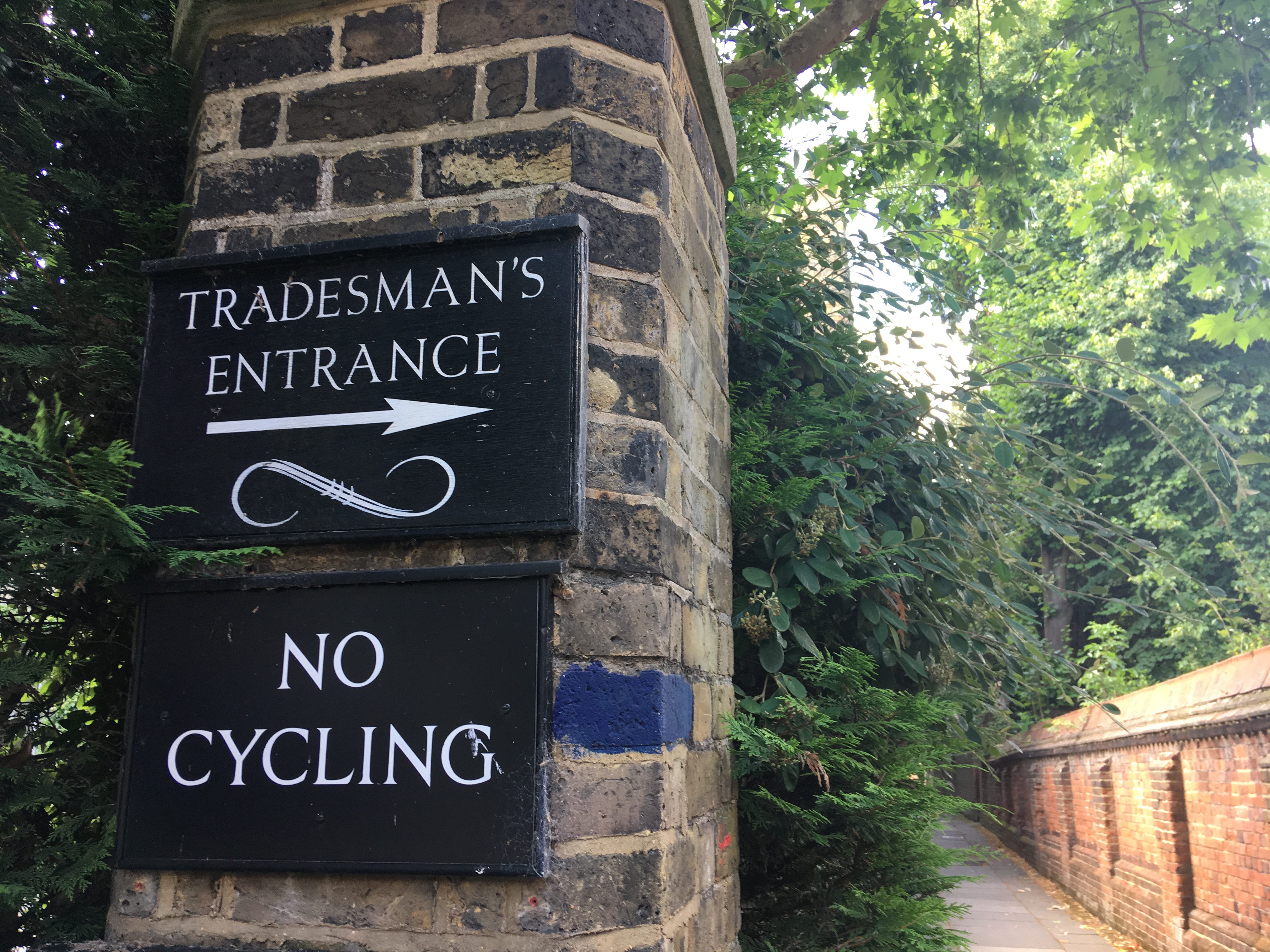
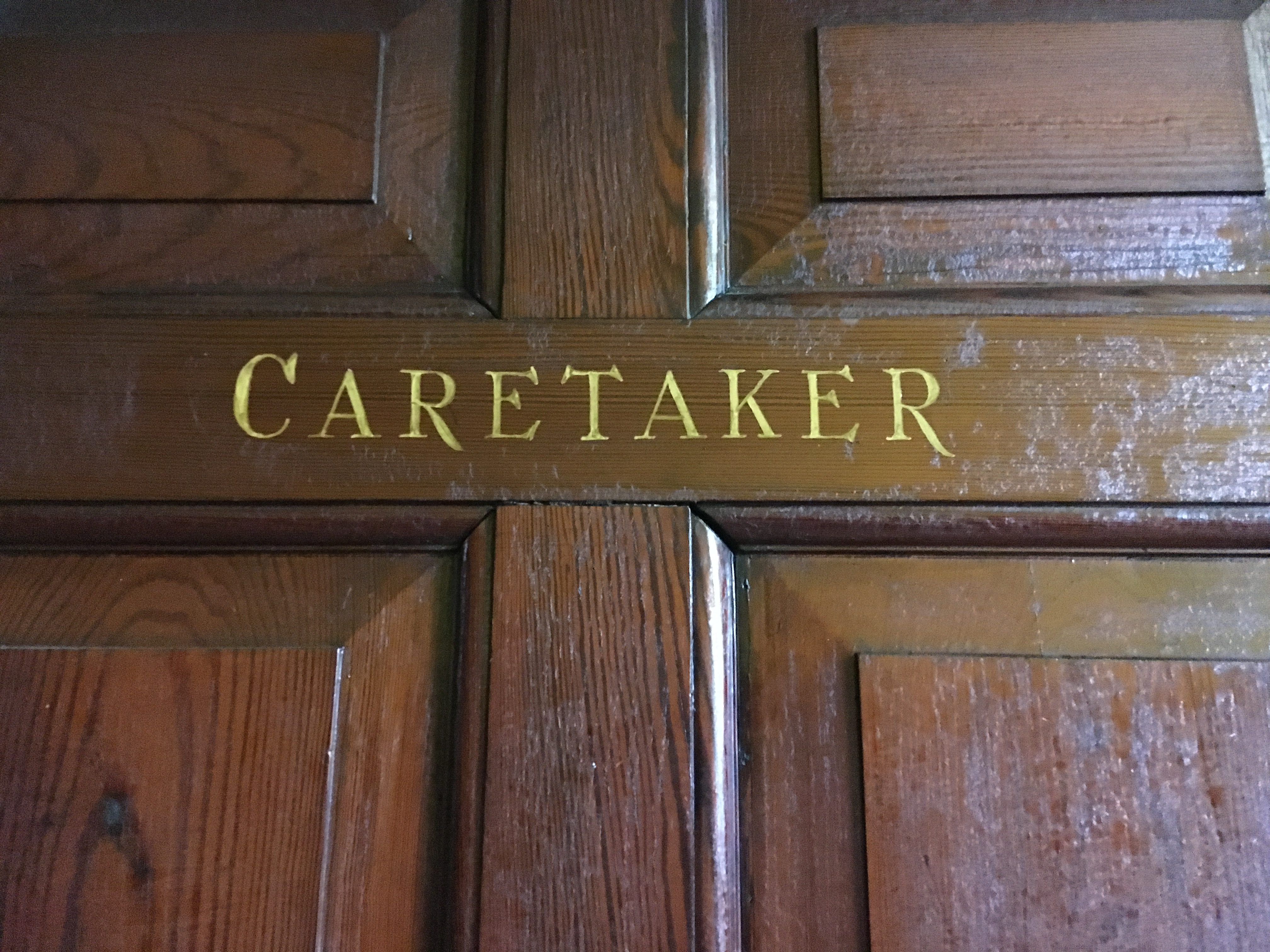
That afternoon, my walk was through Eton proper, where I photographed signs.  I was fascinated by how signs seemed to direct everyone to stay in their lane. I know how rambunctious boys can be, but was it really necessary for the grownups to have separate entrances?  Was a dame—as I imagined—a bosomy older woman with white hair in a bun who wore a flowered housedress and pinafore?  And was there really only one tradesman?

Lady Day

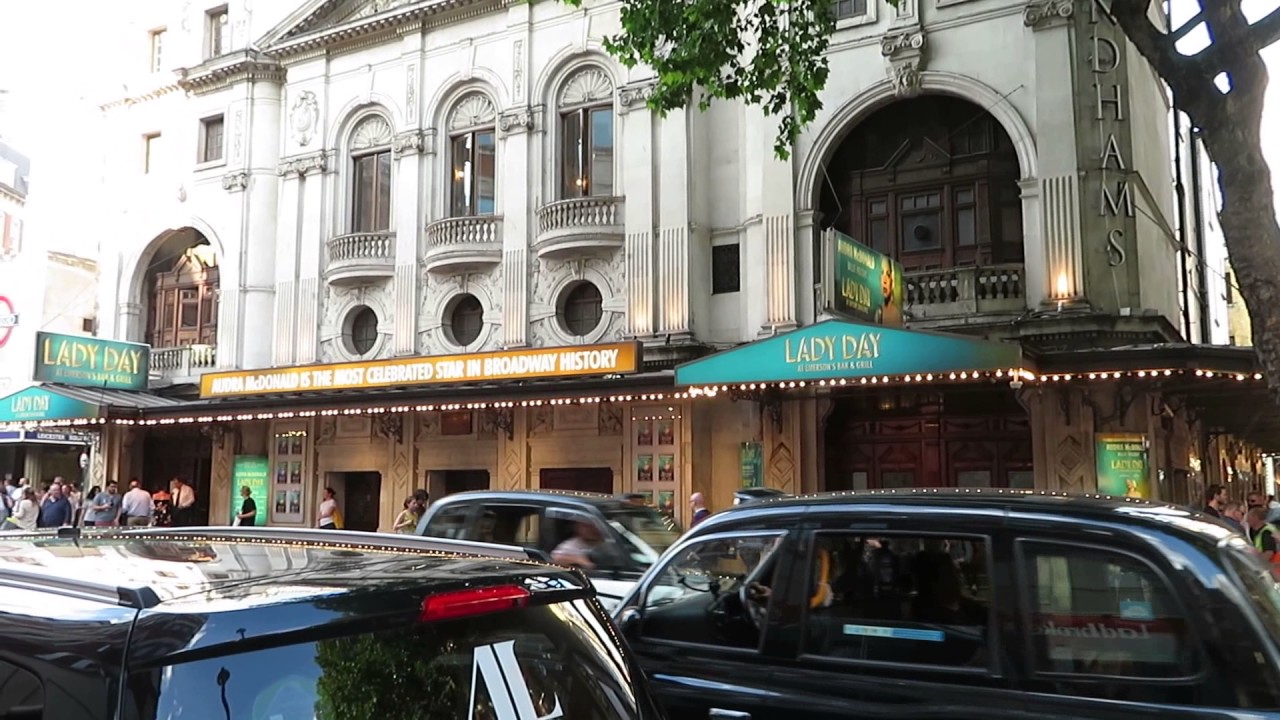
Lynn, Richard, Possum, and I made our way into the Wyndham, got some drinks, then headed into the auditorium.

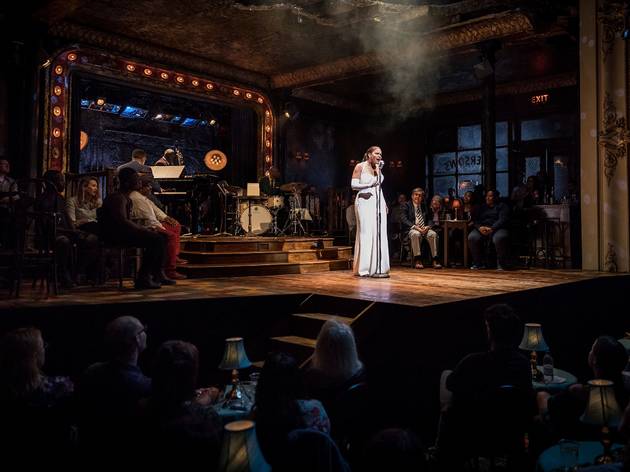
The show was Lady Day at Emerson’s Bar and Grill.  The premise is that Billie Holliday, the American jazz icon, is performing at a run-down bar in Philadelphia right before she dies, age 44, in 1959.  It’s a two-hour monologue and song book, accompanied by a man who plays the piano, tries to stop her from shooting up, then procures heroin for her.

I don’t go to a lot of live theatre.  It always feels to me like people are talking in a stilted way: “Look at me—I’m acting!”  I was leery about going to any American show in Britain.  On my first trip to England, my cohort of volunteers—who were from all over Europe and Asia—insisted on going to a west end musical involving a loud-mouthed Texan in a big hat.  There was also lots of waving and shooting of guns.  I squirmed through the whole thing.  The group members loved it and laughed all night about “typical Americans.”

Lady Day would be performed by Audra McDonald, with actual audience members on stage as though they were customers at the bar.  This was a bit strange, since McDonald and the musicians were dressed in period costumes, while the customers/audience members were dressed in contemporary clothes.

We were seated at a café table right below the stage.

I loved Billie Holliday as much as anyone; I had listened to her songs over and over, especially in my angst-ridden 30s, but would I be able to sit through two hours of angst?  And my chair was wobbly!

Then McDonald began her performance, and within moments all distractions melted away and I was riveted.  I knew Billie Holliday’s story—raped as a child, raised by a single mother, addicted to drugs and alcohol, did prison time, full of regret over not having children and a string of abusive relationships.

McDonald’s voice was well up to the task of Holliday’s songs; when the first strains of “Strange Fruit” began I teared up instantly.

Southern trees bear strange fruit

Blood on the leaves and blood at the root

Black bodies swinging in the southern breeze

Strange fruit hanging from the poplar trees


Pastoral scene of the gallant south

The bulging eyes and the twisted mouth

Scent of magnolias, sweet and fresh

Then the sudden smell of burning flesh


Here is fruit for the crows to pluck

For the rain to gather, for the wind to suck

For the sun to rot, for the trees to drop

Here is a strange and bitter crop

So the show was about Holliday’s life, but also about racism in America, and the lot of being a famous woman performer, and love, and addiction. Believe it or not she was also very funny.  I wanted to run up onto the stage and hug McDonald/Holliday, tell her everything was going to be alright and that I would take her home and take care of her.

I didn’t find myself feeling defensive about the theme of racism.  In fact, just the opposite.  Racism is a reality in America and always has been.  It’s something we’ve had to struggle with, collectively.  We’ll probably never see the end of it.  I’d like to think that as older generations die off, younger ones will be less racist, but the crowds in Charlottesville at the white supremacist rally last year were mainly young men.

So why would I feel proud of my country?  Because at least half of us are fighting this shit. At least half of us are fighting back–marching, writing essays, lobbying our elected officials in opposition to racism and other “isms.”

The performance ended; we looked at each other and I spoke first, “I feel like a wrung out rag!”

“That was intense,” said Richard.

“I’m exhausted!” said Lynn,

Added Possum, “I never knew!”

We went back to the hotel, ordered some wine, and talked for hours about racism in our respective countries.

Lady Day at Emerson’s Bar and Grill was made into a TV show; if you want to watch it it’s here.

Have a box of Kleenex handy.

Cabbing It to the Cabaret

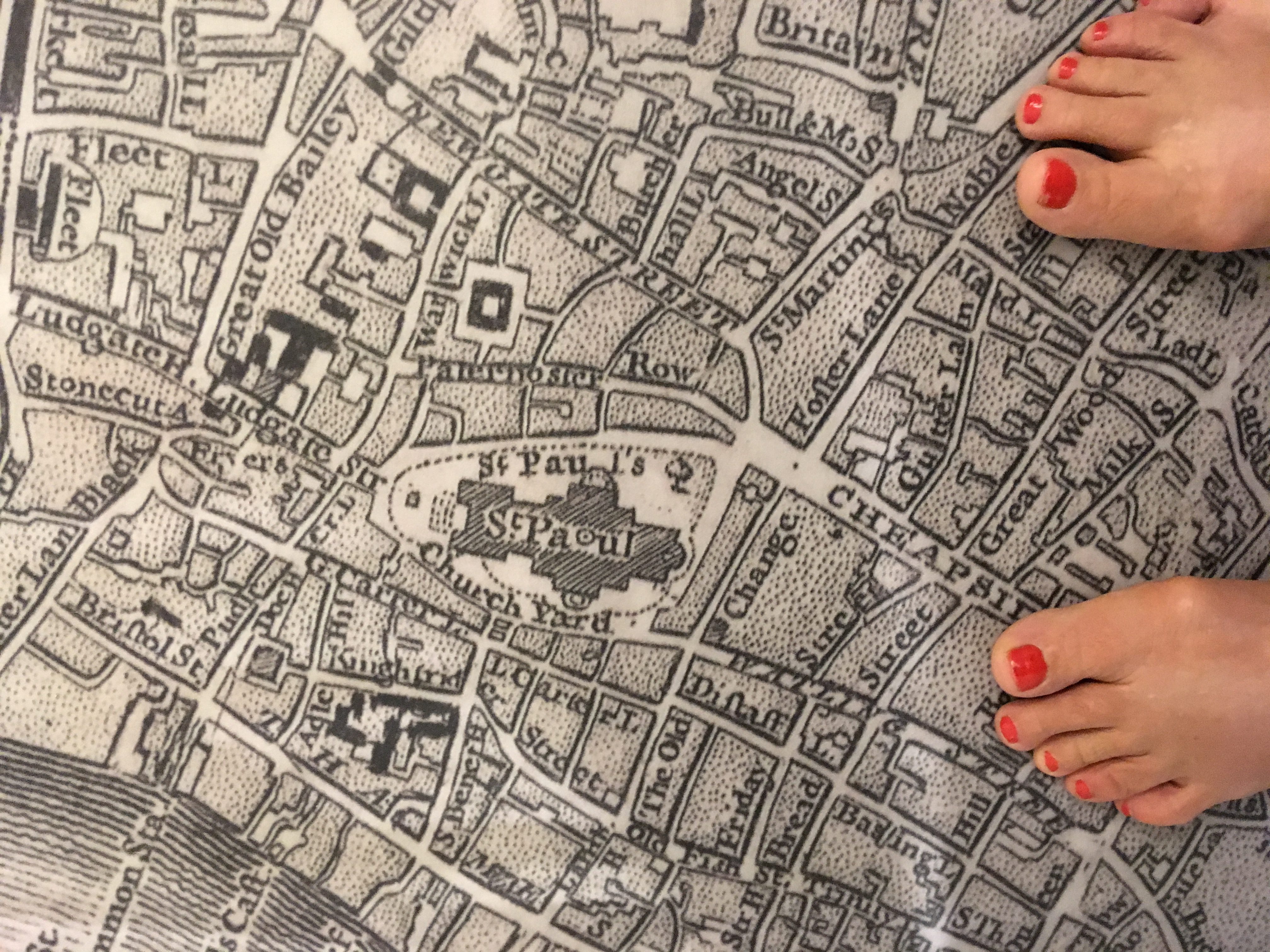
Lynn had booked three rooms at a hotel near the Barbican, and after carrying a backpack around all day I was happy to check in and dump it.  The room was spacious and the décor reflected the area.  This was the bathroom floor:

This was the art above the bed:

Some people might be disconcerted to sleep beneath meat-hook themed art, but I took comfort in knowing I was not the only weirdo who meditated on meat hooks.

In keeping with modern design principles, I couldn’t figure out how to turn on the bedside lights.  I called the front desk and—I could tell from her voice she had done this many times before—the front desk person walked me through how to grope my way around until I found the tiny, arty button that operated the bedside lights.  The room had a mini kitchen so you could cook for yourself and save money.  That wasn’t going to happen tonight.

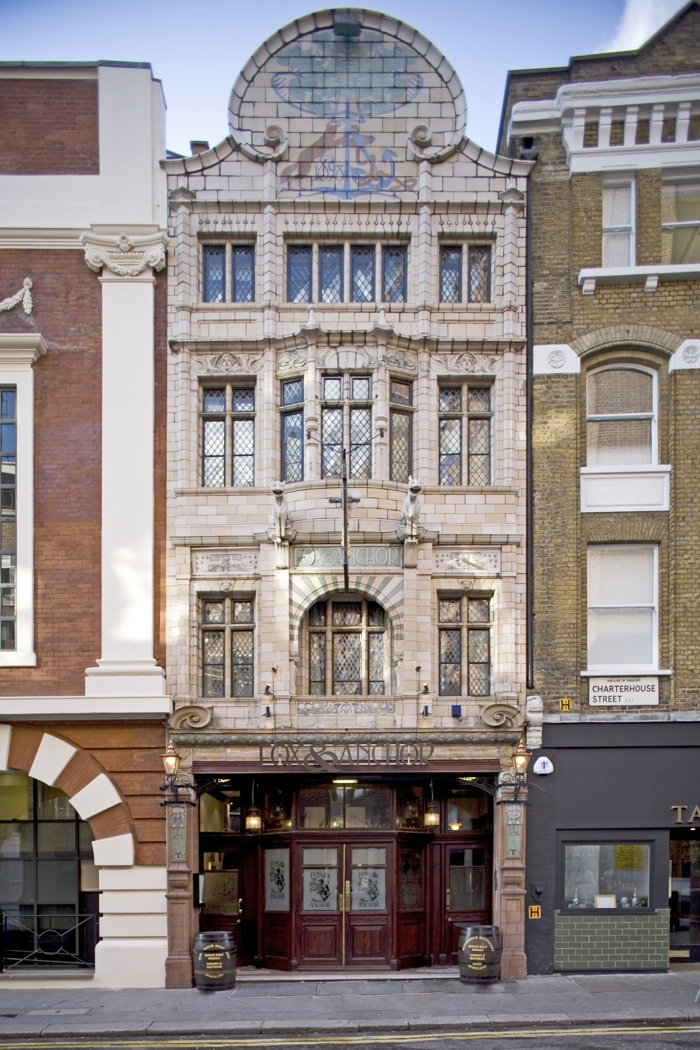
Lynn and Richard and Possum and I met in the lobby and walked over to Charterhouse Square to have a pre-dinner drink at the Fox and Anchor, a pub and boutique hotel.  It was built in 1898 which makes it Victorian, but it looks very Gilded Age or Art Deco to me.  These photos don’t do justice to the detail.

We sat outside, soaking up the sun and some drinks, then hailed a black cab to a Thai restaurant.  There are cheaper ways to get around London, like mini cabs and public transport.  Maybe I’m sentimental, but I prefer black cabs, especially when someone else is paying for them.

Here’s what the black cab driver wannabe website says about becoming a black cab driver:

“The London taxi drivers are almost as famous as the black cabs in which they drive, this is mainly due to their in-depth knowledge of London and ability in taking their occupants to their desired destination amid the congestion and the chaos that you often find when travelling through London’s streets.

“Easy you might think with the world of sat navs? Think again. Hail down a black cab in London and you can be assured that the driver will know the shortest and quickest route to your destination without the aid of a satnav. It doesn’t matter if you give them a street name, a famous landmark, a hotel name or famous point of interest, they will know exactly where it is and they will get you to it in the shortest route possible.

“London taxi drivers go through stringent training to obtain their licence, they need to pass ‘The Knowledge’, a test which is amongst the hardest to pass in the world, it has been described as like having an atlas of London implanted into your brain.”

London has 60,000 streets within a six-mile radius, many are one way.

A friend of Sam’s and acquaintance of mine was so smitten with black cabs that when he returned to Australia after living in London for 10 years, he bought an old black cab and had it shipped home with him.  I think his plan was to run a cab service, but now he’s teaching in an aboriginal school so I’m not sure what become of the cab.

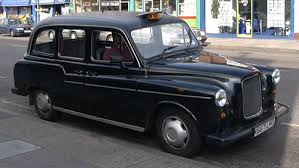
You may have read recently about Uber being banned from London due to data leaks and disputes over its employment practices.  I totally understand why Londoners would want to use Uber.  It’s fun to take a black cab, especially when you’re traveling as a group (this is not us):

It’s cool to take a black cab if you’re a tourist or on a special occasion.  But for getting around on a daily basis, only the uber wealthy could afford to use black cabs.

On a side note, I downloaded Uber just the other day but was unable to use it because it insisted I enter a UK phone number.  I guess my phone is confused and thinks I’m still in the UK.

After a great dinner we caught another black cab and snaked through the heaving streets of Saturday-night London. After dodging jay-walking revelers for 20 minutes, we reached our destination, Wyndhams Theatre, two miles from our hotel.

Pigeons

Sometimes I get a notification from WordPress: “Your stats are booming!”  I used to get excited, thinking it must be a publisher in New York reading every post I’d ever written and reaching for the phone to call me with a book deal which would come with a huge advance.

I went to the stats page to investigate and for some reason my last post had attracted the attention of three dozen Canadians.  Why?  I looked at the tags and categories. Were they drawn by the word “England?”  I’ve written loads of posts about England.  The only words that were different were “shopping” and “charity shops.”  Who knows?

Maybe I have a Canadian stalker.  Or three dozen.

Everyone I know is talking about the powerful men in media and politics who are being outed for sexually harassing or assaulting women.  All I can say is: it’s about time.  And I’m not surprised.  It’s happened to me at least a dozen times.  No one famous, but plenty of regular men who had some kind of power over me by virtue of age, title, or size.  It stopped when I hit my 40s—one advantage of getting older.

I never reported any of the incidents because first, I was very naïve and often unsure what was even happening.  Maybe I was misinterpreting things?  I mean, the social worker who was helping me get my act together after I spent two months in a psych unit after trying to off myself when I was 16—when he said he’d like to see me in a lace nightie, he was just trying to help me feel like a woman again.  That’s what he told me.  And that 30-something guy who stopped his car at the bus stop and asked if I wanted to go party—I was 18 and eight months pregnant—he didn’t really want to …?  No!  That’s gross!  I must have misunderstood.

And surely that Greek Orthodox minister hadn’t meant to press his hard-on against my derriere in that crowd of people at the Justice for All rally, right?  Wrong.  When I turned around in shock, he smiled as if to dare me, “What are you going to do about it?”  It must have been my fault.  I had thought how handsome he was and maybe he had sensed that and thought I would like what he did.

Surely my boss’s boss had been fiddling with the coins in his pants pockets when he stood next to my desk talking about nothing and staring at my boobs, right?  I had just started that job and really needed it.  It was 1986 and I had never heard the term “sexual harassment.” It never occurred to me to report him.

A friend described how she tried to get her husband to understand what it’s like.

“Imagine there’s a third kind of human out there.  They’re a foot taller than you and 50 pounds heavier.  They own everything and run everything.  And they want to fuck you in the ass.  Every time you go for a job interview, you know they’re imagining you naked.  They walk past your cube and look at you sideways, and you know they would like to bend you over, pull down your pants, and fuck you in the ass.  They brush up against you and act like it was an accident, but you know they just wanted to cop a feel.  If you say anything, you’ll probably be out of a job and nothing will be done anyway because HR works for them.”           

Back to England, and a more uplifting note.  There are things about the UK with which I have a visceral association.  One is the little teaspoons.  Below are my American teaspoon and a British one, which is larger than many.  Every British home has loads of these.  Something to do with tea, I think. I bought a couple at the £ Store to remind me of the UK.

Then there are the wood pigeons.  When I asked Lynn’s husband, Richard, What’s that bird?” he replied, “What bird?”  He didn’t hear them anymore; their call is so ubiquitous.

It’s this call and these spoons that made me smile every morning.

London Heels

Once I knew I was going in the right direction, settled back and enjoyed the lovely landscapes along the route.  The word “sweet” comes to mind when I gaze out over the English countryside.  That may sound patronizing but it’s not meant to be.

If you like rugby you will probably want to put Twickenham on your bucket list.  I made a mental note to avoid it on game days.

As we rolled into London there were some great views.  For once I have an excuse for my poor quality photos—taken from a moving train.

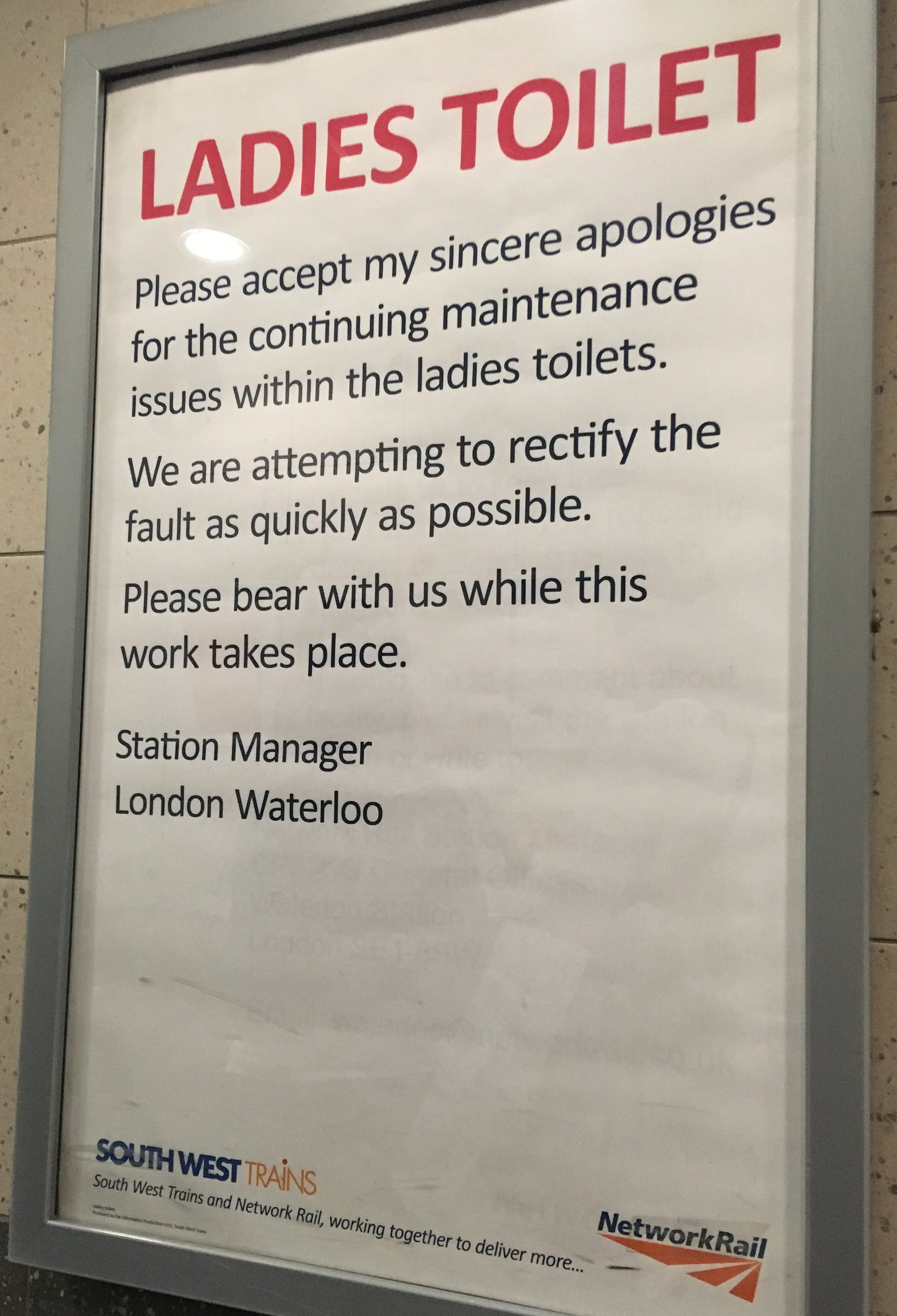
Waterloo would be my toilet stop every time I came into London.  This sign was still in place a month later, so “as quickly as possible” really meant, “someday, maybe.”

The sign made it clear that your 30p got you one visit to the toilet.  I wondered if someone had sued them, insisted they had bought a lifetime pass.

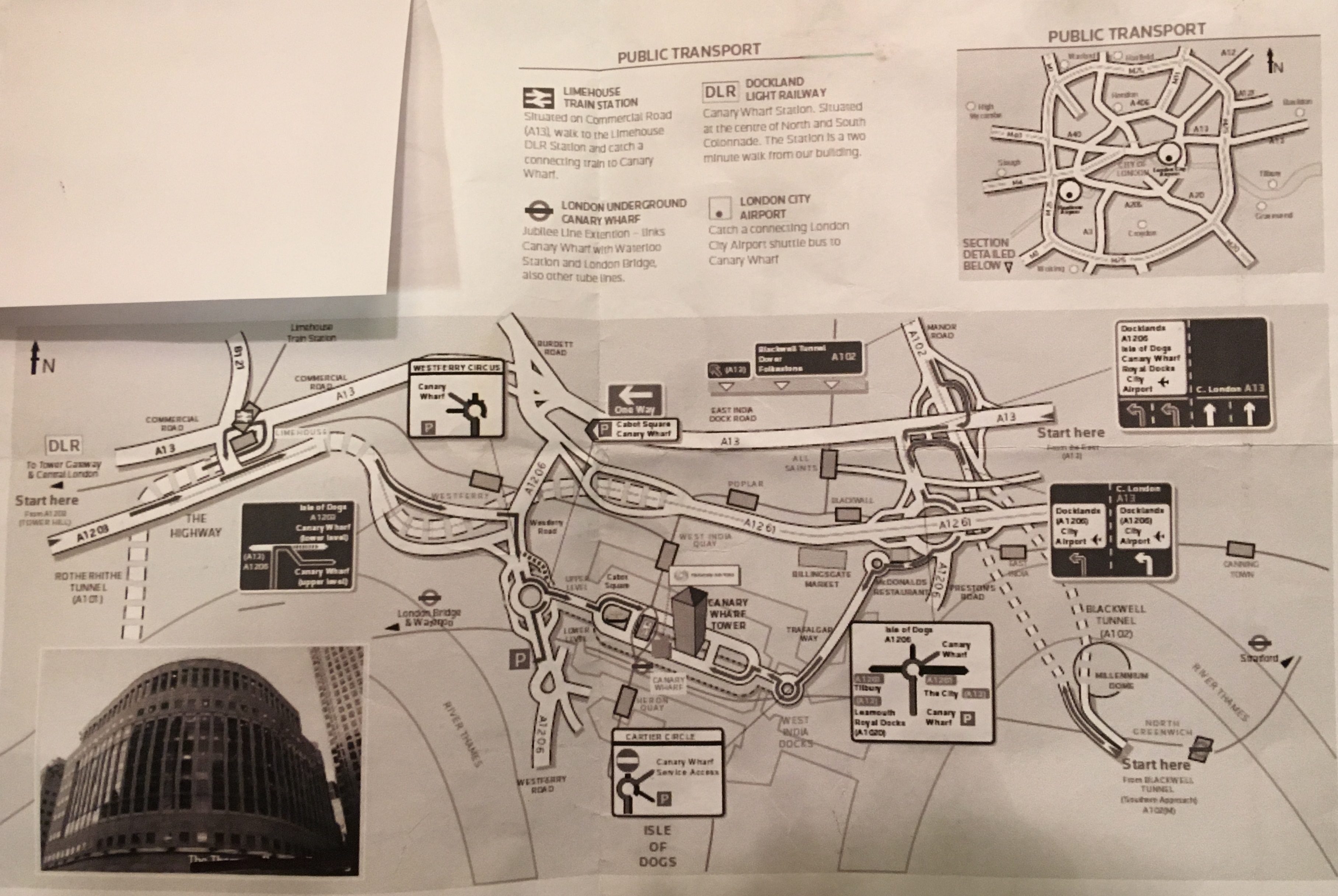
Then I was on the underground, which whisked me under the Thames toward Canary Wharf, where I would exit and try to find my meeting.  I was anxious about finding the building.  What if I took the wrong exit out of the tube station?  What if I got turned around?  They had sent me a map, which was even more out of focus than my photos and really just a jumble of unhelpfulness.

It showed a picture of the building, but how would I find it among all the other buildings?

The first time I came to England, 30 years ago next year, I had stayed somewhere in the vicinity of Canary Wharf.  Then, it was all gritty warehouses, Pakistani immigrants and elderly Holocaust survivors and native English speakers whose English I could not understand; street stalls selling tiny apples and pet goldfish suspended in plastic bags and possibly dodgy cassette tapes by Billie Ocean, Bananarama, and New Order.

Now it looks like this, according to a local news site:

I stepped out of the tube station and saw this:

Of course it didn’t have a giant black squiggle on it but you get the idea.  When will I ever learn to stop worrying and trust that I’ll be able to find things, especially when I have a map and a photo of the building?

I had dressed and accessorized carefully, making the best of what I had.  I had bought a really cute top in Cornwall that was suitable for a country holiday and I thought I could make it work paired with dress pants, my good jewellery, and an up do.  I felt professional when I left the house.  When I entered the building I immediately felt like a schlumpy schlimazel, which is just what it sounds like.

I waited in the gleaming lobby furnished with sleek Danish modern furniture.  I was sure the water glass the attendant handed me cost more than my entire outfit.  The reading selection on the table included The Financial Times, Economist, Wall Street Journal, and International Business Times.  All the headlines were about rich people making deals that would make them richer.

I noticed my heels were a bit worn.  Note to self: Buy new shoes before next work meeting.

One of the people I was meeting with arrived.  She was 30 years younger and 30 pounds thinner than me, blonde, and dressed in stilettos and a killer designer outfit. Mercifully, it was all over in 30 minutes.

I have been to meetings with foundations and corporations.  I’ve been to Ford and Open Societies Foundations in New York.  At Chiron Corporation in Silicon Valley.  And so on.  I normally carry myself well in these meetings and I had come carefully prepared.

But then I spilled my water and as we were wiping it up, my nose started running like a garden hose and I had to ask them for a tissue and blow my nose in front of them. These people were lawyers and I don’t know if they were on the clock but they were clearly impatient and possibly appalled by me.  I managed to maintain my dignity, make my points and ask my questions, but I was relieved when the revolving door swung closed behind me.

No Way Out

This is a series of posts about Belize and Guatemala that starts here.

Mike’s Place is a tourist complex where we would go kayaking or canoeing—it wasn’t  clear—in caves. Mike’s also featured “zip lining, hiking/swimming/rock climbing, food/drink/picnic/BBQ, and Wifi.”

Wifi, in case you wanted to watch a movie set in a jungle after hiking through a jungle.

Mike’s had been founded by a Canadian guy named Mike.  Here is a picture of him when he arrived in Belize.

Mike no longer looked like this.  He had probably partaken of a lot more food/drink/picnic/BBQ than hiking/swimming/rock climbing.  But never mind, he had a beautiful Belizean wife about 30 years younger than him.  She did the cooking and serving, and she seemed to adore Mike.

After 30 minutes of milling about, discussing vital questions such as “Should I bring a water bottle into the cave?” “Are there bats in the cave?” “Is there a place to go to the bathroom in the cave?” Jose our guide finally corralled us at the water’s edge and gave us a five-minute background on the history, geology, and safety concerns of canoeing in caves.

I live in Minnesota so I have done a lot of canoeing on rivers, in lakes, and in wilderness areas near the Canadian border.  I know how to steer; it’s really simple.  But I had no idea what to expect of canoeing in a cave. I had questions too, but I kept my mouth shut in hopes we would get going sooner and just find out once we were in inside what was involved. Would the water be calm or would there be currents?  How deep would it be?

These questions were not answered on the Wilderness Adventure website, and that’s okay—I don’t want to know everything in advance or it wouldn’t have been an adventure. When Mark and I had talked on the phone he hadn’t known anything about the canoeing either, since he had never been to Belize.  The packing list had recommended water gear as though it would be a serious canoe trip, and I had jettisoned mine after moving twice in three months the previous year.  I had gone shopping for water shoes and water-repellant clothes, none of which are cheap or findable in second-hand stores.  I browsed the water shoes and dropped them like they were red hot when I saw the price tags.  In the end, I brought some cheap Sketchers sandals I found at TJ Maxx.  Worst case scenario, I would throw them away if this canoe adventure turned out to be rigorous.

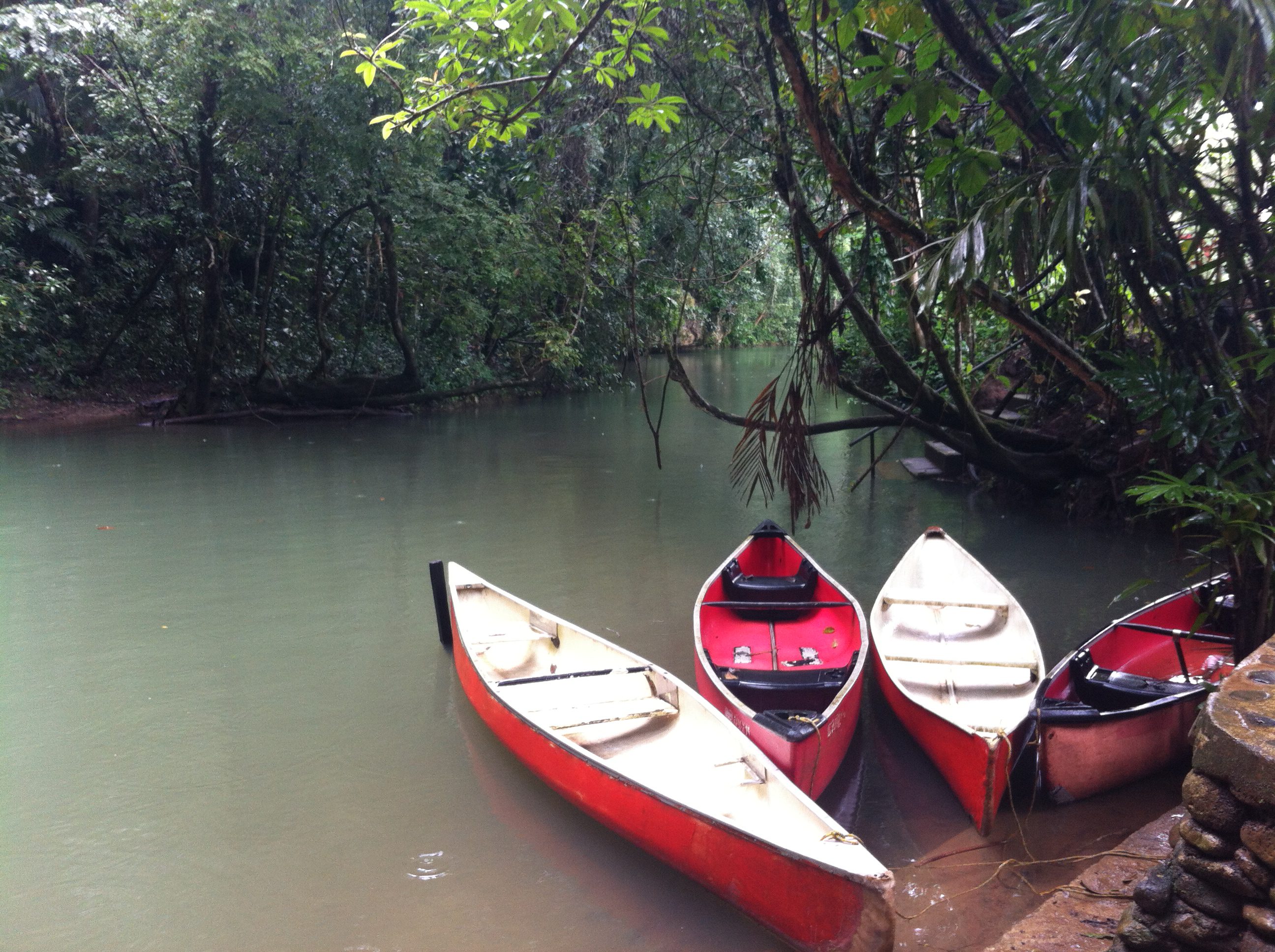
It was extremely tame.  They made us wear life jackets and helmets—because it was a cave with some low hanging outcrops—but we never paddled faster than two miles per hour.

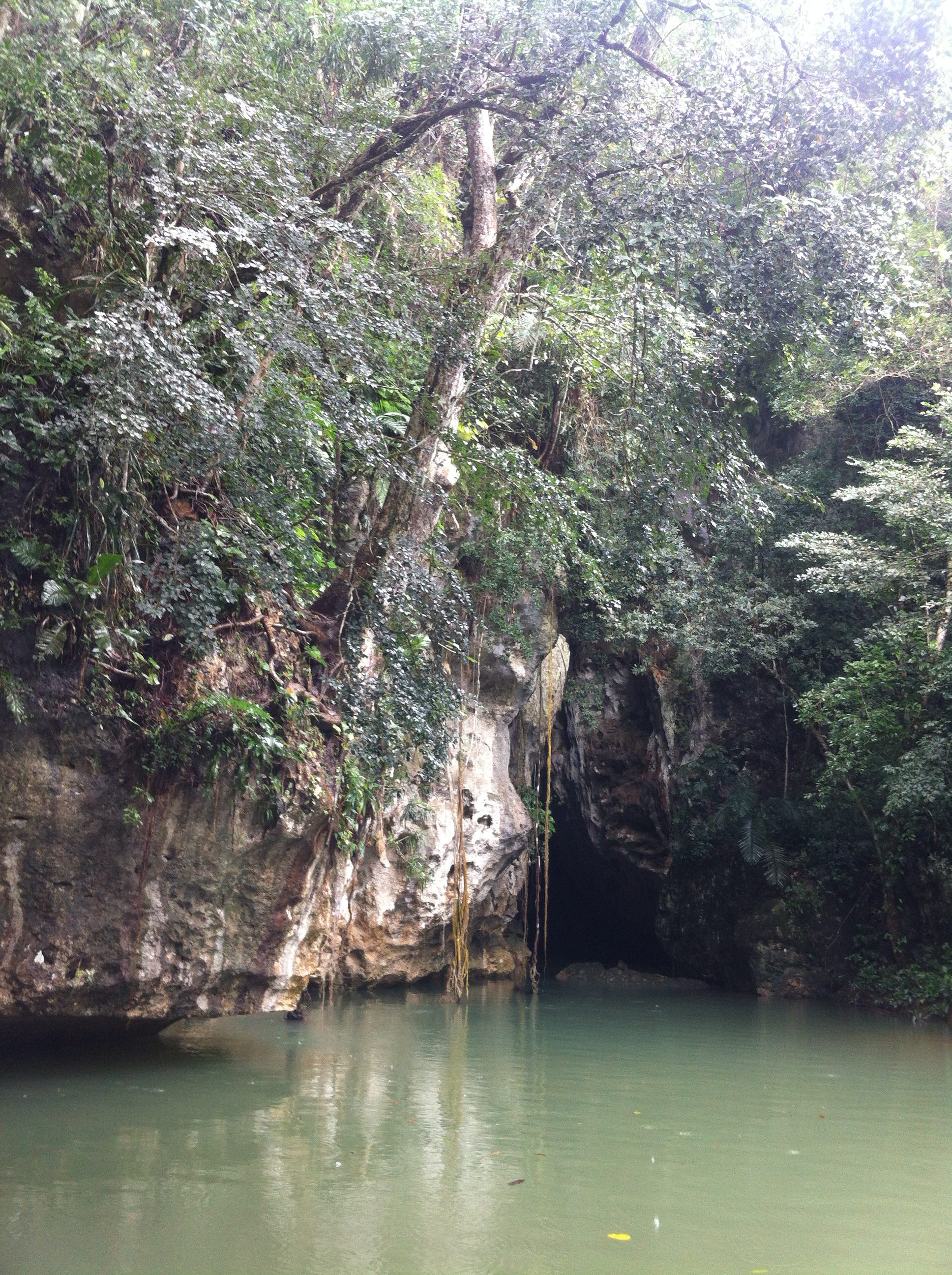
Here is the cave entrance and the canoes.

As we paddled into the silent cave, the hooting of a barn owl that sat in a niche high above the entrance echoed in the darkness, which closed on us as soon as we were a few meters in.

A second guide, Alex, had been called in from his Sunday off because Mike hadn’t been expecting our group.  We drifted along at a leisurely pace, looking at the formations and ancient pots left by the Maya (maybe).  We paddled about a mile into the interior, and I asked Alex about his life.

He was 25 and from El Salvador, from whence his family had fled during the civil war.  He lived with his mother; his father had gone north to California, where he had a successful business.  Alex’s siblings had followed his father one by one and wanted him to join them.  He hadn’t seen his father in over 20 years.  He had no future in Belize.  But he was the youngest child, and his mother wanted to stay in Belize.

“Last month,” he said, “My father got me a visa and I was prepared to go.  But I just couldn’t leave my mother.”

I groaned internally.  Donald Trump had just issued a decree ordering the number of refugees admitted to the US in 2017 be cut in half.  Alex had probably missed his last chance.

The People

This is a series of posts about Belize and Guatemala that starts here.

Here’s the demographic run down on who was on this trip in Belize. There was Mark, who I’ve introduced as the trip leader, who was probably 28 years old.  He had a man bun, wore braided leather bracelets, and had very, very dark brown eyes.  A few times I found him staring intensely at me, like he was trying to read my mind, but then I realized he was just spaced out.

This is where it gets tricky.  I’ve used Mark’s real name because he’s on the Wilderness Inquiry website so you could figure out who he was if you had nothing better to do.

I’ve changed everyone else’s names.  I told the group I write a travel blog and that I would be writing about the trip, including about them. After all, isn’t it often the people you meet that make the most interesting stories?

When I whipped out my notebook to jot down place names and such, people would ask, “Is that for your blog?” and I would answer yes.  None of them asked how to get to the blog, but if any of them ever find their way here I wouldn’t want them to feel trashed.  We were all being ourselves, even if some of our selves were more irritating than others.

Even though I write things down, this blog would never pass a fact-checker’s muster.  So you can take the following as generally correct information.

Our group ranged from 45 to 75 years old, so I wonder if Mark felt like a baby boomer baby sitter.  There were two married couples from Minnesota. Inga’s family was Latvian and she had lived there before moving to the Pacific Northwest where she met Jesse, who was Native American and worked for some tribal concern.  They had moved to Minnesota when he got a job at a big foundation.  That had ended now, so they were in a life stage of trying to decide what next.

Mike and Joan were suburbanites and newly empty nesters.  They had a daughter with autism, and it had been an exhausting journey helping her to become independent. They were “reconnecting,” as they put it, on this trip.  Mike did something in IT and Joan was a stay-at-home mom.

There were two married people whose spouses would have hated this kind of travel.  Bugs?  Heat?  Hiking?  No way!  So they came by themselves.

Stan was a soft-spoken retired postal worker from Pittsburgh.  “I’m taking my wife on one of those Viking River Cruises in Europe next fall,” he told us.  “That’s her kind of travel—white linen table clothes, shopping, and museums.”

Stacy was a retired band teacher from New Jersey.  She and I were both Jewish, and we joked how about how it’s unusual to have 20% Jewish representation on a tour.

The last member of the group was a never-married woman my age named Liz.  She was from Columbus, Ohio and had worked in the mortgage department at a giant bank for 30 years.

So that was us—pretty homogeneous—mostly white, middle class, and middle aged.  When you think about it, it’s people like us who have the time and funds to do things like this.

Trudy’s interpreter, Emily, was the youngest among us at 45.  She lived a few blocks from me, was married to a guy from Zanzibar, and had four kids.

If you’ve ever been on a group trip, maybe you’ve experienced this—you are immediately drawn to one person, feel repelled by another, feel neutral about a third, and so on.  Emily and I hit it off right away, probably because we had both lived abroad.  While others on the trip had traveled internationally, there’s a big difference between that and living or working abroad.

Which brings me to some current news: I’m going to Ethiopia for work!  I’ve always wanted to write a sentence like that, and now I can.  It will be sometime in the next six weeks, so on top of planning my three months in Europe and the UK, this will give me writing fodder for years.

The Good Old Days

This is a series of posts about Italy, Malta, and Spain that starts here.

Our last full day in Toledo.  The next day we would take the train to Madrid, spend a night at an airport hotel, then fly early—me to Minneapolis/St. Paul and Lynn to Aberdeen.

At breakfast, I noticed over Lynn’s shoulder that there were large stone sculptures visible through the hotel windows.

“That’s nice, that they have a garden and sculptures outside,” I remarked.

“Yes,” Lynn replied, “Why don’t they mention it when you check in?  It would have been nice to sit out there yesterday when it was sunny.”

This led to a discussion of the few nice days in Scotland—in August—where you can sit out on the patio and have a Pimms.  In case you’ve never heard of Pimms, it’s a mysterious drink (mysterious to me as an American, anyway) that involves Pimm’s Liqueur and lots of fruit, cucumbers, and mint.  Very refreshing.  And then the rain comes, and you have to scurry back inside.

Somehow this led to a conversation about what makes the Scots Scottish.  Lynn, being English but living in Scotland, had many observations and insights.  I know it was a long discussion, but I can’t remember anything about it.  I wasn’t bored—quite the contrary—I always find topics like this interesting.  The good thing about not remembering conversations is that I can look forward to having them again the next time I see Lynn.

We were the last ones in the breakfast room again.  Time to move along; we were going to see all the rest of Toledo’s sites in one day.

I see in my sketchy notes that we went to the Santa Cruz Museum.  According to the map/guide, it has a “beautiful Plateresque doorway, coffered ceilings, and a monumental staircase in a Covarrubias design.”  Wow.  If I saw it, I’m sure I was impressed, but I have absolutely no recollection of it.  Maybe by now I was dazed by so many churches, museums, and other sites that my brain couldn’t take in any more.

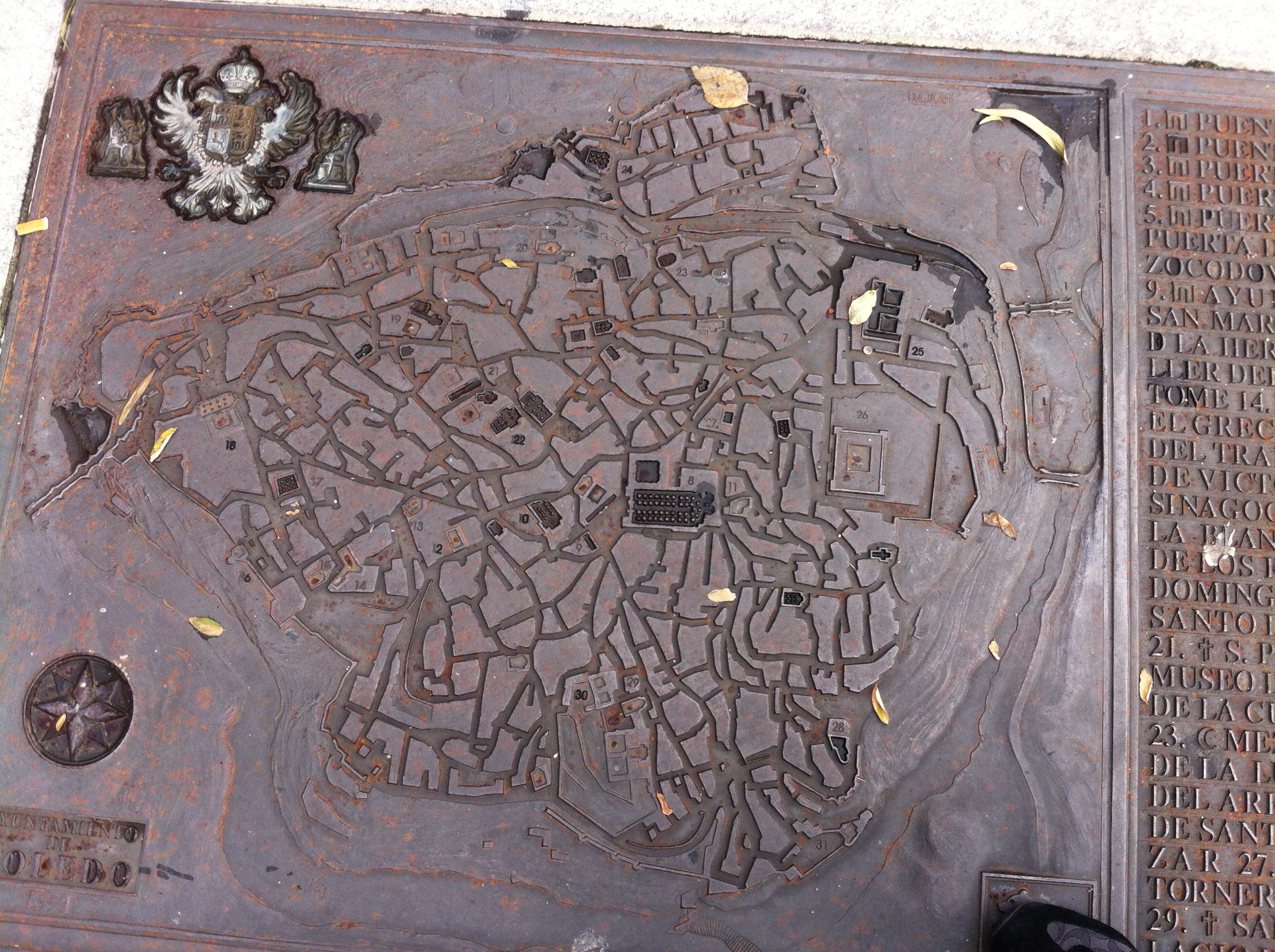
I do remember the San Fe Museum … oh, wait.  On the map they look like the same thing … two museums possibly sharing one building? … online it describes “the hospital” of Santa Cruz.  Here’s a map of Toledo that was set in the sidewalk to illustrate what a jumble it is.

Anyway, Lynn and I paid €5 each and went into an enormous building named after a saint.  The floorplan was like a giant cross, naturally, and we figured out after about an hour that each arm of the cross was a different century, so we went from the 16th Century to the 15th, then to the 18th, then the 17th, which surely didn’t help me retain anything I might have accidentally learned.

By now I wasn’t even making a polite show of looking at the paintings of the Virgin Mary and crucifixions. What was left, if you skipped the religious stuff, was politics and culture.  Of course, religion, culture, and politics were inextricably intertwined.

Think about the entertainment options back then.  No TV, radio, movies, Internet, or telephone.  The first newspaper wasn’t published until the mid-1600s.  Books were rare and mostly owned by wealthy people and religious leaders, who were also the ones who commissioned paintings and musical pieces.  They ensured the themes were religious, except when they commissioned porn for their own secret collections.

If you were poor you worked six days a week and went to church on Sunday, where you saw paintings of martyrs, heard sermons about going to heaven when you died, and sang hymns about how blessed were the obedient poor.

It was all about control of wealth and power. This was also true about females born into wealth.  One of the themes of the exhibit was “strategic marriages as foreign policy.”  If a girl survived infancy, her parents started plotting her marriage to a decades-older cousin who was a royal in another principality.  If she didn’t produce an heir and a spare, she was considered worthless.

On the positive side, she did get to wear this for a couple hours during her coronation.

Desert Contrasts

This is the story of how I wound up in a brothel in Dubai, a series that starts here.

After finishing my meal at the brothel … er, TGI Thursdays, I took a taxi back to the hotel.  I apologized to Toni for yelling at her.  She apologized for calling herself an American.  Wait.  That doesn’t sound right.  You know what I mean.

I told her about the brothel and we shook our heads, imagining the young women in our lives working as prostitutes—or the men in our lives hiring prostitutes.  We talked about the irony that Dubai arrests tourists for making out on the beach, but that under the gaze of the Sheikh you could drink, smoke, and fornicate if you knew how to find the place.  We talked about puritanism, patriarchy, and power dynamics.  We agreed that Dubai wasn’t much different from North America, in that appearance and reality were completely different, like when you read about a child molester and you could bet he would turn out to be a Christian pastor or a Boy Scout leader.  We discussed the socioeconomic conditions and gender imbalances that made sex work the lesser of terrible ways to survive in a tough world.

We had a lot in common after all.  We bonded.  We agreed we didn’t need to spend every moment together.

The next day I took a bus to the Mall of the Emirates.  There was a young woman sitting across from me dressed in jeans, a tight-fitting but long-sleeved T-shirt, and a baseball cap.  The woman sitting behind her wore a full burqa; even the eye opening was covered with black mesh.

The bus route took us out of the old town through the desert.  I could see trailers in the distance—what we would call manufactured or mobile homes in the US.

It’s difficult to build an edifice complex without cheap labor.  These trailers in Dubai were home to the Pakistani, Bangladeshi, Sri Lankan, and other migrant workers who were building skyscrapers and malls for the Sheikh.  I had read about how they were exploited and trapped out in the desert before I’d left Dublin.  The trailers certainly looked desolate.  I wondered how many brothers, fathers, or husbands of the TGI Thursdays women were also making a living in Dubai.

The mall was like any mall in Minnesota.  Not.  It had an indoor ski resort!  It had shops where you could buy every kind of burqa you desired, as long as it was black.

mall-of-uaeburqa-shop

Like an idiot tourist I bought a three-foot-tall hookah pipe with lots of detachable, fragile parts which I then had to lug around with me on the bus, taxi, plane, and the bus in Dublin.  Having my arm in a sling didn’t help.  Take my advice, if you really want a hookah pipe, order it on Amazon.

Later that day I wandered around the old part of town near our hotel looking at store after store that sold gold.  Who bought this stuff?

gold

Then I saw a beautiful tunic in a shop window and went in to try it on.  It was a bit big and the proprietor offered to tailor it for me on the spot.  He took the opportunity to fondle me and I thrust his hands away and he just laughed.  He did alter the tunic so I guess we both got what we wanted.  Below is what it looked like, modeled by a woman who actually looks good in it.

salwar-kameez

I bought some stamps at a kiosk so I could sent postcards.

emerati-stamps

I will give them the benefit of the doubt and assume they convey a message about zakat, or charity.

Toni and I went to a farewell banquet in the desert that night, complete with the obligatory camel ride and henna painting of our hands.  The next day, off we went back to Dublin.  Here’s a photo of the men’s and women’s mosques in the Dubai airport.

airport-mosque

I started this series as a way of examining things that can go wrong while traveling.  In one week I will be in Rome.  If nothing goes “wrong” there like it did in Dubai, I’ll be disappointed!