Category Archives: International Development

Oxford, Again

On the coach to Oxford.  The longest part of the journey, as in most places, is getting out of the city.  There’s no way to magically part the traffic, so you may as well sit back and enjoy the scenery.

The seats on UK coaches are raised up to make space for luggage compartments.  So you can see a lot from a coach that you won’t see at the pavement level. I hadn’t been on this particular route for a few years.  We passed a row of luxury car show rooms … McLaren, Ferrari … the type of gaudy wheels Donald Trump would love.

We passed my favorite hideous but marvelous building, Trellick Tower.
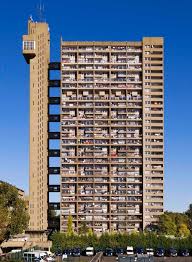
I turned my head and there it was … the ill-fated Grenfell Tower.

Grenfell had gone up in flames in June, when I was in Ethiopia. I recalled being in the canteen at work and how everyone stopped eating and stared at the TV, in disbelief that this was London, not Addis Ababa. Seventy-one people died in the Grenfell Tower disaster.

We passed the Hoover Building, as in hoovers, which Americans call vacuum cleaners.

This art-deco bonbon is being converted into luxury flats.  I’m sure they’ll be fab, but they’ll still overlook a motorway clogged with traffic that produces plenty of noise and exhaust fumes.

In England, there are Green Belt policies aimed at preventing urban sprawl.  And they really do look like belts. (image by Hellerick).  The big one is London.
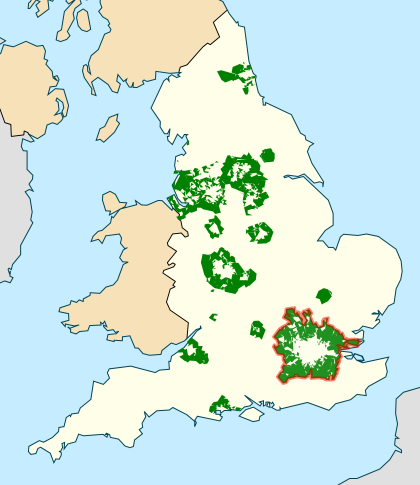
While my fellow nature lovers and I love green belts, they have been criticized for pushing up house prices, since 70% of the cost of building new houses is the purchase of the land (up from 25% in the late 1950s).

There are no signs stating, “You are now entering a green belt,” but I have been on a coach many times where I was surrounded by relentless concrete high rises and industrial areas and suddenly it’s like we’ve been transported into a Nature Valley Granola Bars commercial.

We entered the Chiltern Hills.  I have friends who have hiked these, camping along the way; I prefer to enjoy them from a coach for now.

In under an hour we were entering Oxford from the east, along the Headington Road.  It felt so familiar and I felt nostalgia well up.

I have never been so in love with a place.  I think it was because of what it represented in my life at the time.  From the teenage welfare mom living in subsidized housing, when I arrived in Oxford I had a master’s degree, I had traveled all over central America and Israel and some of Europe, and my son was stable—for the time being.  Moving to Oxford was my triumphal escape from St. Small, and I was never going back.

Of course I did come back, because my work visa couldn’t be renewed.  And I have come to appreciate many things about St. Paul, like how affordable it is.  It’s clean.  We’re a hub for theater and other culture.  I can drive five minutes and be at the Mississippi River or two hours and stand on the shores of Lake Superior. The Twin Cities of Minneapolis and St. Paul are one of the most progressive metropolitan areas in the US, which I appreciate a lot right now.

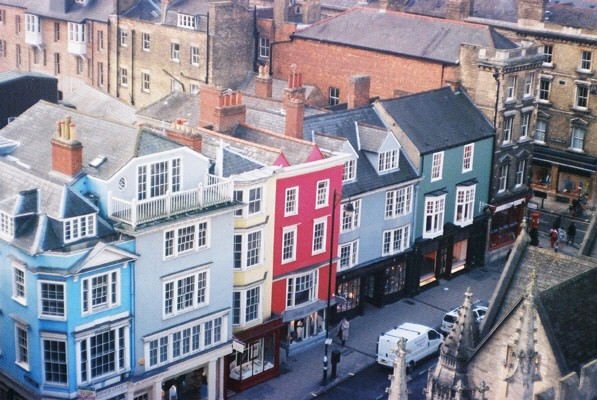
But Oxford is a medieval city that is home to the most storied university on the planet.  It’s called the City of Dreaming Spires, and I won’t gush on about it but here are a few photos from some sight-seeing days I spend with my niece when she came to visit me.

I believe we’re atop Carfax tower here.

This is a tourist and TV detective-series directors’ favorite.

There are the Harry Potter-esque colleges.
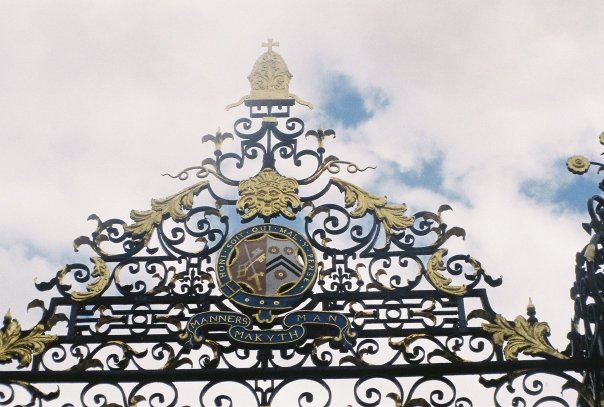
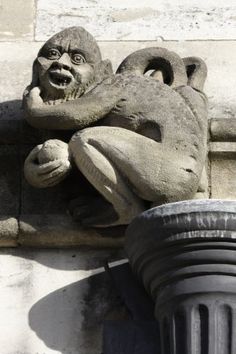
Everywhere you look there are gargoyles and grotesques.


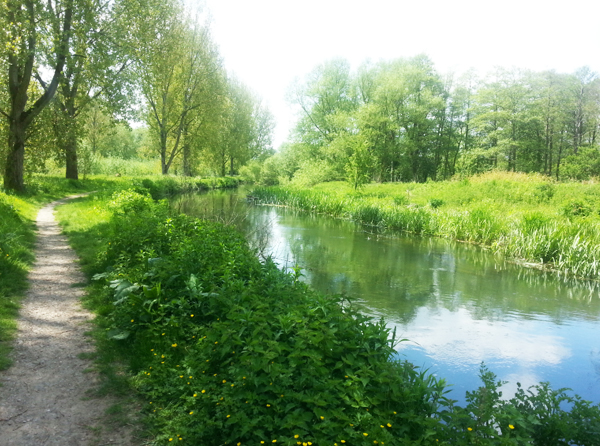
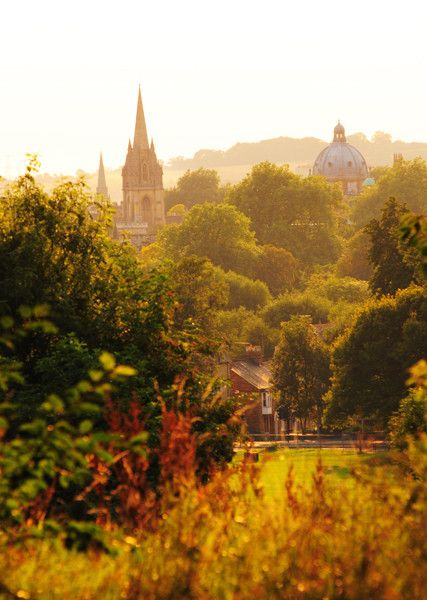
Oxford is also surrounded by woods and rivers and meadows.
Moving to Oxford is how I met Lynn, and Sam, and Possum, and Heidi.  It got me started in the international development biz.

How lucky am I to have lived there and returned again and again?  Most people never get to visit once.
Power and The Pig

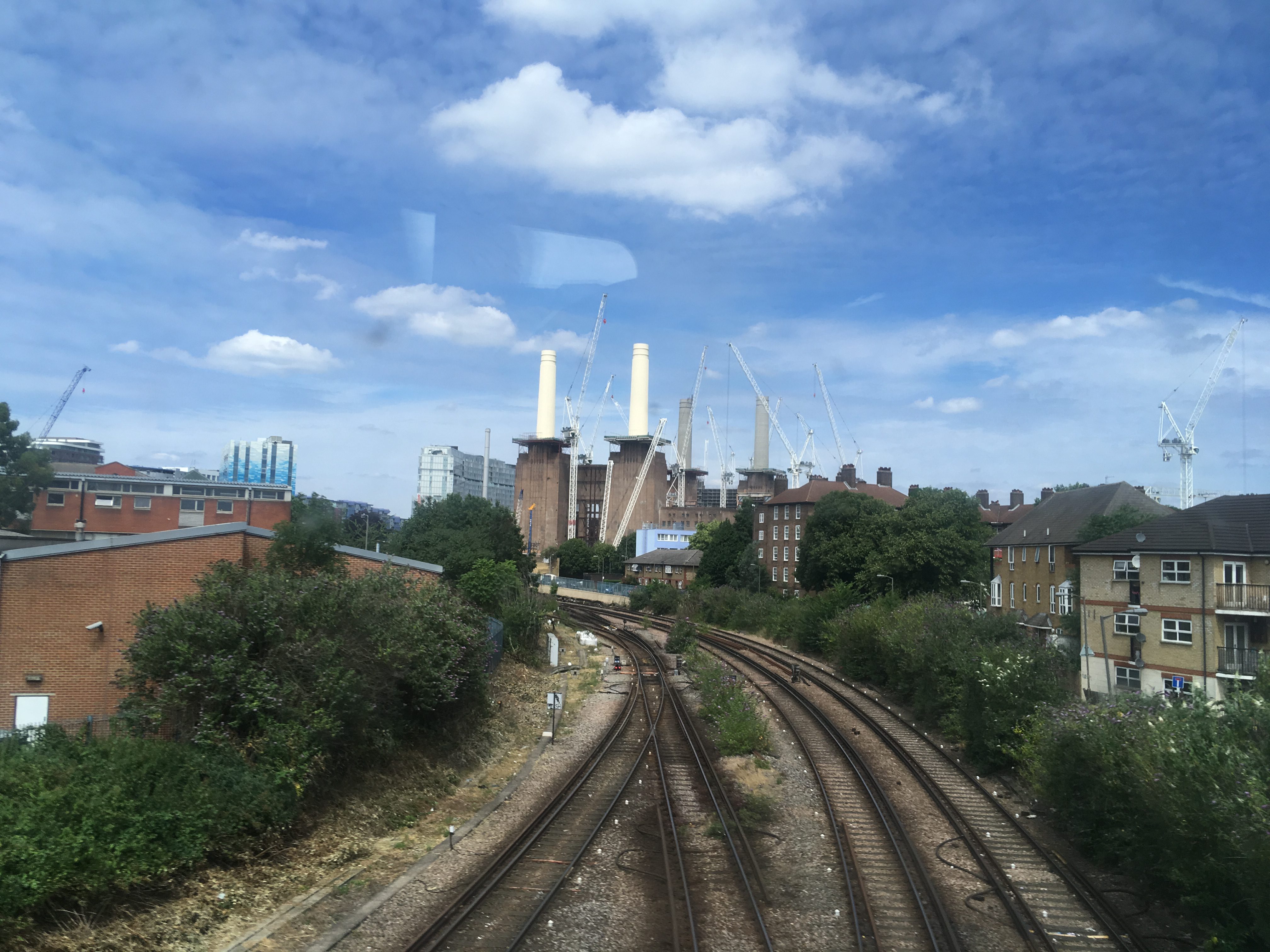
I was on my way to Oxford.  This involved taking the train into London, then boomeranging out to Oxford by coach.  I had taken both routes many times so I felt no anxiety about getting there.  From the train I could see Battersea Power Station.

When I first spotted it, I thought I recognized it from somewhere.  After a couple more trips it came to me—this was the scary structure featured on Pink Floyd’s album Animals, which I had listened to over and over in my youth.

Animals is loosely based on George Orwell’s novel Animal Farm.  It’s the debut of the pig that Roger Waters, the band’s former bassist and lead song writer, still features in his concerts.  The album critiques the socioeconomic conditions in late 70s in Britain, with the pig symbolizing despotic, ruthless capitalism.

This is one of those moments where I feel overwhelmed and amazed by coincidences and connections, but I’ll write on.

Battersea Power Station was decommissioned in the late 70s and early 80s.  It looks ominous and cool from a distance.  It took me back because my first day at Oxfam involved a group “field trip” to another coal-fired power plant in Didcot, a half hour south of Oxford.

Yes, my first day happened to be an “away day,” which we in the US would call a staff retreat.  It was disorienting, to say the least.  Here I was, ready to start researching issues like small scale agriculture and industrial mining, and instead my new boss picked me up in front of the liquor store near my hostel and whisked me away to a coal-fired power plant.

This is what it looked like as we approached.

All I could think was, “What the fuck?!  Maybe we’re really on an undercover mission to sabotage it.  I could be deported on my first day!”

But no, we were really going on a tour.  The Didcot plant has also since been decommissioned and transitioned to natural gas. Sadly in the process, part of it collapsed and four workers were killed.

But back in 2006, the management was in full marketing buzz-speak mode.  We got to don jump suits and hats and masks; we must have looked like the Oxfam version of Devo.

We were lead around by a perky young woman who made coal power sound so cool! and really—just super for the environment! We received cardboard model coal plants to assemble at home with our children.  These actually were really cool.  I wonder whatever happened to mine.

I never received a clear explanation of why we went.  Maybe to try to understand “the opposition?”

Back on the train to London, seeing Battersea reminded me that there was a Pink Floyd exhibit at the Victoria and Albert Museum.  Strangely, my son is a bigger Floyd fan than I ever was, and I made a mental note to go check out the exhibit in order to obtain Cool Mom Points.

Now, sitting in my living room in January in Minnesota, I am reading Donald Trump’s tweet about Nine Elms, the area where Battersea is located.

“Reason I canceled my trip to London is that I am not a big fan of the Obama Administration having sold perhaps the best located and finest embassy in London for “peanuts,” only to build a new one in an off location for 1.2 billion dollars. Bad deal. Wanted me to cut ribbon-NO!”

An off location?  I read several articles about the redevelopment of Nine Elms and specifically Battersea Power Station when I was in the UK.  The plan is to invest £8 billion ($11 billion) into Battersea to create luxury penthouses.  $11 billion!  Yes, billion!  There are all sorts of other fantastical buildings springing up around Battersea, including the new American Embassy.  This is an artist’s rendering; the real thing was more impressive, although I didn’t know what it was when I saw it in the distance from the train.

This kind of phantasmagorical development project should be right up Donald Trump’s alley—affordable only to the one percent.  I’m surprised he doesn’t recognize a great real estate investment deal when he sees it.  I’d invest in it if I had his money.

Deserving Immigrants

The next day I would go to Oxford for some meetings with Oxfam people and to hang out with Lynn and Possum.

I had to leave the house early but first I let in the cleaners into the flat.

People in the States have asked me what Brits thought about Donald Trump.  Typically, I would meet a new person and he or she would make small talk while looking down at the ground, then after 10 minutes broach The Topic.

“Sooo … what do you think of your new president?” They weren’t sure where I stood, so they posed an open-ended question.

When I expressed my opinion, they invariably let out a sigh of relief that I wasn’t one of “those Americans” who think he’s Terrific, and they would launch into a screed about him, usually looping in the themes of Brexit and nationalism.

“We think he’s a complete tosser!” was a typical comment.  Tosser, wanker, arsehole, mad as a bag of ferrets.  Just a few of the British endearments I heard about our president, not to mention the universal terms racist, sexist, nationalist, moron, jerk, sociopath, and narcissist.

Granted, I tend to hang out with very liberal people, but I went to a few parties where I wasn’t sure what was coming.  It was always the same.

So when the Polish couple who cleaned the flat once a month stated that they love America, I expected the same.  They were immigrants, after all.  Fortunately they didn’t ask my opinion first.

“And we love your President Donald Trump!” the husband exclaimed as the wife nodded heartily.  The husband waxed enthusiastic.  “He is strong man!  In Europe, we understand about the Muslims.  You Americans need a strong man to keep them out!”

There was a lot going through my head at that moment.  Normally I’m a fighter and I would have challenged them.  But here I was, alone in Eton.  No one knew I was here aside from Sam and my people back home. This guy was about 6’ 2” and burly, with blonde hair and blue eyes—an ideal Aryan.  He was yelling—not angrily but animatedly—and waving the five-foot-long wand of the Hoover around in the air.  This was not the time to mention I was a Jew, and how I empathized with Muslims and hated all of Trump’s anti-immigrant policies.

The wife stepped forward, excited to share her opinions.  “We live in UK 11 years.  We go home to Poland every year, town near German border, and see what the Muslims do.  They change the country.  They make crimes, they are dirty.  They rape German women!  No, no, we stay here.  We have two kids; the boy he 13, the girl she 11.  They English!  We want keep refugees out of England.”

Wow.  I couldn’t even begin to know how to tango with the illogic of her statement.  During the election, I had heard a Vietnamese immigrant to the US on National Public Radio lauding Donald Trump and stating she would vote for him.  I had figured she was an outlier.

But now I wondered.  Is it a thing?  “I made it to safety/prosperity so screw all of you in line behind me.”  Or did a Vietnamese immigrant really see herself as completely virtuous and deserving of being taken in, while no Muslim was?  It boggled the mind.

I couldn’t resist asking, “What will happen to you with Brexit?”

They beamed.  “We love Brexit!  Brexit will keep new immigrants out.  There are enough immigrants here now.”

I really wanted to ask if they were aware that many Brits think Poles are pond scum.  Google “British views of Poles” and 18 million results come up.  I thought one chat room comment summed it up well:

“Poles are the second-largest overseas-born community in the UK after Indians. This isn’t new (Polish Jews came in 19th century) but much of it has to do with Poland joining the EU in 2004 making migration easier.  So I’d imagine anti-Polish sentiment being the British equivalent of American dislike for Mexicans.”

But instead of diving into this conversation, I grabbed my bag, waved good-bye, and exited to catch the train to Oxford.

Happy New Year, You’re Beautiful!

Yesterday I went to the British Arrow Awards with Vince.  Five years ago, I would never have imagined going to the Walker Art Center to watch 70 minutes of British TV commercials with my son.

Five years ago, I would have spent New Year’s Eve an agony of wondering where he was.  Three years ago, I knew where he was—in prison.  Two years ago, he was living in my 10×10 foot (3×3 meter) spare room alongside the washer and dryer, and things were extremely tense.  A year ago, he had moved out with sober friends, had a job, a car, and things were looking up—or at least were stable.

Today, he has a job he likes with benefits—for the first time in his life.  He’s moving in with his girlfriend.  He’s got three and a half years of sobriety and works his program of recovery like today is his first day.  Well, maybe not every day, but he does work it.  I realize things could fall apart, as they have before, but I don’t worry about him every day like I used to.  It’s such a relief.  Thank you, Vince.

So even though it was -15F (-26C) I got in my frozen car and drove to Minneapolis to meet Vince and his girlfriend and her two daughters for Thai food and sushi.

I had bought two tickets to the Arrow Awards a month ago, then when I went back to buy more so others could join us, they were sold out.

There is a weird phenomenon in Minnesota.  It’s the only place in the US where we get 10-year-old episodes of EastEnders on TV and pay $14 to watch British TV commercials.  Two weeks ago, my local PBS station started airing the great series Dickensian, which Lynn and I had binge watched in Scotland.

So in addition to being quirky in a general way (Minneapolis-St. Paul is the #12 quirkiest metro area according to Travel + Leisure), we are eccentric in a particularly Anglophile way.

If you’ve been reading this blog for a while you will likely think I am an Anglophile and I am, but I am also a Francophile, and a Berlin-o-phile, and a Malta-o-phile, and So-Many-Other-Places-o-phile.  I’m sure there are plenty of fantastic shows and ads in other countries but since I don’t speak French or German or Maltese, I’m not qualified to writing about them.

The Walker Art Center is a place I like to know is there for other people, but where I never go except for this annual event.  I used to belong to the Walker when I was young and hip and trying to meet young, hip men.  But my days of pretending that giant rusty chains suspended from the ceiling are Avant-garde art are over.

The Walker screens back-to-back showings of the Arrow Awards Thursday through Saturday from 1:00-8:00pm and tickets sell out within days.  It must be a real income generator.

The ads make you laugh, then cry.  Two of the funniest, Vince and I agreed, were for Rustlers frozen hamburgers and the Lottery, featuring James Blunt.

And then, when we were laughing out loud, the next ad would be for UNICEF or another organization trying to get the world’s attention about the biggest refugee crisis since WWII.  I had heard about this theme ahead of time so I was prepared with Kleenex.

Since I work for an NGO and blog about travel, I am always feeling the juxtaposition of my safe, happy life with the terror and despair with which millions of people are living.  This was another contrast, in the newspaper a few weeks ago.

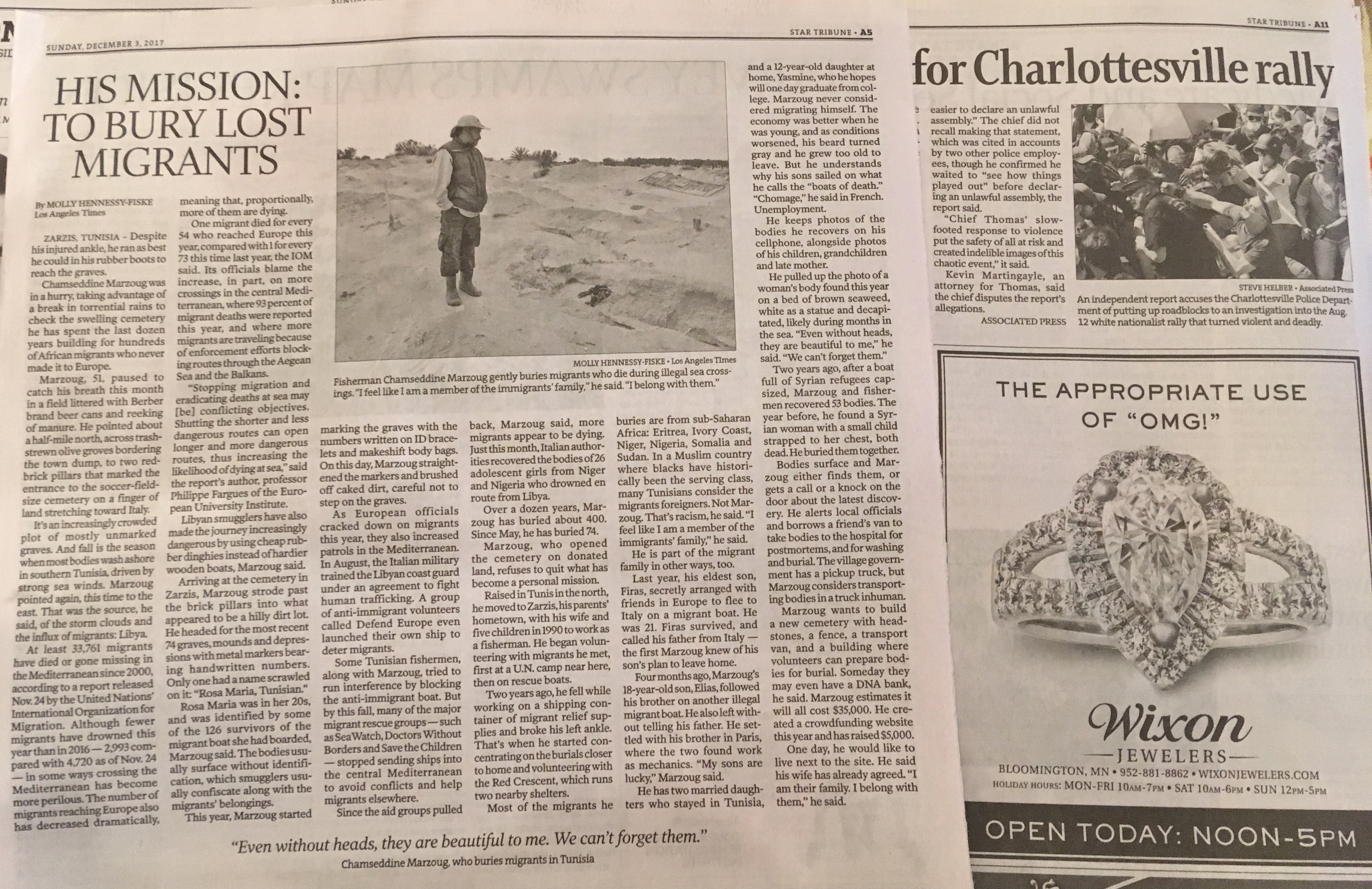
Articles about a man burying drowned migrants and the racist rally in Charlottesville, then an ad about diamond rings.

I don’t care about diamonds, but should I skip a trip this year and donate the money to UNICEF?  Do I justify travel, my one big indulgence, by saying it sustains me to carry out my work raising money for refugees?  Should I call travel an indulgence?  Do I have to justify myself?  I don’t think there are any right or wrong answers, but I constantly struggle with the questions.

Euros and Doors

Mid July in Eton.  I was listening to a webinar about raising funds from European foundations.

Probably a quarter of my job consists of keeping up with what’s going on in my industry. I call it an industry because it is.  We like to think we’re all singing Kumbaya arm in arm while saving people, but without professionals who know what they’re doing, adequate funding, and an international infrastructure to support and coordinate everything, it’d be a big mess  Well, a bigger mess.

The international infrastructure is made up of what are called multilateral institutions, which are organizations that have funding from multiple countries: the World Bank, World Health Organization, and some of the United Nations bodies, like UNICEF.

The other day I was looking for a potential partner in Yemen.  I went to the UN’s Office for the Coordination of Humanitarian Affairs (OCHA) to see who is working there, in what sectors.  Sectors are activities like Water and Sanitation (WatSan or WASH for short) or Health or Protection. I browsed OCHA’s Humanitarian Response Plan interactive map to find other NGOs working in Yemen, in this case specifically in the Education sector.  For better or worse, there are only two in Yemen due to it being in a state of war—Save the Children and Norwegian Refugee Relief. I queried my colleagues to ask if anyone knew anyone at those organizations.  In this case we didn’t have relationships with either organization so my search ended there.

The mechanics are pretty straightforward if you know where to look, but the type of thinking involved is something that takes a while to acquire, and I really like that about my job.  I have three dozen other projects going on at once, large and small, that require the same strategic thinking, focus, communications, and persistence.

There are newish master’s degree programs in international development studies that package and deliver this information.  Most people my age, or with my number of years of experience, have learned it on the job from coworkers, at a conference, or from reading articles in an online community like Devex.

My organization, the Center for Victims of Torture, just got a grant from a Swiss foundation that I found on a European foundations website almost five years ago.  What were the odds— finding a foundation in Switzerland that is specifically interested in mental health and Uganda?  But after clicking through a hundred other foundations, there they were, and after years of Skype and in-person meeting, writing proposals that weren’t funded, and having them visit our program in Uganda, they will now be supporting us in significantly expanding our work there.  It took involvement from 10 people at CVT, and someone else wrote the proposal that got funded, so it was a group effort and we’re all feeling pretty good about it.  When I am sifting through hundreds of foundations that aren’t good fits, I keep this one in mind.

Back in Eton.  The webinar informed me that the 28 member countries of the EU have the same number of foundations and give the same total amount of funding as the US ($160 billion in 2015).  Did you know that IKEA is probably the world’s largest foundation? I didn’t.  The UK, Netherlands, Germany, Italy, Switzerland, and France have the highest number of foundations with the most money, but the French foundation websites are all in French, so it’s a good think I have French-speaking colleagues to check those out.  The webinar made some common sense suggestions, like looking to the former colonizing country for funding (Italy for Ethiopia, the UK for The Gambia, France for Vietnam, etc.) and to look at the donor lists of our “competitors” to see who funds them.

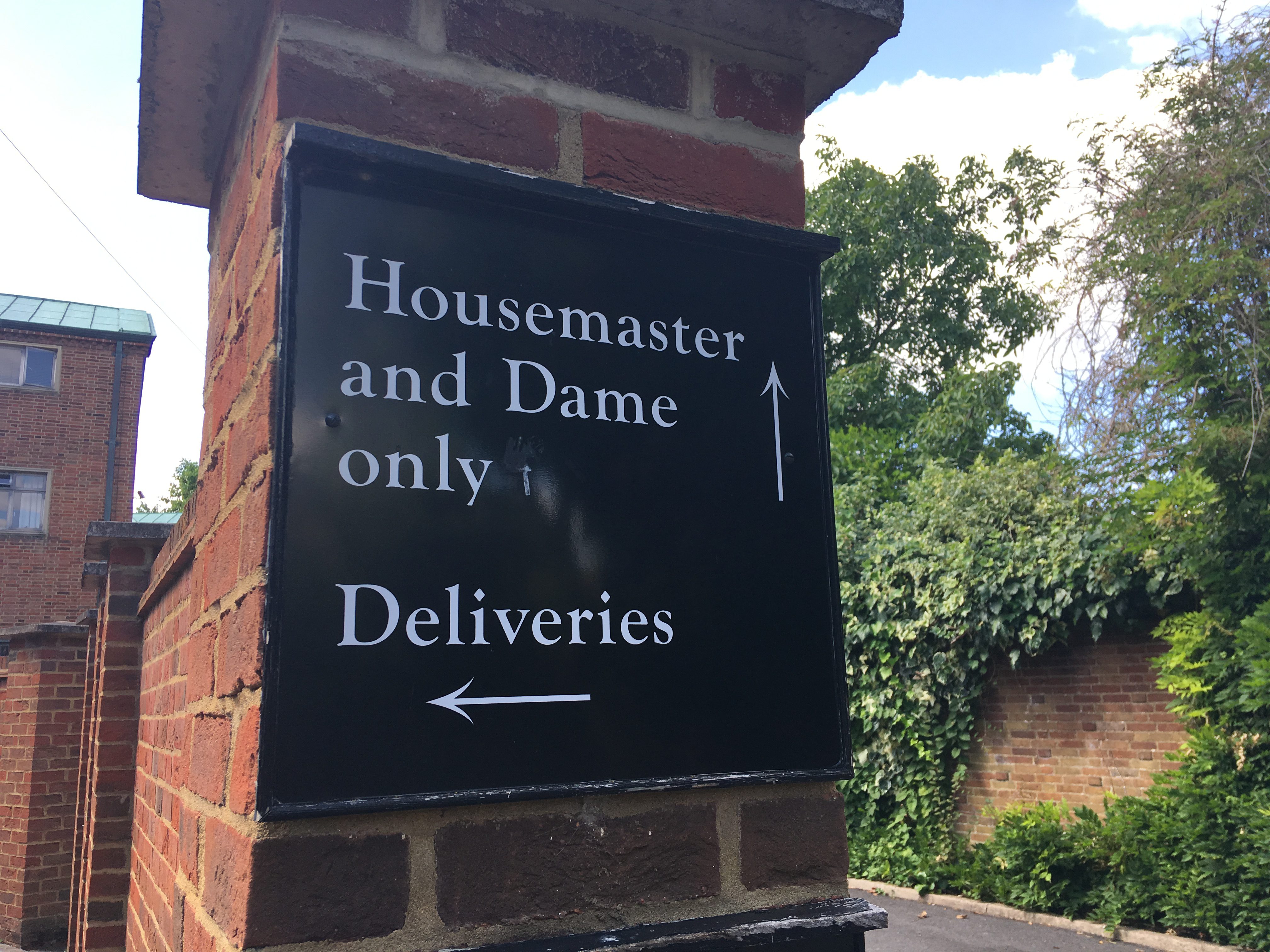
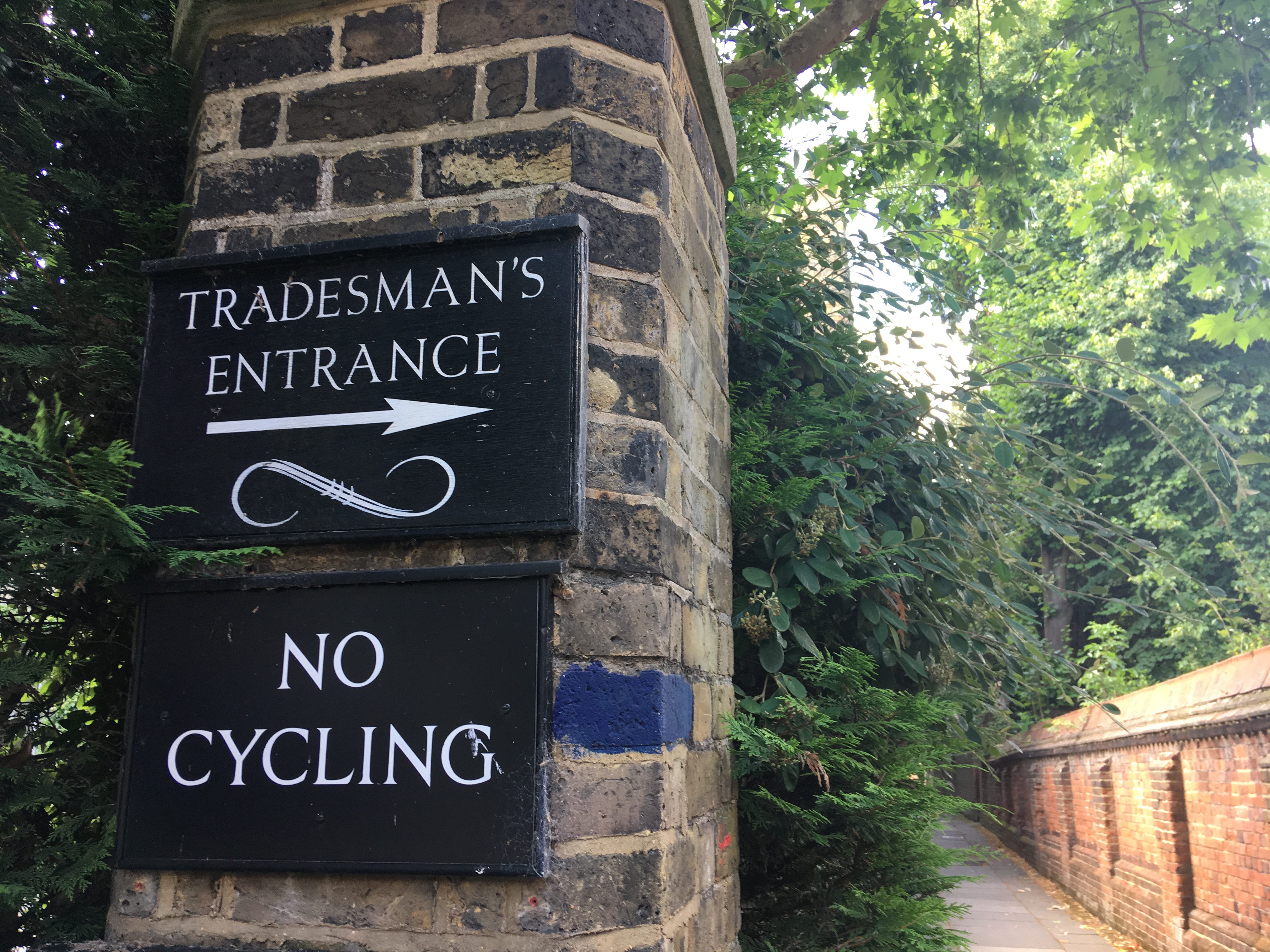
That afternoon, my walk was through Eton proper, where I photographed signs.  I was fascinated by how signs seemed to direct everyone to stay in their lane. I know how rambunctious boys can be, but was it really necessary for the grownups to have separate entrances?  Was a dame—as I imagined—a bosomy older woman with white hair in a bun who wore a flowered housedress and pinafore?  And was there really only one tradesman?

Castles and Christmas

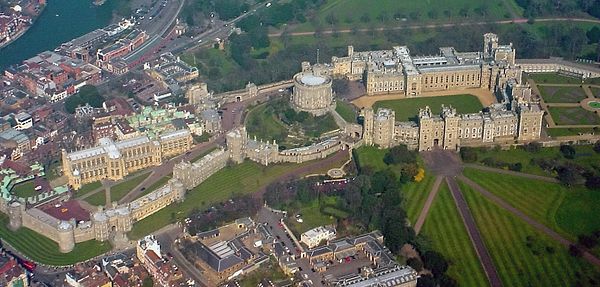
A typical Monday morning: write and respond to emails, schedule meetings, edit a proposal, and visit Windsor Castle, built a thousand years ago by William the Conqueror and present home of Queen Elizabeth II.

When you hear the word “castle” you may think of a large but single building.  Windsor Castle is really a compound of buildings. The scope, history, and contents of the place are mind boggling.  Here’s an aerial view:

You can’t enter most of it or take interior photos and in a way that’s a blessing or I might still be writing posts about it next Christmas Eve.

I spent about three happy hours there and will just hit a couple highlights.

First, Windsor is where it is because it’s on the river and a slight hill, which means it can be seen from most surrounding points from a distance.  I would often be out for a walk, way away from the castle, and spot it in the distance.  It was meant to see and be seen.

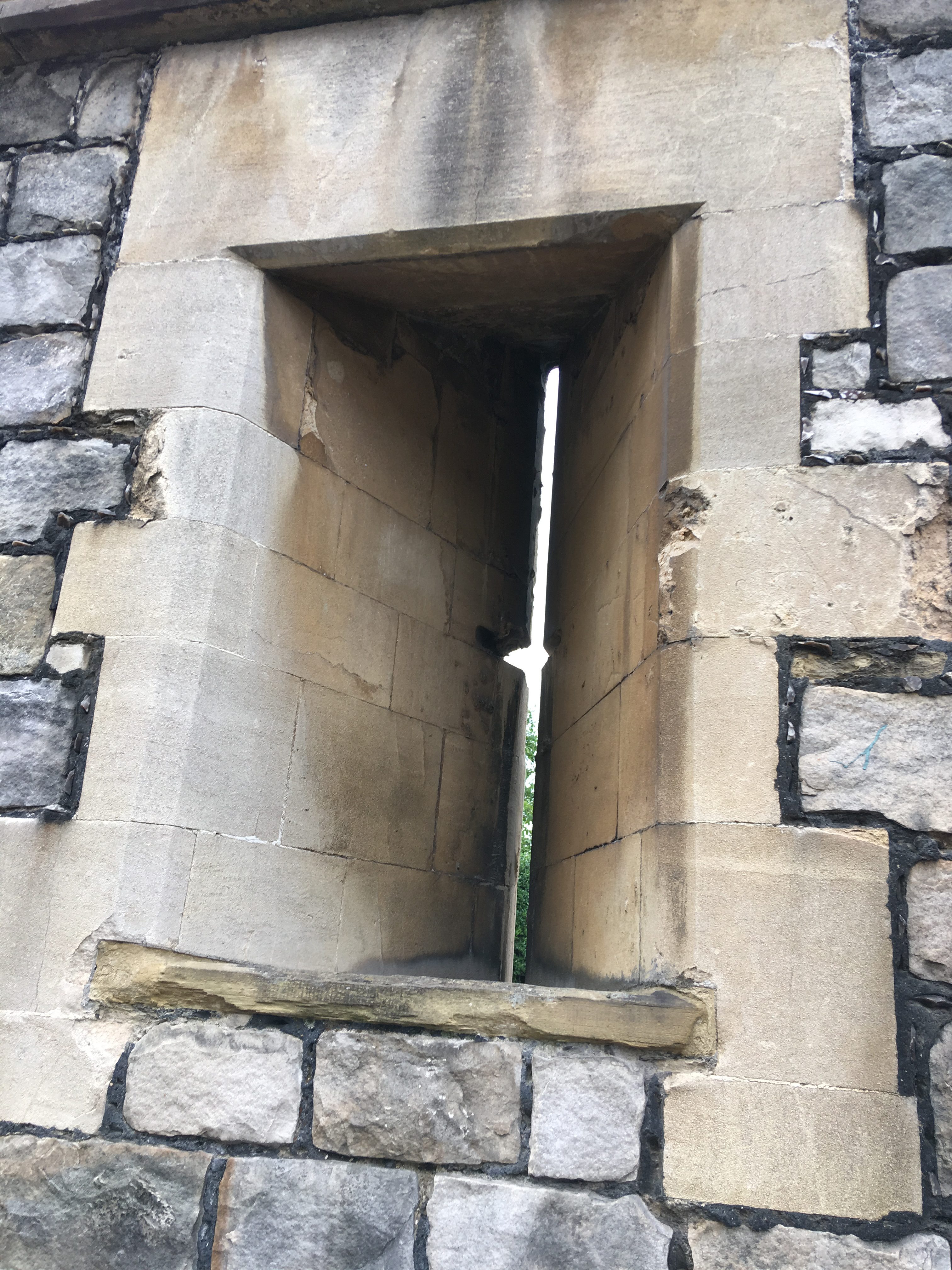
If seeing it from afar didn’t discourage you from attacking, you would next have to somehow breech the walls, which of course were manned with soldiers shooting arrows through these slits.

And possibly catapulting boulders or plague-infested dead bodies into your midst.

So much for highlights.  I just spent 45 minutes lost in this kids’ field visit workbook about Windsor (it’s a PowerPoint).  There’s some pretty gripping stuf in there about siege towers, battering rams, gun powder, and other items of interest to 10-year-olds. And me.

Have you ever read the term “castle keep” in a novel or history book?  I must have, but I had never given any thought to what it meant.  The keep at Windsor is below on the left.

The keep is the structure with the well and supplies; the place its inhabitants would withdraw to if all else failed, and make their final stand.

If you are wondering if Windsor was ever attacked, the workbook says:

“On two occasions during its 900 year history, Windsor Castle has been attacked.   In 1216 local Barons attacked many castles, including Windsor.  Why do you think this happened?

“Answer: During 1216 Windsor was under siege, this was 1 year after King John signed the Magna Carta at Runnymede in June 1215.  The Magna Carta was the first Human Rights Charter, importantly it gave the ordinary people of the land the right to have a fair trial. It also gave rights to the Church, Barons, and the people.  The King was bound by this law of the land too, however King John was not happy with this and changed his mind.  So, in anger at the King’s decision, the rebel Barons rose up against him.  The Castle was held by King John, and 60 Knights that were loyal to him.  The siege lasted 3 months and of all the Castles that were attacked at that time, only Dover and Windsor were held for the King. (King John died late in 1216).”

It doesn’t say what the second occasion was, and I must move on.

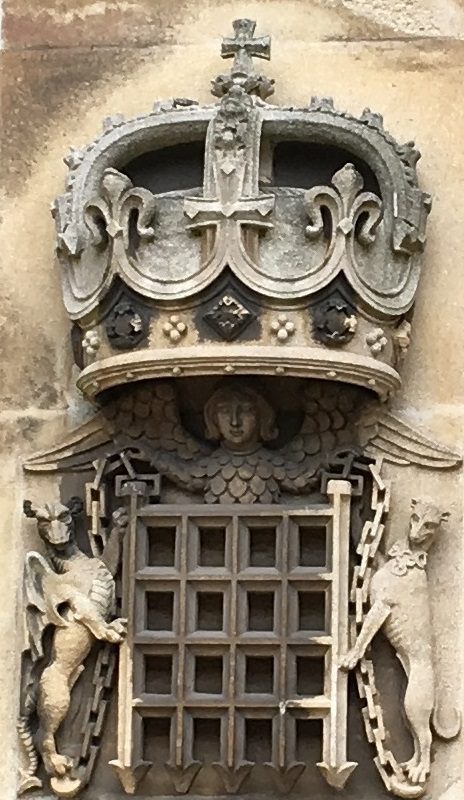
Two highlights for me were the Chapel of St. George and the choir quarters.  Here is one carving on the chapel exterior.

Note the detail.  Now multiply that by a thousand, inside and out.

I had just read a Phillipa Gregory novel about King Edward IV and his wife Elizabeth Woodville, who was five years older, a widow with two children, and a woman of low rank.  They married for love.  And there they were, entombed below my feet in the chapel.

My head was bobbing and swiveling to take it all in—the ornate ceiling, walls, benches—everything is carved, gilded, painted, and over the top so when I stumbled slightly and looked down to regain my footing I gasped a bit to see the plain black tomb of Henry the VIII, grandchild of Edward and Elizabeth and all-around tyrant who changed the course of history.

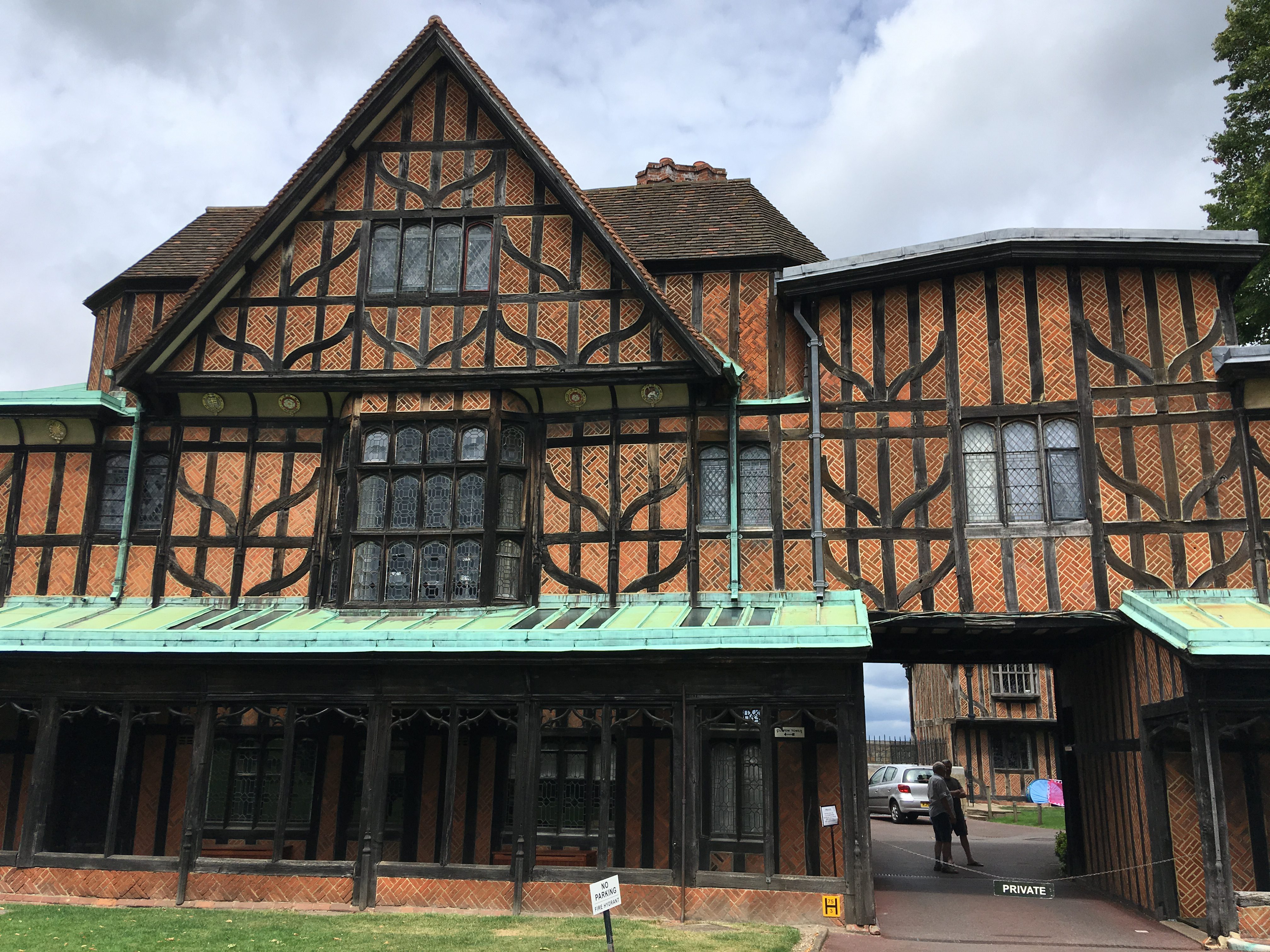
Outside, here were the lodgings for the children who sing in the chapel choir.

I came away—and am reminded now—of how much there remains to be experienced and learned in this amazing world.

Merry Christmas!

Working and Windsor

I was back in Eton after a successful trip within a trip.  That is, a foray into London, then out to the southwest, then a boomerang back into London and back out to Eton and Windsor to my housesitting gig.  I was feeling grungy after wearing the same clothes for three days, but that was more than compensated for by the fact that I hadn’t had to drag a roller bag on and off of trains, tube cars, and buses.

The first thing I did was check the window boxes.  Gwen had admonished me not to skip a day of watering, and I had skipped two.  I was fully prepared to go out and buy replacement geraniums and hope she wouldn’t know the difference.  Whew, they were still moist.  Sorry about that, if you are sensitive to that word—moist, moist, moist!

After thoroughly shampooing, conditioning, exfoliating and moisturizing, I sat down to check my work emails.  No I didn’t.  My first priority is always travel, so I picked up my messaging with Heidi where I had left off on the coach.

“We can take the chunnel to Paris and catch a train to Brussels, then take a coach out to this small town in the countryside that I went to once.  Oh Annie, it’s lovely this time of year!

Or we could rent a car in Paris and drive down to Bordeaux and drink wine for a couple days, or we could catch a RyanAir flight to Zagreb.  Whaddya think?”

I am usually enthusiastic about travel.  Traveling to Paris through the Channel Tunnel on the Eurostar, as it is officially called, is on my bucket list. Normally my adrenaline would be pumping and I’d be all in, but on the heels of the weekend I found myself reluctant.  Plus, the Eurostar would cost around $250, then there would be train fares or flights and hotel rooms and maybe a rental car, and for some reason I was feeling fiscally conservative.  Heidi and I agreed she would come to Eton later in the week to talk about it.

I checked my work email and found the usual post-weekend deluge of emails but most importantly, our concept note to DFID, the British aid agency, had resulted in an invitation for a full proposal, and it was due in a month.

A month may sound like a long time, but it’s not.  These things are always a group effort. Four people were in Amman, Jordan and three were in St. Paul, Minnesota.  I was in the UK and another colleague was in Denver, Colorado.  The US work week is Monday through Friday, while the Jordanian work week is Sunday through Thursday. Everyone worked long hours, but still I never assume they will check email on weekends.  If we didn’t plan carefully we would lose entire days due to the nine-hour time spread from Denver to Amman. There would be holidays in Amman, and people would take time off for summer vacations.

The next day, Monday, I had prepaid ticket for Windsor Castle.  I thought about skipping it, then shook my head and plunging into the coordination work for the proposal, first scoping out a backwards timeline.  I actually made a chart showing that when it was noon in Colorado it would be 9pm in Amman—and so on—too late to expect anyone to respond or attend a Skype meeting especially if they had kids. Conversely, when my Jordanian colleagues were logging on in the morning, fresh and ready to talk or crank out emails which needed replies, it would be midnight in the US.   It would be an advantage, I thought, for me to be in between.

Speaking of Windsor Castle, I’ve seen a fair amount of commentary about how Meghan Markle marrying into the British royal family is either “inappropriate” or “fresh air” due to her being half black, American, and divorced.  I haven’t seen anyone comment on how her father is of Dutch-Irish descent.  I’ve only heard racist remarks uttered by British people twice (first-hand, that is—not on TV, etc), and both times they have been about the Irish. Regardless, Markle will bring new blood to the fusty royal gene pool.

Napping and Knapping

I set my alarm to ensure I would wake up in time to catch my 9am bus.  I’m such an early bird; there was no way I was going to oversleep, but just in case.  I collapsed into bed at 10:30 and woke with the alarm at 8am.  I guess the previous day had been a long one—starting out in London with a couple tube rides, finding and catching the coach, sitting for three hours on the coach with nothing to do but look at the beautiful landscape, hiking four miles across open fields in the hot sun, “doing” Stonehenge, “doing” Amesbury, and capping off the day with a “meal” at Little Chef.

I flipped on the TV while I got ready.  There was a long news segment about how to survive a terrorist attack whilst on holiday.  When they got to the end and quizzed the viewers, I yelled my answers from the bathroom.

“What should you do if you see terrorists invading your hotel from your balcony?” droned the guy in the suit who was an ex-marine-cum-highly-paid terrorism expert.

“Hurl your Margaritas at them!” I yelled.

I got that one wrong. “What should you do if you if terrorists invade your hotel room?”

“Cover your head with both hands so they can see you are unarmed!” I yelled.

I got it right!  I wondered why the woman was wearing nurses’ scrubs if she was on holiday.

To my surprise, I got most of them right.  Watching that security webinar for work had really paid off.

I was soon out the door of the Travelodge and on my 10-minute walk to the bus stop.

Does this ever happen to you?  You’ve visited an amazing place like Stonehenge and as you leave you think, I’ve seen Stonehenge, now I’m one World Heritage Site closer to death. 

No, I didn’t think so.

Or even just leaving an unremarkable place like the Travelodge, do you ever feel like you have to break some sort of surface tension in order to leave?  I will probably never be here again.  Why do I care?  Why do I have to exert myself to leave?  It’s a cheap motel!

Of course I did leave, and after I crossed under the motorway I saw on my left a place called The Lord’s Walk.  I had passed this five times now.  It looked so inviting.  To walk through cool woods along a stream would be refreshing after the hike of the previous day.  It looked like my kind of paradise.

I read the placard.  It was the Lord as in “Lord of the Manor,” not as in “the Lord God.”  The local lord had gifted some of his land to the local populace and they had done a beautiful job of making it available to all for walking, fishing, picnicking, smoking pot, and so on.  I imagine few tourists go there because they are all focused on Stonehenge—or anxious about catching their bus.

I could have taken a short walk with the lord.  I had 45 minutes before the bus was due.  But I walked on.

Amesbury, and the southwest of England in general, are full of walls and buildings covered in what Lynn had informed me was flint knapping. Here are more images if you’re a rock hound.

We joke about artisanal products made by bearded millennials these days.  There is a guy in Minneapolis who is dead earnest about his artisanal flour, which costs $20 for a five-pound bag (that’s a lot).  I’m sure it’s very fine flour.  I don’t know much about flint knapping, but I met a guy once who was a dry-stone wall expert.  I would call both of these trades artisanal; it must take years to develop the eye and the skills to maintain these old structures.

At the bus stop, I felt anxious I was at the wrong stop, even though the taxi driver had shown me this stop and there were people with suitcases milling around, obviously London bound.

On the bus, I felt grungy, but content.  My phone connected to wifi immediately and there was a message from Heidi, “Let’s go to the continent!”

Tea and Training

It wasn’t all nonstop fun and adventure in England.  Because I had been to Ethiopia, I had to watch a security video.  It had been a month since I’d returned and I finally got around to watching it.

There are all sorts of ex US Marines and ex MI5 types who sell security training to nongovernmental organizations.  I don’t want to poo-poo the seriousness of the security risks in some locations.  Aid workers do get kidnapped, raped, and killed.  But it’s rare.  The worst risk I ran in Ethiopia, I think, was getting hit by a truck.  A lot of people who are new to international work might assume that kidnaping is the biggest danger, while they’re stepping out into a chaotic street full of speeding land rovers and tuk tuks making up rules as they go along.

I plunked down on the couch with a cuppa (a cup of tea).  Below is another iconic item you find in British homes—the tea bag caddy.  They come in an endless assortment of shapes, materials, and designs.  You can buy one for 99p.  They are always stained with tea, like mine below, and usually piled with wet, cold used tea bags.

The tea bag caddy is not to be confused with another item of the same name.

This second item holds a selection of tea bags.  This is often given as a hostess gift and politely stored in the back of a cupboard until the tea becomes fossilized.  This is because, like anyone, Brits have their regular tea they are accustomed to—usually English Breakfast or Earl Grey.  They may try a bag of oolong green tea with ginger hibiscus super antioxidant goji berry essence—once—which will be enough.

Most homes have a box of PG Tips, which is referred to as “builders’ tea.”  This means it’s strong—strong enough to get a construction worker revved up to go back to his heavy labour.  It’s a utility tea—you only need to dunk it into hot water two or three times to get a massive hit of caffeine; no herbal tea “steep for seven and a half minutes in 140 degree water” here.

Plus they have an amusing spokesmonkey.

Back to the security training.  I try to keep an open mind and assume I will learn something new.  But I have watched similar videos at least four times before, and I’m also a woman who lives alone in the city and who travels the world on her own.  So yes, I am aware that I should always lock my hotel room door, and wear a seatbelt, and not leave my drink unattended in a bar.

The video was narrated by a robotic female voice.  I felt like I was on hold for an hour with a nightmare call to my internet provider customer service line.

The video was really a powerpoint with whiz-bang transitions. The clip art below isn’t from the security training, but it featured menacing versions of these ubiquitous blue playdoh powerpoint people.

The internet at Sam’s was so slow that the training kept freezing and shutting down and I’d have to restart it.  I was missing pieces of it, I knew, but it seemed to be all about men in balaclavas kidnapping aid workers.  This would be, of course, anyone’s worst fear.  It’s also how they sell these security trainings.

Again, I don’t want to downplay the seriousness of using common sense and taking precautions.  You prepare for the worst and hope for the best, as they say.

Smarty pants me, there was a test at the end and I couldn’t pass it because I had missed one of the scenarios:

“Your car is stopped at a security check point, and soldiers demand you get out of the vehicle.  What do you do?”

  1. Loudly inform them that you are American/British/Etc.
  2. Get out, then run in a zig zag pattern into the bush.
  3. Politely refuse. Do not make eye contact.
  4. Offer them a small bribe.

None of these seemed like a good idea so I chose a different one until I passed. I am recreating this from memory, so don’t ask me the correct answer.

Knock Offs and Knick Knacks

I went shopping the day after my meeting debacle.  The UK is not a cheap place to live.  The Sales were on for the summer holidays, but things were still “very dear”, as they say.  For instance, a pair of black leather ballet flats cost £80—on sale.  When I worked for Oxfam years ago I was paid in pounds, which helped.  But now I had an American job that paid in dollars, so those shoes would have cost me $105.

My usual shopping strategy is: Go to every store in town, look at every item in every store, buy nothing, go home. Sometimes I buy things but then for one reason or another most of them have to be returned.  It was going to be extra hard to make decisions here.

Also, it seemed like English women must have smaller feet than me, because my size shoes were in the section that, in America, very large tall transvestites would have shopped.  Bras were the opposite problem.  The bra cups on offer were big enough to fit over my head.  Not that I did that.  At least not when anyone was looking.

I looked in Cath Kidston, almost as a joke.  I love her stuff but a little goes a long way and as I already knew, country flowers weren’t a good work look.


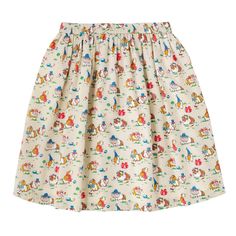
I bought a phone case and some pajama bottoms patterned with guinea pigs having birthday parties.  I resisted the flouncy guinea pig skirt.

Next I went to TK Maxx, which is called TJ Maxx in the US.  Still expensive and hard to find anything that worked.  Then I hit rock bottom and bravely walked into Primark, which is dirt cheap with quality to match.  Because it was the sales, the store was packed with teenagers and their mothers and clothes were strewn all over.  The clothing was adorable but if I even had to ask myself, “Would this lacy, skin-tight, fuchsia, sequined, leopard patterned hoodie be appropriate for my next work meeting?” I had my answer.  I bought a pair of pink satin ballet flats for £6.  Not exactly work attire but I couldn’t resist.

The queue was 25 people deep and Justin Bieber was bleating at an ear-shattering volume on the overhead speakers.  I ran out of Primark like I was being chased by a velociraptor and started to hit the thrift stores, which they call charity shops because well, they are all run by and for charities.

Oxfam has 650 shops in the UK. They stock second hand clothes but also new stuff from around the world like beaded bracelets made by Kenyan orphans, organic Palestinian olive oil, and cards designed by blind tribal elders in Nepal.  It’s all beautiful stuff, and I bought some cards and a pair of socks knit in Bolivia that were guaranteed not to fall down.

I hit Age Concern, British Heart, Save the Children, and Mind, which is a mental health charity.  Second hand clothes in the UK are really rubbish. I don’t know if someone skims off the cream and sells it on EBay before it reaches the charity shops, but they are full of sweaters with stretched out sleeves and 1980s jungle print dresses.

The Thames Hospice shop specializes in vintage. I spent an hour in there and left with a pair of vintage shoes that were too small, a pair of shoe stretchers, and horse brass, which is useless but I like how it looks on my wall.

I bought the ship, which has a useful hook, in Amalfi, Italy.

None of this was going to impress in my next work meeting except maybe the shoes, if I could stretch them out a couple sizes.  Once I inspected closely, however, I discovered they were not vintage at all but in fact made of plastic.  They would have to go back to the shop, along with the shoe stretchers.

Eventually I discovered Daniel, a department store with only beautiful, high-quality things.

I went in several times to fondle the cashmere sweaters, drool over the shoes, and try on hats.  Eventually I bought some things, using the time-tested rationale, “I deserve it.” And ya know, maybe I did.