Category Archives: Travel

Hobs, Hospitality, and Hospital Supplies

Since everyone at Dunrovin spent most of the time in the kitchen, it’s worth noting that we had plenty of ovens and stoves to choose from.  Or hobs and cookers, as they are called in Britain.  This is the oldest, a wood-burner, which must have been just too heavy to remove when the new-fangled Aga arrived.
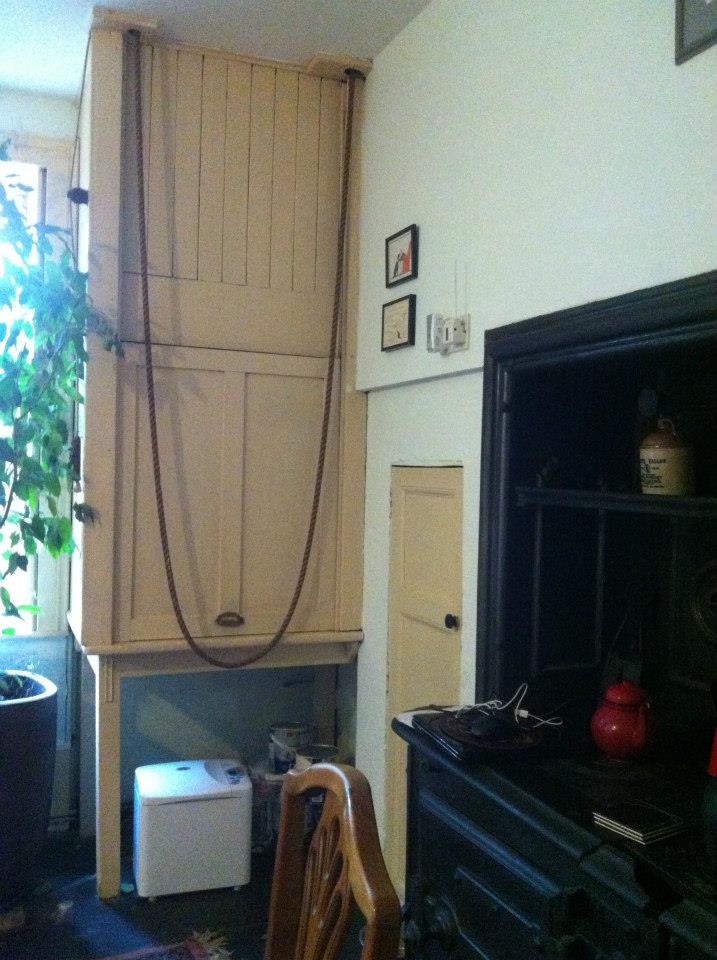
There is a smaller version of this stove right next to it, to the right.  It’s like a toy stove, and I don’t have a photo of it, but it’s thought to have been used by the servants when the family was away.  After all, servants don’t need to eat big sumptuous meals, right?

Across the room from these is the Aga.  I’m not a plumber and I couldn’t play one on TV, but my understanding is that some Agas can actually serve as boilers for the whole house, and/or produce hot water for the house.

The concept of the Aga is simple and beautiful.  They are always on.  The basic model has one hot burner and one warm burner.  Also one hot oven and one warm one. So you never have to wait for a burner to heat up, or serve food that’s gone cold.

They are also works of art.

They cost an arm and a leg to operate because they are always on.  Since Lynn and Richard have a fourth set of modern ovens and cook tops, they only turn on the Aga for parties.

A few years ago when I was remodeling my miniscule kitchen I checked out Agas just for fun at my local appliance store.  They started at $5,000.  I settled for a flimsy Avanti, which cost $399.  I got what I paid for.

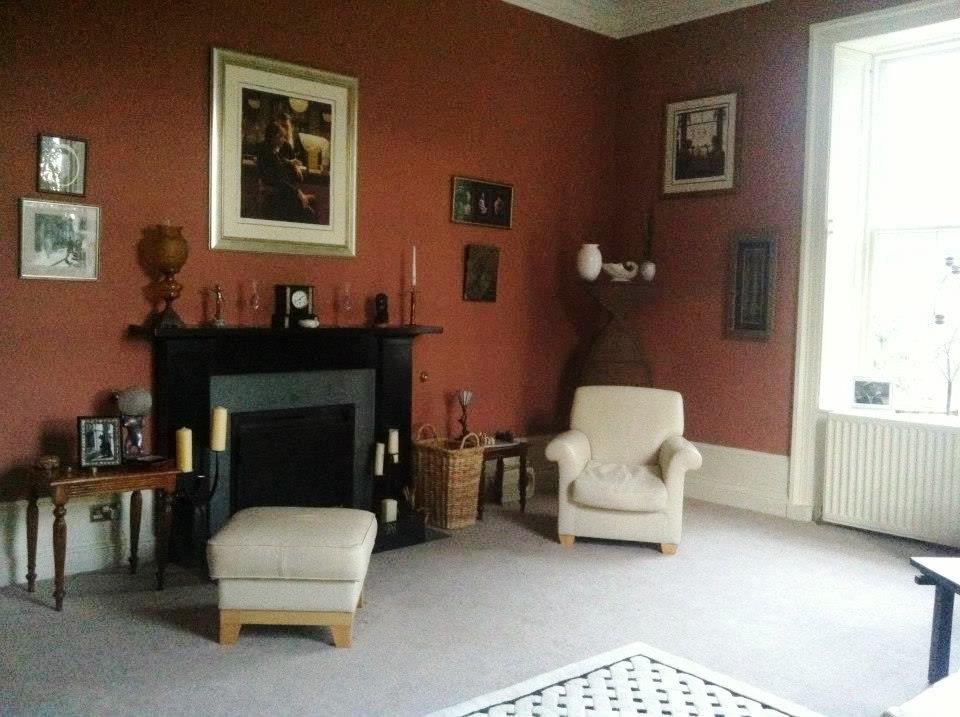
I was installed in the premium guest suite at Dunrovin.  And by premium I mean I had my own bathroom.  I have never had such a large room in any of my own houses or apartments.  It contained a queen-sized bed, a large wardrobe, a chest of drawers, a chair, and—mercifully—an electric space heater which I tried not to use “too much” but honestly I had it on most of the time when I was in the room.

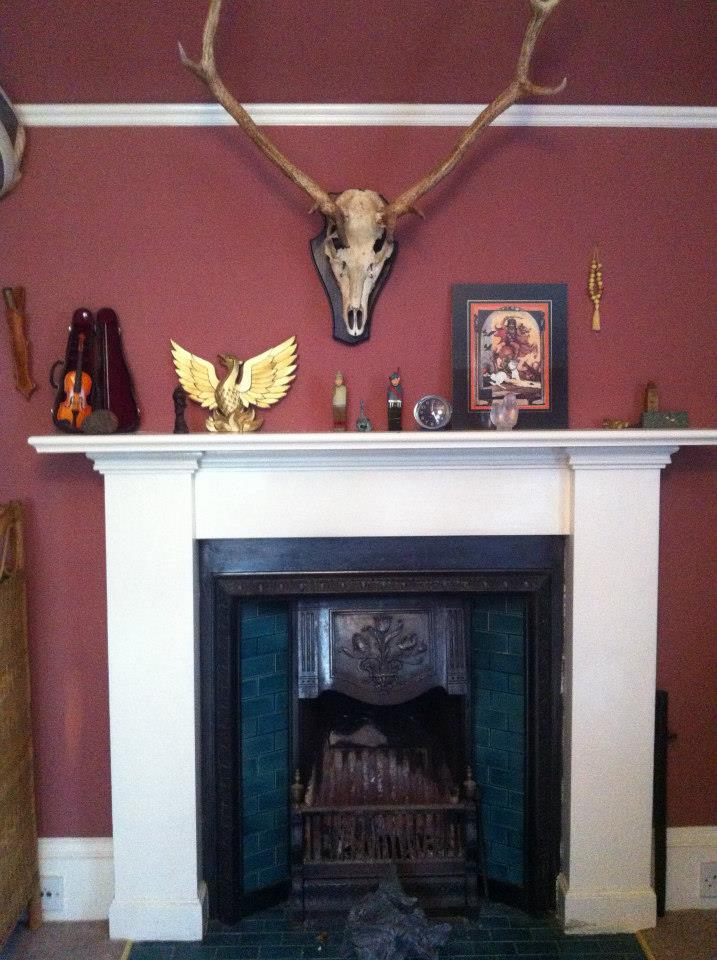
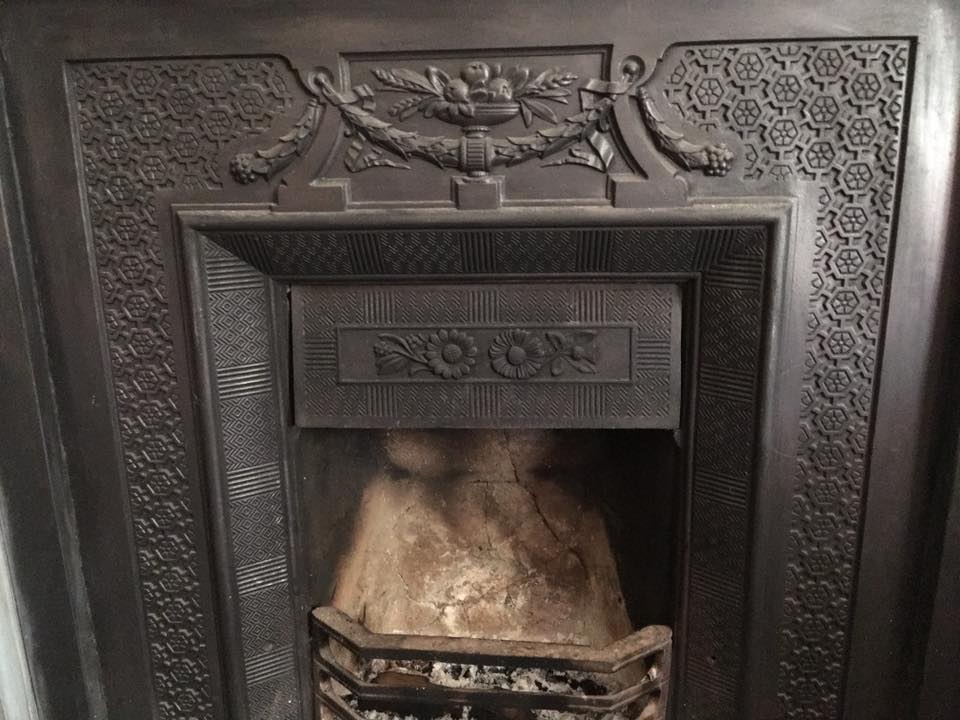
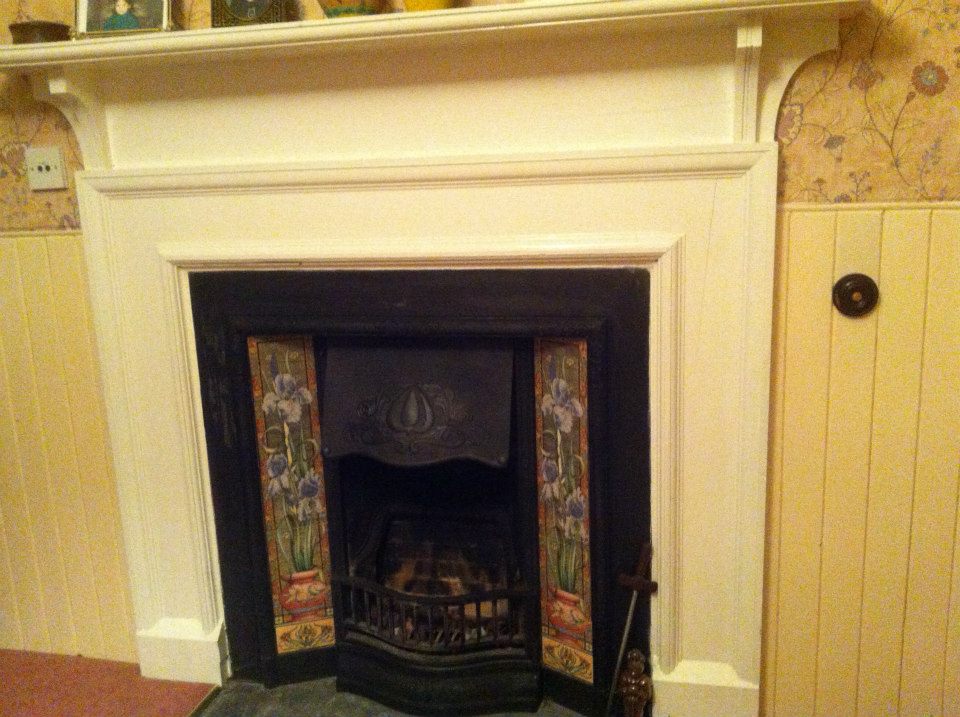
This is the fireplace in “my” room.  Note the bell next to it with which I could have used to summon a servant if I had been there 100 years earlier.
Knowing I am an early riser—I mean really early, like 5:30 am—Lynn had placed a tray in my room with a kettle, instant coffee, and tea.  I just had to remember to bring some milk up at night before I turned in, and I was all set to work in my room until a decent hour, like 8:00.  Otherwise, if I snuck down to the kitchen to make coffee I woke the dogs, who’s barking woke Lynn and Richard.

I’m sure Lynn thinks I’m weird for chronicling the ancient contents of the medicine cabinet in my room.  But I can’t help it—I notice details like this.  It’s not just the big things that make other countries interesting, it’s the details too.

I just checked and I also have items in my medicine cabinet that might seem peculiar to a foreigner—like Breathe Right Nasal Strips, a vial of essential oil (a gift; I would never buy such a thing myself), and a prescription medication that I wouldn’t be able to afford if I didn’t have health insurance through my job.  That’s a hat’s off to the NHS, in case you didn’t get it.

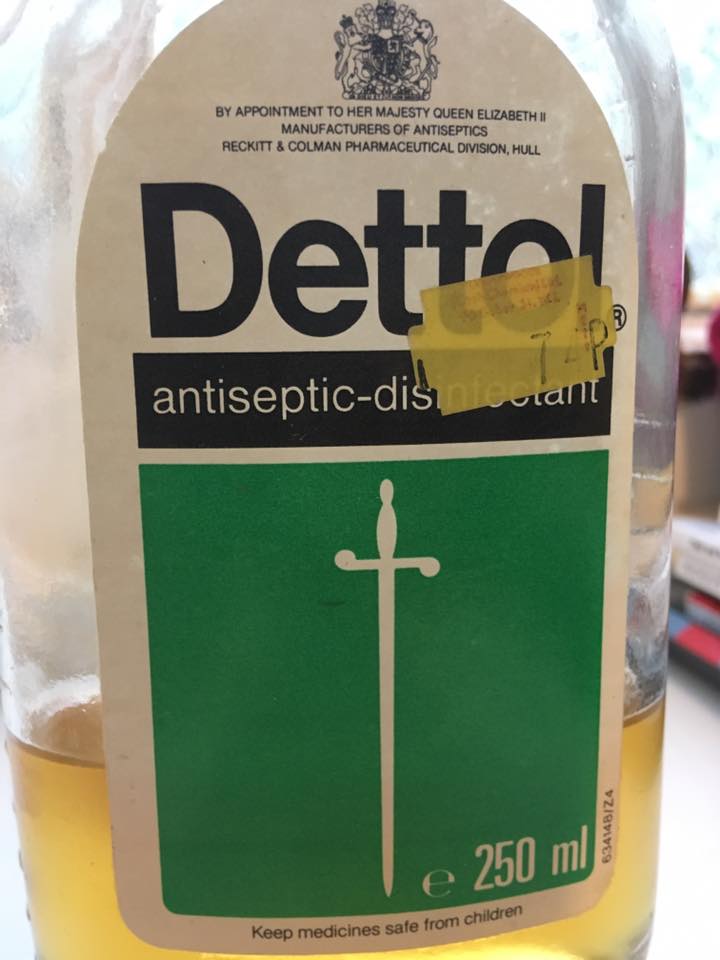
Here’s what I had to draw upon should I get terribly dirty or have an accident.

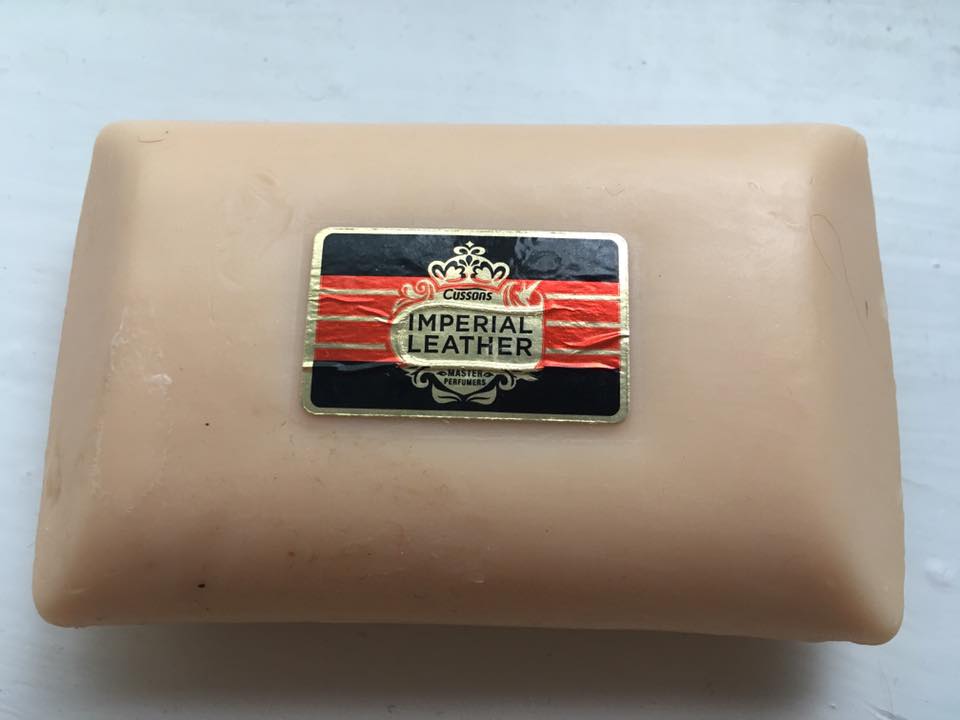
Imperial Leather soap, which comes with a metal logo embedded in it.  For any of you closet imperialists out there.
Dettol: It’s good to know Her Majesty Queen Elizabeth appointed someone to make a 74p product.
TCP: One product for everything from bad breath to acne.

And lint.  It’s what I have always removed from the clothes dryer filter and thrown away.
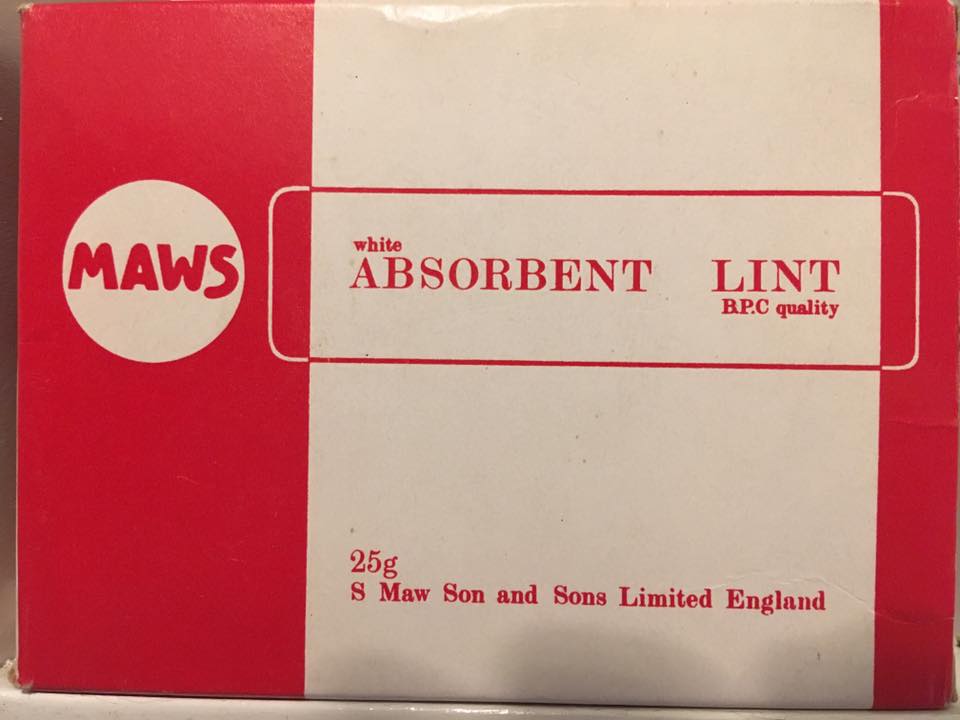
If I were going to use lint as a medical treatment I would definitely demand that it be British made.  None of that fluffy French lint.


Pets and their People

What good is a grand house if you don’t share it?  Lynn and Richard welcome a flow of house guests and host fetes such as their annual garden party.

But first, the permanent residents.  Lynn and Richard come from working class London. Richard’s father, a butcher, died suddenly when Richard was 15.  To help support his mother and sister, he lied about his age and joined the army.  Then he worked his way up in HR at British Telecom and retired early.  He is so well read and experienced in business and life that he would make a great philosophy or history or political science professor.

Lynn’s mother died when she was 16 and after being at loose ends for a few years, she landed in a training program at BT and also worked her way up in HR, which is where she and Richard met.  She moved to Nokia, where she supported some kind of internal new business incubator. I recall being dazzled when I met her because she talked about routinely flying from her flat in Cambridgeshire to Helsinki, where she also had a flat, to Sydney or Hong Kong and back in the span of a few days.  After leaving Nokia she’s worked off and on as a consultant for Oxfam, which is how I met her.  She is the only person I know who has ever been to Red Sea State, or had her Landcruiser pulled out of mud by an elephant in Indonesia, or been the only woman at a funeral in the Sudanese desert complete with whirling dervishes.

In America, we admire people who are “self-made.” Lynn and Richard would quibble with this term, pointing out that they were born at the right time—after the war and happened to join a company that was set to grow.  Lynn would say she was lucky to be born Anglo Indian in Britain instead of black in Zimbabwe.

It is kind of sickening that people admire Prince Harry, who was born on third base, and not people like Richard and Lynn.  I think Richard would say he is a republican, which in Britain means throw the “blood suckers” out—meaning the royals and the lords—let’s have real democracy.

On to the other residents of Dunrovin.  You’ve met Lord Parker.  He’s second in line to the Top Dog, Cosmo.  Cosmo was named for the young son of the Gordon’s who was a Royal Air Force pilot shot down in World War I.  The other son married an Irish actress and was disinherited.  As I wrote before, their sisters never married because so many men of their class had died in the wars and this caused the family to die out.

Poor Cosmo (the dog).  I had always liked Cosmo, a black lab, because he was a dignified dog.  Now he was elderly and hobbling around, his eyes had the blue aura of cataracts, and the other dogs were bothering him as though they knew their opportunity to take first place was at hand.  Poor Lynn and Richard struggled all month with the decision of what to do, when.

“As long as he gets up in the morning and enjoys his food, and goes out into the garden and enjoys the fresh air, that makes a dog’s life worthwhile,” Lynn ruled.  Hard to argue with that—I wish my life was as simple and carefree as eating and sitting in the garden.

The second black lab, Finn, is sort of like a middle child.  He’s quiet and low-key and no one notices him until he’s grabbed a lamb chop off your plate.

Then there are the spaniels, Merry and Pippin.  Sigh. I was there a few years ago when they arrived as puppies.  I think the word “flibbertigibbet” could have been coined for them.  Hyper, destructive, everywhere at once—normal puppies.  There are some who think Merry may be a Special Needs dog.  The spaniels had mellowed a little bit, but the phrase, “Nooo!!!  Merry, you idiot!” was still to be heard several times a day.  This is a rare moment of peace in the garden.

In the background lurked the two cats, Dash and Dot, seen here outside my window.

Dunrovin House

Dunrovin House.  There’s so much to say.  So much history.  Mysteries like, “When was it built?” and “How many additions have there been? and “Why is there that faint line on the wall—was that where the original house stopped?”

Was it originally a fortified outpost? It’s set down in a depression; below is a view from the ground-floor kitchen.  Four or 500 years ago, was the ground close to the house even lower, and filled with water?  Lynn and Richard think the original structure was built in the 16th Century, so there’s really no way of knowing these things without spending a lot of time in musty archives.

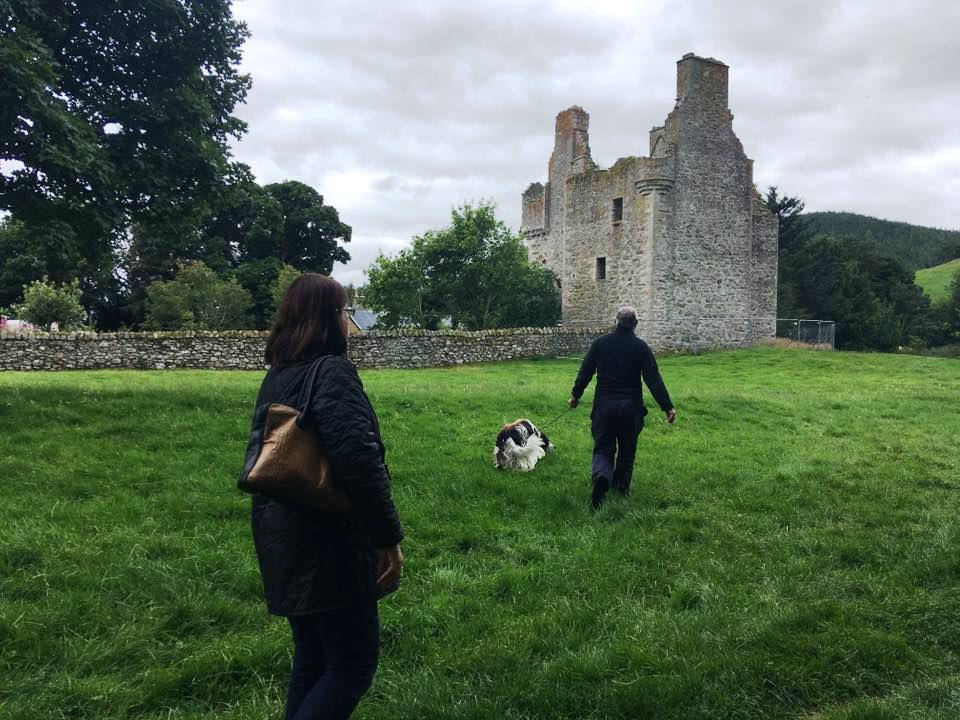
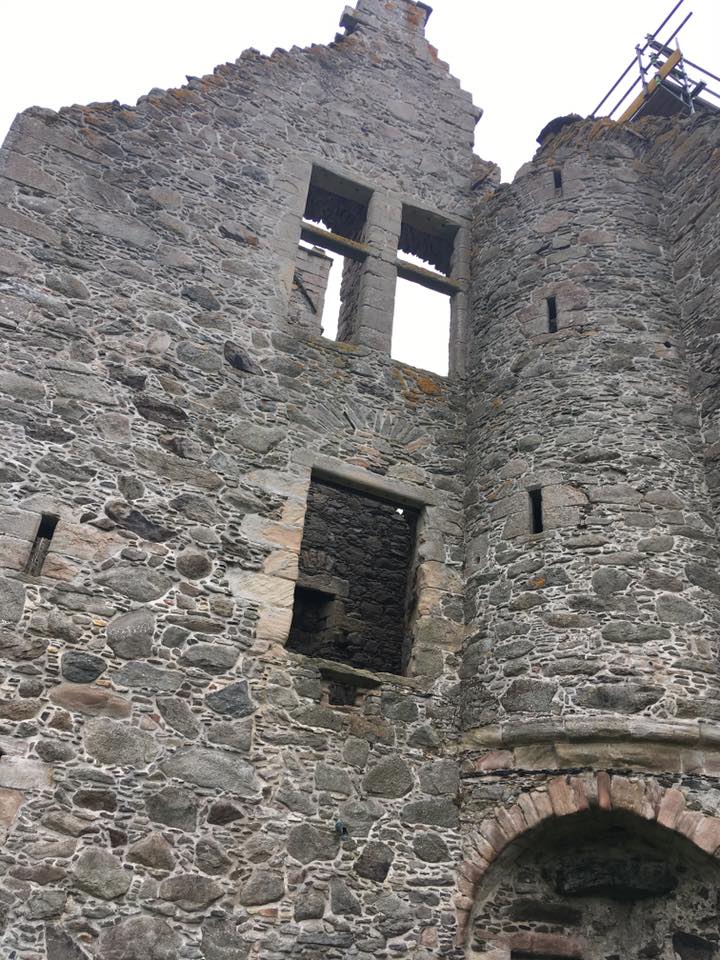
One day Lynn, Richard, Lord Parker, and I visited a nearby ruin, Glenbuchat Castle, that Richard had heard had similar features to Dunrovin.  Had it been built at the same time, for the same purposes, by the same people?  We didn’t learn anything because it was closed for renovation.

Contrasted with Glenbuchat, which sits cold and empty at the top of a windy hill, Dunrovin is full of life and color. These are a few shots of some of the 24 rooms.

On five levels, there are all the usual rooms you expect to find in a house: bedrooms, bathrooms, kitchen, dining room.

Then there are: a sitting room, music room, library, great hall, butler’s pantry, parlor, conservatory, and a gun room.  The gun room is required to be locked at all times and only Richard, the registered gun owner, may have a key.  So I’ve only glimpsed inside it.

Many of the rooms had original functions that don’t make sense anymore, like the school room, so they are now used for other purposes.

These call bells in the kitchen provide a list of the rooms in the late 19th / early 20th Century.  There was a Morning Room—whatever that was—maybe where they caught the morning sun and working on correspondence?

The bells were disabled by a family who lived here in the 80s who had four boys.  I’m sure it was funny the first time one of them rang a bell to summon their mother to bring cookies to them in their attic bedroom, but like her, I would have grabbed the wire cutters pretty quickly.

Lynn and Richard have filled the place with antiques and art and artifacts.  They’ve managed to be true to the historic character of the house without making it stuffy, which is always a danger with old houses.

Dunrovin has the things that, in my mind, make a house Scottish—lots of heads on the walls, a fireplace in every room, and a tartan door.

The door, covered with the cloth of the Gordon family tartan, separates the front of the house from the back.  In the Gordon family heyday, the family would entertain in the front-side rooms, which have 20 foot ceilings and views of the hills.  Behind the tartan door, the help would be running up and down from the kitchen or using the dumbwaiter (below) to move food and libations up to the first floor butler’s pantry to be staged for serving.

There is this defunct system for communicating throughout the house.  Now everyone just yells, or bangs a gong in the hallway to announce that supper is ready.

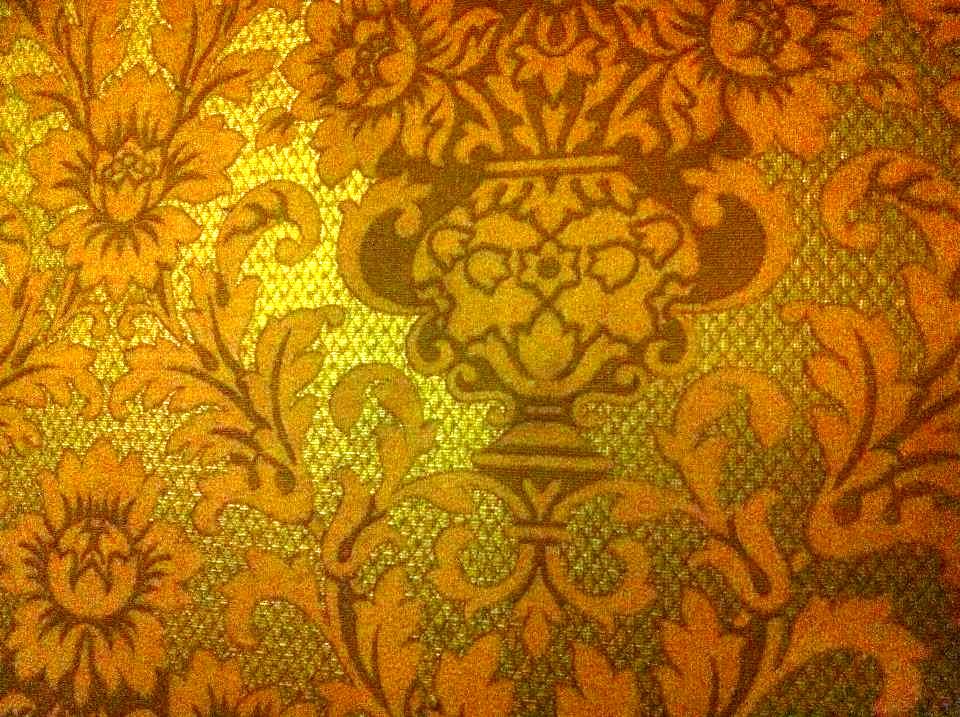
I love this wallpaper in what is now the entertainment room.  Richard, who is the main decorator (“Ricky’s Decoratin’ at yer service” he deadpans), has found such scraps of William Morris wallpaper behind fuse boxes.

See how deep the windows are.  Thick walls are meant to keep out the cold.

The fireplaces are ornate wrought iron or tile and burn wood or peat.  I spent many evenings on the floor in front of this one, with a great fire, a lap cat, and a glass of wine to warm me while we watched Dickensian.

This may sound odd, but for me the one item that says “country house” is an Aga.

More about stoves in the next post, but an Aga is like a fireplace but it’s always on.  Everyone hangs out in the kitchen anyway, and on cold days we are all drawn to lean our back against the Aga.

Dunrovin

Lynn and Richard’s home is remote.  You fly into Aberdeen, population 212,000.  From there you head into the highlands and know you are getting close when you pass the town of Huntly, with around 4,500 people.  The closest town to the house is Gartly, a “hamlet” of 144 people.  A bend in the road.

Lynn and Richard’s house has a name, as do many houses in the UK.  I will call it Dunrovin because this is where Richard wanted to move when he retired and was done with big city life and international travels.

Actually, he wanted to move to a “wee bothy” (a hut).  I’m not sure which of these variations he had in mind but Lynn put the kibosh on the idea of a bothy.

Dunrovin had been owned by generations of the Gordon family until all the sons were killed or disbursed in the wars and there were no men of their class for the sisters to marry, so the family died out.

The idea of a stately home was difficult for me to comprehend, as an American.  It’s one of those things I think British people grow up knowing about, so it’s obvious to them.  There is a wealthy family—not royalty or aristocrats but landed gentry—living in the main house which has a name.  Everything surrounding it is referred to with that name and would have been part of the estate.  In the case of Dunrovin, there is the gamekeeper’s cottage up the hill, the laundry cottages over the road, and the farm house.  All were sold off, along with the silver, as the Gordon family contracted financially.

I will share some photos of the house and land, starting with the great outdoors.  My photos have been taken at various times of year over 12 years, so if some look like they’re set in winter, they are.

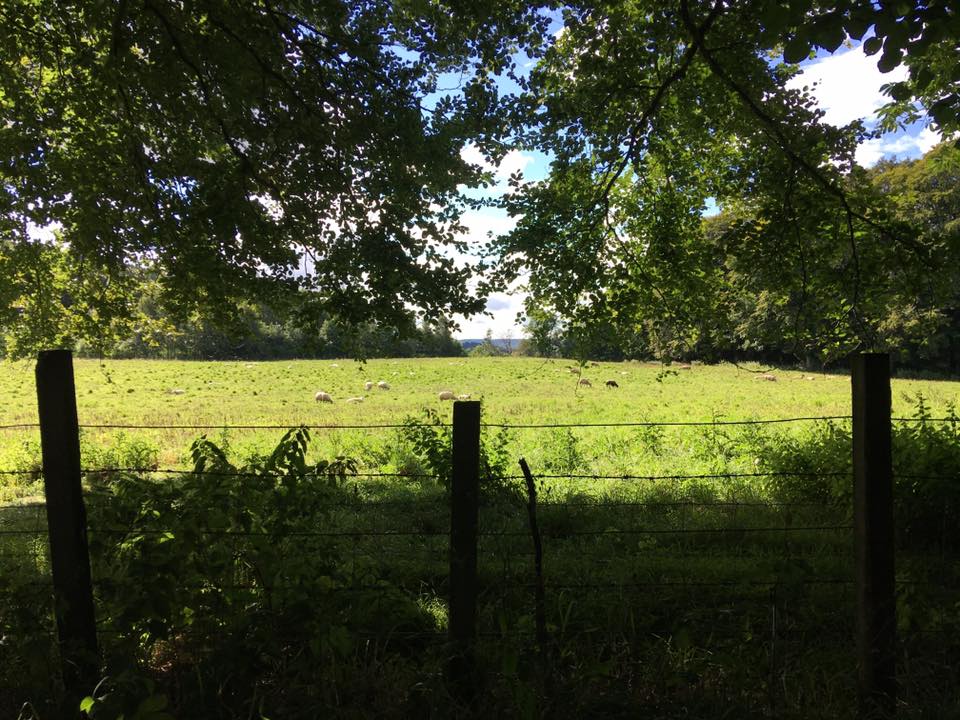
As you come up the drive, there are fields on either side with grazing sheep.

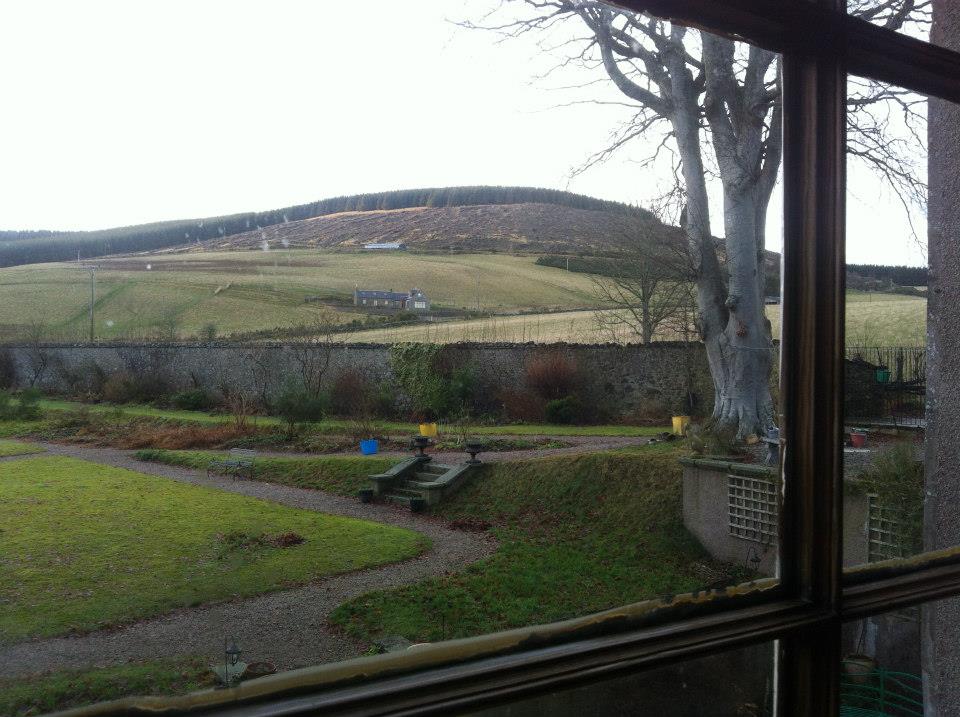
This is the back garden and beyond from inside Dunrovin.  In the middle distance is one of the satellite cottages that used to be part of the estate.

This is a view in the opposite direction, from the back of the garden near the gate that leads down to the river. Meet Parker.  He’s a very aloof dog; people call him Lord Parker.  But he always appeared and hovered near me whenever I left my room.  Parker is not much for people and I am tone deaf to dogs, so we got along great.

This is a similar view, only taken in summer this year so you can see that the sun really does come out in Scotland.  When there’s the slightest bit of sun and warmth, people like Lynn and me go out and sit on benches and turn our faces up to the sun and go “Mmmmmm,” while Richard complains that it’s too hot.

This is the back garden from the attic, where I spent a lot of time.  No, they didn’t put me up there, although that wouldn’t have been so bad because it’s a nice space with skylight views of the 15 chimneys.  No, it was because I requested to be given a project, and Richard assigned me to clear out and paint the attic.

Here is Parker again, your tour guide, showing you the net house full of lettuce and broad beans and peas.  The netting keeps the birds (and dogs) away.  Across from it is the glass house, where Richard grows hothouse veggies like tomatoes and peppers.

In addition to growing his own produce, Richard shoots deer and other game so in theory they could be almost self-sufficient if they wanted or needed to be.

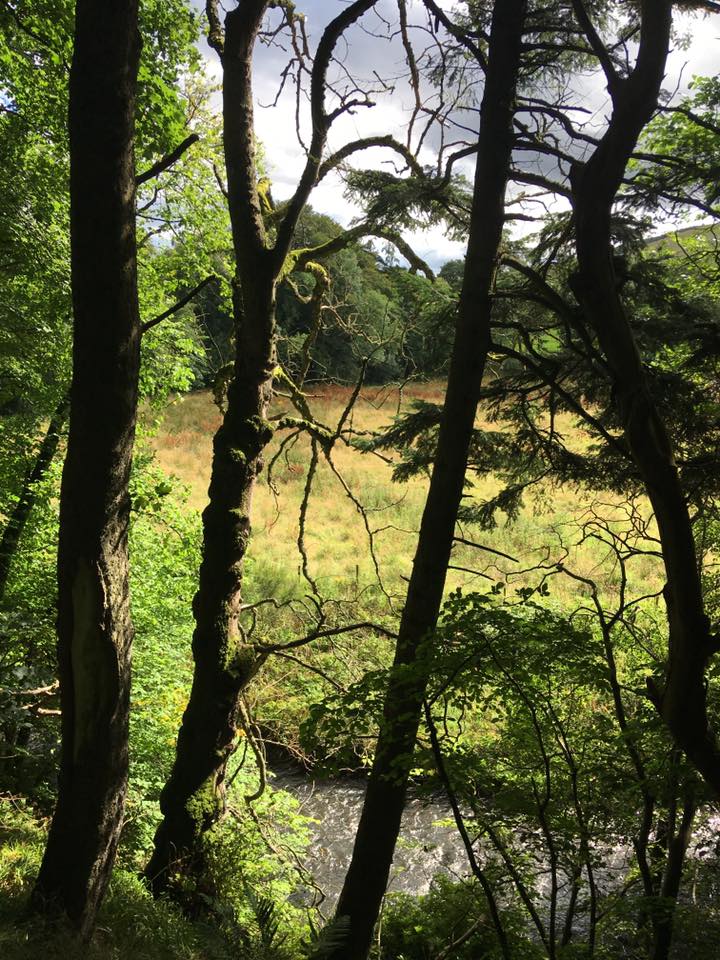
Exiting out the back gate and leaving behind a disappointed Parker, I would often walk down to the river, passing these trees with old graffiti from soldiers billeted nearby after the war (I think).

Richard had moved a café table down to the river, where I enjoyed a cuppa.

I have asked and been told several times the name of the river, but I can’t remember.  I prefer to think of it as just The River.  This was where I would spend a month.

Welcome to Scotland

Back to my summer abroad.  Sam and his little family arrived home in Eton from Minnesota, we hugged and chatted, then off I went to the airport to fly to Scotland.

Scotland has a population of about 5.3 million, out of a UK total population of 65.6 million.  Seventy-percent of Scotland’s population lives in Edinburgh, Glasgow, and the smaller cities of Aberdeen and Inverness.  Glasgow has the highest population density at 3,289 people per square kilometer (.39 square mile) vs. the Highlands where Lynn and Richard live, which has nine people per square kilometer.  If my math is correct, which is always questionable, that means every person in the Highlands has 2.5 square kilometers, or almost one square mile to his or herself.

It’s ideal for people who like their personal space.

Ninety-three and a half percent of Scotland’s residents were born in the UK.  Lynn and Richard are part of the 8.7% who are English born.  About four percent were born in countries outside the UK or EU, notably India and Pakistan.

Ninety-six percent of Scotland’s population is white, 2.6% are “Asian” which in the UK means Bangladeshi, Pakistani, or Indian.  The remaining 1.4% are a head-scratching mix of labels including Asian Scottish, Black Scottish, African British, or Black British, which I believe is akin to our US label “African American.”

Do the Scots consider themselves British?  That’s a complicated question. It’s not like asking if Minnesotans consider themselves Americans. That would be a dumb question.  But Minnesota was never a separate sovereign country.  Scotland “only” joined with England in 1707—300 years is the blink of an eye in UK time and some Scots still nurse resentments about lost battles and English injustices going back hundreds of years, as well as suspicion that the governments in Westminster or Holyrood—seat of the Scottish Parliament—do not have their best interests in mind.

In the 2011 census, up to 72% of people in rural Scottish shires, or counties, considered themselves “Scottish only.”  In Aberdeenshire, where I would spend the month of August, the figure was 61% who considered themselves Scottish only.  About 18% consider themselves Scottish and British.  British, meaning a citizen of the United Kingdom.  Lynn and Richard would be in the eight percent who consider themselves British.

Reflective of the conflicts over millennia, Scotland has more Catholics than the UK as a whole, but today they are only 16% of the population as compared with 38% who are Church of Scotland or other Christian denominations.  There are a smattering of Jews and Sikhs and Muslims, but the largest religious identity is No Religion, at 43.5%.  This category has grown by 10% in 10 years.

There are two languages other than English in Scotland: Scottish Gaelic and Scots.  Fewer than two percent of people know any Gaelic but amazingly, almost 38% have some ability in Scots.

A dialect, Doric, is known in Aberdeenshire.  In fact there’s a hotel in Aberdeen that uses a Doric voice in their elevator. Phrases include “Gyaun Up” (Going up), “Gyaun Doun” (Going down), “atween fleers een an fower” (between floors one and four). This reminds me of an elevator in Dublin that spoke with an Irish accent which rendered “third floor” as “turd florrr.”

Here’s a simple map of the UK and Ireland.  The UK is everything except the gray.  I flew from London, in the south of England, to Aberdeen, in the north of Scotland.

Richard met me at the airport.  It was really good to see him as it had been some years.

We then drove from Aberdeen for 45 minutes into the countryside.

This is Scotland.

It feels vast and vertiginous.  The constantly changing weather makes the scenery look different from moment to moment.
The roads curve and dip and rise and I was grateful I didn’t get motion sick this time.

And then, just when you think you’ll never get there or maybe Richard got lost (an impossibility) and missed the driveway, he took a hard right and we were there—driving down the tree-lined drive to the welcoming committee of Lynn, five dogs, and two cats.

This is not Lynn and Richard’s drive, but it gives you the idea.


Last Hurrahs

It had cooled down, with highs in the low 70s (low 20s Celsius). I checked the weather in Scotland daily and that gave me impetus to get outside as much as possible.

This was late July, for the town in Scotland I was destined for shortly.  Fifty-five Fahrenheit is 12 Celsius.

There were signs advertising something called a Brocas Fun Fair all over Eton. One afternoon after editing a proposal which described torture and the use of mass rape as a weapon of war, I thought, “Now is the time to visit a Fun Fair.”

I was still experiencing vertigo and my Restless Legs Syndrome was getting worse.  Poor sleep combined with vertigo added up to a continuous feeling of physical disorientation, which may have enhanced my Fun Fair experience.

It was a Thursday afternoon, so the place wasn’t doing much business and many of the stalls were closed.  A couple of 10 year olds who were probably skipping school climbed onto a ride and a carnie yelled at them to bugger off, instead of directing them to the ticket booth and inviting them to come back.

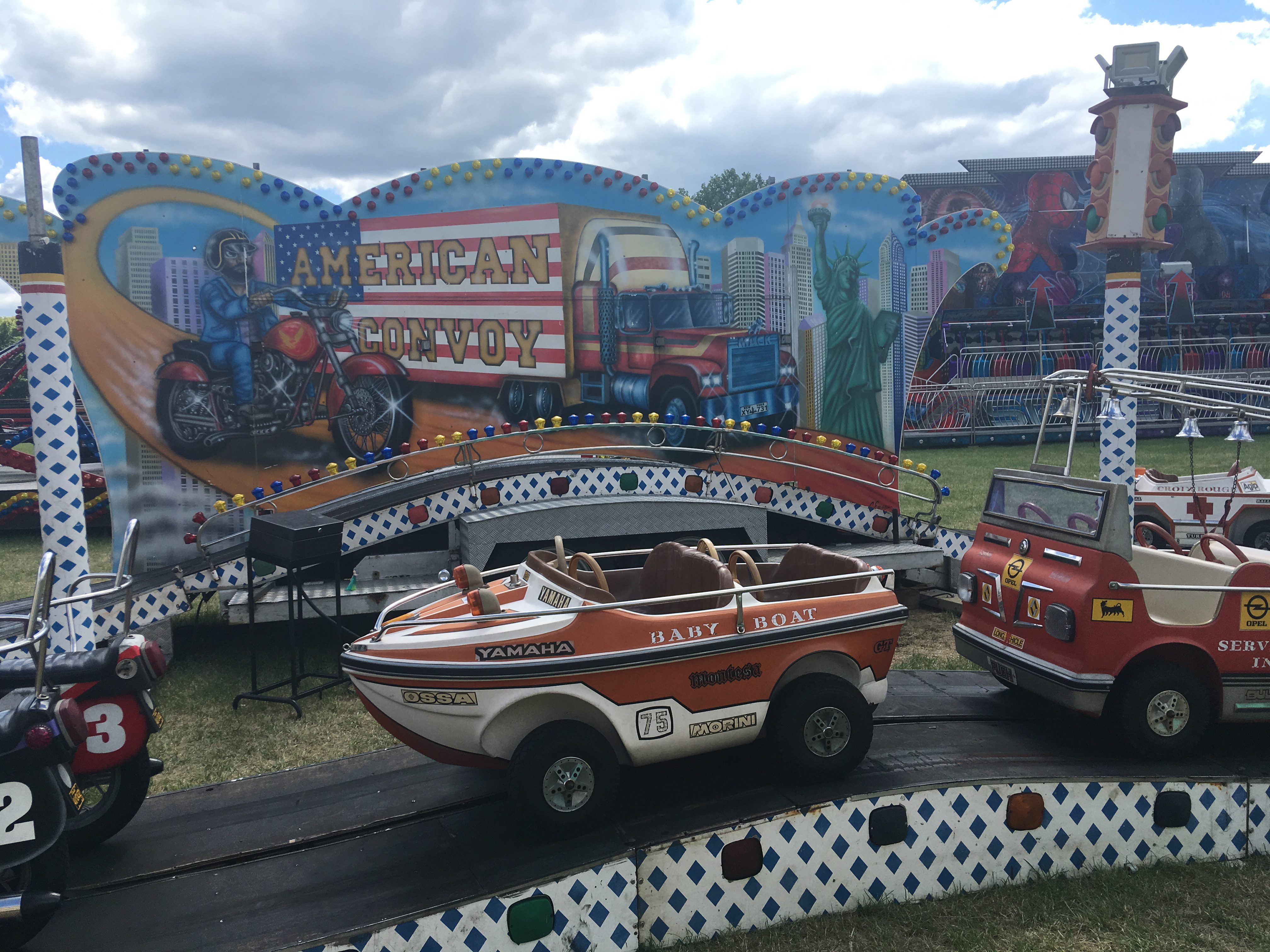
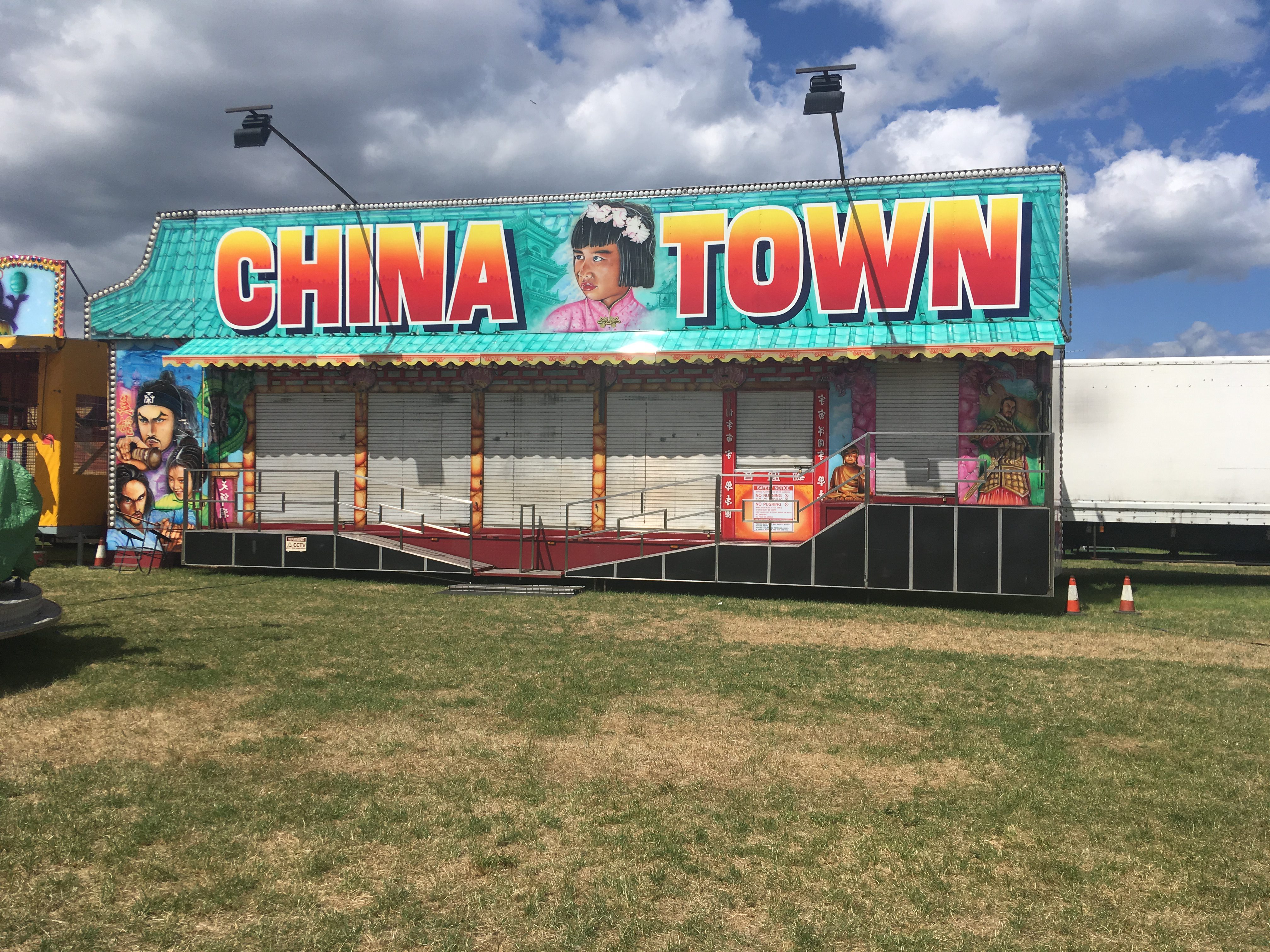
In case you thought Americans were the only ones obsessed with guns, there were three booths with shooting themes.

Another depicted what someone must have imagined was a “real American road scene,” complete with truckers and maybe a Harley rider, with skyscrapers and the Statue of Liberty thrown in for good measure.  Then there’s the toy-like boat in the foreground … I’m sure this would all feel magical to a five year old.

I was surprised the political-correctness police hadn’t demanded that this be redesigned—whatever it was.

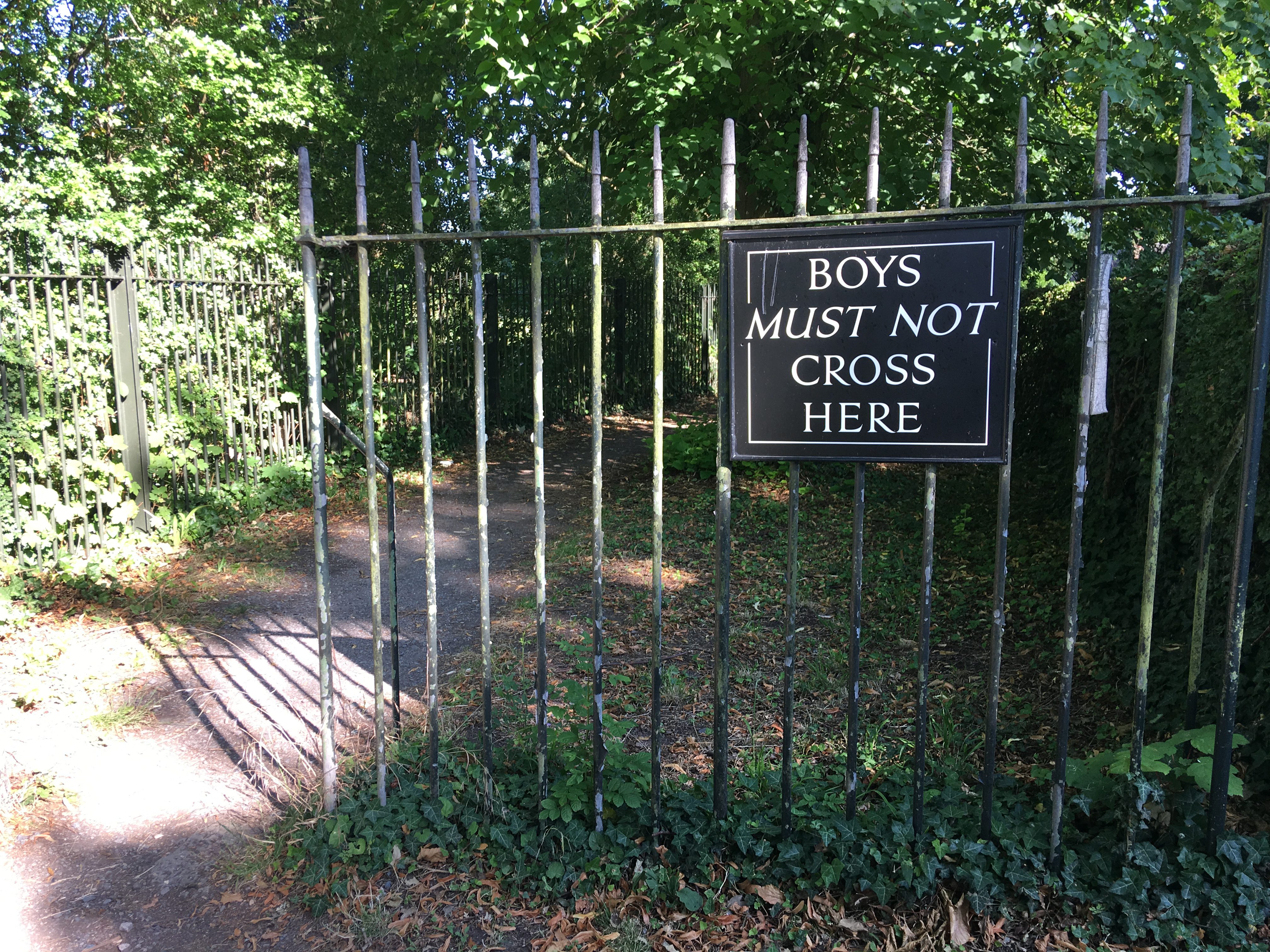
Wandering back slowly through Eton—the college—I got a laugh from more finger-wagging signs.

I could just hear the Pink Floyd song The Wall playing in my head.

Wrong, Do it again!
If you don’t eat yer meat, you can’t have any pudding.
How can you have any pudding if you don’t eat yer meat?
You! Yes, you behind the bikesheds, stand still laddy!

I read this one three times, then gave up understanding it and walked on.

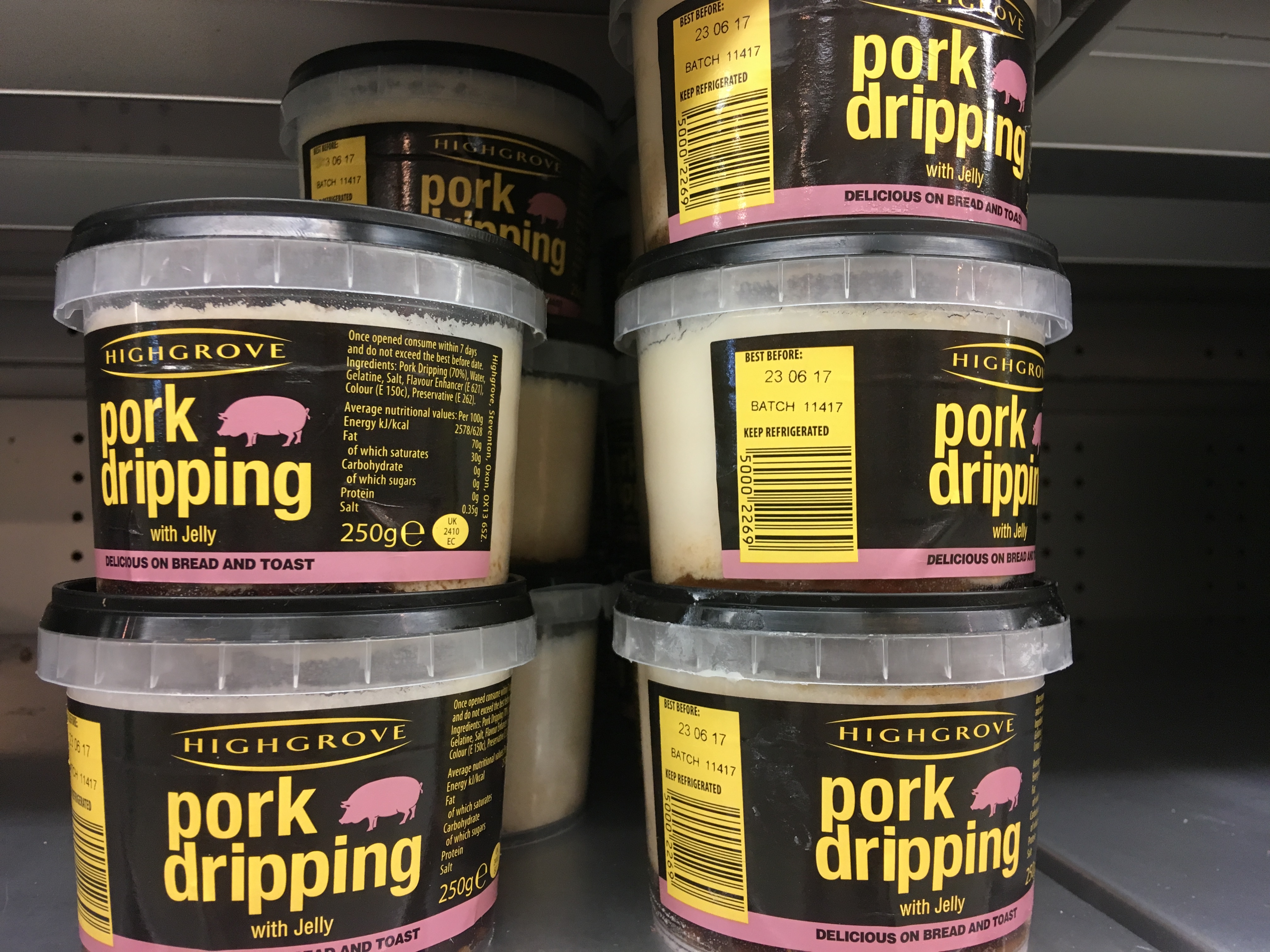
I spent a day shopping with Julie in Windsor.  She especially enjoyed the grocery stores.  We went to an upscale one, Waitrose, and a tiny local one called Budgeons.  At first glance, a grocery store in the UK looks the same as one in the US.  But if you look closely; if you pay attention to every item individually as though it is a meditative exercise, you will see many things that make you go hmm ….

Or in my case, shudder at the words, “With Jelly.”

For all I know, my local grocery may sell tubs of pork drippings with jelly.  However when I shop at home it is like a military strike—hurry in, grab the same items I buy every time, get out as fast as possible.

We had lunch at the Waterman’s Arms.  Fish and chips for Julie, lamb and mash and a half pint of cloudy local cider for me.

We visited a card shop near the flat.
Part of my new-employee orientation at Oxfam had been to read the communications style manual, which included a directive to “avoid creeping Americanisms.”  By contrast, we have many, many “creeping Britishisms” in America and we love and embrace them.  I could write a whole post about this.
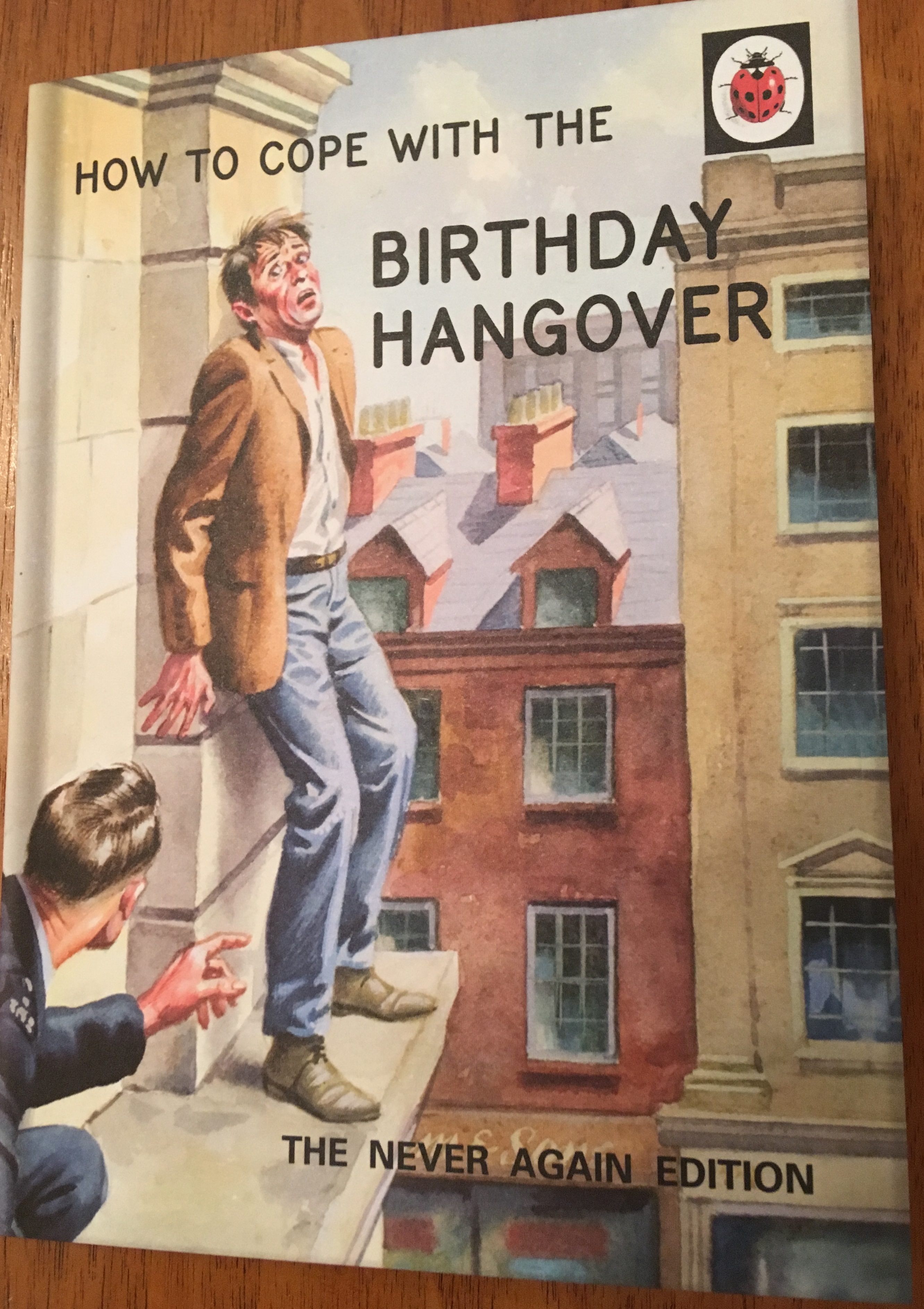
There was a series of cards that mimic illustrations from beloved children’s books combined with adult themes:

Other cards in the series include “The Acid Trip,” “The 12 Step Programme,” “The Halfway House,” and “Bouncing Back.”

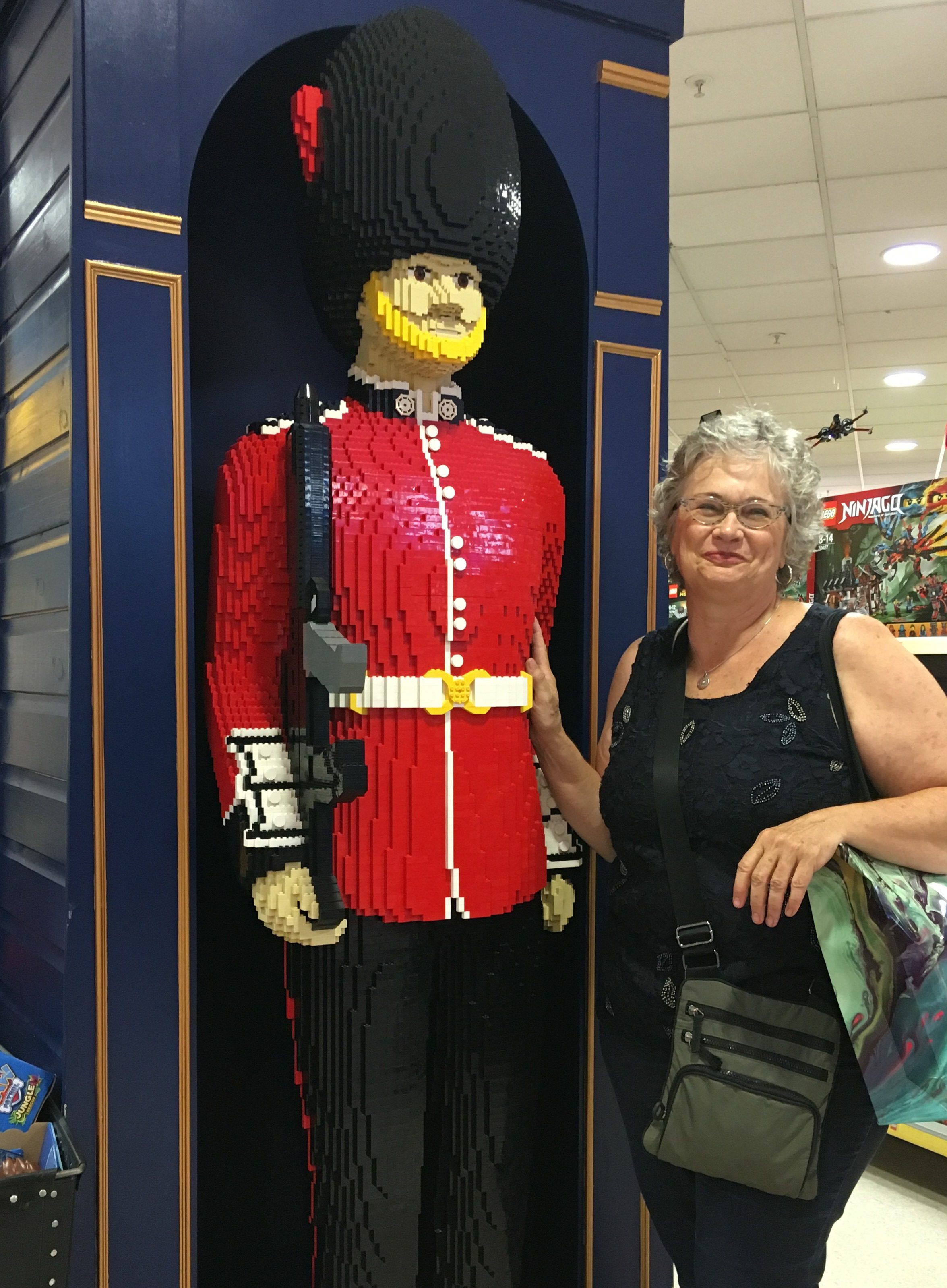
I took Julie to Daniel, the department store.  Here she is in the toy section.

I went in to London one last time, dropping in to the Victoria and Albert Museum only long enough to buy my son a tote bag and other Pink Floyd-branded items.  The line for the exhibit itself was a mile long.

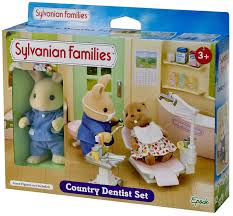
I searched Hamley’s, the gigantic toy store on  Oxford Street, for Sylvanian families badger figures for my nephews.  I was distressed that, like Daniel, they were out of badgers so I had to settle for a pizza-delivering hedgehog and a mouse dentist.


Flights and Boats and Ships

As my month in Eton and Windsor drew to a close I stepped up my sightseeing.  If you’re a traveler, you know that tension between, “I want to see it all; I may never be here again!” and “I want to savor and enjoy my moments here; I may never be here again.”  This was a time for the former.

My friend Julie had never been to England, hadn’t traveled internationally in years, and that had mostly been on tours.  I figured she’d be nervous arriving at Heathrow—jet lagged, disoriented, tired, and excited—I always am.

So I met her there, in the “Love Actually” arrivals hall.

Ingrid had met me at Schiphol in May.  Maki had met me in Addis Ababa in June.  Lynn was there when I arrived at Heathrow from Ethiopia. It’s nice to see a familiar face at the airport.  I don’t mind traveling alone, for the most part, but it feels a little sad to arrive and have no one waving to greet me.

Julie’s flight was delayed so I watched people arriving—scanning the waiting crowd for a familiar face, then lighting up with a smile when they spotted their spouse or friend or business associate—waving, then shaking hands or kissing and hugging.  It was an endorphin boost, just watching.

Julie’s arrival gave me a push to re-see some old favorites.  We spent a day at the Tower of London.  I hadn’t been there for 30 years.  Based on binge watching The Tudors and reading Phillipa Gregory’s The Other Boleyn Girl, I knew just enough to probably misinform Julie so she would possibly be laughed at if she quoted me.

Afterwards, we did one of my favorite London activities, the boat ride to Greenwich.  It’s a cheap way to see the city from the river; we left from Tower Hill but you can start at Westminster or even further beyond for all I know.  It had been raining all day so the thought of sitting inside under a clear Plexiglas canopy appealed.  It only costs £10 for the round trip, and there are so many boats plying the Thames that it’s not necessary to book in advance for a specific time.

We waited in line with a couple Tajikistan who were honeymooning.  They had flown in via Moscow that day.  They were spending two days in London, taking a day trip to Oxford, then flying to Edinburgh for two days, from whence they would work their way back home via Paris and Prague.  Good thing they were young and had lots of stamina.

It takes less than an hour to get to Greenwich.  We passed under bridge after bridge and stopped at multiple piers on either side to let people board or disembark.  I always look forward to gliding under Tower Bridge, splendid even in the rain.

There’s a lot to see in Greenwich, but I always tack my visit onto the end of a day so everything is closed when I arrive.

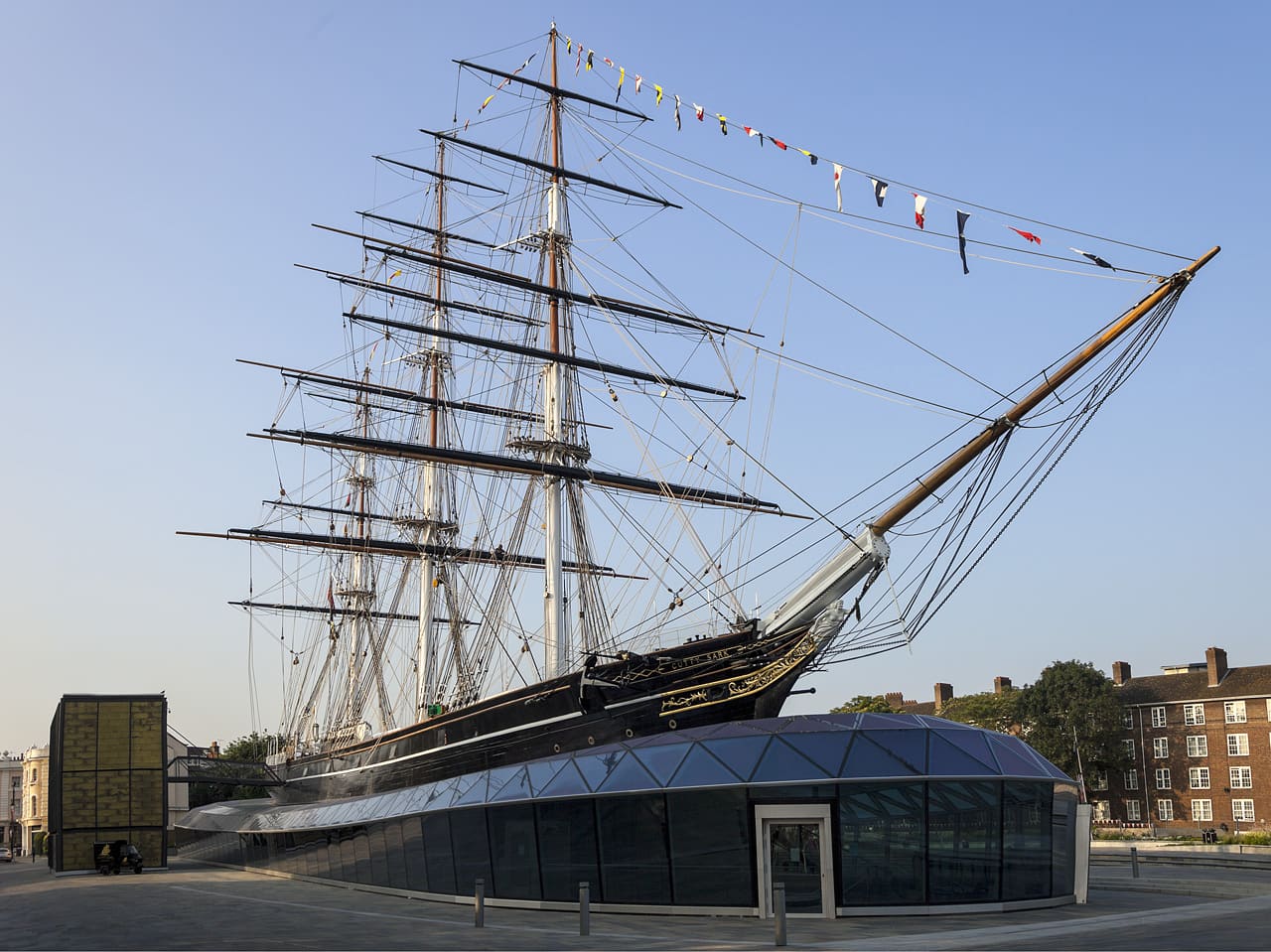
There is the Cutty Sark, which is not just a brand of whisky.  The original 147-year-old ship can be toured but I’ve never done so.  It’s the last surviving clipper ship in the world.

Greenwich is home to the Royal Observatory, home of Greenwich Mean Time, or GMT, still used as the standard time zone reference.  If you have ever planned a trip somewhere outside of your own time zone, you have likely seen “GMT + 4” or whatever to indicate the local time.

There is also the Royal Naval Museum which I’m sure is fascinating but which I’ve never seen, and a wonderful covered market which is always just closing down when I arrive.

Note to self: Plan a day in Greenwich next time.

On the return boat ride we got distracted by a drunk guy who wanted us to guess his nationality, which turned out to be Polish.  This may have triggered a few stereotypes in me.

We missed our stop and got off at the next one.  The Pole got off and followed us. It was deserted and dark.  I was debating whether to scream when he came abreast of us, gave us directions to the nearest tube station, and stumbled away.

A Long Day

I had six days left in Eton before I flew to Aberdeen to join Lynn’s household.  The weather continued hot and sunny.  I resumed my routine of work and walks.  A friend from Minnesota was coming to England for the first time so we made plans to go sightseeing in London.

I had spent a lot of time sitting on the bus and in meetings during my two-day trip to Oxford, so it was time for a long walk. Or should I say, The Long Walk.

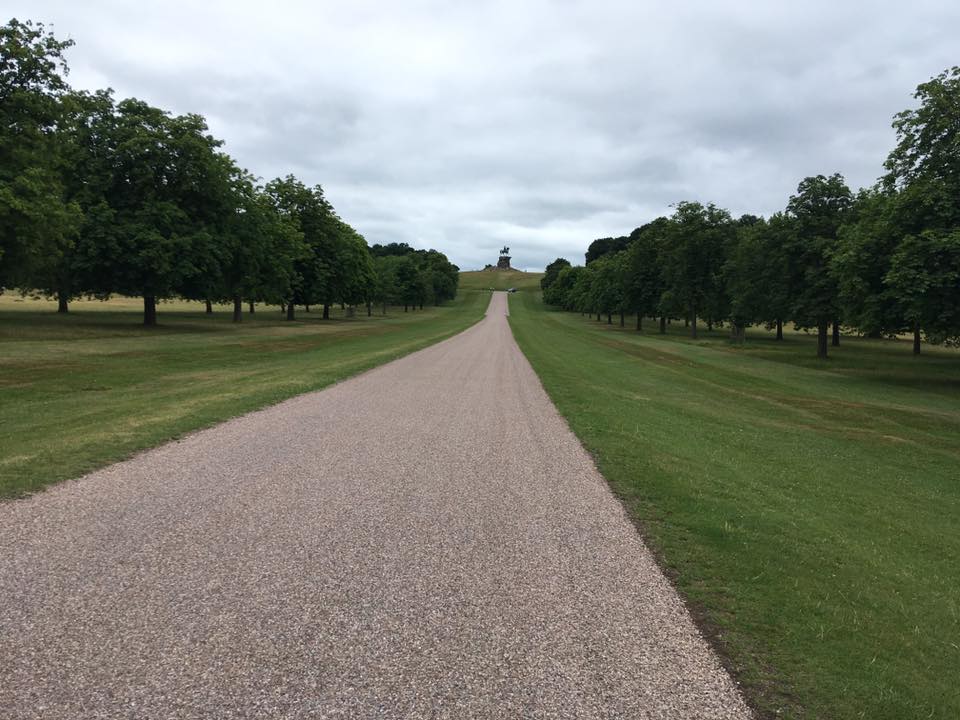
There is a path leading away from Windsor Castle called The Long Walk.  I could Google it to find out exactly how long it was, or I could walk it.

The Long Walk is part of Windsor Great Park, the Queen’s 5,000-acre backyard.  There were no amenities. No signs, picnic tables, food vendors, or even toilets. I kept walking because there was something at the end of it.

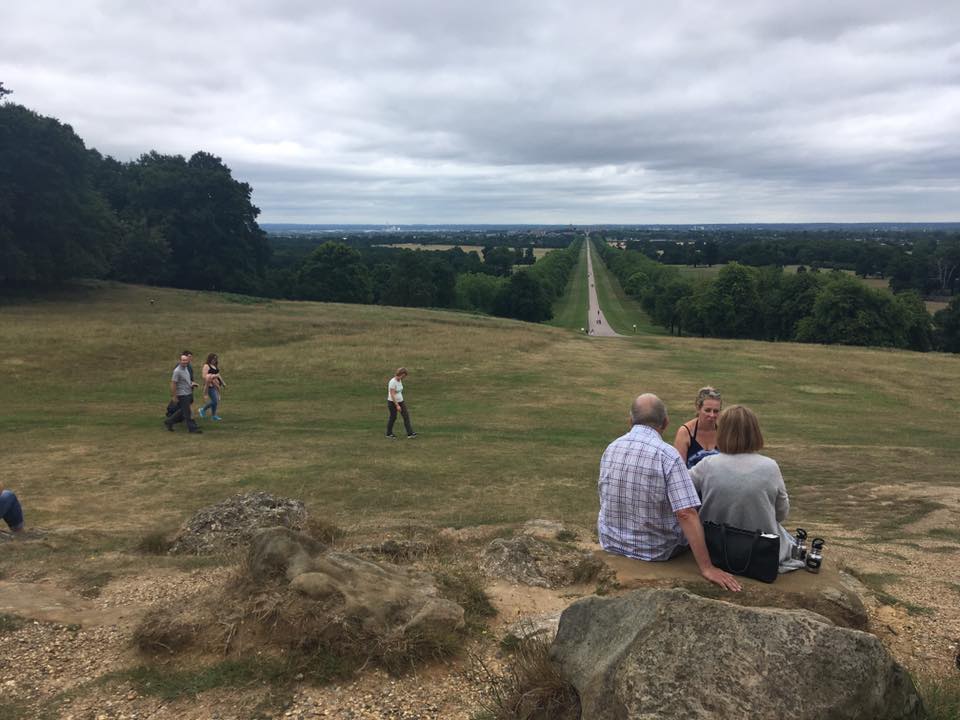
As I later learned, The Walk was 2.65 miles (4.26 kilometers), one way.

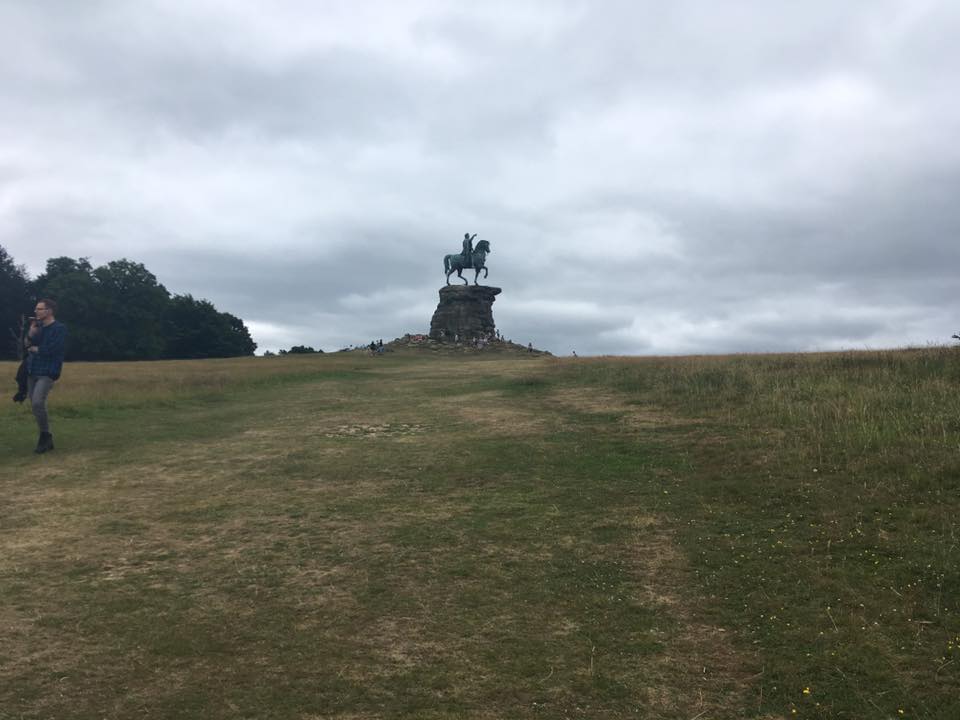
There was no signage identifying the statue, but Lynn’s husband Richard informed me later that it was “George II, the second Hanoverian King, the last British monarch to lead his army in battle.  Luckily he kept his horse, unlike another monarch who ended up under a car park in Leicester.”

He is referring to Richard III.  I have a hard time keeping the kings and queens straight, but I remember Richard III because he had scoliosis, as I do, and there was a PBS documentary about him where they made this poor guy named Dominic—who has scoliosis—stand in for Richard III to see how much suffering and abuse he could withstand.  It really makes me cringe, watching the teaser for this show.

Back to The Long Walk.  The statue was graceful, as statues of monarchs go.

I heard Polish, Spanish, and Japanese around me; only we foreigners were suckers enough to walk all the way to the end.  There was nothing else to do then, but turn around and walk back.

Undoubtedly the place will be throbbing with revellers for Prince Harry’s wedding in May.

Eton College has three museums: Antiquities, Eton Life, and Natural History.  It was Sunday, and though I was weary from my walk, the Natural History Museum was only open Sundays from 2:30-5:00.

It took me a while to find it, but I enjoyed some more sign-seeing along the way.

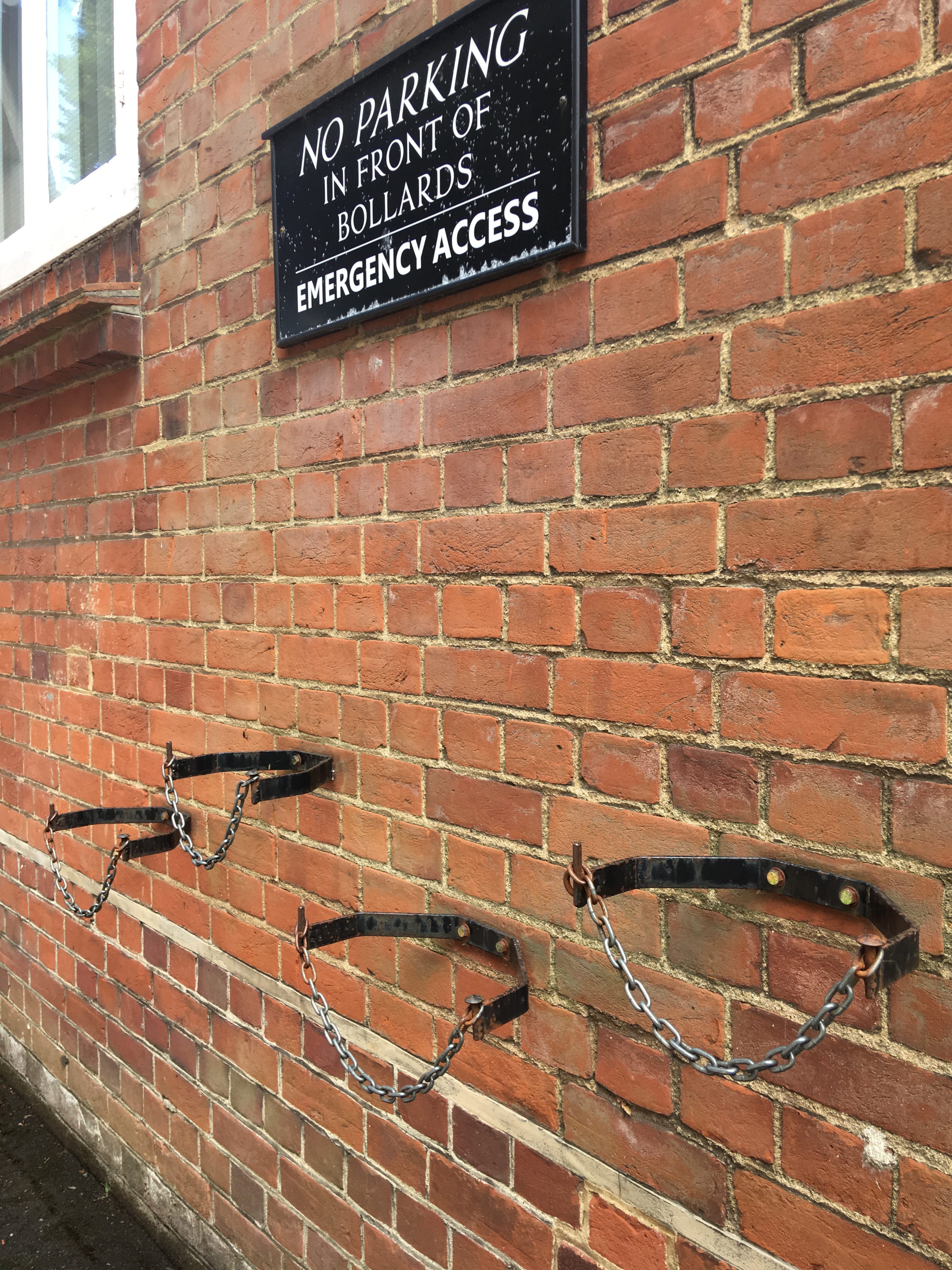
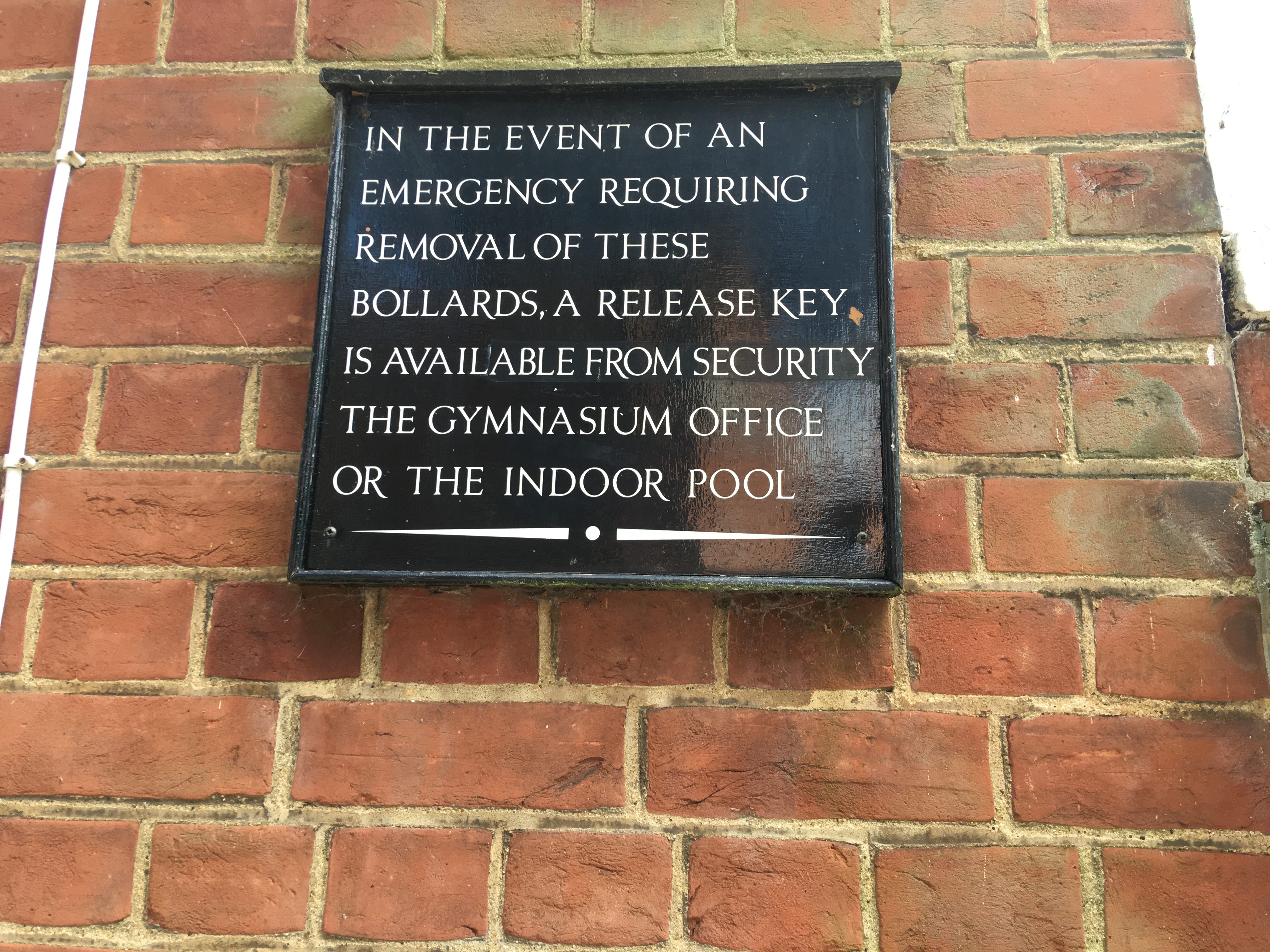
I’m not sure what bollards are, but there are a lot of signs about them.

I found the museum before I got swept up in any bollard-related escapades.  The museum was founded in 1875 and was just as I had hoped—small and jam-packed with 15,000 displays of dead things.

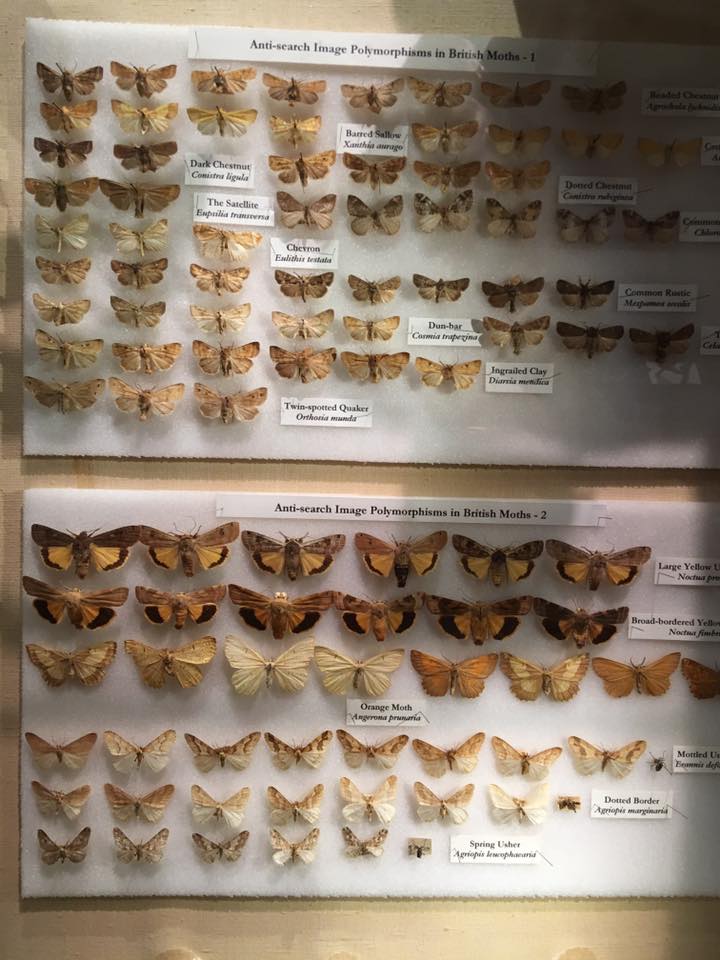
Someone had meticulously collected, sorted, categorized, and labeled everything from shells to moths. Someone who needed OCD medication.

There were lots of birds.

And dioramas of dead birds doing life-like things, like eating escargot.

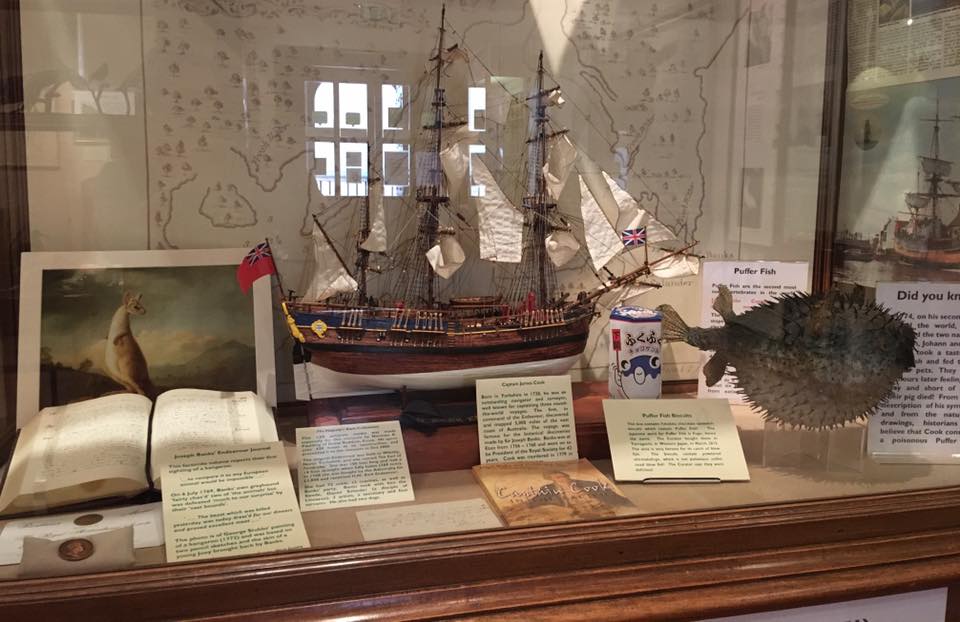
This was a nice little scene of a ship chasing a giant puffer fish.

A glassed-off room contained a horse skeleton and dozens of skulls.  Were they human?  Apes?  There was no explanation.  But I did learn that horses’ front legs aren’t attached to the rest of their skeleton.

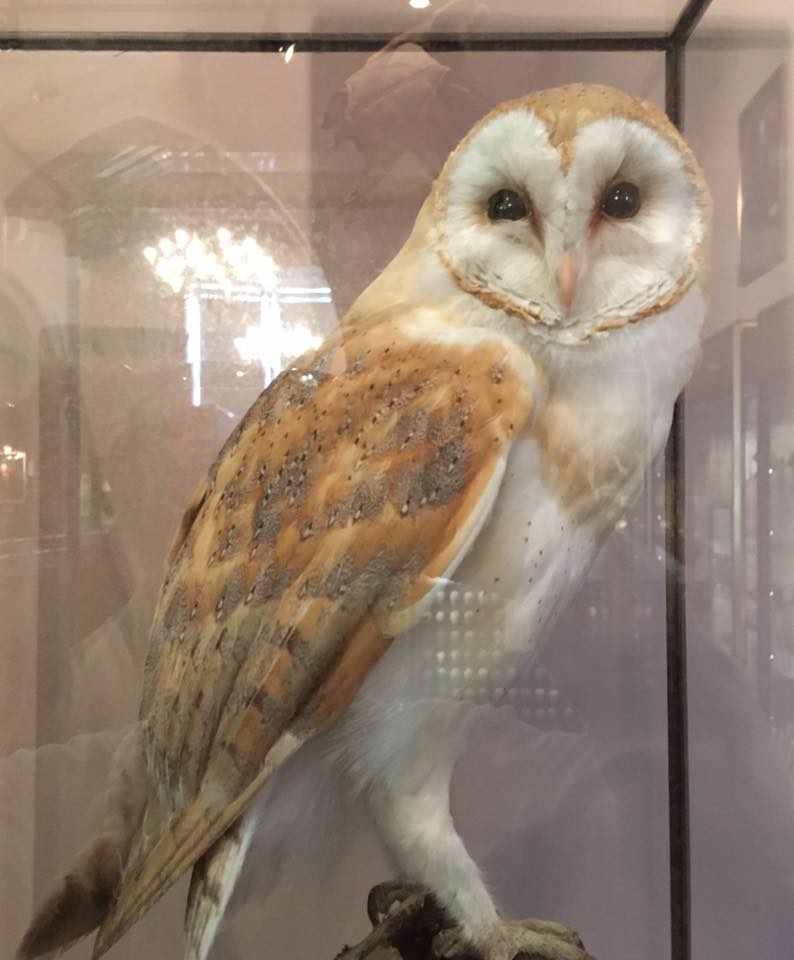
This poor owl, named Ollie, was sucked through an airplane’s somethingorother duct. He seems to be in awfully good shape for having met such a tragic end.

Who doesn’t love a hedgehog, especially with a hawk on its back?  Really, my photos should win a “World’s Worst Photos” contest.

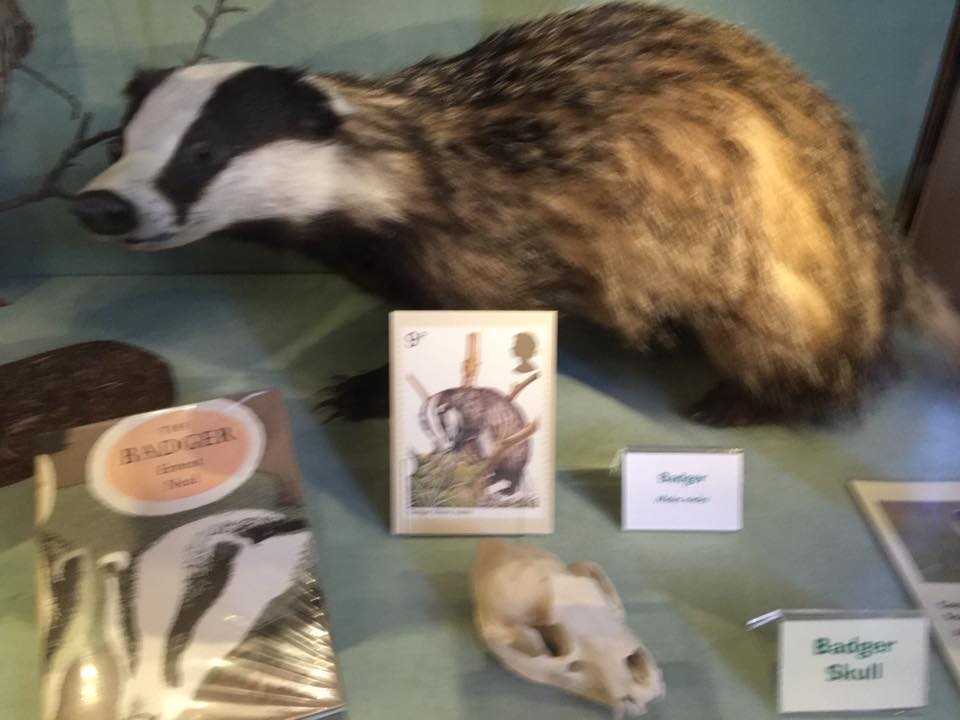
A badger, fuzzier than normal due to my poor focus.

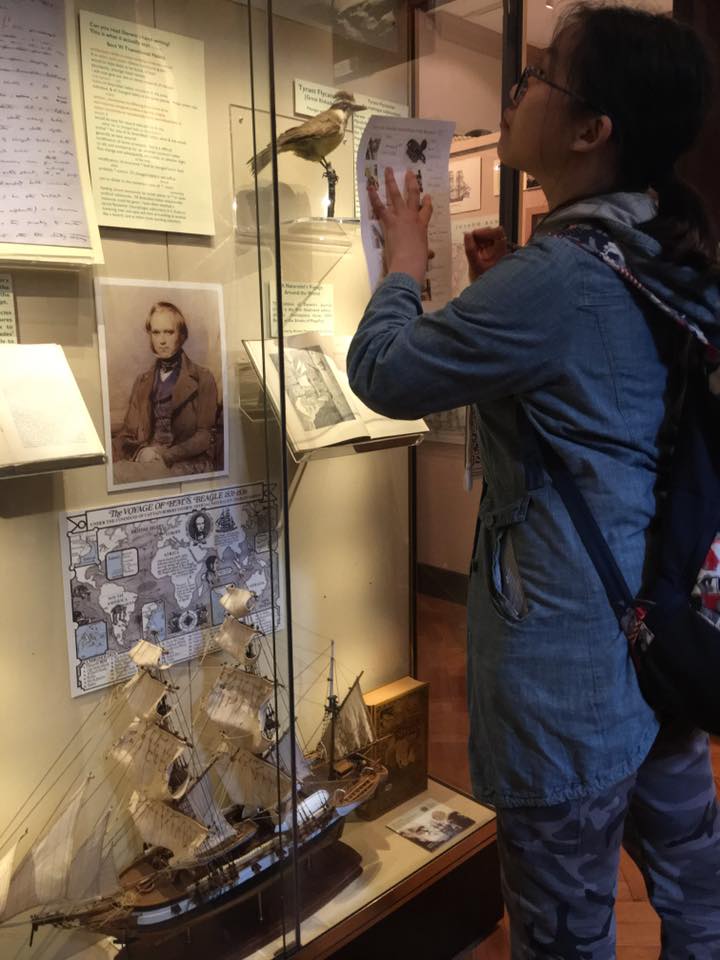
There were students there, on field trips. This young lady was learning about the journey of the Beagle and Darwin’s discoveries in the Galapagos, which led him to formulate the Theory of Evolution.  If you believe in that kind of thing.

This painting depicted a 14-year-old boy, Horatio Nelson.  While on a journey to the North Pole, he fought off a polar bear with his musket because it wouldn’t fire.

Like natural history museums everywhere, there were freak animals.

It was a tiny place, which was fine with me because I can only take so many long walks and four-legged ducklings in one day.

Peddling and Paddling

At last, by luck, I spotted the Oxfam building through a gap in a hedge.  I scrambled through using a dirt path worn by thousands of feet before me whose owners were seeking a short cut, in the process adding dust to sweat and possibly arriving with a twig in my hair.

I was late—only by five minutes or so, but I hate arriving late.  Lynn had arranged the meeting, and she was there ready to usher me through the security gates.  There was no time to take a look at myself in the bathroom.  I did what one does when one arrives late, flustered, and not sure if there is a swipe of dust across one’s face—I pulled myself up straight, smiled, and walked confidently through the gates.

Mark (not his real name) was kind of a big kahuna at Oxfam GB.  When I had mentioned his title to a coworker, she had asked slyly, “So is this a partnering meeting or a job interview?”

Without leave to remain in the UK, working for OGB is out of the question, and that’s kind of a relief because I could focus on why I was really there—to “pitch” my organization.  That sounds crass but it’s what it is.

The meeting was to last a half hour.  That sent me a signal that I wasn’t to waste Mark’s time.  We settled onto a settee in the staff lounge and I launched into my spiel.  I could tell he was really listening, which I appreciated and which helped me to slow down and be real.  After I finished, he talked about how he had recently returned to Britain after many years working in disaster zones.  He totally “got” the need for rehabilitation—I didn’t need to explain psychological trauma to him.  He talked about Oxfam’s priorities and thought out loud about how we might find ways to work together.  He was very kind, considering that my organization is so small.  Our meeting went a bit longer than planned.  If I did have a smudge of sweaty dust on my face or a twig in my hair, he pretended not to notice and didn’t hold it against me.

Afterwards, I checked in with Lynn and thanked her for making the connection, then walked back to the bus stop to take the #3 along the Iffley Road for a late lunch with a former coworker.

I hadn’t seen Jane in 10 years, and it was great to catch up.  She had been a new graduate—21 years old—when I’d first met her and she still had a beautiful English rose complexion.  She had left Oxfam to become a primary school teacher, and she and her man were going to do a charity bike ride the next weekend. She hadn’t been on a bike in years and was a bit concerned about the borrowed set of wheels she would ride.

“That reminds me of the time I did a charity kayak trip,” I said as I munched on my cruelty-free vegan sandwich grilled with organic olive oil hand pressed by refugees. This was east Oxford, after all.

“I had never kayaked before.  I borrowed a friend of a friend’s kayak, which turned out to be heavy as a bathtub.  We were supposed to paddle 44 miles along the Mississippi, through the locks in downtown Minneapolis, camping overnight at an old fort—Fort Snelling—and finishing in St. Paul.  We were kayaking on the river with barges and paddleboats and houseboats!  How hard could it be?”

Jane’s face fell as I spoke.

“Maybe I should go on a test ride before the big one,” she said thoughtfully.

“Yes, probably.  I made it to the half-way point and dropped out.  The only kayaks behind me were the emergency medical technicians.  I finished 427th out of 427 and I could barely pick up a pencil for days because my shoulders were so sore.”

We reminisced for a couple hours, then Jane hopped on her borrowed bike—which appeared to be approximately one hundred years old—and peddled away.  I walked back to the guest house to put in some work hours, and left early the next morning.

A Fish Tale

I joined Lynn and Possum and their friend Andrew for a long dinner at the Italian restaurant.  Andrew was a former Oxfamer, now a finance consultant.  He was preparing to walk along the south coast of England to raise money for Oxfam, and we ribbed him about the impending stormy weather.

He laughed back at us, Ha, ha, I’m going to Italy for a week after the walk.”

When you work for an international organization, you meet such interesting people.  People who love to travel, people with good hearts, people with good stories.

The organization I work for supports survivors of torture and war trauma to rebuild their lives through counseling, physical therapy, and social work services.

You might think torture is a rare occurrence, but it’s not.  Governments all over the world employ it to scare their populations into submission.  My own government has tortured people it suspects of being terrorists.  My organization estimates that about 1.3 million of the refugees in the US were tortured in their home country.  And there are likely tens of millions more in other countries.

One way for us to reach more people is to work with other organizations, and that’s why I had come to Oxford—to meet with some people about possibly partnering with Oxfam.  Oxfam is an international organization that started in Oxford, and the largest branch, Oxford Great Britain, is there.  OGB dwarfs my organization.  It had income of $565 million last year, compared our income of about $15 million.  Was there some way we could go in with OGB on funding applications, doing a small part of a big project?  It could make their proposals more competitive to add our specialized services, and we could reach more survivors.

That’s the theory, anyway.  It takes a long time to bring these partnerships to fruition, if they ever do.

I had meetings the next day in three different locations.  When I asked the driver of the #8 bus to Headington where I should get off, he gave me a rude and incorrect answer.  I ended up walking about eight blocks in the warm rain.

I still arrived early, so I did reconnaissance for how I would catch my next bus, and then looked at ads in an estate agent’s window.

This one is pure Oxford:

Yes, the house comes with a giant fish sculpture.  What’s so excellent and British is that there is no reference to it in the ad.   Entrance hall?  Check.  Three bedrooms, check.  Living room, yes.  Garden?  Yes.  Giant fish? Huh, what fish? Pay no attention to that fish plunging through the roof.

I found the coffee shop and had a lovely talk with a woman who worked for OGB for 17 years and is now a fundraising consultant.  Her two young children played quietly while we talked NGO-speak.

“Which sector are you under?” she asked. “Health, GBV, protection?”

“Usually health but with PRM we’ve been protection and also with this DFiD NOFO we’re responding to, and we’re thinking GBV for Iraq with OFDA.”

“That makes perfect sense,” she nodded.

It was nice to talk to someone who spoke the same code as I do.

I next boarded the #10 bus, which wound along Windmill Road, which turned into The Slade, then Holloway Road, then Between Towns Road.  I alighted at The Original Swan pub, from where I would walk to OGB.  I had walked this route every day when I lived here, but today—when I was running a little late—I got lost.

OGB is in a business park where all the buildings look alike and are arranged in a circle so you can go around and not realize you’ve gone around.

It’s a nice office park, as such places go.  There are fountains and trees.  But there are no signs or directories, or I missed them.  I was so sure I would remember the route, but I didn’t.  After my disastrous meeting in London I had invested in some big-girl professional work clothes and now they were damp with sweat as I huffed along.  I tried to ask directions from three passersby and they looked at me like I was insane and scurried off.