Selective Whiskey, Selective Memory

Back at the hotel, Lynn revealed the reason for her bag being so heavy.  In addition to half a dozen guidebooks and books for reading pleasure, she had schlepped this all the way from Scotland.

Here are the notes Richard provided to explain its provenance.

We would have to figure out how I could reimburse them for it; Richard had paid for it in pounds sterling, I operate in dollars, and here we were in Japan.

We walked over to Ueno Park, and I—the old hand—showed Lynn the hydrangeas and the shrine.  We had a long, late pizza lunch at an Italian restaurant, which was the only place we could find that was open.  As usual we had months of updates to download.

Heading back to the hotel at dusk, we accidentally walked down an alley lined with Pachinko parlors.  It was dazzling, blinding—thousands (millions?) of blinking lights and beeping noises—with people streaming in and out to try their luck.

“What is pachinko?” Lynn wondered.

“I think you hit a lever … and balls fall down … there are pegs or some such, and … somehow you gamble with it?” was my authoritative reply.

Neither of us is a gambler, but we enjoyed the garish street display.

“This isn’t the Tokyo I’ve experienced so far,” I observed.  “I’ve been pleasantly surprised so far by how sedate the place is.”

“This seems like ‘typical Tokyo’ according to everything you see in guidebooks,” Lynn replied.

We were in bed, reading, by nine.

“If you see a ghostly figure pacing the room at 3am, that’s just me with my RLS,” I warned her.

“Oh, nothing stops me from sleeping,” Lynn assured me.

That was good, since I was up almost all night.  The more I tried to be quiet, the more noise I made, so I spent most of the night in the can, doing the RLS cancan.

The next day was packed.  We would have one day in Tokyo, then leave for Kyoto the following morning.

Fred and Hiromi had strongly recommended we prioritize the Edo Museum over the two art museums in nearby Ueno Park.

I was glad for their advice.  The Edo was just a quick one-stop on the train, and easy to find thanks to much signage involving large red arrows even I couldn’t miss.

As we walked, a flock of little kids in cute school uniforms passed us and called out, “Hah-loh, hah-loh!” practicing their English on us.  It was delightful.

“Edo” is the old name for Tokyo; the museum was all about the history of Tokyo.  The building itself is worth a look.  It is modeled after an old storehouse, but to us it appeared like a samurai helmet.
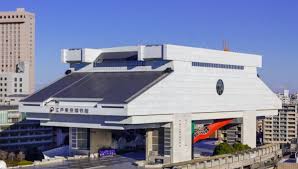
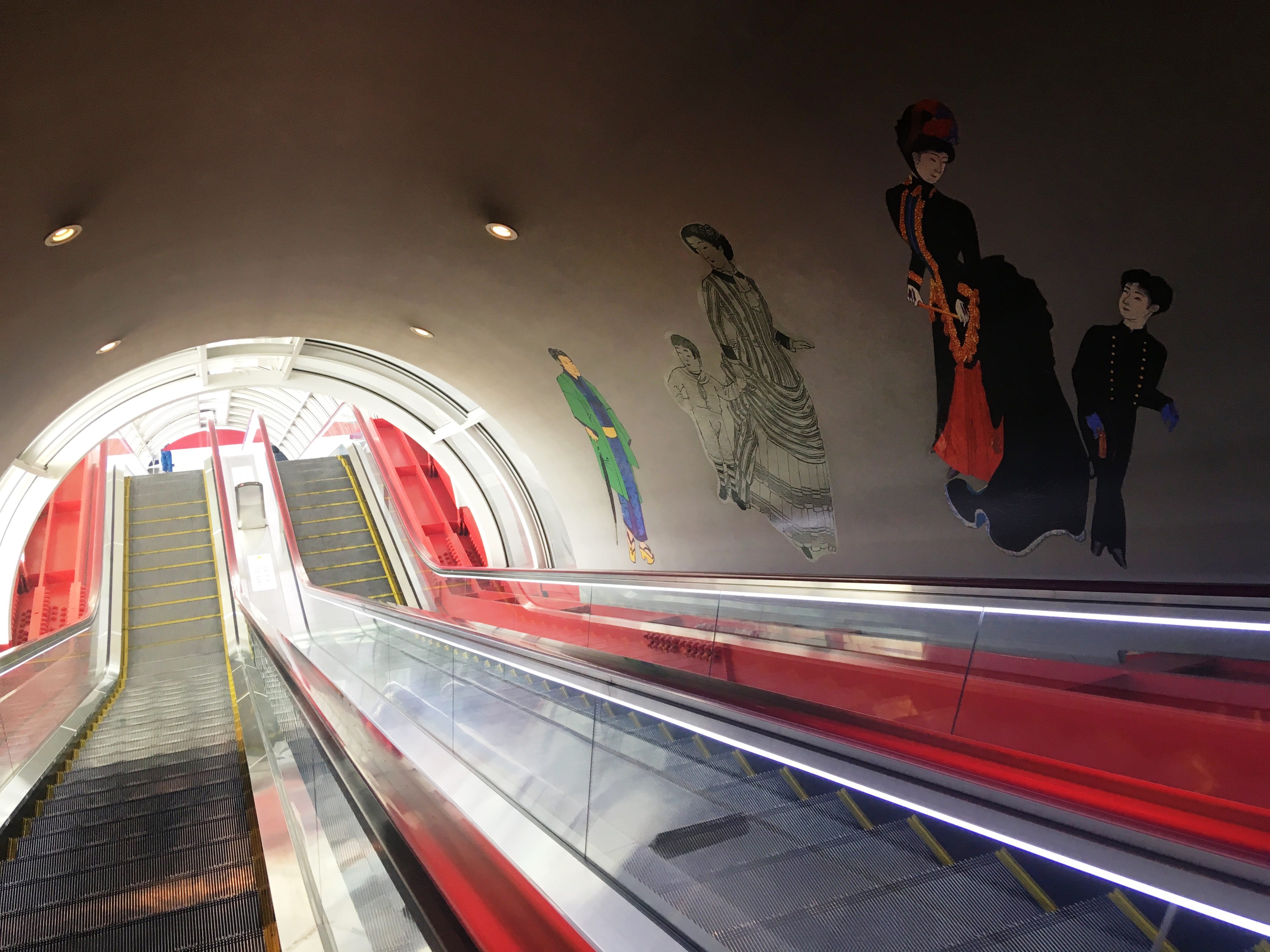
It is basically built on stilts, and you take a very long escalator to the sixth floor of museum, then work your way down.  Lynn and I had never seen an escalator that turned into a people mover (a moving walkway), back into an escalator, and so on.  It was marvelous.
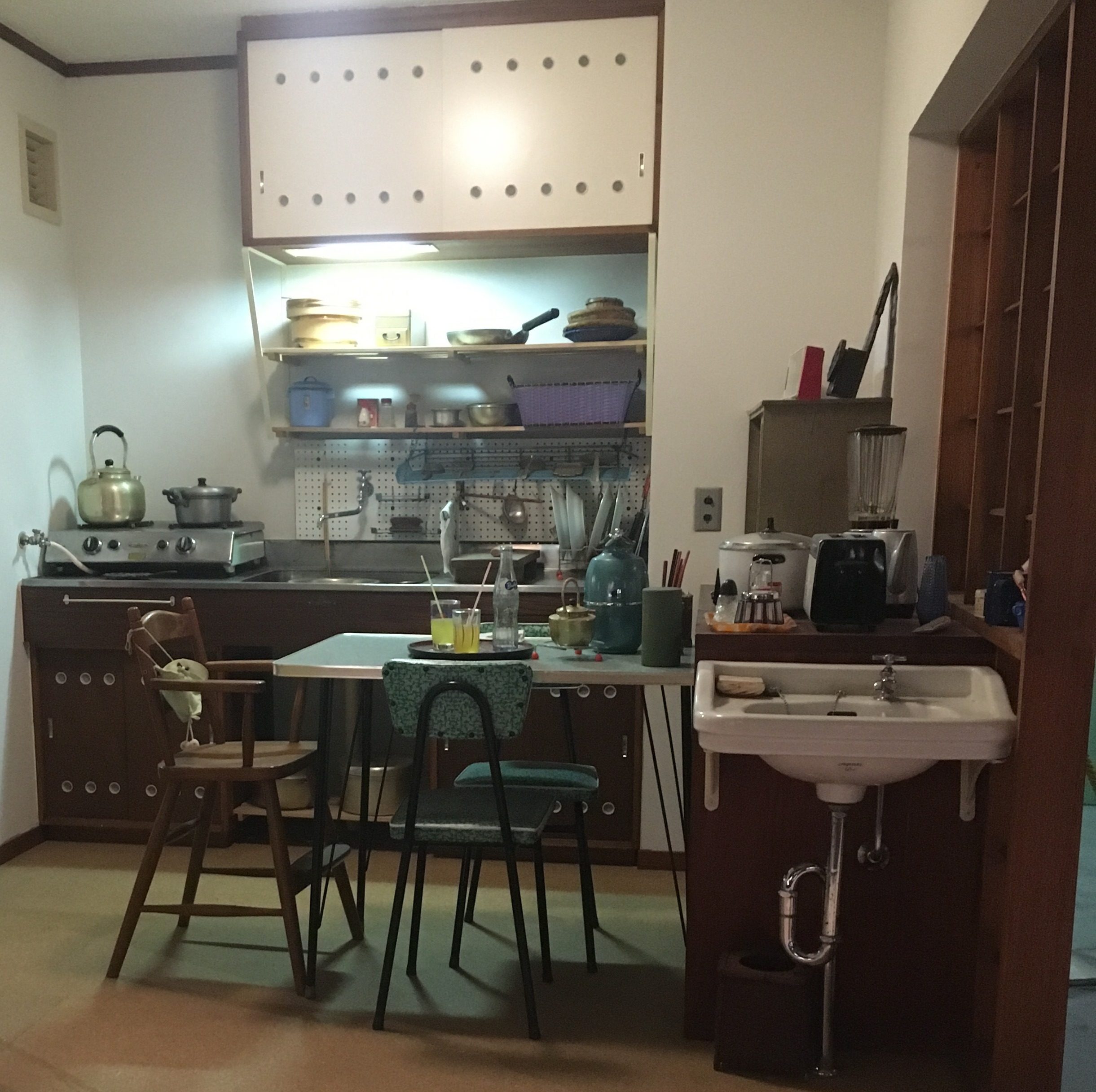
I could write an encyclopedic post on this museum, since it covered everything from prehistoric cave dwellers to the post World War II period.  There were a lot of model recreations of typical homes and shops and schools from different periods.  This was a post war kitchen.
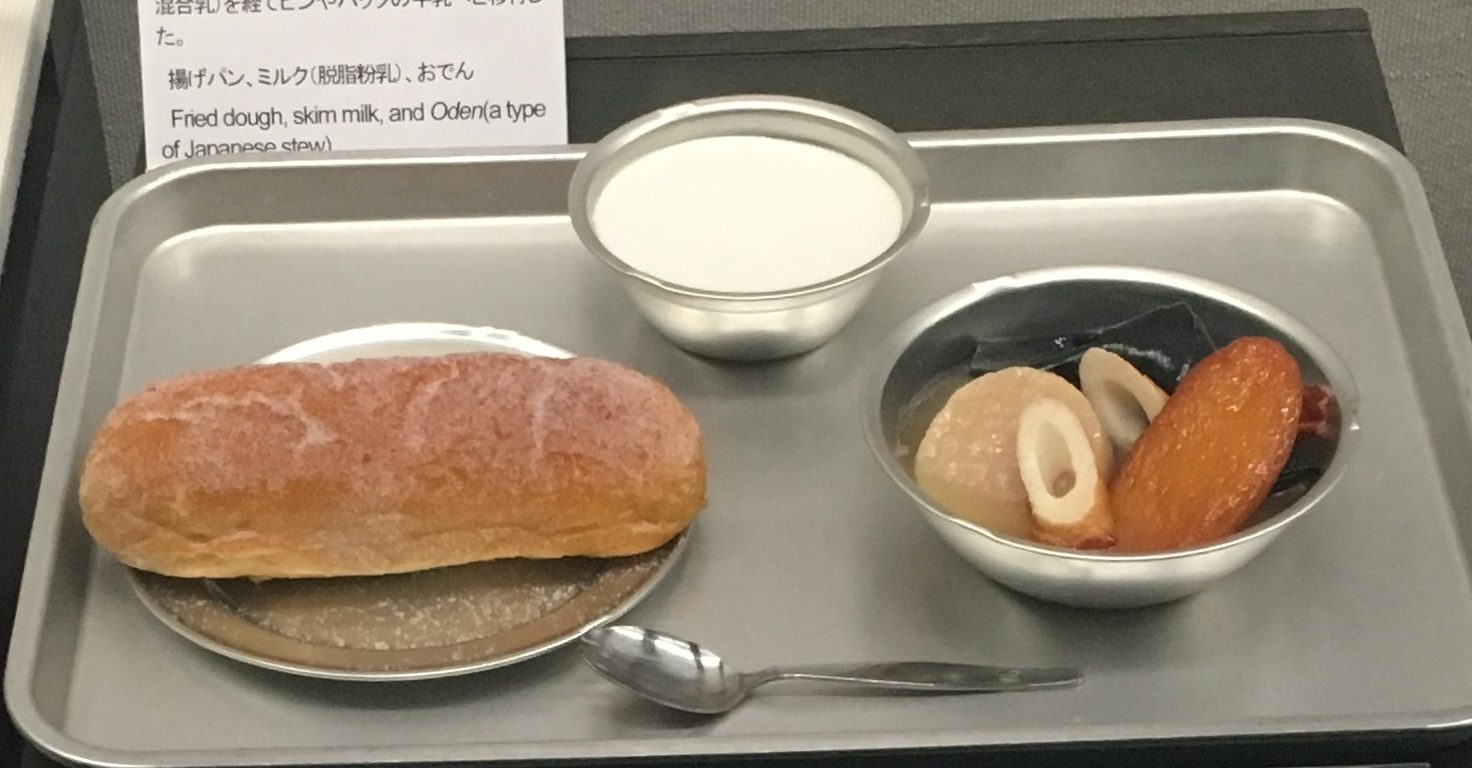
This was a typical school lunch in 1960, when Japan was still rebuilding.  Pretty grim.
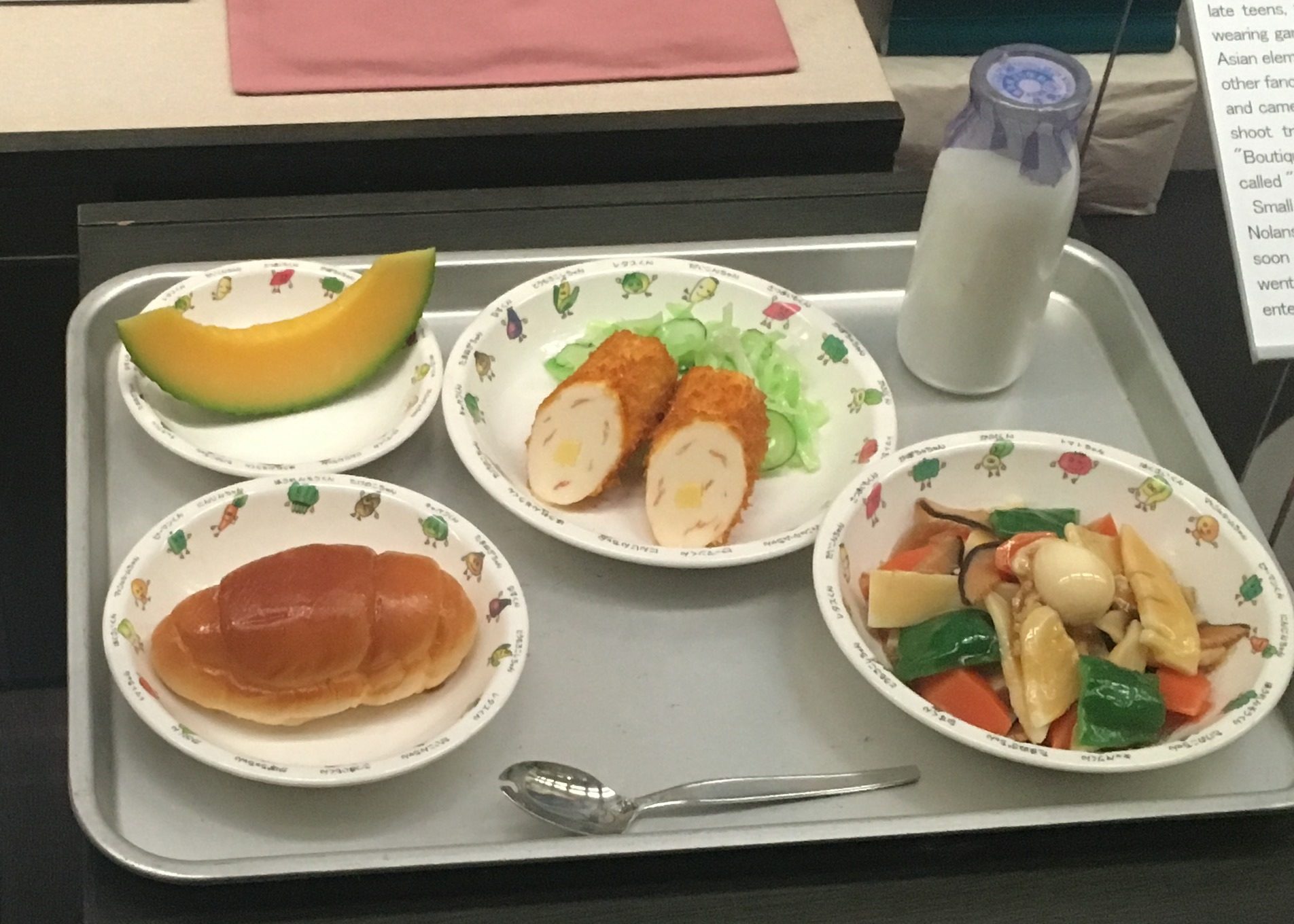
This was 1970:
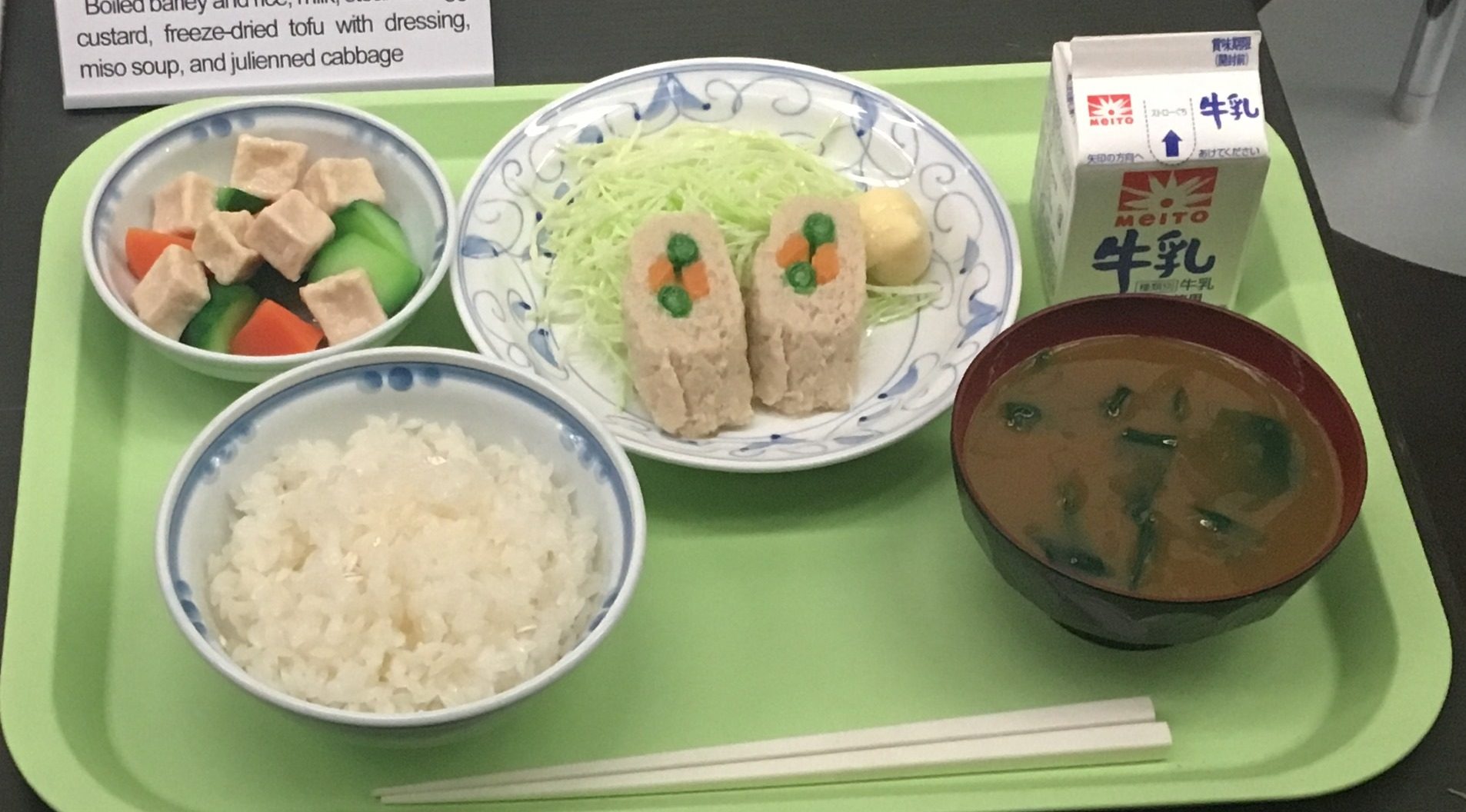
The 1980s:
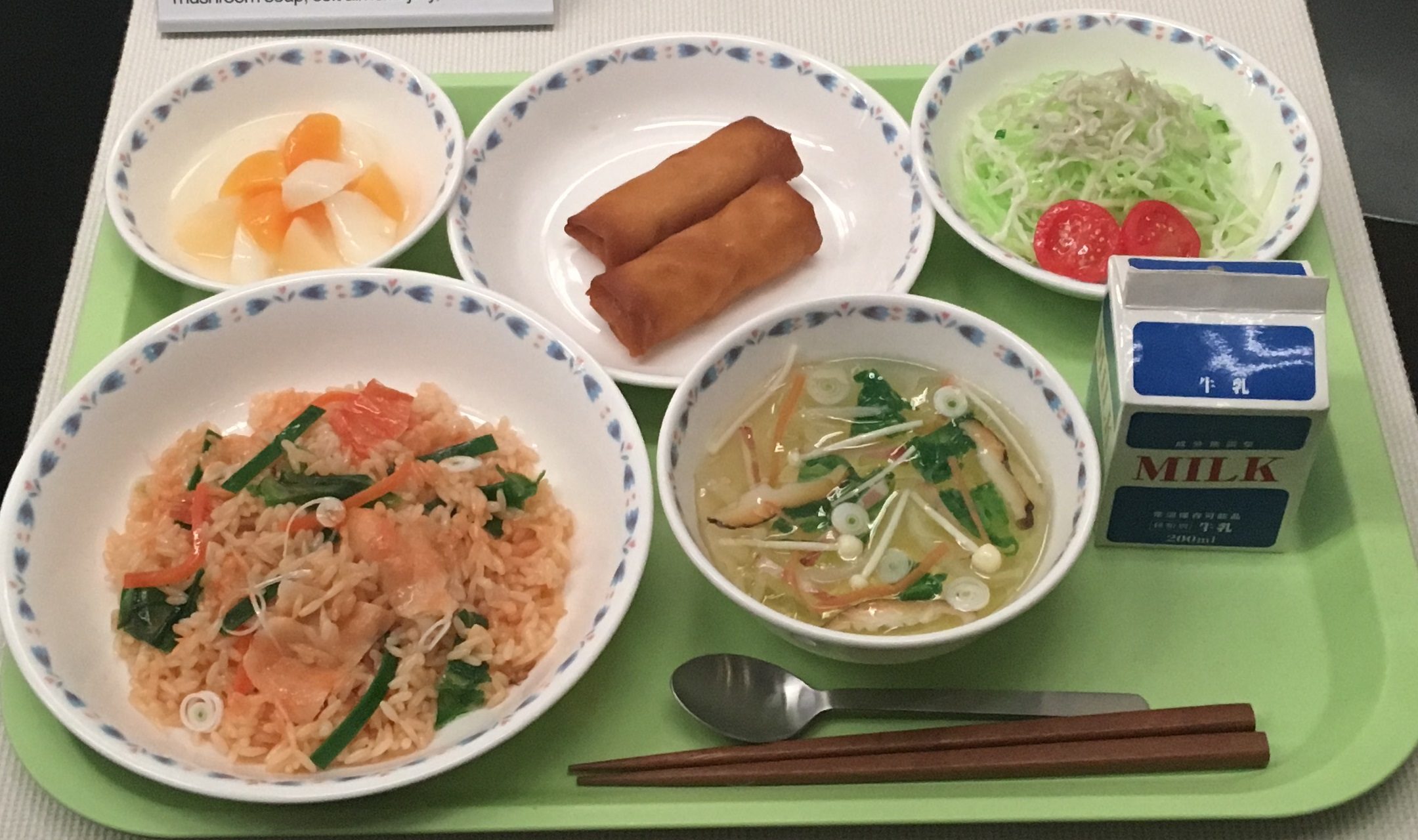
90s:

And the 2000s, looking pale and starchy, like American lunches, in my opinion.
I stood in front of this for a long time, wondering.
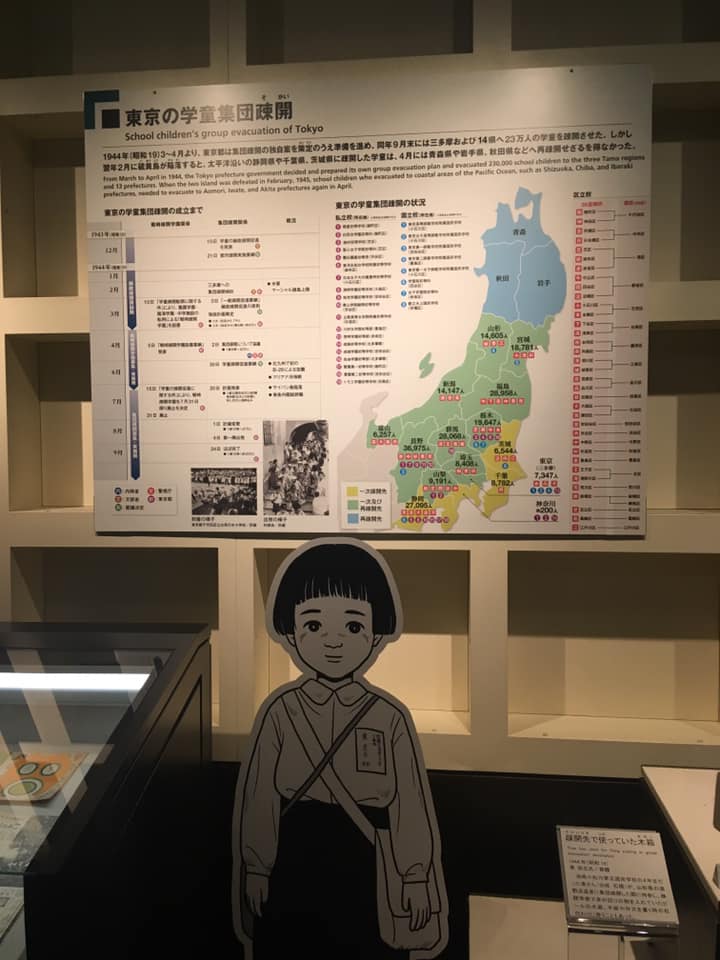
I know it’s too small for you to read.  It’s about the US bombing of Tokyo during WWII. There’s no context as to why America might be doing such a thing.

No mention of 1941 and Pearl Harbor, when Japan attacked America—a neutral country at the time—without provocation and killed 2,400 Americans.

I may sound like a five-year-old, pointing a finger and shouting, “He started it!”  There were plenty of atrocities and needless destructive actions committed by all parties.  But here, only America is mentioned as the aggressor.

To lighten things up, here is a gratuitous photo of a goat from the taxidermy exhibit!

You say Shimoda and I say Shimota

Back at the New Tohoku after the day at the seaside, my Restless Legs woke me every 45 minutes.  I finally gave up at 1am and cracked open my book.  Then my brain did a side eye to my phone, sitting on the bedside table.

I try not to look at my phone after 9pm.  “They” say the blue light stimulates your brain and keeps you awake.  But I had posted some photos on Facebook … had anyone Liked them?  I tried to resist, then grabbed the thing and saw who had Liked and commented on my photos, tried to read my book again, went back to Facebook after 10 minutes like an alcoholic who says, “Just one more,” repeat.

Social media is like those pellet dispensers in B.F. Skinner’s psychological experiments.  You know, the one’s where the rat gets a food pellet every time it performs whatever task the researcher is trying to teach it.

I wasn’t being taught a new trick (that I am aware of).  I was succumbing to intermittent reinforcement.  This is where a reward is dispensed intermittently, and it’s the most addictive kind.  On social media, you never know when you’re going to get rewards, or in what form.  When there’s a flood of them, you get a rush, so you try and try to get a repeat.  Ugh.

I gave up on sleep at 4:30am and did some rejiggering of my itinerary.  As I’ve mentioned, I was going to have my nine-year-old nephew, Charlie, for five nights at the end of the trip, and after much research with Keiko we had settled on Hakone as the ideal destination.  Hakone is a resort area about an hour from Tokyo.  It’s got cable cars, a lake with boat tours, and lots of kid stuff to keep an active child busy.

But Keiko had received an alert from the Japan Meteorological Agency about volcanic activity near Hakone.  According to NHK, Japan’s equivalent of the BBC, Hakone’s cable cars were closed, there was danger of landslides, and some local restaurants couldn’t get black eggs—a local delicacy—because certain roads were shut.

We would have to cancel Hakone and find another destination.  We lobbed ideas back and forth on Skype, then she and her dad suggested the Izu Peninsula.  When I saw there was a city at the very southern point called Shimoda, I figured it was a sign, since as I wrote in a previous post I have an ancestor from Shimota in the former Czechoslovakia.  I have built travel plans around flimsier hooks.

I started getting What’s App messages from Lynn, who had landed at Narita.  It took her an hour and 45 minutes to get from her gate to the Skyliner, the airport train which took another hour and 15 minutes to arrive at Ueno.  I could see why Keiko had insisted on flying into Haneda, which is so much closer in to central Tokyo.

I would not make Lynn try to find the hotel on her own.  I walked to the station, then serendipitously decided to wander a bit and discovered there was a separate station with the same name across the street, just for the Skyliner.

To kill time I took photos of panda buns and a posse of school kids.

There were many groups of cute little kids, but I would never take photos of small children.  I figure high schoolers are fair game because they’re posting selfies all the time anyway.

I spotted Lynn and we were off.  I insisted on carrying her suitcase up the 30 stairs.  She fought me but I won, this time.  Lynn always travels with a very small bag—just one step up from a carry on.  But it’s like a black hole—tiny but extremely heavy.

“What the hell have you got in here?” I asked as I huffed up the stairs.

“A very large bottle of whiskey for Vince,” she replied.

Vince, my son who is in recovery.  This is not what it seems.  Lynn’s husband Richard had sourced a very good bottle of whiskey with which Vince would pay the officiant at his wedding in two months’ time.

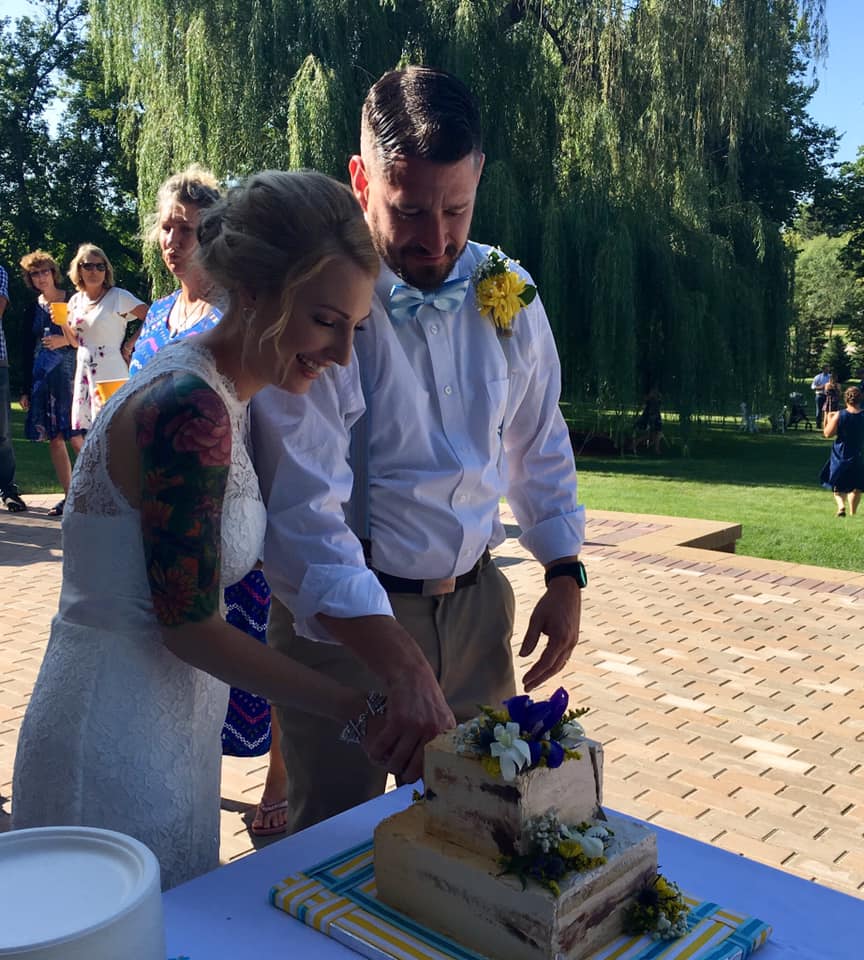
Speaking of which, here’s another photo:

To Sun or Not to Sun

I had worried about how long it would take to get to Kasairinkai Park on the train, but arrived an hour early.  As the train became crowded with day trippers, I could no longer see the station names outside the windows.  Good thing I had counted how many stops I needed to go and got off at the right one.

I scored some krill-flavored nuts at the station convenience store, caught their wireless signal, and sat munching on a bench outside while I Skyped with Keiko, who was en route with the family.

People walked, biked, and scooted by.  It was a hot, sunny day but no one was wearing shorts, sweat pants, tank tops, or flip flops as one would normally see at any western beach.  I saw no cleavage in the month I was in Japan—except on one young western tourist who made up for the whole month.  There were no tattoos.  Tattoos are something only gang members sport.  Anyone with a tattoo must cover it up in order to use a public hot springs bath.

Most people wore sun hats and long-sleeved cotton shirts.  Many women wore black fingerless gloves and carried umbrellas.  Later, Keiko explained that Japanese women are very, very concerned with getting age spots and other sun-damage. This seems sensible, and I’ve even read that Japanese skin does not age as well as other skin types, but I don’t know if that’s true.  You sure see a lot of products, like snail gel, marketed as the “Japanese secret to younger-looking skin.”

Anyway, I was wearing a tank top with a crocheted top over it.  My head and shoulders were bare. Most of my arms and hands were exposed to the sun.  I had on flip flops. I wondered if passers-by were giving me the side eye and thinking I was scantily dressed, but it was too late now.  I’m a sun lover, but of course I was slathered with sun screen to protect my visage and décolletage.

I had brought the gifts I bought in St. Paul, Minnesota-made soap for Keiko’s mom, Hiromi, good chocolate for Fred, and a Minnesota Twins vs. Tyrannosaurus Rex t-shirt for the boys’ cousin, Ichiro.

I couldn’t wait to unload them.  They only added about three pounds of weight to my bag but the longer you travel, the more three feels like ten.

I handed Ichiro’s gift to him while we were at the top of the giant ferris wheel.  He looked flustered, nodded a vague acknowledgement, and held it on his lap.  Had I committed a giant faux pas?

“Go ahead and unwrap it,” I encouraged.  My nephew, Charlie, made a grab for it.  “I’ll do it!” he exclaimed. Charlie would rip the thing open in two seconds.

“No, no, it’s for Ichiro, not you,” I interceded.

The boutique had wrapped it creatively, included tying pipe cleaners in intricate knots to close it all up.

Ichiro couldn’t make headway with the knots, so I nodded to Charlie.  He tore it open and held up the t-shirt to Ichiro, who said quietly, “Thank you.”  Did he hate it?  Had I embarrassed him?  I think he was just shy, especially around a western lady with holes in her shirt.

Next we had a snack.  Here I am eating octopus balls.  No, not their testicles—deep fried bits of octopus.  If I look a deranged, it’s because my nephews were next to me and we were hamming it up, but I’ve edited them out.

We strolled to the beach and the boys threw rocks in the water while we adults talked.  Needless to say there were no women in bikinis, and hardly anyone wearing a swim suit.  I had mine on under my clothes but wouldn’t have dreamed of stripping down.

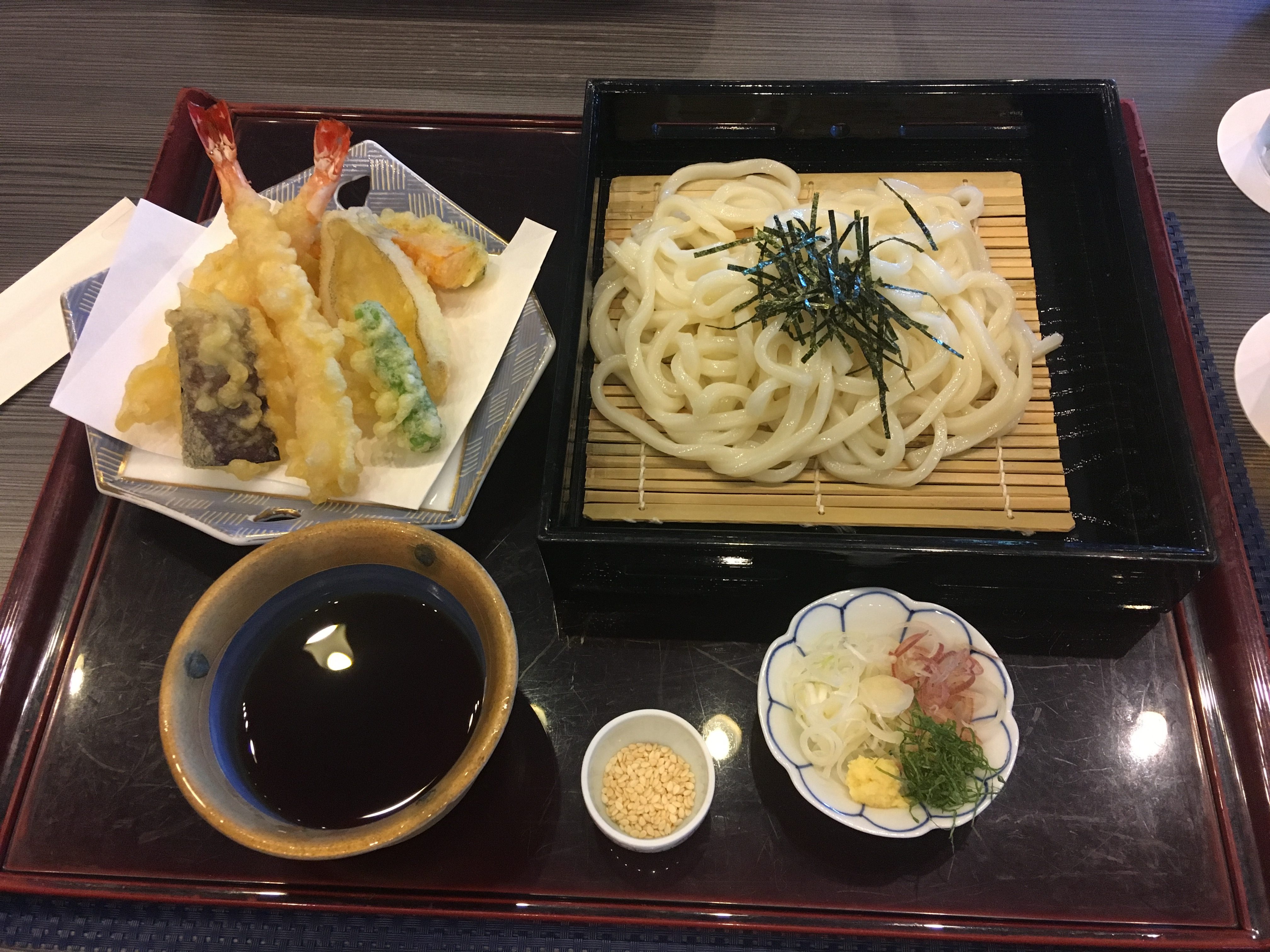
“Let’s have an early dinner at the hotel here,” Fred suggested.  “They have very good Chinese food.”  The dumplings were very good; I also had tempura and cold soba.

I gave Fred and Hiromi their gifts and they seemed to like them.  It had been a nice day, capped off by an auspicious siting of Fuji in the sunset, to the bottom left of the ferris wheel.

Enjoying the TOKYO

I had been traveling and walking in the rain all day.  If only I could sit down and have a cappuccino or a beer, and people watch ….

But there were no coffee shops or bars in the covered mall.  I didn’t want to duck under the restaurant curtains into a restaurant without knowing what awaited inside.  Were they empty at this time of day, or packed?  I didn’t know if it was okay to sit and nurse a cappuccino for an hour, taking up a table that could seat people spending a lot more than me.

I walked back to the hotel, hoping the abrasive landlady would let me into the room early, and she did.  This hotel, the New Tohoku, ranked 5th cheapest out of the eight places I lodged.  It ranked #1 as the most run down.

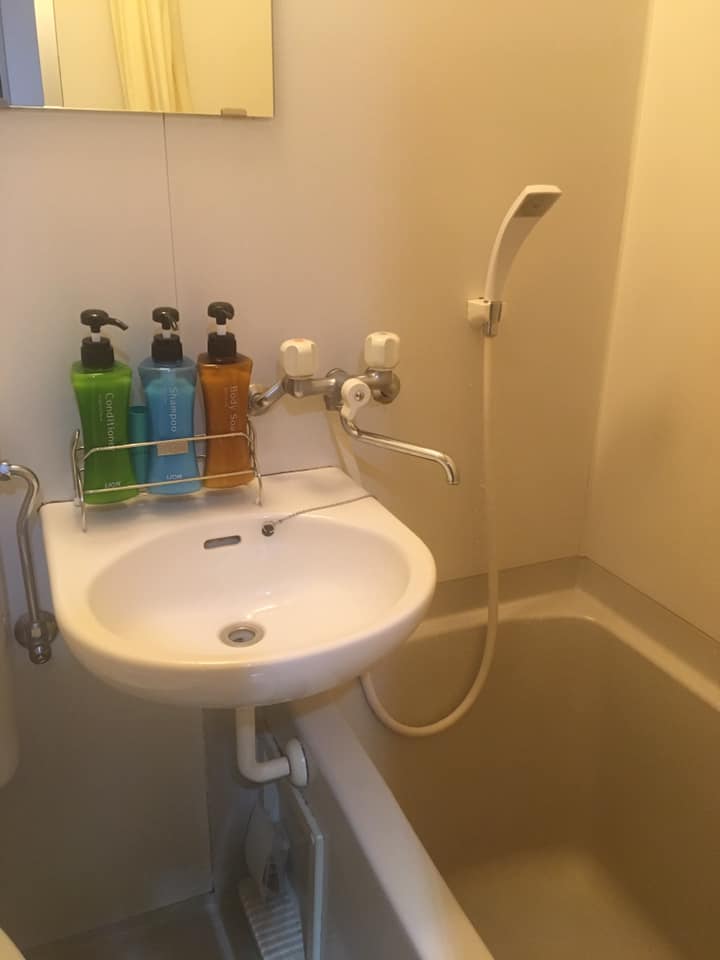
The carpet looked like it had been installed in 1972 and never shampooed.  This was the bathroom; I shared the photo already in my post about Japanese bathrooms.  Yes, you could swivel the sink faucet over the sink to wash your hands, then over to the tub to fill that up.  The tub was stained yellow, and the shower curtain was composed of the flimsy plastic used to make Walmart shopping bags—and spotted with blackish mildew.  Couldn’t they have spent 100 yen to buy a clean shower curtain?  I am halfway tempted to buy one at the Dollar Store and mail it to them.

The good thing about a grotty hotel is that you aren’t tempted to spend a lot of time there.  I changed into dry clothes, drank a couple mugs of green tea to fortify myself and perused the guest book.

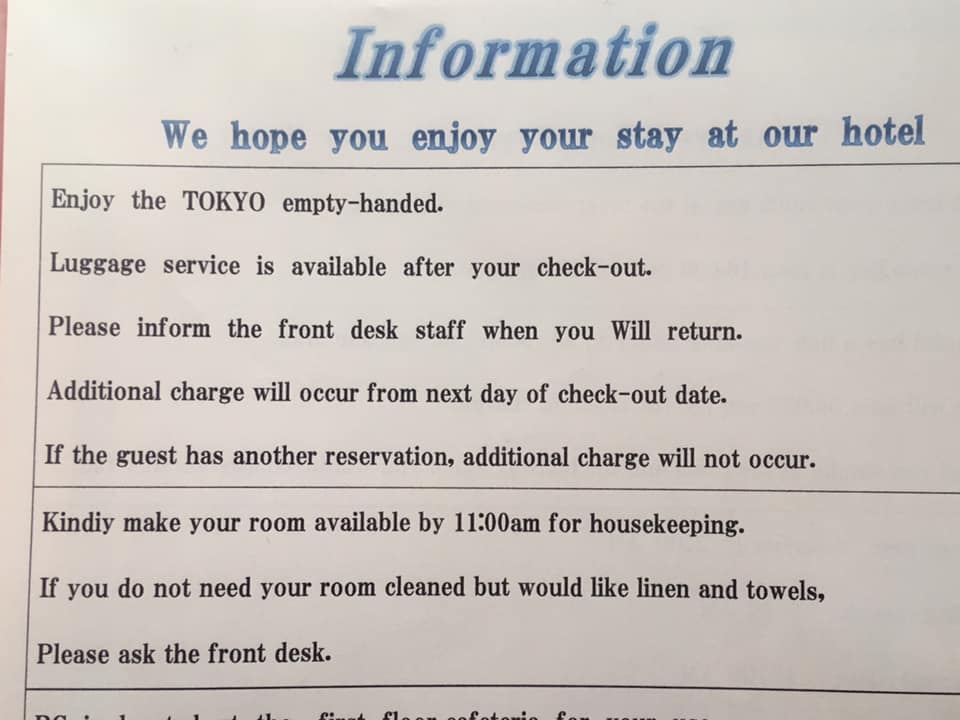
Most of it made absolutely no sense, especially the opening line, “Enjoy the TOKYO empty-handed.”

I headed back out into the rain.

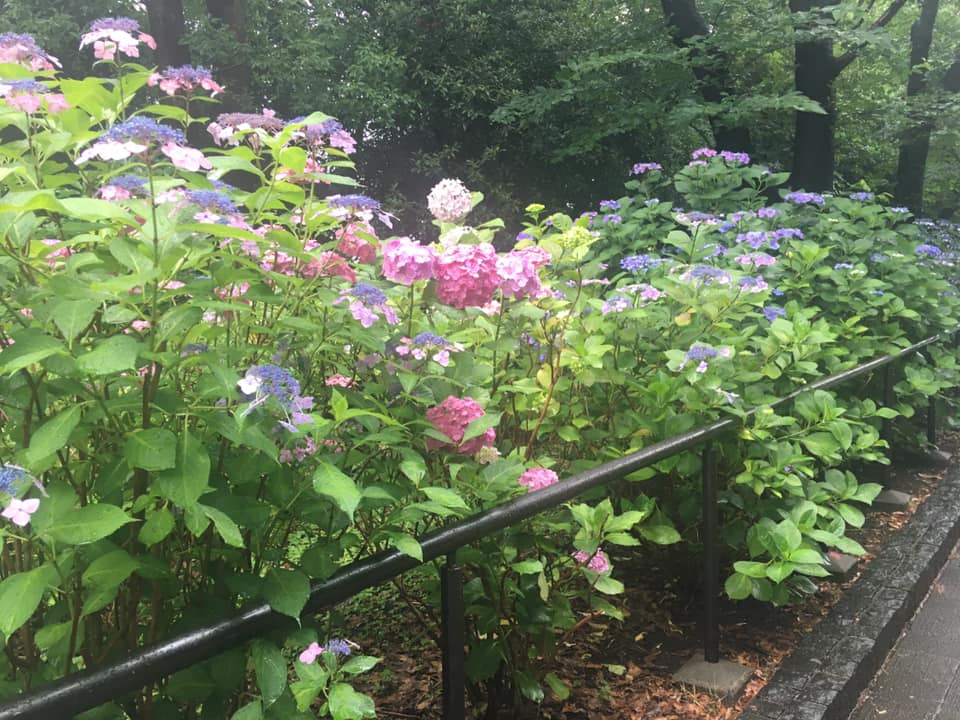
On the other side of the station lay Ueno Park, a vast urban oasis with museums, shrines, restaurants, and gardens.  There was a sparsely-attended festival in progress but it looked like the few attendees were all teenagers so I kept walking.  The hydrangeas were unendingly gorgeous, and the rainy weather made the colors—cobalt blue, violet, lime green—appear all the more saturated.

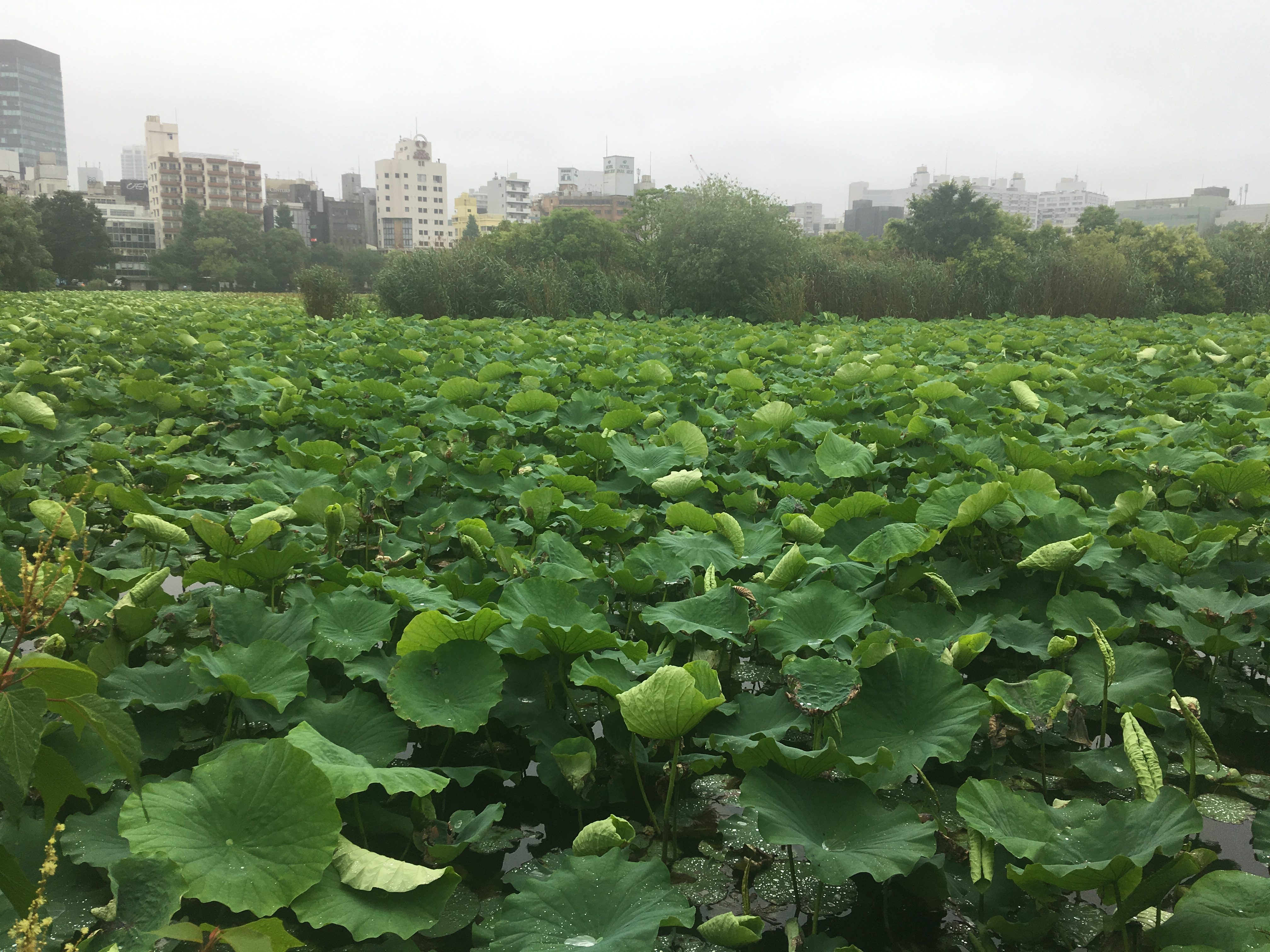
I crossed the park and walked down a hillside toward an enormous water-lily-filled lake.  I wondered if I had missed the water lilies blooming, or if they might be in bloom when I returned to Tokyo in ten days’ time.

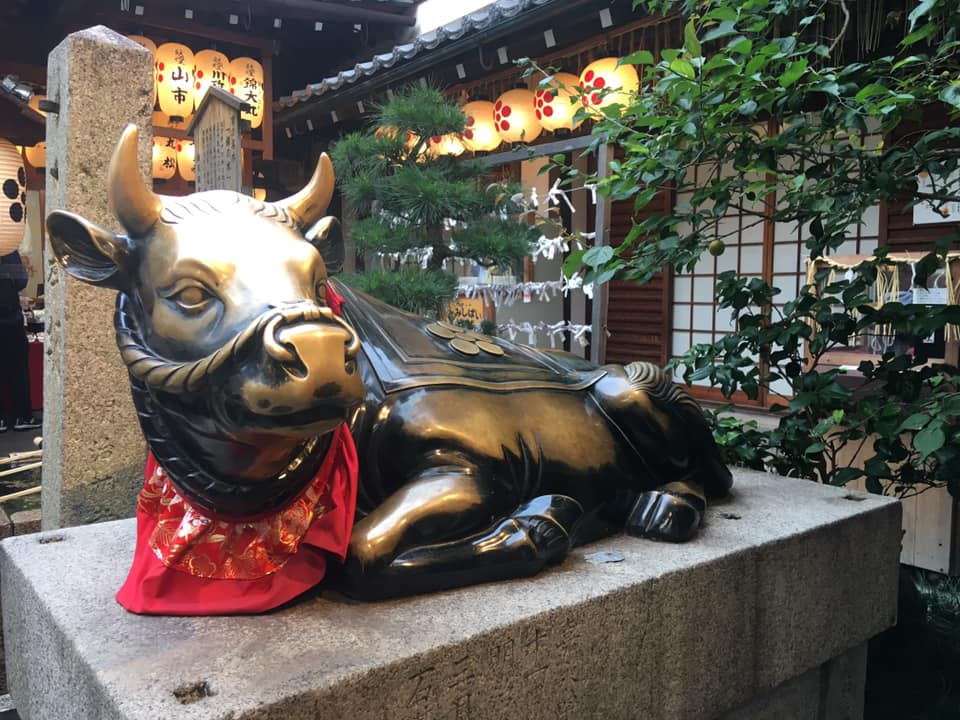
There was a land bridge with food stalls which to my disappointment were all closed, and it led to a shrine.  This bull was at the entrance.

If you look closely you may be able to see the crow on a post and ginger cat sitting below it.  I watched them for some time, wondering if they might start talking—they looked so much like an illustration from a fable.

These were the prayer plaques being sold at the shrine; they looked like sitars.

I bought a couple, putting my money in the offering box.  So there, Mr. Judgmental Buddhist in Nikko! I am not a thief!

I found an open restaurant back in the park and made the mistake of ordering the Chinese special.  I’ve been wondering—I’ve had great Chinese food in London and Minneapolis and elsewhere.  Why not in Japan?  Again, it was a pile of gristly meat on top of white rice and doused with a shiny, gelatinous sauce.

Back at the New Tohoku, I pulled back the 1981-vintage polyester bedspread with trepidation and was relieved to find crisp white sheets.  My RLS was a living hell that night. I gave up any hope of sleep at 4am and fiddled around online and drank instant coffee until the breakfast service began, at 7am.  Brekky was served in a storage room.  Paint cans, pieces of scaffolding, and tarps had been pushed aside and three tables for two squeezed in.  But the food wasn’t bad.

At 8am I was out the door to meet Keiko, her parents, and my nephews at a seaside amusement park.  I usually arrive before anyone else, but today I was a whole hour early.  Keiko had proposed meeting at the west entrance of the train station, but none existed.

Waterbugging

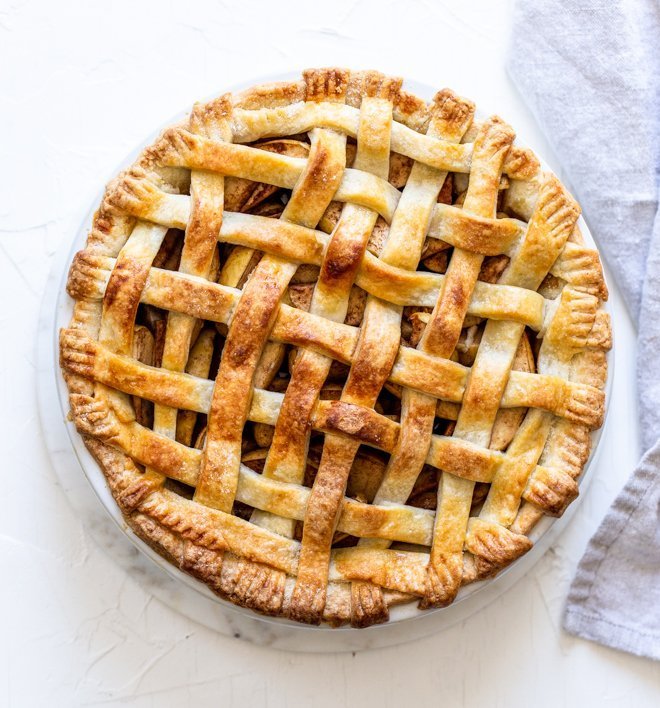
The hotel website’s directions were so detailed and clear.  On the east side of Ueno Station, there was a massive roadway criss-crossed with pedestrian overpasses.  Seen from the air, it probably resembles this lattice-top pie, only a lot messier.

I just had to spot the Joyo Bank building and everything would flow from there.   It was pouring again, so I donned my poncho, furled my umbrella, and with my other hand dragged my suitcase up the 30 steps to the pedestrian level and scanned the horizon for Joyo Bank.

No Joy. No Joyo.

And no one around to ask except the smokers huddled in the smokers’ corral back at the station entrance.  I chose to walk on, hoping I just hadn’t spotted the word “Joyo” yet.

Just when I was about to give up and go back to the station to catch a taxi to my hotel, which really was only five minutes from the station, I ducked under an overpass to shelter for a moment and found a couple students also huddling from the deluge.  They were supposed to be handing out flyers for a hair salon but there were no takers around because in the downpour.

One of them handed me a flyer, looking very doubtful that I was the trendy salon’s intended demographic.

“Do you speak English?” I asked.  One of them did, although it was patchy. I asked if she knew where Joyo Bank was, and showed her the word in English when she didn’t understand.  She nodded vigorously; she and her coworker googled it and pressed the screen toward me to show me an image of a red sun.

I immediately spotted it at the top of a building.  I thanked them profusely and walked on.  Obviously this incident makes the case for having a mobile hot spot.  On the other hand, I got to interact with some delightful young people who were happy to be helpful.

The hotel had provided detailed, excellent directions in English, but it had failed to realize that not everyone knows the Joyo Bank logo.  Or maybe it’s just me.

I rolled into the New Tohoku Hotel and was greeted by another chatty—but brusque—hostess.  “You pay now!” she barked at me as I fumbled with my dripping wet suitcase, umbrella, backpack, and poncho.

I paid. “You leave bag, room ready at 3:00!” she ordered.  There were a half dozen other bedraggled would-be guests hunched together on a couch in the tiny lobby.  I left my bag and walked out for a look around the neighborhood.

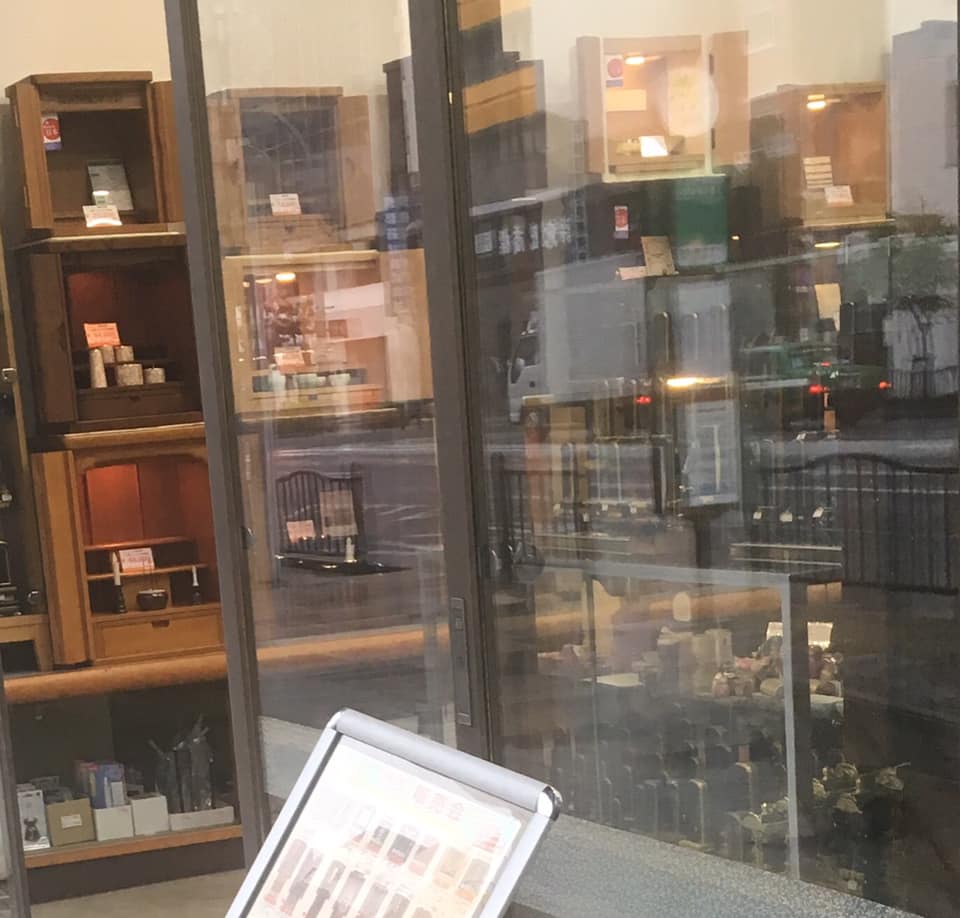
I carefully counted the blocks and memorized landmarks so I would be able to find my way back.  There were several blocks of stores that sold nothing but household shrine supplies.

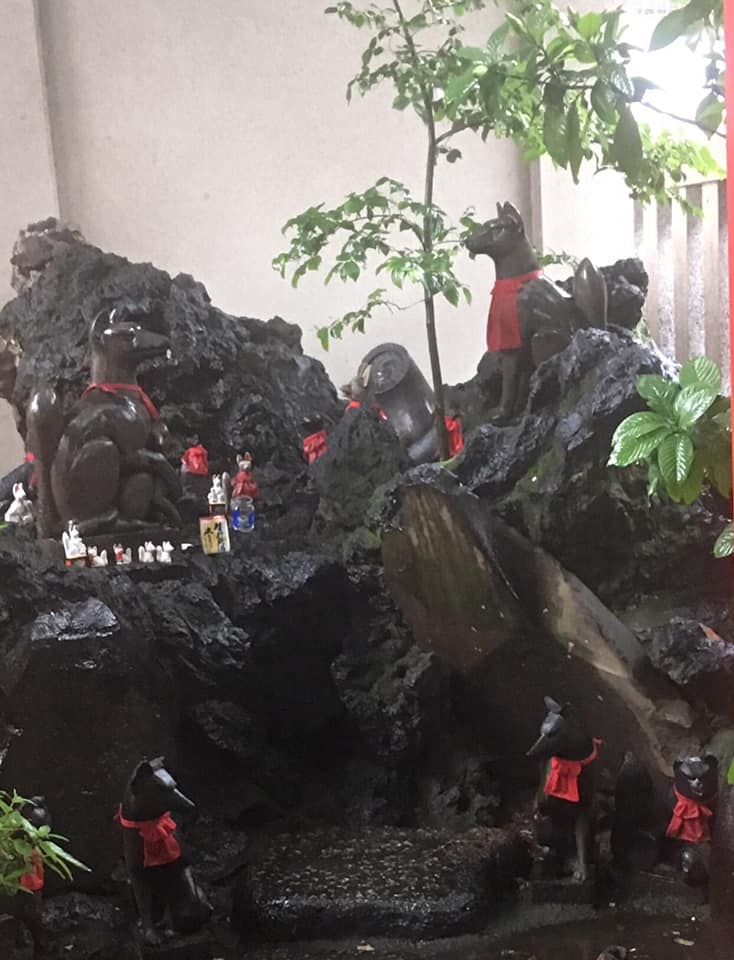
I came upon the tiny dog shrine I wrote about in a previous post.  My sister-in-law wondered if it was actually a shrine to foxes, but there’s no way of telling.

It was now 1:30 and it was still raining, hard.

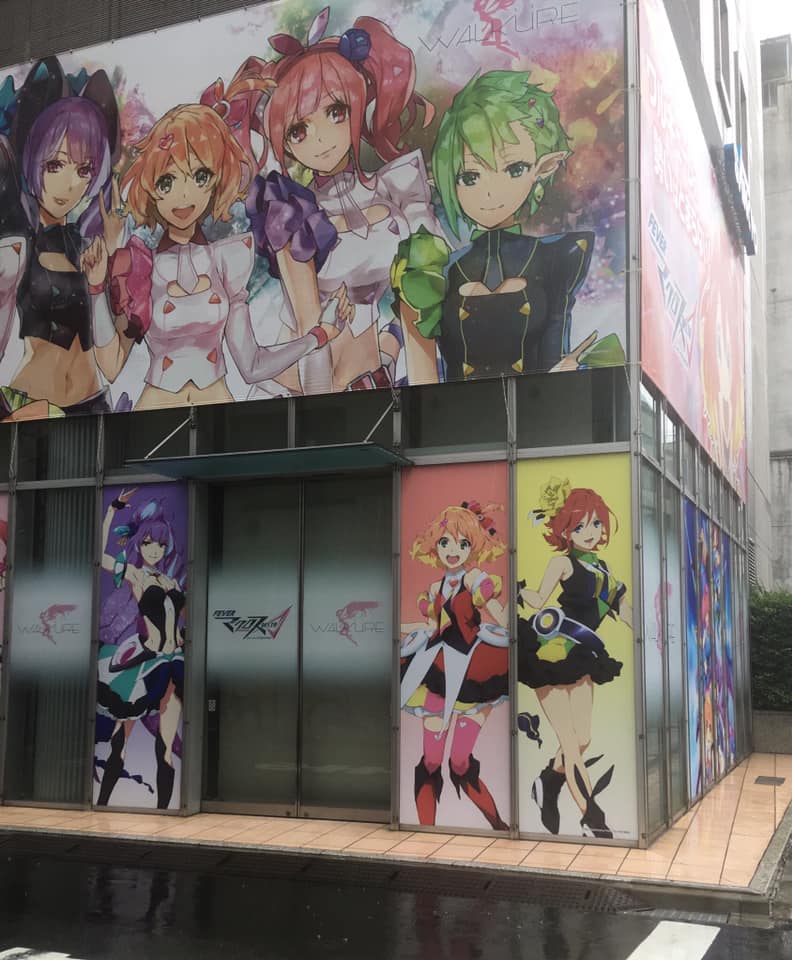
I walked back, passed the hotel, and kept walking.  There was this cool street art; did it indicate what went on inside?

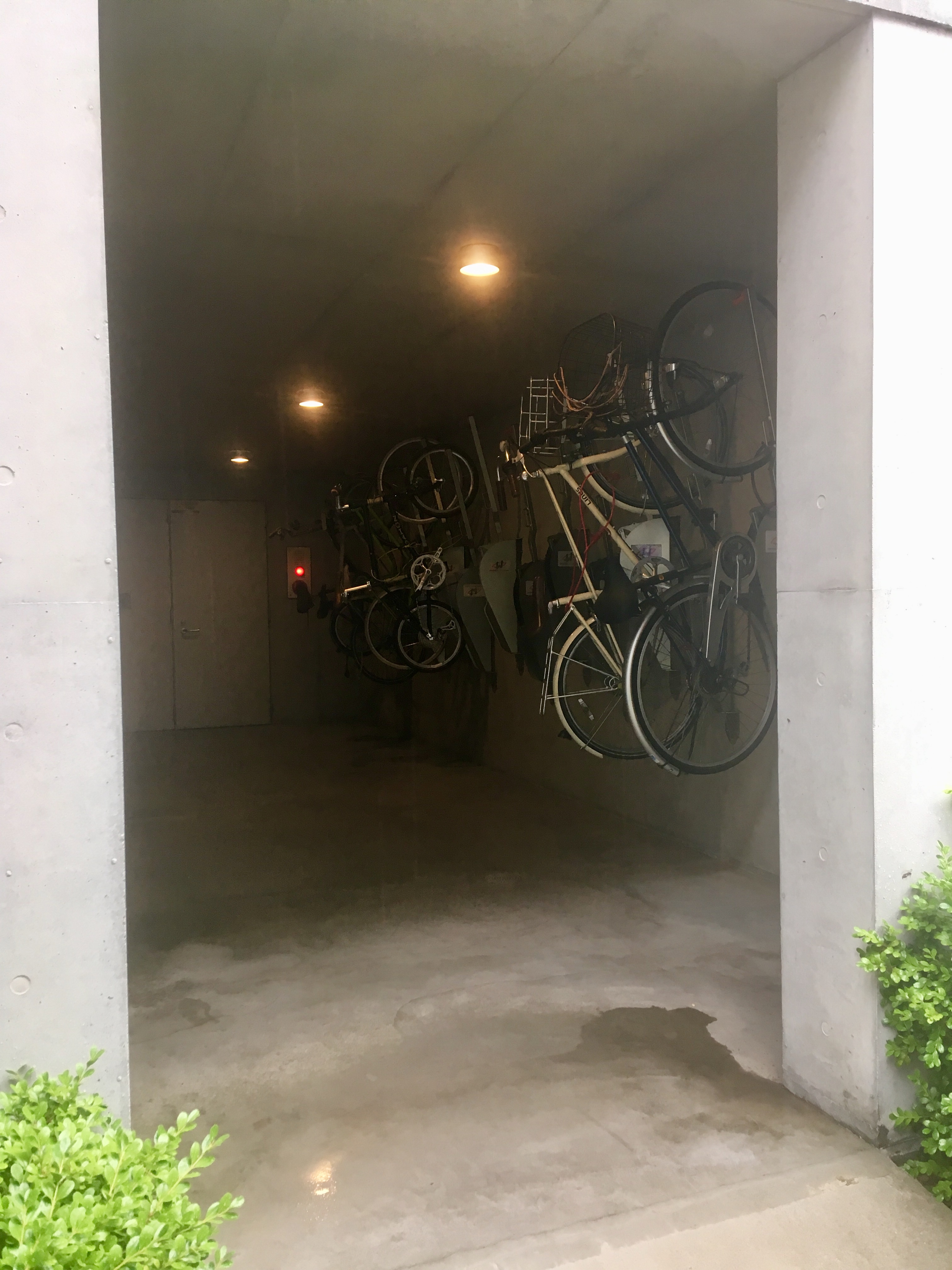
I passed an apartment building bike storage area.  Note it isn’t locked.  There isn’t even a door.

After six or eight blocks I was relieved to find an open-air but covered mall. It was full of veg stalls, restaurants, and posters for mysterious products, like these water bug toys.  Water bug toys!?  I kind of felt like a water bug myself right now.  My sister-in-law would shrug the next day and say, “Yeah, it’s a thing.”

There is crime in Japan, and here’s the “Most Wanted” poster to prove it.

From my limited understanding, most crime is gang against gang as they vie for lucrative prostitution and gambling franchises.

While I’m posting photos of unpleasant things, I will share this one of ugly wires and an ugly building.  Tangles of wire and ugly buildings are everywhere.  It was hard to take a photo of something beautiful without wires getting in the way.  You will never see these wires or unsightly high rises in tourist guides.

Brits in Japan

On the Lake Chuzenji area map I saw there was a former British embassy and a former Italian embassy on the opposite side of the lake.  I had already hiked for an hour and climbed 212 steps.  It looked like the embassies were about a half hour hike.  Should I go?

Of course!

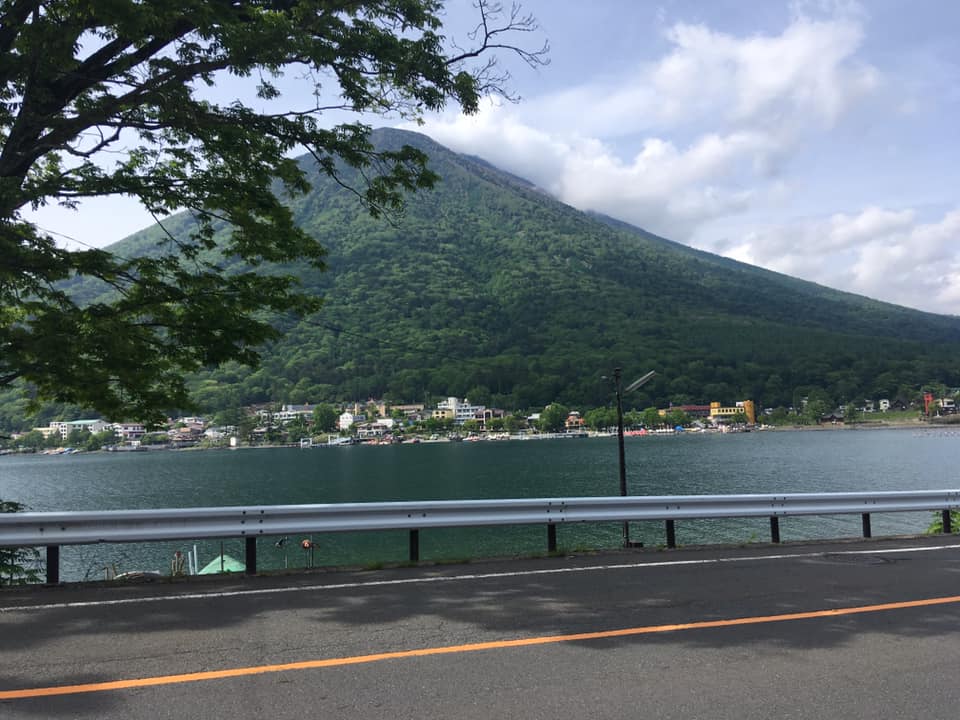
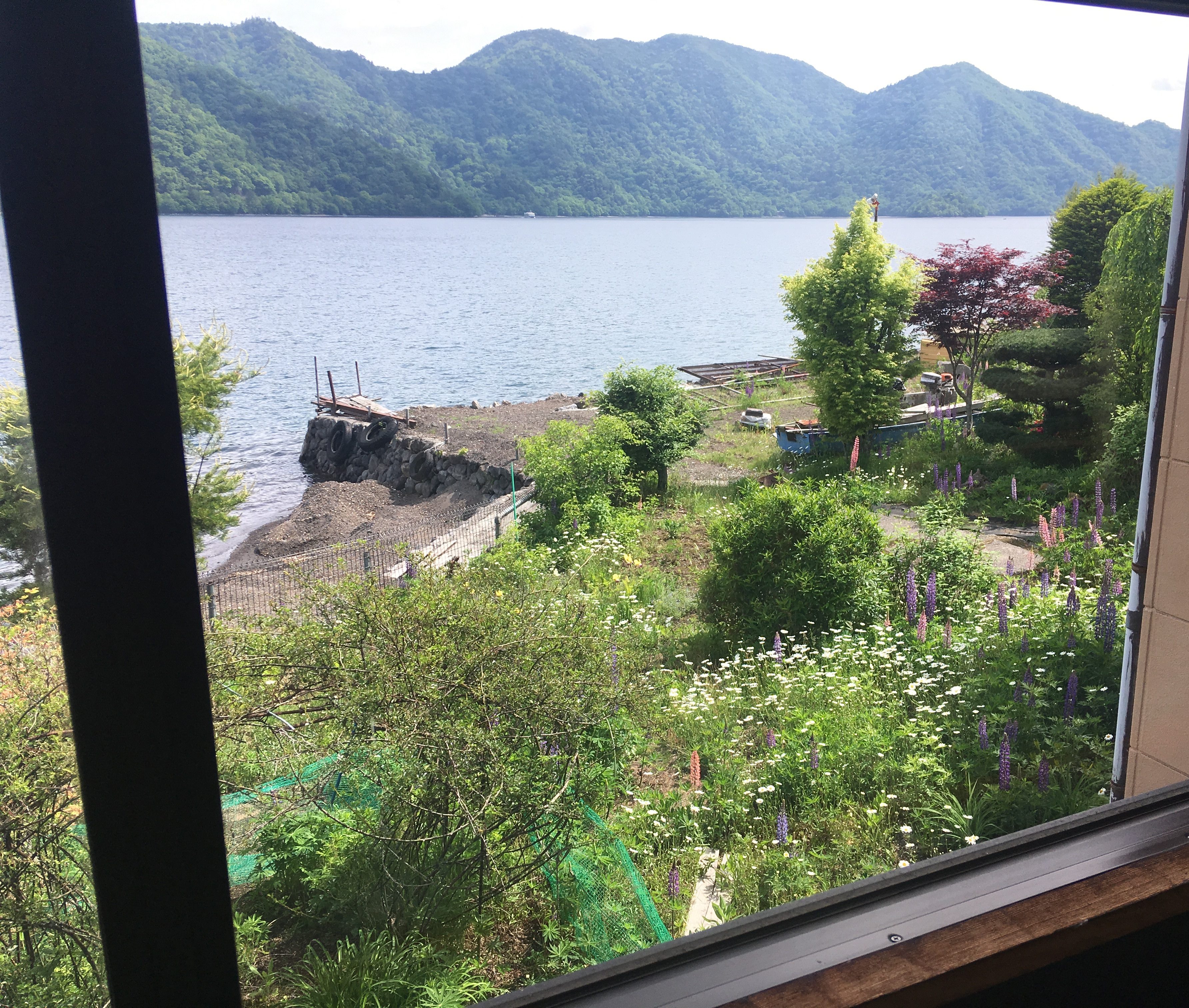
So I did, and I was glad.  This was the view from the other side of the lake.

There was a sign about the 29-kilometer (18-mile) hike you could take around the lake.  Wouldn’t that be cool?  Once in a while I daydream of hiking the Pacific Crest Trail or the Superior Hiking Trail.  Then I remember that my scoliosis makes sleeping on the ground a bad idea.  If there were inns along the route I would consider it—someday.

The former British embassy is now a memorial park.  I paid the trivial entry fee and wandered through.  There was a tearoom offering formal British-style teas but I had had my fill of ramen.

This was the former ambassador’s office.  Not a bad view.

There was a photo display about Ernest Satow, a British diplomat who represented England in Japan at the end of the Edo Period and start of the Meiji Period.  He “went out to Japan,” as the British say, when he was still a teenager.  Edited from Wikipedia:

Satow is better known in Japan than in Britain or the other countries in which he served. He was an exceptional linguist, an energetic traveler, a writer of travel guidebooks, a dictionary compiler, a mountaineer, a keen botanist, and a major collector of Japanese books and manuscripts.

He also served in China, Siam, Uruguay and Morocco, and represented Britain at the Second Hague Peace Conference in 1907. In his retirement he wrote A Guide to Diplomatic Practice, now known as ‘Satow’s Guide to Diplomatic Practice’ – which is widely used today.

Satow was never able, as a diplomat serving in Japan, to marry his Japanese common-law wife, Takeda Kane. They had an unnamed daughter who was born and died in infancy, and two sons, Eitaro and Hisayoshi. Eitaro was diagnosed with TB in 1900, and was advised to go and live in the United States, where he died before his father. His second son, Takeda, became a noted botanist, founder of the Japan Natural History Society and president of the Japan Alpine Club.

What a full and fulfilling life, with quite a burden of sadness, too.

There was this little tribute to QEII and Japanese-British relations.

It made me wonder.  I hadn’t seen any glossy mags with princesses on the covers or heard about scandals by members of the Japanese royal family.  Were they just very low profile and non-scandalous, or did the media not report on them?

I had had enough walking and passed on a visit to the Italian embassy memorial park.  Besides, it was getting late.  I hopped a bus back to the Lake Chuzenji bus station, then caught the bus back into Nikko.  The road down the mountain was one way.  I have taken some vertiginous rides through mountains—in Jamaica, Ethiopia, Belize, Arizona—but this was the scariest ever.

I fell asleep to the sound of rain pattering on my window, and slept through the night with only a few RLS twitches.  Maybe that’s the cure—hike for hours and climb hundreds of steps every day in clean mountain air!

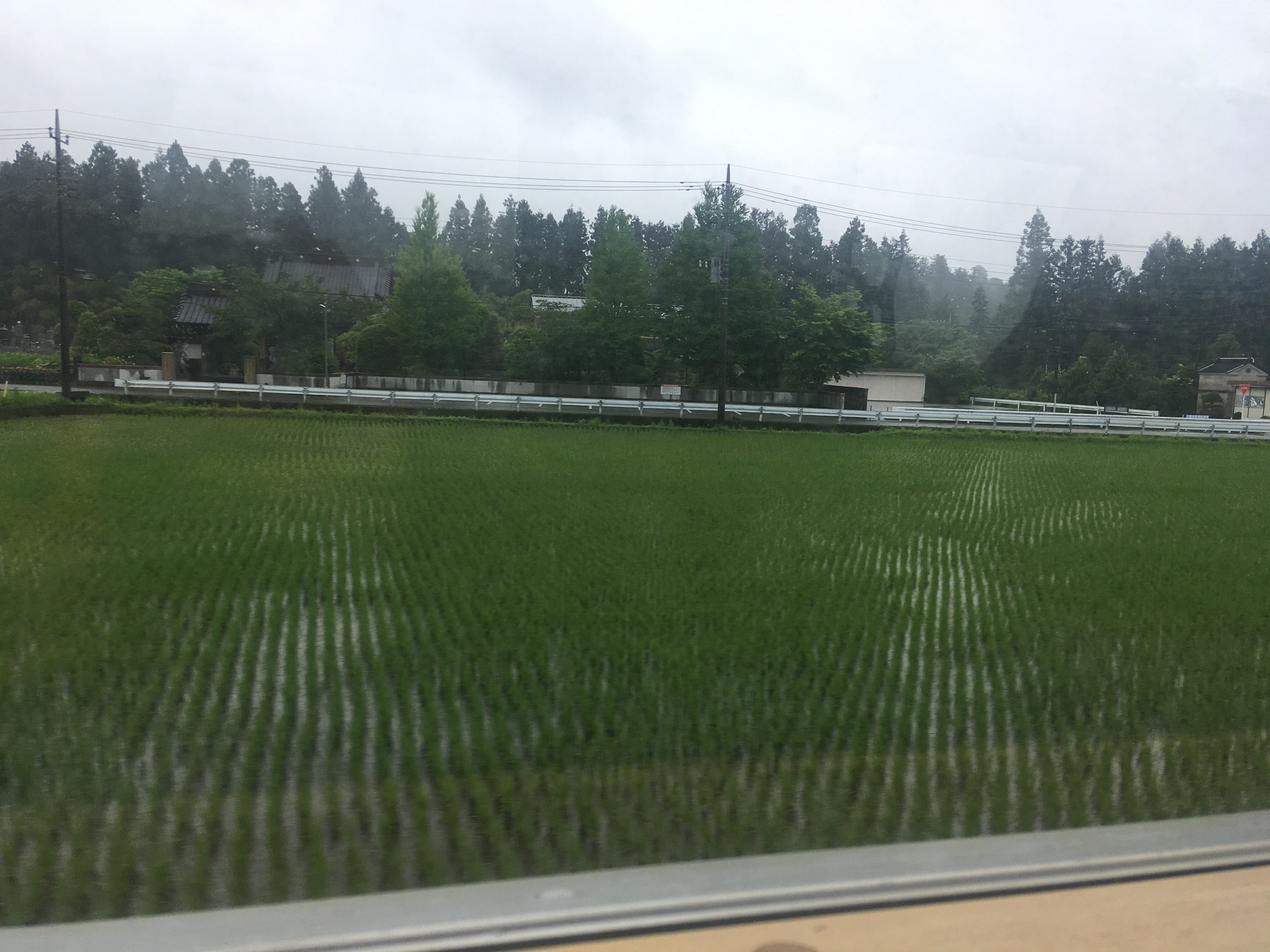
The next day I headed back to Tokyo.  On the train, I again meditated on how most visitors “do” Nikko in one day as I gazed out at the rice paddies.

It was an easy return trip; the local train was beautiful, with wood paneling and classic Japanese paintings adorning the luggage racks.

I bought a to-go bento box in Utsonimiya.  It was beautifully wrapped but not good food.  Still, I ate it as I watched the usual assortment of train officials walk up and down the aisles wearing their caps and white gloves and badges, bowing to us passengers at the end of each car before walking through to the next.

At Ueno Station, all I had to do now was follow the easy directions printed off from my next hotel’s website.

Chuzenjiko

The next morning I sat down to another breakfast of Texas toast, fruit, and soft-boiled egg.  But then the hostess approached me and said gingerly, “This is not your breakfast.  You did not pay for it.”

“Oops!” I said.  “I thought I pre-paid for all three mornings?” But I had not, and with some relief (because I don’t really like soft-boiled eggs or Texas toast) I got up from the untouched meal which was meant for another guest and happily ate a Cup-o-Noodles before leaving on my day trip.

Lake Chuzenji is about a half hour from Nikko via steep winding mountain roads.  The bus stop was easy to find, and the bus fare system was brilliant.  I haven’t seen anything like it elsewhere. You take a ticket with a number on it when you board.  Then, a screen at the front tells you how much you’ll owe when you alight, refreshing at each stop.  Some guides had made it sound like it would be possible to walk to the lake, but that would have taken a couple hours, all uphill, with almost no space between passing vehicles and a sheer drop on one side or cliffs on the other.  The ride cost about $10.

At the station, signs pointed to Kegon Waterfall, so I dutifully walked over to have a look.

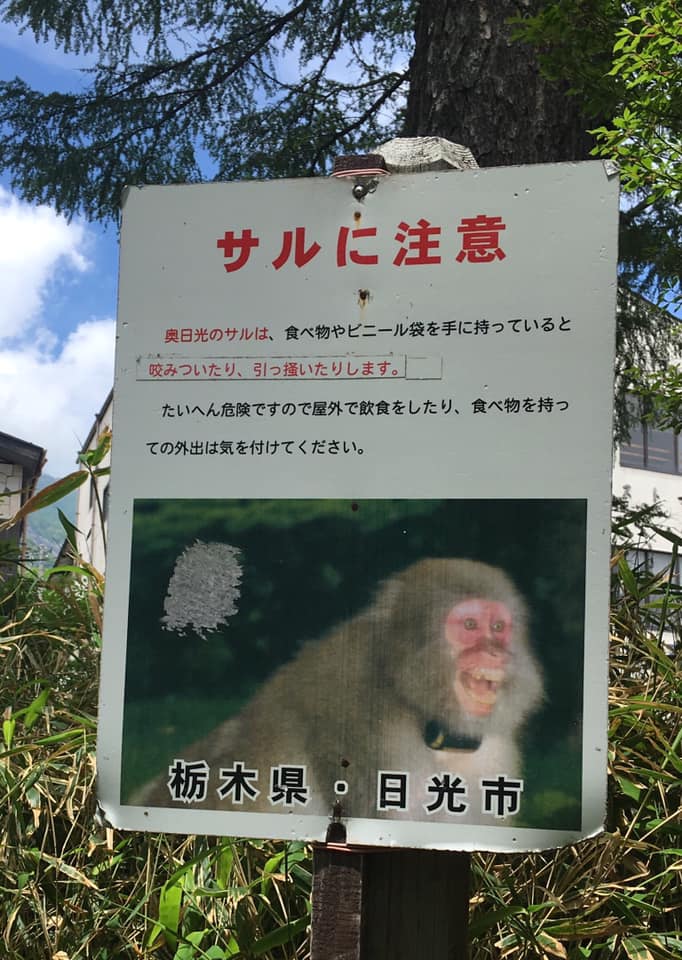
I searched for a way to get to the lake, but there were no signs except these:

Thankfully I never saw any attack monkeys.

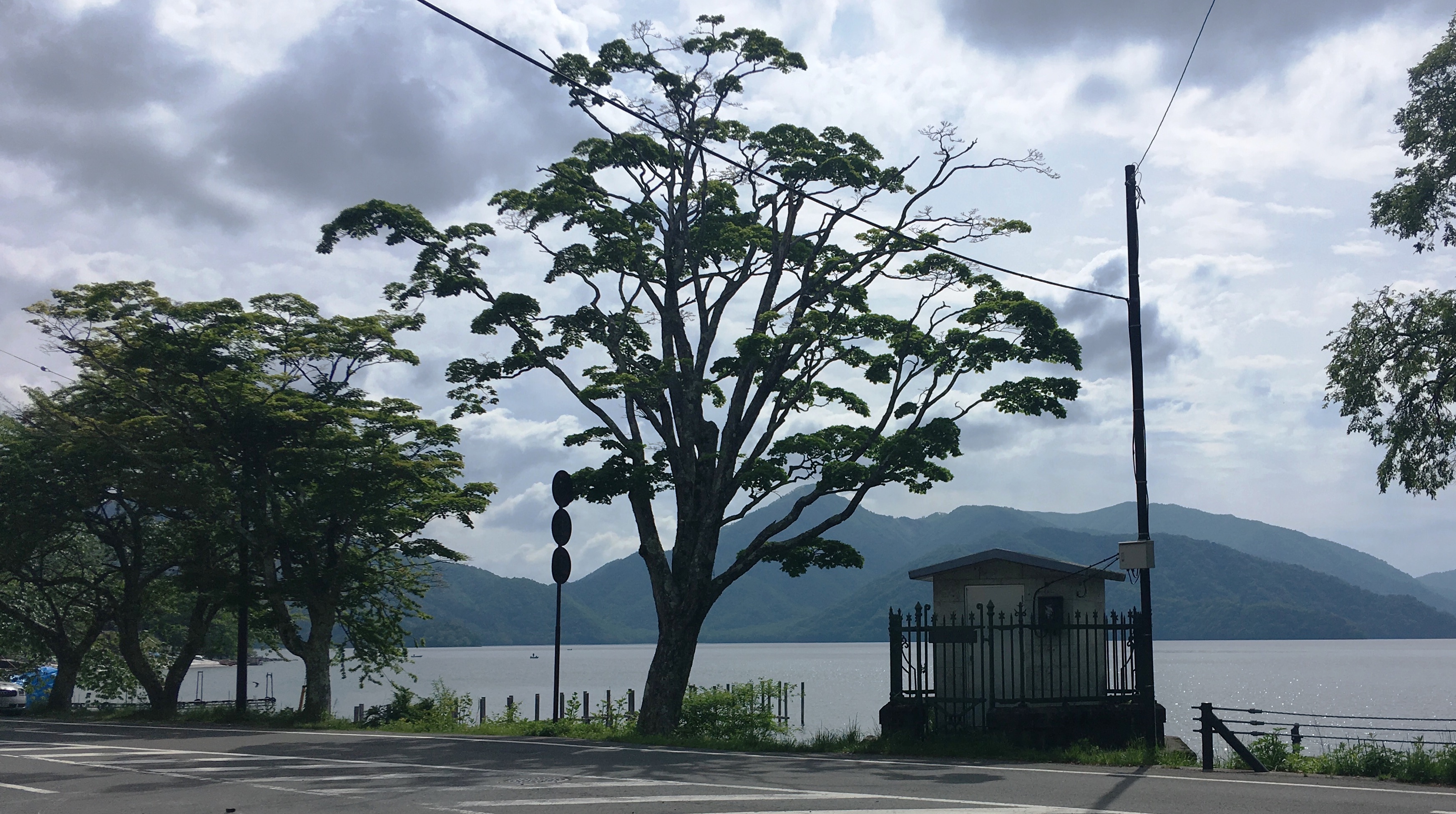
I walked this way for 10 minutes, then that way, then another.  I finally returned to the station and consulted a map.  The lake was in the fourth direction I hadn’t yet tried, and it was an easy five minute, downhill stroll.  This is the lake.  It is spectacular.

“This reminds me of Wolfgangsee,” I thought.  Lake Wolfgang is in the Austrian Alps, where I had visited two years earlier. There was even Lupin about; probably the climate and soil in the two places are similar.

I guess it is human nature to compare things to other things, but I tried to put thoughts of comparison out of my mind and enjoy where I was right then.

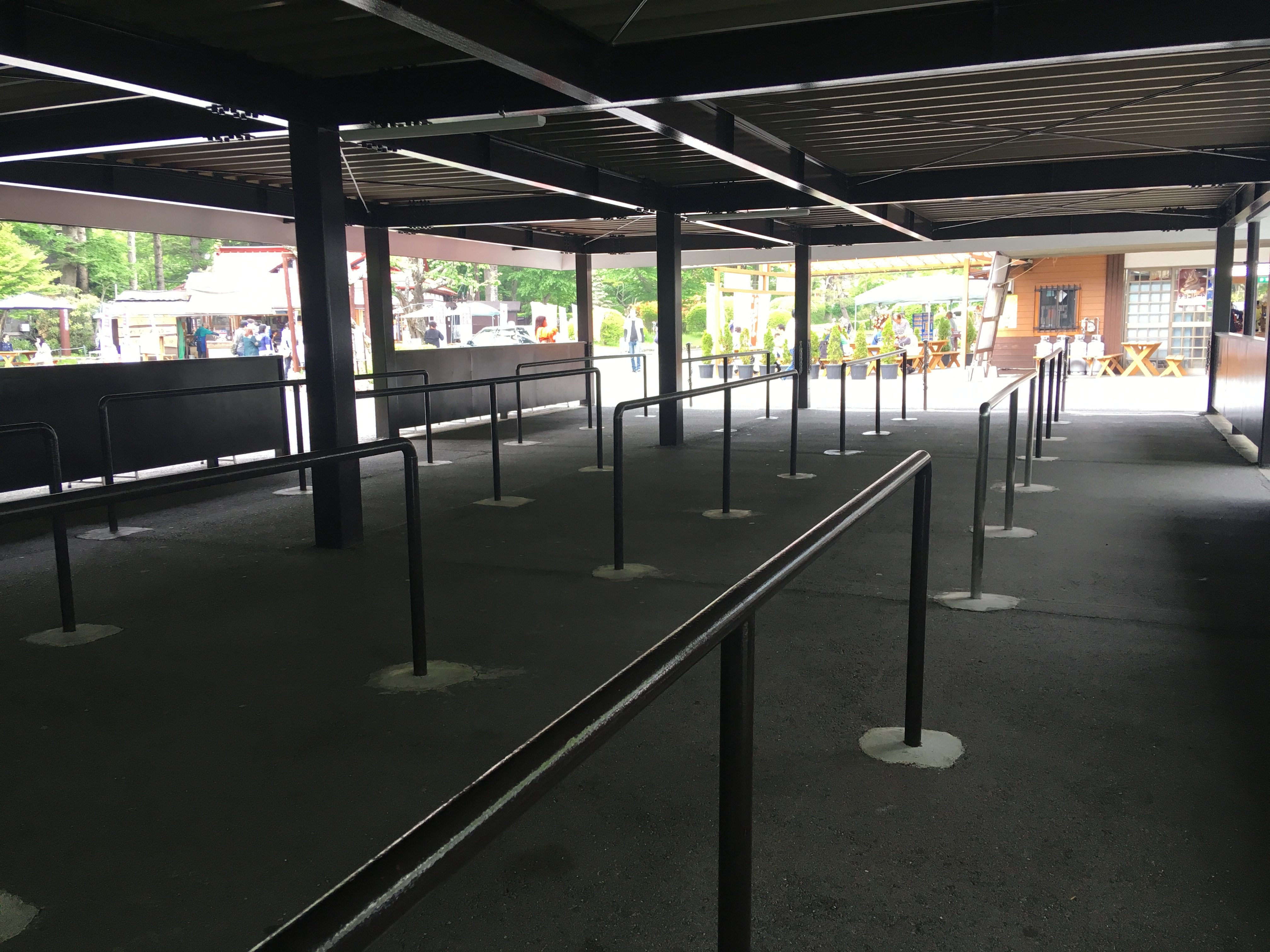
Lake Chuzenji is a resort area, deserted on the day I was there.  Number one travel tip: research when the school holidays are in your destination country, and avoid those times.  Unless you like heaving crowds, long lines, and paying double for everything. This was the empty shelter where crowds would queue for boat rides during the high season.

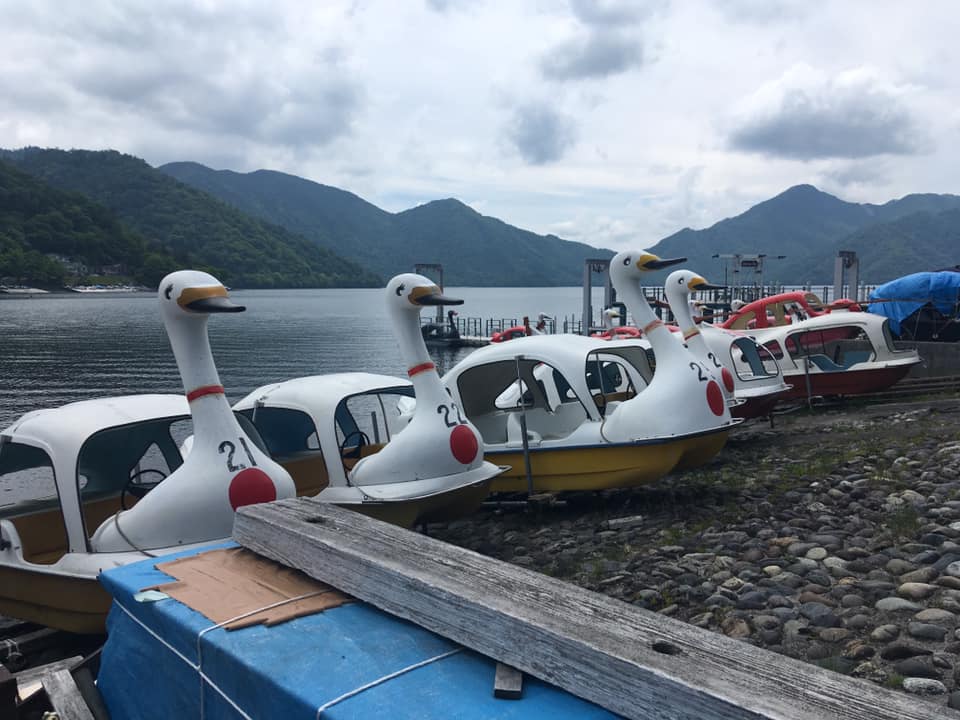
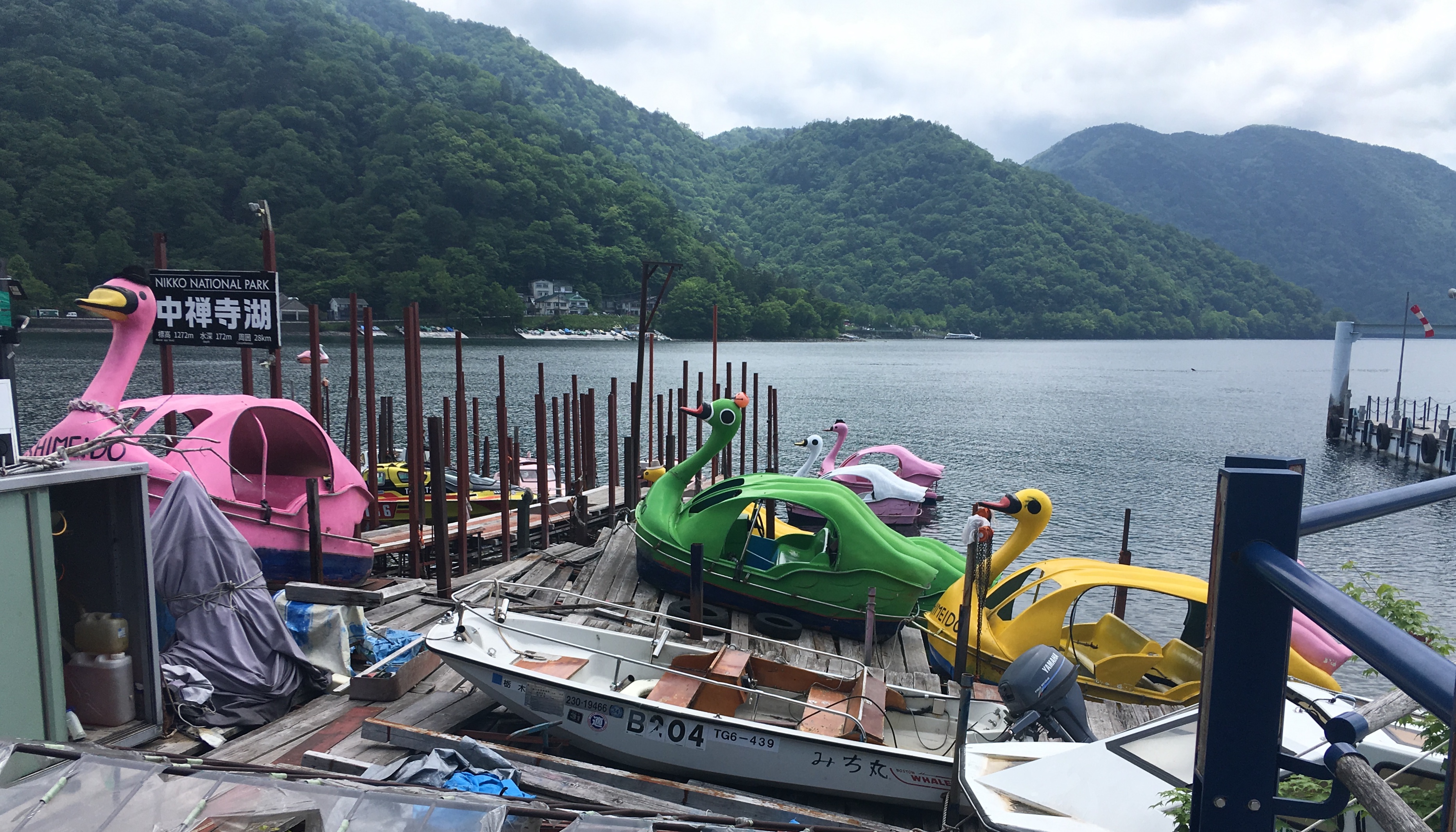
The duck boats were very picturesque.

I was hungry and wanted to buy trout on a stick but the vendor had no change for my 5000 yen note.  I settled for a hot potato croquette filled with yuba, which was super tasty.

I walked along the edge of the lake for half an hour and “discovered” a Shinto shrine which turned out to be one of three called Futarasan in the Nikko area.  There were piles of little clay plates which visitors had smashed in a ravine. There was nothing about it in English. I didn’t smash any so I may have missed my big chance at …something.

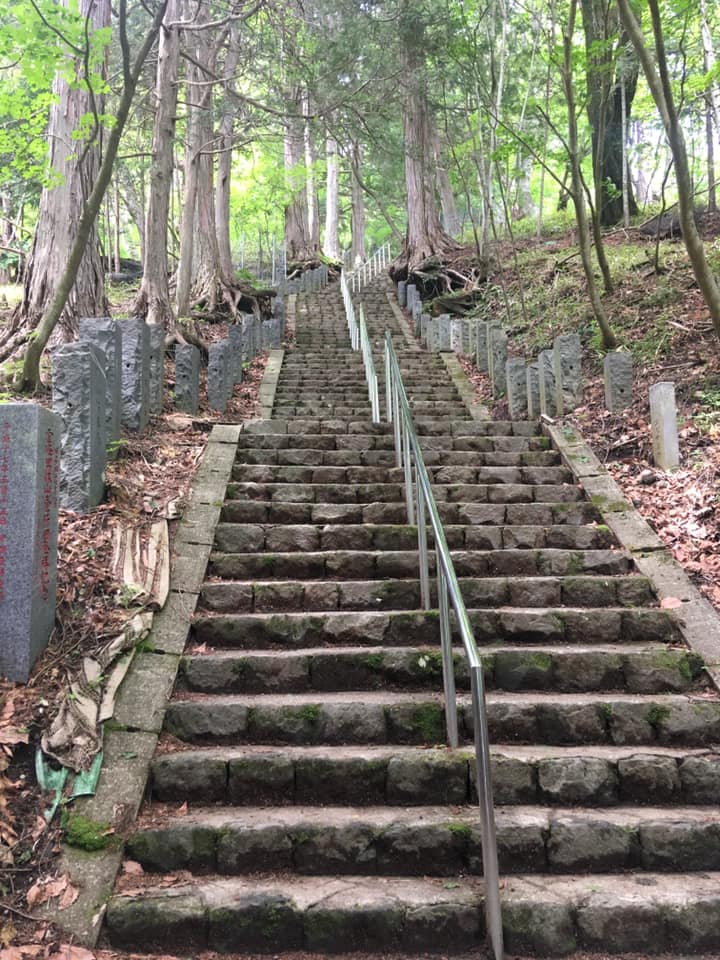
It was 212 steps to the shrine.

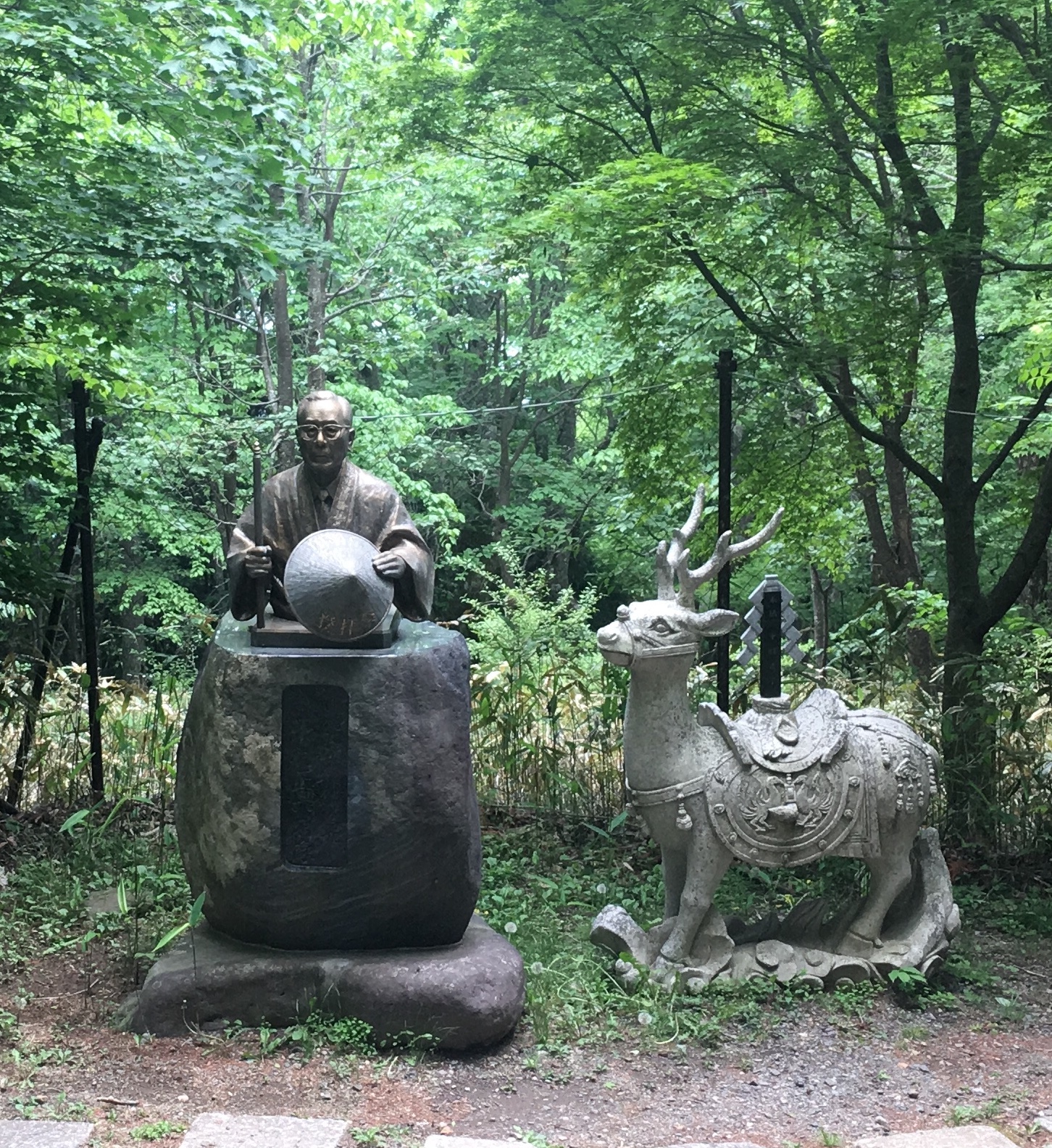
I spent a quiet half hour with this guy and his deer (?) at the top.  I don’t know who he was.

This was the simple shrine nearby.

I sat on a bench; there were no other visitors.  Butterflies fluttered by and birds whistled up a storm.  I found myself resisting urges to “do” something—eat a snack, write some notes, keep climbing.  After 20 minutes I walked back down, where I noticed this lovely lion.

Here’s the view back toward the mountain where the shrine sat.

This was parked in the lot.  I would love to rent one.

I was hungry again—can’t imagine why—so I was happy to spy restaurant curtains through the glass doors of a little mall.

The place had Japanese and western style tables.

It was just me and a group of Japanese ladies who lunch.  This was my view.

I had a big bowl of ramen and a beer.  What a beautiful day, and it wasn’t over yet.

Sights and Rites

It had been a full day in Nikko.  After wolfing down a late lunch of ramen I walked back toward the inn and just noticed little sights that aren’t in any tourist guide.

Was this a public art installation, or just a manhole access point?

In addition to the public gardens all over Japan, there were many individuals who kept stunning gardens I caught glimpses of them here and there.

Even front doorways were miniature botanical compositions.

These were growing wild. If I tried to grow them on purpose I bet they wouldn’t take.

There were tiny shrines, too.  This one was dedicated to local laborers, I think.

I followed a sign into the woods and found a memorial dedicated to electrical plant workers.  It was too dark in the woods to take a photo, and it was not very exciting.

I didn’t know whether to think this sign, “Buddist Only,” (sic) was rude or within their rights.  How would they know if someone wasn’t buddhist, anyway?  Some tourist must have done something really obnoxious for them to have posted this.

There were signs around Nikko about a Frenchwoman who had disappeared in the area some months ago.  I learned later that she had epilepsy.  I wondered if she had wandered into some of the dark deserted places I’d been, and had a seizure.  I was glad I hadn’t stumbled upon her body at the memorial to electrical plant workers.

I had dinner in a Chinese restaurant that had come highly recommended by the hostess at the Turtle Inn.  Japan is like anywhere else.  It has its native foods and then a zillion restaurants featuring other nations’ fare that is enjoyed by the natives.  The Japanese seem to like Chinese, Korean, Italian, and French food.  In fact according to my sister-in-law, many Japanese like to fly over to Korea for weekends to eat “tasty Korean food.”

I have only tried Korean food a few times, and I was not a fan.  Maybe it’s just me, but it seems like every time I order Chinese, it consists of gristly meat sprinkled with a few anemic vegetables and smothered in a gooey sauce.  A lot of people are obsessed with Chinese dumplings.  I also just don’t think they’re very exciting. And they usually contain pork, which I don’t eat.

I walked to where the restaurant was supposed to be, and noticed—not for the first time—how hard it was to tell know if a building was a restaurant.  The place appeared shut.  There were curtains over the door, which I had seen in Japanese restaurants in the US.


It was impossible to see what was behind them without crouching down on my knees or creepily staring through them, so I walked in and—it was indeed a restaurant.  I ordered a chicken dish which seemed to contain every part of the chicken except meat—raw skin, yellow fat, white tendons, maybe a sphincter—all ground up together.  Maybe this was a delicacy to some people.  I picked at it, then smiled and bowed and paid and left.  I had not come to Japan to eat Chinese food, so next time I would not feel obligated to follow the recommendation.

Back at the inn, I spent some hours catching up on work and personal business and sat in the onsen twice.  My Restless Legs was now off the charts; maybe soaking in hot water would help?  Nope.  It was as if the RLS demons had caught up with me and were tormenting me for trying to flee.

But hey, I can sleep when I’m dead.  I wasn’t going to let stupefying exhaustion stop me from getting out there.

The next morning I would go to Lake Chuzenji by bus—a trip within a trip within a trip.

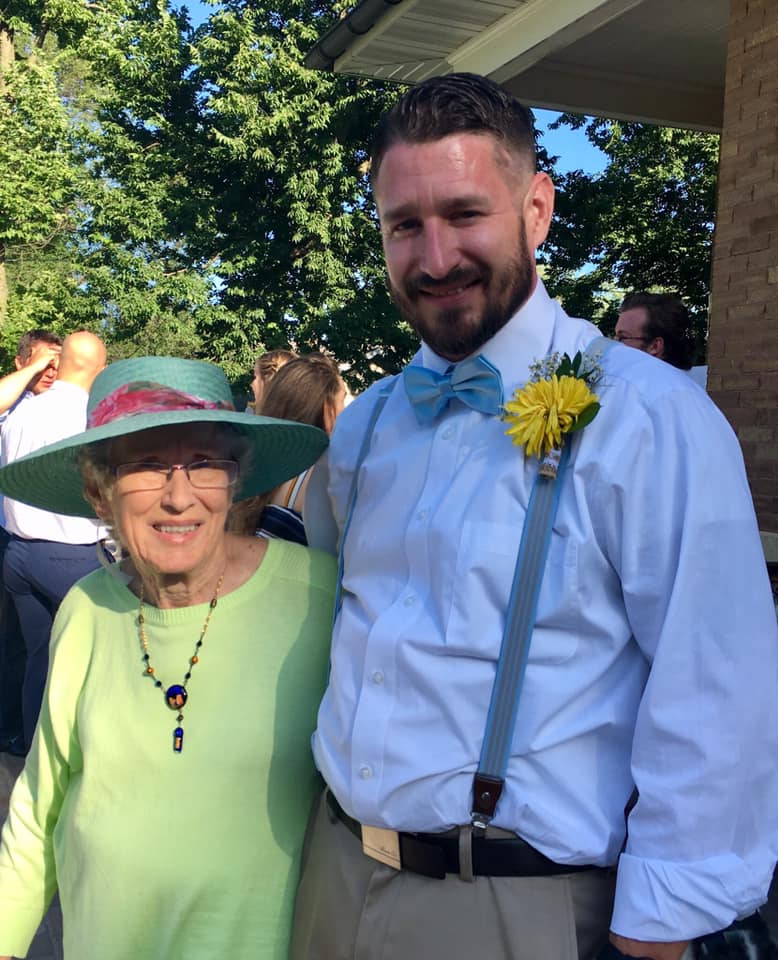
My son got married on Sunday!  There was a stunning venue, perfect weather, and a beautiful couple.  The officiant had his power invested in him by Ho Chunk Casino. There was a memorial to Vince’s friend who died a few weeks ago.  I walked Vince down the aisle then said quietly, “That could have been you.”

“I know,” he replied.

In the Hall of the Weeping Dragon

Your reward for hiking hundreds of steps at Toshogu Shrine is complex of about six gilded buildings.  Every guide says to look for the “famous sleeping cat and sparrows” carved above a doorway.  All you have to do is look for the crowd of tourists blocking a doorway and snapping photos and selfies.

They weren’t very thrilling.  There are varying accounts of what they represent, mostly to do with the fact that the cat isn’t eating the sparrows, which means peace has arrived.

Another highly-hyped feature of the shrine was the hall of the weeping dragon.  No photos were allowed.  Throngs of tourists were let into the shrine like blobs of toothpaste being squeezed out of a tube.  A guide talked in rapid-fire Japanese and gesticulated around the hall to each group, regardless of what language they spoke or could comprehend.  I tagged on to a group of Asian Americans, probably Filipino Americans.  One guy was wearing a Chicago Bears sweatshirt and kept rolling his eyes at me and snickering at the circus.

The guide pointed up at an enormous dragon painted on the ceiling.  He did something I couldn’t see with some kind of musical instrument, then gestured for silence by putting a finger to his mouth.  He cupped his ear to indicate we should listen.  I didn’t hear anything but some people apparently did hear a crying noise.

Here, like in every shrine, there were little wooden plaques on which you could write a supplication to the gods.  Or take home as a souvenir.  These ones were really cool dragon drawings.  They were more expensive than any I’d seen so far—around $10 a piece compared with the usual $2-5.  I picked out two from the boxes packed with hundreds of them and threw my money in the offering box.

Upon exiting I discovered there was a cashier just outside, and I stopped there to ask for a bag.  The cashier put the plaques into a bag, then said, “That will be twenty thousand yen.”

“I already paid for them,” I replied.

Confusion ensued as I tried to explain where I had paid for the plaques.  I probably should have known that I couldn’t just throw 20,000 yen in an offering box and say I was done.  But I didn’t know.  There had been no signs indicating where to pay.  The cashier obviously believed my story, but she had to check with her manager.

He was a tall, severe-looking man who looked down at me and shook his head slowly.  I assumed he was expressing his disapproval of a stupid foreigner’s inability to understand procedures.

“So I’m good?” I asked naively.

“No, I’m sorry,” the cashier said as she withdrew the bag in her hand from my reach.  “He say no.”

I was shocked.  I felt like I was being accused of being a thief.  No, not a thief—if I’d wanted to steal them it would have been easy to slip them inside my backpack.  But I had walked up to the cashier and requested a bag.

So I was being accused of being a liar, I guess, or an idiot.

“Well I guess I just made a nice donation to the temple!” That was all I could come up with as I walked off, steaming mad.

I hope karma gets that Buddhist jerk, and good!

I trod the stone steps back down to the entrance, mad as a hornet.  I really wanted those particular plaques, dammit.  Then I laughed at myself.  Buddhism is all about renunciation of worldly things, right?  It would be in the spirit of things to let this go.

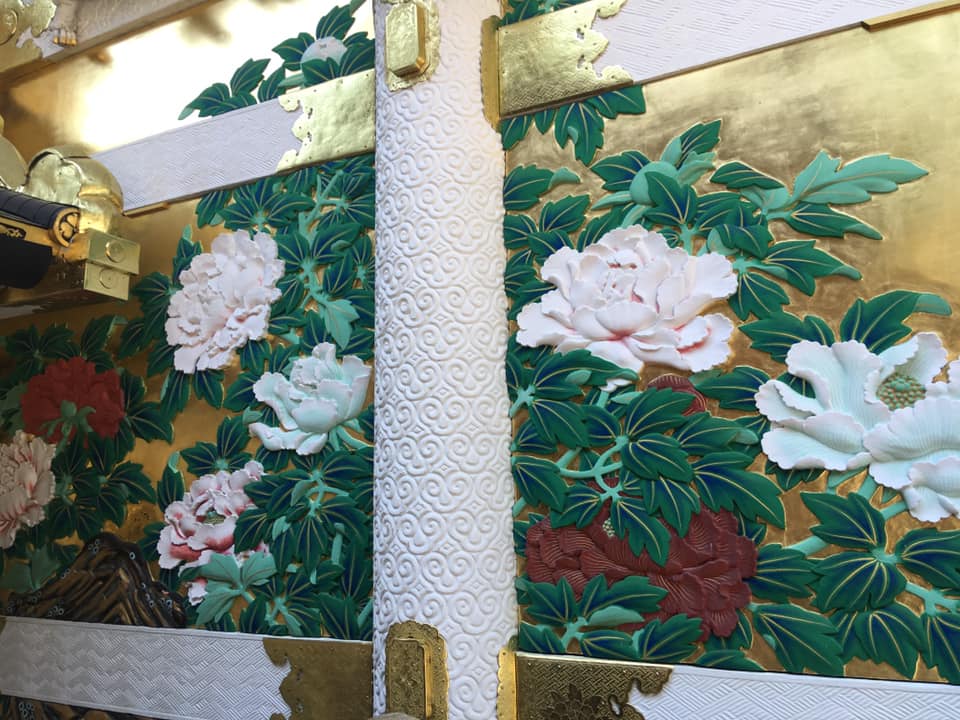
I stopped at the torii again to try to find giraffes or whatever animal had been interpreted as such, but could not.  I did learn that the peony is the King of Flowers.

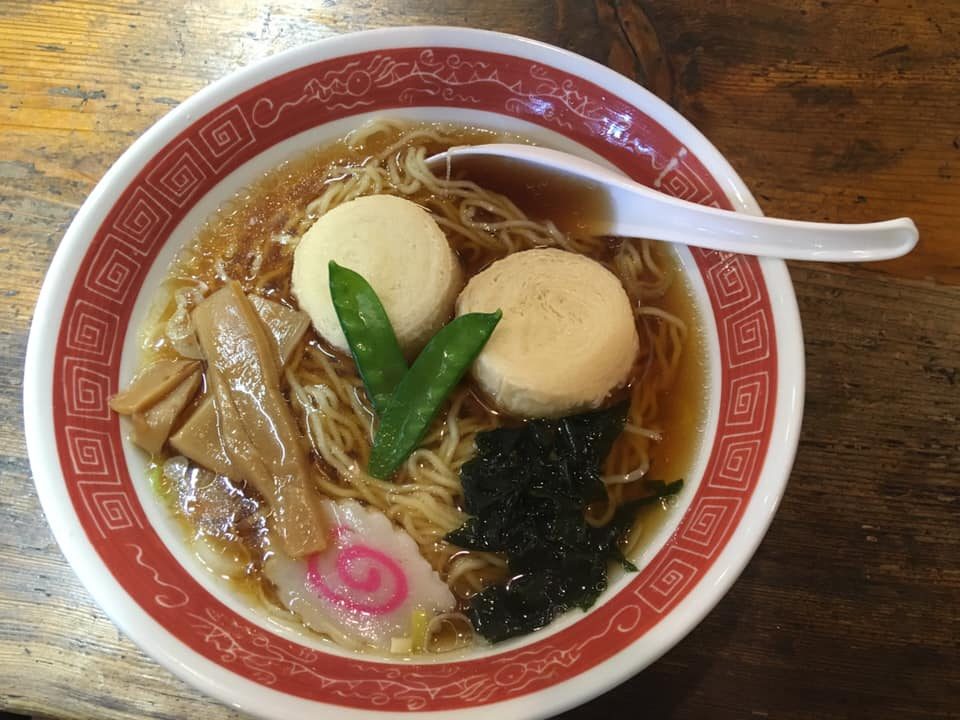
I was tired from physical and emotional exertion, so I walked along Nikko’s main street in search of Yuba ramen.  Yuba—the local specialty tofu.

I may have already posted this photo but the ramen was so delicious and comforting it’s worth posting again.

Then I sat outside and drank a craft beer, toasting the shrine sales manager in my head.

Villa-fied

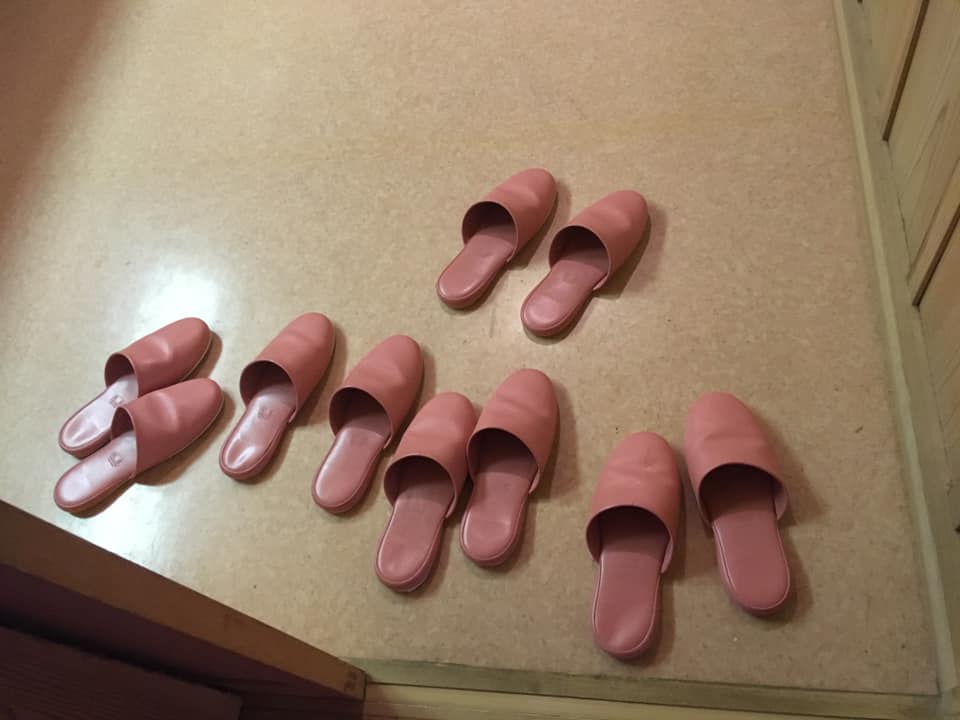
In contrast to the ornate shogun tombs, the Imperial Villa in Nikko was Spartan.  I removed my shoes at the entrance, donned the slippers provided, and paid the Y510 admission fee—about $4.75.

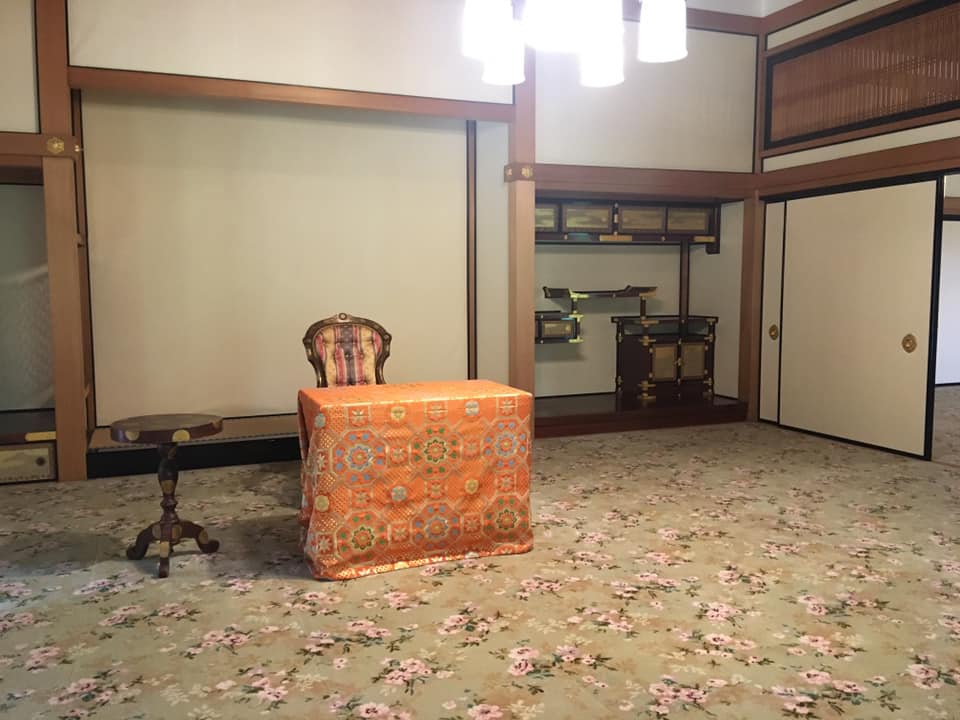
This was the emperor’s office.  There weren’t a lot of visitors, and there wasn’t a lot of oohing and ahhing going on around me.

There was a video at the beginning.  I got the idea after five minutes but I couldn’t skip the rest of it because an elderly lady kept looking over at me with a smile as if to say, “You, foreigner!  Isn’t this impressive?”  I smiled and made sure I got well ahead of them once we started walking through.

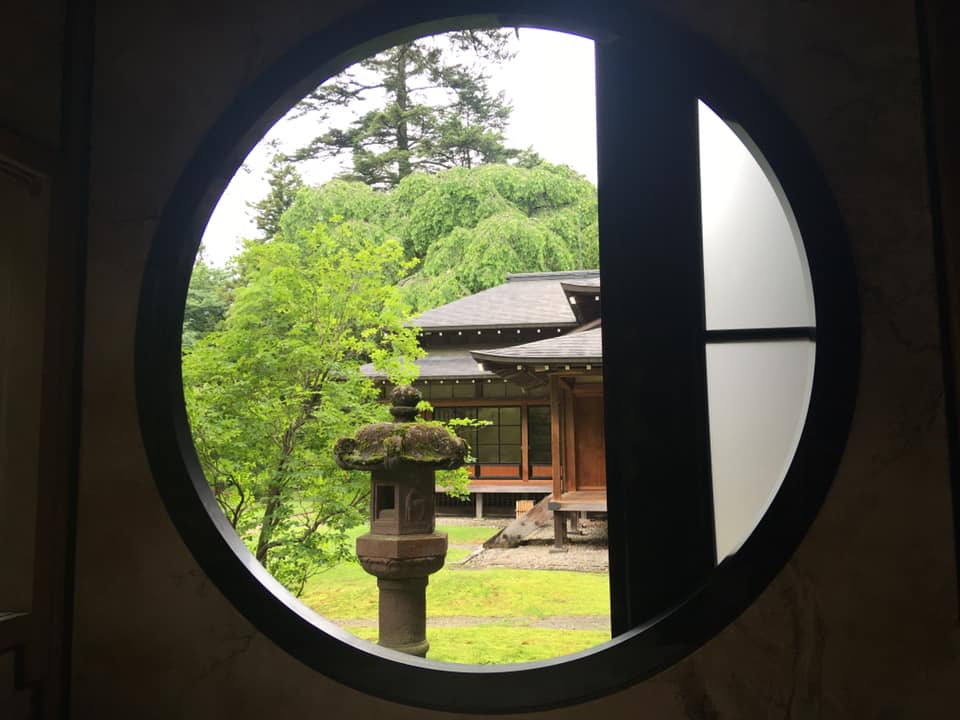
There were some lovely embellishments, like this window built to frame a 300-year-old weeping cherry tree.  In America we would have chopped down the tree to make way for construction.

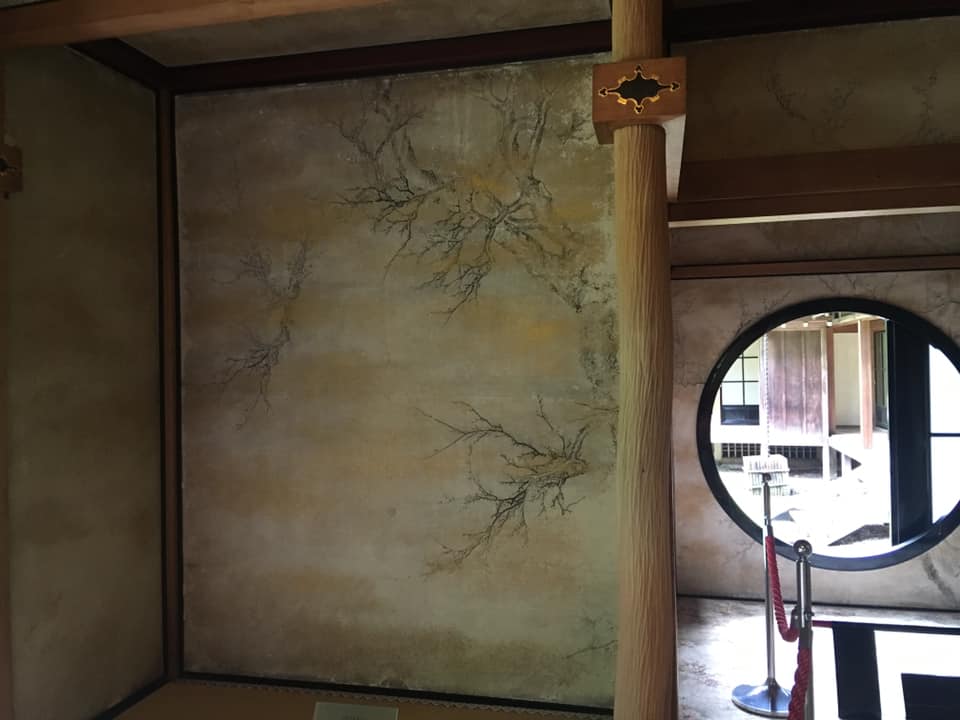
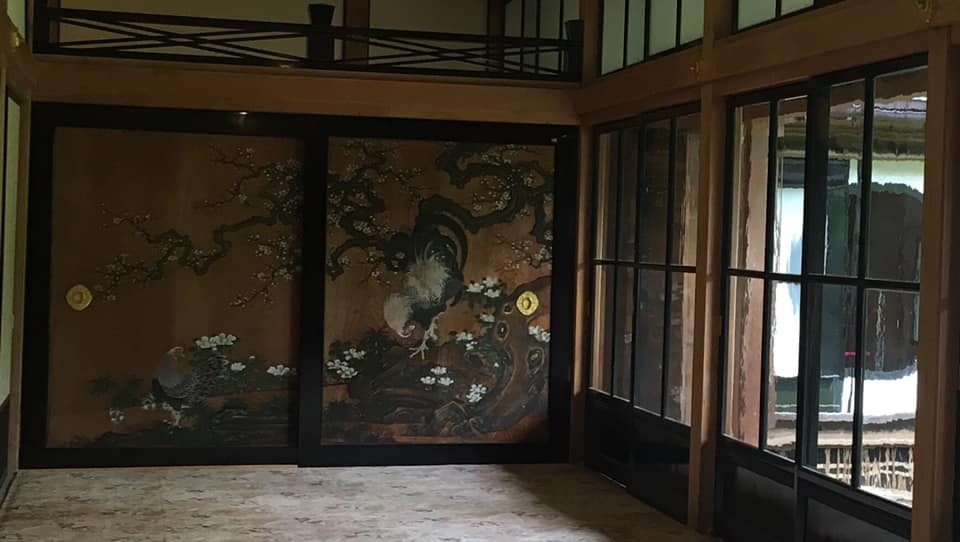
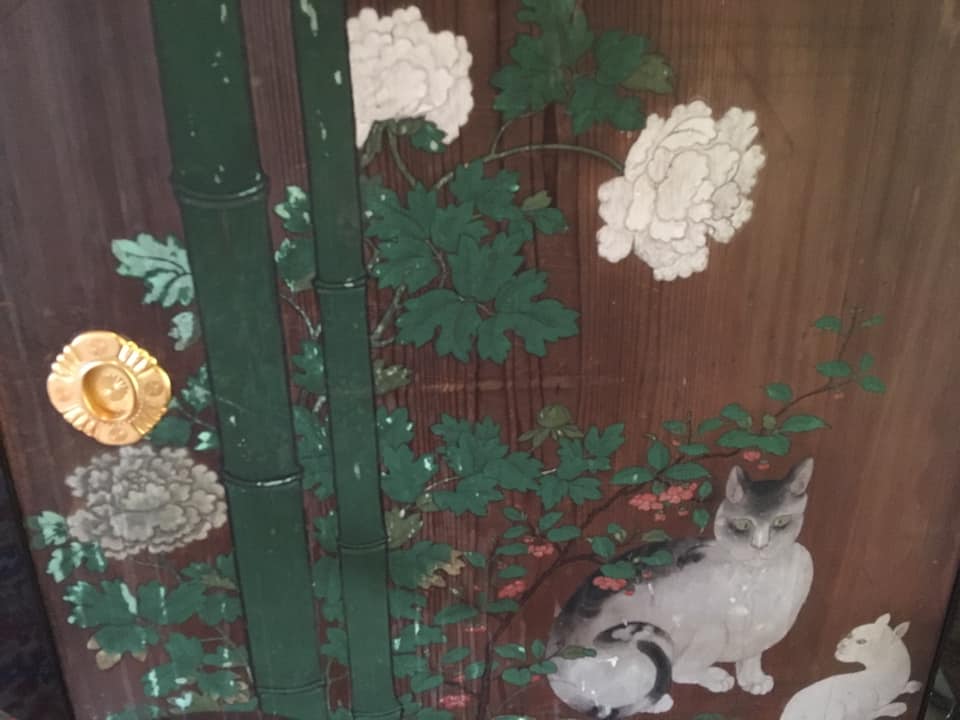
A few painted panels were all the art there was.

I went to make a pit stop and stopped short.  Bathroom slippers. Keiko had mentioned these.  There was no one around.  Should I just say “screw it,” and walk in with my regular slippers?  I decided to behave as I would if people were around, out of respect.

There was a clearly-defined path through the building marked with ropes.  Was I going to have to look at all 106 rooms, most of which were empty and contained no art?  I was relieved when after about 30 rooms I reached the exit.

The villa was used mostly by the current emperor’s grandfather, if I’ve got it right. If you have nothing better to do sometime, watch the old US military propaganda film, “Know Your Enemy: Japan.”  It’s on Netflix.  I watched it before I left and if even half of it is true, the Japanese were every bit as vicious as the Germans in WWII.

Like the Germans, they believed they were a master race, and even had a blueprint to take over the world, akin to Mein Kampf, called The Tanaka Plan.

According to this film—which is obviously biased—the Japanese believe their emperor is a God—literally.  If they died in the service to the emperor, they would go straight to heaven—thus the ferociousness of their fighting and willingness to commit suicide via kamikaze attacks.

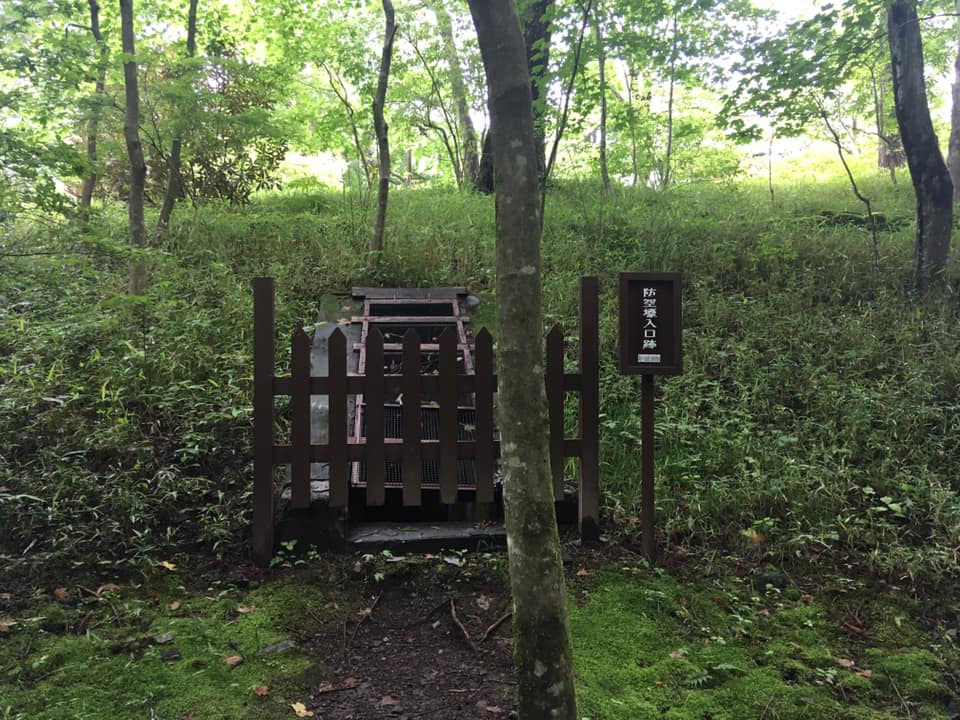
Here’s what I don’t get.  If the emperor really was a God, why couldn’t he have stayed in Tokyo? Surely, God could survive bombing attacks, and protect his people from them, too.  Why did he come to Nikko and hide out in this villa, complete with bomb shelters in the woods?

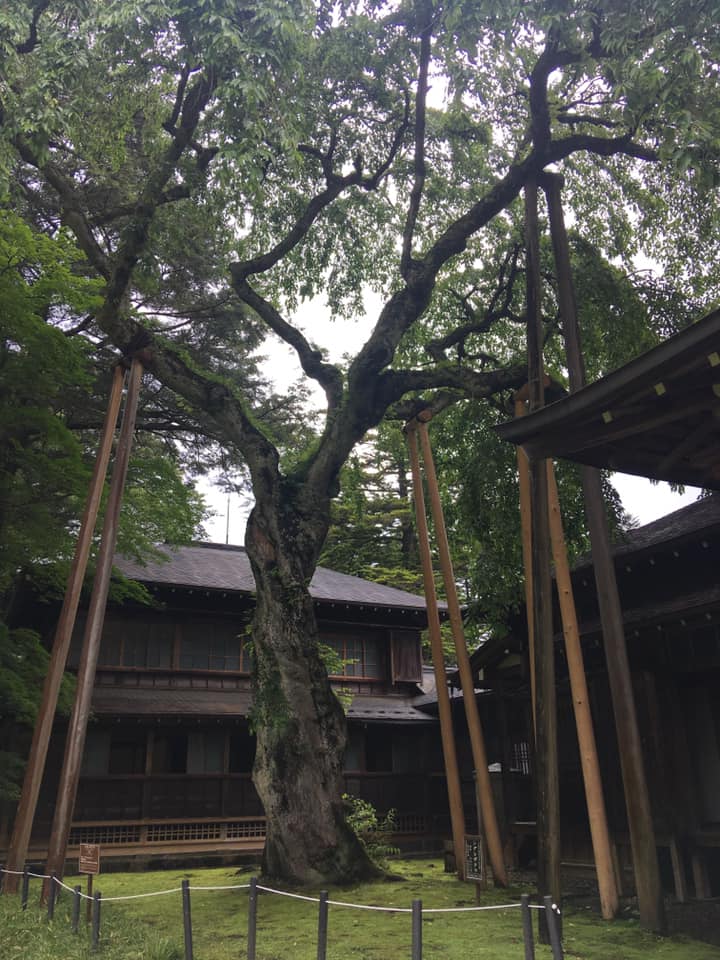
The woods and gardens were lovely.  Here’s that 300-year-old tree, propped up with giant wooden poles.

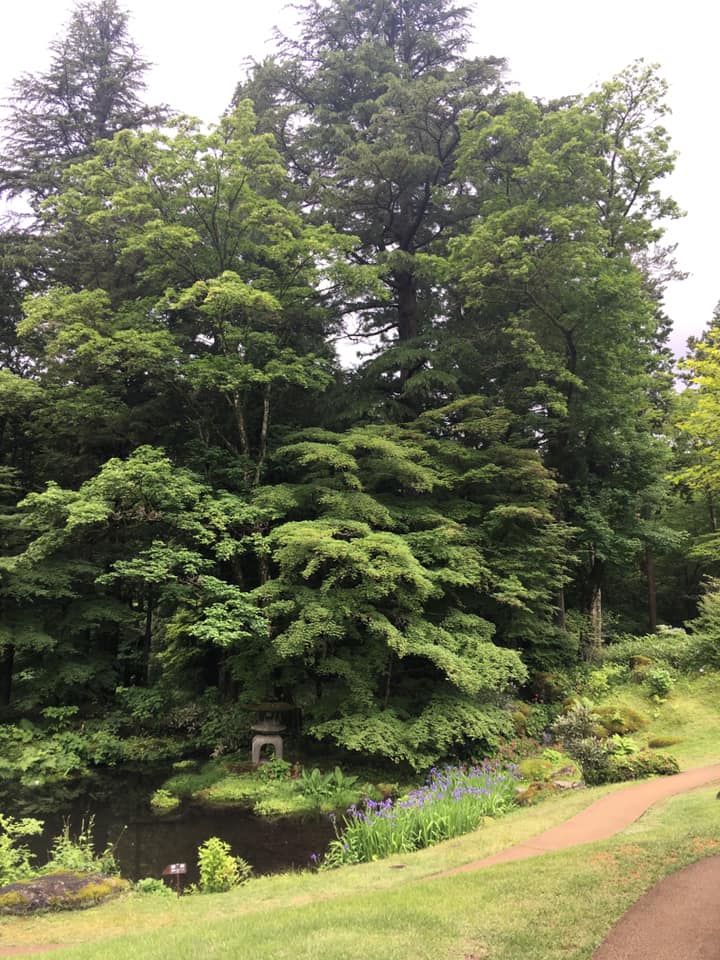
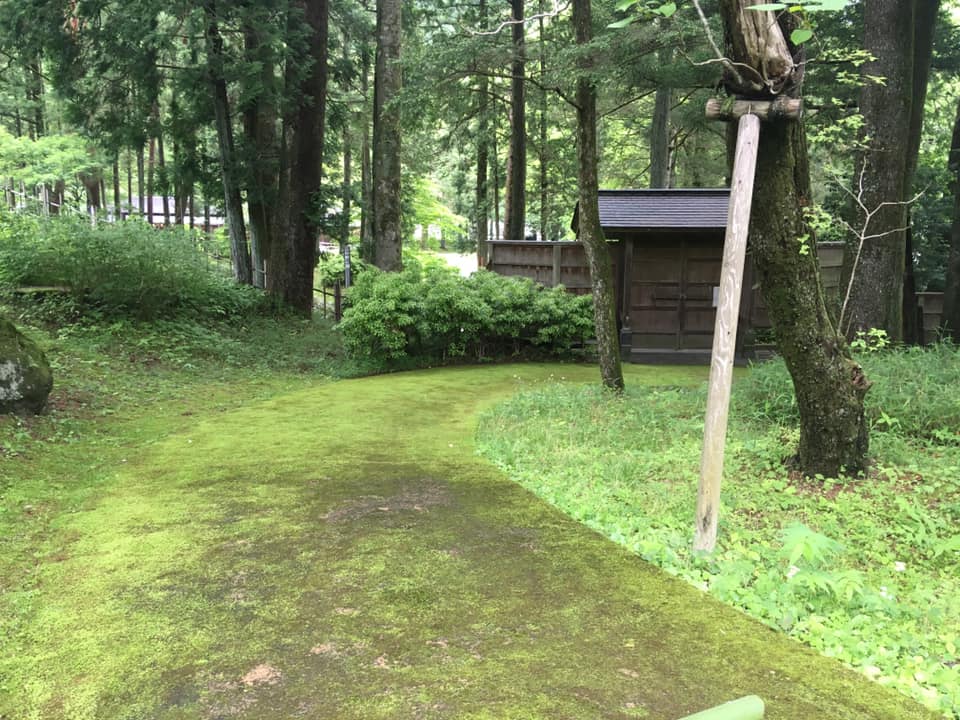
There was a pond and a moss-covered path.

It was still only noon.  I returned to the Turtle Inn and had a cup of cheapo instant noodles they had available for guests to purchase, and Skyped with Keiko about our plans.

Then I headed back out to visit the main shrine, Toshogu.  This time I entered where the tour buses did, hoping it might be a bit less climbing.  It was not.  I don’t know what this sign said but it was cute.

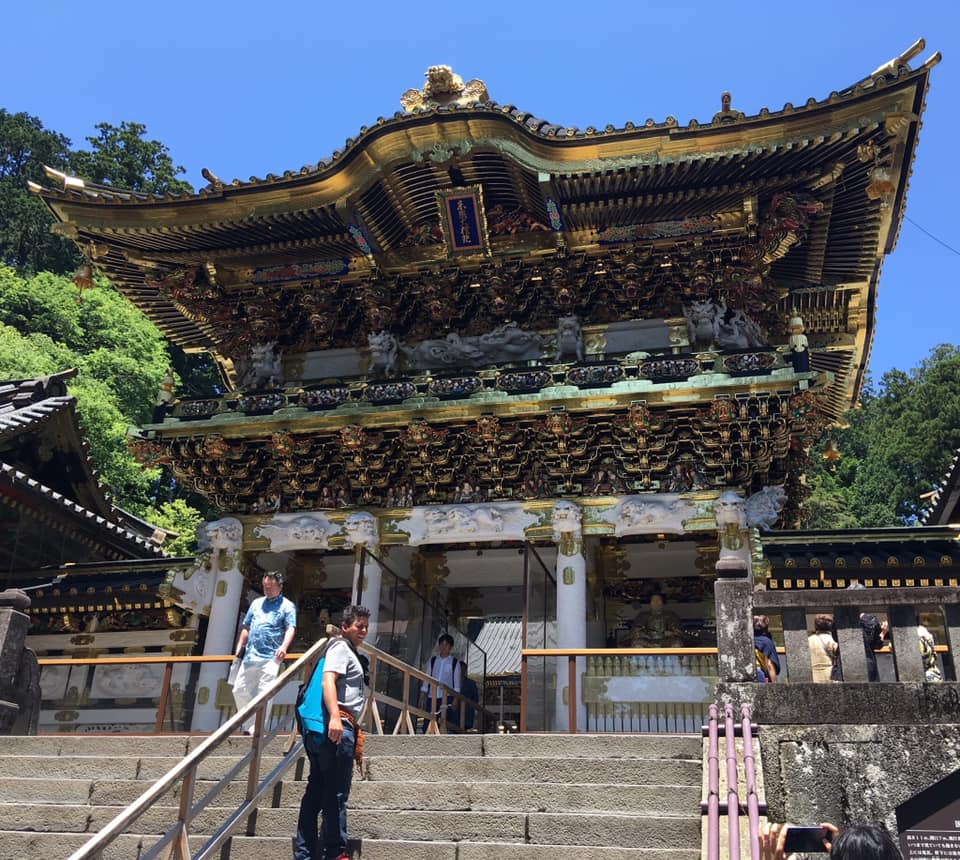
The first shogun, Tokugawa Ieyasu, united Japan and ushered in 260 years of peace.  I’m sure that peace was won at the point of a sword, but that was not mentioned.  This was one of about 25 buildings in the complex.

This detail depicts monkeys supporting one of their friends who is feeling discouraged.

I had rented an audio guide which informed me that giraffes are featured on this torii (gate) because they are considered spiritual animals. I like giraffes, and I couldn’t see any and wondered how 17th Century Japanese would know about them.

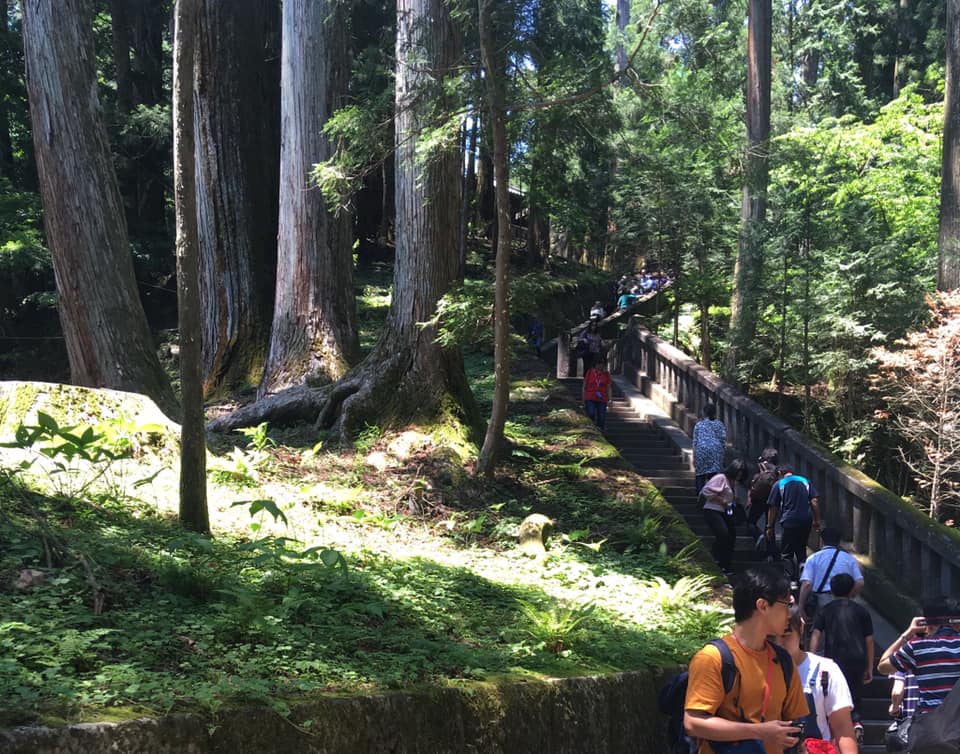
Climbing the hundreds of stairs, I passed people bent over, gasping and clutching their chests.  Go to places like this while your knees and heart are good.

The tomb at the top had so many golden gewgaws the Trumps would have loved it.  The guide said to note the “hundreds of painted tapirs which are symbolic of peace.”  There were no tapirs, but hundreds of dragons.

What had they mistakenly translated into giraffe?