Tag Archives: England

Losing Our Traditions

In a recent post I wrote about character differences between Americans and Brits.  Such subjects are always fraught with peril.  Reflecting on it, I may have made it sound like all Englishmen are passively sitting around doing nothing about the problems of daily life, while all Americans are tackling their daily problems head on.  That’s not the case, of course.  I have a very deep respect for the British people which stems, in part, from how they defended the rest of humanity from the Nazis for two years while being bombed.  I admire that they (in general) place a greater emphasis on the common good rather than on individual rights, as we Americans do.  That’s why they have the NHS and sensible gun laws and public footpaths.

Culture is so complicated.  I attended a wedding this weekend in Milwaukee, Wisconsin, where the bride and groom were both Native American.  Everyone in my family was excited to attend an Indian wedding.  But the bride, my niece, is Ojibway, while the groom is a member of a Pacific Northwest tribe.  She is also half Mexican-American, and he is half Scottish-American.  So what kind of Indian wedding would it be, and how would the other strains of ancestry be acknowledged?

They did a beautiful job of covering all the bases.  The music featured native drumming, a bagpiper, a Mexican-American singer and string orchestra, and a Motown trio.  The bride wore a white dress and stilettos and the groom wore a tux—with moccasins and a leather headband with eagle feathers.

At the end of the 10-minute ceremony performed by my cousin under the authority granted him free online as a Universal Life Church Minister, the couple were draped with an Indian blanket.  The meal included salmon and huckleberry jam flown in from Portland, Oregon.  A scholar read a wedding blessing in Ojibway.  An elder from the Pacific Northwest spoke about the sacredness of water, land, and animals.  The bride read a list of all the ethnic identities in attendance, including a dozen Native tribes and a dozen European ancestries.

The bar was open for one hour, maybe in recognition of all the alcoholics and recovering alcoholics in attendance—of all ethnicities.

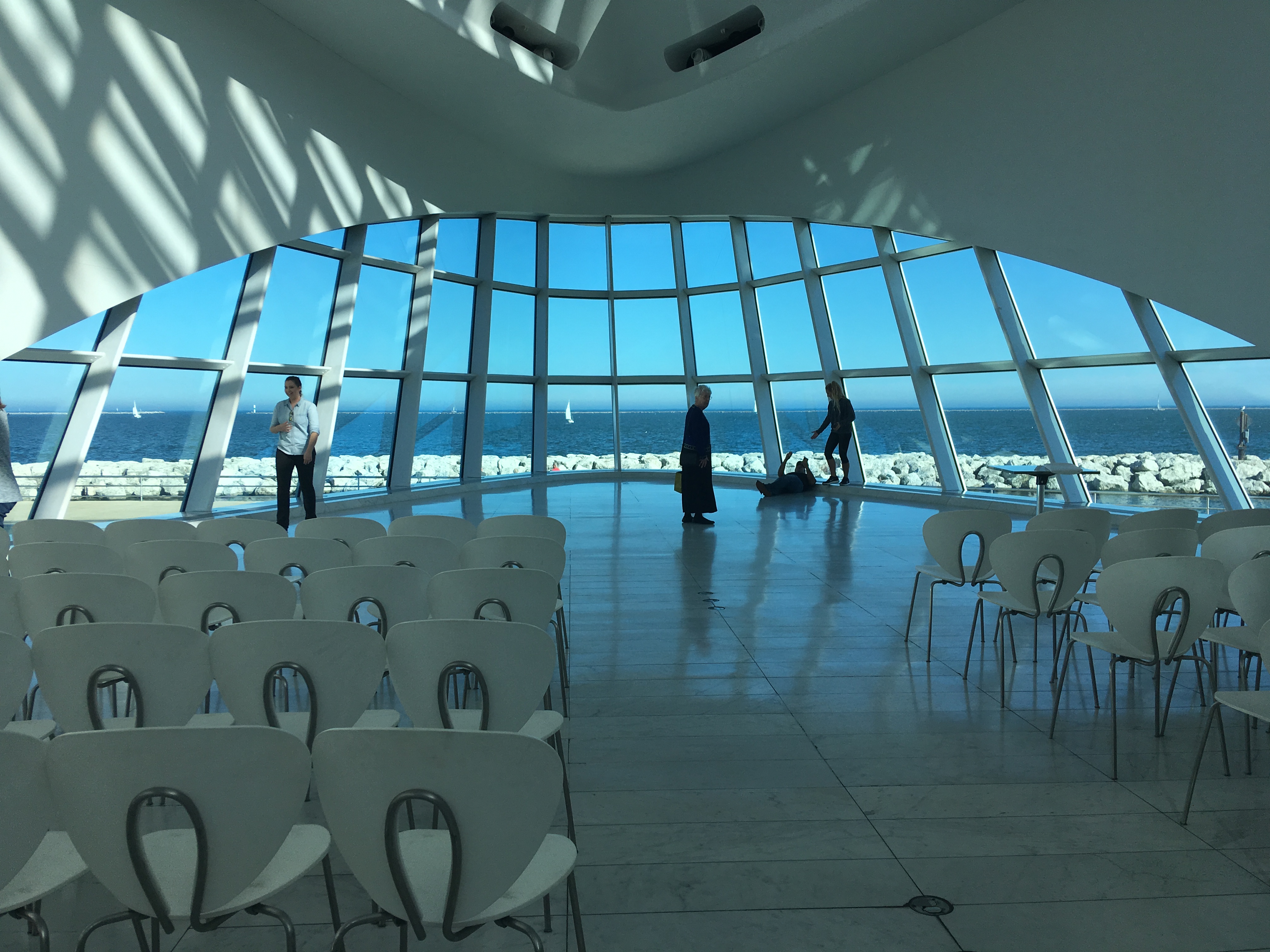
The venue was the fantastic Milwaukee Art Museum, designed by a Spanish architect.
This made me wonder, what culture would my son or my nieces or nephews focus on, if at all, at their weddings?  I raised my son in the Jewish faith and community but he has no longer has any belief or affiliation.  None of us have any direct connections to our European ancestors.  What are we?  Americans, of course.  But what kind?  Who is our tribe?  What are our values and traditions?  We read the New York Times, listen to National Public Radio, and don’t feel unpatriotic driving Japanese or German cars.  I don’t see how any of that would play out at a wedding, but I’m sure my creative younger relatives will think of something.

Lynn and I arrived in Shaftsbury after circling the wrong roundabout three times, then circling the right one another three times.

“It looks like there’s a wedding here,” I observed as we pulled into the hotel parking lot.  There were a lot of dressed-up people milling about.  Then I saw the hearse.

“What a strange place to hold a funeral,” Lynn commented.

The Royal Chase Hotel was billed as a historic 18th Century monastery but it had been stripped of all character and was now just another Best Western hotel.  It was basic; it was fine; we wouldn’t be spending much time in it anyway.  That’s what you tell yourself when you arrive at a hotel that’s seen better days, right?

But it was true.  We loved Shaftsbury and spent most of our two days out and about.  It is home to Gold Hill, site of a Hovis Bread commercial every English person of a certain age remembers.

We walked to the hill, and it was really scenic.  Pictures don’t do it justice.  It was Sunday evening and all the attractions were closed, so sat in silence on a bench at the top of the hill for 20 minutes, enjoying the view.

Big and Bigger

On to our final stop, Shaftsbury, via Sherborne.  I love its Wiki description:

Sherborne is a market town and civil parish in north west Dorset, in South West England. It is sited on the River Yeo, on the edge of the Blackmore Vale, 6 miles east of Yeovil. The A30 road, which connects London to Penzance, runs through the town.

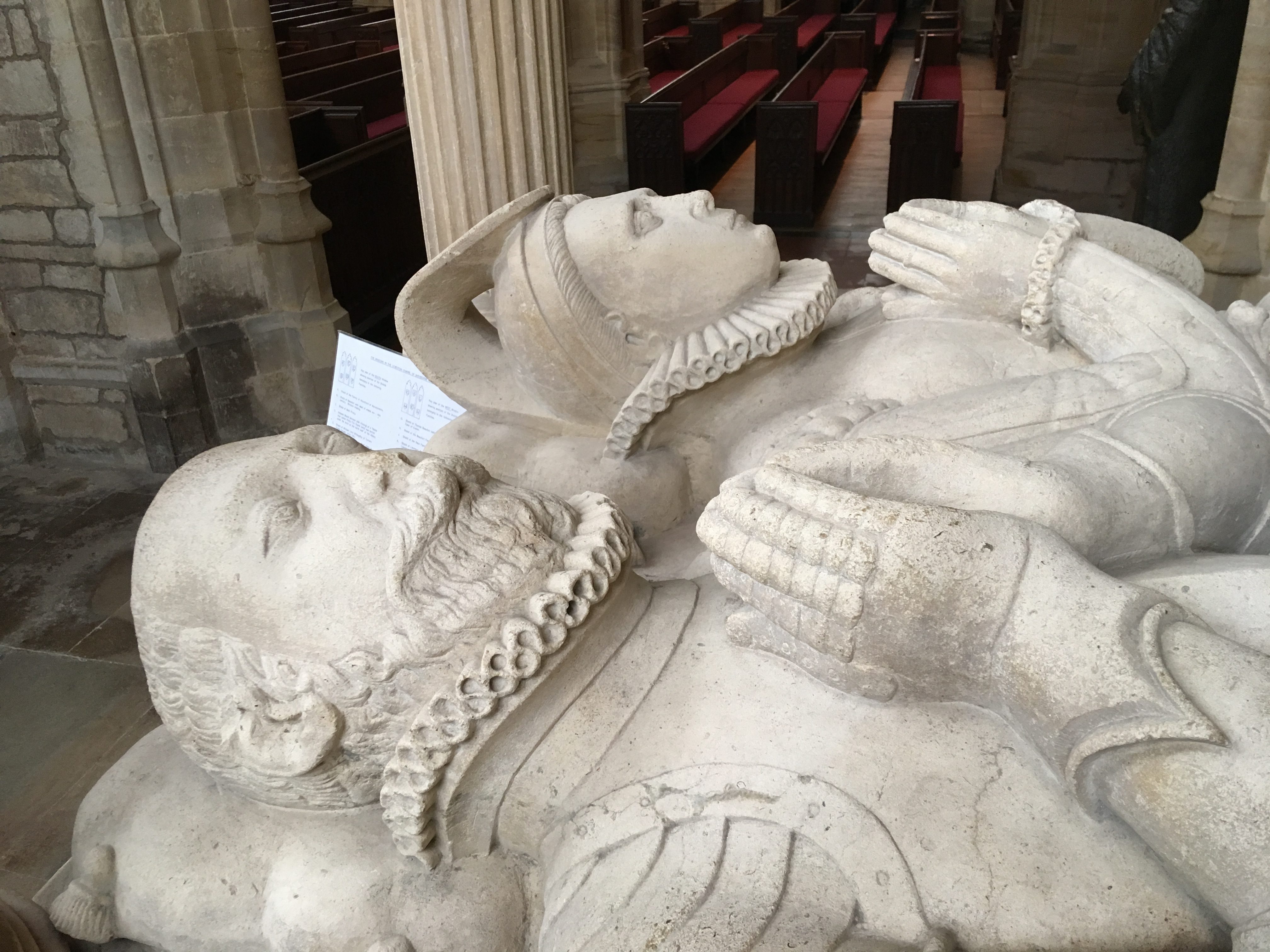
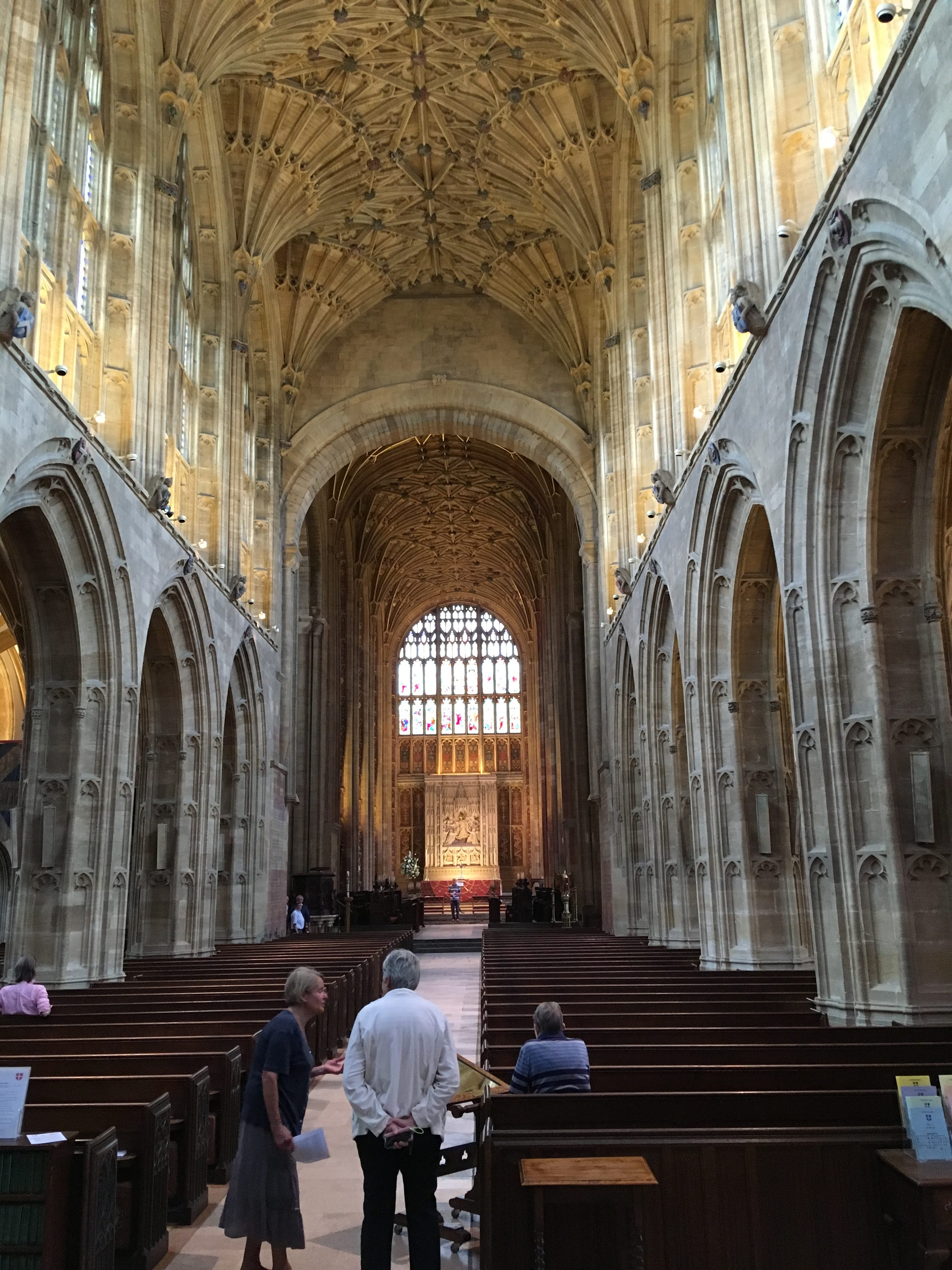
Sherborne has a famous Abbey, the exterior too big to capture in a photo, but here is the interior.

A man was singing snippets of songs to test out the acoustics, which were great.  In fact, the elderley woman giving him and his wife a tour declared,  “Aren’t they orgasmic!” and this word rippled throughout the church.

This gate is carved out of wood.

There was the usual tomb of a dead 16th Century couple who may have founded or rebuilt or otherwise bankrolled the abbey; I don’t recall their names and sadly few other visitors will, even though the final resting place they splashed out on is so magnificent.

There was this more modest tomb containing six people, including children who died at 50 weeks and three years and someone’s 16-year-old wife.  You wonder if anyone in town lived to a ripe old age, which back then would have been about 40.

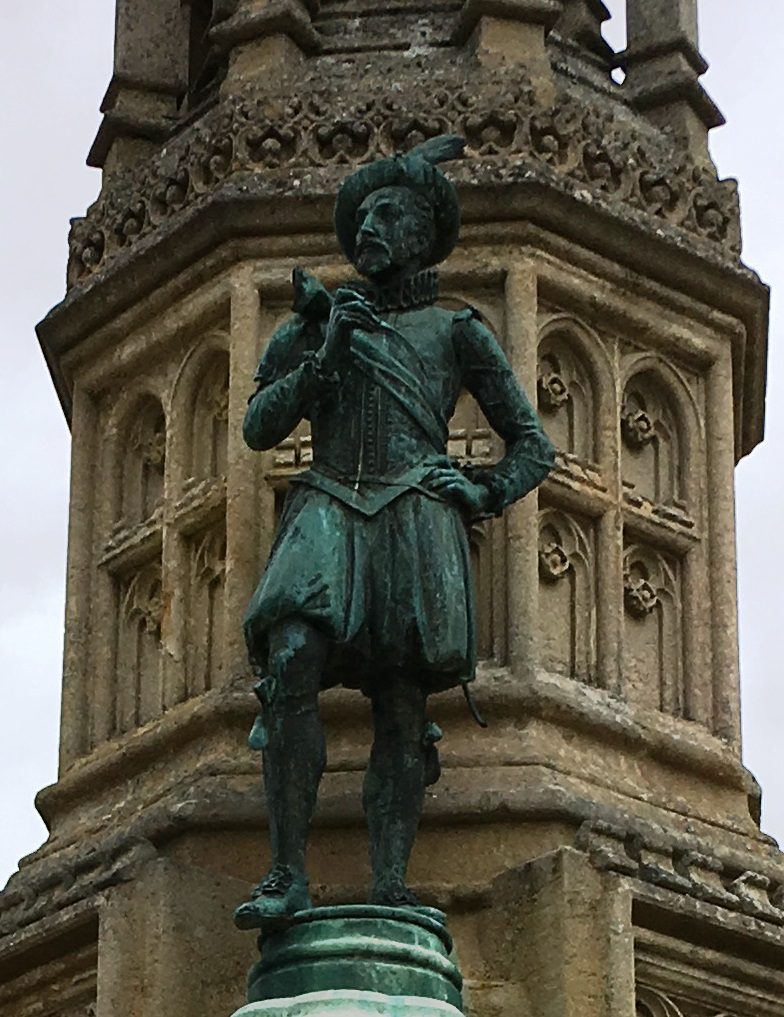
There was this splendid fellow on a monument out front, and a beautiful wrought-iron gate which was marred by a modern sign posted next to it which said, “No Dogs, No Cycling, No Ball Games.”  This was according to the Ecclesiastical Court Jurisdiction Act of 1860 and meant to protect “this consecrated ground.”

There are thousands of churches and abbeys and minsters and cathedrals in the UK.  Fewer than five percent of English people attend church.  The figure is almost nine percent in Scotland, but still much lower than the 38% of Americans who attend church on a weekly basis.

I’m an atheist Jew who loves old churches.  You don’t need to be a fervent believer in Jesus to feel uplifted—if not orgasmic—by soaring vaulted ceilings, stained glass, and all the history embodied—literally—in tombs.  I always drop some coins in the donation box.

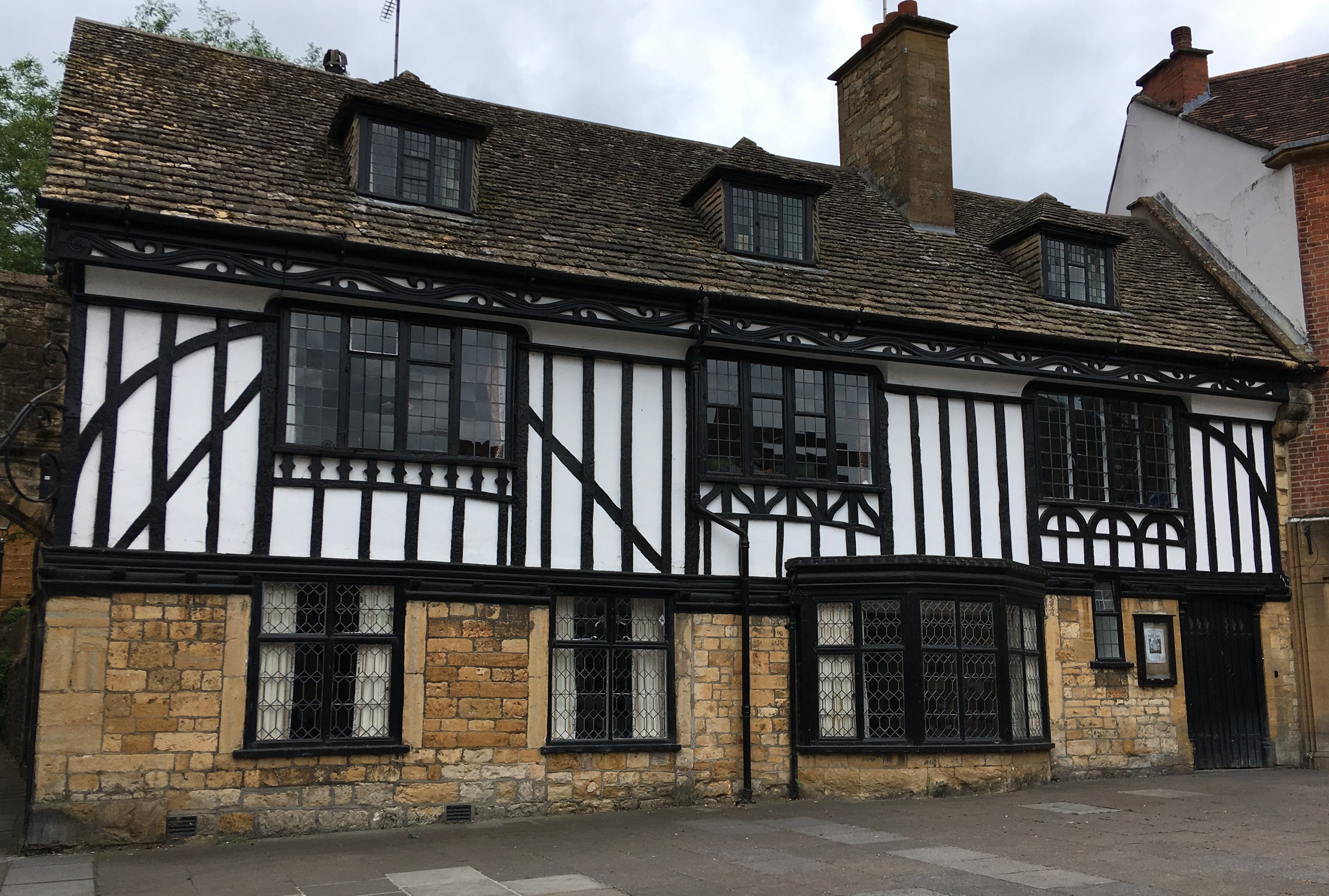
Sherborne itself was a pretty town, with some well-preserved half-timber buildings.

And a gorgeous building that I believe was formerly some kind of monks’ residence, now converted into luxury flats, complete with signs that warned, “Private Property, No Entrance.”

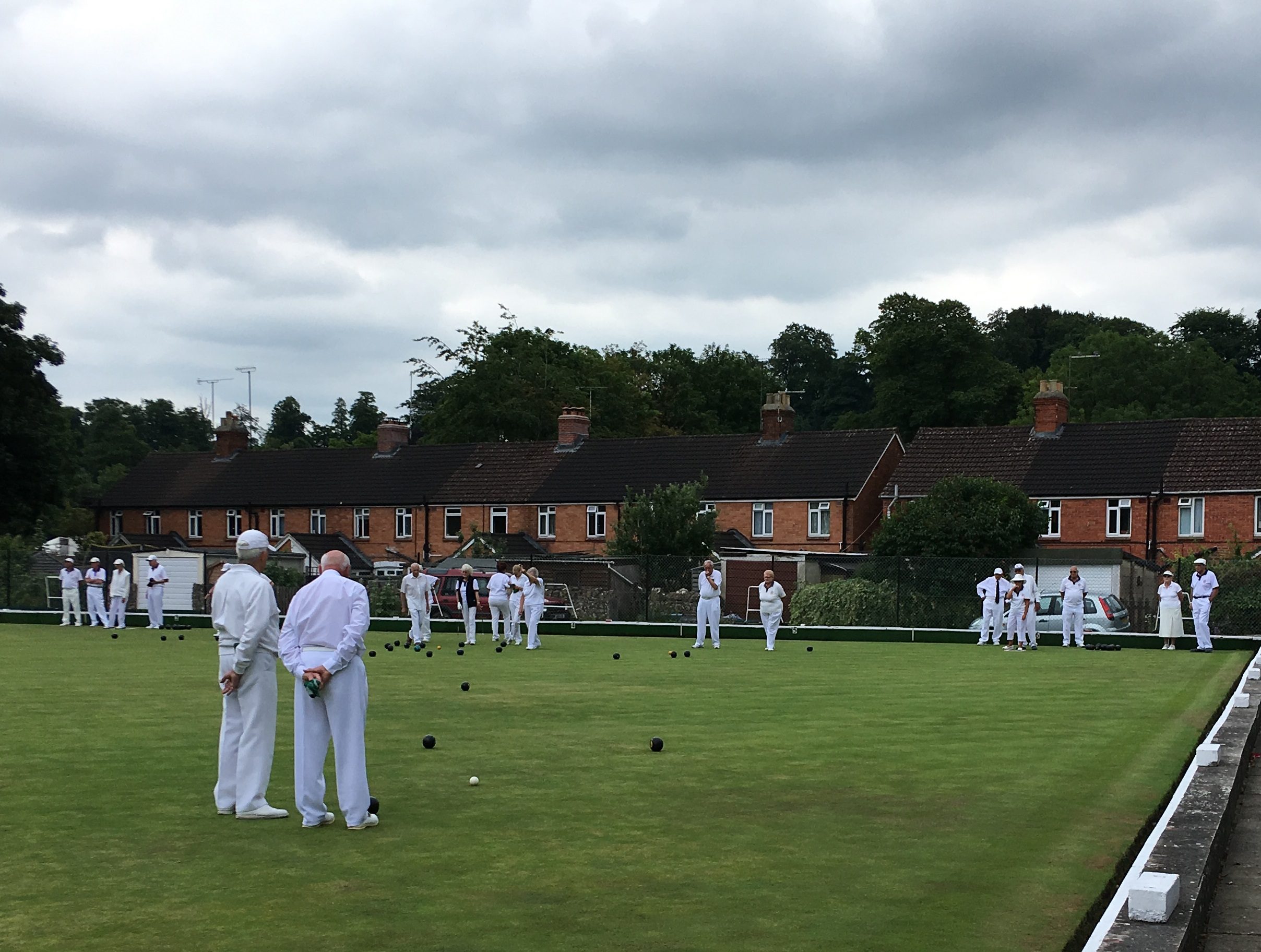
And adjacent to the parking lot, this classic scene:

There are two Sherborne castles—“old” and “new.”  We stopped in the National Trust office to ask directions and walked off clutching maps.  We were soon leaving town on a narrow road with no sidewalk.  One sign early on pointed to the castle, then there were no more. We walked and walked.  A high wall on one side of the road prevented us from seeing what might be on the other side and the road had curve after curve which prevented us from seeing what was ahead.  It was high noon on a hot day.  We stopped in a shady spot for a rest.

“Do we keep walking?” I asked.

“It could be just around the next bend,” Lynn replied.  “Or we could be completely lost, as usual.”

“Yep.  I’m hungry.  Let’s give up and go to that historic pub the National Trust lady told us about.”

“Okay … but if we can’t find a castle don’t get your hopes up about finding a pub.”

We managed to follow the directions and find two other pubs.  No one had ever heard “Sherborne’s Oldest Pub” promoted in the tourist office and on the map.  Every English town has a pub called The George; we had lunch there.  I had a steak and kidney pie with a pint and Lynn had a fish pie with a ginger ale.

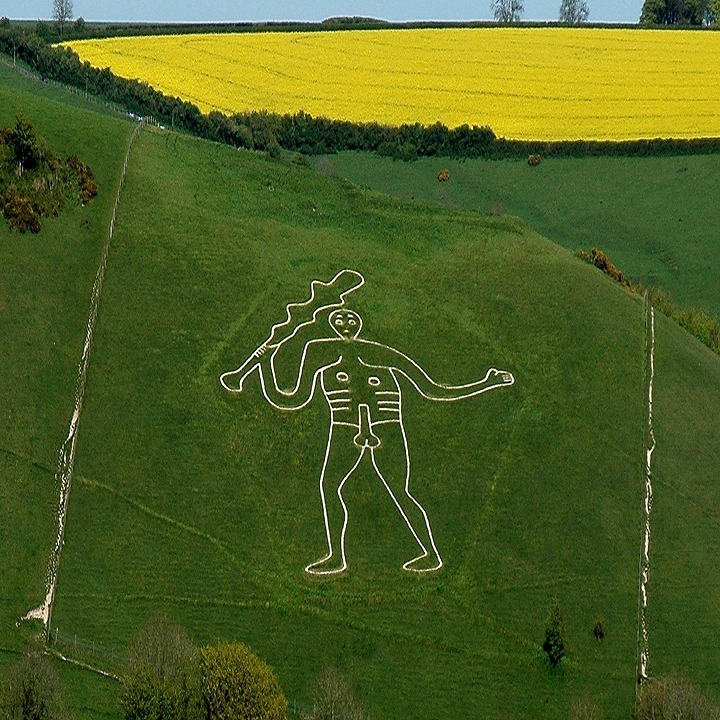
Next stop: the Cerne Giant.  Trigger warning: If you are offended by penises, stop reading now.  Although, if you are offended by penises you are probably already offended just by me writing the word penis.

Here he is, cut into the turf and filled with chalk.  Saxon god?  Political satire?  Teen prank?  The story is unknown but most agree he dates to the 17th Century.

Hanging On

Thank god this week is over.  I am moved into my new place.  My mom and her husband are moved into their new place, although we had to ask the movers to return furniture to their old house because it wouldn’t fit into the apartment.  I spent yesterday unpacking and arranging so my mom will feel at home when she is discharged from the hospital on Tuesday.  It was a lot of work, but the six of us pitched in and nothing broke and no one cried or said anything they’ll have to apologize for.

Today I will drive to Milwaukee.  By the time I get there I expect my back will be in a rigor mortis-like state from all the lifting, bending, and reaching I did yesterday.  But I’m going for a wedding, and I love weddings.  My niece is getting married.  She and her betrothed are Native American.  When I RSVP’d I joked, “I’ve always wanted to go to an Indian wedding!” but I think she is so stressed that she didn’t get it.  The venue is the Milwaukee Art Museum, and the family is staying at an Irish-style hotel.  My cousin got his Universal Life Minister license in order to officiate.  I’m going to wear the fascinator I bought in Eton this summer.  This is not my fascinator, but I wish it was.

Back to the south of England.

Lynn and I, emboldened by our successful use of public transport to Abbottsbury, decided to hop a bus into Lyme Regis.

No one I have ever met in the UK drinks and drives.  Not even one drink.  The blood-alcohol limit is the same as in the US (.08%) but lower in Scotland (.05%).  Of course some people drink and drive, but in general I think people in the UK take “drink driving,” as they call it, more seriously.  You see more drunk people on buses and trains as a result, but at least they’re not driving. We didn’t want to get drunk, but it would be nice for Lynn to be able to have one drink.

We checked out a charming mill area with shops, art museums, and a brewery.  Most were closed for the season.  None of the open ones accepted cards, and there were no working ATMs.  Lynn wanted to buy several pieces pottery but between the two of us we could only scrape up enough for one.

“There is an ATM up the hill,” said a cashier, “but it’s been broken for months.”

I bought two pints with the cash I had left and we sat in the sun and had a great conversation about the differences between the British and American characters.  “Do you think it’s true,” I asked, “the Pink Floyd lyrics: ‘hanging on in quiet desperation is the English way?’  Stiff upper lip … keep calm and carry on and all that?”

In this cash machine situation, it seemed that—with tourist season around the corner—no one had done anything to get it fixed.

“Americans would be storming the bank to demand action—now!”

“We would see that as pointless,” said Lynn.  “You know how British banks are.”

She didn’t say it, but many Brits would also find the American approach undignified.

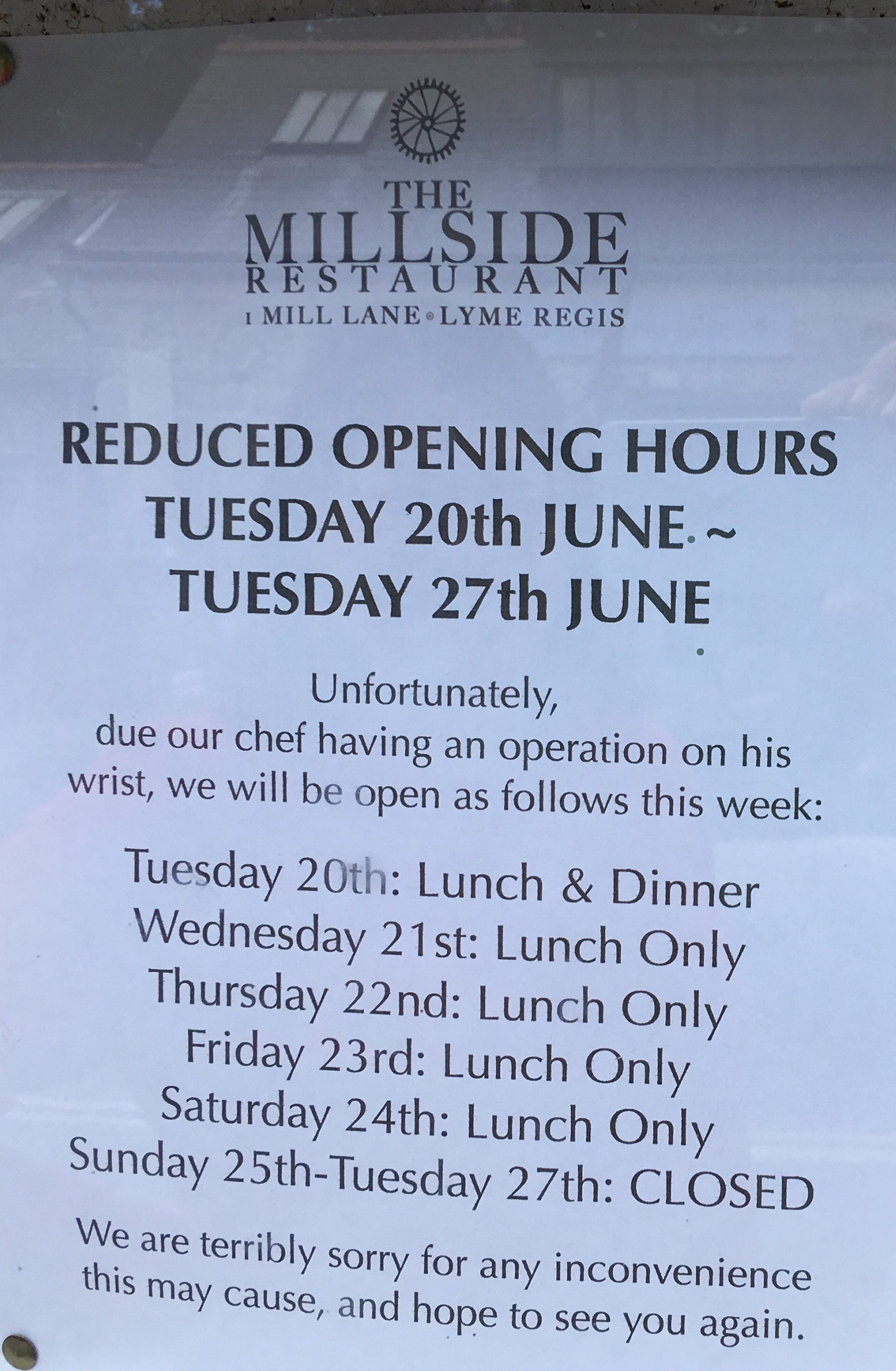
Another example, below.  Maybe they tried really hard to find another chef to fill in, and couldn’t.  Sadly they will not see us again because we were tourists.

Another cultural difference of note, in light of the Las Vegas shooting: the attitude toward guns.  Lynn’s husband has a gun room.  He’s got hunting guns galore, but no hand guns.  They are all registered, and the police can show up at any time to make sure they’re locked up and that Lynn doesn’t have the key.  If a friend or neighbor notices him acting irrationally, he can be reported to the police, who can revoke his license.  This is fine with him because Brits have the attitude, “We’re all in this together.”  This would never be tolerated in the US, where we care more about our own rights than the rights of society as a whole. So I have little hope that our gun laws or culture will change.

Travelers and Travellers

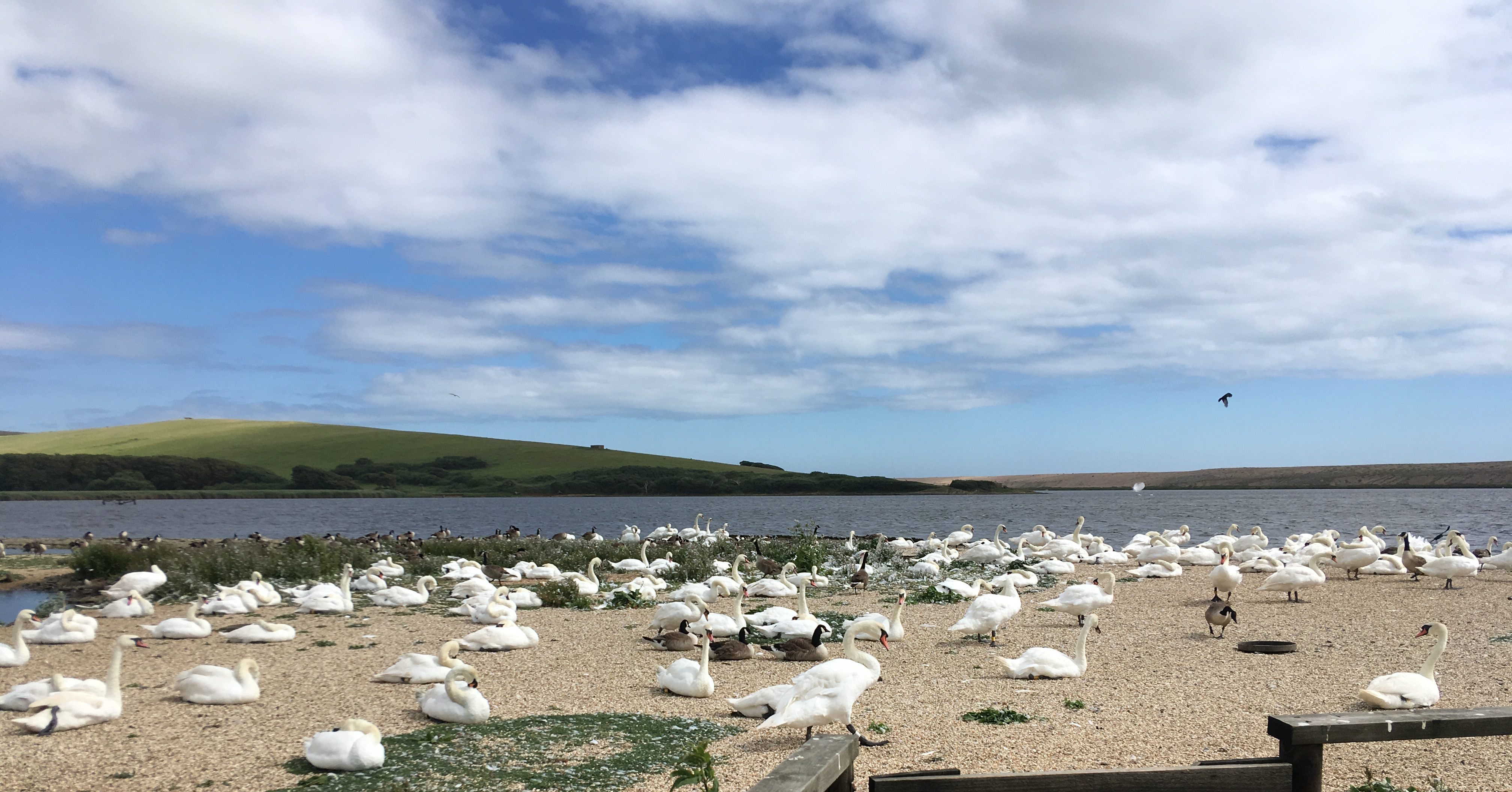
Lynn proposed taking a break from driving for a day, so we took a bus to Abbottsbury, home to the world’s largest colony of mute swans. Yes!  I know you’ve been wondering where the world’s largest colony of mute swans is, and now you know.

We Americans are so car dependent.  Thing is, on many routes you can see so much more from trains and buses.  This was the case on the route from Charmouth to Abbottsbury, which wound through gentle rolling hills overlooking the sea.  It was a double-decker bus and in addition to the views, we had the double-decker bonus of an entertaining and slightly menacing fellow passenger.

This guy was sitting in the front left bench on the top of the bus with his dog.  A young boy was slumped in the bench on the other side.

“I’m a Traveller,” he turned to announce to us in a phlegmy smoker’s voice.

I capitalize Traveller and use two “ls” because Travellers are what we in the States might call Gypsies, which some consider a pejorative term for the Roma people.  Irish Travellers are an ethnic group, while the British term Traveller seems to be a catch-all for nomadic people who might be Irish Travellers, Roma, new age drifters, or others of indeterminate origins.  Some of them travel in family groups in old-style wagons or caravans.  They take over farm fields or urban vacant lots and are reputed to steal anything local that isn’t nailed down.  They don’t send their kids to school or use the NHS or work except for odd jobs. After a few days or weeks they skedaddle, leaving behind mountains of trash for the land owner to pay to remove.

Our Traveller was clearly agitated—on drugs?  He turned and yelled at Lynn to ask where she was from—it was like I was invisible, which was fine with me—and when she said north London that was all he needed to go off on a rant.

“I’m a Traveller,” he repeated, as he stood up and began removing his shirt.  “I got my best friend here,” he gestured at the dog.  “And my kid over there,” he waved his hand dismissively at the boy.  “My partner’s had a baby, so I thought it’d be a good idea for us to go off and leave ‘er alone for a while.”

Yes, every woman’s dream—to have a baby and be left alone, probably in a filthy squat, with no medical care or support of any kind.  Maybe I had it all wrong.   Maybe she was in good hands.  I hope so.

He peeled of his shirt and rubbed his hands all over his torso.  Yes, he was high.  He had an almost-gone splif he kept putting in his mouth, holding his lighter to it, then remembering he was on a bus and putting it away.

He went on about London—how it had changed, how everything is different now, how expensive it is.  He talked about his dog and what a good friend he was.  The boy sat silent in the corner of his seat.

We passed through Chideock and Eype, then stopped in Bridwell, where the driver announced we would wait for 10 minutes.  The Traveller jumped up and ran down the steps to smoke his splif, leaving behind the dog and his kid.  The dog started wandering down the aisle.  The Traveller reappeared, yelling and cursing at the dog to “get yer feckin arse” back on the bench.  He put his shirt back on, then took it off half way, then sat down and was quiet.

Lynn and I and the two other passengers, an elderly stone-faced couple, proceeded to enjoy the tranquil scenery.  These photos are from some small town; it could have been Litten Cheney, Littlebredy, or Puncknowle.

I love how the hat shop is proud to be “known in both hemispheres.”

The Traveller and his entourage disembarked somewhere before Abbotsbury, which was a relief.  There isn’t a lot to say about the swannery, except that it was peaceful and good to learn there is a job called “Swanherd” that probably doesn’t involve sitting at a computer or in meetings all day.

Erratic Posts, Jurassic Coast

I used to take pride in writing enough every weekend to load up the blog for an every-other-day, always-the-same-time post.  With traveling, vertigo, moving, and sleepless nights due to restless legs, I’ve become untethered from that discipline.

I don’t know that it’s a bad thing; I stopped reading articles like, “Top 10 Tips to Promote Your Blog,” long ago.  No tip I ever tried made the blog stats Boom.  The stats did boom here and there, but I couldn’t tell why.  I pay $99 a year for the WordPress platform and haven’t been curious enough to pay more to maybe find out why someone in Russia or the UK is reading the entire blog—475 posts as of this one.

I never expected to be able to monetize the blog.  What company wants to advertise on a blog about prison, which is how it all started?  I usually only mention specific hotels or airlines when I’m ripping on them, so I don’t see corporate sponsorships in my future.

I pitched the blog to some publishing agents as a book idea and never even received a form reject email in response.  I pitched some of the story lines to local and national publications—most notably Vince’s observations about Pillow King production inside prison (“Made in the USA!”  Yeah, behind the closed doors of prisons, by people who net about 25 cents an hour.  That’s what Makes America Great, right?  We still have slave labor.)  Anyway, there would be initial excitement, then no follow through.  To be fair, there are lots of stories about corporate and political corruption to choose from.

So I just keep writing because I enjoy it.  If a couple hundred of you follow along, that’s great.  Thanks for reading, even if my posting has been patchy lately.

I came across this flyer in one of the many piles of stuff I am packing.

These stats were on a gigantic sign at the entrance to the Eden Project.  Lynn and I stood there for a long time contemplating it.  I can’t remember if the hand edit was there when I picked it up, or if I did it.  Apparently, the number of rich people who own almost everything in the world has shrunk from 20 to two since 2009.  The Great Recession was great—for those two people.

At work yesterday, a coworker and I were lamenting about our ailments.  She tore her meniscus ligament and had to have a transplant from a cadaver.  Yeesh.  I’m glad my ailments only involve no sleep and feeling like I’m on a rocking boat all the time.

“But at least we’re not in a refugee camp,” I said.

“No. No—we get to have problems.  A torn knee and surgery and a year of PT are not ‘first-world problems,’” she replied.

Our first full day in Lyme Regis.  Lynn and I walked into town and had a beach day.

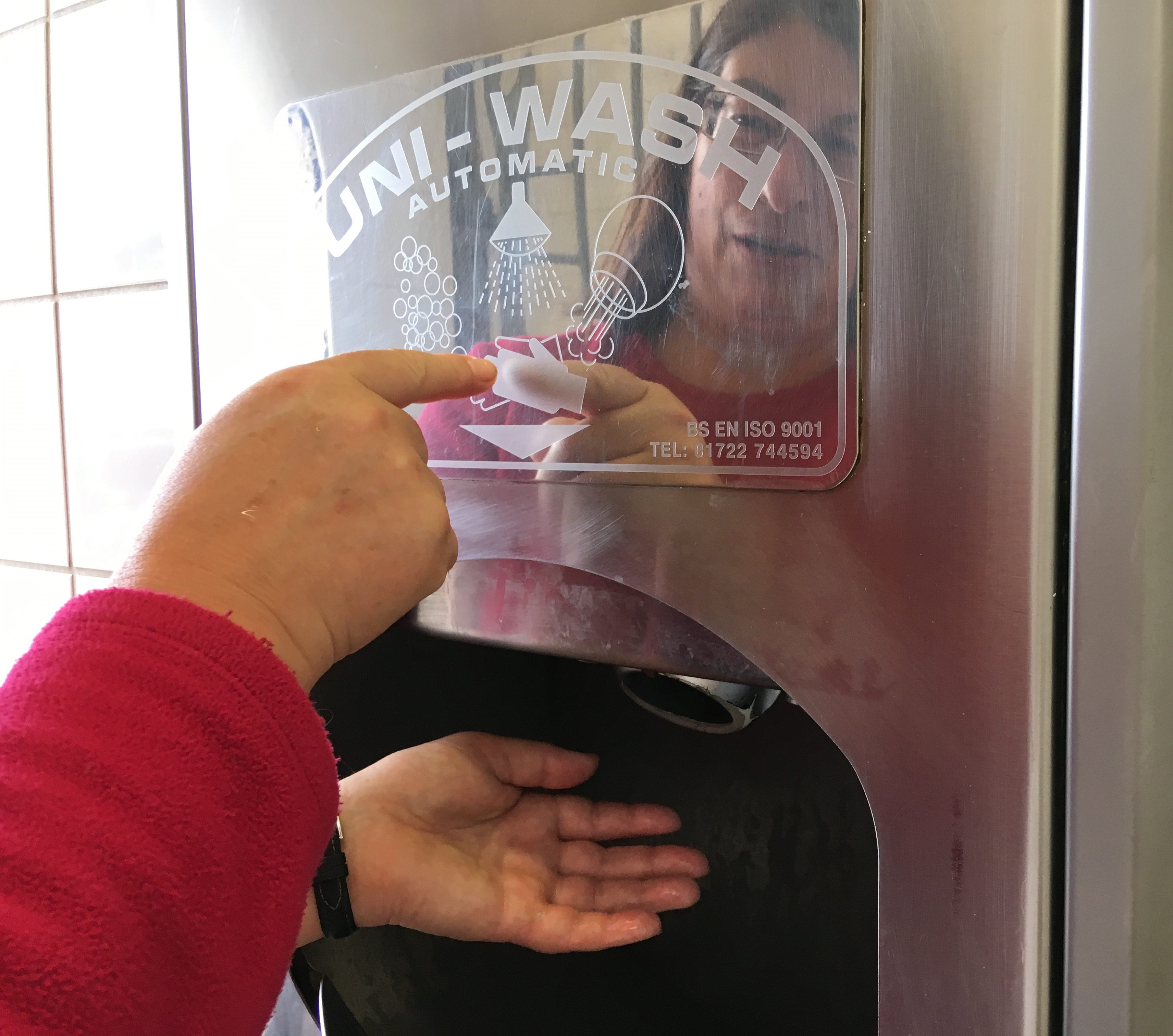
Now, when I say “beach day,” don’t imagine sun and beach umbrellas and people in bikinis and speedos.  Here is a photo of Lynn attempting to use the combo washer/dryer in the public toilet. Note she is wearing polar fleece.

I was tempted to call the toll free number on the machine and ask for help.

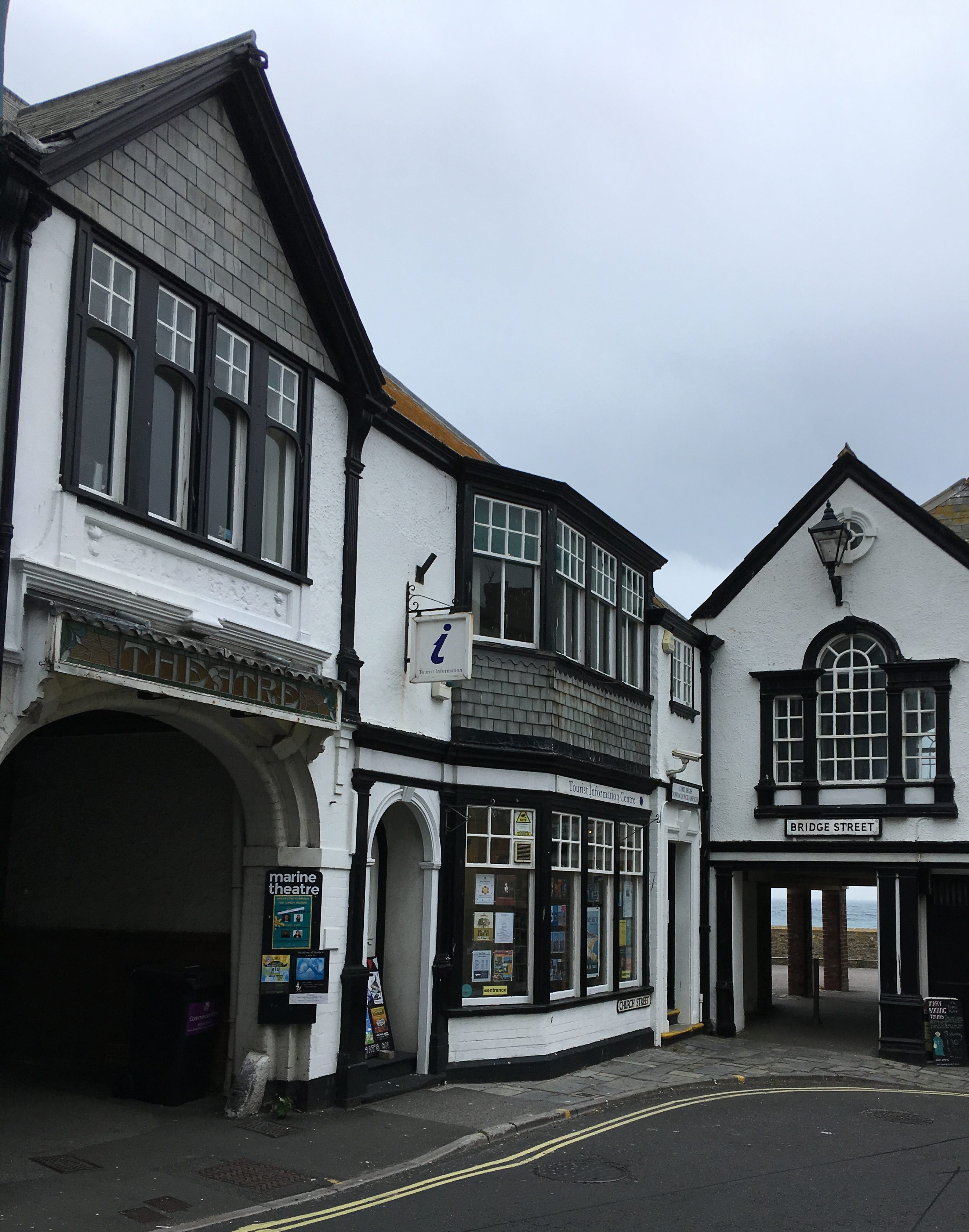
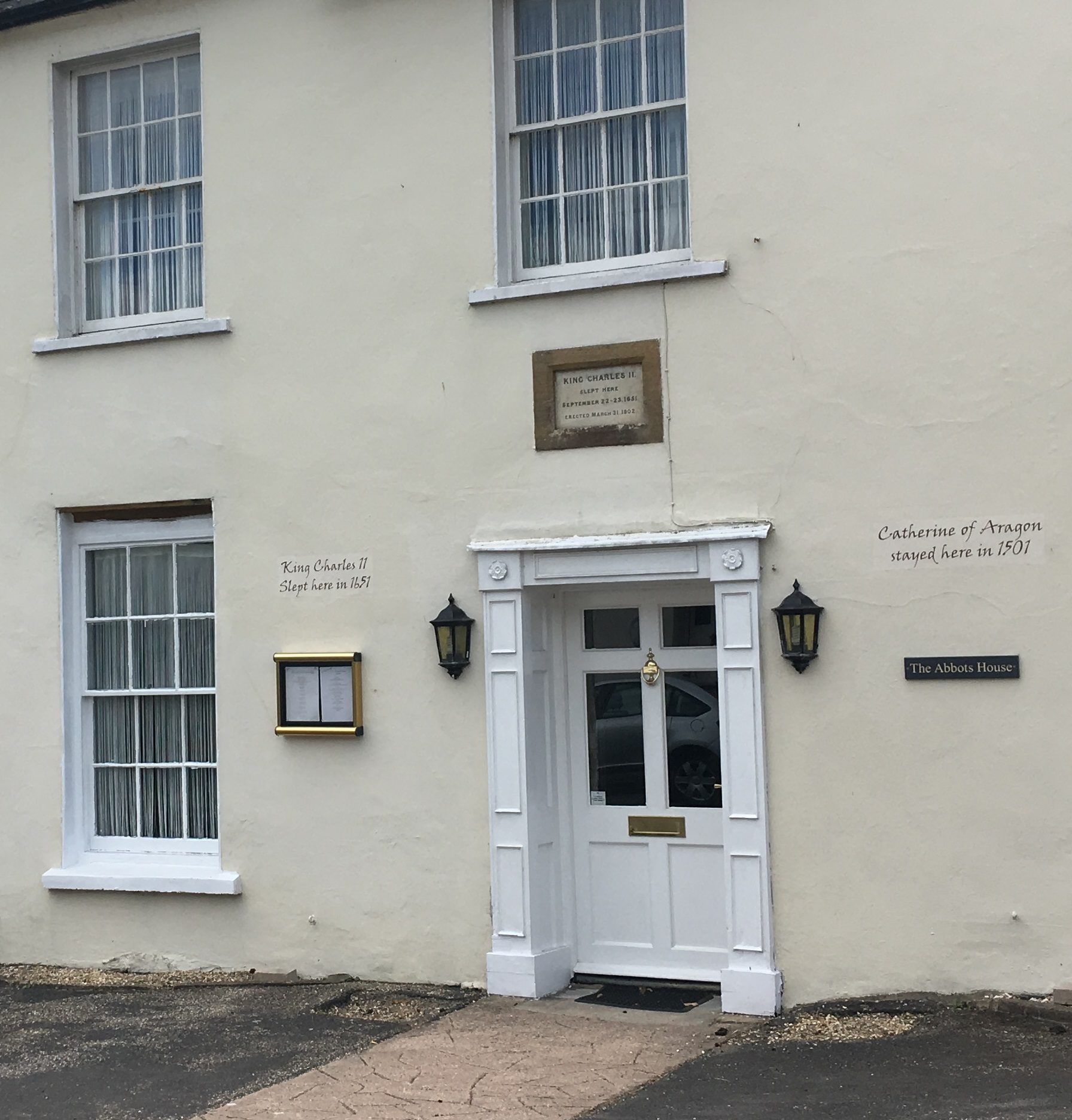
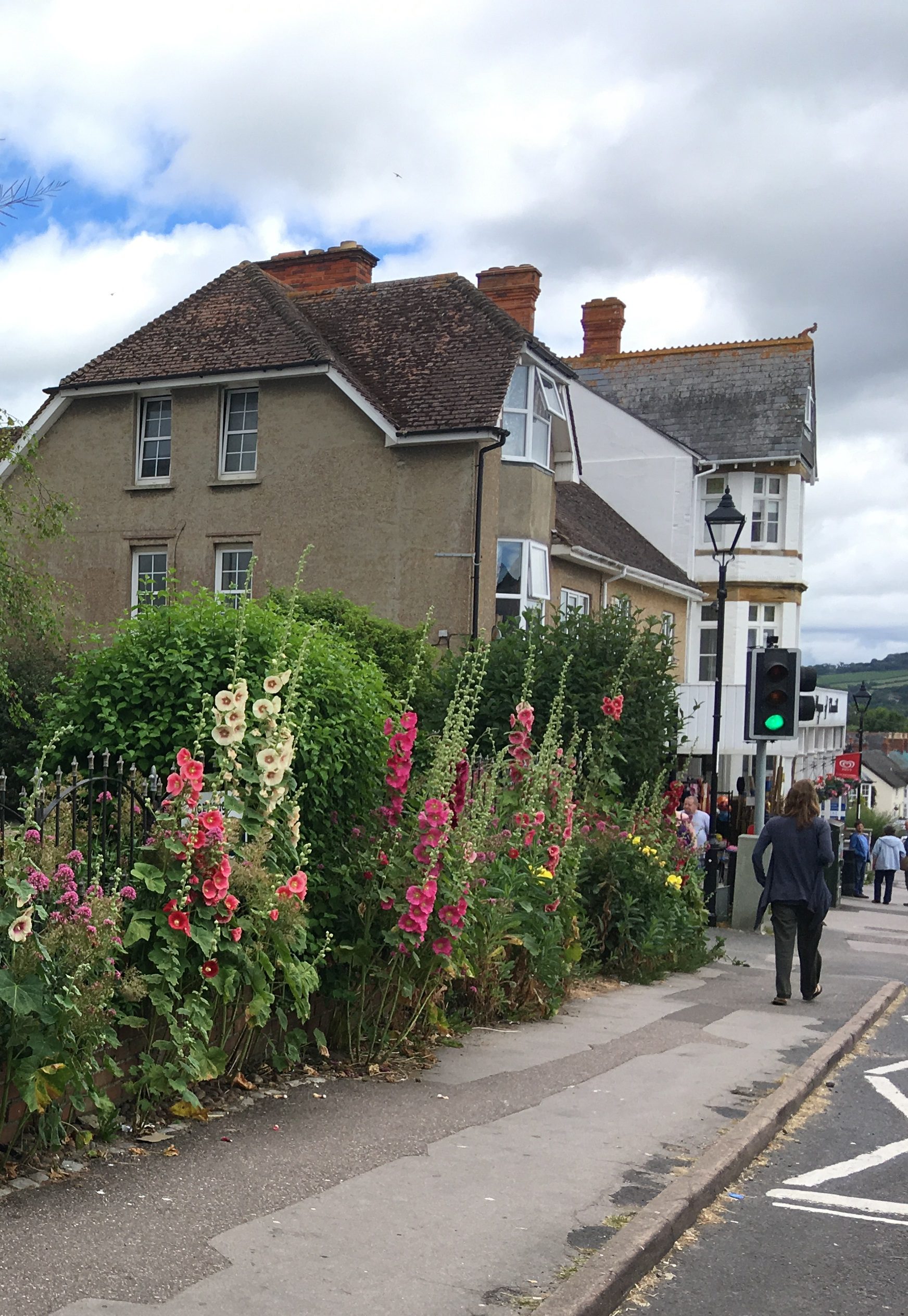
This is the town of Lyme Regis.  The sign on the white building notes that Catherine of Aragon slept here in 1501, followed by King Charles II in 1651.  Just imagine.

Yes, it was grey skies in one direction and white puffy clouds with blue peeking through in another.  And they both changed every 10 minutes.

The area is called the Jurassic Coast because you can find 170-million-year-old fossils there.

There was a small, well-done museum and a café serving fresh crab salad sandwiches and tea.  A woman my age had brought her elderly mother for a day out and was yelling over and over, “Ja wanna saaannie ‘n’ a noice hot cuppa, mum?!”   (Would you like a sandwich and a nice cup of hot tea, mother?)

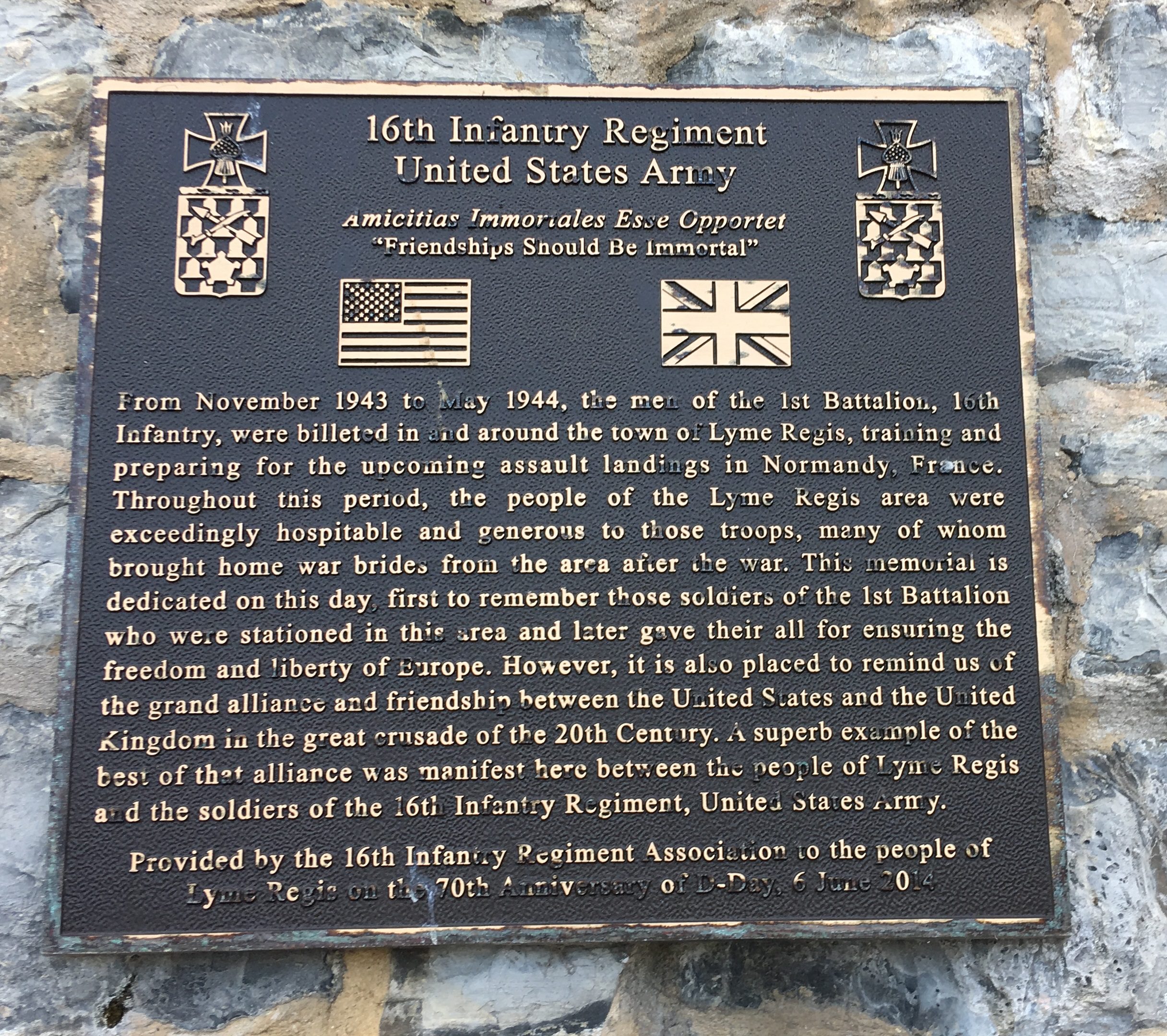
This plaque described, euphemistically, how the locals were “exceedingly hospitable and generous” to US troops, resulting in many trans-Atlantic marriages.

The scenery was stunning.


Rolling Along

The days rolled along.  Lynn and I visited scenic places in the morning, worked in the afternoon, and watched movies or TV at night.  We went to Padstow, which has become a tourist draw due to the presence of celebrity chef Rick Stein.  He’s got at least three restaurants in this small town, ranging from a fish and chips shop to a white linen place.  Lynn and I had the fish and chips and agreed it wasn’t any better or different from fish and chips anywhere else.  But Padstein, as it has been nicknamed, was a lovely town.

We visited The Eden Project, an educational and scientific environmental enterprise.  The exhibits are housed in enormous geodesic domes.  Each dome features a different region of the world, from South American rain forest to Australian outback.  They had a great gift shop where, believe it or not, I bought some environmentally-friendly underwear so I would have at least one pair that wasn’t blue.

Once I was past the shock of having to shout over disco karaoke to make myself heard in a work Skype meeting, the remote work wasn’t so bad.  I would do things that required concentration, like editing, at the cottage.  With no internet, I was not tempted to check my email or distracted by pop ups.  Then I would walk over to the lodge and send emails or have Skype calls.

We ate breakfast and dinner at the lodge and became friendly with the cook and waitress.  We learned the resort had been struggling financially and had been sold to a new owner.  All the employees were holding their breath to find out if they would have jobs in a month, or scrambling to find new jobs.  The waitress told us that her passion was theater; she had just handed in her notice and would be gone soon to run her own theater nearby.

The cook reminded me of Vince, my son.  He had creative cooking aspirations in a place where people only wanted fish and chips.  Every morning he would offer us something new—the crayfish omelets were memorable.  We would enthusiastically accept and show appreciation for whatever he made, which seemed to make him happy.  He told us he was waiting to see which way the wind blew with the new owner.  He had a new menu up his sleeve with imaginative dishes and he was prepared to roll it out here or take it somewhere else.  Both he and the waitress had other jobs on the side.  It was a typical rural employment situation, where people were hustling to cobble together a living and also striving to do creative things to stave off boredom and keep from going crazy.

At the end of a week, we pulled out of the killer driveway for the last time and headed to Charmouth, which is near Lyme Regis, another town you’ve probably never heard of.  Both are in Dorset, the next county east of Cornwall.  Specifically, they are in west Dorset.  This became apparent when we moved on to Devon a few days later, because the local maps we’d acquired only included the western half of the county.  So we drove to the edge of the map and then had to switch to our atlas.

Anyway, we stayed at the Fern Hill Hotel for a few nights and this was our favorite place.  It was smallish (think Fawlty Towers) and family-run.  There was a sign on the desk stating that Robert Plant, front man for Led Zeppelin and rock god, had stayed there.  If it was good enough for him, it was good enough for me.   I couldn’t resist sending Vince a message that I might be sleeping in the same bed as Robert Plant.  I know, inappropriate, but he liked it.

The lovely woman at the front desk gave us minutely detailed instructions and maps for walking into town.  As per our usual routine, we found ourselves on a golf course and then a muddy cow pasture before winding up in Charmouth.  After we had a wander, Lynn figured out how to take a bus back to the hotel.  We celebrated this navigation victory with drinks on the patio.

Rock In It

I pored over the maps of southwest England so I would have something to say when Lynn asked, “Where do you want to go today?”

There were dozens of towns with fanciful, funny-sounding names: Gribben Head, Little Petherick, London Apprentice, Higher Porthpean, St. Blazey, Ready Money, and the unfortunately named Black Head—the names read like nothing anywhere else.  Of course that’s true of everywhere.

Then there were the saint names: St. Mawgal, St. Erney, St. Neot, St. Mabyn, St. Veep.  I had grown up with Saints Matthew, Mark, Luke, and John; Mary, Catherine, and Anne. I wondered where the name Neot originated, and what Saint Neot had done—what torture he or she had endured to warrant sainthood (Wikipedia tells us he was a midget and the patron saint of fish).

Lynn would say she isn’t the world’s greatest driver.  And why would she be?  She grew up in London and has worked all over the world, so she has used public transportation or hired drivers a lot more often than driving herself.

The roads in the southwest are famously narrow and winding, with tall hedgerows on either side so you can’t see oncoming traffic until it’s right on top of you.  But that doesn’t stop people from driving massive campers and speeding along at over 50 miles per hour.

First, we had to get out of the resort.  Backing up is not Lynn’s favorite activity; she worried out loud about the  decorative rocks on either side of the “narrow” driveway.

We heard a loud screeatch as one of the rocks tore open a piece of the Picasso’s siding.

Naturally I helped by taking a photo.

“Why do they put rocks everywhere!?” Lynn exclaimed.

“Well you’ve showed ‘em by moving one!” I said.

A grounds worker was passing by and Lynn called out to him, “Excuse me, excuse me!  Will you help us?  This rock was in the way and I seem to have moved it out of place with my car. Could you move it back?”

Luckily the guy was a giant.  Without a word he hoisted the rock and put it back in place.

“Thank you very much,” Lynn ingratiatingly.  “I suppose this happens all the time—these rocks everywhere, people must drag them out of place on a weekly basis!”

“No,” said the guy gruffly, and walked away.

I nudged the torn piece of the vehicle back into place so it wouldn’t flap as we drove.  “Maybe they won’t even notice it,” I suggested optimistically.

“It doesn’t matter,” said Lynn. “This is why I check ‘yes’ to all the insurance they offer, even though people say it’s a rip off.”

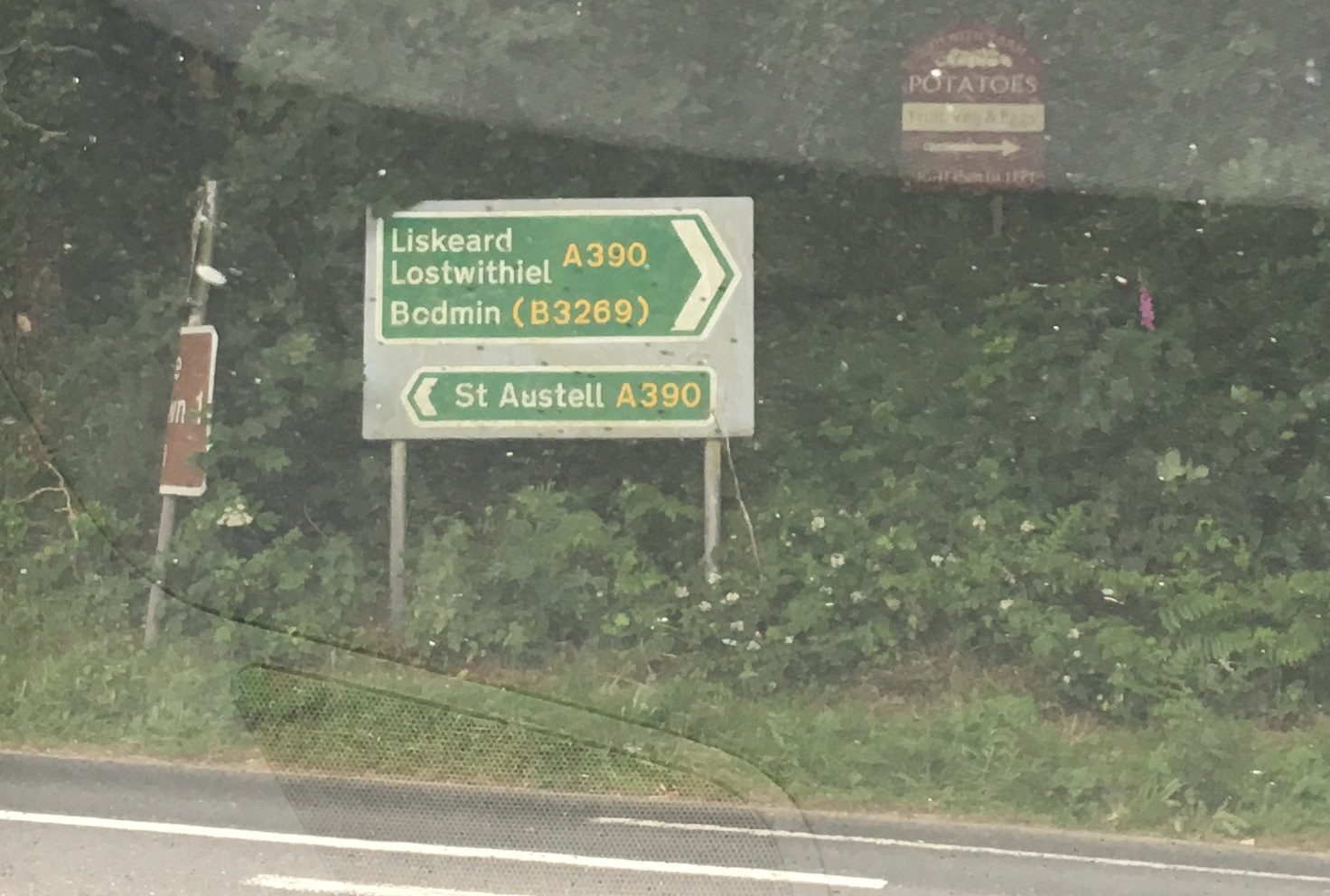
We managed to drive through the gauntlet of rocks and exit the resort.  The next step, which didn’t seem to get easier with repetition, was to guess which giant roundabout to take, and then which exit.  This involved driving around in circles, then making our best guess and plunging off an exit, hoping for the best.  The vehicle hadn’t come with a GPS so I was the co-pilot.  This was tricky because British signs mean nothing to me.  Here’s a sign for an upcoming roundabout:

As we drove, Lynn explained what A and B roads were, why some items in signs were in parentheses, what the little stub on the circle was, and more.  But often, the signs came up so fast we had only seconds to decide which way to turn.

The worst was when there was no sign, so we shot ahead, gradually coming to the conclusion that we were going the wrong way, and having to turn around.

Lynn got frustrated when we got lost.  I probably wasn’t helpful when I kept saying, “It’s an adventure!  We can’t really go wrong, everywhere we go, the scenery is so beautiful.”

Where the hedgerows opened up onto fields, the roads were lined with foxglove, and farther on we could often see the sea sparkling in the distance.

Here are some photos from Fowey, pronounced foyyyyyy.   I love British trees in general; they’re so much older than ours in Minnesota.  I was awed by these, in the car park, and it got better from there.

Painting Tintagel Blue

Possum continued to have pain from her kidney stones, although blunted by pain killers.

“The doctor described what kidney stones are like,” she said.  “They’re not like stones at all, they’re more like bits of coral—jagged and razor sharp—so they tear your kidneys from the inside as they’re moving through them.”

I felt nauseated listening to her describe what was going on inside of her, but she was chipper.  “It was really interesting!” she declared.

“But was the doctor good looking?” I asked.  “Lynn said he was well dressed and had nice hair.  But Lynn’s married so maybe she’s not as observant as you or I would be—both of us being single.”

“Oh yeah, he was well dressed.  He had a nice tweed jacket with a green tie and yes, his hair was thick and wavy and silver.  But his face was just okay.”

“Was he wearing a wedding ring?” I queried.

“I don’t know!  I didn’t notice.  I was a bit delirious.”

“I think you may need to have a relapse so he has to come back and I can get a look at him,” I jested.  This was met with a stern look.

It was the morning of our second or third day in Cornwall.  Lynn was sleeping and I Possum and I were chatting while I washed my clothes.  Foreign washing machines always throw me for a loop.  Here’s the one in the cottage; note it has at least 25 options:

How hot is 40C?  I have no idea.  What did the symbols on the right mean?  No clue.  I had shoved everything in and chosen “Fast Wash,” which took two hours and 20 minutes.  After an hour and a half, the machine seemed to stop so I forced the door to unlock by shutting off the power.

This was a combo washer-dryer, and I had inadvertently added the dryer option.  “Drying” did not mean tumble drying.  It meant heat was pumped into the unmoving canister so that after an hour you extracted a compact, crispy-on-the-outside and damp-on-the-inside wad of clothes.  I have never known any European or English person to actually use the dryer option—they all hang their washing on racks.  I think they would say they do that because it’s better for the environment.

I went upstairs with the drying rack to hang my clothes dry.  The American washer and dryer (separate appliances) in my condo are so huge I can do two weeks’ worth of laundry at one go.  The washer takes 20 minutes and the dryer half an hour, tops.  I would love to see an energy use comparison between my giant, “Get ‘er done!” US appliances and European ones.

I peeled open the crispy-damp wad and found an unpleasant surprise.  All my clothes were blue.  I like the color blue, but blue socks, underwear, bras, shirts, and pants?  How did this happen, I grumbled to myself, as I hung up my blue tie-dyed dress.  It would take me a month to register it had been this dress.

Too soon, it was time for Possum to drive back to Oxford, despite Lynn’s and my protests.  She sent us texts along the route to assure us she hadn’t fallen asleep at the wheel from the pain meds, and had arrived home safely.

Meanwhile, Lynn and I headed out in the Picasso to Tintagel Castle.

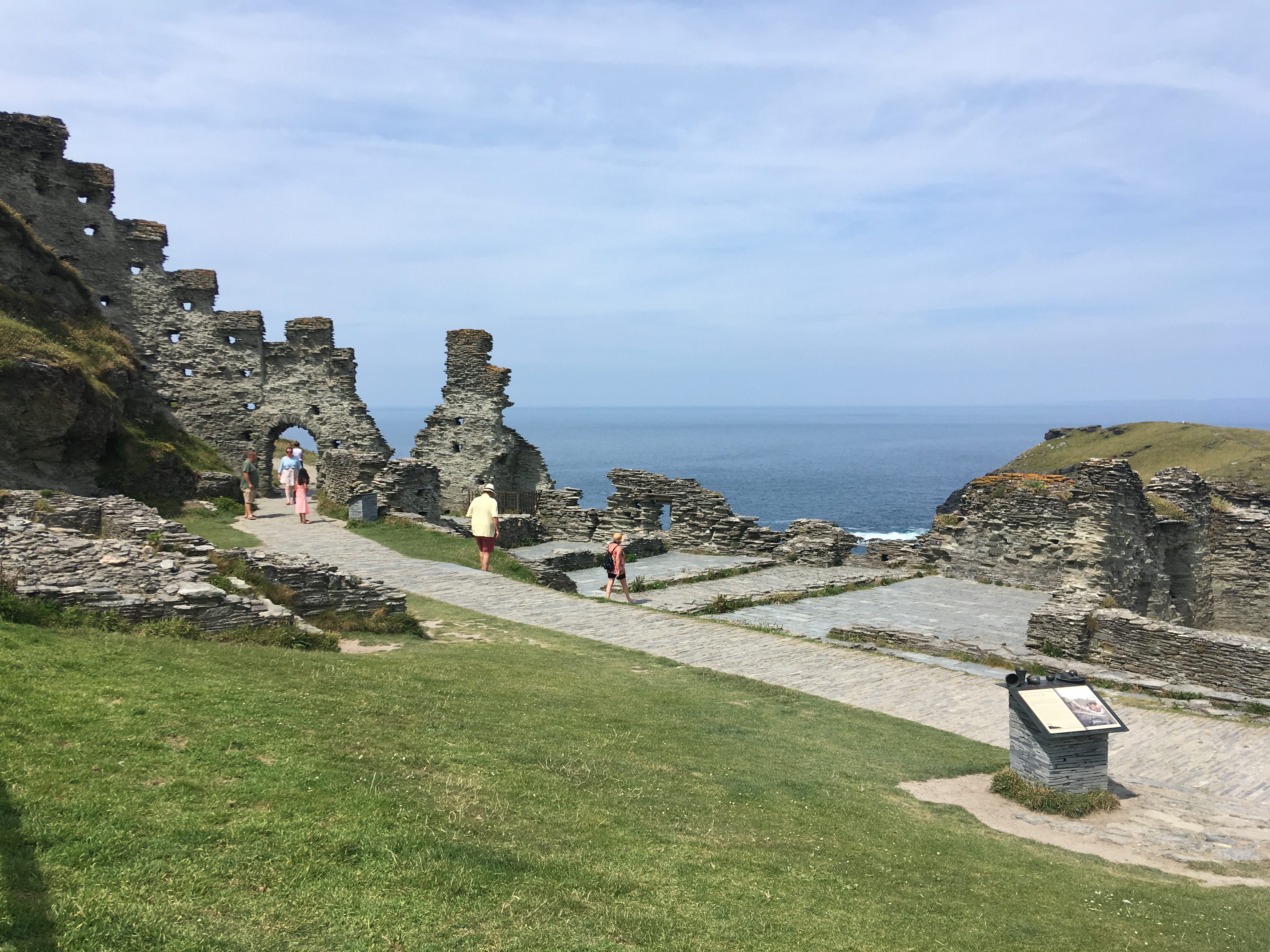
This was supposedly the home of the legendary King Arthur.  We took a quick spin through the interpretive center, where we learned that there may have been a Roman settlement here but there’s no proof of that.  Some time after the fall of the Roman Empire, the King of Dumnonia, as the region was then called, built the first castle.  In the 13th Century, Richard, First Earl of Cornwall, took over and built the structure whose remains are still visible.  And so on.

We scraped our way down an extremely steep, dusty road, then climbed up about three hundred stairs.  It was the hottest day of summer so far, so we stopped for breathers and to appreciate the stunning scenery.  There wasn’t much left of the castle but the climb was worth the effort.


Getting In, Getting Around

Looking back on my three months of working remotely from Europe, Ethiopia, and the UK, I can say I would love to do it permanently.  From what I can tell, there is no legal reason I couldn’t live in the UK without a work visa as long as I was working for a US employer.

According to the UK immigration website, as a US citizen I automatically get a six-month visa when I enter the country as a tourist, without even applying.

Paying rent could be a challenge.  I’m certain it would be impossible to open a UK bank account.  I would have to find a landlord who was willing and able to have rent paid electronically, probably from PayPal.

What stops me from seriously considering this plan?  Well, every time I enter the UK I get grilled by border control.  This happens to my UK friends when they enter the US, too.  I got grilled by Danish border control when I entered Denmark, so it’s not uncommon.

When I came to the UK from Ethiopia, I walked from the plane through halls festooned with welcoming slogans, “Welcome to the UK!” “See the English Countryside!”  “Visit Historic Palaces!”  In other words, they want people to visit and spend money in the UK.

I waited in line for a border agent.  Again, there were banners above the agents’ booths proclaiming the beauty of the English countryside, historic sites, museums, etc.

I stepped up to the booth and after looking over my passport, the Sikh border agent barked at me, “Why are you coming here?”

“Tourism,” I replied.

He looked skeptical, especially when I said I would be staying for two and a half months.  Would I be working in the UK?  No, I replied.  And this was true to the spirit of the question, I believe.  I would be working remotely for an American employer, not for a UK entity.  I would not be stealing a job from a UK citizen, or being paid by a UK employer and transferring my paycheck to an American bank.  I wouldn’t be collecting any public benefits.

I was afraid that if I tried to explain any of the above I would be whisked into an interview room.  Just in case they did that anyway, I also had a letter of employment and documentation of all my US assets including my condo in an envelope in case they wanted proof that I had reasons to return to America.

He asked for the addresses where I would be staying, the names of my friends, and the places we were planning to visit.  He asked to see my return plane ticket, which I had printed out and ready.

Finally, reluctantly, he stamped my passport and without even speaking to me, waved the next passenger forward.

Maybe I was overly concerned about being turned away since I had been refused a visit with my son in prison, and then banned for six months.

So I got in okay this time.  But—what if I cooked up a plan to stay in the UK for six months—the length of a tourist visa—and got turned away at border control?  How much more suspicious would they be of six months than two and a half months?  The uncertainty just wouldn’t be worth it.  There’s no information about this on the UK immigration website, and I don’t want to raise a red flag by asking about my personal case.  I can just imagine them flagging my record somehow to ban me from entering.  All because I love their beautiful country and want to spend my American paycheck there.

And it is a beautiful country.  You may be thinking, “America is beautiful too!” and you would be right.  I’ve seen the Grand Canyon, Florida beaches, Monument Valley, Lake Superior, and Highway 1 in California.  There’s plenty of beauty in both countries and I intend to see as much of it as I can.

From the Lost Gardens of Heligan, Possum drove us through tiny, twisting roads to Portmellon, where we walked on the beach and had a half pint in a pub called The Rising Sun.

Lost Connections, Lost Gardens

My cough-drop induced discomfort passed, and I turned my thoughts to catching up with work after being out of communications for a few days.  Possum was feeling better on the pain meds, so after obsessively rebooting the router half a dozen times we all walked over the lodge.

The cottage we were staying in was one of about 20 cottages surrounding a big central lodge with a dining room, pool, game room, and so on.  This was where the front desk was, and this was where Possum and I demanded action while Lynn sat at a discrete distance, cringing at our combined American and Australian demands for action.

We’ve all been there: promised something that doesn’t work, facing a customer service person who can’t or won’t help.  Different people approach it differently. In general, I think Americans and Australians believe we can fix anything! if only we demand action loudly enough and refuse to give up and go away.

After politely badgering a series of women at the desk, we came away with four theories ranging from sinister to silly: 1) the owner of our cottage hadn’t set up the router correctly, 2) the owner of our cottage had set up a router even though there was no Internet, then falsely lured people to the cottage with a promise of wifi, or 3), a storm had knocked out the Internet to that particular cottage three weeks ago and the owner hadn’t fixed it.

Bottom line, no Internet.  “It’s just not very good here in the best of times,” explained one young woman.  “We’re so remote.”

I had expected to have lousy Internet in Ethiopia, but in England?  But it made sense. If I go to northern Minnesota, to the Boundary Waters Canoe Area we share with Canada, there is no 3G or even cell phone service.  There are probably large swaths of the western states like North Dakota and Nebraska that don’t have Internet.

Bottom line, we were allowed to log on to the lodge’s account.  The catch: we could only get a connection in the lounge, where holidaymakers enjoyed their G&Ts, raucous hen parties took place, kids ran through in wet swim suits on their way from the pool, women in lycra workout gear strutted through to get to the yoga studio, and MTV blared on multiple big screens 24/7.

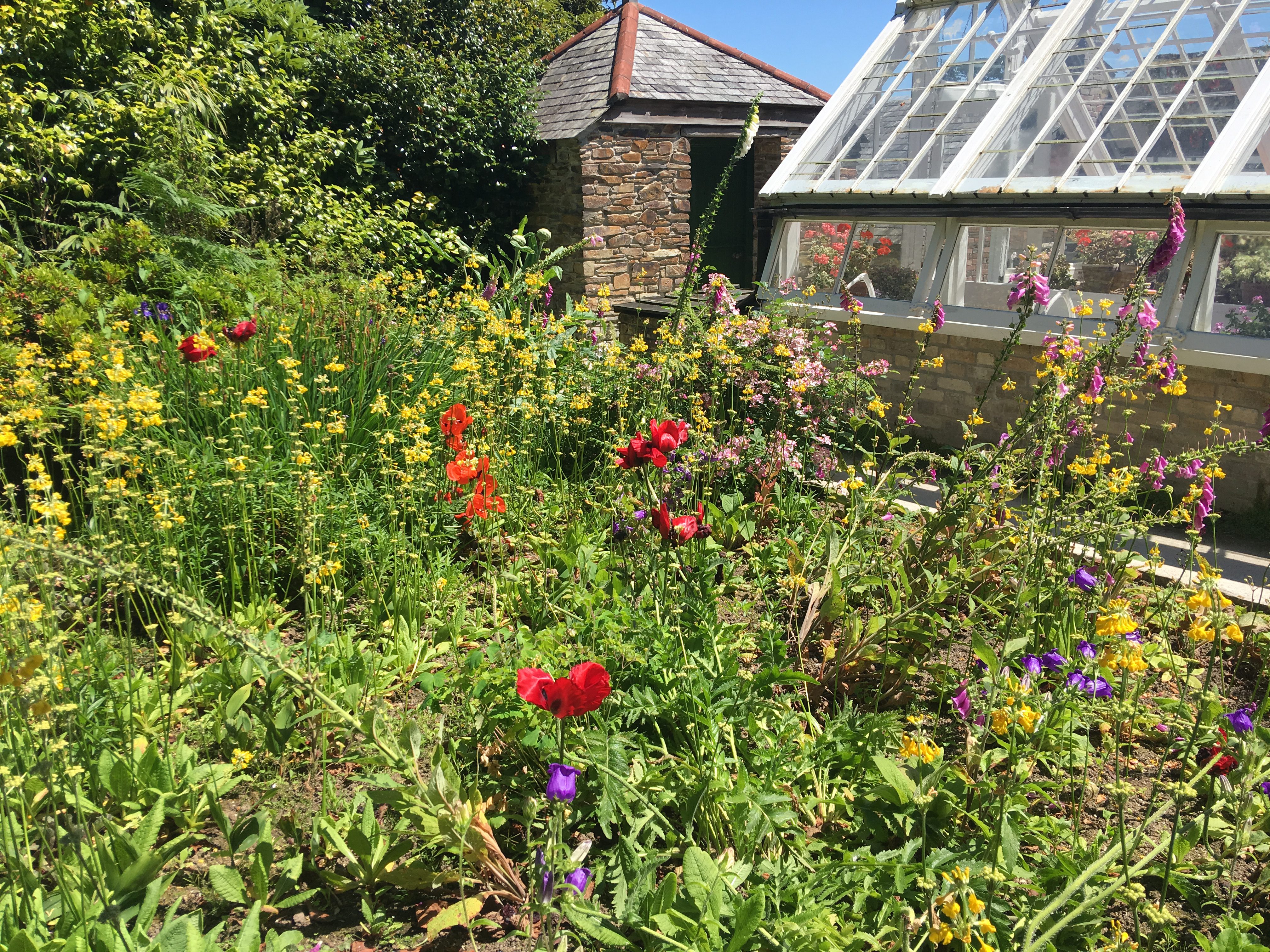
But before work came pleasure, and we had a wonderful first day.  The weather was fine and we went to one of the places on my bucket list, the Lost Gardens of Heligan, near Mevagissey.  Heligan was an 18th Century estate that fell into ruin after World War I and has been restored to its splendor.  There’s the stuff you expect in a botanical garden, like glass houses and lots of gorgeous flowers.

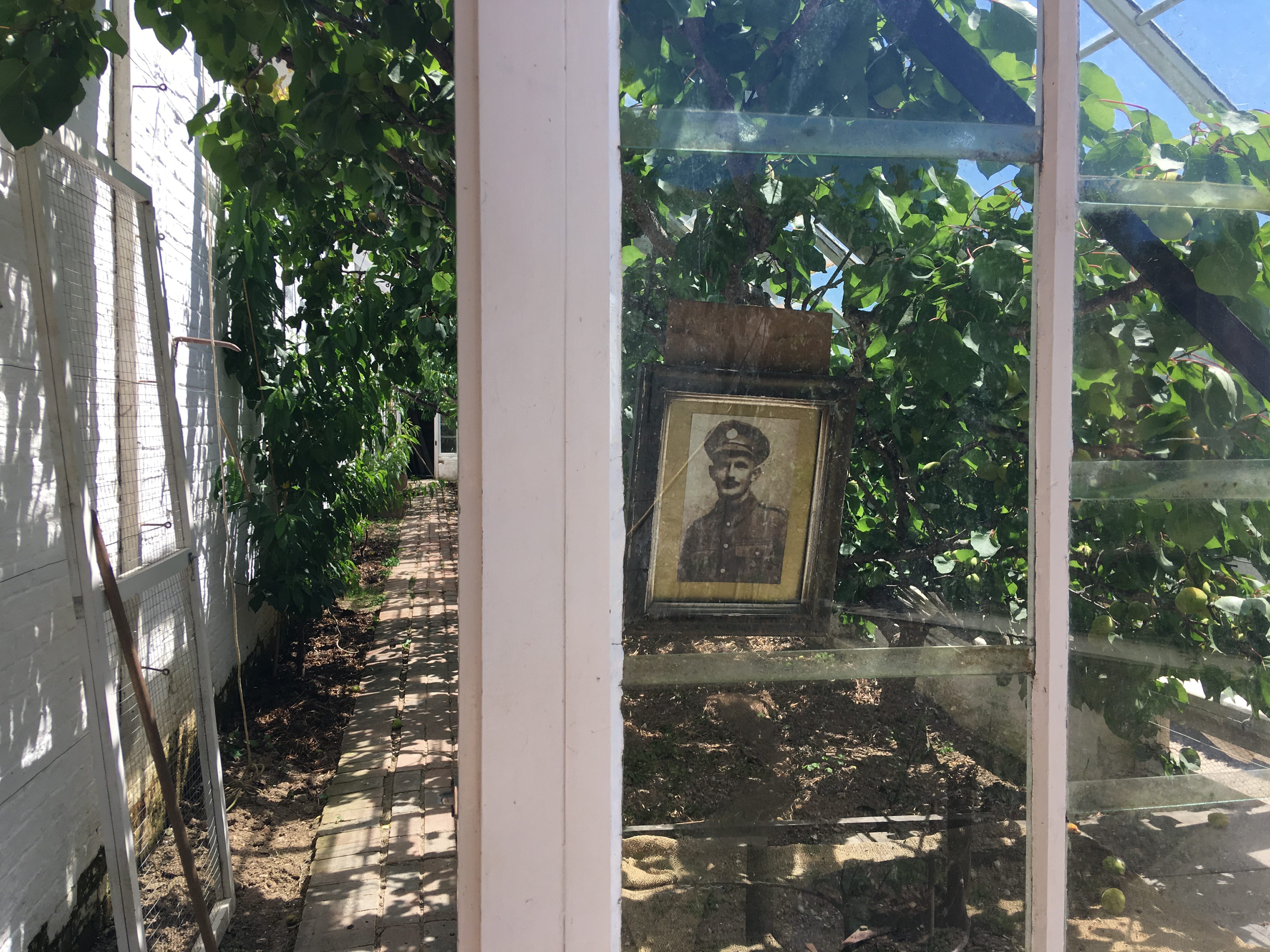
There were loving memorials to the servants who made Heligan tick in its heyday—supplying everything from pineapples to honey to beef to the household—and who were decimated by World War I.  This is the plum room, with a photo of its tender who died in the war.

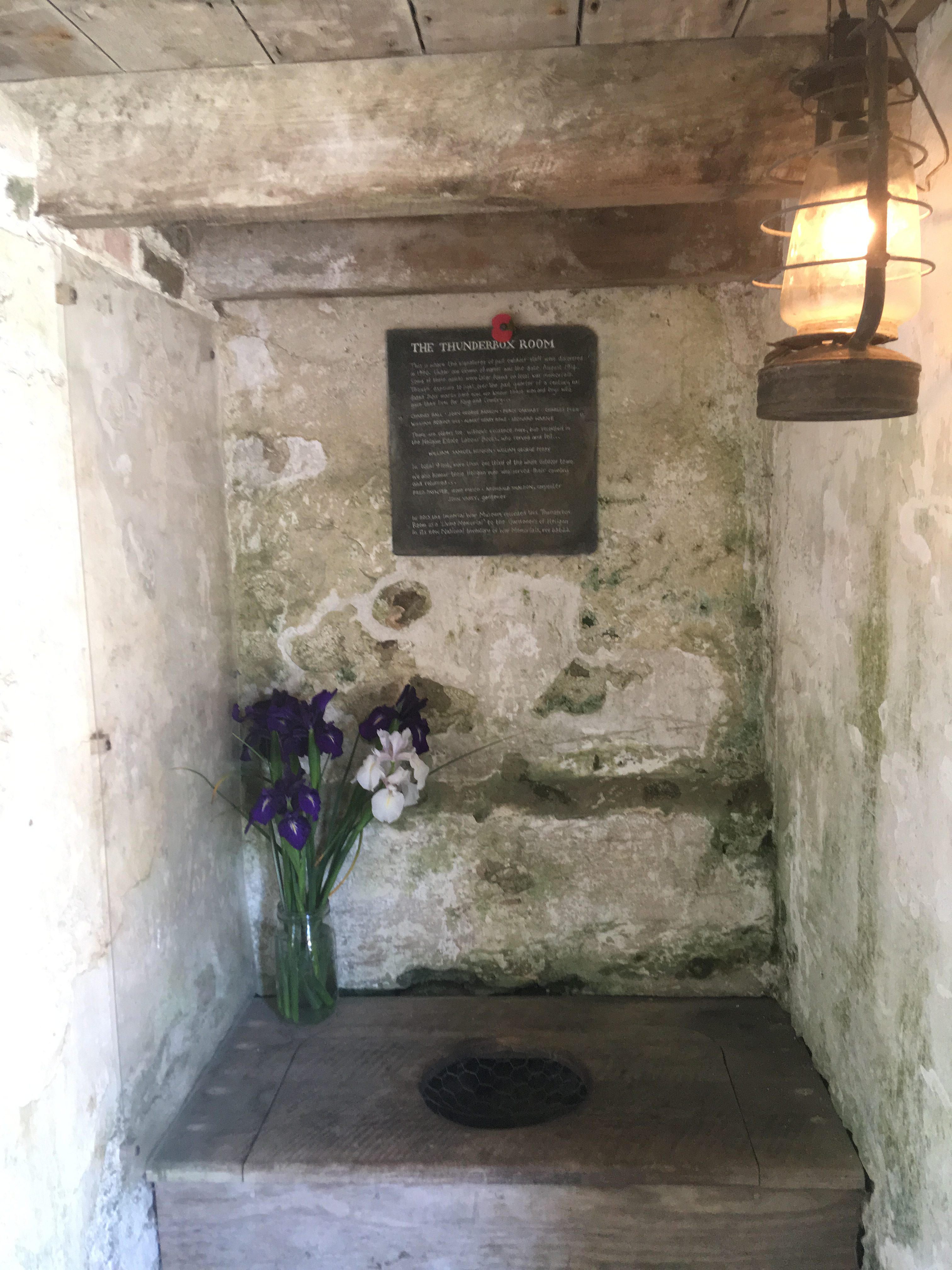
There was even a memorial in the Thunder Box, which was an outdoor toilet for servants.

There are also extravagant sections like The Jungle, which is … well a jungle.  In Cornwall.

There are hidden confections like the lying lady and the shady lady.  I hope you can spot them.

We got back to the resort in time for an important call I had about the proposal to the UK.  I staked out a table in the far corner of the lounge and got ready to Skype.  Oh, no.  A DJ arrived, set up, and began projecting videos on the wall above my head.  It was Disco Karaoke Nite! The Pet Shop Boys’ “It’s a Sin” started throbbing at a deafening volume.  People around me were drinking and laughing and yelling BINGO! and having a great time.

This was the beginning of my remote work experience.  This was it; this was where I proved to my employer that I could show up for meetings on Skype, respond to emails in a timely manner, and produce proposals as usual, no excuses.