Tag Archives: travel

Erratic Posts, Jurassic Coast

I used to take pride in writing enough every weekend to load up the blog for an every-other-day, always-the-same-time post.  With traveling, vertigo, moving, and sleepless nights due to restless legs, I’ve become untethered from that discipline.

I don’t know that it’s a bad thing; I stopped reading articles like, “Top 10 Tips to Promote Your Blog,” long ago.  No tip I ever tried made the blog stats Boom.  The stats did boom here and there, but I couldn’t tell why.  I pay $99 a year for the WordPress platform and haven’t been curious enough to pay more to maybe find out why someone in Russia or the UK is reading the entire blog—475 posts as of this one.

I never expected to be able to monetize the blog.  What company wants to advertise on a blog about prison, which is how it all started?  I usually only mention specific hotels or airlines when I’m ripping on them, so I don’t see corporate sponsorships in my future.

I pitched the blog to some publishing agents as a book idea and never even received a form reject email in response.  I pitched some of the story lines to local and national publications—most notably Vince’s observations about Pillow King production inside prison (“Made in the USA!”  Yeah, behind the closed doors of prisons, by people who net about 25 cents an hour.  That’s what Makes America Great, right?  We still have slave labor.)  Anyway, there would be initial excitement, then no follow through.  To be fair, there are lots of stories about corporate and political corruption to choose from.

So I just keep writing because I enjoy it.  If a couple hundred of you follow along, that’s great.  Thanks for reading, even if my posting has been patchy lately.

I came across this flyer in one of the many piles of stuff I am packing.

These stats were on a gigantic sign at the entrance to the Eden Project.  Lynn and I stood there for a long time contemplating it.  I can’t remember if the hand edit was there when I picked it up, or if I did it.  Apparently, the number of rich people who own almost everything in the world has shrunk from 20 to two since 2009.  The Great Recession was great—for those two people.

At work yesterday, a coworker and I were lamenting about our ailments.  She tore her meniscus ligament and had to have a transplant from a cadaver.  Yeesh.  I’m glad my ailments only involve no sleep and feeling like I’m on a rocking boat all the time.

“But at least we’re not in a refugee camp,” I said.

“No. No—we get to have problems.  A torn knee and surgery and a year of PT are not ‘first-world problems,’” she replied.

Our first full day in Lyme Regis.  Lynn and I walked into town and had a beach day.

Now, when I say “beach day,” don’t imagine sun and beach umbrellas and people in bikinis and speedos.  Here is a photo of Lynn attempting to use the combo washer/dryer in the public toilet. Note she is wearing polar fleece.
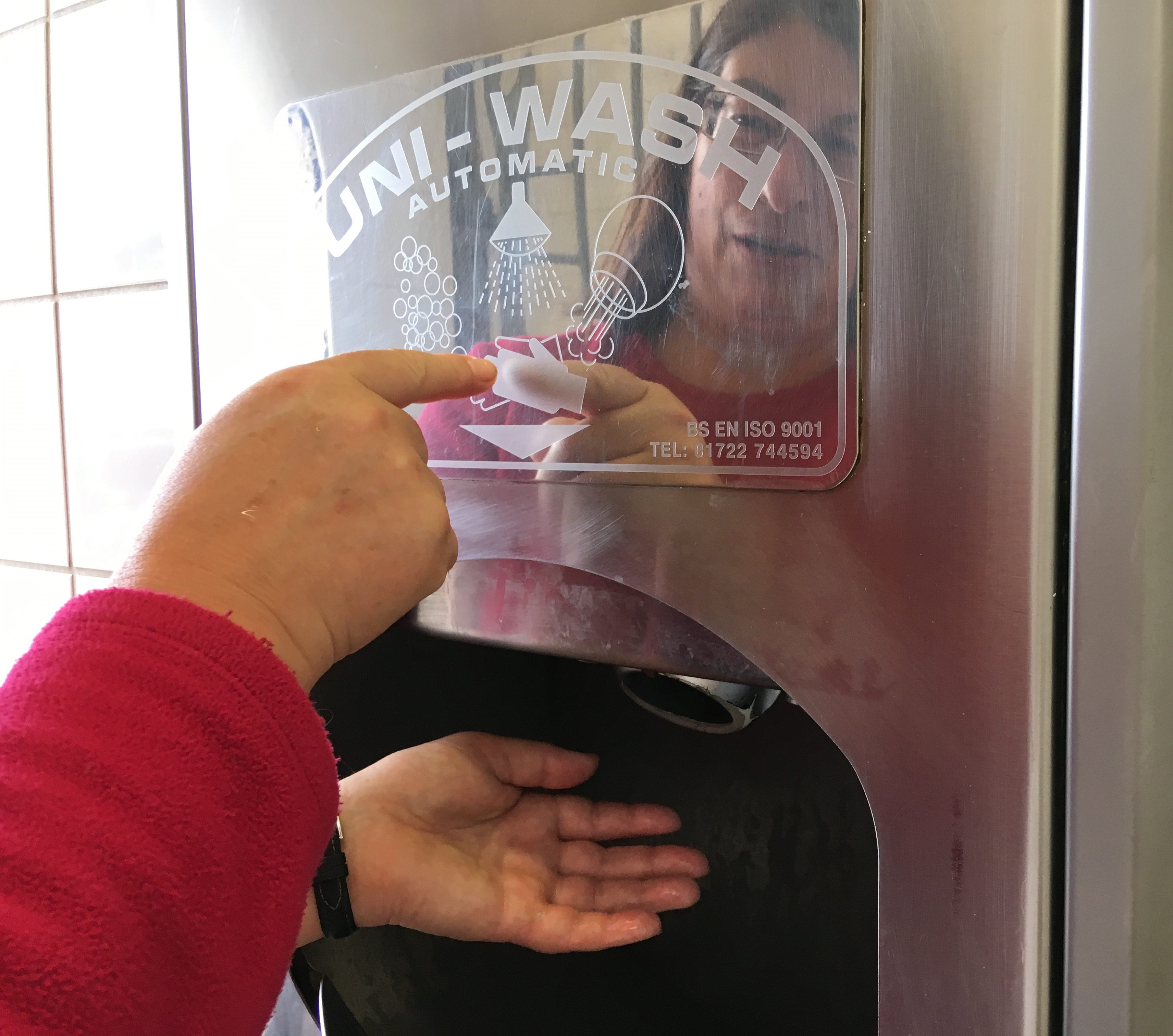
I was tempted to call the toll free number on the machine and ask for help.

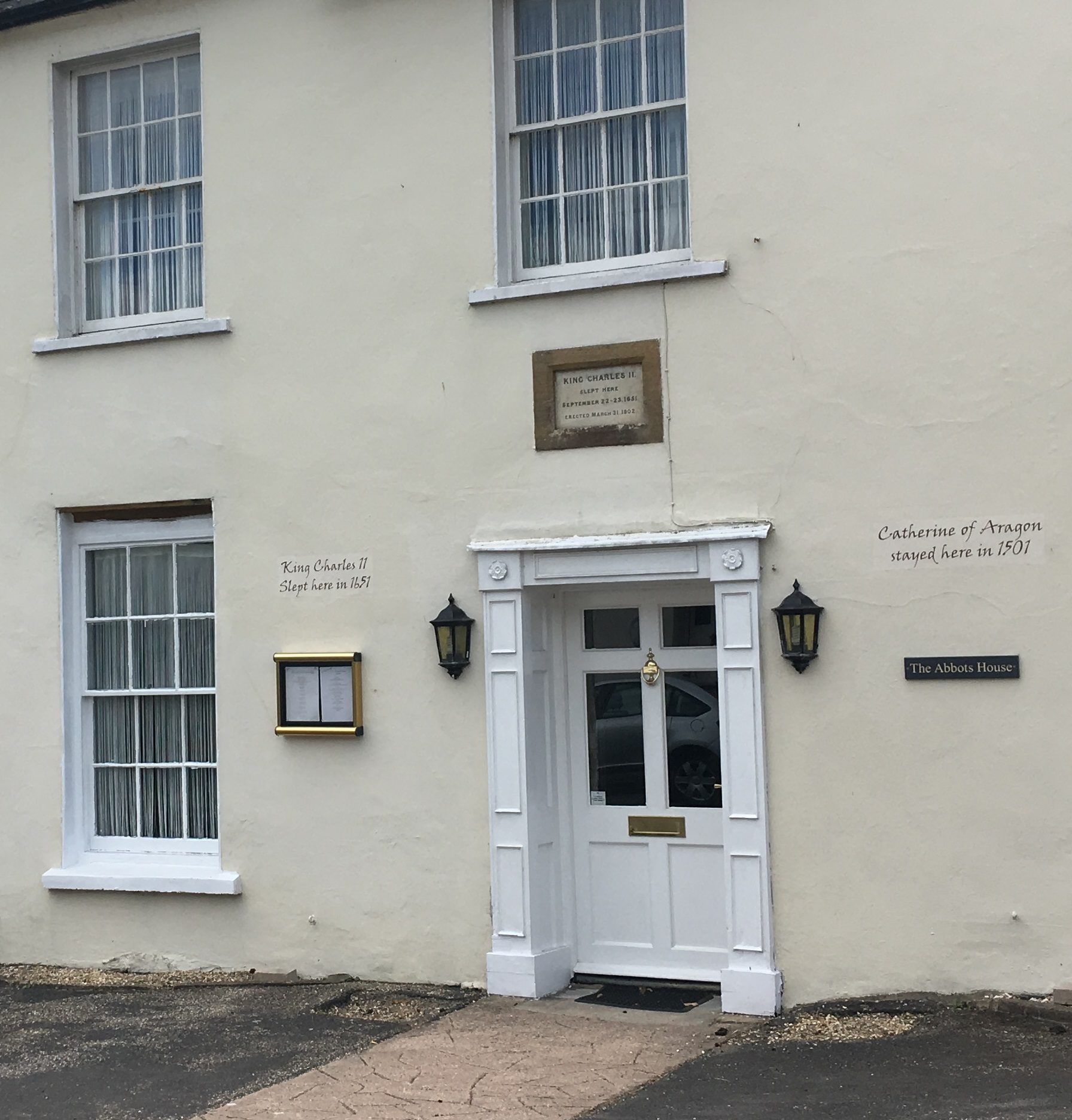
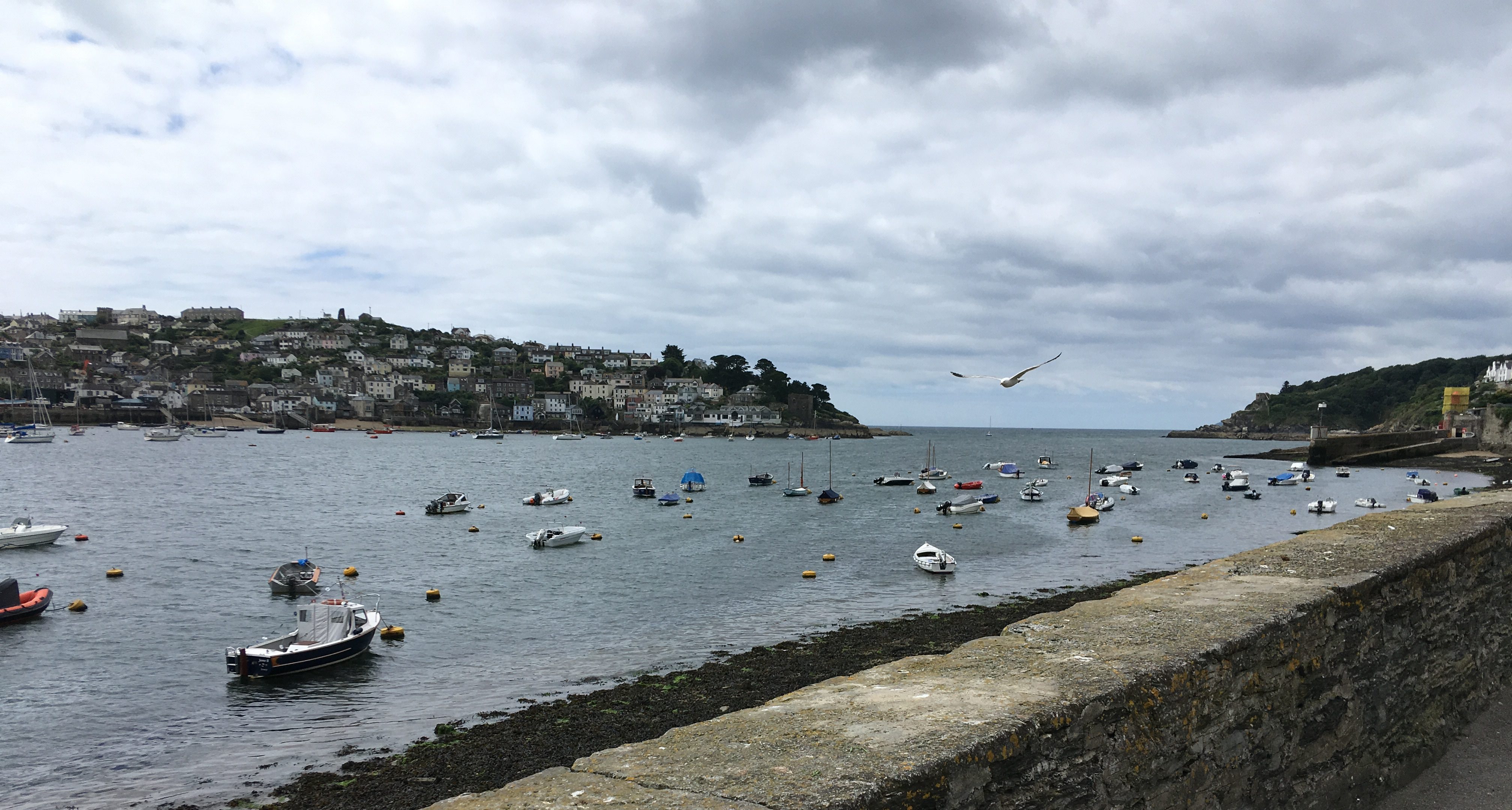
This is the town of Lyme Regis.  The sign on the white building notes that Catherine of Aragon slept here in 1501, followed by King Charles II in 1651.  Just imagine.
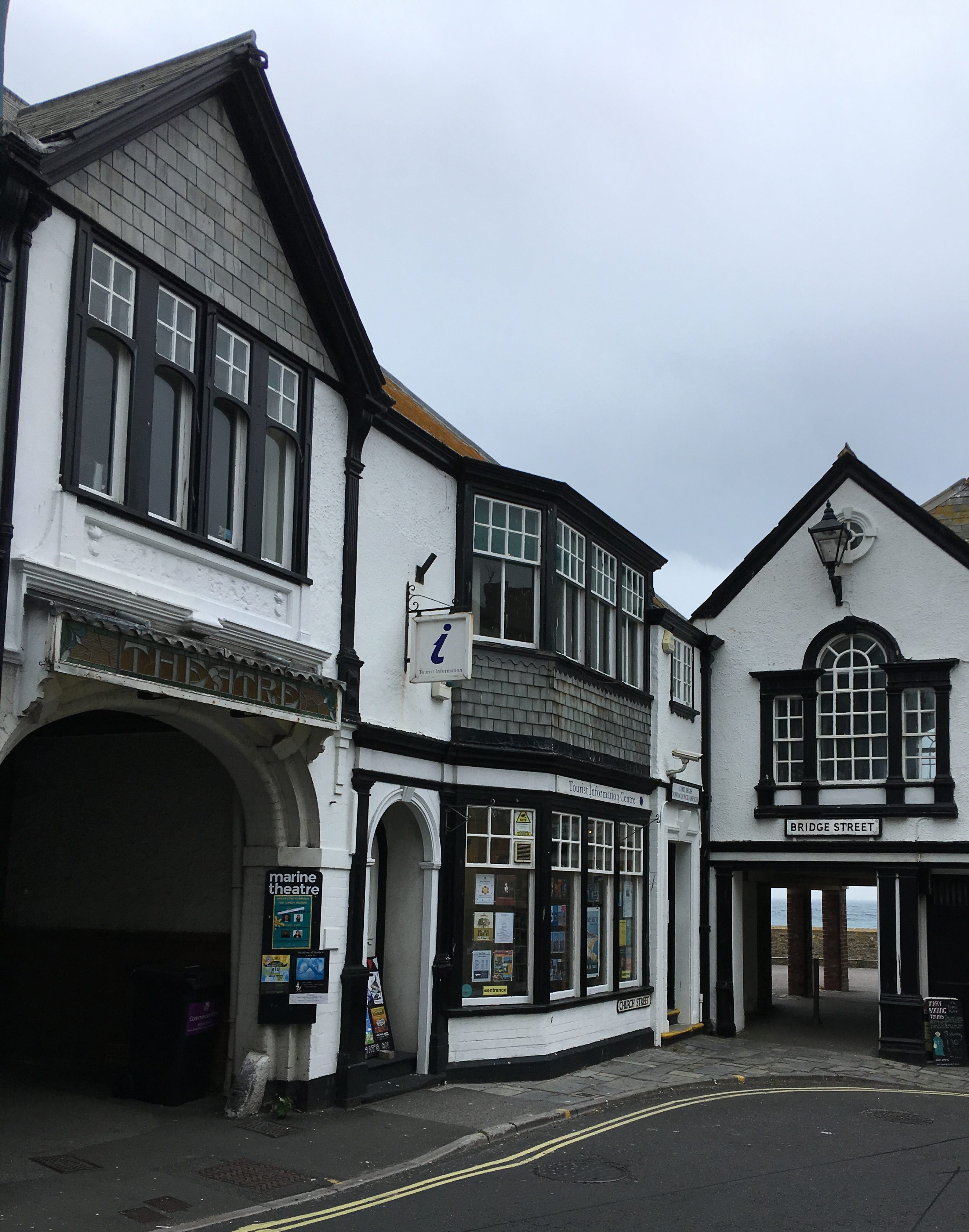
Yes, it was grey skies in one direction and white puffy clouds with blue peeking through in another.  And they both changed every 10 minutes.

The area is called the Jurassic Coast because you can find 170-million-year-old fossils there.

There was a small, well-done museum and a café serving fresh crab salad sandwiches and tea.  A woman my age had brought her elderly mother for a day out and was yelling over and over, “Ja wanna saaannie ‘n’ a noice hot cuppa, mum?!”   (Would you like a sandwich and a nice cup of hot tea, mother?)

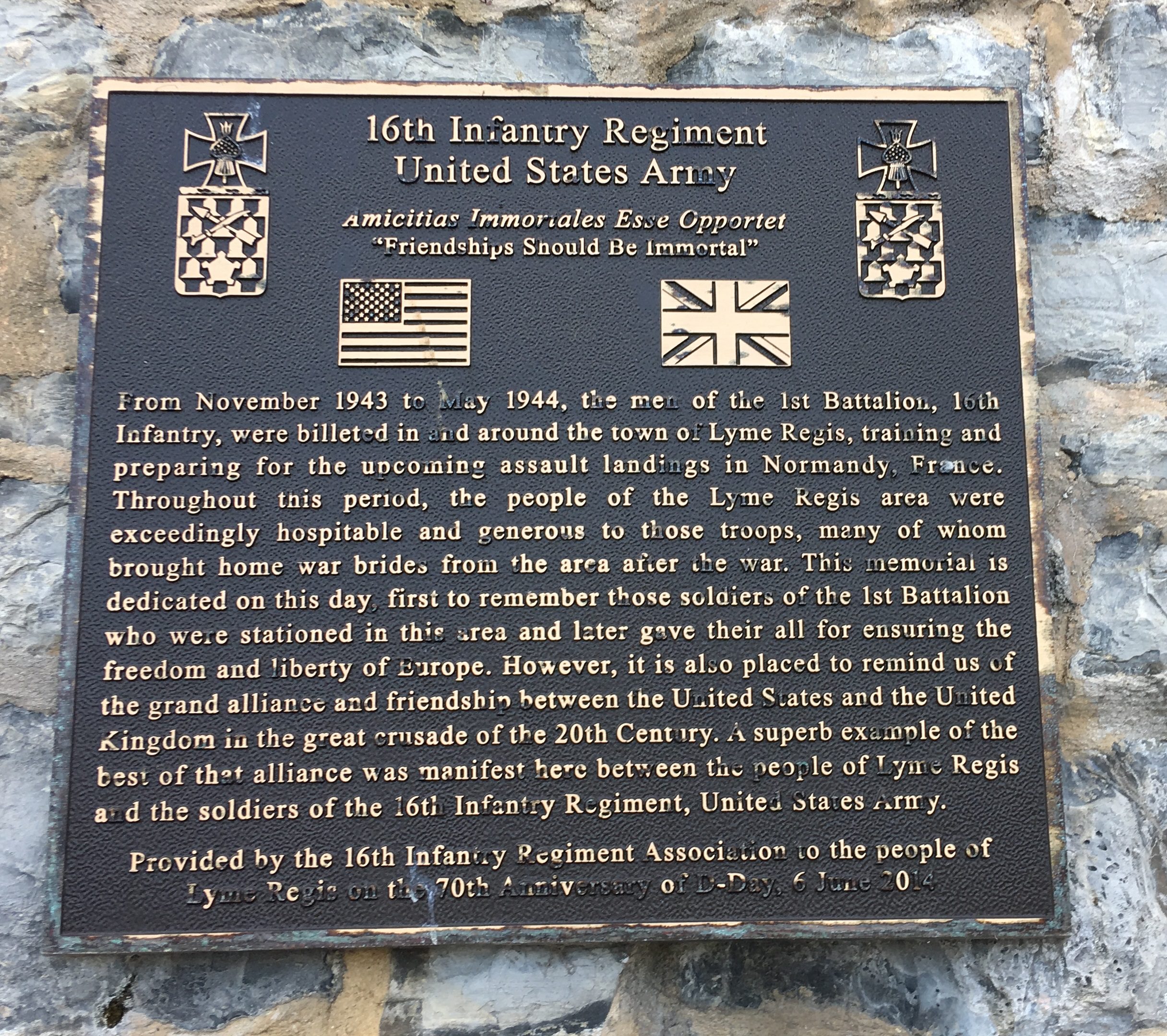
This plaque described, euphemistically, how the locals were “exceedingly hospitable and generous” to US troops, resulting in many trans-Atlantic marriages.
The scenery was stunning.
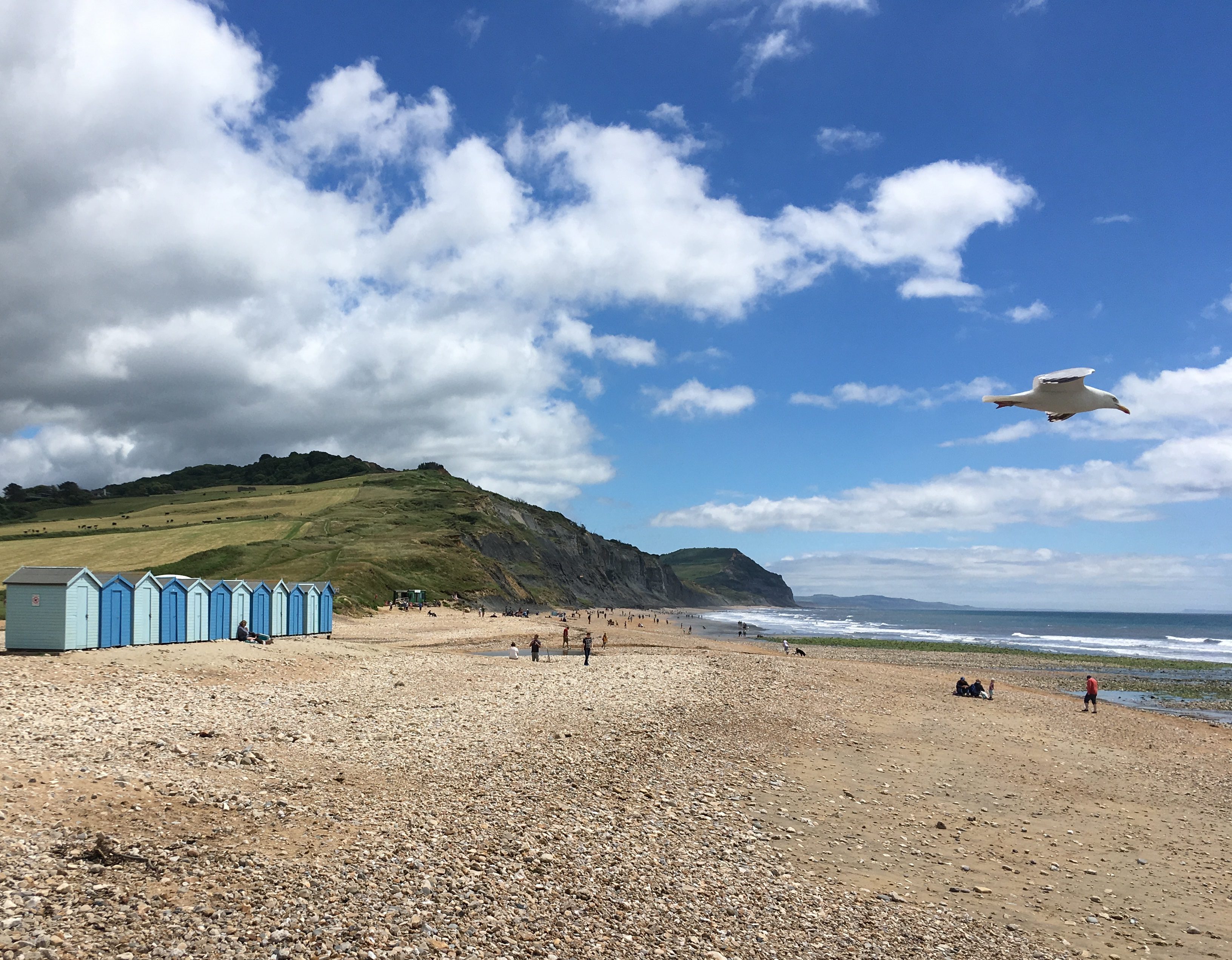
 

Rock In It

I pored over the maps of southwest England so I would have something to say when Lynn asked, “Where do you want to go today?”

There were dozens of towns with fanciful, funny-sounding names: Gribben Head, Little Petherick, London Apprentice, Higher Porthpean, St. Blazey, Ready Money, and the unfortunately named Black Head—the names read like nothing anywhere else.  Of course that’s true of everywhere.

Then there were the saint names: St. Mawgal, St. Erney, St. Neot, St. Mabyn, St. Veep.  I had grown up with Saints Matthew, Mark, Luke, and John; Mary, Catherine, and Anne. I wondered where the name Neot originated, and what Saint Neot had done—what torture he or she had endured to warrant sainthood (Wikipedia tells us he was a midget and the patron saint of fish).

Lynn would say she isn’t the world’s greatest driver.  And why would she be?  She grew up in London and has worked all over the world, so she has used public transportation or hired drivers a lot more often than driving herself.

The roads in the southwest are famously narrow and winding, with tall hedgerows on either side so you can’t see oncoming traffic until it’s right on top of you.  But that doesn’t stop people from driving massive campers and speeding along at over 50 miles per hour.

First, we had to get out of the resort.  Backing up is not Lynn’s favorite activity; she worried out loud about the  decorative rocks on either side of the “narrow” driveway.

We heard a loud screeatch as one of the rocks tore open a piece of the Picasso’s siding.

Naturally I helped by taking a photo.

“Why do they put rocks everywhere!?” Lynn exclaimed.

“Well you’ve showed ‘em by moving one!” I said.

A grounds worker was passing by and Lynn called out to him, “Excuse me, excuse me!  Will you help us?  This rock was in the way and I seem to have moved it out of place with my car. Could you move it back?”

Luckily the guy was a giant.  Without a word he hoisted the rock and put it back in place.

“Thank you very much,” Lynn ingratiatingly.  “I suppose this happens all the time—these rocks everywhere, people must drag them out of place on a weekly basis!”

“No,” said the guy gruffly, and walked away.

I nudged the torn piece of the vehicle back into place so it wouldn’t flap as we drove.  “Maybe they won’t even notice it,” I suggested optimistically.

“It doesn’t matter,” said Lynn. “This is why I check ‘yes’ to all the insurance they offer, even though people say it’s a rip off.”

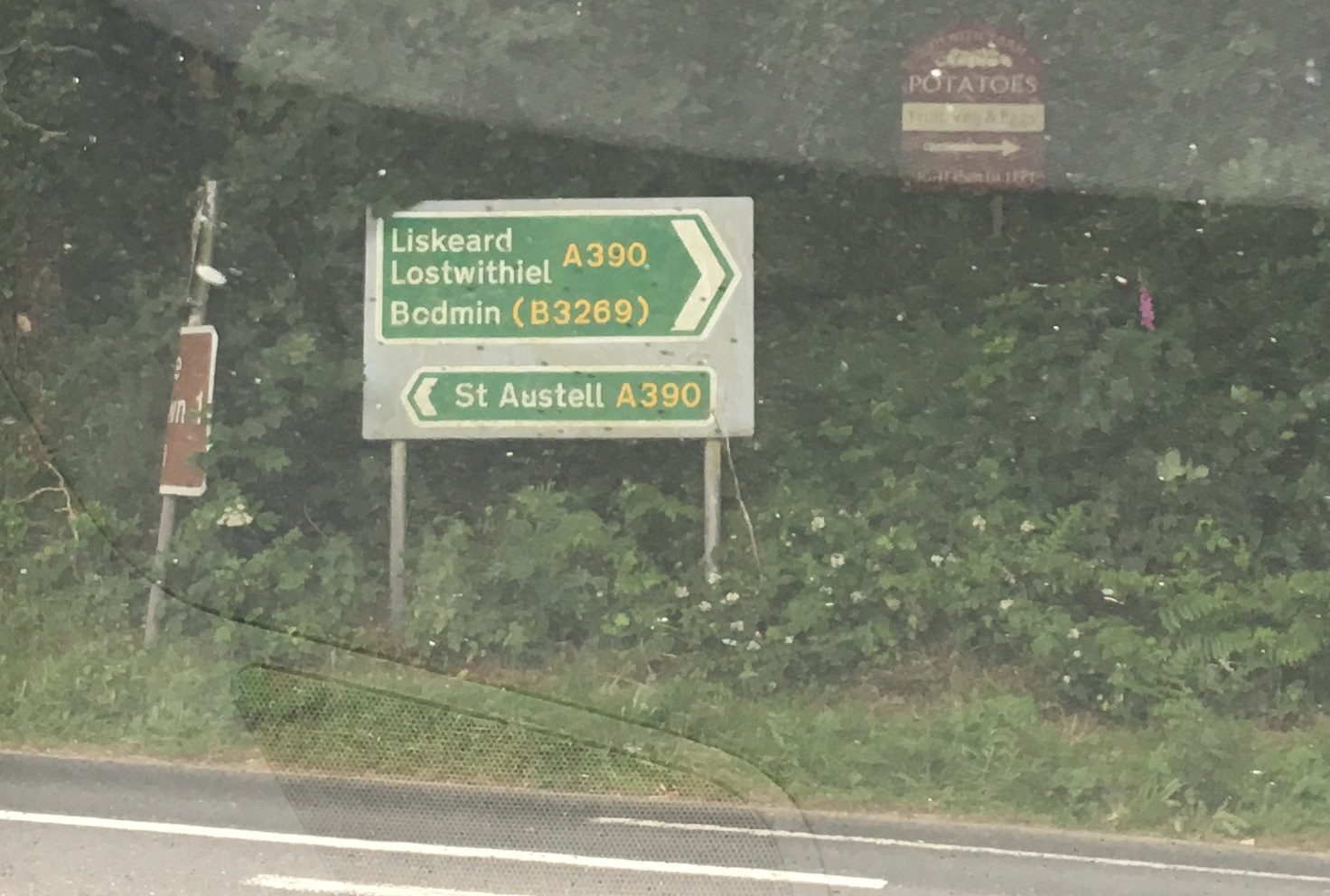
We managed to drive through the gauntlet of rocks and exit the resort.  The next step, which didn’t seem to get easier with repetition, was to guess which giant roundabout to take, and then which exit.  This involved driving around in circles, then making our best guess and plunging off an exit, hoping for the best.  The vehicle hadn’t come with a GPS so I was the co-pilot.  This was tricky because British signs mean nothing to me.  Here’s a sign for an upcoming roundabout:

As we drove, Lynn explained what A and B roads were, why some items in signs were in parentheses, what the little stub on the circle was, and more.  But often, the signs came up so fast we had only seconds to decide which way to turn.

The worst was when there was no sign, so we shot ahead, gradually coming to the conclusion that we were going the wrong way, and having to turn around.

Lynn got frustrated when we got lost.  I probably wasn’t helpful when I kept saying, “It’s an adventure!  We can’t really go wrong, everywhere we go, the scenery is so beautiful.”

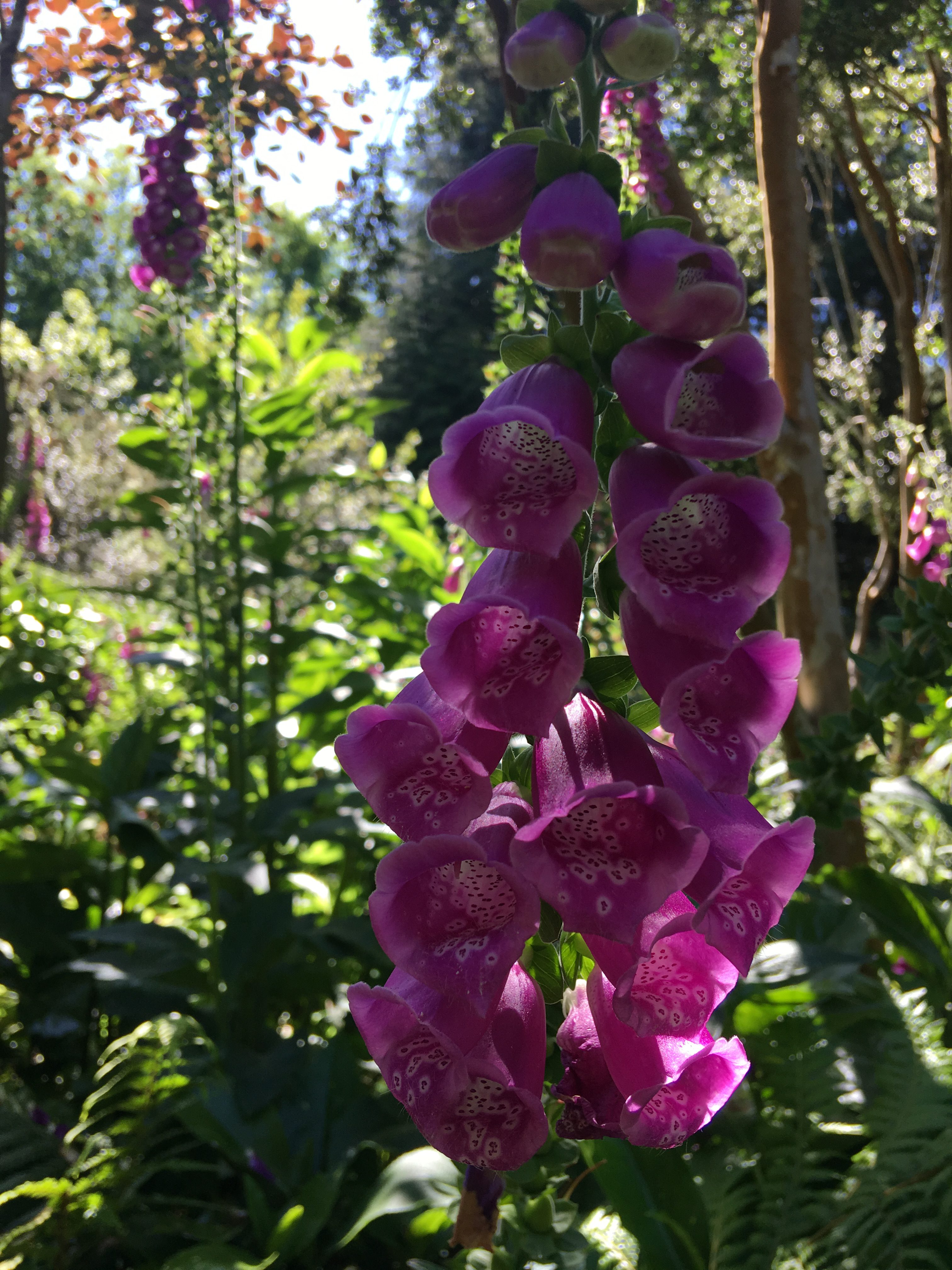
Where the hedgerows opened up onto fields, the roads were lined with foxglove, and farther on we could often see the sea sparkling in the distance.

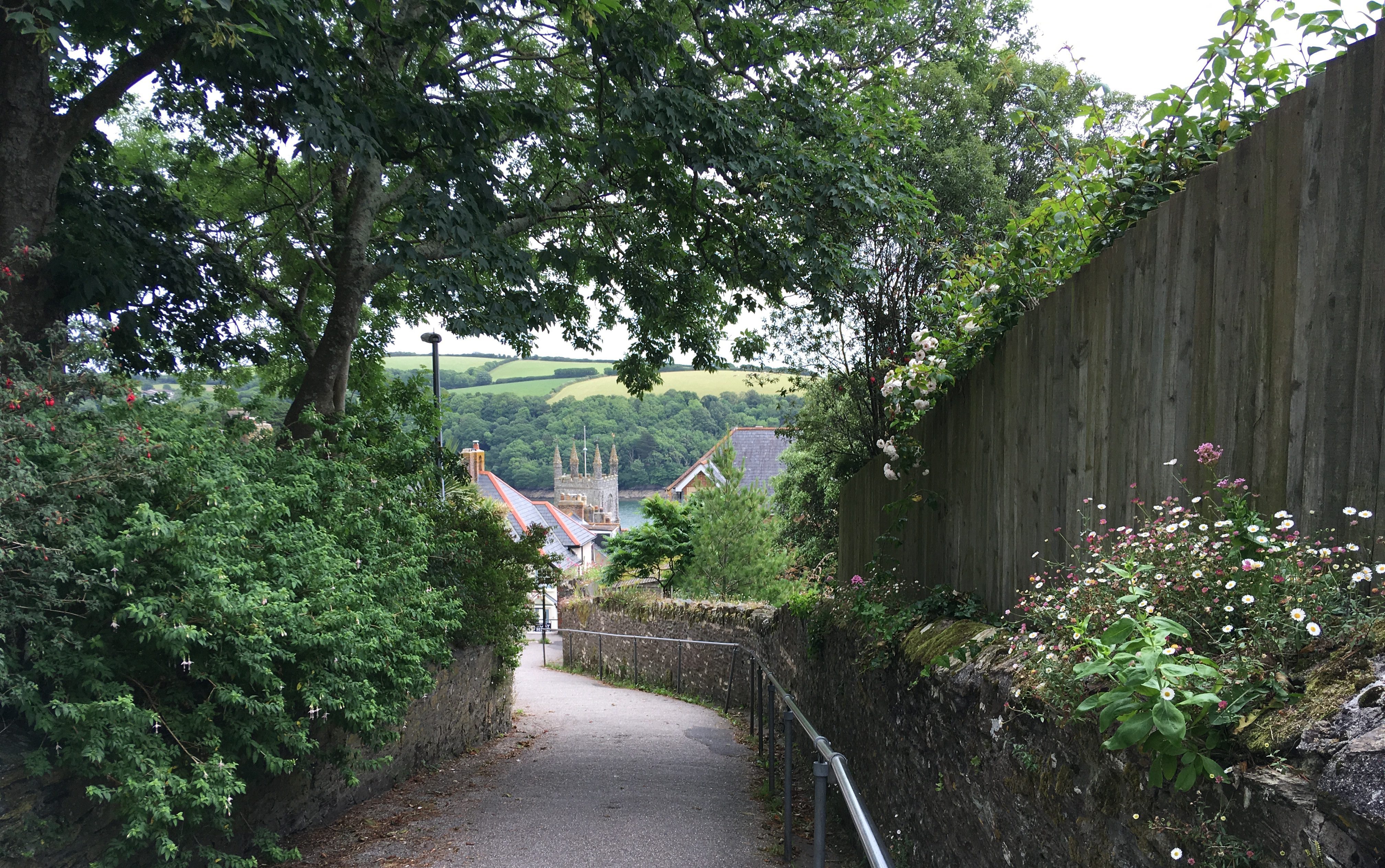
Here are some photos from Fowey, pronounced foyyyyyy.   I love British trees in general; they’re so much older than ours in Minnesota.  I was awed by these, in the car park, and it got better from there.

Painting Tintagel Blue

Possum continued to have pain from her kidney stones, although blunted by pain killers.

“The doctor described what kidney stones are like,” she said.  “They’re not like stones at all, they’re more like bits of coral—jagged and razor sharp—so they tear your kidneys from the inside as they’re moving through them.”

I felt nauseated listening to her describe what was going on inside of her, but she was chipper.  “It was really interesting!” she declared.

“But was the doctor good looking?” I asked.  “Lynn said he was well dressed and had nice hair.  But Lynn’s married so maybe she’s not as observant as you or I would be—both of us being single.”

“Oh yeah, he was well dressed.  He had a nice tweed jacket with a green tie and yes, his hair was thick and wavy and silver.  But his face was just okay.”

“Was he wearing a wedding ring?” I queried.

“I don’t know!  I didn’t notice.  I was a bit delirious.”

“I think you may need to have a relapse so he has to come back and I can get a look at him,” I jested.  This was met with a stern look.

It was the morning of our second or third day in Cornwall.  Lynn was sleeping and I Possum and I were chatting while I washed my clothes.  Foreign washing machines always throw me for a loop.  Here’s the one in the cottage; note it has at least 25 options:

How hot is 40C?  I have no idea.  What did the symbols on the right mean?  No clue.  I had shoved everything in and chosen “Fast Wash,” which took two hours and 20 minutes.  After an hour and a half, the machine seemed to stop so I forced the door to unlock by shutting off the power.

This was a combo washer-dryer, and I had inadvertently added the dryer option.  “Drying” did not mean tumble drying.  It meant heat was pumped into the unmoving canister so that after an hour you extracted a compact, crispy-on-the-outside and damp-on-the-inside wad of clothes.  I have never known any European or English person to actually use the dryer option—they all hang their washing on racks.  I think they would say they do that because it’s better for the environment.

I went upstairs with the drying rack to hang my clothes dry.  The American washer and dryer (separate appliances) in my condo are so huge I can do two weeks’ worth of laundry at one go.  The washer takes 20 minutes and the dryer half an hour, tops.  I would love to see an energy use comparison between my giant, “Get ‘er done!” US appliances and European ones.

I peeled open the crispy-damp wad and found an unpleasant surprise.  All my clothes were blue.  I like the color blue, but blue socks, underwear, bras, shirts, and pants?  How did this happen, I grumbled to myself, as I hung up my blue tie-dyed dress.  It would take me a month to register it had been this dress.

Too soon, it was time for Possum to drive back to Oxford, despite Lynn’s and my protests.  She sent us texts along the route to assure us she hadn’t fallen asleep at the wheel from the pain meds, and had arrived home safely.

Meanwhile, Lynn and I headed out in the Picasso to Tintagel Castle.

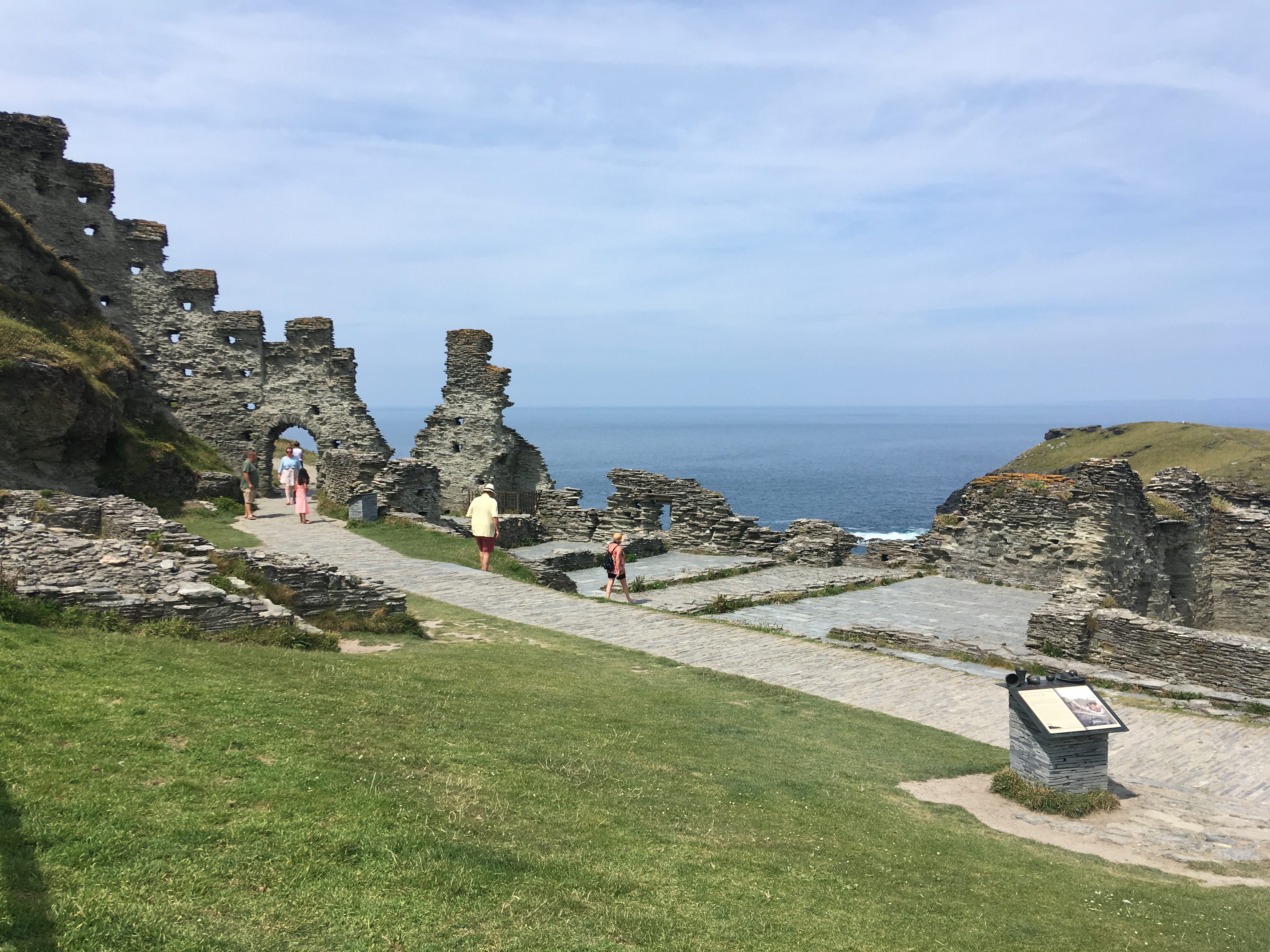
This was supposedly the home of the legendary King Arthur.  We took a quick spin through the interpretive center, where we learned that there may have been a Roman settlement here but there’s no proof of that.  Some time after the fall of the Roman Empire, the King of Dumnonia, as the region was then called, built the first castle.  In the 13th Century, Richard, First Earl of Cornwall, took over and built the structure whose remains are still visible.  And so on.

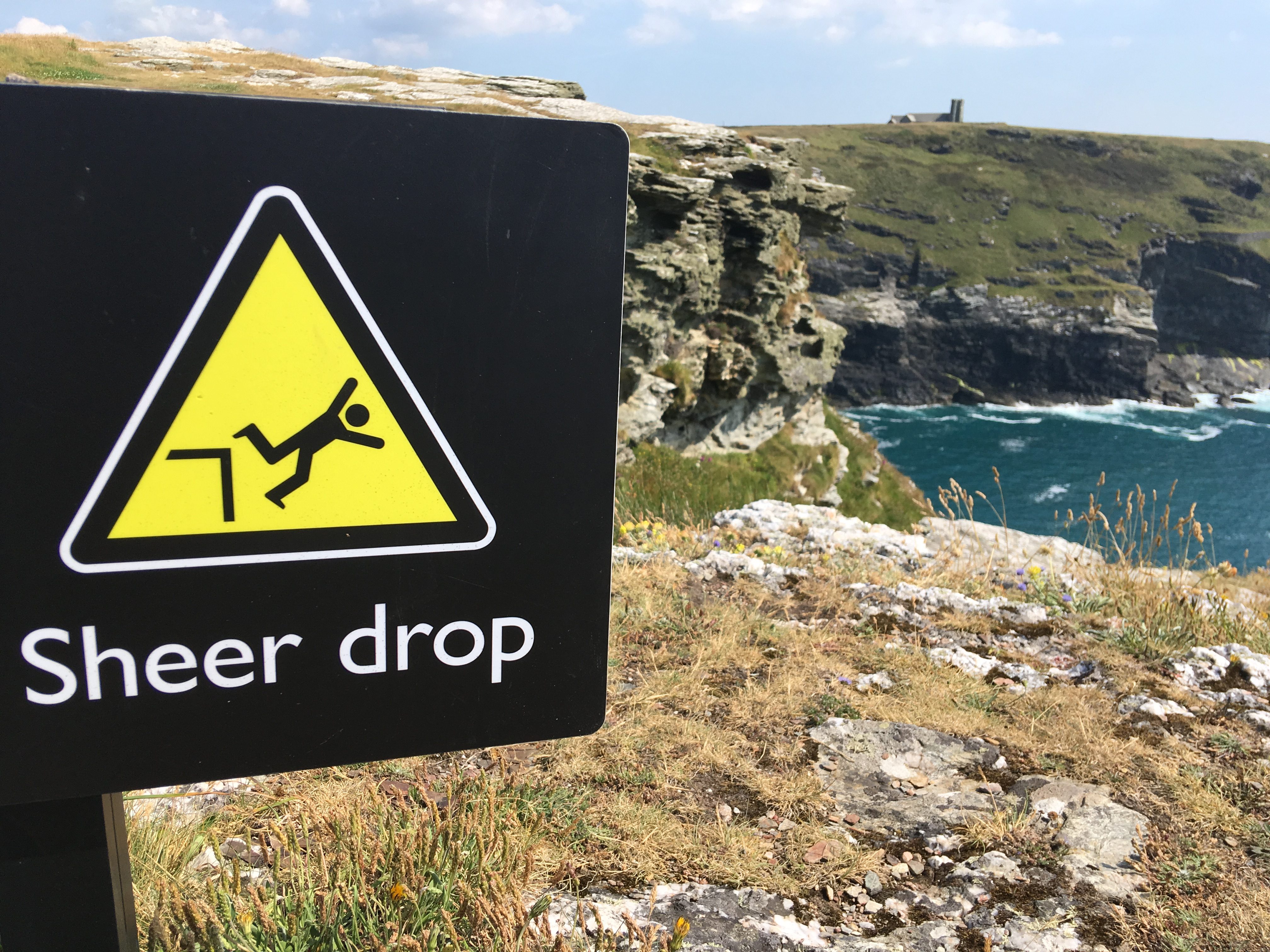
We scraped our way down an extremely steep, dusty road, then climbed up about three hundred stairs.  It was the hottest day of summer so far, so we stopped for breathers and to appreciate the stunning scenery.  There wasn’t much left of the castle but the climb was worth the effort.


Getting In, Getting Around

Looking back on my three months of working remotely from Europe, Ethiopia, and the UK, I can say I would love to do it permanently.  From what I can tell, there is no legal reason I couldn’t live in the UK without a work visa as long as I was working for a US employer.

According to the UK immigration website, as a US citizen I automatically get a six-month visa when I enter the country as a tourist, without even applying.

Paying rent could be a challenge.  I’m certain it would be impossible to open a UK bank account.  I would have to find a landlord who was willing and able to have rent paid electronically, probably from PayPal.

What stops me from seriously considering this plan?  Well, every time I enter the UK I get grilled by border control.  This happens to my UK friends when they enter the US, too.  I got grilled by Danish border control when I entered Denmark, so it’s not uncommon.

When I came to the UK from Ethiopia, I walked from the plane through halls festooned with welcoming slogans, “Welcome to the UK!” “See the English Countryside!”  “Visit Historic Palaces!”  In other words, they want people to visit and spend money in the UK.

I waited in line for a border agent.  Again, there were banners above the agents’ booths proclaiming the beauty of the English countryside, historic sites, museums, etc.

I stepped up to the booth and after looking over my passport, the Sikh border agent barked at me, “Why are you coming here?”

“Tourism,” I replied.

He looked skeptical, especially when I said I would be staying for two and a half months.  Would I be working in the UK?  No, I replied.  And this was true to the spirit of the question, I believe.  I would be working remotely for an American employer, not for a UK entity.  I would not be stealing a job from a UK citizen, or being paid by a UK employer and transferring my paycheck to an American bank.  I wouldn’t be collecting any public benefits.

I was afraid that if I tried to explain any of the above I would be whisked into an interview room.  Just in case they did that anyway, I also had a letter of employment and documentation of all my US assets including my condo in an envelope in case they wanted proof that I had reasons to return to America.

He asked for the addresses where I would be staying, the names of my friends, and the places we were planning to visit.  He asked to see my return plane ticket, which I had printed out and ready.

Finally, reluctantly, he stamped my passport and without even speaking to me, waved the next passenger forward.

Maybe I was overly concerned about being turned away since I had been refused a visit with my son in prison, and then banned for six months.

So I got in okay this time.  But—what if I cooked up a plan to stay in the UK for six months—the length of a tourist visa—and got turned away at border control?  How much more suspicious would they be of six months than two and a half months?  The uncertainty just wouldn’t be worth it.  There’s no information about this on the UK immigration website, and I don’t want to raise a red flag by asking about my personal case.  I can just imagine them flagging my record somehow to ban me from entering.  All because I love their beautiful country and want to spend my American paycheck there.

And it is a beautiful country.  You may be thinking, “America is beautiful too!” and you would be right.  I’ve seen the Grand Canyon, Florida beaches, Monument Valley, Lake Superior, and Highway 1 in California.  There’s plenty of beauty in both countries and I intend to see as much of it as I can.

From the Lost Gardens of Heligan, Possum drove us through tiny, twisting roads to Portmellon, where we walked on the beach and had a half pint in a pub called The Rising Sun.

Lost Connections, Lost Gardens

My cough-drop induced discomfort passed, and I turned my thoughts to catching up with work after being out of communications for a few days.  Possum was feeling better on the pain meds, so after obsessively rebooting the router half a dozen times we all walked over the lodge.

The cottage we were staying in was one of about 20 cottages surrounding a big central lodge with a dining room, pool, game room, and so on.  This was where the front desk was, and this was where Possum and I demanded action while Lynn sat at a discrete distance, cringing at our combined American and Australian demands for action.

We’ve all been there: promised something that doesn’t work, facing a customer service person who can’t or won’t help.  Different people approach it differently. In general, I think Americans and Australians believe we can fix anything! if only we demand action loudly enough and refuse to give up and go away.

After politely badgering a series of women at the desk, we came away with four theories ranging from sinister to silly: 1) the owner of our cottage hadn’t set up the router correctly, 2) the owner of our cottage had set up a router even though there was no Internet, then falsely lured people to the cottage with a promise of wifi, or 3), a storm had knocked out the Internet to that particular cottage three weeks ago and the owner hadn’t fixed it.

Bottom line, no Internet.  “It’s just not very good here in the best of times,” explained one young woman.  “We’re so remote.”

I had expected to have lousy Internet in Ethiopia, but in England?  But it made sense. If I go to northern Minnesota, to the Boundary Waters Canoe Area we share with Canada, there is no 3G or even cell phone service.  There are probably large swaths of the western states like North Dakota and Nebraska that don’t have Internet.

Bottom line, we were allowed to log on to the lodge’s account.  The catch: we could only get a connection in the lounge, where holidaymakers enjoyed their G&Ts, raucous hen parties took place, kids ran through in wet swim suits on their way from the pool, women in lycra workout gear strutted through to get to the yoga studio, and MTV blared on multiple big screens 24/7.

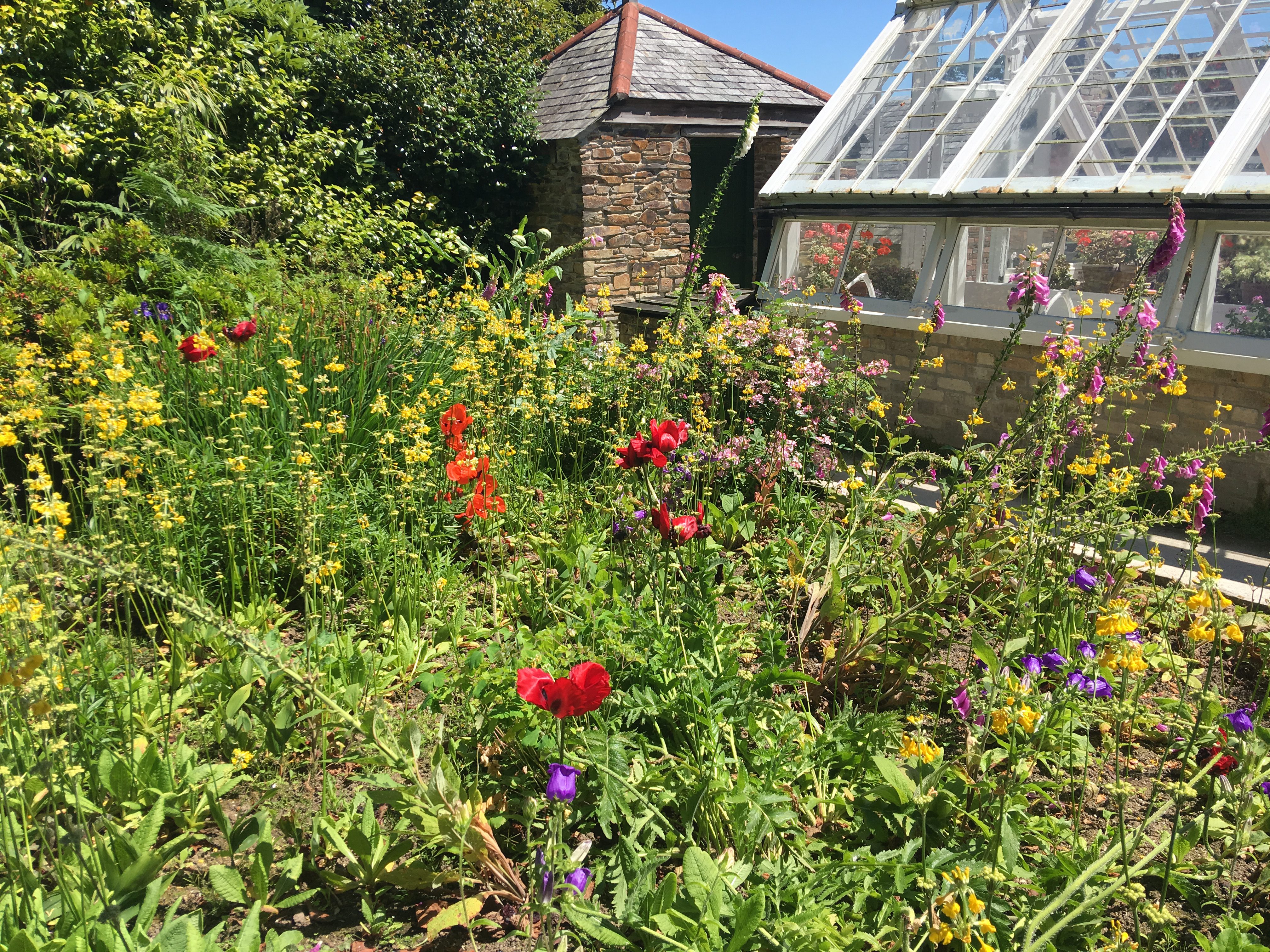
But before work came pleasure, and we had a wonderful first day.  The weather was fine and we went to one of the places on my bucket list, the Lost Gardens of Heligan, near Mevagissey.  Heligan was an 18th Century estate that fell into ruin after World War I and has been restored to its splendor.  There’s the stuff you expect in a botanical garden, like glass houses and lots of gorgeous flowers.

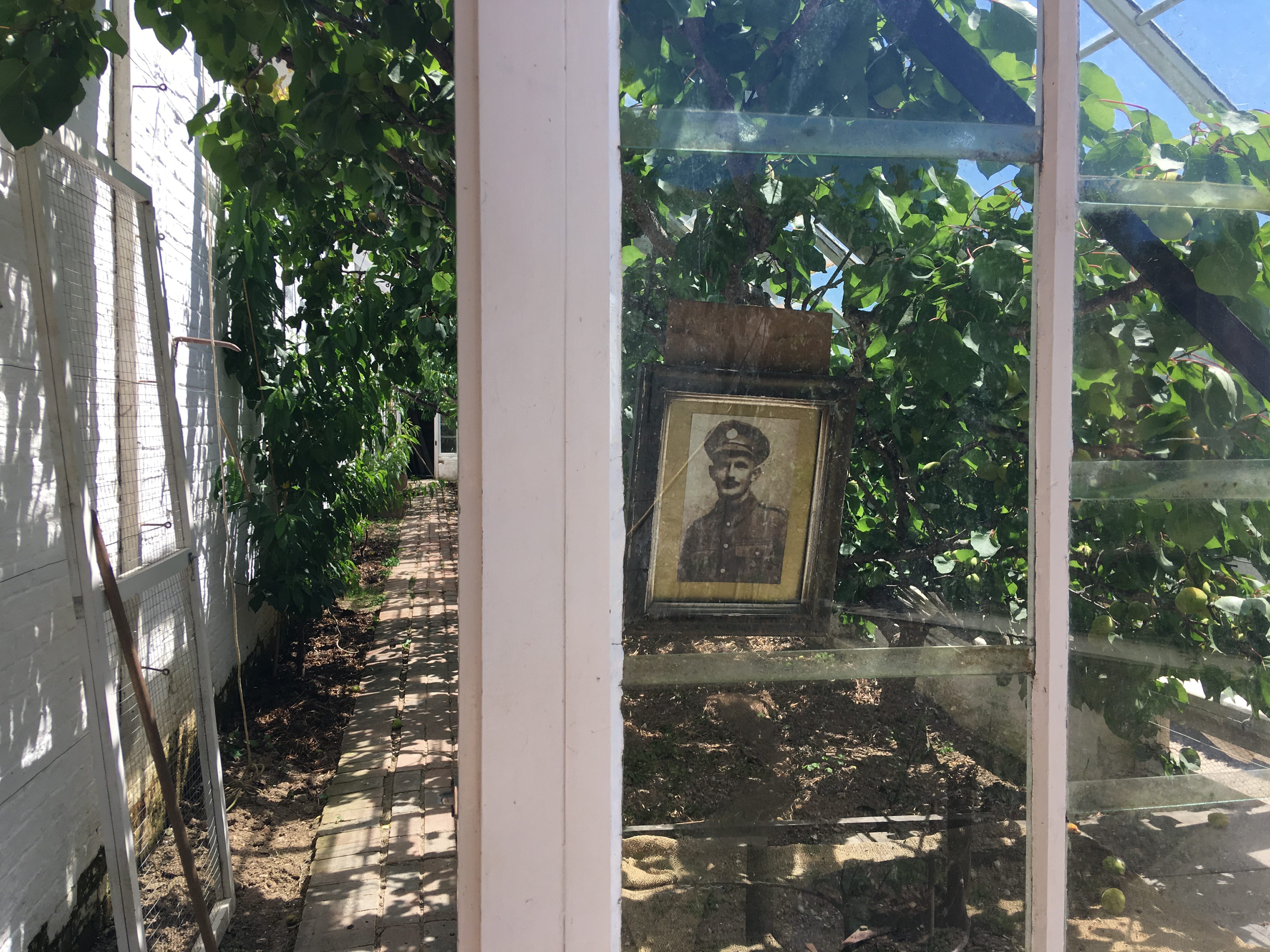
There were loving memorials to the servants who made Heligan tick in its heyday—supplying everything from pineapples to honey to beef to the household—and who were decimated by World War I.  This is the plum room, with a photo of its tender who died in the war.

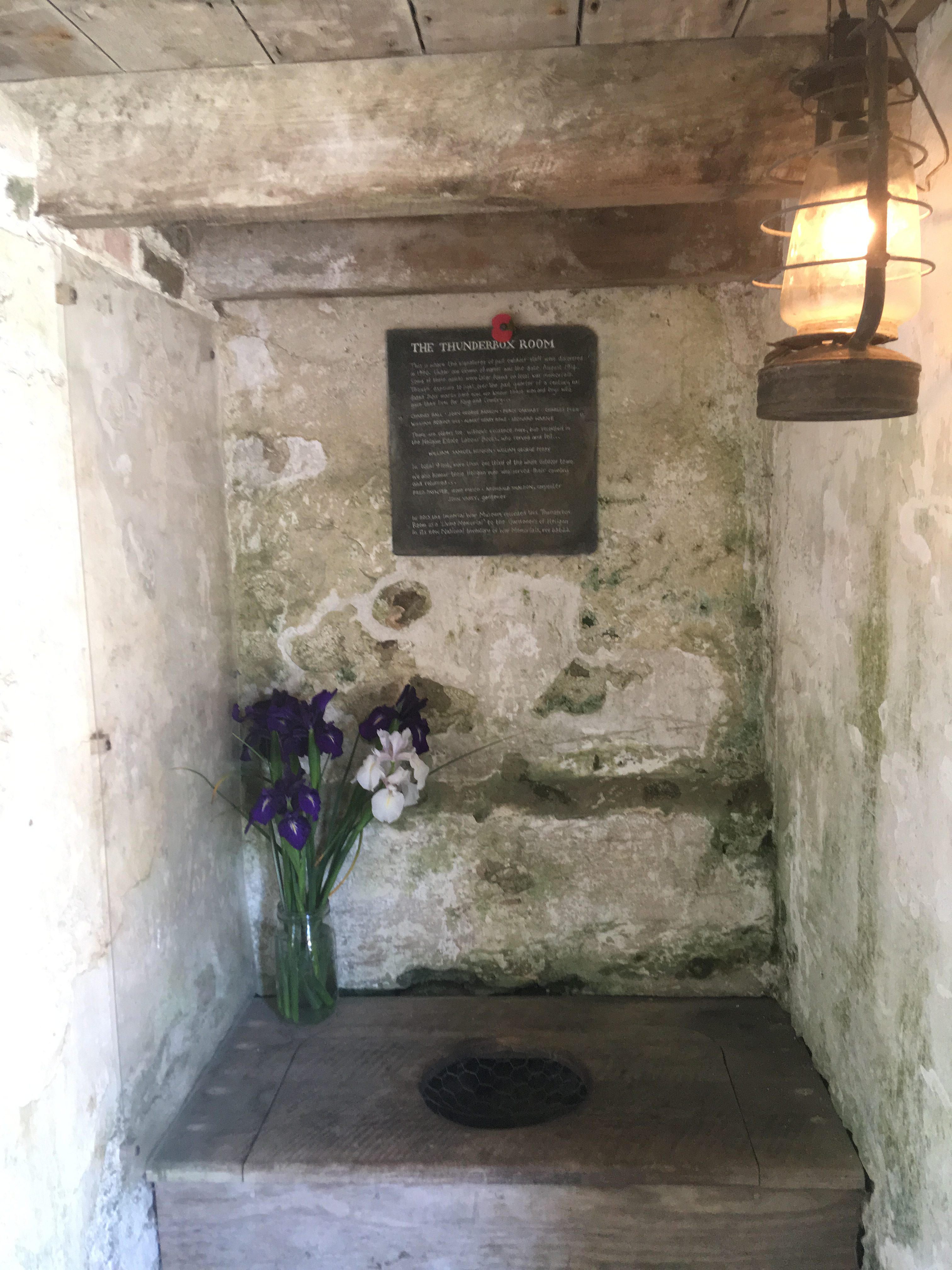
There was even a memorial in the Thunder Box, which was an outdoor toilet for servants.

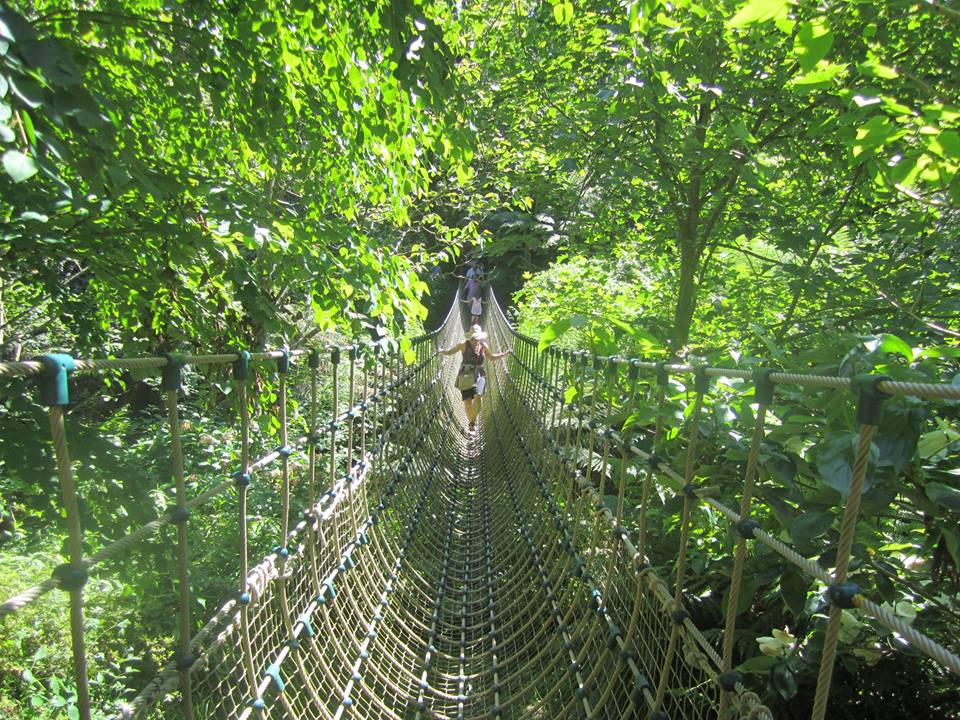
There are also extravagant sections like The Jungle, which is … well a jungle.  In Cornwall.

There are hidden confections like the lying lady and the shady lady.  I hope you can spot them.

We got back to the resort in time for an important call I had about the proposal to the UK.  I staked out a table in the far corner of the lounge and got ready to Skype.  Oh, no.  A DJ arrived, set up, and began projecting videos on the wall above my head.  It was Disco Karaoke Nite! The Pet Shop Boys’ “It’s a Sin” started throbbing at a deafening volume.  People around me were drinking and laughing and yelling BINGO! and having a great time.

This was the beginning of my remote work experience.  This was it; this was where I proved to my employer that I could show up for meetings on Skype, respond to emails in a timely manner, and produce proposals as usual, no excuses.

Possum Problems

I had been looking forward to a restful 10 days in the beautiful southwest of England after an intense week of traveling, rats, and work in Ethiopia.  Just great, I muttered to myself as I reached for the cough drops from my perch on the toilet.  I get a spasmodic cough and diarrhea. Thanks a lot, Ethiopia!

Fortunately the cottage had two bedrooms and two bathrooms, and Lynn had insisted I take the suite upstairs, from whence I hoped they couldn’t hear any bodily sound effects.

As I reached, my eye fell on the bold-faced notice on the cough drops.  “WARNING: Do not exceed recommended dose.  Excessive use may cause severe diarrhea.”   The dose was one cough drop every four hours; I had sucked down 12 in four hours.

I’m sorry, Ethiopia!  It wasn’t you, it was me.  I’m an idiot.

I felt better by the time our friend Possum arrived, and thought it would be a good idea to drink some wine with her and Lynn on the patio just in case I wasn’t completely dehydrated.

Possum, as you may have guessed, is Australian.  She’s lived in England forever and works for Oxfam.  Normally very bubbly, she seemed subdued.  We were both cranky that we couldn’t get internet.

Possum had been wrangling with the router.  “False advertising!” she declared.

“They said it would be intermittent because of the remote location,” Lynn said.

“But it’s nonexistent.  That’s just not on!”  Possum groused.

“I really need to work while I’m here,” I bemoaned.

“It’s very naughty of them,” said Lynn.  “I specifically booked this place because it promised internet, even though it wasn’t steady.  Possum, are you okay?  You look knackered.”

“I feel a bit funny,” Possum acknowledged.  “I’ve got a pain in my back, just here,” she indicated with her hand.

Lynn and I proceeded to suggest various things.  Was she dehydrated?  Had she pulled a muscle?  Maybe her back was sore from sitting in the car on the road for so long.  No, no, no, Possum insisted.  “It started yesterday, so it’s not from the driving.”

She went into the cottage and lay down on the floor.  Lynn and I continued to drink wine and talk, figuring there was nothing we could do to help.

Possum emerged half an hour later, looking drawn.  “It’s a bit worse,” she said.

“Maybe you should call your GP?” Lynn suggested.  GP=General Practitioner.

“No, no,” it’s nothing, I’m sure.  “I’ll just lie down some more,” Possum said, trying to seem cheery.

Lynn and I finished off the bottle of wine and some nibbles and then I, having been up all night and all day, excused myself to go to bed.

“I hope you feel better, Possum,” I whispered gently as I tiptoed past her on the floor.

“You too, Annie,” she whispered back.

The next morning.  Whenever Lynn and I travel together I always wake her up because I’m an early riser and I just can’t help making noise.  Today was no exception.
“Did you hear the doctor last night?” whispered Lynn when she came out of the bedroom she was sharing with Possum.

“What?  No!  A doctor, here in the house?”

“Yes, she finally called the NHS and they sent this bloke out to look at her, and she has kidney stones!”

“Oh no, poor Possum!  Man, do I ever feel guilty!  We should have made her call a doctor right away.  I’ve heard kidney stones are as painful as giving birth!”

“I know, I know” replied Lynn.  “But the good news is that he gave her some drugs to manage the pain until she can get back to Oxford for more treatment.”

“Yikes.  I don’t know if it’s a good idea for her to drive,” I answered.  “But I can’t drive, and we can’t leave her car here.  Was the doctor good looking?”

“Mmmm…I don’t know,” Lynn answered.  “He was well dressed and had nice hair.”

As we had this important discussion I made coffee and eggs and toast.  It’s important to keep your strength up so you can be there for your friends.

Welcome to Cornwall

Lynn and I found our hire car, an eggplant-coloured Citroën Picasso.  My computer is still set to British English for the proposal I worked on to UK Aid.  I’ll leave it that way, since the next events took place in Britain.

First, a little primer on UK terminology for anyone out there who may be confused.  The United Kingdom is the nation that includes England, Scotland, Wales, and Northern Ireland.  Those are four separate countries, but together they are United.  Britain means the same thing as the UK, while Great Britain is the island that contains England, Scotland, and Wales—not Northern Ireland.  If you ask a native where exactly the Scottish or Welsh borders are, you will get a confused look.  That’s probably because they are so jagged, unlike say, the border between Wyoming and Colorado.

Then there’s the Commonwealth, which includes a bunch of former colonies like Canada and Australia and Belize.  Those countries are independent but Queen Elizabeth II is their sovereign. Then there are the Crown Dependencies, like Jersey; and the British Overseas Territories, like Gibraltar. I hope that clears up any confusion.

England has 48 counties, or shires. When you say the word shire independently, it’s pronounced like in The Hobbit, “shyr.”  That’s not an official pronunciation; the official Oxford English Dictionary one is ʃaɪə(r).  When shire is added to the end of a county name, like Oxfordshire, it’s pronounced “sure” (by Americans) and “shuh” (by Brits).  Some of the county names are shortened up for convenience; for instance Buckinghamshire is nicknamed Bucks, Peebleshire is nicknamed Tweeddale, and Berwickshire is Duns-shire.  Simples!

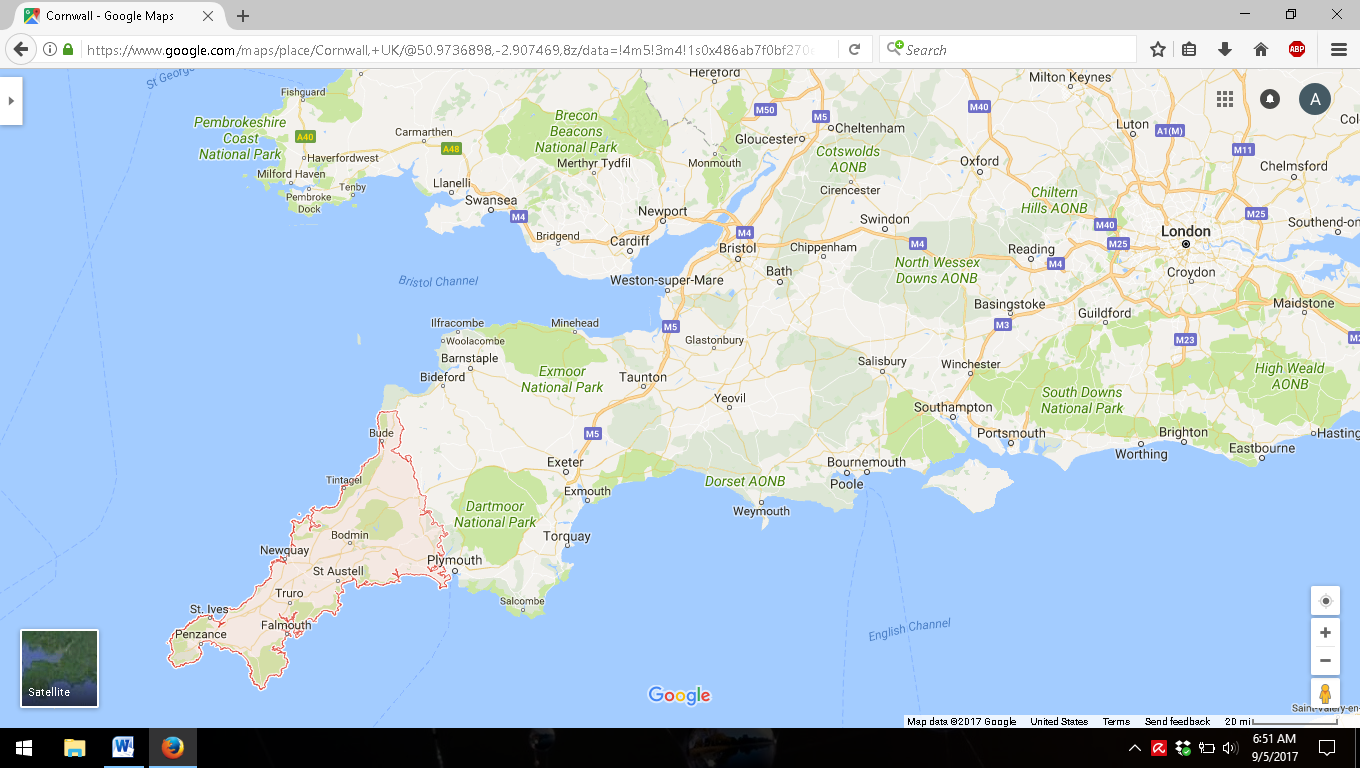
Lynn and I were driving to Cornwall, also known as Kernow in Cornish, the local language which has about 350 native speakers.  As far as I know, Cornwall is never Cornwallshire, just Cornwall.  The red-outlined section in the far southwest of the map below is Cornwall.

It’s 208 air miles from London to Cornwall.  If we could have driven in the air, we could have been there in a little over three hours.  With traffic and the twisting roads of the last bit of the route, Lynn reckoned it would be about five hours.

What she hadn’t reckoned on was not being able to figure out the gear shifting. The west country of England is so beautiful, in part, because of all its gently rolling hills.  Hills that were lined for miles with cars full of holidaymakers, as people on vacation are called there.

The Picasso had a manual transmission, and Lynn’s method for not rolling backwards on hills was to engage the parking brake.  I drive a manual transmission but I had always just kept my foot on the brake while engaging the clutch when on a hill.  The parking brake on this vehicle was a button on the dashboard, but nothing appeared to happen when Lynn pressed it.

I slouched  in the passenger seat binging on cough drops and blowing my nose between bouts of wracking coughs while Lynn did her best to keep the vehicle from rolling backwards into the car behind us.

“And of course they all pull up within inches of my rear bumper!” she growled.  “Don’t they know I have a manual transmission?”

Then the burning smell began.  “I think I’ve burned the clutch,” Lynn said.

“It could be the brakes,” I man-splained unhelpfully.  We were back to where we’d been the year before, on our road trip to New Orleans.  This time we were in a rental car, but it was still the case that neither of us knew diddly squit about cars.

“I don’t even know how to open the bonnet of my car,” Lynn said.

The smell persisted but we ignored it and drove on.  We emerged out of the traffic jam onto a series of gigantic connected roundabouts and went in circles for about 10 minutes, then plunged off an exit and somehow had chosen the correct one.  Another 10 minutes and we pulled up in front of our cottage.

It was none too soon; my Ethiopia trip was catching up with me.  I made a dash for the cottage and spent my first hours in Bodmin, Cornwall, in the bathroom.

Moving, Here and There

In real time—September 1, 2017—I just woke up in my own home for the first time in three months after living, traveling, and working abroad.  It’s disorienting.  My place feels the same, yet different.  Maybe that’s because I sold it right before I left, and as soon as I unpack my suitcase I will need to start packing everything to move in one month.

This will be my third move in two years.  This one will be hard.  I love this place—its location on The Hill near all the mansions and shops and restaurants, and the character of the condo itself—with beveled glass, graceful curved woodwork, exposed brick walls, fireplace, high ceilings, and warm wood floors.

When I woke up at midnight last night to the creaking and thumping of my upstairs neighbor walking around on his wood floors, I smiled and knew I had made the right decision.

I’ll be moving into a duplex on St. Paul’s east side.  You know what they say about rents and real estate: “Location, location, location.”  And it’s true.  The duplex is very nice but there’s nothing much nearby except other duplexes.  Therefore it’s cheap.  I’ve signed a 10-month lease and I can lay low there until I decide what to do next.

I am lucky to have the choices I do.  I knew that intellectually, but spending time in refugee camps made it visceral.

I arrived at Heathrow from Addis Ababa at 7am.  I had barely slept due to my cold and, well, having to sit upright in a cramped airplane seat.

There was Lynn waiting for me in the arrivals hall—the one where they filmed the opening scene in Love Actually. If you haven’t seen it, it’s a sweet montage of people meeting people at the airport.  Friends, families, business associates … smiling, waving, hugging, laughing, and then walking off to start whatever lay ahead for them in London or beyond.

I transferred myself from Maki’s good guidance to Lynn’s.  I am a “take charge” person but Lynn is even more so, and we were on her stomping grounds now.

First stop, Boots, the chemist, which is like a prettier version of Walgreens. I loaded up on sore throat spray, cough drops, and tissues.  We got a cup of coffee at Costa and found the car rental kiosk.  Lynn bought all the insurance they offered, which would turn out to be a good thing.
This was supposed to be the vacation part of my sojourn—two weeks of driving around the southwest of Britain, starting in Cornwall.

Until recently, I’ve never had a problem logging off of work email and not checking it while I’m on leave.  I crossed a line somewhere and started doing that, and when I did, at Heathrow while Lynn was making the car arrangements, there was an email about an opportunity for us to submit a concept note to DFID, the UK’s Department for International Development.  It was due in less than 10 days.

A concept note is like a preliminary sales pitch to a potential funder.  You send them 3-5 pages summarizing your big idea and hope they ask for more, in the form of a full grant proposal.  Thing is, you have to put almost as much work into a concept note as a full proposal because you have to give them a top line budget number, and to get that requires, basically, developing the full project and budget.

I was really glad we were going for this, and I wanted to work on it.  I had met with a DFID representative two years before when I was in Amman, Jordan.  We had tried to stay loosely in touch with him, and if we are funded, it would be almost a textbook example of how development/fund raising works.

But the timing that was inconvenient.  Lynn doesn’t need anyone to entertain her, but I thought it would be rude to be constantly checking my email and on Skype while she was having a G&T by herself on the patio at the resort in Cornwall.  Being online too much would turn out to not be a problem.

Scenes from a Refugee Camp

I spent two days in the refugee camps.  On the first day I got a walking tour of the camp from the young colleague who had shown such great interest in tiramisu.  He walked at a brisk pace and I managed to keep up despite the ground being muddy and strewn with large rocks and pocked with water-filled potholes.

We stopped in at the Women’s Centre which was run by International Rescue Committee.  We visited a primary school, where little faces looked up at me briefly and then back to their books.  They were probably used to strangers touring the camps. We walked past the playground:

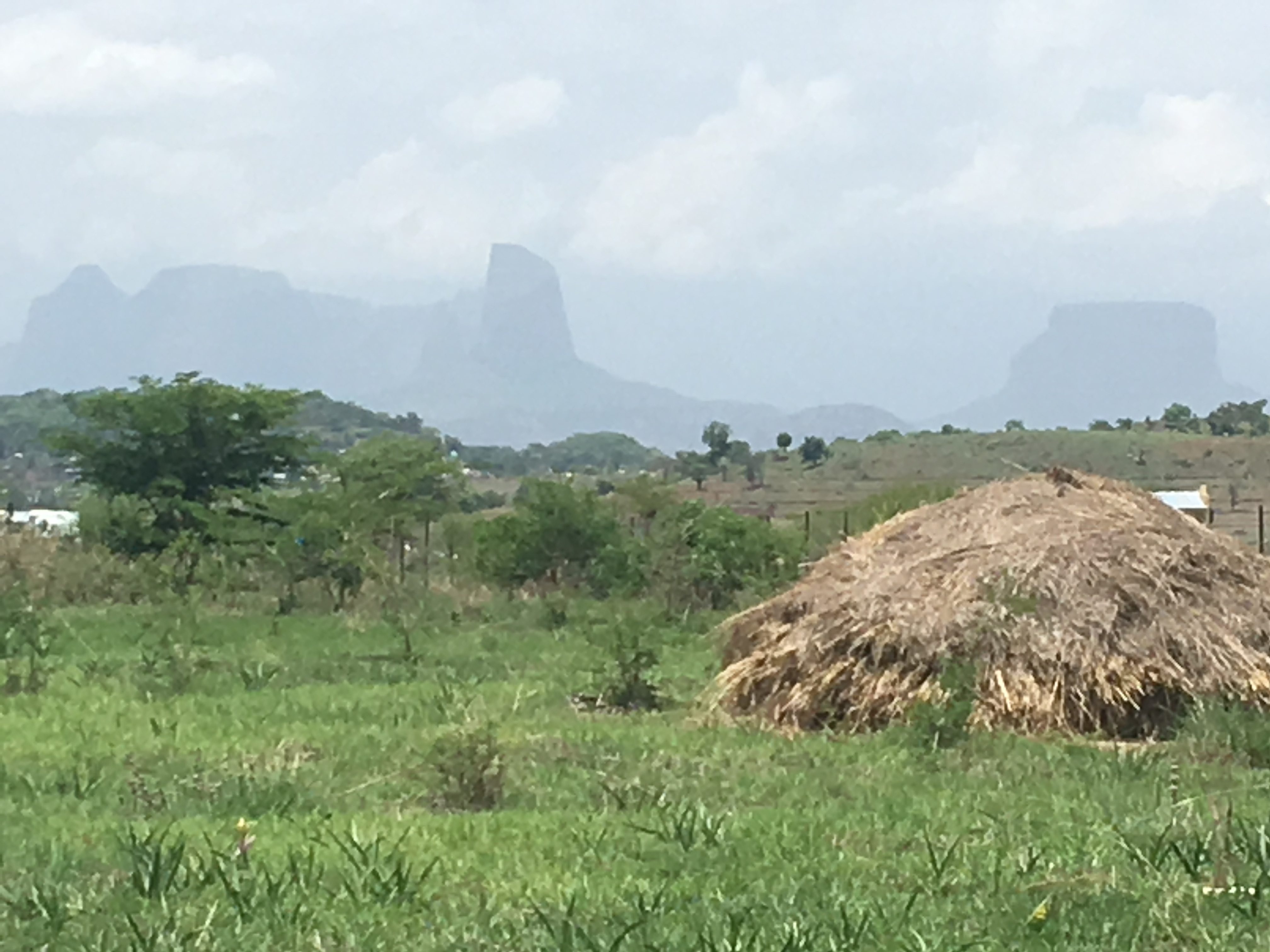
It may look sad, but when you turned around there was this spectacular view of the mountains:

My colleague asked me if I wanted a cup of coffee and I responded enthusiastically.  People had set up small businesses along the main road; some sold beer, some packets of crisps and nuts or single application shampoo packets.  There was a cigarette vendor who sold one cigarette at a time, since no one could afford a whole pack.  We stepped into a thatched hut that served coffee.  I was the only woman and I got a few looks—not hostile or lewd—they just seemed to be noting, “Huh, a woman in the coffee hut.”  Knowing how hard women here worked, I wondered if there was a separate women’s coffee hut somewhere or if they managed without coffee.  Just the thought makes me tired.

We sat on the ubiquitous white plastic chairs, drank bittersweet coffee, and chewed on some kind of beans or nuts.  My colleague’s English was difficult to understand, so as I chewed I wondered if I would soon be seeing flying unicorns.  He talked about being an artist and a project he was working on.  I could croak out a few syllables now, but I didn’t want to be mute while traveling back to Europe in a few days so I mostly just nodded and smiled.

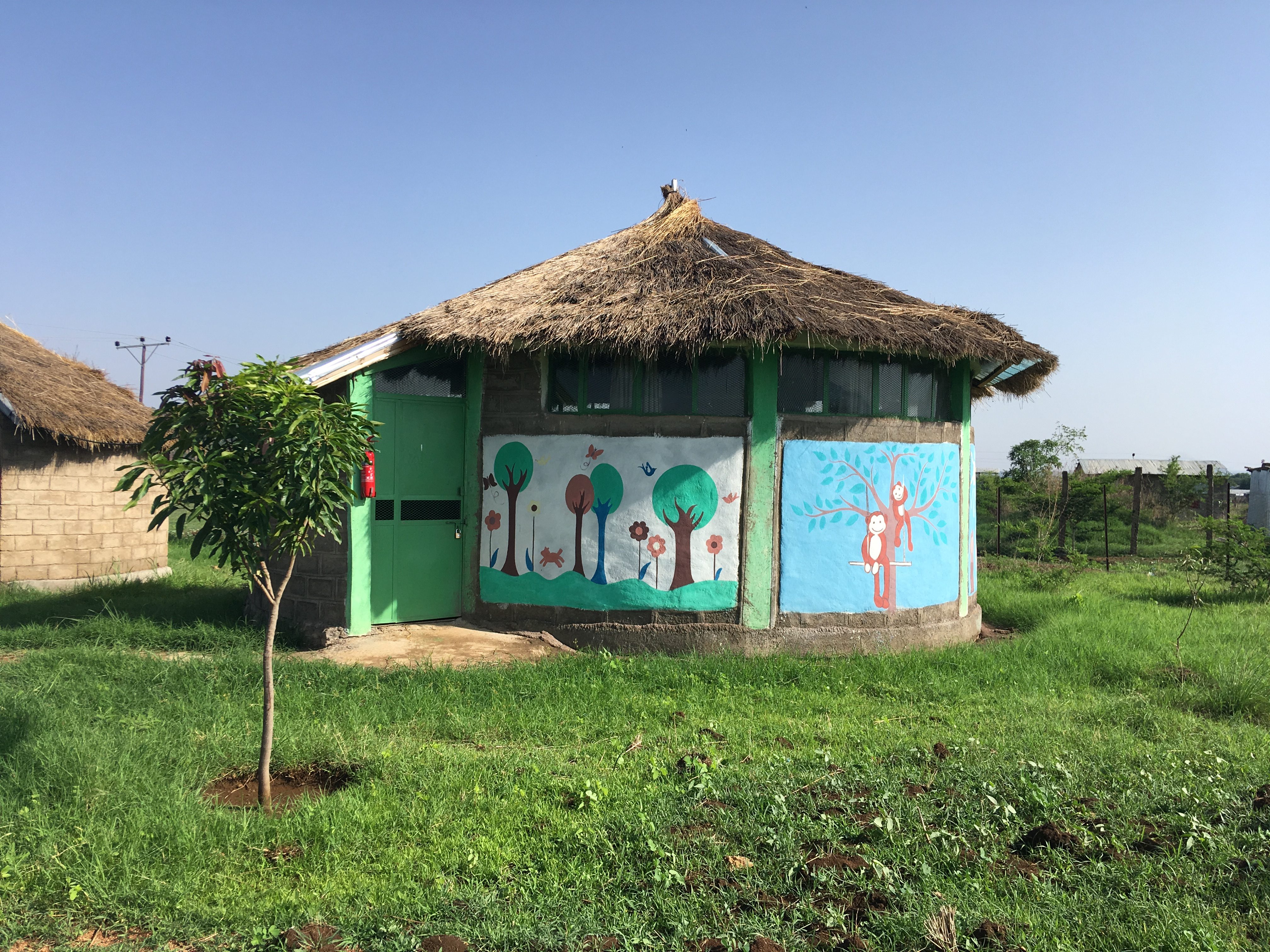
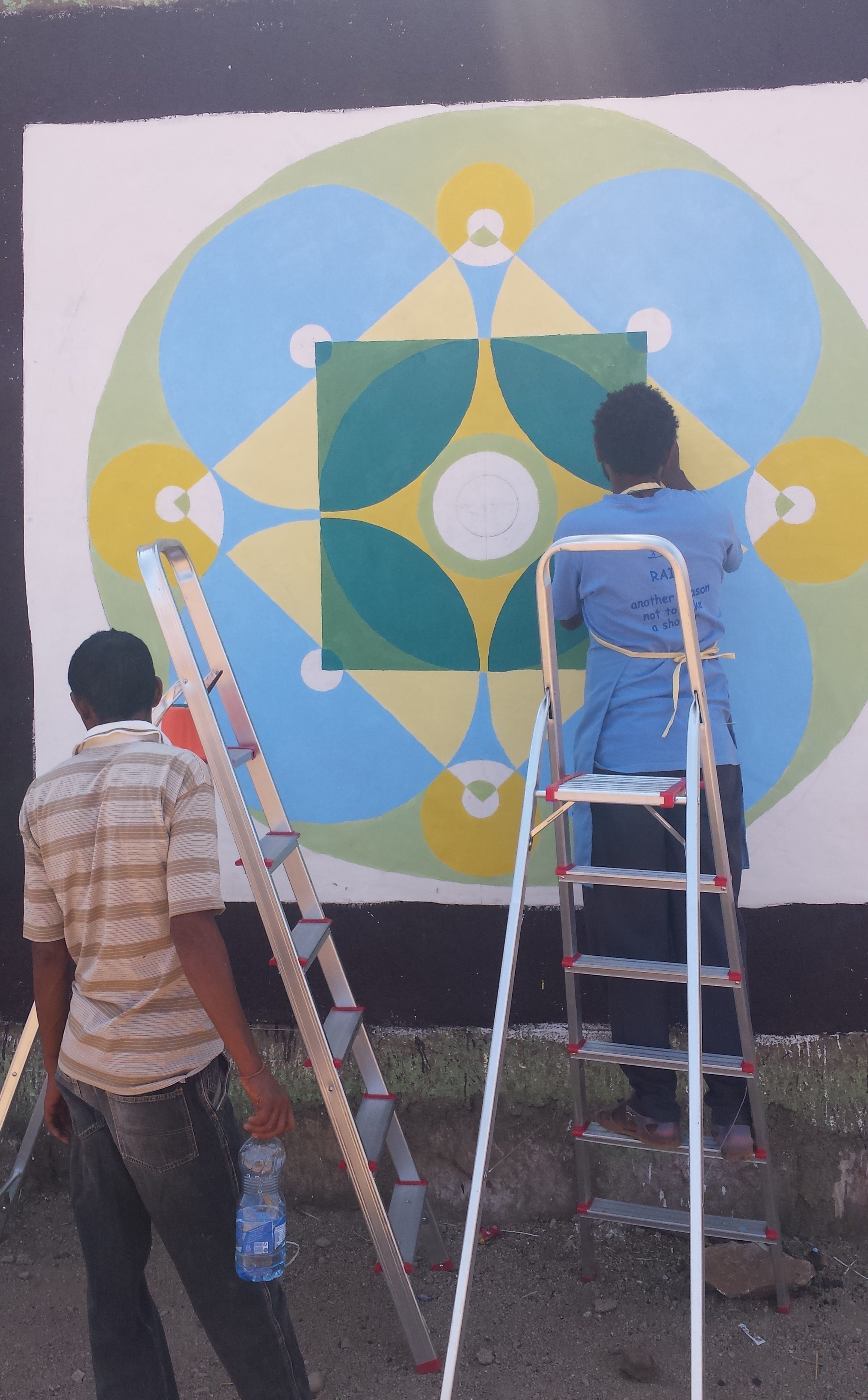
We returned to the CVT area.  There, we have built tukuls that serve as cool, calm oases in which people attend counseling groups.  We’ve got an art therapist from Chicago who is leading the painting of tukuls for children and creating mandalas on others.

We arrived at break time, so there was more coffee and popcorn with the whole staff of about 10 people.  They insisted I sit on the one (white plastic) chair while they stood or squatted on the ground.  I had been warned about this by others from headquarters who visited—that our staff will insist on visitors taking the chair and that it would be embarrassing.  I had just had an hour-long hike around the camp under a blazing sun.  I was twice as old as all of them.  Age is revered in some cultures and if my age or perceived status as a visitor got me the chair, I wasn’t going to say no.

After the break I was taken to a tukul where a group of 12-14 year old boys was assembled for a counseling session.  CVT’s standard counseling groups run for 10-weeks.  However, if you’ve ever had a teenaged boy in your life you know how restless they can be.  These Eritrean teenagers had picked up and walked out of their country.  They did not enjoy hanging around a refugee camp with no prospects.  As I’ve written briefly about before, many of them walk off again, toward the Sinai Desert in hopes of reaching Israel, or farther on toward Libya and the Mediterranean Sea with hopes of reaching Europe.  Some do make it, but most are kidnapped in the Sinai by Bedouin or other traffickers, or drown in the Med.

Ten-week groups are just too long—many of the boys won’t be around by the third week.  So CVT developed a three-meeting group model, and I was sitting in on the third one.  Everyone had a chair.  But first, they made me stand up and give a speech, since I was such an important person from headquarters.  Now this was a little uncomfortable.  Little did they know that I am nobody special, but I rasped out a few words anyway.

Things with Strings

When Ingrid and I hopped of the Hop On Hop Off bus back in Salzburg, we had a few hours to kill before our marionette performance.  We stumbled upon a very good Indian restaurant.  I ordered my go-to favorite that I boringly get every time I go to an Indian restaurant, palak paneer.  But you know what?  I really like palak paneer, and I don’t go to Indian restaurants that often, so sue me.

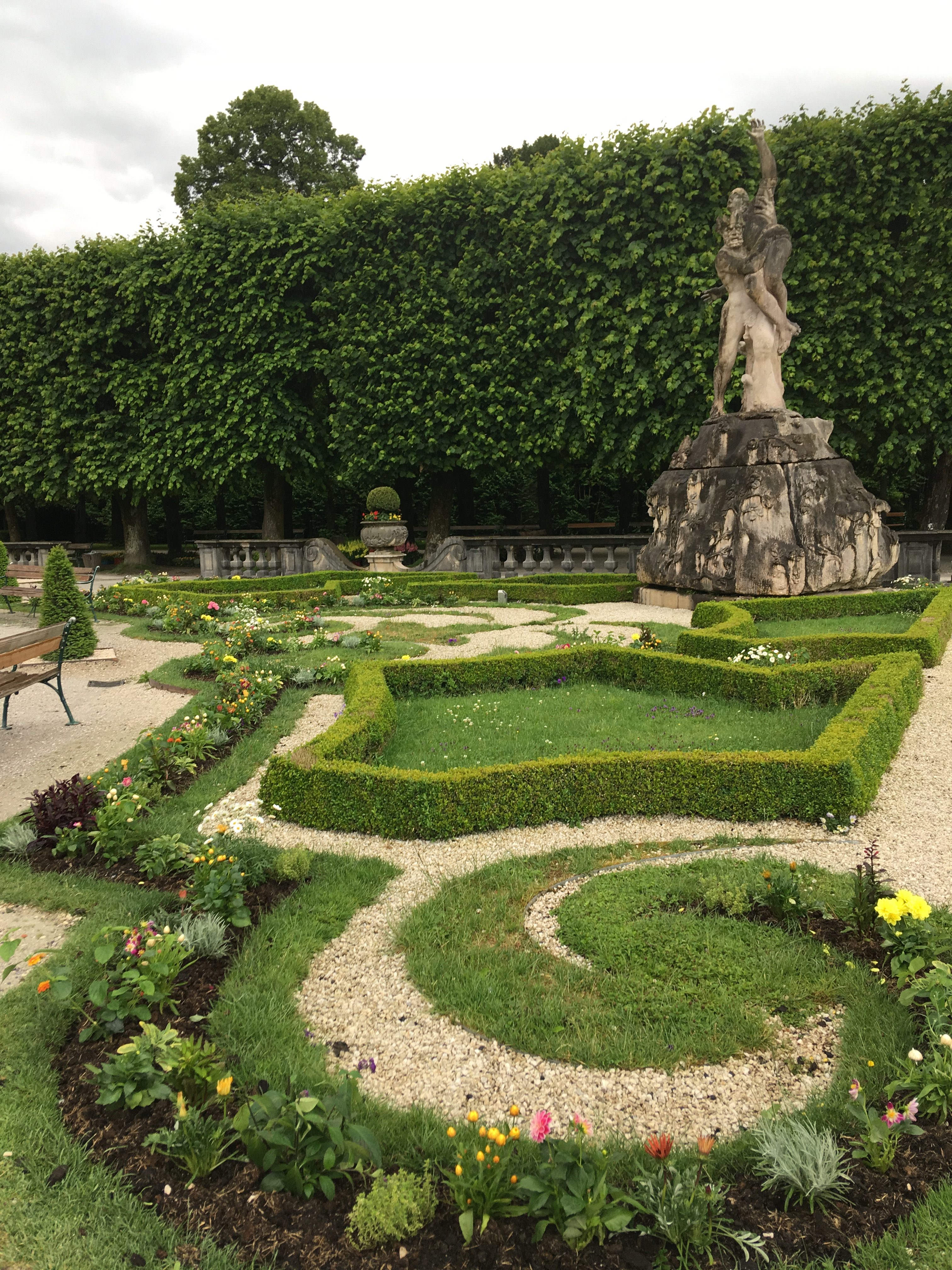
We walked around the big garden called the Mirabell.  A statue depicting the rape of Persephone attracted my eye because I had seen another one like it in Rome last fall.  Then I did a 180 degree turn and it appeared that all the statues depicted a rape scene.  It wasn’t my imagination: “In the heart of the garden, you will see a large fountain, with four statue groups around it: rape of Helena, Aeneas and Anchises, and finally Hercules and Antaeus. These statues were made by Ottavio Mosto in 1690.”  That was pretty unclear, but the point is, someone thought it was a great idea to design a garden full of statues about rape.  Yuck.

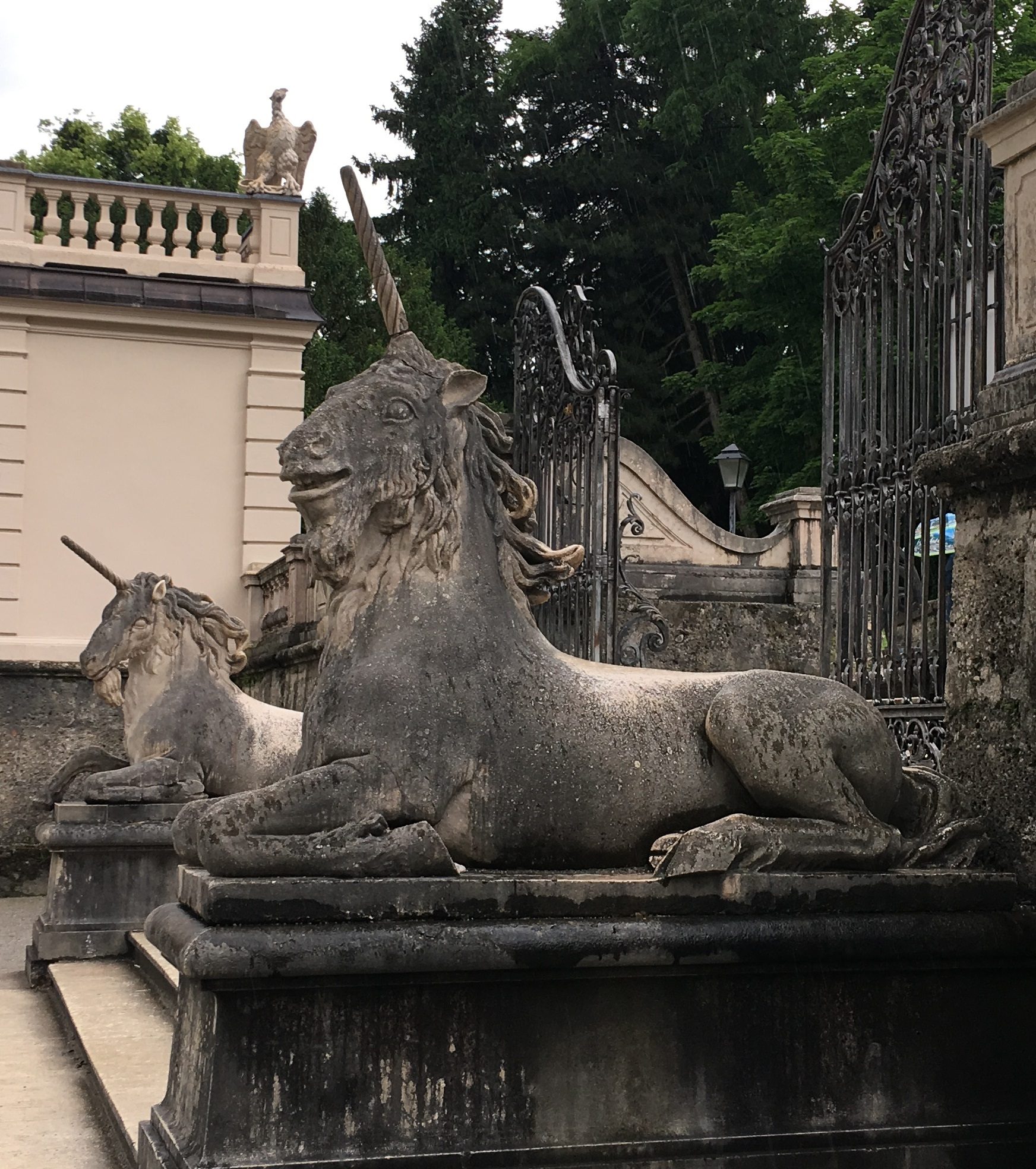
On a lighter note, there were also statues of my favorite animal:

Then we were off to the marionette theatre, where we spent some time in the lobby looking at the exhibits and reading the history of the place.  My favorite past performance was hands down The Little Prince.  I don’t know what the one with the geese was, and there were many more involving princes and princesses, fairies and witches, and animals both real and imaginary.

When our concierge booked the tickets for us, she said they were great seats.  We were in the second section in back, which made me question her judgement.  How would we be able to follow what was going on?  The marionettes were only about three feet tall.

As soon as the curtain rose and the show began, we realized it was ideal to be a little further back.  The marionettes’ mouths don’t actually move, so being just far enough back to not be distracted by that helps to suspend reality.

It was a performance of Mozart’s Magic Flute, and I have to say it was magical.  The sets, the costumes, the music—it was all spectacular.  Subtitles were projected on the walls on either side in German, English, Spanish, French, and Chinese.  But you could have enjoyed it just as much without them, since the plot was a typical opera involving unrequited love, a quest, and comical misunderstandings.  All operas either end with everyone dying or everyone living happily ever after, and thankfully this was the latter.

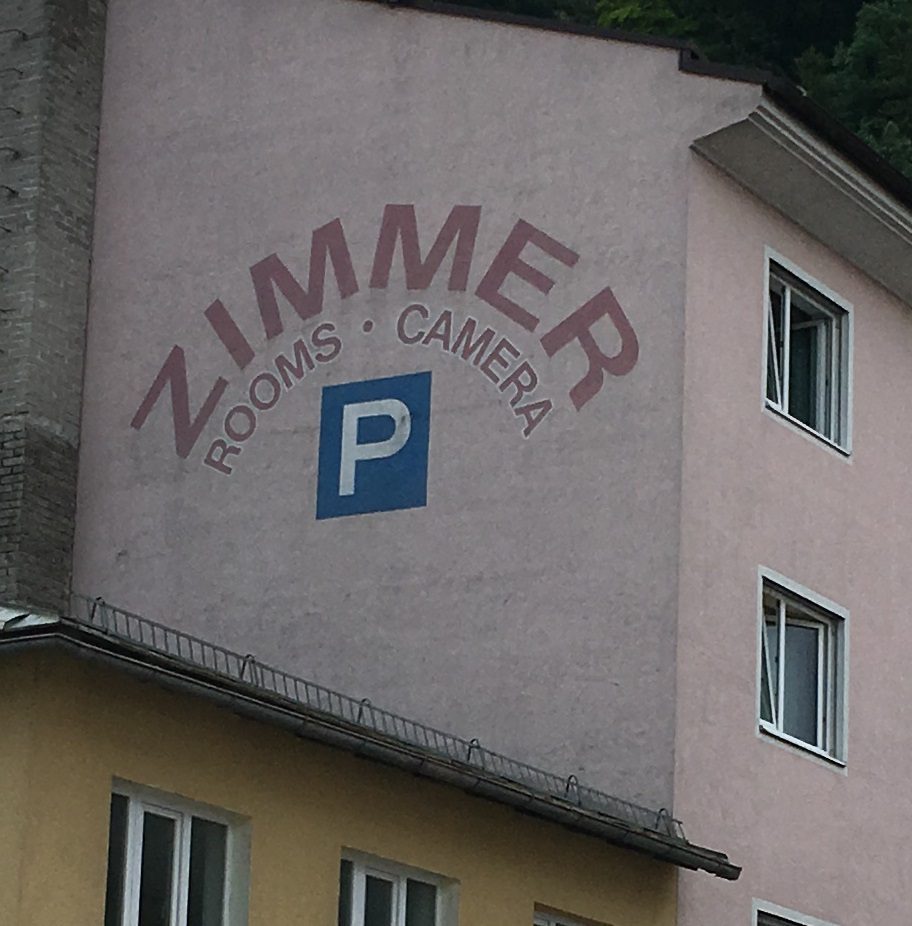
As we walked back to the hotel, we spied this on the wall of another hotel:

Rooms, camera?  No thanks, I like my hotel rooms without cameras.

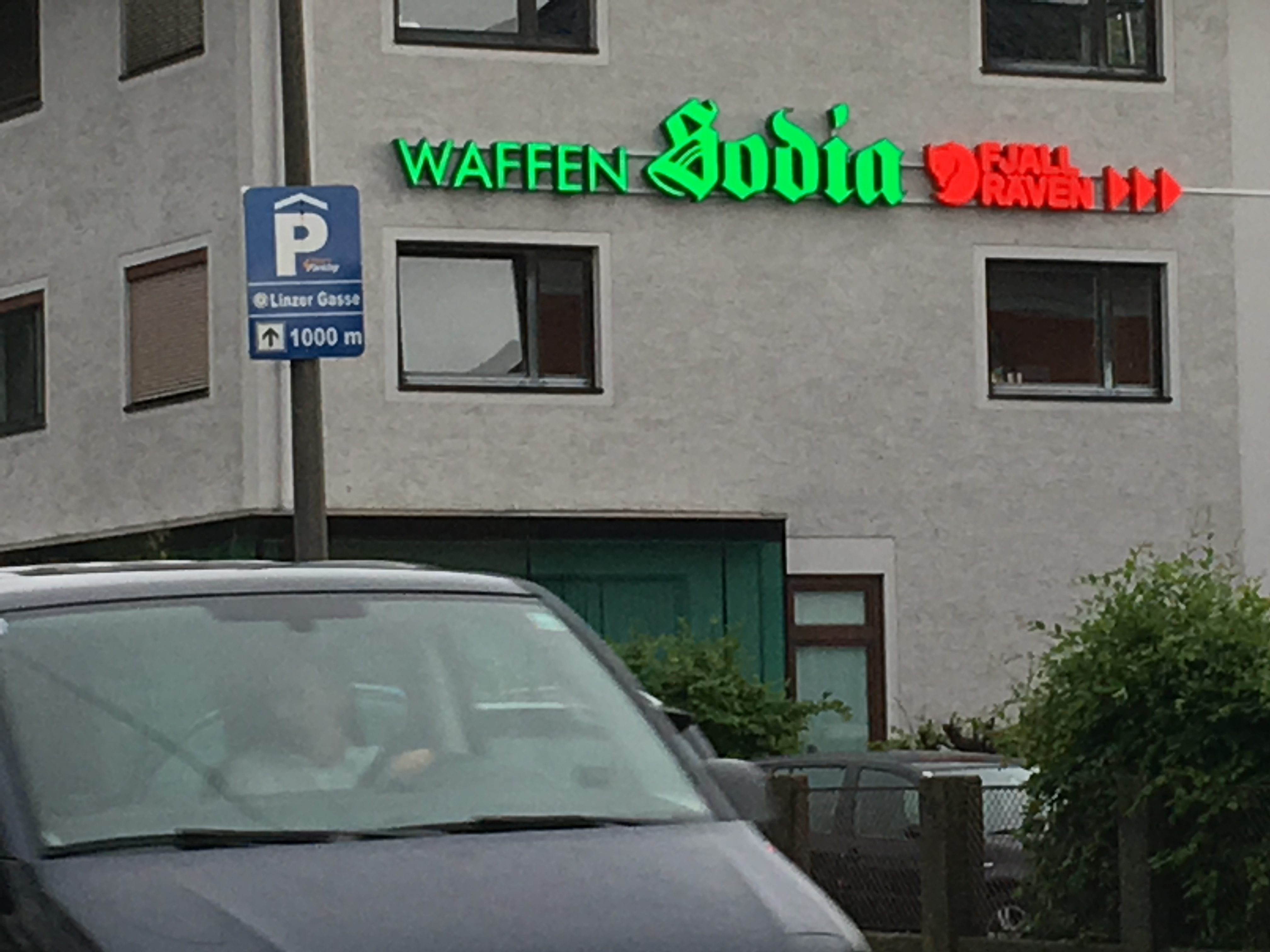
We came across a building we could see from our hotel room window and which I had wondered about.

“What is it?” I asked Ingrid.  “At first I had thought it was an Indian waffle house.”

“Waffen means force, like luftwaffen” Ingrid replied.  Luftwaffen, the World War II German airforce.  “But I don’t know what Sodia means.”

“Ah, the third name, to the right in red, is a store with a location near my house,” I observed.  “I don’t know how to pronounce it, and they wanted $250 for a pair of hiking pants so I’ll never step foot in one again so it doesn’t matter.”

“Let’s go find out what it is,” Ingrid said in a hushed voice.

We rounded the corner of the building and realized it was a gun store.

“Do you want to go inside?” Ingrid asked.

“No!”

In real time, I am running off to meet my friend Heidi at Wimbledon.  I was going to work all day so I said no at first, then thought, “What am I thinking!?  When will I ever get a chance to go to Wimbledon again?”

I can always work tomorrow.