Category Archives: Empathy

Taking Care

I missed a writing day because I invited a dozen friends over for a “Caring for the Caregivers” brunch. It’s not like I don’t have enough to do, what with work and blogging and care giving for my mother.  But for the past couple of years I’ve heard story after story from friends, relatives, and coworkers of how they are caring for their parents, partners, kids, or siblings.  Or all of those.

There’s the friend whose in-laws have been dying, in India, where if you don’t have someone at the patient’s bedside 24/7 to feed and bath and otherwise tend to them, they will be discharged.  So my friend and her husband and his sister and her husband are taking turns flying to India—to a city that is not easy to get to—and sitting vigil by the bedside as the father died, and now as the mother dies.  This is not cheap or easy.

There is the friend whose mother took her life savings—literally bags of cash—to a car dealership. Reports of an 80-year-old woman weaving down the street in a shiny new $90,000 Acura to the food shelf to get her commodities got back to my friend.  Her mother was diagnosed with dementia.  The car went back to the dealership and the mother entered a memory care unit, where she is happily making new friends.  But none of that happened easily, or overnight.

There was the friend whose mother collected things.  Anything.  Everything.  Beanie babies, empty coffee cans, popsicle sticks, travel sized toiletries, balls of yarn, cans of tuna, artificial Christmas trees, washcloths.  Her mother died, and I went with her out to the tiny farm town to clean out the house.  Actually, a dumpster had to be filled before any cleaning could take place.  When I took down the lace curtains in the bedroom, clouds of dust enveloped my head and the curtains practically disintegrated.  The most interesting thing we found was an old Playboy magazine under the shelf paper in her mother’s dresser drawer.

Please, don’t collect things.

Then there is my friend who had to cancel her trip to England.  She wound up having a 12-hour surgery to fuse her spine.  Her partner cared for her, and then she cared for him when he donated a kidney to save her cousin’s life. A kidney!  He and the cousin are both doing well.

It’s not that people are constantly complaining.  But the strain is evident in the stories, even when they’re told dispassionately.  So I felt a desire to gather people to share some stories and maybe some laughs.

It’s not exclusively women who are caregivers.  I am proud that my son has stepped up to care for his grandparents in a big way.  If I had included care giving men in my invitation, I would have had to rent a room in a restaurant to fit everyone.

I keep thinking back to a day, three years ago.  I took a day off of work and left the house at 8am.  I drove to a far southern suburb to a medical supply store and picked up a walker (Zimmer Frame) for my mother.  She had been in two car accidents which caused hairline fractures in her spine and hips.  I drove to her house, in a northern suburb, where I adjusted the walker for her, then did a few loads of wash. I then drove to St. Cloud, a city two hours away, and visited my son in prison.  After my one-hour visit, I drove back to an eastern suburb to my sister’s house.  She was on chemo and I think I folded kids’ socks for an hour and did some other chores.  Then I drove to my brother’s house in another suburb and watched his kids for a few hours.

I got home around 8pm. I was exhausted but the day had also made me realize what I was really made of.

Then I did some variation of this every week for the next two years.  Now everyone is doing well, and I just want to feed people who are in the same boat.

I’m also beginning to plan my next escape ….

A Good Sport

Lest you conclude from my last post that I hate men and think they’re all groping, drooling, creepers, that’s not the case.  In fact I joined a dating website recently.  I’m not optimistic about my prospects.  I will let you guess which of the photos below are from the ads for the company, and which are actual personal ads once you join the site.

Now, you know me—I’m not one to judge.  But 85% of the men on this site are looking for a woman to share their interests, which are hunting, fishing, snowmobiling, and watching sports.  So they’re not really looking for the 85% of us women who have no interest in those things.  They’re looking for a buddy.

I don’t expect a man to go thrift store shopping with me.  In fact I wouldn’t be caught dead with a dude who would shop where I shop.  But if I can put myself in men’s shoes and know—in general—what they would and wouldn’t be interested in, why can’t they?

And here’s a tip: Don’t use a handle like “qualudes57” or “weirdo2u” or “chestypuller.”  What the hell? 

Looking for a nice backdrop for your personal ad photo?  Why not use a $1.99 plastic shower curtain from Walmart?

It’s nice to know there is someone out there who takes worse photos than I do.

This website is called Our Time.  It should be called Ouch Time.

But I tried. You never know.

The weekend after my day trip into London, I met up with my friend Heidi.  Heidi is Australian and has lived in London for over 15 years.  She teaches Under 5s, which we in the US would call preschoolers.  She’s also a never-married female, although she’s 15 years younger than me so she may still stand a chance.  We met on the way to Greece, where we went with another Australian woman and Sam back when I lived in the UK.  Since then, she and I have met up in France and Berlin and she visited me in Minnesota.

Heidi had to return home to help her parents out, but she was in the UK to take care of some business with her flat and her job and just enjoy the English summer.

She messaged me to ask if I wanted to go to Wimbledon.  “Uh, no,” I replied, “I’m not a sport person.”

“But it’s the scene, Annie!” she messaged back.  I’m so glad I gave it a go.

Heidi and I met at Putney station, from whence we took a bus, then walked to the venue.  We were handed a queue card with lots of instructions front and back, most importantly, “Queue jumping is not acceptable and will not be tolerated.”

The alcohol limits were “one bottle of wine or Champagne (750ml) or two cans of beer (500ml) or two cans of premixed aperitifs per person. Bottles of spirits or fortified wines will not be allowed into the Grounds.”

These limits were per person, and there was alcohol for sale on site.

It was a rainy Thursday afternoon so there was no queue, which Heidi seemed a bit disappointed about.  Apparently that can be a scene of its own.  The Centre Court tickets were £58.  We bought the £20 lawn tickets.

The rain held off so we were able to watch the youngest and oldest players in exhibition matches, which were fun.  The two “oldies” were Aussies nicknamed The Woodies.  They kept up an amusing banter which kept the crowd laughing while they played.

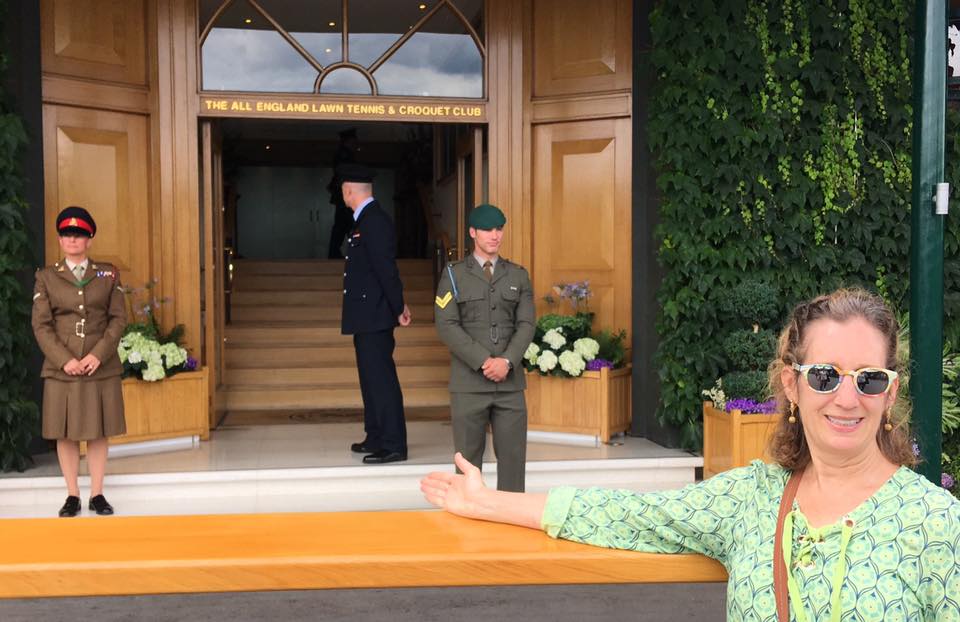
I was fascinated by the officials’ uniforms and stances.

We walked up to a high lawn where in theory you could watch the super star players on a big screen.  People queued up politely to look over a hedge at the screen.

We spread an oil cloth and plunked down on the ground to drink talk.  We never saw the big match, but we had a nice view of London in the distance and the people watching was good.

There were men in pale yellow suits and hats and women wearing flowery dresses, so I fit right in.

It was a fun day with my buddy Heidi. I guess I do watch sports!  But I draw the line at hunting.


Penultimate Day in Ethi

My penultimate day in Ethiopia.  There, I’ve always wanted to use that word.

Today I would be observing a training and a women’s group.  But first, I settled up my canteen bill, handed in the Chinese dongle that had never helped me get an Internet connection, and returned the ancient Nokia I had been given the first day.  For once, my age was an advantage with technology, since I had learned to text using the ABC system way back in 2005.  Pity the millennial or younger generation who has only known smart phone qwerty keypads with autocorrect.

I could receive messages but the phone wouldn’t send them.  I could see a queue of failed sends attempted by previous users.  I also received various messages in Tigrinya.  I will never know if the message below was important.  Had I missed an incredible two-for-one offer on camel milk?

Maki sent me several messages and I responded to her via my iphone.  Then she would reply to the Nokia. It was a little confusing.

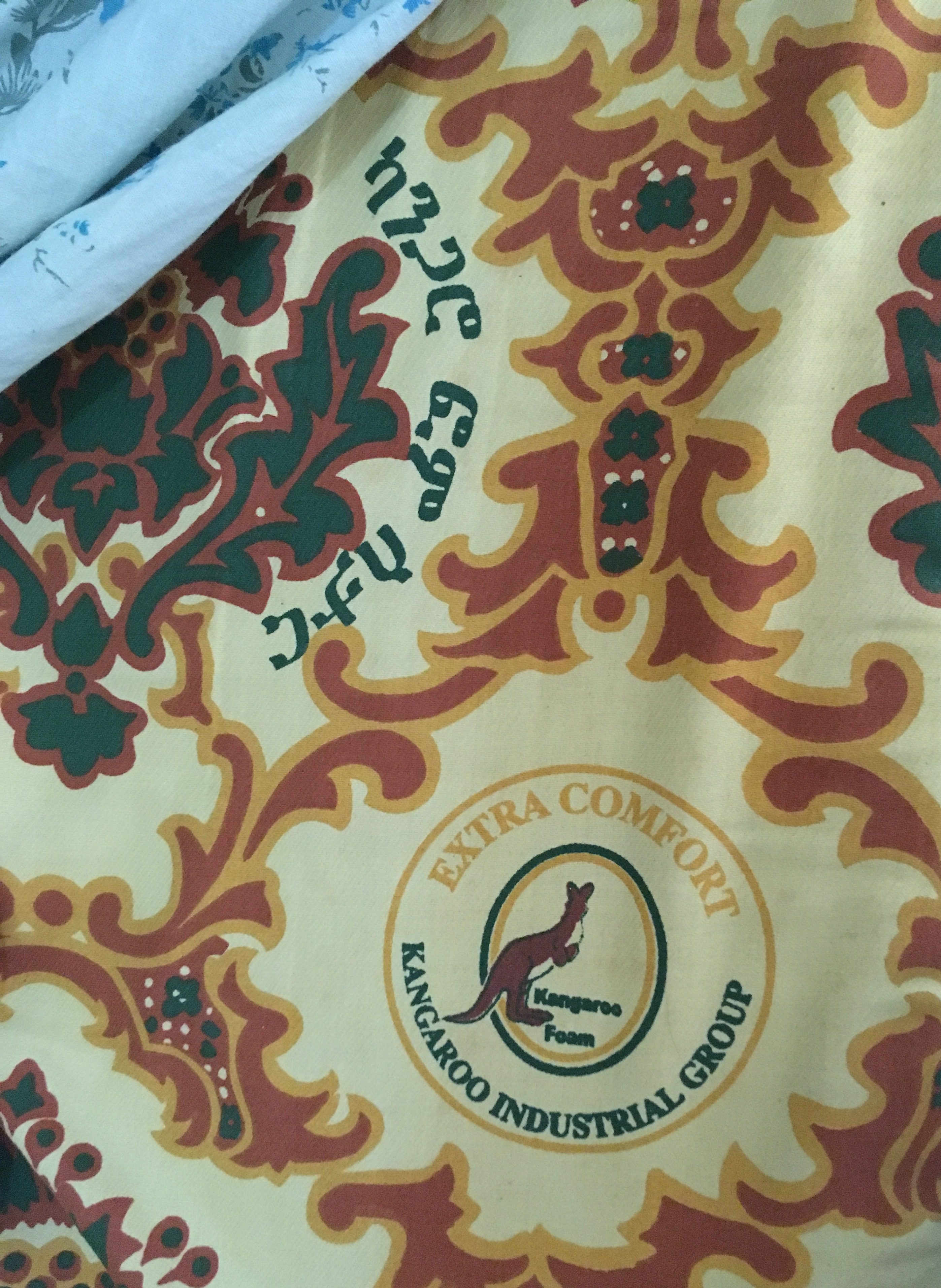
I did some packing and noticed that my mattress was covered with this fabric.

I stared at it.  Why were there kangaroos all over my mattress and why had I not noticed before?  I had been here a week.  I can only posit that it was an example of how the mind narrows down when it is overwhelmed with too much new stimulus.

It could also be related to what I call “the gauze effect.”  I have often gone on a trip to a developing country thinking I’ll write blog posts every day, or fill my hours drafting a novel, or learn French because I’ll have lots of time on my hands.

I do none of that.  In fact I do nothing much, because the pace of life is so slow, the heat so intense, and getting the smallest task done feels like a major miracle.  It feels like a soft cotton gauze has settled over your head.  You can’t think, you can’t act.  Making a photocopy feels like a big accomplishment worthy of being rewarded with a nap.

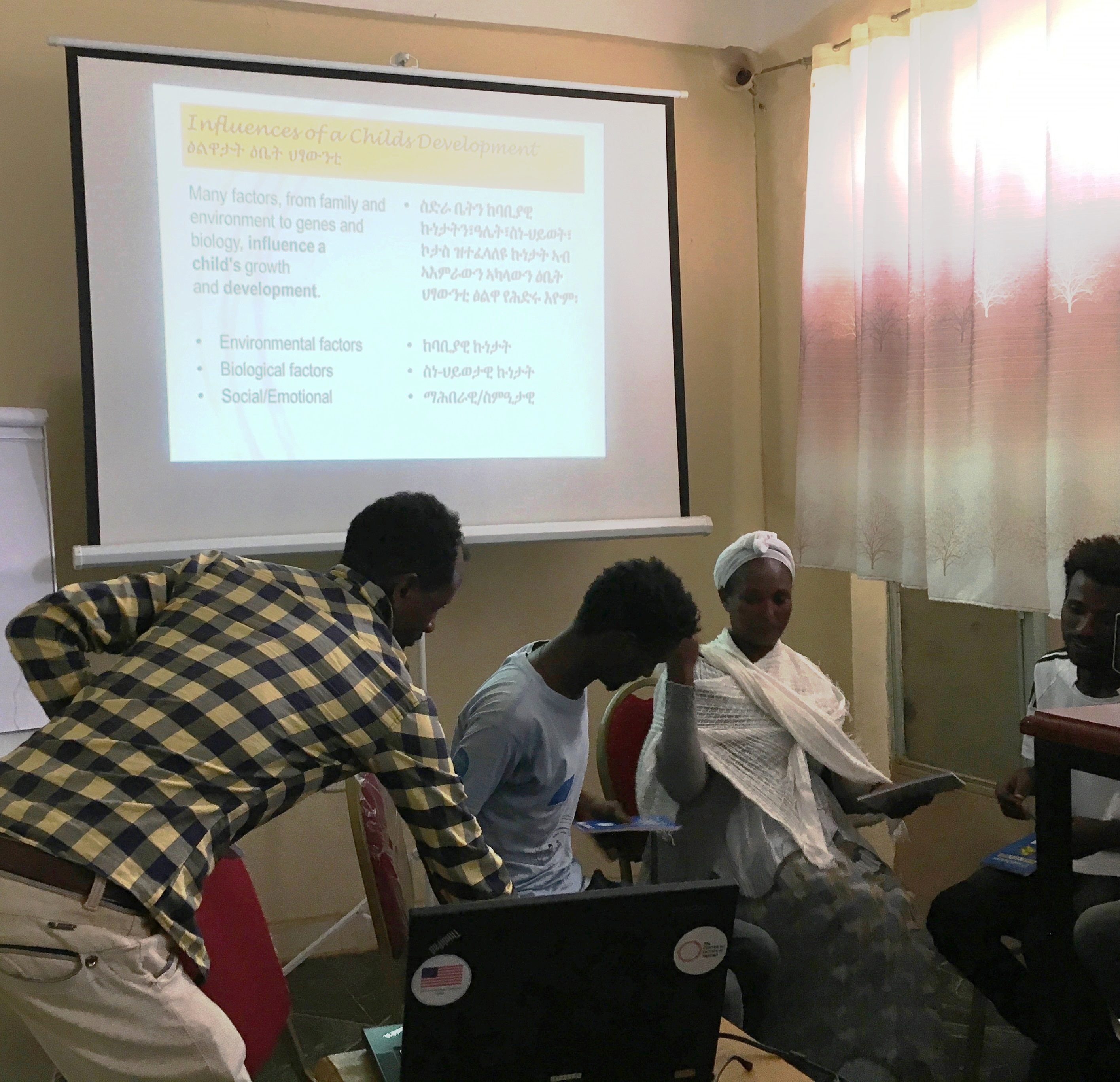
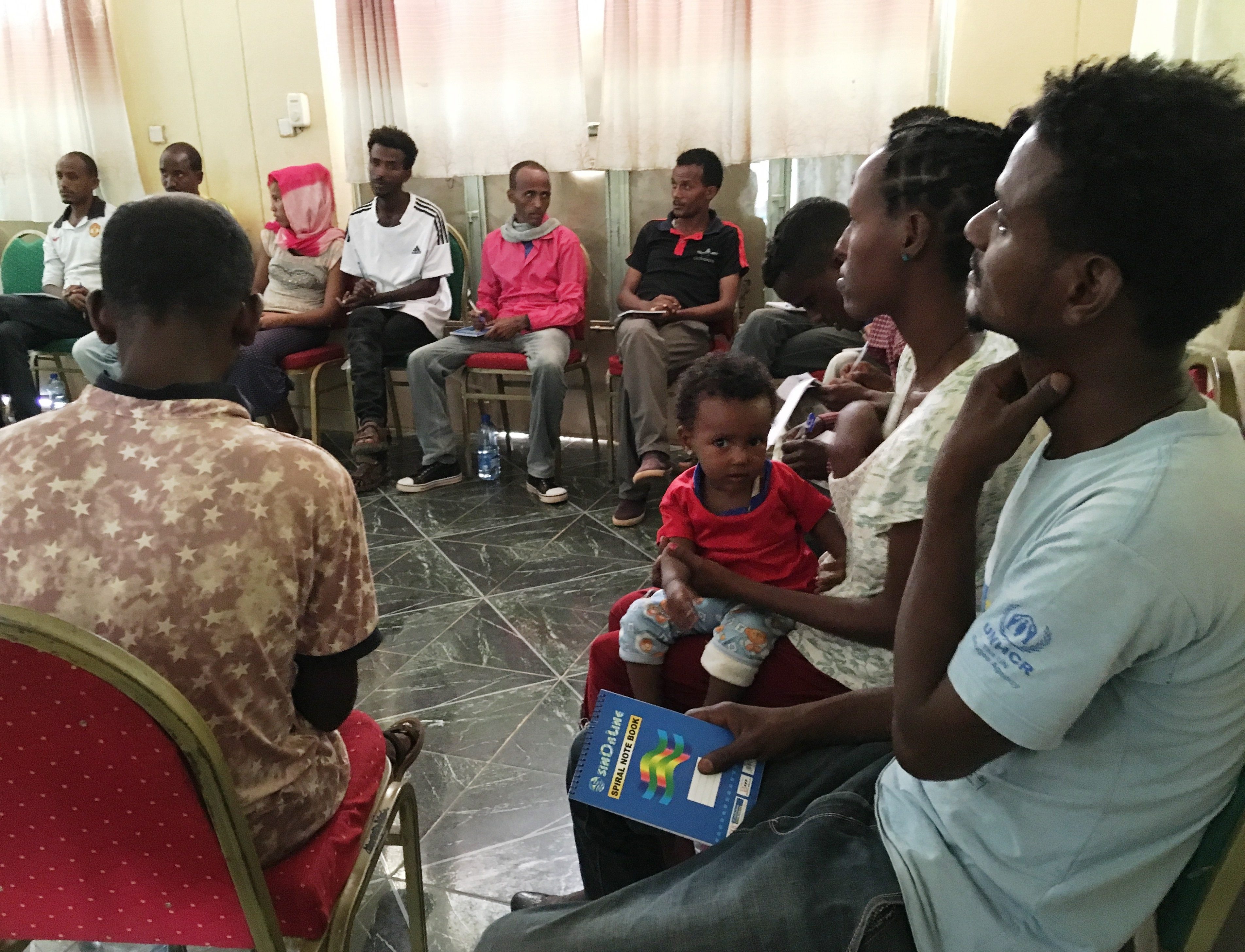
I attended a two-hour training on attachment in the morning that was given by our expert psychotherapist to employees of other NGOs working with Eritrean refugees.  Several young women had brought their very cute babies, and I thought it must be a nice bonus for them that they got paid to learn about child development and attachment on the job.

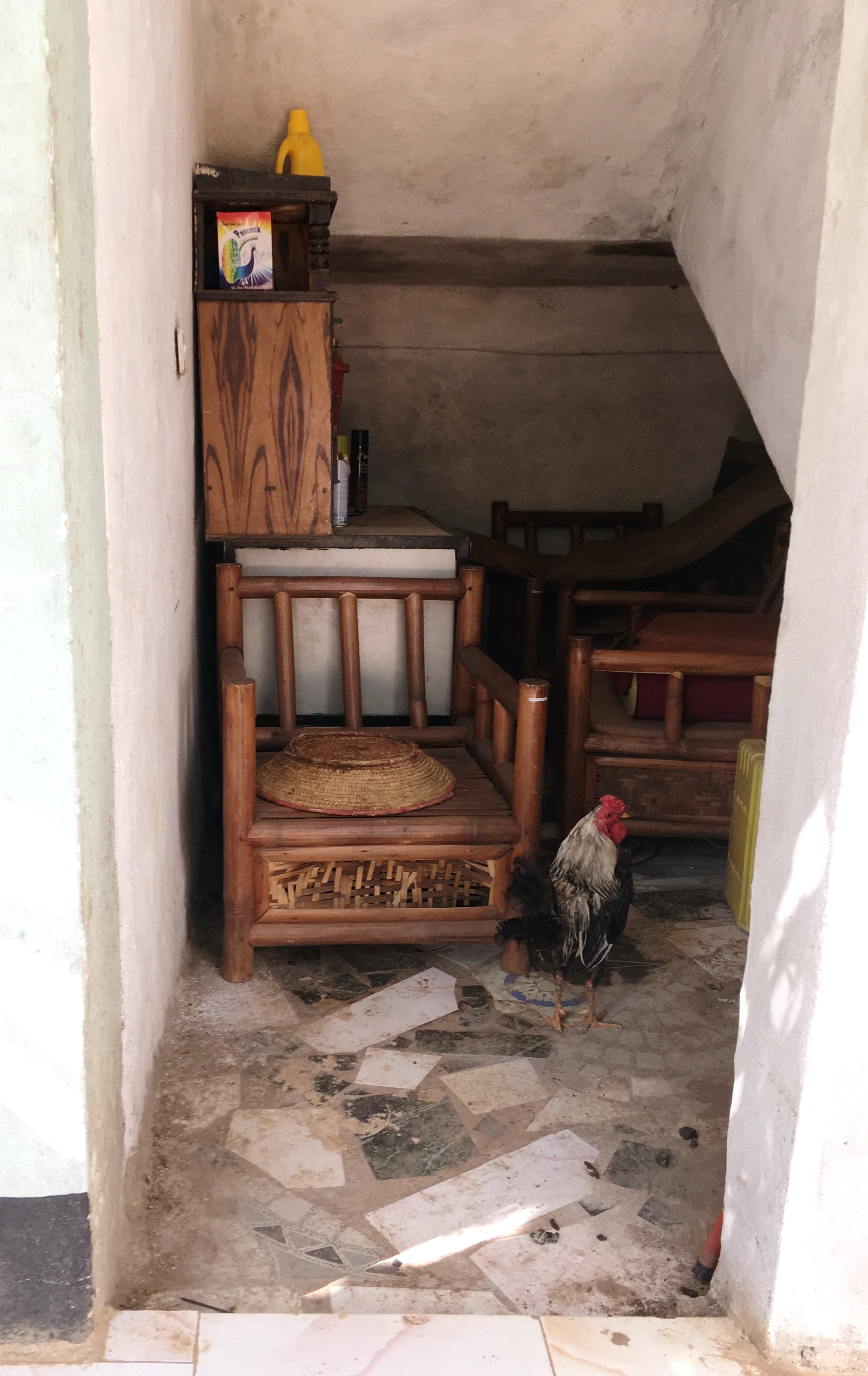
A rooster had flown over the wall of our compound and was crowing incessantly in an alcove outside the training room.  Suddenly I saw one of the cooks stride purposefully past the door and the rooster gave an alarming “Bwuauck!”  We would be having poultry for dinner tonight.

After lunch we rode to one of the camps and hung around waiting for clients to show up.  One by one, women arrived, some with children.  CVT has a childcare tukul but the babies stay in the groups with their mothers.

About 15 minutes past the hour there were 10 women assembled and the facilitator began.  Thankfully she didn’t ask me to speak, she just told them who I was and I gave the same introduction as the rest of them: name, age, marital status, number of children, and how long I had been in Ethiopia.  “One week,” I said, smiling. And I thought, pained,  And I get to leave tomorrow, while none of you knows when she’ll return home or be resettled, if ever.

The facilitator translated here and there but mainly it was similar to the boys’ group the previous day; I knew enough to get the gist of what was going on.  All of the women were married with children and dressed in traditional clothing except one.  She was dressed in jeans and a tight-fitting T-shirt and had her hair in a glamorous up-do.  At first she sat slouched down in her chair with her arms crossed as if to say, “I’m not one of you.”  But as the group went on and the women shared she sat up and leaned forward.  It was a remarkable transformation, and a great example of the power of group counseling.


Beasts of Burden

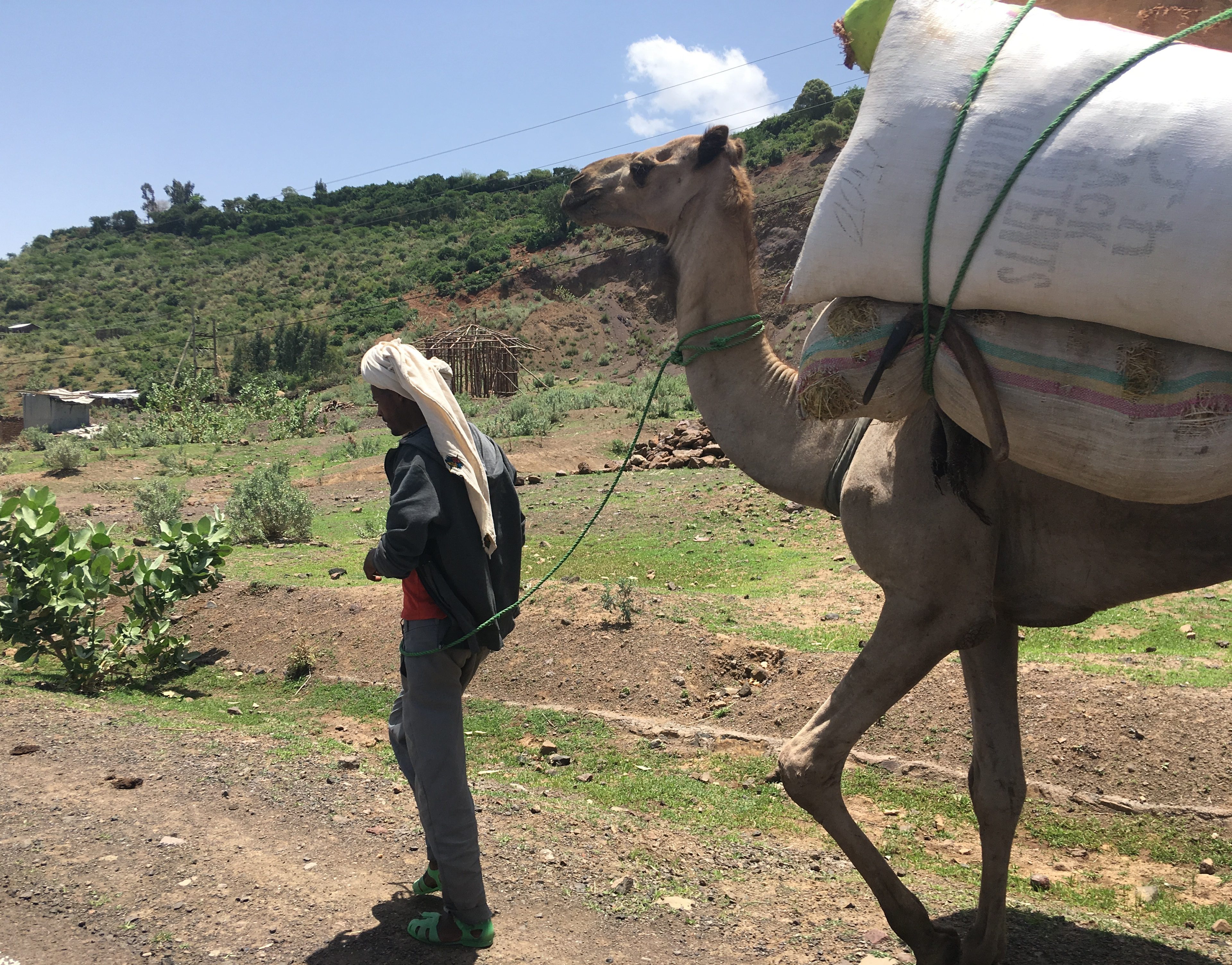
The first thing I noticed in Ethiopia, and an enduring image I’ll carry in my mind, is how hard people (and animals) toil.

I spent a lot of time being driven in trucks.  Along the side of the roads there were always streams of people walking.  If it took us an hour to get from Axum to Shire, how long did it take people to walk?  It was 90F and humid with no shade.  There were no sidewalks, just rock strewn shoulders.  People walked barefoot or in what appeared to be 99 cent flip flops or jellies. No one was carrying a water bottle or wearing sun glasses.  I’m sure they weren’t wearing sun screen.

Oh, and did I mention that they were all carrying enormous bundles of twigs, gallons of water, babies, rebar, small trees, or sacks of potatoes?  Men, women, children.  Old people, little kids.  I saw a girl who looked like she was four years old walking alone in the middle of nowhere, balancing a case or juice boxes on her head.  Did she ever wonder if this was normal, or okay?

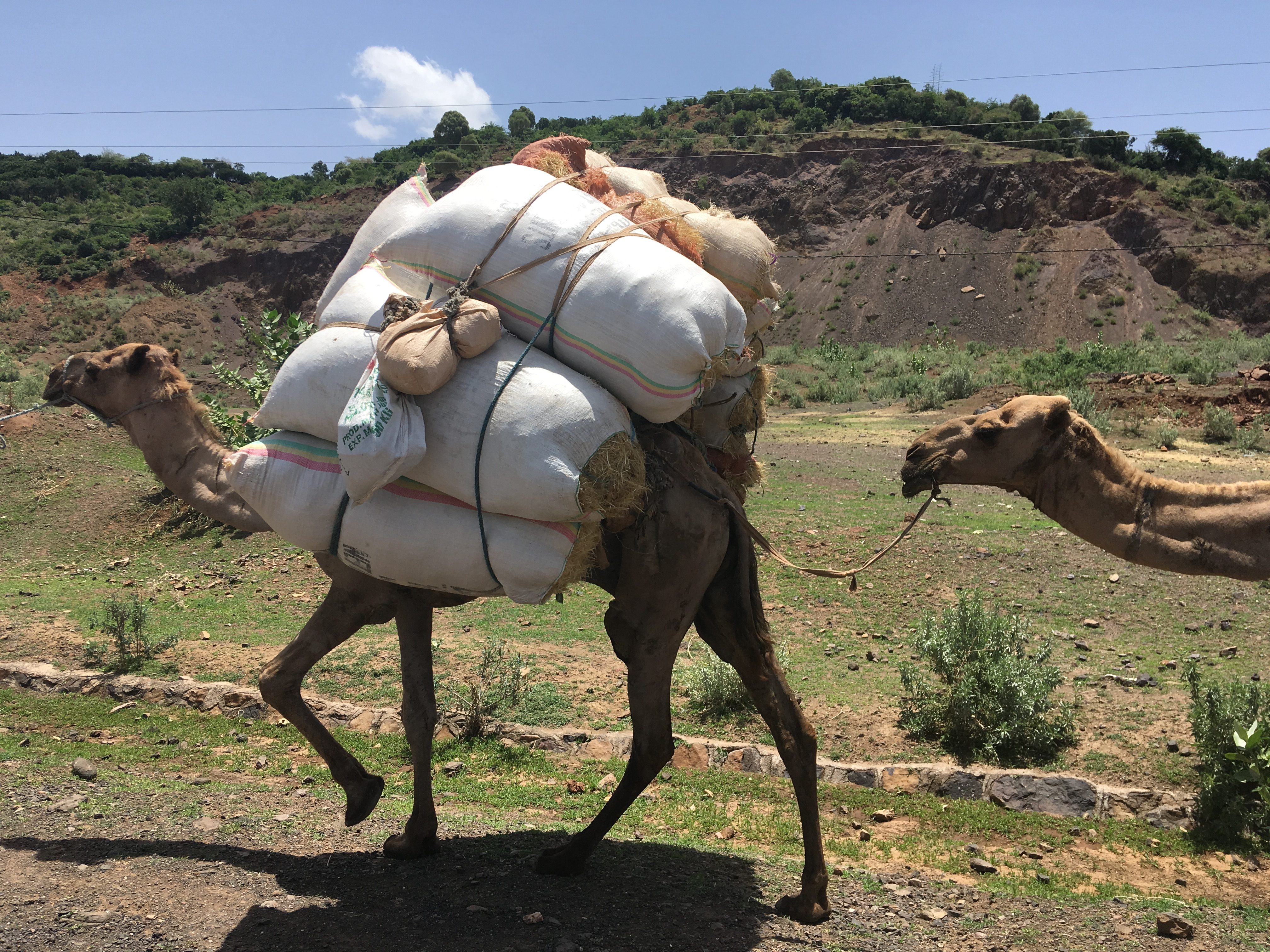
The lucky ones had camels or donkeys whose paniers were loaded with rocks or bricks or 5 gallon water jugs.  I rarely saw anyone riding a donkey or camel; they’re reserved for transporting heavy loads and riding one probably would seem frivolous.

The Ethiopian roads are probably better than what we have in the US—maybe due to not undergoing the freezing and thawing of winter. They’re smooth and black and look like they were laid down yesterday.  And yet there is very little traffic.  No one can afford a car.  In a week there, I only ever saw one passenger sedan.  Everything else is one of four things: a commercial truck, a bus, a white NGO Toyota Land Cruiser, or a Bajaj.  These diesel powered three wheeled vehicles that taxi people around for short distances.  I believe they’re called tuk-tucks in India and cocos in Cuba.  Anyway, don’t bother looking for a taxi because there are none.  And no worries about running a red light, because there are no stop lights of any color, stop signs, or signs pointing the way to anything.

Despite the great road and light traffic, Ethiopians still manage to have a lot of accidents.  I saw four road accidents in the one-hour drive from Axum to Shire, all involving buses.  One appeared to have rolled five or six times; an ambulance was at the scene and I couldn’t imagine anyone survived without major trauma.

Back in the refugee camp, I was listening to our staff tell the group how, if they feel “heavy” or worry constantly, suffer guilt for surviving when their family did not, or have flashbacks and nightmares, those are normal reactions to the abnormal experiences they’ve lived through.  They described how talking about troubling emotions with others can help people heal.

This may seem obvious to you, but I wish someone had told me all this when I was an adolescent because, well, I wasn’t tortured but I believed I was the only one on earth who felt insecure, unpopular, and ugly.  Well maybe I was, but odds are I wasn’t.

A scrawny kid of about 15 sauntered up and started listening.  He was wearing skinny jeans and a black shirt with white lettering that said, “Life is Party.”  He was smoking—the first smoker I’d seen—although I was told later that lots of the kids on their own smoke.

There were other funny T-shirts in the crowd, likely made in China.  One said “Inmy Mind;” my favorite was “Jerry Smith World Famous Surveying Co.”  How cool is that T-shirt?

I wondered how long had it been since he’d seen his mother or father. He looked tres cool but then teenagers always do.

The speaker was now talking about CVT’s services, and making very clear that CVT does not provide any material aid or cash support.  A woman raised her hand to say she’d attended the groups and that “going to CVT does not mean you are crazy.”  The audience was encouraged to contact CVT if they “knew anyone” with the symptoms described.

Despite

Life has been throwing a lot my way lately, or at least throwing a lot at people I love.  I debated whether to write about it, then remembered that the tagline of this blog is “Living well despite what life throws at you.”

It’s one thing to live large when everything is going well, it’s quite another to keep embracing life when things are not so great.

My life is fine, aside from the new upstairs neighbor, who I suspect of making wine late at night (stomp, stomp, stomp!). I have spoken to him and it is better, but I have to wear ear plugs a couple nights a week.  I worry that the people who are renting my condo while I’m in the UK/Europe/Ethiopia this summer will be bothered.

Work has been a pressure cooker; this week I submitted almost $5 million worth of funding applications for projects in Iraq and Ethiopia.  The teams were dispersed around the globe, from Kurdistan to The Gambia, which has only 14% Internet penetration. I do get a buzz out of pulling everything together to meet deadlines, and then I collapse in exhaustion.

On to the people I love: Vince broke up with his girlfriend, and for some reason it hit me hard.  I was so happy that Vince had, for a while, a fun relationship that didn’t involve drugs or alcohol.  But I realized my reaction was partly about me.  A few weeks after I turned 40, my serious boyfriend dumped me.  I wondered if that was it—I would never meet anyone again.  After all, I was 40!  Vince will be 39 this year.  I have no idea if he feels like it’s over—I hope not—but I did.

The thing that’s really thrown me is hearing from Son #2 after a four-year silence.

I wrote a series of seven posts about Vince’s brother, who I gave up for adoption. I’ve never written about how I found him after many attempts and despite Catholic Charities’ best efforts to thwart us both.

I hesitated to write about this, but then—catatonic on the couch after all my proposals were done—I caught an episode of Call the Midwife that had an adoption storyline and I was reminded that the silence and shame that surrounds adoption has got to be broken.

Vince and I met him once, over 15 years ago.  We met at a restaurant; I can’t remember exactly when or where because it was so surreal.

His name was the same as one of my brothers, but I will call him by the name I gave him, Isaac.  He looked a lot like Vince but with different coloring.  I asked if I could give him a hug and he said, “Of course!” and hugged me for a long time.  Several hours of talking passed like seconds.  We hugged goodbye and pledged to stay in touch.

It didn’t’ happen.  Isaac’s adoptive mother was opposed to him meeting me, and he was already going behind her back.  But he and Vince continued to meet up and developed a bond; Vince wrote about it here.  It wasn’t a happy ending, but there’s hope now that Vince is in recovery.

Isaac sent me an email out of the blue about five years ago, with photos of his wife and kids.  My grandchildren, who I’ve never met.  His wife has the same name as my mother.

He said he would like for me to meet them, but then he disappeared again.  I didn’t pursue it him because I didn’t want to be disappointed again.

Isaac wrote to me again last month.

His wife has Multiple Sclerosis.  Severe, aggressive MS that affects her vision, speech, and mobility. He and I have been writing for about a month now, and I am hopeful we can stay in touch this time, but it’s stirring up a lot of regret, resentment, love, and hope.

Gatekeepers

This is a series of posts about Belize and Guatemala that starts here.

Waiting in the gate area for my flight to Belize. Why do people crowd around the jet way entrance as soon as the boarding announcements begin? It takes at least half an hour to board everyone, and once you’re in the jet way you stand in line anyway.  Then you stand in the aisle of the plane til you can reach your seat, so what was the rush?

But crowd everyone did, except me and a few other hangers back.  Maybe people thought the announcements would sound clearer if they got closer.  Why is it that airlines can propel a million-pound vehicle through the air but they can’t invent a PA system that’s as clear as a MacDonald’s drive through?

A group of military personnel stood patiently as tourists in flip flops and shorts shoved in front of them.

Ah, now I could make out part of the announcement.  They were asking for volunteers to give up their seats and take a later flight because the plane was “very full.”  You mean, overbooked, don’t you? I thought.

I used to work for a consulting firm that analyzed the data of applicants to private colleges.  Using an algorithm with 400 data points, we would sift and sort and make recommendations.  If you were poor but your test scores were high and would bring some kind of diversity to the student body and you played the marimba, you might be offered a $50,000 scholarship toward the $60,000 annual cost of attendance.  If you were dumb but lived in the Connecticut zip code with America’s highest per capita income, they might give you a President’s Scholarship of $2,000 to flatter and lure you in.

The two principals of the firm traveled extensively to visit our clients.  College enrollment, explained one of them, shared similarities to how airlines filled seats.

“Everyone on a plane has paid a different price,” he said grumpily, which was how he said everything. “I might have paid $850 to go to Sioux Falls while the guy sitting next to me paid $500.  They’ve got my travel history, they know how much I was willing to pay in the past, they probably know how much I paid for the house in Georgetown and my condo on Summit and my Volvo, so I’m fucked.”  He had done very, very well in the college admissions consulting business.

So knowing how sophisticated it all is, you have to wonder whether, when an airline overbooks, is it intentional and if so, what’s the point?

I didn’t pay enough attention to see if anyone gave up a seat.  Next they announced that most everyone would have to check their carry ons.  What the hell?  Is this because of the jerks who are trying to game the system with their one “extra carry on item?”  That used to mean a handbag or a laptop case, but now people are testing the limits and bringing purses the size of Labradors, in addition to their actual carry on.

“We’d like to thank the US service members who are flying with us today,” was the next, pretty-clear announcement, “and invite them to board first.”

The people who had shoved past these military members now turned and smiled and thanked them for their service. Some people applauded.  The soldiers looked uncomfortable and made a beeline for the gate.

I would like to think that Delta and my fellow passengers were sincerely appreciative of these military members’ service. But we’re all so detached from the wars—er, conflicts—in which we’re involved. It’s easy elbow past them in line, then give lip service to “honoring our veterans” five minutes later without much thought about what they’ve witnessed.

I interviewed a young veteran last year.  She had been on gate duty at a US compound in Afghanistan, and she told of having to turn away a desperate father who came seeking medical care for his small son, who he was carrying.  She started crying. “Maybe you should keep working at The Gap for a while,” I said gently. “Maybe it’s too soon to work with torture survivors.”

Fa la la la felon

It’s Christmas Eve and I thought I’d share this post my son, Vince, wrote from prison two years ago.  If you’re feeling lonely today, write a letter to a prisoner, then contact your local Department of Corrections or a nonprofit prisoner support organization on Tuesday to find out how you can send it.  Half of prisoners never get a visitor, and many never get any mail.  Vince is doing great now.  In fact today he’s on his way to San Diego to spend Christmas with his aunt and uncle and cousins.  If you’re interested in following his adventures, he blogs at Fixing Broken.

I haven’t written any blog posts in nearly a week. My job keeps me busy, and I’ll say that there is a little more effort involved in the actual writing vs. typing a blog, from my point of view, anyway.

My co-blogger, aka Mom, came to visit me today. Like everybody else, she had a good laugh at my prison-issue glasses. But then we sat down and talked for two hours. We could have talked for two more and time would have flown by just as quickly. It was really nice to see a familiar face. We spoke on topics ranging from family health to sign-language-interpreting gorillas. It will probably be my only visit during my whole tenure as a prisoner, and it was a good one.

Last night I started reading Abraham Lincoln, Vampire Hunter. I only made it through 40 pages and I had to get to sleep but so far I’m interested. I’m sure once I leave prison I’ll go back to reading zero books. My mind is impossible to control so I’m easily distracted. Sometimes I can’t get through a page without daydreaming. I’ll catch myself. And do it again minutes later. Brain. Bad brain.

I haven’t been sick in years. Years! I am in the middle of a terrible cold, and I don’t like it. I have been told several times over the years that, despite my claims, I am not a doctor. Even if I were, there’s little I can do to suppress the effects of the virus. So I’ll do the standard: rest, drink plenty of fluids, and complain.

I’m not at all religious but I went to a Christmas program for something to do, and I had a blast. There were six or seven musicians, all in their 70s or 80s, from some denomination whose name I cannot recall. Each played a different instrument ranging from accordion to piano to guitar. They had 50 grown men, drug dealers, pimps, and armed robbers, singing Twelve Days of Christmas and even doing the chicken dance. That was the best. We were all laughing. And we all needed that.

I think it may have been the first time in a while that some of the guys smiled.  Which will usually, unfortunately, later, lead to crying.  Quietly, so your cellmate doesn’t hear.  We will be thinking of our friends, families, and why we can’t be with them this holiday season.  I am one of the lucky ones.  I won’t be locked up next year.  Some will.  Some will be forever.  And although they are here permanently for a reason, it will still hurt.  They may not show it, but they will surely feel it.

Justice, Sweet and Sour

Summer is over, and so is my break from blogging.  In my last post, I listed all the things I was going to do with my extra time: sit outside in the morning with my coffee and listen to the birds, plan a fall trip, and figure out how to publish the first year of the blog as an e-book.  Oh—and write a novel.

I sat outside with my coffee once.  I am planning a fall trip to Italy, Malta, and Spain.  I didn’t write a novel, but Vince and I have started working with an editor on the e-book.

Mostly, I’ve tried to live in the moment.  Summer is so brief.  There were fun moments.  At a family weekend at a cabin, someone brought a Donald Trump piñata (Made in Mexico, appropriately).  I fostered a litter of seven kittens which drew visits from friends and family.  Vince and I went to the State Fair where, at the FabBrow booth, he insisted he wanted a uni-brow.  The makeup artists got back at him by making him look like a community theater actor.

pinatakittens

fabbrow

I spent a lot of time outdoors.  There were hikes and bike rides, and one day a friend and I spend hours making jewelry down at the river. Other times I packed a book and a beverage and biked to some quiet spot at a lake or the river.

The big local news this summer was of the killing of Philando Castille by a cop.  Castille was black.  The cop, Jeronimo Yanez, was Latino.  Castille was pulled over for a broken taillight.  He had a gun in his glove compartment, and believed that the proper procedure when interacting with a cop was to inform: “I’ve got a gun, and I’ve got a permit to carry it.”

I suppose Yanez didn’t hear anything after Castille said “I’ve got a gun.” Blam!  Shot point blank five times and left to bleed to death.  Castille’s girlfriend live streamed his last moments on Facebook.  I have not watched that video, but hundreds of thousands of people have.

I live within walking distance of the Governor’s mansion in St. Paul, where the inevitable protests took place. Traffic was blocked off by the police for a month and I was kept awake a couple nights by helicopter noise.  The protestors blocked off the nearby interstate and either police were patrolling with helicopters or it was news media copters, but they were loud.  Not that I’m comparing my minor inconvenience to the Castille’s family’s loss.

govs-mansion

This week marked one year since Vince was released from prison.  He is doing so well.  He just started a new job in catering, and he’s excited.  In a month he will go off intensive supervised release, which means he’ll be able to stay out past 10:30 or go to Wisconsin to visit cousins.  Best of all, he won’t have ISR agents showing up day and night asking him for urine samples.

Another event prompted me to write this post.

In 1989, an 11-year-old boy named Jacob Wetterling was abducted by a stranger at gun point in a small town in Minnesota. He was never found.

Vince was the same age as Jacob.  Vince became a Bar Mitzvah, got his first job, moved out, turned 20, had a serious girlfriend, had serious drug and alcohol problems, went to jail, got clean, relapsed, turned 30, moved to Lanesboro, went to prison, got out, and has two years of sobriety.  In a few months he’ll be 38.

This week, a man confessed to abducting, sexually assaulting, and executing Jacob Wetterling by shooting him in the head, then burying him—and returning a year later to move the remains.  Lying handcuffed in the last moments of his life, Jacob asked the man, “What did I do wrong?”

Vince was sentenced to over four years in prison for drug possession.  Because the statute of limitations has expired, Jacob’s killer will get 20 years on a child porn charge.  He’ll be a cho-mo—the most loathed prisoner among prisoners.  According to Vince, they are also considered a “protected class,” by officials, perhaps to prevent prison vigilantes from meting out real justice.

Gittin’ in Trouble

This is the seventh post in a series about Cuba that starts here.

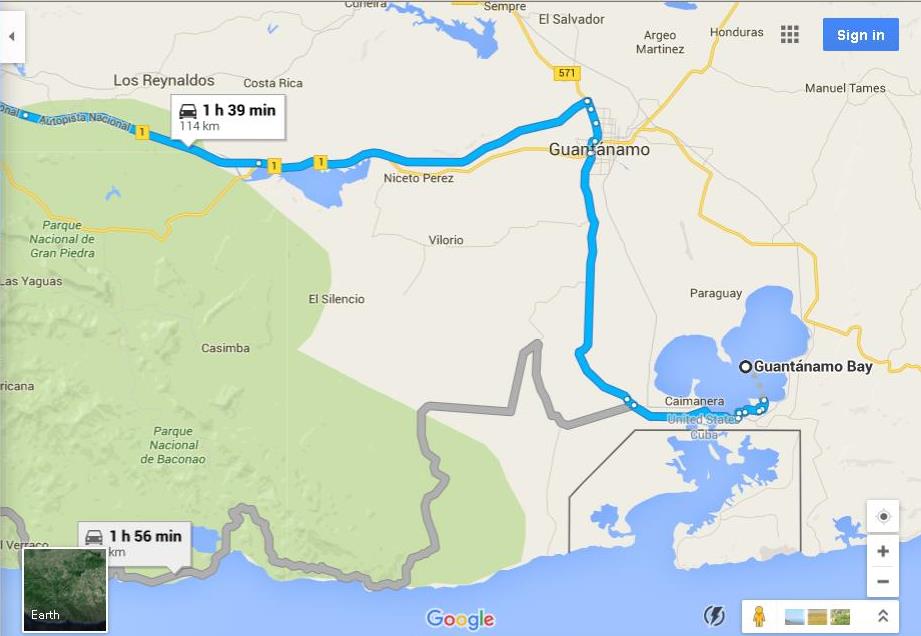
Before we left Santiago de Cuba, we took an excursion to the nearby Parque Nacional de Gran Peidra—a sort of national park. I love the outdoors and got excited that we might go on a hike, but we only skirted the park on our way to our real destination, Guantanamo Bay.

If you look at Google maps, it’s really confusing. What you would think was the U.S. territory with the detention center is marked as Cuban territory. Google has steered me wrong before, mostly memorably in Nairobi where it sent me to a slum instead of to the Ford Foundation’s offices, so I would never count on it except for a rough approximation.

Guantanamo

There was excitement on the bus as we got closer to Guantanamo. “Get out your OFAC letter!” someone exclaimed. “We’re being tailed by the CIA!”

As I mentioned previously, we were required to carry letters from the U.S. Office of Foreign Assets Control at all times to show we were there legally. I couldn’t imagine we would get anywhere near Gitmo—you didn’t have to see it to know it would be surrounded by 20-foot razor-wire fences and heavily-armed guards. What were we going to do, ram the gate? That would put a crimp in my plans to apply for jobs with the CIA and the Foreign Service!

But then the bus stopped, and most of us waited while a couple of Interfaith Task Forcers got off and held an animated conversation with the driver and our guide. Then we turned around and went back to Santiago. I will never know how the leaders of the Task Force talked our guide and the Cuban bus driver into driving to Guantanamo Bay, or how close we really got, or exactly where its limits are.

That’s the thing about travel, if you’re doing it right. You’ll come home shaking your head and laughing to yourself because there was some mysterious situation for which you’ll never have an explanation. That’s assuming no one got hurt or arrested, of course.

Now that I am working for the Center for Victims of Torture, it would be hugely prestigious to be able to say casually, “I was arrested at Guantanamo a couple years ago.”

CVT has been active in advocating for the closure of Guantanamo. First—obviously—because we, torture people there (yes, we, if you’re an American). Half the American population (and I think we can guess who their presidential candidates are) believe there’s nothing wrong with torture. “How we gonna catch the bad guys if we don’t torture people, huh?”

I could write 10 posts about why that’s a dumb statement, but for now I’ll just say, if you think torture is okay, go read someone else’s blog. And even if I thought it was okay, it’s still illegal.

The Universal Declaration of Human Rights, which came about in response to the WWII and specifically the Holocaust, outlawed torture. Ronald Reagan signed the international Convention Against Torture in 1984. President Obama issued an executive order on his second day in office banning torture. In November last year, Congress passed the National Defense Authorization Act, which “placed all U.S. government interrogations under the United States Army Field Manual on Interrogations, and requires that the International Committee of the Red Cross have prompt access to all prisoners in United States’ custody.” In other words, there are grownups in charge now.

Very few people know everything that’s gone on at Gitmo, but we do know that people have been detained indefinitely, without charge or trial. If you imagine yourself in one of those prisoner’s paper slippers, you will understand why they go on hunger strikes. We then subject them to another form of torture, forced feeding. If you wonder, “how bad could that be?” watch this video of the rapper Mos Def being force fed; he volunteered to show us what it really involves.

Back in Santiago, none of this was on my mind. My biggest concern was finishing my master’s and getting a job. Vince’s time in prison, and researching prison for this blog, changed all that.

From AA to LA

This is the eighth and final post in a series that begins here.

Vince went to live with my mother, and I attended outpatient chemical dependency treatment.  If you are in the “helping professions”—social work, psychotherapy—or if you even just have common sense and empathy, you won’t be surprised to learn that I wasn’t an alcoholic.

The expectation had been that I would go through pregnancy, birth, and adoption without any support, then go on as though nothing had happened.  People seemed surprised that I was sad and angry.  They were uncomfortable when I talked about it.

“You signed the papers; it’s over—why keep bringing it up?  Just don’t think about it.”

Alcohol is a time-honored stress reliever in such dissonant situations.

Sobriety—and a break from being a full-time mother and student—helped clear my head and face my emotions.  I spent the month working the Twelve Steps of Alcoholics Anonymous and reading piles of self help books, and doing all the other things people do to get back on track.

After a month Vince came home.  What–you were expecting some big drama?  Sorry.  In Minnesota we don’t like drama.  In fact we are all about avoidance of discomfort, or as I call it, “reality.”

I didn’t drink for a couple years.  I went to AA, where the members often listened to my story skeptically and said, “I don’t think you’re an alcoholic.”  I should have been referred to Alanon, which is for family members and friends of alcoholics.  People impacted by alcoholic behavior act just as crazy as their alcoholics, but there’s no rehab for them.  In fact I can recall my mother complaining that my dad got to go to “that country club”—Hazelden, a rehab center nestled on a lake with a pool, wooded walking trails, and tennis courts—while she stayed home with the four kids, the house, and the bills.

I got a job, moved out of the hi-rise, and started paying back my student loans.  Vince began school and, while his grades were never great, he was popular with teachers and students.   I made sure he brushed his teeth and washed behind his ears.  I took him to baseball practice, religious school, and family functions.  We watched Dr. Who together and went on little road trips to Lake Superior to hunt agates.  You know, normal life.

Every spring I would find myself feeling blue and wonder what was wrong with me.  Then it would hit me: Ah ha!  Isaac’s birthday is coming up.  On Rosh Hashanah, the Jewish New Year, I would tear up when they read the story of the sacrifice of Isaac.  Every couple of years I would send a letter to be placed in his file, knowing it would probably never be read.  When my mother talked about how many grandchildren she had, didn’t count Isaac.  Intellectually, I knew this was the whole point—that it remain forever a secret—but to me he was always out there, somewhere.

When Vince was 10, I got entangled with an abusive guy and we ended up losing our home.  Three times in one year, we had to move and Vince had to change schools.  I chose this time to tell him about Isaac.  I thought it would comfort him to know he had a brother out there somewhere, assuming he was alive.  Clearly I am not a psychotherapist, or I would have known this would backfire.  Vince was devastated—it was a loss on top of losses.

He met his brother, eventually, and some day one or both of us will write about that.

Did these events have a permanent effect on Vince?  They deeply affected me, so why not him, since he was so much younger and couldn’t understand what was happening?  If they did affect him, it’s his job now to delve into them and resolve whatever leftover effects may be holding him back, which is what he seems to be doing in AA.

Thanks for reading this series.  Several people have commented offline that it’s been emotional to read.  I’m ready for a happier subject for the next post: my plans for a road trip to New Orleans!