Tag Archives: England

Knock Offs and Knick Knacks

I went shopping the day after my meeting debacle.  The UK is not a cheap place to live.  The Sales were on for the summer holidays, but things were still “very dear”, as they say.  For instance, a pair of black leather ballet flats cost £80—on sale.  When I worked for Oxfam years ago I was paid in pounds, which helped.  But now I had an American job that paid in dollars, so those shoes would have cost me $105.

My usual shopping strategy is: Go to every store in town, look at every item in every store, buy nothing, go home. Sometimes I buy things but then for one reason or another most of them have to be returned.  It was going to be extra hard to make decisions here.

Also, it seemed like English women must have smaller feet than me, because my size shoes were in the section that, in America, very large tall transvestites would have shopped.  Bras were the opposite problem.  The bra cups on offer were big enough to fit over my head.  Not that I did that.  At least not when anyone was looking.

I looked in Cath Kidston, almost as a joke.  I love her stuff but a little goes a long way and as I already knew, country flowers weren’t a good work look.


 

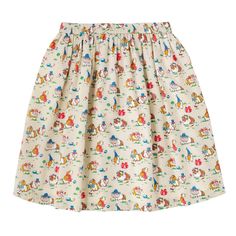
I bought a phone case and some pajama bottoms patterned with guinea pigs having birthday parties.  I resisted the flouncy guinea pig skirt.
Next I went to TK Maxx, which is called TJ Maxx in the US.  Still expensive and hard to find anything that worked.  Then I hit rock bottom and bravely walked into Primark, which is dirt cheap with quality to match.  Because it was the sales, the store was packed with teenagers and their mothers and clothes were strewn all over.  The clothing was adorable but if I even had to ask myself, “Would this lacy, skin-tight, fuchsia, sequined, leopard patterned hoodie be appropriate for my next work meeting?” I had my answer.  I bought a pair of pink satin ballet flats for £6.  Not exactly work attire but I couldn’t resist.

The queue was 25 people deep and Justin Bieber was bleating at an ear-shattering volume on the overhead speakers.  I ran out of Primark like I was being chased by a velociraptor and started to hit the thrift stores, which they call charity shops because well, they are all run by and for charities.

Oxfam has 650 shops in the UK. They stock second hand clothes but also new stuff from around the world like beaded bracelets made by Kenyan orphans, organic Palestinian olive oil, and cards designed by blind tribal elders in Nepal.  It’s all beautiful stuff, and I bought some cards and a pair of socks knit in Bolivia that were guaranteed not to fall down.

I hit Age Concern, British Heart, Save the Children, and Mind, which is a mental health charity.  Second hand clothes in the UK are really rubbish. I don’t know if someone skims off the cream and sells it on EBay before it reaches the charity shops, but they are full of sweaters with stretched out sleeves and 1980s jungle print dresses.

The Thames Hospice shop specializes in vintage. I spent an hour in there and left with a pair of vintage shoes that were too small, a pair of shoe stretchers, and horse brass, which is useless but I like how it looks on my wall.

I bought the ship, which has a useful hook, in Amalfi, Italy.

None of this was going to impress in my next work meeting except maybe the shoes, if I could stretch them out a couple sizes.  Once I inspected closely, however, I discovered they were not vintage at all but in fact made of plastic.  They would have to go back to the shop, along with the shoe stretchers.

Eventually I discovered Daniel, a department store with only beautiful, high-quality things.

I went in several times to fondle the cashmere sweaters, drool over the shoes, and try on hats.  Eventually I bought some things, using the time-tested rationale, “I deserve it.” And ya know, maybe I did.

A Hole in History

I walked around Canary Wharf after my meeting.  Every single person appeared to be under 40 and was dressed like this.

Yes, there were women too and they were also attired in blue.  Blue was The Colour.

I still felt schlumpy but what did I care?  Now I was a tourist and I intended to wear down my heels even more.  I would take the rest of the day off and wander around.  A sign directed me to the Museum of London Docklands.  The Docklands was, I thought, exactly where I had stayed 30 years before.  The area was unrecognizable, with market vendors’ stalls replaced by food trucks selling “gourmet” macaroni and cheese.  Just as in the US, there was a queue 50 people deep waiting for the privilege of paying £8 for what you could make at home for £1.

I passed a sign pointing to Poplar, an area popularized (that was unavoidable) in the popular (sorry!) TV show Call the Midwife.  The street signage was good and I found the museum easily.  It was free, which was a bonus.

If I had been in the mood to learn about the sugar and slave trades, I could have spent all day there.  Instead, I focused on three exhibits and breezed through the rest of it.  The first exhibit was a recreation of a seedy dockside from maybe the 18th Century, complete with pirates in pubs, houses of ill repute, and the obligatory dental surgery with giant pliers prominently displayed.  This area was undoubtedly for kids, but it was my favorite so what does that say about me?

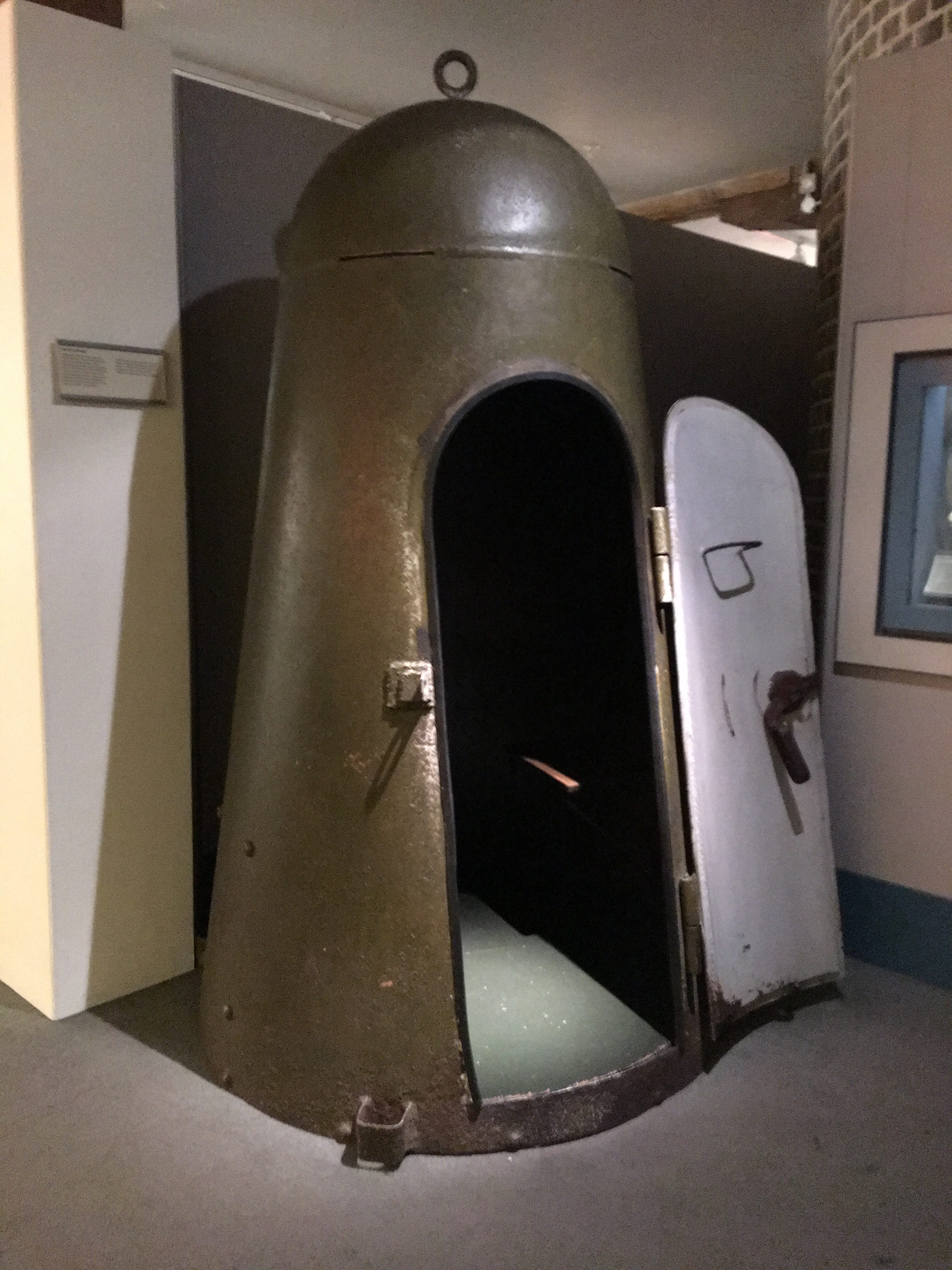
The second section I perused was about World War II specific to the Docklands, featuring bomb shelters for families and singles or couples.

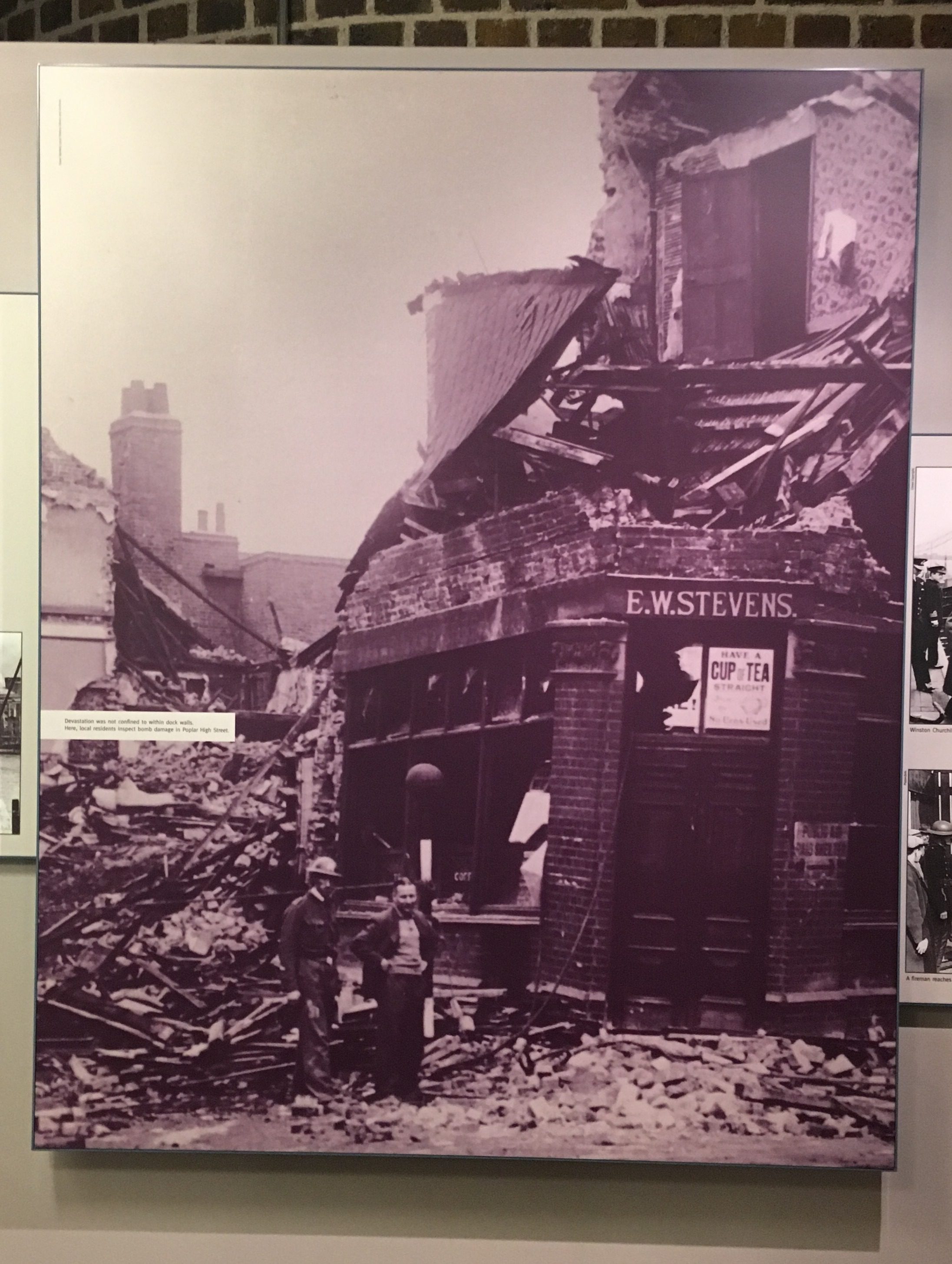
This is the damage the German bombs wreaked:

Imagine, coming across one of these while hoeing potatoes in your garden, five years after the war.

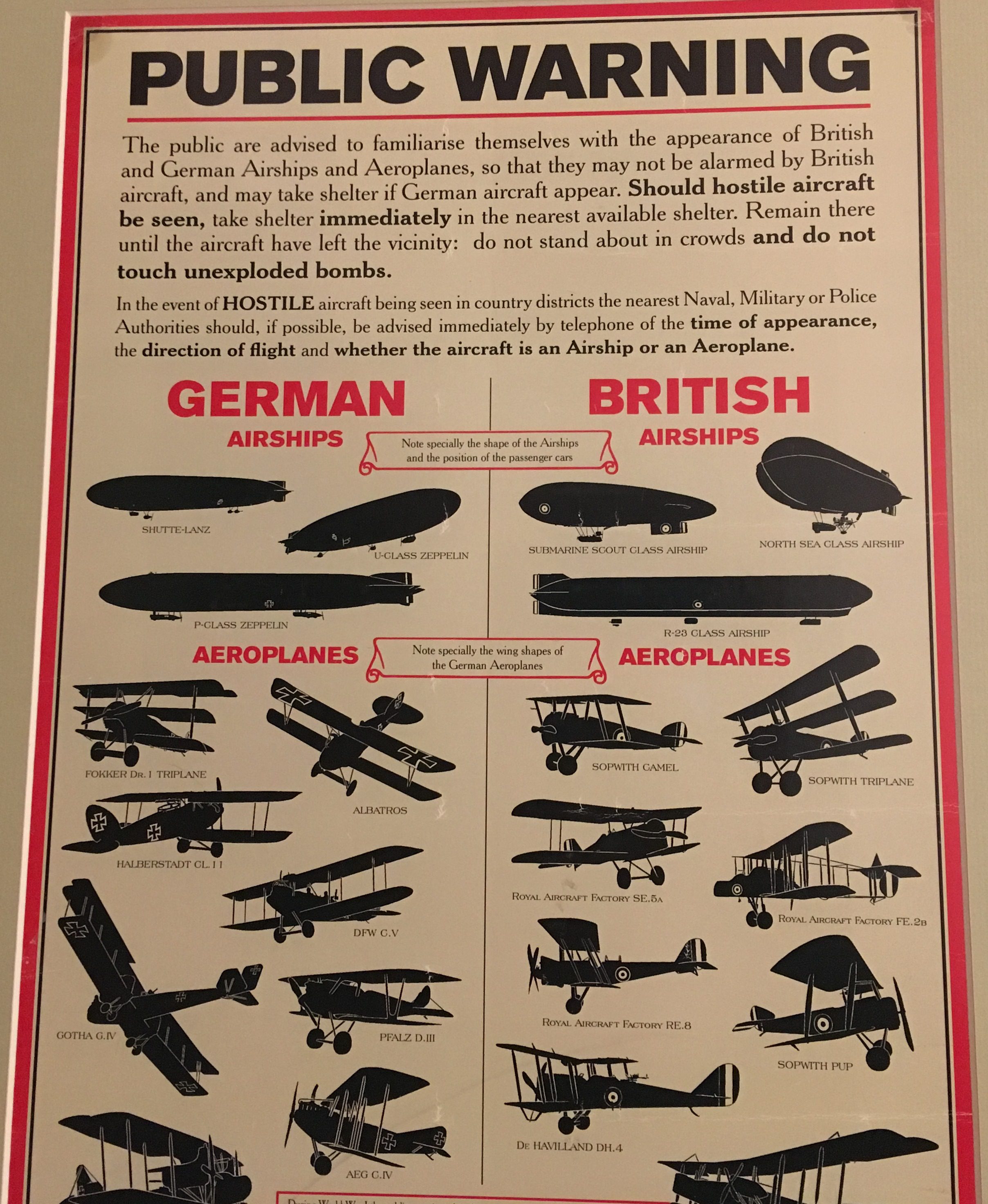
I’m fascinated that people were expected to discern German from British bombers. Can you imagine teaching your kid, “Now Jimmy, study this carefully.  The ones on the left are the bad planes.  When we see them we run for the bomb shelter so we don’t get blown to smithereens like the Evans family.”

I don’t know about you, but I could study this poster all day—even have it in my hands while looking up at the sky—and I would never be able to tell the difference between the good guys and the bad guys.  In the dark, under stress?  No way. I imagine all this well-intentioned poster did was make people more anxious.

They had their version of the American icon Rosie the Riveter; recruitment campaigns to bring women into the workforce to take the place of the men who were off to war:

Of course as soon as the war ended, the women were told to go back home and have babies, which set the stage for women’s lib.

There was a bonus exhibit at the end that displayed items found in the construction of Crossrail, the new Elizabeth train line being built in London.  Imagine, tunneling 26 miles under London, with all the other tube lines down there.  It being London, they had to stop every five feet to make sure they weren’t grinding up a significant archaeological site.  Here’s my favorite artifact, a chamber pot:

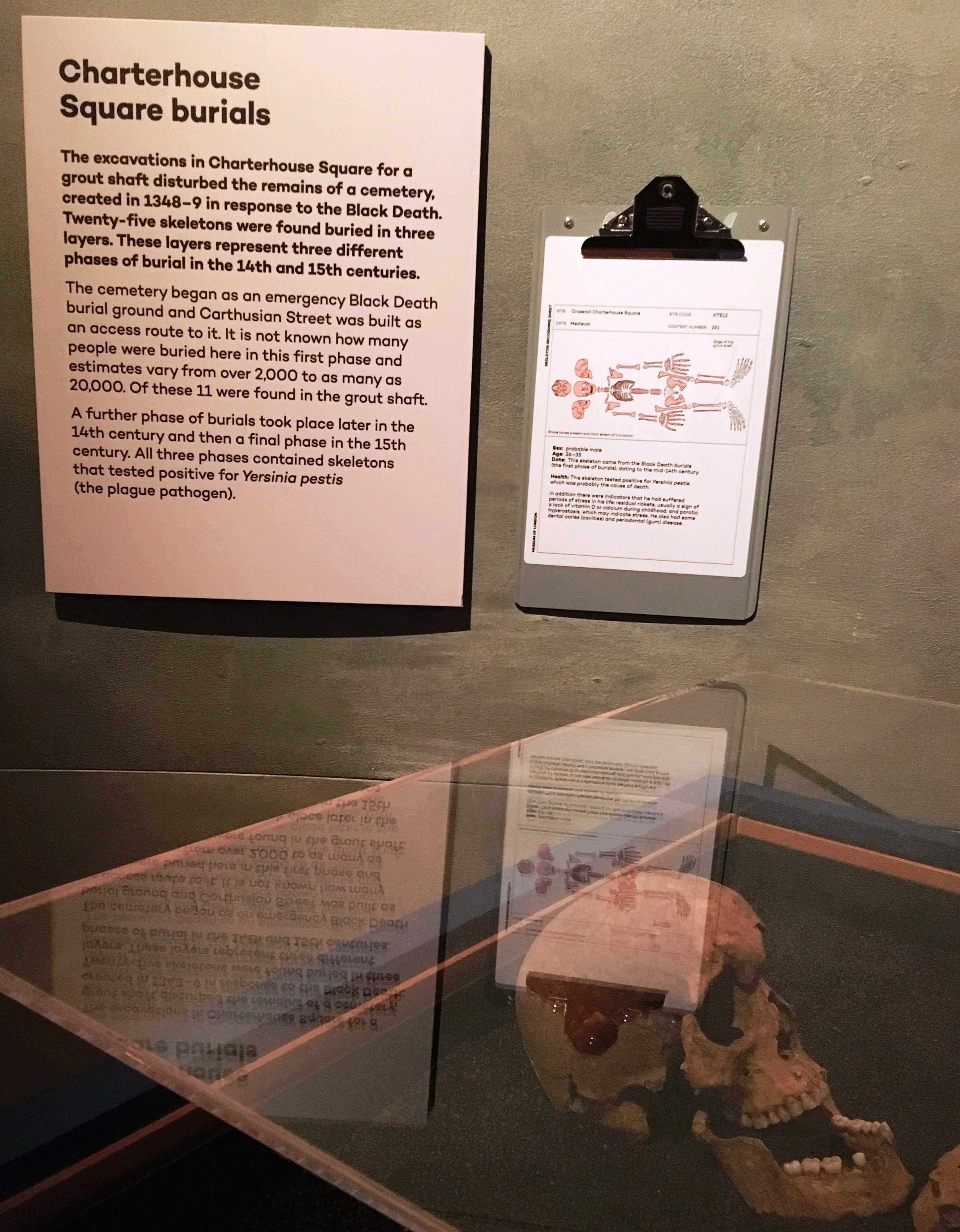
There were skeletons recovered from plague cemeteries.  People died in such numbers they had to be dumped into mass graves—before the grave diggers caught the Black Death and followed their customers into the ground.

I had my eye out for something about the story of how Pakistanis came to work the docks in the 50s and 60s after Indian independence and partition.  It was hoped they would work for cheap, then go home.  But they stayed and brought their families.  This had been the whole learning topic during my Volunteers for Peace week long “work camp” in the east end in 1988.  Now Sadiq Khan, a British Pakistani, is Mayor of London.

There was nothing.  Nothing!  I just went to the museum website and searched for “Pakistani” and found nothing either.  Did I imagine this big historical story, or get it wrong?

London Heels

Once I knew I was going in the right direction, settled back and enjoyed the lovely landscapes along the route.  The word “sweet” comes to mind when I gaze out over the English countryside.  That may sound patronizing but it’s not meant to be.

If you like rugby you will probably want to put Twickenham on your bucket list.  I made a mental note to avoid it on game days.

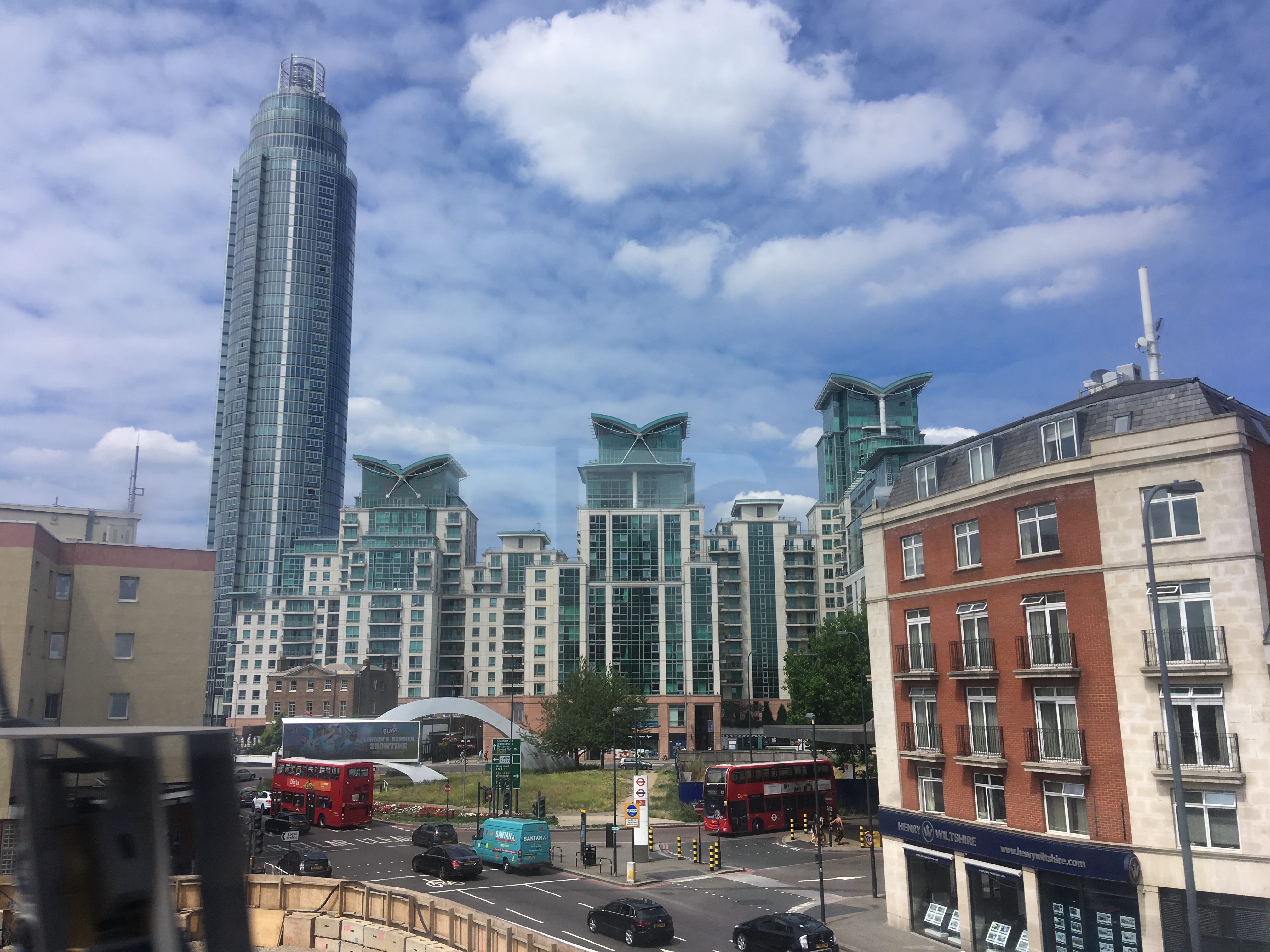
As we rolled into London there were some great views.  For once I have an excuse for my poor quality photos—taken from a moving train.

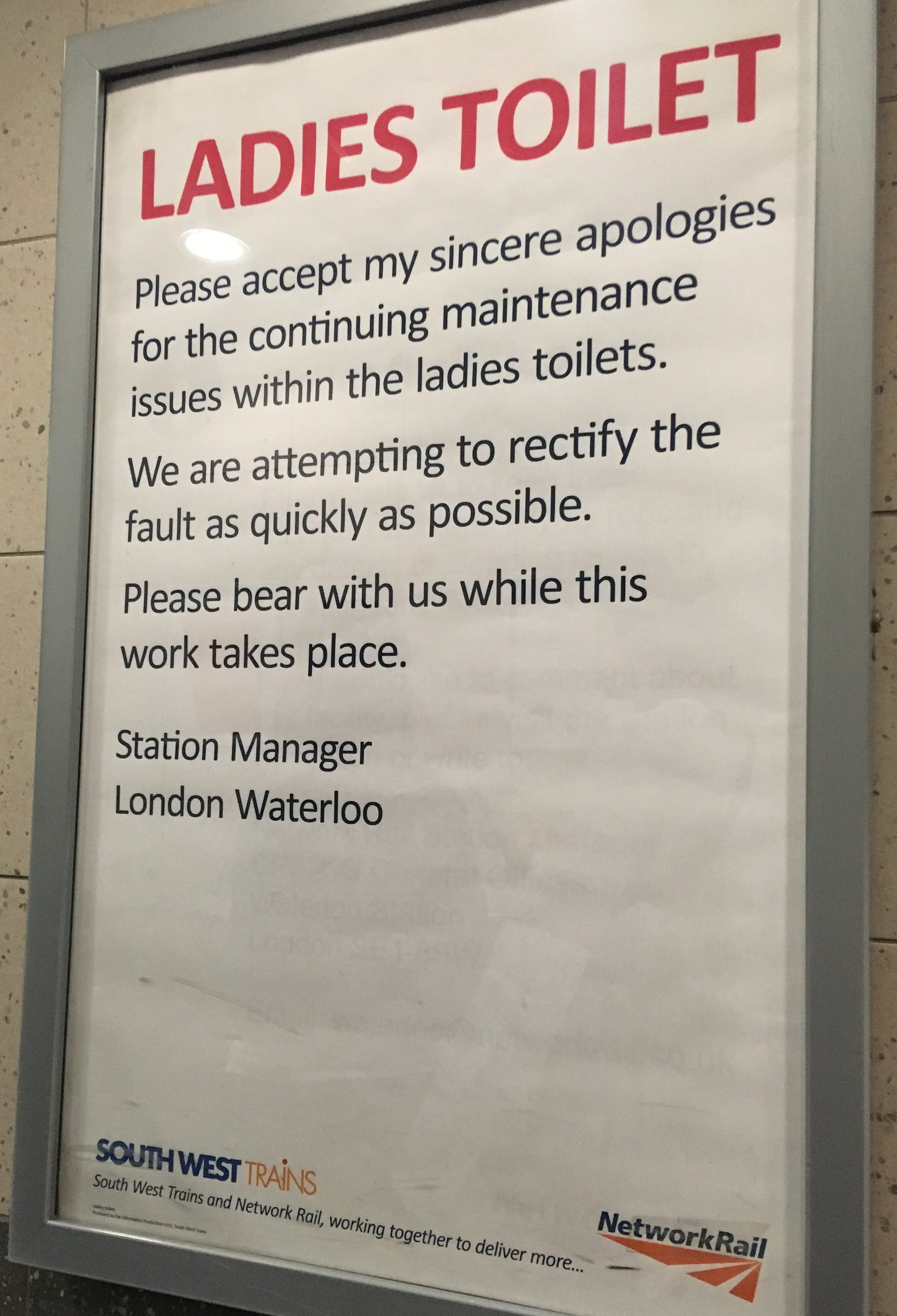
Waterloo would be my toilet stop every time I came into London.  This sign was still in place a month later, so “as quickly as possible” really meant, “someday, maybe.”

The sign made it clear that your 30p got you one visit to the toilet.  I wondered if someone had sued them, insisted they had bought a lifetime pass.

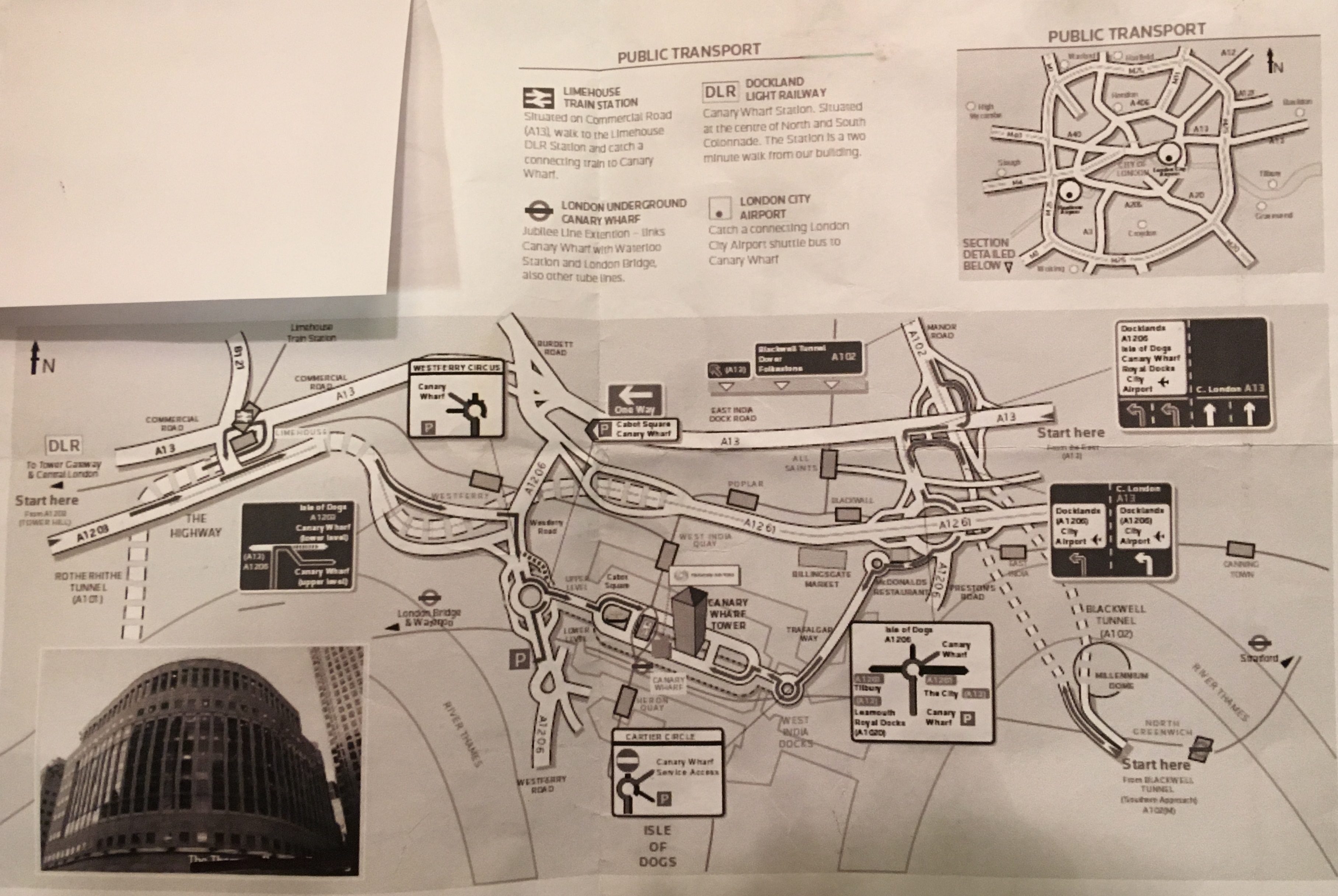
Then I was on the underground, which whisked me under the Thames toward Canary Wharf, where I would exit and try to find my meeting.  I was anxious about finding the building.  What if I took the wrong exit out of the tube station?  What if I got turned around?  They had sent me a map, which was even more out of focus than my photos and really just a jumble of unhelpfulness.

It showed a picture of the building, but how would I find it among all the other buildings?

The first time I came to England, 30 years ago next year, I had stayed somewhere in the vicinity of Canary Wharf.  Then, it was all gritty warehouses, Pakistani immigrants and elderly Holocaust survivors and native English speakers whose English I could not understand; street stalls selling tiny apples and pet goldfish suspended in plastic bags and possibly dodgy cassette tapes by Billie Ocean, Bananarama, and New Order.

Now it looks like this, according to a local news site:

I stepped out of the tube station and saw this:

Of course it didn’t have a giant black squiggle on it but you get the idea.  When will I ever learn to stop worrying and trust that I’ll be able to find things, especially when I have a map and a photo of the building?

I had dressed and accessorized carefully, making the best of what I had.  I had bought a really cute top in Cornwall that was suitable for a country holiday and I thought I could make it work paired with dress pants, my good jewellery, and an up do.  I felt professional when I left the house.  When I entered the building I immediately felt like a schlumpy schlimazel, which is just what it sounds like.

I waited in the gleaming lobby furnished with sleek Danish modern furniture.  I was sure the water glass the attendant handed me cost more than my entire outfit.  The reading selection on the table included The Financial Times, Economist, Wall Street Journal, and International Business Times.  All the headlines were about rich people making deals that would make them richer.

I noticed my heels were a bit worn.  Note to self: Buy new shoes before next work meeting.

One of the people I was meeting with arrived.  She was 30 years younger and 30 pounds thinner than me, blonde, and dressed in stilettos and a killer designer outfit. Mercifully, it was all over in 30 minutes.

I have been to meetings with foundations and corporations.  I’ve been to Ford and Open Societies Foundations in New York.  At Chiron Corporation in Silicon Valley.  And so on.  I normally carry myself well in these meetings and I had come carefully prepared.

But then I spilled my water and as we were wiping it up, my nose started running like a garden hose and I had to ask them for a tissue and blow my nose in front of them. These people were lawyers and I don’t know if they were on the clock but they were clearly impatient and possibly appalled by me.  I managed to maintain my dignity, make my points and ask my questions, but I was relieved when the revolving door swung closed behind me.

Stopping and Going

Summer is my favorite season anywhere, but there is something about an English summer that gives me joy even more than a Minnesota summer.  Maybe it’s because I’m away from my usual surroundings and routine and everything—woods and streams and vines and birds but also even the sidewalk under my feet and the bus stops and the street signage—are different, exotic, even after many visits.  I love new and different, the sense of being an explorer.

But there is something else about the English countryside; many other writers have tried to capture it, to greater or lesser degrees of success. You might say, “Oak trees are oak trees, and meadows are meadows wherever you go, right?” So why go anywhere else but home?  But they do differ.  The English countryside is greener.  Saturated with green, drenched in green.  Probably because it is wetter, if that’s a word.  The trees are much older.  They are covered in shiny ivy and holly vines.  These are parasites but they add to the greenness.

And there is something about seeing a view of the English countryside from the top of a hill that makes me feel Everything is Okay, because I know it’s the same view that someone would have seen here 50 or a hundred years ago, and if I return in 50 years it will in all likelihood be the same.  In the US, we chopped down 90% of our trees to make way for farms, and now farms are rapidly being bulldozed over and replaced by suburban sub divisions or light manufacturing parks.

So I love things new (to me) and old and England ticks both boxes.

After a few days of idyll I had to go into London for a meeting at a big corporate foundation.  I had been wearing the same clothes for six weeks and felt pretty scruffy but I didn’t have time to buy anything new.  I spent an hour anxiously plotting how I would get there, and in the end it was easy but you don’t know that ahead of time, do you?

Anyone who thinks companies can do anything better than government has never used the UK rail system.  I use the word “system” generously.  I am not an expert on UK trains, but from what I understand the system has been parceled off to private companies, so I took Southwest Rail into London but one would take a different company’s train from London to Oxford, and a third company served the east coast, and so on.

This was my first time into the city and I was nervous.  I knew I had to get off at Waterloo to switch to the Underground.  There was no choice for “Waterloo” on the automatic ticket dispenser, so I went to the manned ticket booth and waited in the queue.

When I mentioned the glitch in the machine, the bored attendant’s response was, “Waterloo is called ‘London Station’ in our system.”

“But how would anyone know that?” I asked.  She shrugged and jerked her head for the next person.

Soon after we pulled out of the station, the automatic announcement said, “This is a Southwest Rail train for Windsor and Eton.”  “For” means “to” in Britain.  Hmmm…Windsor and Eton was our departure point, not our destination.

“The next stop is Vauxhall.  This train will stop at Clapham Junction, Putney, Sunnymeade, Twickenham, Staines …”  My palms started to sweat and I flashed back to my train journey in Italy the previous year.  The stops seemed to be in the wrong order but I wasn’t sure.

The announcement repeated three times that we were going for Eton and Windsor, not from.  It listed more stops whose names I couldn’t make out.  Grittam and Raysbury turned out to be Whitton and Rosebury.  I had the urge to jump off, but I was also pretty sure that if I just Stayed On the Train I would eventually arrive at Waterloo.

A live person came on the overhead speakers.  “Ladies and gentlemen, we do apologize for the automated message, which is backwards.  The next stop is Datchet, not Vauxhall.  Vauxhall is the last stop before Waterloo.  Thank you for your custom.”

One with the Swans

I waved Sam and Gwen and the baby off as they headed to Heathrow in a black cab with their luggage and all the extra paraphernalia you need to travel with a kid.
I was really happy for them; they are a great couple and now with an adorable toddler I hoped they would all—especially Gwen—get some R&R in the beautiful lakes and woods of northern Minnesota.

I had wondered how working remotely would go. It went really well!  I thought I would be distracted by all there was to do in England, but because I had gone down to 80% time and stockpiled my vacation days, it worked out that I only worked about 24 hours per week.  There was no reason to do this in 8-hour days.  If I worked six days a week, for instance, that was only four hours a day.

In the office, there are phones ringing, the front door buzzer going off, and people stopping by my cube to chat but at Sam and Gwen’s there was none of this, so I could actually concentrate better and draw a line between work and fun time.

I would make eggs with mushrooms and tomatoes for breakfast while listening to Radio 4, then settle down to work.

When I logged on, my email was full of messages from the afternoon and evening of the previous day.  I would get a few messages from my colleagues in Ethiopia or Jordan in the first part of the day, but nothing from the USA until 2pm. This also helped me to focus.  It was easy to knock out four hours before anyone could send me more work.

I clocked off mid-afternoon and went for a walk or to the Leisure Centre to lift weights or take a yoga class.  It was unBritishly hot, with temperatures over 90F (32C) the first week I was there.  It was cooler by the river, which was just steps from the house.  I love how everything in these old towns in jumbled on top of everything else—ancient buildings, more ancient buildings, gates, lanes, walls, towers.

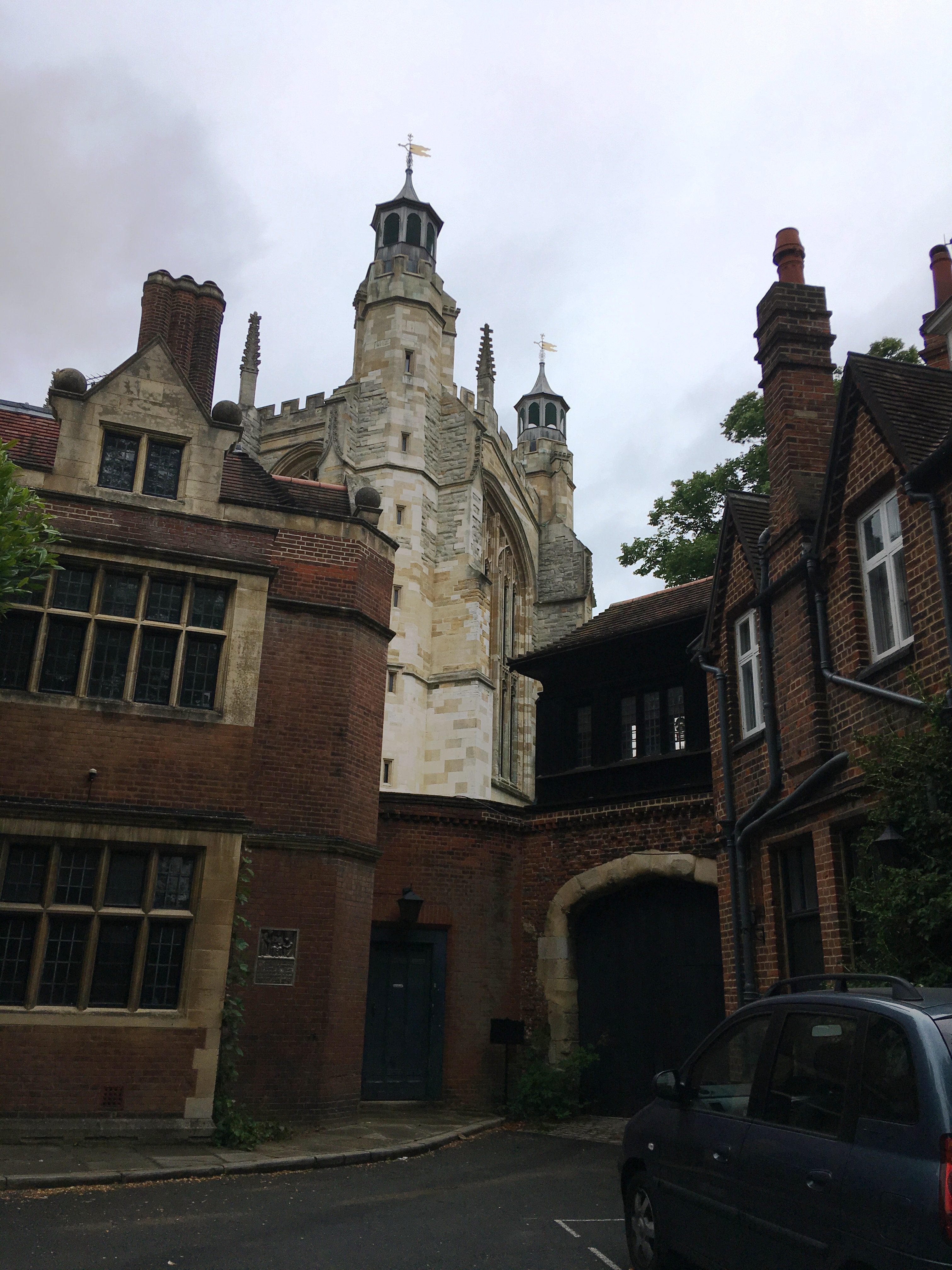
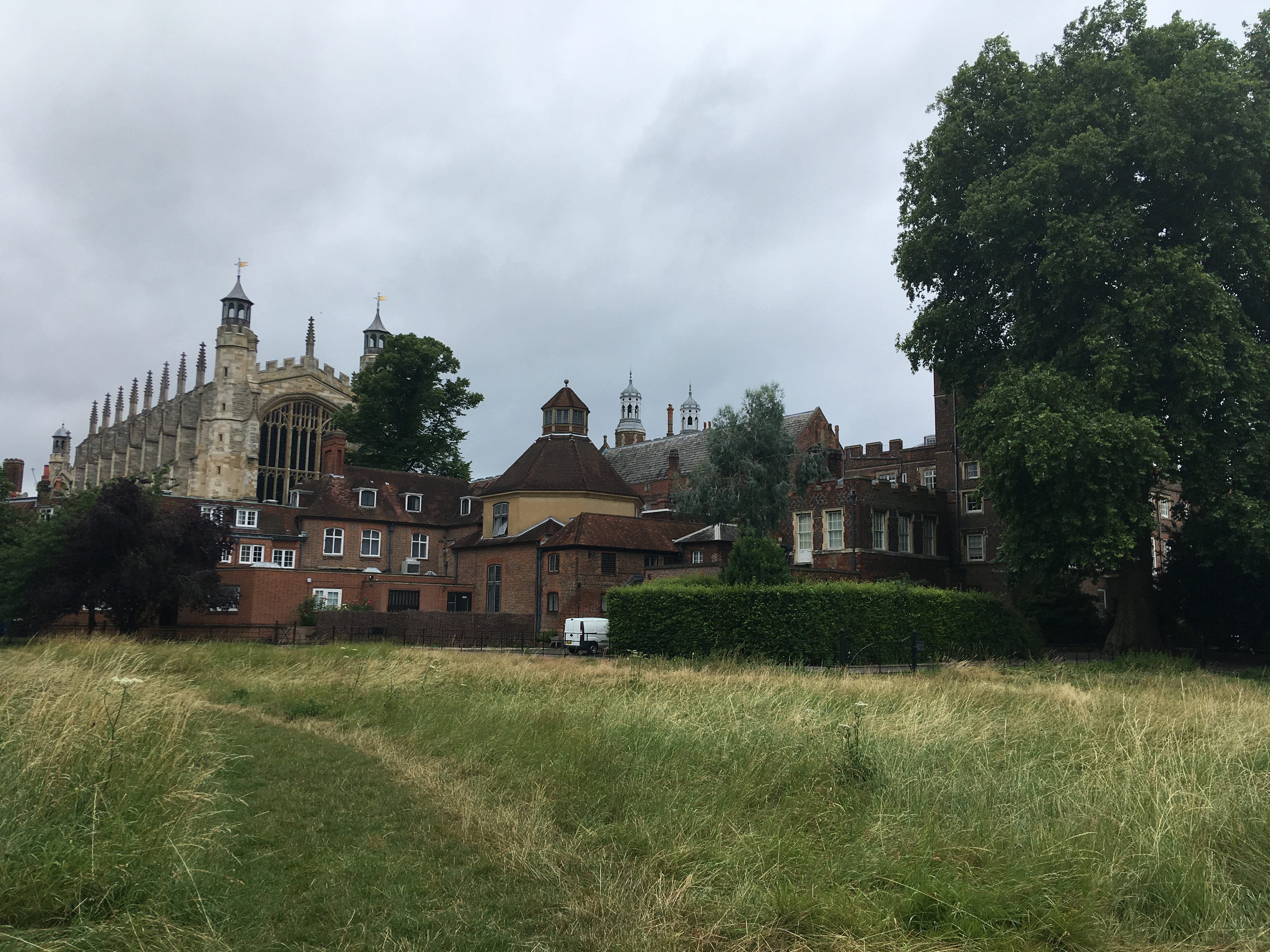
I crossed a meadow to a back water of the Thames with views of Eton Chapel.

Growing up in St. Paul, we were warned to NEVER swim in the river.  The Mississippi River, that is.  If I turned around from these views, I face a swimming hole.  An old guy was swimming, so I returned the next day with my suit.  It was icy cold and took me 15 minutes to wade in; I’m pretty sure those shrieks I heard were mine.

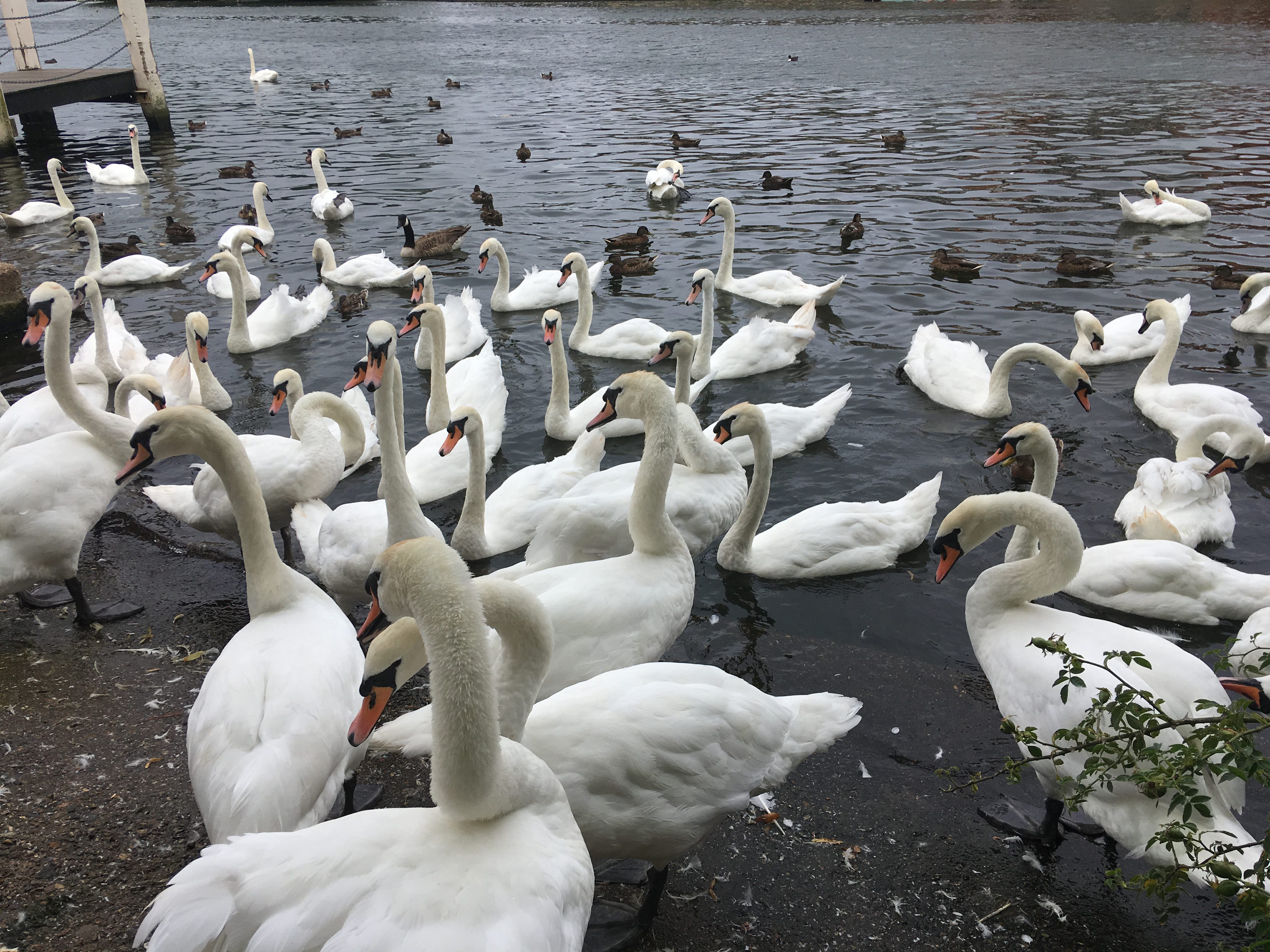
Some families arrived upstream and the kids jumped in and splashed about.  If parents thought this was safe enough for their kids, surely it was safe enough for me.  I stood in the water up to my neck, cooling off and enjoying the scenery—the chapel to one side and woods and swans floating by on the other, their whiteness reflected on the black water.

This was my daily routine for a week, until it cooled off.  I would return home to join Skype calls or polish off more emails before clocking off again, making dinner, and watching EastEnders or some other crap TV while eating and having a glass of wine.

Or, I would try a new place to eat, usually a pub.  I ate at the Waterman’s Arms the first Sunday.

Fish and chips, cider, the Times … the Thames, swans, summer.  It was bliss. This was living.

Except for my Restless Legs. You would think I would sleep deeply with all the fresh air and exercise and heavy food, but I tossed and kicked and moaned and swore up and down and ran up and down the steps all night, every night, trying to get some relief, some sleep.  RLS sounds like a silly condition but it is torment.  Other than that, life was grand.

People have asked if I got lonely.  I did wish for company sometimes, but my friends Heidi and Julie happened to be around.  On weekends and days off I would go to Stonehenge or The Tower or Wimbledon.  How lucky am I to write that sentence?

Eton and Windsor

Sam and his wife greeting me warmly. I had wanted to see them and their toddler before they left for the US.  I also knew that preparing for a month-long trip would be stressful and I didn’t want to get in the way.

The kitchen and living room had damp bedding draped everywhere to dry, suitcases yawning open, piles of papers for sorting, and were strewn with toys.  The baby was running around, jumping on the furniture, and crying disconsolately and without much enthusiasm, as young children do when they sense change in the works that they don’t understand.

In other words, a normal pre-trip domestic scene.

Sam had gone in to work, where an exam cheating scandal was unfolding among the Eton faculty.  “Just when there are a hundred errands to run,” Gwen said, waving her To Do list.  She is very organized, a high achiever, and methodical like me; I like her a lot.

“Did Sam tell you I’ll be teaching at Eton this fall too?  So I’ve got to prepare for that while we’re away.”

She’s had been a high school assistant principal, and it showed.

“Water the flower boxes every day,” she instructed me.  “I mean it, Anne!  Every day!”

I vowed I would. Sam appeared and said to me, “Let’s get you oriented to the town.”

“Sam, I need you to post these letters,” Gwen said.  “And then I have three more things for you to do when you get back.”

“Sure,” Sam said as we left the kitchen, then on the street, “Boy, she gets so stressed out when we travel.”

Windsor and Eton are two towns separated by the River Thames and connected by a pedestrian bridge.

This map shows Eton north of Windsor, while the tourist centre map shows it east of Windsor.  Who knows?

Sam led me down Eton High Street and pointed out the oldest pub in town, The Henry VI.  “It’s not a very nice pub,” he said, “They’ve got Sky Sports on all the time.”

“But there are plenty of other good places,” and he pointed out burger joints, Italian restaurants, and curry houses as we walked.

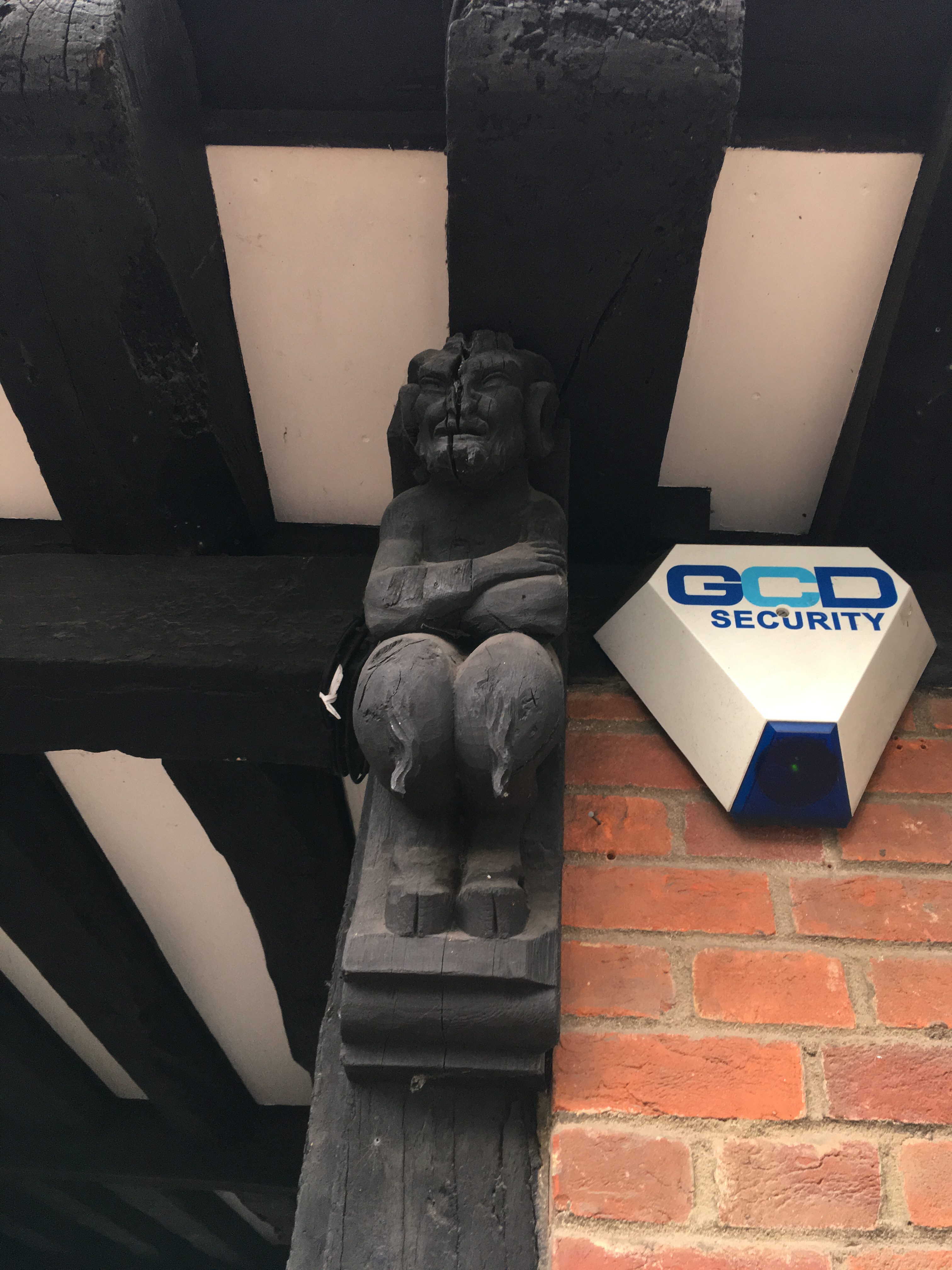
We passed this passageway flanked by gargoyles.

Whoever thought this was a good place to install a security box ought to be fired.

“There’s the George, that’s probably the best pub.  They have their own local ales.”

We stopped on the bridge for a moment to enjoy the views. There was an abundance of swans.

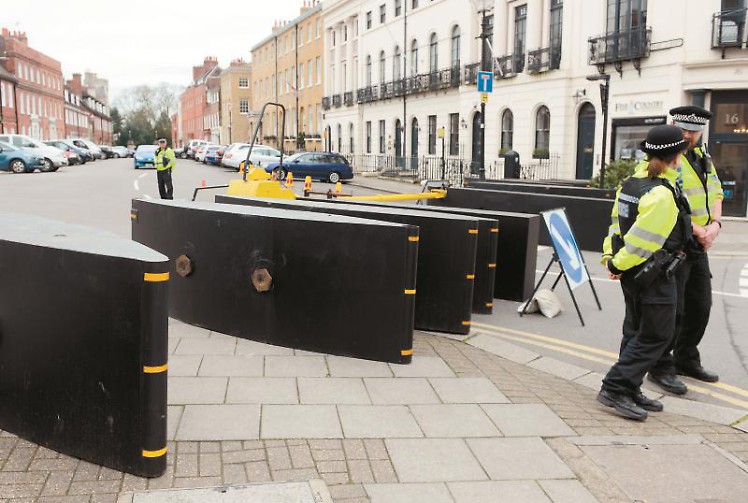
We passed through security barriers which could be employed on a moments’ notice to block off the streets in case of a threat.  This is a photo from the local paper which makes it look as though there are no people in Windsor, which couldn’t be further from the truth.

We walked up the street that winds up hill around Windsor Castle through hordes of tourists into Windsor proper.  “This is actually nothing,” Sam said.  “It’s not high season yet.  Just wait a few days, once we’re gone, it’ll be almost impossible to get through the mobs.”

“The Castle was built after the Norman Conquest,” Sam said.  He’s a walking encyclopedia.  It was kind of eerie, walking past trinket shops shilling Queen Elizabeth bobble head dolls and all-you-can-eat Chinese buffets, while on the other side of the street was a massive fortress built in the 11th Century by William the Conqueror.

Sam brought us to Windsor High Street.  “High streets” are synonymous with “downtowns” or shopping malls in the US.  They’re where all the action is and where you will find department stores and big groceries and banks, etc.

We stopped to have a couple pints.  When I remarked that all the tables around us were occupied by well-dressed women with babies or toddlers in expensive-looking prams, Sam said,  “Yeah, Windsor is a rich city and you’ll see lots of yummy mummies.  They don’t work; they spend all day getting massages, shopping, and lunching.”

Sam’s phone pinged as he took his first sip.  “Did you post the letters?” he read.  “I gotta go,” he said, and shot out the door.  I stayed behind to enjoy my beer, and his.

Eton, Finally

Eton, England is a small city of about 4,700 inhabitants in the county of Berkshire, England. Or as they call it, “Berks.”  As I’ve said, it’s home to Eton College, which adds another 1,200 boys to the population.

Eton is confusing to Americans.  It’s called a college but it’s what we would call a high school.  It’s an all-boys boarding school, which is an alien concept to 99% of us just as it probably is to the 99% of English people who can’t or won’t send their 13-year-old away.  It’s a public school, which we would call a private school.  It was founded in 1440 by King Henry VI, yet it is only the 18th oldest school in Britain.  The oldest seems to be Warwick, founded in 914.

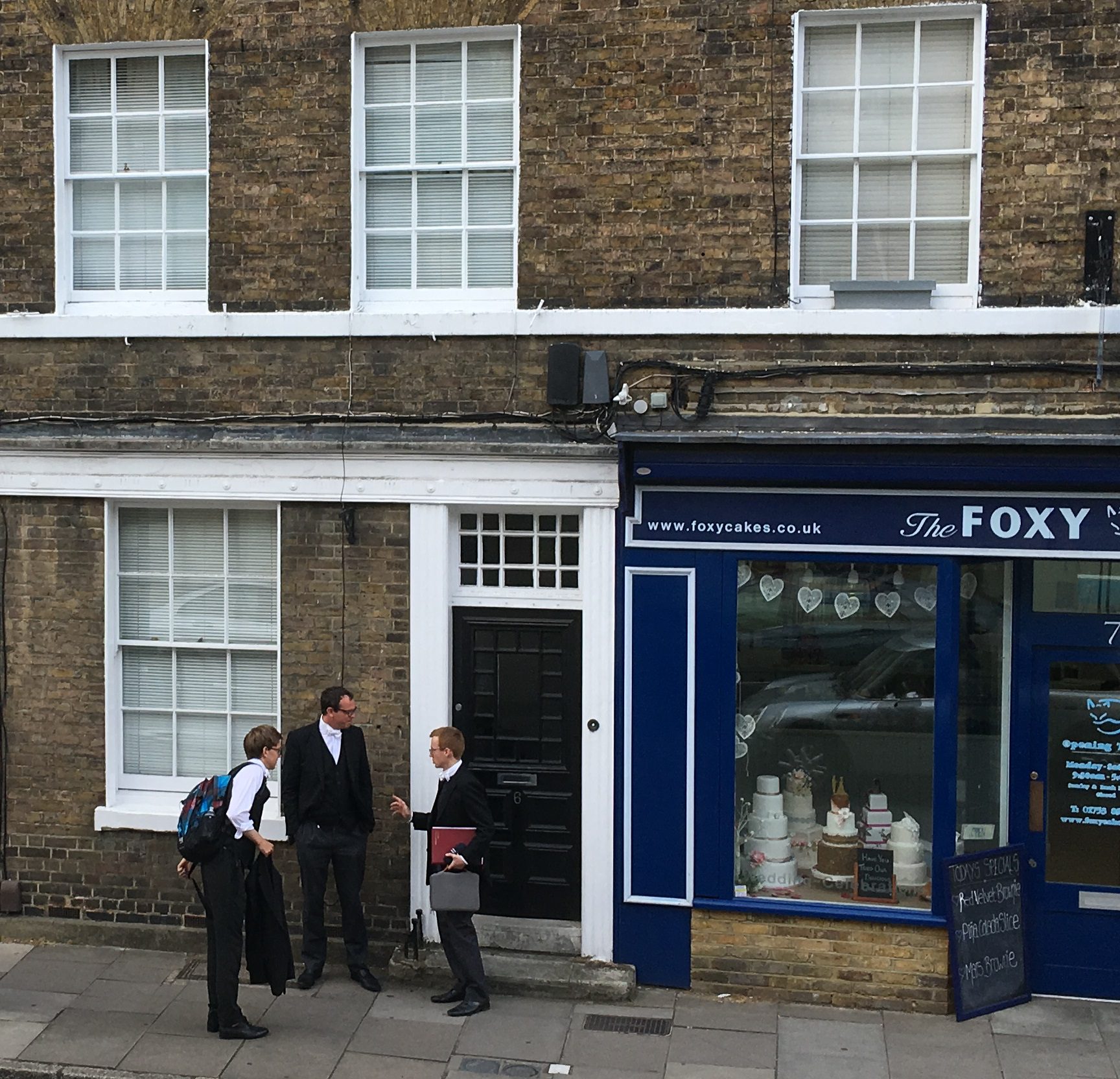
I want to paint a picture of Eton for you without being creepy and violating Sam’s privacy.  These are some views of the High Street from my bedroom:

Sam’s place is like the three-story building on the left.  It’s above a tailor’s shop.  Lest you think I just gave away the location of the house because there is only one tailor shop in your city of half a million people, there are seven tailor shops in Eton and neighboring Windsor to care for the uniforms the students and masters (teachers image removed due to copyright issues) must wear:

It would have been nice to see more of these formally-dressed men and boys flocking through the streets, but the reason Sam was going to the States for the month was the summer holidays.  A few days after I arrived, they all disappeared and were replaced by Spanish and Chinese tour groups.

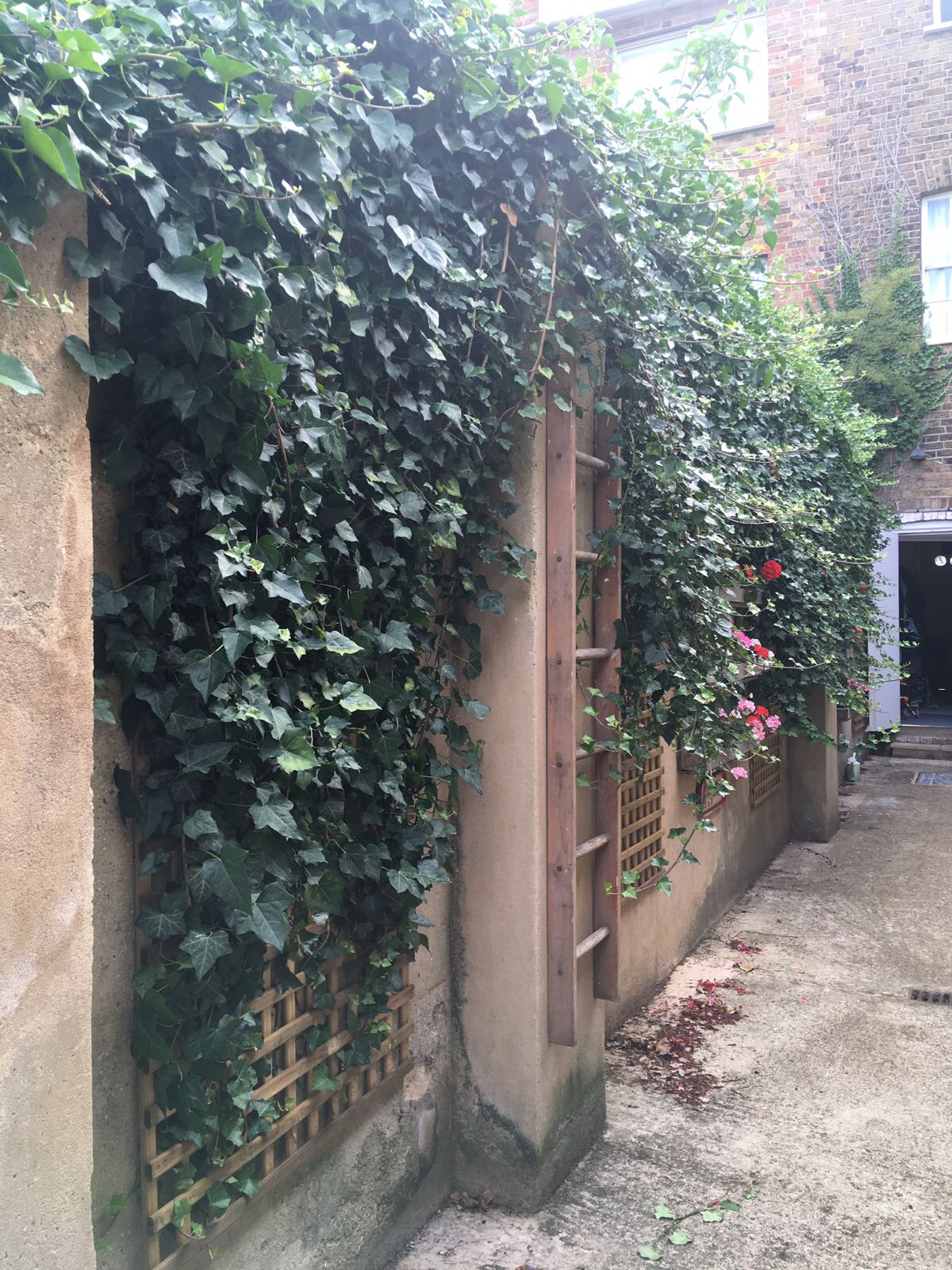
The house was three stories.  Entering from the street, you came into a hallway that led to the back garden and stairs to the first and second floors (or second and third, if you’re American). There wasn’t really a back garden, just a passageway, but Sam’s wife had installed planters with geraniums to echo the window boxes which I watered every day.

There were 15 winding steps to the first storey.  Or story, as we would write it in the US.  Here there were two bedrooms, one of which was mine.  Mine!  A beautiful, spacious guest room in Eton for a month!

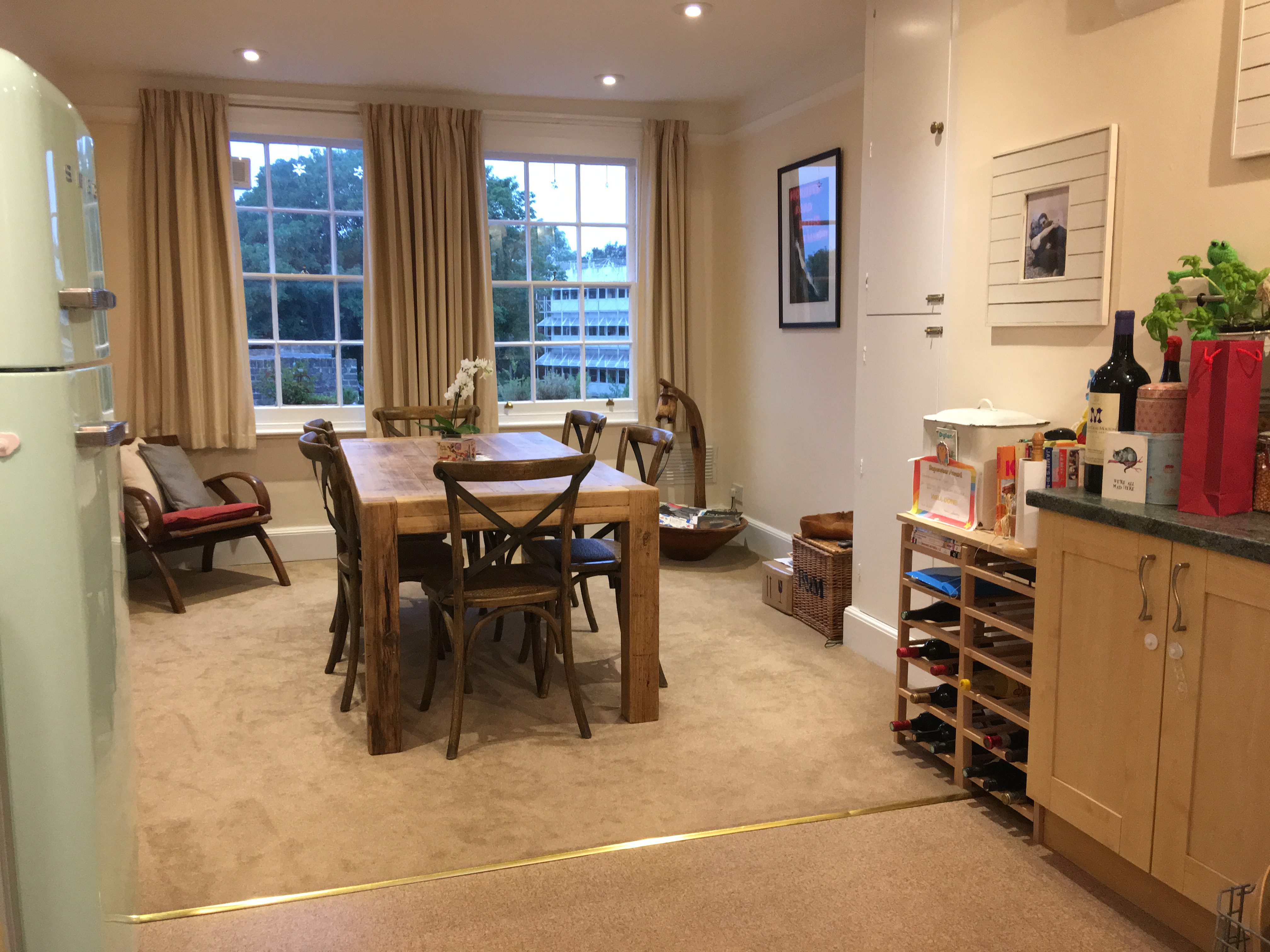
Fifteen more steps led to the top floor, with the master bedroom, bathroom, livingroom, and kitchen.  This was my favorite space.

I worked at the big farm table which looked out over the ball fields and the Eton science building, and I had easy access to keeping myself stoked with coffee and tea.  I felt like I was on the Great British Baking Show, except I had to write grant proposals instead of make French macaroons.

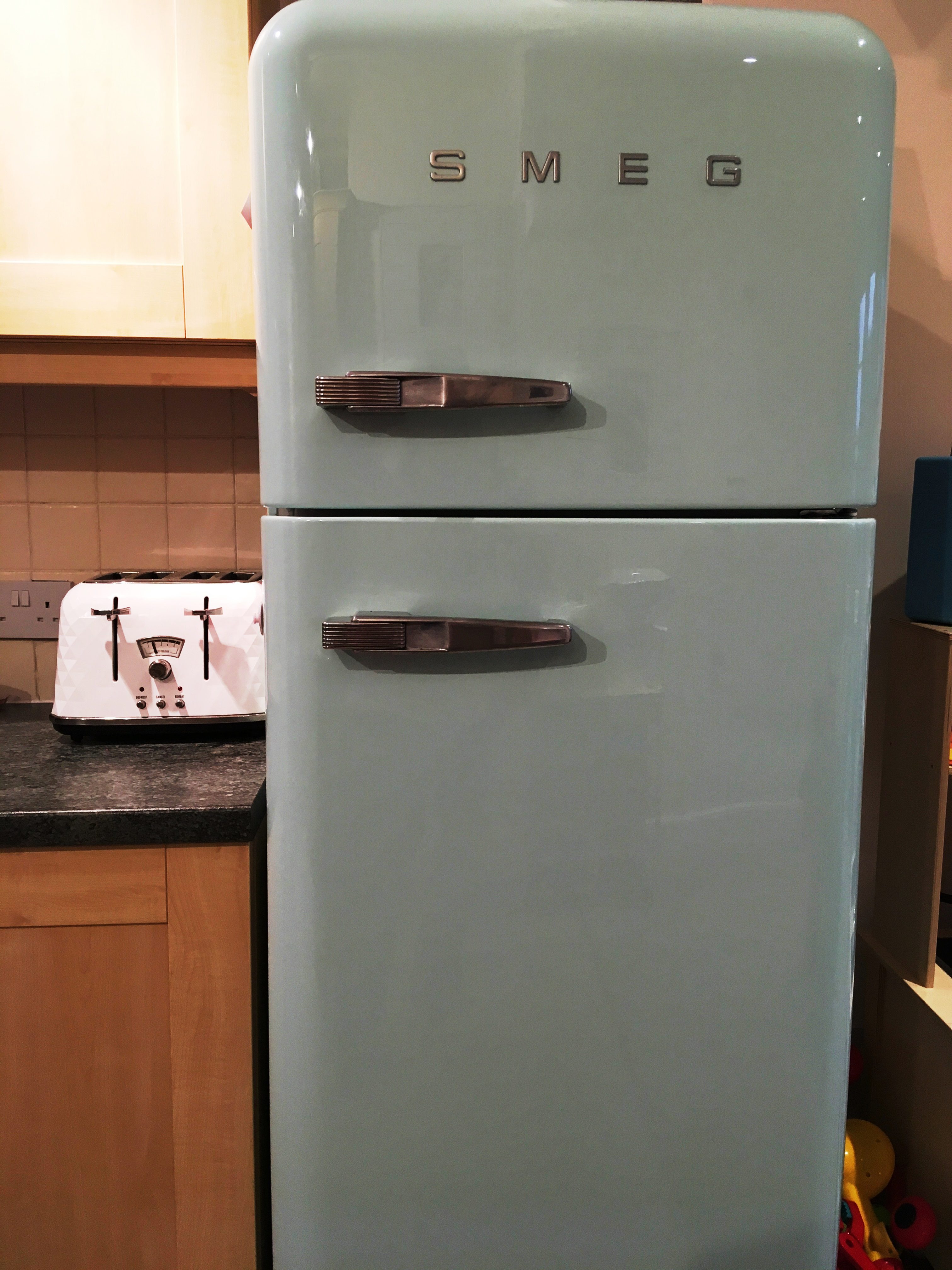
Rob’s wife has lovely taste.  She had rightly insisted on moving their refrigerator from London.  There was also a DeLonghi toaster.

I love the name SMEG.  In fact I couldn’t stop saying it in my head, so I would turn on the John Lewis radio to Radio 4, which is like NPR in the US only with more very long stories involving people whispering in meadows as they crept up on bees and recorded their buzzing.

The bathroom had several common British features that Americans find puzzling.  One: separate taps.

To wash your hands with warm water—not scalding hot or freezing cold—you have to put in the plug, mix water in the basin, then drain the sink and repeat this to rinse.

I would guess the house was Edwardian (1901-1910).  All the period features such as the fireplaces had been stripped out long ago.

Some of the windows were crooked—intentionally?

Nearby was the ubiquitous toilet brush which had to be employed on a regular basis because most British toilets … just don’t do the job the first time.

I’d encountered this shower set up before so I was prepared for it. A very high tub paired with a sheet of glass or Plexiglas that must weigh 100 pounds.  You instinctively want to grab it, but woe unto you if you do, because it swings back and forth.  Why?  I don’t know.  Then there is the shower plumbing, also a mystery.

To be fair, there are American things that make Brits wonder, such as cutting our food with the fork in our left hand, then switching to our right to actually eat.

Tech Troubles

Before resuming my story about house sitting and working from the UK, I want to acknowledge that while my posts are always tagged “Budget Travel,” I wouldn’t be able to call half of it that if it weren’t for Lynn.  She paid for the cottage in Cornwall, the rental car, the hotel with the crunchy gravel in Shaftsbury.  I do my best to pay for things when we travel together.  I snuck down to the front desk and paid for our stay at the Fern Hill Hotel in Lyme Regis, and I would try to snatch and pay the bill for meals as often as I could, but Lynn is pretty good at snatching the bill herself.

We’ve discussed it and we’ll probably discuss it in the future.  If you’re going to travel with a friend you’ve got to be able to talk about money or it could be kaput for the friendship.

But living in Eton for the month of July really was almost free of costs.  I had sold my condo back home so I had no mortgage payment, association dues, or utility bills.  Of course I had no home to return to, but I would figure that out later.

Second, housesitting for Sam meant a free place to stay just outside of London for a month.   Sam asked me to pay the bills, which amounted to £100, or about $130.  Of course I bought groceries and of course I wanted to eat in the pubs and restaurants and go into London which cost about $13.00 each way.  I used the local Leisure Centre to lift weights a couple times a week and that was $13.00 per time.  After a couple weeks I asked for and got a “prospective members pass,” which probably saved me a hundred bucks.  I was honest.  I said I would never be a member because I would be gone in a month.  I think they felt sorry for me that I was paying $13.00 for just an hour of access to the gym.

I haven’t added up how much the month in Eton cost and I won’t bother because whatever it was, it was worth it.

Before I turn to describing the house and Eton and beyond, I just came across a list of annoying, mostly tech problems I dealt with while I was there.

The Internet in Eton was very, very, slow.  This surprised me—I assumed a town with a world-famous school would have super-fast Internet and I’m not sure what the deal was.  One theory I’ve heard is that Britain was one of the earliest countries to get Internet access to its population.  Now that’s out of date and an infrastructure upgrade is called for, but no one wants to pay for it.

I was still after Expedia about screwing up one of my June flights and eventually they refunded my money and gave me a $50 voucher, but it took patience and persistence.  I’m sure they count on most people just giving up.

When I booked a flight to Scotland on Flybe, they charged me seven times.

Delta came through with a $250 voucher for ripping my suitcase.  They were the most responsive and least hassle-y of all the companies I dealt with.

My mouse died.  Yes, I am mouse dependent.  A new one was only 10 quid but finding one was inconvenient.

The closing on my condo went smoothly, but it was another story trying to cut the cord with my Internet provider back home.  I am still battling them three months later.

A&T made me run a gauntlet to unlock my new phone.

My bank blocked my account access even though I had told them I was traveling.

Sam’s printer only worked about every fifth print job.

I couldn’t copy and paste anything from my remote work desktop.

A Skype “upgrade” left colleagues unable to hear me.

So if you have a fantasy about running away to live the simple life in another country, forget it.  In fact first-world problems can be more of a hassle because you may not be able to make phone calls and you may not know where to go for help.

In Eton, In DC

From Shaftsbury, Lynn and I drove to Eton where I would house sit for a month.  But first we had to find it.  It looked so easy on the map but as usual we got terribly lost and since Sam was expecting me at 12:30 I got panicky and may have been a bit short with Lynn.  Well, I know I was, but as a Minnesotan this took the form of hinting about what I thought she should do.

The map wasn’t detailed enough. We didn’t have a GPS.  I couldn’t call Sam with my phone because I didn’t have international service and I couldn’t message him because I had let my data plan lapse because I “never needed it.”

“Use my phone,” Lynn offered.  I managed to switch it to airplane mode and it took me 20 minutes to figure that out, with Lynn trying to assist while driving 80MPH.  I got Sam’s voice mail.  We drove in circles around Windsor, the town across the Thames from Eton.  Looking back, I don’t know why we didn’t try to find it using Google maps on Lynn’s phone, but we didn’t.

Finally I glimpsed a cathedral-like building in the distance. “That must have something to do with Eton College,” I said.  “It looks like one of the colleges at Oxford.”

“Well spotted!” Lynn cried with relief.  “Now what’s the address?”

“123 High Street,” I said confidently from memory.  We paced the high street, and Lynn declared, “There is no 123!”  She burst out laughing when I checked and said weakly, ‘Oops, it’s 321.”

Five minutes later Sam was greeting us at the door.  Greeting me, I should say.  He gave Lynn directions to Heathrow, waved her off, and ushered me in.  Poor Lynn, I later learned, had had hopes of using the bathroom but she kept a stiff upper lip until she got to the airport.

In real time, I just returned from Washington, DC and I’ll write a few posts about that before returning to my summer in the UK.

I went for a workshop for grantees of the State Department’s Bureau of Democracy, Human Rights, and Labor, or DRL.  Don’t ask me why it’s not BDHRL, but I’m okay with that.

I won’t go into the content of the workshop because then I’d have to kill you.  Just kidding, you would die of boredom before I could kill you.

The building in which the workshop was held does not have an address and is not on Google maps.  Really.  I don’t know if this is intentional—for security purposes?—or just part and parcel of the crazy patchwork of streets that is DC.

The cheapest hotel our travel agent could find was $585 a night.  That wasn’t some 5 star place, just a Marriott.  I found a studio apartment on Air B&B for $182 within walking distance of the venue. My expectations of it were low but when I arrived I had to lower then further.  The studio was in a 40s-era building that had been badly renovated.  It was on the George Washington University campus and in keeping with that was reminiscent of a dorm room.  Not that I’ve ever been in a dorm room, but think: cheap Walmart navy blue bedspreads with pilly grey sheets on twin beds, bare walls, a giant-screen TV, and a window with a view of a brick wall.  Here is a picture of the bathroom “door” from inside the bathroom.

Good thing I wasn’t sharing the room with a coworker.  I was motivated not spend any time here.

I did a recon to ensure I could find the workshop in the morning.  I copied the map from the agenda onto my palm.  There was no signage, but I was pretty sure I’d located the building, so I wandered on and accidentally found the area with the Washington Monument, White House, and other iconic places. There were the usual protesters in front of the White House, but far fewer than I remembered from past visits.

Darkness forced me to return to the room.  I crawled into bed fully dressed so I wouldn’t catch cooties. Thank god I was only here one night.

Getting the Shaft in Shaftsbury

Shaftsbury, England.  I awoke before dawn to the sound of a car driving slowly into the gravel parking lot.  The driver got out and walked to the entrance, crunch, crunch, crunch.  I was just falling back to sleep when he or she must have gone back out to get luggage.  More crunch, crunch, crunch on top of rolling crunchiness.  Another car pulled in, more heavy rolling crunchiness.

Lynn exclaimed from the darkness on her side of the room, “Whoever thought it was a good idea to have a gravel driveway in a hotel?!”

“I know!  Well at least no invading armies are going to sneak up on us.”

“Right.” she replied drily.

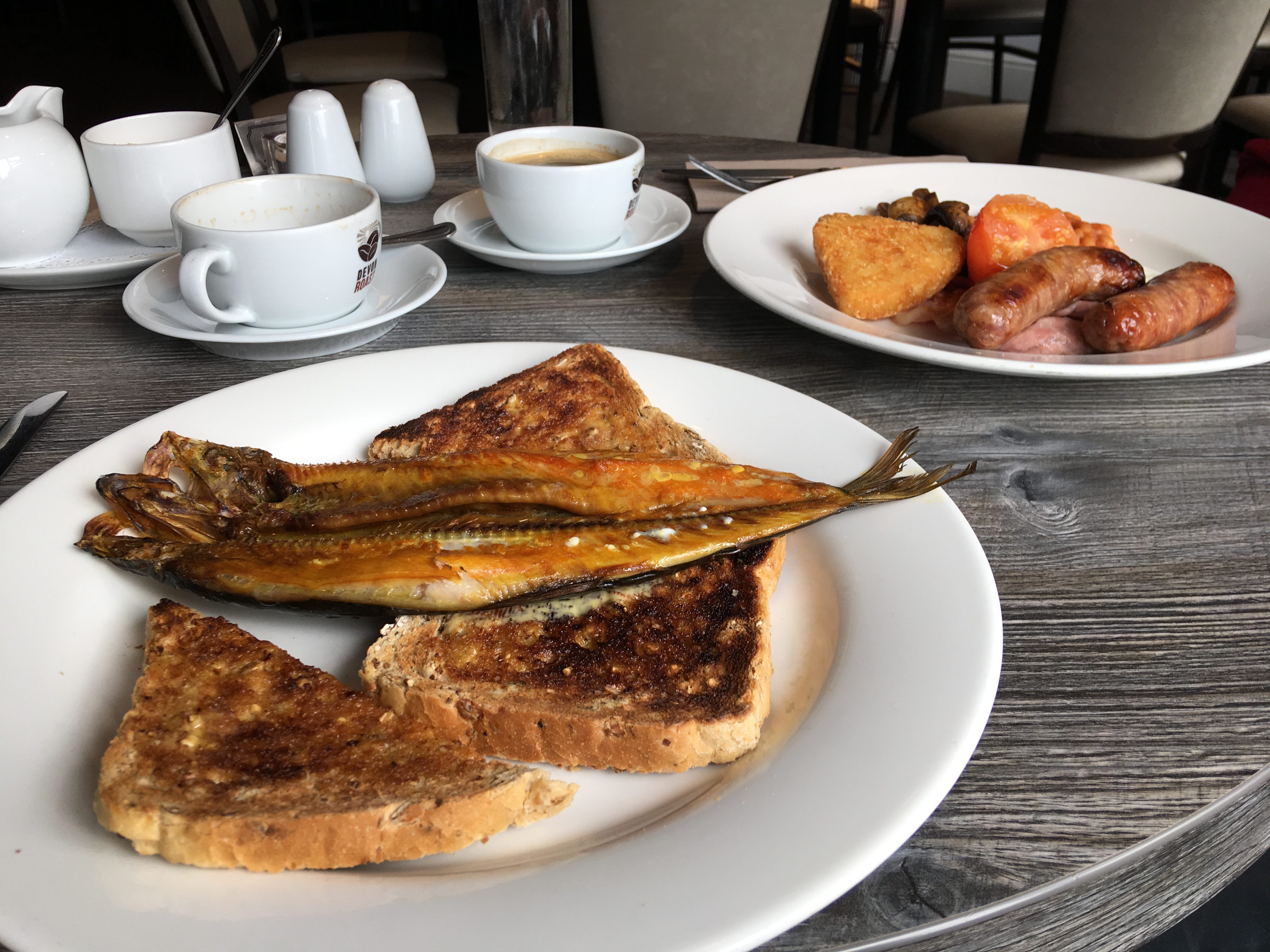
There was no going back to sleep now so we went down to breakfast. I ordered kippers, which I’d had never had, and Lynn had a Full English minus the blood sausage.

Blood sausage is just what it sounds like, sausage made of blood.  I think it’s a food that’s traditional and no one really likes it but they keep it on the menu for tradition’s sake.  Most Brits I’ve mentioned it to made a horrid face.  Is it like lutefisk or gefilte fish?  No one likes either one, but people put it out once a year because it’s “tradition.”  Blood sausage is on the menu everywhere, so I don’t know, maybe lots of people love it.  What do you think?

Me, I love fish, so I was happy with the kippers.

The Daily Mail had this cover in regard to the Grenfell Tower fire:

I think the Queen learned some lessons in the aftermath of Princess Diana’s death, when she was accused of being cold.  Maybe she can give Theresa May some pointers about getting down with the people.

We walked into town to Shaftsbury Abbey, or what was left of it.

The abbey had been a regional center of power until Henry VIII had it destroyed along with all the other monasteries in the 16th Century. The piles of stones on either side are where the pillars of the nave were.

A small display inside the visitors’ centre featured a few shattered carvings, remnants of painted sculptures, and a diorama of what the abbey had looked like.  It must have been enormous and fantastically beautiful.  Henry VIII was known to appreciate beautiful things, so why destroy the abbey, down to the ground?  Why not just seize the gold candlesticks and leave the building with its gilded arches and ornate carvings?  It was a display of power, of course.  He had half a dozen of his own palaces, so a couple hundred monasteries out in the sticks were no loss.  He was a red-headed megalomaniac who loved his palaces and couldn’t stand for anyone else to … wait, why does that sound familiar?

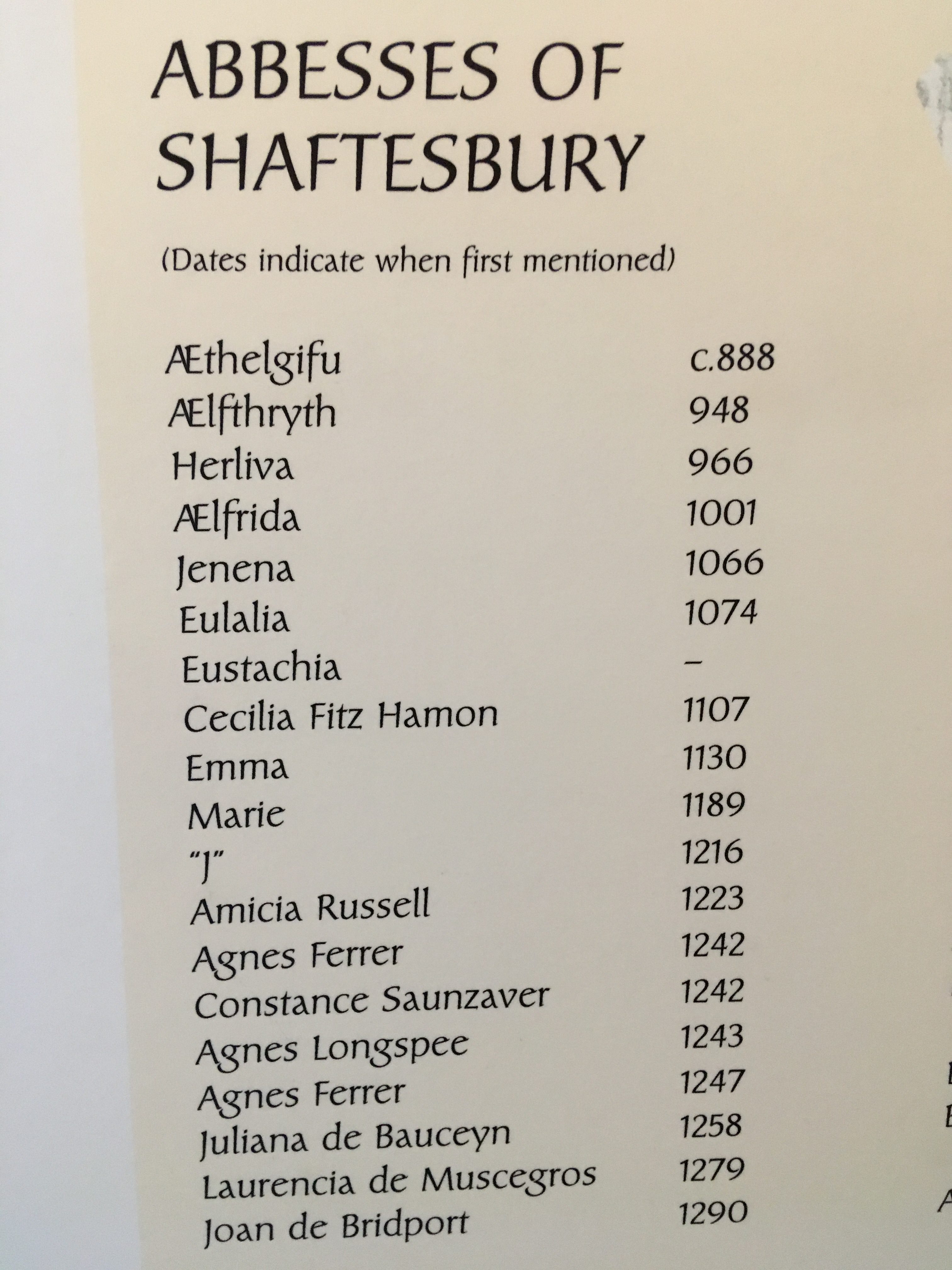
Here are the names of some of the abbesses.

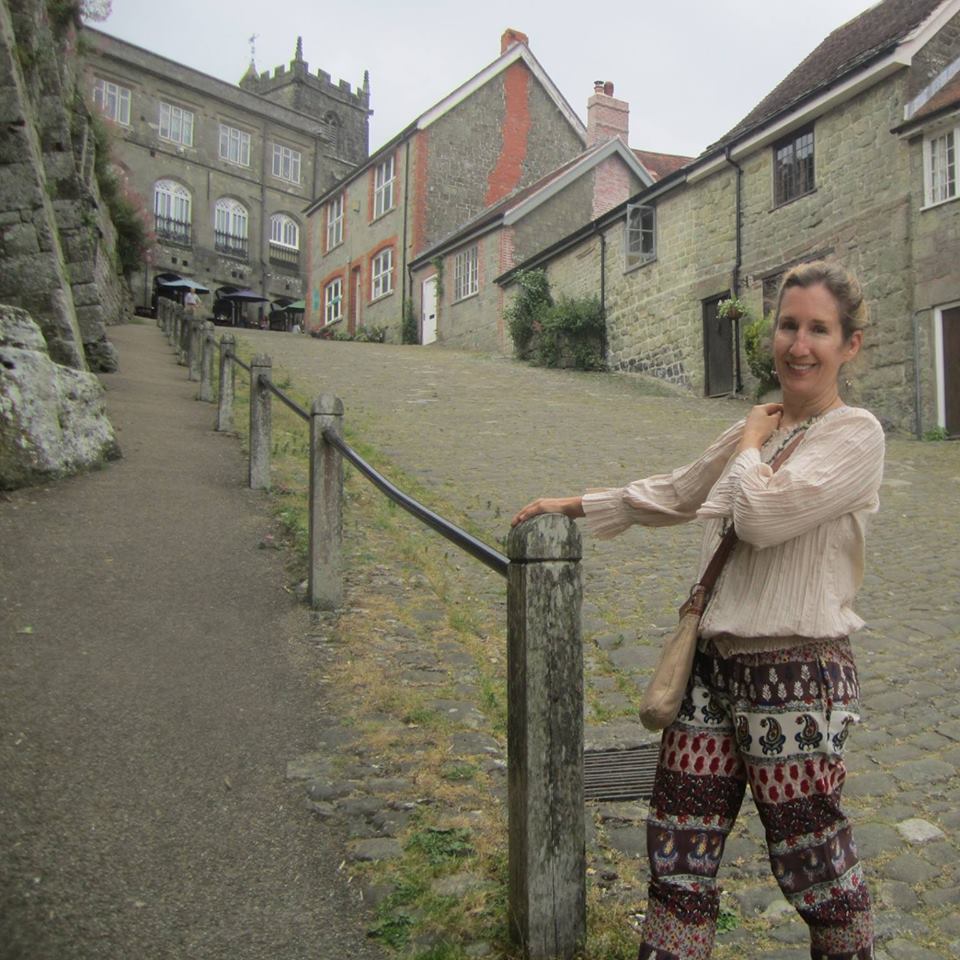
It was lunchtime  and we picked our way carefully down Gold Hill to find a pub someone had recommended.

I had one of the most memorable meals of the summer at this pub, a fish pie with turmeric.

I tried to replicate it once since I’ve been home but didn’t get it right.

Of course what goes down must come up—no, I didn’t vomit up the fish pie—we had to walk back up the hill.

We walked a few paces, stopped to take photos, then walked some more.

It’s not that we couldn’t have hiked straight up the hill without a break—really.  But it is true that a summer of fish pies and pints means I really need to get back to the gym.  Maybe tomorrow.  Maybe next week.

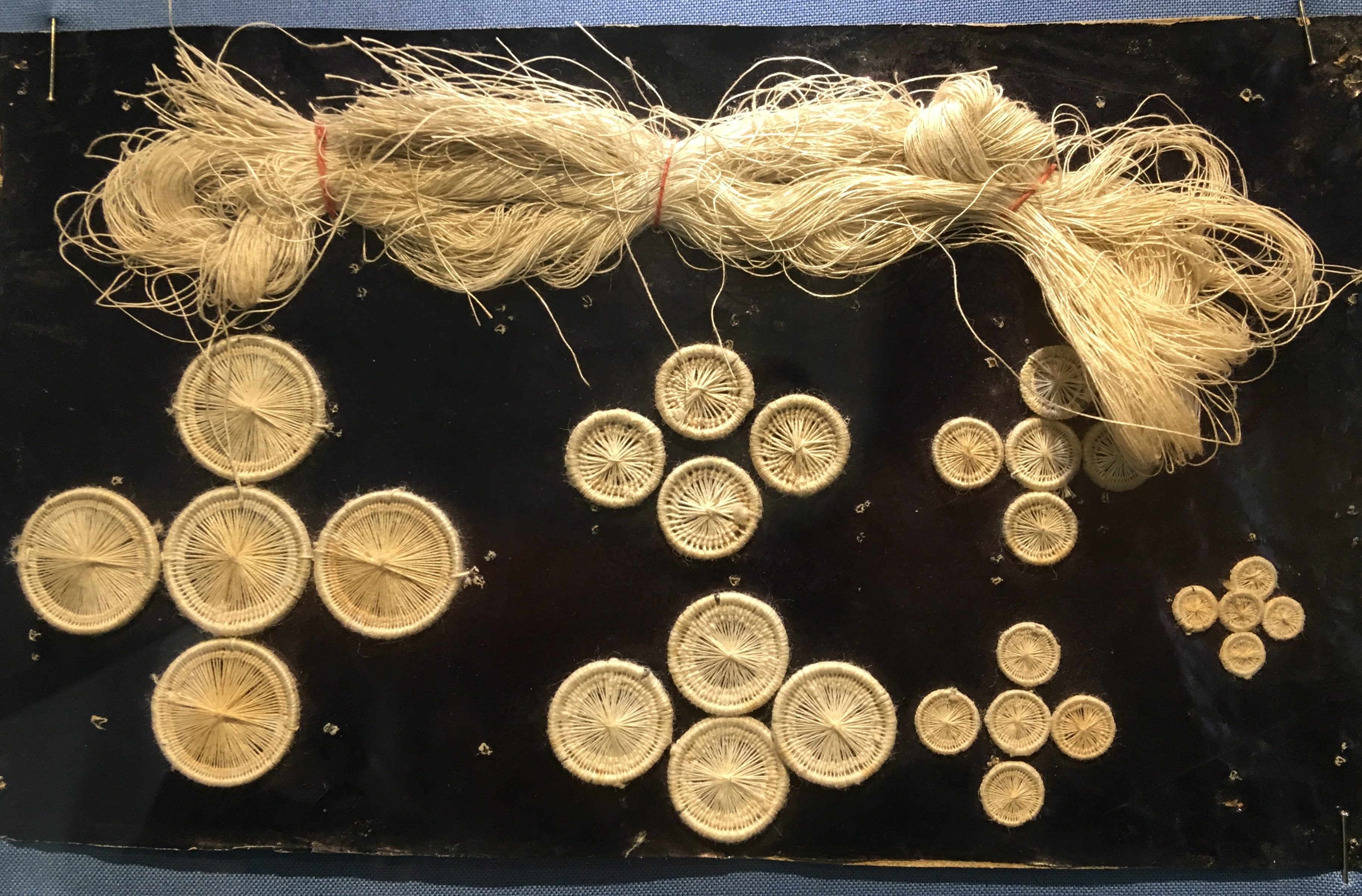
Next we visited the historical museum.  Shaftsbury was once a center for cottage industries, which just means people sat in their cottages and made things, like buttons. These are the forms and the finished buttons.

In the 17th and 18th Centuries thousands of women and children were employed making “Dorset Buttons.” The button-making machine caused these cottage industries to collapse after 1750, and the gentry “helped the unemployed workers to emigrate to Canada and Australia.” That’s one way to solve your unemployment problem.

FYI, I’m going to DC for work and won’t be blogging for a week or so.